Blog

  • Iraq

    At the beginning of February, ISAF sources announced that a major military offensive was about to be mounted in Helmand Province in southern Afghanistan. This was Operation Moshtarak (“together”), involving 15,000 US, British and Afghan National Army troops, and would concentrate on clearing Taliban and other paramilitary groups from two areas, one of them centred on the town of Marja. The publicity given to the operation appeared designed partly to encourage civilians to evacuate areas under Taliban influence, but would also serve to highlight the capabilities of coalition forces at a time when support for the war in the United States and Britain was fragile.

    Given the size of the operation, it is likely that it will provide a major focus for western media attention for some weeks, but to get a full measure of its significance requires seeing it in the wider context of the conflicts in Iraq and Pakistan, and of the Status of the al-Qaida Movement. There have, in particular, been significant developments in both Iraq and Pakistan, with each likely to have an impact on what is now happening in Afghanistan.

    Photo courtesy of Helmandblog.

    Read more »

  • 4-Star Wars: Flashpoint in Kyrgyzstan

    Every Nato plane that either takes troops or runs missions into Afghanistan will leave Manas airbase, just north of the Kyrgyz capital Bishkek. In the month of March 2010 alone, the base transited more than 50,000 troops, with contracted companies supplying more than 12.5 million tonnes of fuel to the planes. Through its own tense recent history, Manas has mirrored the high geopolitical and financial stakes. In particular, contracts with two western fuel suppliers have proved so controversial that they became the subject of an investigative report by a sub-committee of the US House of Representatives. The report was published just before Christmas. 

    The Congressional investigation had been set up to investigate allegations that the two companies — “Red Star” and “Mina” — had paid bribes to former Kyrgyz presidents in order to secure fuel contracts. In the event, neither this nor a local investigation uncovered direct evidence that either company paid bribes. It was, however, shown that the contractors had carried out secret negotiations with the President’s sons and helped manufacture a paper trail to deceive Russians (who, it appears, believed the oil was for civilian rather than military purposes).

    For all the questionable activities, however, the issue of the two companies’ activities made no waves.  Kyrgyzstan continued to receive $60m a year from the US for the use of the base and further fees for allowing Nato planes to take off and land there. At different times, the US sweetened the deal with contributions to Kyrgyzstan’s development. Yet the companies and their entrepreneurs, opportunists who saw the American need for reliable supply of oil in the post 9/11 world, made much more considerable fortunes. 

    The size of the contracts was large by any standards. Every year, Red Star and Mina supplied $300 million of fuel to the base, aggregating to a sum of no less than $2 billion. They also supplied oil to Afghanistan’s Bagram airbase. 

    The contracts were justified on account of the high risk involved. Yet Scott Horton, a Washington-based lawyer who gave evidence to the sub-committee, dismisses this argument: “What did this company do? Where are its people? This company came from nowhere and has no experience. The Kyrgyz want to close them down and they have every right to do so”.

    As the extent of their wealth became clear,  hostility to the two companies built up inside Kyrgyzstan. It was during the latter days of the Bakiyev regime that claims circulated about the companies bribing the president and his son Maxim Bakiyev. These claims triggered the Congressional Committee investigation as well as a local Kyrgyz investigation. While neither investigation uncovered direct evidence of bribes — nor indeed of any substantial relationship between the companies and Presidential businesses — the smoke was regarded widely as proof that there must be fire. Horton says that the Congressional report leaves open the bribing issue.

    Political changes following the collapse of the Bakiyev regime raised the tempo in this long-running dispute. Not only is there a new president, Roza Otunbayeva, but recent parliamentary elections have produced some nationalist politicians and businessmen ready to use the issue to political advantage. 

    Otunbayeva visited President Obama recently to demand the Kyrgyz government be allowed a role in the supply of fuel to the base.  The country had its own oil company, she said, and it could handle the fuel supply just as well as Western companies.  The State oil company has connections with GazpromNeft [the oil arm of the hydrocarbon behemoth Gazprom], and its manager is a former GazpromNeft official. 

    Otunbayeva was pushing at an open door, it seems. Pakistan, the other country used by the US to supply fuel to US operations, was looking increasingly wobbly. When Hilary Clinton visited Bishkek recently, she told the President that the country’s national oil company could work alongside Red Star and Mina, and share the fuel supply with them. The new policy was laid out in the Department of Defense’s award in November of a 12-month contract to Mina, which specified that the DOD could involve another company in the fuel supply. The western companies, whose legal entities are domiciled in Gibraltar, but whose officials live in London and Dubai, accepted the inevitable.

    It seems the moment has also arrived for the Kyrgyz to push for the whole contract. Edil Baisalov, a former chief of staff to President Otunbayeva, and today an opposition politician pressed this argument with the author: “The state owned enterprise would do the business better. I don’t understand the Pentagon’s point about guarantees of uninterrupted supply. How can a Gibraltar-based offshore company guarantee more than the state of Kyrgyzstan and the state of Russia, that a trilateral agreement would provide for? The 50% arrangement with the State oil company is a foot in the door. The Americans are providing 50% of the supply, and the rest will be done by the state company. We believe this could be a great breakthrough in this trilateral settlement. 

    For Baisalov, it is a matter of principle that the companies are no longer operating in Kyrgyzstan: “They are controversial, we have been very critical of them as spoiling and corrupting. They are not transparent. So we don’t want them to have anything to do on our territory”.

    The message, it seems, was hammered home in late December, where Kyrgyz state tax police raided the offices of Mina in Bishkek, demanding documents. The Congressional sub-committee saw this as a matter of great concern, and included in its report the following remarkable comment:

    “Within days of this agreement, Mina came under legal pressure from Kyrgyz state authorities that could indicate an attempt to shut it down entirely, thereby making the Kyrgyz/Gazprom joint venture the exclusive supplier to the base. According to Mina and Red Star, political and business interests in Kyrgyzstan are coordinating with Russian interests to shut Mina out of the fuel supply at Manas altogether. […] Mina’s attorneys were able to forestall the raid, but they believe that, without political protection from the United States, it is only a matter of time before they are run out of business. If the companies’ fear comes true, the likely consequence would be that the Kyrgyz-Russian joint venture would control the entire Manas fuel supply.’

    Reports from Bishkek suggest that the company is currently locked in battle with the Kyrgyz authorities, which is attempting to close down its operations and exclude its staff.  The scene of the action is the Hyatt Hotel, now defended like a fortress. One local observer described the atmosphere in Bishkek as very tense: “Arrests are possible. Something has to give.’

    The implications of complete Russian control of oil supplies to Manas certainly gave the authors of the Congressional Report pause for thought. While they lambast the Department of Defense for not investigating Red Star and Mina’s ownership structure before giving them the initial contract, they also advise the American authorities to take some lessons from the events in Ukraine where Russian fuel suppliers used the lever of a monopoly oil supplier to force up prices. (In truth, Horton observes that the Russian Gazprom has been involved in the fuel supply since the outset of the Mina operation.)

    The wider lesson to be drawn from this tense battle between Western companies and the Kyrgyz does not relate to money or contracts, but to geopolitics. Some observers say that the contract has enabled Kyrgyzstan to add flesh [and profit] to its relationship with Russia. Under former Presidents, the country looked West rather than East. Today, the Kyrgyz authorties prefer to look East.

    Russia, certainly, is unlikely to attempt to cut off oil at a moment’s notice to American operations in Afghanistan. The Kremlin is too content for American money and for the US to continue fighting the Taliban. But it does mean that the Department of Defense will have to work with those whose business and political practices are no less murky than those of its former Western allies. Not for the first time, the war in Afghanistan has made strange bedfellows out of its participants.


    Nick Kochan is a writer specialising in the field of finance and financial crime.

    This article orignally appeared on openDemocracy. 

  • Sustainable Security

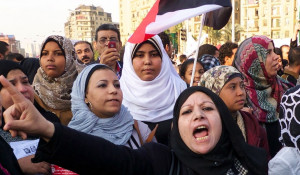
    Throughout the Muslim world, Islamic Feminism is taking shape. It presents alternative discourses on gender and Islam and aims to advance women’s rights within larger issues of social justice and minority rights.

    Throughout the Muslim world a counter discourse to western, mostly secular, feminism and Islamic fundamentalism is taking shape in the form of Islamic Feminism. While this is not a new phenomenon, having started primarily in Egypt in the 1950s, Islamic Feminism is increasingly gaining ground. The North African kingdom of Morocco and Malaysia form the bookends of this discourse that proposes to embed the advancement of women’s rights within larger issues of social justice and minority rights. It explores new readings of sacred scriptures that challenge historic patriarchy within Muslim tradition. At the forefront of this approach is Musawah (Equality in Arabic), an international network of scholars, activists, and lawyers. Musawah grew out of the groups Sisters in Islam and Karama (Dignity), both of which promote understandings of Islam that foster justice, equality, freedom, and dignity, especially for women. Founded in 2009 in Malaysia, Musawah’s headquarters moved to Morocco in 2015.

    The Moroccan King and Women’s Rights

    Islam is one of the pillars of Moroccan identity, and King Mohamed VI is a strong advocate of an “open, moderate Islam” based on the Maliki School of Islamic jurisprudence and Sunni Sufism. Since 2013, the Moroccan government has actively sought to train imam students from Tunisia and Libya as well as several West African countries, thus exporting Morocco’s Islam as a counterpoint to more radical or fundamentalist versions. In his dual capacity as Head of State and Commander of the Faithful (amir al mu’minin), the king is in the unique position of shaping religious discourse concerning women without resorting to authoritarian state-imposed feminism, as was the case in pre-revolution Tunisia. There, the government under dictator Zine El Abindine Ben Ali repressed religious discourse on women’s rights, a course that was reversed when, in the first free and democratic post-uprising elections in 2011, the religiously based Ennahda party was elected to government, allowing for a religiously inspired discourse on gender equality.

    Meanwhile in Morocco, under the auspices of the Moroccan King, a Center of Feminine Studies in Islam within the Rabita mohammadia des Oulémas (Royal Council of Religious Scholars) was established. Asma Lambrabet, a medical doctor and vocal proponent of Islamic Feminism, was the appointed director of this Center.

    Islam as a dynamic religion

    6444263899_3382108d6b_b

    Image by Iokha via Flickr.

    Islamic feminism is based on the idea that Islam is a dynamic religion, the eternal message of which needs to be adapted to changing historical circumstances. This interpretive process, called ijtihad (independent reasoning of the sources of Islamic law) involves the sacred texts of the Qur’an, sunnah (sayings and doings of the Prophet) and hadith (saying attributed to the Prophet). Islamic feminist ideas challenge predominant androcentric, absolutist theological concepts of authority. In so doing, women are appropriating religious authority, historically a domain controlled by men.

    The Moroccan Asma Lamrabet’s and U.S. scholar Amina Wadud’s writings enjoy wide popularity, especially among young Muslims who want to find answers to the question what it means to be a Muslim in the modern world. Faced with increasingly conservative and radical interpretations of sacred texts, these two scholars offer a religious perspective on modern identity formation that is not primarily western or secular. They exemplify how Muslim women can appropriate sacred texts, a fundamental strategy of their empowerment and personal development.

    Who holds religious authority?

    Lamrabet and Wadud address head-on an age-old question: Who has the authority to interpret the sacred texts? Each scholar in her own way is appropriating authority over textual analysis and, in doing so, is creating a new voice, a new way of approaching gender and women’s rights within an Islamic context. Together, their work exists within the larger context of challenges to conventional religious authorities in contemporary Muslim societies. Just as the role of the traditional ulama (Islamic scholars) has been challenged by the rise of alternative sources of religious authority – such as Internet fatwas and satellite TV imams – that claim equal legitimacy, Islamic feminists demand this right for themselves. If men with limited scholarly theological training can exert influence—uncontested by conservative scholars—why would alternative interpretations by women not fit into this colorful landscape of religious authorities?

    One of the earliest and most important pioneers of Muslim feminist scholarship is Morocco’s Fatema Mernissi (1945-2015). She was among the first to turn to the Qur’an to advance a reformist interpretation of the sacred texts with a view to supporting gender equality. In addition, Mernissi placed women’s rights within a larger context of social and economic justice. Today, Mernissi is Morocco’s most widely translated and internationally read author. Ironically, it was only after her death a year ago that she became widely known in her home country and finally gained publicly acknowledgement for her contributions.

    Islamic feminist hermeneutics considers the Qur’an as a historical text, revealed at a particular time and place. Over time, then, certain interpretations need to be reconsidered or refuted in accordance with the principles and egalitarian spirit of the texts. As Mernissi has repeatedly argued, sacred texts have been used as a political weapon to uphold laws that treat women as legal minors. This action is possible because traditional Islamic theological scholarship lacks fundamental historic contextualization, fails to acknowledge that knowledge production always occurs within a given historical context, and downplays the possibility of human fallibility in any hermeneutics. Recognizing such limitations is an important element of Islamic Feminist thought. Inasmuch as Mernissi critiqued the gender inegalitarian reality, she also was critical of promoting women’s rights without simultaneously advocating for social and economic justice.

    Pioneers of Islamic Feminism

    Thus, Mernissi, Lamrabet, and Wadud represent important alternative voices in scholarly discourses on gender and Islam. There certainly are other, important proponents of Islamic feminism. Margot Badran has written about Islamic Feminism for more than a decade, mostly focusing on Egypt. One of the founders of Musawah, the Malaysan Zainah Anwar, Iranian born scholar Ziba Mir-Hosseini and South African Farid Esack have also emerged as important advocates and scholars in re-interpreting concepts that traditionally have undergirded male superiority such as quiwamah (male authority), wialya (guardianship), mixed marriages and one of the cornerstones of inequality: inheritance laws.

    Thus, Islamic Feminism aims to liberate Muslim women from archaic and limited roles with negative social and economic consequences. Islamic Feminism argues for pluralistic interpretations of sacred scriptures, as a means by which global feminists can establish a dialogue based on the deconstruction of traditional knowledge that is masculine and patriarchal. It allows the reconciliation of Islam and modernity and goes beyond the false dichotomies of Muslim and secular, modernist and traditionalist, East and West.

    Dr Doris H. Gray directs the Hillary Clinton Center for Women’s Empowerment at Al Akhawayn University in Ifrane, Morocco where she is also Assoc. Professor of Gender Studies. She is the author of “Beyond Feminism and Islamism – Gender and Equality in North Africa” (I.B. Tauris 2102, second revised edition 2014) and “Muslim Women on the Move – Women of Moroccan and French Origin speak out (Rowman and Littlefield, 2008) and editor of “Gender, Law and Social Change in North Africa” (Cambridge University Press, 2017)

  • Global militarisation

    Image of Losing Control: Global Security in the Twenty-first Century

    • Purchase from Amazon:
    • Losing Control: Global Security in the Twenty-first Century
    • Author: Paul Rogers
    • Publisher: Pluto Press ()
    • Binding: Paperback, pages
    • Price: £15.99

  • Sustainable Security

  • How the Competing Security Needs of Caribbean Community Members have Crystallized Through Multilateralism and Consensual Decision-Making

    The global financial economic crisis continues to have significant bearing on small states in the areas of trade, tourism, remittances and aid and is compounding many of the challenges already confronting these countries, such as deepening unemployment, and budgetary pressures on critical areas of state expenditure. The latter include defense and internal security commitments. Caribbean economies have been particularly hard-hit by the global downturn, being vulnerable to perennial disasters such as hurricanes and particularly prone to shocks in tourist activity and international oil price fluctuations.

    In addition to these perils, the region’s political leaders have been racked by the economic and social effects of serious crime and violence associated with the increasingly insidious drugs and arms trade and gang-related violence. In response, some governments have resorted to the adoption of exceptional legal and security measures such as the co-opting of military forces to augment the manoeuvres of civil authorities.

    This paper provides an outlook of the imperative of Caribbean Community members to seek out and obtain foreign aid amidst a fiercely competitive global market in which traditional international donors are similarly challenged by their own domestic and strategic priorities. It draws upon a recently inaugurated multi-year program, the Caribbean Basin Security Initiative (CBSI) sponsored by the government of the United States to illustrate how the deployment of multilateralism and consensual decision-making as tools of statecraft have crystallized a reserve of otherwise competing and differential interests.

    Background

    The Caribbean Sea is one of a limited number of internationally dispersed sub-regions which include the South China Sea, the Horn of Africa, the Somalia Coast and the Gulf of Aden where extremely high levels of shipping activity is matched by correspondingly low levels of maritime policing. The region holds key routes and approaches to the continental US from the Atlantic Ocean – the Windward Passage and the Panama Canal. It is a reputed locale for hundreds of ports, marinas and harbors and facilitates the shipping of manufactured goods as well as petroleum, natural gas, ammonia and other primary products, such as copper out of South America. Many of these items are considered “high premium cargo” by global standards, throwing into focus the significance of locale and commercial linkages.

    The Panama Canal is a key choke point for international trade flows and has attained near maximum capacity. Major expansion work on the canal is scheduled for completion in 2012. Once this occurs some of the already existing tensions in the US logistics systems will be alleviated with the redirection of substantial volumes of the maritime trans Pacific route containership services between the US west coast ports of Los Angeles, Long Beach and Seattle/Tacoma, to the east coast. Significantly, Petro-China’s acquisition in 2010 of Aramco based in St. Eustacius, one of the largest oil storage and shipping corporations in the Caribbean, with an 11.3 million barrel capacity, has made lawful commerce the more prodigious for the region.

    The immediate challenge confronting Caribbean governments is securing territorial waters and airspace from the insidious passage of drugs and firearms and other illegal cargo. According to the United Nations 2010 Annual Drug Report, Colombia, Peru and Bolivia have endured as the world’s primary sources of cocaine while 36% of the world’s cocaine user population resides in North America.  Moreover, trafficking flows have continued to be dominated by market forces.

    The Maritime Analysis Operations Centre (MAOC-N) has reported that the most common source of drug seizures has occurred in sailing vessels traveling between the Caribbean and Europe followed by freight and other motorized vessels. Further, approximately 51% of intercepted shipments in the Atlantic begin their journey out of the Bolivarian Republic of Venezuela. The United Nations Office of Drugs and Crime has deemed drugs “ the highest value illicit commodity “ currently being trafficked internationally,  and representing the most dangerous flow of profits that feeds into the long-term income sources of organized crime.

    Two tiers of countermeasures have been spelled out by the UN to successfully tackle the problem. The first is the building of national and international capacity to track and respond to the pandemic. This is a long-term and collaborative venture in respect of which the region’s political leaders have registered their commitment. The other is the requirement for “special intervention” in particularly distressed parts of the world. Given the immediate imperative to suppress illicit traffic flows in the Caribbean Basin, this region undisputedly qualifies for the second category of intervention. Such a mandate inevitably exacts prohibitive demands on domestic treasuries due to the reserve of assets and trained manpower that would need to be harnessed.

    Most Caribbean economies are heavily reliant on their service sectors for generating national revenue.  Furthermore, the global economic downturn of 2008 followed in close succession by the sharp decline of service sectors, particularly tourism, pushed many countries into a sharp and sustained recession. Gross Domestic Product (GDP) by service sector recorded in 2008 when the downturn began seeping in was: Antigua and Barbuda – 71%; the Bahamas – 80%; Barbados – 80%; Belize – 68%; Dominica – 63%; Guyana – 48%; Jamaica- 71%; St Kitts and Nevis – 72%; St Lucia – 78%; St Vincent and the Grenadines – 70%; Trinidad and Tobago – 44%. Simultaneously, external debt portfolios were buckling.  Between 2007-2008, Jamaica’s already stood at $10.1 billion; Dominica- $290,000; Guyana -$734 million and St. Vincent and the Grenadines -$253 million.

    Amidst the specter of budgetary deficits and International Monetary Fund (IMF) intervention, governments have been overtly canvassing for various forms of aid among intergovernmental bodies of the donor community and long-standing allies.  To this end overtures were made to the United States, the United Kingdom and Canada- countries that have historically provided funding and in-kind support to international communities that are committed to fighting drugs and spurring human security and alternative development programs.

     A Caribbean-United States Security Framework was inaugurated in May 2010 around which inter-governmental consultations and dialogue have synthesized into common ground. This Framework comprises:

    1) Joint-Caribbean/United States Framework for Security Cooperation Agreement

    2) A Caribbean/United States Declaration of Principles; and

    3) A Caribbean/United states Program of Action

     Thus far, $45 million has been committed to the Partnership by the US government for the Fiscal Year 2010 with a further $79 million for Fiscal Year 2011.The 2011 Foreign Aid request has allocated no more than $73 million towards military and economic aid.

     The US government has drawn upon an array of sources for funding including the Development Assistance Fund, the Economic Support Fund, the International Narcotics Control and Law Enforcement and Foreign and Military Accounts. US support also goes toward non-monetary items such as the provision of command and control systems, radios, logistical and maritime support to increase maritime interdiction capability, information sharing and maritime support for the Regional Security System as well as technical assistance aimed at improving financial crime investigations.

    The under-listed CARICOM states have already benefited from CBSI endowments:

    NON-RANDOM SAMPLE OF FUNDS COMMITTED TO CARICOM MEMBER COUNTRIES FOR DOMESTIC PROGRAMS UNDER US-SPONSORED CBSI (Source: US Department of State)

    NAME OF COUNTRY

    ENDOWMENT IN US DOLLARS

    Antigua and Barbuda

    $1.7 million

    Dominica

    $1.7 million

    Grenada

    $1.7 million

    Guyana

    $3 million

    St Lucia

    $108,000

    St Vincent and the Grenadines

    $1.7 million

    Suriname

    $450,000

    Trinidad and Tobago

    $700,000

    Barbados

    $1.6 million


    The CBSI will eventually include a US vessel with an international crew deployed to the region while Caribbean Training Logistical Support Teams will commit themselves to a platform for leading US engagement and support for maritime interdiction. A fillip to this would be the capacity of the support vessel to deliver a mobile professional training program, limited onboard classroom berthing/messing for students, its possession of a centralized supply source for spare parts and a capability to deliver cargo.

     This Program is bolstered by three significant benchmarks

    1) Political consensus that heralds a “new era of partnership”

    2) A standardized legal regime, in which the internationally accepted vehicle continues to be the United Nations system of drugs and crime conventions; as well as region-specific accords including but not necessarily limited to – the Agreement Concerning Cooperation in Suppressing Illicit Maritime and Air Traffic in Narcotic Drugs and Psychotropic Substances in the Caribbean Area 2003; the 1996 Treaty Establishing the Regional Security System to which members of the Organization of Eastern Caribbean States are signatories and the 1989 Memorandum of Understanding Regarding Mutual Assistance and Cooperation for the Prevention and Repression of Customs Offences in the Caribbean Zone

    3) The collective assets of regional security forces, among these US Southern Command (SOUTHCOM); the British Royal Navy; the Regional Security System (RSS); the Trinidad and Tobago Coast Guard and Air Wing and the Venezuelan Escuardia, which when viewed in tandem, constitute a collective force presence.

    This is clearly a win-win for the Caribbean. Through consultation and dialogue Caribbean Community members have partnered with the US  and resolving common and competing priorities and concerns amidst the ebb and flow of resources at their disposal.

    Image source: Len@Loblolly

    Serena Joseph-Harris is a former High Commissioner of the Republic of Trinidad and Tobago.

  • Sustainable Security

    The ‘High Politics’ of Sustainable Security

    If events like those in Ukraine have taught us anything it is that, despite the predictions of many, the potential for conflict between the major powers is still one of the defining characteristics of world politics. Crisis diplomacy and inter-state rivalry is back on the global agenda. But if policymakers, analysts and civil society actors are to try and come up with ways of reversing the trend towards an increasingly competitive, militarised and crisis-driven inter-state order, then thinking carefully through the implications of a sustainable security approach to great power politics would appear to be a most useful starting point.

    Read Article →

    Can the Nuclear Non-Proliferation Treaty outrun its double standard forever?

    The recent walkout by Egyptian negotiators at UN talks have demonstrated that, like a building with rotten foundations, the nuclear non-proliferation regime is far less stable than many believe it to be. Egypt’s actions make clear that anything less than a regime specifically geared towards addressing the reasons why some states seek nuclear weapons is a regime existing on borrowed time.

    Read Article →

  • Sustainable Security

  • Sustainable Security

  • Sustainable Security

     (This piece was originally published by Channel 4 News on  January 22, 2013 and is the first of two parts by Anna Alissa Hitzemann and Ben Zala)

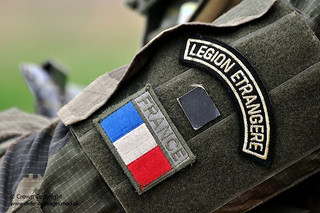
    France Mali smallBritain is on standby and the US is already transporting French troops into Mali. But a new paper says the west is “betting on the wrong horse” by intervening in the region.

    Now well over a decade after the beginning of the so-called war on terror, yet again, another western nation is leading a military intervention against Islamist paramilitaries based in a largely ungoverned region of a state in the Global South, write Anna Alissa Hitzemann and Ben Zala for the Oxford Research Group.

    The hostage situation in Algeria that developed late last week is just the latest in a series of western hostage takings in recent years, demonstrating the increasing radicalisation of elements in the region.

    The French-led intervention in Mali is only one of many in a growing list of attempts to control outbreaks of political violence and terrorism with military means.

    As the intervention gathers pace, it is worth reflecting on the lessons from similar operations over the past decade or so. From the US-led interventions in Afghanistan and Iraq to the attempts to control Islamist-inspired political violence in Yemen, Nigeria and Somalia and separatist rebellions in Burma, Indonesia and elsewhere, the resort to military force has singularly failed to achieve the aims set for it.

    Common to all of these examples is the reluctance to match military operations against rebel groups and insurgents with serious, long-term efforts to address the factors that underlie the feelings of resentment and marginalisation that drive such conflicts.

    As the commentary and analysis of events in Mali follow the fortunes of the military battles of France and its other western and African allies, it is worthwhile examining the political, socio-economic and cultural divisions which have sparked the uprising in the north of Mali.

    Background to the northern uprising

    The factors that led to the current Malian crisis are complex but can largely be attributed to unintended consequences of the war against Gaddafi. It is clear that the 2011 crisis in Libya, followed by foreign intervention and Nato’s military involvement, and the consequent fall of Gaddafi‘s regime, had a crucial role to play.

    After losing the war in Libya, hundreds of Malian mercenaries (many of whom had been recruited among former Tuareg rebels) who had been an integral part of Gaddafi’s army, returned home. They brought with them an arsenal of weapons and ammunition as well as experience.

    These soldiers who returned to Mali from Libya played a key role in the formation of the largely Tuareg-led secular MNLA (Azawad National Liberation Movement), which in a matter of months, took over several key towns in the north of Mali, declaring an independent Azawad state.

    The situation in the north of Mali led to widespread frustration within the military over the government’s incompetence or unwillingness to deal with the issue and reclaim their territory. Ultimately, it led to the April 2012 military coup by Amadou Sanogo against Mali’s elected government and president Amadou Toumanie Touré.

    Interestingly enough, Sanogo himself had received extensive training by the United States as part of the $600m (£380m) spent by the US government in efforts to train military of the region to combat Islamic militancy.

    The actions of the separatist MNLA group and the consequent military coup and inability of the Malian government and military forces to control the situation led to a violent conflict in Mali’s north which includes four main groups: the secular MNLA and the religiously motivated AQMI (Al-Qaeda of the Islamic Maghreb), Ansar Dine and MUJAO (Movement for Unity and Jihad in West Africa).

    AQIM, the group most closely linked to the international terrorist network Al-Qaeda, has been present in Mali for several years now, has taken several European hostages over the last few years and is said to be made up of mostly Algerians and Mauritanians with much financial support from abroad.

    Tuareg rebellion and the paths not taken

    The formation of the Tuareg-led MNLA movement and its desire for an independent Azawad state has in fact deep roots and a history going back to the first Tuareg rebellion of 1963. Tuaregs led significant armed struggle and resistant movements against colonisation by the French and later the central Malian government.

    Long-term sustainable security and stability for Mali will not be possible without seriously addressing the long-standing and deep-seated grievances that stem from the marginalisation of the northern territories and their peoples.

    The political, socio-economic, educational and cultural marginalisation of the north cannot be ignored. With the effects of climate change, increasing desertification and the government’s reluctance to implement meaningful development programmes, Tuareg and other nomadic communities see no viable future and feel abandoned by the Malian state.

    Grievances also stem from past brutal repressions of Tuareg movements, as well as the state’s failure to adhere to the Algerian brokered peace agreements between Tuareg rebels and the government.

    Even after the Tuareg rebellions of the early to mid 1990s, the Malian government still remained unwilling or unable to implement the education programmes and development projects which were promised and are necessary to alleviate poverty and a deep sense of disenfranchisement.

    The political, socio-economic, educational and cultural marginalisation of the North cannot be ignored.

    It would have been wise to negotiate and come to an agreement with the MNLA at the early stages of the current crisis. Both Burkina Faso and Algeria pushed for a diplomatic solution to this crisis instead of military intervention.

    Burkina Faso’s president, Blaise Compaore, West Africa’s mediator on the Malian crisis, had organised talks between MNLA, Ansar Dine and the Malian government in Ouagadougou in December. A ceasefire was agreed and all parties approved to adhere to further peaceful negotiations.

    The talks which had been planned to continue this January have now been interrupted due to the French military intervention in Mali.

    The chance of finding a solution to combating Islamic extremism in northern Mali would be significantly better if the Malian and French military sought a way of collaborating with the Tuaregs. This is a challenging task but a task that is unavoidable over the long-term.

    It is the resentment towards the central government over the marginalisation of the northern territories and its population that in part has helped Islamists gain strength.

    Dr Ben Zala is Ben Zala is a Lecturer in International Politics at the University of Leicester.

    Anna Alissa Hitzemann is a  Peaceworker with Quaker Peace and Social Witness. She currently works with Oxford Research Group as a Project Officer for the Sustainable Security Programme, with a focus on our ‘Marginalisation of the Majority World’ project.

    Image source: Defence Images