Blog

  • Competition over resources

    While the public debate about resource conflicts focuses on the risk of supply disruptions for developed countries, the potentially more risky types of resource conflict are usually ignored. As part of a two-year research project on behalf of the German Federal Environment Agency, adelphi and the Wuppertal Institute for Climate, Energy, and Environment have analyzed the risks of international conflict linked to natural resources in a series of reports titled Beyond Supply Risks – The Conflict Potential of Natural Resources.

    Article source: The New Security Beat

    Image source: Olmovich

    Read more »

  • Sustainable Security

    Far-right terrorism has re-emerged as a serious security issue in the United States. What are is the drivers behind this phenomenon?

    The recent violence in Charlottesville Virginia, perpetrated by white supremacists and neo-Nazis that had gathered for a “Unite the Right” rally, has refocused attention on right-wing terrorism in the United States.  During the rally, James Alex Fields Jr., a possible neo-Nazi sympathizer, drove a car into a crowd of counter-demonstrators, killing one person and seriously wounding 19 others.  The car attack has been described by U.S. Attorney General Jeff Sessions and Republican and Democratic elected officials alike as an (alleged) act of right-wing domestic terrorism, and the U.S. Justice Department has promised to open an official civil rights investigation of the incident.

    What are the macro-causes of domestic right-wing terrorism in the United States?  In a published study, I attempted to address this question by statistically evaluating all identifiable “right-wing” terrorist attacks in the United States for the period 1970 to 2011.  My goal was to try to determine the economic, social and political factors that drive right-wing terrorism.  In the study, terrorism is defined as an act of premeditated political violence perpetrated by nongovernment organizations intended to influence a wider audience.  I identified domestic terrorist incidents as “right-wing” if they were perpetrated by groups or individuals that were motivated by racist, white supremacist, antiabortion and violent, extreme antigovernment ideologies.

    It is important to distinguish the events in my analysis from hate crimes, which are spontaneous rather than premeditated or strategically-calculated acts, and from legal, nonviolent far-right political activities.  The groups and individuals in the analysis are outside of mainstream politics in the United States and have deliberately adopted the use of violence to achieve their goals, rather than nonviolent political strategies such as voting, lobbying and forming protest movements.

    The drivers of US far-right terrorism
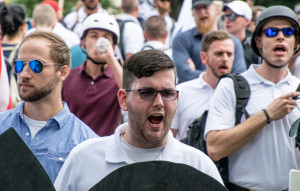
    James Alex Fields, Jr., who conducted the Charlottesville car attack. Image credit: Rodney Dunning/Flickr.

    It does not seem that right-wing terrorism is driven by economic grievances or distress.  Across the board, socioeconomic factors that are commonly argued to produce resentments that fuel right-wing terrorism were not significant.  For example, right-wing terrorism is not more likely to occur in U.S. states that have a larger percentage of their populations below the poverty line or that have higher levels of unemployment or income inequality.  I specifically examined two economic factors commonly argued by scholars to be associated with the rise of violent right-wing extremism: the structural decline of blue-collar manufacturing and the “Farm Crisis” that took hold of the United States in the 1980s.  Both of these are said to have produced strong resentments that violent right-wing groups exploited to garner recruits, thereby becoming more active and dangerous.  Neither of these factors, however, do a good job predicting when and where right-wing terrorism occurs in the United States.

    States that have suffered heavy industrial manufacturing job losses in a given year or a decline in family farms due to foreclosure do not disproportionately experience right-wing terrorism.  The apparent lack of a direct relationship between economic distress in the United States and right-wing terrorism mirrors findings for terrorism writ-large, globally.  Other studies of economically-aggrieved countries or individuals have not found them to be more terrorism-prone.

    I also examined a series of social factors.  The propaganda of right-wing extremist groups often mentions immigration, growing ethnic diversity and the decline of white demographic dominance in the United States as motivating threats.  Far-right protestors in Charlottesville illustrated this by chanting “You Will Not Replace Us!” and “Blood and Soil!”  However, I did not find actual racial and ethnic diversity on the ground to be a statistically significant driver of right-wing terrorism.

    Nationwide, the increase in the nonwhite population, and the growth of the nonwhite Hispanic or Latino population, in the United States, bears little relation with ebbs and flows of right-wing terrorist attacks.  Similarly, states with rapidly growing nonwhite population were not found to experience more right-wing attacks.  This does not foreclose the possibility that growing ethnic diversity in the U.S. is a driver of right-wing terrorism.  However, it is possible that the perceived rather than actual threat of demographic change and growing diversity fuels violent extremism.  This effect might be better revealed by a study of individual attitudes as drivers of terrorism.

    Related to fears among violent right-wing extremists that whites are being “replaced” by nonwhite immigrants and others is the belief among extremists that traditional male roles have been undermined by the empowerment and enhanced personal autonomy of women in contemporary America.  I investigated this by testing two measures of women’s status: the national rate of female participation in the workforce and the rate at which women seek abortions.  Both of these are frequently-used measures of actual women’s empowerment and are also potent political and cultural symbols of women’s equality.  I find both to be associated with a significant increase in right-wing terrorism.

    Holding constant other factors such as past experience of right-wing terrorism at the state level, unemployment, income, population, urbanization, size and growth of the economy and region of the country, I found that for each five percent increase in women’s employment nationally, the U.S. states experienced a 50 percent increase in rates of domestic right-wing terrorist attacks.  Similarly, for every increase of 10 medical abortions per 10,000 live births, a state experienced a 24 percent increase in right-wing terrorist attacks.  Of course it is possible that this latter abortion rate finding is simply reflecting abortion clinics being targeted by anti-abortion extremists.  However, when I removed attacks on abortion clinics from the data, the abortion rate in a state still is a statistically significant predictor of terrorism. This suggests that the controversy of abortion itself is a driver of all types of right-wing terrorism.

    Figures 1 and 2 help to illustrate these effects.
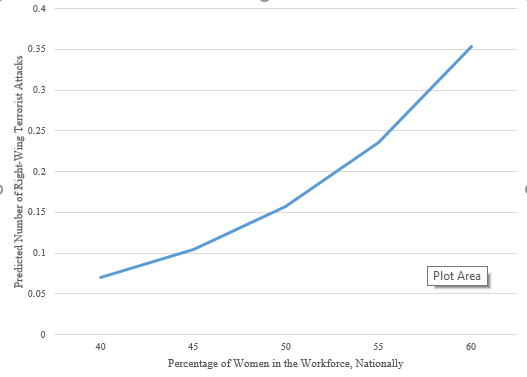
    Figure 1. Impact of Women’s Employment on Right-Wing Terrorism
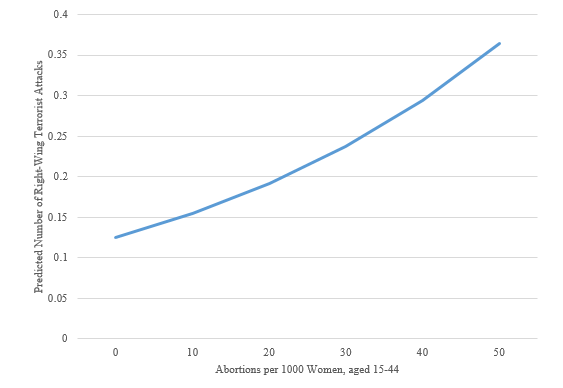
     

    Figure 2. Impact of Abortion Rates on Right-Wing Terrorism


    Finally, I considered some political and policy factors that have been hypothesized to drive right-wing terrorism. There are several schools of thought on the impact that partisan control of government might have on violent right-wing extremism.  One holds that when Republicans win elections and hold public offices, violent far-right extremists increase their activities because they feel emboldened.

    The other school argues that Democratic Party control, and policies that Democratic politicians frequently seek to enact such as gun control or enhanced social policies that increase the size of the federal government, antagonizes right-wing extremists, prompting them to strike back by launching terrorist attacks.  I tested for both and found that right-wing terrorist attacks were more common when a Democrat controlled the White House, and increased dramatically after the elections of both Bill Clinton and Barack Obama.

    In fact, Democratic control over the White House increases right-wing attacks by almost 73 percent.  Figure 3 presents the different projected rates of right-wing terrorism under Democratic versus Republican presidencies.  The partisan effect, however, seems limited to national politics.  Partisan control over state government does not significantly affect patterns of right-wing terrorism.
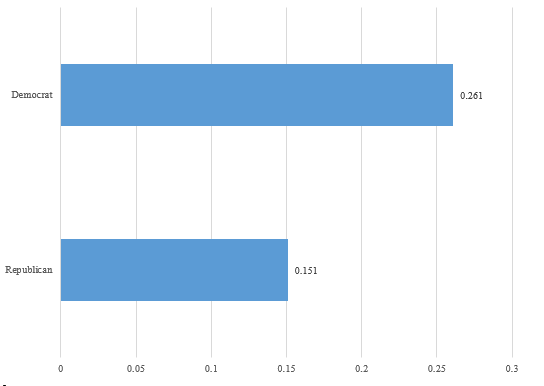
    Figure 3. Predicted Right-Wing Terrorism Under Democratic and Republican Presidencies


    This particular finding is interesting given the argument that U.S. President Trump has emboldened right-wing extremists through his rhetoric and his policies and policy proposals.  However, the impact of the Trump presidency cannot be assessed by the study as the analysis does not cover terrorism after 2011.  The data I used to conduct the original analysis has not yet been updated through 2017, when Trump assumed office.  It will be critical to retest the role of partisan control over the White House once this data is available.

    While who controls the White House is found to affect patterns of right-wing terrorism, the national partisan effect seems to not be linked to specific federal government policies.  Policies such as increases in federal income taxes or the 1994 federal ban on the sale assault weapons – both of which were an anathema for right-wing extremists – are not statistically significant predictors of attacks.

    Conclusion

    The sum of these findings is that several of the more symbolic factors, such as reaction against the empowerment of women or control over the government by an ideological “enemy,” that are significant drivers of terrorism rather than structural economic factors, demographic change or government polices enacted.  This finding is, perhaps, not so surprising.  On a general level, symbolic issues are frequently important motivators for terrorists world-wide.  Consider, for example, the symbolic importance of cleansing Muslim society from the influence of Western culture for a movement like Boko Haram in Nigeria or reconstructing an imagined Caliphate for the Islamic State (ISIL) movement.  More specific to the phenomenon of right-wing terrorism, the results underscore the potency of the U.S. President as a (singular) symbol of government and political direction of the country as well as the cultural impact of changing women’s statuses.

    It is also important to consider that the study is very much a preliminary investigation into the drivers of domestic right-wing terrorism.  The study focused on the most basic structural factors that precipitate right-wing terrorism.  Future research might look beyond structural precipitants to examine factors that facilitate the motivation, planning and execution of right-wing terrorist attacks, such as the role played by social media, hate speech online, etc.

    Author’s Note: Graphs of marginal effects of a 5-unit change (Women’s Employment), 10-unit change (Abortion Rates) and 1-unit change (Republican to Democrat) on counts of right-wing terrorist events. In models, state unemployment rate, inequality, population, population growth, urbanization rate, area, gross state product per capita, growth of gross state product per capita, region (Midwest, South, West) and previous year right-wing attacks are controlled for.

    James A. Piazza is Liberal Arts Research Professor of Political Science at the Pennsylvania State University. Piazza’s research focuses on terrorism, counterterrorism, political violence and intra-state armed conflict. His published work has appeared in the American Journal of Political Science, the Journal of Politics,International Organization, Comparative Political Studies, International Studies Quarterly, Journal of Conflict Resolution, Public Choice, Journal of Peace Research, Political Psychology, Conflict Management and Peace Science, Political Research Quarterly, Foreign Policy Analysis, International Interactions, Defence and Peace Economics, Southern Economic Journal, Security Studies, Terrorism and Political Violence and Studies in Conflict and Terrorism. He can be contacted at . His website:  http://polisci.la.psu.edu/people/jap45
  • New UN Resolution on Uranium Weapons

    148 states have supported a United Nations General Assembly resolution calling on state users of depleted uranium weapons to reveal where the weapons have been fired when asked to do so by affected countries.

    The resolution was passed by a huge majority, with just four countries opposing the text. As with previous UN resolutions in 2007 and 2008, the UK, US, Israel and France voted against. The number of abstentions was down on previous years after Belgium, Bosnia-Herzegovina, Greece, Luxembourg and Slovenia voted in favour. Nevertheless, abstentions were still registered by Australia, Canada, Denmark and Sweden amongst others. The Russian Federation also abstained, while China declined to vote.

    The resolution was triggered by growing concern over the US’s failure to release information on the whereabouts of at least 400,000kgs depleted uranium munitions used in Iraq. Question marks also remain over whether the weapons have been used in Afghanistan, Somalia and Chechnya. Research by ICBUW has shown that the rapid release of targeting data after conflicts is crucial in reducing avoidable civilian exposures; recommendations that national authorities monitor soil and water contamination and, where necessary, decontaminate sites, are also reliant on this data.

    The UK, US and France maintain that it is up to the users of the weapons to release this data at a time and in a manner of their own choosing. While the UK has shared information on their use of the weapons in Iraq in 2003 with UN agencies, the US has made no effort to do so. It is now 19 years since the first major use of depleted uranium in Iraq.

    In a joint statement explaining their position during the first round of voting at the First Committee, the UK, US and France wrote: “[Operative paragraph 6] requests that states that have used depleted uranium in armed conflict to provide information about its use. We have serious doubts on the relevance of such a request, according to IHL [International Humanitarian Law]. We consider that it is up to each state to provide data at such a time and in such a manner as it deems appropriate.

    The attempt by these countries to try and conflate the resolution with IHL has been challenged by legal specialists, who pointed out that it is not a question of whether it is appropriate under IHL but rather whether the request in itself is reasonable. It is clear that 148 states felt that it was.

    Reacting to the vote, an ICBUW spokesperson said: “It is abundantly clear that even the most conservative mitigation measures are made much more difficult by the failure of states to promptly identify where the weapons have been used.

    “The US, UK and France’s ongoing apparent policy of non or limited disclosure is outrageous and at odds with their legal obligations to protect civilians and the environment during and after conflict.

    “The feebleness of their attempted justification for their position makes clear that they have few concerns over the long-term impact of these munitions on civilians, and are instead solely interested in protecting their toxic and outdated weapons. This is the strongest level of support for a resolution on this issue yet and we believe it reflects a growing impatience with the users of these weapons.”

    On learning of the results, UK campaigners reacted angrily, accusing the UK government of hypocrisy and of ignoring the wishes of its own parliament. In the run up to the vote, 90 Members of Parliament had signed a motion calling on the government to support the resolution, while representatives from all the main UK parties had written to the press to highlight the text.

    A spokesperson for the UK Uranium Weapons Network said: “The UK’s decision to vote against the resolution is extremely disappointing. Sites contaminated by land mines, cluster munitions or depleted uranium all represent a post-conflict hazard to civilians.

    “All these sites require remedial work and, as a vast majority of states recognise, including those states that have had to endure the impact of these weapons, this work is impossible without full transparency over where the weapons have been used.”

    As with previous years, the resolution was submitted by Indonesia on behalf of the Non-Aligned Movement. In addition to the general call for transparency, it also recognised the importance of implementing recommendations by UN agencies to help mitigate the hazards from depleted uranium. Discussion over the long-term impact of these weapons is ongoing but the World Health Organisation and International Atomic Energy Agency both call for sites to be marked, and where necessary decontaminated. The United Nations Environment Programme has called for a precautionary approach to the use of the weapons due to ongoing uncertainties about the environmental behaviour of uranium contamination.

    Resolutions passed in 2007 and 2008 accepted the potential risk from depleted uranium weapons and called for more focused research on affected states. This research has been hindered the lack of transparency from users.

    The full list of abstainers is as follows: Albania, Andorra, Australia, Bulgaria, Canada, Croatia, Czech Republic, Denmark, Estonia, Georgia, Hungary, Kazakhstan, Kyrgyzstan, Latvia, Lithuania, Micronesia, Palau, Poland, Portugal, Rep of Korea, Rep of Moldova, Romania, Russian Federation, Sao Tome and Principe, Slovakia, Spain, Sweden, TFYR Macedonia, Turkey and Ukraine.

    Article source: International Coalition to Ban Uranium Weapons

    Image source: BlatantWorld.com

  • Militarisation and Negotiated Agreements: Avoiding the Pitfalls

    Long-time and widely respected arms control watcher, Michael Krepon has written an interesting post on the Arms Control Wonk website about the perils of assuming that a negotiated outcome is always a good one. As the phrase goes, “the devil is in the detail” and looking very carefully at the relationship between militarisation and the provisions that get contained in treaties is all important.

    Krepon puts forward his top three worst treaties or treaty provisions all of which “sought to constrain conflicts and eminently usable weapons without addressing the underlying reasons for war.”

    Very interesting reading in light of the on-going problems with the role of long-range conventional weapons (both offensive and defensive) in the US-Russian ‘new START’ treaty and any potential successor agreements. Also raises a number of issues that should be in the forefront of the minds of those trying to find a negotiated settlement to the Iranian nuclear dispute.

    The full article can be accessed here.

    Image source: UN.

  • Parag Khanna on Marginalisation, the ‘BRICS’ and the Arab Revolt

    What do Egypt, Iran, Pakistan, and Nigeria all have in common? They are very populous, Muslim-majority countries, all facing constant political unrest and on the brink of collapse. And yet they are also all part of Goldman Sachs’ “Next Eleven,” the much-anticipated extension of its fabled category of “BRICs” — comprised of Brazil, Russia, India, and China.

    Perhaps no term has so captured the global analyst community since the coinage of “emerging markets” itself. Even international relations theorists have tried to make BRICs a concrete object of study at academic conferences, shunting aside traditional approaches to understanding rising powers. BRICs has also inspired comical copy-cats such as BRICSAM (adding South Africa and Mexico), CIVETS (Colombia, Indonesia, Vietnam, Egypt, Turkey, South Africa), and VISTA (Vietnam, Indonesia, South Africa, Turkey and Argentina).

    Sadly, it seems that economists have been infected with diplomacy’s proclivity for seeking to have their favorite state included in the hot club irrespective of merits. In doing so, they often fail to ask the right questions beyond which acronym rolls of the tongue most easily. By focusing on simple headline indicators like population size, GDP growth rate, and equity indices (Egypt’s stock market grew ninefold from 2004-9), most analysts miss key questions like the degree of inequality and ethnic volatility, levels of unemployment and corruption, proportion of military control of the economy, whether a stable succession plan to the next generation of leadership is in place, the sustainability of investments, quality of economic diversification efforts, capacity to absorb commodity price shocks, and resilience to capitalize the financial sector in times of crisis.

    Clever turns of phrase can fool many except those who actually spent time in emerging markets and ask tough questions. To research my first book The Second World: How Emerging Powers are Redefining Global Competition in the 21st Century, I traveled through over 40 such nations, and found that most of them are so deeply divided between their seemingly first world urban districts and business elites and their often largely third world masses and crumbling infrastructure (hence “second world”) that it is unwise to predict their fate more than five years out. The events in Egypt were not the result of the rising expectations of the middle class, since the country barely has one despite its impressive growth rate in recent years. Rather, it has been a revolt of the alienated and marginalized — a phenomenon similarly underway in Libya, Bahrain and Iran. In such places, revolution is far from inconceivable, it is inevitable.

    The fundamental instability of second world countries — which includes all the BRICs and the “Next Eleven” — hasn’t stunted the ambitions of research reports which project straight-line growth to 2040. And yet already, three decades before Goldman Sachs’ projections, it’s increasingly commonplace to drop the “R” (Russia), leaving the more viable BICs as the new core of emerging markets. Still we should be concerned, for if you read the fine print of Goldman’s projections for India, the prerequisites for India to achieve BRIC-like dreams includes improving governance, raising basic education achievement, increasing the quality and quantity of universities, controlling inflation, introducing a credible fiscal policy, liberalizing financial markets, boosting trade with neighbors, elevating agricultural productivity, and cleaning up the environment. As if this list isn’t generic yet daunting enough, it makes no mention of the Maoist inspired Naxalite movement that has racked close to half of India’s states.

    I don’t know what sexy acronym our leading investment banks’ rock-star economists will come up with next, but I hope their indicators will start to factor in whether a large population is being harnessed or whether it is seething youth bulge, and whether economic growth is coming at the cost of ecological sustainability. More convincing than most of the countries celebrated as BRICS, CIVETS, or VISTA are places like Kazakhstan (perhaps add a “K” and spell BRIC correctly?) that have made tough decisions and cleaned up their banks, or Malaysia, which is diversifying its economy and beating the oil curse.

    In my travels through dozens of emerging and frontier markets, I’ve concluded that they are highly differentiated and need to be understood one at a time, with regional trends often more significant than global ones. It is promising that Bank of America has just announced a partnership with leading political risk advisory firm Eurasia Group to provide geopolitical insights both for wealth management clients and to adjust portfolio allocations. This approach may not yield sexy categories like BRICs, but is far more likely to teach us that not all emerging markets actually emerge.

    Parag Khanna, Ph.D, is a senior research fellow at the New America Foundation and author of How to Run the World: Charting a Course to the Next Renaissance, just published by Random House.

    This article originally appeared in the Harvard Business Review and is reproduced on Parag Khanna’s website. 

  • Climate change

    To browse a list of all of the articles EXCLUSIVELY written for sustainablesecurity.org – follow this link

    Read more »

  • Climate change

    To browse a list of all of the articles EXCLUSIVELY written for sustainablesecurity.org – follow this link

    Read more »

  • Sustainable Security

    Author’s note: In this article, I use the terms “war” and “civil war” interchangeably. They refer to a contested armed incompatibility involving a government and a non-state actor that generates at least 25 battle-related fatalities annually. Whereas ethnic civil wars refer to those armed conflicts that include ethnic challengers that are at odds with the identity of a state, seek to redefine or divide the state itself, or strive for major changes in their relationship with the state ( see Sambanis 2001).

    Under what conditions can religion play a constructive role in peacebuilding and what are the obstacles to this process?

    Religion, war, and peace are among the “thickest” and multifaceted concepts. Thus, tackling the relationship between them is a daunting task and calls for a greater scrutiny.

    A great deal of existing scholarship on civil war, particularly those statistically examining the effects of various social, economic, and political factors on war dynamics, almost exclusively refer to the term “peace” in the negative sense, i.e., the absence of violence. This “narrow” approach to peace is in part driven by its simplicity that allows for large-n cross-national comparison. While useful in reaching generalizable findings, such an approach could potentially mask the underlying causes of war, preventing us from addressing the root causes of conflict eruption.

    Here I refer to peace in the positive sense, or the absence of “structural violence” that calls for going beyond the mere absence of physical violence and points toward “social justice” (see Galtung 1969). This positive or “quality peace,” in the words of Peter Wallensteen, requires the creation of postwar conditions that not only prevent countries from relapsing back into another episode of violence but also allows for security and dignity for the members of the war-torn society.

    How does religion help or hinder the creation of such circumstances? Under what conditions can religion as a powerful, potent force help reinforce and strengthen peace? What are the obstacles to religion playing such a constructive role in peacebuilding?

    A complicated relationship

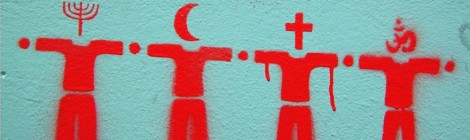
    Photo credit (edited): murdelta/Flickr. 

    A number of scholars have identified religion to be the cause of deadlier, longer, and more intractable civil wars (see Svensson 2007; Fox, James, and Li 2009; Basedau et al. 2011). Yet others have drawn attention to “the seeds of tolerance, justice, compassion, and peace” in religious traditions and argued that religion can help bring about peace and democracy (Johansen 1997, 53; see also Appleby 2000; Driessen 2010).  Religion, as Philpott states, “devastates not only New York skyscrapers but also authoritarian regimes; it constructs not only bellicose communal identities but also democratic civil society.” Thus, this group of scholars concludes that religion can also be used in conflict resolution and peacebuilding processes (see Abu-Nimer 2001; Alger 2002).

    These contradictory findings stem from a number of sources. First and foremost, the literature on the relationship between war, peace, and religion often conceptualizes and measures these concepts from different points of view. In addition to the narrow conceptualization of peace noted above, the question of what entails a civil war and how it should be operationalized has caused much controversy. While scholars often agree on what a civil war is, the casualty threshold used to mark the onset of a civil war, ranging from 25 to 1,000 annual battle-related deaths, has resulted in a number of civil war datasets on which most of empirical findings are based, and that are not always comparable.

    Second, the peacebuilding capacity of religion is applied to cases that are not necessarily analogous. For example, as Nichols argues, religious actors played a positive role in bringing about peace in the conflict between the Sandinistas and East Coast Indians of Nicaragua in the late 1980s through helping to develop a common language of conciliation and infusing Christian values into the negotiating process. Appleby, drawing on the case of Northern Ireland, maintains that religious leaders can gradually “saturate” the society by transforming the conflict environment and issues, condemn violence, and thus foster cross-communal cooperation. However, Appleby warns that such an outcome requires special situations characterized by a strong civil society and democratic tradition as well as assistance from the international community. Partly because of the lack of agreement on the casualty threshold noted above, current literature on civil war often treats the case of the Sandinistas vs. East Coast Indians within the broader conflict between Nicaragua under the Sandinistas and Contras, making it a somewhat “marginal” case. Whereas, the Northern Ireland conflict, as Appleby aptly warns, is characterized by some unique characteristics that are that are rarely present in many war-torn countries.

    Third, existing literature is still in the process of identifying the complex and complicated causal mechanisms between religion and peacebuilding. This is in part due to the ambivalent, contextual nature of religion. Religion and politics are connected in complicated ways that make it nearly impossible to disentangle one from another. A religious tradition as Armstrong summarizes is “never a single, unchanging essence that impels people to act in a uniform way.” Instead, religions and religious interpretations “are susceptible to different readings in different contexts and become entangled in or influenced by newer sociopolitical context”. In the context of civil war, religion often becomes a part of the political arsenal to sustain the fight. As religion turns into another instrument of legitimation and mobilization in the hands of political actors it loses its power as a peacemaker.

    Finally, and relatedly, the politicization of religion is most prevalent in ethnic civil wars in which fighters are lined up along identity lines and rebels are by and large secessionist in goals or desires. Therefore, the effect of religion on conflict processes in a case like Chechnya where Muslim Chechens fought destructive civil wars against Russia dominated by Orthodox Christians needs to be distinguished from the role religion plays in ethnic conflicts that involve groups hailing from the same faith, as in the case of Kurds vs. Turkey. While civil war between groups hailing from different faiths can contribute to identity formation in such a way that fuels the violence, war between co-religionists does not necessarily help foster peace. Instead, religion as the common denominator is often subsumed to ethnic, national identities and interests. The war realities often constrain, if not shape, religion, rendering religion an ineffective peacemaker (Gurses 2015).

    Religion and ethnic civil war

    Nicolas Rost and I have shown that due mainly to this “politicization of religion,” the hypothesized peacemaker role of religion does not hold against a global sample of ethnic civil wars. War and country characteristics, rather than shared religion, are better predictors of peace duration after ethnic civil wars. While the peace duration in our study refers to the absence of violence, in further support of studies that have pointed to discriminatory state policies as the culprit behind ethnic civil war onset and recurrence (Cederman, Wimmer, and Min 2010; Gurses and Rost 2013), we found that the level of discrimination faced by members of ethnic groups that rebelled against their government after the end of the war is the most robust predictor of peace duration. Thus, state policies that address the demands of aggrieved minorities and re-adjust their relationship with the state that could make them a part of the system are more likely to help build sustainable peace. Resorting to a shared religion to help reconcile warring groups without addressing the root causes of conflict is more rhetoric than reality.

    Observations 

    • There is a need to clarify the terms in order to delineate the religion-peacebuilding nexus. The terms war, religion, and peace are multidimensional and hence defy reaching a consensus on the exact nature of religion’s relationship with peacebuilding. Avoiding law-like, general explanations is more likely to be fruitful. Just as religion’s role in identity formation varies, so does the role it plays in conflict onset, duration, outcome, as well as building peace in postwar environments.
    • The role religion plays in peacebuilding should be qualified. Religion in conflicts fought over government, also known as ideological civil wars, could take on a dramatically different role than in conflicts involving competing identities which are often secessionist in nature. While it is much easier for religious actors to mediate between warring groups that share the same ethnicity, speak the same language, and believe in the same “God,” their role is likely to be diminished, tarnished by political considerations in situations where protagonists use religion to either distinguish themselves as a group from one another (e.g., Palestinians vs. Israel) or religion as a common denominator ceases to be a marker that separates members of warring groups (e.g., Acehnese vs. Indonesia, 1976-2005; Kurds vs. Turkey, 1984-Ongoing). Thus sharing the same faith in the context of such ethnic civil wars often results in relegating religion to a secondary role as the war dynamics help bring ethnic identities front and center.
    • Sustainable peace requires addressing structural causes of violence. Merely stressing shared faith as a solution to conflict without undertaking reforms that can re-adjust the warring groups’ relationship with the state is not likely to be effective.

    Conclusion

    Religion is a potent force and can serve as a peacemaker. Its role, however, is contingent upon characteristics of the civil war and the nation in question. It is worthwhile to note that “ethnic conflict remains one of the prevailing challenges to international security in our time” and “conflicts that in some way involve an ethnic dimension can be found across each of the world’s continents”. Furthermore, as Fox notes, of 268 politically active ethnic minorities worldwide for the 1990-1995 period, 163 (61%) are not religiously distinct from the dominant group. Gurses and Rost, building on datasets drawn from two different sources, find that in about half of the ethnic civil wars that started and ended between 1950 and 2006 ethnic rebels shared the same religion as the governing ethnic group. Thus, it is essential to differentiate such cases in which religion is likely to be politicized and used as an instrument of legitimation and mobilization than those cases involving groups hailing from the same ethnicity, culture, and faith.

    Still, religion can serve as a peacemaker by injecting “meaning” and repair social ties that were destroyed during the war. Ideally a change of mind should coincide with a change of heart in order to reach positive or “quality” peace. However, given the discriminatory state policies toward ethno-national minorities that account for armed conflict, concrete measures, a change of mind, should precede a change of heart to build and sustain the peace in the aftermath of seemingly intractable ethnic civil wars. Sustainable peace is a dignified peace. Religion can help bring about sustainable peace only after ethnic minorities’ relations with the state are re-adjusted to a degree that minority groups feel secure and certain of their future.

    Mehmet Gurses is an associate professor of Political Science at Florida Atlantic University. He received his B.A. degree in political science and international relations from Marmara University in Istanbul, Turkey, and his doctorate from University of North Texas. His research interests include democracy and democratization, ethnic and religious conflict, post-civil war peace building, post-civil war democratization, Kurdish politics, and the emergence and evolution of the Islamist parties in the Middle East. His publications have appeared in International Interactions, Social Science Quarterly, Civil Wars, Defense and Peace Economics, Democratization, Party Politics, International Journal of Human Rights, Nationalism and Ethnic Politics, Conflict Management and Peace Science, and Political Research Quarterly.

  • Sustainable Security

    Author’s note: In this article, I use the terms “war” and “civil war” interchangeably. They refer to a contested armed incompatibility involving a government and a non-state actor that generates at least 25 battle-related fatalities annually. Whereas ethnic civil wars refer to those armed conflicts that include ethnic challengers that are at odds with the identity of a state, seek to redefine or divide the state itself, or strive for major changes in their relationship with the state ( see Sambanis 2001).

    Under what conditions can religion play a constructive role in peacebuilding and what are the obstacles to this process?

    Religion, war, and peace are among the “thickest” and multifaceted concepts. Thus, tackling the relationship between them is a daunting task and calls for a greater scrutiny.

    A great deal of existing scholarship on civil war, particularly those statistically examining the effects of various social, economic, and political factors on war dynamics, almost exclusively refer to the term “peace” in the negative sense, i.e., the absence of violence. This “narrow” approach to peace is in part driven by its simplicity that allows for large-n cross-national comparison. While useful in reaching generalizable findings, such an approach could potentially mask the underlying causes of war, preventing us from addressing the root causes of conflict eruption.

    Here I refer to peace in the positive sense, or the absence of “structural violence” that calls for going beyond the mere absence of physical violence and points toward “social justice” (see Galtung 1969). This positive or “quality peace,” in the words of Peter Wallensteen, requires the creation of postwar conditions that not only prevent countries from relapsing back into another episode of violence but also allows for security and dignity for the members of the war-torn society.

    How does religion help or hinder the creation of such circumstances? Under what conditions can religion as a powerful, potent force help reinforce and strengthen peace? What are the obstacles to religion playing such a constructive role in peacebuilding?

    A complicated relationship

    Photo credit (edited): murdelta/Flickr. 

    A number of scholars have identified religion to be the cause of deadlier, longer, and more intractable civil wars (see Svensson 2007; Fox, James, and Li 2009; Basedau et al. 2011). Yet others have drawn attention to “the seeds of tolerance, justice, compassion, and peace” in religious traditions and argued that religion can help bring about peace and democracy (Johansen 1997, 53; see also Appleby 2000; Driessen 2010).  Religion, as Philpott states, “devastates not only New York skyscrapers but also authoritarian regimes; it constructs not only bellicose communal identities but also democratic civil society.” Thus, this group of scholars concludes that religion can also be used in conflict resolution and peacebuilding processes (see Abu-Nimer 2001; Alger 2002).

    These contradictory findings stem from a number of sources. First and foremost, the literature on the relationship between war, peace, and religion often conceptualizes and measures these concepts from different points of view. In addition to the narrow conceptualization of peace noted above, the question of what entails a civil war and how it should be operationalized has caused much controversy. While scholars often agree on what a civil war is, the casualty threshold used to mark the onset of a civil war, ranging from 25 to 1,000 annual battle-related deaths, has resulted in a number of civil war datasets on which most of empirical findings are based, and that are not always comparable.

    Second, the peacebuilding capacity of religion is applied to cases that are not necessarily analogous. For example, as Nichols argues, religious actors played a positive role in bringing about peace in the conflict between the Sandinistas and East Coast Indians of Nicaragua in the late 1980s through helping to develop a common language of conciliation and infusing Christian values into the negotiating process. Appleby, drawing on the case of Northern Ireland, maintains that religious leaders can gradually “saturate” the society by transforming the conflict environment and issues, condemn violence, and thus foster cross-communal cooperation. However, Appleby warns that such an outcome requires special situations characterized by a strong civil society and democratic tradition as well as assistance from the international community. Partly because of the lack of agreement on the casualty threshold noted above, current literature on civil war often treats the case of the Sandinistas vs. East Coast Indians within the broader conflict between Nicaragua under the Sandinistas and Contras, making it a somewhat “marginal” case. Whereas, the Northern Ireland conflict, as Appleby aptly warns, is characterized by some unique characteristics that are that are rarely present in many war-torn countries.

    Third, existing literature is still in the process of identifying the complex and complicated causal mechanisms between religion and peacebuilding. This is in part due to the ambivalent, contextual nature of religion. Religion and politics are connected in complicated ways that make it nearly impossible to disentangle one from another. A religious tradition as Armstrong summarizes is “never a single, unchanging essence that impels people to act in a uniform way.” Instead, religions and religious interpretations “are susceptible to different readings in different contexts and become entangled in or influenced by newer sociopolitical context”. In the context of civil war, religion often becomes a part of the political arsenal to sustain the fight. As religion turns into another instrument of legitimation and mobilization in the hands of political actors it loses its power as a peacemaker.

    Finally, and relatedly, the politicization of religion is most prevalent in ethnic civil wars in which fighters are lined up along identity lines and rebels are by and large secessionist in goals or desires. Therefore, the effect of religion on conflict processes in a case like Chechnya where Muslim Chechens fought destructive civil wars against Russia dominated by Orthodox Christians needs to be distinguished from the role religion plays in ethnic conflicts that involve groups hailing from the same faith, as in the case of Kurds vs. Turkey. While civil war between groups hailing from different faiths can contribute to identity formation in such a way that fuels the violence, war between co-religionists does not necessarily help foster peace. Instead, religion as the common denominator is often subsumed to ethnic, national identities and interests. The war realities often constrain, if not shape, religion, rendering religion an ineffective peacemaker (Gurses 2015).

    Religion and ethnic civil war

    Nicolas Rost and I have shown that due mainly to this “politicization of religion,” the hypothesized peacemaker role of religion does not hold against a global sample of ethnic civil wars. War and country characteristics, rather than shared religion, are better predictors of peace duration after ethnic civil wars. While the peace duration in our study refers to the absence of violence, in further support of studies that have pointed to discriminatory state policies as the culprit behind ethnic civil war onset and recurrence (Cederman, Wimmer, and Min 2010; Gurses and Rost 2013), we found that the level of discrimination faced by members of ethnic groups that rebelled against their government after the end of the war is the most robust predictor of peace duration. Thus, state policies that address the demands of aggrieved minorities and re-adjust their relationship with the state that could make them a part of the system are more likely to help build sustainable peace. Resorting to a shared religion to help reconcile warring groups without addressing the root causes of conflict is more rhetoric than reality.

    Observations 

    • There is a need to clarify the terms in order to delineate the religion-peacebuilding nexus. The terms war, religion, and peace are multidimensional and hence defy reaching a consensus on the exact nature of religion’s relationship with peacebuilding. Avoiding law-like, general explanations is more likely to be fruitful. Just as religion’s role in identity formation varies, so does the role it plays in conflict onset, duration, outcome, as well as building peace in postwar environments.
    • The role religion plays in peacebuilding should be qualified. Religion in conflicts fought over government, also known as ideological civil wars, could take on a dramatically different role than in conflicts involving competing identities which are often secessionist in nature. While it is much easier for religious actors to mediate between warring groups that share the same ethnicity, speak the same language, and believe in the same “God,” their role is likely to be diminished, tarnished by political considerations in situations where protagonists use religion to either distinguish themselves as a group from one another (e.g., Palestinians vs. Israel) or religion as a common denominator ceases to be a marker that separates members of warring groups (e.g., Acehnese vs. Indonesia, 1976-2005; Kurds vs. Turkey, 1984-Ongoing). Thus sharing the same faith in the context of such ethnic civil wars often results in relegating religion to a secondary role as the war dynamics help bring ethnic identities front and center.
    • Sustainable peace requires addressing structural causes of violence. Merely stressing shared faith as a solution to conflict without undertaking reforms that can re-adjust the warring groups’ relationship with the state is not likely to be effective.

    Conclusion

    Religion is a potent force and can serve as a peacemaker. Its role, however, is contingent upon characteristics of the civil war and the nation in question. It is worthwhile to note that “ethnic conflict remains one of the prevailing challenges to international security in our time” and “conflicts that in some way involve an ethnic dimension can be found across each of the world’s continents”. Furthermore, as Fox notes, of 268 politically active ethnic minorities worldwide for the 1990-1995 period, 163 (61%) are not religiously distinct from the dominant group. Gurses and Rost, building on datasets drawn from two different sources, find that in about half of the ethnic civil wars that started and ended between 1950 and 2006 ethnic rebels shared the same religion as the governing ethnic group. Thus, it is essential to differentiate such cases in which religion is likely to be politicized and used as an instrument of legitimation and mobilization than those cases involving groups hailing from the same ethnicity, culture, and faith.

    Still, religion can serve as a peacemaker by injecting “meaning” and repair social ties that were destroyed during the war. Ideally a change of mind should coincide with a change of heart in order to reach positive or “quality” peace. However, given the discriminatory state policies toward ethno-national minorities that account for armed conflict, concrete measures, a change of mind, should precede a change of heart to build and sustain the peace in the aftermath of seemingly intractable ethnic civil wars. Sustainable peace is a dignified peace. Religion can help bring about sustainable peace only after ethnic minorities’ relations with the state are re-adjusted to a degree that minority groups feel secure and certain of their future.

    Mehmet Gurses is an associate professor of Political Science at Florida Atlantic University. He received his B.A. degree in political science and international relations from Marmara University in Istanbul, Turkey, and his doctorate from University of North Texas. His research interests include democracy and democratization, ethnic and religious conflict, post-civil war peace building, post-civil war democratization, Kurdish politics, and the emergence and evolution of the Islamist parties in the Middle East. His publications have appeared in International Interactions, Social Science Quarterly, Civil Wars, Defense and Peace Economics, Democratization, Party Politics, International Journal of Human Rights, Nationalism and Ethnic Politics, Conflict Management and Peace Science, and Political Research Quarterly.

  • Sustainable Security