Blog

  • Climate Change and Glacial Lake Outburst Floods

    The following article from the Woodrow Wilson International Center for Scholars highlights the uncertainty attached to predicting the effects of climate change. Focusing on the phenomena of glacial lakes in Nepal and Peru, it begins to explore the extreme complexity that characterises the relationship between climate change and other drivers of instability, as well as what is required to manage the risk with the help of local communities.

    The article is frank in acknowledging that there is still much that we do not know about glacial lakes and outburst flooding, a knowledge gap that has discouraged risk management; but it concludes that uncertainty is no reason not to take sensible action now, because perfect information could well arrive too late.


    Glacial Lake Outburst Floods: “The Threat from Above” – Lessons from Peru to Nepal

    By Kate Diamond

    “We have never experienced so many potentially dangerous lakes in such a short period of time,” said Alton Byers of The Mountain Institute during a roundtable discussion on glacial melt, glacial lakes, and downstream consequences at the Wilson Center on October 26. “There have always been glacial lake outburst floods,” said Byers. What has changed is how quickly these lakes now grow. “Suddenly, you wake up in the morning, and now there are hundreds and hundreds of these lakes above you – the threat from above,” he said.

    Nepal’s Fastest Growing Glacial Lake

    The Imja Glacier in Nepal has been receding since the 1960s which has made Imja Lake the fastest growing lake in the country, if not the entire Hindu Kush Himalayas, said Byers in a short film produced by The Mountain Institute (TMI) about the group’s recent expedition to the region (watch below). The lake is now “more than a square kilometer in size, has more than 35 million cubic meters of water, and continues to grow at an alarming 35 meters per year,” he said.

    The lake’s terminal moraine – the buildup of glacial debris that acts as a retaining wall holding the lake waters back – is all that keeps Imja from flooding the valley below, home to a number of Sherpa communities and the starting point for many climbers scaling Mount Everest.

    When these moraines break, the result is a glacial lake outburst flood (or GLOF). And “these aren’t floods in the normal sense,” said Campbell. “These are floods that carry boulders the size of houses,” because of all the debris that gets lodged in glaciers.

    Critical Need for Research

    It is tempting to say that what is happening at Imja Lake is representative of the thousands of glacial lakes believed to exist throughout the Himalayas, but the fact is that “at this point in time, we don’t really know that much about these lakes,” or how to control them, said Byers.

    Glacial melting “is an extraordinarily complicated story,” said ClimateWire’s Lisa Friedman, who joined the Imja expedition for part of the trip. There is no “clear understanding yet of how fast glaciers are melting, of where they’re melting, of whether greenhouse gases or black carbon soot is primarily responsible.”

    There is considerable disagreement over how many glacial lakes are even in the Himalayas, TMI Executive Director Andrew Taber added, simply because of how prohibitively remote their locations often are. Byers explained that it can take as many as 10 days, plus semi-technical climbing, to reach these places, and even then some glaciers still aren’t accessible. The Siachen Glacier, for instance, has the distinction of being the world’s highest battleground (India and Pakistan have had troops stationed on the glacier since 1984).

    And yet understanding what is happening not just at Imja, but throughout the Himalayas, has continental implications. Himalayan glaciers feed nine of Asia’s largest rivers: the Yellow, Yangtze, Mekong, Salween, Indus, Ganges, Brahmaputra, Syr Darya, and Amu Darya. Those rivers, in turn, feed some of Asia’s largest population centers. The sheer number of people who depend on these rivers mean that even minor changes in glaciers’ sizes can have exponentially huge impacts downstream.

    Adapting Lessons Learned from Peru

    The Mountain Institute’s expedition was aimed at bringing lessons learned about managing glacial change from Peru to Nepal. Peru is home to 70 percent of the world’s tropical glaciers, but those glaciers are melting so quickly that some have predicted within 15 years, they could disappear entirely.

    Peru has been working to mitigate the threat of glacial melt since 1941, when a GLOF killed thousands and devastated the capital of Ancash, said César Portocarrero of the Peruvian National Water Authority (also a member of the expedition to Imja). At first, risk management meant simply diverting water from glacial lakes to lower the risk of GLOFs. Over time, though, and with community input, that strategy has expanded to include more comprehensive resource management, so that water being diverted from lakes can be captured and put to use downstream.

    Just as Peru’s mitigation work is a reflection of local needs, finding a long-term solution for Imja Lake will depend on local involvement. “When you think about science, and when you think about change, there’s something to be said for more demand driven approaches,” Taber said. “Working with local people…is more likely to lead to solutions and answers that will actually be picked up.”

    And yet, Byers said, local people have often been marginalized in research on glacial melt in the Himalayas. “There’s been 30 years of research on this and other lakes and yet no researcher has ever involved them in their research, and they had no idea what the results were,” he said. The TMI expedition made a point of incorporating local residents throughout the process.

    Acting in Spite of Uncertainty

    Portocarrero said that convincing people of the need for risk management can be difficult. “Around the world, it seems that people don’t want to work in risk management because we don’t have tangible results,” said Portocarrero. And when risk is mired in uncertainty – as it is in the Himalayas – getting people to invest in risk management becomes even harder.

    Portocarrero warned it might take a decade or more for people downstream to realize Imja and other glacial lakes pose a big enough danger and galvanize into action. “But the big question is,” he added, “are we going to wait 10 years to see the real danger?”

    Sherri Goodman, who led the CNA Military Advisory Board during its 2007 report on national security and climate change, said action can’t wait for perfect information.

    “Climate change is a threat multiplier for instability in fragile regions of the world,” said Goodman. Considering those stakes, uncertainty “can’t stop you from making smart decisions based on today’s information for adaptation.”

    Article Source: New Security Beat

    Image Source: Oxfam International

  • Sustainable Security

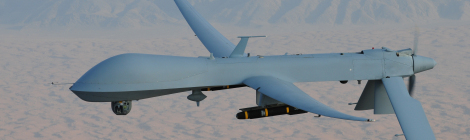
    10 years of US Drone Strikes in Pakistan – What Impact Has it Had?

    This week marks 10 years since the first reported US drone strike in Pakistan. It has also seen the resumption of US drone strikes in the country following a five-month pause. Considering the length of time the CIA-led programme has been running, a number of questions deserve consideration: namely, how effective has the decade long covert drone programme been in Pakistan and what impact have drones had on wider Pakistani society? As the military technology for remote-control warfare spreads, there is a need to question whether drones provide significant tactical advantage or whether their proliferation could lead to greater long-term global insecurity.

    Read Article →

  • Sustainable Security

  • Sustainable Security

    In Deep Water: China tests its neighbours’ patience

    Control of water, including navigation rights, resource extraction and the exploitation of shared watercourses is at the heart of today’s geopolitical tensions in Asia. China’s recent actions in the South China Sea and Himalayas have given rise to further—and at times violent—conflict over the region’s natural resources. So will water insecurity lead to greater partnership in Asia? Or will it lead to a revival of China’s traditional sense of regional dominance and undercut efforts to build a rules-based approach to growing resource conflicts?

    Read Article →

    Deforestation: REDD-y for peace or fuelling conflict?

    REDD forestry efforts don’t pay enough attention to their influence on local conflict dynamics. For REDD+ to be an effective mechanism to curb deforestation and strengthen peace opportunities, it has to pay more attention to pre-existing land and forest conflicts linked to tenure, take into account the interests of the local communities and be more sensitive to the local context

    Read Article →

    US Drone Strikes in Pakistan: ineffective and illegitimate

    Strikes by unmanned combat air vehicles, or armed drones, have become the tactic of choice in US counterterrorism efforts in Yemen, Somalia and, the topic of current controversy, Pakistan. The lack of transparency, dubious effectiveness, civilian casualties and negative consequences for US national security being highlighted by current debate means that Washington needs to re-evaluate its approach.

    Read Article →

    Can the Nuclear Non-Proliferation Treaty outrun its double standard forever?

    The recent walkout by Egyptian negotiators at UN talks have demonstrated that, like a building with rotten foundations, the nuclear non-proliferation regime is far less stable than many believe it to be. Egypt’s actions make clear that anything less than a regime specifically geared towards addressing the reasons why some states seek nuclear weapons is a regime existing on borrowed time.

    Read Article →

    Bay of Bengal: a hotspot for climate insecurity

    The Bay of Bengal is uniquely vulnerable to a changing climate because of a combination of rising sea levels, changing weather patterns, and uncertain transboundary river flows. These problems combine with already existing social problems like religious strife, poverty, political uncertainty, high population density, and rapid urbanization to create a very dangerous cocktail of already security threats. Andrew Holland argues that foresight about its impacts can help the region’s leaders work together to solve a problem that knows no boundaries.

    Read Article →

  • Sustainable Security

    Originally set up the mid-1980s, the temporary village guard system’s purpose was to act as a local militia in towns and villages, protecting against attacks and reprisals from the insurgents of the Kurdistan Workers Party (PKK). Has this system been successful as a counter-terrorism strategy and does it still have a role in the Turkey of today?

    In any counterinsurgency strategy, the separation of “bad guys” from the rest of the population is a significant objective which has a direct impact on the effectiveness of the campaign. To achieve this objective, forming, arming and using local militias may be a viable strategy, particularly in rural, remote, harshly mountainous and tribal contexts in which security forces face difficult challenges to reach the local population. In recent years, the “Sons of Iraq” or the “Anbar Awakening” case in Iraq and the “Tribal Security Forces (Arbakai)” case in Afghanistan are contemporary examples of this strategy.

    Does the strategy of forming local militias yield successful results? The existing, yet limited, literature on this subject has opened the door to speculations and interpretations that are more journalistic than scholarly. To better elucidate the effectiveness of forming local militias, this article presents the case of the “Temporary Village Guard System” (Geçici Köy Koruculuğu Sistemi)” in Turkey, which was first initiated in 1985 and has been fully active since.

    Turkey’s Village Guards System

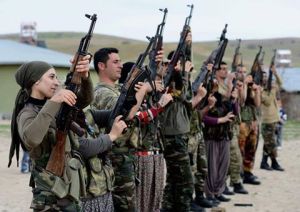
    armed-guards

    Image via Facebook.

    Since being founded in 1978, Turkey’s Kurdistan Workers’ Party (PKK) has caused approximately 20,000 fatalities, including about 11,000 civilians and 9,000 security personnel. In the meantime, about 20,000 PKK members were killed and about 6000 were captured and imprisoned. In order to thwart PKK-initiated violence, Turkish authorities have implemented many different countermeasures ranging from repressive to accommodative strategies, including the village guard system. As of January 2016, the monthly salary is approximately the equivalent of U.S. $400, along with clothing expenses and some social security benefits that came with passage of the amendments between the 74th article and 82nd article of the Village Law on March 26, 1985.

    With this legally founded, centrally appointed, and state-paid “security force,” the Turkish government created a civilian militia in the Kurdish populated southeast provinces of Turkey. Except for 300 Ulupamir Guards, who immigrated to the Van province from Kyrgyzstan, all village guards are ethnically Kurd. To supplement the employed village guard system, a “voluntary village guard” program was added in 13 more provinces, which led to the expansion of this system to 22 provinces in 1993, the year in which violence reached its peak level over the course of the conflict with the PKK. The difference between the two programs is that, while the employed village guards receive monthly salary and health benefits, the voluntary village guards do not receive a salary but are entitled to health compensation and benefits. The size of temporary and voluntary civilian armed force reached almost 60,000 by the end of the 1990s, accounting for almost one-third of the armed forces in the Kurdish region.

    As of August 2013, Muharrem Güler, then the Interior Minister of Turkey, announced that there are currently 65,456 village guards, 46,113 of whom are employed (interestingly 337 of them are women) and 19,343 of whom are voluntary (161 of them are women). Currently, the village guard system is implemented in 23 provinces. Most of the village guards are employed on the border between Iraq, Iran, and in the extremely mountainous provinces of Hakkari, Sirnak and Van because PKK has been using safe heavens in Iraq and Iran for years.

    All village guards, whether voluntary or hired, work under the supervision of the provincial Gendarmerie Commands and receive two weeks of basic military training from their provincial governor immediately after joining.

    To better understand the debate, it may be useful to examine the existing arguments for and against the Village Guard System.

    Arguments Favoring the System

    1. The village guard system has been seen a success story in Turkey’s strategy against the PKK-initiated violence to such an extent that it has become one of the main pillars of counterterror strategy. If the village guard system had not been initiated, the state authority in the region would have eventually collapsed.
    2. The village guards have first denied the mobility of the PKK both by separating them from the rest of the population as a bottom-up means of isolating them, and then prevented them from gaining territorial control.
    3. The village guards have provided intelligence to the security forces both on the territory and the activities of the PKK.
    4. The village guards have not been forced by the security forces to join this system. The existence of more than 25,000 voluntary village guards, who are not paid by the government, is a proof of this.
    5. PKK’s numbers has never exceeded the number of the village guards, even during the early 1990s, the period in which the number of the armed terrorists reached its peak level of 11,000. This is an indicator showing the low level of popular support to the PKK.

    Arguments against the System

    1. The state pitched brother against brother. If it hadn’t been for the village guards, this conflict would have never reached this intensity.
    2. The village guard system is a typical reflection of state tradition on the Kurdish issue. Enmeshed in the Kurds’ tribal networks, it exacerbated the tensions in the region. The equipping of the village guards, who were without even basic military training, increased instability in the entire region. The guard system introduced virtually extinguished social order in Kurdish daily life.
    3. The village guard system was used by the state officials as a repressive mechanism to recruit villagers.
    4. The village guards are poorly disciplined and inadequately trained.
    5. The village guards have been accused repeatedly in past years of drug trafficking, corruption, theft, rape, and other abuses. Inadequate oversight exacerbated the problem, and in many cases the security forces allegedly protected village guards from prosecution.
    6. Several reports document concerns regarding human rights violations resulting from the village guard system in Turkey.
    7. The village guard system has been responsible for deepening mistrust and ethnic divisions in an already troubled region.
    8. The village guards have moved with their families into villages that were evacuated in the 1990s and now the original villagers are returning to their villages to find the Village Guards already living there.
    9. The establishment of village guards made civilians more vulnerable to attacks.

    Has the village guard system in Turkey really worked as a counterterror strategy?

    In military terms, and despite its drawbacks and unintended consequences, the village guard system in Turkey worked well as a counter-terror strategy between 1985 and 1993 and achieved the objectives of separation of the local population from the terrorists and denying the PKK control of their hoped-for secessionist territory. Early success gained just after the implementation of the militia system needed a follow-up before the insurgency adapts. In the following years, however, it gradually waned in effectiveness when considering the increased number of PKK attacks in the period of 1993-1999, and caused increasing socio-economic and political micro-level cleavages in the region. As the big inertia in a dispersed system means resistance to change, the guards system could not easily be modified, meaning the strengthening of the existing micro-cleavages and the emergence of the new ones.

    Reasons for the decline in effectiveness

    The village guard system in Turkey was originally initiated under the assumption that the emergent threat (PKK bandits) was so local and small that it was not considered to require commitment of national security forces. This perception of PKK fighters as “a few bandits” led the Turkish government officials to the authoritization of the system in a temporally (initially, the system was designed for a two-years long period ) and spatially (only in three provinces) limited setting. However, there emerged many institutional problems as the number of village guards was enormously expanded from 800 men to 40,000 men only within a one-year-long period. The primary sources of these shortfalls would be sorted as follows: the absence of comprehensive vision at the national level and the implementation of the planning and recruitment strategy of the system at the provincial level. The absence of a national-level institutional framework which would standardize the system led to the differentiating practices in the provinces. The dramatic rise within a short period of time, when combined with the attempt of government to micro-manage the village guard system at the provincial level, led not only to confusion about the rights, missions and responsibilities of the village guards but also caused different (sometimes contradicting) practices in the following years. Fast expansion meant both weak control at the national level and different interpretations of the operational use of the guards at the provincial level.

    Furthermore, the formation of local militias may not only have pros and cons in the sphere of security but also may lead to implications in the socio-cultural sphere. The persistent characterization of the village guards as “traitor,” and the prevalent use of the term “Jash” (a Kurdish slang word for donkey) by PKK supporters to refer to Kurdish village guards, indicates the significance of the local political structure when analyzing the local dynamics of the conflict in Turkey. It is not hyperbole to suggest that the system has also changed the nature of conflict by first pushing the conflict into new areas and creating new micro-cleavages (whether tribal or at the family level) in the provinces.  These results, which clearly emphasize the explanatory power of local political structures in an ethnic conflict, confirm Stathis Kalyvas’s theorization. That is, when examining the dynamics of an ethnic conflict in a comparative perspective, Kalyvas points out that local political structures and rivalries among local groups have a great impact on shifting alliances, which are considered as acts of treason by rival factions.

    The allegation of human rights violations by militias seem to be inevitable. The absence or lack of sufficient legal mechanisms to investigate accusations, especially in combination with low levels of transparency and accountability, may lead to structural legal problems and emotional conflicts over justice in the Afghan and Iraq cases as in the Turkish case.

    To demobilize or not to demobilize?

    The Turkish government has been in a dilemma when deciding on the fate of the village guard system. Opinions about this issue highlight two options for the government, each of which can take two forms.

    The first option is demobilization. One form of this option is “honorable demobilization,” which implies that the government will end the guard system after providing all material and social rights and benefits to the retired and serving guards, and publicly elevating the history of the guards for their role in the Turkish state’s armed struggle against the PKK.  The other form, “dishonorable demobilization,” implies that the government will end the guard system with few rights and benefits for retired and serving guares, and will meticulously search the history of the guards to bring to justice those who allegedly committed crimes.  Interviewees who favor dishonorable demobilization argue the need to establish memorial sites for those crimes and brutalities allegedly committed by the guards, with periodic visits by government officials to these sites to keep the collective memory fresh.

    The second option is to maintain and continue the guards system. With this option, there again appear to be two alternative forms.  One form is the maintainance of the system after a comprehensive revision that examinines the strengths, drawbacks and conseuqences of the system in the domains of security, law and politics so as to make it more effective and efficient. The other form is the maintainance of the status-quo which implies the continuation of the village guards as an open-ended commitment not restrained by definite limits, restrictions, or structure.

    Currently, the Turkish government seems to embrace the last altenative; that is, maintainance of the system as it is in an open-ended process. With the information at hand, it is difficult to predict which option the Turkish government will embrace in the near future. Sooner or later, however, when the government decides on the village guard system, this decision will surely be a strategic one which directly affects the evolution of ongoing clashes.

    Metin Gurcan is an Istanbul Policy Center Researcher specializing in security issues.

  • Sustainable Security

  • Global militarisation

    The tragic events of September 11th 2001 propelled the western security agenda down a reactive, narrow, and self-defeating path defined by the ‘War on Terror.’ The eighth anniversary of 9/11 is marked by a groundswell of voices from policymakers and analysts acknowledging that the greatest threats to global security require moving beyond a limited focus on terrorism. This groundswell is partly a response to the multiple failings of the current approach, but has been given new energy by the global financial crisis and the increased prominence of issues such as climate change.

    However, the specific policy recommendations arising from these new assessments still tend to be framed predominantly in terms of national self interest and preservation of the status-quo, rather than in terms of a more fundamental transformation of global relations in the direction of collective human security. Yet such a transformation is viewed by many as the only sure means of securing lasting security for the people of any individual nation. An emerging approach, which focuses on addressing the root causes of conflict, systemically, and collaboratively, to achieve long term change, has come to be known as; ‘sustainable security’. SustainableSecurity.org is a new platform for developing this approach, coming to understand its implications for policy, and promoting these implications to those who can act on them.

    Read more »

  • The economies of violence

    Are countries poor because they are violent or violent because they are poor?

    Yesterday it was Afghanistan and Congo. Today it is Côte d’Ivoire and Libya. Violence, it seems, is always with us, like poverty. And that might seem all there is to be said: violence is bad, it is worse in poor countries and it makes them poorer.

    But this year’s World Development Report, the flagship publication of the World Bank, suggests there is a lot more to say. Violence, the authors argue, is not just one cause of poverty among many: it is becoming the primary cause. Countries that are prey to violence are often trapped in it. Those that are not are escaping poverty. This has profound implications both for poor countries trying to pull themselves together and for rich ones trying to help.

    Many think that development is mainly hampered by what is known as a “poverty trap”. Farmers do not buy fertiliser even though they know it will produce a better harvest. If there is no road, they reason, their bumper crop will just rot in the field. The way out of such a trap is to build a road. And if poor countries cannot build it themselves, rich donors should step in.

    Yet the World Development Report suggests that the main constraint on development these days may not be a poverty trap but a violence trap. Peaceful countries are managing to escape poverty—which is becoming concentrated in countries riven by civil war, ethnic conflict and organised crime. Violence and bad government prevent them from escaping the trap.

    Read the full article here.

    Image source: B.R.Q.

  • Sustainable Security

    In our two-part discussion ‘Countering Militarised Public Security in Latin America’,  Sarah Kinosian and Matt Budd explore the roots of the increasing trend towards militarisation of  public security across Central and South America and ask what lessons can be learnt from alternative methods. Part 2 is available here.

    Homeland Secure Plan already has over 40 000 military personnel deployed to ensure peace Source: Prensa Presidencial

    Plan Patria Suegura (Safe Homeland Plan)  already has over 40 000 military personnel deployed to ‘ensure peace’
    Source: Prensa Presidencial

    Across Latin America, governments are sending their militaries into the streets to act as de facto police forces in the face of disproportionally high crime and violence rates. This trend has been going on for several years, but has accelerated in 2013. With the move to deploy over 40,000 troops for citizen security in Venezuela, President Nicolás Maduro joined a growing list of leaders throughout the region – in Honduras, Guatemala, Mexico, and Dominican Republic, to name a few– that have relied on their militaries to carry out police duties. Yet, in the past 20 years, there are no regional examples in which relying on soldiers for the security of citizens for an extended period of time has brought crime rates down.

    Aside from being ineffective, there are other problems associated with militarization of law enforcement. This tactic might offer short-term political or security gains, but it does not provide a long-term solution to the causes of crime. While the presence of the armed forces can slow violence initially, it often just displaces crime to another area, which can return once the troops leave. Sending soldiers to the streets also raises human rights concerns, as the armed forces are trained to track and kill an enemy with as much force as necessary.

    Police, on the other hand, are theoretically trained to use minimal force, investigate crimes, and respect the rights of citizens. When governments deploy troops, the differences between the functions of the police and the military get lost and the line between citizen and enemy becomes blurred. Yet each of the countries mentioned above has weak, corrupt, public institutions, particularly penal and justice systems, which have yielded high rates of impunity and crime. Shifting tides in the drug trade, the expansion of organized crime and rampant inequality, has exacerbated these problems. While police reform efforts are underway, they are flagging, largely due to a lack of funding and/or political will.

    So why, instead of heavily investing in police reform, have governments in Latin America increasingly turned to the military to solve public security problems? With the highest murder rate in South America, and a corrupt government with a strong military tradition, Venezuela provides an ample case study.

    The Shadow of Chávez

    When Hugo Chávez died in March, he left behind an economy in shambles, a dysfunctional judicial system, a broken prison system, security forces rife with corruption, and a politicized government bureaucracy incapable of tackling the resulting spike in organized crime, violence and drug trafficking. In the two decades since Chávez took power, murder rates doubled  – or tripled according to some sources  – and in 2012, Venezuela had the second-highest homicide rate in the world[1]. Caracas, the country’s capital, on its own registers one of the highest murder rates globally, as gang warfare and high levels of street crime plague most urban centers. The country also has become a major hub for drugs transiting from Colombia to the United States and Europe.

    In a post- Chávez Venezuela, the dire security situation appears to be getting worse. In May, just two months after taking office, Chávez’s handpicked successor, President Nicolás Maduro, sent 3,000 members of the military and police to man roadblocks, carry out raids and patrol the streets of Caracas. The deployment was part of an initiative known as “Plan Patria Segura,” (or “Safe Homeland Plan”) which has been expanded to include over 40,000 members of the security forces. Soon, about 80,000 security forces will have been deployed and the military will have an active role in every state. Although the initiative was set to end this October, it looks like troops will be on the streets well past 2013.

    Police Corruption
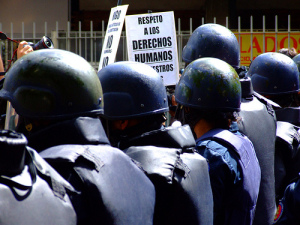
    Riot police line up at a student protest in Caracas Source: Rodrigo Suarez, Flickr

    Riot police line up at a student protest in Caracas Source: Rodrigo Suarez, Flickr

    One reason Maduro has turned to the troops is that Venezuela’s police are among the most corrupt in Latin America. As in Guatemala, Mexico and Honduras, police in Venezuela have been dismissed by the public as ineffective, corrupt, abusive and complicit with organized crime. In 2012, a Transparency International survey found Venezuelans considered the police to be the most corrupt entity in the country.

    This is not a recent problem – even before Chávez’s reign, the country’s police forces were accused of excessive use of force, unlawful killings of civilians, extortion, torture, forced disappearances and involvement in organized crime. By 2009, even the government admitted police were responsible for up to 20 percent of all crimes. In one poll, 70 percent of respondents agreed with the statement: “Police and criminals are practically the same.”

    As with many forces throughout Latin America, police are underfunded, poorly trained and many times outgunned by criminals. This, compounded by high levels of impunity for officers and officials and a lack of central government control over the country’s 134 police units, has allowed organized crime to penetrate state institutions at every governing level.

    Reform measures put into motion by Chávez in 2009 aimed to centralize law enforcement and create a professionalized national police force. The new body, the National Bolivarian Police (PNB), would be less militarized and given human rights training from a civilian-run policing university. Officers would be vetted and their salaries would be doubled while a council that included human rights activists would oversee the reform’s implementation.

    According to Venezuela experts David Smilde and Rebecca Hanson, while “Venezuelans do not seem to think police corruption or inefficiency are major causes of crime, they do seem to believe that a professional police force and improved judicial and penal system could reduce crime.”

    However, challenges still exist. With just under 14,500 officers, the reformed force lacks manpower, as well as the funding and political will necessary to tackle the spiraling violence. Also, several of the reforms, such as the increased wages, have yet to be implemented.

    Despite Venezuelans support for the idea of citizen security reform, public support for the PNB appears to be one of its obstacles. For many citizens, the PNB’s tactics appear ineffective and “soft,” according to Smilde. While many residents prefer the humanist theory behind the force, many people in poor, crime-heavy areas see a more hard-line approach as the only option to target the sky-high levels of insecurity.

    A History of Military culture 

    Part of this public acceptance lies in the country’s entrenched military culture. The military dominated politics in Venezuela throughout the 19th century until the fall of a military dictatorship in 1958. The institution’s role then subsided, until Hugo Chávez was elected in 1998. Under Chávez’s “Bolivarian Revolution,” strong civil-military ties were forged, with troops being deployed to oversee social projects like food distribution and housing construction. Military members also gained personal voting rights and were placed in top positions in the government.

    Although Chávez initiated police reform, he focused even more attention and resources on the armed forces. Around the same time that he created the PNB, he set up two more militarized initiatives: the Bolivarian National Militia, a military-trained group of civilians that would act as liaisons between the army and the people, and the Bicentennial Security Dispositive, a military unit intended to target high-crime areas.

    Maduro has continued the military’s social and political role by surrounding himself with former and current military members, increasing the armed forces’ salary budget, creating new “Bolivarian militias” headed by former military members and pledging $4 billion (USD) to “increase the defensive capacity of the country.” He has also announced the creation of a new bank, television channel and cargo company, all for the armed forces.

    Given this context, as Smilde has noted, it is no wonder that for the average Venezuelan citizen, the military “represents order and efficiency against a background of chaos and dysfunction, and giving it an important social role appears logical.”

    Political motivations
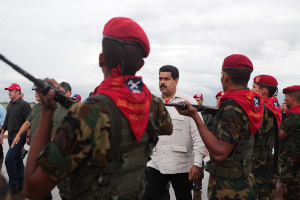
    President Maduro visit and meets with Aviation High Command Source; Prensa Presidencial

    President Maduro visit and meets with Aviation High Command
    Source: Prensa Presidencial

    Maduro also has political motivations for sending in the military. Stuck in Chávez’s image, Maduro has been parroting his predecessor’s strategies and playing up the tight links between the military and the “Bolivarian Revolution.” In part, the troop deployment is a way to continue Chávez’s legacy and rally support for the government. Because of lingering popular support for Chávismo, the public has not turned on him and despite high inflation, shortages of basic goods, power blackouts, soaring murder rates, and corruption scandals, most polls indicate Maduro maintains a 45-50 percent approval rating.

    By deploying the military, Maduro has shown the public he is responding to the security problem. In general, amid calls for security improvement, it becomes politically difficult to wait for the gradual progress of police reform. “It is a political response to a political problem” according to Venezuelan expert and NYU professor Alejandro Velasco.

    What impact?

    Although the Maduro administration claims murders have dropped by over 30 percent, the Venezuelan Observatory of Violence projects the country will record 25,000 homicides in 2013 – 4,000 more than in 2012. Even in the areas where military presence has mitigated crime, what happens when the military leaves?

    Another concern is the lack of accountability for the military in Venezuela. Unlike the PNB, the armed forces are given no civilian human rights training and there is no mechanism for civilians to report incidents of abuse. There have been at least ten incidents of violations since July, including the shooting of a mother and her daughter by the National Guard. And while Maduro’s approval ratings have barely dipped, those for Plan Patria Segura show a downward trend.

    What now?

    In Venezuela and elsewhere, there are not a lot of hopeful choices to curb the immediate high crime levels. However, police reform is a key part of improving the security situation. As one U.S. State Department official recently said of Honduras, where a military police unit was just created, “the creation of a military police force distracts attention from civilian police reform efforts and strains limited resources.” This same logic applies to Venezuela – Maduro must politically and financially invest in police reform to strengthen and expand the role of the PNB. Police must also receive sufficient training, resources and supervision to ensure transparency. The public can begin to trust the police when they are the ones enforcing the rule of law.

    A line must be drawn between civilian and military leadership, and the role of the armed forces clearly defined and distinct from that of the police. To curb corruption, improved mechanisms for investigating police and military criminality must be established while civilian-led vetting and oversight systems put in place for police and military members. Finally, strong justice and penal systems are fundamental, otherwise those committing crimes will have little reason to stop doing so and prisons will continue to be violent bastions of criminal education. Police reform must not be pushed aside due to short-sighted politics; without a concerted effort to get troops off the streets, Venezuela is vulnerable to descending into an unchecked cycle of criminality, both in society and within its security forces.

    Sarah Kinosian is a program associate for Latin America at the Center for International Policy, a nongovernmental organization based in Washington D.C. that promotes transparency and accountability in U.S. foreign policy and global relations. She works on their Just the Facts project, monitoring U.S. defense and security assistance to Latin America and the Caribbean. 


    [1]  The Venezuelan government reports a rate of 56 homicides per 100,000 people in 2012. The Venezuelan Observatory of Violence (Observatorio Venezuelano de Violencia), a respected non-governmental security organization, estimates the rate was 73 per 100,000.

  • Sustainable Security

    For decades, national and international actors have used Disarmament, Demobilization and Reintegration (DDR) programs for combatants as standardized key elements of peace operations, but these programs are not without their problems. 

    There is an African expression: “Softly, softly, catchee monkey!” which means that with patience and perseverance obstacles can be overcome. The saying exemplifies the qualities and skillset needed by peacebuilders in the difficult task of reintegrating combatants through Disarmament Demobilization and Reintegration (DDR) programs. What turns people towards armed mobilization and political violence and how can individuals be steered away from it? These are questions that have vexed governments and international organizations for some time now. Yet nobody seems to have a definite answer to what it takes to reintegrate ex-combatants, insurgents and rebels. What kinds of activities and skills underpin reintegration and more importantly: can they be acquired over time?

    DDR and the Changing Context of Conflict

    DDR programs are designed and intended to facilitate the transformation of combatants into civilians (see below). The understanding that DDR programs are essential in helping to prevent war’s recurrence in post-conflict situations is at the heart of current international aid practice and the academic literature on peacekeeping and stabilization.

    Disarmament is the comprehensive collection, documentation, and disposal of small arms, ammunition, explosives and light and heavy weapons of ex-combatants and the civilian population.

    Demobilization is the formal and controlled discharge of active combatants from armed groups. The first stage involves the processing of combatants in temporary centers. The second stage encompasses a ‘reinsertion’ package.

    Reintegration is the process by which ex-combatants return to civilian life and gain sustainable employment and income during the post-conflict recovery period. Reintegration addresses social and economic issues.

    DDR programming today is frequently mandated in on-going conflict contexts. There are two major challenges for ensuring the implementation of DDR interventions in these settings:

    1. When there is no peace to keep due to on-going hostilities. To this one must add of lack of a political agreement and political buy-in from warring parties. There have been doubts about whether DDR activities will work in such settings (also called non-permissive environments).
    1. When ongoing conflicts lack the stability required to facilitate the economic reconstruction needed to provide ex-combatants jobs entering the labor market, raising questions about how to implement effective DDR programs that prevent conflict relapse.

    The Scale of DDR

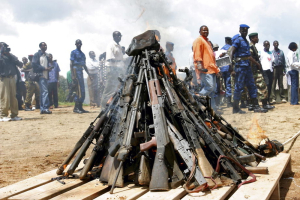
    Weapons being burnt during the official launch of the Disarmament, Demobilization, Rehabilitation and Reintegration (DDRR) process in Muramvya, Burundi. Burundian military signed up voluntarily to be disarmed under the auspices of United Nations peacekeepers and observers. 2/Dec/2004. Muramvya, Burundi. UN Photo/Martine Perret. www.un.org/av/photo/

    Weapons being burnt during the official launch of the Disarmament, Demobilization, Rehabilitation and Reintegration process in Muramvya, Burundi. Image by United Nations Photo via Flickr.

    DDR has grown significantly during the last decades. The first UN effort in Central America demobilized 18,000 fighters in the early 1990s. In recent years, 101,000 combatants were demobilized in Liberia.  150,000 combatants were due to be processed through DDR in South Sudan before the outbreak of the ongoing civil war and this number is expected to double or triple with the implementation of the peace agreement between the warring factions.  According to the UN department of Peacekeeping Operations, in 2013 estimated mandated caseloads for on-going DDR operations in peacekeeping contexts alone were over 400,000. DDR efforts, in other words, seem here to stay as long as conflicts around the world show no sign of abating.

    DDR programs comprise a number of elements. They are highly standardized following the introduction in 2006 of the United Nation’s Integrated DDR Standards. Never before have DDR programs been so comprehensive in their scope and areas of competency, comprising an ever expanding field of interventions such as access to land, cash transfers, skills training and job placement.

    Despite the abundant literature on lessons to be learned from previous DDR processes there is little evidence that DDR programs actually produce the desired outcomes, and important loopholes and gaps remain; particularly around the mechanisms at stake in successful social and economic reintegration of former combatants.

    Very few DDR programs aim to achieve a sustainable reintegration of ex-combatants. Arguably, the aim has been to provide a tangible peace dividend and stabilize the situation in the short term (for instance in Sierra Leone, Liberia, South Sudan, Nepal, just to name a few countries). In other words, the theory and policy of DDR is driven by realist and strategic rationalities: security first.

    A dominant assumption underlying academic theory, policy and practice in the field of peacekeeping is the indispensability of DDR in the early transition from war to peace. Indeed, the rather rigid model of DDR that has evolved over the past decade has become part of the orthodoxy of UN peacekeeping, part of a sequencing of programs and activities that UN missions rarely deviate from. In recent years, this orthodoxy has increasingly been questioned, both in terms of the content of the DDR templates along with the outcomes/effectiveness of the intervention and, not least, the very serviceability of the concept to broader processes of peacekeeping. The important questions regarding DDR programs we have to ask ourselves are: Why do we approach these issues the way we do? Is the offer of a DDR program better than no program at all since it is believed that they make a substantial difference to the lives of ex-combatants and community members?

    Vocation Skills Training vs Spending

    The potential success of a DDR programme depends largely on the type, quality and length of the vocational skills training provided to ex-combatants. In practice, though, the type of training carried out often does not even amount to half of the duration required for a civilian in peace circumstances. In other words, training does not lead to jobs, and it might not even provide access to employment at all. More often than not, training is poorly suited to labour market needs. Furthermore, without capital, the returns on skills training could be low. If the outcomes are that meagre, then why are education and skills training still so central to DDR? For some critical observers, vocational training persists because it is what donors and implementing actors know and are willing to fund, and it therefore involves little risk (the measurement of success is straightforward: the number of graduated trainees). If DDR has been ineffective in facilitating economic reintegration for former combatants, the reason may be that the programs’ approach to the problem is wrong because skills training will not be effective in environments characterized by fragility, conflict and violence. In contrast to the poor results of training and education, recent research has shown that capital-centred DDR activities are among the best performing ones. Capital-centric intervention refers to start-up grants, in-kind capital transfers and cash injections.

    In Burundi, for instance, a reinsertion allowance was offered for eighteen months, with the amount depending on rank. A business start-up grant worth about $1200 was also offered. Comparing the results for those who received it with those who did not, researchers found a large reduction in poverty among the former.

    This review of DDR experiences suggests that ex-combatants tend to use the cash received wisely to satisfy their immediate needs and that some manage to save and invest. In Liberia cash transfers had a positive impact on local and national security. This is reflected, for example, in the low levels of violence reported in parts of Liberia, where the Danish Refugee Council ran a dollar-a-day program for ex-combatants after the war ended. Injections of capital – cash, capital, livestock – seem to stimulate self-employment and raise long-term earning potential. The main assumption is that these programs are cost-effective and enable ex-combatants to expand their income generating activities.

    DDR Bureaucracy and the Promise of Peace

    An important assumption of DDR program concerns the special needs of ex-combatants – as opposed to the broader population – for reintegration support in order to leave behind militancy and adopt a civilian life and identity. However, that is not necessarily the case. Ex-combatants are a heterogeneous group, with some of them more at ‘risk’ than others. Some ex-combatants might even share traits with youth at risk of recruitment by radical groups or violent gangs. Programs should be targeted at those at the highest risk of crime, violence, or future insurgency. But increasingly, DDR programs directly target civilians insofar as they have a relation with an ex-combatant (spouses and children), as it is the case in the recently launched DRC reinsertion and reintegration program. This prompts us to ask: are DDR programs faced with a difficult balancing act between equity and security? In other words, is this kind of targeted assistance rewarding violence? The answer seems to be ‘yes’.

    Conclusion

    DDR programs, rather than being value-free, amount to a normative process of change, with the aim of altering the identity from that of a combatant to a civilian, and from individual dependency on military structures to civilian self-resilience. It is believed that DDR programs are able to facilitate this change. DDR as a technocratic intervention amounts to a belief in the ability to arrive at the optimal answer to any discussion through the application of particular practices. In other words, DDR programs keep the promise that disarmament and reintegration can be achieved by bureaucratic means. Bureaucracies require standardization for efficiency and rationalized training.

    Today, however, effective DDR requires greater participation of local populations. DDR activities have still not found ways to adapt and respond to local contexts of armed violence and fragility in sensible, realistic and cost-effective ways.  DDR interventions require locally differentiated analyses rooted in local perceptions and participation, as well as inclusive processes in designing prioritized programs. To be honest: the bulk of the world’s fighters, gang members, insurgents and high risk youth do not want to be reintegrated: but have expectations of physical protection and material support for their own projects. They should have a say in this multimillion dollar enterprise.

    Jairo Munive is a postdoctoral research fellow at the Danish Institute for International Studies in Copenhagen. His research focuses on DDR processes in Africa. Previously worked as a consultant for DANIDA, ILO and UNDP. He has published in various journals such as:  the Journal of Agrarian Change, Conflict Security and Development, and Forced Migration Review.