Blog

  • Self-Defense? Mexico Gambles on Vigilante Security

    Militarised Public Security in Latin America in Venezuela

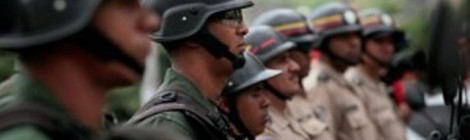
    Across Latin America, governments are sending their militaries into the streets to act as de facto police forces in the face of disproportionally high crime and violence rates. This trend has been going on for several years, but has accelerated in 2013. With the move to deploy over 40,000 troops for citizen security in Venezuela, President Nicolás Maduro joined a growing list of leaders throughout the region that have relied on their militaries to carry out police duties. In the first of our two-part discussion ‘Countering Militarisation of Public Security in Latin America’, Sarah Kinosian discusses the conditions that are causing the trend to thrive.

    Read Article →

  • Climate Change and Security Threats: Time to Call a Spade a Spade?

  • How ISIS Survives Defeat: Propaganda and Decisive Minorities

    Despite suffering major losses of territory and personnel, Islamic State (ISIS) has continued to produce propaganda. Understanding the strategic role of propaganda in the group’s campaign strategy offers telling insights into the ISIS phenomenon and what it may do next.

    As Islamic State (ISIS) continues to hemorrhage personnel, resources and territory across Syria and Iraq – the heartlands of its so-called ‘Caliphate’ – the world is witnessing another bloody chapter in the group’s ‘boom-bust’ history. ISIS’s propaganda machine has not been immune from this destruction with recent airstrikes killing two crucial figures: the charismatic spokesman Abu Muhammad Al-Adnani on 30 August and the self-declared Minister of Information Wa’il Al-Fayad on 7 September. Nevertheless, ISIS has continued to churn out messaging designed to lure friends and foes alike into exaggerating its waning strengths while deflecting from its mounting losses.

    Just this month, ISIS released a new online magazine called Rumiyah (Rome) – a mix of rehashed content from its Arabic newsletter Al-Naba and segments drawn from Dabiq such as ‘Among the believers are men’ which eulogizes Western foreign fighters. Meanwhile, ISIS videos continue to capture global media attention. In the last fortnight, videos commemorating Eid Al-Adha were released by several ISIS wilayats, including Wilayat al-Khayr’s ‘The making of illusion’ showing captives being slaughtered like animals, while another video (‘But if you return, we will return’) featured child executioners. Whether ISIS’s propaganda efforts are ramping up or down in response to its losses, the central role of propaganda in ISIS’s politico-military campaign strategy will remain unchanged even as messaging themes shift with its fortunes. Understanding the strategic role of propaganda in ISIS’s campaign strategy and how messaging trends reflect this relationship offers telling insights into the ISIS phenomenon and what it may do next.

    ISIS’s war of meaning and control

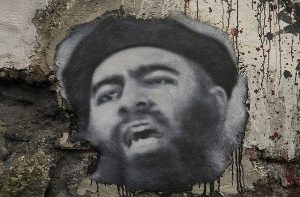
    thierry-ehrman

    Image by thierry ehrman via Flickr.

    ISIS are the great strategic plagiarists of modern asymmetric warfare. As Dr Craig Whiteside’s excellent analysis highlights (also here), whatever is unique about the ISIS phenomenon is significantly outweighed by what it has cannibalized (knowingly or unknowingly) from insurgency/revolutionary war doctrinaires like Mao Tse-Tung, Che Guevara or Abu Musab Al-Suri. Like other modern insurgencies, ISIS’s war is characterized by two interrelated contests: a ‘battle of control’ between opposing politico-military apparatuses (e.g. ISIS versus the Iraqi government) and a ‘battle of meaning’ for the ‘hearts and minds’ of local, regional and even transnational populations. ISIS fights the former battle with a spectrum of politico-military actions that results in the group looking remarkably state-like in its shrinking areas of dominance (i.e. bureaucratized governance, conventional military capabilities), more like a guerrilla warfare movement in contested areas (i.e. informal governance functions, asymmetric warfare) and a terrorist network on the fringes of its regional and global reach (i.e. terrorist violence, no governance initiatives). The ‘battle of meaning’ occurs largely in the ‘information theatre’ and it is a contest for not only the dominant narrative (i.e. how the conflict is described), but to shape the perceptions and polarize the support of audiences (i.e. how the conflict is understood and judged).

    While it may be popular to point to ISIS’s use of social media and flashy production to explain the allure of its propaganda, far more important is how ISIS uses a diversity of messages to leverage powerful psychosocial forces and strategic factors that are pertinent to its audiences. Indeed, ISIS propaganda is characterized by two broad categories of messaging: rational-choice appeals (highlighting how ISIS are pragmatically addressing supporter needs via politico-military actions) and identity-choice appeals (interplaying identity, solution and crisis to influence how the conflict and its actors are perceived). Of course, ISIS’s battles of meaning and control are deeply interrelated and strategic success is often reliant upon how seamlessly both can be intertwined. As Robert Taber argues in War of the Flea: ‘The guerrilla fighter is primarily a propagandist, an agitator, a disseminator of the revolutionary idea, who uses the struggle itself – the actual physical conflict – as an instrument of agitation.’

    Success in modern small wars is largely dependent on winning popular ‘support’. But support operates on a spectrum where, at one end, there is ‘behavioral’ support (compliance with a group’s politico-military system) while, on the other, is a deeper ‘attitudinal’ or ‘perceptual’ support (adherence to a group’s agenda). Research has shown that armed groups are not necessarily strongest where support is highest but rather support tends to be highest in places where armed groups are strongest. This points to a dominance of ‘behavioral’ support under such circumstances. Having conducted dozens of field interviews as part of my research with civilians, migrants and activists, as well as former and current fighters, from Syria, Iraq, Afghanistan and Chechnya, almost all described the civilian population as largely apolitical whose ‘support’ tended to follow whoever was in control. But another trend emerged: interviewees regularly cited the influence of what could be described as ‘decisive minorities’ who had a disproportionate influence – perhaps as a consequence of their social status, access to resources, social connectedness or zeal for the ‘cause’ (i.e. deep attitudinal/perceptual support) – on how the broader population assigned their support.

    This dynamic was particularly prominent amongst those who had lived in or near ISIS-controlled territories. ISIS wanted the behavioral support (acquiescence) of local populations but knew that it would be important to ‘win’  and mobilise their ‘decisive minorities’ while killing those ‘decisive minorities’ that were committed to its opponents (ISIS often describes the latter as ‘harvesting’). ISIS messages to potential foreign fighters and ‘lone wolf’ terrorists globally fundamentally appeals to ‘decisive minorities’. After all, ISIS are broadly despised by Muslim populations, as evidenced by polling, and so their propaganda is often designed to drive wedges between not just friends and enemies but tacit and active supporters. While every violent non-state political group appeals to ‘decisive minorities’ to varying degrees, it seems particularly important in ISIS strategies. Trends in ISIS propaganda offer useful insights into these dynamics.

    The ISIS sirens

    While ISIS messaging regularly draws upon a diverse range of themes and issues, what is given priority and greater emphasis will inevitably depend on strategic calculations and circumstances. In the year after ISIS captured Mosul in mid-2014, certain themes were more pronounced than others in its propaganda. For example, ISIS tended to frame its politico-military successes as manifestations of divine-approval and their enemies’ defeats as proof of divine punishment. A central feature of this messaging was ISIS’s regular promotion of how it was pragmatically addressing the needs of populations under its control thanks to its politico-military prowess and the ineptitude of its opponents: “In the midst of a raging war with multiple fronts and numerous enemies, life goes on in the Islamic State. The soldiers of Allah do not liberate a village, town or city, only to abandon its residents and ignore their needs.” Particularly prominent during this period were communiques showing the variety of ISIS’s bureaucratized governance initiatives and the successes of its hybrid military operations. To local audiences, ISIS promised security, stability and livelihoods. To regional and transnational audiences, ISIS messaging wove together rational- and identity-choice appeals to lure supporters to its ‘caliphate’ or, as a secondary option, to pledge allegiance to ISIS before committing acts of terrorism ‘at home’.

    Since late-2015, however, the themes of ISIS messaging have shifted in ways that may seem subtle but telling. As victories and signs of strength dwindle, a noticeable trend in ISIS messaging, particularly to transnational audiences, has been a greater prioritization of identity- over rational-choice appeals (e.g. see the latest issue of its English-language magazine Dabiq). For instance, an increasingly prominent theme in recent ISIS messaging is that human and material losses are ultimately fleeting and prophesied so should not deter ‘true believers’. Where victory was once framed as proof of God’s blessing, ISIS narratives focus increasingly on the value and honor of the struggle. As al-Adnani declared earlier this year: “And victory is that we live in the might of our religion or die upon it. It is the same, whether Allah blesses us with consolidation or we move into the bare, open desert, displaced and pursued.” Where ISIS once placed primacy on foreigners traveling to support its ‘Caliphate’, it now tends to stress ‘lone wolf’ terrorism.

    Sure, ISIS continues to promote how it addresses the needs of its ‘citizens’, especially in ‘offline’ messages for local audiences, but increasing emphasis is being placed on influencing and mobilizing. A powerful strategy ISIS continues to use is the depiction of extreme violence in its propaganda. Such messaging not only helps to coerce complicity from local populations and intimidate rivals, but inevitably works to polarize ‘true believers’ from all others. Reciprocity is a dominant theme in this messaging. Whether it is a Jordanian pilot being burned alive, a captured soldier being run-over by a tank or spies being executed like sheep or by children, the gruesome execution scene is preceded by emotive narratives, jurisprudential justifications and graphic imagery that frames the killing as a reciprocal act, performed by the victim (or their representative) in response to the aggressor’s violence. The calmness on the face of ISIS executioners helps symbolically reinforce these points.

    Conclusion

    The final article in Rumiyah was titled ‘The Kafir’s blood is halal for you, so shed it’ and in the following fortnight ISIS released some of its most graphic messaging. Look beyond the gore, though, and this messaging is in fact quite sophisticated. This is not for the masses. This is for the ‘true believers’. It has and will continue to be partnered by narratives condemning ‘moderate’ Muslim clerics as sell-outs, chastising Western powers for their ‘brutality’ against Muslims and calling for supporters to mobilise. As the antecedents to ISIS demonstrated almost a decade ago, ISIS understands that as areas of control shrink its survival is dependent on using propaganda synchronized with whatever politico-military capabilities remain to keep their ‘decisive minorities’ committed, motivated and ready to mobilise. ISIS may not be able to live up to its slogan of ‘remaining and expanding’ but it understands that so long as it can ‘remain’ the potential to ‘expand’ always exists.

    Haroro J. Ingram is a research fellow with the Australian National University and a research associate with the International Centre for Counter-terrorism – The Hague (ICCT). His Australian Research Council funded project analyses the role of propaganda in the campaign strategies of violent non-state actors with Daesh and the Afghan Taliban as major case studies. Ingram is also a visiting researcher with the Naval Postgraduate School’s Defense Analysis Department. He can be followed on Twitter @haroro_ingram.

  • Is Trident Influencing UK Energy Policy? Part 2

  • US Drone Strikes in Pakistan: ineffective and illegitimate

    US Drone Strikes in Pakistan: ineffective and illegitimate

    Strikes by unmanned combat air vehicles, or armed drones, have become the tactic of choice in US counterterrorism efforts in Yemen, Somalia and, the topic of current controversy, Pakistan. The lack of transparency, dubious effectiveness, civilian casualties and negative consequences for US national security being highlighted by current debate means that Washington needs to re-evaluate its approach.

    Read Article →

  • Europe’s Borders, Refugees, and the Islamic State

    Closing Europe’s borders and politicizing the attempt to admit refugees at a time when the growing humanitarian crisis poses mounting human rights challenges to the international community is fundamentally wrongheaded. These approaches only strengthen the hand of Islamic State.

    While violent extremism, terrorism, and civil wars have drawn the most attention, coming to grips with the refugee crisis—emanating mainly from Syria’s civil war, but also more generally from the Middle East and North Africa’s political environment (MENA) in the aftermath of the 2011 Arab uprisings—has never been more essential. The Syrian crisis has propelled a wave of migrants to the neighboring countries of Jordan, Lebanon, Iraq, and Turkey. The Syrian refugee population stands at approximately 4.7 million, of whom 1.7 million live in Lebanon and Jordan and even more in Turkey. It is estimated that Turkey now hosts the world’s largest community of displaced Syrians.

    Defeating the Islamic State in Iraq and Syria (ISIS, also known as ISIL and by its Arabic acronym as Da’esh), while at the same time fulfilling the Responsibility to Protect (R2P) in the Syrian situation, has presented a complex challenge to the international community. The growing threat of ISIS as shown in attacks in Paris (2015) and Brussels (2016), magnified by the increased threat of individual terrorists—the so-called “lone wolves” in San Bernardino, the United States—has stemmed a wave of nationalist, right-wing alarm, reinforcing a general concern about the influx of immigrants and asylum seekers, while underlining the shift from a regional to the international nature of both threat and risk. These security issues have also illustrated the willingness of great powers to support military reactions to ISIS in order to stem the atrocities perpetrated by this group, while putting the departure of the Assad regime on the back burner—at least for now. For all intents and purposes, ISIS poses a much greater threat to Europe than does the current regime in Damascus.

    An Unavoidable Tradeoff

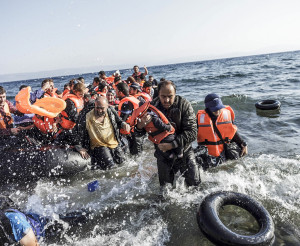
    freedom-house-refugee

    Image by Freedom House via Flickr.

    Confronting and dismantling ISIS need not be achieved by stigmatizing refugees and subjecting them to religious litmus tests. Closing Europe’s porous borders and politicizing the admission of refugees at a time when the growing humanitarian crisis poses mounting human rights challenges to the international community is fundamentally misguided. After all, fortifying European borders, while effective in the short term, strengthens the hands of ISIS and other terrorist groups that portray such policies and practices largely in terms of apocalyptic visions and arcane Islamic prophecies of great battles against Western imperialists.

    Defeating ISIS requires strategic endurance and long-term prudent political decision-making involving internal and external actors in the MENA region. While doing so, it is important to avoid the enemy’s repressive, atavistic, and brutal methods, eschewing certain tactics that could potentially play into ISIS’s hands. It is important to bear in mind that the tactics that terrorist groups like ISIS employ pose mostly political and ideological challenges to the West and that the real fight will be in defeating and destroying the claims and values that these groups assert.  In the end, defeating ISIS requires that its demonic ideology and tactics be confronted and exposed.

    Preventing further refugee crises in the future requires that fighting ISIS be at least temporarily prioritized over the overthrow of the Assad regime.  Seeking a political solution in conjunction with harnessing a multipronged strategy may in fact be among the most effective tools and processes of dealing with current humanitarian crises that the world faces. The possibility of working with the Russians and the Iranians in order to seek a political solution in Syria also raises questions about whether this tradeoff is justified. If the intent is to defeat ISIS, al-Qaeda, and the Levant Conquest Front (formerly known as al-Nusra Front), then this tradeoff is inevitable even as it buttresses the Assad regime in Syria for the foreseeable future. This solution is not problem-free or without significant challenges, however.

    Competing Views

    While the military actions against ISIS are warranted and can be coordinated by both inside and outside actors, the nature of such military missions and their consequences are also subject to further debate and negotiations. The inclusion of Russia and Iran, allies of Assad, in the fight against ISIS raises concerns that their stated goal of curbing ISIS is merely a pretext to prolonging Assad’s rule. Likewise, Turkish participation in air strikes in northern Syria in the war against ISIS has raised the possibility that Ankara will target the Kurds, who have successfully fought against ISIS since the beginning of the conflagration. Turkey’s interest in settling political scores with the Kurds, an interest that it believes is vital to its security, imperils whatever impartiality one might have hoped for in a fight solely against ISIS.

    The massive movement of migrants and refugees to Europe, coupled with the ISIS-led attacks on soft targets in Europe, has created a new urgency among Western leaders to fully confront this new global threat and seriously contemplate the possibility of cooperating with Russia in a coordinated effort. Compromises must at times be made when a multifaceted campaign that includes both countering ISIS and precipitating the removal of the Assad regime is waged. The collapse of the Assad regime would create a significant security void that ISIS and other terrorist groups could easily exploit.

    There is no denying the fact that the Paris, Brussels, and San Bernardino terrorist attacks have heightened the securitization of the refugee threats, as the Islamic State has been using the wave of the migrant influx to infiltrate Europe and North America. The number of terrorists hiding among the refugees is small. ISIS has exploited the flood of refugees to smuggle jihadis into Europe by distributing fake passports in Greek refugee camps to allow its terrorists to travel within Europe. On April 22, 2016, The Washington Post reported that more than three dozen suspected militants who had posed as migrants have been arrested or died while planning or carrying out acts of terrorism.  They included at least seven individuals who were directly linked to the bloody attacks in Paris and Brussels.

    But even a few of these will be highlighted by conservative circles in all Western countries to call for the repatriation or active policing of refugee communities.  Donald Trump Jr.’s notorious analogy between refugees and poisoned Skittles is a case in point. Conservatives rank the issue of terrorism much higher than do liberals in the West, the latter agreeing that one cannot stop all terrorism and that the chances of being caught in a terrorist attack are still quite small. Vigilance and the exclusion of possible threats by governments, however, is prioritized over the compassionate acceptance of refugees.

    The Flaws of the Current Refugee Regime

    The issue remains to be discussed within the core conception of the mandate of the United Nation High Commissioner for Refugees (UNHCR). Remaining at the center of the global refugee regime, UNHCR faces new challenges. Today, for example, most refugees tend to flee from violence and flagrant human rights violations—not necessarily from the threat of persecution, which is a key requirement according to the 1951 Refugee Convention.

    This has resulted in confusion and lack of clarity regarding who qualifies for refugee status and what are the rights to which all refugees are entitled— issues left up entirely to states to interpret. To compound matters further, in the case of Syrian refugee crisis, the neighboring countries of Lebanon, Jordan, and Iraq have never ratified the 1951 Refugee Convention. Now, more than ever, a robust and comprehensive discussion about the future of refugees, whose numbers will only increase with the worsening effects of climate change, is not only timely but necessary, given the tumultuous nature of international politics.

    It is important to bear in mind that refugees can be a destabilizing factor, especially when displaced, alienated, and bitter persons among them are recruited into armed extremist factions. Many studies have shown that the absence of a protective and enabling environment is likely to render more young people vulnerable to racist ideologies and movements and ease the process of their recruitment into the ranks of radical groups like the Islamic State or al-Qaeda. The traditional method of relying on purely humanitarian remedies has proven counterproductive in the face of new influxes of refugees. There is a need for a new thinking that envisions relief and humanitarian aid as fundamentally linked to the granting of work permits to the refugees. To dwell solely on the conventional method of humanitarian aid, and to ignore the importance of wage-earning employment for the refugees, is to wear blinders.

    Shifting Focus from Protection to Empowerment

    The focus of the 1951 refugee protection regime should shift to new ways of dealing with displaced persons that take into account the self-interested reasoning of host countries and the concerns of their citizens regarding competition over jobs. This shift will help to eliminate risks to refugees’ personal security by reducing human smuggling and trafficking by land and sea. Some experts, such as Alexander Betts and Paul Collier, have offered solutions along the line of creating “spaces of opportunity” for the refugees through “special economic zones” that provide jobs, training, and education.

    Helping refugees, I would argue, should begin with technical education and vocational training, coupled with a strategy focused on creating jobs immediately in economic zones from which both host societies and displaced Syrians can benefit. The need to work is inseparable from human security and thus crucial to preserving human dignity. The refugees’ right to legal employment makes good ethical and logical sense. Designing, for example, a vocational skills training program tailored to the needs of women refugees can significantly reduce the incidence of sexual trafficking and abuse. These projects offer a more plausible solution in the long term, not only because they will develop transferable skills that refugees can use in their countries of origin upon return, but also because they create monetary disincentives for refugees to emigrate to Europe in the first place.

    Dr. Mahmood Monshipouri is a professor of international relations at San Francisco State University and he is also a visiting professor at UC-Berkeley, teaching Middle Eastern Politics, and editor, most recently, of Information Politics, Protests, and Human Rights in the Digital Age (New York: Cambridge University Press, 2016).  For more on the perspectives provided here, see Mahmood Monshipouri, Claude Welch Jr., and Khashayar Nikazmrad, “Protecting Human Rights in the Era of Uncertainty: How Not to Lose the War against ISIS,” Journal of Human Rights Online version, July 28, 2016, available at <http://www.tandfonline.com/doi/pdf/10.1080/14754835.2016.1205477>.

  • Muslim Paranoia? Ideology and the Limits of Engagement

    A recurring feature of Western counter-radicalisation discourse is the ‘Muslim paranoia narrative’, a belief that resentment towards Western societies is motivated by a paranoid and conspiracy-riven worldview. This association between radicalisation and paranoia appears repeatedly through official statements and policy documents.

    Radicalisation is at the forefront of policy debates as ISIS continues to draw recruits from Western democracies. Recent summits in Washington and Sydney on countering violent extremism have highlighted the importance of undermining extremist narratives, mobilising moderate Muslims who oppose ISIS, and working to address underlying drivers of radicalisation. Yet representatives of Muslim communities have met this approach with considerable scepticism, both in Western states and across the Muslim world. A common complaint is that Muslims are singled out and caricatured as a unique danger, which only increases the level of vilification experienced by Muslims.

    The Muslim paranoia narrative

    islamic_center_of_murfreesboro_with_flag

    Image by Saleh M. Sbenaty via Wikimedia.

    In recent research published in Critical Studies on Terrorism, I explore the underlying ideological conditions that work against engagement with Muslim communities thought vulnerable to radicalisation. I examine what I call the “Muslim paranoia narrative”, a recurring feature of Western counter-radicalisation discourse that helpfully captures these underlying ideological dynamics. In the Muslim paranoia narrative, resentment towards Western societies is said to be motivated to some degree by a paranoid and conspiracy-riven worldview, which is thought to thrive in alienated and disempowered communities. Terrorist recruiters exploit distorted outlooks to fuel a sense of injustice about the plight of Muslims abroad. This association between radicalisation and paranoia appears repeatedly through official statements and policy documents, including those associated with ongoing counter-radicalisation strategies like the US State Department’s Digital Outreach Team.

    The Muslim paranoia narrative is worth examining because it is a clear tension point in contemporary radicalisation strategies that are increasingly focused on engagement and collaboration. The negative connotations associated with paranoia connect palpably with the sense of vilification often highlighted by Muslim critics of these programs. And the paranoia narrative can be connected to a broader ideological imaginary. Tracing the Muslim paranoia narrative from its ideological roots provides a window into the assumptions and priorities informing radicalisation discourse and contextualises the reticence of Muslim communities towards it.

    The Muslim paranoia narrative is especially intense in the United States where my research is focused. Richard Hofstadter is widely understood to have established the now commonplace account of political paranoia in his famous essay “The Paranoid Style in American Politics”, which identified a recurring strain in American politics characterised by a “sense of heated exaggeration, suspiciousness, and conspiratorial fantasy”. Hofstadter positioned political paranoia on the periphery of pluralistic American democracy as the irrational pathology of angry extremists, and contrasted it with a rational political centre where sensible politics occurred. Although Hofstadter wrote this seminal piece in 1964, it is difficult to overestimate its traction and influence. This is in large part due to the fact that Hofstadter deployed many of the most common conceptual features of post-War liberalism, which abhorred populism and focused on the mediation of competing interests through bargain and compromise. America was situated as a moderate democracy, pragmatic, centrist and non-ideological, in contrast to the radical politics sweeping the post-War Europe. Although liberalism has evolved significantly over the intervening years, the basic conceptual features set out by Hofstadter have remained pervasive in contemporary perspectives on political paranoia.

    One reason for this is that political extremism is still largely understood through the same centre/periphery framework. This dynamic is at the heart of radicalisation discourse in the US, where the political and religious beliefs of Muslim communities have emerged as a subject of concern. In this context, the Muslim paranoia narrative locates paranoia not just on the fringe of liberal democracies, but also on the periphery of international power and legitimacy from the point of view of political leaders and security experts. Here the pervasive perspective on political paranoia folds together with a long-running orientalist narrative about the supposedly dysfunctional characteristics of Muslim cultures, particularly in the Middle East, which has often framed America’s regional encounters.

    A problematic narrative

    The Muslim paranoia narrative is involved in a powerful process of ideological reproduction that works against engagement and collaboration with Muslim communities. Underlying liberal and orientalist frameworks situate Muslim cultures as dysfunctional and anti-modern, while associating Muslim resentment about Western foreign policies with problematic and potentially pathological modes of thought. Like post-War liberal orthodoxy secured by contrast with paranoid populism, contemporary liberal modernity is secured by contrast with the paranoia of alienated Muslims.

    At the same time, contemporary radicalisation discourse disciplines the wider public against consideration of Muslim grievances and associated criticisms of US policy. For instance, the identification of political paranoia as a subject of concern has the double effect of producing a strong general deterrent against the interrogation of elite power and political controversy, when the personal and professional costs of such engagements are potentially catastrophic. The taint of irrationality can be devastating, even by association – undermining credibility and calling motivations into question.

    In this sense, the Muslim paranoia narrative can be understood in terms of powerful ideological scripts in American political culture, rather than as an objective description of an ideational precursor to radicalisation in Muslim communities. The broader point is that potent narratives around extremism and oriental otherness have undermined the approach of successive US administrations to counter-radicalisation. These scripts have worked against a persuasive encounter with Muslims critical of American foreign policy, when such criticisms are framed as the product of a problematic thoughts and dysfunctional culture.

    This problem is clear enough in the practical setting of counter-radicalisation programs like the US State Department’s Digital Outreach Team (DOT), a group of bloggers tasked with confronting views critical of American policy on foreign language websites, and, more recently, discrediting ISIS affiliated users on social media. For our purposes it is interesting to note that according to the State Department “the Digital Outreach Team contrasts objective facts with the often emotive, conspiracy-laden arguments of US critics in the hope that online users will take a fresh at their opinions of the US”.  And this frame manifested in the online activities of the DOT where time was spent “ridiculing myths and conspiracy theories and calling users with extreme views radicals, but claiming to enjoy engaging with users who post objective views.” Perhaps unsurprisingly, a close analysis of DOT work following President Obama’s 2009 Cairo Address found that a large majority of people who expressed a view about the DOT were negative in their comments, with half openly “ridiculing and condescending”. Although there were no doubt many reasons for the widespread hostility to the DOT, it should be obvious that labelling people paranoid and irrational is highly antagonistic, particularly when considered in the context of the wider set of intimations that have historically been associated with such language.

    Indeed, it is critical to acknowledge that although the identities and relations highlighted in my analysis of the Muslim paranoia narrative exist within a specific policy discourse, they bear no necessary relationship to the lived experience of differentiated Muslim people, who often refuse classification in these terms. Moreover, it is critical to acknowledge that there is still no conclusive evidence for a particular terrorist profile; for a common pathway or pattern to radicalisation; or for predicting which holders of radical views will become violent. Without critical awareness of the ideological conditions identified here and a sustained attempt to move beyond them, the crucial work of engagement, partnership and community building will be likely ineffectual.

    Tim Aistrope is Lecturer in the School of Political Science and International Studies at the University of Queensland.

  • VIDEO – Transforming Food Systems in a Global Context

    Getting Older But Not Wiser: the Arms Trade Treaty’s First Birthday

    April 2nd marked the first anniversary of the adoption of the much celebrated Arms Trade Treaty (ATT), the world’s first treaty to establish common standards of international trading in conventional weapons and which in turn aims to ‘ease the suffering caused by irresponsible transfers of conventional weapons and munitions’. But with the continued irresponsible arms trading and an overall rise in the global arms trade, it seems that some states have yet to put the ideals of the ATT into practice.

    Read Article →

    The New Insecurity in a Globalized World

    Writing exclusively for SustainableSsecurity.org, Elizabeth Wilke argues that a new conceptualization of insecurity and instability is needed in a world with greater and freer movement of goods, services and people – both legal and illicit – greater demands on weakening governments and the internationalization of local conflicts. The new insecurity is fundamentally derived from the responses of people and groups to greater uncertainty in an increasingly volatile world. Governments, and increasingly other actors need to recognize this in order to promote sustained stability in the long-term, locally and internationally.

    Read Article →

    Human Security and Marginalisation: A case of Pastoralists in the Mandera triangle

    This paper seeks to bring out the relevance of human security in pastoral areas of Mandera triangle and the relationships and contradictions that exist between it and national security. The “Mandera Triangle” encompasses a tri-border region of Ethiopia, Somalia, and Kenya that exemplifies, in a microcosm, both a complex and a chronic humanitarian crisis that transcends national boundaries.

    Read Article →

  • Expanding Contracting: The Private Sector’s Role in Drone Surveillance and Targeting

    RC_long_logo_small_4webThis article is part of the Remote Control Warfare series, a collaboration with Remote Control, a project of the Network for Social Change hosted by Oxford Research Group.

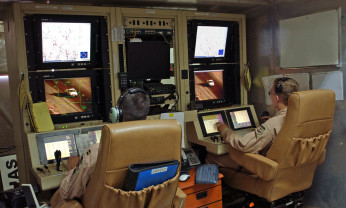
    Capt. Richard Koll, left, and Airman 1st Class Mike Eulo perform function checks after launching an MQ-1 Predator unmanned aerial vehicle Aug. 7 at Balad Air Base, Iraq. Captain Koll, the pilot, and Airman Eulo, the sensor operator, will handle the Predator in a radius of approximately 25 miles around the base before handing it off to personnel stationed in the United States to continue its mission. Both are assigned to the 46th Expeditionary Reconnaissance Squadron. https://en.wikipedia.org/wiki/General_Atomics_MQ-1_Predator#/media/File:MQ-1_Predator_controls_2007-08-07.jpg

    Drone pilots perform function checks after launching an MQ-1 Predator unmanned aerial vehicle Aug. 7 at Balad Air Base, Iraq. Source: Wikipedia

    Over-burdened in its requests for continuous surveillance of an expanding battlefield, the US military is increasingly turning to private contractors to fill key roles in its drone operations.

    In March this year, US Air Force Secretary Deborah James appeared before the Senate Armed Services Committee, looking for a $10 billion funding hike. “I can tell you the number one thing that the combatant commanders say they want from our Air Force is more ISR, ISR, ISR,” she told the committee. “That is the number one priority.”

    ISR is Intelligence, Surveillance, Reconnaissance, and encompasses a complex array of functions. It includes spyplanes and drones with special sensors and cameras, the satellites which control them, and the analysts who turn this information into “products”.  It also includes the “distributed common ground system”, an unwieldy term for the network of devices which allows personnel to access this information and the “products” derived from it.

    The volumes of data being passed back from surveillance flights is now so vast that the military can no longer deal with it in-house. So, The Bureau of Investigative Journalism (‘The Bureau’) found in a six-month investigation, the Pentagon has turned to the private sector to plug the gaps, employing contractors as imagery analysts or “screeners”.

    Screening

    The screener’s task is not a simple one. Like much of military life, it involves long spells of tedium – twelve hour shifts in front of a screen – interspersed with occasional spikes of activity. But it demands high and continuous levels of concentration. As one screener told us: “A misidentification of an enemy combatant with a weapon and a female carrying a broom can have dire consequences.”

    Screeners can have an important safety function in reducing collateral damage – the proverbial “busload of nuns” which appears out of nowhere into the field of fire. But their interpretations of video imagery – “calls”, in military parlance – can also influence drone pilots to take shots. As one screener commented, once you’ve influenced the mentality of the pilot by indicating the presence of something hostile, it’s hard to retract it.

    In one notorious incident, the crew of a MQ-1 Predator drone flying over Afghanistan’s Uruzgan province in February 2010 ignored ambiguities in their screeners’ assessments as to whether the trucks they were tracking contained combatants. As a result, at least 15 civilians were killed.

    “When you mess up,” The Bureau was told, “people die.”

    Contractors

    The companies being paid to undertake this work range from industry leviathans like BAE to specialist tech firms like Zel Technologies and Advanced Concepts Enterprises.

    Finding out who was performing this work was itself an arduous task. The Department of Defense records thousands of procurement transactions most days every year. From 2009 to the end of 2014 there have been over 8 million transactions between the Pentagon and the private sector. The Bureau analysed these transactions through its own specially constructed database, which allowed it to identify activities relating to ISR and then build up profiles of the contracts and companies carrying out those activities.

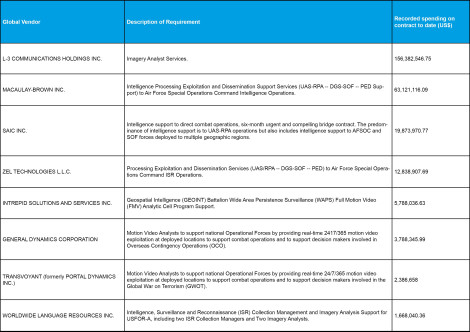
    Table: US Military Imagery Analysis Contracts since 2010 (click to enlarge)

    Data in this table is drawn from public sources including the Federal Procurement Data System (fpds.gov), Federal Business Opportunities (fbo.gov) and contractual material released under the Freedom of Information Act. Business information is taken from Bloomberg, Hoovers and Orbis. Companies named in the reporting but not included in this table are BAE, Booz Allen Hamilton and Advanced Concepts Enterprises. The Bureau has documented evidence of their involvement in ISR from sources other than contracts and transaction records. For the full dataset please see https://docs.google.com/spreadsheets/u/1/d/1WpSvDKGyraU5koQheFIgO7fUCIrSUxG5o7R9cS042_I/pubhtml

    Data in this table is drawn from public sources including the Federal Procurement Data System (fpds.gov), Federal Business Opportunities (fbo.gov) and contractual material released under the Freedom of Information Act. Business information is taken from Bloomberg, Hoovers and Orbis.
    Companies named in the reporting but not included in this table are BAE, Booz Allen Hamilton and Advanced Concepts Enterprises. The Bureau has documented evidence of their involvement in ISR from sources other than contracts and transaction records.
    Click here for the full dataset

    The Bureau identified over $260 million of screening transactions. But this is a niche market compared to the wider outsourced ISR effort. The private sector has been operating smaller surveillance drones over Afghanistan and other countries, managing communications between drones and their bases in the US and elsewhere, maintaining data collection systems and servicing sensors, to name just some functions. Procurement costs for these services run into billions of dollars.

    Questions of accountability come to the fore in this type of outsourced warfare. Following considerable pressure, the military now publishes figures of contractors on the ground in Iraq and Afghanistan. But this transparency does not extend to ISR missions conducted in those countries – or elsewhere – from behind computer screens in Florida and Nevada.

    From Screening to Targeting?

    Although contractors are so far not supposed to have their fingers on the drones’ triggers, fears have been expressed that this distinction might be harder to maintain in practice. One military outsourcing specialist, Laura Dickinson, told us that if the ratio of contractors to government personnel swells, “oversight could easily break down, and the current prohibition on contractors making targeting decisions could become meaningless.”

    Shortly after The Bureau published its investigation in The Guardian, the Pentagon announced that it would ramp up the number of ISR missions with ten new contractor-operated MQ-9 Reaper Combat Air Patrols. This puts contractors into the driving seat of large, combat-capable drones for the first time, although the Pentagon says these will be “ISR only”. The private sector’s involvement in drone warfare, it seems, is just taking off.


    Crofton Black is a researcher, journalist and writer with extensive experience of complex investigations in the field of human rights abuses and counter-terrorism. He is a leading expert on the CIA’s rendition, detention and interrogation programme and a specialist in military and intelligence corporate contracting. He has a PhD in the history of philosophy from the University of London.

    Crofton completed a report for the Remote Control Project last year on the use of contractors in US special forces operations.

  • Denmark’s Foreign Fighters – An Interview with Jakob Sheikh

    Award-winning reporter Jakob Sheikh talks about his work interviewing the Danes who travelled to Iraq and Syria to join the jihad. 

    Q. Since 2001, there has been much written on terrorism and more specifically the global jihadi movement, and this trend has continued with the rise of Islamic State. Your research is quite unique as it has involved interviewing those who have joined the Jihad. Why did you decide to take this approach to understanding jihadism and what did you hope to learn from talking to jihadis?

    When I started covering militant Islamism in 2012, I noticed that the great bulk of articles written on this topic dealt with jihadists quite superficially. Most often, reporters where talking about jihadists; not with jihadists. So I began building trustful relations with Danish militant Islamists. I put a lot of time and effort in meeting consistently with figures—even rather unimportant ones— in the Danish militant Islamists milieu, enabling me to get access to  otherwise unavailable sources and interview foreign fighters in Denmark, in Syria during their time with the Islamic State, and even back in Denmark when some of them had returned.

    The goal of my reporting is quite simple. In order to deal with a challenge that is generally considered a threat to national security in most Western countries, we need to understand the very nature of this challenge.

    Sadly, we often tend to simplify or generalize when it comes to foreign fighters. We alienate radical Islamists from ourselves as if they have nothing to do with our society. However, the fact is that most European foreign fighters are born—or at least raised—in Europe. They are shaped by upbringings in European societies; they attend public schools, play in the local football club and so forth. By many measures, they are products of modern Europe.

    This leads to a very important question: How does modern Europe deal with this ever-evolving problem? I hope that my reporting has shed light on the backdrop of this question.

    Q. In your research, have you noticed any common traits in the backgrounds of Denmark’s foreign fighters (age, gender, profession, geographical location) and their pathways into joining the Jihad?

    Image credit: CREST Research/Flickr.

    This is an interesting question as some of the foreign fighter traits are in fact quite counter intuitive. It’s easy to state the obvious: most foreign fighters are young men and the vast majority have family roots outside the European continent.

    But there are other interesting traits to mention. When I started collecting socioeconomic background data on Danish foreign fighters, I was expecting to find individuals from poor families who were economically and educationally marginalised. However, while the main part had struggled with social challenges of some sort—their parents’ divorce, a mental diagnosis, deaths in the near family, etc.—I discovered that a great number of Danish foreign fighters were average middle class kids, not raised at the bottom of society (one even played the cello and lived in a sumptuous villa with his well-educated parents).

    Also, I would have assumed that most foreign fighters would come from strictly conservative Muslim families. But in fact, a significant number of Danish foreign fighters with non-Western backgrounds came from families that were remarkably secular and liberal. I find this particularly interesting as it says something important about the way we deal with the notion of converts. We generally consider converts to be ethnic Danes or ethnic Swedes or ethnic Brits who suddenly converts to Islam and get radicalised—as opposed to individuals with Muslim family backgrounds. But what we see now is that most foreign fighters are in fact converts—some may just have Muslim family roots. In many ways, these converts from Muslim families share their pathway into the jihadist milieu with that of “regular” ethnic Danish converts; they do not feel strongly about religion, something happens along the way, they are socially marginalized, perhaps they enter a criminal environment, and at a certain point in time they are intrigued by Islam as a way out of their problems. Often, the radicalisation process that follows completely changes their approach to Islam—just as with the Danish converts who have no previous experience with Islam whatsoever.

    To me, this shows that we need to study the inner motivations of jihadists. Common socioeconomic traits simply doesn’t do the job when it comes to explaining why foreign fighters decide to wage jihad. Despite many so-called experts’ attempts to tell you otherwise.

    Q. In terms of the motivations of Denmark’s foreign fighters, you’ve previously stated that grievance over Denmark’s activist foreign policy has been an important driver. Yet one of the things that stands out in your interviews with foreign fighters is this idea of “the state” as a cause. What does this concept of “the state” mean to the foreign fighters you spoke to and why is it such a powerful idea that it is worth travelling many miles across the world to fight and die for? 

    As mentioned, many of the things the foreign fighters told me during interview ran counter to common assumptions. My own, at least.

    The very idea of a state was a recurrent narrative among IS fighters. In fact, several fighters consider this notion a direct motivation for joining the battlefield.

    They stress the fact that they are not just joining an insurgency; they are joining a state. As much as they see themselves as fighters, they see themselves as immigrants who want to settle down and build a future.

    As I have pointed out before, when jihadists use the term “dawla” [“state” or “nation”] they are often not referring to the group, but rather to the so-called caliphate itself. They speak of a place that represents a home to them. This also explains why foreign fighters usually are more likely to refer to propaganda videos released by IS about the daily life in IS held areas rather than brutal executions and so on.

    A Danish born Salafi with Pakistani roots named Shiraz Tariq, who is perhaps the most prominent jihadi figure in Denmark, often spoke of the state as a goal in itself.

    “My goal is to fight the infidels until the state is implemented,” he told me in an interview from Syria.

    To at least some parts of Danish foreign fighters, institutional aspects such as economic systems, schools, and legal systems are key in their justification of violent jihad. They talk about “protecting the state” rather than protecting Islam, or protecting the group.

    That said, the fall of Raqqa completely changes this motivation. In many ways, I see the fall of Raqqa as way more decisive than the fall of Mosul. It is a major blow to IS’ ability to mobilize and recruit soldiers to the local war in Syria and Iraq. Not just because of the military defeat but even more so because the defeat destroyed the notion of state building that IS offers to its followers.

    Q. How did the fighters you interviewed describe life inside the state and what sort of roles did they undertake?

    Like in many other countries, Denmark has foreign fighters in the upper ranks of IS and regular foot soldiers in the fields. I spoke to jihadists who were very close to the local “emir” or “wali” and to jihadists who were not even taking part in the fighting.

    I’ve met with returnees who’ve returned further radicalized in terms of both ideology and fighting skills. But—and this is important—I’ve also met several jihadists who’ve returned to Denmark deeply disillusioned about what they experienced in Syria and Iraq. A prominent 28 year old jihadist told me upon his return to Denmark that he’d “never seen anything that un-Islamic”. The notion of “takfir” is taken to a level where some jihadists—despite the official IS narrative about jihadists having no scruples killing non-IS-fighters—are left in deep disagreement with the strategy.

    To me, this disillusion upon return may be the best chance in terms of aiding counter-radicalisation efforts.

    Another important aspect we need to be aware of is the mindset of foreign fighters. Before and after our talks, several jihadists would often send me pictures and videos that would somewhat glorify the daily life in the caliphate. Here, we’re talking about videos of children fooling around and playing in a fountain, women shopping in the bazaar, pictures of toyshops, and so on.

    What’s striking about these pictures and videos is that they often ran counter to the actual situation and reality of life inside the IS-held territories. While IS as a group were losing ground and were severely hit by drone strikes, the propaganda spoke of harmony and almost heavenly peace.

    The question, then, is: Were the jihadists I interviewed consciously neglecting the fact that they were on the verge of losing their war? Or were they simply not aware of what was going on?

    In my opinion, the answer is none of the two. In fact, it seemed to me—though psychiatrists may need to study this further—that the “real” world and the “imaginary” world of peace and harmony existed side by side, next to each other. In the mind of a jihadist, it is not necessarily contradictive to live in a real world of fighting and a virtual world that enables you to dream about how a perfect caliphate should look like or how a new Islamic golden age should look like. These two perceptions actually seem to complement each other. The frightening thing, however, is that when the border between these two perceptions gets blurred, some jihadists don’t seem to be able to separate the two.

    Q. There has been a lot of discussion about the role of religion as a driver of the foreign fighters, including the role played by mosques. How influential have Danish mosques been in the radicalisation of foreign fighters?

    Interestingly, very few militants mention that they get their religious inspiration from the mosques. In fact, militant Islamists—at least in Denmark—are quite skeptical towards the mosques, especially mosques that are considered to be “moderate” by mainstream society. I would assume this goes for other European countries as well. This is due to widespread conspiracies that the mosques are in fact right-hand men for the Danish government or the intelligence service.

    Rather than trusting what is preached in the mosque, many Danish foreign fighters rely almost exclusively on their close friends—and certainly not open communities such as mosques where rumors are spread quickly.

    That said, I think it would be a huge mistake to underestimate the role of religion when it comes to foreign fighter mobilization. While you can argue that the social and political dimension were more prevalent driving factors during the first years of the Syria civil war, I find religion—or at least arguments rooted in Islamic texts—to play a quite decisive role today and even since early 2015.

    The fundamental ideology of IS is deeply Islamic.

    Jakob Sheikh is a multi-award-winning investigative reporter who worked as staff writer with Danish daily Politiken, one of Scandinavia’s leading newspapers. Since 2012, he has focused on radicalization and foreign fighters. In 2015, he released his book on Danish Islamic State fighters based on numerous interviews with returned and current jihadists as well as key figures in the militant Islamist environment in Scandinavia. In February 2017, he joined the Danish Ministry of Justice as a special advisor to the minister.