Blog

  • Countering Al-Shabaab in Somalia

    Due to the absence of a functioning government, a counterinsurgency in a failed state can be a difficult enterprise. Since Somalia’s state collapse in 1991, various actors have been combating the threat of Al-Shabaab with mixed results.

    Counterinsurgency measures, as the name suggests, are meant to suppress an insurgency and in the long run create an enabling political environment for the establishment of a functional state capable of ensuring sustainable security. These goals are, however, difficult to achieve under conditions of state collapse given the virtual absence of a functional government. As a collapsed state that has had no functional government since the end of Siad Barre’s rule in 1991, Somalia represents an interesting case.

    Since 1991, many of Somalia’s counterinsurgency operations launched have been driven by concerns regarding the impact of Somalia’s conflict on regional security and the desire to create a functional state capable of providing basic human and physical security to its citizens. Given that Somalia is a collapsed state, the initiative of adopting and effecting counterinsurgency measures in the country has been externally driven by regional and international organisations such as the African Union (AU) and the United Nations (UN), as well as Western countries such as the United States (US) rather than by the Federal Government of Somalia (FGS).

    This article focuses on the military component of the peace enforcement African Union Mission in Somalia (AMISOM), which has positioned itself as a counterinsurgency force against the armed insurgency group Harakat Al-Shabaab Al Mujaheddin group, commonly known as Al-Shabaab.

    Somalia’s insurgency and counterinsurgency
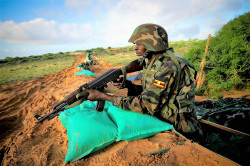
    aminson-somalia

    Image of AMISON troop via UN Photo/Flickr.

    The nature of insurgency and counterinsurgency in Somalia is complex as it involves a variety of non-state, state and international actors. The militant Islamist group Al-Shabaab, the most significant armed non state actor, describes and perceives itself as an insurgent movement but is labelled and depicted by the FGS and external actors as a terrorist group as they see it as a transnational violent armed non-state actor. The conceptualisation and labelling of Al-Shabaab both simultaneously as an insurgent and terrorist group only complicates counterinsurgency operations in the country. This is so, in that it is not effective enough to conduct counterinsurgency as counterterrorism to suppress a group that perceives itself and thereby conducts its operations as an insurgent rather than a terrorist one.

    The combination of state collapse with the complexity and paradoxical nature of insurgency and counterinsurgency operations in Somalia has adversely affected human and physical security in the country and has provided Al-Shabaab with new political opportunities to sustain violent action. The AMISOM’s strategic concept of operations (CONOPS) and rules of engagement (ROE) indicate that its short-term repressive security measures are better clarified as counterterrorism rather than counterinsurgency, as they appear to focus on both simultaneously national and transnational terrorist activities, rather than efforts to defeat the insurgency in Somalia and ultimately create a functional state.

    The AMISON’s CONOPS combine all ongoing separate military operations in Somalia into a coordinated and coherent effort against Al-Shabaab so as to extend the authority of the FGS country-wide. It also aims at creating an enabling environment for the effective implementation of AMISOM’s mandate. AMISOM’s CONOPS have, however, been adversely hindered by the mission’s lack of adequate financial, human and military resources, thereby rendering it ineffective in its mandated operations. AMISOM’s ROE are key to ensuring that military operations are conducted in compliance with international humanitarian law obligations in Somalia’s socio-political context.

    Though the ROE are in conformity with the operational realities of the mission, AMISOM continues to operate in extremely volatile conditions created by state collapse, whereby Al-Shabaab’s asymmetrical warfare targets civilians within populated areas. This situation makes it extremely difficult for AMISOM to ensure civilian protection in the conduct of its operations and to consistently apply the mission’s ROE Counterinsurgency operations that cannot consistently sustain themselves for long periods are ineffective and will not achieve the intended outcome of enhancing sustainable security.

    A success or failure?

    The successes or failures of insurgency and counterinsurgency operations in Somalia depend on population support.  So far, the counterinsurgency strategies in Somalia conducted by AMISOM and its coalition forces, especially the Somali National Army, have been unable to gain the support of the people. Al-Shabaab’s led insurgency has gained popular support among the local-level communities, largely due to the social services and more importantly the local-level security governance it provides, in the absence of a functional state. All these strategies of Al-Shabaab, which are aimed at legitimising itself, are implemented through variants of Islamism. The movement was very effective in the provision of alternative governance structures at the local-level prior to the pre-2010 military intervention of AMISOM. The literature on counterinsurgency operations in Somalia indicates that the security vacuum created by Al-Shabaab’s departure as a result of AMISOM’s operations in these areas has led to an increase in the levels of insecurity thereby questioning the legitimacy of the latter’s operations.

    The Somali populace also perceives these counterinsurgency efforts as externally driven and extremely hesitant to engage, positively, with the fundamental Somali socio-political structures such as the clan structure and Islam. In order to be effective counterinsurgency measures, should take into account the legitimacy of these socio-political structures that play a significant role in local-level peacebuilding and governance processes.

    Doomed from the start?

    Counterinsurgency operations in Somalia have also been adversely affected by poor planning and their inability, so far, to create an enabling environment which enhances state capacity. Any credible counterinsurgency operation with a military component requires careful planning before any military incursion begins. A number of indicators suggest that, in the early stages, AMISOM neither planned nor implemented an effective counterinsurgency strategy. The initial objective of Kenya’s military incursion into Somalia through Operation Linda Nchi and subsequent incorporation into AMISOM was not peace enforcement countering the direct physical threats posed by Al-Shabaab on its territory.

    Counterinsurgency measures were later driven by socio-political and economic interests rather than peacebuilding in Somalia. Kenya’s military intervention in Somalia can be perceived as counterterrorism rather than counterinsurgency efforts given that they were initially driven by short-term strategic interests.  The establishment of a functional state has so far not been achieved in Somalia as it has been has been compromised by the manner in which regional and international peacekeeping efforts, have been conducted in the country. Most of these, if not all have been characterised by failures rather than successes. For example, the UN Monitoring Group on Somalia constantly accuses the Kenya Defence Forces component of violating AMISOM’s mandate. AMISOM has not been effectively taking the appropriate measures aimed at supporting the creation of a functionally effective state due to the strategic interests of its member states. This has compromised peacebuilding and security governance in the country.

    The resilience of Al-Shabaab as a transnational violent non-state armed actor, is partly a function of ineffective repressive counterinsurgency measures in Somalia. The repressive counterinsurgency operations conducted largely by external actors in the country are reactive, achieve unintended consequences ande hence counterproductive. A political strategy supported by security operations in the formulation and implementation of counterinsurgency operations is still ideal for any country facing an insurgency.

    Counterinsurgency measures, however, that do not require repressive security operations that focus on causes not symptoms are best suited for Somalia in the medium and long-term.  Since Somalia does not have a functional government capable of providing effective counterinsurgency operations let alone human and physical security, non-repressive measures would best be conducted by non-state actors such clan leaders and clans, and Islamic civil society organisations.

    Non-state actors are appropriate in the implementation of non-repressive counterinsurgency measures in that they not only located within fundamental Somali socio-political structures, but also have the capacity to use informal process oriented means rather than formal goal-oriented ones. Informal process-oriented methods are more appropriate when it comes to addressing the root causes of the insurgency while formal goal-oriented ones are reactive focussing on symptoms. These measures, such as those that focus on countering violent extremism, take into account fundamental Somali socio-political structures, and their corresponding customs norms and traditions thereby gaining population support and subsequently legitimacy. Such counterinsurgency measures will achieve their intended outcome of dealing with insurgency, the grievances of that insurgency and ultimately create the socio-political environment required to establish a functional state.

    Oscar Gakuo Mwangi (PhD) is an Associate Professor at the Department of Political & Administrative Studies National University of Lesotho.

  • The Costs of Security Sector Reform: Questions of Affordability and Purpose

    The Costs of Security Sector Reform: Questions of Affordability and Purpose

    In considering security sector reform, questions of affordability have often been subordinated to questions of effectiveness and expediency. A recent series of reviews of security expenditures by the World Bank and other actors in Liberia, Mali, Niger and Somalia has highlighted several emerging issues around the (re)construction of security institutions in fragile and conflict-affected states.

    Read Article →

    Human Security and Marginalisation: A case of Pastoralists in the Mandera triangle

    This paper seeks to bring out the relevance of human security in pastoral areas of Mandera triangle and the relationships and contradictions that exist between it and national security. The “Mandera Triangle” encompasses a tri-border region of Ethiopia, Somalia, and Kenya that exemplifies, in a microcosm, both a complex and a chronic humanitarian crisis that transcends national boundaries.

    Read Article →

  • Spetsnaz: An Interview With Mark Galeotti

    Humanitarian Consequences of Nuclear Weapons: Five Reasons for the P5 to participate in Vienna

    The ‘humanitarian dimension’ initiative highlighting the consequences of nuclear weapons has evolved and consolidated itself in the non-proliferation regime since 2010. The five nuclear weapons states (NWS or P5) under the NPT – China, France, Russia, UK and US – boycotted the first two international conferences on the humanitarian consequences of nuclear weapons. A third conference will be held in Vienna on 8-9 December 2014. This article gives five reasons why the P5 should consider participating.

    Read Article →

    Building the Case for Nuclear Disarmament: The 2014 NPT PrepCom

    The humanitarian impact of nuclear weapons, highlighted by a wide-ranging, cross-grouping, multi-aim initiative which continues to consolidate itself in the non-proliferation regime, has come to the fore in the 3rd Prepatory Committe for the 2015 NPT Review Conference. Frustrated with the lack of progress towards NPT Article VI commitments to complete nuclear disarmament, the initiative has invigorated attention to the urgency of nuclear disarmament and a need for a change in the status quo. NPT member states and civil society continue to engage actively in publicizing the humanitarian consequences of nuclear weapons as an impetus to progress towards nuclear disarmament.

    Read Article →

    The ‘High Politics’ of Sustainable Security

    If events like those in Ukraine have taught us anything it is that, despite the predictions of many, the potential for conflict between the major powers is still one of the defining characteristics of world politics. Crisis diplomacy and inter-state rivalry is back on the global agenda. But if policymakers, analysts and civil society actors are to try and come up with ways of reversing the trend towards an increasingly competitive, militarised and crisis-driven inter-state order, then thinking carefully through the implications of a sustainable security approach to great power politics would appear to be a most useful starting point.

    Read Article →

  • Climate Change and Security Threats: Time to Call a Spade a Spade?


    BZ Bushfire smallWhen does a serious environmental problem become a security threat?

    Professor Tim Flannery, a leading scientist and public intellectual in Australia wrote a piece in the Guardian newspaper a few days ago reflecting on the links between climate change and the extreme temperatures and bushfires ravaging Australia at present. He notes that “Australians are used to hot summers. We normally love them. But the conditions prevailing now are something new. Temperature records are being broken everywhere.” What is important for thinking about the security consequences of climate change is that towards the end of the article, Flannery reflects:

    “Australia’s average temperature has increased by just 0.9 of a degree celsius over the past century. Within the next 90 years we’re on track to warm by at least another three degrees. Having seen what 0.9 of a degree has done to heatwaves and fire extremes, I dread to think about the kind of country my grandchildren will live in. Even our best agricultural land will be under threat if that future is realised. And large parts of the continent will be uninhabitable, not just by humans, but by Australia’s spectacular biodiversity as well.”

    Conditions in which large parts of the continent are threatened in such a way would appear to raise some pretty serious questions about Australia’s national security (let alone the human security of those individuals living in areas where agriculture has failed or fires threaten homes and livelihoods). Yet recently a number of commentators have become particularly concerned about the so-called ‘securitisation’ of climate change, largely due to a sense of there being “alarmist views about climate change on conflict risk.” This has led some to argue that rather than helping to raise the profile of the issue in terms of the need for urgent policy change, we in fact now need to “disconnect security and climate change.” According to Professor Betsy Hartmann of Hampshire College, “A fear of imminent doom runs deep in popular culture and, like the grim reaper, stalks the environmental movement.” This, she argues allows “security agencies and analysts” to distract us from feelings of empathy towards those affected by climate change and to instead cause us to fear them and to “turn to the military to protect us.” According to Professor Mike Hulme of the University of East Anglia,

    “What climate change means to us and means to the world is conditioned by what we do, by the way we govern, by the stories we tell. Presenting climate change as the ultimate security crisis is crudely deterministic, detached from the complexities of our world, and invites new and dangerous forms of military intervention.”

    All of this matters as the potential world in which Flannery is imagining that his grandchildren might have to live in is becoming more and more likely the longer multilateral efforts drag on. Richard Haass, the President of the Council on Foreign Relations, when asked to look ahead to the big global governance challengers for 2013 recently stated that: “It is becoming increasingly clear that efforts at mitigation are not just falling short but that the gap between what is needed and what is likely to happen is widening.”

    The whole notion of the ‘securitisation’ of climate change pre-supposes that we get to choose whether climate change is a security threat or not – it emphasises what political scientists refer to as human agency. Of course we can choose to label something as a threat or not (yes, perhaps it may even not be the end of the world if we use the dreaded T word!). But in the face of increasingly extreme weather and related natural disasters (let alone serious discussions about whether states such as Kiribati can survive within their own national borders), it does seem that we can sensibly talk about the security threats posed by climate change in the decades to come regardless of whether we can specifically link particular instances of conflict and climate change in the past.

    The point is that simply because something may pose a security threat does not mean that we have to respond in the traditional way – to throw military force at it. It’s abundantly clear that there is no military solution to climate change and that addressing the problem at source means changing (among other things) the ways we use energy. But that doesn’t mean that our current energy policies are not a fundamental security threat. They are. And why can’t we use better energy policies to ensure our security?

    Ben Zala is a Lecturer in International Politics at the University of Leicester.

  • Mission Impossible: The Elusive Search for Peace in Syria

  • Colombia and Mexico: The Wrong Lessons from the War on Drugs

    Colombia and Mexico: The Wrong Lessons from the War on Drugs

    As activists around the world participate in a Global Day of Action against criminalisation of drug use, evidence from the multi-billion dollar War on Drugs in Colombia suggests that militarized suppression of production and supply has displaced millions of people as well as the problem, not least to Mexico. The wrong lessons are being exported to Central America and beyond, but a groundswell of expert and popular opinion internationally is calling for alternative approaches to regulating the use and trade in drugs.

    Read Article →

    Militarised Public Security in Latin America: Mexico Gambles on Vigilante Security

    A new alliance between the Mexican security forces and citizen ‘self-defence’ groups in Michoacán state has brought some short term success in the fight against the Knights Templar cartel. But what will be the long-term consequences of legitimizing heavily armed vigilante groups in Mexico?

    Read Article →

  • Afghanistan Propoganda Deed

    The military campaign now being waged in the Afghan province of Helmand is being described in much of the world’s media as the biggest such operation since the one which secured “regime-change” in Kabul in October-November 2001. A coordinated military assault involving 15,000 troops – from the United States, Britain and Afghanistan itself – aims to seize the town of Marjah and surrounding areas, which are described as the Taliban’s last stronghold in Helmand.

    Operation Moshtarak (the word means “together” in the Dari language), even before its launch, has been the subject of a series of high-profile news stories with an almost uniformly positive “spin”. Their consistent core is that the operation’s purpose is to curb Taliban influence over Helmand as a whole; that the province is, alongside neighbouring Kandahar, the pivot of Taliban power in Afghanistan; and, therefore, that victory would be likely to turn the whole course of the war in Afghanistan in favour of the Nato/Isaf project.

    The herald of success

    The task of reaching an accurate assessment of the real state of the conflict must look beyond such public-relations campaigns from military sources. The starting-point here is to acknowledge that after a long process of internal deliberation the Barack Obama administration has embarked on a policy markedly different from its predecessor. Washington’s new approach combines a readiness to negotiate and compromise (even with significant elements of the Taliban leadership) in order to end the war with a belief that it needs to do so from a position of clear military strength. Operation Moshtarak is the first major step in this military-diplomatic process.

    Why, though, is the assault getting so much advance publicity? At first sight this seems puzzling, for it evidently gives Taliban strategists detailed warnings of what they are about to face. The rationale is fourfold: to intimidate some militants into abandoning the fight; to encourage civilians to evacuate the area (thereby reducing casualties); to make the best of the fact that the Afghan security services are so penetrated by Taliban sympathisers that it is pointless to keep operations secret; and – a crucial domestic consideration in the United States and Britain – to wring some positive publicity from a situation of diminishing popular support for the war. For Nato’s military planners and their political overlords, it is essential to demonstrate that the war can be won; what better way than to depict Operation Moshtarak as the instrument that breaks Taliban control of a key province?

    The problem is that this narrative of anticipatory semi-triumphalism in no way corresponds to current signals from elsewhere in Afghanistan, including Helmand. For example, a new report from the Center for A New American Security co-authored by Major-General Michael T Flynn (Isaf’s director of intelligence) highlights the remarkable capabilities of the Taliban and is very cautious about progress (see Fixing Intel: A Blueprint for Making Intelligence Relevant in Afghanistan, 4 January 2010). A number of other recent reports similarly point to a versatile and resilient opponent (see CJ Chivers, “As Marines Move In, Taliban Fight a Shadowy War”, New York Times, 1 February 2010).

    Two senior military officers – Major-General Andrew Mackay, a former commander of Britain’s task-force in Helmand, and Steve Tatham – make an especially potent criticism of the country’s war-fighting approach. They argue that “a fresh ‘hearts and minds’ strategy is required which focuses less on winning bloody battles against the enemy, and more on understanding their culture, economy and psychology” (see Eddie Barnes, “MoD ‘is not capable’ of winning war”, Scotland on Sunday, 3 January 2010).

    Such critical, topical and ground-level analyses at least suggest that the intense and positive publicity devoted to Moshtarak is more a public-relations exercise than a realistic estimate of the current situation. In this respect, the experience of an earlier military operation of comparable scale – the attempt to send a giant turbine to the Kajaki dam in northern Helmand in August-September 2008 – casts an interesting light.

    What comes after

    This operation received huge publicity in the British media, most of which hailed it as one of the great successes of the war. The plan was to supplement the dam’s already working turbine with another that would be divided into seven large sections (of over twenty tonnes each), then carried by road from Kandahar airbase to Kajaki through 280 kilometres of largely hostile territory. No less than 5,000 troops were involved to ensure the safe transfer of the turbine: from Britain (3,000), the United States, Australia, Denmark and Canada (a total of 1,000), and Afghanistan (1,000).

    The logistics were enormous: a 4-kilometre convoy of 100 vehicles – supported by fifty Viking armoured vehicles and constant air-cover from British, American, French and Dutch planes and American drones – took six days to travel the route, deliver the turbine, and (again over six days) return to secure bases. Along the way, one Canadian soldier and a reported 200 Taliban were killed. The way was now ready to import Chinese technicians to instal the turbine (which was a Chinese design), and for Nato/Isaf to bask in the secure knowledge that this part of Helmand province had been made safe and was on the development path.

    The British ministry of defence (MoD) was upbeat about the result:

    • “With the delivery of the turbine complete, work can now begin on its installation and the much larger programme of the rejuvenation of the electrical distribution network needed to pass the extra power to the areas of Sangin, Musa Qaleh, Kandahar and the provincial capital of Helmand, Lashkar Gah. The new turbine is capable of producing 18.5MW of economically viable, renewable energy, which will be in addition to the dam’s current 16.5MW output”

    • “The additional electricity it will eventually provide will light up classrooms, allowing Afghans across southern Afghanistan to learn to read and write in evening classes; farmers to store their produce in chilled storage, allowing greater export opportunities for the booming wheat markets; and clinics to provide improved health services” (see “Kajaki dam troops return to base”, Military Operations [Ministry of Defence, 8 September 2008]).

    The MoD concluded its report on the successful operation by quoting George Wilder, a contractor working on the USAID contract to upgrade the power- plant:

    • “There’s still a lot to do, but I’ve been waiting for this for a long time. It’s a great day for Afghanistan and it feels like my birthday.”

    The entire operation was portrayed both as a success in itself and as the start of a process that would have a ripple-effect across much of southern Afghanistan. It could, it was claimed, be a turning-point in the war.

    What happened next? By March 2009, six months on, there were reports that the turbine was still waiting to be unpacked (yet alone installed); and that security concerns were delaying progress in the work. Now the whole project has been abandoned (see “US postpones Afghan dam project”, BBC News, 14 December 2009).

    The immediate trigger of the decision was that the Chinese contractor charged with installing the turbines withdrew overnight because of poor security. The job was always going to be huge; it would have involved the deployment of several hundred tonnes of cement and other supplies, and the mobilisation of a large team of engineers, technicians and labourers. At last, USAID has accepted that a further operation on this scale across land still controlled by the Taliban is unfeasible. It has reluctantly arranged for the turbine sections to be put into storage, and is now seeking energy projects elsewhere in Afghanistan in which it can invest.

    A complex reality

    The Kajaki power-plant experience has implications, direct and indirect, for Operation Moshtarak. First, it reveals the possibility of Nato using its huge firepower advantages to push Taliban paramilitaries out of larger towns – but being unable to prevent the Taliban from retaining control of many rural areas, to the degree that the movement can prevent the completion of an important infrastructure project.

    Second, what might come after the impending operation is likely to be much more significant than what happens during it. As Moshtarak unfolds, it is almost certain that the Taliban will be evicted from Marjah and the surrounding areas; indeed, there may even be relatively little fighting as local Taliban commanders avoid localised conflicts that they cannot win. The great risk then is that Taliban rule will be replaced by regional governance of a kind that is all too typical of the Hamid Karzai regime’s record elsewhere: corrupt, dysfunctional, incompetent, with a police force that may be be infiltrated by Taliban sympathisers.

    This is not to denigrate the efforts of defence ministries and departments yet again to represent the current operation as a decisive turning-point. Such efforts are, from their perspective, a necessary part of their work that becomes especially important at a time when support for the war is diminishing.

    But it has always to be remembered is that the official representation of Afghanistan’s condition is just one part of a much wider picture; and that any worthwhile assessment of what is happening in the country must take into account many other factors. In this respect, the dismaying outcome of the Kajaki operation may be a more accurate reflection of Afghan realities than the publicity accompanying Operation Moshtarak.

  • Gender and Private Security

  • How ISIS Survives Defeat: Propaganda and Decisive Minorities

  • Boko Haram: Can a Peace Deal be Negotiated?

    Very few insurgencies are stopped using military force alone. Data from the RAND Corporation suggests that only 7% of terrorist campaigns end through military defeat. And yet many in Nigeria still pin their hopes on a swift military victory against Boko Haram, the Islamist insurgency that has been plaguing the country since 2009. Since the Chibok abduction in April, the world has woken up to the group’s increasingly bold and dangerous tactics – and also to the Nigerian government’s failure to turn the tide.

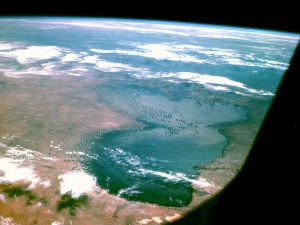
    Lake Chad as seen from Apollo 7. The lake's drying basin is the crucible of Boko Haram's insurgency in Nigeria, Niger, Cameroon and Chad. (Source: NASA, via Wikipedia)

    Lake Chad as seen from Apollo 7 in 1968. The lake’s drying basin is the crucible of Boko Haram’s insurgency in Nigeria, Niger, Cameroon and Chad. (Source: Wikimedia)

    Realistically, Nigeria is not in a position to inflict a military defeat on Boko Haram. Like most insurgencies, Boko Haram avoids concentrating its forces. It prefers to skirmish and build its presence in lots of places at once. The security forces must therefore spread wide to protect the population and root out insurgents village-by-village. According to the orthodox counter-insurgency formula of 20 soldiers and police to every 1000 people, 200,000 soldiers and police would be required in north-east Nigeria.  This is about five times the current deployment level.

    It also assumes that such forces would be adequately equipped and trained and motivated to protect the civilian population. Even the troops that are deployed in the north-east are given little ammunition, and their weapons routinely malfunction. The air force, which gives Nigeria its one clear military advantage, has been struck by multiple equipment failures and crashes in recent months. And the strategy is also to blame. There has been too much focus on a military-only approach and not enough attention paid to the underlying drivers of the conflict.

    Yet Nigerian politicians and generals still line up to claim imminent victory, usually giving three month’s notice for Boko Haram’s projected downfall. Time after time the deadlines pass and Boko Haram is anything but defeated. In fact, the insurgency has never been stronger. Since July, Boko Haram has shifted from hit-and-run tactics to the capture and control of swathes of territory and even large towns across three states: Borno, Adamawa and Yobe.

    The obvious alternative to a military solution – a negotiated political settlement – is admittedly unpalatable. After the appalling war crimes committed by Boko Haram over the last five years, it is hard to contemplate offering them a share of power and, most likely, an amnesty. Yet if it wants to stop the violence, the government has little choice. Indeed it has shown itself willing to enter into negotiations, as the failed attempt to broker a truce through Chadian president Idriss Déby in October showed. But is such a deal even possible?

    Obstacles to a deal

    There is much that stands in the way of a deal with Boko Haram. Probably the most immediate obstacle is the insurgency’s own success. Why would Boko Haram want to do a deal when it is achieving its aims already? To force Boko Haram to the negotiating table, the military may have to retake some of the captured territory to create the impression that the momentum is with the army.

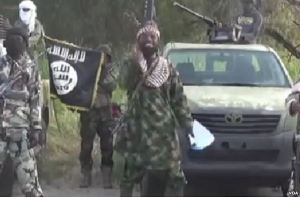
    Abubakar Shekau, leader de Boko Haram, still from an October 2014 Boko Haram video communique. (Source: VOA, via Wikipedia)

    Abubakar Shekau, leader of Boko Haram in a still from an October 2014 Boko Haram video communique. (Source: VOA, via Wikipedia)

    The second obstacle is even greater. Over the past five years, Boko Haram has become increasingly extreme and violent. It has transitioned from a menacing but peaceful movement focused on preaching, to an insurgency focused on attacking government targets, and now to a group willing to indiscriminately kill civilians.

    The insurgency’s growing extremism is a major driving force behind its violence. As Boko Haram’s leader, Abubakar Shekau, said in a recent video, “our religion and our way of worship is nothing but killings, killings and killings”. Indeed, as Ahmad Salkida, a Nigerian journalist with rare access to Boko Haram, has said, “the fuse that drives Boko Haram’s terror is the sect’s doctrine”. Their religious ideology, a form of Salafi Jihadism, focuses on purging Islam of corrupting influences and returning to the ‘pure’ Islamic practices of the distant past. Over the years, Shekau has purged Boko Haram of more moderate commanders, leading to an increasingly fanatical take on what methods are acceptable to purge Muslim society of impure elements and what constitutes an impure element. Violence has become the method of choice, and the targets include children.

    It is hard to see how this extremism and violence can be accommodated in a negotiated settlement. Is it even possible to have a meaningful dialogue with a group that seems to have gone beyond any kind of rational political or socio-economic programme?

    What does Boko Haram want?

    Yet there are discernable grievances underlying the conflict in northern Nigeria. Even if Shekau is only interested in purgative violence, many of the group’s followers and fighters are likely to have more tangible motivations and aims. They are also rumoured to be growing increasingly tired of life in the bush, so it’s possible a deal could be done if a strong enough offer were made.

    A core driver of the insurgency is an escalating cycle of grievance and revenge. Boko Haram first became violent after security forces attacked its members who were participating in a funeral procession in Maiduguri in 2009. After a series of skirmishes, its founding leader Mohammed Yusuf was arrested, detained, and summarily executed. Since then, numerous suspected Boko Haram supporters have also been murdered. On March 14 of this year, the military was accused of summarily executing 600 prisoners in response to a Boko Haram attack. The families of suspected Boko Haram members have also been targeted. Many women and children who are related to militants are believed to be in detention, including the family of Shekau, and there are rumours that female family members have been raped.

    Central to any deal must be accountability and compensation for these excesses, as politically difficult as that may be. Many imprisoned Boko Haram supporters and relatives will also have to be released.

    There are also political and socio-economic factors feeding into the conflict. North-east Nigeria is one of the most impoverished places in the world, with three-quarters of the population living below the poverty line. People there feel politically as well as economically marginalised, as northerners have been increasingly locked out of power in recent years. President Goodluck Jonathan, a southern Christian, has broken an unwritten rule by running again for the presidency in 2015. Convention on rotation of power dictates that a northern Muslim candidate should be put forward by the ruling party.

    Corruption and poor governance in the region have also played a role in promoting alienation from Nigeria’s institutions and fostering an environment ripe for insurgency. The government would do well to include measures aimed at boosting development, improving governance, and ending the region’s political marginalisation in any deal.

    An amnesty from prosecution and jobs for former insurgents must be the final element of a deal. It is unlikely insurgent leaders and fighters will come out of the bush if they believe they will be prosecuted, and jobs will be vital for re-integrating them into society. Again, this would depend on massive federal and/or private investment in the northeast, what some have called a ‘Marshall Plan’ for the northeast.

    There have been signs that the Nigerian government is willing to engage with these questions. The “soft” counter-terrorism strategy unveiled by Nigeria’s National Security Adviser in March included an emphasis on tackling under-development and other underlying drivers of the conflict. Its commitment to address social injustice, joblessness, and poverty may well be attractive to Boko Haram members who have joined the insurgency for those reasons. However, the international storm following the Chibok abduction, Boko Haram’s territorial gains, and the national elections due in February 2015 seem to have dragged momentum away from these measures.

    Talking to Shekau

    One of the major challenges of doing a deal with Boko Haram is finding a way of talking to Shekau. Since the Chibok abduction, all sorts of people have reportedly come forward claiming to be intermediaries representing the insurgents. Many of them, if not all of them, are bogus – including the one who did the supposed deal with Idriss Déby.

    The government has to find the right interlocutor. One possible option is to go through Ahmad Salkida, and the government did reportedly bring him in to discuss the Chibok abduction. He is one of very few people with a credible connection to the insurgents who may be able to advise on how to reach out to them.

    Whatever the case, and as Salkida has said himself, it will be difficult to achieve any kind of peace deal until the army is able to stem the tide of Boko Haram’s advances. The first step must be to summon the political will and train, motivate and deploy the resources necessary to adequately protect the civilian population in north-east Nigeria.

    Andrew Noakes is Coordinator of the Nigeria Security Network. He is on Twitter at @andrew_noakes 

    Image: Lake Chad as seen from Apollo 7 in 1968. Source: Wikimedia.