Blog

  • Climate Change: Impact on Agriculture and Costs of Adaptation

    Climate Change: Impact on Agriculture and Costs of Adaptation

    Various | International Food Policy Research Institute | September 2009

    Issues:Climate change, Competition over resources

    This Food Policy Report presents research results that quantify climate-change impacts, assess the consequences for food security and estimate the investments that would offset the negative consequences for human well-being.

    The analysis brings together, for the first time, detailed modeling of crop growth under climate change with insights from an extremely detailed global agriculture model, using two climate scenarios to simulate future climate. The results of the analysis suggest that agriculture and human well-being will be negatively affected by climate change.
     

    See front page article.

  • Sustainable Security

    Music and dance can be useful means to engage youth in a dialogue for peace.  Music and dance can also provide many unique insights into transforming conflicts and achieving change.


    “As a musician who works for peace, “unity” holds less interest for me than “harmony.” Unity is when we all sing the same note. Harmony is when we sing different notes, and they are beautiful together.”

    – David Lamotte, musician and peace activist

    At the same time, as David goes on to say in his book World Changing 101, “Harmony is not homogeneity.” Moreover, he says, “Of course, it is also true that many notes playing together may clearly not be in harmony with one another. Creating that confluence takes attention, patience, and work. It is a beautiful thing when we achieve it, though. And it is not achieved by eliminating difference, but instead by finding ways to work together that are mutually nourishing, that honor and reveal each other’s gifts.” (LaMotte 2014: 113).

    In these ways, artistic approaches to building peace like music and dance can offer us the means to embrace pluralism through working together to co-create knowledge rather than attempting to determine one ‘right’ way upheld by those a particular society may deem to be experts.

    On Music and Peacebuilding

    Image credit: Hernan Pinera/Flickr.

    In the research for my first book, Youth Peacebuilding: Music, Gender and Change I used qualitative case comparison to explore the use of music as a tool for engaging youth in reducing and preventing violence.  More specifically, the research for that book included participant observation and semi-structured interviews with young people involved in musical peacebuilding programs in Australia and Northern Ireland, providing a uniquely deep look at young people’s experiences of everyday violence and how they approached peacebuilding in their local cultural contexts.

    In Australia this involved a peace program in a major city engaging Indigenous, non-Indigenous, and migrant and refugee background young people in a collaborative process of music making in order to build understanding across difference, challenge racism, and create safe spaces for recovering from violence already experienced. Similarly, the program in Northern Ireland shared similar goals around addressing both racism and sectarianism in its efforts at peacebuilding through participatory music practice.

    This project contributed to theoretical and practical debates and discussions around: youth political participation, the gendered landscape of conflict environments, and creative approaches to pursuing peace. In particular, I explored how music could foster peacebuilding through offering an alternative means for dialogue, helping people create and recreate identities of themselves and others, and offering a tool that could help create safe spaces for such dialogue and identity work, often in challenging circumstances.

    While my research has taken me in many directions in the decade since I began the study that underpinned that first book, I always feel drawn to return to reflections on creative approaches to peace, especially the ways they can engage youth. At present, this has taken the form of working to further analyse and share the findings from my research on dance and peacebuilding. While my earlier work dealt with dance to a degree as part of a broader range of musical practices for peacebuilding, since then I have taken up opportunities to explore dance more specifically.

    Researching Dance and Peacebuilding

     As Nicole Krauss writes in her latest book,

    “More and more it seems to me…that when I write, what I am really trying to do is dance, and because it is impossible, because dancing is free of language, I am never satisfied with writing…to dance is to make oneself available  (for pleasure, for an explosion, for stillness)…The abstract connections it provokes in its audience, of emotion with form, and the excitement from one’s world of feelings and imagination—all of this derives from its vanishing…But writing, whose goal is to achieve a timeless meaning, has to tell itself a lie about time; in essence, it has to believe in some form of immutability…” (Krauss 2017: 136).

    While recognizing these challenges, I continue to find meaning in attempting to write about dance or perhaps to dance writing. As such, during my time as a McKenzie Research Fellow at the University of Melbourne I designed and embarked on a comparative study looking at the use of dance in peacebuilding programs across a range of contexts, including Colombia (now commonly deemed a post-conflict site); the US (in inner city locations in Washington, DC and Baltimore, MD where violence is commonly seen as widespread) and in the Philippines, which, despite a peace agreement being signed, continues to face conflict in Mindanao.

    Using ethnographically informed methods, including participant observation, interviews, and document analysis, I designed the project and methodological approach and gathered data in the US and Colombia, while a research assistant gathered the data in the Philippines case. This type of intensive data gathering, which included participating in the full global training of the trainers for the program involved, as well as months of participant observation of the programs, offered rich insights into how dance and creative movement can and does engage young people in peacebuilding across a range of diverse contexts.

    While the process of writing this into a book proposal and eventually a book is ongoing, over the past several years of working on the project some key themes have started to emerge.

    The role of dance in peacebuilding

    How, if at all, did dance function as a useful way for youth to take part in peacebuilding? Firstly, participant statements indicated, “that dance can be useful in engaging youth in peacebuilding but that it must be applied in sensitive, reflexive and culturally relevant ways to appeal to and include both young men and young women.” Most if not all participants articulated one or more ways dance had been useful for peacebuilding. Some noted, for example, that dance could serve as a nonviolent means of communication and a way to connect with one’s feelings in a peace education context. Moreover, dance was seen as something that is culturally relevant and familiar, thus many youth could relate to it, and it was also something that did not require lots of expensive equipment or training. At the same time, dance was also seen as a way to release and reduce stress, an important aspect of recovering from violence already witnessed or experienced.

    Of course, participants also noted a variety of limitations to what dance could do and how, including pointing to how short term funding cycles, which are common across global peacebuilding initiatives, can at times mean short sighted programs. They also noted that without attention to access and inclusion, efforts to engage youth in dance and creative movement for peacebuilding might overlook the needs of people with disability or people who speak a different language from the one deployed in the dance programs. Still these limitations are not inherent to dance or always present, as seen by the work of VisAbility in Sri Lanka, a country recovering from conflict and where dance programming has been used to engage people with and without disabilities in coordination with a rights empowerment initiative.

    Conclusion

    Overall, it appears music and dance, when applied in thoughtful ways, can help foster peacebuilding. This is not to say they may not also be used ineffectively or to create exclusions, but when used appropriately they can have much to offer. As one facilitator in programs using dance and creative movement for peacebuilding the Washington, DC and Baltimore programs said when speaking about stepping out of one’s comfort zone to engage within a group:

    “When one person takes a positive risk, it shows the rest of us that we can take a positive risk and encourages us to do that also.  So hopefully, after a while they will be able to see that if they can just do one thing that makes them uncomfortable or kind of step outside their comfort zone that it actually helps other people to do the same and get the most out of the experience.”

    Surely such steps can be a useful means for reflecting on ways of finding harmony in the dissonance of conflict.

    Author’s Note: The research assistant involved with the Philippines work, Erica Rose Jeffrey is a fantastic scholar and dance practitioner in her own right and will soon be awarded her PhD for her own practice-led research in Fiji and the Philippines. More on her work can be found at: http://peacemoves.org

    Lesley Pruitt is a Senior Lecturer in International Relations at Monash University and a member of the Monash GPS (Gender, Peace and Security) Centre. Lesley’s research focuses on peace and conflict studies, especially recognising and enhancing youth participation in peacebuilding and advancing gender equity in peacekeeping. A Truman Scholar and Rotary Ambassadorial Scholar, Lesley received her Masters & PhD from the University of Queensland. Lesley’s books include The Women in Blue Helmets: Gender, Policing & the UN’s First All-Female Peacekeeping Unit and Youth Peacebuilding: Music, Gender & Change. She is also an author of Young People, Citizenship and Political Participation: Combatting Civic Deficit?
  • Sustainable Security

    The Ukraine conflict’s legacy of environmental damage and pollutants

    One year after violent conflict began, information is now emerging on the specific environmental impact of war in Ukraine’s highly industrialised Donbas region. Although obtaining accurate data is difficult, indications are that the conflict has resulted in a number of civilian health risks, and potentially long-term damage to its environment. In order to mitigate these long-term risks, international and domestic agencies will have to find ways to coordinate their efforts on documenting, assessing and addressing the damage.

    Read Article →

    The ‘High Politics’ of Sustainable Security

    If events like those in Ukraine have taught us anything it is that, despite the predictions of many, the potential for conflict between the major powers is still one of the defining characteristics of world politics. Crisis diplomacy and inter-state rivalry is back on the global agenda. But if policymakers, analysts and civil society actors are to try and come up with ways of reversing the trend towards an increasingly competitive, militarised and crisis-driven inter-state order, then thinking carefully through the implications of a sustainable security approach to great power politics would appear to be a most useful starting point.

    Read Article →

    International Dimensions of the Ukraine Crisis: Syria and Iran

    The Russian annexation of Crimea may be in direct contravention of international agreements but is popular in Russia and almost certain to hold. Given tensions within Ukrainian society and its weak transitional government, there remains some risk of further intervention in eastern Ukraine and possibly the Trans-Dniester break-away region of Moldova. Even if there is no further escalation in the crisis, the deterioration in EU/Russian and US/Russian relations is of great concern, not least in relation to two aspects of Middle East security – the Syrian civil war and the Iran nuclear negotiations.

    Read Article →

  • The Geopolitics of Climate Change

    The Geopolitics of Climate Change

    Chris Huhne | Department of Energy and Climate Change | July 2011

    Issues:Climate change, Marginalisation


    In a speech to Future Maritime Operations Conference at the Royal United Service Institute, London, Secretary of State for Energy and Climate Change examines the security implications of climate change:

    “We cannot be 100% sure that our enemies will attack our country; but we do not hesitate to prepare for the eventuality. The same principle applies to climate change, which a report published by the Ministry of Defence has identified as one of the four critical issues that will affect everyone on the planet over the next 30 years.

    Around the world, a military consensus is emerging. Climate change is a ‘threat multiplier’. It will make unstable states more unstable, poor nations poorer, inequality more pronounced, and conflict more likely. And the areas of most geopolitical risk are also most at risk of climate change.”

    Read the full speech here: DECC

    Image source: DECCgovuk

    Comments

    Post new comment


  • Arms Flows and the Conflict in Somalia

    Arms Flows and the Conflict in Somalia

    Issue:Global militarisation

    A new SIPRI report highlights the limitations of United Nations attempts to control the flows of arms into Somalia, and the role of potential arms-supplying states.

    In Somalia, the UN has imposed arms embargoes designed to prevent rebel groups from accessing arms. In addition, countries wanting to send arms and ammunition to government forces must notify specially created Sanctions Committees―which, in the case of Somalia, has the authority to block the transfer.  This report show that enforcing these embargoes has proved problematic. And even arms supplies that do not violate the embargoes can have undesirable consequences.

    ‘Arms flows and the conflict in Somalia’ examines arms supplies to Somalia and to African countries that have been involved in the conflict there: Eritrea and Ethiopia―two states that are widely believed to be fighting a proxy war in Somalia―and Burundi and Uganda, which provide peacekeepers to the African Union Mission in Somalia (AMISOM). 

    As the paper shows, there is a real risk that arms supplied to Somali government forces and the AMISOM contributors could fall into the wrong hands and could be used in human rights abuses or aggravate tensions between Eritrea and Ethiopia.


    Author: Pieter D. Wezeman

    Source: SIPRI

    Image source: Michael


  • Sustainable Security

  • Sustainable Security

    Closing Europe’s borders and politicizing the attempt to admit refugees at a time when the growing humanitarian crisis poses mounting human rights challenges to the international community is fundamentally wrongheaded. These approaches only strengthen the hand of Islamic State.

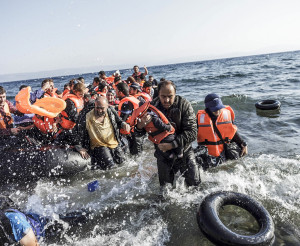
    While violent extremism, terrorism, and civil wars have drawn the most attention, coming to grips with the refugee crisis—emanating mainly from Syria’s civil war, but also more generally from the Middle East and North Africa’s political environment (MENA) in the aftermath of the 2011 Arab uprisings—has never been more essential. The Syrian crisis has propelled a wave of migrants to the neighboring countries of Jordan, Lebanon, Iraq, and Turkey. The Syrian refugee population stands at approximately 4.7 million, of whom 1.7 million live in Lebanon and Jordan and even more in Turkey. It is estimated that Turkey now hosts the world’s largest community of displaced Syrians.

    Defeating the Islamic State in Iraq and Syria (ISIS, also known as ISIL and by its Arabic acronym as Da’esh), while at the same time fulfilling the Responsibility to Protect (R2P) in the Syrian situation, has presented a complex challenge to the international community. The growing threat of ISIS as shown in attacks in Paris (2015) and Brussels (2016), magnified by the increased threat of individual terrorists—the so-called “lone wolves” in San Bernardino, the United States—has stemmed a wave of nationalist, right-wing alarm, reinforcing a general concern about the influx of immigrants and asylum seekers, while underlining the shift from a regional to the international nature of both threat and risk. These security issues have also illustrated the willingness of great powers to support military reactions to ISIS in order to stem the atrocities perpetrated by this group, while putting the departure of the Assad regime on the back burner—at least for now. For all intents and purposes, ISIS poses a much greater threat to Europe than does the current regime in Damascus.

    An Unavoidable Tradeoff

    freedom-house-refugee

    Image by Freedom House via Flickr.

    Confronting and dismantling ISIS need not be achieved by stigmatizing refugees and subjecting them to religious litmus tests. Closing Europe’s porous borders and politicizing the admission of refugees at a time when the growing humanitarian crisis poses mounting human rights challenges to the international community is fundamentally misguided. After all, fortifying European borders, while effective in the short term, strengthens the hands of ISIS and other terrorist groups that portray such policies and practices largely in terms of apocalyptic visions and arcane Islamic prophecies of great battles against Western imperialists.

    Defeating ISIS requires strategic endurance and long-term prudent political decision-making involving internal and external actors in the MENA region. While doing so, it is important to avoid the enemy’s repressive, atavistic, and brutal methods, eschewing certain tactics that could potentially play into ISIS’s hands. It is important to bear in mind that the tactics that terrorist groups like ISIS employ pose mostly political and ideological challenges to the West and that the real fight will be in defeating and destroying the claims and values that these groups assert.  In the end, defeating ISIS requires that its demonic ideology and tactics be confronted and exposed.

    Preventing further refugee crises in the future requires that fighting ISIS be at least temporarily prioritized over the overthrow of the Assad regime.  Seeking a political solution in conjunction with harnessing a multipronged strategy may in fact be among the most effective tools and processes of dealing with current humanitarian crises that the world faces. The possibility of working with the Russians and the Iranians in order to seek a political solution in Syria also raises questions about whether this tradeoff is justified. If the intent is to defeat ISIS, al-Qaeda, and the Levant Conquest Front (formerly known as al-Nusra Front), then this tradeoff is inevitable even as it buttresses the Assad regime in Syria for the foreseeable future. This solution is not problem-free or without significant challenges, however.

    Competing Views

    While the military actions against ISIS are warranted and can be coordinated by both inside and outside actors, the nature of such military missions and their consequences are also subject to further debate and negotiations. The inclusion of Russia and Iran, allies of Assad, in the fight against ISIS raises concerns that their stated goal of curbing ISIS is merely a pretext to prolonging Assad’s rule. Likewise, Turkish participation in air strikes in northern Syria in the war against ISIS has raised the possibility that Ankara will target the Kurds, who have successfully fought against ISIS since the beginning of the conflagration. Turkey’s interest in settling political scores with the Kurds, an interest that it believes is vital to its security, imperils whatever impartiality one might have hoped for in a fight solely against ISIS.

    The massive movement of migrants and refugees to Europe, coupled with the ISIS-led attacks on soft targets in Europe, has created a new urgency among Western leaders to fully confront this new global threat and seriously contemplate the possibility of cooperating with Russia in a coordinated effort. Compromises must at times be made when a multifaceted campaign that includes both countering ISIS and precipitating the removal of the Assad regime is waged. The collapse of the Assad regime would create a significant security void that ISIS and other terrorist groups could easily exploit.

    There is no denying the fact that the Paris, Brussels, and San Bernardino terrorist attacks have heightened the securitization of the refugee threats, as the Islamic State has been using the wave of the migrant influx to infiltrate Europe and North America. The number of terrorists hiding among the refugees is small. ISIS has exploited the flood of refugees to smuggle jihadis into Europe by distributing fake passports in Greek refugee camps to allow its terrorists to travel within Europe. On April 22, 2016, The Washington Post reported that more than three dozen suspected militants who had posed as migrants have been arrested or died while planning or carrying out acts of terrorism.  They included at least seven individuals who were directly linked to the bloody attacks in Paris and Brussels.

    But even a few of these will be highlighted by conservative circles in all Western countries to call for the repatriation or active policing of refugee communities.  Donald Trump Jr.’s notorious analogy between refugees and poisoned Skittles is a case in point. Conservatives rank the issue of terrorism much higher than do liberals in the West, the latter agreeing that one cannot stop all terrorism and that the chances of being caught in a terrorist attack are still quite small. Vigilance and the exclusion of possible threats by governments, however, is prioritized over the compassionate acceptance of refugees.

    The Flaws of the Current Refugee Regime

    The issue remains to be discussed within the core conception of the mandate of the United Nation High Commissioner for Refugees (UNHCR). Remaining at the center of the global refugee regime, UNHCR faces new challenges. Today, for example, most refugees tend to flee from violence and flagrant human rights violations—not necessarily from the threat of persecution, which is a key requirement according to the 1951 Refugee Convention.

    This has resulted in confusion and lack of clarity regarding who qualifies for refugee status and what are the rights to which all refugees are entitled— issues left up entirely to states to interpret. To compound matters further, in the case of Syrian refugee crisis, the neighboring countries of Lebanon, Jordan, and Iraq have never ratified the 1951 Refugee Convention. Now, more than ever, a robust and comprehensive discussion about the future of refugees, whose numbers will only increase with the worsening effects of climate change, is not only timely but necessary, given the tumultuous nature of international politics.

    It is important to bear in mind that refugees can be a destabilizing factor, especially when displaced, alienated, and bitter persons among them are recruited into armed extremist factions. Many studies have shown that the absence of a protective and enabling environment is likely to render more young people vulnerable to racist ideologies and movements and ease the process of their recruitment into the ranks of radical groups like the Islamic State or al-Qaeda. The traditional method of relying on purely humanitarian remedies has proven counterproductive in the face of new influxes of refugees. There is a need for a new thinking that envisions relief and humanitarian aid as fundamentally linked to the granting of work permits to the refugees. To dwell solely on the conventional method of humanitarian aid, and to ignore the importance of wage-earning employment for the refugees, is to wear blinders.

    Shifting Focus from Protection to Empowerment

    The focus of the 1951 refugee protection regime should shift to new ways of dealing with displaced persons that take into account the self-interested reasoning of host countries and the concerns of their citizens regarding competition over jobs. This shift will help to eliminate risks to refugees’ personal security by reducing human smuggling and trafficking by land and sea. Some experts, such as Alexander Betts and Paul Collier, have offered solutions along the line of creating “spaces of opportunity” for the refugees through “special economic zones” that provide jobs, training, and education.

    Helping refugees, I would argue, should begin with technical education and vocational training, coupled with a strategy focused on creating jobs immediately in economic zones from which both host societies and displaced Syrians can benefit. The need to work is inseparable from human security and thus crucial to preserving human dignity. The refugees’ right to legal employment makes good ethical and logical sense. Designing, for example, a vocational skills training program tailored to the needs of women refugees can significantly reduce the incidence of sexual trafficking and abuse. These projects offer a more plausible solution in the long term, not only because they will develop transferable skills that refugees can use in their countries of origin upon return, but also because they create monetary disincentives for refugees to emigrate to Europe in the first place.

    Dr. Mahmood Monshipouri is a professor of international relations at San Francisco State University and he is also a visiting professor at UC-Berkeley, teaching Middle Eastern Politics, and editor, most recently, of Information Politics, Protests, and Human Rights in the Digital Age (New York: Cambridge University Press, 2016).  For more on the perspectives provided here, see Mahmood Monshipouri, Claude Welch Jr., and Khashayar Nikazmrad, “Protecting Human Rights in the Era of Uncertainty: How Not to Lose the War against ISIS,” Journal of Human Rights Online version, July 28, 2016, available at <http://www.tandfonline.com/doi/pdf/10.1080/14754835.2016.1205477>.

  • Competition over resources

    Competition over resources

    In the environmentally constrained but more populous world that can be expected over the course of this century, there will be greater scarcity of three key resources: food, water and energy. Demand for all three resources is already beyond that which can be sustained at current levels. Once population growth and the effects of climate change are factored in, it is clear that greater competition for such resources should be expected, both within and between countries, potentially leading in extreme cases to conflict.

    Beyond Supply Risks: The Conflict Potential of Natural Resources

    Lukas Rüttinger and Moira Feil | The New Security Beat | August 2011

    Issue:Competition over resources

    While the public debate about resource conflicts focuses on the risk of supply disruptions for developed countries, the potentially more risky types of resource conflict are usually ignored. As part of a two-year research project on behalf of the German Federal Environment Agency, adelphi and the Wuppertal Institute for Climate, Energy, and Environment have analyzed the risks of international conflict linked to natural resources in a series of reports titled Beyond Supply Risks – The Conflict Potential of Natural Resources.

    Article source: The New Security Beat

    Image source: Olmovich

    Read more »

    Increasing Competition Over the Indus

    David Michel | Stimson Center | August 2011

    Issue:Competition over resources

    Water managers in the Indus Basin will have to overcome a host of overlapping socio-economic, environmental, and policy pressures as they strive to fulfill their society’s future water needs writes the Stimson Center’s David Michel.

    Image source: sunbeer.

    Read more »

    Next Israeli-Lebanese war looms large

    Dr Joseph A. Kechichian | Gulf News | July 2011

    Issue:Competition over resources

    Beirut is immersed in political squabbles while Tel Aviv is building international support on disputed sea borders

    Israel is preparing for its fifth war against Lebanon, as it believes that Beirut is not entitled to offshore natural gas deposits, allegedly falling outside non-demarcated maritime borders. This wild assertion is advanced allegedly because the 2007 marine boundary negotiations between Israel and Cyprus on the one hand, and those between Beirut and Nicosia separately, delineated offshore lines.

    Article source: Gulf News

    Image source: portland general

    Read more »

    Drought in east Africa the result of climate change and conflict

    Felicity Lawrence | The Guardian | July 2011

    Issues:Climate change, Competition over resources, Marginalisation

    Aid agencies say that weather in the region has become more erratic and years of war leave populations especially vulnerable

    Prolonged drought in the Horn of Africa is the immediate cause of the severe food crisis already affecting around 10 million people in parts of Kenya, Ethiopia, Djibouti and Somalia. Rains have failed over two seasons, with a strong La Niña event having a dramatic impact across the east coast of Africa. Now this year’s wet season has officially ended, there is little prospect of rain or relief before September.

    Article source: The Guardian

    Image source: Oxfam International

    Read more »

    Selling Nature to Save Nature, and Ourselves

    Stephen Leahy | Terraviva | July 2011

    Issues:Climate change, Competition over resources, Marginalisation

    Avoiding the coming catastrophic nexus of climate change, food, water and energy shortages, along with worsening poverty, requires a global technological overhaul involving investments of 1.9 trillion dollars each year for the next 40 years, said experts from the U.N. Department of Economic and Social Affairs (UN-DESA) in Geneva Tuesday.

    “The need for a technological revolution is both a development and existential imperative for civilisation,” said Rob Vos, lead author of a new report, “The Great Green Technological Transformation”. 

    Article source: Terraviva

    Image source: Paul Keller

    Read more »

    Conflict Minerals in the Democratic Republic of the Congo: Aligning Trade and Security Interventions

    Ruben de Koning | SIPRI | July 2011

    Issues:Competition over resources, Global militarisation

    Mineral resources have played a crucial role in fuelling protracted armed conflict in the east of the Democratic Republic of the Congo (DRC). This Policy Paper examines the the prospects for and interactions between various trade- and security-related initiatives that are aimed at demilitarizing the supply chains of key minerals. It also describes the changing context in which such initiatives operate. Finally, it offers policy recommendations for how the Congolese Government and international actors can coordinate and strengthen their responses in order to break resource–conflict links in eastern DRC.

    Article source: SIPRI

    Image source: Tim Pearce, Los Gatos

    Read more »

  • Sustainable Security

    Donald Trump has recently been critising his democratic allies, but he has been eager to revive the special relationship with the UK. Likewise, Theresa May has pledged to “renew the special relationship for this new age”. What are the drivers behind this development?

    Donald Trump has a thing for rebuking America’s democratic allies and their leaders—his latest target being Australia’s Prime Minister, Malcolm Turnbull. The UK appears to be an exception to this trend. In his first interview with the British press as president-elect, Trump explained that the UK has a “special place” in his half-Scottish heart and pledged to support a post-Brexit UK-US trade deal. Reportedly a big fan of Winston Churchill—and of Boris Johnson’s Churchill Factor—he also asked the UK government to loan him a Churchill bust that his Republican predecessor George W. Bush kept in the Oval Office.

    This got some people in the UK excited—and not just Trump’s old friends like Nigel Farage. Indeed, shortly after Trump’s inauguration, Downing Street announced that Prime Minister Theresa May would be the first world leader to visit America’s new president. On January 23, four days ahead of May’s visit, Sean Spicer, the White House press secretary, confirmed that two leaders would talk trade (of course he called May “the British head of state”) and that the US has “always had that special relationship with Britain.” He then added, with a peculiar giggle: “We can always be closer.”

    Looking at the visual images the media coverage left behind in isolation, you might think that May’s visit was a roaring success—the beginning of a beautiful Conservative-Republican friendship à la Margaret Thatcher and Ronald Reagan. Image one depicts the two leaders shaking hands against the background of Trump’s main Oval Office redecorations—the Churchill bust and the portrait of Andrew Jackson. Image two shows Trump and May holding hands while walking from the Oval Office to the press conference. Image three: a well-attended, convivial press conference.

    These images now depict a day that will live in infamy in the history of British foreign policy. A day after May left Washington—that is, on the Holocaust Remembrance Day—Trump’s “Muslim ban” came into force, causing worldwide shock and pain. Now even her supporters had to wonder: How did we ever think we could we do business with this misogynistic, racist man? And why was the prime minister prevaricating instead out outright condemning Trump’s policy?

    The standard answer is cold realpolitik. Scheduled to formally take the country outside the EU’s single market in 2019, the UK government is desperately searching for new trade deals. The U.S. market is the primary target—this was implicit in May’s Lancaster House speech (“We will continue to be reliable partners, willing allies and close friends”) and explicit in her speech at the Republican Party conference in Philadelphia (“I am delighted that the new Administration has made a trade agreement between our countries one of its earliest priorities”). Viewed from this perspective, hugging Trump close, while doing so in an extremely unedifying manner, is in Britain’s best interest—it is certainly in the best of interest of some Britons, as George Monbiot pointed out in his latest weekend column for The Guardian.

    Most Conservatives and probably at least a third of the British voters are in quiet support of staying the course. On the same day Trump’s press secretary giggled about the need for an ever closer special relationship. William Hague, former British foreign secretary and no supporter of Brexit, penned in The Daily Telegraph that the special relationship was Britain’s only “indispensable alliance.” Subsequent events did little to make him change his mind. To Hague, rather than retaliating against Trump’s policies—which is a minority demand anyway—the UK government should host the American president this summer as planned. As for the image of the queen being “within grabbing distance of America’s helmsman,” Britons would do well to recall that she has dealt with thugs before, wrote Hague on January 31.

    theresa-may-donald-trump-900

    Image (modified) by UK Home Office and Gage Skidmore.

    Bannon’s rules

    The special relationship has always been asymmetric, with the Americans acting as rule-makers and the British as rule-takers. That said, the rules have never before been made by Stephen Bannon, the American president’s “chief strategist.” Having likened himself to revolutionaries such as Lenin and Thomas Cromwell (and also figures like Darth Vader and Satan)  Bannon appears to be bent on remaking international order by moving the US away from “multilateralism”, “liberalism” and “democracy” and towards America First-styled “sovereignty” and “traditional values.” In practice, this means that the US is now openly hostile to the UN, WTO, NATO, the Five Eyes, to say nothing of the fragile global governance regimes on climate, human rights and arms control—while simultaneously being “open-minded” about Putin’s Russia and Europe’s far right.

    Related, Bannon, former executive chairman of Breitbart News, an information hub for conspiracy theorists, ultra-conservatives, authoritarians, fascists, white supremacist and other “alt-right” aficionados, seems to think of international relations are fundamentally inter-racial relations. American politics and American foreign policy textbooks cannot shed light on this particular America. A combination of Samuel Huntington, Carl Schmidt and Jared Taylor’s White Identity might.

    In every generation for the past seventy years there were those who saw the special relationship as a Faustian bargain for Britain. Their arguments usually never made it into the mainstream, however. As of last week, this has changed—compare the aforementioned Monbiot or Paul Mason in The Guardian to Gideon Rachman in The Financial Times, for example.

    As thousands of Londoners surrounded the US embassy this past Saturday under the banner “Make America Think Again,” it is worth asking where May’s Trump policy might take Britain. Among several memorable statements the prime minister made in her Philadelphia speech, one that received no media scrutiny was the claim that the UK and the US together “defined the modern world.” Not a diplomatic thing to say, but not necessarily wrong either. The British Empire, in its many forms and iterations, transformed the globe by making Britain and “Neo-Britains” rich, and those on the outside poor. Britain also never challenged the rise of the U.S. the way it challenged other imperial rivals—before the democratic peace came the Anglo-Saxon peace. And once the US moved to establish the so-called liberal international order after World War II, a special role was reserved for Britain. “Whenever we want to subvert any place, we find the British own an island within an easy reach,” said one American spook in 1952. The statement has aged well—it helps explain British foreign policy after Suez, after East-of-Suez, after the end of the Cold War and after 9/11. It may well be valid in the Trump era as well, albeit this time the island in question is likely to be Britain itself—Oceania’s “Airstrip One,” as depicted by Orwell in 1984.

    Srdjan Vucetic is Associate Professor at the Graduate School of Public and International Affairs. His research interests involve American and Canadian foreign and defence policy and international security. Prior to joining the GSPIA, Srdjan was the Randall Dillard Research Fellow in International Studies at Pembroke College, University of Cambridge.

  • Sustainable Security

    China’s increased involvement in United Nations (UN) peacekeeping in Africa reflects a broader trend of the country taking a more proactive approach to foreign policy.

    In December 2017, Chinese President Xi Jinping stated that “[China] will proactively push forward the construction of a global network of partners and will proactively push for political solutions for international hot issues and difficult problems”. While this policy began under the presidency of Hu Jintao, the level of Chinese involvement has grown rapidly under the Xi administration. China’s increased involvement in United Nations (UN) peacekeeping is one clear example of this proactive policy. In 2015, President Xi promised to make 8,000 troops available to the UN, and he also offered to help train 2,000 peacekeepers from other countries.

    China is now among the world’s top 12 largest contributors of troops, and of the five permanent members of the UN Security Council, China is now the biggest contributor of peacekeepers. Most of China’s increased activity in peacekeeping in 2017 took place in Africa. China had more than 2,400 Chinese troops take part in seven UN peacekeeping missions across the continent –most notably in Mali and South Sudan. China has a long history of providing military assistance to Africa, and the continent remains the destination for much of China’s military assistance today. A notable development has been the training and support of African peacekeepers. For example, China provided military assistance to Burundian and Ugandan peacekeepers in Somalia in 2008. China has also made offers to equip African peacekeepers.

    The drivers behind China’s increased peacekeeping involvement

    There are many commonly suggested reasons for China’s increased involvement in peacekeeping in Africa which include: protecting China’s assets and diaspora across the continent, giving Chinese troops combat experience and increasing Chinese soft power in the region. While there may be an element of truth to each, most of these possible drivers fail to apply to all cases of Chinese involvement in peacekeeping in Africa. For example, in Mali, where Chinese peacekeepers were part of a UN mission which started in 2013, China has a relatively small economic footprint and there is only a small Chinese community in the west African country. What is clear is that China’s involvement in peacekeeping in Africa is part of a national branding strategy which is aimed at both global and domestic audiences. This strategy is deployed through two interlinking national narratives – that of the responsible great power and the leader of the developing world.

    The expanding role of Chinese peacekeeping in Africa aligns with China’s foreign policy goal to project itself as a responsible great power. Becoming a responsible great power is part of China’s stated policy of a “peaceful development,” which is China’s attempt to reduce fears that China will challenge Western dominance of the current system of global governance. Playing a greater role in peacekeeping is part of this role and is a clear example of China’s attempts to increase its involvement in global affairs within the current system and often in partnership with established actors.

    In Africa, China’s attempts to project itself as a responsible great power meets another of China’s national narratives – that of China as the leader of the developing world, a nation that stands in brotherhood with other developing states. Within this narrative, China’s actions in Africa are undertaken in the spirit of South-South cooperation whereby African states are equal partners within the process and are encouraged to find their own paths to solving issues. In terms of Chinese peacekeeping in Africa, this narrative has affected how China shapes its overall security approach in three ways.

    First, as a developing state itself, China is aware that due to a lack of capacity in their economic systems, developing states are more open to structural shocks, which affects the production of food and water. In Africa, China has adopted a comprehensive, integrated security approach to its peacekeeping missions that moves beyond just traditional security. This has meant that China’s peacekeeping missions also focus on non-traditional security threats, such as water and food insecurity, to build peace in an area of conflict. China often sends technicians and engineers to help rebuild water and agricultural infrastructures, as water and food insecurity plays a part in the overall development of a conflict.

    Second, China also focuses on the long-term economic development of African states in conflict, as poverty is seen as another major driver of conflict. China has increased investment and development aid in African states, which brings much needed jobs and infrastructure projects to the continent. In particular, the One Belt One Road initiative attempts to improve African transport infrastructures by integrating markets across the continent and with the rest of the world. This could lead to greater economic development by reducing poverty and, therefore, conflict.

    Finally, the spirit of South-South cooperation requires China to support other states in finding solutions to their problems. For this reason, China supports African-led responses to conflict in the region, including African Union–led peacekeeping missions, which tend to be undermanned, under-trained, and under-resourced. China offers training, equipment and financial aid to the African Union (AU), as well as to other regional bodies. China has also worked with other actors to support their efforts in building capacity among African states to send peacekeepers. For instance, China supported the EU training program for Malian troops. Beyond providing material support for African regional bodies in peacekeeping, China has also looked to these bodies to be the final decision makers in determining military interventions on the continent. This has given African regional bodies greater ownership of these missions, which should, in theory, increase the possibility of these missions succeeding in their objectives.

    Conclusion

    While there may be more material drivers behind China’s increased involvement in peacekeeping in Africa, these two national narratives – that of the responsible great power and the leader of the developing world – have shaped how China develops its role within peacekeeping, creating limitations to China’s actions. These narratives will therefore shape China’s role in peacekeeping in Africa in the future.

    Dr. Niall Duggan is a lecturer in international relations at the Department of Government and Politics at University College Cork. He is also the director of the MSc International Public Policy & Diplomacy. His latest publications include ‘The People’s Republic of China and European Union Security Cooperation in Africa: Sino-EU Security Cooperation in Mali and the Gulf of Aden’. International Journal of China Studies, and’China’s New Intervention Policy: China’s Peacekeeping Mission to Mali’ in: Chris Alden, Abiodun Alao, Zhang Chun, Laura Barber (eds). China and Africa: Building Peace and Security Cooperation on the Continent. Basingstoke: Palgr