Blog

  • Sustainable Security

  • Sustainable Security

    From Surveillance to Smuggling: Drones in the War on Drugs

    In Latin America drones are being used as part of the War on Drugs as both regional governments and the US are using surveillance drones to monitor drug trafficking and find smuggling routes.. However, as drones are increasingly being used by drug cartels themselves to transport drugs between countries, could Latin America find itself at the forefront of emerging drone countermeasures?

    Read Article →

    Losing control over the use of force: fully autonomous weapons systems and the international movement to ban them

    Later this month, governments will meet in Geneva to discuss lethal autonomous weapons systems. Previous talks – and growing pressure from civil society – have not yet galvanised governments into action. Meanwhile the development of these so-called “killer robots” is already being considered in military roadmaps. Their prohibition is therefore an increasingly urgent task.

    Read Article →

    Too Quiet on the Western Front? The Sahel-Sahara between Arab Spring and Black Spring

    While the world’s attention has been focused on the US-led military interventions in Iraq and Syria a quieter build-up of military assets has been ongoing along the newer, western front of the War on Terror as the security crises in Libya and northeast Nigeria escalate and the conflict in northern Mali proves to be far from over. In the face of revolutionary change in Burkina Faso, the efforts of outsiders to enforce an authoritarian and exclusionary status quo across the Sahel-Sahara look increasingly fragile and misdirected.

    Read Article →

    The cooling wars of cyber space in a remote era

    As current discussions highlight the possibility of “major” cyber attacks causing a significant loss of life or large scale destruction, it is becoming harder to determine whether these claims are hype or are in fact justified fears. Esther Kersley, Katherine Tajer and Alberto Muti offer some clarity on the subject by assessing the major issues in cyber security today to help better inform the debate and assess what threats and challenges cyber issues really do pose to international peace and security.

    Read Article →

    Drone-tocracy? Mapping the proliferation of unmanned systems

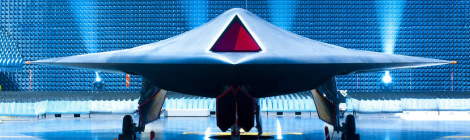
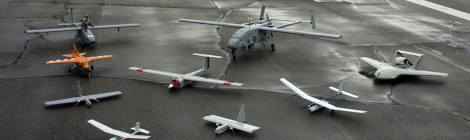
    While the US and its allies have had a monopoly on drone technology until recently, the uptake of military and civilian drones by a much wider range of state and non-state actors shows that this playing field is quickly levelling. Current international agreements on arms control and use lack efficacy in responding to the legal, ethical, strategic and political problems with military drone proliferation. The huge expansion of this technology must push the international community to adopt strong norms on the use of drones on the battlefield.

    Read Article →

  • Share the World’s Resources (www.stwr.org)

    Share the World’s Resources (www.stwr.org)

    Issue:Marginalisation

    Tag:WEBSITE

    This website presents an extensive database of the latest news, analysis and information on a variety of international issues. There are currently over 2,000 articles available covering issues ranging from globalization to poverty, climate change, people power and much more.

    The objectives of Share the World’s Resources are

    1. To raise awareness of how and why the dominant international economic and political systems are incapable of ending poverty, creating a sustainable economy, or mitigating climate change.

    2. To propose an alternative sustainable economic framework based on international cooperation and the sharing of essential resources.

    3. To campaign for governments around the world to initiate global economic reform and to share essential resources in order to immediately secure basic human needs for all.

  • Sustainable Security

    The Anthropocene denotes a new geological epoch characterized by the unprecedented impact of human activities on the Earth’s ecosystems. While the natural sciences have advanced our understanding of the drivers and processes of global change, the social sciences address the fundamental challenge of governance and politics in the Anthropocene.

    On Monday 29 August 2016, the official Working Group on the Anthropocene reported to the International Geological Congress underway in Cape Town and recommended to adopt the Anthropocene as the official term for our contemporary geological epoch. The suggested term Anthropocene denotes the all-encompassing influence of the human species on our planetary systems. The 35 scientists currently serving on the working group have voted 30 to three in favor of formally designating the Anthropocene, with two abstentions. While this suggestion will be reviewed by further commissions – first by the Subcommission on Quaternary Stratigraphy, then International Commission on Stratigraphy and finally the Executive Committee of the International Union of Geological Sciences – it is a strong signal that something extraordinary is going on.

    When did the Anthropocene begin?

    mongolian-development-bank

    Image by Asian Development Bank/Flickr.

    Geologists of the future might well remember 16 July 1945 as the beginning of the Anthropocene. This day witnessed the explosion of the first nuclear bomb at the White Sands Proving Ground, New Mexico, under the code name ‘Trinity’. The debris from more than 500 above-ground nuclear tests conducted between 1945 and 1963, when the Test Ban Treaty took effect, has created a detectable layer of radioactive elements in sediments all around the planet. However, other potential start dates have been suggested. In their original proposal of the Anthropocene, Crutzen and Stoermer argue for the beginning of the Industrial Revolution in 1750 as an appropriate start date, while others have has suggested an earlier start date around 3000 BC, when agriculture and livestock cultivation intensified and the first centralized political authorities emerged. An intermediary position also exists, for example Lewis and Maslin, who propose the noticeable decline in atmospheric CO2 concentrations between 1570 and 1620 as a good marker for the start of the Anthropocene.

    Beyond its symbolic and metaphoric value, these discussions illustrate the radically different nature of current global environmental change. System Earth is rapidly changing, potentially shifting to life-threatening modes of operation. Climate change, biodiversity loss, disruption of the nitrogen and phosphorous cycles, plastic soup in the oceans and men-made chemicals found in (human) embryos, these are the symptoms and most visible signs of the great acceleration and earth system transformation underway. In other words: space ship earth is on a collision course, and the autopilot has been set by its own crew. The Anthropocene hypothesis has become a rallying call for action in the light of scientific evidence that warns against dangerous global environmental change and the ensuing environmental insecurities produced by systemic tipping-points, feedback-loops and emergent properties of complex systems. The Anthropocene hypothesis also highlights specific challenges for governance: how to deal with the apparent urgency of global change while taking into account scientific and normative uncertainties; how to distribute responsibility in a fair and equitable manner; and finally how to embrace complexity as an ontological category of the Anthropocene.

    Global governance scholars and the Anthropocene

    But how will the field of global governance studies react to the Anthropocene hypothesis? Will scholarship continue down a business-as-usual path, with a disciplinary focus and a narrowly conceived ethical and normative agenda? Or will the field of global governance studies engage in a more radical epistemological and ontological debate? I argue that global environmental governance research is fruitfully challenged by the Anthropocene hypothesis, potentially leading to a reorientation of theory and practice. I see three reasons for this.

    First, the Anthropocene hypothesis calls into question long-held assumptions about the human-nature dualism and has therefore been associated with the end-of-nature discourse. At the heart of most environmental activism over the last five decades lies the conviction that nature exists independent of human agency and that (supposedly) ‘natural’ states of our planet, such as a stable climate system, should be protected. However, if the nature-human dualism is questioned by the advent of the Anthropocene, what does this mean for popular conceptions of conservation, wilderness and sustainability and for environmental politics more generally? In the words of Paul Wapner: “Nature, then, is not a separate realm, as many environmentalists assume but, because it is always interpreted through cultural lenses, is part and parcel of human affairs.” The challenge for global environmental governance scholarship is to scrutinize human agency as part of a broader ‘earth-system’ perspective.

    Second, the notion of the Anthropocene, and the related idea of a unified human force that exerts unprecedented influence on the earth system, challenges governance scholarship in two ways. First, it urges scholars to take a more system-theoretical perspective in order to identify the system-wide drivers of anthropogenic global change and the systemic reactions produced by various social sub-systems. And second, global governance scholarship is urgently needed as a corrective to accounts of the Anthropocene that neglect the fact that human agency is not uniform across the planet, and that contributions to the problem and the distribution of risks and opportunities arising from global environmental change are highly uneven.

    Third, the Anthropocene hypothesis propels governance research to the center of attention, as the question becomes: how can we steer towards socio-natural co-evolution and a resulting safe operating space fur human development? As a result, this position opens up opportunities for genuine interdisciplinarity, in which the social sciences in general and global governance scholarship more specifically are not just a ‘junior partner’ of the sciences, but contribute fundamental insights into drivers, solutions and complex feedbacks between agency, unintended consequences and reactions to these.

    From scholarship to policies

    However, while there are good arguments for adopting the Anthropocene as an official geological epoch and for fruitful engagement from a social sciences and governance perspective, what is less evident is how we will address the challenges associated with the Anthropocene in broader political terms. Governance strategies for the Anthropocene fall roughly into two broad camps: first, a global elitist managerial approach, underpinned by a sense of human ingenuity and epitomized by ever-more vocal calls for geoengineering, an approach that puts some people’s interests before others. Advocates of this vision of the future Anthropocene see potentials rather than threats. On this account, a new glorious epoch is dawning, one of men-made unprecedented progress towards a post-human evolution and eternal future.

    The second vision is more humble and less secure about its eventual success: a bottom-up approach based on cultural and political diversity, equity, fairness and a broader eco-centric ethos. A political vision that favors deliberation over efficiency and fairness over effectiveness and is enshrined already (in broad terms) in the internationally agreed Sustainable Development Goals as part of the global development agenda until 2030.

    While the Anthropocene as a term might be almost universally accepted, the contestations about its political and normative contours have only just begun. The election of the climate change-denier Donald Trump as the 45th President of the United States of America does not leave much room for optimism in this respect. In particular his announcement to withdraw from the international climate change negotiations (in one or another form) calls into question some of the modest signs of progress that we could witness recently. This should motivate everyone interested in shaping the Anthropocene to get involved in the necessary and difficult debates about how we want to shape our common future.

    Philipp Pattberg is professor of transnational environmental governance and policy at VU Amsterdam, The Netherlands. He specializes in the study of global environmental politics, with a focus on climate change governance, biodiversity, forest and fisheries governance, transnational relations, public-private partnerships, network theory and institutional analysis. Pattberg’s current research scrutinizes institutional complexity, functional overlaps and fragmentation across environmental domains (http://fragmentation.eu/). At VU Amsterdam, Pattberg heads the Department of Environmental Policy Analysis, a team of more than 25 researchers that was evaluated in a 2014 international review as ‘world leading’ and as being ‘one of the highest profile academic research groups involved with sustainability governance from around the world’.

  • South Sudan: Conflict is ‘fact of life’

    South Sudan: Conflict is ‘fact of life’

    Today Programme | BBC News | January 2012

    Issues:Competition over resources, Global militarisation

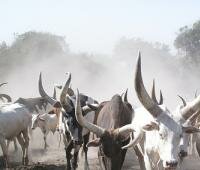
    In a radio interview for the BBC, Dr Sara Pantuliano of the Overseas Development Institute highlights a tribal conflict in Jonglei State that has grown particularly violent. The conflict between the Murle and Luo-Nuer groups has traditionally centred on cattle-raiding (cattle being a vital element of the region’s economy for centuries), but recently it has taken on the character of a ‘military assault’ along ethnic lines. Dr Pantuliano attributes this change to both the sheer number of weapons flooding the region, and to the anonymity and consequent remoteness of modern warfare. Compounding these factors is the diminished status of chiefs and elders and the effectiveness of the traditional checks and balances that they enforce, compromised as they have been by the protracted civil wars of the past.

    This case is symptomatic of the general lack of security in South Sudan, which is overwhelming the small UN security presence put in place after independence last summer. It is therefore extremely important that the causes of insecurity are targeted because the symptoms are already causing serious damage in this young country.


    BBC Radio4 Today Programme, 03 January 2012

    Tens of thousands of South Sudanese people are fleeing from their homes, after inter-ethnic clashes around the town of Pibor.

    The United Nations is warning villagers to run for their lives ahead of advancing fighters from a rival tribe.

    Parthrsary Rajendran, head of mission for Medecins Sans Frontieres in South Sudan, speaks on the phone from the capital Juba.

    Dr Sara Pantuliano, Sudan analyst at the Overseas Development Institute, says that this is part of a “long-standing conflict” in the region.

    Conflict is a “fact of life” between these two social groups, she adds, but the cattle wars have now become more like “military assaults” as the authority of the elders and chiefs has diminished as a result of the “massive proliferation” of weapons in the region.

    To hear the interview, click here


    Article Source: BBC

    Image Source: Oxfam International

    Comments

    Post new comment


  • Israel’s shadow over Iran

    Israel’s shadow over Iran

    Paul Rogers | open democracy | January 2010

    Issue:Global militarisation

    Tagss:Iran, Israel

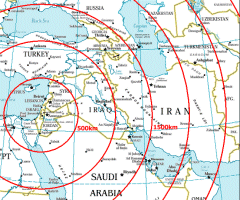
    Most of the international attention on Iran in the second half of 2009 focused on the political turmoil following the presidential election of 12 June. The discussion of Iran’s nuclear capabilities and plans receded from the foreground, though it continued behind the scenes among all the states and international agencies involved. The signs are that, whatever the outcome of the domestic confrontation between the Mahmoud Ahmadinejad regime and the opposition, the coming months will see a sharpening of tension over the nuclear issue. This raises the question of whether there will be a military assault on Iran’s nuclear facilities – most likely by Israel, since there is little likelihood that the Barack Obama administration would countenance direct United States military action against Iran – in an attempt to stop the country from acquiring a nuclear weapon (see “Iran, Israel, America: the nuclear gamble”, 2 October 2009).

    In current circumstances, any unexpected or dramatic incident is likely to be read in terms of its bearing on the complex interplay over the nuclear question of Iran, Israel and the United States.  The assassination by a remote-controlled bomb of the Iranian quantum-physicist (and opposition supporter) Massoud Ali Mohammadi on 12 January 2010 is one such. The Iranian government immediately attributed Dr Mohammadi’s killing to the United States and Israel, working in collaboration with internal dissidents.  

    Tehran’s accusation against its main adversaries is as predictable as Washington’s denial of any involvement in the murder. While the truth of this event remains to be established, what can be said is that on a larger diplomatic front the United States has little to gain from any rupture in relations with Tehran. The rhetoric in Washington from conservative sources and supporters of Israel may be as strong as ever, and is more than matched by the propaganda of the Ahmadinejad government; but in reality the US and Iran actually have overlapping interests. Both have reason, albeit for different reasons, to oppose al-Qaida and the Taliban (with Iran recalling the deaths of Iranian diplomats at the Taliban’s hands in 1998); and the US government is well aware of the potential for Iran to make things very difficult for it in Iraq.

    The deep state

    Two pieces of evidence, however, suggest that events involving Israel may make the delicate Tehran/Washington relationship even harder to sustain. The first is that sources close to the Israeli government confirm and are clear that training and other preparations continue for possible military action against Iran. This is not to say that an attack is imminent, or indeed inevitable: just that the option is, and will remain, readily available.

    The Binyamin Netanyahu government has been careful to moderate its public pronouncements about Iran; but its repeated statements that Iran is Israel’s primary security concern – far outweighing Hamas, Hizbollah and certainly the Palestinians on the West Bank – are far more than rhetoric. Some nuclear analysts in the United States believe that Washington could come to terms with a nuclear-armed Iran, should that be Tehran’s ultimate aim; for Israel, such an outcome is simply not acceptable.

    The second piece of evidence enters here, namely a range of reports suggesting that Iran has gone much further than previously believed in protecting its nuclear facilities.  The reports centre on news of a new nuclear plant being constructed inside a mountain near the holy city of Qom (see William J. Broad, “Iran Shielding Its Nuclear Efforts in Maze of Tunnels”, New York Times, 6 January 2010).

    The argument is being made that the Qom development – news of which follows Iran’s admission in September 2009 that it is building a uranium-enrichment plant inside a mountain near Qom – is just one of many of this type; that a programme of systematic protection of sensitive sites has been operating for several years; and that these are sufficiently robust to greatly diminish the likely success of any air-strikes.  The reports do not explicitly claim that the diverse sites are clearly linked to a nuclear-weapons (as distinct from a civil nuclear-power) programme, but the implication is that they are, and that they’re intended as a form of deterrence.

    It is impossible to verify these reports. What can be said is that Iran has huge experience in tunnel-engineering, not least in carving road-and-rail routes through mountainous terrain, as well as the construction of subway-systems in three cities (Tehran, Isfahan and Shiraz).  Some of the world’s leading tunnelling-contractors, including Germany’s Herrenknecht, have offices in Tehran. President Ahmadinejad himself, a transport engineer by profession, was in 1998 a co-founder of the Iranian Tunnelling Association.

    Iran has, therefore, the capability to protect sensitive facilities and there is a fair amount of evidence that it has done so. Any kind of nuclear development is seen in the country as a powerful symbol of modernity (and is to that extent popular); and the risk of an attack on nuclear facilities, even if they are not weapons-related, makes protection a high priority for the authorities.

    Indeed, if as is probable Iran did embark on a scheme some years ago to develop a major civil-nuclear programme that could also give it the potential to “break out” into nuclear weapons, then its thinking from the start would have been that an Israeli military assault was at some point likely.  From that early point it would have made eminent sense to focus intense efforts on extremely strong protection of selected facilities; indeed it would be a sign of political and technical incompetence not to have done so.

    It is still feasible that Iran is not actually engaged in developing nuclear weapons but is determined to maintain that option. Merely to do this in a survivable way, however, would require sophisticated levels of protection. The latter would be far better provided by tunnelling into mountains than digging deep holes and covering facilities with substantial layers of concrete, earth and rock. The latter option would leave facilities vulnerable to attack by the 2.3-tonne GBU-28 “bunker-busting” bomb available to the Israelis; whereas such a weapon would have little if any effect on deep tunnels other than to wreck entrances (and even this risk can easily be countered by dummy entrances and other technical tricks).

    The US air force has for some years funded the development of a far more powerful system, the 13.6-tonne GBU-57A/B Massive Ordnance Penetrator (MOP). The first of these are due to be deployed later this year, though there are no indications whatsoever that they will be made available to the Israelis (see “MOPping Up: The USA’s 30,000 Pound Bomb”, Defense Industry Daily, 22 December 2009). In any event, if Iran has created deeply buried facilities within mountains, even the GBU-57 would have little effect.

    The hard choice

    The logic of the foregoing is that even if Iran has not yet decided to divert into a nuclear-weapons programme, there is a strong risk of an Israeli attack – but that Iran’s leadership will be confident that a raid would leave important parts of any programme intact. Moreover, Iran’s elite could respond to an attack from the middle-east’s only nuclear-weapons power by withdrawing from the non-proliferation treaty; mobilising the people around a unifying cause; portraying the country as a regional leader against aggression; and “really” going all-out for nuclear weapons.  The result would be yet more assaults by Israel in subsequent months, with complex political effects across the region in which (for example) the reaction of Arab elites and Arab citizens would be very different.

    The long-term consequences of any Israeli operation against Iranian nuclear targets are unpredictable, but probable among them is serious regional instability. Yet where the dominant security paradigm remains fixated on Iran’s nuclear potential, this would not be enough to stop Israel. 

    The United States clearly recognises this fact, and the Barack Obama administration – unlike its predecessor – well understands how damaging a war would be. The watchwords of the Washington’s dealings with Tehran in coming months will continue to be caution and patience. It is far less certain that the US president has any serious control over Israel’s plans and calculations. For that reason alone, a crisis remains likely some time in 2010.

    Comments

    Post new comment


  • Articles EXCLUSIVELY written for sustainablesecurity.org

    Articles EXCLUSIVELY written for sustainablesecurity.org

    Issues:Climate change, Competition over resources, Global militarisation, Marginalisation

    To browse a list of all of the articles EXCLUSIVELY written for sustainablesecurity.org – follow this link

    Comments

    Post new comment


  • Rushing Carefully in Libya

    Rushing Carefully in Libya

    John Norris | Center for American Progress | March 2011

    Issues:Global militarisation, Marginalisation

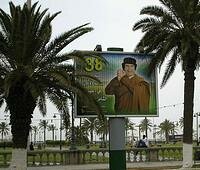
    Over the weekend the Obama administration was greeted by a chorus of commentators urging the United States to respond militarily to the situation in Libya. But the choices now facing the administration are complex and demand both speed of response and common sense.

    The negative scenarios are easily sketched out. The administration does not want a failed state, a protracted civil war, a major disruption in oil supplies, a humanitarian catastrophe, or to look feckless at a moment of great import. Nor does it want to make the hopefully democratic transitions across other parts of the Middle East more daunting.

    In foreign policy, however, it is always easy to sketch out what you don’t want to happen. Putting a positive agenda on the table is much trickier business. This explains why President Barack Obama’s National Security Council staff has been pulling some very late nights.

    We shouldn’t kid ourselves. Blowing up a runway or imposing a no-fly zone are not silver bullets. And one would hope that after the experience of both Afghanistan and Iraq—and earlier interventions such as Kosovo and Bosnia—we understand that war is a dangerous, uncertain business. This is not to minimize the brutality of Moammar Qaddafi’s attacks on his own people or to urge inaction. It is to counsel thoughtful action designed with an endgame firmly in mind.

    Consider the following questions. If we arm the opposition, what happens if some of those weapons fall into unfriendly hands? Do we really think that the situation in the Middle East requires more weapons on the ground? Or what if we impose a no-fly zone and attacks on the ground continue or escalate? Do we consider resorting to a ground offensive? Do we want the United States involved in three ground wars in three Islamic countries at the same time? Neither the rebels nor our national interest would benefit from a half-hearted intervention that does not achieve its goals.

    With this in mind, here are the things that the administration should do right now. Fortunately, they appear to be trying to work through them already:

    • Leave all options on the table. We should not immediately commit to the use of force. But we shouldn’t take it off the table, either. There are scores of options beyond a no-fly zone or arming the rebels that might be appropriate—from jamming Libya’s communications system to making clear to Libya that any further aerial attacks will mean significant parts of its air force will be destroyed on the ground. The president needs to take a hard look at the full range of options available and creatively employ the best mix likely to achieve the best results.
    • Quickly build a consensus with other nations. It is imperative that the United States find common cause with other nations about the best course of action. This might be through the United Nations, NATO, the African Union, the Arab League, or the European Union—or some combination of any of the above. There needs to be a broader umbrella of states that are vested in the outcome beyond the United States.
    • Explain the course of action. President Obama, in consultation with Congress, needs to make a clear and compelling case to the American public about what he believes to be the best option before using military force or ruling it out. He needs to articulate the potential risks and rewards of this strategy, and how this is tied to our fundamental interests as a nation and a people. We would far prefer a president who is brutally honest about the hard choices ahead than one who blithely paints a rosy scenario that evaporates in the hot desert sun.
    • Keep trying to peel away Qaddafi’s inner circle. Through every channel possible—the State Department, the Pentagon, the CIA, and beyond—the administration needs to get the message to Qaddafi’s coterie that they are on the wrong side of history and that the only way to potentially save themselves is to get out now. Further defections will further rattle the regime and help restore some of the momentum robbed from the rebels as they are bombarded with air strikes and attacks from a mad—and power mad—government.

    Given Qaddafi’s instability and absolute irresponsibility there is a chance that his forces will commit some atrocity that is so far beyond the pale—bombing a grade school or hospital, openly gunning down scores of unarmed protestors in front of an television crew—that the administration will feel that it has no choice but to act immediately regardless of the state of its planning. Let’s hope the rebels and their supporters in the outside world can find common cause and some practical plans before that happens.


    John Norris is the Executive Director of the Sustainable Security and Peacebuilding Initiative at the Center for American Progress.

    This article originally appeared on the CAP website.

    Comments

    Post new comment


  • AfPak-Iraq: wrong war, right path

    AfPak-Iraq: wrong war, right path

    Paul Rogers | Open Democracy | October 2009

    Issue:Global militarisation

    The term “global war on terror” has long since been dropped from the United States’s official vocabulary. The phrase that came to be proposed as a replacement even when George W Bush was still in office, the “long war”, has similarly fallen by the wayside, to be succeeded in March 2009 by a less overtly combative Pentagon formulation: “overseas contingency operation”. But it is easier for the Barack Obama administration to redefine the conflict it is involved in than to change the bleak current reality in three main flashpoints – Afghanistan, Pakistan and Iraq:

    * the coordinated suicide-attack and rocket-attack in the early morning of 28 October 2009 on two high-profile civilian targets in Kabul – the Bekhtar guest-house and Serena Hotel – are a sign that the deepening insecurity in Afghanistan reaches even to the heart of the capital. The Bekhtar incident ended in the deaths of twelve people, including five United Nations staff who were helping to oversee the re-run of the presidential election on 7 November

    * the devastating market-bombing in Peshawar, also on 28 October, are part of a widening insurgency in Pakistan. The attack killed over ninety people, and coincided with the arrival of United States secretary of state Hillary Clinton in the country for high-level talks with Pakistani leaders

    * the suicide-bomb operations against Iraq’s justice ministry and the administrative headquarters of Baghdad’s region on 25 October – which killed at least 155 people and wounded over 500 – are a reminded that violence in Iraq remains endemic and that insurgents retain the capacity to strike close to the heart of power.

    The rising tide

    In Afghanistan, the great concern over the Kabul assaults is accentuated by awareness of four serious security developments elsewhere in the country:

    * the war is continuing to spread to previously peaceful areas. German troops in Kunduz province in the north of the country, for example, are involved in direct combat for the first time in over six decades (see Nicholas Kulish, “German Limits on War Face Afghan Reality”, International Herald Tribune, 27 October 2009)

    * the increasing effectiveness of the attacks on foreign troops. United States forces are suffering relentless casualties: sixty-seven troops have been killed so far in October 2009, including seven on 27 October in multiple, “complex” bomb-attacks on an armoured vehicle in Kandahar province

    * after the United States withdrew troops from four bases in Nuristan province in northeast Afghanistan (and adjacent to Pakistan), it has effectively fallen under the control of a Taliban network led by Qari Ziaur Rahman, a leader with close links to al-Qaida (see Syed Saleem Shahzad, “Taliban take over Afghan province”, Asia Times, 28 October 2009)

    * it is now becoming ever more clear that the United States forces and the wider Nato/International Security Assistance Force (Isaf) coalition is facing military opposition from groups that extend beyond Taliban militias and some loosely associated warlord networks; these include scores of local militias that have very little to do with the Taliban but work to protect their own power-bases and resist what they see as a foreign occupation.

    All war is local

    The implication of these trends is that a transition from insurgency to a broader insurrection may be occurring – and that deploying even more American and allied troops (as Barack Obama and his advisers are currently discussing) risks increasing rather than diminishing the military challenge (see “Afghanistan: from insurgency to insurrection” [8 October 2009] and “AfPak: the unwinnable war” [16 October 2009]).

    Some US military and political officers on the ground are beginning to register these dynamics. Matthew Hoh, a senior US state department official and former marine who was based until recently in Zabul province, explained his resignation on 10 September 2009 by referring to his experiences in the Korengal valley and elsewhere. These, he is reported as saying:

    “taught him ‘how localised the insurgency was. I didn’t realize that a group in this valley here has no connection with an insurgent group two kilometres away.’ Hundreds, maybe thousands, of groups across Afghanistan, he decided, had few ideological ties to the Taliban but took its money to fight the foreign intruders and maintain their own local power bases. ‘That’s really what shook me,’ he said. ‘I thought it was more nationalistic. But it’s localism. I would call it valley-ism’” (see Karen De Young, “U.S. official resigns over Afghan war”, Washington Post, 27 October 2009).

    The Barack Obama administration has yet to decide whether to deploy up to the 40,000 additional troops requested in General Stanley A McChrystal’s report; it still appears to want to delay the decision until political stability can be established in Kabul (through the 7 November re-run of the presidential election, and perhaps the formation of a national or emergency government). But the core dilemma remains: that deploying more troops is in current conditions likely to prove counterproductive, and only deepen the military quagmire.

    There is a close parallel here with what is happening across the border in Pakistan. An extensive operation by the Pakistani army in Waziristan, launched with a certain fanfare on 17 October 2009 as attempt to occupy this key region and decisively curb Taliban control there, is too facing the reality of an intractable and well-organised opposition resistant to straightforward military solutions.

    The Pakistani offensive lacks the equipment, the flexibility and the combat-troop levels (perhaps as many as 50,000) that would all be required to subdue the entire district; as a result, it now has the more limited aim of neutralising the influence of some important militia leaders. Even this will be hard enough. In addition, cities such as Islamabad, Rawalpindi and Lahore as well as Peshawar have endured high-profile insurgent assaults; and the Peshawar explosion on 28 October is further evidence that the army’s well-publicised operations cannot prevent (and may indeed provoke) violent incidents elsewhere in Pakistan.

    The Baghdad blues

    Amid this comfortless prospect, the situation in Iraq has appeared to present more hopeful evidence that here at least – both before and since United States forces started their partial withdrawal from Iraq’s cities on 30 June 2009 – Washington’s military strategy was showing the desired results.

    At the same time, the very concentration of focus on “AfPak” during much of 2009 has tended to mean that the continuing severe violence and tension in parts of the country have been underplayed. There has, for example, been a series of bombings against Shi’a-populated areas whose resulting carnage is barely conveyed by the death-tolls: over 120 killed in the strikes against markets in Sadr city in April and June, seventy-one dead at a Shi’a shrine in Baghdad in April, forty-four  killed at a Shi’a mosque in Mosul in August. This is but a partial list.

    The intention seems clear: to polarise Shi’a and Sunni communities and provoke further conflict. But those responsible have other targets, including the Iraqi government’s infrastructure and its security forces (which are supplemented, despite the ending of full-scale American patrols in urban areas, by US troops in what amount to joint operations).

    It is in these circumstances that the insurgents have expanded their tactics by launching large-scale assaults against major government centres. In August 2009, these destroyed or inflicted serious damage on the foreign, finance and health ministries (with 102 people killed and more than 500 wounded); the 25 October attacks hit two more centres. An especially serious aspect of this approach is the suggestion that the militants’ ability to penetrate government buildings is possible only with a degree of collaboration from inside Iraq’s security forces.

    The real debate

    The death of the United Nations staff in the Kabul attacks on 28 October is a further significant aspect of the current situation. It shows that some militant groups deliberately target the more neutral expatriates precisely because their work involves efforts to resolve conflicts in times of intense difference. The input of UN agencies – such as the World Food Programme, five of whose officials were killed in an attack at its Islamabad offices on 5 October 2009 – can help provide space for limited progress even amid conflict, and this is what the more extreme elements in a dispute can find intolerable.

    In this respect the Kabul incident belongs to a pattern includes the assassination of Count Bernadotte by militants of the Israeli rightwing Lehi group in Jerusalem in September 1948, and the bombing of the UN headquarters in Baghdad in August 2003 which killed the envoy Sergio Vieira de Mello and twenty-one others. In the latter case, the Baghdad canteen of the UN complex was in the early months of the Iraq war was one of the very few “neutral spaces” where Iraqis and expatriates of widely differing backgrounds and attitudes could meet informally. That was reason enough for it to be vulnerable; the human and psychological damage hugely diminished the UN’s role in attempting to heal wounds and avert the continuation of violence.

    This adds a problematic element to the argument that the United Nations should play a more prominent and strategic role in current and future “international interventions” (see Pierre Schori & Shahrbanou Tadjbakhsh, “Afghanistan: peacekeeping without peace”, 26 October 2009). This is difficult enough to achieve when a military conflict has become rooted or where powerful trends point in that direction; it is made even harder when insurgent factions precisely seek to destroy UN personnel and disrupt their activities.

    All this focuses a chilling beam onto the troubles of the United States and its allies (see Ahmed Rashid, “Trotsky in Baluchistan” [National Interest, November-December 2009]). There seems little hope of immediate respite. The conflict in what has become known as “AfPak” has since 2006-07 continued even through the winter months, while the hoped-for peace in Iraq is looking brittle.

    If there is a way ahead, it rests not on short-term calculations about troop numbers but on a larger reassessment by the Barack Obama administration of the entire US security posture in the middle east and southwest Asia (see “A world in need: the case for sustainable security”, 10 September 2009). This will have to do more than crisis-manage the dire problems inherited from George W Bush; what is needed is no less than a move beyond military-led thinking to an integrated understanding of what security in the 21st century actually is. 

    Comments

    Post new comment


  • Sustainable Security

    The types of mediation techniques used by an international organization (IO) to settle an international crisis are crucial.  The North Atlantic Treaty Organization’s (NATO) mediation during the Cod Wars represents an interesting case.

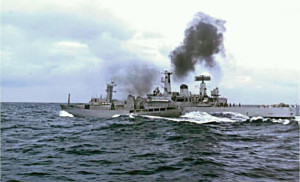
    The Cod Wars were a series of disputes between Britain and Iceland lasting from the 1950s to the 1970s over fishing rights in Icelandic waters. The two states were part of NATO and this was the first time two NATO member states had come close to armed war. During the crisis, NATO adopted a combination of both formal and informal mediation techniques, which proved to be instrumental in resolving the Cod Wars conflict. This episode carries important lessons regarding the role of mediation in international relations and conflict.

    War, mediation and international organisations

    War primarily occurs when states perceive that the likely calculated benefits of combat outweigh the expected costs. In turn, scholars and practitioners have paid extensive attention to identifying the mechanisms that alleviate a crisis. The Democratic Peace, institutionalism, trade agreements and economic cooperation are some of the mechanisms that foster peace, because they tend to improve states’ relations by creating interdependence give incentives to cooperate rather than fight.

    Also, ties that states create between themselves or through third-party actors help in crisis alleviation because of the strong network structure that is thereby created. This is where the role of international organizations (IOs) comes into play. States can lower their military tensions in favor of expectations of future gains, based on the cooperation with their co- members in the same IO. If a crisis escalates between co-members of the same IO, the latter seeks to assist its members and restore peace and thus, the IO is turning to a mediator.

    A member state usually agrees to abide by the rules of the IO. For instance, members in NATO should commit to the following article:

    “The Parties will contribute toward the further development of peaceful and friendly international relations by strengthening their free institutions, by bringing about a better understanding of the principles upon which these institutions are founded, and by promoting conditions of stability and well-being. They will seek to eliminate conflict in their international economic policies and will encourage economic collaboration between any or all of them.”

    (North Atlantic Treaty; official texts; 1949)

    A mediator that enters a conflict aims to become part of the conflict by manipulating the actors’ behavior and, thus, the choices of the opposing parties.

    We do not know what would have happened if NATO had not mediated the Cod Wars. Nonetheless, we learned lessons from NATO’s approach in the Cod Wars that could potentially be used in other instances.

    The Cod Wars

    scylla-odinn

    Image credit: Issac Newton/Wikimedia.

    The UK and Iceland share waters over the Atlantic Ocean in the north. Both the UK and Iceland became charter members of NATO in 1949, with the reservation that they would never take part in offensive action against another NATO nation. Note, though, that the UK and Iceland have had interactions over fishery rights starting even before the 17th century. The Cod Wars comprised of a protracted series of conflicts between Iceland and the UK that began in 1945. The conflict was initially triggered by Iceland’s one-sided extension of its territorial waters.

    There was variation in NATO’s responses towards the crises.  For instance, NATO did not intervene in the first crisis of the Cod Wars (1952-1956). NATO only intervened in later instances, but with different techniques. That is, NATO employed a series of formal and informal mediation techniques over the course of the Cod Wars. A “formal technique” is any official action taken by the mediator that is visible to the public, for instance, all the actors involved in the conflict are aware of that action. Transparency can help the mediator increase their leverage in the conflict and help credibility. An “informal technique” is any action by the mediator that is not visible to the public and to one or both of the disputants. Formal and informal mediation techniques clearly have different advantages.

    Public (formal) actions can pose threats to the disputants’ reputations to convince them to stop fighting. On the other hand, informal techniques can improve parties’ mutual understanding and improve their relationship. This usually occurs when the mediator provides a neutral, low-key, safe, and non-judgmental environment. Informal mediation can also give parties opportunities to have earliest talks before reaching an agreement. But while formal mediation by an IO has more leverage and salience, it can also be restraining because it is limited by the organization’s rules, norms, and regulations. And while informal mediation is more flexible, it lacks credibility and thus leverage, as “power through the public” is not used in informal mediation. Mingling both techniques would then seem to be the most successful strategy.

    The Cod Wars comprised of four distinct crises, with mostly low tensions on both sides. NATO obliges its co-signers to resolve any mutual conflict peacefully. If the parties are not able to resolve the issue bilaterally, NATO intervenes. Different techniques generated different outcomes to a crisis: either recurrence or non-recurrence of the crisis. A failure to sufficiently address the issues arising from the belligerents’ incompatible goals at the post-conflict stage can ultimately lead to a recommencement of conflict. This happened in the case of the Cod Wars in the first three crises. The first pre-conflict incidents occurred between 1945 and 1948 when Iceland gained the control of its territorial waters. The situation then escalated to clash in the 1950s and became a higher-level crisis in 1952, without NATO intervention. In 1952, the crisis was initially “resolved” and the post-conflict period commenced in 1954. The second crisis began in 1955 and was resolved in 1961, following NATO’s use of formal and informal mediation techniques, with peace lasting for almost eleven years. When tensions exploded again in the early 1970s, NATO used informal mediation to resolve the crisis, but peace was short-lived and conflict recurred beginning in 1975. On this occasion, NATO intervened using both formal and informal mediation. The final crisis ended in 1976, and peace has endured.

    A combination of formal and information mediation techniques proved effective for the Cod Wars settlement. When NATO employed formal and informal mediation techniques in a combined manner, it was able to help the parties achieve the most durable resolution. Formal and informal techniques enabled NATO to be flexible (informal) and build trust among the parties but still use the legitimacy (formal) of its organization to gain leverage in the bargaining process.

    Conclusion

    NATO’s mediation efforts in the first three crises can be seen as failures because the peace that followed each intervention was of short duration. Of course, mediation success is not only determined by the mediator’s strategy, but also by the disputants’ desire to end the crisis. In the case of the Cod Wars, the UK faced risks to its international reputation. Iceland arguably had more leverage because of the strategic significance of its military base and because of the Soviet Union’s interest in developing an alliance with the country. Iceland triggered each crisis of the Cod Wars and eventually achieved all its claims. Nonetheless, in the final crisis, it was Iceland — economically troubled and politically volatile — that requested NATO’s intervention.

    Mediation strategies previously employed are to be considered as lessons for future instances, not only to not repeat the same mistakes but also learn from previous success. Take, for example, the Beagle Conflict of 1978 between Argentina and Chile with the Vatican as the eventual mediator. Although the Cod Wars is another isolated conflict that pertains to specific circumstances and features, one could consider relevant generalizations that apply to other/future instances, mostly regarding the mediation strategies used. It is indeed the case that co-members of IOs do not experience frequent conflicts. That said, strategies followed by NATO in the Cod Wars can be employed by individual mediators, countries that act as third party interveners, or other IOs regardless of the shared ties among the countries. Third party interveners who benefit from leverage and resources should have the flexibility to address the issue at stake under different mediation strategies which will depend on the interests, the positions, and the needs of the belligerents.

    Zorzeta Bakaki is a Lecturer in the Government Department at the University of Essex. She studied Political Science and Public Administration at the Law School of the University of Athens. She received a Master of Science in International Relations from the University of Essex.  Zeta also obtained her PhD from the University of Essex. Her research interests are international relations, the quantitative and qualitative analysis of conflict management and resolution, international cooperation and environmental politics.