Blog

  • Sustainable Security

    Introduction

    The international community is currently underperforming when it comes to integrating the environment into matters of peace and security. Climate change and contemporary armed conflicts are forcing a re-evaluation of this at times complex relationship but in general, the environment remains under-prioritised – as evidenced by its absence from Goal 16 of the Sustainable Development Goals (SDGs). But could the process towards the SDGs as a whole finally encourage greater consideration of the environment throughout the conflict cycle – as both a question of state security, and human security?

    Goal 16 of the SDGs seeks to promote peaceful and inclusive societies for sustainable development, provide access to justice for all and build effective, accountable and inclusive institutions at all levels. Like many other investigations before and since, a 2011 study by the World Bank clearly showed that conflict and insecurity hamper sustainable development. It would, therefore, have been unusual for peace and security not to be included in the SDGs. Russia nevertheless objected to their inclusion on the grounds that it would introduce an “artificial politicization” and that “…peace-building, rule of law and human rights have their own well-established intergovernmental processes”. For their part, NGOs were adamant that the SDGs, like peace itself, required the attainment and assurance of fundamental human rights. They would receive a major endorsement when Ban Ki-moon’s High-Level Panel of Eminent Persons made “peace and effective, open and accountable institutions for all” one of their five key objectives for the SDGs.

    Whither the environment?

    SDG16_environmental_960

    The environment may be absent from SDG 16 but the path towards the SDGs should encourage governments and civil society to more fully consider the role that the environment plays throughout the conflict cycle. Image by Doug Weir.

    Interpreted loosely, the targets comprising SDG 16 could relate reasonably well to some of the environmental dimensions of armed conflicts. However, the performance indicators currently being developed by a UN committee will introduce a level of specificity that could preclude this. A proposal that governments must record all conflict-related deaths is welcome, but what of ill health or lost livelihoods caused by conflict pollution or wartime environmental degradation? Similarly, the environment is absent from any indicator for the promotion of the rule of law and access to justice – for example, on land rights or resource management. For natural resources in conflict settings, the only directly relevant draft indicator is the requirement on governments to improve the recording of illicit financial flows.

    On participatory rights, which are crucial elements of environmental human rights, the indicators simply require States to record the diversity of individuals in public institutions, rather than empowering communities to participate in environmental decision-making. Meanwhile, the goal of ensuring access to information – be it environmental or otherwise, will only be tested by measuring the rates of detention and arbitrary killings of media representatives and human rights defenders. Of environmental rights defenders, there is no mention.

    Does this matter?

    Naturally, some may argue that the environment is dealt with by the other SDGs, such as those dealing with terrestrial and marine ecosystems, chemicals or health. Yet here again, few of the proposed indicators under these SDGs relate specifically to armed conflict. But it is the environment’s absence from SDG 16 which is perhaps most symptomatic of the low priority afforded to the environment in matters of peace and security. This is a troubling oversight as UNEP has found that at least 40 per cent of all violent conflicts in the last 60 years have been linked to natural resources, resources that are set to be further degraded by climate change and increasingly intense natural disasters. During the development of the SDGs, this led UNEP to argue that the sound stewardship of “…resources, including access to information, inclusive decision-making, equitable benefit sharing, and rule of law are essential to mitigate these risks and help create resilient and peaceful societies.”

    Is there a reason for the environment’s apparent exclusion from SDG 16? Reviewing the recommendations from many of the leading human rights and development NGOs that advocated for the inclusion of a strong SDG on peace and security, it’s clear that its environmental dimensions were low on their agendas; whereas for the environmental NGOs, attention was largely focused elsewhere – on marine life, forests or conservation. This siloing was unfortunate because current crises continue to highlight the importance of integrating the environment more fully into our thinking about the causes and consequences of conflicts.

    Lessons from Syria on the environment and security

    The Syrian crisis is a clear demonstration of why we must better integrate the environment into peace and security policy-making and practice. When researchers argued that climate change and an ensuing drought had played a role in creating the instability that led to the conflict in the run up to the Paris COP21 climate talks last year, the world’s media took note. For some, Syria was merely the latest stage in a process to securitise climate change, and in so doing help create a compelling state-centric narrative for global action. This was a process initiated by military think-tanks and which has now seen climate change defined as a “threat multiplier” – rather than a direct cause of conflict in and of itself. Meanwhile those opposed to the securitisation of climate change argue that this framing risks overwhelming humanitarian priorities such as adaptation, mitigation, resilience and justice for affected communities.

    The attempt to link climate change with the Syrian conflict, as earlier with the conflict in Darfur, elicited a backlash from some climate scientists, particularly when public figures like Al Gore and Prince Charles promoted the idea. Opponents argued that the studies were speculative, that the data were incomplete and that the political context of the urgency behind the Paris deal was skewing interpretations. The scientific jury remains out, with some arguing that the link between climate and conflict is clear, others that it is yet to be conclusively proven based on the historical record. Studies have shown that the region has suffered a drought more intense than could be expected by natural variation alone but the data linking this to the outbreak of the conflict are less clear. Beyond the specifics of the Syrian conflict, it is inescapable that climate change is happening and that the effects that are predicted have the potential to negatively influence the socio-political conditions in affected countries. Therefore in all likelihood, climate change will interfere with the objectives set out in SDG 16.

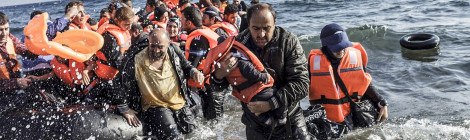
    Human displacement and migration allow the consequences of environmental problems associated with conflicts, climatic change and variability to be transmitted locally and regionally. This can translate into environmental consequences for neighbouring countries, as well as political instability for governments far removed conflict-affected areas. This is a pattern of connectivity that seems likely to become ever more apparent as climate change intensifies; as UNEP’s Disasters and Conflict Coordinator Oli Brown recently observed: “When you look to the root causes of migration, more often than not environmental change or mismanagement is in there somewhere.”

    For Jordan and Lebanon, rapid urbanisation, fragile and resource-scarce ecosystems and huge refugee populations are combining to create environmental risks that threaten stability. As its population has surged in the wake of the Syrian conflict, Jordan has seen rapid increases in illegal timber collection, overgrazing and wildlife poaching. Levels of air pollution from vehicle and industrial emissions have risen and its waste management sector has been stretched by growing levels of hazardous waste. The government has made tackling these issues a priority so as to minimise threats to public health and environmental quality and defuse community grievances.

    Within Syria, the precise extent of the damage to the resources upon which the civilian population depends for life and livelihoods is yet to be fully assessed, although early indications show that the environmental degradation caused by the conflict has been significant. When coupled with the pollution caused by the widespread destruction of urban and industrial areas, the collapse of environmental management and services and the future health and economic inequalities this will create, it seems inevitable that environmental quality and access to resources will strongly influence Syria’s chances of recovery and its eventual transition into a peaceful and inclusive society.

    The jury may still be out on the precise role that climate change played in Syria but it seems impossible to exclude it as a risk factor for future conflicts. Climate aside, it’s clear that displacement and the direct environmental damage caused by the conflict within Syria will have repercussions for the goals and spirit of SDG 16. These are not problems unique to the Syrian conflict and serve to underscore the importance of the environmental dimensions not only of peace and security but also of sustainable development itself.

    Sustainable development: not just a set of targets

    That the proposed SDG 16 indicators risk failing to specifically address many of the environmental dimensions of armed conflicts and insecurity, be they on resource management, migration, human rights or environmental degradation, is unfortunate. All the more so because for many countries it will be conflicts that invariably present the greatest challenge to them achieving the SDGs.

    But the true value of the SDGs is unlikely to be found in their rigid targets or indicators. Their greatest strength could instead be as a framework through which to understand and communicate the interconnectedness of all these themes. The path towards the SDGs should therefore encourage governments and civil society to more fully consider the role that the environment plays throughout the conflict cycle – from trigger to victim – and how the consequences of environmental change care little for national borders.

    In this respect, while the SDG indicators may lack the precision necessary to fully articulate the environmental dimensions of peace and security, as a process the SDGs should serve to encourage the long-overdue mainstreaming of the environment in this field. However, because of the low prioritisation afforded to the environment across many sectors, but particularly in peace and security, there will inevitably be a temptation to present the environment as part of a traditional state-centric security threat, rather than a question of human security. While this could help increase visibility and engagement in the short-term, as with the securitisation of climate change, it could also risk ignoring the needs of the communities and individuals who bear the brunt of the environmental causes and consequences of conflicts.

    Doug Weir manages the Toxic Remnants of War Project, part of a global coalition of NGOs advocating for a greater standard of environmental and civilian protection before, during and after armed conflict. The project is on Twitter: @detoxconflict

  • Sustainable Security

    One of the main problems for supporters of nuclear disarmament, in terms of their advocacy efforts, is that the experience and process of disarming will be unique for each nuclear possessor state and constitute a journey into the unknown. Thus while South Africa and former Soviet states Ukraine, Kazakhstan and Belarus dismantled or gave up their nuclear arsenals, there is a limited amount we can learn from their experiences in terms of how existing nuclear possessors may disarm.

    What’s more, nuclear disarmament can seem negative and intangible, perhaps because there is no common idea of what it would look or feel like. In order to address this it is useful to explore different approaches to abolition, for example, the debate between unilateralists and multilateralists, so we can be clearer about the causes and consequences of disarmament. This article therefore focuses on what the UK can do to help create a nuclear weapons free world (NWFW) as a vital public good.

    The fall and rise of unilateralism 

    Disarmament Sculpture (Twisted Revolver) covered in ice and snow, outside the visitors entrance to the United Nations Building in New York City.

    Disarmament Sculpture (Twisted Revolver) covered in ice and snow, outside the visitors entrance to the United Nations Building in New York City. CC: Luke Redmond via Flickr.

    Labour’s new leader Jeremy Corbyn has long been committed to unilateral nuclear disarmament and has recently revived the debate over whether the UK should be a nuclear weapon state (NWS). Unilateralism would entail the UK eliminating its nuclear arsenal without seeking concessions from other states. From the late 1980s up to the Scottish National Party’s breakthrough in 2015, all of Britain’s main political parties rejected this stance. The parliamentary consensus has instead favoured multilateral disarmament, commonly understood to mean a step-by-step negotiating process involving the other nuclear powers with Trident as a bargaining chip. Other steps the UK has taken in order to support this approach include ratification – unlike the US – of the Comprehensive Test Ban Treaty and support for a verified Fissile Materials Cut-off Treaty, albeit one which only limits future production of such materials.

    This approach might appear, at first glance, to be practical, with the US and Russia taking the lead, based on the fact that they have 93% of the world’s nuclear weapons, and to align with public opinion. For example, whilst some surveys show that a majority of voters (54%) would prefer Britain to abandon its nuclear weapons and not replace them, other surveys show that a larger majority (81%) favour an international plan ‘for totally eliminating nuclear weapons according to a timeline’. Thus, as a 2007 study by the Simons Foundation found, the UK ‘boasts a high level of support for elimination of nuclear arms and nuclear testing all over the world’.

    Given the significant public support for abolition and the fact that the UK, like all other NWS, has dual obligations under the nuclear non-proliferation treaty (NPT) – firstly to eliminate its own nuclear arsenal and secondly to help create the conditions for a NWFW – it is apparent that the UK could be doing much more and without waiting for reconciliation between China, Russia and the US.

    As the NPT makes clear, the elimination of nuclear weapons and the achievement of general and complete disarmament will be facilitated by ‘the easing of international tension and the strengthening of trust between States’. This should lead the UK – both as an NWS and a permanent member of the UN Security Council – to consider how it may act responsibly, both enabling nuclear possessors to move towards disarmament and reducing the incentives for others to seek non-conventional deterrents.

    British interpretations of multilateralism

    During Gordon Brown’s tenure as Prime Minister the Foreign and Commonwealth Office produced an information paper entitled ‘Lifting the Nuclear Shadow: Creating the Conditions for Abolishing Nuclear Weapons’, wherein the government outlined how it would fulfil its commitments under the NPT. The document stated that the UK would ‘continue to work towards the total elimination of our own nuclear arsenal and all others through multilateral, mutual and verifiable agreements’. Furthermore, when ‘useful’, the government would willingly include in any negotiations ‘the small proportion of the world’s nuclear weapons that belong to the UK.’

    Using such vague and misleading language to wriggle out of national responsibilities is an unedifying but unfortunately common trait of official documents, with the government having previously stated that the NPT ‘does not establish any timetable for nuclear disarmament’. Firstly, as former US Ambassador for the NPT Lewis Dunn notes, the 120-member Non-Aligned Movement ‘has long argued for negotiation of a time-bound framework for eliminating nuclear weapons’, yet this has been strenuously resisted by the UK and other nuclear powers.

    Secondly, does the UK’s stance mean it concurs with NATO’s 2012 Deterrence Defence Posture Review, which declared that ‘as long as nuclear weapons exist, NATO will remain a nuclear alliance’? The question here is how soon Trident would be put on the table in a multilateral negotiating process for disarmament given that it is assigned to NATO. For example, does the UK government think that including Trident would only be ‘useful’ after Russia and the US agree bilaterally to reduce their nuclear arsenals from over 7,000 weapons each to low numbers approaching the 200-300 weapons that China, France and the UK each maintain? The need here is for more clarity from the government so the public can get a better sense of the timescale that is being proposed.

    Lifting the Nuclear Shadow goes on to acknowledge that NWS have a ‘special responsibility’ to lead on eliminating nuclear weapons, but that this first requires certain ‘political and security conditions’ to be met, via ‘a co-operative project with the active engagement of the entire international community.’ If it is accepted that a more cooperative and peaceful world will benefit multilateral disarmament efforts how can we judge whether the UK has lived up to its ‘special responsibility’ in this area?

    Creating the conditions for a NWFW 

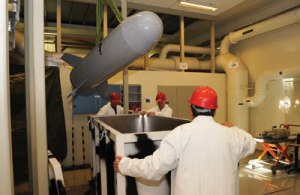
    A verification exercise took place at the mock-up nuclear weapon dismantlement facility in Norway in June 2009

    A verification exercise took place at the mock-up nuclear weapon dismantlement facility in Norway in June 2009. CC: http://www.norway-un.org

    A brief review of the UK’s actions in recent years shows that in several ways the UK has directly undermined efforts for disarmament to make headway. This point is most obviously illustrated by the fact that the UK is planning to spend tens of billions of pounds on replacing Trident – an immensely powerful type of nuclear weapon integrated within an aggressive military alliance that does not rule out the first use of nuclear weapons. Significantly, the UK does this whilst seeking to portray itself as the most progressive NWS and an active supporter of a NWFW in its public diplomacy.

    In reality the UK has, so far, not taken any unilateral or multilateral disarmament steps. What the UK has done, since the end of the Cold War, is to make quantitative reductions to its nuclear forces whilst acquiring, as Nick Ritchie points out, a nuclear weapons system – Trident – that provides an increased capability over its predecessor – Polaris. The reductions trend continued with the 2010 Strategic Defence and Security Review, which announced that ‘the number of warheads on board each submarine would be reduced from a maximum of 48 to a maximum of 40, the number of operational missiles on the Vanguard Class submarines would be reduced to no more than eight, and the number of operational warheads reduced from fewer than 160 to no more than 120.’

    These reductions, while unilateral, cannot be described as disarmament, because they have not taken place in a verifiable, irreversible and transparent manner as envisaged by the 2000 NPT Review Conference’s 13 steps. While the UK has so far not undertaken disarmament, it has begun to investigate how this might occur in future through initiatives with Norway and the US. These projects have brought together experts aiming to address the technical and procedural challenges of verifying nuclear warhead dismantlement.

    Understanding how nuclear possessors think

    Adopting truly progressive policies capable of fostering international cooperation would require the UK to develop an understanding of other state’s threat perceptions. For example, disarmament advocates and scholars often assert that the UK’s nuclear status legitimates nuclear possession for all, encouraging proliferation, and that this undermines the NPT.

    While it is true that Russia sees the UK’s nuclear arsenal as part of NATO’s overall military capabilities, the UK’s nuclear arsenal alone cannot be considered, from a strategic point of view, a key factor in the decision-making of any state currently possessing or with the potential to acquire nuclear weapons. Rather, it is clear from the strategic studies literature that US conventional superiority – at the head of the NATO alliance – and domestic political dynamics are far more important considerations for states, including China and Russia, because nuclear weapons are ‘force equalisers’. China and Russia thus primarily see their nuclear weapons as deterrents against the West’s overwhelming conventional military superiority and policies of containment and expansion. This should lead British decision-makers to consider carefully the legal and political consequences of overseas power projection.

    Take, for example, the UK’s involvement in NATO’s 1999 bombing of Yugoslavia (code named Operation Allied Force), which was, according to the Foreign Affairs Select Committee ‘contrary to…the basic law of the international community – the UN Charter’. According to Russian defence analyst Nikolai Sokov, the significance for Moscow of NATO’s bombing campaign was that it showed how the US could use force without the authorisation of the UN Security Council. Such considerations, for Sokov, led Russia to ‘enhance reliance on nuclear weapons in a departure from all documents adopted in the 1990s’ in order to deter the West from conducting ‘limited conventional wars’, principally in Russia’s near abroad.

    More widely, as Raju Thomas notes, NATO’s ‘unrestrained use of force’ gave ‘an additional post-hoc justification for an Indian nuclear deterrent’, in the ‘context of the new Western-dominant world order’, bringing nuclear powers China, India and Russia together in protest against the bombing. These three states shared concerns about aggressive intervention being justified on humanitarian grounds, as each had to deal with a potentially secessionist region with parallels to Kosovo. For China this was Tibet and Xinjiang, for India, Kashmir, and for Russia, Chechnya. Subsequent US- or NATO-led regime-change operations in Afghanistan, Iraq and Libya have also stoked concerns, not least in Iran, about where the West would seek to intervene next.

    Profiting from proliferation 

    The top leadership consult seconds before opening the last session of the 2010 review conference of the Non-Proliferation Treaty on Nuclear Weapons (NPT). From left; NPT President Ambassador Libran N. Cabactulan and NPT Secretary-General Tom Markram.

    The top leadership consult seconds before opening the last session of the 2010 review conference of the Non-Proliferation Treaty on Nuclear Weapons (NPT). From left; NPT President Ambassador Libran N. Cabactulan and NPT Secretary-General Tom Markram. CC: UN Norway (New York). Image via: Flickr

    Perhaps as a means of placating Indian anger and drawing it into the Western orbit, in 2008 Washington made a highly controversial deal with New Delhi, providing assistance to India’s civilian nuclear energy program, and greater help with other energy and satellite technology, despite India refusing to join the NPT. The UK followed the US in July 2010, sealing an agreement with India for the export of civil nuclear technology that continues to this day. As Nicolas Watt reported, this move raised ‘fears of leakage’ to India’s ‘military nuclear programme’, meaning the UK would be engaged in blatant proliferation which would likely lead to responses from New Delhi’s rivals in Beijing and Islamabad.

    The British government has also in recent years lobbied for India to join the Nuclear Suppliers Group, which was interpreted as a way of boosting India’s standing as ‘an atomic power’ and thus provide a larger export market for Western technology. Yet, as Fredrik Dahl explains, China and other states have questioned whether India should be given exceptional access ‘into a key forum deciding rules for civilian nuclear trade’ despite being outside the NPT, under which it would have to commit to disarmament.

    The UK could also support non-proliferation by carefully considering how arms transfers affect political dynamics in regions suffering from conflict. For example, arming human rights abusing regimes in the Middle East contributes to tensions and reduces the chances of establishing a Weapons of Mass Destruction Free Zone, which the government claims to support.

    Overall, if progress on non-proliferation and disarmament is to be made, short-term economic and political goals must not be allowed to trump critical national and international security concerns. Advocates of multilateral disarmament therefore need to produce and enact policies that make sense across government. Moreover, without a clear understanding of the various economic, psychological and strategic factors driving proliferation and what might enable disarmament, it will be a meaningless exercise for politicians to argue that Britain favours the international elimination of nuclear weapons.

    Tim Street is the Senior Programme Officer on the Sustainable Security programme at Oxford Research Group (ORG) and a PhD student at Warwick University.

  • Sustainable Security

    Environmental changes in the Arctic are making the region more accessible which many believe will lead to competition and conflict over its resources. But is this really the case?

    The Great Game moves North

    A battle to ‘carve up’ the Arctic

    ‘Ice Wars’ heating up the Arctic

    Melting ice caps open up Arctic for ‘white gold rush’

    Warming Arctic opens way to competition for resources

    Conflict ahead in Arctic waters

    The above are just some of the many headlines and titles that have described the state of the Arctic over the last decade. Ever since a Russian flag was planted on the seabed at the North Pole in 2007, media outlets, academics and policy-makers have been pondering the conflict potential of a warming Arctic.

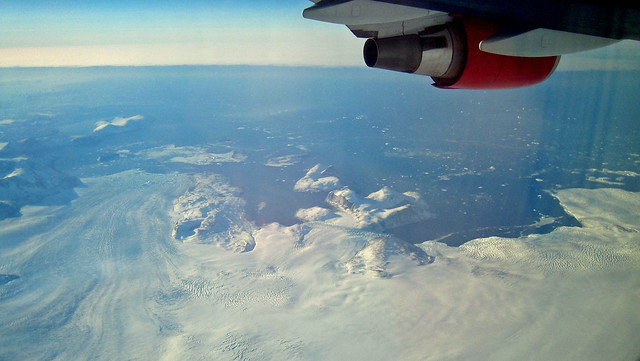
    Their concerns surely have a dramatic background. The Arctic, the region commonly defined as all land and water areas above the Arctic Circle at 66 degrees north, has over the past 50 years warmed twice as fast as the global average. Consequently, the Arctic ice sheet has retreated significantly. In September 2012, the ice extend dropped to around half of what it was in the late 1970s, and is lingering on low extent numbers ever since. The diminishing sea ice has made the resources of the Arctic, such as oil and gas, increasingly accessible for exploration and exploitation.

    This increasing accessibility of the region combined with, thus far, inaccessible and high-in-demand resources and still existing boundary disputes between the Arctic coastal states, made (and still makes) many believe that we are heading towards a region of conflict.

    But is this really so? Should we expect the region in the north to erupt into hot conflicts about access to oil and gas, shipping lanes and fishing grounds that the retreating ice lays open? Does a warming Arctic inevitably mean increasing conflict potential with little hope for cooperation to emerge?

    Cooperation and conflict: a misleading dichotomy

    arctic

    Image credit: Fulbright Arctic Initiative/Flickr.

    Most of the debates aiming to answer these questions circle around the issue of whether the Arctic is a region of “conflict” or “cooperation”. The cardinal error of this debate is that “cooperation” and “conflict” are taken as two sides of the same coin. Taking cooperation and conflict as the two ends of a continuum inadequately twists the empirical perceptions and expectations as to future developments in the Arctic.

    As a matter of fact, cooperation and conflict are part of two different coins. Conflict is first of all a situation in which the interests of two or more actors overlap in the sense that they pursue different goals or that they prefer different means to achieve a specific goal. The opposite of conflict is then harmony, a situation in which actors’ interests do not touch each other. This is one coin.

    If there is a case of conflict, actors can react to this situation in different ways. Roughly speaking, they can either react with “cooperation” or “confrontation”. They can decide to solve the conflict through negotiation and looking for compromises, or they can revert to using force of some kind, such as sanctions or military actions. These possible options for actions in a situation of conflict are the second coin.

    Once one has understood the difference between these two coins, it is possible to analyze how actors have reacted to Arctic conflict cases in the past (like open boundary disputes, of which many have been solved since the 1970s), and which options for resolution exist in response to possible future Arctic conflict cases (like still open boundary disputes, competing interests for access to resources or shipping lanes etc.).

    Unfortunately, in the past and current Arctic conflict debate the existence of a conflict is usually treated the same as a confrontation– a situation in which breakdown of relations and even violent actions are imminent. But if we equalize conflict and confrontation, we face a very alarming situation in the Arctic since there are cases where the interests of Arctic actors (including those from south of the Arctic Circle) overlap. The open maritime delimitations around the area of the North Pole and the question how much of the Arctic is to be legally treated as a common heritage of mankind are just two examples of Arctic conflicts.

    But if we were to conduct a sound analysis with the two-coin understanding as outlined above, we would understand that conflict is the very prerequisite to make cooperation and confrontation happen in the first place. In other words, there is no cooperation or confrontation if there is no conflict (since actors do not interact in a situation of harmony). Then we can look at the Arctic world out there and check which options for action Arctic actors choose to react to conflict situations.

    The Arctic Council – A prime example of Arctic cooperation

    We find a multitude of examples for actors choosing cooperative options for actions, especially among the members of the Arctic Council, which are the eight Arctic states Canada, Denmark, Finland, Iceland, Norway, Russia, Sweden and the United States. Since the flag-planting in 2007, and also since Russia’s more recent assertive actions elsewhere in the world, cooperation in the preeminent political forum of the region, the Arctic Council, has been strengthened. The Council has evolved from a forum for debate to a policy-shaping body through the adoption of several intergovernmental agreements under its auspices. These range from provisions for preparedness and response for oil spills in Arctic waters, a search and rescue cooperation agreement, and will soon be added by an agreement on Arctic scientific cooperation.

    On the international level, an “International Code of Safety for Ships Operating in Polar Waters” or short “Polar Code” has been negotiated under the International Maritime Organization to regulate the increasing shipping activity in the Arctic. Arctic countries are working on their submissions to the UN to verify their extensions of their continental shelves, and have in unison pledged to settle any overlapping claims peacefully and in close consultation with each other.

    All these cooperative actions have included the Arctic states as well as many state and non-state actors beyond the region, for example in the form of observers to the Arctic Council. The short result of this analysis is: Yes, the Arctic is full of conflict but also full of cooperation since across the board actors are reacting cooperatively to cases of conflict.

    The crux is that these instances of cooperation can be observed. In contrast, most foreboding of a confrontation in the Arctic only refers to what could happen now that the Arctic is accessible and its resources up for grasp. In other words, these contributions can only be speculative.

    A lingering problem of the Arctic conflict debate is that a conflict over Arctic issues is usually very easily and quickly proclaimed and seldom reflected upon or questioned again. So once a conflict is said to exist, it is hard to get rid of again, even if observations show that there is no real ground for the conflict or if actors react cooperatively to it. A prominent example is the rising Chinese interest in Arctic issues, which peaked 2013 when China was admitted as an observer to the Arctic Council. Since then, many have depicted Chinese Arctic interests as a “conflict” since China as a powerful player would undermine other Arctic voices and generally would bring turmoil to Arctic affairs. In contrast, when talking to the members and Permanent Participants (the representatives of Indigenous Peoples’ Organizations) of the Council, one hears that after some initial concerns everyone is pretty happy about the presence of important players like China. Not least, China has to be part of the solution to the global climate change problem, which heavily affects the Arctic. And having China present at Arctic Council meetings is a rare opportunity for small, Indigenous organizations to get into a direct conversation with countries like China.

    Conclusion

    In sum, if we consider how often the “next Cold War” in the Arctic has been proclaimed now that we have entered the tenth (!) year after the Russian flag-planting, one keeps wondering why this war has failed to materialize. This may be sign that the assessment of the Arctic as a region of confrontational conflict is not for nothing predominantly based on speculation. In fact, the predication of a next Cold War in the Arctic may be exactly that: a wild guess.

    Dr. Kathrin Keil is Scientific Project Leader at the Institute for Advanced Sustainability Studies (IASS) in Potsdam, Germany, where she is leading the Arctic research work on Sustainable Arctic Futures: A Regional and Global Challenge. She is also Senior Fellow at The Arctic Institute – Center for Circumpolar Security Studies where she regularly writes about and comments on current Arctic developments. Further, Kathrin is part of the official German observer delegation to the Sustainable Development Working Group (SDWG) of the Arctic Council.

  • Sustainable Security

  • Sustainable Security

    Author’s Note: This contribution is a shorter version of the article “Resilience and environmental security: towards joint application in peacebuilding” by Schilling et al. 2017

    Resilience is a widely used concept among development, environmental, security and peacebuilding organisations. However, it has rarely been applied together with the concept of environmental security, despite the obvious ways in which the concepts complement each other. These concepts can be jointly applied in the peacebuilding sector. Environmental security sharpens the scope of resilience, while resilience allows for taking issues into account that a traditional environmental security perspective might miss.

    ‘Resilient communities’, ‘climate-resilient pathways’, ‘resilient future’, ‘resilient planet’: there are hardly any key terms in the development, climate change, security, and peacebuilding sectors that have not been combined with ‘resilience’. Due to the malleability of and enthusiasm for this concept, it has been depicted as the ‘new superhero in town’ replacing sustainability as the key guiding concept and buzzword in the international development community.

    Less prominent but still widely used, at least implicitly, is the concept of environmental security. The term can relate to the absence of risks posed by environmental changes or events to individuals, groups or nations. But it can also focus on the environment itself and how human behaviour, including conflict, affects the security and integrity of the environment.

    Several international organisations, including International Alert, adelphi, and the United States Agency for International Development (USAID) are working on combined approaches to environment, conflict and security issues. However, resilience has hardly ever been applied in conjunction with the concept of environmental security, despite their potential complementarity. Particularly in the peacebuilding sector, joint application of the concepts is promising because it could help to create an understanding of the extent to which people are at risk due to environmental factors (environmental security), and the extent to which people are able to adapt to environmental risks (resilience).  Further, a joint application could help to understand the impacts of environmental factors on conflict dynamics and vice versa. Against this background, develop a framework which allows non-governmental organisations (NGOs) working to implement peacebuilding projects in developing countries to jointly apply resilience and environmental security.

    Joint framework for environmental security and resilience in peacebuilding

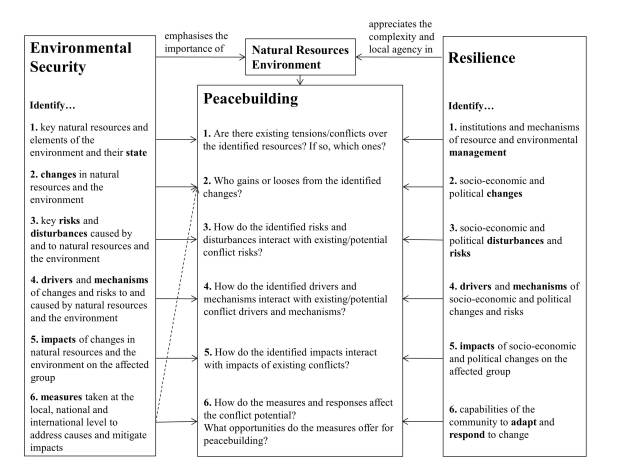
    Natural resources and the environment are the key elements linking environmental security and resilience to peacebuilding (see figure). Based on a six-step process, we combine the key strength of environmental security, its emphasis on the importance of the environment, and the key strength of resilience, namely the appreciation of complexity and local agency. The purpose of the process is to identify the states, changes, risks and disturbances, drivers and mechanisms, impacts, and measures and responses from an environmental security and resilience perspective to gain a better understanding of conflict dynamics and identify entry points for peacebuilding.

    Figure 1 – Framework for Environmental Security and Resilience in Peacebuilding.

    In step one we use the environmental security perspective to determine the key elements of the environment and natural resources that are important to a specific community or group of people, while the resilience perspective identifies how and by whom natural resources and the environment are managed. Together the environmental security and resilience perspectives help to answer the question of whether tensions or conflicts over the identified resources exist.

    In step two, we determine changes in natural resources and the environment before identifying the losers and winners of these changes. The resilience perspective allows us to take the overall complexity of the socio-economic and political context into account.

    The objective of step three is to understand the interaction of different risks. The environmental security perspective pays particular attention to risks to the environment as well as risks caused by the environment. The resilience perspective adds socio-economic and political considerations, such as strong increases in food prices, regime changes and social instability.

    Step four aims to identify the key drivers and mechanisms of the changes and risks, identified under step 2 and 3. For example, if a reduction of rainfall is identified under step 2 and in step 3 an increased drought risk is noted, then step 4 explores whether the reduction of rainfall and drought risk can be attributed to global climate change or local factors such as deforestation.

    Step five focuses on impacts. For example, one can ask whether the droughts and loss of harvest identified on the environmental security side and/or the increases in food prices identified on the resilience side, lead to hunger and how hunger in turn interacts with impacts of existing conflicts identified in the peacebuilding column.

    Step six is particularly important because at that point we consider the actual measures and responses to environmental, socio-economic and political changes at different scales in order to determine the effects on conflict potential as well as to identify entry points for peacebuilding.

    For example, if we identify hunger as a key impact under step five, the government could invest into irrigation schemes or (temporarily) subsidise staple food. This could reduce the conflict potential and strengthen the social contract between the government and the affected communities. However, for each measure taken, consideration must be given to who is affected, either positively or negatively (see dashed arrow connecting step six and two). On the resilience side, the capabilities (including knowledge, technology, networks and financial assets) and responses of the communities strongly depend on the social capital of the group concerned. For example, a loss of harvest might not result in hunger because the affected community might receive remittances from family members living outside the drought affected area. Our framework enables peacebuilding organisations and other stakeholders from development organisations and humanitarian assistance to identify core risks to environmental security without losing sight of the wider political and cultural structures into which these insecurities are embedded.

    In Practice: Palestine’s Good Water Neighbor’s Project

    The Good Water Neighbors (GWN) project in Palestine shows the advantages of combining a resilience and an environmental security perspective in peacebuilding. Palestine suffers from a number of environmental insecurities, most of which are related to water scarcity and pollution. But these insecurities are embedded in and interact with wider political contexts, such as the Israeli occupation of the West Bank, tensions between various Palestinian groups, and dominance of technocratic, liberal peacebuilding approaches. In order to address this complex reality, GWN facilitates cooperation on environmental issues between Israeli and various Palestinian groups, thus increasing resilience to socio-political and environmental shocks simultaneously. Examples of such activities include transnational environmental education, establishing water infrastructure shared between both sides, and common protests against environmentally harmful infrastructure (such as the Israeli separation barrier).

    Conclusion

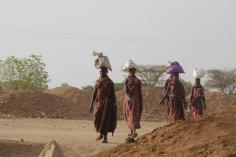
    Image credit: Traynor Tumwa.

    Overall, the framework offers a possibility for environmental security to sharpen the scope of resilience, while resilience allows for taking issues such as governance into account that a traditional environmental security perspective might miss. The framework helps identifying the states, changes, risks and disturbances, drivers and mechanisms, impacts, and measures and responses from an environmental security and resilience perspective to gain a better understanding of conflict dynamics. However, when applying the framework continuous attention should be also paid to ambivalent effect of depoliticisation which is a risk both concepts entail.

    On the one hand, steering away from contentious political debates, such as those related to the wider Israeli-Palestinian conflict, provides an entry point for peacebuilding projects. Social groups and even official actors can be involved without taking a stance on contentious political questions. On the other hand, avoiding discussions on structural inequalities means that some root causes of environmental insecurities, such as the unequal distribution of water resources between Israel and Palestine, are difficult to address. When applying the framework further attention needs to be paid to other pitfalls of resilience and environmental security, namely the redistribution of responsibility to the local level and potentially justifying external intervention. If these issues are kept in mind, the framework can be a useful tool, especially when analysing conflicts where natural resources and the environment play key roles.

    Rebecca Froese is a PhD candidate in the Department of Earth System Sciences at the University of Hamburg and a member of the research group Climate Change and Security (CLISEC) at the University of Hamburg. Her research focuses on development cooperation and the role of non-party stakeholders in implementing and financing climate action.

    Janpeter Schilling holds a Klaus Töpfer Junior Professorship for Landuse Conflicts at the University of Koblenz-Landau. He is an associated researcher at the research group Climate Change and Security (CLISEC) at the University of Hamburg, the peacebuilding organisation International Alert in London and the Peace Academy Rhineland-Palatinate in Landau. His research focuses on environmental security, conflict and resilience.  

    Tobias Ide is head of the Research Field Peace and Conflict at the Georg Eckert Institute and currently a visiting researcher at the School of Geography, University of Melbourne. He is an associated researcher with the reserach group Climate Change and Security (CLISEC) at the University of Hamburg. He works on environmental conflicts, climate security, environmental peacebuilding, and the representation of peace and conflict, especially in school textbooks.

    Sarah Louise Nash is a 2016/17 Mercator-IPC fellow at Istanbul Policy Center, Sabanci University and an associated researcher with the research group Climate Change and Security (CLISEC) at the University of Hamburg. Her research focuses on the politics of climate change and human mobility.

    Jürgen Scheffran is professor of geography and head of the Research Group Climate Change and Security (CLISEC) at the University of Hamburg, Cluster of Excellence ‘Integrated Climate System Analysis and Prediction (CliSAP) and the Center for Earth System Research and Sustainability (CEN). His research specialities are climate and conflict research, sustainability science, resilience and energy and human security.

  • Climate-related Displacement and Human Security in South Asia

    Climate-related Displacement and Human Security in South Asia

    Susan Chaplin | Institute for Human Security Working Paper | April 2011

    Issues:Climate change, Marginalisation

    Climate-related displacement is one of the key challenges facing South Asia in the coming decades. Although there is considerable debate about the salience of the term ‘climate refugees’ and extent to which climate change is a primary cause of forced displacement, there is no doubt that large numbers of people are already having to cope with the impact of environmental changes on their livelihoods and everyday life.

    Image source: planet a

    Working paper source: La Trobe University

  • Sustainable Security

  • A Backwards Step for Sustainable Security in the US

    A Backwards Step for Sustainable Security in the US

    Brian Katulis | Center for American Progress | January 2011

    Issue:Global militarisation

    National Security Regressives: A New Vocal Constituency Among Conservatives

    The ratification of the New START nuclear arms treaty with Russia marked a defeat for an influential faction among America’s right that can best be described as national security regressives. These are “conservative” voices who oppose strengthening and utilizing the full range of traditional tools of American statecraft, including assertive diplomacy, smart and balanced national security spending, and precise and targeted measures to combat terrorist groups. They may have lost on New START, but they are not likely to go away anytime soon.

    The fact that a modest arms control measure such as New START took so much time to ratify is a harbinger of tensions to come in 2011—a year in which conservatives face significant challenges reconciling competing national security agendas in their ranks. The starting bell on the Republican presidential primary fight is about to ring, and more foreign policy regressives have joined the ranks of the new Congress—so look for some sharp battles to emerge among conservatives on national security. This internal conservative debate could have a major impact on how America conducts its foreign policy in 2011 and beyond.

    Conservatives today are more divided on foreign policy than they have been in decades. The 2010 Republican Party “Pledge” manifesto for the midterm elections, however, papered over these divisions, briefly mentioning national security as an afterthought. It contained few ideas on how to keep America secure and strong.

    The debate over the New START treaty exposed some of the conservative divisions on national security. Traditional foreign policy conservatives such as Sen. Richard Lugar (R-IN) and several former secretaries of state supported the treaty while other national security regressives such as Senate Minority Leader Mitch McConnell (R-KY) and former Massachusetts Gov. Mitt Romney, a likely 2012 presidential primary candidate, famously called the treaty “Obama’s worst foreign policy mistake” in this article for The Washington Post. Another key division exists on defense spending. Tea Party advocates, for example, are geared up to fight defense hawks.

    The biggest challenge for conservatives in reconciling the divisions on foreign policy in their ranks comes from the regressive camp. National security regressives are usually described as conservatives, but the positions they have staked out on foreign policy make them undeserving of the conservative label.

    The dictionary defines conservatives as “disposed to preserve existing conditions and institutions.” What sets regressives apart from traditional conservatives is that they are not interested in preserving existing foreign policy conditions and institutions. In fact, they have eschewed many of the key tools of statecraft that have made America a global leader—assertive diplomacy, smart and balanced national security spending, support for international institutions serving as force multipliers to address some of the world’s most pressing security challenges, and agreements like New START that demand other countries live up to commitments aimed at enhancing global security.

    Read the full article here.

    Comments

    Post new comment


  • Sustainable Security

  • The Other Resource Wars

    The Other Resource Wars

    Roger Howard | Exclusively written for sustainablesecurity.org | September 2010

    Issues:Climate change, Competition over resources

    At mysterious pace, and for reasons that remain hotly disputed, the ice of the Arctic Ocean appears to be steadily retreating. The latest estimates by the National Snow and Ice Data Centre at the University of Colorado, which use remote sensing data from Nasa satellites to make their findings, suggest that this year’s ice levels are well below their long-term average: in mid-August ice covered 2.30 million square miles in the Ocean, which is nearly 650,000 square miles less than the average 1979-2000 figure, even if it marginally exceeded the record-breaking lows of 2007 and 2008(1).


    Exactly when the Arctic Ocean will become ice-free for much of the year is impossible to judge, and estimates have varied widely: some experts argue that by the year 2020 trans-Arctic shipping could well be commonplace in the months of late summer, when ice reaches its annual minimum, while others think that, if present trends continue, such an eventuality is only likely to come about decades later. But what is certain is that the region is becoming much more accessible than ever before: there is now more human interaction in places, on both land and sea, that were once considered wholly remote and hostile.


    This heightening level of activity poses a very different threat to international stability than is commonly supposed. In recent years there has been speculation about growing rivalry for control over the Arctic’s natural resources, notably the large deposits of oil and natural gas that independent bodies, such as the US Geological Survey, think are located there. But there is no convincing reason why any country would want to risk open conflict over these reserves, even if they exist in such voluminous quantities: for example, there are other parts of the world where oil and natural gas can be recovered with a far greater ease, and at a far lower cost, than the Arctic region is likely to offer for decades to come. By the time the region does become more accessible, alternative fuel sources are likely to have been pioneered in any case.


    The presence of valuable natural resources in the Arctic region, or even the mere possibility of finding them, instead poses a subtly different challenge to international peace than usually supposed. For instead of fighting over resources, governments could instead feel threatened by the heightened foreign presence that the search, or exploitation, of these resources will bring to places that are important for other, quite independent, reasons. This is potentially a recipe for international mistrust that could conceivably spill over.


    One such example is Greenland. In the eyes of American military planners, this huge, frozen land mass occupies a vital strategic location whose fate cannot be ignored. This is because it would potentially make a natural vantage point for any hostile power seeking to exercise control over the trans-Atlantic sea lanes upon which the American economy heavily depends. So during the Second World War, for example, Washington was deeply concerned by Nazi efforts to establish bases along Greenland’s warmer southern coasts and deployed the US Navy to track and eliminate any putative threat. In April 1941, the exiled Danish government then signed a treaty with the Americans allowing Washington “almost unlimited rights to establish bases and military installations in Greenland”, leading to the establishment of thirteen army and four navy bases, one of which, at Thule, remains in active use today.


    Nearly seven decades on, Greenland is regarded as a very important source of highly valued natural resources, including oil, natural gas and the rare earth metals that are used in mobile phones, hybrid cars and missile guidance systems. In the years ahead, the island is certain to attract large-scale investment by foreign companies and, in the case of state-owned enterprises, their governmental sponsors.


    In some, perhaps many cases, this will lead to a series of company mergers and acquisitions that do not bring any foreign boots onto local soil, just as Chinese companies have in recent years sought to acquire stakes in companies like Unocal and Rio Tinto. But equally foreign nationals can sometimes undertake the search for, and exploitation of, some natural resources: the oilfields at Cabinda in Angola, for example, are home to thousands of expatriate Chinese workers. So it is possible to imagine mistrust, tension and destabilisation between Washington and Beijing if, for example, the Chinese should in the years ahead establish a strong presence in Greenland.


    This is a danger presented not just by the exploitation of natural resources but by the growing human interaction in parts of the world that, until recently, were too climatically hostile to be accessible. So as the waters of the Arctic Ocean steadily become more navigable, Russia and the United States may start to feel threatened by the growing presence of commercial and, more obviously, military vessels as they exercise their right, under international law, to make “innocent passage” through the territorial seas that lie adjacent to every coastal state.


    This is partly because they would be both unaccustomed to such military movements and, in all likelihood, relatively unprepared for them, even if, over the past two years, both countries have released internal documents that emphasise the need for greater defence spending on the Arctic region.(2) But their alarm would also reflect, more importantly, the strategic importance of the area: for example, Russia’s northern coasts are home to several key ports and industrial complexes, and also provide a potentially major shipping route that would link east and west


    So the presence of natural resources within existing borders, in places like Siberia and Alaska, will heighten the strategic fears of each respective country: both Russia and the United States will fear an attack on their resources as the region becomes more accessible and an increasing number of foreign ships make their way, quite legitimately, into surrounding waters. But these areas would have strategic value- as shipping routes, for example- even if they were devoid of resources.


    In other words, instead of being a prize over which competing nations will be tempted to fight, natural resources in the Arctic region will have a destabilising influence only in an indirect sense.


    Such mistrust and suspicion can only be alleviated by more international dialogue. For example, NATO ships could avoid straying into Russian territorial waters without giving Moscow prior notice, even though international law puts them under no such obligation, and large areas of the Arctic region could realistically be demilitarised.


    End notes:

    1 – ‘North by Northwest’, report by the National Snow and IceDataCenter, University of Colorado 17 August 2010

    2 – NSPD 66, January 2009; ‘Russian National Security Strategy Until 2020’, 20 February 2009


    Image Source: psd

    Comments

    Post new comment