Blog

  • Sustainable Security

    National Security, Climate Change and the Philippine Typhoon

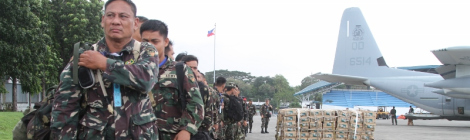
    Super Typhoon Haiyan made landfall in the Philippines on 8 November, and is possibly the most powerful tropical cyclone on record. Beyond the immediate impact of the typhoon, the natural disaster is already proving to be a threat to national security, with reports surfacing of massive looting and military engagement following attacks on government relief convoys. As US and UK naval convoys head to support the situation, Andrew Holland discusses climate change’s impact as a threat multiplier and what plans militaries and governments must make to prevent the insecurity that will come with future disasters of this scale.

    Read Article →

    Bay of Bengal: a hotspot for climate insecurity

    The Bay of Bengal is uniquely vulnerable to a changing climate because of a combination of rising sea levels, changing weather patterns, and uncertain transboundary river flows. These problems combine with already existing social problems like religious strife, poverty, political uncertainty, high population density, and rapid urbanization to create a very dangerous cocktail of already security threats. Andrew Holland argues that foresight about its impacts can help the region’s leaders work together to solve a problem that knows no boundaries.

    Read Article →

  • Disclaimer

    Disclaimer

    This site contains copyrighted material the use of which has not always been specifically authorised by the copyright owner. SustainableSecurity.org is a non-profit site and is making such material available for educational and research purposes in order to advance understanding of the threats to global security and sustainable responses to those threats. Oxford Research Group believes this constitutes a ‘fair use’ of any such copyrighted material.

  • Finding the Right Paddle: Navigating Climate Change Adaptation and Mitigation Strategies

    Finding the Right Paddle: Navigating Climate Change Adaptation and Mitigation Strategies

    The New Security Beat | The New Security Beat | June 2011

    Issue:Climate change

     After decades on the periphery, climate change has made its way onto the national security stage. Yet, while the worlds of science, policy, and defense are awakening to the threats of rising sea levels, stronger storms, and record temperatures, debate continues over the means and extent of adaptation and mitigation programs. In a world of possibilities, how to decide which paddle to use to navigate uncertain waters?

    A report from E3G titled, Degrees of Risk: Defining a Risk Management Framework for Climate Security, contends that a more rigorous risk management approach is needed to deal with the security implications of climate change, and cues should be taken from the risk management approach of the national security community. Risk management, while not a “panacea” for divisive climate change politics, “provides a way to frame these debates around a careful consideration of all the available information.”

    The report calls for a three-tier, “ABC” framework for international planning:

    1) Aim to stay below 2°C (3.6°F) of warming
    2) Build and budget assuming 3-4°C (5.4-7.2°F) of warming
    3) Contingency plan for 5-7°C (9-12.6°F) of warming

    Authors Nick Mabey, Jay Gulledge, Bernard Finel, and Katherine Silverthorne write, “Absolutes are a rarity in national security and decisions are generally a matter of managing and balancing various forms of risk.” Climate change adaptation and mitigation, they say, is no different. “There are multiple levels of uncertainty involved in addressing and planning for climate change…such as how much global temperatures will rise, what the impact of more rapid regional climate change will be, and how effective countries will be in agreeing to and implementing adaptation and emissions reduction plans?”

    The security community “need[s] to go out and tell leaders that they will not be able to guarantee security in a world where we don’t control climate change, and that controlling climate change means radical changes – not just more incremental progress,” argued Mabey, the Founding Director and Chief Executive of E3G, in a video interview with ECSP in May 2009.

    Preparing for the effects of climate change is certainly a daunting task given the complexity and scope of the system – the entire planet. It is therefore important to gather as much information as possible and to “look in the dark spaces” of our knowledge gap. 

    But, “uncertainty per se cannot be a barrier to action,” write Mabey et al. “Uncertainty doesn’t mean we know nothing, just that we do not know precisely what the future may hold. Risk management is both an art and a science. It depends on using the best data possible, but also being aware of what we do not know and cannot know.”

    Article source: The New Security Beat

    Image source: Pondspider

    Comments

    Post new comment


  • Global militarisation

    Global militarisation

    The current priority of the dominant security actors is maintaining international security through the vigorous use of military force combined with the development of both nuclear and conventional weapons systems. Post-Cold War nuclear developments involve the modernisation and proliferation of nuclear systems, with an increasing risk of limited nuclear-weapons use in warfare – breaking a threshold that has held for sixty years and seriously undermining multilateral attempts at disarmament. These dangerous trends will be exacerbated by developments in national missile defence, chemical and biological weapons and a race towards the weaponisation of space.

    Articles EXCLUSIVELY written for sustainablesecurity.org

    Issues:Climate change, Competition over resources, Global militarisation, Marginalisation

    To browse a list of all of the articles EXCLUSIVELY written for sustainablesecurity.org – follow this link

    Read more »

    “Mali: Another Long War?” – Sustainable security on channel 4 news

    Ben Zala and Anna Alissa Hitzemann | | January 2013

    Issue:Global militarisation

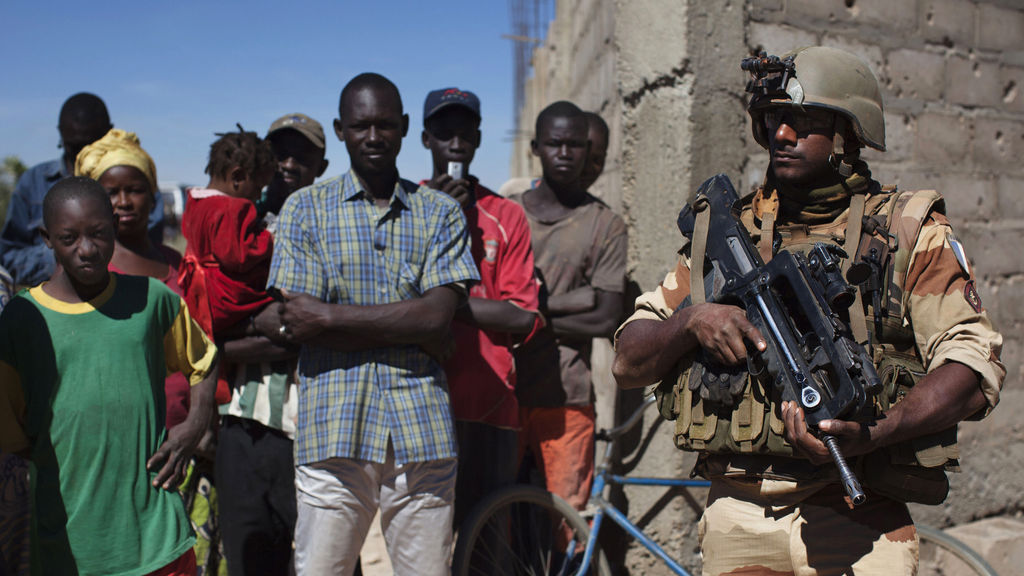
    French soldierNot unlike the United States in both Afghanistan and Iraq, the French government has begun the intervention with talk of short timelines and minimal troops on the ground before quickly changing its tune, write Anna Alissa Hitzemann and Ben Zala for Channel 4 News .

    Image source: Channel 4 News (from original article)

    Read more »

    “Mali: Why Western Intervention is destined to fail” – Sustainable security on Channel 4 News

    Issue:Global militarisation

    Britain is on standby and the US is already transporting French troops into Mali. But the west is “betting on the wrong horse” by intervening in the region. Now well over a decade after the beginning of the so-called war on terror, yet again, another western nation is leading a military intervention against Islamist paramilitaries based in a largely ungoverned region of a state in the Global South, write Anna Alissa Hitzemann and Ben Zala for Channel 4 News.

    Image source: Defence Images

    Read more »

    Myanmar: Peaceful Transition to Democracy or Storm Clouds on the Horizon?

    Anna Alissa Hitzemann | | November 2012

    Issues:Global militarisation, Marginalisation

    Published last week, Myanmar: Storm Clouds on the Horizon is International Crisis Group’s latest Asia report. It focuses on the potential for political violence and social instability as Mynamar’s leaders are undertaking reforms “to move the country decisively away from its authoritarian past”.  

    Image source: Rusty Steward

    Read more »

    A top-down approach to sustainable security: The Arms Trade Treaty

    Zoë Pelter | | November 2012

    Issue:Global militarisation

    Will an Arms Trade Treaty work towards sustainable security? As the future of the world’s first global treaty on the arms trade is discussed by the First Committee of the United Nations General Assembly, this article explores how the potential treaty – if reopened for further negotiation – could assist sustainable security policy.

    Image source : Oxfam

    Read more »

    Towards sustainable civilian security in South Sudan

    Zoë Pelter | | October 2012

    Issue:Global militarisation

    Civilian disarmament campaigns in South Sudan currently attempt to tackle one of the many symptoms of the country’s militarised post-war society. Instead, these campaigns must be seen as one part of an overarching and sustainable disarmament and security sector reform strategy that must be undertaken long term, while ensuring that the immediate security of communities is safeguarded and that their need for weapons to protect themselves is adequately addressed and reduced.  In South Sudan, there is a need for proactive strategy – not reactive operations – towards sustainable civilian security.

     Image Source: ENOUGH Project

    Read more »

  • “Mali: Another Long War?” – Sustainable security on channel 4 news

    “Mali: Another Long War?” – Sustainable security on channel 4 news

    Ben Zala and Anna Alissa Hitzemann | | January 2013

    Issue:Global militarisation

    (This piece was originally published by Channel 4 News on Tuesday 22 January 2013, and is the second of two parts)

    French soldierThere is a stark warning today the western intervention strategy in Mali is “flawed”. Part two of a special paper also says France and others are likely to be involved in the conflict “for some time”. 

    Not unlike the United States in both Afghanistan and Iraq, the French government has begun the intervention with talk of short timelines and minimal troops on the ground before quickly changing its tune, write Anna Alissa Hitzemann and Ben Zala for the Oxford Research Group. 

    The initial deployment of 800 French troops may end up numbering more than 2,500 and President François Hollande has stated France’s mission is to ensure that “when we end our intervention, Mali is safe, has legitimate authorities, an electoral process and there are no more terrorists threatening its territory”. This does not seem to tally with the earlier statement by the French Foreign Minister that the current level of French involvement in the country would last for “a matter of weeks”. 

    The latest reports are that the Islamist fighters have been preparing for this intervention by carving a network of caves and tunnels into cliff faces to house bases and supplies of fuel and ammunition. This, combined with the concerns about the roles of both the Malian security forces and a number of potential contributors to the ECOWA force in relation to the abuse of civilian populations (and the likely blowback effect of such actions), mean that stability in Mali will be almost impossible achieve with military force alone. 

    It is also far from clear whether the African states that are set to join the intervention will be able commit forces for a drawn-out insurgency. After Chad, the second biggest promised contributor of troops is Nigeria, which has pledged a contingent of 900. 

    Yet the Nigerian government itself is fighting its own Islamist-inspired insurgency with the Boko Haram group in the country’s north. Despite a relative decline in Boko Haram attacks in recent months and even the potential for Saudi-backed peace talks between the rebels and the government, fighting could easily intensify once more, in which case Nigeria is unlikely to remain involved in Mali in any significant way.     

    Without taking serious action to address the sense of marginalisation and disenfranchisement of those who were willing to join one of the rebel groups, there are few reasons to think the current intervention will produce a durable peace in Mali.

    Not only have France and its allies underestimated the difficulty of fighting the northern rebels among civilian populations in which bombing from above is of little use, there appears to be no sign of a plan as to how the factors underlying the uprising (including the original Tuareg rebellion) can be addressed. 

    Without taking serious action to address the sense of marginalisation and disenfranchisement of those who were willing to join one of the rebel groups — Tuareg, Islamist or otherwise — there are few reasons to think the current intervention will produce a durable peace in Mali.

    Ongoing conflict 

    While military force is considered the only option, feelings of resentment amongst elements of the population of northern Mali are likely to increase. Not only this, it will provide ample encouragement to other anti-Western paramilitary groups across North and Sub-Saharan Africa, the Middle East, and Central, South and Southeast Asia. 

    The central lesson of the western interventions and small-scale military operations (including Pakistan, Yemen, Somalia and elsewhere) of the post 9-11 era, has been that reacting to the symptoms of insecurity once they are deeply manifested, and few options other than military force remain, is a fundamentally flawed strategy for global security. This means that France and others are likely to now be involved in an ongoing conflict in Mali for some time. 

    Not only do the (so far conspicuously absent) plans for a post-conflict stabilisation process need to be settled between France and its coalition partners now, a serious commitment to assisting the Malian government to going much further in addressing the marginalisation of the north will be crucial. 

    Until the focus shifts from military control to working towards solving the root causes of the conflict, no viable sustainable security will be found for Mali. 

    Image source: Channel 4 News (from original article)

    Comments

    Post new comment


  • Sustainable Security

    US Drone Strikes in Pakistan: ineffective and illegitimate

    Strikes by unmanned combat air vehicles, or armed drones, have become the tactic of choice in US counterterrorism efforts in Yemen, Somalia and, the topic of current controversy, Pakistan. The lack of transparency, dubious effectiveness, civilian casualties and negative consequences for US national security being highlighted by current debate means that Washington needs to re-evaluate its approach.

    Read Article →

  • Sustainable Security

    Engendering Peace? The militarized implementation of the women, peace and security agenda

    Almost 15 years after the first resolution to address women, peace and security, the agenda’s implementation is increasingly subverted by the militarised security paradigm. Implementing UNSCR 1325 has been interpreted as being about fitting women into the current peace and security paradigm and system; rather than about assessing and redefining peace and security through a gender lens. As a result, the opportunity to create a new recipe for peace and security, based on taking women’s perspectives into account, is being lost.

    Read Article →

  • World Not Prepared for Climate Conflicts

    World Not Prepared for Climate Conflicts

    Laurie Goering | AlertNet | May 2011

    Issues:Climate change, Competition over resources

    Accelerating climate change and competition for limited supplies of water, food and energy are poised to ignite long-simmering conflicts in fragile states, monopolising the world’s military resources and hampering development efforts, security experts say.

    Defusing these new 21st century conflicts – or at least preparing governments and citizens to cope with them – will require a broad range of innovative interventions, a gathering at Britain’s Department for International Development (DFID) heard earlier this month.

    Mitigation measures include borrowing business risk-management strategies, getting military officials to talk publicly about the constraints they face, building capable institutions in unstable countries, and ensuring billions in climate aid go to the right places and aren’t lost to corruption, experts said.

    Putting the right strategies in place will require bringing together disparate groups – economists, military strategists, aid workers – and working out fresh approaches to the emerging problems, they said.

    Climate change and resource scarcity are “setting a new challenge that we are not very good yet at handling”, said Dan Smith, secretary general of International Alert and one of the organisers of the “Dialogue on Climate Change, Conflict and Effective Response”.

    In Yemen, for example, severe water shortages – the result of water mismanagement and changing climatic conditions – are hurting crop production and feeding into growing political strife that could unseat longtime ruler, President Ali Abdullah Saleh, and even break the country apart.

    The pressures have important military implications, not least because Saleh has cooperated with Washington to dismantle an arm of Al Qaeda in Yemen, and because food and water shortages appear to be contributing to recent violence.

    TIPPING POINTS

    Worsening climate impacts and resource shortages could similarly aggravate simmering conflicts from Pakistan to fragile regions like the Niger River basin, which includes parts of Mali, Niger and Nigeria, said Smith, whose independent organisation works on peace and conflict issues.

    “Twenty-first century conflict will be different from 20th century conflict, and our institutions are set up for 20th century conflict,” he warned.

    One problem with dwindling resources, experts at the discussion noted, is that they push countries to put their own needs first, making them less likely to cooperate with neighbours and more likely to conflict with them. Resulting political tensions make international institutions less effective, just when they are most needed to tackle international problems like climate change.

    Another problem countries face is growing uncertainty stemming from climate change. There could be potential “tipping points” that threaten to abruptly increase sea level or global temperatures, or wipe out food crops, forcing up prices.

    Countries – particularly fragile ones – need to develop greater resilience and capacities to deal with unexpected problems, the security experts said. That usually involves things like creating state institutions that work and giving people new skills.

    “Understanding how to strengthen national institutions is crucial,” said Neil Bird, a researcher on environmental policy and international funding mechanisms at the London-based Overseas Development Institute.

    ‘CLIMATE FINANCE ORPHANS’

    But money to help countries prepare – including a planned $100 billion a year for climate-vulnerable nations by 2020 – could miss those that need it most precisely because they don’t have capable institutions in place to handle the funds in a transparent and accountable way.

    Fragile states could end up as “climate finance orphans”, Bird warned.

    Addressing all these looming problems will require a high degree of innovation, as well as input from diverse fields, the experts said. Business people and market traders, for instance, are usually good at assessing risk and hedging things like commodity prices – skills politicians and others may need to adopt too.

    Persuading military officials to “tell the world what they cannot do, even if they have a gazillion-pound defence budget” may also be useful, Smith said. They may be best placed to explain how spending on climate mitigation and adaptation could be cheaper and more effective than trying to control resource-driven conflicts or large-scale environmental migration further down the line, he added.

    Both rich and poor countries have a stake in limiting conflict driven by climate change and resource scarcity, not least because it will likely be costly to lives, budgets and development efforts, the security experts said.

    Climate change, together with associated shortages of food, water and energy, “are one of the gravest threats to our security and prosperity”, warned Sarah Cullum, head of the climate change and energy group at Britain’s Foreign Office.


    This article originally appeared on AlertNet. 

    Comments

    Post new comment


  • Sustainable Security

  • Sustainable Security

    by Caroline Donnellan and Esther Kersley

    This article was originally published on openSecurity’s monthly Sustainable Security column on 22 June 2014. Every month, a rotating network of experts from Oxford Research Group’s Sustainable Security programme explore pertinent issues of global and regional insecurity.

    RC_long_logo_small_4webThis article is part of the Remote Control Warfare series, a collaboration with Remote Control, a project of the Network for Social Change hosted by Oxford Research Group.

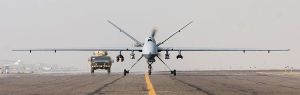
    An MQ-9 Reaper takes off on a mission from Afghanistan. Source: Wikimedia

    An MQ-9 Reaper takes off on a mission from Afghanistan. Source: Wikimedia

    The past week has marked ten years since the first reported US drone strike in Pakistan. It has also seen the resumption of strikes following a five-month pause. So how effective has the covert programme been and what impact have drones had on Pakistani society?

    Since 2004, the US has launched more than 380 strikes in the Federally Administrated Tribal Areas (FATA). As part of its “war on terror”, they were intended to eliminate mainly al-Qaeda and the Pakistani Taliban from the region. But a report by Dr Wali Aslam, commissioned by the Remote Control project, has found that drone strikes, rather than eliminating “terrorists”, have instead caused militants to leave FATA for other parts of the country to avoid being hit. Although the US deems its programme a success—indeed it has pursued some “high-value” targets and decreased the number of fighters in FATA—this is short-term at best, as drones have simply displaced the problem. In turn, this relocation has brought radicalisation, violence and crime to the regions of Pakistan where the militants have resettled.

    Unintended consequences

    Drones are deeply unpopular in Pakistan, due to the civilian casualties, psychological damage and infringement of sovereignty they entail. Growing anti-American sentiment has provided an effective recruitment tool for extremists, fuelling rather than minimising radicalisation. And relocation as a result of drone strikes has widened that recruitment pool, as militants have spread to regions with which they previously had no connection.

    In the Punjab, for example, there has been increased radicalisation among some Sunni Muslims. In Karachi, countless madrasas have provided a stream of potential recruits, undermining secular political parties such as Muttahida Qaumi Movement (MQM) and the Awami National Party (ANP). The attack on Karachi international airport on 8-9 June, in which at least 28 people were killed—supposedly in retaliation for a US drone attack—is a further example of the penetration of the Pakistani Taliban there.

    There has also been an escalation in violence more broadly in Pakistan since 2007. There have been an estimated 50,000 deaths due to suicide bombings, improvised explosive devices and gun attacks—an incidence of paramilitary activity unprecedented in the country’s history. Is this upsurge linked to US drone strikes? The Remote Control report shows a correlation between violence in Karachi, the FATA’s Kurram Agency and Punjab province since 2007 and US drone attacks in FATA during this period.

    Zooming in, in Karachi, attacks on secular parties, kidnapping and petty crime increased after 2010, coinciding with a dramatic rise in drone attacks in the same year (122, compared with 36 and 54 in 2008 and 2009 respectively). In Kurram Agency, the flight of large numbers of militants from neighbouring North Waziristan coincided with an increase in sectarian violence there (since 2007 the Turi Shia tribe has lost an estimated 2,000 members as a result). And in Punjab, an increase in attacks on Ahmadi, Shia and Christian communities since 2007 again coincided with many militants relocating from FATA.

    Of course, the Pakistan army’s own operations in parts of FATA and the north-west have contributed to the relocation of militants but the role played by US drones has been largely neglected. Yet they have exacerbated a delicate, vulnerable and complex socio-political environment.

    Remote-control warfare

    The decade-long experience can teach us important lessons. It highlights the failure of drone warfare as a “counter-terrorism” strategy and thus the limitations of remote-control methods more broadly to resolve conflict. As armed drones are increasingly used by the US in Somalia, Yemen and Afghanistan—and by the UK in Afghanistan—with more reliance also being placed globally on special forces and private military companies, so the remote-control trend spreads.

    The latest monthly briefing from the civil intelligence agency Open Briefing illustrates the proliferation of drone activity. The US is facing demands for access to drone technology from security partners—such as Algeria, Niger and Iraq—as well as intelligence, surveillance and reconnaissance capacity. Iran has unveiled its reverse-engineered version of the US drone, the RQ-170 Sentinel, and its maturing drone-development programme is benefiting from operations in Syria. Meanwhile, the Israeli Air Force has been carrying out drills to prepare pilots to shoot down more advanced potential Hezbollah and Hamas drones, expected to be faster and able to stay airborne longer.

    The volatile north-east Asia region is also seeing a rapid proliferation of unmanned technologies. The US Air Force will be deploying two Global Hawk drones from Misawa air base in Japan, for surveillance of North Korean and Chinese military activities. The Japanese Air Self-Defence Force is expected to procure three Global Hawks in 2015. South Korean officials have confirmed that drones found near the North Korean border in early April were most likely owned by North Korea. China has a vigorous armed-drone development programme, which appears to be prioritised for maritime security.

    Global insecurity

    As the military technology for remote-control warfare spreads, there is a need to question whether drones provide significant tactical advantage or whether their proliferation could lead to greater long-term global insecurity. A RAND report in April concluded that medium-range, non-stealth drones only deliver advantage in limited military contexts. Yet rapid growth is forecast in the drone market: in the same month, Forecast International predicted expansion of drone exports from $942m to $2.3 billion per year between 2013 and 2023. It estimated that, by 2017, the Aviation Industry Corporation of China would be the largest manufacturer and, by 2030, half of the aircraft fleets of some militaries could consist of drones.

    The use of drones in Pakistan has spread the threat of violence to other parts of the country and detrimentally affected Pakistani society. Rapid drone proliferation raises serious concerns as technological developments and exports widen the range of deployers. Avoiding “boots on the ground” through remote warfare appears an attractive new means of “counter-terrorism”, for obvious reasons. But the unforeseen consequences which could render this counter-productive need to be factored into the equation.

    Caroline Donnellan manages of the Remote Control project of the Network for Social Change, which examines and challenges the new ways of modern warfare, including the use of Unmanned Aerial Vehicles (UAVs), Private Security Companies, Special Forces, aspects of cyber warfare and surveillance methods. Caroline has a background in multilateral diplomacy and has worked on international security and human rights issues for a number of years. Before joining ORG, she was Senior Policy Advisor to the Ambassador, Irish Permanent Representation to the Organization for Security and Cooperation in Europe (OSCE) in Vienna. 

    Esther Kersley is the Communications Assistant for Remote Control. Prior to joining ORG, Esther worked in Berlin for the anti-corruption NGO Transparency International as an editorial and online communications officer. She has a particular interest in counter-terrorism and conflict resolution in the Middle East, having previously worked with the Quilliam Foundation and IPCRI (Israel/Palestine Center for Research and Information), a Jerusalem based think tank.