Blog

  • Competition over resources

    Competition over resources

    In the environmentally constrained but more populous world that can be expected over the course of this century, there will be greater scarcity of three key resources: food, water and energy. Demand for all three resources is already beyond that which can be sustained at current levels. Once population growth and the effects of climate change are factored in, it is clear that greater competition for such resources should be expected, both within and between countries, potentially leading in extreme cases to conflict.

    Bridging the North-South divide: Sustainable Security for all

    Hannah Brock | Oxford Research Group | January 2011

    Issues:Climate change, Competition over resources, Global militarisation, Marginalisation

    For some years, the Oxford Research Group (ORG) has been analysing the likely underlying drivers of global insecurity over the coming years, and ways to develop sustainable responses to these threats. This analysis has focused on four trends that are expected to foster substantial global and regional instability, and large-scale loss of life, of a magnitude unmatched by other potential threats. These are climate change, competition over resources, marginalisation of the ‘majority world’ and global militarisation.

    Read the full article here.

    Author: Hannah Brock

    Image source: WorldIslandInfo.com

    Read more »

    Crude Calculation – The Continued Lack of Transparency Over Oil in Sudan

    Issue:Competition over resources

    Persistent calls for clear and transparent information on Sudan’s oil revenues have yet to yield satisfactory information, says a new report published by Global Witness today. With a referendum on independence for southern Sudan just days away, oil sector transparency is now more important than ever to preserving the fragile peace between north and south.

    US Security Establishment not Prepared for Climate Change

    Issues:Climate change, Competition over resources

    In a three-month investigation, a team of Northwestern University graduate students has found that the US security establishment is not adequately prepared for many of the environmental changes that are coming faster than predicted and that threaten to reshape demands made on the military and intelligence community. The Medill School of Journalism graduate student team has just begun publishing its findings on the national security implications of climate change with a series of print, video and interactive stories at Global-Warning.org. 


    Image source: Chairman of the Joint Chiefs of Staff. 

    Read more »

    4-Star Wars: Flashpoint in Kyrgyzstan

    Nick Kochan | openDemocracy | January 2011

    Issue:Competition over resources

    Supplying fuel to the American government to keep military planes running into Afghanistan is a lucrative business. Involving as it does politics and politicians in desperately poor Kyrgyzstan, it is also a highly controversial one. Nick Kochan writes on the fuel contracts that have come to be viewed as issues of sovereignty for the new Kyrgyz government. 


    Image source: octal. 

    Read more »

    Environment, Energy, Economy: a threefold challenge to sustainable security

    Phillip Bruner | Exclusively written for sustainablesecurity.org | December 2010

    Issues:Climate change, Competition over resources

    As we turn a watchful eye toward COP16 it’s tempting to get sidetracked by other major events going on around the world. There are, after all, a host of developments which stand to have an impact on security in the immediate future and arguably, many of us have become perhaps too accustomed to placing economic and energy woes ahead of the environment on our individual lists of urgent priorities. We are, after all, in the middle of the worst global financial meltdown since the Great Depression and as banks stop lending, governments cut spending, unemployment rises, public outcry gathers momentum and as we’ve already seen in Ireland and Britain recently, even in highly-developed economies social unrest can translate into violence toward governments. We’re also running out of cheap and easy access to oil, which is “the lifeblood of modern civilization,” according to the 2005 Hirsch Report – not to mention modern militaries – and as developing countries continue to rapidly industrialise, Western governments grow weary of asymmetries in energy demand per capita as well as huge demographic shifts in population size and age, which tend to favour the East. That said, it helps to be reminded that economic and energy woes go hand-in-hand when it comes to addressing climate change. Therefore, in order for activists and government representatives alike to find common ground on which to build lasting and constructive partnerships for addressing major security threats, an interdisciplinary approach is needed that can help to elucidate how environmental, energy and economic dilemmas are deeply intertwined.

    Read more »

    Israeli know-how helping to combat hunger in Africa

    Danielle Nierenberg & Janeen Madan | WorldWatch Institute | December 2010

    Issues:Climate change, Competition over resources

    Israel has been a leader in developing innovative drip-irrigation systems that reduce the amount of water needed for farming.

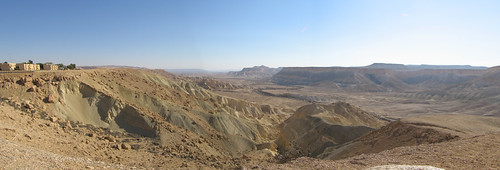
    Most of Israel is arid, with the Negev Desert spanning 60 percent of the country. Desertification, water scarcity and soil erosion makes it increasingly difficult to farm, endangering the livelihoods of those who depend on agriculture for both food and income.

    But Israel is not alone in facing these challenges – dry lands cover 47% of the Earth’s surface. With 60% of the world’s food insecure people living in dry areas, desertification and poverty go hand in hand, particularly in sub-Saharan Africa.

    But the simplest techniques can go a long way in strengthening food security, increasing incomes and improving the livelihoods of millions of people.

    Article Source: WorldWatch Institute

    Image Source: GregTheBusker

    Read more »

  • Gorbachev – Twenty years after the fall of Berlin wall the world is no fairer

    Gorbachev – Twenty years after the fall of Berlin wall the world is no fairer

    Mikhail Gorbachev | The Guardian | November 2009

    Issue:Marginalisation

    Twenty years have passed since the fall of the Berlin wall, one of the shameful symbols of the cold war and the dangerous division of the world into opposing blocks and spheres of influence. Today we can revisit the events of those times and take stock of them in a less emotional and more rational way.

    The first optimistic observation to be made is that the announced “end of history” has not come about, though many claimed it had. But neither has the world that many politicians of my generation trusted and sincerely believed in: one in which, with the end of the cold war, humankind could finally forget the absurdity of the arms race, dangerous regional conflicts, and sterile ideological disputes, and enter a golden century of collective security, the rational use of material resources, the end of poverty and inequality, and restored harmony with nature.

    Another important consequence of the end of the cold war is the realisation of one of the central postulates of New Thinking: the interdependence of extremely important elements that go to the very heart of the existence and development of humankind. This involves not only processes and events occurring on different continents but also the organic linkage between changes in the economic, technological, social, demographic and cultural conditions that determine the daily existence of billions of people on our planet. In effect, humankind has started to transform itself into a single civilisation.

    At the same time, the disappearance of the iron curtain and barriers and borders, unexpected by many, made possible connections between countries that until recently had different political systems, as well as different civilisations, cultures and traditions.

    Naturally, we politicians from the last century can be proud of the fact that we avoided the danger of a thermonuclear war. However, for many millions of people around the globe, the world has not become a safer place. Quite to the contrary, innumerable local conflicts and ethnic and religious wars have appeared like a curse on the new map of world politics, creating large numbers of victims.

    Clear proof of the irrational behaviour and irresponsibility of the new generation of politicians is the fact that defence spending by numerous countries, large and small alike, is now greater than during the cold war, and strong-arm tactics are once again the standard way of dealing with conflicts and are a common feature of international relations.

    Alas, over the last few decades, the world has not become a fairer place: disparities between the rich and the poor either remained or increased, not only between the north and the developing south but also within developed countries themselves. The social problems in Russia, as in other post-communist countries, are proof that simply abandoning the flawed model of a centralised economy and bureaucratic planning is not enough, and guarantees neither a country’s global competitiveness nor respect for the principles of social justice or a dignified standard of living for the population.

    New challenges can be added to those of the past. One of these is terrorism. In a context in which world war is no longer an instrument of deterrence between the most powerful nations, terrorism has become the “poor man’s atomic bomb”, not only figuratively but perhaps literally as well. The uncontrolled proliferation of weapons of mass destruction, the competition between the erstwhile adversaries of the cold war to reach new technological levels in arms production, and the presence of the new pretenders to an influential role in a multipolar world all increase the sensation of chaos in global politics.

    The crisis of ideologies that is threatening to turn into a crisis of ideals, values and morals marks yet another loss of social reference points, and strengthens the atmosphere of political pessimism and nihilism. The real achievement we can celebrate is the fact that the 20th century marked the end of totalitarian ideologies, in particular those that were based on utopian beliefs.

    Yet new ideologies are quickly replacing the old ones, both in the east and the west. Many now forget that the fall of the Berlin wall was not the cause of global changes but to a great extent the consequence of deep, popular reform movements that started in the east, and the Soviet Union in particular. After decades of the Bolshevik experiment and the realisation that this had led Soviet society down a historical blind alley, a strong impulse for democratic reform evolved in the form of Soviet perestroika, which was also available to the countries of eastern Europe.

    But it was soon very clear that western capitalism, too, deprived of its old adversary and imagining itself the undisputed victor and incarnation of global progress, is at risk of leading western society and the rest of the world down another historical blind alley.

    Today’s global economic crisis was needed to reveal the organic defects of the present model of western development that was imposed on the rest of the world as the only one possible; it also revealed that not only bureaucratic socialism but also ultra-liberal capitalism are in need of profound democratic reform – their own kind of perestroika.

    Today, as we sit among the ruins of the old order, we can think of ourselves as active participants in the process of creating a new world. Many truths and postulates once considered indisputable, in both the east and the west, have ceased to be so, including the blind faith in the all-powerful market and, above all, its democratic nature. There was an ingrained belief that the western model of democracy could be spread mechanically to other societies with different historical experience and cultural traditions. In the present situation, even a concept like social progress, which seems to be shared by everyone, needs to be defined, and examined, more precisely.

    Comments

    Post new comment


  • Sustainable Security

    Neuroscience, the scientific study of the nervous system, is a rapidly emerging interdisciplinary scientific approach, offering exciting new insights into our understanding of human behaviour. Could it also help us overcome many of the difficulties of peacebuilding?

    Why do violent conflicts arise so easily? Why do groups and nations believe that their own violence is justified but not that of the other sides? How do political or religious fundamentalist ideologies capture the minds and hearts of people and groups, often beyond the value of their own lives?  Why do people often believe, or create, their own versions of ‘truth’? Why does peacebuilding take so long  – and be so darned difficult?

    As a social and political psychologist, these questions have absorbed and challenged me for decades. Then, some years ago I came across a relatively new science – or parts of other sciences – which helped me to re-think many of my ideas about the difficulties of peacebuilding.  These were the emerging ideas that question whether or the not the ways in which we as humans have been physically shaped by the exigencies of evolution, have left us with some body/brain legacies which, if left unattended, seem to hamper our capacities to live together and to resolve our conflicts peacefully. Many of these processes are currently being studied by businesses, educational institutions, governments and others for their possible use in shaping human behavior, but not as yet in any conscious way by social and international conflict resolvers.  These new fields are called variously biopsychology, genopolitics, political physiology, behavioral genetics, cognitive neuroscience, etc. What do they suggest to us that may be of use to those in the peacebuilding professions?

    We are strangers to ourselves

    Contrary to what most of us believe, our human capacity for rational judgment is much (much!)  shallower than we think. We are limited by our nature as human beings whose very existence throughout history was often dependent upon instincts and emotions to survive.  Mostly, it is the emotional brain that drives us, in this case the amygdala, the part of our brain that deals with our memories, pleasures and fears. Millennia of evolution have shaped us to feel first and think (if at all) afterwards. Research using Functional Magnetic Resonance Imaging (fMRI shows) that feelings usually precede the analytic and logical reasoning that comes from our anterior cingulate cortex, which controls our logical thinking, and this is true particularly in times of stress.  Our ‘emotional’ and ‘reasoning’ minds coexist uneasily. Our choices are often instinctual, dictated not only by our brain structures, but also by hormones such as adrenaline, norepinephrine and cortisol, which inform our response to fear messages. Thus when we feel threatened, or someone – and particularly a leader, or would be leader  – tells us that we are being threatened, our amygdala fears overwhelm the cortex thinking that is needed to rationally respond to complex and changing situations. This supremacy of emotions is particularly relevant in situations termed “weak psychological situations” such as crises or situations characterized by uncertainty or conflict.

    Our brains differ
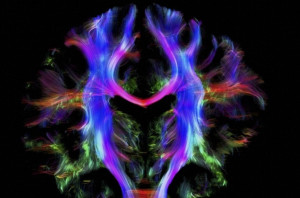
    B0010280 Healthy human brain from a young adult, tractography Credit: Alfred Anwander, MPI-CBS. Wellcome Images images@wellcome.ac.uk http://wellcomeimages.org Coronal view of nerve fibres in the brain of a young healthy adult, which has been virtually sliced down a vertical axis to divide it into front and back. The brain is viewed from behind, with the left side of the brain on the left of the image. This image was created by virtually dissecting the brain using data obtained from diffusion magnetic resonance imaging (MRI). Diffusion weighted imaging is a specialised type of MRI scan which measures water diffusion in many directions in order to reconstruct the orientation of bundles of nerve fibres. Tractography is used to indirectly model these nerve fibres, which transmit information between different regions of the brain. These have been colour-coded to help distinguish between different tracts which pass close to each other. For example, fibres connecting the left and right hemispheres (red), fibres travelling from top to bottom (blue) connecting to the spinal cord, and fibres running from front to back (green) are visible here. Reconstructing these connections between different parts of the brain will aid our understanding of how the brain functions in health and disease, and could ultimately become a tool in the same way as the human genome. Width of image is approximately 165 mm. Magnetic resonance imaging 2015 Published: - Copyrighted work available under Creative Commons by-nc-nd 4.0, see http://wellcomeimages.org/indexplus/page/Prices.html

    Healthy human brain from a young adult, tractography. Image by Wellcome Images via Flickr.

    Genetically, the power of the amygdala can differ from person to person, and enables some of us to tolerate uncertainty more easily, and to be more open to those we see as ‘others’. fMRI scans have shown that these differences in biology, and in genetics, influence differences in attitudes and beliefs.

    At one end of the spectrum, people, often called traditionalists, or conservatives, are influenced more by their amygdala. Having genetically greater sensitivity to fear and uncertainty they are more likely to advocate policies that protect the existing social structure from both external out groups and internal, norm-violator threats. They have a greater need for order, structure, and certainty in their lives, resist change more often, and are less open to risk taking. Researchers have shown that they are usually more supportive of policies that provide them with a sense of security:  hence their greater backing for e.g. military spending, capital punishment, patriotism, and tougher laws on immigration.

    On the other end of the continuum, there are people who are genetically more open to new things, and to new experiences – these are often termed ‘liberals’. fMRI scans have shown that they can better tolerate uncertainty, and cognitive complexity,  take risks more often, and have wider and more diverse friendships.  They often exhibit stronger preferences for social change and for equality when compared with traditionalists. Researchers have identified a variant called DRD4-7R, which affects the neurotransmitter called dopamine and a further 11 genes which are responsible for inclining people towards liberal or conservative beliefs: these are genes involved in the regulation of three neurotransmitters—dopamine, glutamate and serotonin—and also G-protein-coupled. There is speculation that evolutionary wise it may have proved useful to have such varied types of individuals in a society so as to ensure the best survival responses to different sets of societal and group challenges.

    We are ‘groupish” people

    There is a now an increasing, and welcome, body of literature stressing the innate tendencies for cooperation between people, in contrast to the competitiveness that previous evolutionary psychology has suggested is the norm. However, it appears that although biologically humans have evolved for cooperation, it is mainly with those people they perceive as their own group. Experiments have shown that bonding within groups is assisted by the hormone oxytocin, a rise in the level of which appears to provide a ‘glue’ between people, making them demonstrably more generous, trusting and compassionate towards their neighbours.

    Spraying oxytocin into people’s noses increases a sense of belonging, or connectedness to a group, and makes them more willing to cooperate with them. However, research has also shown that while oxytocin can increase levels of cooperation within a group, it can also promote ethnocentric behavior, increase our suspicion and rejection of ‘others’ outside the group, and make people less likely to cooperate with members of an out-group.

    Brain imaging experiments (fMRI) have also shown that our attitude towards out-groups is affected by what scientists call ‘mirror neurons’, which are linked to our capacity for empathy, which helps us to better understand other peoples intentions, feelings and emotions.

    Unfortunately, when we encounter people from groups we perceive as others, the brain often switches off the empathetic neurons and actively resists any emotional connection with the perceived other group. There is also some research from MIT on Israeli/Palestinians and US/Mexican group processes using fMRI scans during group dialogues that suggests it is particularly hard for groups who see themselves as ‘oppressed’ groups to feel any empathy with those they see as having more power than they have.

    Mirror neurons also have the effect of increasing emotional contagion so e.g. during a political landscape where fear is high and emotions are strong, there is quite a bit of emotional contagion occurring between individuals, which will drive them to group behaviour that can be contrary to their ‘normal’ characteristics.

    Truth is as  we see it

    What we see as ‘truth’ is often determined by our innate needs for beliefs and values, our capacity to tolerate uncertainty and fear, and the cultural context in which we live – thus they have often been what is termed  ’groupish’ rather than necessarily true. We often rationalize what our guts tell us rather than care too much about fact checking. The number of would be ISIS recruits who have been caught with a copy of ”Islam for Dummies” and “The Koran for Dummies”  in their rucksacks is legendary. Suggestions that such recruits are conversant with, and committed to Islam, are therefore questionable, suggesting that alternative reasons such as a search for meaning and for a group belonging  in their lives. Once we form our beliefs, we have a tendency to see and find evidence to support them, and ignore evidence that challenges them. When faced with logical contradictions to their very deeply held beliefs, fMRI scans  show that although people may feel negative emotions, there is no actual increase in their reasoning cortex, which becomes quiescent.  Our memories too are also notoriously faulty – they often reframe and edit events so as to create a story that will fit our current situation, conflating the past and present to suggest a story to us that suits what we need to believe today, rather than what is true

    So – what does this mean for peacebuilding?

    For change to happen, people need to be both emotionally and rationally engaged. As peacebuilders we often fail to understand how little actual sway logical thinking has on the actors concerned, and on their constituencies in the field. Peace agreements fall apart because, although the cognitive skills of those involved have crafted clever political and social compromises, constituents fail to feel they are winning through peace agreements.

    Peacebuilding processes need to particularly appeal to traditionalists who are more afraid of change.  For traditionalists, such processes will often involve leaders from trusted faith, community or political leaders who can reassure their constituencies about the advantages of various change measures, and of how such measures can ensure their future security.

    We need to find ways of increasing oxytocin levels between conflicting groups at both individual and social levels.  These include factors such as empathetic responses to others family/national crises, and gestures such as gift giving, meal sharing, alcohol, where such is culturally permitted (just a modicum – too much can make us belligerent!) positive physical gestures, expressions of understanding and appreciation, sharing of family stories, group singing, etc. Note that none, or almost none of these are mentioned in the mediator’s guidebooks, but fMRI and hormonal testing indicate that perhaps they should be. Also, given the challenges of achieving empathy as shown by the patterning of mirror neurons, we need to ensure that dialogue processes address, or promise to address, structural societal differences, as little empathy between perceived victims/oppressor groups can be achieved without such promises.

    We should not get too hung up on issues of ‘factual’ differences, but should try and see why it is important for some people or groups to hold on to a version of facts that seems incontrovertibly incorrect to ‘experts’.  It may be more helpful to see such beliefs as a need for personal or group safety or congruence, or as a lack of trust in the sources and the filters through which people learn about facts, rather than of a lack of intelligence.

    Conclusion

    In recognizing the bio-psychological sciences as important, we need to be careful not to turn the spotlight away from structural and societal contexts that are unfair to certain groups: such contexts often bring out our worst bio-psychological feelings rather than our best. We also need to appreciate that much of the research about these processes is very tentative, and many of the mechanisms used to measure such processes are still in their infancy. Finally, and most importantly, there is nothing determinist about what is revealed by fMRI scans. While our genes can predispose us to certain ideas, they are not predestined: brains can be relatively plastic in their nature, and our bio-psychological and genetic tendencies can be altered (somewhat) by our environments.

    My hope is that a greater appreciation of how our genetic and physical predispositions, allied to environmental factors, can affect our human behaviour, and can help make our work more effective and sustainable. Building our programs on the realities of our neural legacies, rather than ignoring them, may help us to relate more realistically, and more compassionately to conflicted groups whose behavior is often dictated to, and limited by, human physical processes whose consequences we are only just beginning to understand and appreciate.

    Mari  Fitzduff was the founding Chief Executive of the Northern Ireland Community Relations Council (CRC). The CRC was set up in 1990 to fund and work with government, trade unions, community groups, police and army, paramilitaries, prisoners, businesses and politicians on issues of peacebuilding in N Ireland. Mari has also worked on programs on conflict issues  in the Basque Country, the Caucasus, Sri Lanka, Middle East, Indonesia, Russia, Crimea, Cameroon, Philippines, Peru and Columbia. From 1997-2003, she held a Chair of Conflict Studies at the University of Ulster where she was Director of a United Nations University researching peacebuilding program and practice development around the world. She is Founding Director of the MA professional programs in Conflict Resolution and Coexistence at the Heller School at Brandeis University. Her publications include: (2015) An Introduction to Neuroscience for Peacebuilders, Public Policy for Shared Societies Palgrave MacMillan (2013), Fitzduff, M and Stout, C: (Eds) (2006) The Psychology of Resolving Global Conflicts: From War to Peace. 3 Vols Praegar Press and Fitzduff, M and Church (Eds): (2003) NGO’s at the Table Rowan and Littlefield.  She is just finished editing a political psychology book for Praegar Press on the phenomenon of Trumpism, and why it has been so successful in engaging with so many possible voters.

  • Sustainable Security

    Resources

    Climate-related Displacement and Human Security in South Asia

    Susan Chaplin | Institute for Human Security Working Paper | April 2011

    Issues:Climate change, Marginalisation

    Climate-related displacement is one of the key challenges facing South Asia in the coming decades. Although there is considerable debate about the salience of the term ‘climate refugees’ and extent to which climate change is a primary cause of forced displacement, there is no doubt that large numbers of people are already having to cope with the impact of environmental changes on their livelihoods and everyday life.

    Transatlantic Dialogue on Climate Change and Security

    Issue:Climate change

    On February 25, 2009, the International Institute for Strategic Studies (IISS) launched the “Transatlantic Dialogue on Climate Change and Security”, funded by a grant from the European Commission, with the purpose of analyzing the impact of climate change on global security and stability.

    Crude Calculation – The Continued Lack of Transparency Over Oil in Sudan

    Issue:Competition over resources

    Persistent calls for clear and transparent information on Sudan’s oil revenues have yet to yield satisfactory information, says a new report published by Global Witness today. With a referendum on independence for southern Sudan just days away, oil sector transparency is now more important than ever to preserving the fragile peace between north and south.
    New Report on Alternatives to Militarisation in the Indian Ocean

    Issue:Global militarisation

    In the Lowy Institute’s latest Strategic Snapshot, International Security Program Associate Ashley Townshend explores the strategic dynamics between China and India in the Indian Ocean.
    Teaching Religion, Taming Rebellion? Religious Education Reform in Afghanistan

    Issues:Global militarisation, Marginalisation

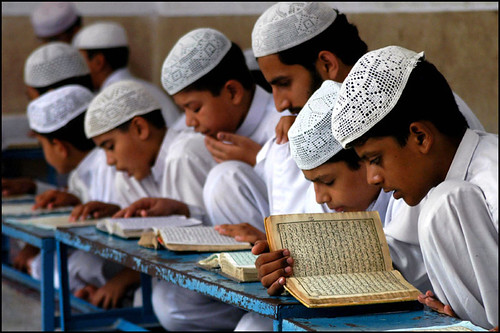
    In this Peace Research Institute Oslo (PRIO) Policy Brief, Kaja Borchgrevink & Kristian Berg Harpviken explore claimed links between Taliban militancy and religious education in Afghan and Pakistani madrasas.

    Access the report online at the PRIO website

    The New Faces of Violence and War: Peace and Security Challenges

    Issue:Marginalisation

    In this recent article, Mariano Aguirre, Director of the Norwegian Peacebuilding Centre in Oslo, examines the complex and unpredictable challenges to peace and security.
    Attach PDF: 

    Development in Lao PDR: The food security paradox

    Issues:Climate change, Competition over resources

    Tags:climate change, food security, human security, Lao PDR, SDC working paper

    Food security will remain out of reach for many people, especially women and children, in the Lao People’s Democratic Republic, or Laos, if the country continues to emphasize commodities and resources development at the expense of the environment and livelihoods while ignoring global trends for food and energy. Read more »

    Arms Flows and the Conflict in Somalia

    Issue:Global militarisation

    A new SIPRI report highlights the limitations of United Nations attempts to control the flows of arms into Somalia, and the role of potential arms-supplying states.
    A Study on the Inter-Relation between Armed Conflict and Natural Resources

    Andrea Edoardo Varisco | Journal of Peace, Conflict and Development | October 2010

    Issue:Competition over resources

    The article investigates the inter-relation between armed conflict and natural resources and its implications for conflict resolution and peacebuilding.

  • Sustainable Security

    Belize: challenges and contradictions in gang policy

    Like its neighbours in the northern triangle (El Salvador, Honduras and Guatemala), Belize has a high murder rate that is closely connected to the strong presence of gangs. But the character of gang activity in Belize is quite different from its Central American neighbours. Belize has pioneered some innovative solutions to the problem it is facing. But it will need to overcome the challenges of internal resistance and an acute lack of resources in order to address the political, economic and social issues that marginalise Belize’s large youth population.

    Read Article →

    Colombia and Mexico: The Wrong Lessons from the War on Drugs

    As activists around the world participate in a Global Day of Action against criminalisation of drug use, evidence from the multi-billion dollar War on Drugs in Colombia suggests that militarized suppression of production and supply has displaced millions of people as well as the problem, not least to Mexico. The wrong lessons are being exported to Central America and beyond, but a groundswell of expert and popular opinion internationally is calling for alternative approaches to regulating the use and trade in drugs.

    Read Article →

    The New Insecurity in a Globalized World

    Writing exclusively for SustainableSsecurity.org, Elizabeth Wilke argues that a new conceptualization of insecurity and instability is needed in a world with greater and freer movement of goods, services and people – both legal and illicit – greater demands on weakening governments and the internationalization of local conflicts. The new insecurity is fundamentally derived from the responses of people and groups to greater uncertainty in an increasingly volatile world. Governments, and increasingly other actors need to recognize this in order to promote sustained stability in the long-term, locally and internationally.

    Read Article →

    Conflict, Poverty and Marginalisation: The case of Curvaradó and Jiguamiandó (Urabá, Colombia)

    In Colombia there are many regions where poverty and the absence, or weak presence, of the state has facilitated the emergence of violence by armed groups. Among these are the Afro-Colombian communities of the Curvaradó and Jiguamiandó in the Urabá region. Whilst the Colombian government fails to fully develop social development programs (including education, health and infrastructure) and sustainable economic development policies to assist marginalised communities, the people of Curvaradó and Jiguamiandó will remain poor, uneducated, vulnerable, and at risk of lose their territories once again.

    Read Article →

    Mano Dura: Gang Suppression in El Salvador

    Widespread social exclusion makes El Salvador fertile ground for gang proliferation and, over time, gang members have resorted to greater levels of violence and drug activity. Yet, government approaches have proved spectacularly ineffective: the homicide rate escalated, and gangs have adapted to the climate of repression by toughening their entry requirements, adopting a more conventional look, and using heavier weaponry. Sonja Wolf argues for approaches which focus on prevention and rehabilitation and looks at why such approaches have been continually sidelined.

    Read Article →

  • Global militarisation

    Global militarisation

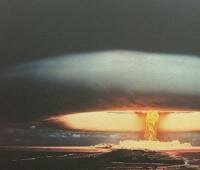
    The current priority of the dominant security actors is maintaining international security through the vigorous use of military force combined with the development of both nuclear and conventional weapons systems. Post-Cold War nuclear developments involve the modernisation and proliferation of nuclear systems, with an increasing risk of limited nuclear-weapons use in warfare – breaking a threshold that has held for sixty years and seriously undermining multilateral attempts at disarmament. These dangerous trends will be exacerbated by developments in national missile defence, chemical and biological weapons and a race towards the weaponisation of space.

    Kenya and Somalia: Landscape of Tension

    Daniel Branch | openDemocracy | October 2011

    Issue:Global militarisation

    A fractious mix of violence and politics is unsettling the relationship between east African neighbours and putting more pressure on Somalis living in Kenya writes Daniel Branch for openDemocracy. The Somali militia group known as al-Shabaab is often viewed as the source of the problem. But the roots of the turmoil go deep in Kenya’s own history.

    Image source: Internews Network.

    Read more »

    A War Gone Badly Wrong – The War on Terror Ten Years On

    Paul Rogers | Oxford Research Group | September 2011

    Issues:Global militarisation, Marginalisation

    The atrocities in New York and Washington on 11 September 2001 led to protracted wars in Afghanistan and Iraq. Ten years after the attacks, this briefing assesses the consequences of the response from the United States and its coalition partners. It questions whether the response was either appropriate or wise and whether the results so far have been counterproductive and may indicate the need for a changed security paradigm.

    Such a fundamental rethink of the way western governments respond to insecurity must go beyond the current approach in which intelligence, counterinsurgency and counter-terrorism are all beginning to merge into a seamless web of a single security posture. Such a posture is likely to be no more successful than the policies adopted in 2001.

    Photo credit: Brian Boyd

    Read more »

    UK Trident renewal

    The Acronym Institute | The Acronym Institute | August 2011

    Issue:Global militarisation

    In the UK, the Conservative-Liberal Democrat coalition government continues to pursue the renewal of Britain’s Trident nuclear weapon system amidst criticism of the opacity of the procurement process and concerns over the substantial and increasing costs of the project. Adding fuel to public anger over widespread government cuts, the Defence Secretary Liam Fox’s long overdue announcement in May 2011 that the Initial Gate for the project had been approved was accompanied by the revelation that when inflation is taken into account the price tag for just the new submarines (excluding missiles, warheads and running costs) is likely to be £25 billion, as opposed to the £11-14 billion announced in 2006. With the defence budget already curtailed by the October 2010 Comprehensive Spending Review (CSR) and under strain on account of a projected deficit of £36 billion over the next 10 years, these latest figures have prompted further concerns that Trident is being replaced at the expense of conventional military capabilities.

    Article source: The Acronym Institute

    Image source: UK Parliament

    Read more »

    Warfare and Limits: A Losing Battle?

    Richard Falk | Al Jazeera | August 2011

    Issue:Global militarisation

    Nationalism, the dehumanisation of killing, and the frustration of asymmetrical war erode traditional limits on warfare writes Richard Falk for Al Jazeera.

    Image source: Lebatihem.  

    Read more »

    Middle East WMD-Free Zone Support from the CTBT

    CTBTO Preparatory Commission | CTBTO Preparatory Commission | July 2011

    Issue:Global militarisation

    Most of the States whose support would be required to establish a Middle East zone free of nuclear weapons and all other weapons of mass destruction have already signed the Comprehensive Nuclear-Test-Ban Treaty (CTBT), Tibor Tóth, Executive Secretary of the CTBTO told a seminar in Brussels, 7 July.

    The creation of such a zone would rest on “a tripod,” its legs consisting of a ban on nuclear weapons, no misuse of fissile material and no nuclear testing, said Tóth. The CTBT would meet the last requirement.

    And the “good news,” he told the seminar, organized by the European Union, is the almost complete endorsement in the region of the Treaty, which is approaching nearly complete global assent and becoming a universal norm.

    Article source: CTBTO Preparatory Commission

    Image source: United Nations Photo

    Read more »

    Indonesia’s Military and Climate

    Eddie Walsh | The Diplomat Blogs | July 2011

    Issues:Climate change, Global militarisation

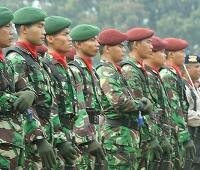
    With more than 17,000 islands and 80,000 kilometres of coastline, Indonesia is extremely vulnerable to climate change. Analysts believe that rising temperatures will almost certainly have a negative impact on human security in Indonesia, which in turn will increase the probability of domestic instability and introduce new regional security concerns. With this in mind, it’s important that Indonesia’s armed forces take a range of measures to prioritize environmental security, including procuring new equipment, strengthening bilateral and multilateral relations, and undertaking training for new roles and missions.

    Article source: The Diplomat Blogs

    Image source: Studio Titus

    Read more »

  • Sustainable Security

    Losing control over the use of force: fully autonomous weapons systems and the international movement to ban them

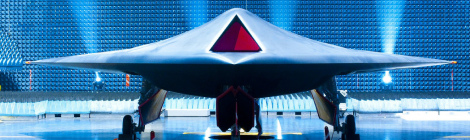
    Later this month, governments will meet in Geneva to discuss lethal autonomous weapons systems. Previous talks – and growing pressure from civil society – have not yet galvanised governments into action. Meanwhile the development of these so-called “killer robots” is already being considered in military roadmaps. Their prohibition is therefore an increasingly urgent task.

    Read Article →

  • Myanmar: Peaceful Transition to Democracy or Storm Clouds on the Horizon?

    Myanmar: Peaceful Transition to Democracy or Storm Clouds on the Horizon?

    Anna Alissa Hitzemann | | November 2012

    Issues:Global militarisation, Marginalisation

    Published last week, Myanmar: Storm Clouds on the Horizon is International Crisis Group’s latest Asia report. It focuses on the potential for political violence and social instability as Mynamar’s leaders are undertaking reforms “to move the country decisively away from its authoritarian past”. For most of the past 50 years, the government of the Republic of the Union of Mynamar (also referred to as Burma) has been under direct or indirect control by the military. Since independence in 1948, the people of Myanmar have suffered civil wars which have mainly been struggles for ethnic and sub-national autonomy. The country has consistently been in the news for human rights violations. Perhaps one of the world’s most well-known political prisoners, the Nobel Peace Prize laureate and opposition politician Aung San Suu Kyi, also chairperson of the National League for Democracy (NLD) was released in 2010 after 21 years under house arrest.

    Thein Sein, current president of Myanmar, has put in place a far-reaching and radical reform agenda. The ICG’s report focuses on what reforms have been achieved and what this may mean for a possible resurrection of violence because “political prisoners have been released, blacklists trimmed, freedom of assembly laws implemented, and media censorship abolished. But widespread ethnic violence in Rakhine State, targeting principally the Rohingya Muslim minority, has cast a dark cloud over the reform process and any further rupturing of intercommunal relations could threaten national stability.” With former political prisoners being released, 2,000 high-profile activists and opposition politicians being allowed to return home, and further liberalization of the media, “social tensions are rising as more freedom allows local conflicts to resurface”.

    The report notes that “The easing of authoritarian controls has created the space for the population to air grievances, the ability to organise in a way that was not possible before, and the opportunity to have a real influence on government policies and decisions” which has led to an “exponential growth in civil society activity”. In order for the transition from authoritarian rule to democracy to be stable, and for peace and security to be sustainable, the government of Myanmar will have to face and resolve major challenges. Widespread militarization and the political and social marginalization (past and present) of ethnic and religious groups will have to be addressed. For example, it has been estimated that the recent 2012 violence between Rohingya Muslims and Rakhine Buddhists in Rakhine State led to an estimated 90,000 displaced people in addition to dozens of casualties. It will not be sufficient to react to past and present violence by allowing more freedom of speech and liberalizing the press. Trying to contain the violence and reducing state repression alone will not address the underlying drivers of insecurity. The government will have to take a sustainable security approach and make great efforts in order to actively address the causes of long-standing grievances. Addressing only the symptoms cannot lead to long-term stability and the rebuilding of trust between communities.

    The ICG offers several options to minimize the risks associated with single party dominance during Myanmar’s political transition. These include changing the electoral system to some form of proportional representation, building coalitions between the NLD and other political parties, and building bridges between the NLD and current president Thein Sein as well as other political forces- particularly the old guard. The ICG recommendations underscore the importance of all parties, and the majority of people, to feel involved in the political process. The marginalization of any political or ethnic/religious groups will most probably lead to further violence and insecurity in the future.

    ICG’s full report and details of the policy recommendations can be read here.

    Image source: Rusty Steward

    Comments

    Post new comment


  • UK Opposition Parties outline potential Defence Spending Cuts

    UK Opposition Parties outline potential Defence Spending Cuts

    Issue:Global militarisation

    Liberal Democrat Treasury spokesman Vince Cable and Shadow Chancellor George Osborne have both highlighted potential defence spending cuts should their parties come to power. In a pamphlet for the think tank Reform, Cable identified nine ideas for budget savings, which included scrapping the Trident nuclear missile system as well as other defence procurement programmes including tranche three of the Eurofighter aircraft. Osborne, following a speech at a conference organised by the Spectator magazine, echoed Cable in citing the Eurofighter project and also identified the project to build 2 new aircraft carriers and a £2.7 billion order for 25 A400 transport aircraft as specific potential savings.

    Whether these statements amount to anything more than political posturing in the run up to the general election remains to be seen. However, such statements will likely increase the pressure for a rigorous 2010 defence spending review following the general election. Whilst the scrapping of ‘white elephant’ defence projects is welcome, any savings should not just be absorbed by the spending deficit, but go hand in hand with a realignment of spending that contributes towards tackling the route causes of global insecurity that are highlighted on this site.

    Comments

    Post new comment


  • Sustainable Security