Blog

  • Articles EXCLUSIVELY written for sustainablesecurity.org

    Articles EXCLUSIVELY written for sustainablesecurity.org


    National Security and the Paradox of Sustainable Energy Systems  | Phillip Bruner

    Causes of Conflict: A Strategic Perspective on US-Sino Relations in the Caribbean | Serena Joseph-Harris

    The Global Land Rush: Catalyst for Resource-Driven Conflict? | Michael Kugelman

    The Climate Security Council? | Joe Thwaites

    Conflict, Poverty and Marginalisation: The case of Curvaradó and Jiguamiandó (Urabá, Colombia) | Amira Armenta

    Assessing the Security Challenges of Climate Change | Obayedul Hoque Patwary

    Human Security and Marginalisation: A Case of Pastoralists in the Mandera Triangle | Abdul Ebrahim Haro

    How the Competing Security Needs of Caribbean Community Members have Crystallized Through Multilateralism and Consensual Decision-Making | Serena Joseph-Harris

    Mano Dura: Gang Suppression in El Salvador | Sonja Wolf, Univesidad Nacional Autonoma de Mexico

    Hot and Cold Wars | James Lee

    Environment, Energy, Economy: A Threefold Challenge to Sustainable Security | Phillip Bruner

    Arma Virumque Cano: Capital, Poverty and Violence | I R Gibson

    Perpetuating Uncertainty: Trident and the Strategic Defence and Security Review | Tim Street

    Climate Funding: Creating a Climate for Conflict? Insights from Nepal | Janani Vivekananda

    Military Aviation and the Environment: Why the Military should care | Ian Shields

    The Other Resource Wars | Roger Howard

    A Spoon Full of Sugar Makes the Medicine Go Down? An analysis of the Obama administration’s ‘new’ National Space Policy | Jo-Anne Gilbert

    Why START is only a beginning on the long road to nuclear disarmament | Andrew Futter

    The UK and the NPT: Rhetoric, simulations and reality | Tim Street

    A New Approach to Ballistic Missile Defence in Europe? Demystifying the End of the ‘Third Site’ | Andrew Futter

    Climate Change, Conflict and Fragility: Understanding the Linkages, Shaping Balanced Responses | Janani Vivekananda

    Swimming Upstream to Sustainable Security | John Sloboda

  • Is it Time for Sustainable Development Goals?

    Is it Time for Sustainable Development Goals?

    Alex Evans | Global Dashboard | September 2011

    Issue:Marginalisation

    From MDGs to… SDGs? That’s one of the ideas swirling around in discussions ahead of the Rio 2012 sustainable development summit next year, anyway.

    You can see the attraction. With less than a year to go, there are precious few concrete ideas on the table for what the summit might produce, especially in the area of “institutional framework for sustainable development”, one of two key themes for the event (sure, there’s much talk of a new World Environment Organisation, but colour me very unconvinced of the case for that). So might SDGs help to fill the gap?

    Well, that would depend on what they cover. The government of Colombia has set out a proposal for SDGs that would cover various sectors – atmosphere, climate resilience, land degradation, sustainable agriculture, biotech, waste and so forth. This would mainly be about ‘reaffirming’ (that awful word – who, other than diplomats, ever ‘reaffirms’ anything?) commitments made at Rio 1992. But you have to wonder: important though delivery of existing commitments undoubtedly is, is ‘reaffirmation’ of stuff agreed 20 years ago really going to set any pluses racing outside the sustainable development priesthood?

    Much more interesting, on the other hand, is the idea that SDGs could provide an institutional foundation for the nine planetary boundaries identified – and quantified – by the Stockholm Resilience Centre. The core idea in the boundaries approach is to define a ‘safe operating space for humanity’ – and, of course, the global economy. So if you’re looking for a serious synthesis of environment and economic development, this is ground zero.

    Of course, a host of questions would still need to be answered. One would be about what timeline the SDGs would span: 25 years, like the MDGs’ 1990-2015 timescale, or much longer than that?

    There’s also the small question of which countries would be covered, and how. The MDGs were basically about developing countries (Goal 8 notwithstanding) – an approach that clearly wouldn’t be possible with SDGs, given the huge sustainability impact of consumptions levels in rich countries. So would the SDGs apply globally, but not to specific countries – leaving them open to the charge that they’re rhetorical aspirations, not serious engines of change? Or would they apply to individual states – opening up the issue of how to differentiate countries’ commitments?

    Then, of course, we’d need to know how the SDGs would relate to the MDGs. Some (greens, especially) would like to see SDGs replace MDGs beyond 2015. But lots of developing countries would be deeply suspicious of any perceived dilution of focus on poverty reduction, or anything that looked like it might ‘pull the ladder up after developed countries’ by denying them space to develop – and large and influential aid donors might well agree.

    And we’d need to figure out an institutional home for the Goals, too. It would be crucial for them not to be ‘owned’ by the environment priesthood – if SDGs became seen as UNEP’s baby, they’d be stillborn at birth. Instead, it might be interesting to set up a new, independent, scientifically based international institution to monitor planetary boundaries – kind of like a global Congressional Budget Office for planetary boundaries. (Normally, I’m adamantly opposed to creating new international institutions, given how many we have already – but here, I think there’s a compelling case.)

    Finally, there’s the question of process. It’s almost certainly too late to define any set of SDGs in time for Rio. Instead, the best option now would be for Rio to provide a launch pad for a process to define a set of SDGs – perhaps leaving open, for now, how they might relate to post-2015 MDGs further down the line. This would create valuable time for some serious outreach, above all to developing countries – though not too much time, given that you’d want to have the SDGs finalised before the US slides back into Presidential election mode from 2015 onwards. 12-18 months would probably be about right – with the Goals signed off at a UN summit in, say, spring 2014.


    This article originally appeared on Global Dashboard. 

    Comments

    Post new comment


  • Sustainable Security

    The Syrian war is one of the worst political and humanitarian crises since the Second World War and mediation attempts have proven largely fruitless. What are the reasons behind their failure, and what are the prospects for peace in the future?

    January 2017 will see new leadership both at the UN and in the US. António Guterres will become the 9th Secretary-General of the United Nations and Donald Trump will take office as the 45th President. These leaders will inherit from their predecessors a problem that ranks among the toughest and most complex in the world today: the Syrian civil war a, conflict that began in 2011 and since then has seen between 312,000 and 470,000 deaths.

    Both men have declared Syria a policy priority. Trump has given few specifics beyond a desire to depart from current U.S. policy, whereas Guterres has said that, under his leadership, ending the Syrian civil war will be the UN’s most important task.

    Guterres faces tough odds: the catalogue of failed mediation efforts in Syria has by now grown quite long. After the Arab League’s failed attempt in the early phase of the conflict, the UN dispatched to Syria first Kofi Annan and then Lakhdar Brahimi, both of whom fervently tried to broker various ceasefire arrangements, and both of whom returned empty-handed. More recently, the diplomatic initiative has rested with U.S. Secretary of State John Kerry and Russian Foreign Minister Sergei Lavrov, who have sought to find a way to collaborate on Syria despite diverging priorities.

    In September 2016, this duo managed to negotiate a ceasefire, but, in a rather typical display of how tenuous progress is in Syria, the deal fell apart within days, following an ill-timed accidental American bombardment of Syrian troops in Deir el-Zour and unrelenting combat in Aleppo. In parallel, Staffan de Mistura, the UN’s third envoy since the war began, has continued to probe for breakthroughs, however small and local, to keep a semblance of a process alive, but without substantive progress.

    Why Syria is a mediator’s “mission impossible”

    There are several reasons why previous mediation has fallen short in Syria. International disunity and distrust in the various mediators are important factors – rebels rejected the most recent UN initiative, a limited humanitarian ceasefire in Aleppo, on the grounds that the UN was “biased” against them. The main explanation, however, lies in the nature of the conflict. Kofi Annan labeled it a mediator’s “mission impossible”: a war fought between many and fractured coalitions, infused with sectarian enmity, and subject to constant meddling from foreign powers.

    Academic research sheds light on all of these factors, and why and how they effect peace mediation. First, the higher the number of belligerents, the harder a conflict is to settle. In Syria, where the number of actors is extraordinarily high, it has proven impossible to design a deal that is attractive to a critical mass of parties. This problem has been particularly acute with respect to the opposition, which frequently have fallen to infighting and agree on little beyond the necessity of ousting President Bashar al-Assad.

    Second, historical evidence shows that conflicts where belligerents anchor their demands in religious traditions are more intractable than other conflicts. In Syria, religious fault lines have gradually hardened, especially between Sunni and Shia, raising the threshold for peace deals that depend on sectarian co-existence. The widespread presence of jihadists who view the conflict in cosmic, Manichean terms add one further barrier to initiating a process premised on the exchange of concessions.

    Third, with the possible exception of the Islamic State, nearly all actors in Syria enjoy the material and diplomatic support of foreign sponsors. Conflicts that attract external interventions tend to be more resistant to mediation, most likely because foreign powers can offset shifts on the battlefield by escalating the influx of weapons and other resources to their preferred client. Further, support from foreign sponsors makes belligerents less dependent on support from the local population, which otherwise can generate social pressure that incents negotiations.

    Combined, these factors have created a situation where it has been difficult for mediators to identify a viable power-sharing deal, and even less, generate firm expectations that such a deal could be implemented.

    The conflict will end, but how?

    Like all wars, the war in Syria will end. The question is how long it will take and the means through which this will be achieved. Logically, the war in Syria can end in three ways: through a military victory, by petering out into a “cold war”, or via a negotiated agreement.

    Even though the majority of civil wars end in military victory, most analysts have held the view that this is an unlikely outcome in Syria. Neither side has had the resources to impose, much less maintain, a monopoly on violence in the entirety of the country. However, there are signs that a regime victory has become, if not likely, at least a possibility. The fall of Aleppo to regime troops in December 2016 will free up considerable forces that can be reallocated for tactical offensives in other areas. Continued Russian efforts and a realignment of U.S. priorities in Syria under a Trump Presidency may allow the regime to make further gains.

    Another scenario is that the war gradually de-escalates into a “cold war”, with little or no active fighting. In parts of the country, especially the South, this is already the de facto situation, as localized truces and standoffs have produced a state of suspended warfare. A generalization of this scenario, though, is premised on the exhaustion not only of the primary belligerents (e.g., via manpower shortages), but also of their foreign sponsors, which would require significant shifts in both regional and international politics.

    The third way the war can end is via a negotiated agreement, either induced via external mediation of the kind discussed above, or emerging from direct negotiations between the parties within Syria. We know from statistical research that a growing number of civil wars end in negotiated agreements, but, in light of the challenges listed above, there is clearly some way to go before that will happen in Syria.

    A changing landscape?
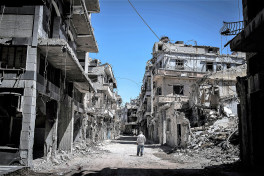
    syria-homs

    Image credit: Chaoyue 超越 PAN/Flickr

    As neither of three paths to peace appears imminent, continued war is therefore the only realistic scenario in the short- to mid-term. But there are signs of a changing landscape, both militarily and politically, which may open up avenues to a negotiated agreement, at least in limited forms between the regime and the non-jihadist opposition.

    The most important shift, potentially, is the election of Donald Trump as the next U.S. President. While the details of the President-elect’s Syria policy remains opaque, it is likely to include two ingredients: more direct coordination with Russia and stronger military efforts against the Islamic State. With Trump as President, the U.S. may be willing to shift publicly on issues that are currently recognized only implicitly, such as the acceptance of Assad’s staying in power, the failure of train-and-supply efforts, and the Islamist domination within the opposition. The current battery of economic sanctions may also be revisited.

    The coming of Trump is therefore likely to favor Damascus, but it could also increase the prospects for substantive negotiations. Historically, when great powers favoring opposing belligerents in a civil war come together, it have tended to favor negotiated outcomes. If Russia, Turkey and the U.S. can maximize their leverage with their respective clients, they could help push them to the negotiation table. But chances are still slim: they have tried before without succeeding and Trump’s Syria policy may alienate the opposition, reducing U.S. leverage.

    The fall of Aleppo signifies another important change in the strategic landscape. By capturing the city, regime forces dealt a demoralizing blow to the opposition, while further alienating Western audiences. It remains unlikely that the regime can claw back all lost territory, let alone rule it in a legitimate manner, but the victory in Aleppo may add further leverage to its strategy of seeking local “reconciliation agreements”. Several hundred such local truces have already been struck across the country and, if generalized, may portend a demographic “sorting out” that would leave Syria organized into more or less autonomous zones, akin to the  “cold war” scenario above.

    For its part, the UN is likely to continue its valiant search for solutions, small and large. If the new UN Secretary General is to deliver on his promise to prioritize a peaceful solution in Syria, he needs to find a way to capitalize on the expected rapprochement between Russia and the U.S. His man in the field, envoy de Mistura has signaled that he concurs with the military fight against the Islamic State but that a military strategy needs to be accompanied by “political devolution” in Syria. This indicates that the UN is considering an arrangement styled on Bosnia or Iraq – essentially power-sharing along sectarian lines – for Syria. Even if the UN manages to leverage the U.S. and Russia behind such a plan, however, it currently appears unlikely that the opposition would give up on its demands for regime change, and that Damascus, smelling military victory, would seriously consider it.

    Magnus Lundgren is a postdoctoral research fellow at Stockholm University, Sweden. His research focuses on conflict resolution in civil wars and on decision-making in international organizations such as the UN. His most recent publications include ”Which international organizations can settle civil wars” and ”Mediation in Syria: Initiatives, strategies, and obstacles, 2011-2016”. He is the co-founder of the Multilateral Negotiation Project, a non-profit that seeks to enable better global negotiation processes. He can be followed on Twitter @magnusllundgre

  • The SWISH Report (16)

    The SWISH Report (16)

    Paul Rogers | openDemocracy | January 2010

    Issue:Global militarisation

    A report from the South Waziristan Institute of Strategic Hermeneutics to the al-Qaida Strategic Planning Cell (SPC) on the progress of the campaign.

    The last report we presented to you was commissioned and prepared in the wake of President Obama’s speech in Cairo in June 2009 (see “The SWISH Report (15)”, 11 June 2009). At the start of his second year in office, we are pleased to offer you a further analysis. As per as your instructions, we will once again be frank in our assessment of your movement’s prospects.

    We will start by summarising the main points of our more recent work for you. For some time we have emphasised that the George W Bush administration was very good for you – much of the United States military activity could easily be represented by your associates as an assault on Islam, with the United States/Israeli links being particularly useful. Iraq, especially, could be represented as a “crusader/Zionist plot aimed at the heart of Islam”. We advised you that a John McCain administration would be greatly preferable to one led by Barack Obama (see “The SWISH Report (11)”, 11 September 2008); and we suggested that Obama’s election would present you with difficulties (see “The SWISH Report (12)” (6 November 2008). The impact of his Cairo speech confirmed this view.

    We indicated that from your perspective there were promising developments in a range of locations: among them Somalia (where Washington might become more deeply involved in assaults on local enemies), Iraq (where a continuing war might interfere with planned US troop withdrawals), and Afghanistan (where the new administration showed signs of pursuing what it regarded as a “good war”). There was therefore still the prospect that your “far enemy” would become even more mired in intractable difficulties, with conflict in Afghanistan carrying the added potential for instability in Pakistan.

    We also noted aspects of Israel’s behaviour that were of value to you. Among them was the Gaza assault of December 2008-January 2009. “Operation Cast Lead” was widely covered by the Arabic TV news channels and provided sustained and concentrated evidence of Arab suffering. This was highly useful to you, even if your movement receives little direct support from Palestinians.

    We highlighted too the the risk for you that Iran might elect a moderate president, thus downgrading the perception in Israel of an existential threat and exposing Israel in turn to the risk that the Obama administration would exert serious pressure on it to compromise with the Palestinians. A settlement would, in our view, be very damaging to your movement. It was then a favourable outcome for you that Iran’s incumbent president, Mahmoud Ahmadinejad, did enough in June 2009 to ensure that he would stay in office.

    We further reported – recalling your invitation to be unvarnished in our analysis – the problem that ensued when Islamist governance of the kind you espouse was implemented briefly in some parts of Pakistan: namely, that it had initially delivered stability but rapidly became unpopular. This had echoes of Afghanistan’s experience in the late 1990s, where the early welcome to and acceptance of the incoming Taliban did not last.

    We therefore concluded by strongly doubting that your plans for a radical caliphate can be realised as long as you pursue your current approach to governance; and thus recommending that you review your ultimate aims in this area. This, in our view, remains your fundamental long-term predicament. You cannot achieve your aims in governance without a degree of moderation that we think, given your present culture and experience, you are unlikely to develop. Yet that does not mean that your enemy is winning.

    A movement in decline?

    Many western analysts have for some months taken the view that yours is a movement in decline. Your losses of middle-ranking leaders to drone attacks have been serious; the instability in Pakistan has little to do with the actions of your paramilitary cohorts; the Saudi crackdown on dissidents and the accompanying re-education programme has had some effect; and your movement has not staged any direct attacks on your “far enemy” or those associated with it for many months.

    We acknowledge this view but think it is mistaken. You have indeed lost many key people, but they have been rapidly replaced by members of a younger generation. Moreover, whereas many of the older generation had experience against Soviet conscripts in 1980s Afghanistan the new generation has fought highly professional and exceptionally well-equipped American troops, as well as being more radical in outlook.

    We would also point to the near-success of the Detroit attack on 25 December 2009; the destruction of key members of a CIA team in Khost province on 30 December; and, above all, the consolidation of your movement in Yemen, where the 3,000 Yemenis who have fought US troops in Iraq in recent years have brought you great benefits.

    We would mention too the ongoing violence in Iraq, especially the manner in which your associates in that country have become adept at destroying government offices, despite the levels of security that such operations have to overcome.

    The “far enemy” and your prospects

    These elements of current experience largely counterbalance the claims that you are in retreat. At the same time, we judge that events may move against you in three respects. The first is that the Barack Obama administration has not yet expanded its military operations in Yemen, even though the Detroit attack was designed to do just that. John McCain would undoubtedly have “gone in big” but Obama has not done so, and is unlikely to greatly expand operations. For your movement this is a real setback.

    The second trend is that the modification of the American troop presence in Iraq is not in your favour. In a rather clever move, the US army is establishing a series of support-brigades that are designed to aid the development of Iraqi national forces but also have immediate combat-potential. The number of troops in the country will, we expect, fall from around 120,000 to 50,000 during 2010; this smaller number will have relatively low visibility while being readily available should your associates maintain their activity. The artful part of the US plan is that it will appear that such activity is being controlled by government forces, thus reassuring most Iraqis in a manner that is thoroughly unhelpful to you.

    The third circumstance relates to an environment that is more congenial to you, Afghanistan and Pakistan; but there are problems here as well. The Pakistani army’s activities will almost certainly not extend to taking full control of the border districts, so their effects will not incite the levels of violence that you would most wish to see across the country.

    Again, the major expansion of foreign troops in Afghanistan is excellent news for you. But there are indications that these forces will make determined efforts to win over elements of the insurgency with bribes, roles in government and other inducements. As we have made clear in the past, the George W Bush administration was your greatest ally, but the new administration is far more intelligent.

    Two elements, as yet existing in potential only, may influence the evolving situation. The first is whether Barack Obama has understood that the Afghanistan war is essentially unwinnable, and will require a degree of compromise that is much greater than currently contemplated. The second is that any appearance of serious compromise in the country might cause domestic opposition on a scale that would threaten Obama’s re-election in 2012.

    We conclude by drawing a lesson from the experience of recent years: that you cannot achieve your ultimate aim of a radical caliphate founded on your particular understanding of Islam’s distant past, but that you will continue with the conflict even so. Your enemy, for now at least, will pursue its strategy in a manner that delivers real value to you. We suspect, though, that this enemy may be more intelligent than you believe. For you, hubris may turn out to be the greater threat.

    We rather think that, given this conclusion, you may not require more work from us; but rest assured that we stand ready to provide further assessments should you so desire.

    Wana

    South Waziristan

    21 January 2010

    Comments

    Post new comment


  • Sustainable Security

  • Sustainable Security

    Following President Rouhani’s success in last August’s election, relations between the United States and Tehran have improved substantially, partly because of the election result but also because the Obama administration has a more positive view of Iran. There is no guarantee that the US election in 2016 will result in an administration sympathetic to further progress. This element of uncertainty will be factored into the policy-making process of the Rouhani administration. Even so, prospects for a negotiated settlement to the nuclear issue are the best they have been for a decade and it follows that if an agreement is concluded, this is likely to have a pronounced effect on Iranian foreign policy as it finds itself in a more positive international environment.

    The Ahmadinejad Legacy

    President Luiz Inácio Lula da Silva is greeted by the president of Iran, Mahmoud Ahmadinejad. Source: Wikipedia

    President Luiz Inácio Lula da Silva is greeted by the President of Iran, Mahmoud Ahmadinejad. Source: Wikipedia

    The flamboyance and the sometimes inflammatory rhetoric of the Ahmadinejad administration (2005-13) disguised a pragmatic foreign policy that combined a degree of confrontation on the nuclear issue with the enhancing of contacts with many countries across the global south, including left-leaning states in Latin America and numerous states in sub-Saharan Africa. It also sought to maintain reasonable links with Russia and China while limiting links with the West. While acceptable to much of the “Iranian street”, it was at odds with the liking of elements of western culture by young Iranians and the nuclear issue was deeply problematic in terms of the impact of sanctions.

    While much is made of their role in bringing Rouhani to power and then to the negotiating table, the reality is rather different. Sanctions were effective, in part, because of the parallel impact of internal economic mismanagement by the Ahmadinejad government. Thus, if the Rouhani government improves the management of the economy then even the modest sanctions relief already promised will combine to enable the government to benefit through early respite from recent economic woes.

    One other key factor is that Iran’s standing in the region, including the Arab world, has been damaged by its support for the Assad regime in Syria. Under Ahmadinejad, Iran saw the Assad regime as a strong and necessary ally, especially in combination with the Maliki government in Iraq. But as the war in Syria has worsened, and as the violence in Iraq degenerates towards a civil war, many states blame Iran. Regional powers such as Saudi Arabia and Egypt hold Iran partly responsible for the violent suppression of the Sunni majority in Syria, and states beyond the region believe Iran bears some responsibility not just for that but also for the possible spread of the war to Lebanon.

    Conservative Strategy

    Hassan Rouhani speaks in Mashhad during his presidential campaign

    Hassan Rouhani speaks in Mashhad during his presidential campaign Source: Wikimedia

    Rouhani’s victory was singularly impressive in that he gained an absolute majority on the first ballot against four relatively conservative opponents on a 72% poll turnout. While this has given him considerable authority, most power still lies with the Supreme Leader. However, Ayatollah Khamenei has to be aware of the popularity of Rouhani, a matter made more difficult for him by Rouhani’s preference for avoiding a personality cult. While the election gave Rouhani a clear mandate for negotiating with the US, conservative elements are regrouping.

    For these elements a particular concern is the election of the Assembly of Experts – the parliamentary upper house, which selects the Supreme Leader – that are due in September this year. Their fear is of a buoyant Rouhani government that will damage conservative prospects still further following last year’s reversals. It appears to be for this reason that they have sought to persuade the Supreme Leader to expand the negotiating team at the Syria peace talks in Geneva to include more hard-line elements and to have a Majlis (parliamentary) oversight body for the whole process. This would be dominated by conservatives. Rouhani’s Deputy Foreign Minister, Seyed Abbas Araqchi, has stated officially that the negotiating group remains accountable to the Supreme National Security Council, not a Majlis body, but there are reports of more members recently being appointed to the group.

    What this means is that the Rouhani government will have a strong interest in developing policies that are attractive to the domestic constituency as soon as possible. The emphasis will undoubtedly be on the nuclear issue and getting further sanctions relief which, in combination with better economic management, could ensure palpable improvements in the economy and consequent political popularity. This, though, is not enough and liberalising economic reforms such as removal of subsidies may even exacerbate short-term economic difficulties. It follows that the Rouhani government will be looking closely at ways of increasing Iran’s standing in the region and beyond.

    Developing Foreign Policy: Iran in the world

    A key aspect of the Iranian outlook is a belief in Persia’s very proud history, one that extends over thousands rather than hundreds of years, and the consequent belief that Iran has not been realising its potential as one of the world’s potential great powers. This view of historic greatness transcends religion, even if Iran sees itself also as the centre of the Shi’a Muslim world. Iran has a population of 80 million, a little less than Egypt at 85 million and Turkey at 81 million. Egypt has formidable internal problems and a weak non-oil-based economy; Turkey is far stronger in terms of economy, even if it, too, lacks significant fossil fuel reserves. Since its 2013 counter-revolution, Egypt is also increasingly reliant on Saudi Arabia, Iran’s greatest rival for influence in the Gulf and wider Middle East.

    Iran has all the problems of a near-moribund economy but has remarkable potential for development given that it has close to 10% of world oil reserves and 15% of gas reserves. The latter is largely shared with Qatar because of the huge reserves under the Gulf. There have so far been few problems of delineating boundaries – indeed relations with Qatar remain quite good despite major differences on other issues such as Syria, where Qatar, with Turkey, strongly backs the anti-Assad rebellion.

    Asia or Europe?

    Iran Foreign Minister Javad Zarif walks with EU High Representative Catherine Ashton at the EU +3 and Iran talks, November 2013.

    Iran Foreign Minister Javad Zarif walks with EU High Representative Catherine Ashton at the EU +3 and Iran talks, November 2013. Source: EEAS (Flickr)

    The issue for Iran relates largely to where it seeks to develop its economic and political alliances. To the immediate east the borders with Afghanistan and Pakistan are hugely significant, especially in the case of Afghanistan where opium and refined heroin smuggling across the border has cost the lives of hundreds of Iranian border guards. Iran has close links with the north-west parts of Afghanistan and has no liking for the Taliban. It is suspicious of Pakistan because of radical Sunni Islamist elements within the state, its long-term support for the Taliban, close security ties to Saudi Arabia and the precarious security predicament of the Pakistani Shi’a community, but still seeks to improve relations, not least through exporting gas. The originally planned Iran-Pakistan-India pipeline is going ahead as far as Pakistan. Iran will further increase its links with Afghanistan, where it has greatly increased aid in recent years, especially to projects in the north-west of the country.

    India and China are both significant importers of Iranian oil and gas and China has been particularly useful to Iran in two respects. One has been long-term investment in the development of new oil and gas fields, and it remains much appreciated that China persisted with this when relations with the US were at their lowest. The other has been China’s supply of carefully selected weapons, especially shore-based anti-ship cruise missiles. Iran will maintain close links with China, but will not eschew improved relations with India, seeing it as a useful counter-balance to Pakistan.

    The links with southern and eastern Asia will remain highly significant in terms of Iranian foreign policy but it is already clear that a priority will be to improve relations with neighbouring Turkey, already demonstrated by the meeting between Foreign Ministers Mohammad Javad Zarif and Ahmet Davutoglu in Tehran last November. In spite of considerable differences over Syria, the countries have good relations in other respects, and Turkey’s past role in trying to defuse the nuclear issue remains appreciated. Trade relations between Iran and Turkey have expanded greatly in the past decade.

    It is highly likely that Iran will seek a much closer relationship with Turkey, seeing the two countries together comprising an axis of influence linking Europe and Asia. The Turkish attitude to this is likely to be very positive, seeing it as a useful factor in increasing Turkey’s significance for the European Union. This does mean that the Rouhani government has an added interest in seeing a scaling down of the Syrian War. It is probable that a Turkey/Iran connection is more important to Tehran than the much vaunted Lebanon/Syria/Iraq/Iran “Shi’a crescent”.

    The rivalry with Saudi Arabia remains pervasive and is a crucial proxy element in the Syrian conflict but Rouhani’s personal links with Saudi diplomats in the past, combined with Iran’s need to see the war scaled down, means that even here there may be potential for progress. Further improving relations with the US will be a priority but the Rouhani government recognises the risk of sudden changes in US leadership in less than three years time. This means that European links remain useful but Iran does not look to the west to ensure its standing in the world. Turkey, China and India are more significant and this will remain as long as Rouhani is in power. Of these, Turkey is probably the most important.

    Implications

    Rouhani has barely a year all told to build on the considerable support he gathered last year, and this is against a background of entrenched conservative and theocratic elements that will work hard to limit his capacity. While he will give ground on nuclear issues and may work towards a Syrian settlement, if Iran is allowed to participate in Geneva ll, there is a risk that this can be presented by his opponents as a sign of weakness. Economic progress might blunt this but an additional way forward is to engage in a much more active foreign policy. One consequence of such a shift to the north and east is that Iran may not see Europe as important to its interests to the extent that Europe sees Iran. This is a reflection of more general global changes, bringing its own challenges.

    Paul Rogers is Global Security Consultant to Oxford Research Group, for which he writes monthly security briefings.  He is Professor of Peace Studies at the University of Bradford and author of numerous books including ‘Beyond Terror’. Paul writes a weekly column for openDemocracy  and tweets regularly at @ProfPRogers.

    Featured image: President Rouhani delivers remarks at the Hilton Hotel in New York City, September 2013. Source: Asia Society (Flickr)

  • How the Competing Security Needs of Caribbean Community Members have Crystallized Through Multilateralism and Consensual Decision-Making

    How the Competing Security Needs of Caribbean Community Members have Crystallized Through Multilateralism and Consensual Decision-Making

    Serena Joseph-Harris | Exclusively written for sustainablesecurity.org | April 2011

    Issues:Competition over resources, Global militarisation, Marginalisation

    The global financial economic crisis continues to have significant bearing on small states in the areas of trade, tourism, remittances and aid and is compounding many of the challenges already confronting these countries, such as deepening unemployment, and budgetary pressures on critical areas of state expenditure. The latter include defense and internal security commitments. Caribbean economies have been particularly hard-hit by the global downturn, being vulnerable to perennial disasters such as hurricanes and particularly prone to shocks in tourist activity and international oil price fluctuations.

    In addition to these perils, the region’s political leaders have been racked by the economic and social effects of serious crime and violence associated with the increasingly insidious drugs and arms trade and gang-related violence. In response, some governments have resorted to the adoption of exceptional legal and security measures such as the co-opting of military forces to augment the manoeuvres of civil authorities.

    This paper provides an outlook of the imperative of Caribbean Community members to seek out and obtain foreign aid amidst a fiercely competitive global market in which traditional international donors are similarly challenged by their own domestic and strategic priorities. It draws upon a recently inaugurated multi-year program, the Caribbean Basin Security Initiative (CBSI) sponsored by the government of the United States to illustrate how the deployment of multilateralism and consensual decision-making as tools of statecraft have crystallized a reserve of otherwise competing and differential interests.

    Background

    The Caribbean Sea is one of a limited number of internationally dispersed sub-regions which include the South China Sea, the Horn of Africa, the Somalia Coast and the Gulf of Aden where extremely high levels of shipping activity is matched by correspondingly low levels of maritime policing. The region holds key routes and approaches to the continental US from the Atlantic Ocean – the Windward Passage and the Panama Canal. It is a reputed locale for hundreds of ports, marinas and harbors and facilitates the shipping of manufactured goods as well as petroleum, natural gas, ammonia and other primary products, such as copper out of South America. Many of these items are considered “high premium cargo” by global standards, throwing into focus the significance of locale and commercial linkages.

    The Panama Canal is a key choke point for international trade flows and has attained near maximum capacity. Major expansion work on the canal is scheduled for completion in 2012. Once this occurs some of the already existing tensions in the US logistics systems will be alleviated with the redirection of substantial volumes of the maritime trans Pacific route containership services between the US west coast ports of Los Angeles, Long Beach and Seattle/Tacoma, to the east coast. Significantly, Petro-China’s acquisition in 2010 of Aramco based in St. Eustacius, one of the largest oil storage and shipping corporations in the Caribbean, with an 11.3 million barrel capacity, has made lawful commerce the more prodigious for the region.

    The immediate challenge confronting Caribbean governments is securing territorial waters and airspace from the insidious passage of drugs and firearms and other illegal cargo. According to the United Nations 2010 Annual Drug Report, Colombia, Peru and Bolivia have endured as the world’s primary sources of cocaine while 36% of the world’s cocaine user population resides in North America.  Moreover, trafficking flows have continued to be dominated by market forces.

    The Maritime Analysis Operations Centre (MAOC-N) has reported that the most common source of drug seizures has occurred in sailing vessels traveling between the Caribbean and Europe followed by freight and other motorized vessels. Further, approximately 51% of intercepted shipments in the Atlantic begin their journey out of the Bolivarian Republic of Venezuela. The United Nations Office of Drugs and Crime has deemed drugs “ the highest value illicit commodity “ currently being trafficked internationally,  and representing the most dangerous flow of profits that feeds into the long-term income sources of organized crime.

    Two tiers of countermeasures have been spelled out by the UN to successfully tackle the problem. The first is the building of national and international capacity to track and respond to the pandemic. This is a long-term and collaborative venture in respect of which the region’s political leaders have registered their commitment. The other is the requirement for “special intervention” in particularly distressed parts of the world. Given the immediate imperative to suppress illicit traffic flows in the Caribbean Basin, this region undisputedly qualifies for the second category of intervention. Such a mandate inevitably exacts prohibitive demands on domestic treasuries due to the reserve of assets and trained manpower that would need to be harnessed.

    Most Caribbean economies are heavily reliant on their service sectors for generating national revenue.  Furthermore, the global economic downturn of 2008 followed in close succession by the sharp decline of service sectors, particularly tourism, pushed many countries into a sharp and sustained recession. Gross Domestic Product (GDP) by service sector recorded in 2008 when the downturn began seeping in was: Antigua and Barbuda – 71%; the Bahamas – 80%; Barbados – 80%; Belize – 68%; Dominica – 63%; Guyana – 48%; Jamaica- 71%; St Kitts and Nevis – 72%; St Lucia – 78%; St Vincent and the Grenadines – 70%; Trinidad and Tobago – 44%. Simultaneously, external debt portfolios were buckling.  Between 2007-2008, Jamaica’s already stood at $10.1 billion; Dominica- $290,000; Guyana -$734 million and St. Vincent and the Grenadines -$253 million.

    Amidst the specter of budgetary deficits and International Monetary Fund (IMF) intervention, governments have been overtly canvassing for various forms of aid among intergovernmental bodies of the donor community and long-standing allies.  To this end overtures were made to the United States, the United Kingdom and Canada- countries that have historically provided funding and in-kind support to international communities that are committed to fighting drugs and spurring human security and alternative development programs.

     A Caribbean-United States Security Framework was inaugurated in May 2010 around which inter-governmental consultations and dialogue have synthesized into common ground. This Framework comprises:

    1) Joint-Caribbean/United States Framework for Security Cooperation Agreement

    2) A Caribbean/United States Declaration of Principles; and

    3) A Caribbean/United states Program of Action

     Thus far, $45 million has been committed to the Partnership by the US government for the Fiscal Year 2010 with a further $79 million for Fiscal Year 2011.The 2011 Foreign Aid request has allocated no more than $73 million towards military and economic aid.

     The US government has drawn upon an array of sources for funding including the Development Assistance Fund, the Economic Support Fund, the International Narcotics Control and Law Enforcement and Foreign and Military Accounts. US support also goes toward non-monetary items such as the provision of command and control systems, radios, logistical and maritime support to increase maritime interdiction capability, information sharing and maritime support for the Regional Security System as well as technical assistance aimed at improving financial crime investigations.

    The under-listed CARICOM states have already benefited from CBSI endowments:

    NON-RANDOM SAMPLE OF FUNDS COMMITTED TO CARICOM MEMBER COUNTRIES FOR DOMESTIC PROGRAMS UNDER US-SPONSORED CBSI (Source: US Department of State)

    NAME OF COUNTRY

    ENDOWMENT IN US DOLLARS

    Antigua and Barbuda

    $1.7 million

    Dominica

    $1.7 million

    Grenada

    $1.7 million

    Guyana

    $3 million

    St Lucia

    $108,000

    St Vincent and the Grenadines

    $1.7 million

    Suriname

    $450,000

    Trinidad and Tobago

    $700,000

    Barbados

    $1.6 million


    The CBSI will eventually include a US vessel with an international crew deployed to the region while Caribbean Training Logistical Support Teams will commit themselves to a platform for leading US engagement and support for maritime interdiction. A fillip to this would be the capacity of the support vessel to deliver a mobile professional training program, limited onboard classroom berthing/messing for students, its possession of a centralized supply source for spare parts and a capability to deliver cargo.

     This Program is bolstered by three significant benchmarks

    1) Political consensus that heralds a “new era of partnership”

    2) A standardized legal regime, in which the internationally accepted vehicle continues to be the United Nations system of drugs and crime conventions; as well as region-specific accords including but not necessarily limited to – the Agreement Concerning Cooperation in Suppressing Illicit Maritime and Air Traffic in Narcotic Drugs and Psychotropic Substances in the Caribbean Area 2003; the 1996 Treaty Establishing the Regional Security System to which members of the Organization of Eastern Caribbean States are signatories and the 1989 Memorandum of Understanding Regarding Mutual Assistance and Cooperation for the Prevention and Repression of Customs Offences in the Caribbean Zone

    3) The collective assets of regional security forces, among these US Southern Command (SOUTHCOM); the British Royal Navy; the Regional Security System (RSS); the Trinidad and Tobago Coast Guard and Air Wing and the Venezuelan Escuardia, which when viewed in tandem, constitute a collective force presence.

    This is clearly a win-win for the Caribbean. Through consultation and dialogue Caribbean Community members have partnered with the US  and resolving common and competing priorities and concerns amidst the ebb and flow of resources at their disposal.

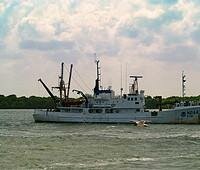
    Image source: Len@Loblolly

    Serena Joseph-Harris is a former High Commissioner of the Republic of Trinidad and Tobago.

    Comments

    Post new comment


  • Conflict

    Conflict

    Three connected conflicts – Iraq, Afghanistan and Pakistan

    Paul Rogers | Oxford Research Group | February 2010

    Issue:Global militarisation

    Tagss:Afghanistan, Conflict, Iraq, Pakistan

    At the beginning of February, ISAF sources announced that a major military offensive was about to be mounted in Helmand Province in southern Afghanistan. This was Operation Moshtarak (“together”), involving 15,000 US, British and Afghan National Army troops, and would concentrate on clearing Taliban and other paramilitary groups from two areas, one of them centred on the town of Marja. The publicity given to the operation appeared designed partly to encourage civilians to evacuate areas under Taliban influence, but would also serve to highlight the capabilities of coalition forces at a time when support for the war in the United States and Britain was fragile.

    Given the size of the operation, it is likely that it will provide a major focus for western media attention for some weeks, but to get a full measure of its significance requires seeing it in the wider context of the conflicts in Iraq and Pakistan, and of the Status of the al-Qaida Movement. There have, in particular, been significant developments in both Iraq and Pakistan, with each likely to have an impact on what is now happening in Afghanistan.

    Photo courtesy of Helmandblog.

    Read more »

    Al-Qaida: the Yemen factor

    Paul Rogers | open Democracy | January 2010

    Issue:Global militarisation

    Tagss:Conflict, Yemen

    Expert: Most of the focus of the United States war on al-Qaida since 9/11 has been on Afghanistan, Pakistan and Iraq; relatively little attention has been given to the two states on either side of the Gulf of Aden – Yemen and Somalia. Any surplus resources away from the middle east and southwest Asia have tended to be devoted to Algeria and Mali as potential sites for al-Qaida activity.
    Yet, Paul Rogers points out that with Umar Farouk Abdulmuttalab’s attempt on 25 December 2009 to destroy a Northwest Airlines flight as it approached Detroit and his connections with Yemen, al-Qaida may simultaneously be in decline in Afghanistan and Pakistan, but growing in the Gulf of Aden.

    Read more »

  • Conflict, Climate Change, and Water Security in Sub-Saharan Africa

    Conflict, Climate Change, and Water Security in Sub-Saharan Africa

    Oluwole Akiyode | peace and conflict monitor | September 2011

    Issues:Climate change, Competition over resources

    Climate Change and its variability is a phenomenon that cannot be pushed aside because of its potentail consequences and global scale. Its impacts have been suggested at different times by researchers to have favorable and unfavorable implications in different parts of the world.

    Sub-Saharan Africa is home to about 635.2 million people (cited in Oduaran & Nenty, 2008), and is always in the world’s news, being the hot zone of the African continent that has been noted for its volatility and instability. Some of its countries are in protracted conflict. Climate change has been implicated by many literatures to multiply these tensions.

    Natural resources are supposed to be the economic backbone of Sub-Saharan African countries. Some of these natural resources are also expected to be vulnerable to climate change. Experiments have suggested that conflict can be driven by natural resource degradation, scarcity and by competitive control of areas where resources are abundant (Myers 2004). Several researchers and authors have corroborated this position, with particular emphasis on water resources. Water is a natural resource of immense importance for every facet of life. Therefore, its potential distortion by climate change may interfere with human security, which has been proposed to be connected to water security.

    This conflict tendency of the imminent effects of climate change in the world was also supported by the statement made by United Nations Secretary General, Ban ki Moon in March 1, 2007, when he said:

    “The majority of the United Nations’ work still focuses on preventing and ending conflict, but the danger posed by war to all of humanity and to our planet is at least matched by the climate crisis and global warming… [the effects of climate change are] likely to become a major driver of war and conflict.”

    This statement shows why climate change should be given utmost research and policy consideration in every facets of our society.

    This paper identifies poverty as a threat in Sub-Saharan Africa countries that will be exacerbated by water scarcity, analyzes the conflict implications of the supposed effects of climate change on water security in Sub-Saharan Africa, and advocates for sustainable water management as an ameliorative and mitigation approach to water security in Sub-Saharan Africa.

    Poverty, Water Security and Climate Change in Sub-Sahara Africa

    Many countries and its people in Sub-Saharan Africa are regarded as poor. These poverty levels are in variations. Poverty is a threat that affects every facets of human society, including water security. Poverty and conflict are sometimes linked together by researchers, conflict having been seen as both a cause and a consequence of poverty (Brown and Crawford, 2009). At the same time, human dignity and development have at most times been hindered in Sub-Saharan Africa by continued conflict.

    The World Bank (2010) Poverty Data gives the statistical data of the Sub-Saharan Africa poverty headcount ratio in 2005 as $1.25 a day (PPP): 50.9%, and $2 a day (PPP): 72.9%. This data attetsts to the extraordiary level of poverty being witnessed in the region. The conflict atmosphere in some of the nations in the Sub-Sahara Africa has visible socio-economic implications on sustainable development and invariably exacerbates the impoverishment of the people.

    Laplante (2009) surmised that there is existing empirical evidence clearly demonstrating a positive correlation between poverty (or economic development) and the impacts of climate change. Several researchers have also interlinked poverty to climate change vulnerability and adaptation (Mckee and Suhriki, 2005 cited in Confalonieri, 2005, Watson et. al., 1997 cited in O’Brien and Leicheko 2002, AFP, 2007). This poverty and climate change nexus may have implications for water security, thereby instigating stress on the people.

    As I have argued in previous papers, “Water is practically an issue tied with the existence of life because of its importance in nearly every area of development including sustaining life on the planet earth” (Akiyode, 2010). Water security is important to environmental sustainability and paramount to the sustenance of societal peace. Therefore, the goal of human society and challenges of the world’s poor countries including Sub-Saharan Africa must be to achieve water security (Grey and Sadoff 2007).

    Read the rest of the article at peace and conflict monitor

    Image source: Abdurrahman Warsameh for the International Relations and Security Network

    Comments

    Post new comment


  • Analysing President Obama’s Address to the United Nations General Assembly

    Analysing President Obama’s Address to the United Nations General Assembly

    Issue:Climate change

    Tagss:Copenhagen, Obama

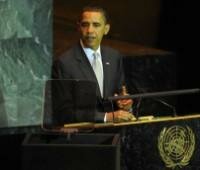
    There were many positives in Barrack Obama’s speech to the United Nations on the 24th September. The US President outlined the importance of the UN as an institution and more importantly its function as a forum through which the nations of the world can collectively address shared problems. He reaffirmed America’s commitment to an “era of engagement based on mutual interest and mutual respect” and to seeking “the goal of a world without nuclear weapons”.

    However… 

    As Joshua Keating points out on his Foreign Policy blog, “it seems telling that President Obama ended his first major address on climate change not with a stirring call to action, but by urging pragmatism and compromise”. Obama’s assertion that “if we are flexible and pragmatic; if we can resolve to work tirelessly in common effort, then we will achieve our common purpose” will certainly ring alarm bells regarding the nature of a US climate bill which may not be comprehensive enough to inspire the required outcome at Copenhagen. For although Obama is correct that nations must address problems collectively, he is equally correct in highlighting the existence of, ” hope that real change is possible and the hope that America will be a leader in bringing about such change.”

    Comments

    Post new comment