Blog

  • Why START is only a beginning on the long road to nuclear disarmament

    Why START is only a beginning on the long road to nuclear disarmament

    Andrew Futter | sustainablesecurity.org | June 2010

    Issue:Global militarisation

    Why START is only a beginning on the long road to nuclear disarmament

    Andrew Futter

    The ‘New START’ Treaty signed by Barack Obama and Dmitry Medvedev in Prague on 8th April 2010 is an important first step in the renewed drive for nuclear disarmament, but its overall contribution towards the goal of a world free from nuclear weapons should not be overstated.  In many respects the treaty merely codifies the current status quo, and is arguably more about symbolism than it is about substance, and in this respect much of the hard work in reducing and potentially eliminating the vast stockpiles of nuclear weapons held by nations across the globe is still to be done.  Perhaps most importantly, before any meaningful multilateral talks and possible agreements on abolition can seriously begin, the US and Russia will need to go much further in reducing their nuclear ordinance.  Moreover, it will only be after US and Russian weapons stockpiles have been reduced to numbers in the low hundreds that the push for more widespread reductions, and possibly abolition, can seriously and credibly begin.  As such, and while many are aware of the problems of going from only a few nuclear weapons to zero, this article argues that many of the toughest problems are likely to come in the first phase of the disarmament process, a phase that will involve reducing US and Russian nuclear stockpiles down to numbers more in line with that of other nuclear weapons states.

    The New START treaty is certainty important in a number of political, diplomatic and strategic ways.  First, it commits both the US and Russia to reduce their deployed strategic warheads to 1550 and deployed delivery vehicles to 700 within seven years – representing a 65% reduction from the numbers contained in the original 1991 START treaty negotiation signed by George HW Bush and Mikhail Gorbachev, and a 30% cut in numbers from the Moscow Treaty negotiated by former President’s George W Bush and Vladimir Putin in 2002.  Of equal importance is the fact that the treaty ensures the continued verification of both nations nuclear stockpiles (that had expired with the first START treaty in December 2009), which in turn allows for transparency in measuring both governments compliance with the new agreement as well as ensuring the security of each nation’s nuclear sites. This is particularly important in Russia.  On top of this and perhaps in many ways the most important part of the agreement is its political symbolism and significance, and more broadly its importance for US-Russian strategic dialogue, international cooperation and a predictable relationship.  Politically, the treaty cements previous work by the Obama administration to ‘reset relations’ with Russia and from the administration’s perspective, should help enlist Russian support with other US foreign policy objectives.  Diplomatically it establishes a link between the two sides from which to push on and attempt to negotiate further arms control agreements.  For Russia it is also an important chance to be involved in international policy at the highest levels as the country tries to mitigate its declining strategic world role.

    Militarily however, the treaty really changes very little.  It is likely that regardless of the new agreement the US would have made further (possibly unilateral) reductions in its nuclear weapons stockpile – and indeed may continue to do so even if the Senate does not ratify the treaty in the coming months.  Moreover, it is likely that the US – through NATO – may choose to withdraw its tactical nuclear weapons from Europe, and possibly from other regions across the globe – especially in areas where ballistic missile defences are beginning to play a larger role in strategic deterrence.  On the Russian side the treaty essentially codifies the current state of the Russian nuclear arsenal, which after years of underfunding and neglect is now essentially in a state of disrepair.  It is therefore likely that despite the vast stockpiles of nuclear related material still in Russia, only a percentage of this nuclear ordinance is actually serviceable and usable.  When economic pressures in both countries – but particularly Russia – are added to this, much suggests that a renewed drive to service or embark on a large-scale plan to build new nuclear weapons by either nation is highly unlikely.

    However, and whilst the provisions contained in START are important, and indeed mark a notable diplomatic achievement, far deeper cuts in US and Russian nuclear stockpiles will need to be made before any serious multilateral nuclear reductions can be contemplated.  However, because both strategic and political pressures will make further significant reductions in US and Russian stockpiles far harder to agree, it is arguably in this pre-nuclear abolition stage that most of the short-term problems with the disarmament agenda reside.  Fundamentally, without significant further US and Russian reductions – perhaps reducing warhead numbers to the low hundreds – it will be very difficult to multilateralise the push for disarmament and consequently begin making meaningful strides towards possible nuclear abolition.  Making things more completed is the fact that nothing in the recent START agreement prevents the modernization and testing of US or Russian warheads or delivery vehicles, or provides any official constraints on ballistic missiles defences.  Additionally the treaty does not include any reductions of the several thousand tactical nuclear weapons still deployed by both the US and Russia.  Moreover, and although President Obama has suggested that negotiating a tactical nuclear weapons treaty with Russia is a key priority, and despite rumours that US tactical weapons may be removed from Europe, continued and indeed increasing Russian reliance on these types of weapons will make the pursuit of such an agreement an arduous task.  What is more, because dismantling and destroying nuclear weapons takes a long time, and because both countries already have huge stocks of weapons awaiting destruction, the number of operationally inactive US and Russian stockpiled warheads will remain in the high thousands for many years to come.

    The first big hurdle to further reductions is going to be the increasing political and strategic reliance by Russia its nuclear weapons complex.  Politically Russian leaders feel that the countries substantial nuclear weapons ordinance is one of the few things that allows it to retain ‘great power status’ and thus enables it to pursue a role at the forefront of global politics, whilst militarily, Russian nuclear weapons are gaining increased importance because of the declining size, capability and professionalism of Russian conventional forces.  As such, nuclear weapons are becoming more, not less, important components of Russian security thinking, and this suggests that further Russian agreements on nuclear reductions will be far harder than has been the case with START.  The second big hurdle will be overcoming the political and bureaucratic pressures in the US, where one of the biggest problems facing any administration will be how to gain acquiescence from hawkish members of Congress and the Joint Chiefs of Staff about where the cuts should be made, and how low stockpiles can go before the concept of a three part nuclear deterrence posture becomes unfeasible.  What is more, the continued spread of nuclear weapons and their proliferation and acquisition by so-called ‘rogue states’, added to Russian intransigence and general disinclination to disarm beyond a certain point, is also likely to make it far harder politically for any US President to push ahead with unilateral nuclear disarmament measures.  Strong criticism from many conservatives in Congress concerned about America’s ability to protect itself are equally likely to make reductions in nuclear weapons capabilities politically challenging, especially if – as in the current case – they are pursued by a Democrat President.  More broadly the rising price of energy is likely to see both nations expand their domestic civilian nuclear infrastructures, further entrenching a reliance on nuclear power, and providing both with a substantial ‘virtual’ weaponization capability.

    Lastly, there is the issue of the offense-defence balance that has surrounded the nuclear arms race almost from its inception, and which since George W Bush’s abrogation of the Anti Ballistic Missile Treaty in 2002, has become an even more important component of international stability.  Under the Bush administration, and now under Obama, the US ballistic missile defence programme has grown substantially and seems well on its way to becoming a ‘normalised’ component of security policy.  Moreover, and although questions remain over the technology being deployed, and regardless of the fact that the stated goal of the system is protection against a limited rogue state attack or accidental missile launch from an established nuclear power, and not in defeating a strategic strike by Russia, the expansion of the system has caused concern in Moscow.  Indeed, missile defence – particularly in Europe – was one of the main stumbling blocks that prevented the START agreement from being concluded far sooner.  Consequently, strategic logic suggests that the more the US and Russia reduce their nuclear arsenals the more important, and potentially destabilising, missile defences may become, thus creating something of a ‘disarmament paradox’.  Both nations, but particularly Russia (and subsequently China) will want to ensure they maintain a credible nuclear deterrent that can overcome any US (or NATO) missile defence system.  Moreover, the opposition to US missile defence plans remains a key way to garner domestic support and score rhetorical points for Russian leaders.

     
    The New START agreement is an important first step on the road to nuclear disarmament but its actual relevance and importance in the larger quest for nuclear abolition should not be overstated.  This is because the US and Russia will need to go far further than the agreements reached in the current treaty before they can credibly begin calling on other smaller nuclear powers to eliminate their own nuclear stockpiles.  Although there will be pressures making further disarmament difficult in the United States, particularly for a Democrat President, it will be in Russia that the greatest stumbling blocks to this process will be found.  Growing Russian reliance on nuclear weapons, not just for security but also for political and diplomatic reasons, will make further substantial reductions in the Russia nuclear arsenal very difficult to achieve.  Moreover, such Russian intransigence, coupled with a potential growth in the number of states – many of them unstable or hostile – seeking to acquire nuclear weapons will make any unilateral disarmament moves by the US equally difficult to achieve.  Consequently, and while much attention is paid to the latter stages of the problem of how nuclear weapons can finally be abolished or how to deal with securing fissile material, we may in fact need to concentrate far more on the significant problems of US-Russian nuclear reductions that must necessarily precede this.

    Andrew Futter is a PhD candidate in the Department of Political Science and International Studies at the University of Birmingham.

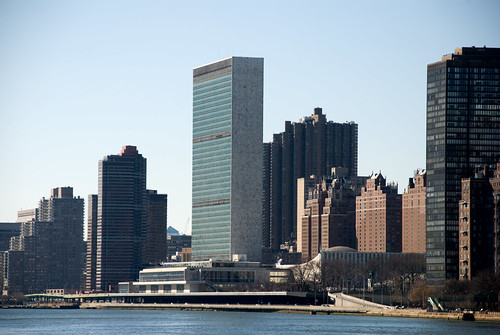
    Image source: PhillipC<!–[endif]–>

    Comments

    Post new comment


  • Climate change

    Climate change

    Climate change is high on both domestic and international political agendas as countries face up to the huge environmental challenges the world now faces. Whilst this attention is welcome, less energy is being focused on the inevitable impact climate change will have on security issues. The well-documented physical effects of climate change will have knock-on socio-economic impacts, such as loss of infrastructure, resource scarcity and the mass displacement of peoples. These in turn could produce serious security consequences that will present new challenges to governments trying to maintain stability.

    Climate Change and Migration: An Asian Perspective

    Bart W. Édes, François Gemenne, Jonathan Hill and Diana Reckian | Asian Development Bank | April 2012

    Issue:Climate change

    The Asian Development Bank has recently published a report on the effects of climate change on migration in and from the continent. Although migration need not necessarily be a security concern, people can be propelled to move for reasons of personal safety, such as extreme weather events, or livelihood insecurity caused by long-term land degradation or river salination. This report provides a useful perspective on climate change, representing the conclusions drawn by an organisation based the region most likely to suffer the harshest consequences. To read the full report, click here.

    Image Source: Amirjina

    Read more »

    Debate Over the Relationship Between Climate Change and Security

    Katie Harris, with a reponse by Francesco Femia and Caitlin Werrell | AlertNet | February 2012

    Issue:Climate change

    Two articles recently posted on the AlertNet Climate Conversations blog have highlighted a new framework for debating the issue of climate change. That it is a critically important issue is accepted, yet argument is now focused on the degree to which climate change is not only designated a key driver of conflict, but to what extent climate change and its impact should be defined through a security lens at all. Katie Harris of the Overseas Development Institute suggests that while the security narrative of climate change may have caught the attention of the political and security classes, it has the dangerous potential to undermine both the theoretical understanding of the complex factors underlying conflict, and any practical attempts to promote cooperation over resources in conflict-sensitive regions such as the Levant.

    Francesco Femia and Caitlin Werrell from the Center for Climate and Security broadly agree with Harris’ call for a nuanced approach to climate change and conflict, but take issue with the concept of a ‘climate-security narrative’ that interferes with specific cases of conflict-analysis. Rather than overwhelming this analysis, Femia and Werrell defend not only the sophistication of recent research into the relationship between climate change and conflict, but also its emphasis on the role of climate change as one conflict variable among many.

    Read more »

    Reinventing Energy Futures

    Institute for the Future | Four Visions Map | February 2012

    Issues:Climate change, Competition over resources

    Over the next few decades, the increasing demand for resources and the pressures of climate change are going to force some rapid and potentially difficult decisions on the role of energy in the global economy. A useful exercise has been undertaken by the Institute for the Future in terms of exploring a number of scenarious that could come to characterise our political, social and economic systems depending on the energy choices we make today.

    Image source: Ulleskelf. 

    Read more »

    New Research Highlights the Role of Climate Change as a Threat Multiplier in Fragile Regions

    Theresa Polk | New Security Beat | January 2012

    Issue:Climate change

    The role of climate change in exacerbating conflict situations has been confirmed by various recent studies, as reported by Theresa Polk at New Security Beat. Studies include research into the effects of the short-term weather systems El Niño and La Niña, which have shown to increase the risk of conflict in troubled areas such as Somalia. The first conclusion to draw from these studies is that climate change acts as a threat -multiplier in places that are already affected by issues such as poor governance or ethnic division; conversely, countries and regions that do have effective conflict-prevention mechanisms are generally able to withstand the extra stresses caused by climate change. The second conclusion is that there is no one-size-fits-all policy that can be applied to different communities coping with climate change and conflict risk, thereby showing the need for further context-specific research.

    Article Source: New Security Beat

    Image Source: CMagdalin

    Read more »

    A tale of two cities: Durban and Brussels

    Camilla Toulmin | International Institute for Environment and Development | December 2011

    Issue:Climate change

    The UN climate change negotiations in Durban began under a cloud of low expectations, which have been partly dispelled by the last-minute agreement to extend the legally-binding Kyoto Protocol on greenhouse gas emissions. And while Canada, a major emitter, has pulled out of the Protocol, a new environmental divide has emerged that contrasts with the traditional paradigm of developed versus developing countries: the new faultline pits the United States, Canada, China and India, who oppose legal limits for a variety of economic reasons, against the European Union, African, Latin American and island states who favour binding measures – often for reasons of national survival.

    In an article by Camilla Toulmin, the Director of the International Institute for Environment and Development, the contrast is made between the dynamics that have driven both the climate talks in Durban and the debate on European financial regulation that ended with a British veto.

    Article Source: International Institute for Environment and Development
    Image Source: European Parliament

    Read more »

    Climate Change and Glacial Lake Outburst Floods

    Kate Diamond | New Security Beat | November 2011

    Issue:Climate change

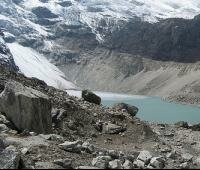
    The Woodrow Wilson International Center for Scholars has published an article highlighting the uncertainty attached to predicting the effects of climate change. Focusing on the phenomena of glacial lakes in Nepal and Peru, it begins to explore the extreme complexity that characterises the relationship between climate change and other drivers of instability, as well as what is required to manage the risk with the help of local communities.

    Article Source: New Security Beat

    Image Source: Oxfam International

    Read more »

  • Sustainable Security

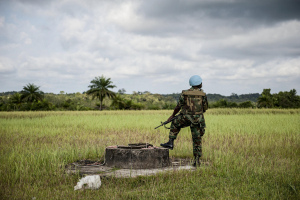
    The United Nations Mission in Liberia (UNMIL) has significantly decreased its presence in the country in 2016. The departure of much of the peacekeeping force has left the country with several security issues that it is struggling to resolve during its transition. 

    2016, an important year for Liberia, a country that has seen a steady consolidation of peace since 2003. 2016 is the year when the United Nations Mission in Liberia (UNMIL) formally left, barring a minuscule presence. This is also a time when Liberia’s security sector would be left without a big brother stationed to ward off any potential threats to security. This transition to national responsibility for security will test some key assumptions about security sector reform (SSR). First, what is the effectiveness of SSR as a policy of international development? Second, what is the utility of SSR as a tool for external influence?

    Liberia’s political and economic transition

    unmil

    Image by UN Photo via Flickr.

    UNMIL’s exit comes at a time of anticipated political contest in the upcoming elections of 2017. Given the potential for politically motivated armed mobilization of security actors in a system that is rooted in patronage and loyalty to the ruling party and elites, one could expect some election centric violence. As a run up to this uncertainty, in 2014, the ruling Unity Party fared poorly in the Senate elections, receiving only 10 % of votes. Large scale corruption, deep-rooted cronyism, and mishandling of the 2014-2015 Ebola outbreak that claimed nearly 5000 lives have turned voters against the ruling regime. It is also a time when critics of the political elite and its policies are increasingly being targeted and threatened. Arrests and politically motivated killings have created an uneasy atmosphere of fear and suspicion.

    Given this context, the prospect of a post-Ellen Sirleaf Liberia is unsettling because of the limited leadership options and a potential polarisation of domestic politics. The opposition remains divided with few serious contenders. Prince Johnson, from Nimba County, a warlord who led the Independent National Patriotic Front of Liberia (INPFL) group, and Benoni Urey, a close business associate of Charles Taylor, present less than ideal choices. Other more positive options include George Weah, a renowned international soccer star turned politician. He was recently appointed a Peace Ambassador by the President and is also the chairman of the National Reconciliation Committee. He is widely popular with the youth, who make up an overwhelming majority of the voting bloc. He might be a candidate to watch out for.

    On the economic front, Liberia has long standing problems with chronic poverty, high prevalence of informal or vulnerable forms of work and poor physical infrastructure. The Liberian economy’s decade-long dependence on international aid and primary commodity exports has presented weak growth indicators. A weak currency, high inflation and a null growth in 2015, according to the IMF, are worrying statistics. According to estimates, the prices of rubber and iron, two main export commodities have fallen more than 80 % since their peak in 2011. Widespread work layoffs, labour unrest and government instigated austerity measures due to lower revenues and drop in international donor funding have created a less than ideal economic environment for reform.

    What about security?

    A post-UNMIL security environment presents some gaps that have still to be plugged despite every effort to undertake a responsible draw-down in Liberia. The core issues of transparency, accountability, efficiency, respect for human rights, and civilian oversight will be tested in an environment where the different security agencies continue to struggle for lack of sufficient trained staff and resources.

    The Armed Forces of Liberia has witnessed a high attrition rate, and its 2000 strong force remains a token army that is for the most part confined to the barracks. In August 2014, an army scuffle with civilians in West Point, resulted in civilian injuries and some reported deaths that enhance lack of trust towards the national army.

    The Liberian National Police, and different immigration, border and intelligence agencies that had been the target of SSR efforts led by UNMIL and donors, remains poorly resourced. A mere 5000 strong force to secure a 4.4 million strong population results in low levels of police presence outside the capital region.

    Despite efforts to decentralize the security apparatus through Justice and Security Hubs, across the country, the slow response of LNP to local problems such as the mining riots in 2014, present evidence that gaps remain. There have also been allegations of police corruption in recent investigations by Human Rights Watch.

    In reality the transition from a regime centered security sector to a people-centered one is far from complete. It is likely that the security apparatus will be used by the government to intimidate opposition politicians and instigate localized violence as this has been the legacy of the past.

    Finally, an ‘unintegrated’ ex-combatant element lingers in the background of externally supported statebuilding. The UNDPled disarmament, demobilization, reintegration and rehabilitation (DDRR) programme in Liberia (2004-2009), did not absorb fighters from the different non-state groups involved in the civil war into the new security sector.

    Considerable civilian infiltration in the DDR programme, also meant that ex-combatant continues to live and work within their wartime social networks. Efforts by UNMIL to break command and control chains had limited impact due to neo-patrimonial nature of Liberian society and politics.

    Reflections on the SSR

    There has been much criticism of the SSR in Liberia. It is accused of causing:

    • high levels of dependency on UNMIL and international donors,
    • a mismatch between international policy and local practice;
    • encouraging European models of security provision in a context of low reliance on formal institutions; and
    • creating self-help forms of security in a context of low public trust/reliance on the national security and justice institutions remain.

    Core problems with physical infrastructure, weak capacity of the human resources, corruption and elite control make the prospect of delivering ‘people centered security’ challenging.  The security transition plan of the UNMIL requires nearly 38 million USD to complete the process of handover to national agencies. So far the national government has disbursed only 10 million USD, towards this effort.

    Earlier mistakes committed by international advisers on SSR, such as requiring all police officers to re-apply to be vetted for their eligibility as LNP officers has left lingering gaps. As a result, senior officers became patrol officers even though they had many years of experience.

    Such a demotion brought serious moral problems to the police. Other policy decisions such as retiring senior officers, and those found ineligible on human rights or qualifications related criteria has created dissatisfied pockets within the security sector.

    Citizen security currently remains a low priority as security efforts are geared towards replacing UNMIL duties in the area of VIP protection, aerial surveillance for border patrol and management, maritime and prison security, and bomb disposal.

    National adaptation

    Given this reality of a less than complete reform process, it will be worthwhile to observe how national models of adaptation fare compared to international or UNMIL led models such as the Justice and Security Hub (JSH) structure.

    This model of decentralisation, attempts to build five ‘hubs’ or centres where formal security and justice providers will be stationed in key provincial locations.

    To date only the Gbarnga hub is operational; while the government has committed US$1 million over 2014–16, in addition to the funds provided by the Peacebuilding Fund, to support the construction of the Harper and Zwedru hubs.

    This model of decentralization and access remains difficult to operationalize because of constraints related to finance, infrastructure and capacity (human and material). Further, the JSH concept did not address the issue of civilian oversight of security and justice institutions or the issue of legitimacy.

    In reality, most Liberians continue to trust and turn to local informal security and justice providers. National level adaptation includes setting up of the County Security Councils (CSC) structure. It is part of national peacebuilding efforts to ensure decentralization and access. The CSCs incorporate the paramount, clan and town chiefs, providing much-needed civilian input into security policy making at the sub-national level.

    President Sirleaf, the current elected Chair of the Economic Community Of West African State (ECOWAS), has also attempted to beef up the role of the Peace and Security Council apparatus to boost regional security linkages with Côte d’Ivoire, which shares borders with LIberia and has witnessed illicit cross-border farming in the Western front.

    In sum, Liberia will need to continue capacity building in a post-UNMIL environment. President Sirleaf’s efforts to gain technical assistance from Israel to train Liberian security forces is one example of this strategy. As such the true test of adaptation will come in the post 2017 election period when a remaining UN presence of nearly 2000 military and civilian staff will finally exit.

    In essence the effectiveness of SSR as policy tool remains questionable. Do the peace dividends returned from an enormous time-bound and often poorly targeted investment of resources and technical capacity building create a capable security apparatus? The answer in the case of Liberia remains far from positive.

    Sukanya Podder is a Senior Lecturer in the Defence Studies Department, King’s College, London.

  • Sustainable Security

    Author’s Note: This opinion peace is based on research conducted among South African Peacekeepers, published in the Journal of International Peacekeeping, 19 (2015) 227-248.

    The motivation to increase the number of women in peacekeeping is based on the assumption that women peacekeepers enhance the access of local women to services, improve community relations, reduce the incidence of sexual and gender-based violence, build the capacity of local women and break down traditional views that discriminate and marginalize women. The extent to which women are able to perform these functions needs to be interrogated, as much of this rhetoric does not reflect the realities that women face on the ground. This is reflected in the findings of a study conducted among South African male and female peacekeepers returning from missions in the Democratic Republic of Congo (DRC) and Darfur, Sudan. The findings are revealing, often countering many of the above-mentioned essentialist claims.

    While there was general consensus that women peacekeepers are generally better at interacting with the local community, especially women and children, these claims were mostly context-specific. In the DRC, the female peacekeepers felt that they could reach out to women and children more readily. This was because ‘Sousa’ (as the locals call the South African contingent) tended to interact with the local community more than other contingents because they are mostly black, and could understand Swahili. This was not the case in Darfur, Sudan. Here, it was as if the local population (especially the local women) were afraid to speak to the peacekeepers, whether men or women. What this indicates is that not only gender, but race, the ability to speak the local language, and respect for the local culture are crucial determinants in fostering relations with the local community. Similarly, their ability to serve as norm-breakers, challenging existing stereotypes was met with some misgivings, given the fact that most often their identity was concealed behind their helmets and because of their low numbers.

    In terms of improving the security of local women and children, female peacekeepers felt that locals placed more trust in male soldiers because they do not know how to judge female soldiers. Female peacekeepers also reported that they did not really know what the specific security concerns of women were, because little attention was paid to issues of gender in peacekeepers’ mission-readiness training. Thus, they had little understanding of the underlying gender power relations in the communities. Nor did they know how to address or assist victims of sexual violence. In fact, most knew very little if anything about the gender dynamics in these communities and in some cases there was a general lack of cultural awareness. This influenced their ability to identify what the specific security needs of women were, how to protect them, or where to refer them if they needed to deal with cases of sexual violence.

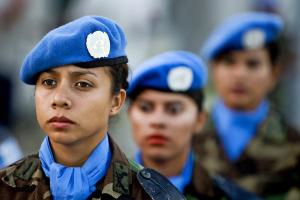
    Members of the Guatemalan contingent of the United Nations Stabilization Mission in Haiti (MINUSTAH) participate in a medal award ceremony in recognition of their service. 10/Jun/2009. Port au Prince, Haiti. UN Photo/Marco Dormino. www.unmultimedia.org/photo/

    Members of the Guatemalan contingent of the United Nations Stabilization Mission in Haiti participate in a medal award ceremony in recognition of their service. Image by UN Photo via Flickr.

    What this means is that the ability of female peacekeepers to make a difference is limited by their training, which is gender-neutral and where they are expected to act and perform functions ‘just like men’. The rationale for this is that when deployed on peace missions, all have to carry the same equipment, work in the same environment and face the same adversaries in the course of duty. This is specifically the case where they are drawn from the infantry environment and have to perform infantry-like functions. Added to this, women peacekeepers report being ‘othered’ on various levels. Physically, they are ridiculed for their lack of physical strength and endurance, especially on foot patrols. Psychologically and emotionally, the operational environment is seen to be more taxing for women, given the extreme forms of sexual violence against women. Women were also perceived to pose a ‘gendered’ security risk, especially in hyper-masculine contexts where women are seen as sexual objects, are used as weapons of war where they threaten existing gender power relations that affect male dominance.

    This results in female peacekeepers facing many different forms of gender and sexual harassment which are used to denigrate them. Some of the female peacekeepers who served in positions of authority explained how they were often not respected, ignored, undermined and faced frequent sexual advances. Such forms of gender harassment occurred often, but not considered serious enough to evoke punitive action. This was simply explained away in terms of existing patriarchal relations that could not be changed. However, in some cases this evoked open hostility towards them “because in Sudan it is considered disrespectful to their culture for women to be soldiers, carry rifles and wear trousers”. Besides this, the threat of being raped served to further erode women peacekeepers’ agency, especially where they were excluded from certain operations which were considered too dangerous by their commanders. In this way, not only were old gender stereotypes replicated, but they are used to undermine the prospect of an equal partnership between men and women.

    What this shows is that even where national armed forces espouse gender equality, the peacekeeping environment remains hostile to women. Multiple masculinities, patriarchy and sexism undermines the ability of women peacekeepers to imbue alternative ways of dealing with and resolving conflict. The only way to ‘regender’ the military is to stop privileging masculinity over femininity. This is unlikely to happen where peacekeeping remains steeped in the warrior ethos and where the ‘feminine’ is not valued, is suppressed, seen as a threat, or a liability. What is needed is for women to become less complicit and more assertive in making their voices heard. However, military women themselves typically do not embrace feminine values given the ‘nature’ of their work. They typically conform to and assimilate masculine values, norms and practices in order to be judged as capable soldiers. They have to assume what many term as a ‘militarized masculinity’, understood as the ability to ‘demonstrate an absence of emotion and a willingness to use violence’—they must excise all that is perceived to be feminine.

    This makes it difficult to achieve the ideals advocated by UNSC Resolution 1325. The aim of this resolution is not only to increase the number of women serving in the military, but to mainstream gender by bringing about a greater sensitivity to the different effect that war has on men and women. In this regard, there has been little progress as the number of military women serving on peacekeeping missions have remained around 3 per cent. Even in the South African armed forces where women now represent 26 % of uniformed personnel and up to 15% of those deployed on peacekeeping missions, there seems to be little qualitative change in bringing about a more acrogenous military culture. This necessitates a closer introspection in terms of how women are trained, deployed and supported on peacekeeping operations. It raises the question as to whether a gender-neutral approach to gender integration in the military does not in fact perpetuate gender inequality. Clearly one cannot bring about a different perspective to war and peace if women are expected to embrace masculine norms and values and where gender difference is not recognised and valued.

    Lindy Heinecken was formerly a researcher and Deputy Director of the Centre for Military Studies (CEMIS) at the South African Military Academy, where she worked for 17 years. Since 2006 she has been at the Department of Sociology and Social Anthropology, Stellenbosch University, South Africa and is currently Professor of Sociology lecturing in political and industrial sociology. The main focus of her research is in the domain of armed forces and society where she has published widely on a range of issues including military unionism, the management of diversity, gender integration, HIV/AIDS in the military and more recently on the experiences of military personnel on peace operations. She serves on numerous academic boards, including the Council of the Inter-University Seminar on Armed Forces and Society, the Board of the International Sociological Association’s (ISA) Armed Forces and Conflict Resolution Group, and the National Research Foundation (NRF). She serves on the editorial board of the journals Armed Forces and Society and Scientia Militaria: South African Journal of Military Studies. She is a NRF B rated researcher and serves as one of the pool of specialists conducting research for the South African Army.

  • Sustainable Security

    Jenny Nielsen and Marianne Hanson

    The first week of the third Preparatory Committee (PrepCom) for the 2015 Review Conference (RevCon, held every five years) of the Nuclear Non-Proliferation Treaty (NPT) has witnessed a heavy emphasis on issues relating to the disarmament pillar. In particular, the humanitarian impact of nuclear weapons, highlighted by a wide-ranging, cross-grouping, multi-aim initiative which continues to consolidate itself in the non-proliferation regime, has come to the fore. Frustrated with the lack of progress towards NPT Article VI commitments to complete nuclear disarmament, the initiative has invigorated attention to the urgency of nuclear disarmament and a need for a change in the status quo. NPT member states and civil society continue to engage actively in publicizing the humanitarian consequences of nuclear weapons as an impetus to progress towards nuclear disarmament.

    The Humanitarian initiative

    Austria has announced the dates of a Third International Conference on the Humanitarian Consequences of Nuclear Weapons, to be held on 8-9 December 2014 in Vienna. This conference will follow the March 2013 Oslo conference and the February 2014 Nayarit conference, which were both notably boycotted by the five NPT nuclear weapons states (NWS: the UN Security Council permanent members, or P5).  Whether any of the five NWS will participate in the Vienna conference, remains to be seen. Given the Chair’s summary of the Nayarit conference, which includes some of the Mexican chair’s personal perceptions on the humanitarian initiative’s aims, the Austrian Ministry of Foreign Affairs may find that appealing to the NWS to attend will be a challenging task.

    UN General Assembly. Source: Wikipedia

    UN General Assembly. Source: Wikipedia

    At the PrepCom, the Mexican delegation explained that the Chair’s Summary of the Nayarit conference, ‘reflects the opinion of the overwhelming majority of delegates, in the sense that these discussions should lead to the commitment by States and civil society to achieve new standards and standards through a legally binding instrument prohibiting nuclear weapons in the same way, as in the past, the weapons that have been eliminated were first banned’. Furthermore, the Mexican delegation to the PrepCom stressed that ‘the time has come to initiate a diplomatic process, to define specific time lines and the most appropriate fora to achieve this work’.

    Since the inclusion of the humanitarian consequences issue in the Final Document of the 2010 NPT RevCon and the reinvigoration of this initiative in the PrepComs since then, the NWS have been cautious of the initiative’s coordinated activities and continue to question the aims of the initiative.  In particular, the NWS will not readily engage in the initiative as long as they interpret or perceive it to be the pathway towards a delegitimization process and, ultimately, a ban on nuclear weapons’ possession and use. For this reason, controlling the initiative’s external communication of its aims and activities will need to be carefully managed in order to sustain its broad, cross-grouping support-base and participation. This, in turn, will enforce its credibility and longevity in the regime towards the goal of progress towards nuclear disarmament.

    Suing for Nuclear Zero

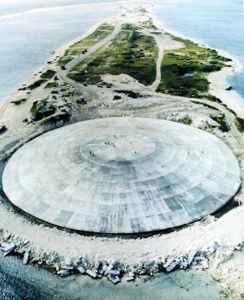
    Cactus Dome, Runit Island, Enewetak Atoll, Marshall Islands - a concrete-capped burial pit for radioactive waste from US nuclear tests.

    Cactus Dome, Runit Island, Enewetak Atoll, Marshall Islands – a concrete-capped burial pit for radioactive waste from US nuclear tests. Source:  US Defense Special Weapons Agency (via Wikipedia)

    On 24 April, a few days before the NPT delegations convened at the UN for the PrepCom, the Republic of the Marshall Islands filed cases in the International Court of Justice and the U.S. Federal District Court claiming that all nuclear-armed states—including the four non-NPT states: India, Israel, DPR Korea, Pakistan—‘have failed to comply with their obligations […] to pursue negotiations for the worldwide elimination of nuclear weapons’.  These cases, referred to as the Nuclear Zero lawsuits, are based on treaty law obligations (for the five NPT NWS) and customary international law (for the four non-NPT member states). The Labour Party of New Zealand (currently in opposition) has pledged support for the lawsuits. Civil society groups at the NPT PrepCom have heralded the motion.

    As a testing ground for U.S. nuclear weapons (between 1946 and 1958), the Republic of the Marshall Islands bears firsthand experience of the effects of radiation. On the first day of the PrepCom, the Minister of Foreign Affairs of the Marshall Islands, Tony de Brum, delivered a powerful statement including a personal account of his own childhood memories of U.S. nuclear testing. Given the close US-Marshall Islands economic and defence ties, including an agreement for use of the U.S. Army Kwajalein Atoll missile test range, it is an interesting bilateral development.

    In her 29 April statement to the 2014 PrepCom, U.S. Under Secretary Rose Gottemoeller asserted that ‘it is the United States’ deep understanding of the consequences of nuclear weapons use—including the devastating health effects—that has guided and motivated our efforts to reduce and ultimately eliminate these most hazardous weapons’. Gottemoeller stressed that ‘it is imperative that we make sure people remember the human impact of nuclear weapons’. In a nod to the Nuclear Zero lawsuits she added that her ‘recent trips to the Marshall Islands and Hiroshima were potent reminders of the need to persevere in confronting this challenge’. The inclusion and attention to these issues in the U.S. statement is an indicator of the prominence and importance of the humanitarian dimension initiative. Notwithstanding universal formal engagement, the initiative is percolating through national statements and embedding itself in discourse widely.

    Article VI commitments

    Strategically timed for impact during the PrepCom and in furtherance of commitments to transparency, on 29 April, the U.S. State Department released newly classified information on the U.S. nuclear weapons stockpile. As noted by the Federation of American Scientists, the new figures revealed by the Obama administration boil down to only 309 warheads fewer than the 5,113 reported in 2010. While underwhelming for some in civil society given high expectations on deliverables under Article VI, the U.S. reporting on stockpile figures should be welcomed and acknowledged as a positive move by one of the five NWS.

    The New Agenda Coalition (NAC, comprising Brazil, Egypt, Ireland, Mexico, New Zealand and South Africa) submitted a meaty working paper on Article VI to the PrepCom. As highlighted by the Irish delegation, this suggests four options for the way forward, outlining ‘prospects for a Nuclear Weapons Convention, a Nuclear Weapons Ban Treaty, a looser framework arrangement of mutually reinforcing instruments, or a hybrid of any or all of the above’. The NAC offers these options for discussion without prescription for one outcome. Ireland argues that discussions must begin immediately in order to identify what is needed and how to frame this. Warning that ‘we will not, under any circumstances, countenance a simple roll-over of the 2010 Action Plan’ at the 2015 RevCon, Ireland stressed that ‘to do so would inflict even further damage on the NPT as a credible driver of disarmament and non-proliferation efforts’.

    Mushroom cloud and water column on Bikini Atoll, Marshall Islands, Operation Crossroads Baker, 25 July 1946. Source: US Department of Defense (via Wikipedia)

    Mushroom cloud and water column on Bikini Atoll, Marshall Islands, Operation Crossroads Baker, 25 July 1946. Source: US Department of Defense (via Wikipedia)

    With 128 states supporting the joint statement on the humanitarian consequences of nuclear weapons at the UN General Assembly First Committee in October 2013, the second week at the PrepCom is likely to witness growing support for the initiative’s statement, but only if its wording can balance the political and strategic needs of all of the wide-ranging states. Notably, at the 2013 PrepCom, Japan opted not to pledge formal support to the statement due to trepidation about a clause in the initiative’s statement which was interpreted as having implications for its strategic alliance and coverage under the US nuclear umbrella. Alienating key states – especially US allies – by expressing views too categorically will not serve the humanitarian initiative well. At the same time, it is hard to deny the frustration felt by most states at the lack of progress towards nuclear disarmament.

    Civil society engagement

    Akin to the wide range of support and engagement for the humanitarian dimension initiative shown by states parties, civil society groups have made many broad-ranging contributions to highlight the initiative’s aims. Chatham House published a thorough report on the risks of inadvertent, accidental or deliberate detonation of nuclear weapons based on an assessment of historical cases of near nuclear use, offering recommendations for mitigating these risks. The European Leadership Network (ELN) released a group statement (supported by 52 high-level signatories) with a list of broad ranging recommendations for necessary steps for a successful 2015 NPT Review Conference. Warning that the humanitarian dimension initiative ‘has become a deeply divided issue among NPT states-parties’ and arguing that ‘this division is damaging the diplomatic atmosphere’, the ELN calls on the P5 to participate in the initiative’s third conference in Vienna in December.

    Across the Atlantic, a coalition of US-based civil society organizations published an open letter to President Obama calling for action on nuclear disarmament, including amongst several suggestions, participation in the Vienna conference. The coalition highlights the deterioration in US-Russia relations, given continuing and foreseeable NATO expansion and in light of the crisis in Ukraine, noting concern for prospects for future bilateral arms reduction negotiations.

    Other disarmament advocacy groups including Reaching Critical Will and ICAN are steadfastly calling for a process of negotiations for a new legal instrument prohibiting nuclear weapons. Demanding a nuclear ban, the Geneva Nuclear Disarmament Initiative, aka Wildfire, continues to head-on challenge and mock the status quo of the NPT review process, exposing inconsistencies in nuclear policies by NPT states, with a focus also on NNWS relying on extended nuclear deterrence, particularly Australiaand those NNWS hosting NATO theater nuclear weapons, such as the Netherlands.

    A major challenge faced by the PrepCom’s Chair, Peruvian Ambassador Roman Morey, will thus be to reconcile these disparate approaches and views while preserving the essential aims of the humanitarian initiative. There is a clear need to engage the NWS and seek their attendance at the Vienna conference in December and to steer diplomacy as well as civil society activism towards an achievable path for the elimination of nuclear weapons. If the PrepCom concludes with recriminations and division, it will bode ill for next year’s NPT Review Conference.


    Jenny Nielsen is a Postdoctoral Research Fellow in the School of Political Science and International Studies at the University of Queensland. Previously, she was a Research Analyst with the Non-proliferation and Disarmament Programme at the International Institute for Strategic Studies (IISS), a Programme Manager for the Defence & Security Programme at Wilton Park, and a Research Assistant for the Mountbatten Centre for International Studies (MCIS) at the University of Southampton, where she co-edited the 2004-2012 editions of the NPT Briefing Book.

    Marianne Hanson is Associate Professor of International Relations at the University Of Queensland and Director of the University’s Rotary Centre for International Studies in peace and conflict resolution. She has published widely in the field of international security, with a focus on weapons control, and is currently engaged in a book project examining the emergence of the humanitarian initiative in nuclear weapons debates.

  • Sustainable Security

  • Sustainable Security

  • Sustainable Security

    Sustainable Security programme Director Richard Reeve discusses our latest report ‘From New Frontier to New Normal: Counter-terrorism operations in the Sahel-Sahara’. The report, commissioned by the Remote Control project, finds that 2014 is a critical year for militarisation of the Sahel-Sahara and the entrenchment of foreign powers there.

  • Sustainable Security

    One year after violent conflict began, information is now emerging on the specific environmental impact of war in Ukraine’s highly industrialised Donbas region. Although obtaining accurate data is difficult, indications are that the conflict has resulted in a number of civilian health risks, and potentially long-term damage to its environment. In order to mitigate these long-term risks, international and domestic agencies will have to find ways to coordinate their efforts on documenting, assessing and addressing the damage.

    The environmental legacy of conflict and military activities is rarely prioritised in post-conflict response, in spite of the short and long-term impact of damage on civilian health and livelihoods. At times relationships between incidents and harm may be complex, often requiring detailed and lengthy analysis. Warfare in highly industrialised areas has the potential to generate new pollution incidents and exacerbate existing problems; the conflict in Ukraine has done both, as well as damaging the area’s natural environment.

    The chronology of the Donbas conflict is widely accessible and there is no need to repeat it here. More important is the current uncertainty. With the signing of the second round of Minsk agreements in February 2015, hope re-emerged that a peaceful solution might be possible. For the moment the truce is holding but remains fragile. Should it collapse, it is likely that new and grave risks to the region’s people and environment will emerge.

    Scope of environmentally damaging incidents

    Prior to the outbreak of the war, more than 5,300 industrial enterprises were operating in the pre-war Donetsk and Luhansk oblasts (provinces). Damage to the region’s industry is widespread, and ranges from direct damage to industrial installations, to enterprises simply stopping production because of the lack of raw materials, energy, workforce or distribution channels.

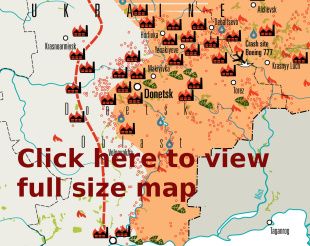
    A map produced by Geneva’s Zoi environment network and the East Ukraine Environment Institute based on official information, media reports, assessments and interviews shows environmental damage in the region. Click here to view full size map

    It is this disruption of the region’s industry that is likely to be primarily responsible for the environmental side-effects of the conflict. In some cases, the disruption has led to accidental releases of pollutants from shelled or bombed facilities. In others, facilities have been forced to shift to more polluting technologies that have impacted regional air quality. Among dozens of facilities damaged by fighting are the Zasyadko coal mine, a chemicals depot at Yasynivskyi, coke and chemical works in Makiyvka, the Lysychyansk oil refinery, an explosives factory at Petrovske and a fuel-oil storage facility at Slavyansk thermal power plant.

    Coal mining has been the backbone of the economy of the Donbas region since the nineteenth century. With the intermittent collapse of the electricity supply across the entire conflict area, ventilation systems and water pumps in coal mines failed, resulting in the release of accumulated gases after ventilation restarted. The often irreparable flooding of mines not only damages installations but also waterlogs adjacent areas and pollutes groundwater. At the time of writing, permanent or temporary flooding has been reported at more than ten mines, yet due to the lack of uninterrupted monitoring and fieldwork to assess the damage, the exact extent of the risks to environmental and public health is unclear.

    The Zasyadko mine in Donetsk used to produce 4 million tonnes of coal annually and was one of the region’s economic flagships. A release and explosion of methane in March 2015 killed 33 of the 200 miners underground at the time. Even though this was not the first such accident at the mine (it is considered among the most lethal in the area’s risky mining industry), the chair of the mine’s board attributed the incident to heavy shelling at nearby Donetsk airport, where fighting continued until late January 2015.

    There have been numerous media reports about war damage caused to Donbas’ water supply, including in and around Luhansk and Donetsk – cities that had a combined pre-war population of 1.5 million. Repair work to the water infrastructure is still carried out, often under direct fire, but periods of irregular supply are common. Less well documented is the impact of the conflict on drinking water quality but one can reasonably assume widespread deterioration as a result of the disruption.

    At the moment, relatively little is known about the direct chemical impact of the war on the environment and people. Limited sampling by the Ukraine-based NGO Environment-People-Law confirmed the expected range of some ‘war chemicals’ from the use of conventional weapons in impact zones. Similarly, large quantities of damaged military equipment and potentially hazardous building rubble will require disposal. The Ukrainian Ministry of Defence also raised concerns that depleted uranium weapons may have been used in the fighting around Donetsk airport, and proposed to determine whether this was the case when conditions allowed.

    The region’s nature has also suffered. Already prone to fires because of the dry summer climate, steppes and forests have burnt more often than would have been expected. According to an as yet unpublished analysis of NASA satellite data, the Eastern European branch of the Global Fire Monitoring Centre showed that in 2014, the incidence per unit area of forest and grass fires in the Donetsk oblast was up to two to three times higher than in the surrounding regions of Ukraine and Russia.

    The conflict has also damaged the region’s numerous nature protection areas, from armed groups occupying their administrative buildings to the impact of fighting and the movement of heavy vehicles within nature reserves. The restoration of large tracts of agricultural and other land for normal cultivation and use will require considerable effort too, and will be complicated by the presence of new minefields and unexploded ordnance.

    Challenges in determining the extent of damage

    The prevailing media narrative over environmental damage from the conflict has sought to link it directly to the fighting, but the information currently available is too fragmented to fully confirm the extent of the relationship. Such simplifications can also mask the indirect effects of warfare on environmental quality.

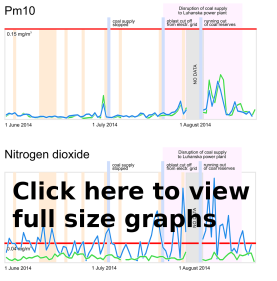
    Graphs produced by the East-Ukraine Environment Institute shows a decrease in air quality in eastern Ukraine in summer 2014. Click here to view full size graphs

    As is common for armed conflicts in heavily developed areas, a large proportion of the pollution impact may not come directly from the fighting but from damage to industrial infrastructure and to the disruption of everyday economic activities. A good example from the Donbas region can be seen in data from its only functioning (until November 2014) automated air quality monitoring station. Located in the town of Schastya in the Luhansk oblast, the data demonstrate that peak concentrations are not obviously associated with periods of combat; instead, they correlate with a reduction in the supply of high-grade coal for the Luhanska power plant in August 2014.

    Coal supplies were first restricted when a bridge in Kondrashevskaya-Novaya was destroyed. Then an electrical substation was shelled, which disconnected the area from the rest of Ukraine’s electricity grid. As a result, the Luhanska power plant, which was responsible for supplying more than 90% of the oblasts’ electricity, was forced to simultaneously increase production while turning to lower-grade coal from its reserve stock. This caused a clear deterioration in air quality.

    Coverage of the conflict has also claimed that the fighting has caused 20 times more wildfires than in 2013. While 2014 had seen more fires in comparison to the previous year, 2013 was relatively wet so this comparison is hardly informative. Assessing the exact area affected by fires in the territories remains difficult and imprecise, requiring the use of more refined data and techniques. The task is further complicated by the fact that forest fire statistics, which would normally be used to verify the findings from satellite data, are not being collected at the moment as the conflict has rendered large areas unsafe for ground surveys.

    What next?

    In spite of the fragile Minsk agreement, the half-frozen conflict continues. At present it is impossible to predict whether further damage will be wrought on the people and the environment of Donbas. Insecurity continues to impact basic environmental governance on both sides of the line of contact, while cooperation across the frontline, even on urgent humanitarian issues, remains a remote prospect. Therefore expectations for cooperation over environmental issues at the current stage in the conflict are low.

    Based on the available evidence, it is clear that there is great potential for long-term civilian health risks from the pollution generated by the conflict. Efforts to collect systematic data on both pollution and health outcomes should start immediately, as must preparations for remediation. The financial and technical requirements for the comprehensive assessment and remediation of contaminated sites are considerable.

    These are problems common to many conflicts affected by toxic remnants of war and, as the ICRC noted in 2011, consideration should be given to whether a new system that ensures environmental assistance is required in order to protect both civilians and the environment from conflict pollution:

    “given the complexity, for example, of repairing damaged plants and installations or cleaning up polluted soil and rubble, it would also be desirable to develop norms on international assistance and cooperation… Such norms would open new and promising avenues for handling the environmental consequences of war.

    The broader context for the eventual remediation of the environmental damage should include the radical modernisation of the region’s notoriously unsustainable industry, much of which has for years presented direct and grave risks for its environment and people (see Zoi’s 2011 report Coalland). In this way, quite unexpectedly, the highly unwelcome conflict may in the end offer a rare and welcome opportunity to eventually ‘green’ the black and brown coalfields of Donbas.

    This blog was prepared by Nickolai Denisov and Otto Simonett of Zoi environment network together with Doug Weir of the Toxic Remnants of War Project and Dmytro Averin of the East-Ukrainian Environment Institute. The authors thank Serhiy Zibtsev, Victor Mironyuk and Vadym Bohomolov, National University of Life and Environmental Sciences of Ukraine / Regional Eastern European Fire Monitoring Center, for help with the analysis of forest and grassland fires data.

    Zoi environment network is a non-profit organisation in Geneva, Switzerland, with the mission to reveal, explain and communicate connections between the environment and society and a long record of working on environmental issues in and with the countries of Eastern Europe.

    Featured image: A barricade burns in Kiev, Ukraine in January 2014. Source: Flickr | Sasha Maksymenko