Blog

  • Sustainable Security

    Drugs and Drones: The Crime Empire Strikes Back

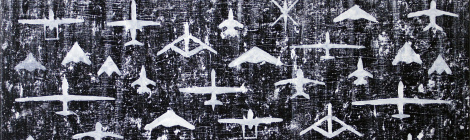
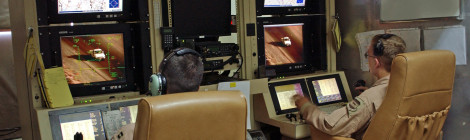
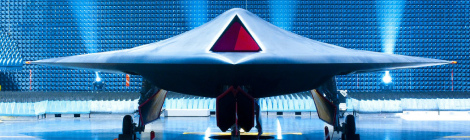
    Ever advancing remote warfare technology is being increasingly used by law enforcement agencies to counter drug trafficking. In response, drug cartels are also adopting new technology to smuggle and distribute drugs. However, the technological superiority of law enforcement-military actors is also causing criminal and militant groups to adapt by employing the very opposite tactic, by resorting to highly primitive technology and methods. In turn, society is doing the same thing, adopting its own back-to-the-past response to drug trafficking and crime.

    Read Article →

    From Surveillance to Smuggling: Drones in the War on Drugs

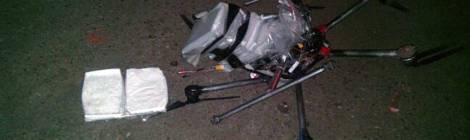
    In Latin America drones are being used as part of the War on Drugs as both regional governments and the US are using surveillance drones to monitor drug trafficking and find smuggling routes.. However, as drones are increasingly being used by drug cartels themselves to transport drugs between countries, could Latin America find itself at the forefront of emerging drone countermeasures?

    Read Article →

    Privatising the War on Drugs: PMSCs in Colombia and Mexico

    US drug policy has become increasingly privatised in recent years as the US government contracts private military and security companies (PMSCs) to provide intelligence, logistical support and training to state security forces in drug-producing and –transit states. As the cases of Colombia and Mexico illustrate, this privatisation strategy is having a damaging impact on these already fragile environments.

    Read Article →

    Beyond Privacy: The Costs and Consequences of Mass Surveillance

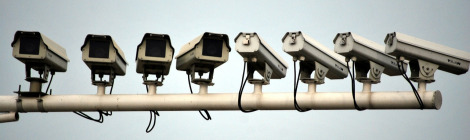
    Last week the new UN privacy chief said UK surveillance was “worse than [George Orwell’s novel] 1984”. In the two years since the Snowden leaks revealed the existence of bulk internet and phone surveillance by US intelligence services and their partners, including the UK, the British government continues to engage in the mass collection of citizens’ communications data.

    Read Article →

    Losing control over the use of force: fully autonomous weapons systems and the international movement to ban them

    Later this month, governments will meet in Geneva to discuss lethal autonomous weapons systems. Previous talks – and growing pressure from civil society – have not yet galvanised governments into action. Meanwhile the development of these so-called “killer robots” is already being considered in military roadmaps. Their prohibition is therefore an increasingly urgent task.

    Read Article →

  • Climate change

    Climate change

    Climate change is high on both domestic and international political agendas as countries face up to the huge environmental challenges the world now faces. Whilst this attention is welcome, less energy is being focused on the inevitable impact climate change will have on security issues. The well-documented physical effects of climate change will have knock-on socio-economic impacts, such as loss of infrastructure, resource scarcity and the mass displacement of peoples. These in turn could produce serious security consequences that will present new challenges to governments trying to maintain stability.

    The Climate Security Council?

    Joe Thwaites | Exclusively written for sustainablesecurity.org | July 2011

    Issue:Climate change

    Writing exclusively for SustainableSecurity.org, Joe Thwaites takes an in-depth look at the discussion at the UN Security Council on the security implications of climate change. Joe analyses the debate over whether the Council is an appropriate forum for dealing with climate change discussing the views of both great powers and those who are set to lose most from a warmer global climate in the years ahead. 


    Image source: United Nations

    Read more »

    UNSC’s Climate Change Session Masks Members’ Intransigence

    Ben Zala | World Politics Review | July 2011

    Issue:Climate change

    Last week’s discussion at the U.N. Security Council on the security implications of climate change was an important step in the right direction. This is only the second time that the subject, which may turn out to be the defining issue for global security in the 21st century, has made it onto the agenda of the U.N. body charged with maintaining international peace and security. The discussion’s importance is limited, however, since the real path to addressing the security implications of climate change lies outside the council.

    Read the full article here. You will need a subscription to WPR to read the full article; if you are not subscribed already then you can get a free trial subscription here.

    Image source: Riacale. 

    Read more »

    Indonesia’s Military and Climate

    Eddie Walsh | The Diplomat Blogs | July 2011

    Issues:Climate change, Global militarisation

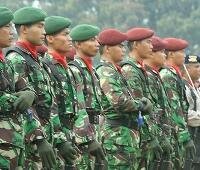
    With more than 17,000 islands and 80,000 kilometres of coastline, Indonesia is extremely vulnerable to climate change. Analysts believe that rising temperatures will almost certainly have a negative impact on human security in Indonesia, which in turn will increase the probability of domestic instability and introduce new regional security concerns. With this in mind, it’s important that Indonesia’s armed forces take a range of measures to prioritize environmental security, including procuring new equipment, strengthening bilateral and multilateral relations, and undertaking training for new roles and missions.

    Article source: The Diplomat Blogs

    Image source: Studio Titus

    Read more »

    The Geopolitics of Climate Change

    Chris Huhne | Department of Energy and Climate Change | July 2011

    Issues:Climate change, Marginalisation

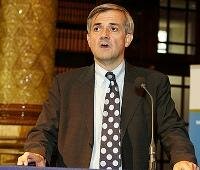
    In a speech to Future Maritime Operations Conference at the Royal United Service Institute, London, Secretary of State for Energy and Climate Change examines the security implications of climate change:

    “We cannot be 100% sure that our enemies will attack our country; but we do not hesitate to prepare for the eventuality. The same principle applies to climate change, which a report published by the Ministry of Defence has identified as one of the four critical issues that will affect everyone on the planet over the next 30 years.

    Around the world, a military consensus is emerging. Climate change is a ‘threat multiplier’. It will make unstable states more unstable, poor nations poorer, inequality more pronounced, and conflict more likely. And the areas of most geopolitical risk are also most at risk of climate change.”

    Article source: DECC

    Image source: DECCgovuk

    Read more »

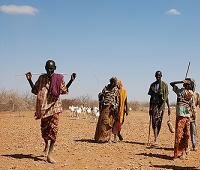
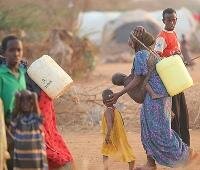
    Drought in east Africa the result of climate change and conflict

    Felicity Lawrence | The Guardian | July 2011

    Issues:Climate change, Competition over resources, Marginalisation

    Aid agencies say that weather in the region has become more erratic and years of war leave populations especially vulnerable

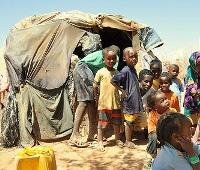
    Prolonged drought in the Horn of Africa is the immediate cause of the severe food crisis already affecting around 10 million people in parts of Kenya, Ethiopia, Djibouti and Somalia. Rains have failed over two seasons, with a strong La Niña event having a dramatic impact across the east coast of Africa. Now this year’s wet season has officially ended, there is little prospect of rain or relief before September.

    Article source: The Guardian

    Image source: Oxfam International

    Read more »

    Preparing for the Impact of a Changing Climate on U.S. Humanitarian and Disaster Response

    The New Security Beat | The New Security Beat | July 2011

    Issue:Climate change

     Climate-related disasters could significantly impact military and civilian humanitarian response systems, so “an ounce of prevention now is worth a pound of cure in the future,” said CNA analyst E.D. McGrady at the Wilson Center launch of An Ounce of Preparation: Preparing for the Impact of a Changing Climate on U.S. Humanitarian and Disaster Response. The report, jointly published by CNA and Oxfam America, examines how climate change could affect the risk of natural disasters and U.S. government’s response to humanitarian emergencies.

    Article source: The New Security Beat

    Image source: Oxfam International

    Read more »

  • Climate change

    Climate change

    Climate change is high on both domestic and international political agendas as countries face up to the huge environmental challenges the world now faces. Whilst this attention is welcome, less energy is being focused on the inevitable impact climate change will have on security issues. The well-documented physical effects of climate change will have knock-on socio-economic impacts, such as loss of infrastructure, resource scarcity and the mass displacement of peoples. These in turn could produce serious security consequences that will present new challenges to governments trying to maintain stability.

    Risk of extreme weather events highlighted by the Intergovernmental Panel on Climate Change

    Marlowe Hood | AFP | November 2011

    Issue:Climate change

    As reported by Agence France Presse, the UN Intergovernmental Panel on Climate Change has produced a draft summary of a report that warns of a predicted increase in the number and intensity of extreme weather events.  The 800-page report goes some way to addressing a subject largely untouched by their landmark 2007 report on climate change, and adds to the growing body of evidence outlining the potential security implications of a warmer planet.

    Article Source: AFP

    Image Source: Nasa

    Read more »

    Governments Must Plan for Migration in Response to Climate Change, Researchers Say

    This story is reprinted from materials provided by University of Florida. The original article was written by Donna Hesterman | ScienceDaily | October 2011

    Issue:Climate change

    Governments around the world must be prepared for mass migrations caused by rising global temperatures or face the possibility of calamitous results, say University of Florida scientists on a research team reporting in the Oct. 28 edition of Science.

    Image Source: Meredith James Johnstone

    Read more »

    Security is not simply the absence of conflict

    John L Smith | UK Foreign and Commonwealth Office – Climate Change Team | September 2011

    Issue:Climate change

    Blog entry from the Foriegn and Commonwealth Office on climate change and security:

    What the scientific modelling makes clear is that if global temerepature continues to rise unabated, it will place significant additional stress on ALL economies, but that the emerging economies on this continent will be among the first to take real strain.  Unchecked climate change will make the poorest even more vulnerable, with related food and water stress and climate migration.   It will raise tension levels over access to diminishing resources, particularly water.

    Climate change is therefore a threat mutliplier, and governments must be alive to the potential it has to disrupt sustainable growth and stability and exacerbate tensions within and between countries.

    Article source: FCO Climate change team blog

    Image source: climatesafety

    Read more »

    Conflict, Climate Change, and Water Security in Sub-Saharan Africa

    Oluwole Akiyode | peace and conflict monitor | September 2011

    Issues:Climate change, Competition over resources

    The paper is a review of literatures on conflict, climate change and water security on Sub-Saharan Africa. It identifies poverty as a threat in Sub-Saharan African countries that may have effect on its water security. It analyses in Sub-Saharan Africa region, the conflict trend of water security in correlation with climate change impacts. It advocates sustainable water management as the ameliorative and mitigation approaches to the negative effects of climate change on water security in Sub-Saharan Africa.

    Article source: peace and conflict monitor

    Image source: Abdurrahman Warsameh for the International Relations and Security Network

    Read more »

    Climate Cycles Are Driving Wars, Says Study

    Columbia University | The Earth Institute | August 2011

    Issue:Climate change

    In the first study of its kind, researchers have linked a natural global climate cycle to periodic increases in warfare. The arrival of El Niño, which every three to seven years boosts temperatures and cuts rainfall, doubles the risk of civil wars across 90 affected tropical countries, and may help account for a fifth of worldwide conflicts during the past half-century, say the authors.

    Image source: The U.S. National Archives

    Article source: The Earth Institute

    Read more »

  • Climate change

    Climate change

    Climate change is high on both domestic and international political agendas as countries face up to the huge environmental challenges the world now faces. Whilst this attention is welcome, less energy is being focused on the inevitable impact climate change will have on security issues. The well-documented physical effects of climate change will have knock-on socio-economic impacts, such as loss of infrastructure, resource scarcity and the mass displacement of peoples. These in turn could produce serious security consequences that will present new challenges to governments trying to maintain stability.

    How Climate Change Can Amplify Social, Economic, and Political Stresses

    Janani Vivekananda | Woodrow Wilson Centre for International Scholars | June 2011

    Issue:Climate change

    International Alert’s Janani Vivekananda discusses how climate change will will interact with other social, economic and political stressors to drive instability.

    “Rather than climate change being this single, direct causal factor which will spark conflict at the national level,” Vivekananda said, these stressors “will shift the tipping point at which conflict might ignite.” In places that are already weakened by instability and conflict, climate change will simply be an additional challenge.

    Source: youtube 

    Read more »

    Connections Between Climate and Stability: Lessons From Asia and Africa

    The New Security Beat | The New Security Beat | May 2011

    Issue:Climate change

    “We, alongside this growing consensus of research institutes, analysts, and security agencies on both sides of the Atlantic, think of climate change as a risk multiplier; as something that will amplify existing social, political, and resource stressors,” said Janani Vivekananda of International Alert, speaking at the Wilson Center on May 10.

    Image source: aheavens

    Article source: The New Security Beat

    Read more »

    Wikileaks reveals Arctic could be the new cold war

    Greenpeace UK | Greenpeace UK | May 2011

    Issues:Climate change, Competition over resources, Global militarisation

    New Wikileaks releases today have shown the Arctic oil rush is not just a threat to the environment and our climate, but also to peace. The documents show how deadly serious the scramble for Arctic resources has become. And the terrible irony of it is that instead of seeing the melting of the Arctic ice cap as a spur to action on climate change, the leaders of the Arctic nations are instead investing in military hardware to fight for the oil beneath it. They’re preparing to fight to extract the very fossil fuels that caused the melting in the first place.

    Article source: Greenpeace UK

    Image source: U.S. Geological Survey

    Read more »

    Assessing the Security Challenges of Climate Change

    Obayedul Hoque Patwary | Exclusively written for sustainablesecurity.org | May 2011

    Issue:Climate change

    At the outset of the twenty first century, climate change has become one of the greatest challenges to international peace and security. It is seriously affecting hundreds of millions of people today and in the coming decades those affected will likely more than double, making it the greatest emerging humanitarian and security challenge of our time. Climate change acts as a threat multiplier for instability in some of the most volatile regions of the world. Projected climate change will seriously aggravate already marginal living standards in many Asian, African, and Middle Eastern nations, causing widespread political instability and conflict.

    Image source: Olando 7

    Read more »

    A New Strategy for the US: From the Control Paradigm to Sustainable Security

    Schuyler Null | The New Security Beat | May 2011

    Issues:Climate change, Competition over resources, Global militarisation, Marginalisation

    Writing for the New Security Beat, Schuyler Null discusses a recent event on creating a new national security narrative for the US held at the Woodrow Wilson Center. The event was based on a white paper by two active military officers writing under the pseudonym “Mr. Y” (echoing George Kennan’s famous “X” article). In “A National Strategic Narrative,” Captain Wayne Porter (USN) and Colonel Mark Mykleby (USMC) argue that the United States needs to move away from an outmoded 20th century model of containment, deterrence, and control towards a “strategy of sustainability.”

    Image source: LizaP.

    Read more »

    Sustainable Security and Environmental Limits

    Rachel Tansey | Quaker Council for European Affairs | May 2011

    Issues:Climate change, Competition over resources, Global militarisation, Marginalisation

    The Quaker Council for European Affairs publicises a briefing on the topic of Sustainable Security, specifically highlighting environmental concerns:

    “The treatment of the natural world by humankind has contributed towards the two related major trends that are likely to drive insecurity in the coming decades: climate change and competition over natural resources.”

    Article source: Quaker Council for European Affairs

    Image source: kretyen

    Read more »

  • Marginalisation of the majority world

    Marginalisation of the majority world

    A complex interplay of discrimination, global poverty, inequality and deepening socio-economic divisions, together make for key elements of global insecurity. While overall global wealth has increased, the benefits of this economic growth have not been equally shared. The rich-poor divide is actually growing, with a very heavy concentration of growth in relatively few parts of the world, and poverty getting much worse in many other regions. The ‘majority world’ of Asia, Africa and Latin America feel the strongest effects of marginalisation as a result of global elites, concentrated in North America and Europe, striving to maintain political, cultural, economic and military global dominance.

    Minority Youth Bulges and the Future of Intrastate Conflict

    Richard Cincotta | The Stimson Center | November 2011

    Issue:Marginalisation

    The global distribution of intrastate conflicts is not what it used to be. During the latter half of the 20th century, the states with the most youthful populations – a median age of 25.0 years or less – were consistently the most at risk of being engaged in a civil war or in an internal conflict, where either ethnic or religious factors, or both, came into play (an ethnoreligious conflict). However, the tight relationship between demography and intrastate conflict has loosened over the past decade. Ethnoreligious conflicts have gradually, though noticeably, increased among a group of states with a median age greater than 25.0 years, including Thailand, Turkey, Sri Lanka, Indonesia, and Russia.  The salient feature of these intrastate conflicts has been an armed struggle featuring a minority group that is age-structurally more youthful than the majority populace. The difference in age-structural maturity reflects a gap in fertility between the minority and majority, either in the present or in the recent past. 

    Article Source: The Stimson Center

    Image Source: CharlesFred

    Read more »

    A Thai Perspective on Proposed Mainstream Mekong Dams

    Teerapong Pomun | The Stimson Center | September 2011

    Issues:Competition over resources, Marginalisation

    The Mekong River is very important for millions of local communities along the mainstream and its tributaries who depend heavily on the river’s natural ecosystem functions. The health of the river is the health of the communities. Changes in the river basin mean a lot to those marginalized people who too often have no voice and have limited alternatives for sustaining their livelihoods.

    Article source: Stimson Center

    Image source: Roberto Moretti

    Read more »

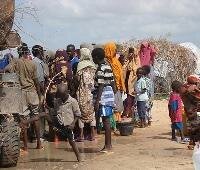
    Déjà vu: Famine and Crisis in Somalia

    Mary Hope Schwoebel | USIP | September 2011

    Issue:Marginalisation

    Kenya and Ethiopia have large semi-arid regions that are also suffering from drought, but because they have governments in place and a modicum of infrastructure, and because they allow aid organizations access to populations in need, the immediate humanitarian threat is not as great. At the same time, however, these semi-arid regions are characterized by less development — and less security – and are thus more vulnerable to conflict.

    Over the past two decades, members of Somalia’s armed militias in the Horn of Africa have included violent Islamist extremists. Refugees and IDPs are particularly vulnerable to recruitment efforts by violent extremist groups and those fighting against them. And these spillover effects will continue to contribute to instability throughout the region until their root causes are addressed.

    Article source: United States Institute for Peace

    Image source: IHH Humanitarian Relief Foundation/TURKEY

    Read more »

    Socio-Political Factors and National Security

    Ikram Sehgal | East West Institute | September 2011

    Issue:Marginalisation

    National security in the traditional sense is connected with the idea of sovereignty; territorial security means freedom from risk of danger of destruction and annihilation by war, physical violence and/or aggression from outside. Traditional threats emanate from inter-state conflict and cross-border aggression. Since the nation state is supposed to have a monopoly of power for protecting the life and property of the members of the nation, they are deprived of power to defend themselves against aggression. The focus therefore previously being on external threats, state security has dominated the national security agenda. 

    With progressing globalisation, borders have become increasingly irrelevant, thus reducing the probability of external aggression. Conversely threats to a country’s security emanate internally because of lack of economic development, unemployment, failing internal security because of religious, sectarian and/or ethnic strife, shifting of identities in the wake of globalisation, radicalisation of society and growing terrorism thereof being recent additions. 

    Article source: EastWest Institute

    Image source: NB77

    Read more »

    Is it Time for Sustainable Development Goals?

    Alex Evans | Global Dashboard | September 2011

    Issue:Marginalisation

    From Millennium Development Goals to… Sustainable Development Goals? That’s one of the ideas swirling around in discussions ahead of the Rio 2012 sustainable development summit next year, writes Alex Evans for Global Dashboard. 

    Image source: UNDP. 

    Read more »

    A War Gone Badly Wrong – The War on Terror Ten Years On

    Paul Rogers | Oxford Research Group | September 2011

    Issues:Global militarisation, Marginalisation

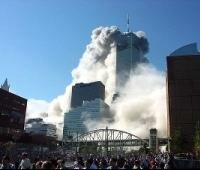
    The atrocities in New York and Washington on 11 September 2001 led to protracted wars in Afghanistan and Iraq. Ten years after the attacks, this briefing assesses the consequences of the response from the United States and its coalition partners. It questions whether the response was either appropriate or wise and whether the results so far have been counterproductive and may indicate the need for a changed security paradigm.

    Such a fundamental rethink of the way western governments respond to insecurity must go beyond the current approach in which intelligence, counterinsurgency and counter-terrorism are all beginning to merge into a seamless web of a single security posture. Such a posture is likely to be no more successful than the policies adopted in 2001.

    Photo credit: Brian Boyd

    Read more »

  • Global militarisation

    Global militarisation

    The current priority of the dominant security actors is maintaining international security through the vigorous use of military force combined with the development of both nuclear and conventional weapons systems. Post-Cold War nuclear developments involve the modernisation and proliferation of nuclear systems, with an increasing risk of limited nuclear-weapons use in warfare – breaking a threshold that has held for sixty years and seriously undermining multilateral attempts at disarmament. These dangerous trends will be exacerbated by developments in national missile defence, chemical and biological weapons and a race towards the weaponisation of space.

    Oxford Research Group Director Dr. John Sloboda launches SustainablySecurity.org

    Issues:Climate change, Competition over resources, Global militarisation, Marginalisation

    The tragic events of September 11th 2001 propelled the western security agenda down a reactive, narrow, and self-defeating path defined by the ‘War on Terror.’ The eighth anniversary of 9/11 is marked by a groundswell of voices from policymakers and analysts acknowledging that the greatest threats to global security require moving beyond a limited focus on terrorism. This groundswell is partly a response to the multiple failings of the current approach, but has been given new energy by the global financial crisis and the increased prominence of issues such as climate change.

    However, the specific policy recommendations arising from these new assessments still tend to be framed predominantly in terms of national self interest and preservation of the status-quo, rather than in terms of a more fundamental transformation of global relations in the direction of collective human security. Yet such a transformation is viewed by many as the only sure means of securing lasting security for the people of any individual nation. An emerging approach, which focuses on addressing the root causes of conflict, systemically, and collaboratively, to achieve long term change, has come to be known as; ‘sustainable security’. SustainableSecurity.org is a new platform for developing this approach, coming to understand its implications for policy, and promoting these implications to those who can act on them.

    Read more »

    Extremist violence often rooted in helplessness, humiliation and hatred – John Brennan

    Issues:Global militarisation, Marginalisation

    John Brennan, President Obama’s senior adviser on counter-terrorism, highlighted the linkages between extremist violence and political, social and economic factors in a speech on 6th August at the Center for Strategic and International Studies, a US think-tank.
      Read more »

    The Power of Nightmares: The Rise of the Politics of Fear

    Adam Curtis | BBC | March 2006

    Issue:Global militarisation

    Tag:video

    A three-part BBC documentary series, written and produced by Adam Curtis. The films compare the rise of the neo-conservative movement in the United States and the radical Islamist movement, making comparisons on their origins and claiming similarities between the two. Read more »

    From Within and Without: Sustainable Security in the Middle East and North Africa

    Chris Abbott and Sophie Marsden | Oxford Research Group | March 2009

    Issues:Climate change, Competition over resources, Global militarisation, Marginalisation

    Tag:report

    The Middle East and North Africa is a region of great diversity. It encompasses Arab and many other ethnic populations, theocratic and secular states, democracies and authoritarian regimes. A region of immense wealth and crippling poverty; it is blessed (some might say cursed) with vast resources, not least oil, but has not always proved able to manage them for the benefit of ordinary people. Read more »

    Global Responses to Global Threats: Sustainable Security for the 21st Century

    Chris Abbott, Paul Rogers and John Sloboda | Oxford Research Group | June 2006

    Issues:Climate change, Competition over resources, Global militarisation, Marginalisation

    Tag:report

    This major report was the result of an 18-month long research project examining the various threats to global security, and sustainable responses to those threats. Read more »

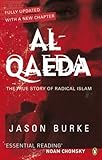
    Al-Qaeda: The True Story of Radical Islam

    Issues:Global militarisation, Marginalisation

    Tag:book

    Image of Al-Qaeda: The True Story of Radical Islam

    • Purchase from Amazon:
    • Al-Qaeda: The True Story of Radical Islam
    • Author: Jason Burke
    • Publisher: Penguin ()
    • Binding: Paperback, pages
    • Price: £8.99

  • Sustainable Security

    The Gacaca courts were set up in the aftermath of the Rwandan genocide to try and help Rwandans live together in peace. But research suggests that this system has been used as a tool for vengeance, and political and economic gain. 

    In the aftermath of the 1994 Rwandan genocide, the Rwandan Patriotic Front (RPF) government was faced with the task of bringing justice and reconciliation to a divided and devastated country. Gacaca, meaning “justice amongst the grass”, a traditional justice system once used to try local disputes between neighbours, was restored to relieve the overwhelmed prison system.

    Initially, it was well received. For those accused of genocide crimes, it was a long awaited step towards justice, an opportunity for the truth to be heard and them to be judged (see Tertsakian 2008: 376).  For the survivors, it meant that they would be able to tell their story and have justice for their loved ones.

    Between 2001 and 2012, gacaca processed nearly two million cases.  Most, if not all have involved Hutu as defendants. Gacaca was set up to try only genocide crimes. Crimes committed by RPF and out of revenge were excluded from the mandate. Waldorf notes that:

    Early on Penal Reform International warned that the implementation of gacaca was emphasizing legalistic retribution over socio-political reconciliation.  Since then, gacaca has become increasingly retributive, both in design and practice

    As a result, the legal system is perceived as being used against Hutu to not only criminalize them, but to obtain their wealth and resources. This paper examines the ways in which gacaca has been used as a tool for vengeance and to serve political or economic interests.

    The misuse of gacaca

    Beginning in March 2008, I carried out ethnographic research in Gisenyi and Cyangugu Rwanda as well as Goma and Bukavu Democratic Republic of the Congo (DRC). My research has emphasised that Hutu participants did not outright reject gacaca, rather they rejected how the system was being misused, as Zach, a Hutu participant, argued

    Gacaca is good idea, but those who work in the government are bad. The rules are written in a book but they are not obeyed. …Gacaca would be very good, if the government didn’t influence the decisions.  But this is not the case; judges are influenced by soldiers, genocide survivors and others.

    According to another Hutu participant, Huey:

    Some Hutu begin a business and the government will stop them.  There are many example of this.  One man had a very successful business of selling materials for repairing cars.  However, people took him to gacaca because he had lots of money.  He gave them money even though he wasn’t guilty.  He gave them lots of money.  Now he had to change the way he conducts business.  He doesn’t like to show the materials he has, because he’s scared that he will get dragged back to gacaca.

    Alphonse, another Hutu participant, agreed “They (the government) like to charge rich Hutu. When they don’t find anything, they take that Hutu to a different district and charge him with the same crimes there.” Robert was a Hutu participant arrested for genocide crimes in 1997 and for ‘genocide ideology’ in 2008. He believes the underlining cause for both arrests centred on property disputes:

    I was accused of killing my neighbour by his brother.  During the genocide, my neighbour was caught at a roadblock.  I explained to the men there that this man was my brother, but he didn’t have his identity card to prove it.  They told me they wouldn’t kill him, but to find some way to prove his identity.  I went to the District Office and paid for an identity card that said my neighbour was Hutu and my brother.  It was a lot of money. They released my neighbour, who fled to Congo.  When he arrived at the border, the Interahamwe killed him.  I fled with my family to Congo after the genocide.  When I returned, I was arrested on genocide crimes for this man’s death.  I had spent years in prison when the formal courts found me innocent.  I told them everything and they found that my neighbour’s brother had lied. Next the brother brought me in front of gacaca for the same crimes [killing his brother]. The gacaca judges were confused as to why this case was in front of them.  They agreed with the previous ruling and I was released.  [Why was your neighbour’s brother going to all these lengths to charge you?] Because, while I was in Congo, my neighbours had moved into my house and did not want to give it back.  When I returned, I reclaimed my house, but it was stripped of all windows and doors.  Two days later I was arrested for the death of his brother.

    Robert was in fact lucky. According to Human Rights Watch (HRW), Rwandan law protects an individual from double jeopardy. However, the practice has been allowed due to a loophole in the 2004 Gacaca law. HRW reported a case that was nearly identical to Robert’s, where a man was cleared by the formal courts and then given a thirty-year sentence in gacaca. He was released upon a successful appeal. In another case, in the district of Huye, a gacaca judge told how there were two cases where the men were acquitted in conventional courts, but convicted with lengthy prison sentences through gacaca (ibid).

    Coercion within gacaca
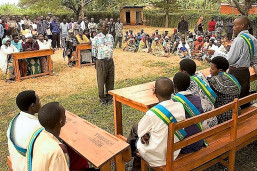
    gacaca

    Image credit: Elisa Finocchiaro/Flickr.

    According to Douglas, a Hutu participant, who was also a RPF member and gacaca official, guilt and innocence are often determined by the government. He told me “For those Hutu who are rich, the decision is always made before he is charged, before the judges reach a decision.” The involvement of the government became evident when I was allowed to attend a gacaca proceeding in Douglas’s jurisdiction.

    The accused was a former leader, who had been convicted by the formal courts of killing someone during the genocide. Upon appeal to the Supreme Court, the man’s conviction was overturned. He was finally released from prison and freed for only one night, when the police arrested him again. People from surrounding areas had accused him of killing and stealing a motorcycle during the genocide. However, some of those murder charges were the same accusations that the Supreme Court had previously overturned.

    Douglas explained that a genocide survivors’ organisation had initiated a campaign to mobilise survivors to accuse those who were ‘guilty’ of genocide crimes. However, the organisation and gacaca officials were unable to find anyone to accuse this particular man. As a result, the trial was cancelled and the case was postponed for a month. I asked Douglas if this was a form of coercion:

    Oh for sure, I’ve already been contacted. …I was told that I have to convince the judges and that we must charge this former leader and find him guilty.  We have to do this.  This is a heavy burden… As a team, we say that he is guilty. But in private we know this prisoner is innocent, we have no choice.  That prisoner was my neighbour.  I had seen everything that happened.  A former local leader took him to the market, where those Tutsi were.  He did nothing! He didn’t kill or hurt anybody!

    Genocide ideology, a tool for vengeance

    In all likelihood the ending of gacaca will not offset the misuse of the legal system as a tool for vengeance. In 2008, the Rwandan government passed Law No. 18/2008 that defined genocide ideology as:

    an aggregate of thoughts characterized by conduct, speeches, document and other acts aiming at exterminating or inciting others to exterminate people basing on ethnic group, origin, nationality, region, colour, physical appearance, sex, language, religion or political opinion, committed in normal periods or during war.

    Human rights organisations have been concerned with the imprisonment of Rwandans on vague accusations of ‘genocide ideology.’ Amnesty International argues that ‘genocide ideology’ legislation, like gacaca, ‘is compounded by the reality and perception that most accused come from one ethnic group.’  Furthermore, it is not uncommon for individuals to use ‘genocide ideology’ laws for personal gain.

    In fact, Amnesty was only able to find one case where a Hutu attempted to bring ‘genocide ideology’ charges against a Tutsi. The individual was offended after a Tutsi neighbour had called him a Hutu. The case was dropped by the prosecution. Robert believed that in connection with gacaca, ‘genocide ideology’ becomes a weapon that is used to discriminate and imprison innocent Hutu:

    Gacaca is used for stopping those Hutu who are rising up in society.  It allows Tutsi to take their property.  It helps to promote young Tutsi to occupy jobs.  A Tutsi can claim genocide ideology as a way of forcing a Hutu out of their post. It is like a business, anyone who gets into an argument at work can be accused of genocide ideology. Then they get put into prison.  Just ask why charges of genocide ideology only exist against Hutu, but Tutsi have genocide ideology as well.

    In 2008, Robert was arrested on allegations of ‘genocide ideology’ made by the same man who accused him of murder. Robert felt that having failed to obtain his property through accusations of genocide crimes, the man now turned to ‘genocide ideology.’

    I decided to rebuild a granary, after a few days the community leader came to me and told me that I must destroy the granary, because it was in the road.  I told him he didn’t have the authority… My neighbours sent that official, the same ones who had me arrested before, those that accused me before. They called the police and told them I had insulted them [a way of saying that a racial/ethnic epithet was used].  It was planned! The leader had told them that I had beaten him.  I am an old man; the leader is a young man. I cannot beat him!  When I got to prison, they charged me with crimes of genocide ideology and opposition to the government’s programmes. My wife’s brother came to intervene on my behalf.  He told me that I must be quiet; because they have many things they could charge me with.  The Police Commissioner also told me to go home and keep quiet.  Now I’m quiet.

    The other man involved was a neighbour, with whom Robert was having a boundary dispute with.  According to Robert, the men believe that if Robert returned to prison, he wouldn’t be able to pay back a bank loan and his house would be repossessed, solving both problems. Robert’s testimony highlights how the misuse of the legal system through gacaca and genocide ideology presents challenges to reconciliation. While, at the same time, demonstrating that there is a desire and a demand for it, he states,

    Those Tutsi were looking for any reason to condemn me to prison.  I didn’t do anything.  If I say anything, they will get me again and put me in prison. Everyday they accuse me.  Their (genocide survivors) agenda is like revenge there was no reason for them to do what they did.   They see me and their hearts accuse themselves.  When I was released (the first time) they were not happy to see me…In 2002, after I was released, I had electricity and water and my neighbours didn’t.  They came to me asking me for water.  They say, “This Hutu has TV, water, we have nothing”.  They think of me as being rich.  They say, “this Hutu, who has all these things, how can he get these things”? It’s a major reason why they want to punish me.  I put myself in Allah’s hands. …The best thing for all Rwandans would be to share power and forget.  To work for the nation, forget about the divisions or favouritism and use the same Arusha Accords as a power sharing agreement.  Only then can Rwanda be one house with one parent, to care for all children.

    Conclusion

    Much has been written and debated about whether or not gacaca has achieved reconciliation in Rwanda. While most would agree and recognize that gacaca was “one of the most ambitious transitional justice experiments in history”, it was also developed and carried out within the context of “deep political and ethnic division, fear, suspicion, intimidation and corruption” (see Tertsakian 2008: 362). The consequences of this is that gacaca was never going to be able to bring about reconciliation for all Rwandan, but rather contributed further wounds of mistrust and division.

    Larissa R. Begley received her PhD in Social Anthropology from the University of Sussex. She is currently a lecturer in African and African American Studies at Iowa State University. Her research focuses on understanding the implication of genocide ideology laws as a form of state violence in Rwanda.

  • Water Conflict: Violence Erupts Along Ethiopia-Kenya Water-stressed Border

    Water Conflict: Violence Erupts Along Ethiopia-Kenya Water-stressed Border

    Circle of Blue | Circle of Blue | July 2011

    Issue:Competition over resources

    In a small village along the waters of Lake Turkana in northwestern Kenya, two fishermen were murdered last month as they were putting out their nets.

    A cascade of retaliatory violence between the Kenyan Turkana and Ethiopian Daasanach (sometimes called Merille) has led to the deaths of at least four Ethiopians and 20 Kenyans ethnic groups, though some Kenyan government officials place the toll as high as 69, according to the Kenya-based Daily Nation. Though the fighting has been localized, it has put pressure on both nations to deal with strife between nomadic groups who are competing for diminishing resources.

    Both groups are traditionally pastoral nomads living within the Elemi Triangle—a once disputed area between Kenya, Sudan, and Ethiopia—which has dry pastureland, historically used by both the Turkana and the Daasanach, as well as the Didinga, Toposa, and Inyangatom (also called the Dong’iro) communities.

    The Turkana live in northwestern Kenya, making up 2.5 percent of the national population, or close to a million people, according to the 2009 Kenyan census. The Daasanach primarily reside in southern Ethiopia and make up less than 1 percent of the national population, or around 50,000. More recently, the Daasanach have lost significant portions of their lands and animals—in part due to climate change—and have become more agropastoral in nature.

    Citing Joseph Nanok, Kenya’s forestry assistant minister, the Daily Nation reported that the traditional border between the Turkana and Daasanach people was located at the Omo River Delta, which flows into Kenya’s Lake Turkana from Ethiopia. This border, however, has been moving south due to receding waters.

    According to The Christian Science Monitor, the Daasanach have begun increasingly cultivating the land and fishing the waters of the River Omo-Lake Turkana Delta, where they compete with the Kenyan Turkana people for both land and water resources.

    Thus, not surprisingly, the recent attacks coincide with the settlement of an estimated 900 armed militia and 2,500 Ethiopian civilians on Kenyan territory around Lake Turkana. The Kenyan government has made claims that these illegal immigrants have taken control of 10 Kenyan villages and has vowed to send them back to Ethiopia, according to the Daily Nation.

    Though this appears to be a territorial dispute, it can be, at least partially, attributed to the sharing of stressed water resources.

    “Water exacerbates current tensions,” Aaron Wolf—a leading researcher on global water conflict and resolution and a professor at Oregon State University—told Circle of Blue. “It is very hard to separate a water conflict from a land conflict from an economic conflict, because water is tied to everything we do.”

    Wolf’s research team conducted a five-year study about the causes of water conflicts and concluded that there are two major factors that play a role:

    • The rate of change within a water basin. Scarcity, economic growth, and population growth can all affect the availability of water resources.
    • The institutional capacity of the region; what Wolf calls “the human systems built to mitigate the change.”

    It is also important to define a conflict, since people’s interests frequently conflict, while violence is much more rare, Wolf added.

    “If someone builds a dam and negotiates with all of the people affected, there probably won’t be a conflict,” Wolf said. “Conflict occurs if there is sudden, rapid change [to the water resource] and an absence of institutional capacity…As you drop in scale, the likelihood of violence increases. Whereas two countries will rarely go to war over water, you see tribal violence quite often, or two farmers who will shoot at each other.”

    However, Wolf stressed that, although water can be a source for tension, it can also be the catalyst for creative, peaceful solutions.

    “Water brings focus on settings that are stressful, but that same focus is used to create treaties and negotiations—even between people who don’t like each other very much,” he said. “There is a rich history of stakeholders coming together. When countries do anything about water, cooperation outnumbers conflict two to one.”

    For more information on water conflicts across the globe, see the Pacific Institute’s Water Conflict Chronology database.

    Image source: Aocrane

    Article source: Circle of Blue

    Comments

    Post new comment


  • Sustainable Security

    The UK is the state of registration for a large number of land-based and maritime PMSCs. How compatible is the UK regulation model for PMSCs with international norms, especially those concerning human rights?

    Author’s note: this commentary draws upon work found in a previous article written by the author – ‘Regulation of the Private Military and Security Sector: Is the UK Fulfilling its Human Rights Duties?’ in (2016) 16(3) Human Rights Law Review 585-599.

    There are a large number of Private Military and Security Companies (PMSCs) registered in the UK. In 2011 the Security in Complex Environments Group (SCEG) was appointed by the UK government as its partner for the development and accreditation of standards for the UK private security industry when operating overseas. SCEG is a special interest group within Aerospace Defence and Security (ADS), a trade organisation advancing the UK aerospace, defence, and security industries. SCEG lists nearly 60 UK-registered PMSCs as members. Separately, 21 UK-registered PMSCs are currently listed as members of the International Code of Conduct Association (ICoCA), set up in 2013 to oversee the implementation of a non-binding international code for private security companies, although a much larger number of UK PMSCs, over 150, had signed up to the International Code of Conduct for Private Security Providers of 2010. This emerging system of national and international self-regulation was a political choice by the UK government based on free-market thinking and limited resistance to a powerful and profitable industry.

    Options for Regulation

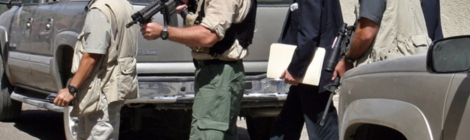
    Image credit: chuck holton/Flickr.

    The post-Cold War peace dividend, which led to a surplus of well-trained former armed forces personnel, combined with the damage done to the UK’s reputation in the late 1990s by Sandline International, led to some soul searching about the regulation of the overseas operations of an emergent private military and security industry. Sandline was a private military company with a previous history of involvement in conflicts in Africa, headed by former British Army Officer Tim Spicer, that had breached a UN and UK arms embargo against Sierra Leone by supplying arms to President Kabbah. The recommendations of the Legg Report of 1998, that the government consider introducing a system of licensing for PMSCs operating out of the UK, were a direct outcome of the ‘Sandline Affair’.  The UK Foreign and Commonwealth Office’s (FCO) Green Paper, ‘Private Military Companies: Options for Regulation’ of 2002, provided a thoughtful examination of the reasons for growth of the industry, including a convincing rationale for regulating what was at the time still a fledgling industry:

    Bringing non-state violence under control was one of the achievements of the last two centuries. To allow it again to become a major feature of the international scene would have profound consequences. Although there is little risk of a return to the circumstances of the 17th and 18th centuries when privateers were hard to distinguish from pirates, and Corporations commanded armies that could threaten states, it would be foolish to ignore the lessons of the past. Were private force to become widespread there would be risks of misunderstanding, exploitation and conflict. It would be safer to bring PMCs and PSCs within a framework of regulation while they are a comparatively minor phenomenon.

    In outlining the options for regulation, the Green Paper clearly favoured a system of government licencing over a system of self-regulation based on a voluntary code of conduct. The Montreux Document (on Pertinent International Legal Obligations and Good Practices for States Related to Operations of Private Military and Security Companies During Armed Conflict) of 2008, a non-binding document agreed to by a number of countries (mainly those with a PMSC industry such as the UK or those that were hoisting significant number of contractors such as Iraq), also expressed a preference for a licensing system. The Montreux Document identifies exiting legal obligations incumbent upon states in their relationships with PMSCs when either acting as the host state, home state (state of registration) or contracting state, but it did not take the form of a binding treaty. It also recommends good practices for governments to adopt when engaging with PMSCs, but there is no supervision or enforcement of any aspect of the Document.

    Given this support, the creation of a system of licensing seemed likely, particularly as such a regime had been introduced for UK domestic private security operators in the 2001 Private Security Industry Act, after a period of ineffective self-regulation. Indeed, when considering the Green Paper later in 2002 the Foreign Affairs Committee stated that, while self-regulation would establish better standards of PMSC conduct, it would not by itself prevent rogue or disreputable UK companies from acting against or, indeed, damaging UK interests or policies. Therefore, the Committee recommended a mixed system of general and specific licences.

    However, the UK’s experience with contractors during its involvement in conflicts in Afghanistan from 2001 and Iraq from 2003 had significant effects. By the time the government came to reconsider the matter in 2009, a much more powerful PMSC industry in terms of reach, capability and lobbying influence, combined with a new climate of austerity following the financial crisis beginning in 2008, to push  the Conservative-led government rapidly towards the least burdensome, least interventionist and, moreover, least expensive option of self-regulation.

    Despite further consultations revealing concern with a system of self-regulation, when the government re-engaged with the issue of regulation, it proceeded to create a system in which government backing for a national system of self-regulation was keyed into voluntary international codes. Concerning the latter, the UK government has been a keen supporter of the Montreux Document 2008, which provides a non-binding framework for states, as well as the International Code of Conduct for Private Security Providers of 2010. The latter contains a set of standards for security companies to respect human rights and humanitarian law, and which provides for a non-binding international form of self-regulation for the companies themselves. On the other hand, the UK has opposed any form of binding treaty requiring states to legislate for the regulation of PMSCs as proposed by the UN Working Group on Mercenaries, an item that has been on the agenda of the UN’s Human Rights Council since 2010.

    Flaws in Self-Regulation

    Ignoring the Rogue Traders

    In 2009 the FCO optimistically estimated that in time 90% of PMSCs would opt-in to a system of voluntary self-regulation. Even if this happened, it would still leave 10% of unregulated rogue companies, potentially trading on their willingness to engage in shady operations rather than on their corporate social responsibility. A voluntary system may raise standards in the industry as a whole but it ignores the central point of regulating the industry: to deter and punish those most likely to commit abuses.

    Nemo Judex in Causa Sua (no-one should be a judge in his own cause)

    Self-regulation in its pure form means that the industry is essentially being given the task of acting as a judge in its own cause. This basic injustice has been partly addressed in the regime within the UK by creating a national system of monitoring, inspection and enforcement through SCEG, separated from the industry association (ADS). This has also been duplicated at the international level, with PMSC membership of the International Code of Conduct being separate from the system of monitoring and enforcement in the hands of the ICoCA. At national level, the SCEG consists of a mixture of PMSCs, with some legal and insurance industry membership, as well as representatives from the FCO and the Department of Transport. At the international level, the ICoCA comprises states (Australia, Norway, Sweden, Switzerland, UK, US), civil society and industry representatives, with equal representation of the three pillars in the Board of Directors. Clearly it is not solely a case of the industry judging the actions of its members, but a truly independent body would not include the industry at all.

    Under the voluntary system put in place in the UK, the auditors comprise individuals from bodies accredited by the UK Accreditation Service (UKAS) as being able to measure the management, performance and activities of PMSCs against national (PSC1 US National Standard, 2012), and international standards (ISO 18788/28007, 2015), and these individuals and bodies are presumably approved because they are independent of PMSCs.

    Limited Sanctions for Non-Compliance

    Sanctions are limited, the main one comprising exclusion of a non-compliant PMSC, a sanction that ultimately does not stop the company in question from trading, as shown by the US experience of transition from ostracised ‘Blackwater’ (responsible for the 2007 Nisour Square lethal shooting of 17 civilians in Iraq), to the renamed ‘Xe Services’ in 2009, and then to ’Acedemi’ in 2011.

    Applicable Standards?

    The question of what standards are to be applied is not as straightforward as the documents (International Code of Conduct, PSC and ISO standards) suggest; that this system will be upholding human rights, humanitarian law and other applicable principles of international law. Given that these laws are not directly applicable to PMSCs, indeed most are designed to cover states not business actors, there is a certain amount of picking and choosing, adapting and interpreting, of standards. This is found at the international level, where the International Code of Conduct (ICoCA) covers some human rights but not others; and in the adoption of PSC1 (2012) as the national standard and ISO 18788/28007 (2015) as the international standards. These standards are not formulated in inter-governmental fora where the development and application of international norms normally take place. PSC1 was formulated by ASIS (an organisation for security professionals), and approved by the American National Standards Institute (ANSI); while ISO 18788/28007 was produced within the International Organization for Standardization (ISO), a non-governmental international organisation consisting of national standard-setting bodies.

    Failure to Close the Accountability Gap

    The UK government shows limited willingness to engage with its positive responsibilities under international law to ensure that private actors within its jurisdiction respect relevant national and international laws in foreign countries in which they operate. Arguably, the government’s presence on both the SCEG at national level and the ICoCA at the international level may address this deficiency, but its critical scrutiny of the practices of PMSCs in these fora is difficult to ascertain or gauge. In any case, it is certainly not as robust as a system of licencing that would require all UK-registered PMSCs to demonstrate to the licensing authorities due diligence in vetting, training, deploying and controlling personnel in conflict zones and other fragile situations. This must be backed up by a system of penalties and fines on companies and their directors for breach of the licence conditions and, ultimately, punishment for individual contractors committing serious crimes over which the UK authorities can, despite government protestations to the contrary, exercise criminal jurisdiction.

    The rapid implementation of soft voluntary standards that might have been expected does not appear to have materialised as the number of certified UK registered companies is low (at just over 40 land and maritime PMSCs according to the SCEG website). This means that a majority of UK-registered companies remain unregulated. Given that such companies often operate in unregulated spaces in other countries, there remains a major accountability gap. In these circumstances it is very difficult to see how the government’s backing for a system of voluntary self-regulation for UK-registered PMSCs, no matter how sophisticated the system appears to be, has worked to close this gap.

    Nigel D. White is Professor of Public International Law at University of Nottingham.

  • Sustainable Security