Blog

  • A Realist Argument in Favour of Non-Violent Opposition in Syria
    A Realist Argument in Favour of Non-Violent Opposition in Syria

    Daniel Serwer | The Atlantic | February 2012

    Issue:Global militarisation

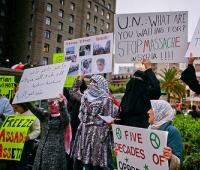
    How can the state violence in Syria be stopped? Daniel Serwer argues in the Atlantic that, given the Syrian regime’s complete failure to protect its own citizens it may be morally justifiable to arm the Syrian opposition; however from a realist perspective it is neither ‘possible nor wise’ as a means to topple Assad and bring about accountable politics. A violent reaction to the state’s overwhelmingly superior violence would not only destroy the opposition’s legitimacy, but would eventually draw them into a militarised conflict that they could not win.

    Serwer strongly advocates mass-participatory non-violent approaches which use tactics that are difficult to attribute to single individuals. In the end, removing the regime’s ability to instil fear will be the surest way to ensure its downfall, as seen in the cases of Zine El Abidine Ben Ali and Hosni Mubarak, and Serwer argues that this is still possible, even now after so much bloodshed.

    Why the Syrian Rebels Should put Down Their Guns

    It is remarkable how quickly we’ve forgotten about nonviolence in Syria. Only a few months ago, the White House was testifying unequivocally in favor of nonviolent protest, rather than armed opposition, against Syrian President Bashar al-Assad and his regime’s awful crackdown. Even today, President Obama eschews military intervention. Yesterday, Yahoo News’ Laura Rozen offered the views of four experts on moving forward in Syria. While one doubted the efficacy of arming the opposition, none advocated nonviolence. When blogger Jasmin Ramsey wrote up a rundown of the debate over intervention in Syria, nonviolence wasn’t even mentioned.

    There are reasons for this. No one is going to march around Homs singing kumbaya while the Syrian army shells the city. It is correct to believe that Syrians have the right to defend themselves from a state that is attacking them. Certainly international military intervention in Bosnia, Kosovo, and arguably Libya saved a lot of lives. Why should Syrians not be entitled to protection? Isn’t it our responsibility to meet that expectation?

    First on protection: the responsibility belongs in the first instance to the Syrian government. The international community is not obligated to intervene. It may do so under particular circumstances, when the government has clearly failed to protect the population. I don’t see a stomach for overt intervention in the U.S. Nor do I think the Arab League or Turkey will do it without the U.S., as Anne-Marie Slaughter suggests.

    The Syrian government has not only failed to protect, it has in fact attacked its own citizens, indiscriminately and ferociously. Self-defense and intervention are justified. The question is whether they are possible or wise, which they do not appear to be.

    The Free Syria Army, an informal collection of anti-regime insurgents, is nowhere near able to protect the population. Their activities provoke the government and its unfree Army to even worse violence. It would be far better if defected soldiers worked for strictly defensive purposes, accompanying street demonstrators and rooting out agents provocateurs rather than suicidally contesting forces that are clearly stronger and better armed. A few automatic weapon rounds fired in the general direction of the artillery regiments bombarding Homs are going to help the artillery with targeting and do little else.

    Violence also reduces the likelihood of future defections from the security forces. For current Syrian soldiers weighing defection, it is one thing to refuse to fire on unarmed demonstrators. It is another to desert to join the people who are shooting at you. Defections are important — eventually, they may thin the regime’s support. But they aren’t going to happen as quickly or easily if rebels are shooting at the soldiers they want to see defect.

    But if you can’t march around singing kumbaya, what are you going to do? There are a number of options, few of which have been tried. Banging pans at a fixed hour of the night is a tried and true protest technique that demonstrates and encourages opposition, but makes it hard for the authorities to figure out just who is opposing them. The Arab variation is Allahu akbar called out for 15 minutes every evening. A Libyan who helped organize the revolutionary takeover of Tripoli explained to me that their effort began with hundreds of empty mosques playing the call to prayer, recorded on CDs, at an odd hour over their loudspeakers. A general strike gives clear political signals and makes it hard for the authorities to punish all those involved. Coordinated graffiti, marking sidewalks with identical symbols, wearing of the national flag — consult Gene Sharp’s 198 methods for more.

    The point is to demonstrate wide participation, mock the authorities, and deprive them of their capacity to generate fear. When I studied Arabic in Damascus a few years ago, I asked an experienced agitator friend about the efficacy of the security forces. She said they were lousy. “What keeps everyone in line?” I asked. “Fear,” she replied. If the oppositions resorts to violence, it helps the authorities: by responding with sometimes random violence, they hope to re-instill fear.

    Could the Syrians return to nonviolence after everything that’s happened? As long as they are hoping for foreign intervention or foreign arms, it’s not likely. Steve Heydemann, my former colleague at the United States Institute of Peace, recently suggested on PBS Newshour that we need a “framework” for arming the opposition that would establish civilian control over Free Syria Army. This is a bad idea if you have any hope of getting back to nonviolence, as it taints the civilians, making even the nonviolent complicit in the violence. It’s also unlikely to work: forming an army during a battle is not much easier than building your airplane as you head down the runway.

    What is needed now is an effort to calm the situation in Homs, Hama, Deraa, and other conflict spots. Russian Foreign Minister Sergei Lavrov, who is visiting Damascus, could help. The continuing assault on Homs and other population centers is a major diplomatic embarrassment to Moscow. The opposition should ask for a ceasefire and the return of the Arab League observers, who clearly had a moderating influence on the activities of the regime. And, this time around, they should be beefed up with UN human rights observers.

    If the violence continues to spiral, the regime is going to win. They are better armed and better organized. The Syrian revolt could come to look like the Iranian street demonstrations of 2009, or more likely the bloody Shia revolt in Iraq in 1991, or the Muslim Brotherhood uprising in Hama in 1982, which ended with the regime killing thousands. There is nothing inevitable about the fall of this or any other regime — that is little more than a White House talking point. What will make it inevitable is strategic thinking, careful planning, and nonviolent discipline. Yes, even now.


    Article Source: the Atlantic

    Image Source: Yunchung Lee

    Comments

    Post new comment


  • New Report Highlights the Links between Poverty, Marginalisation and Terrorism

    New Report Highlights the Links between Poverty, Marginalisation and Terrorism

    Lia Brynjar with Skjølberg Katja | Norwegian Defence Research Establishment | March 2010

    Issue:Marginalisation

    New Report Highlights the Links between Poverty, Marginalisation and Terrorism

    A new report on the causes of terrorism has been released by the Norwegian Defence Research Establishment. The report provides a critical survey of the relevant academic literature and demonstrates the link between marginalisation and levels of political violence and terrorism. 

    The study focuses primarily on theories that seek to explain why some societies are more exposed to terrorism than others, i.e. theories on a national or societal level of analysis. It also examines theoretical frameworks for explaining terrorism on an international or world system level of analysis. The report underscores the importance of understanding terrorism in its political and societal contexts. 

    The report concludes: 

    The fact that terrorists themselves are often well-educated and even wealthy does not disprove any correlation between terrorism and poverty at a country-wide level. Furthermore, the recruitment of operatives and suicide bombers by a terrorist organisation involves a careful selection and screening process, which most likely favours well-educated middle class youth. This does not disprove widespread support for the same organisations among the poor. More importantly, ideologies embraced by terrorist organisations exhort the individual to act on behalf of the workers, the masses, the Islamic umma, the ethnic community in question, etc. Hence, societal ills and injustices suffered by the community, ranging from political oppression and humiliation to poverty and dispossession, become the driving forces for terrorist groups, even if the members themselves may be relatively prosperous within their own societies.

    The full report, Causes of Terrorism: An Expanded and Updated Review of the Literature can be accessed here.

    Comments

    Post new comment


  • User account

  • Sustainable Security

    From The Great War to Drone Wars: The imperative to record casualties

    The centenary of the First World War also marks the anniversary of the practice of recording and naming casualties of war. But a century on, new forms of ‘shadow warfare’ limit the ability to record casualties of conflict and thus threaten to allow states a free hand to employ dangerous new tactics without threat of individual or international accountability. Without verifiable casualty figures, – including information on who is being killed and how – we cannot evaluate the acceptability, effectiveness or impact of ‘remote control’ tactics as they are rolled out among civilian populations.

    Read Article →

    The Costs of Security Sector Reform: Questions of Affordability and Purpose

    In considering security sector reform, questions of affordability have often been subordinated to questions of effectiveness and expediency. A recent series of reviews of security expenditures by the World Bank and other actors in Liberia, Mali, Niger and Somalia has highlighted several emerging issues around the (re)construction of security institutions in fragile and conflict-affected states.

    Read Article →

  • Marginalisation of the majority world

    Marginalisation of the majority world

    A complex interplay of discrimination, global poverty, inequality and deepening socio-economic divisions, together make for key elements of global insecurity. While overall global wealth has increased, the benefits of this economic growth have not been equally shared. The rich-poor divide is actually growing, with a very heavy concentration of growth in relatively few parts of the world, and poverty getting much worse in many other regions. The ‘majority world’ of Asia, Africa and Latin America feel the strongest effects of marginalisation as a result of global elites, concentrated in North America and Europe, striving to maintain political, cultural, economic and military global dominance.

    Why Here, Not There? Investigating emerging nonviolent movements

    John Hopkins University | International Peace and Security Institute | August 2011

    Issue:Marginalisation

    The International Peace & Security Institute (IPSI), in collaboration with The Johns Hopkins University School of Advanced International Studies (SAIS) Conflict Management Program, hosted a high-level panel discussion and networking reception on Wednesday, August 17.  The event, “Why Here, Not There? Investigating emerging nonviolent movements,” examined the dynamics that enable nonviolent movements to occur in some regions and not others at specific moments in time.  The event was broadcast live nationwide and on the internet by C-SPAN.

    Watch the video here: IPSI

    Image source: Al Jazeera English

    Read more »

    Beyond ‘Controlling’ Global Refugee Flows: A Sustainable Security Approach

    Ben Zala | World Policy Blog | July 2011

    Issue:Marginalisation

    Writing for the World Policy blog, Ben Zala analyses the recent announcement of Australia and Malaysia’s agreement to “swap” asylum seekers. He argues that until legitimate attempts are made to address the factors driving refugee flows – such as on-going military conflicts, economic insecurity, and increasing environmental and resource constraints – the problem will only continue to get worse.


    Image source: United Nations. 

    Read more »

    Conflict, Poverty and Marginalisation: The case of Curvaradó and Jiguamiandó (Urabá, Colombia)

    Amira Armenta | Exclusively written for sustainablesecurity.org | July 2011

    Issue:Marginalisation

    In Colombia there are many regions where poverty and the absence, or weak presence, of the state has facilitated the emergence of violence by armed groups. Among these are the Afro-Colombian communities of the Curvaradó and Jiguamiandó in the Urabá region

    Image source: Yuliam Gutierrez

    Read more »

    The Geopolitics of Climate Change

    Chris Huhne | Department of Energy and Climate Change | July 2011

    Issues:Climate change, Marginalisation

    In a speech to Future Maritime Operations Conference at the Royal United Service Institute, London, Secretary of State for Energy and Climate Change examines the security implications of climate change:

    “We cannot be 100% sure that our enemies will attack our country; but we do not hesitate to prepare for the eventuality. The same principle applies to climate change, which a report published by the Ministry of Defence has identified as one of the four critical issues that will affect everyone on the planet over the next 30 years.

    Around the world, a military consensus is emerging. Climate change is a ‘threat multiplier’. It will make unstable states more unstable, poor nations poorer, inequality more pronounced, and conflict more likely. And the areas of most geopolitical risk are also most at risk of climate change.”

    Article source: DECC

    Image source: DECCgovuk

    Read more »

    Drought in east Africa the result of climate change and conflict

    Felicity Lawrence | The Guardian | July 2011

    Issues:Climate change, Competition over resources, Marginalisation

    Aid agencies say that weather in the region has become more erratic and years of war leave populations especially vulnerable

    Prolonged drought in the Horn of Africa is the immediate cause of the severe food crisis already affecting around 10 million people in parts of Kenya, Ethiopia, Djibouti and Somalia. Rains have failed over two seasons, with a strong La Niña event having a dramatic impact across the east coast of Africa. Now this year’s wet season has officially ended, there is little prospect of rain or relief before September.

    Article source: The Guardian

    Image source: Oxfam International

    Read more »

    Selling Nature to Save Nature, and Ourselves

    Stephen Leahy | Terraviva | July 2011

    Issues:Climate change, Competition over resources, Marginalisation

    Avoiding the coming catastrophic nexus of climate change, food, water and energy shortages, along with worsening poverty, requires a global technological overhaul involving investments of 1.9 trillion dollars each year for the next 40 years, said experts from the U.N. Department of Economic and Social Affairs (UN-DESA) in Geneva Tuesday.

    “The need for a technological revolution is both a development and existential imperative for civilisation,” said Rob Vos, lead author of a new report, “The Great Green Technological Transformation”. 

    Article source: Terraviva

    Image source: Paul Keller

    Read more »

  • Moving Beyond Crisis: Survival 2100 and Sustainable Security

    Moving Beyond Crisis: Survival 2100 and Sustainable Security

    William Rees | Movement for a Just World | June 2012

    Issues:Climate change, Competition over resources, Global militarisation, Marginalisation

    In a piece for the International Movement for a Just World, William Rees maps out a vision for what he calls ‘Survival 2100.’ The goal of such a strategy would be “to engineer the creation of a dynamic, more equitable steady-state economy that can satisfy at least the basic needs of the entire human family within the means of nature.” The alternative, Rees argues is to “succumb to more primitive emotions and survival instincts abetted by cognitive dissonance, collective denial, and global political inertia.”

    The call from Rees echoes the sentiment coming from many different – and often unusual – quarters that are responding to the major implications for security and survival of the combined ecological, political and economic crises that either characterise or are looming in the international system.

    While some of the ideas in the piece may need some further thinking through (eg. “The world community will have to agree to fund worldwide social marketing programs to ameliorate “pushback” and bring the majority of citizens on board” – ie. people will need to fund a campaign to convince themselves!), the fundamental focus is sound. Rees identifies the need for a genuinely strategic approach to the governance and management of the global environment and the global economy. Once one thinks through the real costs of inaction on issues like climate change (global insecurity and a greater potential for conflict is but one such cost), the costs that we account for in global market failures take on a different character. Rees argues that “As any good economist will acknowledge, government intervention is legitimate and necessary to correct for gross market failure. Indeed, resistance to reform makes hypocrites of those who otherwise tout the virtues of market economies. Truly efficient markets require the internalization of heretofore hidden costs so that prices tell consumers the truth.”

    Such ideas are not radical at all, simply a reflection of doing the sufficient cost-benefit analysis that planning for long-term survival requires. Therefore the message for national defence planners is clear –attempting to ‘maintain control’ over global insecurity is ultimately futile, the time to put the principles of prevention and sustainability at the heart of national security planning is now.

    The full article on the JUST website is available here.

    Image source: hundrednorth.

    Comments

    Post new comment


  • Sustainable Security

    Democratic Republic of Congo’s sexual violence epidemic is not only a weapon of ongoing violent conflict but an expression of entrenched systemic problems. Indeed, sexual and gender-based violence (SGBV) is most commonly perpetrated by the security services in place to protect civilians. In Quartier Panzi in South Kivu province, innovative processes of security sector reform and strengthened police-civilian channels of communication may be providing an opportunity for change.   

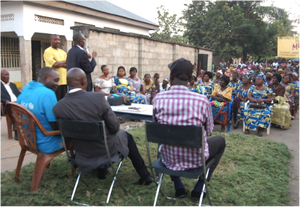
    Meeting of victims of sexual violence in the Walungu, South Kivu in Democratic Republic of the Congo. Source: Wikipedia

    Meeting of victims of sexual violence in South Kivu,  Democratic Republic of the Congo. Source: Wikipedia (from USAID)

    Quartier Panzi—the populous, restive neighborhood of Bukavu, South Kivu province—is renowned in international development circles as the ground zero of the Democratic Republic of Congo’s sexual violence epidemic. Rape as a weapon of war is not so much perpetrated by enemy forces but, most often, by the very parties sent by Kinshasa to protect and serve civilians. Much as Selma, Alabama was to the American civil rights movement, Panzi’s ongoing tragedy has transformed the area into a vibrant arena for grassroots opposition and international solidarity in the fight to restore women’s bodies and lives. Women’s organizations have formed to denounce continued abuses and government denial, to reverse cultural stigmas around female culpability in rape, and to demand trial for Congolese security forces suspected of sexual abuses.

    The courage and commitment of Dr. Denis Mukwege, chief gynecologist at Panzi Hospital and twice nominated for the Nobel Peace Prize, is emblematic of this resilience. International networks like V-Day and Women for Women International support these local actions and fund sanctuaries for survivors, such as the City of Joy. These innovations aim to be restorative and empowering for survivors, focusing on the crisis as experienced by women and girls, offering healing and vocational training options otherwise non-existent. However, the causes of this specific form of cruelty and degradation, rooted in violent masculinities and impunity among security actors, remain unaddressed.

    Rewiring the security sector

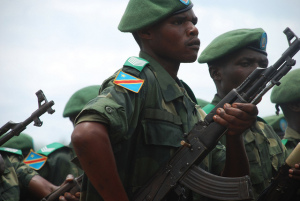
    Congolese soldiers march in Walikale, DRC, 2011. Source: ENOUGH (Flickr)

    Congolese soldiers march in Walikale, DRC, 2011. Source: ENOUGH (Flickr)

    Like any deep malaise, Congo’s rape crisis is but one expression of entrenched, systemic problems. Local witnesses, security analysts and medical professionals who treat survivors present overwhelming evidence that the primary perpetrators are uniformed Congolese security actors. A weak justice system may be responsible for the failure to discipline or punish perpetrators, but the sources of this behavior lie within the security sector itself. Accessing the security elite, Congo’s infamous ‘black box’, is notoriously difficult. As a result, very little analysis exists of the problem from the perpetrators’ perspective: analysis and evidence that deciphers the institutional culture and internal organization of the security sector, or that maps relations between senior officers, politicians and economic actors. By design, opacity reigns supreme.

    A variety of international donors support the national army and police with numerous ‘train and equip’ initiatives, an international cooperation model unchanged since the Cold War.These ‘security development’ partnerships aim to strengthen national capacity through field and classroom training and equipment upgrades; behavior change and public accountability are not part of the approach. Within the security services, there is typically an absence of civilian oversight, and widespread rent-seeking and illicit trade in protected flora, fauna and minerals, but no questions are asked by international partners, as diplomacy and formality dominate.

    Supply-side approaches such as these long pre-date the advent of ‘security sector reform’ among development actors, which does seek behavior change and greater accountability. The older aid modality remains popular with the Congolese leadership because it expressly avoids any calling to account or inculcation of security as a public service and legal right.

    There is state and donor complicity in all of this. Strength without constraint or accountability defines the DRC’s security sector today. Its predatory practices range from unchecked rape and pillage in the East to the repression of free speech and public inquiry, as witnessed by the 2010 murder in Kinshasa of prominent human rights activist, Floribert Chebeya. To placate critics, a military tribunal mounted a kangaroo court in the wake of the murder; the film documenting and exposing its empty theatrics, L’Affaire Chebeya, Un Crime d’Etat, remains banned in Congo.

    Such officially sanctioned practices and attitudes are salient features of the Congolese state since independence, and well known to all Congolese. In the early 1970s, President Mobutu Sese Seko began encouraging civil servants and security forces to ‘feed on the population’ (“Population baza bilanga ya bino). Anecdotes such as these are more than flippant asides; they explain the persistent appeal of this patrimonial compact (across four chapters of Congolese leadership: Mobutu, Kabila père, transitional government, Kabila fils) as a declaration of complicity between political elites and the entire public sector. In its truncated audacity, this single utterance reconfigures and reduces the entire means and ends of the state to elite enrichment and group impunity.

    In Panzi, armed crime and physical/sexual assault reached unprecedented levels in the aftermath of the primary war in South Kivu province. State security had long colluded with local armed gangs, and popular recourse options ranged from individual vengeance to military tribunals, as civil courts are unreliable. Mob justice is also widely practiced. The formation of neighborhood watch groups raised local hopes for improved safety (e.g. SAJECEKForces Vives). Despite their initial popularity, they soon joined local police and armed gangs in perpetrating the very crimes they first sought to oppose.

    How urban police understand this license to extort and harass the population, and the higher interests these practices serve, has been well captured and analyzed by Maria Eriksson Baaz and Ola Olsson. Transforming Congo’s security sector from inside is an elusive challenge, and donors are struggling to develop the programmatic savvy, influence and access to inspire the necessary political will.

    Demand for reform

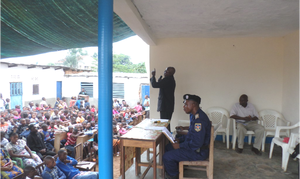
    Community meeting in Kananga, DRC, where security officials and civilian leaders converse directly with local community leaders. Source: DAI Europe (with permission)

    Community meeting in Kananga, DRC, where security officials and civilian leaders converse directly with local community leaders. Source: DAI Europe (with permission)

    The UK’s Department for International Development (DFID) has experimented with alternative supply-and-demand models of public sector reform, and is applying these to the Congolese National Police (PNC). According to this strategy, supply-side ‘train and equip’ assistance targets weak service areas, including the prevention of and response to sexual and gender-based violence (SGBV). This is complemented by efforts to mobilize popular demand for more responsive policing at the community level.

    A particular understanding of the partner institution, the PNC, informed this theory of change. This included the hypothesis that payment of regular salaries would not end extortion and rent-seeking (’tracasseries’) by the PNC, given the scale of these rackets and the enormous sums they generate. With no compelling alternative on offer, and as long as ‘reform’ is understood to involve replacing tracasseries with ‘protecting and serving’, change will elude would-be reformers. Given that such arrangements will not change in the forseeable future, the more nuanced strategy accommodates the reality of low, irregular salaries and uniformed extortion for the foreseeable future, and seeks behavior change through increased public-police interaction. Faster paced improvements in human security and responsive policing began emerging on the demand side of the pilot sites, including Bukavu and Quartier Panzi in particular.

    Launched in Bukavu, Matadi and Kananga in 2009, the Security Sector Accountability and Police Reform Programme (SSAPR) is distinct for coupling its community policing approach with regular neighborhood meetings (forums du quartier) where locally appointed representatives voice their security concerns, identify emerging threats and suspects. It is common for community policing programs to seek a more responsive, service-oriented local police, but SSAPR is distinguished by its effort to cultivate citizen networks at the most local level to identify and articulate their fears, threats and suspicions forward to the actors most able to respond. Police officers, urban administrators, local community and neighborhood leaders then meet regularly in informal, local security councils to discuss proposals for containing a threat or resolving a violent dispute, as equipment and manpower are often lacking. Initiated entirely informally, these experiments in public relations gradually began to change expectations, reinforce collaboration and gain momentum.

    Concurrently, the National Parliament submitted a motion to formalize the Conseils Locaux pour la Sécurité de Proximité(or CLSP, finally passed in late 2013), which recognizes the right of civilian representatives to participate in official security discussions at the municipal level. Over three years, SSAPR legal advisers worked with national parliamentarians to build support and draft a bill. Given the long-standing animosity between politicians and civil society, this new décret was a highly significant opening. The platform has since been incorporated into other police reform efforts (such as the European Union’s EUPOL) that also understand SSR in the Congolese context as primarily a governance challenge requiring civilian involvement.

    SGBV DRC 2

    Community meeting in Kananga, DRC, where security officials and civilian leaders engage directly with local community leaders. Source: DAI Europe (with permission)

    Raising security problems through the CLSP increased dialog between communities and security officials, but who would represent the civilian side? In rough urban neighborhoods like Panzi, citizens experience a host of threats, not all of them equally or in the same way. The SSAPR helped Panzi neighborhood chiefs and community leaders coordinate an informal system whereby youth, women and men would alternately represent their community concerns first to a forum de quartier, then directly on to the CLSP. This neighborhood dynamic continues today across Bukavu’s three communes.

    Making Progress?

    These are small steps toward a more accountable security sector and restored public trust, but has sexual assault around Panzi declined as a result? Recently the SSAPR helped a women’s NGO organize a nocturnal walk through several Bukavu neighborhoods, including Panzi, to record their own safety concerns as well as those of women and girls met along the way. In a recent meeting, NGO members insisted they would never before have visited these neighborhoods, particularly at night, but that the chance to report their findings to a receptive and interested police commisariat justified the risk.

    In response, new light fixtures are planned in darkened alleys where assaults have occurred, and patrols redirected to suspicious areas noted by the NGO delegation. In another pilot city, Kananga (Kasai Occidental), assaults on women and girls who were walking long distances to fetch water, often at night, decreased dramatically after local women lobbied for regular police patrols in these areas. This, in itself, was indicative of a greater local confidence in the police as protectors.

    Community police units are involved in implementing these changes, but they represent a small minority of the PNC. It is unknown if these lower rates of sexual violence are attributable to behavior change among uniformed security or if the increased patrols and better lighting are deterring other possible assailants. Retrospective studies have been conducted, but no consensus exists on the total quantitative extent of SGBV in DRC, where just one in twenty cases is thought to be reported to authorities. Nor are cases raised with the police guaranteed to be registered or pursued. Impunity persists due to a weak national justice system, as well.

    Other insights emerge from this experience, particularly around ‘bottom-up’ approaches to renewed legitimacy in fragile states. In the DRC, where central government continues to stall on commitments to decentralization and provincial institutions exploit this limbo (enrichment via parallel markets; legal and financial opacity) leaving communities in the breach, these small successes show that by investing at the periphery—that most-local interface where citizens and public service providers meet in person—bridges of trust and respect can be built through participatory problem solving. Communities can show resilience and security services can prove they are responsive and effective.

    Edward Rackley is a Security and Governance consultant for the World Bank, based in Washington DC. He provides periodic technical and strategic advice to the SSAPR program via DAI Europe, one of the program’s managing agents. (The views expressed in this article are not necessarily those of these institutions.)

  • Sustainable Security

    Deforestation: REDD-y for peace or fuelling conflict?

    REDD forestry efforts don’t pay enough attention to their influence on local conflict dynamics. For REDD+ to be an effective mechanism to curb deforestation and strengthen peace opportunities, it has to pay more attention to pre-existing land and forest conflicts linked to tenure, take into account the interests of the local communities and be more sensitive to the local context

    Read Article →

    The ‘High Politics’ of Sustainable Security

    If events like those in Ukraine have taught us anything it is that, despite the predictions of many, the potential for conflict between the major powers is still one of the defining characteristics of world politics. Crisis diplomacy and inter-state rivalry is back on the global agenda. But if policymakers, analysts and civil society actors are to try and come up with ways of reversing the trend towards an increasingly competitive, militarised and crisis-driven inter-state order, then thinking carefully through the implications of a sustainable security approach to great power politics would appear to be a most useful starting point.

    Read Article →

    National Security, Climate Change and the Philippine Typhoon

    Super Typhoon Haiyan made landfall in the Philippines on 8 November, and is possibly the most powerful tropical cyclone on record. Beyond the immediate impact of the typhoon, the natural disaster is already proving to be a threat to national security, with reports surfacing of massive looting and military engagement following attacks on government relief convoys. As US and UK naval convoys head to support the situation, Andrew Holland discusses climate change’s impact as a threat multiplier and what plans militaries and governments must make to prevent the insecurity that will come with future disasters of this scale.

    Read Article →

    Can the Nuclear Non-Proliferation Treaty outrun its double standard forever?

    The recent walkout by Egyptian negotiators at UN talks have demonstrated that, like a building with rotten foundations, the nuclear non-proliferation regime is far less stable than many believe it to be. Egypt’s actions make clear that anything less than a regime specifically geared towards addressing the reasons why some states seek nuclear weapons is a regime existing on borrowed time.

    Read Article →

    Myanmar: peaceful transition to democracy or storm clouds on the horizon?

    Analysing a recent report by International Crisis Group, Anna Alissa Hitzemann argues that in order for the transition from authoritarian rule to democracy to be stable, and for peace and security to be sustainable, the government of Myanmar will have to face and resolve major challenges such as idespread militarization and the political and social marginalization (past and present) of ethnic and religious groups.

    Read Article →

  • Sustainable Security

    Drugs and Drones: The Crime Empire Strikes Back

    Ever advancing remote warfare technology is being increasingly used by law enforcement agencies to counter drug trafficking. In response, drug cartels are also adopting new technology to smuggle and distribute drugs. However, the technological superiority of law enforcement-military actors is also causing criminal and militant groups to adapt by employing the very opposite tactic, by resorting to highly primitive technology and methods. In turn, society is doing the same thing, adopting its own back-to-the-past response to drug trafficking and crime.

    Read Article →

  • Sustainable Security

    Women have been leading contributors to ISIS’s strength and capabilities. Female operatives have held influential positions in the group’s proto-state which have been crucial to the advancement of the group’s cause.

    The self-proclaimed caliphate, the Islamic State of Iraq and Syria (ISIS), poses the greatest terrorist threat to the international community today. ISIS’s goal is relatively simple – establish a global caliphate. However, the group’s state-building ambitions have faced recent setbacks due to counter-terrorism successes – the group’s territorial claims in Syria and Iraq and foreign recruitment has declined substantially. Faced with the loss of its caliphate, ISIS has become more reliant on local populations to maintain its stronghold. As a result, many Syrian and Iraqi citizens are left vulnerable to ISIS’s terror tactics, especially women and children.

    ISIS’ treatment of women has placed the organization among the world’s worst perpetrators of gender-based violence. Their brutal tactics include: imprisonment, torture, sexual abuse, and the execution of thousands of Syrian and Iraqi women. Such barbaric treatment is not reserved for non-Muslims; fellow Muslim women are abducted and exposed to horrendous sexual atrocities.   Many women become sex slaves and are sold in markets for a little as $13 USD. Despite their inhumanity towards so many women, ISIS successfully recruits a substantial number of marginalized Syrian and Iraqi females to the caliphate. In fact, ISIS depends on its population of local female to obtain their state-building ambitions.

    Incrementally, Syrian and Iraqi women have attained influential roles in the caliphate despite the inhumane treatment of women in the caliphate. ISIS utilizes the local women residents and their cultural expertise to advance its cause. Their responsibilities include caring for ISIS soldiers as wives, birthing the next generation of jihad fighters, and maintaining order within ISIS’S network of women. Despite their work, international media outlets and counter-terrorism reports have primarily focused on the participation of Western women in ISIS, thereby undermining the role of Syrian and Iraqi women.  To gain better insight on Syrian and Iraqi women’s role in ISIS, delving into the underlying motivations of these women can enable experts to assess and comprehend ISIS’s seduction and lure.

    Motivations of Local Women to Support ISIS

    Image credit: David Dennis Photos

    Women are motivated to support terrorist organizations for multiple reasons. It is important to realize that every woman is motivated for a different, or combination of, reasons. Therefore, it is challenging to determine the exact motivation of any one individual. ISIS’s three year long terror campaign has spread fear and demonstrated its power to control the community. During an ISIS raid on Syrian and Iraqi towns, many households were permanently destroyed – the group harassed, tortured, and murdered individuals that were not compliant. Often, male family members are killed, leaving females to be easily targeted by ISIS. Many women joined the group in order to stay alive.

    The absence of an effective government has allowed ISIS to exploit the local resources and infrastructures. As a result, ISIS is able to operate a quasi-state — developing an Islamic court, a functioning military, and a law enforcement force. Leveraging this advantage, the group controls the local public facilities and services including banks, transportation systems, post offices, grocery markets, etc. ISIS’s ability to rule the land make joining the organization a viable solution for the deprived. Many women turn to support the caliphate for access to basic necessities, such as food, water, and shelter.

    The Roles of Local Women in ISIS

    A) Domestic Roles

    According to ISIS’s Manifesto for Women, a woman’s highest achievement is being a dedicated wife, mother, and nurturer. Her primary functions are to take care of her husband and birth the next generation of jihadists that will continue ISIS’s legacy. Women are expected to remain in the house, hidden and veiled, while they undertake chores such as providing daily meals, cleaning uniforms, and keeping a spotless house. Girls are expected to submit to marriage by sixteen or seventeen years old while they are youthful, pure, and attractive. In the caliphate, younger women are quickly married off to ISIS operatives. However, in true ISIS fashion, the group continues misuse outdated Quranic scriptures to its advantage by legalizing the marriage of nine-year-old girls by glorifying the life of Prophet Mohammed and his young wife. Young girls that are be subjected to this perverted act are locals under ISIS’s rule.

    B) State Building Roles

    While ISIS is notorious for its hardline position on marriage and motherhood, the group’s state-building ambitions permit certain women to undertake jobs outside of the home. Unprecedented in its scopes, ISIS is critical in explaining the importance of recruiting career professionals to help the group attain its objective of creating a jihadi proto-state. In fact, in 2014, an audio recording of ISIS leader Abu Bakr al-Baghdadi surfaced, urging scientists, preachers, judges, doctors, engineers, and scholars to join the caliphate.  Currently, ISIS controls the public and private facilities, which provides them with access to unlimited resources, including existing employees. ISIS’s need for skilled professionals is not limited to men; both genders are responsible for fulfilling their “civil duties”. Nonetheless, regardless of a male’s prior occupation, the majority are placed in ISIS’s military, leaving women to handle the daily activities. Subsequently, there is a larger presence of women undertaking instrumental roles; there are growing numbers of female nurses, educators, and administrators from the area.

    C) Operational roles

    Women of ISIS are also able to participate in offensive combat operations and defensive military activities. In 2014, ISIS created Al Khansaa — an all-female brigade that predominately consisted of Syrian and Iraqi women. The female unit was reportedly formed to enforce ISIS’s strict conception of Islamic morality. ISIS has imposed a dress code requiring all women to wear two gowns to conceal their body shape, black hand gloves, and dark layers of two face veils year-round. No makeup is allowed. To enforce the rules, the brigade patrols towns with AK-47s to ensure that women are compliant. However, the force responsibilities have drastically expanded, which demonstrates how influential women are in the terrorist group. The women perform a variation of activities, including recruiting, intelligence gathering, and overseeing prisoners. ISIS depends on the brigade to lure women; spy on the community and bring in individuals that voice unfavourable sentiment about the organization; and monitor detention camps detention camps where thousands of kidnapped Yazidi Christian and foreign hostages are imprisoned.

    To date, one of the most influential women of ISIS has been a Syrian national, Umm Sayyaf. Before capture by the U.S. military, Sayyaf was a principal advisor to the caliphate leadership on all critical matters relating to women. Her elevated rank highlights how heavily the insurgency has come to rely on certain women to retain soldiers and run day-to-day operations. In her later interrogations by U.S. military personnel, she revealed information regarding the inner-workings of the network including recruitment, intelligence, and sex slavery. Umm Sayyaf also disclosed that the ISIS leader of ISIS, Abu Bakr al-Baghdadi, appointed her to supervise the American hostage Kayla Mueller.

    Conclusion

    Although international news has reported that ISIS has recently faced some setbacks in their territorial claims and foreign recruitment, anticipating the immanent demise of ISIS is a stretch. The group will be maintained for years to come, as a result of its sophisticated network of Syrian and Iraqi women. The participation of local women exponentially raises the threat due to an increasing number of operatives, a unique tactical advantage, and additional technical expertise. Despite their impact, counter-terrorism studies tend to ignore the involvement of Syrian and Iraqi women and in doing so exclusively focus on the participation of foreign recruits. This omission leads to incomplete counterterrorism objectives and possible unbearable consequences.

    ISIS has successfully recognized that empowered women are the foundation of a resilient and stable community. Female operatives will continue to participate at all levels, and the international community must not ignore such contributions. Failure to implement significant changes could lead to the regrowth of ISIS territorial claims and capabilities. By understanding the motivations of, and the roles held by, local women in ISIS this article can help initiatives to counter the group.

    Amanda N. Spencer currently works in the counter-terrorism and anti-financial crime division at Deutsche Bank Securities.  She holds a master’s degree in global affairs from New York University and is passionate about contributing to the world of counter-terrorism. Her research explores the multifaceted roles of women in violent extremism. Her most recent research study on the women of ISIS is available at the Journal of Strategic Security: “The Hidden Face of Terrorism: An Analysis of Women in the Islamic State.”