Blog

  • Sustainable Security

    Carefully Managing Water Resources to Build Sustainable Peace

    Carefully planned interventions in the water sector can be an integral part to all stages of a successful post-conflict process, from the end of conflict, through recovery and rebuilding, to […]

    Read Article →

    In Deep Water: China tests its neighbours’ patience

    Control of water, including navigation rights, resource extraction and the exploitation of shared watercourses is at the heart of today’s geopolitical tensions in Asia. China’s recent actions in the South China Sea and Himalayas have given rise to further—and at times violent—conflict over the region’s natural resources. So will water insecurity lead to greater partnership in Asia? Or will it lead to a revival of China’s traditional sense of regional dominance and undercut efforts to build a rules-based approach to growing resource conflicts?

    Read Article →

    Water Security in South Africa: The need to build social and ecological resilience

    Tackling South African water insecurity will require addressing the technical deficiencies, governance gaps and social inequality that are currently having a dangerous and environmentally devastating impact. The links between environmental health and socio-political stability are clear in South Africa, where there has been an exponential increase in violent protests over poor or privatized service delivery, social marginalization, and unequal access to water. South Africa must act to solidify the links between resilient societies and resilient ecosystems.

    Read Article →

    Bay of Bengal: a hotspot for climate insecurity

    The Bay of Bengal is uniquely vulnerable to a changing climate because of a combination of rising sea levels, changing weather patterns, and uncertain transboundary river flows. These problems combine with already existing social problems like religious strife, poverty, political uncertainty, high population density, and rapid urbanization to create a very dangerous cocktail of already security threats. Andrew Holland argues that foresight about its impacts can help the region’s leaders work together to solve a problem that knows no boundaries.

    Read Article →

  • Sustainable Security

    Islamic State (IS) appear to attach considerable importance to dreams and have started publishing dream accounts of martyred jihadists. Do IS see this as a way of ‘calling’ potential lone wolf jihadists to action?

    Over the last decade, several studies have shown that militant Islamists make extensive use of reported night dreams to inspire, announce, and validate violent jihad. Bin Laden himself brought up dreams in one of the first videos released after 9/11. Mullah Omar was understood by his followers to have founded the Taliban, and run his campaign, inspired and even guided by his dreams. Dream accounts can be found of numerous other well-known militants, including Richard Reid, the failed shoe bomber, the two core 9/11 planners, Ramzi bin al-Shibh and Khalid Sheikh Muhammad, and the ‘20th’ suicide bomber, Zacarious Moussaoui.

    This tradition has continued with Islamic State (IS) members and sympathisers who appear to attach considerable importance to dreams. This article updates the discussion and analysis of the role of dreams for IS jihadists, and, through looking at some recent case studies, asks whether IS is publishing martyred jihadist dreams as a way of ‘calling’ potential lone wolf jihadists to action.

    Dreaming in Islam

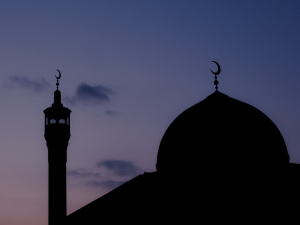
    mosque-night

    Image by four12 via Flickr

    To understand the jihadi appreciation for dreams, it is important to first understand that dreams are both historically and contemporaneously important in Islam. Indeed, today, Arabic TV programs are replete with dream interpretation programs and the internet is awash with Islamic dream interpretation websites.

    The dream tradition is similar across all the main branches of Islam: Sunni, Shia, Salafi and Sufi, as well as amongst the minority Alevi and Ahmadiyya sects. In the Sufi mystical traditions, dreaming is highly regarded. While Sufis have traditionally paid the most attention to dreams, the more literalist Salafis appear to have become more interested in them over time.

    The Islamic tradition distinguishes between three types of dreams: the true dream (al-ru’ya), the false dream, which may come from the devil (shatan), and the meaningless everyday dream (hulm) which could be caused by what has been eaten by the dreamer and comes from the nafs (ego, or lower self).  The interpretive tradition regarding the “true dream” (al-ru’ya) is a fundamental feature of Islamic theology. The true dream tradition is reported more extensively in the hadith. 

    Islamic dream interpretation differs from Western attitudes to dreams, which, being largely shaped by a scientific materialist outlook of the world, generally see dreams as bearing little or no relevance for people. But in Islam, dreams are understood as, on occasion, offering a portal to the divine will, and are seen as the only appropriate form of future divination. Dreams have a special authority as they are believed to communicate truth from the supernatural world (dar al-haq).  Lamoreux summarises the importance of dreaming in Islamic societies:

    Dream interpretation offered Muslims a royal road that led not inward but outward, providing insight not into the dreamer’s psyche but into the hidden affairs of the world. In short, the aim of dream interpretation was not diagnosis, but divination.

    Based on his anthropological research in Egypt, Gilsenan offers further insights:

    In dreams began responsibilities. Judgements were made. Commands issues. Justifications provided. Hope renewed. Conduct was commented on by holy figures, by the Prophet himself, by the founding Sheik who had died some years before but who appeared with his son and successor.

    Dreams were public goods, circulated in conversational exchanges, valorizing the person, authoring and authorizing experience, at once unique and collective visual epiphanies. Dreams thus constituted a field of force and framed interchange between the living and the only apparently dead.

    There is extensive literature on the art and science of dream interpretation in Islam going back over a thousand years, and scholars like Sirriyeh are emphatic about the importance of the Prophet Mohammed’s God-guided interpretation of dreams. Mohammed’s and his companions’ dreams played a significant role before, during and after the Qur’anic revelation. In the six months before the  revelation began, his wife Aisha said his dreams came true like the ocean’s waves. The Prophet’s famous night journey from Mecca to Jerusalem (Laylat ul-isra wal miraj), in which Muhammed ascended to heaven and was initiated into the mysteries of the cosmos, is understood by many Muslims, though not all, as being in a dream vision (al-ruya can refer to vision and or dream). Mohammed would start the day asking about his companions’ dreams as a source of possible illumination and spiritual guidance. The Prophet’s companion, Abd Allah b. Zayd, is understood to have dreamt the Islamic call to prayer. There are three dream reports in the Qur’an, two reported as received by the Prophet Mohammed. One of these directly relates to the decisive Battle of Badr  (624 CE). The Joseph Sura contains the reported dream experiences of the Prophet Joseph, such as that of the seven fat and seven lean cows.

    The continued vitality and relevance of dreams in the Islam is well shown in the following examples of Islamic State fighters drawn from Dabiq, the Islamic State magazine.

    Recent dream accounts published by Islamic State

    In April 2016 (issue 14) Dabiq published three dream accounts purporting to have inspired Khalid El Bakraoui in his martyrdom operation on the Brussels metro killing 14 people. Khalid’s first dream was a ‘life-changing’ dream in prison in which he fought alongside the Prophet Mohammed against unbelievers. After the Paris 2016 attacks he is reported in the same Dabiq as having had two further motivational dreams. In the second, he ‘arose to a high place, as if I was in space, surrounded by stars; but the sky was the blue of night’. He says he heard a voice telling him he was only created to worship Allah and ordering him to fight for his cause and make his word supreme’. The third dream follows on almost in a sequence as Khalid dreams of his own martyrdom:

    I saw myself on a boat along with Abu Sulayman and another brother. Each of us had a Turkish soldier as a hostage. I had a pistol and Abu Sulayman had a belt. I told him to give me his belt, as I would feel better having it. So he gave me the belt and I gave him my pistol. I then quickly advanced with the Turkish hostage in order to close in other soldiers, two of whom were in front of us. I detonated my belt, killing the soldiers. My head then descended to the ground. One of the brothers working on the operation and Shaykh al-Adnani took my head and said, ‘check to see if he is smiling or not’. I then saw my soul and those of the three soldiers. All of a sudden, the soldiers souls burned and vanished and, suddenly, the banner of Islam – represented in the dream by the flag of the Islamic State – came out of the earth and was shining brightly. My soul then became full of light’.

    He then claimed he heard a voice telling him he had achieved deliverance.

    This tripartite dream account sequence evokes familiar Islamic dream tropes, images and ideas. In the first dream we see the dreamt and visualised conversion to violent jihad, including the ‘presence’ of the Prophet Mohammed which is understood in Islam as denoting a holy dream if the dream message is congruent with the teachings of the Qur’an and hadiths. Prison surroundings are famous, or infamous, for religious conversion dreams as many customary behaviours are circumscribed.

    The second dream report reads as almost from an ancient holy text; high places and mountain tops are traditionally sites of vision. Indeed Attar’s famous C12 epic Sufi poem ‘The Conference of the Birds’ (Farid ud-Din Attar, 1984 (written 1177) is a tale of Islamic revelation and enlightenment, symbolised by the human journey to the mountain top from where and from within Allah/God can be directly known and joined. The instruction to worship, fight and ‘make his word supreme’ would make excellent sense to a pious Muslim as long as the notion of fighting was referenced to the greater jihad of fighting the lower self, the nafs or selfishly orientated ego. Khalid’s membership of IS and the bloody and relentless killing of all peoples of a different religious persuasion (or none) by IS will have been experienced and apparently shared by militant jihadists as an example of the highest call to arms and martyrdom.

    The third dream completes the sequence from the first calling dream to his visualised death and the spiritual testing of the martyrdom operation. Authorisation and sanctity are communicated via the imagery of Khalid’s soul being composed of, or infused with, light while the enemies (Turkish soldiers) clearly have weaker or non-existent souls which may help validate (to themselves and others) their killing even though they are also Muslims. The dream also conveniently defines Islam as Islamic State. And then ‘deliverance’ is signified at the end of this epic dream narration sequence. As propaganda, now to be read by thousands of jihadist and interested potential recruits, almost all of whom may be aware of the potentially sacred nature in Islam of at least some dreams as being divine emanations and commands, this dream story is a classic. Remove the IS context and many Muslims would feel blessed to have received such dreams.

    In the following Dabiq (no 15) a future paradise dream example is quoted:

    Abul-Muthanna as-Sumali (Ali Dirie) was a man of great character and worship. After being imprisoned by the Crusaders for seven years, he was able to flee Canada despite being banned from travel. Upon the official expansion of the Islamic State to the Levant, he rushed to revive the Muslim Jama’ah through his bay’ah. Several weeks later, he had a dream in which the Hur (the maidens of Paradise) gave him glad tidings of martyrdom on a specific date (one which I have forgotten). A week before his martyrdom, several of our friends decided to go shopping for new military attire. He told them he wouldn’t be going with them, because he was expecting martyrdom soon, and narrated to them his dream. When that day arrived ….Abul-Muthanna rushed to battle ….fighting, until he was severely wounded, bleeding until he surrendered his soul to his Lord….May Allah accept him and add the blessing of caliphate we enjoy today to the scroll of his good deeds and that of all other martyrs.

    These issues are the first times Dabiq has contained personal dream reports of significant IS members intending to demonstrate the glorious Allah inspired sacrifice of their martyrs.

    Dreams may also feature in decision-making processes at different levels in the Islamic State organization. It was reported that Abu Bakr al-Baghdadi’s decision to withdraw forces from Mosul in late 2014 was inspired by a dream in which Prophet Mohammed ordered al-Baghdadi to evacuate the city.

    Both IS leaders and members strongly relate to their night dreams and IS have started recently publishing them. Is there a particular purpose to this new propaganda practice using dreams?

    The transpersonal communication of night dreams in Islam

    ‘Heroic’ (in an Islamic form/genre) dream accounts are now being ‘weaponised’ to influence other IS members, followers and jihadi wannabees. We know the media has enormous effect on our dreams. We also know, though this is maybe irrelevant as IS hate Sufis due to their shrine and Shaykh workship, that in the mystical Sufi Islamic groups it is normative for the top Shaykhs to ‘send’ dreams to their followers.

    In April 2005 I interviewed Shaykh Nazim, a famous Naqshbandi Shaykh, who is now deceased, following numerous reports by his UK followers that he was sending them night dreams of spiritual advice. He told me, “Yes, sometimes I send my power in dreams, when necessary.” I asked how he did this, and he said, “First you must take a step, even half a step, away from the material world, and we Sufis have ways to do this”; enigmatic indeed!. Can dreams be implicitly or even explicitly ‘sent’ in some form, or maybe just believed to be so communicated? Such a thought may well seem farfetched and fanciful to Western post-enlightenment minds, but certainly many Sufis think so and such practices have a long history in Sufism.

     Conclusion

    The last two Dabiqs have contained personal dream reports of significant IS members seemingly for the first time. IS recognise and value some kinds of night dream accounts and see a role for them in their movement’s public propaganda war; so why now for this high tech, high media skills Caliphate-named organisation? IS are slowly being degraded from without and are ruthlessly striking at Western symbolic soft population centres; IS are now strongly encouraging their followers to attack western centres; we see a rise in the self-inspired, via the internet and perhaps dreams, of the lone wolf who is previous to their attack, untraceable. A few lone wolves in summer 2016 seem to have responded to IS media exhortations to attack western targets and some seem clearly to have a history of prior mental illness. Does this make them more vulnerable to being influenced by dreams? We don’t know yet. But vulnerable young people on the net who spend a lot of time reading about the ‘heroic’ caliphate and its actions may well start having related dreams.

    Intelligence agents have spoken to me (2012) of the critical role of dreams in motivating potential jihadis from contemplation to decisive action. I was once told of a jihadi dreaming of his future death during anticipated jihad in Somalia, and another agent told me about a prospective jihadist experiencing two different peoples’ contradictory voices debating with him in his dream about whether he should go on jihad. Such uninterpreted and undigested dream images and accounts may conceivably convince a vulnerable young person, possibly after their consulting an IS dream interpretation twitter account and/or their baqiya (IS ‘family’), that their holy mission is through violent jihad. Is it possible then that potential lone wolves, perhaps with histories of mental health problems, believe themselves as being ‘called’ and then in part recruited not only through the internet, but through the sublime power of ‘glorious’ dream accounts of recent jihadi martyrs? We will have to wait for more autobiographical, media and trial accounts to emerge to know.

    Dr Iain R. Edgar is Emeritus Reader at the Department of Anthropology, University of Durham, UK.

  • Sustainable Security

    michael-photo-low-res-jpeg2Dr Michael Nest has expertise in political and social issues around mining. He is also an anti-corruption expert and formerly worked for the Independent Commission Against Corruption in Sydney, Australia. He has recently focused on building capacity to prevent corruption in community development programmes, including a research paper on corruption in local-level development schemes funded by mineral revenues.  Michael is the author of Coltan (Polity Press, 2011), which is about the changing global supply chain for the mineral ‘coltan’ (or tantalum), the new US legislation focused on conflict minerals, and China’s emerging role in the market for this mineral. In 2012 and 2014, Michael advised African governments on the new certification mechanism for tin, tantalum, tungsten and gold being established to prevent conflict minerals from Central Africa entering the supply chain.  His latest co-authored book, Still a Pygmy: the unique struggle of one man’s fight to save his identity from extinction (Finch, 2015) is the first memoir by a Pygmy ever published.

    In this interview, Dr. Nest discusses the political, environmental, ethical and social issues surrounding the mining of columbite–tantalite (coltan).

    Q. In the past, arguably very few had heard of coltan. Yet in the past two decades it has entered into discussions in the UN and featured in several international media outlets’ reports. What is coltan and what is it used for?

    Coltan is the nickname for the mineral ‘tantalite’.  When processed, the mineral tantalite is called tantalum – so tantalum is the metal.

    Coltan – or properly speaking, the metal ‘tantalum’ – has a wide application.  About two-thirds of coltan is used in a device called a ‘capacitor’.  Capacitors are found in electronic products, especially consumer electronic products such as mobile phones, laptops, gaming platforms, and ipads, and are used to store and regulate the flow of electricity from the source of power (such as a battery) to the working parts of the device.  Capacitors have a crucial role in ensuring there is no power surge or fluctuations to the device that could disable or break it.  Coltan is also used for special alloys (mixtures of different metals), in memory chips for electronic consumer goods, and special coatings (such as on camera lenses).

    Q. In which parts of the world is coltan mined?

    Coltan comes from three sources: as a by-product of tin slag (20% of supply) – ‘slag’ is the waste material that sits in dumps around historic tin mines; recycling (30% of supply); and mines (50% of supply).

    Coltan is extracted from tin slag in Brazil, Malaysia and Thailand.  Coltan that comes from recycled scrap materials is extracted at metal recycling plants in many countries around the world.

    In terms of mines producing coltan/tantalite, these are found around the world.  In 2016, according to the US Geological Survey, the biggest producers of coltan are Rwanda, D.R. Congo, Brazil, China, and Australia (in this order), although historically Canada and Ethiopia have also been significant producers, and Australia was the largest producer until the global financial crisis in 2008.  There are lower levels of mine production in Mozambique, Namibia, Nigeria, and Zimbabwe.  Tantalite deposits have been identified and are being explored in Canada, Colombia, Egypt, Greenland, Madagascar, Namibia, Saudi Arabia, Sierra Leone, South Africa, Tanzania, Venezuela, and Zimbabwe.

    Q. There has been some literature examining the relationship between coltan extraction and violence with a fair amount of discussion focused on the Democratic Republic of the Congo (DRC). What role did coltan play in the DRC’s war?
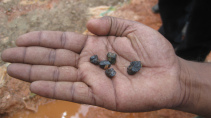
    coltan

    Image of coltan via Responsible Sourcing Network/Flickr

    The allegation made by activist organisations focused on reducing conflict in the D.R. Congo is that profits from coltan mining were a primary source of funding for armed militias waging war against the government.  These militias, so the argument goes, used coltan profits to buy weapons and food, which allowed them to wage war.  Militias in the DRC are notorious for their attacks on civilian populations, so the argument was not just that coltan profits perpetuated conflict against the government, but also that these profits were a chief cause of massacres of civilians, systemic rape and widespread destruction of property of civilians who live in Eastern DRC where coltan mines are located.

    In the late 1990s and early 2000s, activist organisations – as well as some media, academics and the UN – made connections between coltan profits and conflict in Eastern DRC, and focused overwhelmingly on coltan and not other minerals.  Many journalists continue to portray coltan as a major cause of conflict, although other commentators have now backed away from such simplistic claims and talk more broadly about ‘conflict minerals’ and acknowledge that conflict in the DRC occurs for a complex range of reasons.

    Conflict in Eastern DRC occurs for multiple reasons, including:

    • Local level struggles by powerful individuals for political domination
    • Competition for land for agricultural purposes
    • Ethnic rivalry
    • For control of natural resources, especially minerals
    • To protect land from outsiders seeking to exploit it (e.g., miners and loggers)
    • Poor men waging war as a means of making a living through theft and looting

    There were also broader factors around national-level conflict over the past 20 years that have drawn in local level actors and created incentives for war, including: military campaigns in DRC territory by the Rwandan and Ugandan armies (supposed by their local Congolese allies) focused on security concerns regarding opponents of their respective governments; defensive military campaigns by the DRC armed forces and government-allied local forces against the Rwandans and Ugandans and their proxies in the DRC, including retribution against civilian populations when they have regained territory; and armed groups with regional political agendas that oppose the DRC national government.  Fighting over mineral deposits was a minor element in all of these conflicts (a UN estimate of 1,500 local-level conflicts in the early 2000s was that fighting over natural resources accounted for only 8% of all conflicts), and conflict over coltan deposits was even less significant.

    As I argue in my book Coltan (Polity 2011), some armed groups did, however, profit from coltan and undoubtedly these profits were used to buy weapons, food and other material used to wage war.  These profits were gained in four ways: armed groups stole coltan stocks from mine sites and mining companies’ depots; armed groups directly controlled production of coltan by controlling mines themselves; armed groups taxed the trade of coltan into and out of territory they controlled (as they did for other minerals and goods); and armed groups became directly involved in the export of coltan from Central Africa to the buyers on the international minerals market.  Calculating profits made from coltan is difficult, but I estimate that the total amount made by the Rwandan army from coltan in 1999 was approximately US$62m; by the Rwandan army and its Congolese-based ally (the RCD-Goma) in 2000 approximately US$10m; and by all armed groups in 2008 approximately US$11.8m.  Note that the high total in 1999 was largely because the price of coltan on the international market boomed that year and in 2000.

    In sum, the war in the DRC was never just about minerals, and was certainly never just about coltan (gold, tin and tungsten were also importance sources of mineral revenue in the 2000s).  Tracing the role of coltan in war in the DRC, however, can tell us a lot about the connections between natural resources and conflict generally and research into these connections have helped broaden our understanding of the relationships between these natural resources and war.

    Q. Were any Western corporations responsible for indirectly financing armed groups during the war in the DRC through purchasing coltan from the country?
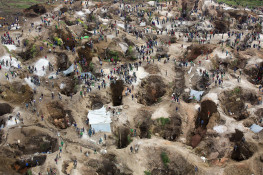
    Luwowo Coltan mine near Rubaya, North Kivu the 18th of March 2014. © MONUSCO/Sylvain Liechti Luwowo is one of several validated mining site that respect CIRGL-RDC norms and guaranties conflict free minerals.

    Luwowo coltan mine near Rubaya, North Kivu, DRC. Image by MONUSCO/Sylvain Liechti/Flickr

    During the wars between 1998 and 2003 companies from many different countries were involved in the coltan trade, including Western corporations.  The UN’s Report of the Panel of Experts on the Illegal Exploitation of Natural Resources and other Forms of Wealth in the D. R. Congo (April 2001) identified scores of private trading, brokerage, banking and transportation firms that participated in the illegal exploitation of natural resources from the DRC by trading or importing coltan from the DRC.

    While almost none of these transactions were directly with armed groups (with the probable exception of some transactions involving Rwandan and Congolese firms), foreign firms were an important element of the coltan commodity chain that enabled armed groups in the DRC to profit from the production and export of illegally mined coltan to the rest of the world.

    Because of the conflicted and dangerous conditions in Eastern DRC at the time, few foreign companies sent representatives into the country.  Instead, smaller Congolese or Rwandan trading firms bought and transported coltan into Rwanda, from where international minerals trading companies then imported it.  The UN identified twenty-seven firms from the following countries that imported coltan from the DRC via Rwanda: Rwanda (2 firms), Malaysia (1 firm), Germany (3 firms), Belgium (10 firms), Switzerland (1 firm), Netherlands (4 firms), UK (2 firms), Kenya (1 firm), India (1 firms), Pakistan (1 firm), and Russia (1 firm).  These firms sold the coltan they imported on to other minerals trading firms, or they sold it directly to processing plants.

    Three big minerals processing plants bought much of the coltan that was exported via Rwanda during the early phase of the Congo Wars: Cabot from Canada, HC Starck from Germany and Ningxia Non-Ferrous Metals Smelter from China.  After 2001, Cabot and HC Starck released statements saying they no longer bought Congolese coltan.

    Several airlines were involved in flying coltan out of Rwanda to second destinations, including Alliance Express (then 49% owned by South African Airways and 51% owned by the Rwandan government), Kencargo International (20% owned by Martinair), Airflo, Astral Aviation, and Martinair Holland, as well as the former Swissair and Sabena before these airlines collapsed.

    The UN’s final report into the illegal exploitation of natural resources in the DRC (published October 2002), recommended placing financial sanctions on 29 companies from Belgium, South Africa, Zimbabwe, Rwanda, Uganda and the DRC itself, that were identified as being involved in the illegal coltan trade.  The same report identified businesses from OECD countries that the UN considered to be in violation of the OECD Guidelines for Multinational Enterprises, including from the UK, USA, Belgium, Switzerland, and Germany.  Firms from non-OECD countries that were also identified as having violated these guidelines were from Malaysia, China, Hong Kong, South Africa, and St Kitts.  The UN did not recommend sanctions on these OECD and non-OECD firms.  Rather, it brought attention to the firms’ breaches of these guidelines, presumably with a view to the companies then being reported to the national reporting contact point for such breaches in the relevant OECD country.

    Q. In addition to the human rights issues attached to the coltan industry, is the mining process itself environmentally harmful?
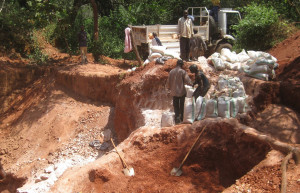
    coltan-miners

    Workers in a coltan mine in DRC. Image (cropped) via Responsible Sourcing Network/Flickr.

    Yes, there are environmental harms associated with coltan mining.  In the DRC, coltan mining overwhelmingly uses artisanal and small-scale (and occasionally medium scale) methods, although the harms these methods cause to the environment are not distinctive in that there is nothing specific about mining coltan that creates a different kind of harm to, for example, tin or tungsten.  Compare this to gold, where there are harms associated with the use of mercury.


    In the DRC when a coltan deposit is found, miners rush in to exploit the site, regardless of whether it is on agricultural land or in a national park, and the mining destroys the potential for the land to be used for grazing or cropping, or as a biological reserve for fauna and flora.  Like other artisanal mining of minerals, artisanal coltan mining involves stripping forest and bush cover, then any topsoil, and digging pits to a depth of about 6m to get access to the ore deposit.  Water, provided through a pump system where a generator can be used, or by diverting a creek or river if a generator is not available, is used to soften the earth and rock, to break it up, and then to separate mineral ore from soil and to wash away the soil.  Water use is a major factor in the environmental harm caused by mining.

    As I outlined in my book Coltan on pp.49-50, specific environmental effects of artisanal coltan mining include the following:

    • Forest clearance to expose soil for mining;
    • Cutting of timber to build worker camps;
    • Cutting of firewood;
    • Removing the bark from trees to make panning trays to wash coltan;
    • Pollution of streams by silt from washing process;
    • Diversion of streams from their original course;
    • Cutting lianas to make baskets to carry coltan;
    • Hunting animals, including for food, ivory and other body parts;
    • Animals injured after escaping snares;
    • Disturbance of fauna due to people resident in, and moving through, reserves;
    • Reduced population of invertebrates and reduced photosynthesis in aquatic plants due to silting of streams;
    • Reduced fish stocks in lakes and rivers affected by silt pollution;
    • Erosion, including landslides, of unprotected ground during rains;
    • Ecological changes due to loss of key species, such as elephants;
    • Long-term changes in watershed due to rapid run-off in deforested areas;

    There have been some studies that document these impacts.  A study of mining communities in the Kahuzi Biéga National Park in 1999 found that they ate elephants, gorillas, chimpanzees, buffalo, and antelope – all poached from the park.  However, a subsequent report in 2001 found that tortoises, birds, small antelope, and monkeys were being eaten because all the big animals had been killed.

    Q. Do you feel that there are any plausible ways for companies to be certain that the coltan they use in manufacturing their products is not from a conflict zone or unethically produced?

    A company can improve certainty around the origins of any coltan used in its products, if it sources metals directly through a smelter that has an exclusive long-term contract with a coltan producer in a country such as Brazil, China, or Mozambique.  In such smelters, supply from these producers is so consistent there is virtually no likelihood of it being ‘contaminated’ by ore from other destinations.  The conflict-free smelter programme, which works with over 200 smelters, has safeguards in place to verify the origins of minerals processed by its members.  While there is always a chance that these consignments of minerals could be mixed with ore from militia-controlled mines in the D.R. Congo, this would be fairly unlikely as the reputation of the smelter (and the programme) is at stake and there is considerable due diligence around the provenance of minerals.

    The challenge of sourcing ethically produced coltan is complicated when companies are buying components, especially components manufactured from yet other components, to manufacture their final goods, e.g., electronic items.  It is impracticable for an end-manufacturer to check the origin of all the metals that are used in all components – because literally thousands of components may be involved – and unrealistic to think that companies are able to do this.  The best they can do, is try to identify component manufacturers that have declared they will abide by ethical standards for sourcing minerals and have systems in place this claim to be verified – and of course end-product manufacturers should insist on seeing evidence of such checks.

    It is important that all D.R. Congo coltan is not seen as being a ‘conflict mineral’, in a way that become common after the US Government first passed its conflict minerals Dodd-Frank legislation in 2010.  Civilian Congolese producers of coltan should be allowed to sell their product on the world market, and such production and trade is one of the few economic opportunities available to many Congolese.  The emphasis in terms of due diligence around ethical production of coltan should be on determining if coltan comes from conflict zones and is produced by armed groups, rather than if it comes from the DRC itself – this is an important distinction.  There are various schemes in place, or being established, in the DRC to ensure civilian-produced coltan is traced through to export.  The most well-known of these is the industry traceability and due diligence programme for coltan, tin and tungsten, which is managed by the International Tin Research Institute.

    Q. As you mention, there have been a range of international efforts that have endeavoured to address the ethics surrounding coltan mining. Overall, do you feel that current efforts are succeeding or falling short?

    Efforts have brought attention to ongoing violence and instability in the DRC, which is a good thing.  The problem is that the focus of activists, and even government initiatives such as the US Dodd-Frank legislation, has often been solely on conflict minerals as a cause of violence rather than a range of factors.  Thus, while there is heightened attention, there is also a simplified narrative being propagated that is detrimental to understanding the causes and consequences of the conflicts.

    There is no doubt that international efforts have had an effect on the mining industry in DRC, but also Rwanda.  The passing of US legislation and consequence temporary embargo by the DRC government in late 2011 on any exports of conflict minerals, severely curtailed mining and trading of these minerals in eastern provinces (it was business as usual for mining in other provinces, such as Katanga).  This showed that international efforts can definitely have an impact (presumably President Kabila of the DRC felt that he had to impose the embargo to appear to be doing something about the conflict minerals trade).  New OECD regulations, the conflict-free smelter program and the International Tin Research Institute’s ‘tag and bag’ scheme for tin and coltan in Rwanda and some mines in DRC are also closing opportunities for ‘laundering’ conflict minerals through civilian-controlled supply chains, while also guaranteeing opportunities for civilian-produced and traded minerals.

    There are criticisms of these schemes, especially ITRI’s tracking scheme which is expensive for participants, and regional governments and officials feel they are excluded from its data or operations.  Nevertheless, in a complex and difficult political and economic environment, the combination of regional and international efforts have resulted in more mines and more mineral transactions coming under civilian control, and therefore generated economic opportunities for Congolese civilians.  This said, anti-government militias and the DRC army are still involved in some mining and trading of the 3Ts and gold.

    The big question is whether current political tensions around President Kabila’s possible election to a third term, will cause the ITRI scheme to be suspended, see renewed militias activity in Eastern provinces, and a resumption of widespread smuggling of minerals out of Eastern Congo into Uganda, Rwanda and Burundi.

    Q. Do you think China will complement the efforts of Western organizations and the DRC’s own efforts at cracking down on the conflict mineral trade or will China’s status as the world’s largest coltan refiner make matters more difficult?

    sea_of_phones

    Coltan is used in electronic devices such as mobile phones. Image via Wikimedia.

    To answer this question properly, we have to pull apart the idea of ‘China’.  The Chinese government may have some interest in protecting its international reputation by participating in or publicly supporting international government initiatives to control the production and trade of conflict minerals.  This might include passing some minimal regulation on its own industry (possibly that it has no intention of enforcing).  It will have no interest in supporting activist initiatives, as it will not to want to fuel or strengthen independent civil society, let alone one that might actually have influence over aspects of international commerce.  The Chinese minerals industry, on the other hand, is aware of its strong and growing position in the global mining and minerals sector – a sector that the Chinese government itself sees as strategic.  Without pressure from its own government to desist from importing, smelting or otherwise trading in conflict minerals, the Chinese minerals industry will see no reason to change the current situation.  Some Chinese consumer product manufacturers, especially in the electronics sector, will be aware of the potential for boycotts by Western consumers to damage their sales and reputation, but Western consumers are not significant for some electronics manufacturers.  Asian (especially Chinese), African and Latin American consumers will be far more important, and awareness or concern by these consumers about conflict minerals is low.  In sum, while Chinese actors may be interested in some international efforts to regulate the trade of certain products, conflict minerals will be low on the list of priorities and there is unlikely to be any Chinese effort in this regard.

    Q. Looking to the future, what impact do you feel Donald Trump’s presidency may have on talking the problem of conflict minerals?

    Trump made it clear during his campaign that he is in favour of minimal regulation for business and that the US should be more isolationist in terms of spending less time and effort worrying about global affairs.  Given that responses to conflict minerals are based around additional regulations for business (regulations that everyone agrees have a cost in terms of compliance), which also represent an effort by OECD governments to shape conflict minerals production and trade in Central Africa, a Trump administration is highly unlikely to have much, if any, interest in such initiatives.  US business groups have already contested the regulations of the Dodd-Frank Act, and they will see a Trump presidency as creating another opportunity to exert pressure and have the regulations pared back or abolished.  A Trump administration is also likely to cut funding for USAID projects focused on capacity building for Central African governments to regulate production and trade of the mining industry.


  • Sustainable Security

    Climate refugees – those forced from their homes due to the impacts of a warming world – are living proof of the international community’s failure to prevent climate change. International coordinated action is urgently required to forge a protective framework for increasingly vulnerable populations.  

    In the last six years, 140 million people – some two per cent of the Earth’s population – have been displaced by weather-related disasters alone. The Intergovernmental Panel on Climate Change (IPCC) highlights that climate-induced displacement presents a global-scale, long-term threat to human security. A new report from the Environmental Justice Foundation (EJF) meanwhile, argues that current global governance on climate change and displacement fails to mitigate serious threats to human security in some of the most deprived regions of the world.

    Asymmetric impacts, global concern

    The degradation of the natural environment as a result of climate change undermines the social, economic and political support structures which all human communities rely on but disproportionately affects the world’s most vulnerable and marginalised populations. The worst-affected countries and populations within countries also tend to be those least responsible, historically, for the carbon-intensive global economy which fuels the climate crisis.

    The threat that climate change presents to human security is not only related to the dramatic impacts accompanying and following rapid-onset disasters. Slow-onset processes of change such as rainfall variability can erode household-level resilience – the ability to absorb and respond to stressors – by degrading and reducing access to physical, financial, social, political and natural capitals. This is why, for poor and marginalised households, negative impacts which unfold over time can lead to a downward spiraling of livelihood insecurity.

    Although both the sequencing and geography of climate change impacts and their effect on ecological, social, economic and political systems are critical determinants of vulnerability, their intensity is not. Even in response to steady changes in natural systems, social systems can rupture and shift dramatically. This shifting can ‘downgrade’ entire systems – causing changes to cascade through systems across scales and fundamentally reconfiguring both the system and its resilience to future stress. This capacity for abrupt change to transfer across scales means that the negative impacts which climate change has on human security are a global concern.

    Demographic changes, particularly those resulting from overpopulation and large-scale, unplanned movements of people, can further undermine the coping capacity of social-ecological systems. In this sense, population displacement can be both a cause and result of human insecurity linked to climate change. The distinct patterns of displacement that are associated with climate change unfold over different timescales, requiring different policy and programmatic interventions, which exacerbates the challenge to decision-makers.

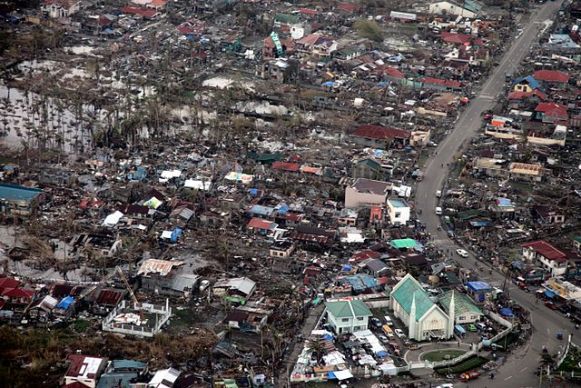
    Aftermath of Typhoon Haiyan in Tacloban, Philippines

    Aftermath of Typhoon Haiyan in Tacloban, Philippines. Source: Wikimedia

    The need for a rights-based approach

    Looking at vulnerability by ecological zone, employing disaster risk reduction technologies and mainstreaming climate change adaptation can all assist in alleviating climate-induced displacement. But at the same time, rights-based standards and instruments are urgently required to define the obligations of states, ensure sufficient resourcing and enshrine the entitlement of affected populations to move safely, positively and with dignity. Upon examining the various legal and policy frameworks currently governing climate-induced displacement at the international level, it becomes apparent that the ‘protection gap’ is more like a series of holes. This suggests the need for a new global framework which is broad in scope and sensitive to the needs of multiple populations of concern.

    One of the key gaps is the inadequate assistance provided to displaced populations in the aftermath of extreme climatic events. Absence of sufficient support leaves the worst affected unable to recover and increases their vulnerability to future threats. Six months after Typhoon Haiyan which hit southeast Asia in November 2013, two million people remained without shelter and exposed to another typhoon season. The 140.5 million people worldwide displaced by climate-related disasters since 2008 indicate the scale of this challenge. With projections pointing to increases in the frequency and magnitude of future extreme weather events, the number in need of assistance is expected to soar.

    The international community also fails to safeguard those fleeing gradual changes such as rainfall variability and saltwater intrusion. Research shows that slow-onset changes are significant drivers of permanent out-migration – one recent study estimates that an additional 2°C rise in temperatures could force up to 5% of Indonesia’s population (12.4 million) to migrate by the end of the century. When people move across borders to cope with environmental change – whether to seek employment or as an act of desperation – international governance systems fail to recognise the key climatic driver of their movement. The hundreds of thousands of Somalis who fled into Kenya in 2011 were unique in being granted prima facie refugee status by the UN’s refugee agency – even though many were escaping from drought and not conflict or persecution. Failing to recognise the problem makes it very hard to build fair and equitable solutions.

    Planned or assisted relocation and resettlement also represents a significant protection gap. Vietnam, Mozambique, the US, China, Papua New Guinea and several small island states are a few of the countries currently implementing relocation and resettlement programmes. However, these are undertaken in the absence of rights-based standards. This can make marginalised populations on the fringes of society vulnerable to a whole host of new pressures and abuses. In Vietnam and Mozambique, ill-conceived and poorly executed has destroyed livelihoods, raised unemployment, increased debt and removed access to basic infrastructure.

    The starkest protection gap is for ‘sinking island’ states. Around 40 small island states are considered to be at serious risk from climate change, with the 574,000 inhabitants of the lowest-lying islands of the Maldives, Tuvalu, Marshall Islands and Kiribati facing the biggest threats. The submersion or climate-induced collapse of a state has significant implications for human rights, national security and legal sovereignty. Whole populations will be rendered ‘stateless’ – with no territory of their own and no right to be admitted into other countries.

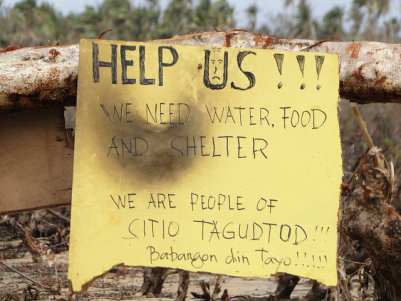
    Sign on display in Philippines following Typhoon Hayan

    Sign on display in 2013 following Typhoon Haiyan. Source: Flickr | European Commission DG ECHO

    A new legal environment

    A crucial first step for the international community is to continue to interrogate the relationship between climate change, human insecurity and population displacement. In particular, legally-worded, rights-based definitions to describe climate-induced displacement should be the starting point to seal the cracks in global governance frameworks.

    Many have suggested using the 1951 Refugee Convention to extend protection to those displaced by the effects of climate change. There are a myriad of reasons why this is not practical or desirable but the strongest one is perhaps the fact that renegotiating or amending the 1951 Convention may undermine existing protections for those fleeing conflict and persecution by allowing countries to pull out of what many already consider to be a burdensome agreement. From the Guiding Principles on Internal Displacement to the international laws on statelessness, there are various other legal instruments which some have thought might apply to climate-induced displacement. All however, lack the specificity to provide sufficiently strong protection to those affected by different types of climate-induced displacement.

    The current preferred approach of several international organisations working under the Advisory Group on Climate Change and Human Mobility – which includes the International Organization for Migration (IOM) and the United Nations High Commissioner for Refugees (UNHCR) among others – is to integrate population mobility into country-level climate change adaptation plans. This approach has the benefit of greater uptake from states and bespoke support tailored to fit the specific needs of different populations in different areas, but it fails to define collective obligations which commit states to upholding rights-based standards.

    A stronger approach may arise out of a global climate treaty under the United Nations Framework Convention on Climate Change (UNFCCC). Previous agreements from 2010 and 2012 already feature significant articles on climate-induced migration, displacement and resettlement. A draft negotiating text at the December 2014 Conference of Parties (COP) in Lima included a provision via the Warsaw International Mechanism on Loss and Damage for a “climate change displacement coordination facility” to provide assistance and relief. A global agreement – or at the very least a series of overlapping regional agreements – is likely the only way to guarantee that climate refugees receive the protection and assistance that they deserve.

    Those advocating for new global frameworks are looking ahead to 2015, when crucial climate negotiations in Paris as well as the development of a post-2015 disaster risk reduction agreement to replace the Hyogo Framework for Action, may well define future global processes to address climate-induced displacement. This year will also see the Nansen Initiative – a state-led consultative process – have its final, global consultation on the development of a protection agenda for persons displaced across borders by climate change.

    A concerted international effort, beginning now, can seal the cracks in global governance frameworks, enabling people to better cope with and adapt to climate change and – where necessary – relocate safely, positively and with dignity.

    Steve Trent (@steventrent) is Executive Director at Environmental Justice Foundation (EJF) with over 25 years experience in human rights and environmental advocacy, investigations and project management.

    Featured Image: Dwellings in Manila, Philippines face large waves produced by Typhoon Kiko in 2009. Source: Flickr | Global Water Partnership (Cropped from original)

  • Sustainable Security

  • Sustainable Security

    Over the past two decades, the United Nations Security Council has responded more strongly to some humanitarian crises than to others. This variation in Security Council action raises the important question of what factors motivate United Nations intervention.

    The United Nations (UN) selective response to humanitarian crises—as evidenced most recently by the organisation’s uneven reaction to the conflicts in Libya and Syria—is arguably among the most contentious issues in international politics. Some scholars and observers heavily criticize this practice, arguing that the selectiveness of humanitarian interventions undermines their legitimacy and ultimately their success; that the uneven response to humanitarian emergencies suggests that these intervention are motivated not by humanitarian concerns but by the military and economic interests of powerful states; and that the selective enforcement of human rights norms undermines the emerging rule of law in international politics (for examples see Archibugi 2004, Chomsky 1999)

    Others disagree and claim that selectivity is not only unavoidable for the UN but also desirable. The selectivity of humanitarian intervention, so the argument goes, reduces the risk of over commitment; it helps to maintain cooperation among the great powers; and it prevents the UN from becoming involved in ill-conceived operations (see Roberts and Zaum 2008)

    But what explains why UN humanitarian interventions remain selective in the first place? Why is it that the UN has taken strong action to respond to some crises, like those in Northern Iraq, Somalia, Bosnia, Sierra Leone or—more recently Libya—but not to other like those in Colombia, Myanmar, Sudan, or—currently—Syria?

    The scholarship on humanitarian intervention often argues that each humanitarian crisis (and the responses to them) is historically unique and therefore requires a case-by-case explanation. While I agree that attention should be paid to the specificities of each crisis, my research shows that the UN’s response to them is not random but follows remarkably consistent patterns (see Binder 2015, 2017). More specifically, I argue that a combination of four factors explains whether the United Nations does or does not take strong action (sanctions, ‘robust’ peacekeeping operations, military action) in response to a humanitarian crisis. This explanation has been developed and tested through a systematic comparative analysis of the UN’s response to more than 30 humanitarian crises after the end of the Cold War combined with several in-depth case studies of intervention decisions in the UN Security Council.

    • The first explanatory factor is the extent of human suffering in a crisis. In a humanitarian crisis people suffer and die while human rights norms are massively violated. This generates a morally motivated pressure to come to the rescue of threatened populations and to defend international norms.
    • Secondly, whether the UN intervenes depends on the extent to which a crisis spills over to neighbouring countries and regions. Humanitarian crises often affect neighbouring countries or regions in negative ways. Spill over effects include regional conflict diffusion, refugee flows, terrorism or economic downturn. Spill over effects create a material interest to intervene.
    • The third explanatory factor for UN intervention is the ability of a target state to resist outside intervention. Militarily strong target states, or target states that have powerful allies, can raise the costs and risks of UN intervention and affect its chances of success.
    • Fourth and finally, UN intervention is explained by the level of material and reputational resources the UN has committed to the resolution of a crisis in the past (sunk costs). To the extent that the UN have invested time, money, and diplomatic prestige in the resolution of the crisis, this creates the wish to protect these investments through continued or escalated involvement.

    None of these explanatory factors is sufficient in itself to explain selective intervention. In combination, however, they provide a powerful explanation for the UN’s uneven response to humanitarian crises.

    When does the UN take strong action?

    Image credit: Bernd Untiedt/Wikimedia.

    The UN can be expected to take strong action—coercive measures including economic sanctions, ‘robust’ peacekeeping operation or (the authorization of) military action—if the extent of a humanitarian crisis (in terms of victims and internally displaced persons) is large, and if the organisation has committed substantial resources to its resolution. This, however, leads to intervention only when the crisis also generates substantial negative spill over effects (e.g., refugee flows) or when the target state of an intervention is weak and therefore unable to resist to outside intervention.

    Explaining limited UN action (or inaction)

    A limited response of the UN to a humanitarian crisis, such as UN observer missions, humanitarian assistance, or even complete inaction of the UN, is best explained by the ability of a potential target state to resist outside intervention (e.g., through military capabilities). However, other factors must be present as well. Military capabilities must be either complemented by a low level of previous UN involvement; or by a relatively low level of human suffering and spill over effect to neighbouring countries.

    A few brief examples may help to illustrate how these four factors interact to lead to strong or limited UN action.

    Bosnia

    UN intervention in Bosnian crisis was clearly driven by a combination of motivational factors. For one, UN members were strongly concerned by the large-scale plight of the Bosnian civilian population and the grave human rights violations committed by the parties to the conflict (ethnic cleansing, the installation of concentration camps, the siege of Sarajevo, and the massacres at Srebrenica). Second, the intervention was motivated by the wish to prevent the crisis from spilling over to Western European countries, most notably in form of refugee flows, and to stop a more generalized destabilization of the Balkan region. A third important driver of UN intervention in Bosnia was the wish of UN member states to protect the tremendous investments both material (through humanitarian assistance and peacekeeping) and reputational (diplomatic efforts) the UN had made over the course of the conflict. However, when the Bosnian Serbs took hundreds of UNPROFOR blue helmets hostage, this brought the UN to the brink of failure and put the UN’s efforts in the Bosnian crisis in jeopardy. In this situation, rather than withdraw, the organisation escalated its response. Finally, outside intervention was facilitated by the inability of the Bosnian Serbs and the Serbian government to generate sufficient resistance against outside intervention by the UN (and later by NATO).

    Cote d’Ivoire

    Very similar motivational patterns can be observed with respect to the UN’s decision to authorize military intervention in the context of post-election violence in Côte d’Ivoire in 2010. The dramatic levels of internal displacement and the fears of genocide, given the xenophobic politics of ‘Ivoirité’ that characterized the conflict, raised strong humanitarian concern in the UN. At the same time, UN members wished to prevent the conflict from spilling over to other Western African countries, most notably to Liberia which was slowly recovering from a long and brutal civil war. Moreover, the substantial and longstanding involvement of the UN in the country generated an additional institutional dynamic pushing towards intervention. The UN had invested heavily in the resolution of the crisis in Côte d’Ivoire—most notably through peacekeeping and peacebuilding. UN members wished to protect these investments they saw at stake, should country relapse into civil war. Finally, former President Laurent Gbagbo and his supporters were too weak to effectively resist outside intervention in in the country. By the time the UN decided to authorize military action, large parts of the country were controlled by forces loyal to Gbagbo’s opponent Alassane Ouattara.

    Libya

    As in the crises in Bosnia and in Côte d’Ivoire, humanitarian intervention in Libya was driven by more than one factor. Muammar al Gaddafi’s public announcement to commit a massacre in the town of Benghazi generated particular pressure on the part of UN members to act. Concerns to prevent spill over effects also played an important role. In addition to destabilizing effects for neighbouring Egypt and Tunisia—both of which are undergoing important political change in the wake of the ‘Arab Spring’—Western UN members feared that hundreds of thousands of Libyan refugees would cross the Mediterranean towards Europe. At the same time, the Gaddafi regime was not in a strong position to resist outside intervention. Not only was there a capable opposition movement in the country, but also Tripoli had managed to alienate nearly all of its former Arab and African allies. Libya also lacked partners in the Security Council who might have opposed or blocked UN intervention. However, the Libyan case fails to provide strong support for the previous institutional involvement explanation in that the UN did not invest substantial material and immaterial resources to the resolution of the crisis prior to the intervention.

    Syria

    The ongoing crisis in Syria illustrates how a combination of factors prevents strong UN action. The available evidence suggests that massive human rights violations, the spiralling violence in the country as well as the severe spill over effect of the Syrian conflict for neighbouring countries, most notably Lebanon, raised strong concerns on the part of UN members. A majority of UN members have pushed for sanctions against the Assad regime in the UN Security Council. That the UN has nevertheless not taken strong action in Syria can be explained by two factors. First, unlike the cases discussed before, Syria is more able to resist outside intervention—most notably because the Assad regime enjoys the continued support of its Russian and Chinese allies, who block any coercive measures against Syria in the UN. Second, the UN has not been substantially involved in Syria in the past and has not committed substantial resources to the resolution of the crisis. As such, a complementary dynamic of escalating commitment could not unfold in the UN to push towards coercive measures.

    Summary

    Whether the UN intervenes or does not intervene in a humanitarian crisis cannot be explained by a single factor. Rather, a combination of conditions – the extent of human suffering, the level of spill over effects, the military strength of a target state and the extent to which the UN has been involved in a crisis before – accounts for this variation in UN action to a large extent. While the explanation I suggest here does not account for all UN responses to humanitarian crises, it covers more than 80% of the UN humanitarian interventions after the Cold War.

    Martin Binder is Associate Professor in International Relations at the University of Reading. His research focuses on humanitarian intervention, the authority and legitimacy of international institutions, and rising powers. His work has been published in the Journal of Peace Research, International Studies Quarterly and International Theory, among others. His recent book The United Nations and the Politics of Selective Humanitarian Intervention has been published in 2017 with Palgrave Macmillan.

  • Sustainable Security

    Mano Dura: Gang Suppression in El Salvador

    Widespread social exclusion makes El Salvador fertile ground for gang proliferation and, over time, gang members have resorted to greater levels of violence and drug activity. Yet, government approaches have proved spectacularly ineffective: the homicide rate escalated, and gangs have adapted to the climate of repression by toughening their entry requirements, adopting a more conventional look, and using heavier weaponry. Sonja Wolf argues for approaches which focus on prevention and rehabilitation and looks at why such approaches have been continually sidelined.

    Read Article →

  • A tale of two cities: Durban and Brussels

    A tale of two cities: Durban and Brussels

    Camilla Toulmin | International Institute for Environment and Development | December 2011

    Issue:Climate change

    The UN climate change negotiations in Durban began under a cloud of low expectations, which have been partly dispelled by the last-minute agreement to extend the legally-binding Kyoto Protocol on greenhouse gas emissions. And while Canada, a major emitter, has pulled out of the Protocol, a new environmental divide has emerged that contrasts with the traditional paradigm of developed versus developing countries: the new faultline pits the United States, Canada, China and India, who oppose legal limits for a variety of economic reasons, against the European Union, African, Latin American and island states who favour binding measures – often for reasons of national survival.

    The following article from the Director of the International Institute for Environment and Development contrasts the dynamics that have driven both the climate talks in Durban and the debate on European financial regulation that ended with a British veto. While market forces guide the decision-making process in the world of finance, progressive decisions on the world climate have little to recommend them beyond moral appeal. While welcoming the achievements of the Durban talks, she stresses that governments are unwilling to take the steps necessary to curb carbon emissions that they are currently implementing in the name of austerity – but if we address the two problems together, then there is potential for optimism.


    Camilla Toulmin | 13 December 2011

    The media has been telling a tale of two crises: they are complex, interconnected and have much in common. The common threads include richer countries living beyond their means and racking up high levels of financial and ecological debt over several decades leading to an economic and financial crisis. In Europe, we are due for a substantial adjustment in living standards, to get back into balance. Analysts reckon that in the UK, families will only regain their 2002 incomes by 2016 – and that’s if all goes to plan.

    On the finance side, it’s the “markets” which provide the heat that forces politicians to act. Bond buyers will only continue to purchase what the government offers if they feel confident in their commitment to public debt reduction and re-structuring of the economy to generate growth and productivity. These actions are often divisive; Prime Minister David Cameron’s decision to veto a new EU treaty has led to fears that the UK will become isolated if we don’t fully engage with Europe.

    If it’s the markets that force us onto the financial straight and narrow, there seems no such force at work to push international leaders to take prompt and effective action on climate change. Unlike the fear and respect of governments for brokers and credit rating agencies, there is no baleful higher power that forces a common approach to safeguarding the planet’s future. The climate vulnerable have no power to press for change, save the moral argument.

    But, despite the earlier despondency about potential outcomes from the UN Climate change negotiations, there is some room for optimism. The crucial outcome from Durban is an extension of the Kyoto Protocol. Although only the European Union and a few countries will commit to it, and the time frame for the second commitment period has yet to be decided, it’s extension re-establishes the “principle that climate change should be tackled through a framework of international law.” The agreement also:

        * refers to the current emissions gap – the gap between commitments made and commitments needed to meet the 2 degrees Celcius target;
        * starts a process for a post 2020 climate treaty which will require emerging economies, such as China, to commit to targets as well;
        * establishes a Green Fund which could provide the financial and technical support necessary for the poorest countries to adapt to the effects of climate change, if properly financed.

    The threat of bankruptcy has so focused the minds of politicians in Europe, that Greece and Italy have put in place technocratic governments to carry out the difficult and unpopular economic measures that most people recognise need to be taken, but for which no-one has the political courage to take responsibility. Would we be willing to do the same to get real cuts in greenhouse gases?

    On both climate and finance, we need a credible plan for the next 10-20 years that people can buy into. This needs to be clearer about the shape of the economy we want. Crisis can be a spur to generate major structural change, as was seen in many countries like Argentina and Brazil in the 1990s. Greening the economy could provide a new narrative for growth. London could use its primacy as a global financial centre to generate the finance for new investments and green infrastructure.  Many companies are cash-rich. A firm commitment to a long-term credible plan to shift to a low carbon economy could generate sustainable growth, and create much-needed jobs.

    Camilla Toulmin is the Director of IIED.


    Article Source: International Institute for Environment and Development
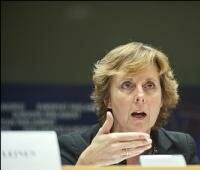
    Image Source: European Parliament

    Comments

    Post new comment


  • Sustainable Security

    National Security, Climate Change and the Philippine Typhoon

    Super Typhoon Haiyan made landfall in the Philippines on 8 November, and is possibly the most powerful tropical cyclone on record. Beyond the immediate impact of the typhoon, the natural disaster is already proving to be a threat to national security, with reports surfacing of massive looting and military engagement following attacks on government relief convoys. As US and UK naval convoys head to support the situation, Andrew Holland discusses climate change’s impact as a threat multiplier and what plans militaries and governments must make to prevent the insecurity that will come with future disasters of this scale.

    Read Article →

  • Sustainable Security

    The revival of Russian military power poses certain challenges to NATO and the West. Russia’s military developments are best understood as a continuation of longer-term factors in the country’s history. 

    Throughout the 1990s and up until the announcement of a systematic programme of military modernisation in 2008, the Russian armed forces fell into a state of serious decline. Their shortcomings were painfully demonstrated during the two Chechen wars, where they struggled to defeat an opponent that was vastly inferior numerically and technologically. In the eyes of the world, Russia had lost its status as a global military actor, because it seemed clear that its ability to project military power beyond its borders had become distinctly limited. This international image was overhauled almost overnight in the aftermath of the Crimea annexation in spring 2014 and in the wake of the ongoing air campaign over Syria.

    Today Russia is again seen as a serious military player. The interventions in Ukraine and Syria have led to fears in the West that the process of Russian military modernisation is motivated by an about-turn in foreign policy that includes an ever increasing military adventurism and expansionism. However, it is likely that Russia’s reasons for rebuilding conventional military capabilities are more complex than this. Rather than signifying a clear break with the past instigated by President Putin, recent developments in the Russian military are a continuation of longer-term factors in the country’s history, and foreign and defence policy. Within this context, Russia’s ‘military revival’ was inevitable and hardly surprising.

    The thawing of the Cold War and Russia’s military decline and revival

    2015_moscow_victory_day_parade_-_01-1

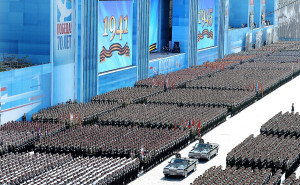
    Image via Kremlin/Wikimedia.

    Russia’s self-perception as a great power and its desire to be granted this status by the international community dates back centuries and this did not cease with the end of the Cold War. Having a large and powerful military has always been key to Russia’s great power ambitions. It was central to the making of the Tsarist empire and a strong military, above all else, elevated the Soviet Union to the status of a superpower. Against this background, the period of neglect of the Russian armed forces throughout the 1990s was uncharacteristic and should have come as more of a surprise than the more recent modernisation efforts. The lack of military reforms during the 1990s was not the result of a conscious decision on the part of the political leadership to give up on the aspirations of being a global military power, or the belief that a strong military was no longer necessary. On the contrary, Russian great power ambitions, including the maintenance of a military able to project power on a global level date back to the early 1990s. It was a combination of political and financial factors that prevented these ambitions from becoming reality.

    The first Russian military doctrine published in 1993 envisaged significant cuts to armed force levels and emphasised the need to develop conventional forces able to deal with local conflicts, which appeared to be the most immediate concern at the time. However, the idea that a global conventional deterrent was no longer desirable or required was never a consensus view. In fact, the 1993 doctrine already reflected serious ambitions to maintain a globally competitive conventional deterrent. The ambition for parity in conventional military power was reiterated in the 2000 military doctrine, which explicitly reoriented priorities away from the focus on small-wars type scenarios and towards the need for the creation of Russian conventional forces with global reach.

    Between 2000 and 2008 the Russian economy grew by an average of almost 7 percent per year, a rate of growth that was matched by similar annual increases in the defence budget. This meant that, following years of economic turmoil during the 1990s when even a relatively high percentage of GDP – an average of four percent –  spent on defence was insufficient to sustain the military on a reasonable level, Russia’s long-standing ambition to rebuild a military fit for a great power had finally become affordable. Relinquishing armed strength and accepting the resulting loss of great power status was never an option that was seriously entertained in Russia. From this point of view, the revival of the Russian military was only a matter of time.

    The idea that the revival of Russian conventional military capabilities in recent years can only be motivated by the political leadership’s intention to engage in ever more aggressive, expansionist and offensive military action also requires further contextualisation. Such a view represents a one-sided understanding of why countries, as a rule, maintain powerful armed forces. As Robert Art wrote in 1996, ‘to focus only on the physical use of military power is to miss most of what most states do most of the time with the military power at their disposal’. In other words, countries do not only have militaries to fight offensive wars, but also to deter, coerce, compel, reassure or dissuade other actors. International prestige is another important motivation for states to maintain powerful militaries. Given the centrality of the military in Russia’s self-perception as a great power this factor is particularly salient for understanding the motivations behind its recent military revival.

    After years of decay, during which the West had written off Russia as a serious global military competitor, conspicuous displays of military power and brinkmanship, coupled with the interventions in Crimea and Syria, have been an effective way of rapidly enhancing the international image of Russia’s newly modernised military. Such a use of military power for ‘swaggering’, which according to Art can has historically helped countries to gain ‘prestige on the cheap’ has already yielded impressive results. Although Russia’s relative military power is still severely lacking in comparison to the US and NATO, international reactions to recent displays of its revived armed forces have arguably enhanced its global image to an extent that far exceeds its material capabilities. The international community is again viewing Russian military power as a serious competitor, as Russia has already achieved one of its long-standing objectives. International recognition as a great power has been a central aim of Russian foreign policy throughout history. Now that the country is yet again seen as a global military power it has gained such recognition, at least in part, but based on fear, rather than on respect.

    The future of Russia’s power projection

    Better military capabilities mean that the Russian leadership today has more opportunity to resort to the use of force. The air campaign in Syria, for example, would simply not have been possible ten years ago, even if the willingness to launch an intervention of this kind had been there. It is unlikely, however, that better capabilities will cause the country’s leaders to lose sight of the fact that the utility of military force is limited and not suited for the achievement of all foreign policy objectives.

    Nonetheless, developments in Russian defence and foreign policy are a concern and a difficult challenge to international security. With the Crimea annexation, Russia demonstrated its willingness to use military force for territorial expansion for the first time in post-Cold war history. This has understandably led to growing fears, especially amongst its neighbours, about Russian intentions and the potential for further expansionist moves. Russia’s interventions in Ukraine and in Syria have also led to tensions with the West that are incomparable in scale and scope to problems in the recent past.

    There are limited options available to the West and to the international community to stop the Russian military modernisation process, bar the imposition of sanctions banning the export of defence technology and dual-use equipment into Russia, which the US and EU have already put into place. It will also be difficult, as it has been in the past, to prevent Russia from using military force as an instrument of foreign policy in certain situations in the future.

    There are choices to be made, then, on deciding how to respond to these developments. When it comes to dealing with Russian military interventions, the West can only lead by example in using military force as a last resort and within the parameters of international law, and condemn Russia in the strongest terms when it does not do the same.

    It is clear that Russian military actions in Ukraine and Syria have already had serious consequences for the country’s international image. As complete isolation is not in Russia’s interest and it continues craving respect as a Great Power from the global community, there is some hope that international repercussions and condemnation will be a factor in its future decisions to use military force. There are also choices to be made about how to respond to aggressive Russian military posturing vis-à-vis NATO and other neighbouring states.

    For the time being, NATO has chosen the path of an uncompromisingly tough stance, strengthening its presence alongside its eastern borders in an attempt to demonstrate unity and resolve and to deter any potential military aggression. While these measures are likely to reassure NATO member states in eastern and central Europe, their potential long-term consequences, like a renewed arms race and increasing dangers of escalation, should not be ignored.

    It is already obvious that Russia is not interpreting NATO’s actions in the spirit intended, as defensive measures aimed at reassuring NATO members close to its borders. Instead, Russia has taken these moves as an opportunity for further ‘swaggering’ and showing off its military power, stepping up its own activities and presence in the region.

    It is not yet clear how Russia’s relations with NATO and with the West will evolve under the next US administration headed by Donald Trump. Although some analysts have argued that the new US president is good news for Russia, such a conclusion remains at least questionable or is at least premature.

    If the US will indeed steer towards a more isolationist stance, it is possible that criticism of Russian military brinkmanship in the Baltic region and beyond, and violations of international law during military conflicts where this does not directly impinge onto US interests, will diminish. Such a turn of events would certainly be welcomed in Moscow, where the country’s full sovereignty to use military force as a foreign policy instrument is seen as centrally important.

    At the same time, it is by no means certain that the US will abandon its position as an important actor in European and international security and it is unlikely that the new US administration will be happy to concede this role to Russia, in effect abandoning its preeminent position in the international system. It is beyond doubt that Donald Trump’s presidency will confront Russia with a serious degree of uncertainty and unpredictability, much more so than the election of Hilary Clinton would have done. The extent to which this unpredictability — including the potential for harsher US reactions towards Russian military adventurism and an increased risk of escalation — will influence Russian foreign policy decision-making is a question for the future.

    Bettina Renz is an associate professor at the University of Nottingham’s School of Politics and International Relations. She has published widely on Russian defence and security policy.