Blog

  • Sustainable Security

    Former combatants can play a powerful role in preventing violence, as the case of former combatants in Northern Ireland shows. Former Islamic State fighters could have a role to play in counter-terrorism, however there are potential limits to this.

    The value in re-integrating former combatants in post-conflict environments has been widely recognised in terms of reducing the risk of recidivism and fostering stability in a peace process. While there are examples of former combatant in larger scale post-conflict environments following the path of a de-politicised re-integration into society, there are also examples of former combatants – or ‘former terrorists’ – taking a much more active role in preventing future violence.  Former combatants in Northern Ireland, for example, have had some notable success in delivering restorative justice programmes, de-militarising communities, preventing inter-communal violence and articulating counter-narratives against the use of violence. If former combatants are having some success in preventing terrorism and political violence in Northern Ireland, what are the criteria for successfully utilising former combatants, and does this point to a potential role for former Islamic State combatants in the UK?

    Utilising Former Islamic State Combatants

    The question of utilising former Islamic State combatants is not entirely left-field as there has been a range of voices expression different potential ways of their utilisation to serve preventative ends. One emerging perspective has emphasised how former combatants can play a preventative role, with former MI5 and MI6 chief, Richard Barrett, arguing that they can help explain “why going to fight abroad is a bad idea” and that ex-extremists are often the most successful at “undermining the terrorist narrative.” The ability to use extremists who “renounce violence” and are “genuinely remorseful,” according to this perspective, can provide a credible and persuasive message to stop the flow of people engaging in IS-related terrorism. Terrorism expert Peter Neumann argues that IS defector narratives can encourage others to leave the group and deter others from joining on the basis of their experience and credibility. Subsequently, he has recommended that the U.K. government needs to provide defectors the opportunity to speak out, assist them in their resettlement, and to remove legal disincentives that prevent them going public. An alternative would be to do nothing or continue with the current approach; however former Islamic State combatants are already returning and not all of them are prosecuted. In other words, these former combatant networks exist, they risk solidifying, and will be sharing their views and experiences, therefore it may be more effective in the long-run to co-opt and utilise them for positive ends.

    There is clearly a potential role for former Islamic State combatants in preventing others engaging in such activities. The nature of utilisation could be minimalist (narrative-based), whereby third parties disseminate former combatant narratives. For example, one UK counter-terrorism official mentioned how they have distributed one specific article on Islamic State defector narratives to help people play a preventative role. A more controversial role would be a maximalist approach (narrative and network-based) like in Northern Ireland, whereby former combatants themselves engage in activities with the goal of prevention. Should the UK government consider enabling or facilitating former Islamic State combatants in a preventative capacity?

    Former Combatants as a Conveyor-Belt to Terrorism?
    isis

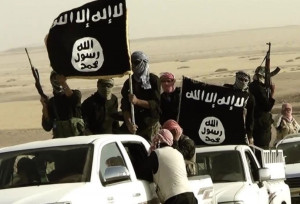
    Image by Day Donaldson via Flickr.

    One of the potentially biggest arguments against a maximalist approach is that such activities could be counter-productive and could risk serving as a conveyor-belt to engaging in violence rather than act as a fire-wall. A common trend with former combatants is they often do not de-radicalise: while they may disengage from terrorism because of dissatisfaction, disillusionment or burnout, they tend to maintain their ideological views. From this perspective – and endorsed by the UK government’s counter-terrorism policy – even non-violent extremist ideology can encourage others to engage in violence. While the conveyor-belt perspective has been heavily critiqued, the experiences of former combatants in Northern Ireland actually points to a middle-ground between these two perspectives. This consequently contributes to the debate on radicalisation but also on the potential role of former combatants in a preventative capacity.

    The findings of my own research on former combatants in Northern Ireland placed emphasis, not on ideology or attitudes to violence, but the framing process – in other words, how is violence and non-violence represented by actors and how it resonates with an audience, and what structural factors facilitate this resonance. Former combatants in Northern Ireland interact on a regular basis with young people through a number of programmes. Interestingly, despite the former combatants having maintained an ideology similar to violent groups, and despite the former combatants not supporting violence in the current conditions, it was realised that the interaction between former combatants and young people led the latter to view the use of violence positively. However, while this may seem to corroborate the conveyor-belt perspective, it actually showed that it was how former combatants framed violence that produced the conveyor-belt effect, not ideology on its own but also not simply that the former combatants were anti-violence.

    Re-Framing Violence

    In the past, former combatants explained their transition away from violence by framing violence it as conditionally acceptable during the 1960s civil rights protest period and that since these grievances were addressed in today’s conditions that violence was no longer legitimate. There are many reasons why the former combatants re-framed violence in this particular way, and it was particularly effective at ensuring the majority of the Provisional IRA disengaged; however this particular framing of violence to a younger audience without such experiences interpreted the framing as glamourising violence. Reflecting upon this, former combatants actively reframed violence when in dialogue with young people by emphasising the less glamorous aspects of violence more. One study showed that the former combatant reframing of violence in this manner has discouraged young people in engaging in violence. Former combatants were persuasive because they had credibility in the ‘hard to reach’ areas and they maintained narrative fidelity with audiences on ideology and identity.

    The point here is that there is some truth to the conveyor-belt perspective – that former combatants opposed to violence can encourage young people to engage in violence – but it has little to do with the ideology more broadly and much more to do with the framing process between the former combatants and the audience. Those who advocate the conveyor-belt perspective underplay the organisational interests in not having potential members becoming violent. In the Northern Irish case, former combatants had the time to reflect upon the effects of interacting with the younger generation and to engage in a re-framing process. Their reflexivity was encouraged by organisational interest as well as network structures which ensured they would be in regular interaction with young people and an environment in which funding was available to engage in projects.

    Empowering Reflexive Networks

    Thus, ideology is a crude means of determining the success of former combatants in a preventative role. Former combatants can be utilised in this capacity – or at the very least not discouraged – and the enablement of reflexive networks which resonate with young people can act as a firewall to participation in violence. However, there are a number of potential constraints and objections when this is applied to former Islamic State combatants. Working on the assumption that the purpose of counter-terrorism is to ‘counter terrorism’ and not to counter ideologies which a state does not like, and leaving aside the normative dimension of the rights of victims which Alonso excellently covers, the article focuses on two main points on the pragmatism and efficacy of using former combatants to prevent violence.

    Firstly, the UK government’s wholesale adoption of the conveyor-belt perspective makes the provision of funding much more rigid than in Northern Ireland. Interestingly, Northern Ireland’s very own prevent policy in the 1980s curtailed which organisations could receive funding on the basis of their ideology, but this was gradually dropped in recognition that the development of the community route could help to facilitate disengagement. The funding former combatants receive in Northern Ireland is detached from the government, thus increasing buy-in across communities, and the conditions of the funding are pragmatically based (often turning a blind eye to paramilitary behaviour in anticipation that funding and accreditation would incentivise moving away from such behaviour). Ideology is not factored in – alternative identities are strengthened and shown they can be non-violent rather than trying to encourage the ‘centrefication’ of political identities. In the current UK context, similar changes would be required before former combatants and former extremists could be fully utilised.

    A second objection is that the network and community structure – while a crucial factor in determining the efficacy of former combatants in a preventative role – is completely different in the Islamic State context. Former Islamic State combatants are smaller in numbers, they are set apart from their returning communities, and they may be politically disengaged (so why not just leave them like that). However, the size of networks is not important – a network of about a dozen former combatants in Belfast has been sufficient in preventing interface violence. Indeed, following the conveyor-belt logic limits the number of potential partners for the government to work with, in addition to its policies eroding trust through creating the perception of ‘suspect communities’. While the utilisation of former combatants (and extremists) can challenge and disrupt moderate communities, the target audience of these initiatives are individuals this moderate community struggle to meet. Finally, while we don’t know what former Islamic State combatants are doing upon their return, political passivism should not be viewed as a boat not to be rocked. In the case of Northern Ireland, it was the lack of active framing in combination with stories of the Troubles (often told in a social environment) in the context of parents and teachers not actively speaking about the Troubles, which led young people to view violence as attractive.

    Minimalist and Maximalist Roles for Forrmer Combatants

    In conclusion, former combatants can play a powerful role in preventing violence. The factors which determine whether this will be successful is not based on ideology but neither is it solely on whether they are non-violent. The network structure and incentivising environment can enable former combatants to be reflexive of the narratives they impart and how to best re-frame anti-violence narratives to ensure these resonate with young people in ‘hard to reach areas’. Former Islamic State combatants also have a potential role to play, however the lack of an enabling environment would limit this to minimalist interventions in the short term until the infrastructure for maximalist interventions are developed. Maximalist interventions are more effective at resonating with ‘hard to reach’ audiences as they decrease the likelihood of a conveyor belt effect, an effect which is likely to occur without interventions.

    Gordon Clubb is Lecturer in International Security at the University of Leeds and is co-leading the interdisciplinary Radicalisation and Violent Extremism Network. His recent book focuses on Social Movement De-Radicalisation and he has also written on the role of former combatants in preventing violence, how militant groups frame disengagement, and on whether non-violent radical ideology acts as a conveyor-belt to terrorism.
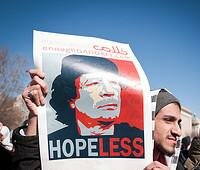
  • Parag Khanna on Marginalisation, the ‘BRICS’ and the Arab Revolt

    Parag Khanna on Marginalisation, the ‘BRICS’ and the Arab Revolt

    Parag Khanna | Harvard Business Review | February 2011

    Issue:Marginalisation

    What do Egypt, Iran, Pakistan, and Nigeria all have in common? They are very populous, Muslim-majority countries, all facing constant political unrest and on the brink of collapse. And yet they are also all part of Goldman Sachs’ “Next Eleven,” the much-anticipated extension of its fabled category of “BRICs” — comprised of Brazil, Russia, India, and China.

    Perhaps no term has so captured the global analyst community since the coinage of “emerging markets” itself. Even international relations theorists have tried to make BRICs a concrete object of study at academic conferences, shunting aside traditional approaches to understanding rising powers. BRICs has also inspired comical copy-cats such as BRICSAM (adding South Africa and Mexico), CIVETS (Colombia, Indonesia, Vietnam, Egypt, Turkey, South Africa), and VISTA (Vietnam, Indonesia, South Africa, Turkey and Argentina).

    Sadly, it seems that economists have been infected with diplomacy’s proclivity for seeking to have their favorite state included in the hot club irrespective of merits. In doing so, they often fail to ask the right questions beyond which acronym rolls of the tongue most easily. By focusing on simple headline indicators like population size, GDP growth rate, and equity indices (Egypt’s stock market grew ninefold from 2004-9), most analysts miss key questions like the degree of inequality and ethnic volatility, levels of unemployment and corruption, proportion of military control of the economy, whether a stable succession plan to the next generation of leadership is in place, the sustainability of investments, quality of economic diversification efforts, capacity to absorb commodity price shocks, and resilience to capitalize the financial sector in times of crisis.

    Clever turns of phrase can fool many except those who actually spent time in emerging markets and ask tough questions. To research my first book The Second World: How Emerging Powers are Redefining Global Competition in the 21st Century, I traveled through over 40 such nations, and found that most of them are so deeply divided between their seemingly first world urban districts and business elites and their often largely third world masses and crumbling infrastructure (hence “second world”) that it is unwise to predict their fate more than five years out. The events in Egypt were not the result of the rising expectations of the middle class, since the country barely has one despite its impressive growth rate in recent years. Rather, it has been a revolt of the alienated and marginalized — a phenomenon similarly underway in Libya, Bahrain and Iran. In such places, revolution is far from inconceivable, it is inevitable.

    The fundamental instability of second world countries — which includes all the BRICs and the “Next Eleven” — hasn’t stunted the ambitions of research reports which project straight-line growth to 2040. And yet already, three decades before Goldman Sachs’ projections, it’s increasingly commonplace to drop the “R” (Russia), leaving the more viable BICs as the new core of emerging markets. Still we should be concerned, for if you read the fine print of Goldman’s projections for India, the prerequisites for India to achieve BRIC-like dreams includes improving governance, raising basic education achievement, increasing the quality and quantity of universities, controlling inflation, introducing a credible fiscal policy, liberalizing financial markets, boosting trade with neighbors, elevating agricultural productivity, and cleaning up the environment. As if this list isn’t generic yet daunting enough, it makes no mention of the Maoist inspired Naxalite movement that has racked close to half of India’s states.

    I don’t know what sexy acronym our leading investment banks’ rock-star economists will come up with next, but I hope their indicators will start to factor in whether a large population is being harnessed or whether it is seething youth bulge, and whether economic growth is coming at the cost of ecological sustainability. More convincing than most of the countries celebrated as BRICS, CIVETS, or VISTA are places like Kazakhstan (perhaps add a “K” and spell BRIC correctly?) that have made tough decisions and cleaned up their banks, or Malaysia, which is diversifying its economy and beating the oil curse.

    In my travels through dozens of emerging and frontier markets, I’ve concluded that they are highly differentiated and need to be understood one at a time, with regional trends often more significant than global ones. It is promising that Bank of America has just announced a partnership with leading political risk advisory firm Eurasia Group to provide geopolitical insights both for wealth management clients and to adjust portfolio allocations. This approach may not yield sexy categories like BRICs, but is far more likely to teach us that not all emerging markets actually emerge.

    Parag Khanna, Ph.D, is a senior research fellow at the New America Foundation and author of How to Run the World: Charting a Course to the Next Renaissance, just published by Random House.

    This article originally appeared in the Harvard Business Review and is reproduced on Parag Khanna’s website. 

    Comments

    Post new comment


  • Sustainable Security

    Breaking the silence: Protecting civilians from toxic remnants of war

    Toxic remnants of war and their legacy of civilian harm is seriously under-explored as an area of conflict. There is a growing consensus that the current legal framework governing conflict and the environment is not fit for purpose – so how could new international norms that merge environmental protection with civilian protection come into effect?

    Read Article →

    Environment, Energy, Economy: a threefold challenge to sustainable security

    Whether it’s the economy, energy or the environment which you value most, when it comes to security, each holds equal weight. If security can be defined in terms of what is or isn’t sustainable, then it must evolve to incorporate additional elements that transcend more traditional views on geopolitics.

    Read Article →

  • Losing Control: Global Security in the Twenty-first Century

    Losing Control: Global Security in the Twenty-first Century

    Issues:Climate change, Competition over resources, Global militarisation, Marginalisation

    Tag:book

    Image of Losing Control: Global Security in the Twenty-first Century

    • Purchase from Amazon:
    • Losing Control: Global Security in the Twenty-first Century
    • Author: Paul Rogers
    • Publisher: Pluto Press ()
    • Binding: Paperback, pages
    • Price: £15.99

  • Libya: Where Are the BRICs?

    Libya: Where Are the BRICs?

    Ben Zala | Foreign Policy in Focus | March 2011

    Issue:Marginalisation

    Following the vote at the UN Security Council, the United Kingdom, France, and the United States have embarked on military action against Gaddafi’s forces in Libya. They have been careful to include a few Arab states in this new coalition of the willing. But these three countries are the driving force behind the imposition of a no-fly zone and the attacks on the government’s military positions and forces. Yet among the permanent and non-permanent member of the Council who were asked to authorize “all necessary measures” to protect civilians rebelling against the regime, the BRIC powers of Brazil, Russia, India, and China were conspicuously absent. The implications of this Security Council vote will be far greater than just what happens to the Gaddafi regime for it also tells us something about the role of the new candidates for global leadership.

    Brazil, Russia, India, and China are all represented on the Council at the moment — Brazil and India currently hold non-permanent seats — and collectively have become the face of what has been presented as the irreversible shift in global power toward a multipolar world. Goldman Sachs, for instance, has breathlessly ascribed to these four countries the ability to dramatically alter the global economic landscape over the next 50 years. If such projections are accurate, the key question is whether these new powers will seek to overturn the existing US-led order or simply join it as more equal partners. This question extends to China’s “peaceful rise,” the way that India and Brazil climb their way to the top-tier of global politics, and Russia’s re-emergence on the back of sustained high energy prices.

    China and Russia are not surprisingly reluctant to engage in Western-led military action under the principle of the “responsibility to protect.” Both countries have significant internal turmoil and both prefer to hold on to the option of responding with brute force to domestic opposition if push comes to shove. For India and Brazil the story is not quite so straight forward. Although neither country has been particularly enthusiastic about the concept of a responsibility to protect, both have spent considerable political capital to appear like responsible stakeholders and serious players on the world stage. Both would dearly love a permanent seat on the UN Security Council with its power of veto and prestige of higher social status. Both look to the United States to facilitate such a move and assist with dampening the protests of their respective regional rivals, Pakistan and Argentina. So far India has been very successful in winning U.S. and UK support, and Brazil is hoping that a visit by President Obama this past weekend will spur the United States to join France in publicly supporting a Brazilian seat.

    In the short term, however, the Brazilian and Indian abstentions on the Libya vote will not likely have helped to advance their plans for permanent membership of the Security Council. President Obama’s strategy for dealing with America’s relative decline and the rise of these new centers of power has been to try and co-opt potential challengers wherever possible into existing structures rather than set up showdowns for the decades to come. Yet this strategy is not fool-proof and leaves plenty of room for new powers to resist the liberal foundations of the U.S.-led order painstakingly constructed since 1945.

    The uprisings across the Arab world have thrown up a number of problems for Western powers. Their time-honored position of attempting to ignore the deep marginalization of large swathes of the “majority world” and to contain or manage corrupt regimes for the sake of assured energy supplies and intelligence cooperation has come apart at the seams. The brutality of the Gaddafi regime and the belated and chaotic response of rightly incensed countries such as Britain, France, and the United States have forced the hands of these reluctant interveners at the 11th hour.

    The Western response to the Libyan crisis has not addressed how this fundamental tension between a responsibility to protect vulnerable people and a global order based on the principle of national sovereignty can be resolved with the full participation of the emerging BRIC powers as well as the established trans-Atlantic ones. The people of Libya may be glad that such a large and difficult question has not been allowed to prevent outside assistance as they face down Gaddafi’s forces. But the United States and its allies will not be able to ignore this problem for long if a peaceful transition to a new global order is to be achieved in the years to come.


    Foreign Policy In Focus contributor Ben Zala manages the Sustainable Security Programme at the Oxford Research Group. He works on issues of global security and great power politics and is also a member of the editorial team of the academic journal Civil Wars (published by Routledge).


    This article originally appeared on Foreign Policy in Focus. 

    Comments

    Post new comment


  • Sustainable Security

  • Sustainable Security

  • Marginalisation of the majority world

    Marginalisation of the majority world

    A complex interplay of discrimination, global poverty, inequality and deepening socio-economic divisions, together make for key elements of global insecurity. While overall global wealth has increased, the benefits of this economic growth have not been equally shared. The rich-poor divide is actually growing, with a very heavy concentration of growth in relatively few parts of the world, and poverty getting much worse in many other regions. The ‘majority world’ of Asia, Africa and Latin America feel the strongest effects of marginalisation as a result of global elites, concentrated in North America and Europe, striving to maintain political, cultural, economic and military global dominance.

    From Within and Without: Sustainable Security in the Middle East and North Africa

    Chris Abbott and Sophie Marsden | Oxford Research Group | March 2009

    Issues:Climate change, Competition over resources, Global militarisation, Marginalisation

    Tag:report

    The Middle East and North Africa is a region of great diversity. It encompasses Arab and many other ethnic populations, theocratic and secular states, democracies and authoritarian regimes. A region of immense wealth and crippling poverty; it is blessed (some might say cursed) with vast resources, not least oil, but has not always proved able to manage them for the benefit of ordinary people. Read more »
    Global Responses to Global Threats: Sustainable Security for the 21st Century

    Chris Abbott, Paul Rogers and John Sloboda | Oxford Research Group | June 2006

    Issues:Climate change, Competition over resources, Global militarisation, Marginalisation

    Tag:report

    This major report was the result of an 18-month long research project examining the various threats to global security, and sustainable responses to those threats. Read more »
    Al-Qaeda: The True Story of Radical Islam

    Issues:Global militarisation, Marginalisation

    Tag:book

    Image of Al-Qaeda: The True Story of Radical Islam

    • Purchase from Amazon:
    • Al-Qaeda: The True Story of Radical Islam
    • Author: Jason Burke
    • Publisher: Penguin ()
    • Binding: Paperback, pages
    • Price: £8.99

    Losing Control: Global Security in the Twenty-first Century

    Issues:Climate change, Competition over resources, Global militarisation, Marginalisation

    Tag:book

    Image of Losing Control: Global Security in the Twenty-first Century

    • Purchase from Amazon:
    • Losing Control: Global Security in the Twenty-first Century
    • Author: Paul Rogers
    • Publisher: Pluto Press ()
    • Binding: Paperback, pages
    • Price: £15.99

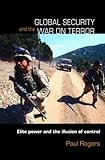
    Global Security and the War on Terror: Elite Power and the Illusion of Control

    Issues:Climate change, Competition over resources, Global militarisation, Marginalisation

    Tag:book

    Image of Global Security and the War on Terror: Elite Power and the Illusion of Control (Contemporary Security Studies)

    • Purchase from Amazon:
    • Global Security and the War on Terror: Elite Power and the Illusion of Control (Contemporary Security Studies)
    • Author: Paul Rogers
    • Publisher: Routledge ()
    • Binding: Paperback, pages
    • Price: £22.99

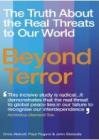
    Beyond Terror: The Truth About the Real Threats to Our World

    Chris Abbott, Paul Rogers and John Sloboda | Rider | April 2007

    Issues:Climate change, Competition over resources, Global militarisation, Marginalisation

    Tag:book

    Many leading military analysts in the United States are increasingly alert to the link between security and climate change. Is international terrorism really the single greatest threat to world security? Read more »
  • International politics

    International politics

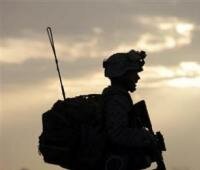
    Afghanistan: propaganda of the deed

    Paul Rogers | openDemocracy | February 2010

    Issue:Global militarisation

    Tagss:Afghanistan, International politics, Taliban

    The deluge of publicity about a large-scale military operation against the Taliban must be set against Afghan realities that tell a different story. The task of reaching an accurate assessment of the real state of the conflict must look beyond such public-relations campaigns from military sources.

    Image source: Reuters

    Read more »

    Iraq’s shadow over Afghanistan

    Paul Rogers | openDemocracy | February 2010

    Issue:Global militarisation

    Tagss:global security, globalisation, International politics

    The current surge in United States military forces in Afghanistan part of a strategy designed to bring the war to an end from a position of strength. The great strains within the US military mean that the deployment of 30,000 troops to Afghanistan can be sustained only if forces can be withdrawn from Iraq at the scheduled rate: that is, all combat-forces out by August 2010 and the remaining (approximately 50,000) personnel by the end of 2011. The dynamics of violence in Iraq present a serious challenge to this strategy.

    Washington is thus engaged in a delicate balancing-act: managing disengagement from Iraq while ensuring that the United States will retain a significant military presence in the country well beyond 2011 in order to exercise a maximum degree of influence.

    Read more »

  • Sustainable Security

    Security Sector Roles in Sexual and Gender-based Violence

    Democratic Republic of Congo’s sexual violence epidemic is not only a weapon of ongoing violent conflict but an expression of entrenched systemic problems. Indeed, sexual and gender-based violence (SGBV) is most commonly perpetrated by the security services in place to protect civilians. In Quartier Panzi in South Kivu province, innovative processes of security sector reform and strengthened police-civilian channels of communication may be providing an opportunity for change, argues World Bank adviser Edward Rackley.

    Read Article →