Blog

  • Sustainable Security

    In the Arctic, Indigenous peoples are increasingly seeing their own survival as threatened by environmental change. In this respect, the small Inuit community of Clyde River, Nunavut in Canada represents an interesting case.

    On November 30, 2016 the Supreme Court of Canada heard a highly anticipated legal appeal on behalf of residents of the small Inuit community of Clyde River, Nunavut. The town of 1,100 – supported by interventions from groups like Greenpeace and three organizations representing Inuit people across Canada – argues that the federal government, specifically the National Energy Board (NEB), failed to adequately consult them before granting a license for a Norwegian-based business consortium to conduct seismic testing in nearby coastal waters. The license was granted in 2014 even though consultations with nearby communities exposed significant local concern over the project’s potential impacts on marine mammals such as seals, whales, and other aquatic species, which local residents rely upon for food and cultural practices. The NEB’s initial decision was upheld by a Federal Court in August 2015, but in October of that year Clyde River was granted leave to appeal to the Supreme Court, which offers the last judicial option to stop the seismic testing and protect the marine ecosystem from possible irreparable harm.

    The case of Clyde River has attracted national and international media interest because it reflects a familiar and sympathetic narrative: a small Indigenous community, with support of environmental activities and high profile celebrities, fights for its survival against a corporation abetted by a neo-colonial state committed to extracting hydrocarbon resources for sale on the global market. But the struggle over seismic testing in a tiny community located higher than 70°N latitude represents the intersection of three powerful issues within Canadian and global environmental politics: Indigenous peoples identifying non-renewable resource extraction as a fundamental threat to their survival and well-being; the growing legal and constitutional recognition of the rights of Indigenous peoples to make decisions over resource extraction and other industrial projects within their traditional territories; and emerging alliances between Indigenous communities and non-Indigenous environmental groups to stop such projects. Together, these issues form the latest chapter in the interrelated struggles for human and environmental security, self-determination for Indigenous peoples, and steps towards decarbonizing the global economy.

    Indigenous Peoples’ Insecurity and Climate Change

    iglo-arctic

    Image (cropped) by Emmanuel Milou/Flickr.

    Indigenous peoples in Canada and elsewhere have, for decades, resisted various non-renewable resource extraction projects on the grounds that these often proceed without adequate consultation with local communities or the Indigenous governments on whose lands they occur. Local environmental impacts have worsened as these projects have grown in size, but greater public awareness of the dangers of human-caused climate change have added a new dimension to these struggles. In the Arctic – where climate change is occurring twice as fast as in more southerly regions, causing a range of negative consequences for humans and other animal populations – activities enabling hydrocarbon extraction that will directly contribute to climate change have been met with particular scepticism. In recent years, dozens of Northern organizations, including some representing Indigenous peoples, have signed a Joint Statement of Indigenous Solidarity for Arctic Protection calling for a moratorium on oil drilling in the Arctic. In 2011, the Inuit Circumpolar Council, which represents Inuit in Canada, the United States, Greenland, and Russia, released the Circumpolar Inuit Declaration on Resource Development Principles. The declaration reserves the right of Inuit to benefit from resource development on their traditional territories, but stipulates that “Inuit and others – through their institutions and international instruments – have a shared responsibility to evaluate the risks and benefits of their actions through the prism of global environmental security” (s. 5.1).

    In fact, Inuit have increasingly framed their arguments around climate change and hydrocarbon extraction in explicitly security terms. Survey data indicate that large majorities of Northern Canadians consider the environment to be the most important issue for Arctic security, followed closely by maintenance of Indigenous cultures. For people who rely on traditional country foods for sustenance, and whose culture and identity are premised on reciprocal connections between humans, non-human animals, and the land itself, climate change and local environmental damage are not merely worrisome issues. They are existential threats to the survival of Inuit as Inuit: an Indigenous people defined by their unique environment and the methods of survival and subsistence they have developed over thousands of years of continuous habitation in their Arctic homeland.

    Inuit leaders have articulated the clear and present threats they currently face as a result of environmental changes. Sheila Watt-Cloutier, nominated for the Nobel Peace Prize for her work raising awareness of Arctic climate change and pursuing legal remedies on behalf of Inuit under international law, has stated in no uncertain terms that “climate change is threatening the lives, health, culture and livelihoods of the Inuit.” Terry Audla, who until 2015 was president of Inuit Tapiriit Kanatami (ITK), the national organization representing all Inuit in Canada, has written that “climate change at a rate and of an intensity that appears unprecedented, and well outside Inuit cultural memory, creates insecurities of an entirely new nature, generating concerns about the sustainability of large aspects of our inherited and acquired patterns of life … Our very sense of who and what we are as Inuit.” Mary Simon, another former president of ITK, echoes the threat of Arctic climate change: “The urgency surrounding mitigating the impact of climate change grows with the almost daily news of unprecedented developments in our Arctic environment … Arctic ice is melting three times faster than models had earlier predicted – and the earlier predictions were alarming.  The Arctic is melting, with dramatic consequences for all of us.” In articles, books, speeches, interviews, policy statements, and testimonies before Parliament, the message from Inuit leaders in Canada is clear: climate change is the gravest threat confronting Inuit and all peoples living in the Arctic and beyond, and proposed industrial activities that contribute to climate change should be viewed with the highest concern.

    New Laws and New Allies in Indigenous Environmental Struggles

    These examples of Inuit security claims are recent, but as a phenomenon they are not new: Indigenous peoples have long argued that their wellbeing was undermined by the actions of settler-colonial governments which served to perpetuated their poverty and disenfranchisement. For decades, little changed as politicians and the courts consistently declined to respect or enforce the rights of Indigenous peoples; despite Aboriginal rights being enshrined in Section 35 of the Canada’s Constitution Act 1982, environmental damage affecting nearby communities was considered a cost of doing business and a routine part of Canada’s political economy. In recent years, however, several developments in law and politics have altered the landscape, such that the rights of Indigenous peoples to be consulted about, and possibly consent to, industrial activities on their territories have been established, if not yet fully implemented. Most notable among these is the ruling in the 2014 Tsilhqot’in case, in which the Supreme Court first recognized Aboriginal title over their traditional territories, and the federal government’s 2016 decision to implement the United Nations Declaration on the Rights of Indigenous Peoples (UNDRIP), which codifies international standards for the individual and collective rights of Indigenous peoples, including the rights to land (though the Liberal government’s position on UNDRIP has wavered, with different Cabinet members expressing different views of how, or even whether, UNDRIP can be incorporated into Canadian law). As the case of Clyde River demonstrates, these developments are in the process of being interpreted by policymakers and tested before the courts to establish the new distribution of authority and governance over land use on Indigenous territories.

    The judicial empowerment of Indigenous legal claims in Canada and elsewhere has led to a recognition by many non-Indigenous environmental groups that cooperation and engagement with Indigenous peoples offers the best route to stop extractive projects which they believe will harm local environments, contribute to global climate change, or both. These partnerships have been described as “the native rights-based strategic framework”, an advocacy and campaigning strategy that links the legal and constitutional rights of Indigenous peoples with their normative claims to sovereignty and justice and the fundraising and operational resources of non-Indigenous advocacy groups. Major environmental NGOs have worked to repair relationships with Indigenous peoples that have been harmed by environmentalists’ campaigns targeting certain Indigenous cultural practices, such as Greenpeace indicating its desire to “make amends” for its past opposition to the Inuit seal hunt. Long opponents over their differing views on environmental stewardship and land use, NGOs and Indigenous peoples have increasingly made common cause through their shared view that, with respect to hydrocarbon extraction in particular, “these fights were all life and death situations, not just for local communities, but for the biosphere.”

    Conclusion

    The case of Clyde River is one example of how the threats posed by climate change, now and in the future, are front and centre in the political and legal engagements of Indigenous peoples and environmental organizations. It reflects the fact that many communities are increasingly seeing their own survival as threatened by environmental change, and thus articulate conceptions of what security means to them which highlights the human-caused environmental dangers they face. Such local and Indigenous security claims – statements of what should be protected against certain, identifiable threats – are now part of a global political context where the meaning of security is deeply contested. Longstanding security practices and discourses that privilege states and their national interests are today in direct contradiction with a complex series of security claims made by groups that have been historically and remain adversely affected by the state and its actions. Moreover, in the context of a rapidly changing global environment due to human-caused climate change, struggles to define what security means have deep implications for the future. Environmentalists and others concerned for the prospects of human survival and wellbeing on a warming planet are increasingly prepared to use all available tools at their disposal to secure a stable and sustainable future for themselves and their children. As reflected in recent and ongoing cases of Indigenous peoples and their environmentalist allies resisting the expansion of hydrocarbon extraction and infrastructure – such as the Keystone XL and Dakota Access crude oil pipelines – that struggle continues. In the case of the Arctic, it is currently focused on the small hamlet of Clyde River, and the legal battle over who gets to make decisions over how much environmental damage will be borne to facilitate resource extraction, and what powers Indigenous peoples possess under the law to defend themselves and define the conditions necessary for their own survival.

    Wilfrid Greaves, PhD, is Lecturer at the University of Toronto. His doctoral research examined how in/security and environmental change have been conceptualized by states and Indigenous peoples in the circumpolar Arctic region. An Ontario Graduate Scholar, SSHRC Doctoral Scholar and DFAIT Graduate Student Fellow, he is author of multiple peer-reviewed articles, book chapters, and working papers. He has also taught undergraduate courses in International Relations, global security, peace and conflict studies, and Canadian foreign policy at Ryerson University and the University of Toronto. A graduate of the University of Calgary and Bishop’s University, his research interests include security theory, human and environmental security, natural resource extraction and climate change, Arctic and Indigenous politics, Canadian foreign policy, and complex peacebuilding operations.

  • Sustainable Security

  • Sustainable Security

    Carefully Managing Water Resources to Build Sustainable Peace

    Carefully planned interventions in the water sector can be an integral part to all stages of a successful post-conflict process, from the end of conflict, through recovery and rebuilding, to […]

    Read Article →

  • Sustainable Security

    RC_long_logo_small_4webThis article is part of the Remote Control Warfare series, a collaboration with Remote Control, a project of the Network for Social Change hosted by Oxford Research Group.

    States’ ability to move forward on the issue of lethal autonomous weapons will depend on not only finding consensus on key concepts but also having the will to find concrete outcomes.

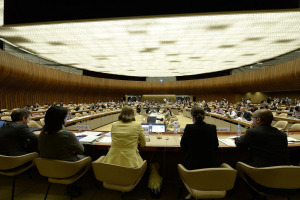
    UN_Meeting_of_Experts_Lethal_Autonomous_Weapons_CCW_April_2015

    UN Meeting of Experts on Lethal Autonomous Weapons in April 2015. Source: Flickr | UN Geneva

    April’s meeting of experts at the UN on lethal autonomous weapons systems (often shortened to LAWS or AWS) set out to consider questions relating to this emerging military technology, a continuation of UN talks begun in May 2014. These meetings took place under the aegis of the Convention on Certain Conventional Weapons (CCW), and brought together state representatives, NGOs and academics. The CCW meetings have demonstrated a divergence of views on the ethical and legal concepts that should be employed, and a complex debate that at times felt detached from reality; moreover, without a negotiating mandate there is a fear that the meetings could simply mire the issue in abstract debate, leaving states free to continue developing the technology in the meantime.

    The UN Convention on Certain Conventional Weapons

    For a long time the CCW was a neglected treaty; regarded by states and NGOs as an overambitious and failed attempt to combine elements of international humanitarian law with arms control. By the end of the 1980’s, the CCW appeared to be floundering with only 29 state parties. Yet in recent years, participation has increased and there are now 121 state parties to the convention. A total of 87 countries sent representatives to the first meeting on autonomous weapons, marking a record high level of participation for the CCW. Eighty-eight countries were present at April’s meeting.

    The purpose of the CCW is explicitly “to ban or restrict the use of specific types of weapons that are considered to cause unnecessary or unjustifiable suffering to combatants or to affect civilians indiscriminately.” The CCW is an evolving body of international humanitarian law, with a framework that is dynamically structured to be responsive to the concerns raised by the international community. The recognition that the law is not static is therefore a particular strength, indeed a cornerstone of the CCW.

    The CCW’s talks in May 2014 and April 2015 were undertaken with a mandate “to discuss the questions related to emerging technologies in the area of lethal autonomous weapons systems, in the context of the objectives and purposes of the convention.” A ban on autonomous weapons would join five other CCW protocols on non-detectable fragments, landmines, incendiary weapons, laser weapons and explosive remnants of war. The uptake of the issue of lethal autonomous weapons by the CCW has been unprecedented in its speed, and could indicate a move towards prohibition. However, because there is no negotiating mandate, it could also be a strategic move to engage in these discussions on the part of states keen to engage in the debate of abstract principles, while at the same time continuing to develop the technology. The annual meeting of the CCW in November 2015 will decide formally whether to continue the talks, based largely on the content of the April meeting.

    Autonomy

    The most contentious issue discussed so far is the issue autonomous weapons pose with regard to human control. This issue was discussed through reference to the contested concepts of ‘autonomy’ and ‘meaningful human control’. The United States, the UK, France and Germany are all in favor of the notion of autonomy as a guiding principle. The US was one of the first states to advocate for this concept when its Department of Defense issued the first policy announcement by any country on autonomous weapons systems in November 2012, just three days after Human Rights Watch had brought the issue into the global spotlight.  Interestingly, the directive refers not to ‘fully autonomous’, but to ‘autonomous weapon systems’ that include human supervision. This supports the view advocated by the US at April’s CCW meeting: as long as humans are ‘in the loop’, weapons systems are not fully autonomous and therefore compliant with international humanitarian law. The UK, France and Germany attach human involvement to autonomous weapons systems as well. In a general exchange of views the UK representative assured, “there will be human oversight in this new territory where lethal autonomous weapons systems can go […] Autonomous systems do not exist, and will never exist” (author’s own transcription).

    However, some objected that this was a ‘knockdown’ argument intended to rhetorically shut down the controversy about the lack of human control. The International Committee for Robot Arms Control (ICRAC) is an international association of experts that was sat up with the specific goal of getting governments to talk to each other about the continuous automation of warfare, and was present at both the 2014 and 2015 meetings. ICRAC’s interpretation of the DoD policy was that it was designed to “green-light” weapon systems able to select and engage human targets. Together with 272 experts in computer science, engineering, artificial intelligence, robotics, and related disciplines from 37 countries, ICRAC issued ‘The Scientists’ Call’,  stating: “[G]iven the limitations and unknown future risks of autonomous robot weapons technology, we call for a prohibition on their development and deployment. Decisions about the application of violent force must not be delegated to machines”. Their message was clear, that within such systems, human control would not be ‘meaningful’.

    Meaningful human control

    India and Pakistan expressed confusion over this idea of meaningful human control, observing that the presence of meaningful human control would mean the weapons systems would not then be ‘autonomous’. In their opinion the question should be whether or not independent weapon systems can comply with international humanitarian law: whether they can distinguish between civilians and combatants, make proportionality assessments, and comply with other time-tested legal principles. A counter-argument was raised by Richard Moyes from Article 36 that if discussion is too focused on undefined hypothetical systems’ ability to comply with international humanitarian law, then legal arguments could become separated from reality. In particular, he argued that the law is a human framework applied to humans. A state representative from Greece agreed, saying that autonomous weapons should be addressed ethically rather than legally or technically, as the question is whether or not humans should delegate life and death decisions to a machine. The debate around autonomous weapons’ ability to comply with international humanitarian law is a misguided one if it fails to grapple with the bigger, underlying issues that would be raised. Banning such systems, in fact, is about maintaining something unique in the decision-making process: a human with intent behind the act of killing. Cuba, Ecuador, Pakistan, Sri Lanka and Palestine agreed with this argument and called for a prohibition.

    Potential for convergence

    Consensus was reached on the undesirability of fully autonomous weapons systems. Ambassador Michael Biontino of Germany, who chaired the April meeting, wrote in his report that the following area of common understanding had emerged: “machines or systems tasked with making fully autonomous decisions on life and death without any human intervention, were they to be developed, would be in breach of international humanitarian law, unethical and to possibly even pose a risk to humanity itself.” However, because parties largely disagree about what constitutes human intervention, this statement is of limited value. The contradictory definitions used at the CCW meetings have created a lack of clarity for policymakers; it remains largely undecided what the world would look like if autonomous weapons came into existence.

    The April talks not only give some idea of the shape of the debate going forward, but also of the potential limitations of the CCW talks themselves, as a forum for discussion, but without a negotiating mandate. One significant milestone would be the establishment of a broad, representative and universal Group of Governmental Experts (GGE) next year that would move the discussion from an informal to a formal setting. It has been suggested that the current lack of common language makes this discussion challenging, and that it is critical to avoid rushing into formal discussions. However, it does not seem premature for prohibition to be on the agenda in a body that has been designed to create prohibitions. A GGE seems a necessary next step to keep states focused on a practical outcome.

    Lene Grimstad served as an observer at the 2014 and 2015 Geneva Meetings of Experts on Lethal Autonomous Weapons Systems, and holds a MA in Society, Science and Technology in Europe from the University of Oslo and ESST (European Inter-University Association on Society, Science & Technology) .

    Featured Image: Meeting of Experts on Lethal Autonomous Weapons Systems in April 2015. Source: Flickr | UN Geneva

  • Sustainable Security

    With skills and expertise in fighting insurgencies and drug trafficking networks, Colombia’s armed forces are increasingly being sought for engagement in similar security challenges in West Africa. But increasing Colombian engagement gives rise to a number of important questions – not least of which is the goal and expected outcomes of replicating militarised approaches to the war on drugs that have already failed in Latin America.

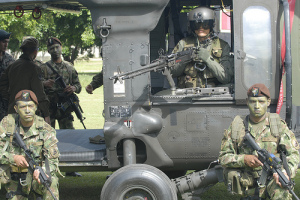
    Colombian National Army Soldiers. Source: US Department of Defense (Flickr)

    Colombian National Army Soldiers. Source: US Department of Defense (Flickr)

    Colombia has become an exporter of defence cooperation, including operational support, training and capacity building in national security and the fight against insurgencies, drug trafficking networks and terrorism. The skills and expertise of their security forces are in demand and, with strong US support and funding, and through intense diplomatic activism (the ‘Diplomacy for Security’ initiative), the country is building a wide array of bilateral and multilateral agreements for these activities. West African countries suffering from drug trafficking related problems are among the recipients of this support. Although extensive information on these ties and specific programmes is not publicly available, this involvement is evident and therefore raises a number of questions.

    Colombian Engagement in West Africa

    Between 2005 and mid-2013, Colombia trained 17,352 military staff from approximately 47 countries in various areas of assistance. In 2009, officials from Guinea Bissau, Cape Verde, Gambia, Ghana, Togo and Senegal attended training on operations and intelligence-gathering in Colombia under the auspices of the European Union and the UN Office on Drugs and Crime. The head of the Colombian police then announced that he would send ten anti-narcotics police to Africa, to be based in Sierra Leone.

    Colombian and African officials met again in March 2012 in Bogotá at a seminar on transnational organised crime. The same year, the US State Department announced that both countries were providing direct operational support and indirect capacity building efforts to countries throughout the hemisphere and West Africa. And police from 10 African countries, including Cameroon, Guinea Bissau, Senegal and Sierra Leone attended in January 2013 a Colombian National Police-hosted port and airport security seminar.

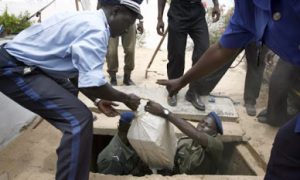
    Police officers remove bags of drugs found in the Senegalese town of Nianing, 50 miles south of Dakar. Source: africablogs.wordpress.com

    Police officers remove bags of drugs found in the Senegalese town of Nianing. Source: africablogs.wordpress.com

    Colombian involvement in West Africa (and Africa more generally) should not come as a surprise. West Africa is increasingly affected by the illegal narcotics trade and associated problems on governance and security. In this trend there are pull and push factors. It has become a transit hub and intermediate point for drugs making their routes from South America to European and other markets,  at a time when border –particularly maritime – security has improved in some European countries, making it more difficult for drugs to reach their territories using the traditional direct routes. The West African coastline is situated at the shortest travel distance from some Latin American departure points, and networks shifted to it while looking for new routes. From West Africa, drugs can continue to Europe or elsewhere by sea or by diverse land routes. Some countries with problems of territorial and border control, corruption and weak governance have been particularly vulnerable to this shift in international narcotics routes. One case in point is Guinea Bissau, where “the combination of a corrupt and centralized leadership and an inadequate and underfunded justice system in a country riven by upheaval and abject poverty” are among the driving factors.

    US Reliance on Colombian forces – Advantageous for Both Sides

    Colombian Defense Minister Gabriel Silva, U.S. Defense Secretary Robert M. Gates, center right, and U.S. Ambassador to Colombia William R. Brownfield talk to one another at the Presidential Palace before meetiing with President Alvaro Uribe in Bogota, April 15, 2010.

    Colombian and U.S. Defense Ministers and  Ambassador  William R. Brownfield meet in Bogota, 2010. Source: Wikimedia

    The reliance of the US on Colombia to export security policies makes sense for both countries. For the former, it is a way to maintain indirect military support and training programmes at a lower cost and through a reliable partner. “It is cheaper for us to have Colombia do the training than us do it ourselves,” Ambassador William Brownfield (Assistant Secretary for the Bureau of International Narcotics and Law Enforcement Affairs) told Congress, later adding that “it’s a dividend that we get for investing over $9 billion in support for Plan Colombia.” The SOUTHCOM Posture Statement 2014 describes Colombia as a clear example of a sizeable return on relatively modest investment and sustained engagement.

    For their part, the Colombian security forces face uncertainty about the future. They have undergone an important growth in personnel (up to 450,000 now) and operational capacities, parallel to increases of a defence budget that reached $12 billion in 2012. Their air power and deployment capacities have become more sophisticated; and the Police now have highly vetted units trained in intelligence-gathering on drug trafficking organizations. A significant part of those advancements can be attributed to US support through Plan Colombia. But this is an untenable situation provided that a peace deal with the FARC has been reached and in the event of a post-conflict scenario. Not surprisingly, they are in search of new missions within and outside Colombia.

    US Focus on West Africa… From Narrative to Policies

    Africa is for the US “the new frontier in terms of counterterrorism and counternarcotics issues,” according to Jeffrey P. Breeden, the chief of the DEA Europe, Asia and Africa section. The US narrative on this region is one of intertwined and convergent threats and actors, where illicit trafficking feeds the crime-terror continuum and criminal insurgencies become players in illicit markets, using the profits to finance terror campaigns. A member of the State Department remarked that “If we do not act decisively, the region will remain an exporter of terror and a provider of safe havens where terrorists from other conflicts all over the world find refuge, illicit trafficking will continue to expand, (…) and drugs and illicit enterprise will corrode the rule of law and the gains of globalization.”

    There is a boom of academic and policy literature about the ‘continuum’ and other modalities of confluence among terrorism, illicit traffic networks and armed conflict. But the relations between these actors are complex, multifaceted and non-linear. Oversimplification of this complexity,  reducing the problem to a ‘merger’ of different types of groups makes an ideal argument to gain media attention and push for kinetic policies and strong military involvement. For the US, any link to terrorism or crime-terror nexus makes it easier to gain political support for engagement. But this ‘merger’ is hardly supported by operational evidence, with cross-overs between terrorist groups and drugs cartels, for example, remaining more like opportunistic agreements and less as structural and permanent. This argument also leaves aside other root causes of crises such as lack of governance, corruption, underdevelopment and marginalisation.

    The reason for abundant use of this narrative may be hidden in plain sight. According to the criminal code, US agencies are authorised to pursue and prosecute drug offences abroad provided that a link to terrorism is established, even if there is no connection with US consumption markets. This is the case for West Africa.

    In 2011, Ambassador Brownfield led a delegation of senior U.S. officials to West Africa to begin formulating a strategic approach to undermine transnational criminal networks and  reduce their ability to operate. The response is the West Africa Cooperative Security Initiative (WACSI). US counter narcotics assistance for West Africa soared from $7.5 million in 2009 to $50 million each of the past to years, according to the State Department. The budget and operational constraints limiting direct US engagement in West Africa’s drugs and organised crime problems include AFRICOM, an agency that relies on around 2,000 personnel to manage coordination of defence programmes for 38 African countries, plus around 5,000 soldiers deployed at any time. The response to scarce resources increasingly takes the form of reliance on special operations teams and cooperation with close allies, with Colombia playing a prominent role.

    Colombia in West Africa: More Questions Than Answers

    The strategic partnership between both countries is expressed in several instruments, notably the bilateral High-Level Strategic Security Dialogue (HLSSD), periodic meetings of the Security Cooperation Coordinating Group (SCCG) and the US-Colombia Action Plan on Regional Security Cooperation. These instruments are used to formalise security cooperation activities and assistance programs to partner nations affected by transnational crime, including West Africa.

    There is no doubt that the shift in trafficking routes is affecting security in some West African countries. Again, Guinea Bissau is among the most obvious cases, due to the ties among senior government, military officials and criminal groups that have played into upheaval and instability. Northern Mali has experienced drug related violence among armed groups involved in different degrees in the drug trade. Beyond these, the connection between drugs and overt violence is less evident, but a focus exclusively on drugs and violence ignored the important connections of the drug trade and criminal networks with political and business elites. These less studied but structural relationships have potentially grave destabilising effects.

    A Colombian cooperation undertaken by the Police (not the military), focusing on capacity building to strengthen national capacities in law enforcement, and improved intelligence and information–sharing mechanisms, could make sense. International cooperation is certainly needed to address this truly transnational problem. But due to the lack of information available, it is not clear what kind of responsibilities different parts of the Colombian security forces (Police, military, intelligence) are currently assuming.

    Therefore, the involvement in West Africa raises a number of important questions. The security forces, with US support, have managed well in counter-insurgency but the overall impact of Plan Colombia and associated policies on the illegal drug economy remains doubtful. What kind of capacity building and operational support can the Colombian forces provide in countries at peace, provided that their expertise has been acquired in armed conflict? What insurgencies might be fought in West Africa?

    What is the goal and the expected outcomes of replicating ‘drug war’ policies and approaches already failed in Latin America, such as militarisation of the fight against drugs? In particular, one of the unintended consequences of this approach is the ‘balloon effect’, through which crop cultivation, routes and transit points shift to new places as the old ones become more controlled. Indeed, this is already an important factor in current West African problems. In terms of fight against corruption and involvement of powerful figures in the drug economy, the results have been mixed in Colombia (considering both national and regional levels).

    Last but not least, all the relative Colombian successes have come at the untenable cost of grave human rights violations. The security forces, particularly the military, remain very active in trying to avoid accountability for past misbehaviour and crimes. In one of the latest scandals in civil military relations, sections of Colombian military intelligence have been found to have spied on delegations of the recent peace process, including spying on the President’s representatives. What kind of human rights and democracy messages are being sent through this US backed Colombian defence activism?

    International Law enforcement cooperation can be asset in dealing with criminal networks like those involved in drug trafficking, particularly where corruption and involvement of state officials is a factor. But approaches that confuse different non-state actors, their roles and potential levels of threat and attempt to provide a one-size-fits-all response, generate more risk than certainty with regards to potential outcomes and consequences. Militarised approaches to the drug war and public security have been extensively tried in Latin America with limited impact on the drug trade, while worsening the situation of violence. In the Colombian case, the results have been remarkable in counter-insurgency, but the country is still one of the main sources of cocaine for international markets, and there have been widespread violations of human rights.

    These approaches are being increasingly questioned in Latin America and continue to lose support even among high Government representatives and Presidents. Replicating them without further evaluation and careful reflection about what has worked  – and what has not – is not a promising approach. Instead, approaches to drugs and organised crime in West Africa must be based on lessons learned, to avoid the repetition of past ineffective policies and their harmful effects.

    Mabel González Bustelo is a journalist, researcher and international consultant specialized in international peace and security, with a focus on non-State actors in world politics, organized violence, conflict and peacebuilding. You can follow her at her blog The Making of War and Peace, her webpage, and Twitter (@MabelBustelo).

    Feature image: Colombian Marines, 2009. Source: Wikimedia

  • Sustainable Security

  • Migration Due to Climate Change Demands Attention

    Migration Due to Climate Change Demands Attention

    Issues:Climate change, Marginalisation

    Governments in Asia and the Pacific need to prepare for a large increase in climate-induced migration in the coming years, says a forthcoming report by the Asian Development Bank (ADB).

    Typhoons, cyclones, floods and drought are forcing more and more people to migrate. In the past year alone, extreme weather in Malaysia, Pakistan, the People’s Republic of China, the Philippines, and Sri Lanka has caused temporary or longer term dislocation of millions. This process is set to accelerate in coming decades as climate change leads to more extreme weather.  

    “No international cooperation mechanism has been set up to manage these migration flows, and protection and assistance schemes remain inadequate, poorly coordinated, and scattered,” the report states. “National governments and the international community must urgently address this issue in a proactive manner.”

    ADB expects to issue the report, Climate Change and Migration in Asia and the Pacific, in early March as part of a broader ADB project aimed at increasing awareness of, and enhancing regional preparedness for, migration driven by changing weather patterns.

    The report highlights specific risks confronting climate change “hotspots”, including megacities in coastal areas of Asia. These hotspots of climate-induced migration face pressure from swelling populations as rural people seek new lives in cities. The problem is compounded by greater dislocation of people caused by flooding and tropical storms.

    Climate-induced migration will affect poor and vulnerable people more than others,” said Bart W. Édes, Director of ADB’s Poverty Reduction, Gender, and Social Development Division. “In many places, those least capable of coping with severe weather and environmental degradation will be compelled to move with few assets to an uncertain future. Those who stay in their communities will struggle to maintain livelihoods in risk-prone settings at the mercy of nature’s whims.”

    On the positive side, the report says that if properly managed, climate-induced migration could actually facilitate human adaptation, creating new opportunities for dislocated populations in less vulnerable environments.

    The ADB project, Policy Options to Support Climate-induced Migration, is the first international initiative that aims to generate policy and financing recommendations to address climate-induced migration in Asia and the Pacific.

    To obtain a copy of the draft report, contact  or +63 2 632 6643. For further information visit www.adb.org/SocialDevelopment/climate-migration.

    Article source: Asian Development Bank

    Image source: Hamed Saber

    Comments

    Thanks for this! Very telmiy for me, as I’m trying to write about forest industry responses to climate change.Mind you, it’d help if there were actual BC Forest Service researchers LEFT by 2013. We’ve had up here, not to mention some trouble with our politicians .

    Post new comment


  • Safeguarding South Asia’s Water Security

    Safeguarding South Asia’s Water Security

    Michael Kugelman | Seminar | November 2011

    Issue:Competition over resources

    In today’s era of globalization, the line between critic and hypocrite is increasingly becoming blurred. Single out a problem in a region or country other than one’s own, and risk triggering an immediate, yet understandable, response: Why criticize the problem here, when you face the same one back home?

    Such a response is particularly justified in the context of water insecurity, a dilemma that afflicts scores of countries, including the author’s United States. In the parched American West, New Mexico has only ten years worth of drinking water remaining, while Arizona already imports every drop. Less arid areas of the country are increasingly water-stressed as well. Rivers in South Carolina and Massachusetts, lakes in Florida and Georgia, and even the mighty Lake Superior (the world’s largest fresh-water lake) are all running dry. According to the U.S. Environmental Protection Agency, if American water consumption habits continue unchecked, as many as 36 states will face water shortages within the next few years. Also notable is the fact that America’s waterways are choked with pollution, and that nearly twenty million Americans may fall ill each year from contaminated water. Not to mention that more than thirty U.S. states are fighting with their neighbours over water.

    Such a narrative is a familiar one, because it also applies to South Asia. However, in South Asia, the narrative is considerably more urgent. The region houses a quarter of the world’s population, yet contains less than 5% of its annual renewable water resources. With the exception of Bhutan and Nepal, South Asia’s per capita water availability falls below the world average. Annual water availability has plummeted by nearly 70% since 1950, and from around 21,000 cubic metres in the 1960s to approximately 8,000 in 2005. If such patterns continue, the region could face ‘widespread water scarcity’ (that is, per capita water availability under 1,000 cubic metres) by 2025. Furthermore, the United Nations, based on a variety of measures – including ecological insecurity, water management problems and resource stress – characterizes two key water basins of South Asia (the Helmand and Indus) as ‘highly vulnerable’.

    These findings are not surprising, given that the region suffers from many drivers of water insecurity: high population growth, vulnerability to climate change, arid weather, agriculture dependent economies and political tensions. This is not to say that South Asia is devoid of water security stabilizers; indeed, its various trans-national arrangements, to differing degrees, help the region manage its water constraints and tensions. This paper argues that such arrangements are vital, yet also incapable of safeguarding regional water security on their own. It asserts that more attention to demand-side water management within individual countries is as crucial for South Asian water security as are trans-national water mechanisms.

    To understand the importance of trans-boundary water arrangements in South Asia, one must first bear in mind a paradox: the region is poorly integrated, yet linked together by water co-dependencies.

    Consider, first, that the World Bank has declared South Asia the world’s least integrated region. According to the Bank, South Asia has the world’s worst railways and road density, while only sub-Saharan Africa has worse electricity and sanitation systems. Predictably, intra-regional trade accounts for just 5% of the region’s total international trade, and less than 2% of gross domestic product. Not surprisingly, South Asia’s regional organization, SAARC, is not nearly as dynamic as regional groupings like the European Union or the Association of South East Asian Nations.

    Second, that many of the region’s countries depend on the same rivers – and, by extension, neighbouring upper riparians – for their water supply. India, Bangladesh and Nepal look to the Brahmaputra, while both Pakistan and India are beholden to the rivers of the Indus basin. Bangladesh and Pakistan, both lower riparians, must obtain great majorities of their water resources (91% and 75%, respectively) from beyond their borders.

    Conversely, China, while not a geographic entity of South Asia, is an upper riparian for many of the key rivers flowing into South Asia. India is both a lower (in the case of the Brahmaputra) and upper (in the case of the Indus) riparian. This means, hypothetically, that any flow-diverting Chinese activities on the Brahmaputra could alarm India, Nepal and Bangladesh, and in turn trigger Indian flow manipulations on the Indus, with implications downstream for Pakistan. Such a dynamic creates a hydro domino effect: one nation’s water policies can spark a chain reaction throughout the region.

    Another notable factor about South Asia’s interconnected water geography is that many major rivers originate in or pass through politically contested or tense areas. The Tibetan plateau – where the mighty flows of the Salween, Brahmaputra, Indus, Sutlej, and other rivers all spring to life, providing water to 1.5 billion people downstream – is controlled by China, and abuts India’s water-rich Arunachal Pradesh state, which China covets and has sparked Sino-Indian tensions. The rivers of the Indus basin, of course, flow through the Kashmir region – an unending source of Pakistan-India tensions. No wonder that many of South Asia’s riparian pairings (India-Pakistan for the Indus, and India-Bangladesh for the Brahmaputra and the Ganges) reflect the region’s most troubled bilateral relationships.

    In effect, South Asia’s water relations play out amid a volatile backdrop of shortage, dependency and geopolitical tension.

    A nation’s upper riparian status by no means guarantees water security. China, an uber-upper riparian, suffers from a full-blown water crisis. The North China plain – one of the country’s ‘economic and social cores’ generating more than 20% of its grain supply, according to China scholar David Pietz – is frighteningly water-scarce, with a per capita availability of 225 cubic metres per year. India, meanwhile, contains about 20% of the world’s population, but only about 4% of its water. A 2010 Asian Development Bank report projects that the country could suffer from water shortages of as much as 50% by 2030.

    Faced with current shortages, policymakers in upper riparian states frequently opt for supply-side solutions. Water generation measures may ease water stress internally, yet they often exacerbate regional tensions. India and China, to generate desperately needed water resources for both agriculture and energy, often resort to dam construction and other large engineering projects. Many of these are run-of-the-river and hence do not prevent flows from continuing downstream. Still, dams are a delicate matter. China’s insistence that its South to North Water Diversion Project will not divert flows from the Brahmaputra is met with skepticism in India. Additionally, even run-of-the-river dams and other hydro projects threaten lower riparians’ water and food security. For example, if India builds all its envisioned hydro projects on the western rivers of the Indus basin, Pakistan’s agriculture could be deprived of up to a month’s worth of river flows – enough to ruin an entire planting season.

    Lower riparians also opt for large, supply generating projects. Pakistan’s water resources policy has been dominated by dam building for decades, and the country’s Water and Power Development Authority (WAPDA) plans to construct five dams, three large canals, and five hydropower facilities by 2025. As a lower riparian, these national engineering projects will not impede river flows into downstream countries. However, they upset riparian communities, who risk being displaced. Supply-side efforts also aggravate regional and provincial tensions, which are high in many South Asian countries. The furious debate surrounding Pakistan’s Kalabagh dam, for example, has pitted supporters in Punjab against opponents everywhere else in the country. This internal discontent feeds into the domestic instability that so concerns Pakistan’s neighbours.

    In Pakistan, water insecurity also spawns different manifestations of militancy. In recent years, the Pakistani Taliban, aware of Pakistan’s precarious water situation, has attacked the country’s largest earth-filled dam, the fabled Tarbela. More recently, extremists in Punjab have issued violent threats, angrily blaming India for ‘stealing’ Pakistan’s water and vowing aggression against India unless it ceases such ‘theft’. It is perhaps not coincidental that while Pakistan based extremists have been largely absent from the latest uprising in Jammu and Kashmir, they have been increasingly vocal in their accusations of India’s alleged water theft. These extremists regard their India blame game as an expression of nationalism – an attempt to draw attention away from divisive debates within Pakistan about dam construction and toward a unified front on confronting India. Water may well be supplanting Kashmir as the militants’ chief rallying cry.

    Another response – more potential than actual, at least at this point – is for desperate citizens to flee to more water-secure nations. According to a Strategic Foresight Group estimate, water scarcity will contribute to the displacement and migration of 50 to 70 million people in India, Bangladesh, Nepal and China by 2050. To be sure, water strain takes a devastating toll on human security inside upper and lower riparian nations alike – as evidenced by the livelihood-shattered Pakistani fishermen along the disappearing Indus plain and the water starved, suicidal Indian farmers in parts of India.

    However, migration is a particularly worrisome threat for lower riparians, with the potential not just to uproot millions of people, but also to imperil regional stability. Bangladesh offers a vivid example. As an impoverished, highly populous, lower riparian that depends on other countries for nearly all its water needs, it is deeply vulnerable to Indian or Chinese activity on rivers upstream and to glacial melting in the Himalayas. And as a low-lying nation, it is susceptible to rising sea levels and monsoon flooding. This array of water problems, according to some observers, could hasten mass Bangladeshi migrations into India’s volatile East, with politically explosive implications.

    The combustible mix of water vulnerability, geopolitical tensions, and supply-side responses with ripple effects across borders constitutes a recipe for disaster – and figures to become even more explosive in the coming decades as the region’s population growth soars and Himalayan glacial melt accelerates. Several nightmare water-driven scenarios come to mind:

    * Indus Basin War. Militants in eastern Pakistan, vowing to avenge India’s ‘theft’ of Pakistan’s water from the Indus basin’s western rivers, launch terror attacks in India. New Delhi dispatches troops to its western flank, and threatens to shut-off western river flows into Pakistan.

    * Sino-Indian Water Showdown. China, in response to Indian defen-sive upgrades in and near Arunachal Pradesh, the water-rich northeastern Indian state that Beijing has long claimed, seeks to reclaim a strategic advantage by slowing the flow of the Brahmaputra into India’s Assam state – an impoverished bastion of separatist militancy that is also an important area of agricultural production.

    * Environmental Refugee Crisis. As glacial melt in the Himalayas runs its course, river flows slow to a trickle, and lower riparian Bangladesh experiences rampant water scarcity, Bangladeshis migrate en masse to more water secure but politically volatile eastern India – deepening instability in the latter as violent factions target these new arrivals, and long entrenched separatist militants exploit the unrest by launching their own attacks.

    These hypothetical scenarios, and the bubbling cauldron of water insecurity and political tensions that makes them impossible to dismiss, crystallize the importance of trans-boundary water arrangements with the ability to manage, if not reduce, the region’s water based tensions.

    Numerous trans-boundary rivers in South Asia are governed by treaties. These include the Mahakali (to which India and Nepal are party), the Ganges (involving India and Bangladesh), and the Indus (comprising India and Pakistan). The Mahakali accord is meant to promote the river’s integrated development, though various disagreements have prevented the treaty from being properly implemented. The Ganges agreement is also constrained by several disagreements, particularly over the Farakka Barrage, which Bangladesh believes has reduced downstream flows of the Ganges.

    Nonetheless, none of these countries has ever gone to war over water, and the treaties are surely a major reason why.

    The Indus Waters Treaty (IWT) allocates the Indus basin’s western rivers to Pakistan, and the eastern rivers to India (India is authorized to draw on the western rivers for agricultural purposes, so long as this use does not involve storage). It deserves particular attention, given that it is repeatedly lauded as a magnificent example of international cooperation and conflict management. Such rhetoric is warranted. The two parties, despite their rocky relations, truly make a commitment to uphold the treaty’s provisions. The IWT emphasizes transparency, particularly in terms of data exchange and notification of plans to undertake hydro projects. Sure enough, in 2010, India allowed Pakistan to inspect several under- construction Indian hydropower projects on the western rivers. The two nations have also agreed to set up a telemetry system to measure river flows.

    Additionally, only once in the treaty’s 50 year history have the accord’s mechanisms for dispute resolution been put to the test. This was a period between 2005 and 2007, when a neutral expert (appointed by the World Bank, as per the IWT’s stipulations) weighed in on the concerns of Pakistan about the Baglihar dam, a project being constructed by India on one of the Indus basin’s western rivers. The expert ruled against Pakistan on several technical points – particularly when he stated that a gated spillway was necessary – yet agreed with it on others (such as on the issue of power intake levels). While many on both sides undoubtedly found ways to oppose the outcome, it is undeniable that the dispute was settled peacefully. In June 2010, both governments concurred that the Baglihar dispute had been definitively resolved.

    In 2010, Pakistan decided to bring some technical concerns about the Kishanganga dam (a hydro project being constructed by India in Jammu and Kashmir) to an international court of arbitration. While the outcome of this latest case is far from clear, the Baglihar precedent suggests the arbitration process for Kishanganga should be similarly smooth.

    Despite its successes, many observers fear the IWT’s increasing vulnerability. This derives in part from the long-standing grievances harboured by both countries about the treaty. Indians believe it curtails the storage rights of Jammu and Kashmir, and hampers the development of hydro projects on the western rivers. Indeed, India’s participation in the treaty is both economically and politically risky – given that the energy-starved nation must forego opportunities to harvest hydroelectric resources, and given the resentment these cautious hydro development policies breed among Kashmiris.

    Pakistan, meanwhile, resents its inherent vulnerability as the lower riparian (even though the IWT allots it 80% of the total Indus basin river flow). For many in Pakistan, the country with the lowest per capita water availability in Asia, entrusting its water security to its deeply mistrusted neighbour is profoundly unsettling.

    Furthermore, worries about population growth and climate change effects (particularly the melting of Himalayan glaciers) are fuelling calls for a revised treaty that takes such trends into account. There are also recommendations that the treaty be expanded, so that it includes the other two Indus basin riparians, China and Afghanistan. Those advocating this latter view argue that a four-party treaty would reduce the possibilities of region-wide conflict, and promote basin-wide ecological sustainability.

    Some experts contend that the ‘dividing the resources’ mentality of the IWT is no longer tenable, and that Pakistan and India should move toward a more cooperative ‘share the resources’ paradigm. Ahmad Rafay Alam, one of the most eloquent articulator of this view from the Pakistan side, argues that the two nations should determine ‘whether it is in the economic, social or political interest of both riparians to cooperate on water, rather than be antagonistic over it.’ For example, instead of railing against Indian run-of-the-river dam projects on the western rivers, power-starved Pakistan should consider buying the electricity they generate – a more affordable investment than buying power from pricier indigenous gas-powered rental power projects.

    This paradigm can be applied to a broader geographic area as well. Bhutan and Nepal are blessed with ample hydroelectric potential; India could therefore invest in energy resources in these countries just as Pakistan could in India.

    Some experts make more modest suggestions about improving trans-national water arrangements. They believe that regional water security is best attained not by changing the architecture or philosophy of regional water agreements, but instead by strengthening mechanisms for cooperation and transparency within existing arrangements. In other words, instead of crafting a new IWT, the parties should make even greater commitments to respect the treaty’s current provisions on transparency.

    A core component of this viewpoint is the need for more data sharing on river flows, hydro project plans, and glacial melting. This emphasis on transparency is a chief feature of U.S. government policy on trans-national water arrangements. Policymakers in Washington, when describing South Asian water arrangements, repeatedly underscore the same terms: good communication, data sharing and joint management.

    Some modest steps have already been taken along these lines. As mentioned above, India and Pakistan recently agreed to several information sharing measures. Additionally, China and India have agreed to share data on glacial melt. Still, much more can be done, and it is here that the international community can play a key role. International academic conferences and other forums facilitating the exchange of information about water constitute one way to boost water transparency. Technology sharing is another avenue.

    The United States, for example, can share its new METRIC system – a new water measurement tool developed by academic researchers that has already helped resolve a fight over water in the Arkansas river, and could similarly be deployed in the Indus basin. Similarly, America could provide satellite data that document water availability. It is sometimes observed that there are no international water treaties or other global mechanisms to promote water cooperation. The international community’s participation in water data sharing exercises, in South Asia and elsewhere, can serve as a modest corrective.

    Champions of trans-boundary water transparency argue that by fostering greater data sharing, riparians’ mutual suspicions can be reduced, paving the way for greater water cooperation. It is important to note, however, that greater water transparency can easily backfire, and even undermine riparian relations. As one study concludes, revelations of ‘inequitable Indian water stewardship on Indus tributaries’ could exacerbate the volatility of India-Pakistan relations. One might then argue that nations with delicate relations may in certain cases be better served by not revealing inflammatory water data, and should instead maintain opacity.

    This raises a critical point: Advocating for more trans-boundary water openness, pushing for ‘resource sharing’ paradigms, and proposing more inclusive treaties all presuppose a level of political cooperation that may not exist in South Asia. After all, it is easy to propose the formation of a new Himalayan Rivers Commission to govern water management in this sub-region, as was done in 2010. However, it would be much more difficult to implement such an arrangement, which would necessitate the close cooperation of nations harbouring major trust deficits toward each other.

    So the question invariably arises: How can South Asia’s trans-national water arrangements be enhanced in such a troubled political environment? One answer is to look within, and to muster better efforts to improve internal water governance. This is because sounder water management inside countries can create a more favourable political climate for the pursuit and achievement of lasting external water cooperation. Better internal water management can serve as a catalyst for effective regional water governance.

    It is common to attribute water problems exclusively to politics. It is often said that India-Pakistan water tensions are just one facet of a long troubled bilateral relationship. Similarly, one frequently hears that India-China disagreements over water are rooted in the larger competition between the two rising powers for influence over South Asian territory and resources. And India’s water disagreements with Bangladesh and Nepal too are said to be part of a long history of poor political relations.

    Such views are accurate, yet incomplete. After all, across the United States and Australia, regions and states bicker over river water allocations – yet these tensions have little to do with politics. Neither Colorado and Kansas in the United States, nor Victoria and Queensland in Australia, are at risk of going to war; they simply disagree about how to properly divide up river flows. As such, their squabbles demonstrate an inability to efficiently manage existing water resources. In South Asia, where the availability of water resources is more precarious, this poor water governance is a chief cause of water insecurity.

    In South Asia, water insecurity is not solely a function of resource shortages. To be sure, much of it is running low on water. However, excluding some arid portions of the region, very little of South Asia is actually water-scarce. The resource is precious, yet present. South Asia’s water problems are very much rooted in the wasteful and inefficient management of the region’s available water supplies.

    Pakistan is arguably the worst culprit. Water infrastructure and transmission systems – the canals and pipes that have helped make the Indus river system the world’s largest contiguous irrigated area – are literally falling apart because they have not been properly maintained. As a result, millions of gallons of water are lost to leakage every day. In urban areas, wastewater treatment facilities are nearly non-existent – hence the country’s great cities are notorious for fetid surface water resources that sicken and kill hundreds of thousands every year.

    Meanwhile, Islamabad offers few incentives to the population to use water saving technology. The lack of subsidies for drip irrigation, for example, compels farmers to use traditional, water wasting flood irrigation. Furthermore, the government has made little effort to diversify crop production. This is unfortunate, given that Pakistan’s most intensively produced crops – and those that fetch the greatest profits for small farmers – are also the most water guzzling.

    Then there are the structural factors that exacerbate Pakistan’s water mismanagement. Thanks to the nation’s feudal land setup, a small landed elite owns most rural land, while the majority of the rural population is landless. In a country with few water laws or rights, land ownership determines water access. As a result, most of Pakistan’s rural population struggles to obtain water. In theory, mechanisms such as warabandi – the colonial-era water distribution system meant to ensure farmers equal access to irrigation water – and provincial level water arbiters such as the Indus River System Authority (IRSA) are meant to compensate for such inequalities. In reality, they fail miserably. Warabandi is exploited by politically connected large farmers, while IRSA is rarely taken seriously, and its edicts about provincial river flow allocations are routinely ignored.

    Given this gloomy domestic water situation in Pakistan, it is clear why not only militants, but also the country’s government, have chosen to externalize blame over the border. After all, bringing attention to its dysfunctional domestic water management would essentially be an acknowledgment that Islamabad is to blame for its water crisis. While Islamabad is much less prone to blame India than it was several years ago (in fact, in 2010, Pakistan’s minister for water and power acknowledged that India rarely prevents river water from flowing into Pakistan), it rarely admits that the country’s water problems are largely internally rooted.

    Pakistan is not the only poor water manager in South Asia; India’s water governance is similarly troubled. India is home to ‘dilapidated’ pipes and pumping stations that cause more than one-third of New Delhi’s fresh water (and at least 40% of most Indian cities’ total water resources) to be lost to leakage. The Yamuna river is choked with ‘faecal bacteria’, and this sewage has increased ‘thousands of times’ over the last decade. Water intensive rice and wheat crops are championed by the government through price guarantees to farmers. And per capita storage availability – the sine qua non for dam efficiency – has plummeted in recent years to levels found in Africa’s poorest nations.

    Poor internal water management has grave implications for public health, food security and the environment. Sometimes the effects can be catastrophic. Consider this summer’s flooding in Pakistan. If the country’s water infrastructure had been sturdier and better maintained, raging rivers would have been better contained and the damage wrought by the deluge may not have been as extensive.

    Perhaps the most disturbing implication is the strain on groundwater resources. With poor internal water management regimes causing surface water to be wasted, lost or contaminated across the region, South Asians are increasingly digging deeper – literally – to alleviate their water insecurity.

    In the context of agriculture – by far, the sector that consumes the most water across South Asia – the increasing inefficiency of highly subsidized, state-run irrigation systems have driven farmers to mine groundwater, which they have more control over and is more readily available. Even back in 2000, nearly 70% of Bangladesh’s irrigation, and more than 50% of India’s, was served by groundwater resources.

    Yet groundwater depletion goes beyond the agricultural sector. According to the World Bank, India is the world’s most voracious consumer of groundwater. This heavy consumption is reflected in a 2009 study by several U.S. scientists, which found that groundwater levels fell by about four centimetres per year between 2002 and 2008 across three states in northwestern India – including the breadbasket of Punjab. These areas could conceivably exhaust their entire groundwater supply within the next few decades.

    Pakistan, too, is increasingly groundwater-reliant. Lahore – the country’s second-largest city – is completely dependent on it for drinking water needs, and groundwater tables have fallen by as much as sixty-five feet in some areas of the metropolis. Worse, wastewater is now infiltrating the city’s groundwater, choking it with arsenic.

    Groundwater – once a pristine, untapped resource – is now being extracted intensively throughout South Asia. In effect, with this onslaught on South Asia’s groundwater, the last bastion of regional water security has been breached. And as groundwater becomes increasingly short and scarce, South Asia may be compelled to return to rapidly dwindling surface water resources and to compete ferociously for the ultra-precious supply that remains – a terrifying prospect, and particularly for lower riparians.

    Faced with domestic water problems, and mistaking mismanagement for shortages (or intentionally cloaking mismanagement in the guise of shortages), governments succumb to their supply-side fancies, and construct more dams and reservoirs. Such actions, as noted earlier, fan provincial tensions, and, in the case of upper riparians, anger downstream neighbours. Herein lies the troubling link between poor water management at home and trans-national water cooperation: the former prompts governments to take actions that threaten the latter.

    Whether such actions outweigh the risks of imperilling trans-national water cooperation is debatable. This is because many supply-side coping strategies are neither efficient nor sustainable. One of Pakistan’s top water experts, Simi Kamal, has calculated that the quantity of water projected to be generated by the nation’s under-construction Diamer-Basha dam pales in comparison to the amount that would be freed up simply by repairing and maintaining Pakistan’s leaky canal system. Additionally, Pakistan’s dams, like India’s, are rapidly losing storage capacity.

    Such considerations give way to another unsettling reality: So long as internal water management remains poor, the benefits accruing from deeper regional water cooperation will be strictly political; from a water resources standpoint, little will improve. Take the case of Pakistan. Assume, for a moment, that increased cooperation enables Pakistan to succeed in getting India to release more water downstream. What would be the result? Many Pakistanis would argue that their water problems would be solved: parched farmland saved, children’s thirst quenched, and lost water livelihoods restored.

    In reality, however, none of this would happen. Instead, more water would mean more inefficiency: More water lost to leaky canals and pipes, wasted in irrigation, showered on water-guzzling crops, and contaminated by urban waste. Indeed, if nothing is done to improve internal water governance, allowing more water to gush into Pakistan would simply intensify the country’s water crisis.

    South Asian nations need to focus more on demand-side solutions to domestic water problems. These include water conserving technologies, crop diversification, better investments in infrastructure maintenance and wastewater treatment, and a stronger embrace of rainwater harvesting (a conservation method that has already caught on quite strongly in parts of the region). Such policies are less expensive, and potentially more efficient, than traditional supply-side water engineering projects like large dams. Some encouraging signs are emerging from India, where there has been some debate about the merits of emphasizing sugar-bean cultivation over that of sugarcane, which is notoriously water wasting. There has also been discussion about embracing water saving mechanisms such as the direct seeding of rice.

    If such demand-side management policies are implemented successfully, South Asian nations would become more judicious in their use of existing water resources, and therefore less threatened in the short-term by the spectre of scarcity. Upper riparians would, presumably, be less likely to initiate new hydro-generation projects that upset their downstream neighbours. Lower riparians, meanwhile, would have less incentive (and fewer grounds) to stoke tensions with their upstream neighbours by accusing them of water theft. As a result, trans-national water arrangements would be threatened less, and the calmer political climate would enable riparians to make more substantive progress on the data sharing and transparency essential for better South Asian water security. None of this, it should be noted, would necessitate drawing up new treaties or other water agreements.

    To be sure, new demographic and environmental realities may well call into question the continued relevance of decades-old trans-national water arrangements. Still, these mechanisms need not stop functioning simply because of the presence of factors not at play fifty years ago. One study of the Baglihar dam case observes that the issue was ‘addressed bearing in mind the technical standards for hydropower plants as they have developed in the first decade of the 21st century, and not as perceived and thought of in the 1950s when the [IWT] was negotiated.’ A precedent has effectively been set for new conditions to be taken into account when interpreting the existing treaty, without needing to incorporate such conditions into an altogether new or revised treaty.

    This is just one more reason for South Asian nations to redouble their efforts to ameliorate internal water management. Trans-national water arrangements can also stand to improve, yet they are not in desperate need of reform and revision. Rather, it is the water governance of the region’s individual countries that so urgently needs to be fixed. In effect, South Asian water policies must adopt a new approach – one that, in the words of noted water expert Ramaswamy R. Iyer, embraces the ‘responsible, harmonious, just, and wise use of water.’ With population growth and climate change continuing apace, the stakes have never been higher, and the costs of inaction never starker.

    Article Source: Seminar

    Image Source: hceebee

    Comments

    Post new comment


  • Sustainable Security

    Despite being strictly prohibited in international humanitarian law, child soldiering remains a serious global problem. How effective has the international community’s response to this phenomenon been?

    Constituting one of the most egregious child rights violations, many children are currently actively involved in violent conflict as members of armed organizations, states and non-state actors. They can be found on every continent, but sub-Saharan Africa is the epicenter of the phenomenon. These recruited children perform a range of different tasks; they participate in combat, lay mines and explosives, are scouting, spying, and acting as decoys, couriers or guards. Others are used for logistics and supporting functions such as cooking and cleaning.

    The 1977 Additional Protocols to the Geneva Conventions were the first international treaties to try and tackle the problem of child soldiering. They prohibit the recruitment and participation in hostilities of children under the age of 15. The 1989 Convention on the Rights of the Child, which has achieved almost universal ratification, also included the 15 age limit. An optional protocol to this Convention, in May 2000, lifted the age to 18. It insisted that armed groups should not use children under 18 in any circumstances and called on states to criminalize such practices. However, although the use of children by armed groups is prohibited and defined as a war crime, child soldiering remains a pressing global issue.

    A “time bomb”?

    omo_river_valley_img_0463

    Child soldiers in Ethiopia. Image by Vittorio Bianchi via Flickr.

    The most commonly cited figure for the number of children involved in conflicts is 300,000. This estimate is, however, not necessarily the most accurate one as information on child soldier usage is difficult to obtain. Children are often employed in remote conflict zones away from public view and the media, no record is kept of their number and ages, and those who employ them often deny their existence or claim that these were isolated cases. Besides, they often ‘vanish’ after the conflict ends; they are rarely as visible among the demobilised troops as they were among the combatants at the height of hostilities.

    The number of children active in armed groups is clearly nominal when compared to the millions of children who do not participate directly as soldiers but are profoundly affected by war. Nonetheless, this group is a tangible, visible, and dramatic example of the deprivation of the human rights of children. It has been empirical proven that using children as active participants in armed conflict has severe consequences not only for the child and their family, but also for society in general. For instance, at a recent Paris conference on child soldiering, the keynote speaker, the former French foreign minister Philippe Douste-Blazy, warned that the use of child soldiers is “a time bomb that threatens stability and growth in Africa and beyond.” They are “lost children,” he argued, “lost for peace and lost for the development of their countries”. Also, a New York Times editorial stated: “They are walking ghosts, damaged, uneducated pariahs.” Ultimately, if subscribing to these statements, child soldiering may be thought to contribute to the well-known ‘conflict trap’, i.e. they might increase the likelihood that conflict recurs.

    There are at least two avenues that link former child soldiers to conflict recurrence. First, it is argued that former child soldiers have often limited skills besides killing and being able to fieldstrip weapons after the conflict has ceased. This is primarily due to the fact that they experience little to no education while being in the bush. This lack of education impedes their labour market success: they earn less and are less likely to be engaged in skilled work in comparison to those that were not recruited by armed groups. This may significantly raise the willingness to rejoin armed groups again, which might assure them of at least the basic necessities, such as food and perhaps even a bit of money.

    Second, although child soldiers are far from the only ones who are affected as a result of their experiences in war, they suffer the most and have the least capacity to recover. Typically former child soldiers have witnessed, experienced and/or perpetrated shocking and disturbing violent actions during their time with the armed group. This can create great difficulties both for the children and their interface with society. It can lead to both physical symptoms, such as headaches, stomach pains, sleep disorders, and mental symptoms, like depression, anxiety, and extreme levels of pessimism.

    One of the most worrying symptoms connected to children’s war participation is a supposed increase in the child’s level of aggression. Due to the fact that they often do not have the capacities and experiences to disengage themselves from these violent and aggressive behavioral norms established during their time in the armed groups, difficulties arise when peace is restored. For instance, they often display on-going aggressiveness within their families and communities: they also often use physical violence to resolve conflicts, reflecting an absence of adequate social skills.

    These skills are not easily acquired by former child soldiers since they often encounter broken families once they are back that could have provided a better regulation of the use of violence. Hence, some scholars have argued that the phenomenon of child soldiers feeds upon itself: each round of fighting creates a new cohort, traumatized by the war and bereft of economical skills, who then become a potential pool and catalyst for the next spate of violence. Or as Wessells describes it: “A society that mobilizes and trains its young for war weaves violence into the fabric of life, increasing the likelihood that violence and war will be its future. Children who have been robbed of education and taught to kill often contribute to further militarization, lawlessness, and violence”.

    International response

    The response of the international community to counter child recruitment falls usually in two categories: (1) punishing perpetrators by ‘naming and shaming’ practices and by prosecution; and (2) mitigating some of the damage done to children once they leave the armed group by implementing child-centred Disarmament Demobilization and Reintegration (DDR) programs.

    Concerning the ‘naming and shaming’ policies, the United Nations often publishes reports mentioning particular governments and non-state actors that use children. Some have argued that this has an effect, especially on governments, although there is little empirical evidence to back this up. The largest degree of child recruitment is, however, carried out by non-state actors and it seems that media exposure, public pressure, and pressure of international organizations and governments have little to no effect, with perhaps the exception of rebel groups who strive for secession.

    Besides ‘naming and shaming’ campaigns, the international community has also started to shift its focus to the criminalization of child soldier recruitment. Thomas Lubanga Dyilo, a warlord from the Democratic Republic of the Congo who led the Union of Congolese Patriots, was the first rebel leader convicted by the International Criminal Court for the use of children in military operations. More recently, Charles Taylor, the former president of Liberia, was found guilty of conscripting and enlisting children. It is, however, unclear whether this criminalization has a deterrent effect on child soldier recruitment.

    Once children are out of the armed groups, the international community attempts to mitigate the damage done to them and the potential consequences for society by implementing DDR programs. Initially children were often excluded from these programs, as it was argued that they did not pose a post-conflict threat. Moreover, since children cannot be legally recruited, child-centered DDR program elements were not viewed as a routine component of peacemaking. Fortunately, this has changed in recent times, and most DDR programs now have their own imperatives focused on rehabilitating former child soldiers. Usually these programs consist of three components.

    First, former child soldiers are gathered at pick-up points, moved to disarmaments sites, and, whenever necessary, disarmed. During the demobilization part of the program, eligibility for the DDR program is determined through a screening process in which they receive identity and discharge documents. Reintegration is the third component of the DDR program, which starts at care centers – transit facilities which help prepare former child soldiers for going home and give non-governmental organizations time for the preparation of families and communities to receive the children. During their time at the center, emphasis is placed on educational activities, recreational activities, psychological support and counselling, and several different life skills trainings. Once the parents or extended family members are traced, the children will be taken home to their family and will join an appropriate educational program.

    The effectiveness of these programs in reducing recidivism and establishing post-conflict stability is, however, not always affirmed. Some scholars conclude that these programs are generally inefficient at disarming ex-combatants, reducing the likelihood of recidivism, and addressing their economic and security concerns. This lack of supporting evidence might be due to conceptual and operational problems with defining the outcome of these programs (and how to measure this), and a lack of information on the existing DDR programs (money, personnel, mission statements, etc.). But it might also be due to the content of these programs and how they approach child soldiering. Many of these child-centered DDR programs, for instance, are put in place under enormous time pressure, are often disconnected from the perception of local communities, and are based on a one approach fits all children principle. Consequently, some scholars have called for more flexibility within these programs to enhance is effectiveness. Only then can efforts to promote social reconstruction bear its fruits.

    Roos Haer (PhD, University of Konstanz, Germany) is a postdoctoral researcher at the University of Konstanz at the chair of International Relations and Conflict Management. Her current research interests include the role of children in conflict, child soldier recruitment by state and non-state actors, Disarmament Demobilisation and Reintegration programs, and survey methodology in less developed (conflict) countries. Her research is often based on quantitative field research conducted in Africa. She has published in (a.o) the European Journal of International Relations, Conflict Management and Peace Science, Third World Quarterly, and has published a book with Routledge publisher.

  • Sustainable Security

    Over 10 years ago, the Cathedral Peak Hotel, which nestles among the peaks of South Africa’s majestic Drakensburg Mountains, played host to what was, at the time, a unique gathering. Scholars from around the globe (the United States, Britain, Switzerland, Australia, Germany, South Africa, and Israel) met with representatives of international NGOs (the International committee of the Red Cross and the Geneva Center for the Democratic Study of Armed Forces, among others) and members of the private military and security industry to discuss and debate the growing role of private contractors in contemporary conflict zones. I was the convener of that conference and co-editor of the subsequent volume of the same title, Private Military and Security Companies: Ethics, Policies and Civil-Military Relations (Routledge 2008).

    Though the modern private military company can be traced back to companies such as David Stirling’s WatchGuard International in the 1960’s, and though there was some related early scholarly research, it was the massive use of contractors by the United States in Iraq in the civil war that emerged after the 2003 invasion which ultimately sparked serious public and scholarly interest in the sector. Just a year before the conference, the killing and gruesome mutilation of four Blackwater contractors by insurgents had been a major cause of the bloody and ultimately fruitless first battle of Fallujah. Given the context, it’s particularly interesting that Doug Brooks – then the President of the largest industry body for PMSCs, the International Peace Operations Association (now the International Stability Operations Association) – chose to focus his contribution to the conference, and his co-authored contribution to the book, on peacekeeping operations.

    Brooks argued then that, with the growth of what he called ‘Westernless peacekeeping’ (i.e. UN and African Union peacekeeping operations carried out without major support from NATO and ‘NATO-class’ military forces) PMSCs should have an increasing role in peacekeeping operations, contributing capabilities not possessed by the military forces of developing world countries like Bangladesh, Ethiopia, Nepal, Indonesia and Rwanda, who contribute the bulk of peacekeepers for UN operations.  Contractors, Brooks contended, offer ‘faster, better and cheaper’ solutions to capability challenges in peacekeeping operations, operate with a smaller and less culturally sensitive footprint than equivalent military forces, and act as a force-multiplier through the provision of specialist and niche capabilities.

    private-miltary

    Private military contractors in Baghdad, Iraq. Image by Babeltravel via Flickr.

    A decade on and Iraq is still in the news, but Western boots on the ground are largely absent, and the previously booming market for contractors there and in Afghanistan has shrunk dramatically. As Molly Dunigan and Ulrich Petersohn and their collaborators show in a recent edited collection, the once-championed ‘global market for force’ has proven itself to be, in fact, a conglomeration of quite different markets for force, and it is a mistake to conflate the legitimate with the illegitimate. The United States, Britain and other nations continue to employ the services of private military contractors for lower priority tasks where doing so is (or at least appears to be) cost and manpower effective.

    The US State Department’s five-year $10.2 billion Worldwide Protective Services contract, the next phase of which was announced in mid February, is distributed largely among companies like SOC, Triple Canopy and Aegis Services which made their names during the Iraq post-invasion boom. And the old stomping ground is showing signs of a revival – according to a report by Bloomberg Business week, “Operation Inherent Resolve, the Pentagon’s anti-Islamic State initiative, employed 7,773 contractors in the second quarter of 2016, up from 5,000 in the first quarter of 2015.” Many of those contracts are for logistical, training and advisory roles in conflict and post-conflict environments in Africa and the developed world. And, quietly, the United Nations has also become a significant employer of PMSCs, as a careful reading of the UN Department of Procurement’s list of registered vendors reveals. As long ago as 2011 the Geneva Center for the Democratic Control of Armed Forces (DCAF) released a report showing that, despite the sensitivities involved, “the UN has increasingly paid private military and security companies (PMSCs) for a range of services in the areas of humanitarian affairs, peacebuilding and development.” The companies themselves have become increasingly corporatized and professional in their structures and practices, an evolutionary necessity for those companies which survived the ‘gold rush’ days of post-invasion Iraq.

    The more dramatic pronouncements by both proponents and opponents of the PMSC industry have failed to come to pass. Contractors have neither rendered state-based peacekeeping and stability operations obsolete, nor have they radically undermined the monopoly on force of the states that employ them or created greater instability in the international sphere.

    Looking to the future, what might we expect regarding the involvement of PMSCs in peacekeeping and stabilization operations? Despite their popularity as ‘bad guys’ in television dramas and Hollywood films, and an uncomfortable legacy of past serious human rights abuses committed by contractors, the evidence suggests that in the real world the use of PMSCs is increasingly becoming normalized, and that in policy circles there is a growing understanding of the potential value contractors can provide if properly employed. While there are still contractors operating in the global periphery who better fit the old ‘mercenary’ moniker, we can expect this process of normalization to lead to an increase in the employment, and more open employment, of PMSC’s in peacekeeping operations (though the term ‘PMSC’ will likely decline in usage).

    The improved clarity about the status and responsibilities of contractors in zones of armed conflict that resulted from the publication of the ICRC sponsored Montreaux Document of 2008 has played an important role in this process of normalization. Though this was unquestionably not the intended purpose of the creation of the document (which carries no legal weight but summarizes the status of contractors under international law and gives recommendations to both PMSCs and the states that contract them), the Montreaux process cleared up numerous misconceptions and provided a firm framework to which companies could attach their claims to legitimacy.

    Over the past decade there has been much debate and discussion over what functions ought to be considered by states to be ‘inherently governmental’ and which therefore ought not to be contracted out. A similar discussion will likely occur as the outsourcing of peacekeeping functions becomes more publicly acknowledge. However, it will likely be pragmatic factors which establish the limits of outsourcing.  Whatever those limits turn out to be in practice, it is certain that there will be limits. Even in today’s complex and spoiler afflicted environment, effective peacekeeping relies heavily on the perception of legitimacy, and that means blue UN helmets or the green berets of the African Union, not beards and Oakley sunglasses.

    Dr Deane-Peter Baker is a Senior Lecturer in the School of Humanities and Social Sciences at UNSW Canberra, located at the Australian Defence Force Academy. He is also a Researcher in the Australian Center for the Study of Armed Conflict and Society. His research interests include military ethics, private military and security companies, special operations, military strategy and the ethics of public policy. He is the author of Just Warriors Inc.: The Ethics of Privatized Force and Citizen Killings: Liberalism, State Policy and Moral Risk.