Blog

  • Sustainable Security

    DU-turn? The changing political environment around toxic munitions

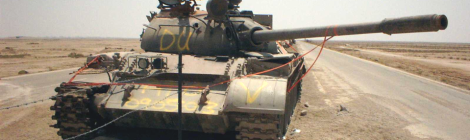
    Is the US backpedalling on its use of depleted uranium (DU) rounds? There are indications that the use of these highly toxic munitions could increasingly be a political liability for the US, with countries affected by DU, like Iraq, other UN Member States, and populations in contaminated areas all expressing concerns over its use and impact. But stigmatisation, although important, is not enough on its own – in order to make sustained progress on accountability and in reducing civilian harm, a broader framework that addresses all toxic remnants of war is needed.

    Read Article →

    Too Quiet on the Western Front? The Sahel-Sahara between Arab Spring and Black Spring

    While the world’s attention has been focused on the US-led military interventions in Iraq and Syria a quieter build-up of military assets has been ongoing along the newer, western front of the War on Terror as the security crises in Libya and northeast Nigeria escalate and the conflict in northern Mali proves to be far from over. In the face of revolutionary change in Burkina Faso, the efforts of outsiders to enforce an authoritarian and exclusionary status quo across the Sahel-Sahara look increasingly fragile and misdirected.

    Read Article →

    Drone-tocracy? Mapping the proliferation of unmanned systems

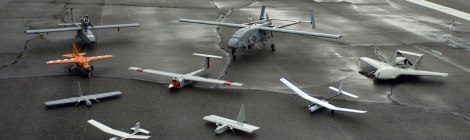
    While the US and its allies have had a monopoly on drone technology until recently, the uptake of military and civilian drones by a much wider range of state and non-state actors shows that this playing field is quickly levelling. Current international agreements on arms control and use lack efficacy in responding to the legal, ethical, strategic and political problems with military drone proliferation. The huge expansion of this technology must push the international community to adopt strong norms on the use of drones on the battlefield.

    Read Article →

    Nuclear Weapons: From Comprehensive Test Ban to Disarmament

    Despite not yet entering into force, the 1996 Comprehensive Test Ban Treaty has succeeded in almost eliminating nuclear weapons testing and in establishing a robust international monitoring and verification system. A breakthrough in its ratification by the few hold-out states could have important positive repercussions for the Nuclear Non-Proliferation Treaty or nuclear disarmament in the Middle East.

    Read Article →

    From The Great War to Drone Wars: The imperative to record casualties

    The centenary of the First World War also marks the anniversary of the practice of recording and naming casualties of war. But a century on, new forms of ‘shadow warfare’ limit the ability to record casualties of conflict and thus threaten to allow states a free hand to employ dangerous new tactics without threat of individual or international accountability. Without verifiable casualty figures, – including information on who is being killed and how – we cannot evaluate the acceptability, effectiveness or impact of ‘remote control’ tactics as they are rolled out among civilian populations.

    Read Article →

    In Deep Water: China tests its neighbours’ patience

    Control of water, including navigation rights, resource extraction and the exploitation of shared watercourses is at the heart of today’s geopolitical tensions in Asia. China’s recent actions in the South China Sea and Himalayas have given rise to further—and at times violent—conflict over the region’s natural resources. So will water insecurity lead to greater partnership in Asia? Or will it lead to a revival of China’s traditional sense of regional dominance and undercut efforts to build a rules-based approach to growing resource conflicts?

    Read Article →

    Humanitarian Consequences of Nuclear Weapons: Five Reasons for the P5 to participate in Vienna

    The ‘humanitarian dimension’ initiative highlighting the consequences of nuclear weapons has evolved and consolidated itself in the non-proliferation regime since 2010. The five nuclear weapons states (NWS or P5) under the NPT – China, France, Russia, UK and US – boycotted the first two international conferences on the humanitarian consequences of nuclear weapons. A third conference will be held in Vienna on 8-9 December 2014. This article gives five reasons why the P5 should consider participating.

    Read Article →

  • Climate change

    Climate change

    Climate change is high on both domestic and international political agendas as countries face up to the huge environmental challenges the world now faces. Whilst this attention is welcome, less energy is being focused on the inevitable impact climate change will have on security issues. The well-documented physical effects of climate change will have knock-on socio-economic impacts, such as loss of infrastructure, resource scarcity and the mass displacement of peoples. These in turn could produce serious security consequences that will present new challenges to governments trying to maintain stability.

    The Climate Security Council?

    Joe Thwaites | Exclusively written for sustainablesecurity.org | July 2011

    Issue:Climate change

    Writing exclusively for SustainableSecurity.org, Joe Thwaites takes an in-depth look at the discussion at the UN Security Council on the security implications of climate change. Joe analyses the debate over whether the Council is an appropriate forum for dealing with climate change discussing the views of both great powers and those who are set to lose most from a warmer global climate in the years ahead. 


    Image source: United Nations

    Read more »

    UNSC’s Climate Change Session Masks Members’ Intransigence

    Ben Zala | World Politics Review | July 2011

    Issue:Climate change

    Last week’s discussion at the U.N. Security Council on the security implications of climate change was an important step in the right direction. This is only the second time that the subject, which may turn out to be the defining issue for global security in the 21st century, has made it onto the agenda of the U.N. body charged with maintaining international peace and security. The discussion’s importance is limited, however, since the real path to addressing the security implications of climate change lies outside the council.

    Read the full article here. You will need a subscription to WPR to read the full article; if you are not subscribed already then you can get a free trial subscription here.

    Image source: Riacale. 

    Read more »

    Indonesia’s Military and Climate

    Eddie Walsh | The Diplomat Blogs | July 2011

    Issues:Climate change, Global militarisation

    With more than 17,000 islands and 80,000 kilometres of coastline, Indonesia is extremely vulnerable to climate change. Analysts believe that rising temperatures will almost certainly have a negative impact on human security in Indonesia, which in turn will increase the probability of domestic instability and introduce new regional security concerns. With this in mind, it’s important that Indonesia’s armed forces take a range of measures to prioritize environmental security, including procuring new equipment, strengthening bilateral and multilateral relations, and undertaking training for new roles and missions.

    Article source: The Diplomat Blogs

    Image source: Studio Titus

    Read more »

    The Geopolitics of Climate Change

    Chris Huhne | Department of Energy and Climate Change | July 2011

    Issues:Climate change, Marginalisation

    In a speech to Future Maritime Operations Conference at the Royal United Service Institute, London, Secretary of State for Energy and Climate Change examines the security implications of climate change:

    “We cannot be 100% sure that our enemies will attack our country; but we do not hesitate to prepare for the eventuality. The same principle applies to climate change, which a report published by the Ministry of Defence has identified as one of the four critical issues that will affect everyone on the planet over the next 30 years.

    Around the world, a military consensus is emerging. Climate change is a ‘threat multiplier’. It will make unstable states more unstable, poor nations poorer, inequality more pronounced, and conflict more likely. And the areas of most geopolitical risk are also most at risk of climate change.”

    Article source: DECC

    Image source: DECCgovuk

    Read more »

    Drought in east Africa the result of climate change and conflict

    Felicity Lawrence | The Guardian | July 2011

    Issues:Climate change, Competition over resources, Marginalisation

    Aid agencies say that weather in the region has become more erratic and years of war leave populations especially vulnerable

    Prolonged drought in the Horn of Africa is the immediate cause of the severe food crisis already affecting around 10 million people in parts of Kenya, Ethiopia, Djibouti and Somalia. Rains have failed over two seasons, with a strong La Niña event having a dramatic impact across the east coast of Africa. Now this year’s wet season has officially ended, there is little prospect of rain or relief before September.

    Article source: The Guardian

    Image source: Oxfam International

    Read more »

    Preparing for the Impact of a Changing Climate on U.S. Humanitarian and Disaster Response

    The New Security Beat | The New Security Beat | July 2011

    Issue:Climate change

     Climate-related disasters could significantly impact military and civilian humanitarian response systems, so “an ounce of prevention now is worth a pound of cure in the future,” said CNA analyst E.D. McGrady at the Wilson Center launch of An Ounce of Preparation: Preparing for the Impact of a Changing Climate on U.S. Humanitarian and Disaster Response. The report, jointly published by CNA and Oxfam America, examines how climate change could affect the risk of natural disasters and U.S. government’s response to humanitarian emergencies.

    Article source: The New Security Beat

    Image source: Oxfam International

    Read more »

  • Sustainable Security

    In spite of early signs of progress, 2016 saw damaging levels of wartime environmental damage. Will 2017 be any different?

    Marking the UN’s international day on conflict and the environment in November, the Special Rapporteur tasked with reviewing and developing the law protecting the environment before, during and after conflict argued that 2016 was “…set to be a milestone in global efforts to protect the environment in connection with armed conflict.” But it has also been a year where such efforts have seemed more vital and urgent than ever. This blog takes a look back at conflict and the environment in 2016, at the progress made and considers what should come next.

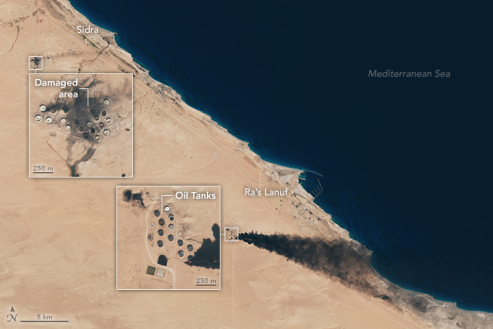
    Fires from burning oil facilities are one of the most visible forms of wartime environmental damage; 2016 began in flames, and it will end in flames. Back in January, facilities in Libya’s oil crescent were being targeted by Islamic State. The smoke plumes from the huge blazes at the storage sites at As Sidr and Ras Lanuf were visible from space, the attacks – branded an economic and environmental disaster by local emergency staff – were intended to help further destabilise the fragile interim government.

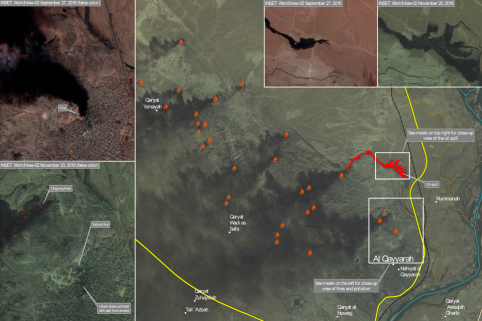
    The year will close with another environmental disaster caused by oil, this time in northern Iraq where oil well fires, again started by Islamic State, have burned for months and with no end in sight. As of November, data from UNOSAT showed that 29 fires were burning near Qayyarah, and two oil slicks were travelling down a tributary of the Tigris.

    qayyarah_unosat_images_dec_16

    Map illustrating satellite-detected fires and oil spills between September and November at and around Al Qayyarah, approximately 60km south of Mosul, Iraq. Credit: UNOSAT/UNITAR

    libya_sn2_2016005

    Satellite photos of fires at oil production and storage facilities near Sidra, Libya. Image credit: NASA


    25 years on from the last time

    The fires in Libya, Iraq and also in Syria – where facilities have been targeted by all sides of the conflict – have served as a perverse marker of the 25th anniversary of the 1991 Gulf War. A reminder, were it needed, that while our understanding of the environmental causes and consequences of conflicts has grown, our formal systems of protection and response appear as weak today as they were 25 years ago.

    But as 2016 began, there were modest signs of progress. States at the preparatory meetings for the second UN Environment Assembly (UNEA-2) were considering three draft resolutions on conflict and the environment: on the environmental consequences of human displacement from the Syrian conflict; on the need to assess Gaza’s environment; and on the protection of the environment in all areas affected by armed conflict.

    After months of mergers, disagreements and redrafts, the last of these, sponsored by Ukraine, was passed by consensus in May. Co-sponsored by a number of conflict-affected and Western States, in some ways it too marked an anniversary, that of the weak UN General Assembly resolution passed in response to the environmental disaster of the Gulf War in 1992. The UNEA-2 resolution is a significant step forward in many ways. Its scope, which includes the humanitarian consequences of environmental degradation, natural resources, displacement, protected areas, human rights, post-conflict assessments and assistance, is a world away from that passed in 1992. Both were products of their time, reflecting the concerns of States and civil society, but also the international community’s knowledge and understanding of the issues at hand.

    Untangling conflict and the environment

    The often complex linkages between conflict, peace, environment and health were visible throughout 2016. For Colombia and its peace agreement, it meant costing up the financial benefits of peace – the health and environmental savings that could accrue if the deal were to pass. But peace seemed likely to also herald new challenges for Colombia’s environment, biodiversity and human rights, from an anticipated expansion of the extractive industries, from accelerated deforestation and conflict over rural land rights.

    In Syria, the health of children and communities is being harmed by pollution from makeshift oil refining. This coping strategy has flourished thanks in part to a chain of events initiated by policies intended to destroy and degrade the country’s oil production and refining capacity, some of which had fallen into the hands of Islamic State. Satellite images have also captured the wholesale collapse of Syria’s agricultural system as a result of displacement and insecurity. The latter completing the closely related story of growing environmental pressures in Syria’s neighbours due to the influx of people fleeing the conflict, a conflict that has now caused local, national and transboundary impacts on the environment.

    Effective policy-making requires that we work to fully understand the causal linkages between conflict and insecurity, and environmental degradation and its impact on human health and ecosystems. While it may be tempting to present simplistic narratives – such as those proposed in relation to Syria and climate change – this year has shown just how important it is to comprehensively document and interrogate the evidence. One powerful example of this has been a new study on conservation in conflict zones, which identified institutional collapse as the single greatest threat to wildlife.

    Legal initiatives contribute to a sense of momentum

    The complexity and scope of conflict and the environment was also apparent in a major legal development this year. The third report from the UN’s International Law Commission’s (ILC) ongoing study into the protection of the environment in relation to armed conflicts primarily dealt with the law applicable after conflicts. The report’s draft principles cover everything from military bases, to peace operations, peace agreements, the rights of indigenous peoples and toxic remnants of war; with still more topics proposed for study by governments. The principles that the ILC is formulating are merging humanitarian, environmental and human rights law in an effort to clarify the disparate norms and practices that could provide a legal framework for enhanced protection.

    Elsewhere, the chief prosecutor of the International Criminal Court announced a new focus on the prosecution of individuals involved in the illegal exploitation of natural resources, deliberate environmental destruction, and land grabbing. All problems associated with armed conflicts and a potentially useful contribution if the court follows through on the decision. Meanwhile the 33rd session of the UN Human Rights Council heard from its Special Rapporteur on the management and disposal of hazardous wastes, on the impact of toxic remnants of war on health and the environment. He recommended that States improve monitoring of such threats and ensure that remediation and assistance takes place.

    These parallel legal and political pathways are providing a long-overdue framework for debate and State engagement on conflict and the environment. The renewed energy around the topic was clear on November 6th this year – the UN’s international day on conflict and the environment. The level of interest this year was a world away from previous years, with compelling statements calling for progress from the UN Secretary General, the heads of UNEP and UNOCHA, governments, experts and civil society.

    Where next for conflict and the environment?

    oil-fires-libya

    Photo of Sirda oil fires. Image credit: NASA/Flickr

    The question of “where next?” is currently being considered by a number of parties. Whatever the outcome, it remains the case that civil society will have an important role to play in working with international organisations and progressive States to encourage further progress. The momentum to date is the result of seven years of work and the conditions for advancing protection for the environment and civilians in relation to conflict come around rarely.

    When this same question was posed to governments in 1992 in the wake of the Kuwaiti oil fires, the response mirrored the situation today: “Some States felt that the existing rules were sufficient and what was needed was ensuring better compliance with them. However, most of the States represented thought it also necessary to clarify and interpret the scope of some of those rules, and even to develop other aspects of the law relating to the protection of the environment in times of armed conflict.”

    But it cannot just be a question of law and compliance. Like that other cross-cutting issue gender, what seems to be required is effective environmental mainstreaming throughout the conflict cycle. Good work has and is being done with regard to peacebuilding and humanitarian response but more is needed. There are also strong arguments in favour of a more robust system of environmental response in the wake of conflicts. And of course more visibility and stigmatisation for the practices that can cause serious harm to the environment and human health. Vague objectives for now maybe, but they perhaps demonstrate one possible direction of travel. Civil society can continue to contribute through research and advocacy, in untangling and communicating complexity, and by engaging at key moments, but achieving substantive progress will require greater capacity and coordination than we have at present.

    Work on conflict and the environment in 2017 should aim to signpost the direction of travel, and make more use of the parallel processes currently in play. If they can be identified and agreed, a clearer destination and mode of transport will allow a greater number of States and civil society to engage, something that will be vital if we are to make use of the momentum that has been created this year.

    Doug Weir manages the Toxic Remnants of War Project.  The project is on Twitter: @detoxconflict

  • Sustainable Security

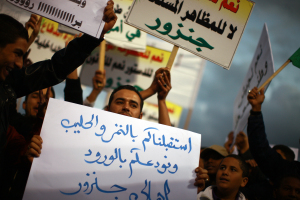
    A crowd of demonstrators participating in a protest against the ongoing use of weapons by rebel militias inside Tripoli and accompanying atmosphere of lawlessness wave banners demanding disarmament and the creation of a national army. The newly-formed Libyan government is struggling to assert itself over the disparate power actors who emerged over the past year.

    A crowd of demonstrators participating in a protest against the ongoing use of weapons by rebel militias inside Tripoli and accompanying atmosphere of lawlessness wave banners demanding disarmament and the creation of a national army. The newly-formed Libyan government is struggling to assert itself over the disparate power actors who emerged over the past year.

    As the price of oil goes down, the pace of freedom goes up… As the price of oil goes up, the pace of freedom goes down…” So says New York Times columnist Thomas Friedman, who argues that the first law of ‘petropolitics’ is that the price of oil and the pace of freedom are inversely correlated in countries “totally dependent on oil” for economic growth. Friedman’s attempt to link economic oil dependency and political freedom is an interesting one, which could go some way towards explaining why many of the world’s top oil-exporting countries are governed by heavy-handed authoritarian regimes. However, the correlation between recent oil price spikes and anti-authoritarian action – particularly in the Arab Spring – challenges Friedman’s assessment.

    Rather than being driven by drops in oil revenues for authoritarian regimes, popular unrest and armed resistance  in countries such as Libya may in fact be correlated with the price of oil remaining high. Inward pressure caused by oil price spikes on petroleum-fuelled supply chains for basic commodities can exacerbate already harsh living conditions, galvanising rebel factions to form a unified anti-authoritarian front against a regime that can no longer ensure price stability for essential goods. This seems true of the 2011 uprising in Egypt (the world’s largest wheat importer), as bread prices rose drastically following the doubling of global wheat prices between June 2010 and February 2011. The impact of high oil prices on the production, shipping and distribution of staple commodities such as corn and wheat – both of which saw severe price escalations of near 40% in 2008 – can lead to social unrest and, in the case of Egypt, the toppling of an authoritarian regime.

    High oil prices mean freedom on the rise?

    Since December 2010, when mass protests began gathering steam in Tunisia, oil prices have remained consistently high, hovering at $82 per barrel. Is it a coincidence that in September 2011, when rebels overtook the coastal town of Bani Walid, one of Colonel Gaddafi’s last strongholds, oil was just above $82 per barrel and the FAO food price index had reached a ten-year high? While oil revenues may be a temporary source of political stability for some authoritarian regimes, the pressure of increasing price volatility on supply chains, due to scarcity in supply, can convert to instability downstream as oil prices have a compounding impact on food prices. Indeed, in December 2010 just a week before the self-immolation of Tunisian food vendor Mohamed Bouazizi, New England Complex Systems Institute a Cambridge-based organisation comprised of faculty from Harvard, MIT and Brandeis, warned the US government that global food prices were about to cross a socially dangerous threshold. If anti-authoritarian action is any indication of freedom ‘on the rise’ then high oil prices in oil-dependent states are at least one major factor.

    Of those countries mentioned in the International Energy Agency’s 2011 list of top oil exporters, ten out of fifteen are classed by Freedom House as ‘Not Free’. Freedom House, ‘an independent watchdog organisation dedicated to the expansion of freedom around the world’, base their rankings on two broad categories: political rights and civil liberties. The former they define by a country’s electoral process, degree of political pluralism and level of participation/ functioning of government; the latter by degree of freedom of expression and belief, associational and organisational rights, rule of law, and personal autonomy and individual rights. The irony, according to Friedman, is that Western dependence on oil imports from countries which are ‘Not Free’ has channelled revenues to authoritarian regimes that oppose freedom. This paradox undermines Western credibility as champions of democracy. In a post-9/11 world, where militant extremists reportedly seek safe harbour in oil-exporting states like Saudi Arabia, the consequences of Western oil dependency undermine the West’s long-term security goals. But, when it comes to Friedman’s equation for ‘petropolitics’, the reverse may actually be true. Recent events such as the Arab Spring demonstrate that as the price of oil rises, impacting staple commodity prices, so too does the need for change – change that is blocked by Western dependence on remaining regimes.

    Bottom-of-the-barrel security

    Western countries reliant on fossil fuel imports from nations ruled by authoritarian regimes are suffering from a crisis of legitimacy – a crisis which could render us more insecure in the long term. In Algeria, where the Arab Spring has not resulted in full on revolution, violent extremists recently made their presence felt at the ‘In Amenas’ gas plant, brutally murdering 37 expatriate workers. The plant, which is jointly operated by BP, Norway’s Statoil and Algerian state oil and gas company Sonatrach, is a major supply source for Western markets. Algeria is responsible for roughly 12.2 billion barrels of crude oil reserves. 85% of Algeria’s oil exports are destined for European and North American markets. Under the leadership of Abdelaziz Bouteflika, whose five year executive terms are renewable indefinitely, Algeria certainly does not rate highly on the list of Freedom House ‘Freedom Ratings’. Military and intelligence services strictly monitor and interfere with open elections. But the Arab Spring may not ever reach Algeria precisely because of the stability brought to the country by a Western-funded heavy-handed regime, which goes to great lengths to protect the general population from militant Islamist extremists and pro-democracy activists alike. Saudi Arabia and UAE are governed by similarly oppressive regimes; regimes which subvert democracy in favour of ‘stability’. Both supply oil and gas to the West. Both benefit from revenues gained through Western dependence in spite of their heavy-handedness.

    Interests versus values

    The Arab Spring has been full of unfortunate surprises linking former and current administrations to corrupt leaders. Photos of a smiling Tony Blair, getting up close and personal with much maligned Colonel Gaddafi, were a hit in the mainstream press as well as online following the collapse of his regime. Not long before that, the Bush Family’s close ties to the Saudi royal family did little to lend credence to their Middle East pro-democracy campaigns in the early 90s and 2000s.

    Germany is in a similarly awkward position as the the largest energy consumer in Europe, with oil making up 38% of Europe’s overall consumption in 2011. Germany is Russian state-controlled energy giant Gazprom’s biggest European customer with 34% of total sales volume of Russian ‘blue fuel’ destined for German markets last year. There was therefore more than a hint of hypocrisy in Angela Merkel’s recent remarks during a visit by Vladimir Putin to a trade fair in Hanover that Russia ‘needs more NGOs’. The statement was made in regards to a Russian law passed last year requiring all NGOs that receive overseas funding to register as  ‘foreign agents’. Topless Ukrainian activists from the pro women’s rights group ‘Femen’ made their presence felt at the trade fair, drawing attention to  Russia’s crackdown on civil society groups and independent media organisations. Russia’s authoritarianism is a key element of the Putin government, but the issue arguably receives little mainstream coverage in the West compared to the Middle East.

    Germany and, by extension, Europe’s de facto dependence on Gazprom to meet their energy needs provides yet another example of why Western countries need to seek develop a more sustainable energy security strategy. It is difficult to legitimately champion broad concerns about upholding civil protections, when some of your largest business partners engage in the shadowy practice of denying basic freedoms to their own citizens.

    Renewable energy… and freedom?

    In light of the above we can welcome new approaches to energy security, which are aimed at reducing dependence on fossil fuel imports from authoritarian states. The Obama Administration’s ‘All of the Above’ energy strategy, as well as the pragmatism which the European Union, led by Germany, has shown in pushing forward a low carbon agenda are both steps in the right direction. Obama has pledged to double American energy efficiency by 2030, setting aside $2 billion over 10 years to support research into ‘a range of cost-effective technologies’, including electric vehicles, domestically-sourced biofuels, fuel cells, and domestically-produced natural gas. The plan also includes scope for reducing oil imports, while boosting renewable electricity generation from wind, solar and geothermal sources. Although Obama’s plan is far from low carbon, it shows promise. By comparison the UK Government, which at one time pledged to be the ‘greenest government ever’, has attempted to push forward its nationwide low carbon transition through the establishment of a Green Investment Bank. However, fairly recent public squabbles in the UK between Ed Davey, Secretary of State for Energy and Climate Change and Chancellor George Osborne the UK’s finance minister, have called that agenda into question.

    Friedman’s claim of an inverse correlation between high oil prices and authoritarianism is flawed. But his point about ‘petropolitics’ is still crucial to security, not only because he tries to link oil price fluctuations to authoritarian politics, but also because he highlights how Western dependence on foreign oil provides significant revenue streams on which remaining authoritarian governments can rely. It is also important to point out that as the global price of oil becomes more volatile due to price instability (see: ‘peaky behaviour’) the economic stability of authoritarian regimes that have consolidated their power bases around fossil fuels will almost certainly erode. Moreover, as the impact of oil prices continue to destabilise staple commodity prices, authoritarian regimes will almost certainly come under increasing pressure from their own populations to step down. Western countries that have formed dubious partnerships with these regimes in order to meet their energy security needs will risk further embarrassment when these regimes are toppled by the inevitable anti-authoritarian movements. Western leaders might then stand by and wait to pick a winner – a dubious strategy at best – in order to ensure that supply shipments are not further destabilised. But is this sustainable?

    Renewable energy is not the most obvious factor for bolstering the strength of nations. But it is fast becoming clear that Western dependency on fossil fuel imports from countries governed by heavy-handed regimes cannot go on. The International Energy Agency has recently announced that power generation from renewable sources worldwide will exceed that from gas and be twice that from nuclear by 2016. That’s a positive sign. As for oil, we will have to wait and see. But if the restoration of Western legitimacy as champions of the “free world” is a top priority for Western leaders, then more support for domestic renewable energy growth is essential.

    Phillip Bruner is Founder of the Green Investment Forum and a guest lecturer in global political economy at the University of Edinburgh

    Image source: United Nations Photo

  • Sustainable Security

    Summary

    The dramatic recent escalation of rhetoric and military posturing on the Korean peninsula has reawakened suggestions that the United States could use relatively low-yield nuclear weapons in a limited or tactical operation to neutralise North Korea. Indeed, both the idea of nuclear ‘first strike’ and their ‘flexible’ usage on and off the ‘battlefield’ are deeply rooted in historic and current NATO and UK doctrine on nuclear weapons. Given the extraordinarily militarised nature of the inter-Korean border and, increasingly, that between NATO and Russia, the potentially cataclysmic nature of any nuclear exchange must be urgently recalled and avoided at all costs.

    Introduction

    One of the most common misunderstandings about nuclear weapons in general and Britain’s nuclear weapons in particular is that nuclear strategy is solely about deterring an opponent from attacking you by threatening that opponent with all-out destruction in response. Given the growing risk of a nuclear confrontation over North Korea it is appropriate to point out that this has never been the case. Ever since the start of the nuclear age nuclear weapons have been seen as useable weapons and appropriate in certain circumstances for fighting limited nuclear wars.

    As a member of NATO Britain retains the option of using nuclear weapons first and has the means to do so. This briefing is intended to serve as a reminder of this. It will do so by concentrating specifically on British policy, both within NATO and out-of-area, but this applies just as much to the other seven full nuclear powers and, no doubt, to North Korea as well. It applies very much to the United States in particular and its current president, Donal J Trump, who has made it clear that the United States will not allow North Korea to develop the ability to target the continental United States with nuclear weapons.

    Early history

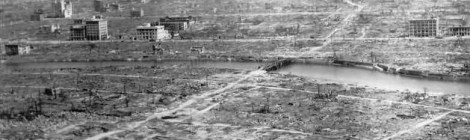
    When Hiroshima and Nagasaki were destroyed in August 1945 these weapons were seen in air force circles as direct descendants of the mass bombing of cities with conventional weapons using a thousand bombers or more. The raids on Hamburg and Dresden and especially the firestorm raid on Tokyo each killed tens of thousands of people so the perception after Hiroshima and Nagasaki was that the primary difference between conventional and nuclear weapons was one of cities being destroyed by one atom bomb from a single plane rather than five thousand tons of high explosive bombs from many planes. Indeed the US Army Air Corps and the nuclear weapon industry had already set in motion the industrial structures to destroy two Japanese cities every month until surrender.

    By 1948 the United States had an arsenal of fifty atom bombs and was already starting to develop the far more powerful thermonuclear weapon or H-bomb. Britain came on the scene rather later. While it first tested a nuclear weapon in 1952, it was not until the late 1950s and early 1960s that it could start deploying its Valiant, Vulcan and Victor strategic bombers in large numbers. These, too, were seen in the context of the British involvement in the area bombing of German cities, but Britain was also an early adherent of the idea of fighting limited nuclear wars, an issue that was seen as particularly relevant in the Middle East and Eastern and South Eastern Asia.

    Thus there were nuclear-capable Canberra bombers and nuclear weapons deployed to RAF Akrotiri in Cyprus from 1961 to 1969 to support the Central Treaty Organisation (CENTO), the South West Asian equivalent of NATO. These were replaced by Vulcans until 1975. From the mid-1960s there were regular detachments of V-bombers to RAF Tengah in Singapore and the Royal Navy had nuclear-capable Scimitar and Buccaneer strike aircraft on aircraft carriers such as Eagle, Ark Royal, Centaur and Victorious over a 16-year period from 1962 to 1978.

    From the early days of the deployment of nuclear weapons  by states such as the Soviet Union, the United States and Britain there is ample evidence that both military and political leaders accepted the possibility of limited nuclear war. It was expressed in Britain, for example, by the then Minister of Defence, Harold Macmillan, speaking in the House of Commons in 1955:

    “…the power of interdiction upon invading columns by nuclear weapons gives a new aspect altogether to strategy, both in the Middle East and the Far East. It affords a breathing space, an interval, a short but perhaps vital opportunity for the assembly, during the battle for air supremacy, of larger conventional forces than can normally be stationed in those areas.” (Hansard, volume 568, column 2182, 2 March 1955).

    NATO and nuclear first use

    As one of the founder members of NATO, and the second to develop nuclear weapons, Britain was involved in NATO nuclear planning from the very early years of the mid-1950s. In those early years and until the late 1960s, NATO nuclear policy was codified in document MC14/2 known as the “tripwire” policy which planned a massive nuclear response to the initiation of war by the Soviet bloc.

    While the United States maintained massively greater nuclear forces, and a wide variety of weapon types, Britain also had a significant arsenal which eventually developed to include an array of strategic and tactical systems. These included the Polaris submarine-launched ballistic missiles, free-fall bombs of variable power and anti-submarine nuclear depth bombs as well as nuclear-capable 155mm and 203mm artillery and Lance short-range nuclear missiles, the last three utilising US nuclear warheads under a dual control system. Thus, for several decades, all three branches of the British Armed Forces focused their operational planning around use of forward-deployed tactical nuclear weapons.

    By the latter part of the 1960s the Soviet Union had developed its own array of tactical systems and NATO responded by modifying “tripwire” and developing “flexible response”. This was encoded in MC14/3 of 16 January 1968 and envisaged the limited use of mostly low-yield warheads early in a conflict against Warsaw Pact troops and their immediate logistic support in the belief that they might be “stopped in their tracks”. If that failed, a more general nuclear response might ensue.

    Britain was very much part of this move, its nuclear forces were normally committed to NATO and UK personnel played significant roles within the NATO Nuclear Planning Group. This move away from deterrence through massive assured destruction was rarely publicised by the British government, one exception being an exposition of the policy offered to the House of Commons Select Committee on Foreign Affairs two decades after the transition to flexible response:

    “The fundamental objective of maintaining the capability for selective sub-strategic use of theatre nuclear weapons is political – to demonstrate in advance that NATO has the capability and will to use nuclear weapons in a deliberate, politically-controlled way with the objective of inducing the aggressor to terminate the aggression and withdraw. The role of TNF [Theatre Nuclear Forces] is not to compensate for any imbalance in conventional forces. The achievement of conventional parity could have very positive consequences for the Alliance’s strategy of deterrence. But it would not, of itself, obviate the need for theatre nuclear forces.”    (Third Report of the House of Commons Select Committee on Foreign Affairs 1987-88, p.35, para. 6.)

    What was very little understood at the time in the public domain was that NATO’s flexible response approach was not just the preparedness to use nuclear weapons first in response to a conventional military attack from the Soviet bloc but to do so at an early stage in such a conflict. This was made clear by SACEUR (the Supreme Allied Commander, Europe), General Bernard Rogers, in an interview published in early 1986:

    “Before you lose the cohesiveness of the alliance – that is, before you are subject to (conventional Soviet military) penetration on a fairly broad scale – you will request, not you may, but you will request the use of nuclear weapons”. (International Defence Review, February 1986)

    NATO’s flexible response policy remains broadly in place to the present day and nuclear planning allows for many different targeting options. This also applies to the United States where such options are constantly updated to allow for changing political situations. In an interesting reflection on relative economic and political strength, Russia also sees nuclear weapons as intrinsically of greater relevance given the low capabilities of its conventional military forces compared with those of the Warsaw Pact at the height of the Cold War.

    Britain’s out-of-area operations and nuclear weapons

    Since the end of the Second World War the United Kingdom has been one of the most active countries to be involved in overseas wars. The majority of these were wars of the late colonial period, but many others have been more broadly based, from Korea through to former Yugoslavia as well as the more recent and intensive post-9/11 conflicts across the Middle East and North Africa. Throughout all this period the UK has maintained its wide-ranging tactical and strategic nuclear options, even though the size of the arsenals is smaller than thirty years ago.

    Two of the most controversial conflicts, the Falklands/Malvinas War of 1982 and the first Gulf War of 1991 have both had a nuclear connection. After Argentina occupied the Falkland Islands in early 1982 the UK government under Margaret Thatcher despatched a substantial naval task force and six days after it left Britain The Observer reported that

    “It is almost certainly carrying tactical nuclear naval weapons – atomic depth charges carried by Sea King helicopters and free-fall bombs carried by Harrier jump jets – as part of NATO equipment.” (11 April 1982)

    Later reports indicated that many of the weapons from the smaller warships were transferred en route to an auxiliary supply ship, the RFA Resource which proceeded to the South Atlantic with the rest of the fleet but was deployed away from the most intense areas of action during the subsequent war. It is not clear whether this also applied to the nuclear weapons that may have been deployed on the two aircraft carriers, HMS Invincible and Hermes and there were also multiple if unconfirmed reports that the Thatcher government was prepared to deploy a Polaris missile submarine to the mid-Atlantic to bring it within range of Argentina. (Paul Rogers, “Sub-Strategic Trident: A Slow Burning Fuse”, London Defence Papers 34, Brasseys, 1996)

    Nine years after that war the UK government committed substantial forces to a US-led multinational military coalition to evict the Iraqi forces that had invaded and occupied Kuwait in August 1990. At the time there was considerable concern that Iraq had a useable arsenal of chemical weapons and a clear indication of UK willingness to use nuclear weapons in response came in an interview with a senior army office attached to the 7th Armoured Brigade which was leaving for the Gulf. He confirmed that an Iraqi chemical attack on UK forces would be met with a tactical nuclear response. (Observer, 30 September 1990).

    Deliberate ambiguity

    During the 1990s, after the end of the Cold War, the UK government, under the leadership of the Conservative Prime Minister John Major, scaled down Britain’s nuclear arsenals in a series of unilateral moves, ceasing to deploy dual-control US nuclear artillery and missiles and withdrawing the WE.177 tactical nuclear bombs and depth bombs between 1992 and 1998. US-owned B61 tactical nuclear bombs continued to be deployed at RAF Lakenheath for another decade and still are based in Belgium, Germany, Italy, Netherlands and Turkey under enduring nuclear sharing arrangements with those host countries.

    In order to preserve a British “sub-strategic” capability, a low-yield variant of the standard high-yield Trident thermonuclear warhead has since been deployed, although terms such as “tactical Trident” or “Sub-Strategic Trident” are no longer used in government publications. Neither is there any specific reference in official publications to the UK maintaining a policy of potential first-use of nuclear weapons.

    Instead a generic description of the UK nuclear posture appears in successive defence white papers, the 2015 statement being an example:

    Only the Prime Minister can authorise the launch of nuclear weapons, which ensures

    that political control is maintained at all times. We would use our nuclear weapons only in extreme circumstances of self-defence, including the defence of our NATO Allies. While our resolve and capability to do so if necessary is beyond doubt, we will remain deliberately ambiguous about precisely when, how and at what scale we would contemplate their use, in order not to simplify the calculations of any potential aggressor. (National Security Strategy and Strategic Defence and Security Review 2015, para 4.68, page 34, November 2015)

    It should be borne in mind that, while British ambiguity on nuclear first use is echoed by its NATO allies in Washington and Paris, as well as its assumed adversary in Moscow, there is nothing intrinsic about such a posture. China has consistently maintained a policy of no first use and normally stores its warheads separately from its delivery systems to prevent any accidental or malicious usage. India and Pakistan are also formally committed to no first use.

    Conclusion

    This brief summary of elements of the UK nuclear posture is intended as a reminder that such a posture is far more complex than simply providing a last-ditch deterrence against nuclear attack. Moreover, this applies very much for the United States which has a far wider array of nuclear weapon types and has been at the forefront of NATO nuclear planning, including the first use posture.

    Should a conflict arise between the United States and North Korea it is by no means certain that Britain would be involved, given public attitudes within the UK, although a joint RAF/US Air Force/Korean Air Force exercise was held in South Korea late last year for the first time in several decades. Even so, at a time of heightened tensions over North Korea’s nuclear ambitions the concern should be that a crisis could escalate to the use of nuclear weapons, especially with an unpredictable incumbent in the White House.

    Given Britain’s propensity for considering the idea of out-of-area nuclear first use and limited nuclear war, one would hope that there is also a full understanding of the considerable dangers of such a posture. If so, what should follow is a determination to do everything possible to advise President Trump against even considering this option in the case of North Korea.


    Image credit: Neil Hinchley. 


    About the Author

    Paul Rogers is Global Security Consultant to Oxford Research Group and Professor of Peace Studies at the University of Bradford. His ‘Monthly Global Security Briefings’ are available from our website. His new book Irregular War: ISIS and the New Threats from the Margins will be published by I B Tauris in June 2016. These briefings are circulated free of charge for non-profit use, but please consider making a donation to ORG, if you are able to do so.


  • Sustainable Security

    Too Quiet on the Western Front? The Sahel-Sahara between Arab Spring and Black Spring

    While the world’s attention has been focused on the US-led military interventions in Iraq and Syria a quieter build-up of military assets has been ongoing along the newer, western front of the War on Terror as the security crises in Libya and northeast Nigeria escalate and the conflict in northern Mali proves to be far from over. In the face of revolutionary change in Burkina Faso, the efforts of outsiders to enforce an authoritarian and exclusionary status quo across the Sahel-Sahara look increasingly fragile and misdirected.

    Read Article →

    Humanitarian Consequences of Nuclear Weapons: Five Reasons for the P5 to participate in Vienna

    The ‘humanitarian dimension’ initiative highlighting the consequences of nuclear weapons has evolved and consolidated itself in the non-proliferation regime since 2010. The five nuclear weapons states (NWS or P5) under the NPT – China, France, Russia, UK and US – boycotted the first two international conferences on the humanitarian consequences of nuclear weapons. A third conference will be held in Vienna on 8-9 December 2014. This article gives five reasons why the P5 should consider participating.

    Read Article →

    VIDEO – Militarisation of the Sahel: An interview with Richard Reeve

    Sustainable Security programme Director Richard Reeve discusses our latest report ‘From New Frontier to New Normal: Counter-terrorism operations in the Sahel-Sahara’. The report, commissioned by the Remote Control project, finds that 2014 is a critical year for militarisation of the Sahel-Sahara and the entrenchment of foreign powers there.

    Read Article →

    Building the Case for Nuclear Disarmament: The 2014 NPT PrepCom

    The humanitarian impact of nuclear weapons, highlighted by a wide-ranging, cross-grouping, multi-aim initiative which continues to consolidate itself in the non-proliferation regime, has come to the fore in the 3rd Prepatory Committe for the 2015 NPT Review Conference. Frustrated with the lack of progress towards NPT Article VI commitments to complete nuclear disarmament, the initiative has invigorated attention to the urgency of nuclear disarmament and a need for a change in the status quo. NPT member states and civil society continue to engage actively in publicizing the humanitarian consequences of nuclear weapons as an impetus to progress towards nuclear disarmament.
    Read Article →

    Beaux Gestes and Castles in the Sand: The Militarisation of the Sahara

    Whatever the benefits for Mali, the French-led eviction of jihadist groups from northern Mali may have made the wider Sahara a less safe place, and has done little to lower the capacity of such groups to threaten European interests.. In 2014, France is implementing a major redeployment of its forces in Africa into the Sahel and Sahara. Meanwhile, the US has been quietly extending its military reach from Djibouti to Mauritania. However, as elsewhere, the western military approach to countering Islamist insurgency in the Sahel rests on very unsteady foundations and the potential to provoke wider alienation and radicalisation is strong.

    Read Article →

    Can the Nuclear Non-Proliferation Treaty outrun its double standard forever?

    The recent walkout by Egyptian negotiators at UN talks have demonstrated that, like a building with rotten foundations, the nuclear non-proliferation regime is far less stable than many believe it to be. Egypt’s actions make clear that anything less than a regime specifically geared towards addressing the reasons why some states seek nuclear weapons is a regime existing on borrowed time.

    Read Article →

  • Naxalite insurgency

    Naxalite insurgency

    India’s 21st-century war

    Paul Rogers | Open Democracy | November 2009

    Issues:Climate change, Global militarisation, Marginalisation

    Tagss:India, Maoists, Naxalite insurgency

    In an age of climate change and deepening inequality, the spreading Naxalite insurgency in India – not al-Qaida – may show the world its future.

    This article was originally posted on openDemocracy.

    Read more »

  • Sustainable Security

  • Global militarisation

    Global militarisation

    The current priority of the dominant security actors is maintaining international security through the vigorous use of military force combined with the development of both nuclear and conventional weapons systems. Post-Cold War nuclear developments involve the modernisation and proliferation of nuclear systems, with an increasing risk of limited nuclear-weapons use in warfare – breaking a threshold that has held for sixty years and seriously undermining multilateral attempts at disarmament. These dangerous trends will be exacerbated by developments in national missile defence, chemical and biological weapons and a race towards the weaponisation of space.

    Losing Control: Global Security in the Twenty-first Century

    Issues:Climate change, Competition over resources, Global militarisation, Marginalisation

    Tag:book

    Image of Losing Control: Global Security in the Twenty-first Century

    • Purchase from Amazon:
    • Losing Control: Global Security in the Twenty-first Century
    • Author: Paul Rogers
    • Publisher: Pluto Press ()
    • Binding: Paperback, pages
    • Price: £15.99

    Global Security and the War on Terror: Elite Power and the Illusion of Control

    Issues:Climate change, Competition over resources, Global militarisation, Marginalisation

    Tag:book

    Image of Global Security and the War on Terror: Elite Power and the Illusion of Control (Contemporary Security Studies)

    • Purchase from Amazon:
    • Global Security and the War on Terror: Elite Power and the Illusion of Control (Contemporary Security Studies)
    • Author: Paul Rogers
    • Publisher: Routledge ()
    • Binding: Paperback, pages
    • Price: £22.99

    Beyond Terror: The Truth About the Real Threats to Our World

    Chris Abbott, Paul Rogers and John Sloboda | Rider | April 2007

    Issues:Climate change, Competition over resources, Global militarisation, Marginalisation

    Tag:book

    Many leading military analysts in the United States are increasingly alert to the link between security and climate change. Is international terrorism really the single greatest threat to world security? Read more »

    Middle East Nuclear-Weapon-Free-Zone: Problems and Prospects

    Aryaman Bhatnagar | Indian Pugwash Society | March 2009

    Issue:Global militarisation

    Living in an era plagued by a nuclear threat and arms race, wherein nations continue to nurse the ambition of producing nuclear weapons or acquiring the means to do, nuclear disarmament is possibly the most vital issue in the field of global security.
      
    There has been a global realization that nuclear disarmament is an important first step towards achieving general and complete disarmament at a later stage. A number of important steps have been taken towards achieving this end. However given the current international environment, the global non-proliferation regime faces challenges on the Korean peninsula and in the Middle East and when progress towards nuclear disarmament appears to have stalled, some believe that traditional instruments of non-proliferation policies have lost their relevance.

    Article source: Indian Pugwash Society

    Image source: BlatantNews

    Read more »

    Tigers and Dragons: Sustainable Security in Asia and Australasia

    Chris Abbott and Sophie Marsden | Oxford Research Group | November 2008

    Issues:Climate change, Global militarisation

    Tag:report

    Asia is a region in transition, and transition creates uncertainty. The political, economic and societal landscape is shifting, with major new powers emerging and smaller states attempting to protect their interests in this changing dynamic. At the same time, climate change and the other long-term emerging threats to security will require regional responses and thus a degree of regional unity. Read more »
  • Sustainable Security

    Geneva II: Prospects for a Negotiated Peace in Syria

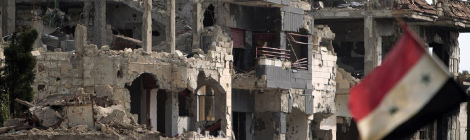
    The recent announcement that the so-called Geneva II conference would finally convene on 22 January 2014 is overdue but good news. What are the chances of it bringing peace? With an interim deal signed on Iran’s nuclear programme, Richard Reeve discusses what chance the great powers, Middle Eastern diplomats and the mediators of Geneva have as they turn their attention to ending the war in Syria.

    Read Article →