Blog

  • Climate Change, Security, and Indigenous Peoples: Inuit in Northern Canada

    In the Arctic, Indigenous peoples are increasingly seeing their own survival as threatened by environmental change. In this respect, the small Inuit community of Clyde River, Nunavut in Canada represents an interesting case.

    On November 30, 2016 the Supreme Court of Canada heard a highly anticipated legal appeal on behalf of residents of the small Inuit community of Clyde River, Nunavut. The town of 1,100 – supported by interventions from groups like Greenpeace and three organizations representing Inuit people across Canada – argues that the federal government, specifically the National Energy Board (NEB), failed to adequately consult them before granting a license for a Norwegian-based business consortium to conduct seismic testing in nearby coastal waters. The license was granted in 2014 even though consultations with nearby communities exposed significant local concern over the project’s potential impacts on marine mammals such as seals, whales, and other aquatic species, which local residents rely upon for food and cultural practices. The NEB’s initial decision was upheld by a Federal Court in August 2015, but in October of that year Clyde River was granted leave to appeal to the Supreme Court, which offers the last judicial option to stop the seismic testing and protect the marine ecosystem from possible irreparable harm.

    The case of Clyde River has attracted national and international media interest because it reflects a familiar and sympathetic narrative: a small Indigenous community, with support of environmental activities and high profile celebrities, fights for its survival against a corporation abetted by a neo-colonial state committed to extracting hydrocarbon resources for sale on the global market. But the struggle over seismic testing in a tiny community located higher than 70°N latitude represents the intersection of three powerful issues within Canadian and global environmental politics: Indigenous peoples identifying non-renewable resource extraction as a fundamental threat to their survival and well-being; the growing legal and constitutional recognition of the rights of Indigenous peoples to make decisions over resource extraction and other industrial projects within their traditional territories; and emerging alliances between Indigenous communities and non-Indigenous environmental groups to stop such projects. Together, these issues form the latest chapter in the interrelated struggles for human and environmental security, self-determination for Indigenous peoples, and steps towards decarbonizing the global economy.

    Indigenous Peoples’ Insecurity and Climate Change

    iglo-arctic

    Image (cropped) by Emmanuel Milou/Flickr.

    Indigenous peoples in Canada and elsewhere have, for decades, resisted various non-renewable resource extraction projects on the grounds that these often proceed without adequate consultation with local communities or the Indigenous governments on whose lands they occur. Local environmental impacts have worsened as these projects have grown in size, but greater public awareness of the dangers of human-caused climate change have added a new dimension to these struggles. In the Arctic – where climate change is occurring twice as fast as in more southerly regions, causing a range of negative consequences for humans and other animal populations – activities enabling hydrocarbon extraction that will directly contribute to climate change have been met with particular scepticism. In recent years, dozens of Northern organizations, including some representing Indigenous peoples, have signed a Joint Statement of Indigenous Solidarity for Arctic Protection calling for a moratorium on oil drilling in the Arctic. In 2011, the Inuit Circumpolar Council, which represents Inuit in Canada, the United States, Greenland, and Russia, released the Circumpolar Inuit Declaration on Resource Development Principles. The declaration reserves the right of Inuit to benefit from resource development on their traditional territories, but stipulates that “Inuit and others – through their institutions and international instruments – have a shared responsibility to evaluate the risks and benefits of their actions through the prism of global environmental security” (s. 5.1).

    In fact, Inuit have increasingly framed their arguments around climate change and hydrocarbon extraction in explicitly security terms. Survey data indicate that large majorities of Northern Canadians consider the environment to be the most important issue for Arctic security, followed closely by maintenance of Indigenous cultures. For people who rely on traditional country foods for sustenance, and whose culture and identity are premised on reciprocal connections between humans, non-human animals, and the land itself, climate change and local environmental damage are not merely worrisome issues. They are existential threats to the survival of Inuit as Inuit: an Indigenous people defined by their unique environment and the methods of survival and subsistence they have developed over thousands of years of continuous habitation in their Arctic homeland.

    Inuit leaders have articulated the clear and present threats they currently face as a result of environmental changes. Sheila Watt-Cloutier, nominated for the Nobel Peace Prize for her work raising awareness of Arctic climate change and pursuing legal remedies on behalf of Inuit under international law, has stated in no uncertain terms that “climate change is threatening the lives, health, culture and livelihoods of the Inuit.” Terry Audla, who until 2015 was president of Inuit Tapiriit Kanatami (ITK), the national organization representing all Inuit in Canada, has written that “climate change at a rate and of an intensity that appears unprecedented, and well outside Inuit cultural memory, creates insecurities of an entirely new nature, generating concerns about the sustainability of large aspects of our inherited and acquired patterns of life … Our very sense of who and what we are as Inuit.” Mary Simon, another former president of ITK, echoes the threat of Arctic climate change: “The urgency surrounding mitigating the impact of climate change grows with the almost daily news of unprecedented developments in our Arctic environment … Arctic ice is melting three times faster than models had earlier predicted – and the earlier predictions were alarming.  The Arctic is melting, with dramatic consequences for all of us.” In articles, books, speeches, interviews, policy statements, and testimonies before Parliament, the message from Inuit leaders in Canada is clear: climate change is the gravest threat confronting Inuit and all peoples living in the Arctic and beyond, and proposed industrial activities that contribute to climate change should be viewed with the highest concern.

    New Laws and New Allies in Indigenous Environmental Struggles

    These examples of Inuit security claims are recent, but as a phenomenon they are not new: Indigenous peoples have long argued that their wellbeing was undermined by the actions of settler-colonial governments which served to perpetuated their poverty and disenfranchisement. For decades, little changed as politicians and the courts consistently declined to respect or enforce the rights of Indigenous peoples; despite Aboriginal rights being enshrined in Section 35 of the Canada’s Constitution Act 1982, environmental damage affecting nearby communities was considered a cost of doing business and a routine part of Canada’s political economy. In recent years, however, several developments in law and politics have altered the landscape, such that the rights of Indigenous peoples to be consulted about, and possibly consent to, industrial activities on their territories have been established, if not yet fully implemented. Most notable among these is the ruling in the 2014 Tsilhqot’in case, in which the Supreme Court first recognized Aboriginal title over their traditional territories, and the federal government’s 2016 decision to implement the United Nations Declaration on the Rights of Indigenous Peoples (UNDRIP), which codifies international standards for the individual and collective rights of Indigenous peoples, including the rights to land (though the Liberal government’s position on UNDRIP has wavered, with different Cabinet members expressing different views of how, or even whether, UNDRIP can be incorporated into Canadian law). As the case of Clyde River demonstrates, these developments are in the process of being interpreted by policymakers and tested before the courts to establish the new distribution of authority and governance over land use on Indigenous territories.

    The judicial empowerment of Indigenous legal claims in Canada and elsewhere has led to a recognition by many non-Indigenous environmental groups that cooperation and engagement with Indigenous peoples offers the best route to stop extractive projects which they believe will harm local environments, contribute to global climate change, or both. These partnerships have been described as “the native rights-based strategic framework”, an advocacy and campaigning strategy that links the legal and constitutional rights of Indigenous peoples with their normative claims to sovereignty and justice and the fundraising and operational resources of non-Indigenous advocacy groups. Major environmental NGOs have worked to repair relationships with Indigenous peoples that have been harmed by environmentalists’ campaigns targeting certain Indigenous cultural practices, such as Greenpeace indicating its desire to “make amends” for its past opposition to the Inuit seal hunt. Long opponents over their differing views on environmental stewardship and land use, NGOs and Indigenous peoples have increasingly made common cause through their shared view that, with respect to hydrocarbon extraction in particular, “these fights were all life and death situations, not just for local communities, but for the biosphere.”

    Conclusion

    The case of Clyde River is one example of how the threats posed by climate change, now and in the future, are front and centre in the political and legal engagements of Indigenous peoples and environmental organizations. It reflects the fact that many communities are increasingly seeing their own survival as threatened by environmental change, and thus articulate conceptions of what security means to them which highlights the human-caused environmental dangers they face. Such local and Indigenous security claims – statements of what should be protected against certain, identifiable threats – are now part of a global political context where the meaning of security is deeply contested. Longstanding security practices and discourses that privilege states and their national interests are today in direct contradiction with a complex series of security claims made by groups that have been historically and remain adversely affected by the state and its actions. Moreover, in the context of a rapidly changing global environment due to human-caused climate change, struggles to define what security means have deep implications for the future. Environmentalists and others concerned for the prospects of human survival and wellbeing on a warming planet are increasingly prepared to use all available tools at their disposal to secure a stable and sustainable future for themselves and their children. As reflected in recent and ongoing cases of Indigenous peoples and their environmentalist allies resisting the expansion of hydrocarbon extraction and infrastructure – such as the Keystone XL and Dakota Access crude oil pipelines – that struggle continues. In the case of the Arctic, it is currently focused on the small hamlet of Clyde River, and the legal battle over who gets to make decisions over how much environmental damage will be borne to facilitate resource extraction, and what powers Indigenous peoples possess under the law to defend themselves and define the conditions necessary for their own survival.

    Wilfrid Greaves, PhD, is Lecturer at the University of Toronto. His doctoral research examined how in/security and environmental change have been conceptualized by states and Indigenous peoples in the circumpolar Arctic region. An Ontario Graduate Scholar, SSHRC Doctoral Scholar and DFAIT Graduate Student Fellow, he is author of multiple peer-reviewed articles, book chapters, and working papers. He has also taught undergraduate courses in International Relations, global security, peace and conflict studies, and Canadian foreign policy at Ryerson University and the University of Toronto. A graduate of the University of Calgary and Bishop’s University, his research interests include security theory, human and environmental security, natural resource extraction and climate change, Arctic and Indigenous politics, Canadian foreign policy, and complex peacebuilding operations.

  • The cooling wars of cyber space in a remote era

    RC_long_logo_small_4webThis article is part of the Remote Control Warfare series, a collaboration with Remote Control, a project of the Network for Social Change hosted by Oxford Research Group.
    This article by Esther Kersley, Katherine Tajer and Alberto Muti originally appeared on openDemocracy on 7 November 2014.

    Cyber space is a confusing place. As current discussions highlight the possibility of “major” cyber attacks causing a significant loss of life or large scale destruction, it is becoming harder to determine whether these claims are hype or are in fact justified fears. A new report by VERTIC, commissioned by the Remote Control project, offers some clarity on the subject by assessing the major issues in cyber security today to help better inform the debate and assess what threats and challenges cyber issues really do pose to international peace and security.

    How much of a threat are cyber attacks?

    Cyber attacks have been identified as one of the greatest threats facing developed nations. Indeed, the US is spending $26 billion over the next five years on cyber operations and building a 6,000 strong cyber force by 2016 and the UK has earmarked £650 million over four year to combat cyber threats. This level of investment suggests that states view issues of cyber security as a question of national security. But how much of a threat do cyber attacks pose to national security and how much damage have they caused?

    There is a need for caution when assessing the risk posed to national security by cyber threats. Indeed, although states are heavily investing in cyber security, to date, the majority of cyber incidents that have made the news have not directly impacted a state’s sovereignty, or threatened a state’s survival. For that to happen, an attack would have to significantly affect a government’s ability to control its territory, inflict damage to critical infrastructure or, potentially, cause mass casualties.

    Nevertheless, some notable instances of cyber attacks have had a significant impact on international relations over the past decades. These are ‘Stuxnet’, the cyber attack targeting Iranian uranium centrifuges (allegedly launched by a combined US-Israeli operation), the ‘Nashi’ attacks on Estonian government and private sector websites and web-based services, and the many instances of cyber-espionage that form the so-called ‘Cool War’ currently taking place between China and the US. Furthermore, cyber attacks have also been used as instruments of war in conjunction with conventional military operations, for example during the Russo-Georgian conflict in 2008 and most significantly during in the Israeli air raid against a nuclear reactor facility in Syria in 2007.

    However, to date no attack has led to large scale destruction or fatality, suggesting that the potential for this is unlikely. This is due to the great amounts of technological expertise, material resources and target intelligence required to carry out such an attack. These resources are currently only in the hands of states, that might hesitate in using cyber attacks in such a way, when other means are available. This could of course change, especially if different political actors acquired the necessary means.

    What should we be concerned about?

    This is not to say we have nothing to be concerned about. Although a large scale cyber attack that inflicts mass casualties is unlikely to occur in the near future, cyber activities can still affect civilian lives in other ways. The hyperbolic language used to describe the potential consequences of cyber attacks, combined with a lack of reliable, concrete information on the real risks posed by cyber threats has contributed to the ‘securitisation’ of the debate around cyber security issues. It is feared that this process will lead to possible dangers being overestimated, and vulnerabilities cast as national security threats of immediate concern. States’ reactions to these perceived risks may cause negative implications on both citizens and international peace and security.

    Already we are seeing a potential consequence of securitisation as governments turn to surveillance as a preventative measure against cyber attacks. In addition, the difficulty of attributing cyber attacks, as well as the widespread fear that other countries will constantly engage in cyber espionage, has led some to claim that the ‘cyber realm’ favours the attacker. This, in turn, may lead states to engage in a ‘cyber arms race’, as well as foster a ‘Cool War’ dynamic of continuous attrition and escalation between states. This erosion of trust between states, as well as the diminishing of civil liberties, are two serious concerns with regards to the militarization of cyber space.

    Cyber attacks also pose serious transparency and accountability issues due to the above-mentioned technical complexities of cyber attack attributions, as well as the ambiguous relationship between state and non-state actors (in the ‘Nashi’ attack in Estonia for example, the relation between the youth group responsible for the attack and the Russian government remains an ambiguous one).  The lack of legal clarity in this area is also worrying, meaning attackers will often not face consequences for their actions.

    The only existing international legislation in the field – the Budapest Convention – solely addresses cybercrime and no further issues (such as military use of cyberspace). The Convention also does not have enough support to provide enforcement of its objectives, has no monitoring regime and has not been signed by Russia or China. Furthermore, an attempt to set out ‘rules’ on the legal implications of cyber war – in The Tallinn Manual – found that the complexities of cyber conflict means there are many instances that do not easily adhere to current legislative standards. The speed of technology evolution further hampers drafting of law and international legislation.

    Growth of remote control warfare

    The rise in cyber activities cannot be examined in isolation. Its growth is part of a broader trend of warfare increasingly being conducted indirectly, or at a distance. This global trend towards ‘remote control’ warfare has seen an increasing use of drones, special forces, private military and security companies as well as cyber activities and intelligence and surveillance methods by governments in the last decade.

    Indeed the global export market for drones is predicted to grow nearly three-fold over the next decade, and a broader range of states are now using drones, including France, Britain, Germany, Italy, Russia, Algeria and Iran. The US has more than doubled the size of its Special Operations Command since 2001, and private military and security companies are playing an increasingly important role in both Afghanistan and Iraq, with over 5, 000 contractors employed in Iraq this year.

    The idea of countering threats at a distance, without the use of large military forces, is a relatively attractive proposition as the general public is increasingly hostile to ‘boots on the ground’. However, the concerns highlighted in this latest report with regards to cyber activities are echoed in all ‘remote’ warfare methods as their covert nature means there are serious transparency and accountability vacuums. As well as this, wider negative implications have been identified where these methods are in use, from the detrimental impact of drone strikes in Pakistan to instability caused by special forces and private military companies in Sub-Saharan Africa. The militarisation of cyber space is part of this growing trend and, like these other new methods of warfare, increased transparency and accurate information is essential in order to assess the real impact they are likely to have.


    Esther Kersley is the Research and Communications Officer for the Remote Control project of the Network for Social Change. The project, hosted by Oxford Research Group and affiliated with its Sustainable Security programme, examines changes in military engagement, in particular the use of drones, special forces, private military and security companies, cyber warfare and surveillance.

    Katherine Tajer is a Research Assistant for the Verification Research, Training and Information Centre (VERTIC).

    Alberto Muti is a Research Assistant for the Verification Research, Training and Information Centre (VERTIC).


    Featured image: The command line environment in MS-DOS. Source: Flickr. Available under Creative Commons v2.0.

  • “Guerrilla Diplomats”: Conflict Prevention Through Frontline Diplomacy

  • International Dimensions of the Ukraine Crisis: Syria and Iran

    International Dimensions of the Ukraine Crisis: Syria and Iran

    The Russian annexation of Crimea may be in direct contravention of international agreements but is popular in Russia and almost certain to hold. Given tensions within Ukrainian society and its weak transitional government, there remains some risk of further intervention in eastern Ukraine and possibly the Trans-Dniester break-away region of Moldova. Even if there is no further escalation in the crisis, the deterioration in EU/Russian and US/Russian relations is of great concern, not least in relation to two aspects of Middle East security – the Syrian civil war and the Iran nuclear negotiations.

    Read Article →

  • Louisiana is sinking: The devastating nexus of climate change, resource stress and marginalisation

    Human Security and Marginalisation: A case of Pastoralists in the Mandera triangle

    This paper seeks to bring out the relevance of human security in pastoral areas of Mandera triangle and the relationships and contradictions that exist between it and national security. The “Mandera Triangle” encompasses a tri-border region of Ethiopia, Somalia, and Kenya that exemplifies, in a microcosm, both a complex and a chronic humanitarian crisis that transcends national boundaries.

    Read Article →

  • How to Respond to the Threat from Hostile Drones in the UK

  • The Surge of the Finns Party: A Brief History

  • Iraq and Syria: The Thirty-Year War, continued

    Beaux Gestes and Castles in the Sand: The Militarisation of the Sahara

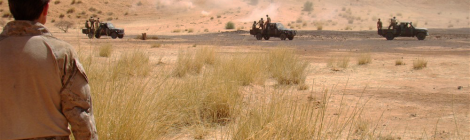
    Whatever the benefits for Mali, the French-led eviction of jihadist groups from northern Mali may have made the wider Sahara a less safe place, and has done little to lower the capacity of such groups to threaten European interests.. In 2014, France is implementing a major redeployment of its forces in Africa into the Sahel and Sahara. Meanwhile, the US has been quietly extending its military reach from Djibouti to Mauritania. However, as elsewhere, the western military approach to countering Islamist insurgency in the Sahel rests on very unsteady foundations and the potential to provoke wider alienation and radicalisation is strong.

    Read Article →

  • Interview – Aidan Hehir

    Aidan Hehir is a Reader in International Relations, and Director of the Security and International Relations Programme, at the University of Westminster. He has published a number of books on humanitarian intervention/R2P including Humanitarian Intervention An Introduction 2nd Edition (Palgrave 2013); Libya, the Responsibility to Protect and the Future of Humanitarian Intervention (with Robert W. Murray, Palgrave 2013); The Responsibility to Protect: Rhetoric, Reality and the Future of Humanitarian Intervention (Palgrave, 2012); and Humanitarian Intervention After Kosovo (Palgrave, 2008).

    In this interview Dr. Hehir discusses the Responsibility to Protect and Libya, post-conflict peacebuilding, the need for UN Security Council reform and the prospect of a UN standing army.

    Q. In 2011, the intervention in Libya was seen as a successful first true test of the Responsibility to Protect (R2P). The Security Council authorized a military intervention citing the R2P and Western leaders justified intervention on the grounds of stopping Gaddafi’s threats of imminent mass murder in Benghazi. However, the recently released House of Commons Foreign Affairs Committee’s report on the Libya intervention has called into question the humanitarian case for intervening. Do you feel that the intervention in Libya ultimately represented more of an abuse of R2P rather than an actual implementation of the doctrine?

    While the 2011 intervention in Libya may well have looked like “R2P in action”, in my view, R2P had negligible influence on the decision to take military action. Naturally, those who believe that R2P influences state behaviour heralded the intervention as evidence for their claims, but I believe they conflated correlation with causation. There is simply no evidence to suggest that the decision of the Security Council was in any way influenced by R2P.

    The reference to R2P in Resolution 1973 mentions only the internal aspect of R2P; in other words, it simply states that the Libyan government has a responsibility to protect its own people. It did not identify R2P as the basis for the action the international community was taking. This determination to avoid using R2P as the justification for intervention, and exclusively referring to it in the context of Pillar I, has been a common theme running through all Security Council Resolutions. Using R2P in this way places the onus on the host state to deal with the issue and thereby enables the Security Council to deflect responsibility away from itself.

    The key influence on the decision to act in 2011 was the statement made by the League of Arab States calling for intervention; this was, as Hilary Clinton declared at the time a “game-changer”. It pushed the previously unwilling President Obama into supporting intervention – albeit in a half-hearted fashion – and also convinced the Russians and Chinese not to block the intervention through the use of their veto. The idea that the League of Arab States was motivated by their commitment to R2P to call for action in Libya is of course implausible; they took this decision on the basis of realpolitik.

    With respect to the French and British position, again a coincidence of factors aligned to convince them to take action; a genuine desire to prevent a slaughter may indeed have been one of these factors, but that in itself was not a sufficiently powerful incentive.

    This is not to suggest that the decision to intervene was inherently wrong or singularly mendacious, but rather that the chorus of delight emitted from R2P supporters was premature. Prior to 2011 there had been instances when collective action was taken in response to a looming or actual intra-state crisis; the problem has always been, however, that these instances are a function of a correlation between national interests and humanitarian suffering. As a result, the record has always been inconsistent. Libya was a case where all the stars aligned so to speak and not evidence of a “new” disposition motivated by a determination to abide by R2P. The manifestly inconsistent record since 2011 highlights this.

    So, the question as to whether it was an “abuse” of R2P is, to my mind, built on a false premise. It had nothing to do with R2P. Of course, the fact that so many of R2P’s proponents declared it to be “R2P in action” has meant that it is widely associated with R2P. Given that the intervening coalition so obviously exceeded the mandate granted by Resolution 1973 – by engaging in “regime change” – and the nature of the chaos in Libya since the intervention, R2P has certainly been tainted by association with the intervention in Libya. But I wouldn’t describe it as an “abuse of R2P” because this gives the concept more credit than it’s due. R2P is a hollow slogan that states insert into speeches every now and again; it’s not in any sense clear what it means, and thus it’s difficult to see how such an inherently malleable, vacuous concept can ever be “abused”.

    Q. Since the intervention, Libya has descended into anarchy and civil war, which the Islamic State is looking to exploit and use as a ‘gateway to Europe’. Do you feel that this situation would have occurred had Gaddafi not been removed?

    The current situation in Libya – the political chaos, the civil war and the presence of ISIS – was certainly avoidable. The manner in which the intervention occurred did not, to my mind, inevitably lead to the post-intervention situation; the fact that the intervening coalition so quickly abandoned Libya, and put their faith in the National Transitional Council, was the key factor in the collapse which followed the intervention. In this sense, I don’t think that Gaddafi’s removal caused the situation we now face; rather the absence of planning for post-Gaddafi Libya was the issue. Obviously his removal left a vacuum that needed to be filled but this was not impossible to do (though it would have required significant political will and expenditure of resources from the intervening states).

    Had Gaddafi not been removed would ISIS have been able to exploit the situation? I think it very much depends. There are two scenarios that could have resulted in him staying in office but really only one is plausible.

    The first scenario that may have seen Gaddafi retain power would have been some form of negotiated settlement; South Africa in particular tried to pursue this during the intervention. The talks were essentially scuppered by the intransigence of both parties; the TNC understandably felt they would achieve more if Gaddafi was forced out of power by NATO, while Gaddafi appeared to be unwilling to cede control. So it’s difficult to imagine that it was in any way possible that a political settlement could have been reached which kept Gaddafi in power.

    The second scenario would have come to pass if there had been no intervention and Gaddafi’s forces had been able to defeat the rebels in Benghazi. While he may have “won” and retained power, the slaughter that would have likely accompanied a Gaddafi victory would surely have generated even more anti-government sentiments and the east of Libya would potentially have become a zone of prolonged civil war. ISIS may well have exploited this and moved into this part of the country. It’s worth remembering that ISIS entered Syria while Assad was in power and therefore the idea that having a “strong man” in power would have prevented ISIS from gaining a foothold in Libya is not necessarily true. Once the uprising in Libya had reached a certain point – certainly by mid-February 2011 – the chances of there being a peaceful return to the previous status quo were negligible. Given Gaddafi’s reluctance to accept that change was necessary, conflict within Libya thus became inevitable and with civil conflict in Libya comes the potential for ISIS to enter the fray.

    That said, it is possible that Gaddafi may have “crushed” dissent in such an emphatic way that rebels fled and “order” was restored. If this had happened then it may well have influenced the Syrian rebels. Given that they were to a large extent encouraged by the experience of the Libyan rebellion – and especially the NATO intervention – a brutal crackdown in Libya may well have tempered their tactics. Obviously, if the Syrian rebels hadn’t engaged in a civil war against Assad, then ISIS would have found it more difficult to enter Syria and naturally that would have meant it would have been more difficult for ISIS to move towards Libya. This “don’t intervene and make the situation worse” is the kind of thinking that Alan Kuperman has advanced. It’s somewhat plausible though it would mean tolerating dictatorship and repression but, given what’s happened in Libya and Syria since 2011 one could certainly make the case that as bad as these are they are preferable to the mass slaughter and prolonged suffering we are now witnessing.

    Q. Ineffective post-intervention planning seems to a recurrent trend and problem. Are there any examples of exit strategies and post-intervention peacebuilding initiates that could be deemed effective?

    It all depends on how one defines “effective” I think. Between 1994 and 2004 expectations regarding the efficacy of post-conflict/intervention statebuilding were ridiculously high. During this period operations were launched in Bosnia, Kosovo, Afghanistan, and Iraq with totally unrealistic aims. Obviously the “reconstruction” in Afghanistan and Iraq failed quite spectacularly but even in Bosnia and Kosovo it would be difficult to class the statebuilding as a success, if judged according to the original aims.

    These experiences were in large part responsible for the far less intrusive statebuilding operation implemented after the intervention in Libya. Yet, while toning down the aims and intrusive nature of post-conflict reconstruction makes sense, in Libya the scaling down clearly went too far. As a result the country spiralled into crisis.

    I think the primary aim for any such operation must be to ensure order; to prevent civil war and provide safety for all groups, ethnicities, religions etc. That naturally requires the presence of foreign troops, which of course raises a number of ethical and logistical dilemmas. But I think the old model of “traditional” UN Peacekeeping where the aim was to simply stop violence – as opposed to new ideas around “peacebuilding” – could work here and it would transfer the operation to the UN rather than ad hoc coalitions of states that – as so apparent in the case of Libya – can become distracted.

    So ultimately, I think we need to be more realistic about what can be achieved after civil war and external military intervention; the key measure of effectiveness should be the suppression of violence and of course maintaining basic welfare provisions such as water, electricity etc.

    Q. Recently, several emerging powers have contributed to the R2P debate with their own versions of global human rights initiatives. What do you feel are the implications of these developments for the future of R2P and, more broadly, global human security?

    None of the BRICS are keen on R2P; each have advanced quite lukewarm positions on it. That said, they have tended to avoid declaring the concept to be “dead” or irrelevant; rather their statements have endorsed those aspects of R2P that cohere with their interests, while ignoring or warning about the others. This has generally manifest as supporting Pillars I and II while rejecting Pillar III (certainly the notion of military intervention).

    I don’t think any state will ever come out and say they think sovereign states don’t have to protect their people from the four crimes, so the BRICS, and others, are happy to declare their support for Pillar I and II as both are predicated on the consent of the host state. In this sense, “declaring support for R2P” actually means reiterating the principle of sovereign inviolability while accepting that the international community should help states that ask for assistance. This is increasingly what R2P has become; an essentially irrelevant reaffirmation of the status quo dressed up to sound ethical.

    Of course, significant differences exist amongst the BRICS; even though Russia and China tend to be lumped together – in large part because of the repeated “double-vetoes” cast over the past five years in the context of Syria – they actually have a quite different approach to these issues. China is a major contributor to UN Peacekeeping missions and has consistently declared its aversion to the use of force; Russia has not had the same level of engagement with Peacekeeping and clearly has a different perspective on the use of force.

    Certainly, as these states become more powerful the likelihood is that R2P will continue its evolution away from anything approximating genuine international regulation of state compliance with human rights; in this sense R2P is likely to continue to exist, but only as an empty phrase used instrumentally.

    Q. You mention Russia and China’s vetoes on Syria, a situation that could be described as one of the worst humanitarian crises of recent times. Does the structure of the Security Council inhibit the consistent application of R2P and, more generally, the enforcement of international human rights law?

    Proponents of R2P often make expansive claims about its transformative impact and revolutionary potential. It is important to remember, however, that R2P has not in any way changed the existing means by which compliance with international human rights law is regulated or enforced. The process by which the international community responds to an intra-state crisis or mass atrocity is exactly the same today as it was prior to R2P. In this sense, the institutional architecture highlighted as problematic by the end of the 1990s – particularly after the intervention in Kosovo – has not been altered.

    In particular, the powers of the Security Council remain unchanged. The Security Council is very obviously a political body; it was designed not as a means by which to ensure justice but rather as a way to maintain order. As a result, the way the Security Council responds to an intra-state crisis – which in effect determines the “international” response – is a product of the P5’s national interests. As a result inconsistency is inevitable; if the P5 are divided there can be no effective coordinated response (as we see in Syria); if the P5 are simply not interested, or indeed support the aggressor state, then there will be no meaningful response (as was the case with Sri Lanka in 2009). Thus, a meaningful, robust response will only ever occur if there is a coincidence between the P5’s national interests and mass human suffering. These are, of course, exceedingly rare occurrences.

    Prior to the emergence of R2P the Security Council’s record was widely criticized as inconsistent; by definition this implies that sometimes the P5 reacted in a meaningful way, but only in exceptional cases. This inconsistency is clearly still in evidence. It is not, therefore, that the Security Council will never – or has never – reacted to a crisis in a timely and effective manner, but rather that they will only ever do so in a highly inconsistent fashion.

    As a result, the scale of the atrocities being committed matters less than who is perpetrating them; some governments will always get away with committing one or more of the four crimes proscribed by R2P as they are allies with one or more of the P5. A good example is Bahrain; it has consistently been shielded from external censure by the US and UK despite its clear record of systematic human rights violations and crimes against humanity since at least 2011.

    When R2P’s more vocal proponents – like Simon Adams – express wounded outrage at the Security Council’s inaction over Syria, their arguments lack credibility; the Security Council was not designed to respond in a timely and consistent manner to intra-state crises. Supporting the systemic status quo while expecting revolutionary change in the behaviour of those who consciously designed the system to enable the realization of their narrow geopolitical interests, is wilfully naive at best. So long as the powers of the Security Council remain unchanged, and the existing international legal order more generally is preserved, there is no way R2P can achieve the highly ambitious goals it has set.

    Q. Reform of the Security Council has arguably been an issue since its inception, but is certainly not an easy matter. Taking into consideration the major obstacles to this process, are there any genuinely plausible pathways to reform?

    As soon as anyone suggests reforming the Security Council there is a collective sigh and a shaking of heads. Clearly it’s been suggested many times and literally hundreds of proposals have been advanced to no avail. It’s not hard, therefore, to be fatalistic about this. Personally, I don’t see the Security Council reforming anytime soon.

    However, I don’t agree that because something is difficult to do or hard to imagine happening it should not be considered; that’s a depressing blueprint for inertia. Historically, there are numerous examples of institutions or governing structures that appeared immutable but later collapsed. Often, existing power structures appeared at their most supremely powerful just before they fell.

    The only hope with respect to the Security Council stems, I think, from the fact that at present there is a huge disjuncture between its behaviour and what is expected of it. During the Cold War few people held out much hope that the Security Council could do anything but that’s changed now; expectations on a number of issues – not least human rights – have been raised considerably in the post-Cold War era. Even with the demise of the West people across the globe still increasingly feel that the “international community” should help free them from oppression. So even the new systemic alignment can’t put that genie back in the box. We are left therefore with a dramatic disconnect between the existing institutions – their remit and behaviour – and the expectations/needs of the people they are established to represent. That is not sustainable in the long-term. In 1945 Hans Kelsen described the UN system as “primitive”; it’s the same system today, but there are some signs that momentum behind change is building, albeit not among the “Great Powers”. It’s important, therefore, to at least consider what the parameters of a new system should be. That’s not utopianism; it’s pragmatic. To scoff at the idea of reform is ultimately to claim that the status quo is in some sense irrevocable; this is both miserably fatalistic and ahistorical.

    Q. You’ve previously discussed the concept of a standing UN army for peacekeeping. What would this force consist of and in what sort of situations would it be deployed?

    People have been writing about a standing UN force since the organisation was established; few in fact realise that this was (and still is) part of the Charter (Article 47). Generally people have written about this in the context of Peacekeeping; as a means to ensure there is a force ready to be deployed when authorisation is given. In certain cases – such as Darfur – the authorisation has been given but the troops have not been volunteered promptly. My suggestion in The Responsibility to Protect: Rhetoric, Reality and the Future of Humanitarian Intervention was to build on the basic idea and mandate the force to also engage in military operations sanctioned without the consent of the host state (in contrast to Peacekeeping deployments). However, simply having an army doesn’t necessarily overcome the problem that its deployment would be a function of the P5’s national interests. There is little point in having a standing army if it can only ever be used if the P5 agree. So my suggestion included the establishment of a judicial body that would be called into action in the event of Security Council paralysis; namely in situations where there is incontrovertible evidence that one or more of the four crimes are being committed by a state, diplomacy has failed and yet the P5 are divided about how to respond. In such situations the matter would be devolved to the alternative body to determine whether a military intervention is warranted. In this sense the body would not take over from the Security Council but rather serve as a substitute for it in particular situations (and only with respects to intra-state mass atrocity crimes).

    Of course, the logistics of this would need to be worked out in detail and I didn’t engage with this in any great depth. My intention, rather, was to defend the principle and outline the contours of the institutional change required. From talking to members of various national militaries, it would seems that there is nothing inherently impossible about forming or deploying a standing international army, in terms of the logistics. The problem of course is the absence of political will. That said, at various General Assembly debates on R2P states have advocated the idea of a standing force and lamented the politicized nature of the current means by which remedial action is authorised. Also, in terms of the P5’s likely response to this, it need not be wholly negative; one could argue that this proposal would not remove their power and status, and in fact in certain cases would take the burden of responding away from them. Obviously, the new body charged with authorising the deployment of this force would never engage in a military action likely to incur the wrath of one or more of the P5; prudence would clearly have to be exercised.

    Ultimately, all legal systems are fundamentally flawed if there is no objective means by which their laws are enforced; there must be a separation between the executive, the judicary and the police/army. Currently, the three are conflated and so it can’t come as a suprise that international law – particularly with respects to human rights – is routinely flouted without censure. This is an unsustainable situation; unless one believes in the immutability of the present system – which, though understandable is as I said earlier ahistorical and fatalistic – it is surely incumbent on those of us unhappy with the present systemic architecture to think about progressive reforms.

  • Russia’s Military Revival: Why Now and Towards What End?