Blog

  • A world in need: The case for sustainable security
    A world in need: The case for sustainable security

    Paul Rogers | Open Democracy | September 2009

    Issues:Climate change, Competition over resources, Global militarisation, Marginalisation


    A hurricane of crises across the world – financial meltdown, economic recession, social inequality, military power, food insecurity, climate change – presents governments, citizens and thinkers with a defining challenge: to rethink what “security” means in order to steer the world to a sustainable course.  The gap between perilous reality and this urgent aspiration remains formidable.

    After years of steep rises in defence spending in the United States, a plateau is now being reached under Barack Obama. This still means that spending will continue at a level close to the peak years of the cold war. In Europe there is a marked contrast between west and east. The Stockholm International Peace Research Institute (SIPRI) estimates that military spending in eastern Europe rose by 143% from 1999-2008, whereas in western Europe the increase was just 5% (see Andrew Chuter & Pierre Tran, “Financial Crisis Creates Bleak Spending Outlook”, Defense News, 9 September 2009).

    A part of the explanation for the contrast is the relatively higher priority given to public spending on health and education across western Europe; but it also implies that defence budgets were already under some pressure in the run-up to the current financial crunch, a situation reinforced by the very heavy levels of government borrowing that the crisis entailed.

    As a result, many analysts see a tough period ahead for the military, especially in Britain and France. Indeed, the Defense News analysts cited above liken “France’s defense budget” to “the cartoon character who runs off a cliff and stays up as long as he does not see the gaping void below. The moment the character realizes there is nothing underfoot, he plummets into the abyss”.

    Some of the smaller countries, becoming aware of what is – or is not – “underfoot”, have already begun to retrench. Belgium, for example, is expected to close up to a dozen of its thirty military bases; its armed forces, which numbered 44,000 in 1994, are likely to drop to 34,000 by 2013 and possibly to 30,000 by 2015 (see “Further Cuts Expected for Belgian Military: Report”, AFP/Defense News, 9 September 2009).

    Britain faces a defence review, whoever wins the general election due by early June 2010. The review will be substantially finance-driven and the defence industries are already lobbying hard to protect major programmes. The CEOs of Britain’s largest companies, including BAE Systems, QinetiQ and Rolls Royce, held a press conference in August 2009 to call for increased defence spending if Britain was to hold its own as one of the world’s leading states and not “lose its position at the top table” (see Tim Webb, “Defence firms make plea for more spending”, Guardian, 1 September 2009).

    The British have a particular problem in that the next government will be looking for tens of billions of pounds of savings in public spending, at the very time that spending commitments on large military projects will reach a peak. These include the replacement for the Trident nuclear-missile system, thousands of new armoured vehicles for the army and, above all, the two massive new aircraft-carriers and the prohibitively expensive American F-35 multi-role aircraft that will be deployed on them (see “Gordon Brown‘s white elephants”, 26 July 2007).

    A timely search

    In such circumstances, and especially in the light of the conduct of the highly controversial  “war on terror” in Iraq and Afghanistan, it might seem sensible to conduct a much more general security analysis rather than a traditionally narrow defence review. In some respects Britain’s national-security strategy (updated in June 2009) has started to do this, since it does pay serious attention to issues such as climate change, socio-economic divisions, marginalisation and mass migration. The trouble is that the framework and conclusions remain constrained by a narrow attitude of protecting the state from the impacts of such trends rather than addressing the underlying issues – “old thinking” always rules (see “The politics of security: beyond militarism”, 2 July 2009).

    For some of the military think-tanks this is perhaps to be expected. These may well be quite innovative in analysing new threats; but their standpoint, reflecting the professional military perspectives that inform them, is to safeguard the homeland using familiar strategies and tactics honed over many years. They are rarely in a position to say to government that long-term security – which must include avoiding the potentially catastrophic global impacts of climate change – requires preventative action that has little or nothing to do with military strategy and much more to do with the transition to a low-carbon economy (see “A new security paradigm: the military-climate link”, 30 July 2009).

    Similarly, trying to maintain security in a deeply divided world in which marginalised majorities can so easily be radicalised simply cannot be done by what amounts to “liddism”, i.e. keeping the lid on things. This is especially the case in an era of irregular warfare. After all, a few thousand insurgents tied down nearly 200,000 of the world’s best equipped troops in Iraq for six years, and the reinvigorated war in Afghanistan enters its ninth year in October 2009.

    Here and there some attempts at new thinking can be found, but even relatively progressive think-tanks have to depend on support from defence industries. Two of the British centres, the Institute for Public Policy Research (ippr) and Demos, have each produced quite interesting studies on security – though both were part-financed by defence companies. There are hardly any sources of funding for truly innovative work apart from a handful of trusts, often with Quaker connections; but these are desperately trying to fund many different activities from a very small pool of money.

    There are however some welcome signs of fresh thinking, many of which revolve around the idea of “sustainable security”. The Center for American Progress in Washington has published a useful paper entitled In Search of Sustainable Security, which seeks to link “national security, human security and collective security to protect America and our world”. This week, the Geneva Centre for Global Security issues a study of what it terms “national sustainable security” as part of its programme on globalisation and transnational security.

    A prime resource

    The Oxford Research Group (ORG), a small independent think-tank in Britain, started a project in 2006 called “Moving Towards Sustainable Security”. An early result stemmed from work commissioned by Greenpeace International, explicitly underpinned  by a request for some “blue-skies” thinking from the ORG.

    The result was a paper, Global Responses to Global Threats. This sought to link the issues of socio-economic divisions, marginalisation and environmental constraints as the major future determinants of insecurity – and to respond to them not with militarised policies but with a security approach focused on the underlying causes. The paper circulated quite widely and a more popularised version, Beyond Terror: The Truth about the Real Threats to Our World, was subsequently published in German, Dutch, Spanish and Portuguese (see Chris Abbott, “Beyond terrorism: towards sustainable security”, 17 April 2007).

    In order to widen knowledge of this kind of approach, ORG launches a new website on 10 September 2009. This –https://sustainablesecurity.org/ – highlights the interconnected drivers of insecurity and provides many examples of different approaches; in terms both of analysis and policy recommendations, it is an invaluable resource guide to new ways of thinking about and practising “security”.

    This is the kind of initiative that could make a substantial contribution to promoting more effective, sustainable and emancipatory approaches to security. But even to get this far, for a project with very modest funds, is an uphill struggle. To put it in perspective, the cost of a single F-35 strike-aircraft would finance the Oxford Research Group’s entire programme of work, including its sustainable-security project, for more than a hundred and fifty years. It is to help ensure that the world lasts so long – and the current hurricane of crises is reversed – that the group’s work is so important.

    Comments

    Very nice site!

    Post new comment


  • Marginalisation of the majority world

    Marginalisation of the majority world

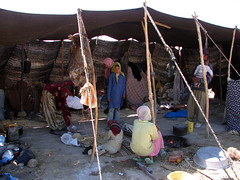
    A complex interplay of discrimination, global poverty, inequality and deepening socio-economic divisions, together make for key elements of global insecurity. While overall global wealth has increased, the benefits of this economic growth have not been equally shared. The rich-poor divide is actually growing, with a very heavy concentration of growth in relatively few parts of the world, and poverty getting much worse in many other regions. The ‘majority world’ of Asia, Africa and Latin America feel the strongest effects of marginalisation as a result of global elites, concentrated in North America and Europe, striving to maintain political, cultural, economic and military global dominance.

    Articles EXCLUSIVELY written for sustainablesecurity.org

    Issues:Climate change, Competition over resources, Global militarisation, Marginalisation

    To browse a list of all of the articles EXCLUSIVELY written for sustainablesecurity.org – follow this link

    Read more »

    Louisiana is Sinking

    Anna Alissa Hitzemann | | January 2013

    Issues:Climate change, Competition over resources, Marginalisation

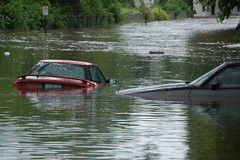
    Hurricane Katrina and the sinking of coastal Louisiana stand as a reminder that we must address climate change, competition over resources and marginalisation as the root causes of conflict before it is too late.

    Most will remember the horrific pictures on the news in 2005 when hurricane Katrina struck New Orleans. Nearly 2,000 people died, thousands more were left homeless and displaced, the material destruction was catastrophic with damages well over $100 billion.

    Image source: Brother O’Mara

    Read more »

    Myanmar: Peaceful Transition to Democracy or Storm Clouds on the Horizon?

    Anna Alissa Hitzemann | | November 2012

    Issues:Global militarisation, Marginalisation

    Published last week, Myanmar: Storm Clouds on the Horizon is International Crisis Group’s latest Asia report. It focuses on the potential for political violence and social instability as Mynamar’s leaders are undertaking reforms “to move the country decisively away from its authoritarian past”.  
    Image source: Rusty Steward

    Read more »

    No Sustainable Peace and Security Without Women

    Anna Alissa Hitzemann | | September 2012

    Issues:Global militarisation, Marginalisation

    There will be no sustainable security if we do not equally value the needs, experiences and input of men and women. A new report published by the Institute of Development Studies (IDS), funded by ActionAid and Womankind Worldwide, examines the role women play in local community peacebuilding in Afghanistan, Liberia, Nepal, Pakistan and Sierra Leone. The report states “despite the increased international attention to women’s participation in peacebuilding, the achievements and challenges facing women building peace at the local level have been largely overlooked”.
    Image source: United Nations Photo

    Read more »

    The United States, Niger & Jamaica: Food (In)Security & Violence in a Globalised World

    Anna Alissa Hitzemann | | September 2012

    Issues:Climate change, Competition over resources, Marginalisation

    The United Nations Development Programme (UNDP) defines food security as “all people at all times having both physical and economic access to the basic food they need”. However, due to a complex range of interconnected issues from climate change to misguided economic policies, political failure and social marginalisation, over 2 billion people across the world live in constant food Insecurity. It is important to take a sustainable security approach to look at the importance of “physical and economic access to basic food” by exploring the links between food insecurity and violence.

    Image source: Bioversity International

    Read more »

    “Chronic Violence”: toward a new approach to 21st-century violence

    Anna Alissa Hitzemann | | September 2012

    Issues:Global militarisation, Marginalisation

    The Norwegian Peacebuilding Resource Centre (NOREF) recently published a Policy brief by Tani Marilena Adams, proposing and outlining the concept of “chronic violence” to “characterise the crisis of escalating social violence that currently affects about one-quarter of the world’s population”.
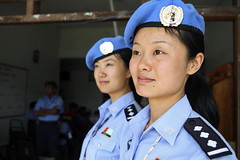
    Basing her analysis largely on Latin America, Adams approaches “chronic violence” from a sustainable security standpoint, arguing that violence itself should not be seen as the disease to be controlled, and the problem to be solved, but rather as a symptom of many complex underlying issues that need to be addressed.

    Image source: Shehan Peruma

    Read more »

  • Marginalisation of the majority world

    Marginalisation of the majority world

    A complex interplay of discrimination, global poverty, inequality and deepening socio-economic divisions, together make for key elements of global insecurity. While overall global wealth has increased, the benefits of this economic growth have not been equally shared. The rich-poor divide is actually growing, with a very heavy concentration of growth in relatively few parts of the world, and poverty getting much worse in many other regions. The ‘majority world’ of Asia, Africa and Latin America feel the strongest effects of marginalisation as a result of global elites, concentrated in North America and Europe, striving to maintain political, cultural, economic and military global dominance.

    Articles EXCLUSIVELY written for sustainablesecurity.org

    Issues:Climate change, Competition over resources, Global militarisation, Marginalisation

    To browse a list of all of the articles EXCLUSIVELY written for sustainablesecurity.org – follow this link

    Read more »

    Louisiana is Sinking

    Anna Alissa Hitzemann | | January 2013

    Issues:Climate change, Competition over resources, Marginalisation

    Hurricane Katrina and the sinking of coastal Louisiana stand as a reminder that we must address climate change, competition over resources and marginalisation as the root causes of conflict before it is too late.

    Most will remember the horrific pictures on the news in 2005 when hurricane Katrina struck New Orleans. Nearly 2,000 people died, thousands more were left homeless and displaced, the material destruction was catastrophic with damages well over $100 billion.

    Image source: Brother O’Mara

    Read more »

    Myanmar: Peaceful Transition to Democracy or Storm Clouds on the Horizon?

    Anna Alissa Hitzemann | | November 2012

    Issues:Global militarisation, Marginalisation

    Published last week, Myanmar: Storm Clouds on the Horizon is International Crisis Group’s latest Asia report. It focuses on the potential for political violence and social instability as Mynamar’s leaders are undertaking reforms “to move the country decisively away from its authoritarian past”.  

    Image source: Rusty Steward

    Read more »

    No Sustainable Peace and Security Without Women

    Anna Alissa Hitzemann | | September 2012

    Issues:Global militarisation, Marginalisation

    There will be no sustainable security if we do not equally value the needs, experiences and input of men and women. A new report published by the Institute of Development Studies (IDS), funded by ActionAid and Womankind Worldwide, examines the role women play in local community peacebuilding in Afghanistan, Liberia, Nepal, Pakistan and Sierra Leone. The report states “despite the increased international attention to women’s participation in peacebuilding, the achievements and challenges facing women building peace at the local level have been largely overlooked”.
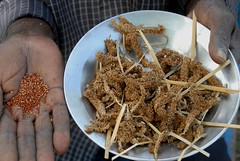
    Image source: United Nations Photo

    Read more »

    The United States, Niger & Jamaica: Food (In)Security & Violence in a Globalised World

    Anna Alissa Hitzemann | | September 2012

    Issues:Climate change, Competition over resources, Marginalisation

    The United Nations Development Programme (UNDP) defines food security as “all people at all times having both physical and economic access to the basic food they need”. However, due to a complex range of interconnected issues from climate change to misguided economic policies, political failure and social marginalisation, over 2 billion people across the world live in constant food Insecurity. It is important to take a sustainable security approach to look at the importance of “physical and economic access to basic food” by exploring the links between food insecurity and violence.
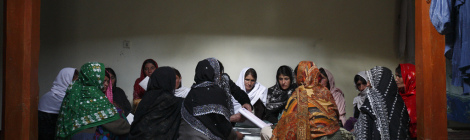
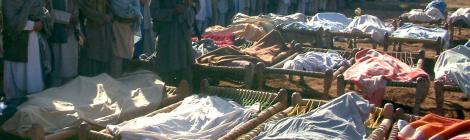
    Image source: Bioversity International

    Read more »

    “Chronic Violence”: toward a new approach to 21st-century violence

    Anna Alissa Hitzemann | | September 2012

    Issues:Global militarisation, Marginalisation

    The Norwegian Peacebuilding Resource Centre (NOREF) recently published a Policy brief by Tani Marilena Adams, proposing and outlining the concept of “chronic violence” to “characterise the crisis of escalating social violence that currently affects about one-quarter of the world’s population”.

    Basing her analysis largely on Latin America, Adams approaches “chronic violence” from a sustainable security standpoint, arguing that violence itself should not be seen as the disease to be controlled, and the problem to be solved, but rather as a symptom of many complex underlying issues that need to be addressed.

    Image source: Shehan Peruma

    Read more »

  • Sustainable Security

    Losing control over the use of force: fully autonomous weapons systems and the international movement to ban them

    Later this month, governments will meet in Geneva to discuss lethal autonomous weapons systems. Previous talks – and growing pressure from civil society – have not yet galvanised governments into action. Meanwhile the development of these so-called “killer robots” is already being considered in military roadmaps. Their prohibition is therefore an increasingly urgent task.

    Read Article →

    From The Great War to Drone Wars: The imperative to record casualties

    The centenary of the First World War also marks the anniversary of the practice of recording and naming casualties of war. But a century on, new forms of ‘shadow warfare’ limit the ability to record casualties of conflict and thus threaten to allow states a free hand to employ dangerous new tactics without threat of individual or international accountability. Without verifiable casualty figures, – including information on who is being killed and how – we cannot evaluate the acceptability, effectiveness or impact of ‘remote control’ tactics as they are rolled out among civilian populations.

    Read Article →

  • Sustainable Security

    by Wim Zwijnenburg

    RC_long_logo_small_4webThis article is part of the Remote Control Warfare series, a collaboration with Remote Control, a project of the Network for Social Change hosted by Oxford Research Group.

    While the US and its allies have had a monopoly on drone technology until recently, the uptake of military and civilian drones by a much wider range of state and non-state actors shows that this playing field is quickly levelling. Current international agreements on arms control and use lack efficacy in responding to the legal, ethical, strategic and political problems with military drone proliferation. The huge expansion of this technology must push the international community to adopt strong norms on the use of drones on the battlefield.

    Media outlets around the world reported on a new Islamic State (IS) video in August, which made use of a quad copter surveillance drone to film a military base near Raqqa, Syria. ‘Drones and Da’ash: a new terror threat’, headlines suggested. But that’s old news. Drones have been operated by non-state armed groups for years. Indeed, IS had already put up a drone-filmed video in February 2014 of a convoy with armoured vehicles, SUVs and trucks in Fallujah, and Hezbollah has been investing in their drone arsenal since before the 2006 Lebanon war.

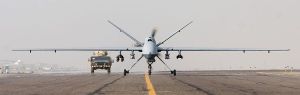
    An MQ-9 Reaper takes off on a mission from Afghanistan. Source: Wikimedia

    An MQ-9 Reaper takes off on a mission from Afghanistan. Source: Wikimedia

    So why the mounting interest in the use of drones by these groups? And why is this a reason for concern? The armed forces of US-allied states are increasingly relying on drones for Intelligence, Surveillance and Reconnaissance (ISR) missions. Intelligence gathering capacity and strike capabilities have both increased hugely with the introduction of unmanned military systems on the battlefield. A handful of states, led by the US, Israel and the UK, have used drones for lethal strike capabilities, including large drones such as the MQ-1 Predator or the MQ-9 Reaper, or smaller, pocketsize kamikaze drones such as the Switchblade.Drone use by the US and its allies has set the stage for others to jump in on these developments and apply this technology in their military operations. This has resulted in a booming multi-billion dollar drone industry and the proliferation of various types of drones, both for civilian and military applications. Over the last few years, the regimes in Iran, Syria, Sudan and groups as Hezbollah, Hamas, and recently the Islamic State have acquired unarmed drones and have actively used them during their operations. The origin of these drones? Iran.

    The further application of drones for a variety of purposes is certain, yet what implications does this have for the military application of drones, and what challenges does this pose to international security and the use of these new types of technologies and weapon systems?

    Concerns

    Although the use of unmanned systems for a range of civilian tasks clearly has its advantages, from checking oil pipelines, wind turbines and agricultural purposes, to name a few, other tasks such as law enforcement and military use deserve close scrutiny. In particular, how will drones have an impact on the use of armed violence, and are they an effective means for counter terrorism operations?

    The expanding use of drones for lethal operations has been met with severe criticism from human rights groups, UN Special Rapporteurs and civilian victims of drone attacks. Drone strikes outside armed conflict have stretched the boundaries of International Humanitarian Law and have violated the right to life of civilian victims. Moreover, due to these civilian casualties, there is concern that drone strikes as a counter-terrorism strategy [PDF] only bolster support for armed or terrorist groups. The recent use of drones over contested air space between China and Japan and over the Persian Gulf between the US and Iran have demonstrated the ‘potential for miscalculation and military escalation’. The absence of transparency over targeting procedures and of an accountability mechanism further clouds proper judgement on the legality and effectiveness of drone strikes in and outside armed conflict. [i]

    Mapping the spread

    Drones, both low-tech and high-tech, have definitively changed the way we wage wars. Added capabilities include improved information gathering, better targeting, and even the option of equipping drones with explosives and using them for strikes against military, but also civilian targets. A Russian expert has even speculated about the possible use of drones armed with chemical and biological weapons in densely populated areas in the West.  Conventional armaments such as explosives are also possible. Finally, there is added psychological value to using drones to frighten a population, which is clear from reports from Pakistan and Yemen. Unsurprisingly, these are assets that various states and groups are keen to expand, and we are seeing more drones being operated by states and groups that are not allied with the US.

    Non-US allied states

    Here are some examples of non-US allied states that have deployed drones during military operations:

    Iran. Iran has long worked on developing its drone arsenal. Although its technological level of expertise may far behind that of the US and Israel, they are able to produce quite some sophisticated drones which have proven effective on a number of battlegrounds. Most notably, its Shahed, Azem, Mohajer, Hamaseh and Sarir drones have been exported to Syria, Sudan, Hezbollah, Hamas and more recently Iraq.

    Syria. The Syrian army has acquired and used Iranian drones for ISR and target acquisition during a couple of battles near Aleppo, Homs and Damascus. Although an accurate overview of their arsenal is lacking, the Syrian Army is know to have a wide variety of drones at their disposal. Rebels reported drone use before artillery shelling started, and Islamist group Jabat Al-Nusra apparently managed to shoot down an Iranian made Yasir drone.  This drone was likely developed by reverse-engineering a US Scan Eagle drone, of which several have been shot down or crashed in Iran. Larger type drones, such as the Shahed-129, similar to the US Predator surveillance and armed drone (though the Syrian one is not armed), have been spotted over Syria.

    Sudan. The extent to which Sudan owns and uses unarmed drones remains unclear, but we do know they deployed Iranian drones over several contested areas. During the operations of the Sudanese army over the Nuba mountains against local rebel groups, different types of Iranian drones have been spotted, minutes before artillery bombardment took place on villages in the Nuba mountains.  The SPLM-A, the South Sudanese armed forces, shot down a Sudanese drone over Southern Kordofan in May 2014, which was apparently used for ISR and targeting operations. Another drone that was captured, the design of which appears to be consistent with an Iranian Pahpad type drone, had Iranian and Irish technology on board. Given that there is an arms embargo to Iran and Sudan, it would be interesting to know how this type of technology, which is probably dual-use, ended up in the hands of the regime. UN Reports on drone use for ISR missions flown by Sudan go back to 2009, when drones were spotted over Darfur.

    China. China is establishing itself as a major producer and exporter of drones. Saudi Arabia has reportedly already made a deal to purchase the Chinese Pterodactyl drone, a design similar to the US Predator drone. China’s aim to explore new markets and build their own UAV industry will presumably also lead to increased cyber espionage on American defense companies, which underlines the sensitivity of keeping this type of technology under control. China is likely to have relatively light restrictions in its export policies, meaning that China will be even less accountable in this regard than the US and its allies. As a US Senate report stated, providing an overview of Chinese developments:

    “Surging domestic and international market demand for UAVs, from both military and civilian customers, will continue to buoy growth of the Chinese industry… As a result, China could become a key UAV proliferator, particularly to developing countries.”

    Non-state actors

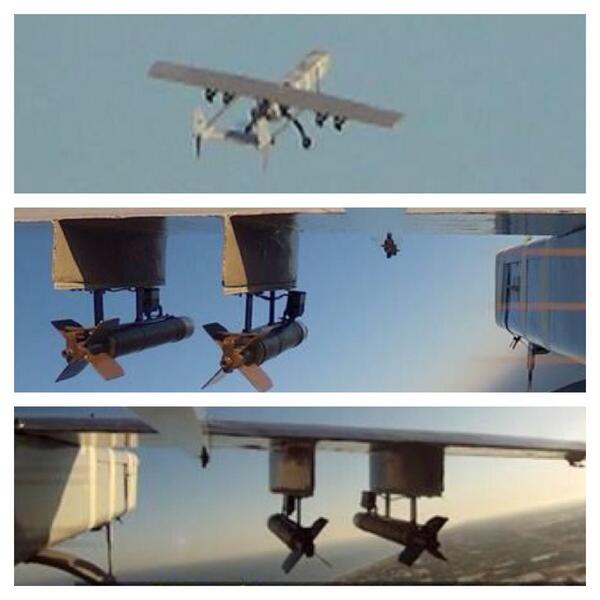
    Low-tech drones are cheap, can be assembled from easily accessible materials, fly low and can easily evade air defences, and are able to access restricted areas and reach their target in a short time – making them the ideal weapon of choice for terrorist groups.

    Here are some examples of deployments of drones by non-state actors:

    Footage released by Hamas apparently showing 'armed' drone. Source: Twitter

    From footage released by Hamas apparently showing ‘armed’ Arbabil 1 drone. Source: Twitter

    Hamas. In June 2014, Hamas released footage of an Iranian Arbabil 1 drone flying over the Gaza Strip, which looked as though it was armed. Before it could do any damage, it was shot down by a Patriot.  Although the missiles were likely fake, Hamas is demonstrably able to operate and exploit this new technology, which could have added value for their operations. This recent incident wasn’t the first attempt to use drones against Israel. In October 2013, news outlets reported that the Palestinian Authority had arrested a Hamas cell which was preparing a small drone with explosives to be used in an attack against an Israeli target. The IDF reported that it had previously struck Hamas’ drone capabilities in an airstrike against a drone on a runway in November 2012.

    Hezbollah. Hezbollah has operated drones over their border areas for a number of years. This includes occasionally flying them over Israeli territory, which seeks to probe Israeli defences (and taunt their military supremacy) and in 2006, Hezbollah tried to crash a small drone with explosives on a military site in a kamikaze drone attack. This was part of a broader attempt using three small drones with explosives for attacks on different targets in Israel. In 2012, Hezbollah flew an Iranian-made drone over the Mediterranean Sea, before it was shot down by the Israeli Air Force.  Current estimates are that Hezbollah possesses over 200  unarmed drones, which has led to serious concerns among Israeli military commanders about the potential for armed attack with drones. In particular, existing Israeli air defences seem less capable against smaller drones: “It’s very complicated to defend against the drones, because they’re so difficult to spot,” an Israeli military spokesman said. The United States has already started blacklisting companies selling drone related technology to Lebanon, citing security concerns over Hezbollah’s growing drone capacity.

    Footage from Islamic state surveillance drone showing Syrian military airport.

    Footage apparently from Islamic State surveillance drone showing Syrian military airport. Source [Graphic]: YouTube (Creative Commons)

    Islamic State. The first indication of the use of drones in Fallujah was in February 2014, when Islamic State in Iraq and Syria (ISIS), as it was then called, used drone footage for propaganda purposes. Several videos that went online in August showed that drones were used for ISR operations in Iraq and Syria, and it is likely that these drones are used for their military operations, strengthening Islamic State’s  ISR capabilities and target acquisition. The drones used seem to be quad-copters, which are fairly easy to use and acquire as they can be bought in any hobby shop.  Nonetheless, the use of these drones by Islamic State is an interesting development with regard to the new dynamic in the conflict. It means that states and armed groups such as the Kurdish Peshmerga will need to have additional defence systems to detect and shoot down these drones, adding to the complexity of the conflict in Iraq and Syria.

    Improved controls

    What can be done to limit the proliferation of drone technology? Current arms export control regimes that cover UAV technology are fairly limited both in participants and means. The Missile Technology Control Regime (MTCR) and the Wassenaar Arrangement have a clear set of standards that could be applied to control UAV technology more strictly. However, only 43 States are members of these agreements. Moreover, these agreements are voluntary, making them difficult to enforce. The booming civilian market for UAV technology makes it more difficult to control all the items used to assemble and operate drones, ranging from software, parts, components, and different payloads.  These dual-use items are listed in the  and the European Union’s Common Positions on Arms Export Control’s Munitions List. But states have indicated that it’s close to impossible to make an individual risk assessment for each license.

    As well as encouraging the uptake of existing arms export control regimes, an essential way to limit drone technology is an international push for strong norms on the use of drones on the battlefield. Urgent issues such as extrajudicial killings, the psychological impact of continuous armed drone presence on communities, and the lowering threshold for the use of armed violence in military operations must be addressed through international agreements. Most importantly, there must be a transparency and accountability mechanism ensuring oversight. Though this might place restrictions on the use of armed drones by states, it would not have an impact on non-state actors. Yet it should lead to more awareness that this technology can be used in new ways for both extrajudicial executions and terrorist operations.  Drones are here to stay, and the need for developing global norms on their export and deployment can not be ignored any longer.  States and the broader international community will have to take more responsibility for setting in motion a new process to ensure accountability and solid regulation. Indeed, as former CIA Director John Brennan said in 2012:

    “If we want other nations to use these technologies responsibly, we must use them responsibly. If we want other nations to adhere to high and rigorous standards for their use, then we must do so as well.”


    [i] PAX has outlined some of these concerns and fundamental questions about armed drones, reviewing the impact on military operations and underlining the need for political accountability in its Armed and Dangerous [PDF] policy paper for the Dutch government.

    Wim Zwijnenburg works as Project Leader on Security & Disarmament for Dutch peace organisation PAX on drones, toxic remnants of war, and the international arms trade. He has a MA in International Development and Conflict Studies.

    Featured image: Group photo of aerial demonstrators at the 2005 Naval Unmanned Aerial Vehicle Air Demo. Source: Wikipedia

  • Sustainable Security

    The environment has often taken a backseat in discussions about conflict, but an increasing amount of evidence suggests that environmental and wildlife conservation could and should be very useful to post-conflict recovery work.

    The notion that the environment can play a useful role in peacebuilding has been around for a number of decades. The environmental peacebuilding theory emerged after research found that even while countries were engaged in armed conflict they were cooperating over water management. The theory was that water management could establish cooperation and lay a platform for wider peacebuilding initiatives. Peace Parks follow the same principles to use transboundary biodiversity conservation to support peacebuilding. While both are appealing projects, their failure to translate from environmental cooperation into wider scale peacebuilding processes suggest they are of only limited use for peacebuilding and post-war recovery.

    While the above processes have been of limited effectiveness, the shared geography of many areas of armed conflict and biodiversity hotspots suggests that conservation could and should be useful to post-conflict recovery.

    Guerrillas and Gorillas

    Research has found that 80% of modern armed conflicts occurred in biodiversity hotspots, and 90% within countries containing biodiversity hotspots. The use of ‘conflict timber’ and the illegal wildlife trade to finance conflict, and the presence of many armed groups in and around protected areas, creates clear links between conflict and the environment. Conflict also often leads to widespread environmental damage, and the post-conflict period can cause even more damage as short term human needs lead to ungoverned and unsustainable exploitation of the environment. This destroys key ecosystem services, opens opportunities for banditry and corruption, and increases the risk of natural disasters.

    Addressing these threats to security and protecting the environment in the aftermath of conflict is therefore vital to ensure a resilient recovery process. This creates an opportunity for conservation to support the post-conflict recovery effort by simultaneously addressing threats to security and protecting the environment to support economic development. Current approaches to do this are limited, but potential exists for much more work to be carried out. I have therefore proposed the umbrella term of ‘Ecological Development’ to create a framework of methods to actively use conservation as a tool for post-conflict recovery.

    Environmental Peacekeepers

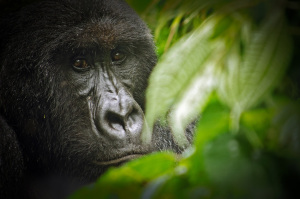
    Virunga_National_Park_Gorilla

    Mountain Gorilla in Virunga National Park, in the Democratic Republic of the Congo. Image via Wikimedia.

    Some work has already been undertaken in this area, such as the proposal to create a ‘green helmets’ UN force, with a mandate for environmental protection. Whether funding for such a force could be obtained, and a mandate agreed upon, is doubtful; even if it was, it is unlikely to be an effective unit. Current UN peacekeeping missions have regularly failed in their roles to protect civilians, so are unlikely to be able to effectively extend their mandate to environmental protection. Peacekeepers have also been caught with illegal fauna and flora. While the UN Peacekeeping operations now have an environment department to reduce the footprint of missions and educate soldiers about the environment, their role in environmental protection is now, and will likely be for the foreseeable future, minimal.

    Using a country’s army to support conservation work has also been trialled, but with limited impact; for example, in the Democratic Republic of Congo the army became involved in poaching ivory. Both this and the proposed green helmets UN force also take a combative approach to conservation, seeking to fight poachers and armed groups in protected areas rather than addressing the underlying causes of poaching and deforestation. A different approach is required.

    Instead, I have proposed the conversion of rebel groups en masse into a ‘Yellow Berets’ force under UN, or other neutral, control; their role would be to support existing wildlife rangers to protect the environment and start to engage in ecosystem regeneration and sustainable exploitation projects. Such a scheme would form a significant contribution to post-conflict recovery in several ways: it would employ ex-combatants, reducing the risk of a relapse into conflict; it would protect critical ecosystems, species and carbon sinks vital for human populations (and arguably worth protecting in their own right); and it would support efforts to develop sustainable natural resource extraction businesses to bring in revenue and create jobs to support post-conflict recovery. Crucially, this process seeks to address security threats with dollars not bullets; engaging rebel groups as paid eco-guards rather than engaging them in battle.

    The DRC provides an example of the necessity and benefits of such a programme. Work is already underway to ensure Virunga National Park brings multiple economic benefits to surrounding populations, including the development of hydropower electricity generation. Security threats remain a major concern in the park, however, and there are too few rangers to address these threats. The ecological development method would offer financial incentives to rebel groups to join the yellow berets unit. This would simultaneously increase the number of conservation personnel and decrease the security threat, opening the way for an expansion of development projects around the park. It would also enable the restoration of forest areas – which could be financed by carbon offset schemes – and the further development of a tourist industry centred not only on gorillas but multiple other attractions in the region. Such a process would not be without challenges: securing the long-term finance required to pay wages; coping with disruptive private interests intent on perpetuating insecurity; and avoiding conflict between Congolese army soldiers and police who receive their wages intermittently or not at all.

    Nevertheless the project holds promise, even in such a difficult operating environment as the DRC. It could also be used in other parts of the world where rebel groups operate in protected areas, as a means to bring an end to conflict and deal with ex-combatants efficiently and at scale.

    Conservation for Development

    The Yellow Beret process would require a large amount of finance to pay the wages of several hundred or even thousand eco-guards that would form it. While donor finance could be mobilised for such a process – combining conservation, security, humanitarian and carbon finance – this would be difficult both to obtain initially and also, critically, to sustain over the long term. Protected areas must therefore become sites of revenue and job creation in order to finance such an initiative.

    The work being undertaken in Virunga, described earlier, is an example of this, but more is required. Projects that support the livelihoods of local communities and also bigger schemes that can generate greater revenues and create jobs on a large scale need to be trialled and refined. Examples of community projects are livestock and micro-finance schemes to provide sources of protein and finance to start small enterprises. These projects alleviate communities’ dependence on protected area natural resources by providing sustainable sources of sustenance and protein, and improving the perception of conservation.

    At the same time, larger schemes are required that seek to create products for sale into international markets; this may be ‘green gold’ projects seeking to make gold mining both sustainable and ethical; sustainable timber exploitation and processing for sale; or the creation of ‘wildlife-friendly’ businesses that could create a range of products from tea to clothing, and help to grow the certification scheme into something akin to the size of the Fairtrade and Rainforest Alliance schemes. The benefit of such schemes is two fold: firstly, they are profit making, so would not be reliant on hard-to-access donor funding; secondly, they would generate jobs and revenue around protected areas that could be taxed and support the yellow beret and other conservation initiatives.

    Traditionally, tourism has been the main, and in many cases sole, commercial method used for conservation to support development. This narrow focus on tourism leads to a lack of innovation and a dependence on an unreliable industry. Particularly in regions of armed conflict, tourism can at best play a small role in development programmes; too few people are willing to visit a dangerous area to make it a viable business model. The other methods described above are therefore necessary.

    Justifying Conservation

    Time and time again I have heard that ‘a hungry man is an angry man’. Indeed, groups of unemployed young men are particularly dangerous. To transition from conflict to a successful post-conflict recovery, peace must be more attractive than conflict; there must be good opportunities for secure, paid employment for actors in conflict. Conservation can and must play a role in providing those opportunities.

    In short, for the environment – and protected areas in particular – to play a useful role in post-conflict recovery, they must be demonstrably beneficial to people. Most crucially, they must be able to help improve security and generate revenue from conservation quickly and to a value in excess of alternative uses such as agriculture. Protected areas must therefore become sites of revenue and job creation in the post-conflict period. This will help to improve security and support post conflict economic recovery while protecting key environmental assets and species; at the same time it would lay a platform for longer term commercial investment in eco-man friendly industries once security has been assured.

    Richard Milburn is Research Co-ordinator and PhD candidate at the Marjan Centre for the Study of Conflict and Conservation, within King’s College London’s Department of War Studies. His research examines the security threats associated with biodiversity loss as well as the opportunities to utilise conservation as a core component of post-war recovery, particularly in the Democratic Republic of Congo. He is also the UK representative of the Pole Pole Foundation, a Congolese conservation charity based in Bukavu.

  • How Food Could Determine Libya’s Future

    How Food Could Determine Libya’s Future

    Christopher Albon | The Atlantic | March 2011

    Issues:Global militarisation, Marginalisation

    As Libya’s protesters-turned-rebels fight a series of hard battles with forces loyal to Muammar Qaddafi, the United States — and the much of the world — struggles to find a meaningful response to the conflict. U.S. lawmakers have proposed such aggressive options as enforcing a no-fly zone over Libya or arming anti-Qaddafi rebels, both of which the White House has kept on the table. Critics of these plans argue that they risk involving the U.S. in another military engagement. But there’s another option that the U.S. could consider, one that might give anti-Qaddafi rebels crucial help while avoiding the messy complications of direct involvement: Send food.

    Food shortages in eastern Libya, the largest rebel-controlled area, have reached dire levels. Fighting has left food stocks depleted and food supply chains in shambles. Around Benghazi, food prices have reportedly risen by 50 to 75 percent. Due to its poor suitability for agriculture, Libya imports the majority of its food, which has become largely impossible since fighting broke out. The United Nations-run World Food Program is attempting to alleviate the food shortage, but so far with little success. Last Thursday, a ship that the World Food Program had chartered to carry 1,000 tons of flour to Benghazi, the provisional capitol of the rebel leadership, abandoned the trip after reports of attacks by pro-Qaddafi aircraft in the area. As food runs out and the conflict drags on, eastern Libya’s food crisis will only get worse. Qaddafi appears willing to use the shortage as a weapon against the rebels, reportedly blocking food from reaching the besieged rebel-held town of Zawiya.

    It still appears unlikely that Qaddafi will step down on his own accord. If the rebels are to free Libya, it will probably mean taking Tripoli by force and toppling Qaddafi outright. Currently, rebels in eastern Libya are mustering an army — mostly raw recruits and seized weapons — which they may use to do just that. But Benghazi is just over 1,000 km, about 630 miles, from Tripoli. Defeating Gadaffi would require this irregular force to travel hundreds of miles across the Mediterranean coast, all the while supplying itself through what would likely be a series of battles along the Gulf of Sidra, Sirte, and then in Tripoli itself.

    Warfare has changed much since Napoleon’s Grande Armée marched across Europe, but one of the Little Corporal’s maxims is just as true in Libya today as it was near Waterloo two centuries ago: armies march on their stomachs. The anti-Qaddafi rebels are no different. The push to Tripoli would require consistent access to — amongst other things — food supplies. While having adequate food alone would not be sufficient to take the capitol (they also need war materials, training, and transportation), it is an absolute necessity. And, right now, the rebels don’t have enough. But we do.

    The United States has the capacity and infrastructure to supply rebel-controlled eastern Libya with substantial amounts of food aid. These shipments could be transported directly into the rebel center of Benghazi, a major seaport with more than adequate facilities. The food aid would not only alleviate the emerging humanitarian crisis in eastern Libya — an important effort in itself — it would help the rebel cause. The shipments would boost the morale of rebel fighters and, more important, provide the supplies necessary to feed the newly formed army during any push towards Tripoli.

    The U.S. may be unable or unwilling to supply Libya’s rebels with everything they need to topple Qaddafi — since protests began in Libya and before that in Egypt, President Obama has made clear that the grassroots Arab uprisings must remain grassroots and Arab, rather than being co-opted by the U.S. But we can supply food. Supplying Benghazi with food aid is a viable and meaningful policy option short of risking the military entanglement Obama appears determined to avoid. Whether or not Libya’s revolution is ours to fight, it could well be ours to feed.

    Image source: B.R.Q.

    This article first appeared on The Atlantic.

    Comments

    Post new comment


  • Greener Cities: What We Can Do

    Greener Cities: What We Can Do

    Anna Alissa Hitzemann | | October 2012

    Issues:Climate change, Competition over resources

    A recent article on this website entitled The United States, Niger & Jamaica: Food (In)security & Violence in a Globalised World explored some of the possible links between climate change, food insecurity and violence. Many current articles in the media warn of growing food insecurity as global warming and climate change have devastating effects on crops, livestock and even fisheries. A piece in yesterday’s Guardian states that if extreme weather becomes the norm (which it has) then “starvation awaits”.

    Although it is important to recognise that climate change is real and that it is a threat to global security, we should seriously start to focus on what we can do to affect change. Integral to a sustainable securit approach is to tackle and address the long-term, root causes of insecurity and conflict. This can easily seem like a daunting task, especially when it concerns “big issues” such as climate change. There are however many things that can be done: some on a policy level, and others on a community level.

    A recent report by the UN Food and Agricultural Organisation (FAO) draws the attention of policymakers to “urban and peri-urban horticulture, and how it can help to grow greener cities in Africa” because “production of fruit and vegetables in and around urban areas has a clear comparative advantage over rural and other sources in supplying urban residents with fresh, nutritious – but highly perishable – produce all year round. It generates local employment, reduces food transport costs and pollution, creates urban green belts, and recycles urban waste as a productive resource.”

    The FAO report says that by the end of this decade, 80% of the world’s fastest growing cities will be African and as more and more people are moving from rural to urban areas in search of a better life, African cities are finding it hard to cope: “more than half of all [African city] residents live in overcrowded slums; up to 200 million survive on less than US$2 a day; poor urban children are as likely to be chronically malnourished as poor rural children”. The report, which draws its conclusions and recommendations from 31 country case studies, suggests that across the Africa continent 40% of residents in cities already have home gardens and “most of these urban farmers are able to meet their nutrition needs and still produce enough to sell in markets”. The commercial production of fruit and vegetables provides livelihoods for thousands of urban Africans and food for millions more. But unfortunately market gardening has grown with little official recognition, regulation or support.

    One way to address food insecurity is definitely to help those most affected by price volatility of food become less dependent on the free market. Formally and institutionally encouraging people to grow some of their own food seems like a great idea, not only for African cities, but for people around the world. As a matter of fact, the city of London has many community gardens to “support and advocate for food producing gardens and their role in individual and urban food security”.

    Image source: Gates Foundation

    Comments

    Post new comment


  • Climate change

    Climate change

    Climate change is high on both domestic and international political agendas as countries face up to the huge environmental challenges the world now faces. Whilst this attention is welcome, less energy is being focused on the inevitable impact climate change will have on security issues. The well-documented physical effects of climate change will have knock-on socio-economic impacts, such as loss of infrastructure, resource scarcity and the mass displacement of peoples. These in turn could produce serious security consequences that will present new challenges to governments trying to maintain stability.

    Thinking strategically about the future climate

    Duncan Depledge | RUSI | February 2011

    Issue:Climate change

    The publication of the Strategic Defence and Security Review and the Coalition’s first National Security Strategy provided ample opportunity for the government to deliberate on the strategic implications of climate change for the UK.  Yet while claims that we continue to live in a post-Cold War ‘age of uncertainty’ lay at the heart of both documents, on  closer reading there is very little to suggest that uncertainty about climate change was a concern for those who conducted the review.  

    Article source: RUSI

    Image source: U.S. Geological Survey

    Read more »

    Migration Due to Climate Change Demands Attention

    Issues:Climate change, Marginalisation

    Governments in Asia and the Pacific need to prepare for a large increase in climate-induced migration in the coming years, says a forthcoming report by the Asian Development Bank (ADB).
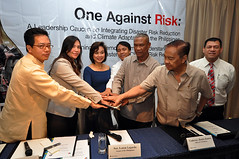
    Typhoons, cyclones, floods and drought are forcing more and more people to migrate. In the past year alone, extreme weather in Malaysia, Pakistan, the People’s Republic of China, the Philippines, and Sri Lanka has caused temporary or longer term dislocation of millions. This process is set to accelerate in coming decades as climate change leads to more extreme weather.

    Article source: Asian Development Bank

    Image source: Hamed Saber

    Read more »

    Transatlantic Dialogue on Climate Change and Security

    Issue:Climate change

    On February 25, 2009, the International Institute for Strategic Studies (IISS) launched the “Transatlantic Dialogue on Climate Change and Security”, funded by a grant from the European Commission, with the purpose of analyzing the impact of climate change on global security and stability.

    Hot and Cold Wars

    James Lee | Exclusively written for sustainablesecurity.org | January 2011

    Issue:Climate change

    Climate change will do more than just raise the temperature. Around the equator, rising temperatures and declining precipitation will lower agricultural production. People in this area (especially Africa and the Middle East) are particularly reliant on agriculture to support income and livelihoods. This trend (Hot Wars), coupled with rapidly increasing populations, will create conditions for livelihood wars. 
    Read more »

    Bridging the North-South divide: Sustainable Security for all

    Hannah Brock | Oxford Research Group | January 2011

    Issues:Climate change, Competition over resources, Global militarisation, Marginalisation

    For some years, the Oxford Research Group (ORG) has been analysing the likely underlying drivers of global insecurity over the coming years, and ways to develop sustainable responses to these threats. This analysis has focused on four trends that are expected to foster substantial global and regional instability, and large-scale loss of life, of a magnitude unmatched by other potential threats. These are climate change, competition over resources, marginalisation of the ‘majority world’ and global militarisation.

    Read the full article here.

    Author: Hannah Brock

    Image source: WorldIslandInfo.com

    Read more »

    US Security Establishment not Prepared for Climate Change

    Issues:Climate change, Competition over resources

    In a three-month investigation, a team of Northwestern University graduate students has found that the US security establishment is not adequately prepared for many of the environmental changes that are coming faster than predicted and that threaten to reshape demands made on the military and intelligence community. The Medill School of Journalism graduate student team has just begun publishing its findings on the national security implications of climate change with a series of print, video and interactive stories at Global-Warning.org. 
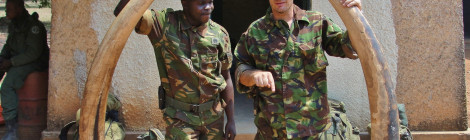
     

    Image source: Chairman of the Joint Chiefs of Staff. 

    Read more »

  • Sustainable Security

    The Ukraine conflict’s legacy of environmental damage and pollutants

    One year after violent conflict began, information is now emerging on the specific environmental impact of war in Ukraine’s highly industrialised Donbas region. Although obtaining accurate data is difficult, indications are that the conflict has resulted in a number of civilian health risks, and potentially long-term damage to its environment. In order to mitigate these long-term risks, international and domestic agencies will have to find ways to coordinate their efforts on documenting, assessing and addressing the damage.

    Read Article →

    DU-turn? The changing political environment around toxic munitions

    Is the US backpedalling on its use of depleted uranium (DU) rounds? There are indications that the use of these highly toxic munitions could increasingly be a political liability for the US, with countries affected by DU, like Iraq, other UN Member States, and populations in contaminated areas all expressing concerns over its use and impact. But stigmatisation, although important, is not enough on its own – in order to make sustained progress on accountability and in reducing civilian harm, a broader framework that addresses all toxic remnants of war is needed.

    Read Article →

    Losing control over the use of force: fully autonomous weapons systems and the international movement to ban them

    Later this month, governments will meet in Geneva to discuss lethal autonomous weapons systems. Previous talks – and growing pressure from civil society – have not yet galvanised governments into action. Meanwhile the development of these so-called “killer robots” is already being considered in military roadmaps. Their prohibition is therefore an increasingly urgent task.

    Read Article →