Blog

  • Write for us

    Contributing an Article

    We are always on the lookout for new authors with new perspectives to add to the debate on the blog – especially if you think we’ve missed something!

    We aim to address a wide range of evident and emerging security issues and take a broad and integrated approach to the term ‘security’. Generally, we look for insightful pieces which seek to explore solutions for ongoing security situations and the underlying issues which drive them. While we do place an emphasis on our ‘key’ drivers (climate change, marginalisation, competition over resources and militarisation), contributors should not feel limited to these subjects alone.

    Our current contributors are academics, practitioners, researchers and analysts working on global security.

    Please note that, as a not-for-profit blog that serves as a resource for interested readers, sustainablesecurity.org does not have the resources to pay contributors.

    If you are interested in contributing an article, please get in touch with us using the form to the right.

    Guidelines

    • 1,400 words max.
    • Please fact-check your article, especially if the subject is controversial or emerging . Although we check submissions carefully, authors are ultimately responsible for the factual accuracy of their contributions.
    • We do not use footnotes or endnotes. Embedded links for information that is sourced from other websites are a great opportunity to support your argument and opinions, especially for subjects that are not common knowledge. Please be sure to include a hyperlink for specific statistics and quotations.
    • Spelling: UK or US English – we don’t mind which, as long as it is used consistently throughout your article.
    • Please avoid unnecessary jargon and explain any that is used in a clear and concise manner.
    • You are welcome to cross-post your article in other places if we are accredited as the original site of publication.
    • We do not reprint pieces published elsewhere (with the exception of Sustainable Security programme staff articles that have been featured in the media).

    Legal stuff…

    All content and downloads are licensed under a Creative Commons Attribution-NonCommercial-NoDerivs 3.0 Licence unless stated otherwise.

    We look forward to hearing from you!

    SusSec Team

  • Breaking the silence: Protecting civilians from toxic remnants of war

    Toxic remnants of war and their legacy of civilian harm is seriously under-explored as an area of conflict. There is a growing consensus that the current legal framework governing conflict and the environment is not fit for purpose – so how could new international norms that merge environmental protection with civilian protection come into effect? 

    In his message on the occasion of the United Nations day on conflict and the environment last month, Ban Ki-moon repeated the disappointingly persistent observation that “the environment has long been a silent casualty of war and armed conflict”. While verging on cliché, the statement speaks to a wider problem about how the environmental impact of conflict is currently recorded, assessed and responded to. Inadequate data collection on the humanitarian and environmental impact of particular weapons or military practices makes determining their acceptability difficult, empowers polluters and acts a barrier to effective post-conflict assistance.

    The toxic legacy of conflict

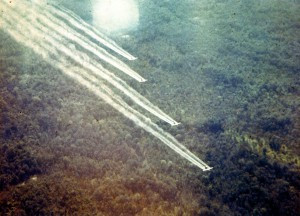
    ranch-hand-run-agent-orange-us-military-in-vietnam

    An Agent Orange spray run by U.S. Air Force during the Vietnam War. Source: Wikimedia

    The health and environmental impact of pollutants is widely recognised in peacetime but this aspect of the public health legacy of conflict is often sidelined in the face of urgent post-conflict response. Pollution sources in conflict can range from munitions constituents to substances released through the destruction, or loss of control, of industrial installations or oil or power infrastructure, from the ubiquitous building rubble to the waste disposal practices and footprint of military installations. As pollutants are released, wartime disruption invariably sees institutional capacity for environmental governance, such as the provision of environmental services and regulatory control, diminished.

    The net result is increased pollution and less capacity to assess and manage it. These toxic remnants of war may leave civilian populations facing acute risks from dangerous industrial compounds, or chronic exposure to pollutants in air, water or food. Some may be highly visible, such as the black plumes of oil fires or military burn pits; others may be invisible but incredibly persistent, such as the dioxins from Agent Orange.

    At a time where toxics in consumer products and emissions from industry, transport and agriculture are increasingly scrutinised and regulated, the lack of attention on the humanitarian impact of conflict pollution seems like a curious omission. Even more so given that the experiences of Agent Orange, Gulf War Syndrome, depleted uranium and more recently burn pits and metal-laden dusts, has placed protection from conflict pollutants firmly on the military’s agenda; as demonstrated by the US’s system of deployment health surveillance which merges environmental data on potential exposures with troop health records.

    Modifying the legal environment

    The norms and standards governing environmental, and by extension, public health protection in peacetime have left the laws of war far behind. Legal provisions for the protection of the environment during war and armed conflict date back to the 1970s, when international disgust at the conduct of the Vietnam War, in particular the use of the defoliant Agent Orange and Cold War fears over the use of environmental modification techniques, resulted in the codification of new international law.

    The 1977 Environmental Modification (ENMOD) Convention and Articles 35 and 55 of Additional Protocol I to the Geneva Conventions did serve to anchor the environment within International Humanitarian Law but it has become increasingly clear that the thresholds for unlawful damage are set too high and are poorly defined. In 2009, the UN Environment Programme (UNEP) joined a long list of legal scholars calling for more progress in the field. They were followed by the International Committee of the Red Cross (ICRC) in 2011. Making the link between environmental protection and the protection of civilians, and noting the need for post-conflict environmental cooperation and assistance, they suggested that: “A new system could be introduced that is based on similar rules recently created for dealing with the legacy of landmines and other explosive remnants of war.”

    While some member states at the ICRC’s 2011 conference did not respond enthusiastically to its proposals, the Nordic governments did take up the gauntlet, pledging to work on the issue of conflict and the environment and report back in late 2015. Following up on one of UNEP’s 2009 recommendations, the International Law Commission, which provides advice to the United Nations General Assembly, has also adopted the issue, initiating a three year legal review that will conclude in 2016. This renewed interest in the environmental and civilian impact of conflict and military activities is welcome, providing as it does a backdrop for engagement and debate, and with a consensus view emerging that the current legal framework is unfit for purpose, the search is now on for practical solutions.

    How do you solve a problem like toxic remnants of war?

    The scope of ‘conflict and the environment’ is vast, covering everything from climate change, to impacts on biodiversity, to natural resources and environmental sustainability as human security, and much else besides. Clearly, then, there is no one size fits all solution. The situation is complicated further by the low operational importance that militaries currently attach to environmental protection, in comparison to mission success and the survival of their personnel. Other nagging problems are the role of non-state actors and, surprisingly, how to define “the environment”, which as a complex system and one that has often been influenced by humanity is a more difficult question than first appears.

    The reality is that conflict will always be environmentally damaging. Much of this damage will be subtle and cumulative – only a minority of incidents, like oil well fires, are photogenic enough to grab the headlines. This seems to suggest that pragmatic measures to minimise, assess and remedy harm are desirable. Happily, when it comes to conflict pollution, a constellation of peacetime environmental norms and standards are available as guidance. As the majority were established to ensure the protection of public and environmental health, the principles they contain are of direct relevance to efforts to increase the protection of civilians. Domestic and International Environmental Law are now being further reinforced by Human Rights Law, which is increasingly establishing links to the environment. Most notably, these principles are being forged in the field of participatory rights – through the right to know about contamination that may impact your rights to health, life or livelihood and to take part in decisions on its management.

    The most cost effective way to reduce pollution is to manage it at source. In the context of toxic remnants of war, the diversity of sources involved requires that a number of parallel approaches be considered. This could entail stricter controls on the deliberate targeting of industrial infrastructure, perhaps by extending existing prohibitions on the targeting of sites that can release ‘dangerous forces’ and placing a greater onus on environmental considerations when determining the military necessity of strikes. Minimisation could also be achieved through greater environmental preparedness before conflict, something that Kuwait implemented prior to the 2003 Iraq War. Other measures could include more stringent controls on emissions and discharges from military bases, or improvements in the screening of weapons constituents.

    Post-conflict environmental assessments are currently undertaken by UNEP. While robust, they often take place many years after conflicts and are dependent on the political interest and generosity of member states. To properly examine the environmental and civilian impact from conflict pollution, it is imperative that more environmental data be recorded. This will require that the number of actors recording data be increased, which in turn will require that the costs of data collection and analysis be reduced. Improvements to how it is then integrated into public health registries will also be required in order to establish harm and target assistance. New technologies are beginning to make this a realistic prospect and, coupled with mapping systems, would help challenge the cliché of the “silent victim”.

    The final pillar of an approach that merges environmental protection with civilian protection is assistance and remediation. In this the ICRC’s 2011 study provides a useful starting point for discussion. Alongside monitoring and an obligation to assess damage and provide reparations, it also proposed new norms on international assistance and cooperation. ICRC’s proposal of a system akin to those applied to mines and explosive remnants of war is interesting and has parallels in the peacetime response to pollution incidents.

    The Toxic Remnants of War Project is currently examining the possible structure of such a mechanism, based on the views of practitioners, civil norms and on historical responses to wartime environmental damage. The establishment this year of a new governing body for UNEP with universal membership – the UN Environment Assembly – perhaps provides a forum where a mechanism could be discussed in detail. Civil society also has an important role to play in efforts to reduce harm from toxic remnants of war. In 2015, a new NGO network will be launched, which seeks to ensure that the toxic legacy of conflict and military activities are minimised, assessed and properly addressed.

    Doug Weir manages the Toxic Remnants of War Project (@detoxconflict) which explores state responsibility for the toxic legacy of military activities and the environmental and humanitarian impact of conflict. 

    Featured image: An Agent Orange spray run by U.S. Air Force during the Vietnam War. Source: Wikimedia 

  • The Trump Presidency and Iran’s Nuclear Deal

  • Deforestation: REDD-y for peace or fuelling conflict?

    Deforestation: REDD-y for peace or fuelling conflict?

    REDD forestry efforts don’t pay enough attention to their influence on local conflict dynamics. For REDD+ to be an effective mechanism to curb deforestation and strengthen peace opportunities, it has to pay more attention to pre-existing land and forest conflicts linked to tenure, take into account the interests of the local communities and be more sensitive to the local context

    Read Article →

    The Global Land Rush: Catalyst for Resource-Driven Conflict?

    Michael Kugelman of the Woodrow Wilson International Center, argues that the factors that first sparked many of the land acquisitions during the global food crisis of 2007-08 — population growth, high food prices, unpredictable commodities markets, water shortages, and above all a plummeting supply of arable land — remain firmly in place today. He writes that land-lusting nations and investors are driven by immediate needs, and they have neither the incentive nor the obligation to slow down and adjust their investments in response to the wishes of distant international bureaucrats. This, he argues, has serious consequences for global security.

    Read Article →

  • Arming Civilians for Counter-Terrorism: Turkey’s Village Guard System

    Originally set up the mid-1980s, the temporary village guard system’s purpose was to act as a local militia in towns and villages, protecting against attacks and reprisals from the insurgents of the Kurdistan Workers Party (PKK). Has this system been successful as a counter-terrorism strategy and does it still have a role in the Turkey of today?

    In any counterinsurgency strategy, the separation of “bad guys” from the rest of the population is a significant objective which has a direct impact on the effectiveness of the campaign. To achieve this objective, forming, arming and using local militias may be a viable strategy, particularly in rural, remote, harshly mountainous and tribal contexts in which security forces face difficult challenges to reach the local population. In recent years, the “Sons of Iraq” or the “Anbar Awakening” case in Iraq and the “Tribal Security Forces (Arbakai)” case in Afghanistan are contemporary examples of this strategy.

    Does the strategy of forming local militias yield successful results? The existing, yet limited, literature on this subject has opened the door to speculations and interpretations that are more journalistic than scholarly. To better elucidate the effectiveness of forming local militias, this article presents the case of the “Temporary Village Guard System” (Geçici Köy Koruculuğu Sistemi)” in Turkey, which was first initiated in 1985 and has been fully active since.

    Turkey’s Village Guards System
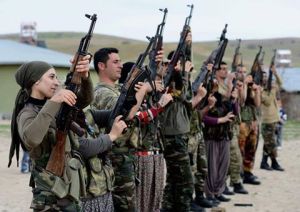
    armed-guards

    Image via Facebook.

    Since being founded in 1978, Turkey’s Kurdistan Workers’ Party (PKK) has caused approximately 20,000 fatalities, including about 11,000 civilians and 9,000 security personnel. In the meantime, about 20,000 PKK members were killed and about 6000 were captured and imprisoned. In order to thwart PKK-initiated violence, Turkish authorities have implemented many different countermeasures ranging from repressive to accommodative strategies, including the village guard system. As of January 2016, the monthly salary is approximately the equivalent of U.S. $400, along with clothing expenses and some social security benefits that came with passage of the amendments between the 74th article and 82nd article of the Village Law on March 26, 1985.

    With this legally founded, centrally appointed, and state-paid “security force,” the Turkish government created a civilian militia in the Kurdish populated southeast provinces of Turkey. Except for 300 Ulupamir Guards, who immigrated to the Van province from Kyrgyzstan, all village guards are ethnically Kurd. To supplement the employed village guard system, a “voluntary village guard” program was added in 13 more provinces, which led to the expansion of this system to 22 provinces in 1993, the year in which violence reached its peak level over the course of the conflict with the PKK. The difference between the two programs is that, while the employed village guards receive monthly salary and health benefits, the voluntary village guards do not receive a salary but are entitled to health compensation and benefits. The size of temporary and voluntary civilian armed force reached almost 60,000 by the end of the 1990s, accounting for almost one-third of the armed forces in the Kurdish region.

    As of August 2013, Muharrem Güler, then the Interior Minister of Turkey, announced that there are currently 65,456 village guards, 46,113 of whom are employed (interestingly 337 of them are women) and 19,343 of whom are voluntary (161 of them are women). Currently, the village guard system is implemented in 23 provinces. Most of the village guards are employed on the border between Iraq, Iran, and in the extremely mountainous provinces of Hakkari, Sirnak and Van because PKK has been using safe heavens in Iraq and Iran for years.

    All village guards, whether voluntary or hired, work under the supervision of the provincial Gendarmerie Commands and receive two weeks of basic military training from their provincial governor immediately after joining.

    To better understand the debate, it may be useful to examine the existing arguments for and against the Village Guard System.

    Arguments Favoring the System

    1. The village guard system has been seen a success story in Turkey’s strategy against the PKK-initiated violence to such an extent that it has become one of the main pillars of counterterror strategy. If the village guard system had not been initiated, the state authority in the region would have eventually collapsed.
    2. The village guards have first denied the mobility of the PKK both by separating them from the rest of the population as a bottom-up means of isolating them, and then prevented them from gaining territorial control.
    3. The village guards have provided intelligence to the security forces both on the territory and the activities of the PKK.
    4. The village guards have not been forced by the security forces to join this system. The existence of more than 25,000 voluntary village guards, who are not paid by the government, is a proof of this.
    5. PKK’s numbers has never exceeded the number of the village guards, even during the early 1990s, the period in which the number of the armed terrorists reached its peak level of 11,000. This is an indicator showing the low level of popular support to the PKK.

    Arguments against the System

    1. The state pitched brother against brother. If it hadn’t been for the village guards, this conflict would have never reached this intensity.
    2. The village guard system is a typical reflection of state tradition on the Kurdish issue. Enmeshed in the Kurds’ tribal networks, it exacerbated the tensions in the region. The equipping of the village guards, who were without even basic military training, increased instability in the entire region. The guard system introduced virtually extinguished social order in Kurdish daily life.
    3. The village guard system was used by the state officials as a repressive mechanism to recruit villagers.
    4. The village guards are poorly disciplined and inadequately trained.
    5. The village guards have been accused repeatedly in past years of drug trafficking, corruption, theft, rape, and other abuses. Inadequate oversight exacerbated the problem, and in many cases the security forces allegedly protected village guards from prosecution.
    6. Several reports document concerns regarding human rights violations resulting from the village guard system in Turkey.
    7. The village guard system has been responsible for deepening mistrust and ethnic divisions in an already troubled region.
    8. The village guards have moved with their families into villages that were evacuated in the 1990s and now the original villagers are returning to their villages to find the Village Guards already living there.
    9. The establishment of village guards made civilians more vulnerable to attacks.

    Has the village guard system in Turkey really worked as a counterterror strategy?

    In military terms, and despite its drawbacks and unintended consequences, the village guard system in Turkey worked well as a counter-terror strategy between 1985 and 1993 and achieved the objectives of separation of the local population from the terrorists and denying the PKK control of their hoped-for secessionist territory. Early success gained just after the implementation of the militia system needed a follow-up before the insurgency adapts. In the following years, however, it gradually waned in effectiveness when considering the increased number of PKK attacks in the period of 1993-1999, and caused increasing socio-economic and political micro-level cleavages in the region. As the big inertia in a dispersed system means resistance to change, the guards system could not easily be modified, meaning the strengthening of the existing micro-cleavages and the emergence of the new ones.

    Reasons for the decline in effectiveness

    The village guard system in Turkey was originally initiated under the assumption that the emergent threat (PKK bandits) was so local and small that it was not considered to require commitment of national security forces. This perception of PKK fighters as “a few bandits” led the Turkish government officials to the authoritization of the system in a temporally (initially, the system was designed for a two-years long period ) and spatially (only in three provinces) limited setting. However, there emerged many institutional problems as the number of village guards was enormously expanded from 800 men to 40,000 men only within a one-year-long period. The primary sources of these shortfalls would be sorted as follows: the absence of comprehensive vision at the national level and the implementation of the planning and recruitment strategy of the system at the provincial level. The absence of a national-level institutional framework which would standardize the system led to the differentiating practices in the provinces. The dramatic rise within a short period of time, when combined with the attempt of government to micro-manage the village guard system at the provincial level, led not only to confusion about the rights, missions and responsibilities of the village guards but also caused different (sometimes contradicting) practices in the following years. Fast expansion meant both weak control at the national level and different interpretations of the operational use of the guards at the provincial level.

    Furthermore, the formation of local militias may not only have pros and cons in the sphere of security but also may lead to implications in the socio-cultural sphere. The persistent characterization of the village guards as “traitor,” and the prevalent use of the term “Jash” (a Kurdish slang word for donkey) by PKK supporters to refer to Kurdish village guards, indicates the significance of the local political structure when analyzing the local dynamics of the conflict in Turkey. It is not hyperbole to suggest that the system has also changed the nature of conflict by first pushing the conflict into new areas and creating new micro-cleavages (whether tribal or at the family level) in the provinces.  These results, which clearly emphasize the explanatory power of local political structures in an ethnic conflict, confirm Stathis Kalyvas’s theorization. That is, when examining the dynamics of an ethnic conflict in a comparative perspective, Kalyvas points out that local political structures and rivalries among local groups have a great impact on shifting alliances, which are considered as acts of treason by rival factions.

    The allegation of human rights violations by militias seem to be inevitable. The absence or lack of sufficient legal mechanisms to investigate accusations, especially in combination with low levels of transparency and accountability, may lead to structural legal problems and emotional conflicts over justice in the Afghan and Iraq cases as in the Turkish case.

    To demobilize or not to demobilize?

    The Turkish government has been in a dilemma when deciding on the fate of the village guard system. Opinions about this issue highlight two options for the government, each of which can take two forms.

    The first option is demobilization. One form of this option is “honorable demobilization,” which implies that the government will end the guard system after providing all material and social rights and benefits to the retired and serving guards, and publicly elevating the history of the guards for their role in the Turkish state’s armed struggle against the PKK.  The other form, “dishonorable demobilization,” implies that the government will end the guard system with few rights and benefits for retired and serving guares, and will meticulously search the history of the guards to bring to justice those who allegedly committed crimes.  Interviewees who favor dishonorable demobilization argue the need to establish memorial sites for those crimes and brutalities allegedly committed by the guards, with periodic visits by government officials to these sites to keep the collective memory fresh.

    The second option is to maintain and continue the guards system. With this option, there again appear to be two alternative forms.  One form is the maintainance of the system after a comprehensive revision that examinines the strengths, drawbacks and conseuqences of the system in the domains of security, law and politics so as to make it more effective and efficient. The other form is the maintainance of the status-quo which implies the continuation of the village guards as an open-ended commitment not restrained by definite limits, restrictions, or structure.

    Currently, the Turkish government seems to embrace the last altenative; that is, maintainance of the system as it is in an open-ended process. With the information at hand, it is difficult to predict which option the Turkish government will embrace in the near future. Sooner or later, however, when the government decides on the village guard system, this decision will surely be a strategic one which directly affects the evolution of ongoing clashes.

    Metin Gurcan is an Istanbul Policy Center Researcher specializing in security issues.
  • Building the Case for Nuclear Disarmament: The 2014 NPT PrepCom

    Jenny Nielsen and Marianne Hanson

    The first week of the third Preparatory Committee (PrepCom) for the 2015 Review Conference (RevCon, held every five years) of the Nuclear Non-Proliferation Treaty (NPT) has witnessed a heavy emphasis on issues relating to the disarmament pillar. In particular, the humanitarian impact of nuclear weapons, highlighted by a wide-ranging, cross-grouping, multi-aim initiative which continues to consolidate itself in the non-proliferation regime, has come to the fore. Frustrated with the lack of progress towards NPT Article VI commitments to complete nuclear disarmament, the initiative has invigorated attention to the urgency of nuclear disarmament and a need for a change in the status quo. NPT member states and civil society continue to engage actively in publicizing the humanitarian consequences of nuclear weapons as an impetus to progress towards nuclear disarmament.

    The Humanitarian initiative

    Austria has announced the dates of a Third International Conference on the Humanitarian Consequences of Nuclear Weapons, to be held on 8-9 December 2014 in Vienna. This conference will follow the March 2013 Oslo conference and the February 2014 Nayarit conference, which were both notably boycotted by the five NPT nuclear weapons states (NWS: the UN Security Council permanent members, or P5).  Whether any of the five NWS will participate in the Vienna conference, remains to be seen. Given the Chair’s summary of the Nayarit conference, which includes some of the Mexican chair’s personal perceptions on the humanitarian initiative’s aims, the Austrian Ministry of Foreign Affairs may find that appealing to the NWS to attend will be a challenging task.

    UN General Assembly. Source: Wikipedia

    UN General Assembly. Source: Wikipedia

    At the PrepCom, the Mexican delegation explained that the Chair’s Summary of the Nayarit conference, ‘reflects the opinion of the overwhelming majority of delegates, in the sense that these discussions should lead to the commitment by States and civil society to achieve new standards and standards through a legally binding instrument prohibiting nuclear weapons in the same way, as in the past, the weapons that have been eliminated were first banned’. Furthermore, the Mexican delegation to the PrepCom stressed that ‘the time has come to initiate a diplomatic process, to define specific time lines and the most appropriate fora to achieve this work’.

    Since the inclusion of the humanitarian consequences issue in the Final Document of the 2010 NPT RevCon and the reinvigoration of this initiative in the PrepComs since then, the NWS have been cautious of the initiative’s coordinated activities and continue to question the aims of the initiative.  In particular, the NWS will not readily engage in the initiative as long as they interpret or perceive it to be the pathway towards a delegitimization process and, ultimately, a ban on nuclear weapons’ possession and use. For this reason, controlling the initiative’s external communication of its aims and activities will need to be carefully managed in order to sustain its broad, cross-grouping support-base and participation. This, in turn, will enforce its credibility and longevity in the regime towards the goal of progress towards nuclear disarmament.

    Suing for Nuclear Zero

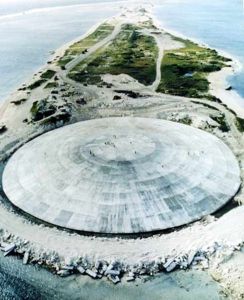
    Cactus Dome, Runit Island, Enewetak Atoll, Marshall Islands - a concrete-capped burial pit for radioactive waste from US nuclear tests.

    Cactus Dome, Runit Island, Enewetak Atoll, Marshall Islands – a concrete-capped burial pit for radioactive waste from US nuclear tests. Source:  US Defense Special Weapons Agency (via Wikipedia)

    On 24 April, a few days before the NPT delegations convened at the UN for the PrepCom, the Republic of the Marshall Islands filed cases in the International Court of Justice and the U.S. Federal District Court claiming that all nuclear-armed states—including the four non-NPT states: India, Israel, DPR Korea, Pakistan—‘have failed to comply with their obligations […] to pursue negotiations for the worldwide elimination of nuclear weapons’.  These cases, referred to as the Nuclear Zero lawsuits, are based on treaty law obligations (for the five NPT NWS) and customary international law (for the four non-NPT member states). The Labour Party of New Zealand (currently in opposition) has pledged support for the lawsuits. Civil society groups at the NPT PrepCom have heralded the motion.

    As a testing ground for U.S. nuclear weapons (between 1946 and 1958), the Republic of the Marshall Islands bears firsthand experience of the effects of radiation. On the first day of the PrepCom, the Minister of Foreign Affairs of the Marshall Islands, Tony de Brum, delivered a powerful statement including a personal account of his own childhood memories of U.S. nuclear testing. Given the close US-Marshall Islands economic and defence ties, including an agreement for use of the U.S. Army Kwajalein Atoll missile test range, it is an interesting bilateral development.

    In her 29 April statement to the 2014 PrepCom, U.S. Under Secretary Rose Gottemoeller asserted that ‘it is the United States’ deep understanding of the consequences of nuclear weapons use—including the devastating health effects—that has guided and motivated our efforts to reduce and ultimately eliminate these most hazardous weapons’. Gottemoeller stressed that ‘it is imperative that we make sure people remember the human impact of nuclear weapons’. In a nod to the Nuclear Zero lawsuits she added that her ‘recent trips to the Marshall Islands and Hiroshima were potent reminders of the need to persevere in confronting this challenge’. The inclusion and attention to these issues in the U.S. statement is an indicator of the prominence and importance of the humanitarian dimension initiative. Notwithstanding universal formal engagement, the initiative is percolating through national statements and embedding itself in discourse widely.

    Article VI commitments

    Strategically timed for impact during the PrepCom and in furtherance of commitments to transparency, on 29 April, the U.S. State Department released newly classified information on the U.S. nuclear weapons stockpile. As noted by the Federation of American Scientists, the new figures revealed by the Obama administration boil down to only 309 warheads fewer than the 5,113 reported in 2010. While underwhelming for some in civil society given high expectations on deliverables under Article VI, the U.S. reporting on stockpile figures should be welcomed and acknowledged as a positive move by one of the five NWS.

    The New Agenda Coalition (NAC, comprising Brazil, Egypt, Ireland, Mexico, New Zealand and South Africa) submitted a meaty working paper on Article VI to the PrepCom. As highlighted by the Irish delegation, this suggests four options for the way forward, outlining ‘prospects for a Nuclear Weapons Convention, a Nuclear Weapons Ban Treaty, a looser framework arrangement of mutually reinforcing instruments, or a hybrid of any or all of the above’. The NAC offers these options for discussion without prescription for one outcome. Ireland argues that discussions must begin immediately in order to identify what is needed and how to frame this. Warning that ‘we will not, under any circumstances, countenance a simple roll-over of the 2010 Action Plan’ at the 2015 RevCon, Ireland stressed that ‘to do so would inflict even further damage on the NPT as a credible driver of disarmament and non-proliferation efforts’.

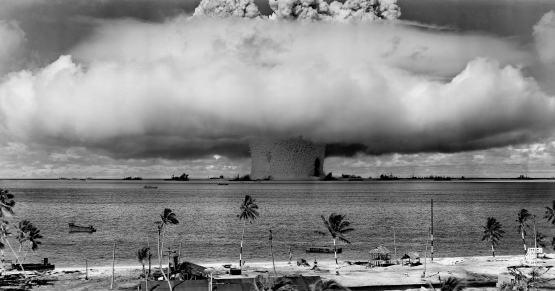
    Mushroom cloud and water column on Bikini Atoll, Marshall Islands, Operation Crossroads Baker, 25 July 1946. Source: US Department of Defense (via Wikipedia)

    Mushroom cloud and water column on Bikini Atoll, Marshall Islands, Operation Crossroads Baker, 25 July 1946. Source: US Department of Defense (via Wikipedia)

    With 128 states supporting the joint statement on the humanitarian consequences of nuclear weapons at the UN General Assembly First Committee in October 2013, the second week at the PrepCom is likely to witness growing support for the initiative’s statement, but only if its wording can balance the political and strategic needs of all of the wide-ranging states. Notably, at the 2013 PrepCom, Japan opted not to pledge formal support to the statement due to trepidation about a clause in the initiative’s statement which was interpreted as having implications for its strategic alliance and coverage under the US nuclear umbrella. Alienating key states – especially US allies – by expressing views too categorically will not serve the humanitarian initiative well. At the same time, it is hard to deny the frustration felt by most states at the lack of progress towards nuclear disarmament.

    Civil society engagement

    Akin to the wide range of support and engagement for the humanitarian dimension initiative shown by states parties, civil society groups have made many broad-ranging contributions to highlight the initiative’s aims. Chatham House published a thorough report on the risks of inadvertent, accidental or deliberate detonation of nuclear weapons based on an assessment of historical cases of near nuclear use, offering recommendations for mitigating these risks. The European Leadership Network (ELN) released a group statement (supported by 52 high-level signatories) with a list of broad ranging recommendations for necessary steps for a successful 2015 NPT Review Conference. Warning that the humanitarian dimension initiative ‘has become a deeply divided issue among NPT states-parties’ and arguing that ‘this division is damaging the diplomatic atmosphere’, the ELN calls on the P5 to participate in the initiative’s third conference in Vienna in December.

    Across the Atlantic, a coalition of US-based civil society organizations published an open letter to President Obama calling for action on nuclear disarmament, including amongst several suggestions, participation in the Vienna conference. The coalition highlights the deterioration in US-Russia relations, given continuing and foreseeable NATO expansion and in light of the crisis in Ukraine, noting concern for prospects for future bilateral arms reduction negotiations.

    Other disarmament advocacy groups including Reaching Critical Will and ICAN are steadfastly calling for a process of negotiations for a new legal instrument prohibiting nuclear weapons. Demanding a nuclear ban, the Geneva Nuclear Disarmament Initiative, aka Wildfire, continues to head-on challenge and mock the status quo of the NPT review process, exposing inconsistencies in nuclear policies by NPT states, with a focus also on NNWS relying on extended nuclear deterrence, particularly Australiaand those NNWS hosting NATO theater nuclear weapons, such as the Netherlands.

    A major challenge faced by the PrepCom’s Chair, Peruvian Ambassador Roman Morey, will thus be to reconcile these disparate approaches and views while preserving the essential aims of the humanitarian initiative. There is a clear need to engage the NWS and seek their attendance at the Vienna conference in December and to steer diplomacy as well as civil society activism towards an achievable path for the elimination of nuclear weapons. If the PrepCom concludes with recriminations and division, it will bode ill for next year’s NPT Review Conference.


    Jenny Nielsen is a Postdoctoral Research Fellow in the School of Political Science and International Studies at the University of Queensland. Previously, she was a Research Analyst with the Non-proliferation and Disarmament Programme at the International Institute for Strategic Studies (IISS), a Programme Manager for the Defence & Security Programme at Wilton Park, and a Research Assistant for the Mountbatten Centre for International Studies (MCIS) at the University of Southampton, where she co-edited the 2004-2012 editions of the NPT Briefing Book.

    Marianne Hanson is Associate Professor of International Relations at the University Of Queensland and Director of the University’s Rotary Centre for International Studies in peace and conflict resolution. She has published widely in the field of international security, with a focus on weapons control, and is currently engaged in a book project examining the emergence of the humanitarian initiative in nuclear weapons debates.

  • Can Former Combatants Assist in Preventing Violence?

  • Mission Impossible: The Elusive Search for Peace in Syria

  • China and the Responsibility to Protect

    The Responsibility to Protect (R2P) is a significant, if controversial, development in international affairs. China has proposed its own semi-official version of R2P called “Responsible Protection”.

    Author’s Note: This article highlights issues discussed in more depth in various publications, including Andrew Garwood-Gowers, ‘China’s “Responsible Protection” Concept: Reinterpreting the Responsibility to Protect (R2P) and Military Intervention for Humanitarian Purposes’ (2016) 6 Asian Journal of International Law 89 and Andrew Garwood-Gowers, ‘R2P Ten Years after the World Summit: Explaining Ongoing Contestation over Pillar III’ (2015) 7 Global Responsibility to Protect 300.

    Introduction

    Over the last decade and a half the Responsibility to Protect (R2P) principle has emerged as a significant normative development in international efforts to prevent and respond to genocide and other mass atrocity crimes. Yet it has also been controversial, both in theory and in practice. R2P’s legal status and normative impact continue to be debated in academic and policy circles, while its implementation in Libya in 2011 reignited longstanding concerns among many non-Western states over its potential to be misused as a smokescreen for regime change. These misgivings prompted Brazil to launch its “Responsibility while Protecting” (RwP) concept as a means of complementing and tightening the existing R2P principle. China, too, has proposed its own semi-official version of R2P called “Responsible Protection” (RP). This contribution explores the key features and implications of the lesser known Chinese initiative.

    The R2P Principle

    Peacekeeping - UNAMID

    Image by UN Photo via Flickr.

    R2P first appeared in a 2001 report by the International Commission on Intervention and State Sovereignty (ICISS), a body set up by the Canadian government to consider how the international community should address intra-state humanitarian crises. However, after the initial concept proved contentious a modified version of R2P – labelled “R2P-lite” by one commentator – was unanimously endorsed by states at the 2005 World Summit. In its current form R2P consists of three mutually reinforcing pillars. The first is that each state has a responsibility to protect its populations from the four mass atrocity crimes (genocide, war crimes, crimes against humanity and ethnic cleansing). Pillar two stipulates that the international community should encourage and assist states in fulfilling their pillar one duties. Finally, pillar three provides that if a state is manifestly failing to protect its populations the international community is prepared to take collective action in a timely and decisive manner on a case-by-case basis, in accordance with Chapter VII of the UN Charter.

    Action under pillar three can encompass non-coercive tools such as diplomacy and humanitarian assistance, as well as coercive means including sanctions and the use of force. The international community’s pillar three responsibility is framed in conservative terms, creating only a duty to consider taking appropriate action, rather than a positive obligation to actually respond to a state’s manifest failure to protect. Crucially, the UN Security Council remains the only body that can authorise coercive, non-consensual measures under pillar three. R2P does not grant states a right to undertake unilateral humanitarian intervention outside the Charter’s collective security framework. Overall, R2P is best characterised as a multi-faceted political principle based on existing international law principles and mechanisms.

    The most well-known instance of pillar III action to date is the international community’s rapid and decisive response to the Libyan crisis in early 2011. The Security Council initially imposed sanctions and travel bans on members of the Gaddafi regime before passing resolution 1973 authorising the use of force to “protect civilians and civilian populated areas under threat of attack’’. China, Russia, Brazil and India each abstained on the vote to mandate military force against Libya. As the extent of NATO’s military targets and support for the Libyan rebels became apparent, many non-Western powers criticised the campaign for exceeding the terms of the Security Council resolution. For these states, the eventual removal of the Gaddafi regime confirmed their perception that R2P’s third pillar could be manipulated for the pursuit of ulterior motives such as the replacement of unfriendly governments.

    The post-Libya backlash against R2P was at least partly responsible for Security Council deadlock over Syria. Russia and China have exercised their vetoes on four separate occasions to block resolutions that sought to impose a range of non-forcible measures on the Syrian regime. At the same time, there has been renewed debate about the strengths and weaknesses of R2P’s third pillar. In late 2011 Brazil’s RwP initiative proposed a series of decision-making criteria and monitoring mechanisms to guide the implementation of coercive pillar three measures. While RwP initially attracted significant attention and discussion, Brazil’s foray into norm entrepreneurship was short-lived and R2P has remained unaltered.

    Reframing R2P as “Responsible Protection”

    China’s traditional insistence on a strict interpretation of sovereignty and non-intervention has made it uncomfortable with the coercive, non-consensual aspects of R2P’s third pillar. As a result, Beijing has consistently emphasised the primacy of pillars one and two, while downplaying the scope for pillar three action. In this respect, its decision not to veto resolution 1973 on Libya came as something of a surprise.

    China’s contribution to the post-Libya debate over R2P’s third pillar is less widely documented than Brazil’s efforts. In mid-2012 the notion of “Responsible Protection” was floated by Ruan Zongze, the Vice President of the China Institute for International Studies (CIIS),  which is the official think tank of China’s Ministry of Foreign Affairs. Although China has not explicitly adopted the concept as a formal policy statement on R2P, its implicit endorsement means it can be described as a “semi-official” initiative.

    RP is primarily concerned with R2P’s third pillar and, in particular, providing a set of guidelines to constrain the implementation of non-consensual, coercive measures. It consists of six elements or principles, which are drawn from just war theory and earlier R2P proposals such as the 2001 ICISS report and Brazil’s RwP. In this respect, RP represents a repackaging of previous ideas, rather than an entirely original initiative. However, by reframing these concepts in stricter terms it reflects a distinctive Chinese interpretation of R2P that seeks to narrow the circumstances in which non-consensual use of force can be applied for humanitarian purposes.

    The first element draws on the just war notion of “right intention”. It provides that the purpose of any intervention must be to protect civilian populations, rather than to support “specific political parties or armed forces”. This conveys Beijing’s concerns over the motives and objectives of those intervening under the banner of R2P, as expressed during the Libyan experience. Element two relates to the “right authority” criterion. It reiterates the longstanding Chinese position that only the Security Council can authorise the use of coercive measures, and that there is no right of unilateral humanitarian intervention granted to states.

    RP’s third element is based on the traditional principle that military intervention should be a “last resort”. Its call for “exhaustion of diplomatic and political means of solution” is consistent with Beijing’s broader policy preference for diplomacy and dialogue over forcible measures. However, insisting on a strict, chronological sequencing of responses may deprive the international community of the flexibility needed to ensure timely and decisive action on humanitarian crisis. For this reason, some clarification or refinement of element three may be needed. The fourth element of RP draws on aspects of the just war principles of “right intention” (like element one) and “reasonable prospects”. In relation to the latter, it provides that “it is absolutely forbidden to create greater humanitarian disasters” when carrying out international action. This stipulation reflects Beijing’s position that external intervention often exacerbates humanitarian crises and can ultimately cause more harm than good.

    Element five of RP provides that those who intervene “should be responsible for the post-intervention and post-protection reconstruction of the state concerned”. Although the notion of a responsibility to rebuild appeared in the original 2001 ICISS report it was not included in the text of the World Summit Outcome document in 2005 and therefore does not form a component of the current concept of R2P. It is unclear whether China’s RP concept is explicitly seeking to resurrect this dimension or whether this element is simply intended to emphasise Beijing’s broader perspective on peacebuilding and development in post-conflict societies. Finally, element six calls for greater supervision and accountability of those carrying out UN authorised civilian protection action. This is a similar demand to that made in Brazil’s RwP proposal, though little detail is given as to what form any such monitoring mechanism would take.

    Conclusion

    Overall, the Chinese notion of RP is an attempt to reinterpret and tighten the content of R2P’s third pillar so that it aligns more closely with Beijing’s own normative preferences and foreign policy objectives. Compared to RwP and the ICISS report, RP outlines a narrower set of circumstances in which military intervention for humanitarian purposes would be appropriate. Some aspects of the proposal would certainly benefit from clarification and refinement.

    However, it is notable that despite strongly criticising the way R2P was implemented in Libya, China has chosen to engage with, and actively shape, the future development of the norm. This illustrates the extent to which China, as a permanent member of the Security Council, is enmeshed in the ongoing debate over R2P. In fact, RP is explicitly framed as an example of China “contributing its public goods to the international community”. In the future we can expect China and other non-Western powers to play increasingly influential roles in the development of international security and global governance norms.

    Andrew Garwood-Gowers is a lecturer at the Faculty of Law at Queensland University of Technology (QUT) in Brisbane, Australia. He has written extensively on R2P and the law governing the use of military force, with publications in leading journals including Global Responsibility to Protect, the Asian Journal of International Law, Journal of Conflict and Security Law and the Melbourne Journal of International Law.

  • Why Does UN Humanitarian Intervention Remain Selective?

    Over the past two decades, the United Nations Security Council has responded more strongly to some humanitarian crises than to others. This variation in Security Council action raises the important question of what factors motivate United Nations intervention.

    The United Nations (UN) selective response to humanitarian crises—as evidenced most recently by the organisation’s uneven reaction to the conflicts in Libya and Syria—is arguably among the most contentious issues in international politics. Some scholars and observers heavily criticize this practice, arguing that the selectiveness of humanitarian interventions undermines their legitimacy and ultimately their success; that the uneven response to humanitarian emergencies suggests that these intervention are motivated not by humanitarian concerns but by the military and economic interests of powerful states; and that the selective enforcement of human rights norms undermines the emerging rule of law in international politics (for examples see Archibugi 2004, Chomsky 1999)

    Others disagree and claim that selectivity is not only unavoidable for the UN but also desirable. The selectivity of humanitarian intervention, so the argument goes, reduces the risk of over commitment; it helps to maintain cooperation among the great powers; and it prevents the UN from becoming involved in ill-conceived operations (see Roberts and Zaum 2008)

    But what explains why UN humanitarian interventions remain selective in the first place? Why is it that the UN has taken strong action to respond to some crises, like those in Northern Iraq, Somalia, Bosnia, Sierra Leone or—more recently Libya—but not to other like those in Colombia, Myanmar, Sudan, or—currently—Syria?

    The scholarship on humanitarian intervention often argues that each humanitarian crisis (and the responses to them) is historically unique and therefore requires a case-by-case explanation. While I agree that attention should be paid to the specificities of each crisis, my research shows that the UN’s response to them is not random but follows remarkably consistent patterns (see Binder 2015, 2017). More specifically, I argue that a combination of four factors explains whether the United Nations does or does not take strong action (sanctions, ‘robust’ peacekeeping operations, military action) in response to a humanitarian crisis. This explanation has been developed and tested through a systematic comparative analysis of the UN’s response to more than 30 humanitarian crises after the end of the Cold War combined with several in-depth case studies of intervention decisions in the UN Security Council.

    • The first explanatory factor is the extent of human suffering in a crisis. In a humanitarian crisis people suffer and die while human rights norms are massively violated. This generates a morally motivated pressure to come to the rescue of threatened populations and to defend international norms.
    • Secondly, whether the UN intervenes depends on the extent to which a crisis spills over to neighbouring countries and regions. Humanitarian crises often affect neighbouring countries or regions in negative ways. Spill over effects include regional conflict diffusion, refugee flows, terrorism or economic downturn. Spill over effects create a material interest to intervene.
    • The third explanatory factor for UN intervention is the ability of a target state to resist outside intervention. Militarily strong target states, or target states that have powerful allies, can raise the costs and risks of UN intervention and affect its chances of success.
    • Fourth and finally, UN intervention is explained by the level of material and reputational resources the UN has committed to the resolution of a crisis in the past (sunk costs). To the extent that the UN have invested time, money, and diplomatic prestige in the resolution of the crisis, this creates the wish to protect these investments through continued or escalated involvement.

    None of these explanatory factors is sufficient in itself to explain selective intervention. In combination, however, they provide a powerful explanation for the UN’s uneven response to humanitarian crises.

    When does the UN take strong action?

    Image credit: Bernd Untiedt/Wikimedia.

    The UN can be expected to take strong action—coercive measures including economic sanctions, ‘robust’ peacekeeping operation or (the authorization of) military action—if the extent of a humanitarian crisis (in terms of victims and internally displaced persons) is large, and if the organisation has committed substantial resources to its resolution. This, however, leads to intervention only when the crisis also generates substantial negative spill over effects (e.g., refugee flows) or when the target state of an intervention is weak and therefore unable to resist to outside intervention.

    Explaining limited UN action (or inaction)

    A limited response of the UN to a humanitarian crisis, such as UN observer missions, humanitarian assistance, or even complete inaction of the UN, is best explained by the ability of a potential target state to resist outside intervention (e.g., through military capabilities). However, other factors must be present as well. Military capabilities must be either complemented by a low level of previous UN involvement; or by a relatively low level of human suffering and spill over effect to neighbouring countries.

    A few brief examples may help to illustrate how these four factors interact to lead to strong or limited UN action.

    Bosnia

    UN intervention in Bosnian crisis was clearly driven by a combination of motivational factors. For one, UN members were strongly concerned by the large-scale plight of the Bosnian civilian population and the grave human rights violations committed by the parties to the conflict (ethnic cleansing, the installation of concentration camps, the siege of Sarajevo, and the massacres at Srebrenica). Second, the intervention was motivated by the wish to prevent the crisis from spilling over to Western European countries, most notably in form of refugee flows, and to stop a more generalized destabilization of the Balkan region. A third important driver of UN intervention in Bosnia was the wish of UN member states to protect the tremendous investments both material (through humanitarian assistance and peacekeeping) and reputational (diplomatic efforts) the UN had made over the course of the conflict. However, when the Bosnian Serbs took hundreds of UNPROFOR blue helmets hostage, this brought the UN to the brink of failure and put the UN’s efforts in the Bosnian crisis in jeopardy. In this situation, rather than withdraw, the organisation escalated its response. Finally, outside intervention was facilitated by the inability of the Bosnian Serbs and the Serbian government to generate sufficient resistance against outside intervention by the UN (and later by NATO).

    Cote d’Ivoire

    Very similar motivational patterns can be observed with respect to the UN’s decision to authorize military intervention in the context of post-election violence in Côte d’Ivoire in 2010. The dramatic levels of internal displacement and the fears of genocide, given the xenophobic politics of ‘Ivoirité’ that characterized the conflict, raised strong humanitarian concern in the UN. At the same time, UN members wished to prevent the conflict from spilling over to other Western African countries, most notably to Liberia which was slowly recovering from a long and brutal civil war. Moreover, the substantial and longstanding involvement of the UN in the country generated an additional institutional dynamic pushing towards intervention. The UN had invested heavily in the resolution of the crisis in Côte d’Ivoire—most notably through peacekeeping and peacebuilding. UN members wished to protect these investments they saw at stake, should country relapse into civil war. Finally, former President Laurent Gbagbo and his supporters were too weak to effectively resist outside intervention in in the country. By the time the UN decided to authorize military action, large parts of the country were controlled by forces loyal to Gbagbo’s opponent Alassane Ouattara.

    Libya

    As in the crises in Bosnia and in Côte d’Ivoire, humanitarian intervention in Libya was driven by more than one factor. Muammar al Gaddafi’s public announcement to commit a massacre in the town of Benghazi generated particular pressure on the part of UN members to act. Concerns to prevent spill over effects also played an important role. In addition to destabilizing effects for neighbouring Egypt and Tunisia—both of which are undergoing important political change in the wake of the ‘Arab Spring’—Western UN members feared that hundreds of thousands of Libyan refugees would cross the Mediterranean towards Europe. At the same time, the Gaddafi regime was not in a strong position to resist outside intervention. Not only was there a capable opposition movement in the country, but also Tripoli had managed to alienate nearly all of its former Arab and African allies. Libya also lacked partners in the Security Council who might have opposed or blocked UN intervention. However, the Libyan case fails to provide strong support for the previous institutional involvement explanation in that the UN did not invest substantial material and immaterial resources to the resolution of the crisis prior to the intervention.

    Syria

    The ongoing crisis in Syria illustrates how a combination of factors prevents strong UN action. The available evidence suggests that massive human rights violations, the spiralling violence in the country as well as the severe spill over effect of the Syrian conflict for neighbouring countries, most notably Lebanon, raised strong concerns on the part of UN members. A majority of UN members have pushed for sanctions against the Assad regime in the UN Security Council. That the UN has nevertheless not taken strong action in Syria can be explained by two factors. First, unlike the cases discussed before, Syria is more able to resist outside intervention—most notably because the Assad regime enjoys the continued support of its Russian and Chinese allies, who block any coercive measures against Syria in the UN. Second, the UN has not been substantially involved in Syria in the past and has not committed substantial resources to the resolution of the crisis. As such, a complementary dynamic of escalating commitment could not unfold in the UN to push towards coercive measures.

    Summary

    Whether the UN intervenes or does not intervene in a humanitarian crisis cannot be explained by a single factor. Rather, a combination of conditions – the extent of human suffering, the level of spill over effects, the military strength of a target state and the extent to which the UN has been involved in a crisis before – accounts for this variation in UN action to a large extent. While the explanation I suggest here does not account for all UN responses to humanitarian crises, it covers more than 80% of the UN humanitarian interventions after the Cold War.

    Martin Binder is Associate Professor in International Relations at the University of Reading. His research focuses on humanitarian intervention, the authority and legitimacy of international institutions, and rising powers. His work has been published in the Journal of Peace Research, International Studies Quarterly and International Theory, among others. His recent book The United Nations and the Politics of Selective Humanitarian Intervention has been published in 2017 with Palgrave Macmillan.