Blog

  • Russia’s Strike Against Special Forces and the UK’s ‘No Comment’ Policy

    Drugs and Drones: The Crime Empire Strikes Back

    Ever advancing remote warfare technology is being increasingly used by law enforcement agencies to counter drug trafficking. In response, drug cartels are also adopting new technology to smuggle and distribute drugs. However, the technological superiority of law enforcement-military actors is also causing criminal and militant groups to adapt by employing the very opposite tactic, by resorting to highly primitive technology and methods. In turn, society is doing the same thing, adopting its own back-to-the-past response to drug trafficking and crime.

    Read Article →

    From Surveillance to Smuggling: Drones in the War on Drugs

    In Latin America drones are being used as part of the War on Drugs as both regional governments and the US are using surveillance drones to monitor drug trafficking and find smuggling routes.. However, as drones are increasingly being used by drug cartels themselves to transport drugs between countries, could Latin America find itself at the forefront of emerging drone countermeasures?

    Read Article →

    Privatising the War on Drugs: PMSCs in Colombia and Mexico

    US drug policy has become increasingly privatised in recent years as the US government contracts private military and security companies (PMSCs) to provide intelligence, logistical support and training to state security forces in drug-producing and –transit states. As the cases of Colombia and Mexico illustrate, this privatisation strategy is having a damaging impact on these already fragile environments.

    Read Article →

    Beyond Privacy: The Costs and Consequences of Mass Surveillance

    Last week the new UN privacy chief said UK surveillance was “worse than [George Orwell’s novel] 1984”. In the two years since the Snowden leaks revealed the existence of bulk internet and phone surveillance by US intelligence services and their partners, including the UK, the British government continues to engage in the mass collection of citizens’ communications data.

    Read Article →

  • Fishermen or Pirates? Somalia’s Registration Programme in Focus

    Carefully Managing Water Resources to Build Sustainable Peace

    Carefully planned interventions in the water sector can be an integral part to all stages of a successful post-conflict process, from the end of conflict, through recovery and rebuilding, to […]

    Read Article →

  • Welcome back!


    Welcome back! We’ve just re-launched with a brand new look, great new authors and, as always, lots to say!

    Sustainablesecurity.org is space to debate, discuss and develop understandings of modern insecurity within a  ‘sustainable security’ framework, which realises the interconnected underlying drivers of challenges to global security and seeks to counter them with preventive policy solutions.

    The blog is a project of the Sustainable Security programme of Oxford Research Group, originally launched in September 2009.

    Sustainablesecurity.org is space to debate, discuss and develop understandings of modern insecurity within a  ‘sustainable security’ framework, which realises the interconnected underlying drivers of challenges to global security in the 21st century. Through topical discussion pieces, we aim to explore the integrated, preventive policies that are needed to solve these threats at source.

    As well as covering a range of pertinent modern security challenges, the website highlights four key interconnected drivers of global insecurity:

    • Climate Change
    • Competition over natural resources
    • Global militarisation
    • Marginalisation

    Articles and resources are allocated to one or more of these headings, but the overall emphasis is on the interconnected nature of these threats and the need for comprehensive, multilateral approaches to them. For a wider range of topics, try our ‘Hot Topics’ tag cloud in the sidebar to the right.

    Don’t forget, you can sign up for updates about new blog posts and special features.

    We hope you enjoy exploring the new site!

    SusSec Team

    Image source: John Martinez Pavliga

  • Honduras, the Perfect Storm?

    In January 2016, the government of Honduras and the Organization of American States (OAS) formalized the creation of a new international organ to help fight corruption in this country. The Mission of Support Against Corruption and Impunity in Honduras (MACCIH, in the Spanish acronym) is a welcome step. However, it is very early to estimate whether it will be able to make a positive contribution to solving the daunting challenges facing justice and security in this country.

    Honduras experiences what can be called a “perfect storm” of interrelated problems: violence perpetrated by diverse actors (gangs, drug traffickers); human rights abuses, in the context of a steady militarization of public security; impunity; corruption at the highest institutional levels, and widespread poverty and inequality. For years, it has been the most violent country in the world, with an average rate of 90 homicides per 100,000 people according to estimates by the UN Office on Drugs and Crime and the World Bank, which is significantly higher than the international average intentional homicide rate of 6.2 per 100,000 people.

    Gangs, Drugs, and Corruption

    Honduras, like El Salvador and Guatemala, has a serious problem with gangs. These are territorial groups involved in extortion and other crimes, exerting social control and who are connected to other criminal actors. The prevailing narrative from politicians and the media puts the blame of violence on the gangs, whose members are highly stigmatized as a result. Different governments have adopted iron-first and militarized approaches to deal with them. Casa Alianza, a charity that works and campaigns for the rehabilitation and the defence of street children, has documented that even children become victims of extrajudicial executions, carried out by death squads sometimes linked to the security forces. In January 2016, Casa Alianza denounced a monthly average rate of 81 children victims of extrajudicial executions.
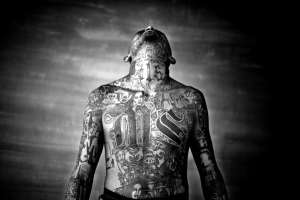
    makarinfotos

    Image of Mara Salvatrucha gang member by markarinafotos.

    However, the figures of homicides attributable to gangs are highly disputed, and national and international actors diverge in their interpretations about the share of responsibilities for violence. This is a strategic corridor for drug trafficking, and the local markets are growing. According to the OAS, around 70% of homicides are perpetrated by drug cartels involved in wars for the control of routes, sometimes using gang members and youth as sicarios (a Spanish term for hit men). By January 2014, estimates were that 87% of the drug planes heading from South America to North America passed through this country. Transnational groups, especially from Mexico, have established bases here. Then, there are local groups and transportistas (carriers), contracted by the cartels and connected to Honduran political and economic elites, including land owners and mayors.

    In 2012, when the news about the gang truce in El Salvador spread throughout Central America, the Honduran gangs explored the possibility of starting a similar process. In May 2013, they delivered their first public statements from jail, announcing that they would stop violence in exchange for a series of demands. This was the first public event of a process accompanied by the Bishop of San Pedro Sula, Rómulo Emiliani, and the Secretary of Multidimensional Security of the OAS, Adam Blackwell.

    Dialogue never advanced for many different reasons, including the decentralized nature of the Honduran gangs (that makes it difficult to enforce discipline among the ranks), the lack of political maturity of their leadership, and the weak legitimacy of a government that had emerged from the 2009 coup d’état,. But Bishop Emiliani had warned, from the beginning, that even a successful truce could never emulate the sudden drop of homicides of El Salvador, where the daily rate plummeted from 14 to 5. n Honduras, he warned, the range of actors involved in violence for different purposes is extensive, and the balances of power among them very distinct from those of the neighbour country.

    It is worth remembering that in the 80s, amidst the wars that ravaged Central America, the Honduran territory was used for drug and arms trafficking with the aim of supporting the US allies in these wars, among them the Contras, who fought against the Sandinista government in Nicaragua. The illicit networks and connections created have survived well after these conflicts ended, including in sectors of the elite and security forces. Interpeace states that this is the country with more denounces of complicity between police members and illegal actors for the commission of crimes.

    Militarization as a Response

    President Juan Orlando Hernández, who took office in 2014, has followed others by trying to respond to these threats with an iron first strategy of crime suppression. But he has elevated the militarization of law enforcement to new levels. The military is now in charge of most aspects of public security.

    The most prominent example is the creation of the Military Police of Public Order (PMOP), which currently has around 3,000 soldiers deployed throughout the country. A special law has been approved to prevent the Attorney General’s Office from investigating and prosecuting their potential abuses. It is the National Council on Defence and Security, under the control of the Armed Forces, who appoints judges and prosecutors for that role. The resources for the PMOP are collected through a security tax and allocated through a classified and ultra-secret budget.

    Another emerging actor is FUSINA (Fuerza de Seguridad Interinstitucional), a task force composed of representatives of different security units. Led by the military, and with no formal status as an agency, FUSINA manages various bodies and organs, such as an anti-extortion unit that controls phone intercepts. Added to this is the US-backed Special Comprehensive Government Security Response Unit (TIGRES), a SWAT-style militarized police force.

    Militarization takes place in the streets and also in the top-down institutional structures, with more military in charge of security positions, including the Security Ministry that has power over the armed forces and the police. The military also controls the penitentiary system, with soldiers guarding prisons. The trend is worrying in itself and for the lack of transparency and accountability implied. Civil society groups have denounced a trend that might be bringing the country back to the ‘80s, when the military had extended powers and human rights abuses were rampant, and reversing the efforts to advance civilian power during the 90s.

    On the other hand, the national police experienced only limited reform in the past and are often accused of corruption and complicity in crime. Recently there have been limited purges of corrupt officers, but the situation could get even worse as they receive less equipment, salaries, and benefits than the PMOP. The priority given to the military threatens the feasibility and viability of a much-needed profound transformation of the police forces.

    There have been some successes in the fight against drug trafficking, such as the dismantlement of the leadership of the crime organization Los Valle while Los Cachiros surrendered to US authorities. The head of operations of the Sinaloa Federation, who operated from San Pedro Sula, has also been captured. But efforts to cut the links of powerful elite sectors with narco-trafficking and crime have been far less evident despite the US efforts in this matter. The US Treasury Department has included some of them in their “kingpin list”, including the Rosenthal family, one of the most influential in the country. Jaime Rosenthal, former vice-president and head of an economic conglomerate, has been asked for extradition on charges of money laundering.

    Corruption Shocking the Country

    In 2015, a corruption scandal shook the country. Members of the President-related Liberal Party diverted more than 335 million dollars from the Institute of Social Security, at least in part to fund the party’s electoral campaign. Citizens protested for months in the streets of Tegucigalpa, the nation’s capital, and other cities against corruption, impunity, and human rights abuses. They claimed for the President resignation and asked for international support to fight corruption, through an initiative similar to the International Commission to Combat Impunity in Guatemala (CICIG), which has achieved significant results including the case against President Otto Pérez Molina on corruption charges.

    The Mission Against Corruption and Impunity in Honduras (MACCIH), tasked with “the prevention and fight against corruption and impunity in the country”, is now a reality and could be accompanied by a permanent UN human rights monitoring mission in Honduras. The MACCIH shares some similarities with the CICIG. Both are hybrid agencies, international and domestic, but composed by international civil officers accountable to international organs (the UN, and the OAS). Both are tasked with the fight against corruption and impunity with the hope of bringing justice where the national counterparts cannot for different reasons (pressures, corruption, lack of resources).

    The MACCIH is expected to include independent judges and prosecutors to supervise and support their national counterparts, promote a review of the effectiveness of the public security system, create a civil society observatory to evaluate progress and a role for the Justice Studies Centre of the Americas in proposing legislation reform. But their powers will be more limited than those of the CICIG, which can initiate and conduct criminal proceedings against anyone without approval of the national authorities.

    The MACCIH can promote transparency and reforms, but much will depend on the political will to follow and implement (instead of resisting) its recommendations and proposals. National and international voices have questioned whether it will have enough power to fight effectively institutional corruption. Honduran elites will probably resist any effort directed at reform and accountability. In April 2015, the investigator that uncovered the ISS corruption scandal received death threats and had to flee the country. And the former head of the National Commission for the Fight Against Drug Trafficking, Alfredo Landaverde, was shot dead days after condemning the links between police and organized crime.

    With all those factors in mind, it becomes clear that repressive iron first policies and militarization cannot substitute the fight against illicit networks, corruption and impunity, nor the effort towards institution building, particularly in the rule of law and justice. They have been popular in electoral terms and have received substantial international backing, but are incapable of supressing crime connected to gangs or drug trafficking, and fail to guarantee human security. Furthermore, they do nothing to address corruption at all levels of the state and cut the links between elites and different forms of organized crime. Ivan Briscoe, of the Clingendael Institute, summarized the dynamic as follows: “Informal relationships, money and fear have initiated a vicious cycle of emergency responses, militarization and corruption that only virtuous policies with public backing can replace”. Of course, that will be a long-term endeavor.

    Mabel González Bustelo is a Fellow of the Global South Unit for Mediation (BRICS Policy Centre, Brazil) and author of Mediation with non-conventional armed groups? Experiences from Latin America.
  • Shrinking space: The impact of counter-terrorism measures on the Women, Peace and Security agenda

    Engendering Peace? The militarized implementation of the women, peace and security agenda

    Almost 15 years after the first resolution to address women, peace and security, the agenda’s implementation is increasingly subverted by the militarised security paradigm. Implementing UNSCR 1325 has been interpreted as being about fitting women into the current peace and security paradigm and system; rather than about assessing and redefining peace and security through a gender lens. As a result, the opportunity to create a new recipe for peace and security, based on taking women’s perspectives into account, is being lost.

    Read Article →

  • A Sharper Edge: QME, the Iran Deal and the Gulf Arms Race

    Drone-tocracy? Mapping the proliferation of unmanned systems

    While the US and its allies have had a monopoly on drone technology until recently, the uptake of military and civilian drones by a much wider range of state and non-state actors shows that this playing field is quickly levelling. Current international agreements on arms control and use lack efficacy in responding to the legal, ethical, strategic and political problems with military drone proliferation. The huge expansion of this technology must push the international community to adopt strong norms on the use of drones on the battlefield.

    Read Article →

    Nuclear Weapons: From Comprehensive Test Ban to Disarmament

    Despite not yet entering into force, the 1996 Comprehensive Test Ban Treaty has succeeded in almost eliminating nuclear weapons testing and in establishing a robust international monitoring and verification system. A breakthrough in its ratification by the few hold-out states could have important positive repercussions for the Nuclear Non-Proliferation Treaty or nuclear disarmament in the Middle East.

    Read Article →

    International Dimensions of the Ukraine Crisis: Syria and Iran

    The Russian annexation of Crimea may be in direct contravention of international agreements but is popular in Russia and almost certain to hold. Given tensions within Ukrainian society and its weak transitional government, there remains some risk of further intervention in eastern Ukraine and possibly the Trans-Dniester break-away region of Moldova. Even if there is no further escalation in the crisis, the deterioration in EU/Russian and US/Russian relations is of great concern, not least in relation to two aspects of Middle East security – the Syrian civil war and the Iran nuclear negotiations.

    Read Article →

    The Iran Interim Deal: Responses, Potential Impacts, and Moving Forward

    Implementation of the interim deal with Iran, which freezes the country’s nuclear enrichment in exchange for limited sanctions relief, began in January. As a result, we are witnessing a substantial shift in diplomatic relations between Iran and its regional neighbours – some positive, some not. This deal marks a significant step for the international non-proliferation regime, but will it achieve the trust and confidence-building goals intended? As the US and Iran face increasing domestic pushback on the terms of the agreement, questions remain on the interim deal’s impact on relations in the region and abroad, and the effect these relations may have on the prospects of coming to a full comprehensive follow-up agreement between Iran and the P5+1 countries.

    Read Article →

    What next for Iran? Foreign Policy after a Nuclear Agreement

    If Iran and the P5+1 succeed in negotiating a robust agreement on the nuclear issue, then Iran will be less preoccupied with rebalancing its relationship with antagonistic western powers and its role in the Middle East and the wider region has scope for developing in many new directions. This briefing looks ahead to a post-agreement environment and assesses where Iran might chose to concentrate its resources. A key question is whether it will work to build better links with the US and selected European states or whether it will be more interested in the BRIC and other states, not least Turkey. Its choice will be influenced strongly by domestic politics and the urgent need for a more stable region.

    Read Article →

    Geneva II: Prospects for a Negotiated Peace in Syria

    The recent announcement that the so-called Geneva II conference would finally convene on 22 January 2014 is overdue but good news. What are the chances of it bringing peace? With an interim deal signed on Iran’s nuclear programme, Richard Reeve discusses what chance the great powers, Middle Eastern diplomats and the mediators of Geneva have as they turn their attention to ending the war in Syria.

    Read Article →

    Can the Nuclear Non-Proliferation Treaty outrun its double standard forever?

    The recent walkout by Egyptian negotiators at UN talks have demonstrated that, like a building with rotten foundations, the nuclear non-proliferation regime is far less stable than many believe it to be. Egypt’s actions make clear that anything less than a regime specifically geared towards addressing the reasons why some states seek nuclear weapons is a regime existing on borrowed time.

    Read Article →

  • The Reintegration of Former Combatants in Colombia

    After four years of peace negotiations, the 52-year-long civil war between the Colombian government and the left wing guerrilla FARC-EP recently came to an end. What will happen now to the thousands of combatants who are laying down their arms and what are the challenges to their reintegration? Could a gender aware reintegration programme hold the key to long-term peace?

    On November 30, 2016 the Colombian government formally ratified a revised Peace Agreement after a national plebiscite rejected the original peace accord. The agreement ended the longest armed conflict in the western hemisphere and in Latina America.

    The FARC-EP (Fuerzas Armadas Revolucionarias de Colombia – Ejército del Pueblo) started the demobilisation process in January 2017. The combatants are currently gathered in 23 transitory areas (zonas veredales transitorias de normalización) and 7 camps that will be in force for 180 days. The government is expecting around 6.300 combatants to reach the areas. In relation to children associated with the armed group, the High Commissioner said that the delivery´s protocols will be activated upon FARC´s arrival in the zones: as FARC combatants enter the zones they will be delivering the minors and UNICEF will receive them.

    The FARC´s demobilisation and disarmament is supported by the United Nations Special Mission in Colombia. The mission has the mandate to monitor and verify the disarmament, and be part of the tripartite mechanism that will control and verify the definitive bilateral ceasefire and cessation of hostilities.

    Once the FARC´s members are settled in the transitory areas, the first step will be for arms and weapons to be laid down and registered. Unstable armaments will be destroyed on site and the UN Mission will remove all the weapons from the camp after 180 days.

    After the demobilisation and disarmament, the former combatants will also go through a reintegration process that, at present, is based on the current legal framework implemented by the Colombian Agency for Reintegration (Agencia Colombian para la Reintegración: ACR). The Colombian government agency ACR is the institution in charge of the reintegration process. The ACR was created on 3 November 2011 as a new state agency ascribed to the Administrative Department of the Presidency of the Republic.

    Overview of the Colombian reintegration process

    The reintegration of former combatants is a formidable challenge for Colombia. In addition to the FARC´s members that will soon reintegrate, data from the ACR shows that there are currently 15.043 persons taking part in the governmental reintegration process and a further 15.478 former combatants have completed the reintegration programme since the ACR´s creation. Among the persons currently going through the reintegration programme, 47% are former paramilitaries, 42% are former FARC´s combatants who demobilized before the peace agreement and most of the remaining former combatants were enrolled with the guerrilla ELN (Ejercito de Liberacion Nacional).

    Additionally, if the on-going negotiation between the ELN and the Colombian government succeeds there will be another collective demobilization of about 2.500 combatants. This figure includes both men and women but not children. Although it is impossible to know with certainty how many children and adolescents are currently linked to the armed groups or have been demobilised in the last few decades, between 1999 and 2013 the Colombian Family Welfare Institute (ICBF) assisted 5,417 children and adolescents who were separated from illegal armed groups (28 percent of them are girls and 72 percent boys).

    The ACR takes into account national and international guidelines on DDR, such as the United Nations Integrated Standards for Disarmament, Demobilization and Reintegration (IDDRS). The main components of the reintegration process are social and economic assistance (such as payments for basic living expenses), psychosocial care, vocational training, and access to the national health system. The reintegration model includes eight dimensions: personal, productive, family, habitability, health, educational, civic and security.

    Challenges to the reintegration process

    Revolutionary Armed Forces of Colombia (FARC) guerrillas guard the location of talks between Manuel Marulanda, Marxist rebel chief of the FARC, and Colombian President Andres Pastrana in Los Pozos, Caqueta, 750 km (466 miles) south of Bogota, 09 February 2001. The two began 09 February a second day of talks that could relaunch the fragile peace process in the violence-torn South American country. AFP PHOTO/Luis ACOSTA

    Image credit: Silvia Andrea Moreno/Flickr.

    The reintegration of former combatants is a key factor in the stabilisation of countries that are transitioning from conflict to peace. Unsuccessful reintegration could lead to the creation of new armed groups, the expansion of criminal activities and the recurrence of violence. In transitional and violent settings “unemployed, demobilized young men, socialized to violence and brutality during war, are more likely than others to form gangs, particularly in urban areas, and pose a constant threat to the security of women and children” (De Watteville, 2002: ix). As it has been acknowledged by the international agencies working in reintegration, creating alternative livelihoods and jobs opportunities is exceptionally difficult in post-conflict or conflict settings. The high number of former combatants to reintegrate into the civilian life poses an arduous challenge for the second most economically unequal country in Latin America, with an estimated unemployment rate of 8.3 and one of the highest and most inequitable concentrations of land ownership in the world.

    Colombia has already experienced the consequences of an incomplete reintegration process. After the demobilization of the paramilitary group United Self-Defense Forces of Colombia (Spanish: Autodefensas Unidas de Colombia: AUC) in 2005 and 2006, new armed groups emerged. Those groups are referred to as Las Bandas emergentes en Colombia o bandas criminales emergentes (BACRIM), meaning emerging criminal gangs, by the Colombian government but it has shown similar continuity with the previous AUC structure and often some mid-level paramilitary commanders have joined this new groups.

    There is a risk that many demobilized combatants will receive recruitment offers or will be threatened into joining the new organizations and narcotraffic groups, as has happened in the past. A recent Wall Steet Journal article reported that the Brazilian gang Primer Comando is recruiting FARC´s members in order to extend its drug network and routes. Since one of the main factors that can jeopardize the reintegration of former combatants is the enormous Colombian drugs trafficking market, the government launched a comprehensive strategy against illegal crops with the goal to substitute and clean about 50,000 hectares of illicit crops in 2017.

    One of the main challenges for former combatants is to find a sustainable and decent employment. Most of the ex-combatants have an extremely limited education level and it will be very challenging for them to succeed in the increasingly competitive job market. Many of them joined the armed groups as teenagers and did not complete a formal school education. The governmental reintegration programme developed learning programs for adults and it offers education opportunities. However, adults’ education has many challenges and not all former combatants succeed in completing the studies. Among those who took part in the reintegration programme, 21.875 passed the primary level of elementary school, 8.064 passed the second grade of elementary education, 14.967 graduated from the high school and 2.763 attended further education. Most of the jobs that are accessible with a low education level are paid the national minimum wage, which in 2017 is about 240 euro (737,717 Colombian pesos). Without doubt, the drugs cartels and the armed groups offer payments that are much higher than those of the regular job market for unschooled persons.

    Additionally, the former combatants have to overcome the trauma generated by the war. It has been estimated that in Colombia 90% of the people who enter the reintegration process have some kind of psychosocial affectation.There are also gender specific risks and challenges effecting the reintegration phase. Demobilised women may face stigma and discrimination. In Colombia, where gender roles and patriarchal models are very strong, female combatants that have transgressed traditional gender norms – by joining the armed groups – face difficulties in their personal lives and for many of them returning to their families is not an option. It has been reported that 87% of individually demobilised women choose to leave in anonymous urban environments like Bogotá and Medellín, instead of their native towns.

    The gender dimension of reintegration programmes

    The importance of a gender mainstreaming approach during the reintegration processes is widely recognized today and many manuals and guidelines have been designed to reflect this (United Nations 2014, UN Women 2012). Also, the literature emerging in the conflict resolution field examining masculinities and transitional justice shows the importance of addressing militarized and hegemonic identities as a key step toward peace (see Specht 2013; Enloe 2008; Cockburn 2010). However, the demobilization and reintegration of ex-combatants frequently overlooks the relationship between masculinities and the construction of peace (see Flisi 2016). Still there is limited knowledge on how to deconstruct wartime masculinities and too few attempts to promote non-violent ideals of manhood.

    In Colombia different initiatives are emerging that focus on the gender dimensions of the transition to the civilian life, with a special focus on family relationship, positive masculinities and gender roles. In this sense, the Colombian ACR´s reintegration programme has elaborated a gender strategy. The strategy promotes non-violent gender relations, both in the reintegration process and in the families. This is done through the implementation of psychosocial activities that include a gender and new masculinities perspective. To this extent, competencies such as non-violent conflict resolution and assertive relationships are encouraged by cultivating the ability to identify and generate constructive relationships. The focus is on effective communication, tolerance, empathy, emotional assertiveness and the demilitarization of masculinities and femininities.

    Many of the challenges of a reintegration programme are related to the community, family and domestic spheres. The anthropologist Kimberly Theidon, who researched the reintegration of former combatants in Colombia, highlights the risk of an increase and “domestication” of violence. Similarly, researchers showed an increase in sexual violence against women and girls as well as other forms of violence after the reintegration of paramilitaries (see Caicedo Delgado 2007; Londoño & Ramírez 2007). Tackling gender based violence is an important component of a holistic and integral reintegration programme. A successful gender strategy is not limited to a focus on womens’ needs and should also consider the gender dynamics and the relationship within the family and the community. A transformative gender reintegration programme should include activities that are able to tackle gender stereotypes such as initiatives to promote the role of men as care givers, equal redistribution of the childcare responsibilities and womens’ economic and political empowerment, among many others examples. Since the end of 2011 the ACR designed and implemented a special focus on tackling interfamily violence that is composed of 24 activities aimed to address both men and women. But the effectiveness of those activities is not known and further research is needed to identify the impact in the long term.

    Conclusions

    In Colombia fighting narcotraffic and criminal armed groups should be at the forefront of the government strategies to ensure a successful reintegration. However, there other many other aspects of the reintegration that are equally important and should not be overlooked such as technical and professional education, employment generation, psychosocial caring, family and community support, domestic violence and gender specific needs. There is important evidence of the Colombian Government´s efforts to incorporate a gender approach into the reintegration programme. Colombia could provide valuable examples in elaborating strategies to tackle violence against women and deconstructing militarized masculinities as part of the reintegration process but further evidence on this needs to be collected.

    Isabella Flisi is an international development worker and researcher with almost 10 years of experience working on human rights in Colombia and in Latin America. She has worked with different international organizations: Peace Brigades International, Christian Aid, War Child Holland, FAO and KIT-Royal Tropical Institute. She is currently a Ph.D. candidate at the Ulster University Transitional Justice Institute, where she is researching child soldiers´ reintegration and reparations programs from a gender perspective. Flisi has both a master’s degree in international cooperation and a B.A. in anthropology from the University of Bologna, Italy. Her expertise covers conflict transformation, peace-building, DDR, gender-based violence and human rights with a strong focus on women and child rights. She has published the article The reintegration of former combatants in Colombia: addressing violent masculinities in a fragile context in Gender & Development. She wrote about the reparations for victims of sexual violence in Colombia in PassBlue.

  • Climate refugees: Human insecurity in a warming world

  • Women and Combat: The Case of the British Military

  • Challenging UK Arms Sales to Saudi Arabia in the Courts