Blog

  • A New Military Paradigm

    A New Military Paradigm

    Paul Rogers | openDemocracy | January 2011

    Issue:Global militarisation

    The interlocking relationship between the United States’s military-led strategy in its global conflict and the violent opposition to it from al-Qaida and related groups is a persistent theme of this series. This is again evident in a number of incidents at the start of 2011, in ways that reinforce the need for fresh ways of thinking about the endless war.

    The bombers who killed twenty-one worshippers and injured scores more at a Coptic church in Alexandria early on 1 January 2011 may not be directly connected to the al-Qaida movement. But there is evidence that they, like individuals and small groups responsible for comparable attacks elsewhere, do justify their actions by invoking the enduring narrative – strongly articulated by al-Qaida – that Islam is under siege from the west.

    The most potent reference-point and driver of support today for actions such as the assault in Egypt are the United States-led wars in Afghanistan and Pakistan. The reverberations of those wars (as with the one in Iraq) are felt across the Muslim world, and decisions taken in Washington about the way they are conducted also become part of the calculations of those in other regions of “greater west Asia” and beyond.

    It is becoming ever clearer that the US military is intent on intensifying the “AfPak” wars. It is less obvious whether the core purpose is to negotiate a withdrawal from a position of strength or to demonstrate the military’s capacity to defeat the Taliban outright – but the effect is the same, a more violent campaign in which night-raids and drone-attacks are increasing.

    In Pakistan itself, the assassination on 4 January of the governor of Punjab, Salmaan Taseer, by one of his own security guards highlights the deep tensions in that country. In northern Mali and elsewhere in the Sahel, the authorities are struggling to contain al-Qaida’s influence. Somalia and Yemen are riven by deep insecurities, and the intelligence agencies in western states are in overdrive to counter threatened attacks.

    These incidents and trends suggest that – as the tenth anniversary of 9/11 approaches – the focus on military solutions to the global conflict is exhausted, and the need for different ways forward is urgent.

    A Different Mindset

    A most significant contribution in this respect is a joint study by the LSE professor (and openDemocracy’s human-security consultant) Mary Kaldor and the United States army colonel Shannon D Beebe: The Ultimate Weapon is No Weapon: Human Security and the New Rules of War and Peace (Public Affairs, 2010).

    The authors cite a remark made by Condoleezza Rice (then George W Bush’s advisor on national security) a year before 9/11 which emphasised the need for the military to concentrate on winning wars in the traditional manner, rather than engage in peacebuilding. That the latter is not “proper soldiering” was encapsulated in Rice’s memorable phrase: “We don’t need to have the 82nd Airborne escorting kids to kindergarten”.

    Shannon D Beebe and Mary Kaldor use multiple experiences drawn from the two post-war decades to argue that this kind of neo-realist attitude to security is obsolete and must be replaced by a more human-centred approach. In building a strong case for conflict-prevention, they argue that military structures and mindsets have to change radically; this will entail being prepared to engage fully in human security – and, yes, that could well mean “escorting kids to kindergarten”.

    A graphic illustration of their approach relates to the cost of the latest US strike-aircraft, the F-22 Raptor.The cost of developing this, the world’s most advanced warplane, and of manufacturing just 183 models, is nearly $70 billion. By contrast, expenditure on global peacekeeping amounts to barely 0.55% of the US defence budget – and a fraction of what this single weapon-system costs. Yet almost all the emphasis in current approaches to international security, especially within Nato in general and the US in particular, is on military power.

    What makes the Beebe-Kaldor analysis of particular interest is that it moves beyond the familiar (civilian-orientated) soft-power vs (military-focused) hard-power division. Instead, they make the case that modern-day conflicts rarely conform to traditional state-on-state models but tend to be variable and complex. Thus the military has to transform itself to cope with this reality by developing a mindset concentrated less on “winning” against an opponent and much more on human security. In turn this requires necessary adjustments in civilian engagement in peacebuilding, and integration of these elements into altogether different approaches.

    A Text for the Times

    A possible reaction is to see this analysis as a recipe for western military intervention to secure hegemonic policy objectives. The authors acknowledge the risk, but insist that the dominant security paradigm remains so stuck in the cold-war era that a radical reappraisal of current attitudes is essential.

    Shannon D Beebe and Mary Kaldor conclude:

    “The strategic Cold War algebra of counting planes and tanks and ascertaining military budgets must be swapped for a discrete calculus based on the conditions underlying instability, in which there is no smart bomb or bomber that will offer a solution, and no room to squabble over traditional roles. There is no ultimate weapon of war in twentieth-century terms that will defeat the hybrid threats of the future. The ultimate weapons of the twenty-first century are, in fact, not weapons in the military sense at all.”

    A near-certain prospect for the still-young century is that a dangerous conflation of socio-economic divisions and environmental constraints will trigger fragility, instability and conflict. To understand what is happening and to provide solutions, there is an urgent need for the kind of analysis that The Ultimate Weapon is No Weapon provides. If prophecy is indeed “suggesting the possible” then this book is a much-needed example.


    This article originally appeared on openDemocracy where Professor Paul Rogers writes a regular column on global security.  

    Comments

    Post new comment


  • Sustainable Security

  • Stories of harassment, violence and discrimination: migrant experiences between India, Nepal and Bangladesh

    Stories of harassment, violence and discrimination: migrant experiences between India, Nepal and Bangladesh

    Fiona Samuels, Sanju Wagle, Tahmina Sultana, Mirza Manbira Sultana, Navneet Kaur and Shantamay Chatterjee | Overseas Development Institute | January 2012

    Issue:Marginalisation

    This Project Briefing from the Overseas Development Institute reports on the findings of a study examining the experience of Nepalese and Bangladeshi migrants in India. This vulnerable group of people face marginalisation on many different levels, having been compelled to emigrate in the first place because of economic hardship; and facing job-, wage-, and housing-insecurity on arrival because of their ambiguous legal status. Fear of disclosure or of being identified by their accents prevents migrants not only from taking a stand against exploitation, but also from forming networks within the host communities, thereby compounding the other forms of insecurity. In addition, migrants are often marginalised on their return home: “There is a common belief that women who Migrate to india engage voluntarily in commercial sex work once there,” while husbands left behind suffer from the stigma surrounding their wives’ supposed profession. The briefing concludes with recommendations for mitigating insecurity experienced by this group, who would otherwise be at permanent risk of violence and exploitation.

    Introduction, Fiona Samuels et. al.

    There has been a steady flow of people from Nepal and Bangladesh to India in recent decades in search of better work and livelihood opportunities. As they move to and fro, many face harassment, discrimination and violence. Many face these challenges during their journeys – particularly when they cross borders – at their destinations, and when they go home. Their experiences are affected by gender, country of origin and the process of recruitment to migration.

    This Project Briefing explores the experiences of these people as they migrate, drawing on findings from a baseline study on their vulnerabilities, particularly to HIV and AIDS, as they move between their communities of origin in Nepal and Bangladesh to India. Although the baseline used quantitative and qualitative approaches, stories of harassment and violence emerge mostly from the qualitative elements. Respondents rarely speak about their own experiences of violence or discrimination, but talk about the experiences and behaviour of others. The term ‘violence’ is used in its broadest sense, ranging from harassment, bribery, threats and name-calling, to discrimination, stigma, exclusion and exploitation, to physical violence including beating, torture and murder, to sexual and gender based violence including sexual exploitation, coercion and rape. After exploring experiences of violence, this briefing concludes with recommendations, many of them already being operationalised in the three countries as a result of findings from this study.


    To read the full briefing, click here

    Image Source: FriskoDude

    Comments

    Post new comment


  • Sustainable Security

  • Sustainable Security

    There are a number of pressing global problems that we need to address in order to attain sustainable security, such as climate change, increasingly scarce resources, and the surge of violence by globally interconnected non-state actors. If not dealt with, these issues will lead to increased regional instability and perpetual political violence. Although these issues are recognized as pressing concerns, we have not been able to find effective solutions. Underlying this failure is the exclusion of the majority of the global community from policy-making processes. This marginalization can lead to ineffective policies as they fail to consider the interests and values of a large part of the world’s population. Furthermore, given the results of social science research examining the role of values in decision making and in motivated action, policies that are ignorant of core values of the stakeholders will not only fail to garner popular support, they may, in fact, spark resistance and ignite violence.

    Background

    Most current approaches to negotiation and policy making assume that people make rational decisions – they weigh the benefits and costs of decisions and act in a way that maximizes their payoff. The values people try to maximize can be different for each party but they are assumed to be fungible: people may give up one value for achieving the other. Following these assumptions, policies and interventions often use incentives (e.g., tax breaks) or disincentives (e.g., sanctions) in order to influence the decision making of the stakeholders.

    This business-like approach to policy making and interventions has led to the successful resolution of many problems, even very difficult ones. For instance, the Egypt-Israel peace treaty of 1979. In general, as long as the values of the stakeholders can be identified, incentives and disincentives can be designed effectively, leading to successful policies.

    However, despite numerous attempts and the best efforts by the parties involved, this approach has been attempted in vain in an increasing number of contexts, and it has failed so frequently that some issues are now assumed to be intractable. A prime example is the Israeli-Palestinian conflict, where the majority of the people involved seem to have lost all hope: according to a 2015 poll by the Konrad-Adenauer-Stiftung, 51% of Israelis and 38% of Palestinians believe that the conflicting parties will not even return to the negotiation table. In other contexts, like the Northern Ireland or Kosovo conflicts, solutions devised with current approaches may prove to be unsustainable as they have neglected to address underlying concerns.

    Sacred Values

    The lack of success of current approaches is due to the underlying assumption that all values are in principal fungible: that they are mutually interchangeable. Social science research over the last 20 years suggests that this is not the case. Instead, people consider some values as so important or absolute that they refuse to even measure them on the same metric as material values. Consider, for instance, how parents may react were one to offer them money for selling their child. Most parents will decline the offer no matter how much money in involved. They will regard even considering the value of their child in monetary terms as immoral. Moreover, they will likely feel insulted and disgusted by the offer. One would get thrown out of the house if not directly reported to the authorities. This result is due to the fact that the offer fails to consider the duty most parents feel towards their child; business-like negotiation will not only be futile but will most likely backfire leading to moral anger and a breakdown of relationships. Such core values that seem to be resistant to tradeoffs with material values (e.g., monetary gains or job security), have been termed “sacred values”.

    As the name suggests, sacred values can be religious (e.g., holy land or sanctity of life) but they need not to be (e.g., equality or racial purity). However, religious ritual can transform material values into sacred ones. For example, when land is transformed from an agricultural and residential resource into “holy land.” This seems to be particularly the case in existential conflict between groups when people feel that their very existence is threatened, as is the case in the conflict between the Israelis and the Palestinians. Studies conducted before the Iran nuclear deal also found that under high pressure from other countries, a politically meaningful minority of Iranians (14%) have come to consider the nuclear program as a sacred right suggesting that material values can become sacralized in a relatively short time. The process of sacralization, however, is not well understood yet.

    When it comes to reasoning over sacred values, neuroscience studies show that decisions relating to sacred values are processed differently in the brain from material cost-benefit calculations. When people reason over sacred values as compared to material values, they are more concerned with the rectitude of their actions than with prospects. In other words, they are more concerned with morality and duties than with expected outcomes. If policy proposals that affect sacred values fail to consider this different mode of reasoning, the expected outcome is not only failure to achieve the intended aims but also resistance by the affected people, which can result in violence.

    Seemingly Intractable Issues

    Boy_and_soldier_in_front_of_Israeli_wall

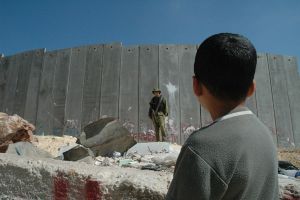
    A Palestinian boy and Israeli soldier in front of the Israeli West Bank Barrier. Picture taken by Justin McIntosh. Image via Wikimedia Commons.

    Research shows that the core issues in a number of seemingly intractable conflicts are indeed considered sacred values by sizable parts of the populations involved, who show counterintuitive reactions to proposed solutions leading to a failure to resolve the issue. For instance, one research study on the support of peace deals in the Israeli-Palestinian conflict presented a peace proposal that required giving up core demands (e.g., the right of return for Palestinians). It found that “sweetening” deals with material incentives can actually backfire and exacerbate the situation. When presented with the peace deals, only a minority of Palestinians showed increased support when deals were sweetened with material incentives such as compensation payments in the form of development aid for a Palestinian state resulting from the agreement. However, the vast majority of Palestinians (more than 4 in 5) considered their core demands as sacred values and reacted with moral outrage when the deal included material compensation. They also predicted increased violent resistance if such a deal was to be agreed to by their leaders. This “backfire effect” of material incentives has since been demonstrated by Israeli Settlers when asked about giving up settling in Gaza and the West Bank (land they believe was promised to them by God) and in other seemingly intractable conflicts such as the Iranian nuclear ambitions (right to development of nuclear energy), the Hindu-Muslim conflict in India (Kashmir), and militant Jihad in Indonesia (Sharia law).

    In addition, across a number of different contexts, sacred values have been shown to incite strong emotions and spur extreme actions in their defense. People are willing to fight for their sacred values well beyond the prospect of success, seemingly disregarding self-interest. The concern for sacred values seems also to be a driving factor for the droves of young people who have been joining Islamists in Syria and Iraq, exchanging the relative comfort of their home countries for a war zone risking life and limb. For instance, a study among potential Jihadis in Morocco – one of the countries with the highest levels of foreign fighters leaving for Syria and Iraq – showed that people who considered Sharia law as sacred, expressed heightened support for militant Jihad and willingness to fight and die for the implementation of Sharia in Morocco.

    Achieving Sustainable Security

    The reality that sacred values are not fungible with material values and that otherwise reasonable policies and interventions can badly backfire does not mean we need to completely refrain from dealing with sacred values altogether. Conflicts over sacred values are not unsolvable. In fact, the very study that first demonstrated the backfire effect of business-like approaches in the Israeli-Palestinian conflict also found a reason for hope: people who considered the core demands in the conflict as sacred did show willingness to compromise if the other side made some painful concession relating to their deeply held sacred values. In particular, Israelis and Palestinians showed more flexibility regarding their sacred values when the deal included mutual recognition; that is, Palestinians would recognize Israel as a Jewish state and Israelis would recognize the role of Israel in the Nakba (Arabic for “catastrophe,” a term that relates to the expulsion and flight of Palestinians from what now is Israel). However, identifying these kinds of resolutions requires knowledge of the sacred values of all involved parties and thoughtful consideration of them in devising solutions. Unfortunately, our knowledge of sacred values held by communities worldwide is scarce.

    Just like the global clusters of values shown by the recurring World Value Survey, we can expect sacred values to differ considerably across communities and cultures and to change over time. At the minimum, we need to systematically assess sacred values across the world (similar to the World Value Survey), so decision-makers can have access to this knowledge. But for security to be sustainable in the long run, we will also need to bring communities with different sacred values to the table when we seek solutions to the most pressing issues we face today. The world cannot afford a policy-making process with global impact that is dominated by a small exclusive group of countries (e.g., the permanent member states of the UN security council) without regard for the multitude of cultures and values in the world. Because of this ignorance about the core concerns of large parts of the global community, our policies and interventions may not only fail to successfully address the issues at hand, but may actually badly backfire – by accidentally violating sacred values of the people they impact – and lead to more unrest and instability.

    Hammad Sheikh is an ARTIS research fellow at the New School for Social Research and a visiting scholar at the Centre for the Resolution of Intractable Conflicts (Harris Manchester College, Oxford University). He received a Psycholgie Diplom from the Free University of Berlin and a PhD in social psychology from the New School for Social Research. Prior to his studies at the New School, he conducted research at the Max-Planck-Institute for Human Development in Berlin, the University College Dublin, and the Free University of Berlin. His research focuses on the psychology of intergroup conflict, and uniquely brings together field research (e.g., interviews with combatants in war zones) with traditional psychological methods like questionnaires and cognitive experiments. He is currently examining how commitments to groups and values can lead people to become willing to make extremely costly sacrifices for a cause, including fighting and dying for it.

  • Beyond Supply Risks: The Conflict Potential of Natural Resources

    Beyond Supply Risks: The Conflict Potential of Natural Resources

    Lukas Rüttinger and Moira Feil | The New Security Beat | August 2011

    Issue:Competition over resources

    While the public debate about resource conflicts focuses on the risk of supply disruptions for developed countries, the potentially more risky types of resource conflict are usually ignored. As part of a two-year research project on behalf of the German Federal Environment Agency, adelphi and the Wuppertal Institute for Climate, Energy, and Environment have analyzed the risks of international conflict linked to natural resources in a series of reports titled Beyond Supply Risks – The Conflict Potential of Natural Resources.

    Resource extraction, transportation, and processing can create considerable crises and increase the risk of conflicts in producing and transit countries. This phenomenon – widely referred to as the “resource curse” – impacts consuming countries only if it leads to shortages and higher prices. However, in the producing and transit countries it can have much wider destabilizing effects – from increasing corruption to large-scale violent conflict. In addition, the extraction, processing, and transportation of resources often create serious environmental risks. Overexploitation, pollution, and the degradation of ecosystems often directly affect the livelihoods of local communities, which can increase the potential for conflict.

    The eight reports that comprise Beyond Supply Risks explore plausible scenarios over the next two decades, focusing on four case studies: copper and cobalt in the Democratic Republic of Congo; theNabucco natural gas pipeline project across Southern Europe and Turkey; lithium in Bolivia; and rare earth minerals in China.

    Lithium in Bolivia

    Bolivia possesses the world’s largest known lithium deposits, a potentially important resource for the development of electric vehicles. While the development of Bolivia’s lithium reserves could provide major economic benefits for one of the poorest countries in Latin America, our analysis identifies two main potential risks of conflict.

    First, the environmental consequences of developing industrial-scale lithium production might have negative effects on the livelihoods of the local population. The local population in the lithium-rich department of Potosí has shown that it is capable of organizing itself effectively in defense of its interests, and past resource conflicts have turned violent, making a conflict-sensitive approach all the more important. 

    Second, the Bolivian economy is largely dependent on natural resources, and consequently is susceptible to price shocks. At present, this risk is primarily associated with natural gas. But lithium production, if developed, might be subject to the same dynamics, which could potentially destabilize the political system. 

    For consuming countries, these conflicts threaten supplies of lithium only if local protests or broader destabilization were produce bottlenecks in the supply chain.

    Rare Earths and China

    Like lithium, rare earths are likewise essential for some new technologies. China’s well publicized monopoly on 97 percent of the global production spurred a heated debate on the security of supply of strategic minerals. While our case study identifies supply risks for consuming countries, it also outlines some of the conflict risks China might face internally.

    First, local populations could protest against the severe ecological impact of rare earth mining and production. In addition, conflicts might arise if those who profit from economic development (entrepreneurs or regional power-holders) undermine the traditional centralized party structures and expand their own influence.

    International conflicts over access to Chinese rare earth resources, while they dominate the headlines, do not appear to be the dominant risk. Instead, internal political tensions could result in a weakened China that is not able to exploit its monopoly position for foreign policy gains. Or the government could enter into multilateral agreements and thus avoid a confrontational approach towards consumer nations.

    Ultimately, the actual rate of diffusion of environmental technologies and the development of new technologies remain the key factors in determining whether relative shortages in global supply of rare earths will in fact occur. If industrialized nations and emerging economies commit to the same technologies to attain climate policy goals, international resource governance and coordinated promotion of (environmental) technology will also play a role in preventing conflict and crisis over rare earths.

    The Way Forward

    The series concludes with five recommendations to mitigate the risks of future resource conflicts:

    • Introduce systematic policy impact assessments to understand how policy goals and strategies, especially in regard to climate and environmental policy, interact with resource conflict risks.
    • Increase the transparency of raw material markets and value creation chains to prevent extreme fluctuations in prices and improve information on markets, origins, and individual players.
    • Improve the coherence of raw material policy by linking raw material policies with security, environmental, and development policies.
    • Demand and promote corporate social responsibility along the whole value chain.
    • Increase environmental and social sustainability as a means of strengthening crisis and conflict prevention by systematically taking into account social and conflict-related aspects in the resource sector.

    However, none of these strategies alone would be capable of mitigating all the risks of future resource conflicts. But together they represent a methodology that, with intense coordination among the key players, could make a far-reaching contribution to reducing risk and preventing international conflict over the long term.

    The individual reports from the project can be downloaded here:

    • Conflict Risks (GERMAN only)
    • Supply and demand (GERMAN only)
    • Case Study: Nabucco Pipeline (GERMAN only)
    • Case Study: Congo
    • Case Study: Bolivia
    • Case Study: China
    • Conflict Resolution Strategies (GERMAN only)
    • Summary and Recommendations

    Lukas Ruettinger is a project manager for adelphi, mainly focusing on the fields of conflict analysis and peacebuilding as well as resources and governance. Moira Feil is a senior project manager for adelphi and has participated in more than 30 projects with various partners and clients on natural resource links to crises, conflicts and peacebuilding, and corporate responsibility.

    Sources: Government Accounting Office.

    Article source: The New Security Beat

    Image source: Olmovich

    Comments

    Great article, thank you again for writing.

    Post new comment


  • Sustainable Security

    Myanmar: peaceful transition to democracy or storm clouds on the horizon?

    Analysing a recent report by International Crisis Group, Anna Alissa Hitzemann argues that in order for the transition from authoritarian rule to democracy to be stable, and for peace and security to be sustainable, the government of Myanmar will have to face and resolve major challenges such as idespread militarization and the political and social marginalization (past and present) of ethnic and religious groups.

    Read Article →

    Sustainable Finance and Energy Security

    General volatility in financial markets – fuelled by irresponsible lending and trading practices, as well as evidence of market manipulation – have had an effect on oil prices. Although the specific effects of the finance sector on oil prices requires further investigation, we can already understand that a sustainable and secure future will require the development of a wider energy mix to meet rising demand. To this end, more sustainable financial systems must be developed to service the real needs of citizens

    Read Article →

    A top-down approach to sustainable security: the Arms Trade Treaty

    2012 has been hailed as a potential landmark year in the push for greater regulation of the global trade in conventional arms. After more than a decade of advocacy to this end, negotiations took place throughout July towards the world’s first Arms Trade Treaty (ATT), which is intended to establish the highest possible common international standards for the transfer of conventional weapons. However, although significant progress was made during the month of intense negotiations, the ATT is not yet open for signature. In this article, Zoë Pelter explores what role a potential treaty – if reopened for further negotiation – could play in a move towards sustainable security.

    Read Article →

  • Sustainable Security

    The European Union (EU) has recently emerged as an international peace meditator, but emerging challenges, including the potential exit of the UK from the EU, may prevent it from strengthening its ability to mediate conflicts.  

    Mediation is an instrument of international conflict management through which third parties seek to contribute to a peaceful resolution of (violent) conflicts. While states are the dominant and most frequent providers of mediation, international organizations are not far behind. Recently, the European Union (EU) has emerged as a relatively new player in the field, acting both as a mediator itself and as a member of collective coordination mechanisms to support peace processes such as UN Contact Groups and Groups of Friends. Current initiatives such as the EU-facilitated dialogue between Belgrade and Pristina have demonstrated the EU’s potential as peace mediator.

    However, external and internal crises may prevent the EU from further strengthening its institutional capacities and resources for mediation. Externally, challenges to European security such as the civil war in Syria, the threat posed by the so-called Islamic State and the armed conflict in Eastern Ukraine in the context of rising tensions between NATO and Russia could lead to a shift in the EU’s foreign and security policy back towards a more traditional, “hard security” approach that focuses on the development of military instruments and defence cooperation. Internally, the results of the UK referendum on 23 June 2016 and a potential exit of the UK would certainly open up a debate on the future of EU foreign and security policy without one of its most influential member states. The fact that the EU’s long-awaited Global Strategy on Foreign and Security Policy will be published a week or two after the UK referendum suggests that the EU is well prepared to take the potential effects of a ‘Leave’ vote on this policy field swiftly into account. However, it is nevertheless plausible to assume that a ‘Brexit’ would push the EU towards a decisive crossroads as regards to the future development of its foreign and security policy, also potentially affecting its engagement in the field of peace mediation.

     The EU’s track record in peace mediation

    rock-cohen

    Image by Rock Cohen via Flickr.

    Although the number of EU mediation efforts is still relatively marginal compared to UN mediation involvement, the EU has nevertheless established a considerable track record as mediator in the past ten to fifteen years. During High Representative (HR) Javier Solana’s terms of office, mediation became an increasingly important element of the EU’s foreign and security policy toolbox. For example, in August 2001 the EU together with the US managed to broker the Ohrid Framework Agreement settling the conflict between the Macedonian government and the Albanian minority in 2001. A few months later, the High Representative and his team became involved in a mediation process between Serbia and Montenegro, which led to the Belgrade Agreement on the formation of a state union in March 2002. While the Western Balkans certainly remained one of HR Solana’s key priorities, the EU also played an important role in the multilateral effort to mediate the political crisis in Ukraine in the context of the country’s ‘Orange Revolution’ in 2003 and was a key supporter of the efforts by the Finnish NGO Crisis Management Initiative (CMI) to broker a peace agreement to the conflict in Aceh, Indonesia in 2004-5.

    While the EU had already been very active in the field of mediation when Javier Solana served as High Representative (1999-2009), it sustained its mediation activities during HR Catherine Ashton’s term of office (2009-2014) and continues to be involved in mediation processes since HR Federica Mogherini has taken over. In particular, the EU-facilitated dialogue between Belgrade and Pristina stands out as the most prominent example of EU mediation. Less publicly recognized are the EU’s efforts as co-mediator in the Geneva International Discussions (GID) on Georgia’s Territorial Conflicts that were initiated in October 2008 following the EU Special Representative for the South Caucasus and Crisis in Georgia together with OSCE and UN Special Representatives/Envoys  serving as co-chair in the talks between representatives of Georgia, South Ossetia, Abkhazia, Russia and the US. Apart from its direct involvement as mediator, EU actors have been engaged in a number of mediation support initiatives, often been less visible to a wider public. Examples include the EEAS Mediation Support Team’s efforts to assist Myanmar democratic transition and the EU Delegation’s organizational and financial support to the National Dialogue Conference in Yemen.

    The EU’s institutional framework for mediation

    The increase in EU mediation activities has been accompanied by the evolution of a more strategic and systematic EU approach to mediation, particularly in terms of policy development and capacity-building. A key development in this regard has been the adoption of the Concept on Strengthening EU Mediation and Dialogue Capacities. In this document, the EU formulated the plan to systematically enhance its existing mediation capacities and to strengthen its overall ability to engage in non-military conflict prevention and crisis management missions. It also spells out different roles and guiding principles of EU mediation, thereby addressing the need for greater internal coherence and closer cooperation with its international partners. A major role in mediation is ascribed to the EU Special Representatives, whose mandates often include mediation-related activities and which are often the key EU actors on the ground in the conflict region.

    To implement the Concept and to promote a more systematic approach to mediation, the Mediation Support Team (MST) within the EEAS was established in 2011 and has become a key hub of mediation knowledge and expertise. However, the MST is not the only institutional innovation that followed-up on the 2009 Concept. The establishment of the European Parliament Mediation Support Service to assist mediation initiatives undertaken by Members of the European Parliament and the creation of the European Institute of Peace illustrate that mediation remains a vibrant field of EU foreign policy.

    Is the EU an effective mediator?

    To what extent the EU is effective in its mediation efforts is an issue which still has to be comprehensively addressed in peace and conflict studies research. The answer to the question of EU effectiveness also depends on how one conceptualizes effectiveness and success in international mediation. A brief comparison of the EU-facilitated dialogue between Kosovo and Serbia with the EU’s role as co-chair in the Geneva International Discussions on the conflicts over South Ossetia and Abkhazia may illustrate this. In terms of conflict settlement, the EU-facilitated dialogue between Kosovo and Serbia has been relatively effective, given that it has led to several agreements between the parties, including compromises on previously heavily contested issues such as Kosovo’s participation in regional fora, freedom of movement and trade, and the governance of Northern Kosovo. Most importantly, the EU brokered the First Agreement of Principles Governing the Normalization of Relations in April 2013 that has been widely applauded as ground-breaking and historic. Although the parties are lagging behind when it comes to the implementation of some agreements, the Belgrade-Pristina dialogue still is a success story which can, at least partly, be attributed to the EU’s leverage vis-à-vis with the conflict parties due to their aspirations for EU accession and its mediation strategy that draws on this leverage to move parties toward agreement through the use of positive incentives.

    In case of the Geneva International Discussions, the EUSR and his team have been considerably less effective in brokering agreements between the parties compared to the Kosovo-Serbia case. Apart from the establishment of Incident Prevention and Response Mechanisms to facilitate exchange of information on security incidents at the administrative boundary line (ABL) between South Ossetia/Abkhazia and Georgia proper, the discussions have not resulted in any tangible results yet. However, a focus on conflict settlement alone would not be sufficient to make a comprehensive judgement on the EU’s effectiveness as a co-mediator in this case. The fact that the EU has managed to keep the parties at the negotiation table and stay committed to the mediation process is in itself an achievement, given the fact that the space for compromise between the parties seems to be very limited. In addition to the EU’s effort to stabilize the security situation on the ground through the EU Monitoring Mission (EUMM), the EU’s leading role in the GID has contributed to a stabilization of a conflict which was prone to escalation not that many years ago.

    What can we learn from this comparison about EU effectiveness in mediation? There are at least two lessons that could be drawn here. First, the Kosovo-Serbia case illustrates the great potential of the EU as a mediator in contexts where EU memberships serves as a huge incentive for compromise solutions. Second, the EU’s involvement in the Geneva International Discussions demonstrates that in less favourable contexts – due to a lack of EU leverage or a limited willingness to compromise from the conflict parties – the EU may not be able to achieve more than preserving the status quo and committing the parties to confront one another peacefully in negotiations rather than through violent means. Thus, there may be certain limits to what the EU is able to achieve, but this does not mean automatically that the EU is ineffective. Rather, the main task for the EU will be to fully exploit the potential it has, given the specific circumstances and context of the conflict in which it decides to engage.

    If the EU is able to further strengthen its profile as an international mediator, it will depend on the political will of the Member States. Although EU mediators such as EU Special Representatives enjoy a certain degree of leeway, it is the EU member states who decide on their mandates and the EU’s approach towards a particular conflict more generally. Moreover, individual Member States may provide EU mediation efforts with additional weight. In the Kosovo-Serbia case, for example, the UK and Germany have played a key role in moving Belgrade to compromise in the dialogue with Pristina by making it a condition for further progress on its path towards EU accession. While Germany has been the key driver behind the efforts of putting more pressure on Serbia to move forward in the implementation of agreements reached in the context of the EU-facilitated dialogue at different levels, the UK has played a key role in backing this policy publicly and through diplomatic channels. Given that the UK has been a firm supporter of the EU’s further enlargement, one potential effect of a ‘Brexit’ could be that in cases where enlargement is the key ‘carrot’ the EU can offer to conflict parties, there might be more reluctance to draw on this leverage due to a change to the EU’s internal balance between enlargement supporters and skeptics among the Member States. Thus, although a potential ‘Brexit’ may not inevitably affect and change the EU’s approach to mediation, it may have a long-term negative impact on the EU’s ability to use both pressure and political/economic incentives to spur agreement between conflict parties.

    Julian Bergmann is a research fellow with the Chair of International Politics at the Johannes Gutenberg University Mainz, working on a PhD thesis on the EU’s effectiveness as a peace mediator in secessionist conflicts. Together with Arne Niemann, he is also conducting a research project entitled “A Peacemaker in the Making? The European Union as an Actor in International Mediation”, funded by the German Foundation for Peace Research. Recent publications include Mediating International Conflicts: the European Union as an Effective Peacemaker? (Journal of Common Market Studies 2015, with Arne Niemann) and Reputation, Credibility and Manipulative Negotiation Style – Attributes of Successful Peacemakers? (Zeitschrift für Friedens- und Konfliktforschung 2014; in German).

  • Competition over resources

    Competition over resources

    In the environmentally constrained but more populous world that can be expected over the course of this century, there will be greater scarcity of three key resources: food, water and energy. Demand for all three resources is already beyond that which can be sustained at current levels. Once population growth and the effects of climate change are factored in, it is clear that greater competition for such resources should be expected, both within and between countries, potentially leading in extreme cases to conflict.

    Water Conflict: Violence Erupts Along Ethiopia-Kenya Water-stressed Border

    Circle of Blue | Circle of Blue | July 2011

    Issue:Competition over resources

    In a small village along the waters of Lake Turkana in northwestern Kenya, two fishermen were murdered last month as they were putting out their nets.

    A cascade of retaliatory violence between the Kenyan Turkana and Ethiopian Daasanach (sometimes called Merille) has led to the deaths of at least four Ethiopians and 20 Kenyans ethnic groups, though some Kenyan government officials place the toll as high as 69, according to the Kenya-based Daily Nation. Though the fighting has been localized, it has put pressure on both nations to deal with strife between nomadic groups who are competing for diminishing resources.

    Image source: Aocrone

    Article source: Circle of Blue

    Read more »

    A New Road for Preventative Action

    East West Institute | East West Institute | June 2011

    Issues:Climate change, Competition over resources, Global militarisation, Marginalisation

    A gap continues to exist between the international community’s rhetoric about conflict prevention and its responsibility to protect people from severe human rights violations. The record of human misery caused by violent conflict is testimony to the chronic  lack of political will to respond collectively to newand emerging threats to peace. The ineffectiveness of many global efforts at preventive diplomacy is evidence that traditional diplomatic approaches,  including the use of force, simply may not work.

    Article source: East West Institute

    Image source: AfghanistanMatters

    Read more »

    Paul Rogers on Development, Climate Change, Conflict and Migration

    Action Aid | youtube | June 2011

    Issues:Climate change, Competition over resources, Marginalisation

    Paul Rogers, Professor of Peace Studies at Bradford University, and Oxford Research Group’s Global Security Consultant, talks to Action Aid about the issues that will dominate international security and world development over the coming decades.

    Source: youtube

    Read more »

    South Sudan: Enhancing Grassroots Peacebuilding

    Hope Chichaya | Insight on Conflict | June 2011

    Issues:Competition over resources, Marginalisation

    South Sudan’s referendum has come and gone. What lies ahead post-independence in terms of peace, development and security is however still to be determined. The 15 years of war left over one million people dead and more than three million displaced. Negotiations led to the Comprehensive Peace Agreement (CPA) in 2005, which included provision for a referendum on independence for the Southerners.  The referendum was held in January, with overwhelming support for succession. But serious challenges face South Sudan as it prepares for independence on 9 July 2011.

    Article source: Insight on Conflict

    Image source: United Nations Photo

    Read more »

    Petroleum and its Impact on Three Wars in Africa: Angola, Nigeria and Sudan

    Adrian Gonzalez | Peace Studies Journal | May 2011

    Issue:Competition over resources

    This article focuses on the complex role that oil has played in many conflicts on the African continent. It begins by highlighting oil’s influential role within war at a wider international level and provides a brief theoretical base from which to explore oil’s role in the African continent. Then, the article provides evidence of petroleum’s impact on violent conflicts in three African countries, namely Angola, Sudan and Nigeria, in order to highlight oil’s multi-faceted role on war in Africa.

    Article source: Peace Studies Journal

    Image source: Maks Karochkin

    Read more »

    Wikileaks reveals Arctic could be the new cold war

    Greenpeace UK | Greenpeace UK | May 2011

    Issues:Climate change, Competition over resources, Global militarisation

    New Wikileaks releases today have shown the Arctic oil rush is not just a threat to the environment and our climate, but also to peace. The documents show how deadly serious the scramble for Arctic resources has become. And the terrible irony of it is that instead of seeing the melting of the Arctic ice cap as a spur to action on climate change, the leaders of the Arctic nations are instead investing in military hardware to fight for the oil beneath it. They’re preparing to fight to extract the very fossil fuels that caused the melting in the first place.

    Article source: Greenpeace UK

    Image source: U.S. Geological Survey

    Read more »

  • Sustainable Security

    by Elizabeth Minor, Researcher at Article 36

    RC_long_logo_small_4webThis article is part of the Remote Control Warfare series, a collaboration with Remote Control, a project of the Network for Social Change hosted by Oxford Research Group.

    Later this month, governments will meet in Geneva to discuss lethal autonomous weapons systems. Previous talks – and growing pressure from civil society –  have not yet galvanised governments into action. Meanwhile the development of these so-called “killer robots” is already being considered in military roadmaps. Their prohibition is therefore an increasingly urgent task.

    From 13-17 April, governments will meet at the United Nations in Geneva to discuss autonomous weapons – also referred to as killer robots. The week-long meeting will be the second round of multilateral expert discussions on “lethal autonomous weapons systems” to take place within the framework of the United Nations’ Convention on Certain Conventional Weapons (CCW).

    Urgent and coordinated international action is needed to prevent the development and use of fully autonomous weapons systems. Such systems would fundamentally challenge the relationship between human beings and the application of violent force, whether in armed conflict or in domestic law enforcement. Once activated and their mission defined, these systems would be able to select targets and carry out attacks on people or objects, without meaningful human control. As states with high-tech militaries such as China, Israel, Russia, South Korea, the UK, and the US continue to invest in aspects of increased autonomy in weapons systems technologies, consideration of this issue is increasingly urgent. Campaigners are calling on states to tackle this issue by developing a treaty that pre-emptively bans these weapons systems before they are put into operation, by which time it may be too late.

    The issue

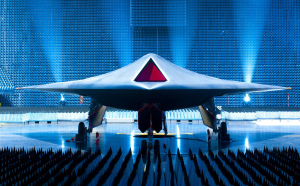
    Taranis stealth UAV

    The UK’s Taranis stealth UAV. The Taranis exemplifies the move toward increased autonomy as it aims to strike distant targets “even on other continents”, although humans are currently expected to remain in the loop. Source: Flickr | QinetiQ

    Weapons systems that do not permit the exercise of meaningful human control over individual attacks should be prohibited, due to the insurmountable ethical, humanitarian and legal concerns they raise. The governance of the use of force and the protection of individuals in conflict require control over the use of weapons and accountability and responsibility for their consequences. This principle, rather than any particular piece of technology or format of weapons delivery, is at the heart of the issue of autonomous weapons systems. Some have argued that fully autonomous weapons systems might reduce the risk of conflict or be able to better protect civilians. However, the focus must remain on these systems’ overall implications for the conduct of violence, rather than on a small range of hypothetical possibilities.

    Tasks can be given to hardware and software systems. Responsibility for violence cannot. The process of rendering the world ‘machine-sensible’ reduces people to objects. This is an affront to human dignity. Computerised target-object matching such as shape detection, thermal imaging and radiation detection may enable the identification of objects such as military vehicles, though in complex and civilian-populated environments, not necessarily with accuracy. However, assessment of information about these objects and the surrounding environment, including the presence of protected persons such as civilians or wounded combatants, is also essential to uphold the principles that govern the launching of individual attacks under International Humanitarian Law. These are not quantitative rules, but considerations that require deliberative moral reasoning and contextual decision-making. As such, they could not be translated into software code. Based on the principle of humanity, they implicitly require human judgement and control over the process of decision-making in individual attacks.

    Other concerns about the development of fully autonomous weapons systems include the dangers of proliferation among state and non-state actors, hacking, and the use of these systems in law enforcement or other situations outside of warfare.

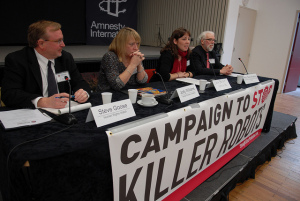
    Campaign to Stop Killer Robots campaign launch in April 2013

    Campaign to Stop Killer Robots first NGO conference in April 2013

    A preemptive ban as a solution

    Whilst the Campaign to Stop Killer Robots is calling on states to move with urgency towards negotiations on a treaty to outlaw fully autonomous weapons systems, previous talks in Geneva have not yet galvanised governments into action.

    Some states have suggested that existing law is sufficient to tackle this issue. Existing international law, which was developed prior to any consideration of autonomous weapons systems, implicitly assumes that the application of force is governed by humans. This body of international law is now inadequate as a reliable barrier to the development and use of fully autonomous weapons systems. A pre-emptive ban through an international instrument would not only halt any progress on these systems amongst states parties, but would help to stigmatise development by others.

    Some states have argued that this issue can be dealt with by conducting individual reviews of their weapons technologies to ensure they continue to uphold current international law. States are already obligated to do this however, and whilst it is important, it will not be sufficient in preventing the development of these systems internationally. A clear legal standard and norm needs to be set, and this is best done through new international treaty law.

    A ban based around prohibiting systems that operate without meaningful human control over individual attacks should be the starting point in international discussions among states, and so the elaboration and agreement of the elements of this principle are required as a next step.

    International response so far

    To date, autonomous weapons have been raised at the Human Rights Council in 2013 and considered by governments in dedicated discussions held at expert meetings of the CCW in 2014. The UN Special Rapporteur on extrajudicial, summary or arbitrary executions, Christof Heyns, called in 2013 for national moratoria to be imposed by all states on the “testing, production, assembly, transfer, acquisition, deployment and use” of these systems, until an internationally agreed framework on their future has been established. The CCW could be a possible venue for developing this, having previously produced a pre-emptive ban on blinding laser weapons. One should note, though, that previous attempts within the CCW to deliver the responses needed to certain weapons systems have occasionally failed, often hampered by operating under the consensus rule and a tendency to defer to military considerations rather than focus on humanitarian or ethical imperatives.

    Promisingly, the need to ensure meaningful human control has already been a prominent feature of the debate at the CCW, with several states recognising the importance of this approach. In upcoming discussions, governments should elaborate their policies for maintaining meaningful human control over existing weapons systems in individual attacks. Such an exchange would advance consideration of how human control can be ensured over future systems. This would in turn help clarify what practices and potential systems must be prohibited and the standards that states must demonstrate that they are meeting in their conduct. Elements to consider could include the need for adequate information to be available to commanders using any weapons system, positive action from a human being in launching individual attacks, and ensuring accountability.

    Few states have elaborated any policy on human control over weapons systems. Current US policy on autonomous weapons systems stresses that there should be “appropriate levels of human judgement over the use of force”, but does not define what these should be. The policy leaves the door open for the development of fully autonomous weapons systems, whilst recognising the harm they could cause to civilians. The UK government has stated that it has no intention to develop fully autonomous weapons and that “human control” over any weapons system must be ensured. However, it has not given sufficient elaboration of what exactly this means and how it will be ensured.

    States may see different types of operating, supervising or overseeing systems to constitute acceptable control. Agreement between states on the concept of meaningful human control is therefore an important element of international progress on the issue of fully autonomous weapons systems.

    Work by states on an international framework should be supported by input from civil society and draw on the views of a range of experts. Ultimately, negotiation processes will determine the definitions of key concepts. If discussions do not advance towards a binding framework within the CCW, a freestanding treaty process may be required, as was the case previously in the processes to outlaw both anti-personnel landmines and cluster munitions.

    The upcoming meeting of experts at the CCW in April is unlikely to result in particular concrete actions due to the nature and format of the meeting. It could pave the way for a decision in November that states continue to discuss this issue in 2016 and put it on the agenda for the CCW’s 2016 Review Conference. At that point it could be flagged as a subject on which States Parties should develop a new binding protocol. No clear group to lead this process has yet emerged. So far Cuba, Ecuador, Egypt, the Holy See, and Pakistan have endorsed a pre-emptive ban on autonomous weapons systems. France secured consensus for the CCW mandate in 2013 that established its work on lethal autonomous weapons systems, and Germany will be chairing the upcoming meeting, with the aim of seeking consensus on further consideration of the subject. However, the development of fully autonomous weapons systems is already being considered in military roadmaps. This makes their prohibition an urgent task.

    Elizabeth Minor (@elizabethminor3) is a Researcher at Article 36, and was previously Senior Research Officer at Every Casualty, and a Researcher for Iraq Body Count (IBC). 

    Featured image: The UK’s Taranis stealth UAV. The Taranis exemplifies the move toward increased autonomy as it aims to strike distant targets “even on other continents”, although humans are currently expected to remain in the loop. Source: Flickr | QinetiQ