Blog

  • US Drone Strikes in Pakistan: ineffective and illegitimate

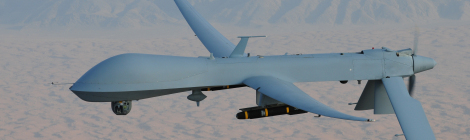
    by Shazad Ali and Chris AbbottMQ1 Predator Drone
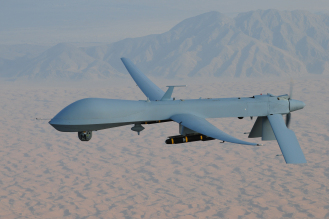
    Strikes by unmanned combat air vehicles, or armed drones, have become the tactic of choice in US counterterrorism efforts in Yemen, Somalia and Pakistan. But lack of transparency, dubious effectiveness, civilian casualties and negative consequences for US national security means that Washington needs to re-evaluate its approach.

    It is the controversy over drone strikes in northwest Pakistan that has bought the issue to public attention. Leaving aside the wider issue of the extrajudicial nature of these killings and the questions over the legality of repeatedly breaching Pakistani airspace, it is the level of civilian casualties that is prompting the most concern.

    In a 23 May 2013 national security speech, President Barack Obama asserted that only terrorists are targeted by drones and that ‘there must be near-certainty that no civilians will be killed or injured’ before any strike is taken. However, independent reports contradict his claims.

    From 2004 to date, there have been 376 known US drone strikes in Pakistan. According to the UK-based Bureau of Investigative Journalism (BIJ), 407 to 926 civilians, including 168 to 200 children, have been killed in these strikes. According to a leaked Pakistani government report cited by the BIJ, at least 147 of 746 people killed in the 75 drone strikes in Pakistan between 2006 and 2009 were civilians. Of those killed, about 94 were children.

    Controversial tactics

    The high level of civilian casualties is attributable to two key elements of the US drone strike programme: double-tap strikes and signature strikes.

    Double-tap strikes use follow up strikes to deliberately target rescuers and first responders who are coming to the aid of those injured in an initial strike. The UN special rapporteur on extrajudicial executions, Christof Heyns, and the UN special rapporteur on counterterrorism and human rights, Ben Emmerson, have described the use of double-tap strikes as a possible war crime. Ironically, terrorists in Pakistan are now using their own version of the double-tap strike to target law enforcement personnel in cities such as Karachi: an initial low-intensity blast is used to draw in the emergency services, who are then targeted in a second much larger explosion.

    Signature strikes target individuals based on predetermined ‘signatures’ of behaviour that US intelligence links to militant activity. In other words, people are targeted merely on the basis of their behaviour patterns. This is different to personality strikes, which use intelligence to target specific terror suspects. In a June 2013 report that cited classified documents, NBC News revealed that one in four people killed in drone strikes in Pakistan between 3 September 2010 and 30 October 2011 were classified as ‘other militants’ by CIA. This means the CIA were unable to determine the affiliation, if any, of those killed.

    Intelligence failures

    However, even those strikes directed by intelligence are fallible. Such strikes rely on a mixture of signals intelligence and human intelligence from assets on the ground in Pakistan. The local CIA operatives are notoriously unreliable sources of intelligence.

    The doubts over the accuracy of US intelligence have some credence, as there are several cases in which a militant was reported killed in a drone strike only to be declared dead again following a later strike.

    For example, the alleged al-Qaeda leader in Pakistan, Ilyas Kashmiri, was reportedly killed in a drone strike in January 2009 and then again in September 2009, though he gave an interview to a Pakistani journalist the next month. Civilians are known to have been harmed in these unsuccessful attacks. In the January attack, 14-year-old Fahim Quershi lost an eye and suffered multiple injuries. In the September 2009 attack, 15-year-old Sadaullah Wazir lost his both legs and an eye. Three of his relatives died in the same attack. Kashmiri was again declared dead in July 2011, which is also contested.

    The United States has indeed managed to kill many militants in drone strikes in Pakistan, but these have been mostly low-level targets. According to a September 2012 study by Stanford Law School and New York University’s School of Law, only 2% of militant casualties in drone strikes between 2004 and 2012 were high-value targets.

    Justification
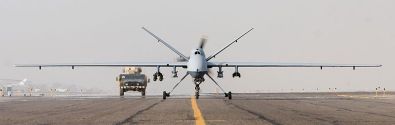
    MQ9 Reaper (used in Pakistan)There is an important question over congressional oversight of US drone strikes. The Obama administration has refused to provide legal justification of drone strikes to the Senate Select Committee on Intelligence despite several requests, according to committee chair Senator Dianne Feinstein. This has created an accountability vacuum and is a significant hurdle in congressional debate on the use of drones.

    Following the 9/11 attacks, the US Congress gave the president sweeping powers through the Authorisation to Use Military Force (AUMF). It allows the president to:

    ‘use all necessary and appropriate force against those nations, organisations, or persons he determines planned, authorised, committed, or aided the terrorist attacks that occurred on September 11, 2001, or harboured such organisations or persons.’

    In that context, drone strikes against al-Qaeda and the Afghan Taliban are authorised under US law. But it is hard to justify under the AUMF attacks in Pakistan against organisations not involved in 9/11, such as the Tehrik-i-Taliban Pakistan and the Haqqani network – notwithstanding the transnational nature of and blurred boundaries between some of these groups.

    It is also difficult to justify such attacks under the right to self-defence, which cannot be applied prospectively without limit. Nor does it warrant the repeated violations of Pakistan’s airspace, as Pakistan has not been shown to be responsible for any attacks against US interests. According to a leaked US diplomatic cable, Pakistan had, at one point, consented to drone strikes but it is not known whether Washington continues the strikes with Islamabad’s tacit agreement. Publicly, the Pakistani government has denounced the drone strikes, saying they are illegal and a violation of their country’s sovereignty. In September 2013, Pakistani Prime Minister Nawaz Sharif told the UN General Assembly that US drone strikes violated his country’s borders and were detrimental to Pakistani counterterrorism efforts. But, in reality, Pakistan has at times been deliberately ambiguous on the issue and the complex nature of civil-military relations in Pakistan and the known links between the ISI and various militant networks make things more complicated.

    Unintended consequences

    Whatever the legal status of the US drone strike programme in Pakistan, it is clear that it risks several unintended consequences. The United States might have made a prudent military choice in using armed drones rather the special forces for counterterrorism strikes in Pakistan. But the use of drones has backfired in a strategic sense and resulted in serious ‘blowback’.

    Chief among these is the radicalising impact US drone strikes are having in Pakistan. Repeated strikes are stoking anti-American sentiments and are a propaganda and recruitment gift to the extremist groups. Pakistan is being destabilised, as the strikes are undermining chances of peace talks between the state and Taliban groups. There are now increasing numbers of terrorist attacks against the Pakistani government by Taliban militants who believe Islamabad has failed to maintain the country’s sovereignty. Furthermore, the United States may be risking further attacks in its own backyard along the lines of the failed 2010 Times Square attack by Pakistani-born US citizen Faisal Shahzad.

    Drone strikes in Pakistan may also be complicating the US withdrawal from Afghanistan, as they have resulted in attacks on US forces. The 2009 Camp Chapman attack is a case in point. The al-Qaeda and Tehrik-i-Taliban Pakistan suicide attack used a double agent to target CIA personnel and contractors inside Forward Operating Base Chapman who were responsible for providing intelligence for drone strikes against targets in Pakistan. The attack on the base in Khost province was in revenge for the deaths of three al-Qaeda and Pakistani Taliban leaders who were killed in US drone strikes.

    The use of drones by the US has increased the danger of proliferation. Seventy six countries are known to have unmanned aerial vehicles, with approximately 20 countries possessing armed drones (though estimates vary widely). The United States has lowered the threshold for the use of lethal force and pushed back the limits of counterterrorism efforts to include the targeted killing of its enemies abroad. In doing so, they have set a dangerous precedent – one that could easily be followed by other countries. In a September 2013 study, Open Briefing identified 29 different models of armed drone in use with China, India, Iran, Israel, Russia and Turkey – each of which have external security concerns that could justify drones strikes under doctrine modelled on the US approach.

    Time for change

    The use of double-tap and signature strikes must be ended, as they result in unjustifiably high numbers of civilian casualties. They are the most controversial elements within the already controversial US drone strike. Beyond that, it is time to begin winding in Washington’s unchecked ability to target individuals around the world without due process. Central to this is the revocation of the post-9/11 Authorisation to Use Military Force. For 12 years this has allowed the spread of US military and intelligence operations around the world without accountability and transparency. These operations are increasingly straying from targeting those who ‘planned, authorised, committed, or aided the terrorist attacks that occurred on September 11, 2001’ to simply targeting suspected militants, regardless of their links to al-Qaeda or the Taliban.

    Washington can address the democratic deficit inherent in its drone programme by moving responsibility for it from the CIA to the usual chain of command within the US Department of Defense. There must also be proper congressional and judicial oversight of the drone programme, with monitoring by Congress’s intelligence and armed services select committees, in order to remove absolute executive power for the targeted killings.

    For its part, Pakistan can retract any tacit approval of US drone strikes and be unequivocal in its opposition to further strikes. This will allow the United Nations and key US allies to use whatever influence they have to press the United States to enact the much needed changes to its drone programme.

    Shazad Ali is a contributing analyst at Open Briefing. He is a journalist in Pakistan and pursuing a PhD in European Studies at the University of Karachi. He has been the assistant editor of the Vienna-based journal Perspectives on Terrorism and now serves as a member of its editorial board.

    Chris Abbott is the founder and executive director of Open Briefing. He is an Honorary Visiting Research Fellow in the School of Social and International Studies at the University of Bradford and the former deputy director of Oxford Research Group. http://www.openbriefing.org

    Featured image: MQ-1 Predator on patrol  Source: Air Force Reserve Command

    Image: An MQ-9 Reaper takes off on a mission from Afghanistan. Source: Wikimedia
  • Introducing Jobbik: Hungary’s Second Largest Party

    Jobbik, described as a radical right-wing populist party, has enjoyed considerable success in Hungary’s elections. What accounts for the party’s popularity among certain segments of the Hungarian electorate?

    Prime Minister Viktor Orbán and his FIDESZ party have consolidated their status as preponderant political actors in Hungary. Further along the right angle of the political spectrum, Jobbik (Movement for a Better Hungary) currently stands as the second most popular party in the country. This short piece sets in context the reasons behind Jobbik’s appeal to certain segments of the Hungarian electorate, including an overview of the party’s formation trajectory and a brief assessment of Jobbik’s prospects for the future.

    Jobbik’s political origins and intra-party structure

    Jobbik was made up by a variety of grass-roots nationalist groupings. At its early stage (2003-2004), the party had brought under its auspices initiatives as diverse as an aggregate of nationalist student groupings (the Jobboldali Ifjúsági Közösség, Right-Wing Students Association) and a nucleus of political activists that later evolved, at least partially, into the (unarmed) self-styled militia of the Magyar Gárda (‘Hungarian Guard’). From an instrumental perspective, Jobbik has been highly keen on political activism and the intensive mobilization of its popular bases of support. In particular, the party has been harshly criticized for its links with the Magyar Gárda and the ensuing implications for a more militant (occasionally violent) engagement into politics. By contrast to other far right parties across the ‘new’ Europe and the preponderant status of their leaders, the chairman Gábor Vona does not enjoy a status comparable to that of, say, Marian Kotleba in the ‘Our Slovakia’ party or Volen Siderov in Bulgaria’s Ataka. This more ‘horizontal’ and devolved arrangement has enabled Jobbik to approach a variety of target-groups within the frame of its political campaign.

    Reaching out to the masses: Capitalizing on corruption and Hungary’s economic crisis

    jobbik-leigh-phillips

    Image by Leigh Phillips/Flickr.

    The period between 2006 and 2008 saw the delegitimization of the Socialists (MSZP), on charges of corruption. This resulted into MSZP’s rapid decline of popularity and the decisive restructuring of Hungary’s party landscape. For a start, Jobbik demanded that political crime is introduced to the Hungarian penal code as a separate legal category. In light of these developments and the subsequent outbreak of the economic crisis (2008), the absence of potent political forces on the left of the MSZP facilitated Jobbik’s campaign of artificial anti-capitalism. The party embedded the concept of so-called ‘Eco-social National Economics’ into its political programme (2010). In this platform, Jobbik has called for the renegotiation of Hungary’s foreign debt, the establishment of a banking system independent from the interference of multinational corporations, the state-ownership of sectors such as health and education and the long-term renationalization of various others. This campaign of artificial anti-capitalism enhanced Jobbik’s appeal to these segments of the society mostly imperiled by Hungary’s economic stagnation. Jobbik’s more concrete emphasis on social issues and adoption of an, ostensibly, leftist platform on the economy signified the major departure from MIÉP (Hungarian Justice and Life Party) and older initiatives of the Hungarian far right.

    Appealing to the youth

    Jobbik’s extensive involvement in social media such as Facebook serves as a rough indication of the party’s popularity among the Hungarian youth. Its leadership has been successful in orchestrating a fashionable youth sub-culture around the party with plenty of happenings and other infrastructure (e.g. nationalist rock-bands such as Hungarica and Kárpátia and Internet portals such as barikad.hu and kuruc.info, etc.). In addition to economic and social welfare anxieties, Jobbik has managed to take advantage of a rather common grievance among the younger generation in Hungary and throughout Central and Eastern Europe. This is, namely, the allegation that mainstream parties are either built upon nepotism or dominated by the older generation, leaving little space for the political representation of young people. By contrast, Jobbik’s links to the Magyar Gárda, and its political activism as a whole, have refrained pensioners and other elderly voters from opting for the party.

    Centering on unresolved problems

    Jobbik has also capitalized on social grievances and unresolved problems that do not necessarily interweave with corruption and the economic crisis. In its political programme (2010), the party dedicates an entire section to ‘Gypsy Issues’. In its own words ‘. . . the coexistence of Magyar and Gypsy is one of the severest problems facing Hungarian society . . . a potential time-bomb’. ‘Gypsy crime’ is introduced as a separate category and the programme acknowledges that ‘. . . certain criminological phenomena are predominantly and overwhelmingly associated with this minority’. Further along the text, the party equates ‘Gypsy integration’ with ‘assimilation into society-at-large’ through ‘work and not welfare’.

    Words have matched with deeds. Between 2007 and 2011, the Magyar Gárda performed a string of ‘patrolling operations’ in areas seen as threatened by ‘Gypsy crime’ and other activities such as blood-donation and charity work. These activities took place in impoverished localities across the Hungarian northeast (e.g. Miskolc and Debrecen). This is one of the least developed parts of the country, with a long record of friction between the local population and the Roma minority. In October 2011, the successful mobilization of the Magyar Gárda in the northeastern district of Gyöngyöspata resulted in the departure of the Roma community, the resignation of the local mayor and the Jobbik candidate’s victory in the elections that followed. The utilization of the Magyar Gárda undoubtedly brandished Jobbik’s image to these rural residents that consider themselves excluded by the remote, or even absent, state. Most importantly, Jobbik has managed to establish its electoral stronghold in the northeast.

    An apparent shift?

    The last few years have witnessed the more decisive turn of the ruling FIDESZ towards the right. In particular, Viktor Orbán has displayed a tough stance in regards to the refugee crisis and staunchly objected to the soft borders principle within the EU. Back in autumn 2015, the Hungarian Premier rushed to justify the erection of a razor-wire fence along the Serbian-Hungarian border on the basis that ‘European and Christian values must be safeguarded…Hungary must be free to defend its borders’. More recently, on October 2nd, 2016, Orbán called an (unsuccessful) referendum on the EU refugee quotas for Hungary.

    Until lately, the ruling party’s gradual shift towards the right also facilitated Jobbik’s political engagement. Nevertheless, now this seems to be evolving into a boomerang for Vona and his associates. Although it remains Hungary’s second most popular party in its own right, some of the latest opinion polls demonstrate that Orbán’s capitalization on public anxieties over the refugee crisis has cost a non-negligible percentage of voters to Jobbik. In this light, the party assumed a neutral stance during the latest referendum. Although he also objects to the refugee quotas arrangement, Vona refrained from granting his assent to what he dubbed ‘Viktor Orbán’s personal project’.

    Consequently, the last months have witnessed an apparent shift on the part of Jobbik. In its programmatic statements, Jobbik’s leadership declares the party ‘non-Islamophobic’. Gábor Vona, Márton Gyöngyösi, and other high-rank affiliates have been networking extensively in countries such as Turkey and Kazakhstan. Moreover, Jobbik has been quick to strike a ’pro-Palestine’ outlook and castigate Israel not solely for its aggression against the Palestinians but also over the, allegedly, belligerent foreign policy towards other states in the Middle East (namely Iran). Nevertheless, the new realities of the refugee crisis and the wave of sexual assaults in Cologne on New Year’s Eve 2016, have demonstrated that the party can be situationally-adaptive in its outlooks on the Muslim world. Endorsing a body politics approach, Jobbik has recently become highly vocal over the necessity to safeguard Europe’s Christian pillars of identity and protect Hungarian and European women from the ‘rapacious Islamic invaders’.

    Furthermore, the party has intensified its charges of corruption against FIDESZ and ostensibly watered down its rhetoric on ‘Gypsy crime’. The extent to which this new strategy may facilitate Jobbik to reclaim its lost voters from FIDESZ remains to be seen within the immediate future. Lastly, Gábor Vona’s decision to purge the more extremist elements from the party (April 2016) was interpreted by various commentators, in Hungary and abroad, as an early indication of Jobbik’s firmer shift towards the mainstream of Hungarian politics. Nevertheless, it is still rather precarious to jump to concrete conclusions; let alone presume that Jobbik might drastically antagonize FIDESZ’s predominance in the country’s political scene in the near future.

    Vassilis Petsinis is a visiting researcher at Tartu University (Johan Skytte Institute of Political Studies). His specialisation is European politics and ethnopolitics with a regional focus on central and eastern Europe (including the Baltic States). He holds a PhD from the University of Birmingham. His personal profile on academia.edu can be accessed here.

  • Self-Defense? Mexico Gambles on Vigilante Security

    Militarised Public Security in Latin America in Venezuela

    Across Latin America, governments are sending their militaries into the streets to act as de facto police forces in the face of disproportionally high crime and violence rates. This trend has been going on for several years, but has accelerated in 2013. With the move to deploy over 40,000 troops for citizen security in Venezuela, President Nicolás Maduro joined a growing list of leaders throughout the region that have relied on their militaries to carry out police duties. In the first of our two-part discussion ‘Countering Militarisation of Public Security in Latin America’, Sarah Kinosian discusses the conditions that are causing the trend to thrive.

    Read Article →

  • Climate Change and Security Threats: Time to Call a Spade a Spade?

  • How ISIS Survives Defeat: Propaganda and Decisive Minorities

    Despite suffering major losses of territory and personnel, Islamic State (ISIS) has continued to produce propaganda. Understanding the strategic role of propaganda in the group’s campaign strategy offers telling insights into the ISIS phenomenon and what it may do next.

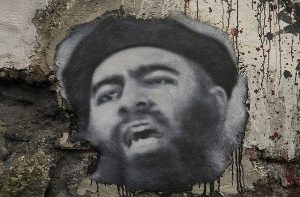
    As Islamic State (ISIS) continues to hemorrhage personnel, resources and territory across Syria and Iraq – the heartlands of its so-called ‘Caliphate’ – the world is witnessing another bloody chapter in the group’s ‘boom-bust’ history. ISIS’s propaganda machine has not been immune from this destruction with recent airstrikes killing two crucial figures: the charismatic spokesman Abu Muhammad Al-Adnani on 30 August and the self-declared Minister of Information Wa’il Al-Fayad on 7 September. Nevertheless, ISIS has continued to churn out messaging designed to lure friends and foes alike into exaggerating its waning strengths while deflecting from its mounting losses.

    Just this month, ISIS released a new online magazine called Rumiyah (Rome) – a mix of rehashed content from its Arabic newsletter Al-Naba and segments drawn from Dabiq such as ‘Among the believers are men’ which eulogizes Western foreign fighters. Meanwhile, ISIS videos continue to capture global media attention. In the last fortnight, videos commemorating Eid Al-Adha were released by several ISIS wilayats, including Wilayat al-Khayr’s ‘The making of illusion’ showing captives being slaughtered like animals, while another video (‘But if you return, we will return’) featured child executioners. Whether ISIS’s propaganda efforts are ramping up or down in response to its losses, the central role of propaganda in ISIS’s politico-military campaign strategy will remain unchanged even as messaging themes shift with its fortunes. Understanding the strategic role of propaganda in ISIS’s campaign strategy and how messaging trends reflect this relationship offers telling insights into the ISIS phenomenon and what it may do next.

    ISIS’s war of meaning and control

    thierry-ehrman

    Image by thierry ehrman via Flickr.

    ISIS are the great strategic plagiarists of modern asymmetric warfare. As Dr Craig Whiteside’s excellent analysis highlights (also here), whatever is unique about the ISIS phenomenon is significantly outweighed by what it has cannibalized (knowingly or unknowingly) from insurgency/revolutionary war doctrinaires like Mao Tse-Tung, Che Guevara or Abu Musab Al-Suri. Like other modern insurgencies, ISIS’s war is characterized by two interrelated contests: a ‘battle of control’ between opposing politico-military apparatuses (e.g. ISIS versus the Iraqi government) and a ‘battle of meaning’ for the ‘hearts and minds’ of local, regional and even transnational populations. ISIS fights the former battle with a spectrum of politico-military actions that results in the group looking remarkably state-like in its shrinking areas of dominance (i.e. bureaucratized governance, conventional military capabilities), more like a guerrilla warfare movement in contested areas (i.e. informal governance functions, asymmetric warfare) and a terrorist network on the fringes of its regional and global reach (i.e. terrorist violence, no governance initiatives). The ‘battle of meaning’ occurs largely in the ‘information theatre’ and it is a contest for not only the dominant narrative (i.e. how the conflict is described), but to shape the perceptions and polarize the support of audiences (i.e. how the conflict is understood and judged).

    While it may be popular to point to ISIS’s use of social media and flashy production to explain the allure of its propaganda, far more important is how ISIS uses a diversity of messages to leverage powerful psychosocial forces and strategic factors that are pertinent to its audiences. Indeed, ISIS propaganda is characterized by two broad categories of messaging: rational-choice appeals (highlighting how ISIS are pragmatically addressing supporter needs via politico-military actions) and identity-choice appeals (interplaying identity, solution and crisis to influence how the conflict and its actors are perceived). Of course, ISIS’s battles of meaning and control are deeply interrelated and strategic success is often reliant upon how seamlessly both can be intertwined. As Robert Taber argues in War of the Flea: ‘The guerrilla fighter is primarily a propagandist, an agitator, a disseminator of the revolutionary idea, who uses the struggle itself – the actual physical conflict – as an instrument of agitation.’

    Success in modern small wars is largely dependent on winning popular ‘support’. But support operates on a spectrum where, at one end, there is ‘behavioral’ support (compliance with a group’s politico-military system) while, on the other, is a deeper ‘attitudinal’ or ‘perceptual’ support (adherence to a group’s agenda). Research has shown that armed groups are not necessarily strongest where support is highest but rather support tends to be highest in places where armed groups are strongest. This points to a dominance of ‘behavioral’ support under such circumstances. Having conducted dozens of field interviews as part of my research with civilians, migrants and activists, as well as former and current fighters, from Syria, Iraq, Afghanistan and Chechnya, almost all described the civilian population as largely apolitical whose ‘support’ tended to follow whoever was in control. But another trend emerged: interviewees regularly cited the influence of what could be described as ‘decisive minorities’ who had a disproportionate influence – perhaps as a consequence of their social status, access to resources, social connectedness or zeal for the ‘cause’ (i.e. deep attitudinal/perceptual support) – on how the broader population assigned their support.

    This dynamic was particularly prominent amongst those who had lived in or near ISIS-controlled territories. ISIS wanted the behavioral support (acquiescence) of local populations but knew that it would be important to ‘win’  and mobilise their ‘decisive minorities’ while killing those ‘decisive minorities’ that were committed to its opponents (ISIS often describes the latter as ‘harvesting’). ISIS messages to potential foreign fighters and ‘lone wolf’ terrorists globally fundamentally appeals to ‘decisive minorities’. After all, ISIS are broadly despised by Muslim populations, as evidenced by polling, and so their propaganda is often designed to drive wedges between not just friends and enemies but tacit and active supporters. While every violent non-state political group appeals to ‘decisive minorities’ to varying degrees, it seems particularly important in ISIS strategies. Trends in ISIS propaganda offer useful insights into these dynamics.

    The ISIS sirens

    While ISIS messaging regularly draws upon a diverse range of themes and issues, what is given priority and greater emphasis will inevitably depend on strategic calculations and circumstances. In the year after ISIS captured Mosul in mid-2014, certain themes were more pronounced than others in its propaganda. For example, ISIS tended to frame its politico-military successes as manifestations of divine-approval and their enemies’ defeats as proof of divine punishment. A central feature of this messaging was ISIS’s regular promotion of how it was pragmatically addressing the needs of populations under its control thanks to its politico-military prowess and the ineptitude of its opponents: “In the midst of a raging war with multiple fronts and numerous enemies, life goes on in the Islamic State. The soldiers of Allah do not liberate a village, town or city, only to abandon its residents and ignore their needs.” Particularly prominent during this period were communiques showing the variety of ISIS’s bureaucratized governance initiatives and the successes of its hybrid military operations. To local audiences, ISIS promised security, stability and livelihoods. To regional and transnational audiences, ISIS messaging wove together rational- and identity-choice appeals to lure supporters to its ‘caliphate’ or, as a secondary option, to pledge allegiance to ISIS before committing acts of terrorism ‘at home’.

    Since late-2015, however, the themes of ISIS messaging have shifted in ways that may seem subtle but telling. As victories and signs of strength dwindle, a noticeable trend in ISIS messaging, particularly to transnational audiences, has been a greater prioritization of identity- over rational-choice appeals (e.g. see the latest issue of its English-language magazine Dabiq). For instance, an increasingly prominent theme in recent ISIS messaging is that human and material losses are ultimately fleeting and prophesied so should not deter ‘true believers’. Where victory was once framed as proof of God’s blessing, ISIS narratives focus increasingly on the value and honor of the struggle. As al-Adnani declared earlier this year: “And victory is that we live in the might of our religion or die upon it. It is the same, whether Allah blesses us with consolidation or we move into the bare, open desert, displaced and pursued.” Where ISIS once placed primacy on foreigners traveling to support its ‘Caliphate’, it now tends to stress ‘lone wolf’ terrorism.

    Sure, ISIS continues to promote how it addresses the needs of its ‘citizens’, especially in ‘offline’ messages for local audiences, but increasing emphasis is being placed on influencing and mobilizing. A powerful strategy ISIS continues to use is the depiction of extreme violence in its propaganda. Such messaging not only helps to coerce complicity from local populations and intimidate rivals, but inevitably works to polarize ‘true believers’ from all others. Reciprocity is a dominant theme in this messaging. Whether it is a Jordanian pilot being burned alive, a captured soldier being run-over by a tank or spies being executed like sheep or by children, the gruesome execution scene is preceded by emotive narratives, jurisprudential justifications and graphic imagery that frames the killing as a reciprocal act, performed by the victim (or their representative) in response to the aggressor’s violence. The calmness on the face of ISIS executioners helps symbolically reinforce these points.

    Conclusion

    The final article in Rumiyah was titled ‘The Kafir’s blood is halal for you, so shed it’ and in the following fortnight ISIS released some of its most graphic messaging. Look beyond the gore, though, and this messaging is in fact quite sophisticated. This is not for the masses. This is for the ‘true believers’. It has and will continue to be partnered by narratives condemning ‘moderate’ Muslim clerics as sell-outs, chastising Western powers for their ‘brutality’ against Muslims and calling for supporters to mobilise. As the antecedents to ISIS demonstrated almost a decade ago, ISIS understands that as areas of control shrink its survival is dependent on using propaganda synchronized with whatever politico-military capabilities remain to keep their ‘decisive minorities’ committed, motivated and ready to mobilise. ISIS may not be able to live up to its slogan of ‘remaining and expanding’ but it understands that so long as it can ‘remain’ the potential to ‘expand’ always exists.

    Haroro J. Ingram is a research fellow with the Australian National University and a research associate with the International Centre for Counter-terrorism – The Hague (ICCT). His Australian Research Council funded project analyses the role of propaganda in the campaign strategies of violent non-state actors with Daesh and the Afghan Taliban as major case studies. Ingram is also a visiting researcher with the Naval Postgraduate School’s Defense Analysis Department. He can be followed on Twitter @haroro_ingram.

  • Is Trident Influencing UK Energy Policy? Part 2

  • US Drone Strikes in Pakistan: ineffective and illegitimate

    US Drone Strikes in Pakistan: ineffective and illegitimate

    Strikes by unmanned combat air vehicles, or armed drones, have become the tactic of choice in US counterterrorism efforts in Yemen, Somalia and, the topic of current controversy, Pakistan. The lack of transparency, dubious effectiveness, civilian casualties and negative consequences for US national security being highlighted by current debate means that Washington needs to re-evaluate its approach.

    Read Article →

  • Europe’s Borders, Refugees, and the Islamic State

    Closing Europe’s borders and politicizing the attempt to admit refugees at a time when the growing humanitarian crisis poses mounting human rights challenges to the international community is fundamentally wrongheaded. These approaches only strengthen the hand of Islamic State.

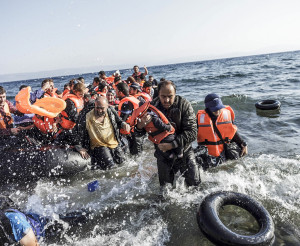
    While violent extremism, terrorism, and civil wars have drawn the most attention, coming to grips with the refugee crisis—emanating mainly from Syria’s civil war, but also more generally from the Middle East and North Africa’s political environment (MENA) in the aftermath of the 2011 Arab uprisings—has never been more essential. The Syrian crisis has propelled a wave of migrants to the neighboring countries of Jordan, Lebanon, Iraq, and Turkey. The Syrian refugee population stands at approximately 4.7 million, of whom 1.7 million live in Lebanon and Jordan and even more in Turkey. It is estimated that Turkey now hosts the world’s largest community of displaced Syrians.

    Defeating the Islamic State in Iraq and Syria (ISIS, also known as ISIL and by its Arabic acronym as Da’esh), while at the same time fulfilling the Responsibility to Protect (R2P) in the Syrian situation, has presented a complex challenge to the international community. The growing threat of ISIS as shown in attacks in Paris (2015) and Brussels (2016), magnified by the increased threat of individual terrorists—the so-called “lone wolves” in San Bernardino, the United States—has stemmed a wave of nationalist, right-wing alarm, reinforcing a general concern about the influx of immigrants and asylum seekers, while underlining the shift from a regional to the international nature of both threat and risk. These security issues have also illustrated the willingness of great powers to support military reactions to ISIS in order to stem the atrocities perpetrated by this group, while putting the departure of the Assad regime on the back burner—at least for now. For all intents and purposes, ISIS poses a much greater threat to Europe than does the current regime in Damascus.

    An Unavoidable Tradeoff

    freedom-house-refugee

    Image by Freedom House via Flickr.

    Confronting and dismantling ISIS need not be achieved by stigmatizing refugees and subjecting them to religious litmus tests. Closing Europe’s porous borders and politicizing the admission of refugees at a time when the growing humanitarian crisis poses mounting human rights challenges to the international community is fundamentally misguided. After all, fortifying European borders, while effective in the short term, strengthens the hands of ISIS and other terrorist groups that portray such policies and practices largely in terms of apocalyptic visions and arcane Islamic prophecies of great battles against Western imperialists.

    Defeating ISIS requires strategic endurance and long-term prudent political decision-making involving internal and external actors in the MENA region. While doing so, it is important to avoid the enemy’s repressive, atavistic, and brutal methods, eschewing certain tactics that could potentially play into ISIS’s hands. It is important to bear in mind that the tactics that terrorist groups like ISIS employ pose mostly political and ideological challenges to the West and that the real fight will be in defeating and destroying the claims and values that these groups assert.  In the end, defeating ISIS requires that its demonic ideology and tactics be confronted and exposed.

    Preventing further refugee crises in the future requires that fighting ISIS be at least temporarily prioritized over the overthrow of the Assad regime.  Seeking a political solution in conjunction with harnessing a multipronged strategy may in fact be among the most effective tools and processes of dealing with current humanitarian crises that the world faces. The possibility of working with the Russians and the Iranians in order to seek a political solution in Syria also raises questions about whether this tradeoff is justified. If the intent is to defeat ISIS, al-Qaeda, and the Levant Conquest Front (formerly known as al-Nusra Front), then this tradeoff is inevitable even as it buttresses the Assad regime in Syria for the foreseeable future. This solution is not problem-free or without significant challenges, however.

    Competing Views

    While the military actions against ISIS are warranted and can be coordinated by both inside and outside actors, the nature of such military missions and their consequences are also subject to further debate and negotiations. The inclusion of Russia and Iran, allies of Assad, in the fight against ISIS raises concerns that their stated goal of curbing ISIS is merely a pretext to prolonging Assad’s rule. Likewise, Turkish participation in air strikes in northern Syria in the war against ISIS has raised the possibility that Ankara will target the Kurds, who have successfully fought against ISIS since the beginning of the conflagration. Turkey’s interest in settling political scores with the Kurds, an interest that it believes is vital to its security, imperils whatever impartiality one might have hoped for in a fight solely against ISIS.

    The massive movement of migrants and refugees to Europe, coupled with the ISIS-led attacks on soft targets in Europe, has created a new urgency among Western leaders to fully confront this new global threat and seriously contemplate the possibility of cooperating with Russia in a coordinated effort. Compromises must at times be made when a multifaceted campaign that includes both countering ISIS and precipitating the removal of the Assad regime is waged. The collapse of the Assad regime would create a significant security void that ISIS and other terrorist groups could easily exploit.

    There is no denying the fact that the Paris, Brussels, and San Bernardino terrorist attacks have heightened the securitization of the refugee threats, as the Islamic State has been using the wave of the migrant influx to infiltrate Europe and North America. The number of terrorists hiding among the refugees is small. ISIS has exploited the flood of refugees to smuggle jihadis into Europe by distributing fake passports in Greek refugee camps to allow its terrorists to travel within Europe. On April 22, 2016, The Washington Post reported that more than three dozen suspected militants who had posed as migrants have been arrested or died while planning or carrying out acts of terrorism.  They included at least seven individuals who were directly linked to the bloody attacks in Paris and Brussels.

    But even a few of these will be highlighted by conservative circles in all Western countries to call for the repatriation or active policing of refugee communities.  Donald Trump Jr.’s notorious analogy between refugees and poisoned Skittles is a case in point. Conservatives rank the issue of terrorism much higher than do liberals in the West, the latter agreeing that one cannot stop all terrorism and that the chances of being caught in a terrorist attack are still quite small. Vigilance and the exclusion of possible threats by governments, however, is prioritized over the compassionate acceptance of refugees.

    The Flaws of the Current Refugee Regime

    The issue remains to be discussed within the core conception of the mandate of the United Nation High Commissioner for Refugees (UNHCR). Remaining at the center of the global refugee regime, UNHCR faces new challenges. Today, for example, most refugees tend to flee from violence and flagrant human rights violations—not necessarily from the threat of persecution, which is a key requirement according to the 1951 Refugee Convention.

    This has resulted in confusion and lack of clarity regarding who qualifies for refugee status and what are the rights to which all refugees are entitled— issues left up entirely to states to interpret. To compound matters further, in the case of Syrian refugee crisis, the neighboring countries of Lebanon, Jordan, and Iraq have never ratified the 1951 Refugee Convention. Now, more than ever, a robust and comprehensive discussion about the future of refugees, whose numbers will only increase with the worsening effects of climate change, is not only timely but necessary, given the tumultuous nature of international politics.

    It is important to bear in mind that refugees can be a destabilizing factor, especially when displaced, alienated, and bitter persons among them are recruited into armed extremist factions. Many studies have shown that the absence of a protective and enabling environment is likely to render more young people vulnerable to racist ideologies and movements and ease the process of their recruitment into the ranks of radical groups like the Islamic State or al-Qaeda. The traditional method of relying on purely humanitarian remedies has proven counterproductive in the face of new influxes of refugees. There is a need for a new thinking that envisions relief and humanitarian aid as fundamentally linked to the granting of work permits to the refugees. To dwell solely on the conventional method of humanitarian aid, and to ignore the importance of wage-earning employment for the refugees, is to wear blinders.

    Shifting Focus from Protection to Empowerment

    The focus of the 1951 refugee protection regime should shift to new ways of dealing with displaced persons that take into account the self-interested reasoning of host countries and the concerns of their citizens regarding competition over jobs. This shift will help to eliminate risks to refugees’ personal security by reducing human smuggling and trafficking by land and sea. Some experts, such as Alexander Betts and Paul Collier, have offered solutions along the line of creating “spaces of opportunity” for the refugees through “special economic zones” that provide jobs, training, and education.

    Helping refugees, I would argue, should begin with technical education and vocational training, coupled with a strategy focused on creating jobs immediately in economic zones from which both host societies and displaced Syrians can benefit. The need to work is inseparable from human security and thus crucial to preserving human dignity. The refugees’ right to legal employment makes good ethical and logical sense. Designing, for example, a vocational skills training program tailored to the needs of women refugees can significantly reduce the incidence of sexual trafficking and abuse. These projects offer a more plausible solution in the long term, not only because they will develop transferable skills that refugees can use in their countries of origin upon return, but also because they create monetary disincentives for refugees to emigrate to Europe in the first place.

    Dr. Mahmood Monshipouri is a professor of international relations at San Francisco State University and he is also a visiting professor at UC-Berkeley, teaching Middle Eastern Politics, and editor, most recently, of Information Politics, Protests, and Human Rights in the Digital Age (New York: Cambridge University Press, 2016).  For more on the perspectives provided here, see Mahmood Monshipouri, Claude Welch Jr., and Khashayar Nikazmrad, “Protecting Human Rights in the Era of Uncertainty: How Not to Lose the War against ISIS,” Journal of Human Rights Online version, July 28, 2016, available at <http://www.tandfonline.com/doi/pdf/10.1080/14754835.2016.1205477>.

  • Muslim Paranoia? Ideology and the Limits of Engagement

    A recurring feature of Western counter-radicalisation discourse is the ‘Muslim paranoia narrative’, a belief that resentment towards Western societies is motivated by a paranoid and conspiracy-riven worldview. This association between radicalisation and paranoia appears repeatedly through official statements and policy documents.

    Radicalisation is at the forefront of policy debates as ISIS continues to draw recruits from Western democracies. Recent summits in Washington and Sydney on countering violent extremism have highlighted the importance of undermining extremist narratives, mobilising moderate Muslims who oppose ISIS, and working to address underlying drivers of radicalisation. Yet representatives of Muslim communities have met this approach with considerable scepticism, both in Western states and across the Muslim world. A common complaint is that Muslims are singled out and caricatured as a unique danger, which only increases the level of vilification experienced by Muslims.

    The Muslim paranoia narrative

    islamic_center_of_murfreesboro_with_flag

    Image by Saleh M. Sbenaty via Wikimedia.

    In recent research published in Critical Studies on Terrorism, I explore the underlying ideological conditions that work against engagement with Muslim communities thought vulnerable to radicalisation. I examine what I call the “Muslim paranoia narrative”, a recurring feature of Western counter-radicalisation discourse that helpfully captures these underlying ideological dynamics. In the Muslim paranoia narrative, resentment towards Western societies is said to be motivated to some degree by a paranoid and conspiracy-riven worldview, which is thought to thrive in alienated and disempowered communities. Terrorist recruiters exploit distorted outlooks to fuel a sense of injustice about the plight of Muslims abroad. This association between radicalisation and paranoia appears repeatedly through official statements and policy documents, including those associated with ongoing counter-radicalisation strategies like the US State Department’s Digital Outreach Team.

    The Muslim paranoia narrative is worth examining because it is a clear tension point in contemporary radicalisation strategies that are increasingly focused on engagement and collaboration. The negative connotations associated with paranoia connect palpably with the sense of vilification often highlighted by Muslim critics of these programs. And the paranoia narrative can be connected to a broader ideological imaginary. Tracing the Muslim paranoia narrative from its ideological roots provides a window into the assumptions and priorities informing radicalisation discourse and contextualises the reticence of Muslim communities towards it.

    The Muslim paranoia narrative is especially intense in the United States where my research is focused. Richard Hofstadter is widely understood to have established the now commonplace account of political paranoia in his famous essay “The Paranoid Style in American Politics”, which identified a recurring strain in American politics characterised by a “sense of heated exaggeration, suspiciousness, and conspiratorial fantasy”. Hofstadter positioned political paranoia on the periphery of pluralistic American democracy as the irrational pathology of angry extremists, and contrasted it with a rational political centre where sensible politics occurred. Although Hofstadter wrote this seminal piece in 1964, it is difficult to overestimate its traction and influence. This is in large part due to the fact that Hofstadter deployed many of the most common conceptual features of post-War liberalism, which abhorred populism and focused on the mediation of competing interests through bargain and compromise. America was situated as a moderate democracy, pragmatic, centrist and non-ideological, in contrast to the radical politics sweeping the post-War Europe. Although liberalism has evolved significantly over the intervening years, the basic conceptual features set out by Hofstadter have remained pervasive in contemporary perspectives on political paranoia.

    One reason for this is that political extremism is still largely understood through the same centre/periphery framework. This dynamic is at the heart of radicalisation discourse in the US, where the political and religious beliefs of Muslim communities have emerged as a subject of concern. In this context, the Muslim paranoia narrative locates paranoia not just on the fringe of liberal democracies, but also on the periphery of international power and legitimacy from the point of view of political leaders and security experts. Here the pervasive perspective on political paranoia folds together with a long-running orientalist narrative about the supposedly dysfunctional characteristics of Muslim cultures, particularly in the Middle East, which has often framed America’s regional encounters.

    A problematic narrative

    The Muslim paranoia narrative is involved in a powerful process of ideological reproduction that works against engagement and collaboration with Muslim communities. Underlying liberal and orientalist frameworks situate Muslim cultures as dysfunctional and anti-modern, while associating Muslim resentment about Western foreign policies with problematic and potentially pathological modes of thought. Like post-War liberal orthodoxy secured by contrast with paranoid populism, contemporary liberal modernity is secured by contrast with the paranoia of alienated Muslims.

    At the same time, contemporary radicalisation discourse disciplines the wider public against consideration of Muslim grievances and associated criticisms of US policy. For instance, the identification of political paranoia as a subject of concern has the double effect of producing a strong general deterrent against the interrogation of elite power and political controversy, when the personal and professional costs of such engagements are potentially catastrophic. The taint of irrationality can be devastating, even by association – undermining credibility and calling motivations into question.

    In this sense, the Muslim paranoia narrative can be understood in terms of powerful ideological scripts in American political culture, rather than as an objective description of an ideational precursor to radicalisation in Muslim communities. The broader point is that potent narratives around extremism and oriental otherness have undermined the approach of successive US administrations to counter-radicalisation. These scripts have worked against a persuasive encounter with Muslims critical of American foreign policy, when such criticisms are framed as the product of a problematic thoughts and dysfunctional culture.

    This problem is clear enough in the practical setting of counter-radicalisation programs like the US State Department’s Digital Outreach Team (DOT), a group of bloggers tasked with confronting views critical of American policy on foreign language websites, and, more recently, discrediting ISIS affiliated users on social media. For our purposes it is interesting to note that according to the State Department “the Digital Outreach Team contrasts objective facts with the often emotive, conspiracy-laden arguments of US critics in the hope that online users will take a fresh at their opinions of the US”.  And this frame manifested in the online activities of the DOT where time was spent “ridiculing myths and conspiracy theories and calling users with extreme views radicals, but claiming to enjoy engaging with users who post objective views.” Perhaps unsurprisingly, a close analysis of DOT work following President Obama’s 2009 Cairo Address found that a large majority of people who expressed a view about the DOT were negative in their comments, with half openly “ridiculing and condescending”. Although there were no doubt many reasons for the widespread hostility to the DOT, it should be obvious that labelling people paranoid and irrational is highly antagonistic, particularly when considered in the context of the wider set of intimations that have historically been associated with such language.

    Indeed, it is critical to acknowledge that although the identities and relations highlighted in my analysis of the Muslim paranoia narrative exist within a specific policy discourse, they bear no necessary relationship to the lived experience of differentiated Muslim people, who often refuse classification in these terms. Moreover, it is critical to acknowledge that there is still no conclusive evidence for a particular terrorist profile; for a common pathway or pattern to radicalisation; or for predicting which holders of radical views will become violent. Without critical awareness of the ideological conditions identified here and a sustained attempt to move beyond them, the crucial work of engagement, partnership and community building will be likely ineffectual.

    Tim Aistrope is Lecturer in the School of Political Science and International Studies at the University of Queensland.

  • VIDEO – Transforming Food Systems in a Global Context

    Getting Older But Not Wiser: the Arms Trade Treaty’s First Birthday

    April 2nd marked the first anniversary of the adoption of the much celebrated Arms Trade Treaty (ATT), the world’s first treaty to establish common standards of international trading in conventional weapons and which in turn aims to ‘ease the suffering caused by irresponsible transfers of conventional weapons and munitions’. But with the continued irresponsible arms trading and an overall rise in the global arms trade, it seems that some states have yet to put the ideals of the ATT into practice.

    Read Article →

    The New Insecurity in a Globalized World

    Writing exclusively for SustainableSsecurity.org, Elizabeth Wilke argues that a new conceptualization of insecurity and instability is needed in a world with greater and freer movement of goods, services and people – both legal and illicit – greater demands on weakening governments and the internationalization of local conflicts. The new insecurity is fundamentally derived from the responses of people and groups to greater uncertainty in an increasingly volatile world. Governments, and increasingly other actors need to recognize this in order to promote sustained stability in the long-term, locally and internationally.

    Read Article →

    Human Security and Marginalisation: A case of Pastoralists in the Mandera triangle

    This paper seeks to bring out the relevance of human security in pastoral areas of Mandera triangle and the relationships and contradictions that exist between it and national security. The “Mandera Triangle” encompasses a tri-border region of Ethiopia, Somalia, and Kenya that exemplifies, in a microcosm, both a complex and a chronic humanitarian crisis that transcends national boundaries.

    Read Article →