Blog

  • Sustainable Security in the Trump Era

  • Swarms Over the Savannas: How Drones Are Gaining More Traction in Africa

  • Floating liabilities? Maritime armouries, risks and solutions

  • The Costs of Security Sector Reform: Questions of Affordability and Purpose

    The Costs of Security Sector Reform: Questions of Affordability and Purpose

    In considering security sector reform, questions of affordability have often been subordinated to questions of effectiveness and expediency. A recent series of reviews of security expenditures by the World Bank and other actors in Liberia, Mali, Niger and Somalia has highlighted several emerging issues around the (re)construction of security institutions in fragile and conflict-affected states.

    Read Article →

  • Security Sector Roles in Sexual and Gender-based Violence

    Democratic Republic of Congo’s sexual violence epidemic is not only a weapon of ongoing violent conflict but an expression of entrenched systemic problems. Indeed, sexual and gender-based violence (SGBV) is most commonly perpetrated by the security services in place to protect civilians. In Quartier Panzi in South Kivu province, innovative processes of security sector reform and strengthened police-civilian channels of communication may be providing an opportunity for change.   

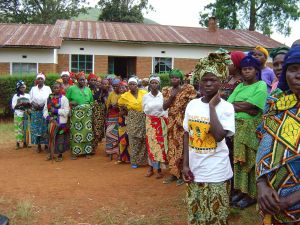
    Meeting of victims of sexual violence in the Walungu, South Kivu in Democratic Republic of the Congo. Source: Wikipedia

    Meeting of victims of sexual violence in South Kivu,  Democratic Republic of the Congo. Source: Wikipedia (from USAID)

    Quartier Panzi—the populous, restive neighborhood of Bukavu, South Kivu province—is renowned in international development circles as the ground zero of the Democratic Republic of Congo’s sexual violence epidemic. Rape as a weapon of war is not so much perpetrated by enemy forces but, most often, by the very parties sent by Kinshasa to protect and serve civilians. Much as Selma, Alabama was to the American civil rights movement, Panzi’s ongoing tragedy has transformed the area into a vibrant arena for grassroots opposition and international solidarity in the fight to restore women’s bodies and lives. Women’s organizations have formed to denounce continued abuses and government denial, to reverse cultural stigmas around female culpability in rape, and to demand trial for Congolese security forces suspected of sexual abuses.

    The courage and commitment of Dr. Denis Mukwege, chief gynecologist at Panzi Hospital and twice nominated for the Nobel Peace Prize, is emblematic of this resilience. International networks like V-Day and Women for Women International support these local actions and fund sanctuaries for survivors, such as the City of Joy. These innovations aim to be restorative and empowering for survivors, focusing on the crisis as experienced by women and girls, offering healing and vocational training options otherwise non-existent. However, the causes of this specific form of cruelty and degradation, rooted in violent masculinities and impunity among security actors, remain unaddressed.

    Rewiring the security sector

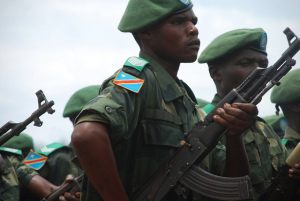
    Congolese soldiers march in Walikale, DRC, 2011. Source: ENOUGH (Flickr)

    Congolese soldiers march in Walikale, DRC, 2011. Source: ENOUGH (Flickr)

    Like any deep malaise, Congo’s rape crisis is but one expression of entrenched, systemic problems. Local witnesses, security analysts and medical professionals who treat survivors present overwhelming evidence that the primary perpetrators are uniformed Congolese security actors. A weak justice system may be responsible for the failure to discipline or punish perpetrators, but the sources of this behavior lie within the security sector itself. Accessing the security elite, Congo’s infamous ‘black box’, is notoriously difficult. As a result, very little analysis exists of the problem from the perpetrators’ perspective: analysis and evidence that deciphers the institutional culture and internal organization of the security sector, or that maps relations between senior officers, politicians and economic actors. By design, opacity reigns supreme.

    A variety of international donors support the national army and police with numerous ‘train and equip’ initiatives, an international cooperation model unchanged since the Cold War.These ‘security development’ partnerships aim to strengthen national capacity through field and classroom training and equipment upgrades; behavior change and public accountability are not part of the approach. Within the security services, there is typically an absence of civilian oversight, and widespread rent-seeking and illicit trade in protected flora, fauna and minerals, but no questions are asked by international partners, as diplomacy and formality dominate.

    Supply-side approaches such as these long pre-date the advent of ‘security sector reform’ among development actors, which does seek behavior change and greater accountability. The older aid modality remains popular with the Congolese leadership because it expressly avoids any calling to account or inculcation of security as a public service and legal right.

    There is state and donor complicity in all of this. Strength without constraint or accountability defines the DRC’s security sector today. Its predatory practices range from unchecked rape and pillage in the East to the repression of free speech and public inquiry, as witnessed by the 2010 murder in Kinshasa of prominent human rights activist, Floribert Chebeya. To placate critics, a military tribunal mounted a kangaroo court in the wake of the murder; the film documenting and exposing its empty theatrics, L’Affaire Chebeya, Un Crime d’Etat, remains banned in Congo.

    Such officially sanctioned practices and attitudes are salient features of the Congolese state since independence, and well known to all Congolese. In the early 1970s, President Mobutu Sese Seko began encouraging civil servants and security forces to ‘feed on the population’ (“Population baza bilanga ya bino). Anecdotes such as these are more than flippant asides; they explain the persistent appeal of this patrimonial compact (across four chapters of Congolese leadership: Mobutu, Kabila père, transitional government, Kabila fils) as a declaration of complicity between political elites and the entire public sector. In its truncated audacity, this single utterance reconfigures and reduces the entire means and ends of the state to elite enrichment and group impunity.

    In Panzi, armed crime and physical/sexual assault reached unprecedented levels in the aftermath of the primary war in South Kivu province. State security had long colluded with local armed gangs, and popular recourse options ranged from individual vengeance to military tribunals, as civil courts are unreliable. Mob justice is also widely practiced. The formation of neighborhood watch groups raised local hopes for improved safety (e.g. SAJECEKForces Vives). Despite their initial popularity, they soon joined local police and armed gangs in perpetrating the very crimes they first sought to oppose.

    How urban police understand this license to extort and harass the population, and the higher interests these practices serve, has been well captured and analyzed by Maria Eriksson Baaz and Ola Olsson. Transforming Congo’s security sector from inside is an elusive challenge, and donors are struggling to develop the programmatic savvy, influence and access to inspire the necessary political will.

    Demand for reform

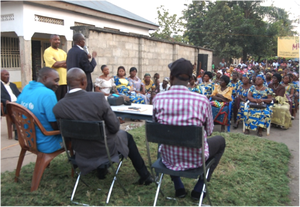
    Community meeting in Kananga, DRC, where security officials and civilian leaders converse directly with local community leaders. Source: DAI Europe (with permission)

    Community meeting in Kananga, DRC, where security officials and civilian leaders converse directly with local community leaders. Source: DAI Europe (with permission)

    The UK’s Department for International Development (DFID) has experimented with alternative supply-and-demand models of public sector reform, and is applying these to the Congolese National Police (PNC). According to this strategy, supply-side ‘train and equip’ assistance targets weak service areas, including the prevention of and response to sexual and gender-based violence (SGBV). This is complemented by efforts to mobilize popular demand for more responsive policing at the community level.

    A particular understanding of the partner institution, the PNC, informed this theory of change. This included the hypothesis that payment of regular salaries would not end extortion and rent-seeking (’tracasseries’) by the PNC, given the scale of these rackets and the enormous sums they generate. With no compelling alternative on offer, and as long as ‘reform’ is understood to involve replacing tracasseries with ‘protecting and serving’, change will elude would-be reformers. Given that such arrangements will not change in the forseeable future, the more nuanced strategy accommodates the reality of low, irregular salaries and uniformed extortion for the foreseeable future, and seeks behavior change through increased public-police interaction. Faster paced improvements in human security and responsive policing began emerging on the demand side of the pilot sites, including Bukavu and Quartier Panzi in particular.

    Launched in Bukavu, Matadi and Kananga in 2009, the Security Sector Accountability and Police Reform Programme (SSAPR) is distinct for coupling its community policing approach with regular neighborhood meetings (forums du quartier) where locally appointed representatives voice their security concerns, identify emerging threats and suspects. It is common for community policing programs to seek a more responsive, service-oriented local police, but SSAPR is distinguished by its effort to cultivate citizen networks at the most local level to identify and articulate their fears, threats and suspicions forward to the actors most able to respond. Police officers, urban administrators, local community and neighborhood leaders then meet regularly in informal, local security councils to discuss proposals for containing a threat or resolving a violent dispute, as equipment and manpower are often lacking. Initiated entirely informally, these experiments in public relations gradually began to change expectations, reinforce collaboration and gain momentum.

    Concurrently, the National Parliament submitted a motion to formalize the Conseils Locaux pour la Sécurité de Proximité(or CLSP, finally passed in late 2013), which recognizes the right of civilian representatives to participate in official security discussions at the municipal level. Over three years, SSAPR legal advisers worked with national parliamentarians to build support and draft a bill. Given the long-standing animosity between politicians and civil society, this new décret was a highly significant opening. The platform has since been incorporated into other police reform efforts (such as the European Union’s EUPOL) that also understand SSR in the Congolese context as primarily a governance challenge requiring civilian involvement.

    SGBV DRC 2

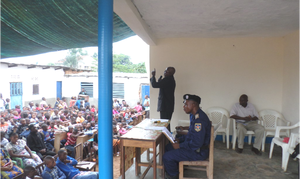
    Community meeting in Kananga, DRC, where security officials and civilian leaders engage directly with local community leaders. Source: DAI Europe (with permission)

    Raising security problems through the CLSP increased dialog between communities and security officials, but who would represent the civilian side? In rough urban neighborhoods like Panzi, citizens experience a host of threats, not all of them equally or in the same way. The SSAPR helped Panzi neighborhood chiefs and community leaders coordinate an informal system whereby youth, women and men would alternately represent their community concerns first to a forum de quartier, then directly on to the CLSP. This neighborhood dynamic continues today across Bukavu’s three communes.

    Making Progress?

    These are small steps toward a more accountable security sector and restored public trust, but has sexual assault around Panzi declined as a result? Recently the SSAPR helped a women’s NGO organize a nocturnal walk through several Bukavu neighborhoods, including Panzi, to record their own safety concerns as well as those of women and girls met along the way. In a recent meeting, NGO members insisted they would never before have visited these neighborhoods, particularly at night, but that the chance to report their findings to a receptive and interested police commisariat justified the risk.

    In response, new light fixtures are planned in darkened alleys where assaults have occurred, and patrols redirected to suspicious areas noted by the NGO delegation. In another pilot city, Kananga (Kasai Occidental), assaults on women and girls who were walking long distances to fetch water, often at night, decreased dramatically after local women lobbied for regular police patrols in these areas. This, in itself, was indicative of a greater local confidence in the police as protectors.

    Community police units are involved in implementing these changes, but they represent a small minority of the PNC. It is unknown if these lower rates of sexual violence are attributable to behavior change among uniformed security or if the increased patrols and better lighting are deterring other possible assailants. Retrospective studies have been conducted, but no consensus exists on the total quantitative extent of SGBV in DRC, where just one in twenty cases is thought to be reported to authorities. Nor are cases raised with the police guaranteed to be registered or pursued. Impunity persists due to a weak national justice system, as well.

    Other insights emerge from this experience, particularly around ‘bottom-up’ approaches to renewed legitimacy in fragile states. In the DRC, where central government continues to stall on commitments to decentralization and provincial institutions exploit this limbo (enrichment via parallel markets; legal and financial opacity) leaving communities in the breach, these small successes show that by investing at the periphery—that most-local interface where citizens and public service providers meet in person—bridges of trust and respect can be built through participatory problem solving. Communities can show resilience and security services can prove they are responsive and effective.

    Edward Rackley is a Security and Governance consultant for the World Bank, based in Washington DC. He provides periodic technical and strategic advice to the SSAPR program via DAI Europe, one of the program’s managing agents. (The views expressed in this article are not necessarily those of these institutions.)

  • US Drone Strikes in Pakistan: ineffective and illegitimate

    US Drone Strikes in Pakistan: ineffective and illegitimate

    Strikes by unmanned combat air vehicles, or armed drones, have become the tactic of choice in US counterterrorism efforts in Yemen, Somalia and, the topic of current controversy, Pakistan. The lack of transparency, dubious effectiveness, civilian casualties and negative consequences for US national security being highlighted by current debate means that Washington needs to re-evaluate its approach.

    Read Article →

  • Nitrogen: a driver of global food insecurity?

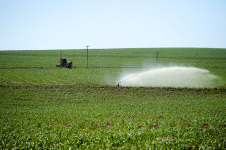
    Nitrogen largeWith nearly 870 million people chronically undernourished, and progress towards the Hunger Millennium Development Goal ebbing since 2008, feeding the world will continue to be a major global challenge. The limitations of arable land availability, water accessibility, and humanity’s increasing population trajectory further compound the problem. Addressing the challenges to global food security while ensuring the sustainability of the planet will require changes to the way we interact with agriculture and a clear understanding of the driving factors behind it.

    Food and Energy Price Volatility

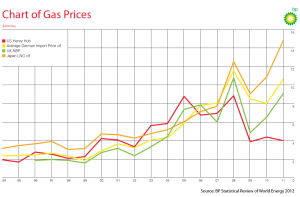
    World-Energy-PricesThe industrialisation of agriculture over the last five decades has contributed to massive gains in productivity, but it has also made food increasingly susceptible to energy supply and price fluctuations. Energy in the form of oil and gas is needed to run industrial farm equipment and to ship food around the world. Fertilizers, the driving factor behind most yield increases, are intimately tied to energy and therefore price volatility. Nitrogen fertilizers are particularly significant and are created through a process that combines natural gas and inert nitrogen from the atmosphere in a high-energy reaction to create ammonia. Fertilizer production is estimated to account for more than 50 per cent of total energy use in commercial agriculture (Woods, et al 2010). While shale gas has had a significant impact on the US natural gas market, globally, energy prices are expected to rise in the long term and become increasingly volatile, as shown by the graph to the right. Fertilizer costs will follow a similar trend, leading to variability in cost and availability. This can be especially difficult for small farmers in developing countries, whose resilience to price fluctuations is low.

    Locking Ourselves In to Volatility

    Natural means of increasing agricultural yields are possible through recycling manures and planting crops that add nutrients to the soil. However, barring a radical change in agricultural practices, globally we are locked into chemical fertilizer use, especially nitrogen fertilizers in the short and medium term. Approximately 45 per cent of the world’s food supply is grown using chemical fertilizers, and that number is growing. Meat consumption, which requires large amounts of grain for animal feed, is on the rise. Consumption of animal protein in Europe and the United states together is double the world average (FAO 2006), and is expected to grow 10 per cent between 2005 and 2030. However, demand in developing countries for animal proteins is projected to increase 60 per cent in the same period (Reay 2011). Pressure from biofuel legislation in Europe and the United States puts further pressure on land and drives up global food prices.

    Global land deals have increased dramatically in the last ten years, with an area of land eight times the size of the UK sold off globally in that time (Geary 2012). In addition to causing landlessness and poverty for local communities, the land is often used to grow large areas of single-species crops such as soy or eucalyptus, which use industrial agricultural methods requiring a high amount of chemical fertilizer, thus increasing dependence on global energy markets and locking new land into fertilizer dependence. Furthermore, nutrients and pesticides can make their way into local water supplies, degrading the environment upon which local communities depend. For example, water contamination from agricultural runoff can force communities to buy bottled or trucked water at higher prices, reducing their resilience to price fluctuations even further.

    Fertilizer as a Means of Reducing Poverty

    But fertilizers are not evil. Increasing yields (either through better access to fertilizers or implementing natural yield improvement practices) can greatly impact poverty and inequality. There are many regions of the world in which more nutrients are urgently needed in order to ensure the land is not degraded. When fertilizer is introduced to degraded soils, it can have enormous trickle down effects for poverty reduction, health, and education. In the early stages of development, when a country is primarily agrarian, the most consistently effective methods to reduce poverty and improve equality involve the agriculture sector, particularly through methods that raise small farm productivity (Berry 2010, Deininger and Byerlee 2011). For example, a recent review of coffee grower data from Mexico and Peru, published in the World Development journal, found that increasing yields are most important for growers (Barham and Weber 2011).

    Nitrogen: The Missing Link

    So where does that leave us? The very thing that reduces poverty and hunger through increasing yields can cause insecurity through energy price volatility. Add increasing pressure from consumption choices, land degradation, population pressure and climate change and we have a situation of increasing food insecurity globally.

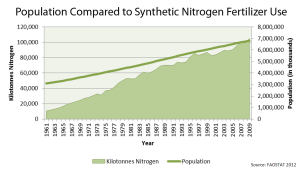
    Population-and-Fertilizer-UseThere is no silver bullet answer to this conundrum. However, the solution will likely be a combination of improving the efficiency of chemical fertilizer use and increasing the productivity and adoption of natural methods. Cross-cutting all of these solutions is the main driver of yields: nitrogen. Phosphorous and potash are also important elements of fertilizer, but nitrogen is the nutrient needed in the largest quantities. Just as a basic knowledge of how CO2 impacts climate change is important for developing solutions to the problem, so is knowledge of nitrogen important for developing solutions to food security.

    Nitrogen is critical for all plants and animals to grow. Some plants build it naturally into the soil through a symbiotic process between bacteria and their roots called ‘biological nitrogen fixation’ (beans and clover, for example), but the majority comes from chemical fertilizers and as a by-product of burning fossil fuels.

    For those that remember the nitrogen cycle from science class, we know that 78.1% of the atmosphere is inert nitrogen (N2). In the 20th century, we developed a way to convert this inert, atmospheric nitrogen into a form of nitrogen accessible to plants and animals (known as “reactive nitrogen”). This has enabled food production to roughly keep pace with the explosion of population growth over the last fifty years. Whether through fertilizers or biological fixation, nitrogen will play a key role in meeting the food needs of the future.

    When there is not enough nitrogen in the soil, loss of soil productivity and degradation occur. Because it is small farmers that often lack access to nitrogen, their yields decline year over year, reducing their annual income and thus exacerbating inequality within the global food system. This pushes them further into poverty, and in many cases can force them to purchase food when they cannot grow enough. Degraded land forces them to go in search of new, more fertile land, breaking apart families and communities.

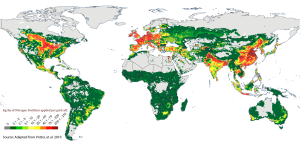
    However, the solution is not as easy as simply adding more nitrogen in areas where there is not enough. Too much nitrogen can cause serious problems for human health and the environment. While nitrogen is required by plants in order to grow, there is a limit to how much any plant can use. Beyond this “critical load”, nutrients that cannot be absorbed by plants will leach into the water and air. Once in the environment, nitrogen can change forms over an extremely long life (average of 120 years) and detrimentally affect many different systems before finally becoming denitrified back into atmosphere. Nitrogen exacerbates climate change, depletes the ozone layer and drives biodiversity loss. It causes low-oxygen zones in water systems that weaken or kill fish and marine habitats (known as eutrophication or hypoxia). Reactive nitrogen can also be very detrimental to human health through air and water contamination. It is a major contributor to smog, which is estimated to take six months off the life expectancy of over half the population in Europe (Sutton et al 2011). It is even worse in areas like China, where the density of air particulates have registered at twice the level considered “dangerous” in metropolitan centres like Beijing. Ingesting high levels of water-borne nitrates has been associated with cancer, diabetes and adverse reproductive outcomes (Ward et al. 2005).

    The graph below shows nitrogen fertilizer application globally. In the red areas of the graph, many of the main water bodies suffer the detrimental effects of too much nitrogen, and the people that live in those areas suffer as a result of nitrogen pollution. Many of the green areas could benefit from more nitrogen to increase soil productivity.

    WorldFertilizerApplication

    The key is balance. On the one hand, improving the efficiency of fertilizer use will maintain crop yields while protecting the ecosystems humans and animals depend upon. On the other hand, developing biological nitrogen fixation methods or pro-poor fertilizer programmes to increase yields for small farmers will improve their situation economically and strengthen their resilience to price shocks and weather events. In both cases, proper nitrogen management will be a crucial part of solving our global hunger crisis while ensuring sustainability for future generations.

    Lisa Dittmar is the CEO and founder of NitrogenWise,  a website that brings together research and straightforward communication to explain the complexities of nitrogen in a meaningful and relevant way.


    Citations

    Barham, B. L., & Weber, J. G. (2011). The Economic Sustainability of Certified Coffee: Recent Evidence from Mexico and Peru. World Development, 1269-1279.

    Berry, A. (2010). What type of global governance would best lower world poverty and inequality? In J. Clapp, & R. Wilkinson, Global Governance, Poverty and Inequality (pp. 46-68). London: Routledge.

    Deininger, K., & Byerlee, D. (2011). Rising global interest in farmland. Washington DC: World Bank. Retrieved November 30, 2012, from http://siteresources.worldbank.org/INTARD/Resources/ESW_Sept7_final_final.pdf

    FAO. (2006). Livestock Report 2006. Rome: Food and Agriculture Organization of the United Nations.

    Geary, K. (2012). Our Land, Our Lives: Time out on the global land rush. Oxford: Oxfam. Retrieved November 2, 2012, from http://www.oxfam.org/sites/www.oxfam.org/files/bn-land-lives-freeze-041012-en_1.pdf

    Reay, D. S. (2011). Societal choice and communicating the European nitrogen challenge. In M. Sutton, The European Nitrogen Assessment (pp. 585-602). Cambridge: Cambridge University Press.

    Sutton, M. (2011). Too much of a good thing. Nature, 472, 159-161

    Ward, M. (2005). Workgroup report: Drinking-water nitrate and health-recent findings and research needs. Environmental Health Perspectives, 113, 1607-1614

    Woods, J., Williams, A., Hughes, J. K., Black, M., & Murphy, R. (2010). Energy and the food system. Philosophical Transactions of the Royal Society B, 2991-3006

    Front page image source: Organic Fertiliser for sugar cane – Shell

  • After Brussels – It’s Time to Challenge Our Authorities and Move Beyond Prevent

    Another year has confronted us with yet another tragedy in another European Capital – Madrid in 2004, London in 2007, Paris last year – and, most recently, Brussels. The litany of such incidents, augmented by countless other atrocities further afield and perpetrated originally by those claiming connections to Al Qaeda but now eclipsed by similarly asserted affiliations to ISIS, seems set to continue. Accordingly, it makes sense for a publication called Sustainable Security to ask what, if anything, has been sustainable about responses to terrorism worldwide since 9/11?

    After Brussels, many of the usual suspects with connections to the world of security have been wheeled out as usual to offer advice on the need for ever greater scrutiny at airports. But, having made air-side a challenge to reach through a panoply of checks and scanners, it seemed inevitable to those who understood displacement that attacks would simply migrate to the less scrutinised entrance spaces. We could turn these into fortified complexes too – only for the locus of atrocities to move on again – or we could begin to ask more challenging questions of our authorities.

    Of course, none of us wishes to sit next to a deluded individual about to detonate their device on a plane or Metro train. In that regard, security and intelligence gathering are absolutely necessary. But they are clearly not sufficient as, despite the billions spent in hardening private facilities and civic spaces, including transport hubs since 2001, the evidence still serves to remind us that determined individuals – and even a few chancers – will get through. It is simply not possible to secure all of society, all of the time. Prevention – in this sense at least – is far too limited a goal.

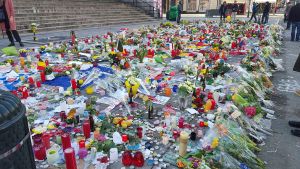
    What’s more it has often been the authorities who have ended up ‘doing the terrorists’ job for them’. To call for three days of national mourning after the latest disasters may seem sensitive to those who lost a loved one – but it flies in the face of the rhetoric of resilience and those who claim the need for a rapid return to normalcy. In that respect, the public often display considerably greater courage by determinedly meeting together for vigils in open spaces, whilst the authorities advise against collective gatherings and look to cancel concerts and sporting events.

    Brussels_after_the_attacks_(4)

    Image of Bourse, Brussels after terrorist attacks in March 2016. Image by Romaine via Wikimedia Commons.

    There can never be security solutions to social problems. At best, these conceal the underlying challenges that lie ahead. Worse, operational fixations allow those in charge to evade articulating a broader vision for their societies. This latter aspect shapes both the perpetrators – who appear sometimes to almost drift into becoming radicalised through their being disengaged from a world that offers them (and others) little by way of vision or ambition – and the respondents – who are lulled into a phoney sense of knowing what they are doing and why, when in fact they have little appreciation for, or understanding of, the dynamic they seek to redress.

    In such a situation, it may indeed only be the public who can maintain a modicum of humanity through their determination – albeit unavoidable in most instances – to get on with life. They are also apparently not so readily fooled by the rhetoric of the self-styled ‘jihadists’ who represent no-one and whose actions in the name of Islam most Muslims deplore, nor by the actions of the authorities who, by securitising the world, hope to make their task easier whilst providing themselves with a flimsy – if largely unconscious – sense of purpose in an age when they seem to lack any other.

    But there are others, critical of the authorities, whose narrative and interpretative framework we should be just as critical of and interrogate too. If, as we are often told, alienated individuals in corroded communities in run-down districts have a supposedly understandable sense of grievance – at the racist hostility they encounter, as well as with regards to Western foreign policy – then why is it that not all brought up under such conditions respond the same way, or that the terrorists target civilians, including children as in Lahore, rather than government ministries?

    In the aftermath of the Cold War, security increasingly became represented through the prism of human security whereby the referent for security shifted from the state to the individual and, in particular, the latter’s assumed existential sense of vulnerability. This, in turn, opened the door to securitisation – the possibility that the state and other actors might transform specific problems into security-related concerns in the pursuit of their agendas. Foremost among these have been the securitisation of health and the securitisation of development. So might there now be a securitisation of education too?

    Securitisation allows challenges to be ‘constructed as a matter of national security’, encouraging a demands for perpetual preparedness, constant surveillance and eternal vigilance. It offers unfocused authorities clear actions to engage in, thereby making ‘an uncertain future available to intervention in the present’. This coincides with the rise of risk management that also readily become an organising framework in periods lacking clear direction. Worse, by promoting an emphasis on procedural management through expert knowledge these both disenfranchise people from the possibility of solving their own problems and allows the authorities ‘to become fixated on external threats rather than examining their own internal confusions’.

    Another critical factor here appears to be the race to the bottom that best describes identity politics today. The end of the Cold War, and with it the gradual erosion of the politics of Left and Right that had defined it, left a big gap where collective social discourse, debate and deliberation ought to be. It is this hole in values and vision that the use of identity as a claim on resources – particularly through attempts to define particular groups as being the most oppressed or victimised – has sought to fill. Many campaigners have now learnt to play this game. There is evidence to suggest that today’s terrorists do so too.

    But, rather than challenge such approaches, governments the world over have often indulged the claims and patronised the claimants accordingly. Far better to deal with individuals and groups prostrating themselves to you and making claims for remedy or therapy than having to confront those who are being Bolshie and demanding more. In an age when the authorities are not so sure of whom they are themselves – having sought to disown aspects of their imperialist past to the point of self-loathing and confusion – as well as sensing themselves isolated, it makes for a perfect match.

    While campaigners understandably concern themselves with government moves to introduce a Communications Data Bill – the so-called ‘Snoopers’ Charter’, now renamed the Investigatory Powers Bill – what many fail to recognise is the extent to which such a push from above has been facilitated by erosions to absolute freedom of expression down below. The notion, for instance, that students are vulnerable and need to be protected by the authorities, whilst appearing in the new Prevent Duty, first emerged as the gradual extension of various campaigns for ‘no platform’, ‘safe space’ and ‘trigger warnings’ promoted by Students’ Unions across the UK and US.

    Prevent is an affront to liberty, not least in its infringements on academic freedom, but the notion that everyday social relations are ‘toxic’ and ought to be scrutinised by the powers-that-be is entirely mainstream. This latter has served as a mechanism whereby febrile individuals and institutions, as well as directionless authorities have been able to catch up with the popular mood that fears active engagement and robust exchanges of opinion by playing the ‘victim card’ and looking for protection. Notably, the language is one that presumes a passive, innocent and sponge-like public – young people and others are (it would seem) simply ‘drawn into terrorism’ by those who groom them, thereby diminishing their agency and, inadvertently, absolving them of accountability for their actions.

    At a recent dissemination session I attended relating to the Prevent Duty at which an eager regional coordinator presented upon its trajectory and implications, I was particularly struck by this use of the language of protection. Authorities are merely implementing a ‘duty of care’ we were advised, for people who might be ‘influenced by’ ideology. The notion that it might be the specific role of Higher Education to influence young people, or of the state to inspire us all with ideas, was not countenanced. And, ironically for institutions now driven by the need for so-called evidence-based policies, the positivist ‘what is’ question was replaced by a speculative ‘what if’?

    As I have also noted elsewhere, we were advised that Prevent had now shifted ‘from a moral duty to a legal duty’. In that regards, the presenter, who described themselves (and us) as a practitioner (as opposed to a planner maybe) was at least refreshingly honest. But that we now invoke the law to attempt to prevent terror should alert us more significantly to the failure of the authorities to win the moral argument or to engage their own public. Free speech and privacy are messy matters of course, as is real life. But attempts to shy away from this are worse for us all.

    That is the real challenge ahead – one that no amount of legislation or intelligence and security can by-pass. Academics will continue to debate what the real causes of terrorism today are, as well as how best to address these. In the meantime, the authorities, following the cue of a nervous culture and lacking any coherent vision for society of their own have assumed that they know what to do and are acting accordingly through their enthusiastic practitioners.

    It is what we want for society beyond the terror and our responses to it that really needs debating.

    Professor Bill Durodie is Chair of International Relations and Head of the Department of Politics, Languages and International Studies at the University of Bath. His most recent journal article was ‘Securitising Education to Prevent Terrorism or Losing Direction?’ published in the British Journal of Educational Studies in March 2016. His work focuses on risk, resilience, radicalisation and the politics of fear.

  • Governing the Anthropocene: Complex Crises and Transitions to Sustainable Peace

    The Anthropocene denotes the current geological age, in which human activity has had a significant impact on climate and the environment. The pressing issue of this epoch is whether the global consequences of these interactions between humans and the environment can be governed on a global scale.

    The 1972 report to the Club of Rome on “The Limits to Growth” demonstrated the natural boundaries to human expansion which began in the Holocene era, following the end of the last glacial period around 12,000 years ago. The continued growth of human activities since the industrial revolution has become a driving force of reshaping the face of the planet into a new geological epoch, the “Anthropocene”, associated with multiple global consequences such as climate change, land degradation, resource scarcity and biodiversity loss. The Anthropocene is seen as a new geologic epoch in which humankind has emerged as a globally significant force capable of reshaping the face of the planet. The underlying human-environment interactions raise fundamental questions for global governance: Can nature be controlled and shaped on a global scale? Are human interventions a disturbing or regulating global force, avoiding or creating disasters? What are the limits of human expansion in the Anthropocene?

    Human growth and complex crises
    climate-ice

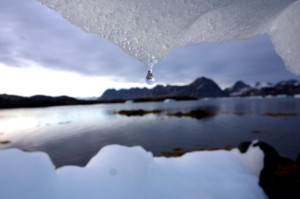
    Image by klem@s via Flickr.

    In the course of its history, the human population has been growing by increasing birth rates and lowering death rates, leading to the expansion of the human sphere in terms of capital, investments, income, technology, energy and resource flows, political power and violent forces of destruction. Despite Malthusian concerns about population growth causing scarcity of natural resources, intolerable pollution, mass starvation and other catastrophes, humans were able to overcome resource constraints and expand into new spaces through problem-solving capabilities, technical and social innovations that generated more wealth on a shrinking natural resource base. Continued pressure on natural resources and ecosystems challenge planetary boundaries in the Anthropocene, raising the question of whether a balance will be established by increased death rates or the reduction of birth rates. While the first pathway implies crisis, disaster and death, the second path may be associated with a sustainability transformation in demographic, economic and societal conditions within natural boundaries.

    These pathways are part of the “complexity turn” in the Anthropocene which is characterized by globalized networks among people, markets and institutions, accelerated processes and flows in transportation and communication, and manifold micro-macro interactions between natural and social systems. While complex systems are often robust against disturbances in the core region of stability, on the edge of critical thresholds between stability and instability, small variations and uncertainties can make a big difference and decide whether systems break down or create new ones, as symbolized by the famous “butterfly effect” in chaos theory.

    Beyond thresholds and tipping points chain reactions and risk cascades may be triggered which propagate in space and time and induce qualitative system changes. These include complex events such as natural disasters, stock market crashes, revolutions, mass exodus or violent conflicts. A world of ever growing complexity where responsibilities and solutions of crises are hidden behind smokescreens, may provoke over-simplifications, religious, populist and nationalist fundamentalisms, rhetoric against science and intellectuals, or resistance against globalized structures.

    With the chaotic breakdown of the East-West conflict in 1989, actions of individuals and groups triggered a chain reaction that within weeks led to the fall of the Berlin Wall and the breakup of the Eastern Block. A new world (dis-)order emerged in which multiple crises interacted in fractal and fragile international landscapes that continue to be unstable and full of surprises (see van Creveld 1991, Kaldor 1998, Münkler 2005, Scheffran 2008). Numerous factors and actors are interrelated, involving national, subnational and transnational actors in complex networks, crises and conflicts. Tight couplings lead to cascading crises that spiral out of control, including September 11, global economic crises, the Arab Spring, the wars in Iraq, Afghanistan, Libya and Syria, the civil war in Ukraine, the Greek debt crisis, the European refugee crisis and terror attacks in many countries. These events are interconnected through multiple channels that are often invisible.

    Climate change as a risk multiplier

    In this complex chain of crises, environmental change is connected with other problem areas through multiple linkages from local to global levels. More tipping points may emerge in the nexus of environmental degradation, climate change, poverty, and hunger which affect the living conditions in many parts of the world and could turn into severe security threats. Climate change is considered a risk multiplier, which disturbs the balance between natural and social systems and amplifies the consequences through complex impact chains. Among key pathways, climate change can affect the functioning of critical infrastructures and supply networks; intensify the nexus of water, energy and food; lead to production losses, price increases and financial crises in other regions through global markets; undermine human security, social living conditions and political stability; and induce or aggravate migration movements and conflict situations.

    In the most affected regions the erosion of social order and state failure may trigger a spiral of corruption, crime and violence. Particularly critical is the situation in fragile and failing states with social fragmentation, weak governance structures and inadequate management capacities. Human insecurity and personal instability interacts with social and political instability. The impact of environmental change could undermine the ability to solve problems and further dissolve state structures, possibly leading to their collapse.

    The Darfur conflict in Sudan has served as a prominent case where climate change is suggested as a threat multiplier in the complex nexus of population pressure, exploitation of land and forests, declining agricultural productivity, food insecurity, and the spread of diseases. While in some studies drought and desertification exacerbate the competition for resources between herders and sedentary farmers, others point to the long-term political roots of instability and violent conflicts, reinforced by national power games, regional struggles and global geopolitics that marginalized the Darfur region and fueled a spiral of violence.

    Similarly, several authors found devastating droughts in the years before the Syrian rebellion that hit the main growing areas of the country and forced many people to move to the cities. These changes combined with many other conflict drivers rooted in the country’s economic, social and demographic conditions, political failures of the Assad regime as well as the events following the US invasion of 2003, the Arab Spring of 2011 and the emergence of the Islamic State which question the role of climate change as a dominant factor.

    Limits to the Anthropocene

    In this complex nexus of overlapping crises and interconnected problem areas, the world may continue on a slippery slope of escalation, running full speed into natural boundaries and their forces. The challenge is to anticipate and avoid risky pathways by counteracting forces that slow down and change course towards a more sustainable, peaceful and viable world which avoids dangerous pathways and interventions (such as risky climate engineering),  allowing for a timely and self-organized system transformation that takes the limits of the Anthropocene into consideration. These include finite natural resources and limits to growth; ethical, social, political and legal constraints; limits of scientific knowledge and uncertainty. In an increasingly interconnected world, stabilization of human–environment interactions under conditions of climate change needs an integrative and interdisciplinary understanding of human–environment interaction to assess destabilizing developments that threaten survival and adapt to changing circumstances to ensure their viability.

    Social systems are not determined to aggravate crises situations but also have the ability to cope with problems like climate change and develop alternative pathways. To succeed, human responses and actions need to be timely and adequate compared to the speed, intensity and complexity of change. Concepts of anticipative and adaptive governance are needed to influence critical decision points and adjust actions along multiple causal chains to protect human security, strengthen societal resilience and sustainable livelihoods, and to develop collective adaptive strategies driving the planet through the complex and foggy landscapes of the future where information is limited and uncertain, but continuously updated. A lack of agreement on the underlying causes, on the risks to be expected and on the actions required is impeding progress.

    Governing transformations to sustainable peace

    Concepts of resilience, security, viability and sustainable peace can strengthen people’s social and economic capabilities in their effective, creative and collective efforts to handle the challenges of the Anthropocene. In a resilient social environment, actors are able to cope with and withstand the disturbances caused by climate change in a dynamic way that will enable them to preserve, rebuild, or transform their livelihood.

    Sustainable development seeks to balance economic, social and ecological issues for present and future generations and integrate the human sphere (socio-sphere) into the boundaries of the natural environment (eco-sphere), making conflicting objectives compatible:

    1. Sustain refers to preservation and upholding of natural resources as the life-enabling base of society and precondition for human existence.
    2. Development means the unfolding of opportunities and abilities to improve human well-being and promote societal progress.

    Peace rests on similar principles regarding the existence and development of human rights:

    1. Preservation and protection of the existence, integrity and identity of each individual by excluding violence.
    2. Self-fulfillment and unfolding of the individual through equal distribution of development opportunities.

    Thus, upholding and unfolding of humans and nature are common principles of sustainable peace, which addresses both the negative interactions between armed conflict, environmental destruction and low levels of development (vicious cycle) as well as positive linkages between human development, environmental protection and peace-building (virtuous cycle).

    In addition to preservation and development (upholding and unfolding), a third task includes the shaping of a viable world, aiming for its “conformation” to fit the current state into  a  proper  shape,  form  or  design,  creating a balanced relationship between the real and the desired world, between human society and nature. In the triangular relationship between sustainability, development and peace, upholding current abilities serves as a basis for unfolding enabling opportunities to facilitate the conformation of human–environment interaction pathways towards a viable world. This approach is compatible with the multi-level-perspective of socio-technical transformations that describe micro-macro transitions between regimes, niches and landscapes.

    Key viability strategies, supporting a “new climate for peace”, include climate mitigation and adaptation; the building of networks, the cultivation of diversity, flexibility and justice; migrant networks that facilitate the exchange of knowledge, income and other resources; new capabilities to manage disasters; arms control, non-proliferation and disarmament; regional security concepts, crisis prevention, conflict resolution and confidence-building; as well as innovative institutional frameworks and legal mechanisms.

    The 2015 Paris Agreement offers a first framework of opportunities through setting boundaries of global warming and national commitments of emission reductions as well as instruments for financial and technology transfer between industrial and developing countries. While the scope and effectiveness of these measures may not yet be sufficient to prevent dangerous climate change, they could lay the foundations and attract political support from local to global levels for a sustainable and peaceful transformation towards governing the Anthropocene.

    Further readings by the author

    Brauch, H.G., Scheffran, J. (2012) Climate Change, Human Security, and Violent Conflict in the Anthropocene. In: J. Scheffran, M. Brzoska, H.G. Brauch, P. M. Link, J. Schilling (Eds.) Climate Change, Human Security and Violent Conflict, Springer, 3-40.

    Lüthje, C., Schäfer, M., Scheffran, J. (2011) Limits to the Anthropocene. What are the challenges and boundaries of science for the post-normal age? Geophysical Research Abstracts, 13, EGU2011-11795.

    Maas, A., Scheffran, J. (2012) Climate Conflicts 2.0? Climate Engineering as Challenge for International Peace and Security, Special Issue, Security and Peace, 30(4): 193-200.

    Scheffran, J. (2008) The complexity of security. Complexity 14(1): 13-21.

    Scheffran, J., Brzoska, M., Kominek, J., Link, P.M., Schilling, J. (2012) Disentangling the Climate-conflict Nexus: Empirical and Theoretical Assessment of Vulnerabilities and Pathways, Review of European Studies, 4(5): 1-13.

    Scheffran, J., Ide, T., Schilling, J. (2014) Violent climate or climate of violence? Concepts and relations with focus on Kenya and Sudan, The International Journal of Human Rights, 18 (3): 369-390.

    Scheffran, J. (2015) Complexity and Stability in Human-Environment Interaction: The Transformation from Climate Risk Cascades to Viable Adaptive Networks. In: Kavalski (ed.), World Politics at the Edge of Chaos, 229-252.

    Scheffran, J. (2016a): Der Vertrag von Paris: Klima am Wendepunkt?, WeltTrends, Nr. 112, 24(2): 4-9.

    Scheffran J. (2016b) From a Climate of Complexity to Sustainable Peace: Viability Transformations and Adaptive Governance in the Anthropocene, in: Brauch et al. (ed.) Handbook on Sustainability Transition and Sustainable Peace, Springer, 305-346.

    Jürgen Scheffran is professor in the Institute of Geography at the University of Hamburg and head of the Research Group Climate Change and Security (CLISEC) which is part of the Excellence Cluster Integrated Climate System Analysis and Prediction (CliSAP) and the Center for Earth System Research and Sustainability (CEN). After his PhD at Marburg University he worked in interdisciplinary research and teaching at Technical University Darmstadt, Potsdam Institute for Climate Impact Research, and the University of Illinois. His fields of interest include: climate change, resource conflicts and human migration; energy security and water-energy-food nexus; land use, rural-urban interactions and river-coastal regions under sea-level change; governance in the Anthropocene (mitigation, adaptation, climate engineering, sustainability transition); technology assessment, arms control and international security; mixed methods in complex systems research (agent-based modelling, social network analysis, field research). He was a Visiting Professor at the University of Paris (Sorbonne), consultant to the United Nations, the Technology Assessment Office of the German Parliament, the Federal Environmental Agency, and the German delegation to the climate negotiations.


  • Prevention and Militarization in Africa’s Security Governance: Mirror Images?