Author Archives: Tim Oliver

Brexit or Bremain for British Security?
It should come as no surprise that David Cameron and the campaign for the UK to remain in the EU have argued that Britain’s continued membership of the EU will […]
It should come as no surprise that David Cameron and the campaign for the UK to remain in the EU have argued that Britain’s continued membership of the EU will […]
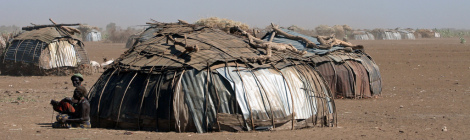
Violence between nomads and sedentary populations has become widespread across the globe and there is an urgent need to address the root causes of this escalation of violence. Conflicts between […]
Issue:Global militarisation
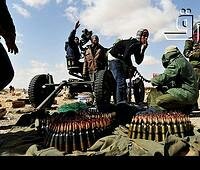
In the current military air strikes against Libyan forces, nations that once supported Colonel Muammar Gaddafi’s regime are now—based on sanction by the United Nations—attacking the forces they were marketing and delivering arms to only weeks before. As the violence escalates and the international community examines how to respond to internal conflict and human rights violations, arms supply should be analysed as it implicates the international community as complicit in the violence it is now trying to end.
The United Nations Security Council has responded to the violence in Libya with remarkable speed and determination. Within two weeks of the start of the uprising in February, the Security Council unanimously denounced the gross and systematic violation of human rights by the Libyan regime and imposed sanctions, including an arms embargo. Contrary to past decisions on UN sanctions relating to internal conflicts, Russia and China did not delay in voting to support sanctions against Libya, thereby responding, in particular, to calls from regional organizations. More remarkably, in March Russia and China decided not to veto a Security Council resolution allowing the use of force to protect the civilian population, again counter to their usual votes.
Whatever the final impact of the UN sanction, the swiftness of the decisions and their wide international support distinguishes the Libyan response from earlier failed attempts to quickly enforce broad UN sanctions to protect civilians from political violence. For example, in 2007 and 2008 the Security Council could not agree on sanctions against Zimbabwe and Myanmar in response to human rights abuses. The key objections by Russia and China in these cases were that international sanctions were not appropriate to address internal situations. The unanimous condemnation of Gaddafi’s regime, however, contrasts starkly to the previously good relations it enjoyed with many governments.
Prior UN and European Union (EU) sanctions on Libya including arms embargoes were lifted in 2003 and 2004, after Libya announced that it had ended its nuclear, biological and chemical weapon programmes and had agreed to compensate the families of those who died in Libyan acts of terrorism. Libya’s return to the international community was welcomed owing to its oil resources, its geographical position as a buffer against unwanted migration from Africa to Europe and its potential role in fighting al-Qaeda related groups.
However, part of the process of inclusion was acceptance of Libya as a buyer of arms, which has implicated the supplier countries in the sustained oppressive military rule. After more than a decade of being cut off from arms supplies, Libya was expected to spend billions of dollars to modernize parts of its large arsenal of outdated arms. In anticipation to a lucrative market, many companies eagerly competed to supply arms to the wealthy state. In November 2010 the Libdex 2010 arms fair in Tripoli reportedly attracted 100 companies from at least 24 countries. Such sales efforts were often politically supported, with the leaders of France, Italy, Russia and the United Kingdom visiting Libya accompanied by representatives of arms companies. Competing with several EU countries, Russia laboured to sell combat aircraft and advanced S-300 long-range air defence systems and clinched deals for the overhaul of tanks and fast attack craft.
Despite EU embargoes and arms supply restrictions having been imposed following human rights abuses in, for example, China, Myanmar and Zimbabwe, several EU states have until now seemingly overlooked Gaddafi’s 41-year track record as an authoritarian and unpredictable ruler with a well-documented lack of respect for human rights.
Although Italy is now a main base for operations against Libya, it had previously cornered the Libyan market for advanced border security and surveillance equipment. French President Nikolas Sarkozy was one of the first to reverse his position from actively supporting arms sales to denouncing the regime and calling for military action. This decision came immediately after the return from Libya of the last French engineers who had been working on military contracts with Libya. French Rafale combat aircraft, which France had been eagerly trying to sell to Libya, have now bombed Libyan howitzers, which an Italian company had planned to refurbish under a contract signed in 2010. The UK, also at the forefront of the military action against Libya, marketed advanced Jernas short-range air defence systems and supplied an advanced communication system for Libyan T-72 tanks which are now being targeted by UK combat aircraft. Over half of the exhibitors at Libdex 2010 were from the UK.
Libya has also procured large quantities of small arms and light weapons. These are likely to proliferate throughout Libya, prolonging the violence, or they may leak to conflicts or armed groups elsewhere. In 2007–2008 Ukraine supplied over 100 000 rifles to Libya. Russia reportedly signed a major contract for small arms in 2010 and probably also delivered several compact Igla-S advanced anti-aircraft missiles. In 2009 an Italian company supplied about 10 000 handguns, and authorities in Belgium allowed the supply of a first small batch of high-tech rifles. The latter argued that the weapons were intended for use by Libyan troops protecting humanitarian aid convoys to Darfur. The UK did not allow an arms dealer to export 130 000 Kalashnikov rifles because of the risk that they would be diverted to Darfur, but it allowed the marketing of sniper rifles to Libya.
Despite the relentless sales efforts by arms companies, Libya held back on contracts for new major arms. Therefore, it is possible that restraint in supplies of major arms may not have stopped the current bloodshed.
However, it can also be argued that the eagerness of many states to supply weapons and so-called security equipment—symbols of power and tools of repression—signalled support of Gaddafi’s regime. Furthermore, if the violence had started later or if suppliers had succeeded earlier in convincing Gaddafi to procure advanced arms, the presence of these weapons in Libya could have complicated the decisions about and enforcement of the current UN sanctioned actions against Libya. In particular, if Russian S-300s and British Jernas Surface to Air Missile systems had been delivered, they would have been major obstacles in enforcing the no-fly zone.
Soon after the First Gulf War, the international community reviewed their arms trade policies, realizing that supplying arms to Iraq may have strengthened Saddam Hussein’s belief that he could invade Kuwait without punishment. Guidelines for arms exports were formulated, and transparency in international arms flows increased. The role of arms supplies to Libya in the present conflict must be similarly examined. The swiftness with which an arms embargo was imposed as a first action is encouraging. However, to inform the debate on arms trade controls, a critical evaluation of arms supply policies towards Libya is paramount in order to assess how such policies risk emboldening authoritarian regimes and how commercial and national interests may blind governments to the repercussions involved in arms trade.
Image source: B.R.Q.
This article was originally published on SIPRI
 Delicious
 Digg
Digg StumbleUpon
 Reddit
Posted on 30/03/11
Climate change is high on both domestic and international political agendas as countries face up to the huge environmental challenges the world now faces. Whilst this attention is welcome, less energy is being focused on the inevitable impact climate change will have on security issues. The well-documented physical effects of climate change will have knock-on socio-economic impacts, such as loss of infrastructure, resource scarcity and the mass displacement of peoples. These in turn could produce serious security consequences that will present new challenges to governments trying to maintain stability.
Issue:Competition over resources

The post-Rio +20 discussion has focused a great deal on trade-offs between the global environment and the global economy. This sort of thinking obscures the extent to which global trends like increasing competition over scarce resources not only threatens both national and human security but actually threatens long-term economic stability as well. In an interview for the Woodrow Wilson Center, explorer and a co-founder of Earth Eco International, Alexandra Cousteau explains how this relates to the global use of water.
The New Security Beat blog, a project of the Woodrow Wilson Center which emphasises the connections between population, health and environment policies for global security, have picked up on the importance of this issue at a time of continuing global economic crisis. The false trade-off between environmental sustainability and economic recovery was reflected in the Rio+20 talks. While the talks produced a laudable outcome document on “The Future We Want” which calls for “integrated and sustainable management of natural resources and ecosystems that supports, inter alia, economic, social and human development” very little of substance on the most pressing environmental and development issues emerged from the meeting. The talks were by and large overshadowed by economic crises in Europe and elsewhere with the predictable result that short-term and competitive impulses outweighed long-term and strategic discussions.
Alexandra Cousteau’s interview highlights that a healthy economy is dependent upon sustainable approaches to resources such as fresh water supplies. One of the key reasons for this is that increased competition over water creates insecurity of many different kinds (sometimes with the potential for conflict) – and this is never good news for growth and development.
The full New Security Beat article with an excerpt from Alexandra Cousteau’s interview is available here.
Image source: Oxfam International.
Delicious Digg StumbleUpon RedditPosted on 28/06/12
This article is taken from Paul Rogers’ Monthly Global Security Briefings and was originally posted by Oxford Research Group on 12 March, 2014.
Recent examples of short-term climate disruption have done much to bring the overall issue of climate change up the political agenda. In responding to what will be one of the key challenges of the next decades – well beyond the 15-year lifetime of the post-2015 global development goals currently under discussion – much of the attention has been focused on the need to adapt to those elements of climate change that are already irreversible and also to the need to decarbonise existing high carbon-emitting economies. What needs much greater attention is the fundamental need to ensure that low-carbon emitters in the Global South are enabled to combine effective human development with responding to the challenges of climate change.
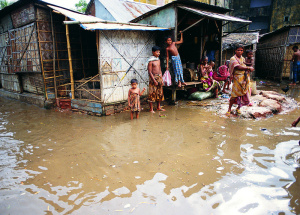
Floodwaters surround houses in Dhaka, Bangladesh, one of the world’s most climate vulnerable countries. Source: CAPRA Initiative (Flickr)
The scientific evidence that climate change is happening is now overwhelming and only a tiny handful of scientists question its anthropogenic causes. The most recent decadal report from the World Meteorological Office (WMO), for 2001-2010, confirms that climate change already involves disruption, with the decade seeing a clear increase in impact across the world. Events since 2010, including excessive heat waves, floods, droughts and the strongest land-fall cyclone (Typhoon Haiyan) ever recorded all point to accelerated disruption.
In recent years there has been a relative pause in the rate of atmospheric warming but research points to aspects of the Southern Oscillation being responsible, temporarily slowing the overall rate of warming of the atmosphere, but not of the oceans. This is expected to change in the second half of the current decade and the effect of this will be that anthropogenic-induced warming and natural cycles will be in synchrony, leading to rapid change and greater climatic disruption.
Climate change is thus expected to accelerate but there is, in addition, abundant evidence that it is already a markedly asymmetric process. There are many indications that substantial areas of the tropics and sub-tropics will heat up and dry out faster than temperate latitudes. This is significant for four reasons:
The other element of asymmetry – relatively faster warming of the near-Arctic – is directly advantageous to some countries, most notably Russia and Canada, both of whom stand to benefit in the short term in three ways:
These two countries are also major fossil fuel producers so they benefit through these revenues, including easier exploitation of Arctic reserves, as well as from the impact of their use since this is likely to enhance Arctic warming. It is hardly surprising that neither government has much interest in controlling carbon emissions. As a Permanent Observer at the Arctic Council, the UK could do much to work with the five Nordic countries, all Main Council Members, on this issue, also involving new observer states, such as China, India, Japan and South Korea that have an interest in new sea routes, but are increasingly aware of the potential direct negative impacts on their own economies of climate change.
The direct denial of climate change as a phenomenon affecting human society still persists and is most clearly seen in two powerful interest groups. One is the fossil fuel industry, especially oil companies and producer countries that have a clear interest in protecting their revenues. There are also major interest groups clustered around those who genuinely believe that the unrestricted free market form of capitalism is the only appropriate system for the global economy. As such they are deeply suspicious of governmental interference in the economy and therefore highly suspicious of a world-wide challenge that demands strong intergovernmental coordination and government action.
Both groups have been powerful and effective supporters of the denial community and though they are helped by the governmental attitudes of countries such as Russia and Canada, their greatest support came from the Bush administration in the United States in 2001-2009. Their influence is now declining for three broad reasons.
The two main responses to climate change currently envisaged are the progressive decarbonisation of carbon-intensive societies and the adaptation of high- and low- carbon societies to the impacts of climate change that are inevitable given the existing increases in atmospheric carbon. Both of these remain likely to gain in importance given the recognition of the huge challenges ahead. While the action so far is inadequate, it at least now shows signs of some prioritising. Whether the 80% carbon emission requirements of industrial societies can be achieved within twenty years is, at most, questionable, but it is now at least recognised as a worthy aim.
There is also recognition that adaptation is addressing symptoms rather than responding to causes – improved flood defences in a country such as Britain may well be necessary but unless climate change is halted they are just short-term responses that will progressively be overwhelmed. Similarly, there is already good work going on in aiding the adaptation of less developed economies through, for example, the breeding of robust food grain varieties more able to withstand low rainfall. Such work needs considerable expansion but this, and the progressive decarbonisation of high emitters still misses out a crucial element in responding to climate change.
In relative terms, the missing element is the low level of investment in the evolution of low-carbon economies of societies that have not substantially industrialised, mainly those in the tropical and sub-tropical regions of the Global South. Such countries include most of the most marginalised and poorest people on Earth where there is a deep-rooted desire for far greater life chances, yet these cannot be met through the modes of economic organisation of the industrialised North. If the marginalised majority is to see its development prospects enhanced then this has to be achieved through new forms of low-carbon economic development. Countries have to succeed without following the path taken by industrialised states over the past two hundred years.
It follows that there is a very strong case for a state such as the UK prioritising any form of development assistance which aids this process. Much of this will centre on any form of low carbon energy use, including a wide range of renewable technologies, with major improvements in energy conservation and storage. Much work is already going on in this area, not least in relation to renewable energy technologies readily available to non-networked societies. It is also notable that when technologies emerge which demonstrate obvious utility, the speed of take-up can be remarkable. The cell-phone revolution in sub-Saharan Africa is just one example.
Regrettably, UK Department for International Development (DFID) operational plans for 2013-14 indicate that low carbon development (LCD) targets from the Department’s 2011-15 strategy have been reduced or abandoned. The 2015 target for installed clean energy capacity has been reduced by almost 97%, from 3GW to 100MW. The original target to raise $610 million in private finance for LCD has disappeared, having raised $15 million by 2013.
If the UK development programme was to commit just 20% of its budget to this area of work, the results could be extremely valuable, especially if part of that was to encourage North-South research and development partnerships. Furthermore, while the British development programme has many faults, it has grown to be the world’s second largest and there is sufficient cross-party support for this to be sustained against opposition. Because of the size of this programme, the UK has a more powerful voice than most in intergovernmental fora relating to development. It can use this voice to help ensure that the commitment promoted here is shared by other national and intergovernmental development programmes.
Climate disruption is one of the greatest challenges facing humankind, a challenge that is at last becoming recognised as such because of the extreme nature of many recent weather events. Decarbonising major industrial economies and funding adaptation to the already inevitable impact of climate change are essential responses but they must be accompanied by major programmes to ensure that human development in the poorer economies can be fully accomplished through processes of low carbon economic development. This is a critically important task over the coming decades, is insufficiently recognised as such, and should be a priority for any serious political party committed to the world-wide development of human well-being.
Paul Rogers is Global Security Consultant to Oxford Research Group, for which he writes monthly security briefings. He is Professor of Peace Studies at the University of Bradford and author of numerous books including ‘Beyond Terror’. Paul writes a weekly column for openDemocracy and tweets regularly at @ProfPRogers.

Author’s Note: This opinion peace is based on research conducted among South African Peacekeepers, published in the Journal of International Peacekeeping, 19 (2015) 227-248. The motivation to increase the number […]
Issues:Global militarisation, Marginalisation
 This article addresses how systems of capital that underpin the present world structure perpetuate both global insecurity and endemic poverty. By upholding the practice of global arms sales, violence is endorsed by state and non-state actors continuing this inequity. Alternatives to the dominant security paradigm nevertheless exist.
Poverty is violence, an enjoined condition sustained by capital and yet paradoxically ignored by it. Capital is possessed and dispensed by the various capitalist constructs that currently function and while the 2008 global recession revealed many variables within these constructs as extremely suspect, they nevertheless remain, guaranteeing continued wealth for elite powers. The poor in turn exist insecure, in need and in want. As little action is offered against these inequitable systems, state or global – governments seem more intent on short-tem economic ‘Band-aids’ the focus being save OUR souls – the poor linger, trapped in violence, deprived of voice and rights.
Essayists such as Peter Singer and Thomas Pogge have highlighted the factors that constitute much of the global systemic inequity of capital, although one remains particularly pervasive, that of the global sale of armaments. The possession and deployment of arms by governments, militia groups and organized crime perpetuate inequality, poverty and violence; with a gun there is no reason or inquiry, the means displays the message. Arms and the man, in reference to the title of this piece, defend their capital interests and so uphold suffering. A sobering statistic emerges from the Commission of Human Security: The United Nation’s Security Council, responsible ‘for the maintenance of international peace and security’ (www.un.org) has (with the exclusion of China) four permanent members – France, the Russian Federation, the United Kingdom and the United States – who together sell 78% of global exports of conventional weapons (Figures taken from Commission of Human Security Final Report, 2003:134). Germany, although not a permanent member of the Security Council, is another major contributor and is responsible for another 5% of conventional weapon sales. It is estimated that about two-thirds of these exports go to developing countries (ibid.). The question as I have suggested in previous articles following the peace education theorist Betty Reardon is what kind of ‘security’ are the permanent members of this council purporting to deal in and who is this security really for?
In peace theory, conflict is inevitable but when handled constructively conflict is a force for positive change. Both Gandhi and Martin Luther King Jr. practiced methods of non-violence and constructive activism, which resulted in effective change and the people of the Philippines, adopted similar successful methods in their overthrow of the Marcus dictatorship. Violence however, the default of state security, seldom achieves anything other than more violence, what counts here is control and fear. The semantically loaded term terrorism has become the early 21st century’s global mantra for continued armament-as-security spending. Capital thus spent and accrued denies resources for social justice programs such as the UN’s Millennium Development Goals. Regarding terrorism the sociologist Zygmunt Bauman notes that young people in deprived areas become potential targets for extremism [1], Jean Paul Sartre also comments that it is not their violence but ours (the ‘haves’) that oppresses and to the poor it is “the last refuge of their humanity” [2]. Bauman and Sartre’s writings are separated by forty-five years but they detail the same systematic insecurities that sustain poverty and violence, a lack of resources such as education and a systemic disregard for humanity by capital forces.
Democratic governments, wary of their standing in the next election rarely activate radical policies to address inequity. After all why would they? Democratic regimes are in most cases so closely linked to elites and private business in order to ensure their own re-election that status-quo policies tend to dominate over radical changes by default; what’s theirs is theirs, why share? If this sounds simplistic it is meant to be. The economist Ha-Joon Chang reiterates the point that free market policies are not there to make poor countries richer. He further identifies the complex financial instruments that brought down economies in 2008[3]. Ha-Joon Chang recommends banning these financial instruments as products dangerous to society, which is fine, but other systems continue, namely the socialization that validates greed and competition for resources and rewards players with gleaming cars and kitchens. And in case this appears solely as the advertising campaign for western capitalism I believe that Kim Jung-il has a pretty nice place and a sweet ride; tending to support the adage of William Pitt, the Elder that unlimited power is apt to corrupt the minds of those who possess it no matter the flavour of the ideology.
So are there alternatives to the violence of poverty so sustained by the inequities and violence of capital? Realists and pragmatists would say no, this is how it is – social Darwinism. It’s unlikely that Darwin would approve of that term but appropriating other’s resources and ideas for one’s own needs tends to be a realist trait and realist colonizers powered by arms have rarely suffered the indignities of colonization, although it must be said that Japan fared rather well after the Second World War, at least up to 1990. Realism merely (merely?) reiterates tired falsehoods however, we return to the question of inequitable systemic violence and who is interested in acting against it. The answer can be surprising. On a flight to Japan A US soldier who had served two terms of duty in Iraq told me in conversation that many US soldiers felt angered by the US government’s misappropriation of capital in Iraq and with a certain amount of pride recounted how he and others of the US military had worked in deprived areas of the South to build hospitals and relief housing. Soldiers of course simply bear the brunt of policy. They are placed in exceptional circumstances by the judgments of other humans – predominantly guided by capital interests – and those soldiers not morally driven (and yes even soldiers share this trait, my father being one of them) can contravene all manner of international laws and human rights. The philosopher William James posits in The Moral Equivalent of War[4] that the “fatalistic view of war-function… is nonsense” and instead argues for a channeling of the military for solely “constructive interests” – the relief work mentioned above. James echoes H.G. Wells who also saw the military purpose as one of “service and cooperation and of infinitely more honorable emulations.” The question of addressing the enduring links between capital, poverty and violence remains a systemic one.
If like the soldier above many more hold the capacity for humanism then this capacity needs to be imparted into positive action. The aforementioned peace educator Betty Reardon writes, “citizens both female and male are taking it upon themselves of monitoring governments own compliance with laws and fulfillment of policies as an active demonstration of the responsibility of democratic citizenship.” These actions remind governments of their obligations, “urging them to make needed changes before it becomes necessary to embark on measures of organized dissent and/or undertake non-violent resistance”[5]. Rights-driven frameworks are a mainstay of peace education and human rights organizations. They present substance to challenge both state and non-state actors who seek to utilize violence through arms as a means to control and prevail. Existing systems of capital uphold the two deeply iniquitous problems of poverty and violence ensuring their continuance. Social responsibility lies with each of us and it is our duty as responsible citizens therefore to redress these iniquities guided by powerful means such as peace education, to exist without greed and to live as one as wise as Gandhi suggested, in a world separated from the burden of violence and unequal capital in a world we want to see.
[1] Bauman, Z. Liquid Fear. Cambridge: Polity Press, 2006.
[2] Fanon, F. The Wretched of the Earth. Middlesex: Penguin, 1961.
[3] Ha-Joon Chang. 23 things they don’t tell you about capitalism London, Allen Lane, 2010
[4] James, W. The moral equivalent of war.New York: American Association for International Conciliation, 1910
[5] Reardon, B. Education for a culture of peace in a gender perspective. Paris: UNESCO Publishing, 2001.
Author: I. R. Gibson (Associate Professor Interfaculty Institute for International Studies, Ritsumeikan University, Kyoto, Japan) Email: [email protected]
Image source: jamesfischer
 Delicious
 Digg
Digg StumbleUpon
 Reddit
Posted on 17/11/10
A very interesting read. Hope there is more to come.
L. Jackson.
by Marianne Hanson and Jenny Nielsen
Deep tensions and frustrations are rising to the fore as the Nuclear Non-Proliferation Treaty Review Conference in New York gets underway. All parties must act bravely to bridge these deep divides if they are to make progress towards a nuclear-free world.
This year marks several important events in the international nuclear non-proliferation and disarmament regime, including the 2015 Non-Proliferation Treaty Review Conference (NPT RevCon) being held in New York currently, the hoped-for finalization of the Iran deal with the P5 +1 states, and the 70th commemoration of the Hiroshima and Nagasaki bombings. It also marks five years since international humanitarian law was first mentioned explicitly in the NPT process, prompting some states to pursue a ‘humanitarian initiative’, a framing of the discourse on nuclear weapons away from a purely strategic context and towards an emphasis on the catastrophic human, health, resource and environmental consequences which would result from any use of nuclear weapons.
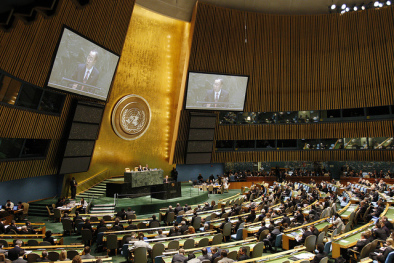
Opening meeting of the 2010 NPT RevCon in New York. Source: Flickr | IAEA
The RevCon, held every five years, is an important diplomatic process for international security. It takes stock of what has been done in the preceding period to curb nuclear proliferation and to implement measures for disarmament, but also looks forward and sets goals for driving these processes further. Since the ending of the Cold War, the divide between those NPT member-states which do not have nuclear weapons and the ones which do possess them (the US, Russia, China, Britain and France) has grown, with many in the former camp deeply disillusioned about the prospects for getting the latter group to disarm. The Conference aims to reach consensus in its final outcome document on what actions should be taken, but it is far from assured that such consensus will be possible this month.
The US administration continues to stress that ‘as long as nuclear weapons exist, the US will maintain a safe, secure, and effective nuclear arsenal’, and this sentiment is echoed by other nuclear weapon states. It is important to note, however, that while we have been lucky in avoiding a nuclear conflict since 1945, given the evidence and research on the risks associated with nuclear arsenals, as long as nuclear weapons exist, there is no guarantee that our luck will hold. As politicians, strategists, diplomats, and civil society groups convene at the UN, they may wish to reflect on what type of brave new nuclear world they want to create.
The 2015 RevCon takes place 20 years after the NPT—widely regarded as the cornerstone of the nuclear non-proliferation regime—was indefinitely extended through a compromise package deal (of three decisions and a Resolution on the Middle East). The Middle East resolution specifically called for efforts towards the establishment of a Middle East zone free of nuclear and all other WMD and their delivery systems. With the elusive Helsinki conference mandated by the 2010 NPT Action Plan yet to be held, due to diverging postures by the regional parties, this issue remains a challenge for states at the New York meeting.
Not surprisingly, there exists a divergence of views on the pathway and measures needed to work towards the elimination of nuclear weapons, including on which proposals are feasible in today’s strategic and political environment. The nuclear weapon states continue to insist that only an incremental, step-by-step approach, with slow reductions, is realistic, given the security tensions present in many parts of the world today. It seems to many non-nuclear weapon states and civil society groups however that this approach has not produced results, and they fear that disarmament will always be postponed and held hostage to such claims. These advocates of disarmament stress the dangers of continuing to rely on nuclear weapons; for a growing number of them, creating a legal ban against nuclear weapons is seen as desirable and feasible, even if the nuclear states do not sign up to such an agreement at the outset.
Any serious efforts to address these divides will require engagement and informed dialogue between the various constituencies involved in the nuclear weapons policy debate. These constituencies include:
It appears very difficult to bridge the diverging views held by these constituencies. A nuclear ban and the stigmatization of nuclear weapons will surely not be acceptable to those individuals and states who still promote nuclear deterrence as a core component of defence doctrines. Some in these strategic communities may perceive the NPT RevCons as merely high-level diplomatic theatrics that take place every five years and which have no direct relevance to infrastructure and ‘real’ policy on nuclear deterrence. Efforts to consolidate a stigmatization of nuclear weapons through a legal framework, such as a proposed nuclear weapons ban treaty—without the engagement of the nuclear weapon possessors and their respective strategic communities will not garner internalized changes. At the 2015 NPT RevCon, the nuclear weapons states will argue that proposals for a nuclear ban at this time will divert focus away from the agreed 2010 Action Plan and the P5 ‘step-by-step’ process.
But many non-nuclear states and civil society groups argue that the lack of implementation of the 2010 Action Plan is undermining the credibility of the regime and the entire NPT review process. They suggest that a nuclear weapon ban treaty ought to be considered. Their argument is that while this will certainly not create a risk-free world in international security, neither will continuation of the status quo provide us with long-term security and stability. Indeed they argue that the status quo carries with it far higher levels of risk to human security and will inevitably lead to discord in international cooperation on non-proliferation priorities.
States parties to the NPT, the nuclear armed states outside the NPT and civil society groups should act bravely to bridge the deep divides on preferred and promoted pathways towards implementing nuclear disarmament, in order to move towards a frank dialogue and progress. This will require balanced assessment by all constituencies of perspectives and priorities. A continuation of the status quo vis-à-vis implementation of Article VI commitments to disarm will not be acceptable to many non-nuclear weapon states whose frustration has been simmering for decades over perceived unfulfilled ‘empty promises’ made in 1995, 2000, and 2010.
At present, the discourse on nuclear weapons policy remains engaged only in ‘enclave deliberation’, perpetuating the views within and excluding external or opposing views and arguments. Palpable frustration and miscommunication abounds within and between these various constituencies, making it imperative to engage and stimulate meaningful dialogue between them. There is a real need to promote informed, respectful, and frank engagement and dialogue between these camps.
Perhaps a way to inch closer to establishing such a dialogue would be to convene key stakeholders in a non-binding, Track II forum, with informed individuals from these separate constituencies, and with a progressive yet balanced agenda which addresses the underlying social constructs, assumptions and rationales of the role of nuclear weapons in security strategies and defence doctrines. An informed forum across the spectrum of diverging perspectives could help to bridge these deep divides.
If the important discussions on framing a humanitarian narrative regarding nuclear weapons which are taking place in New York (as well as in Geneva, and recently in Oslo, Nayarit and Vienna) are to have an actual impact on nuclear deterrence policy, efforts need to be focused on promoting these ideas to the stakeholders within the defence and strategic communities of the nuclear weapon states (as well as to those four nuclear weapon states who remain outside the NPT framework).
The evidence highlighted so far by the humanitarian initiative describes catastrophic scenarios of devastation and nuclear winter. Such dystopias are not inevitable; we have the means to avert them. A nuclear-free world is surely a worthy goal to aim for, but moving these efforts forward will require an understanding of and engagement with alternatives to nuclear deterrence as well as the courage from all constituencies to engage with one another.
Marianne Hanson is Associate Professor of International Relations at the School of Political Science and International Studies, University Of Queensland. She has published widely in the field of international security, with a focus on weapons control, and is currently engaged in a book project examining the emergence of the humanitarian initiative in nuclear weapons debates.
Jenny Nielsen is a Postdoctoral Research Fellow in the School of Political Science and International Studies. Previously, she was a Research Analyst with the Non-proliferation and Disarmament Programme at the International Institute for Strategic Studies (IISS), a Programme Manager for the Defence & Security Programme at Wilton Park, and a Research Assistant for the Mountbatten Centre for International Studies (MCIS) at the University of Southampton. She holds a PhD from the University of Southampton which focused on U.S. nuclear non-proliferation policy vis-à-vis Iran in the 1970s.
Featured image: US nuclear test detonation in 1952. Source: WikiMedia
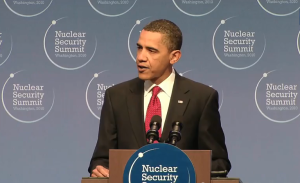 President John F. Kennedy once said:
“You cannot negotiate with people who say what’s mine is mine and what’s yours is negotiable.”
However a small group of states (including the state of which Kennedy was President) have done just this in relation to the possession of nuclear weapons for decades. Five of them (China, France, Russia, the United Kingdom and the United States) have held the position of being the privileged few allowed to possess nuclear weapons under the terms of the 1968 Treaty on the Non-Proliferation of Nuclear Weapons (NPT) while all others agree to forego developing the ‘ultimate weapon’ in return for access to civilian nuclear technology. Three others have refused to sign the treaty (India, Israel and Pakistan) and instead developed their own nuclear weapons (overtly in the cases of India and Pakistan after 1998 and covertly in the case of Israel from the late 1960s) happy to free-ride on the lack of global proliferation ensured by the treaty. To paraphrase Kennedy, the decision of these eight states (nine if you include North Korea from 2003 onwards) to inflict mass destruction on an adversary is theirs, but everyone else’s decision to acquire the same capability can be negotiated away.
What is perhaps most extraordinary about the NPT ‘grand bargain’, as it is often called (although given that the five nuclear weapon states have exactly the same access to civil nuclear technology as the rest of the signatories, ‘bargain’ here really is a polite term for ‘scam’), is that it has remained largely intact for so long. For something built on such a seemingly unsustainable basis as an institutionalised double standard (particularly one that relates to the ultimate survival of nation states), the fact that its indefinite extension was negotiated in 1995 and that the treaty is still with us defies most conventional wisdoms about the ‘dog-eat-dog’ nature of self-help politics in an anarchical international system. Yes, the treaty may have been abused by some states and used as a cover to develop covert weapons programmes (Iraq, Libya, North Korea and possibly Iran) and one state has even withdrawn from the treaty under Article X (North Korea in 2003), but these are four cases in a treaty that boasts 189 signatories.
In many ways the success of the treaty regime provides one of the most robust challenges to the whole concept of sustainable security. Why bother addressing the root causes and underlying drivers of nuclear proliferation if you can effectively stem the flow of nukes by maintaining a treaty which promotes a ‘norm’ of non-proliferation as good international behaviour, and allows you to deflect charges of hypocrisy as long as you make encouraging noises about ‘eventual’ nuclear disarmament at some unspecified point in the future?
However, like a building with rotten foundations, it may be that what has appeared to be a relatively sustainable global non-proliferation regime is far less stable than many believe it to be. Recently, Egyptian negotiators walked out of the UN talks that are held in the lead-up to each five yearly review conference of the NPT. This dramatic move from Egypt was a public expression of the long-held private frustrations of its diplomats who, after being effectively promised serious negotiations towards a Middle East Weapons of Mass Destruction Free Zone (WMDFZ), in return for their support for the indefinite extension of the Treaty in 1995 (and re-affirmed explicitly at the review conference in 2010), face the continued postponement of such talks. The problem is, Israel has no interest at all in such a zone – why would it? A combination of the NPT and Western action against would-be proliferators such as Iraq, Libya and Iran have meant that the construction of a WMDFZ in the Middle East would mean that Israel would either have to join and give up its position as the only state in the region with nuclear weapons, or be the one state in the region that refuses to join. Either way, it would also mean attracting global attention to its nuclear weapons arsenal, something Israel has managed to successfully avoid of late in all the focus on the weaponisation concerns over Iran’s civil programme.
Before leaving the NPT preparatory talks, Egypt’s Ambassador Hisham Badr explicitly referred to the resolution passed in 1995 that called for negotiations on a Middle Eastern WMDFZ, and called out those that thought they could get away with Egypt sticking to its side of the bargain and getting little in return. His comments challenged the idea that the double standard could be maintained indefinitely when he stated clearly that “we cannot wait forever for this resolution to be implemented.”
Perhaps the most worrying signs here are the responses to Egypt’s move. Israeli diplomats have effectively said that with the security situation in Syria, in Egypt itself and elsewhere in the region, a WMDFZ is the least of its concerns. The United States has referred to the episode as “theatrics” and in the meantime has pushed on with negotiating a nuclear trade pact with Saudi Arabia. These trade deal talks are taking place at a time when experts are tracking an increase in the acquisition of strategic ballistic and cruise missiles by the Kingdom. The other nuclear weapons states have been conspicuously quiet throughout.
So rather than seeing this as a sign of the potential unravelling of an unsustainable regime based on a double standard, those who have most to gain from the NPT arrangement (both inside and outside the regime), are betting on this being just another ‘NPT in crisis’ – a moment they assume will pass. Whether this storm will blow over (like a mushroom cloud over the Pacific Ocean…no, sorry that bad pun is stopping right there!) is now THE big question for those concerned about nuclear threats. If the regime falls apart and 189 states are no longer happy to give up nuclear weapons, the simple days of dealing with Iranian and North Korean nuclear ‘crises’ will be looked back upon with great fondness.
While the NPT regime story is one of a continuing death foretold, it is difficult to see how the all-important 2015 review conference can outrun the double standard that sits at the heart of the regime without all signatories applying some degree of what could be called a ‘sustainable security’ approach. As Egypt’s actions make clear, anything less than a regime specifically geared towards addressing the reasons why some states seek nuclear weapons – including regional insecurity, conventional weapons imbalances and the prestige attached to nuclear arsenals by their possessors – is a regime existing on borrowed time.
Ben Zala is a Lecturer in International Politics at the University of Leicester.
Image source: Wikimedia
 From the Center for American Progress:
 This new FPC publication is being launched to mark World Environment Day (5 June). The report aims to stimulate discussion and debate amongst a wide ranging audience in an effort to promote the centrality of water on today’s foreign policy agenda, particularly in light of the increasing environmental shocks and stresses presented by climate change and global population growth. In an increasingly interconnected world, where cooperation is no longer an option but an imperative, how can foreign policy inform and provide a more effective response to improving the management of freshwater while ensuring reliable and sustainable access?
 This excellent report by International Alert examines the growing risk of armed conflict as a result of climate change now being experienced by some of the most fragile regions of the world, and reveals the alarming consequences of continued inaction to enable affected countries to adapt to the consequences of climate driven changes on their populations.
 International Alert, together with the Bangladesh Institute for Peace and Security Studies (BIPSS) and the Regional Centre for Security Studies and the Peacebuilding and Development Institute in Sri Lanka, co-hosted an expert roundtable on the Security Implications of Climate Change in South Asia in Dhaka, Bangladesh on 29th-30th March 2010.
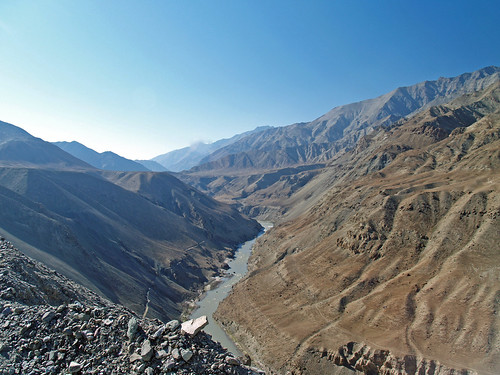 A 1960 trans-boundary water sharing agreement between India and Pakistan has stood the test of two wars and various periods of unease. Climate change, however, may prove the toughest test of the Indus River deal, observers say. The two rival South Asian nations share the 190 billion cubic meters of Himalayan snowmelt that course through the Indus each year. The river originates from India’s Himalayan Hindu Kush mountains and flows through Jammu and Kashmir and then through Pakistan to reach the Arabian Sea. But experts say that climate change could alter the timing and rate of snow melt, with an initial increase in annual runoff followed eventually by a steep decrease that will severely curb river flows. That could provoke conflict between the two nations, particularly as India develops dams along the upper riches of the Indus, raising questions in Pakistan over whether falling water availability is due to climate change or to India’s reservoirs.
 Good news does not sell newspapers. Nor, it seems, does the idea of respect for human dignity. In West Asia, where the majority of people have known little other than outright war or simmering conflict, it should come as little surprise that people have lost their faith in the possibility of real peace. Real peace can be a frightening prospect; it means burying the hatchet and beating swords into the proverbial ploughshares. No easy task when we are all burdened by historical and psychological baggage.
Comments
Post new comment