Blog

  • Sustainable Security

    To understand why some groups fighting in civil conflicts target civilians more than others, it is vital to examine the role of ideology.

    Recent civil wars in Iraq and Syria underscore the fact that different armed groups fighting in the same conflict can adopt strikingly different approaches to the treatment of civilians. While historically about 40 percent of states and rebels have exercised restraint, others’ victimization of civilians has been routine and manifold. Much of the current understanding attributes these differences to armed groups’ material resources, organization, territorial control, and similar factors. While providing important insights, these accounts are incomplete at best because they either neglect or downplay the critical role that ideology plays in targeting civilians.

    Mainstream Explanations of Civilian Victimization

    Many analysts share a key assumption with the classical literature on insurgency and counter-insurgency – such as the works of T.E. Lawrence and Mao Tse-Tung – that securing the support of local populations is critical for fighting groups. Several implications are drawn. For example, groups that enjoy local population’s support may be less prone to victimize civilians, particularly in the communities that serve as their home or recruitment base. Conversely, such support can backfire because the enemy forces can attempt to raise its costs for the local population by targeting civilians in this community.

    Based primarily on the study of the Greek Civil War (1942–1949), another influential account argues that groups with higher degree of control over a territory are likely to selectively target enemy forces rather than indiscriminately attack civilians. In this view, information flows are pivotal: higher degree of territorial control means better information and this makes it possible and expedient to identify and selectively target specific individuals.

    Another assumption is that the fighting groups’ capabilities – their size, training, and experience – relative to their rivals can also affect their targeting patterns. Weak groups can be more prone to victimize civilians than stronger groups as they can fail to limit the collateral damage of their operations to civilians. Alternatively, when they lack resources to secure civilian support through offering benefits, such groups can also deliberately choose to target civilians as an alternative way to coerce such support. An analysis of violence in Afghanistan between 2004 and 2009, disaggregated by province and month, supports this view.

    The amount of material resources at the armed group’s disposal and where it obtains them may also affect its targeting patterns. If groups acquire their resources through exploiting natural resources or through foreign sponsorship, they may be more likely to attack civilians than if they depended on the local population for resources. External donor characteristics can matter as well, with a small number of democratic donors believed to have a more restraining effect than either autocratic donors or many donors.

    A survey of former fighters in Sierra Leone’s civil war (1991–2002) suggests that organizational characteristics are the pivotal factor. According to this view, civilian abuse is likely to be higher if groups rely on material incentives in their recruitment (thus attracting more opportunists), have an ethnically diverse group of fighters (thus lacking ways to control the fighters’ behavior through social pressure), and lack disciplinary mechanisms. This view resonates with Niccolo Machiavelli’s aversion toward mercenaries and Mao Tse-Tung’s insistence that “it is only undisciplined troops who make the people their enemies.”

    More recently, some analysts have drawn attention to the role of political and ethnic cleavages, which had previously been downplayed in large cross-national studies of civil wars. Based on a study of Spanish Civil War (1936–1939), one view maintains that civilians who have mobilized for one belligerent group are likely to be attacked by rivals as they would be considered assets for this group. A study of violence against civilians in African conflicts between 1989 and 2009 holds that ethnic background can serve as a cue for targeting because in an environment of uncertainty about people’s allegiances it serves as a shortcut for identifying potential enemy supporters.

    Much of this thinking on civil wars has tended to relegate ideology to a secondary role, if any at all. Yet, a notable resurgence of attention shows just how consequential ideology can be in understanding civil wars.

     Why Ideology Matters
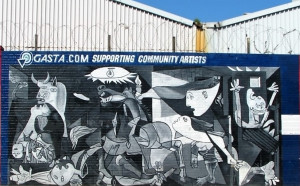
    Mural in Belfast, Northern Ireland based on the painting “Guernica” by Pablo Picasso. Image credit: Rossographer.

    Research shows that in newly democratizing countries, a combination of nationalist ideology and unconsolidated democracy can help ignite internal and international conflict in the first place. Revolutionary ideologies have historically been critical ingredients for a robust insurgency by fostering strong commitment and mobilization. They can enhance fighting capacity by boosting morale. Although often based on case studies of specific groups or lacking in-depth systematic evidence, qualitative literature on civil wars and traditional research on terrorism historically have pointed at the role of ideology in armed groups’ target selection (one solid case study can be found here).

    In a recent study our working hypothesis is that far from being a mere rhetorical device, ideology can be the key factor that explains civilian victimization patterns across fighting groups in civil wars. We draw on the established concept of ideology which sees it as “shared framework of mental models that groups of individuals possess that provides both an interpretation of the environment and a prescription as to how that environment should be structured”. We argue that its effect on civilian victimization can work through two channels.

    The first is through framing some groups as hostile to the armed groups’ cause. The ideology that an armed group espouses identifies the group’s vision and the sources of threats to achieving this vision. These threat perceptions foster identifying friends and enemies of the cause. The ideology can then frame “enemies” as legitimate targets. Belonging to a certain ethnicity or territory may be a marker, but it need not be just any civilian from within these groups that becomes a legitimate target – only those can be identified as such who are seen through the ideological prism as hostile to the group’s cause.

    However, there is nothing automatic between seeing members of a specific group as hostile and victimizing them. The second channel through which ideology can affect civilian victimization is through determining strategies that the group accepts as legitimate in achieving its vision. Of course, in some cases different types of violence may be included or excluded for strategic reasons. But a group’s ideology can also prescribe adopting a strategy that is costly for the group from the material or organizational point of view. That is, some strategies may be filtered out despite presenting strategic or material advantages. This is probably because they go against the group’s vision or its identity as a certain ideological force. Therefore, some ideologies will see civilian victimization as part of their legitimate repertoire of violence to attain its vision, while others will impose constraints on or even exclude it from the group’s approach.

    It might be tempting to follow this reasoning by drawing a typology of ideologies by their approach to civilian victimization. However, often broad ideological frameworks are adapted to local conditions – they are crystallized into specific ideologies that different groups adopt. In other words, groups in different contexts that seem to share an ideology may develop different approaches, such as European leftist groups in 1970-1990s like Baader-Meinhof Group in West Germany and the Red Brigades in Italy. Instead, we should understand an armed group’s ideology in its particular context.

    Case Study: Northern Ireland

    In our study, we examined these ideas using quantitative and qualitative empirical evidence on armed group violence in Northern Ireland’s conflict between 1969 and 2005.  This conflict provides a fertile ground for this study because it involved a number of groups that differed from one another in several ways and because there were considerable differences in civilian killings across groups, locations and time. Unlike many other conflicts, it has also been well documented on the level of individual fatalities, which makes it possible to test our ideas with more nuance than previous studies. Our dataset provides details on almost all fatalities directly attributed to the conflict (3,702) and allows disaggregating them by perpetrator group, location, victim’s identity, etc. Then we try to see whether different perpetrator group characteristics, such as their size, structure, or ideology, consistently predict whether the victim is civilian or combatant as well as the victim’s ethnic identity. We do this in a framework that simultaneously accounts for all suggested factors.

    While the two main ideologies embraced by the fighting groups – Irish Republicanism and Unionism – shared similarities, such as the focus on nationalism, historically they developed distinct approaches. Drawing on the civic nationalist ideology of the French Revolution, Irish Republicanism stressed the oppression of all Irish people and adopted an anti-colonialist identity that aimed to end imperial control. This entailed a reluctance to target would-be members of the “imagined community” of free Ireland and instead emphasized focusing on combatants who were viewed as struggling to preserve imperial domination.

    Drawing on the historical “Protestant Ascendancy” movement, the ideology of Unionism came to emphasize a defensive settler identity that viewed Catholics as “fifth-columnist” Irish nationalists who intend to dismantle Northern Ireland and its union with Britain. We conjectured that these ideological differences were likely to shape the fighting groups’ targeting patterns. While the group ideologies were further crystallized during the course of the conflict, their key tenets remained.

    Our preliminary findings from statistical analysis suggest that the fighting group ideologies were the strongest and most consistent predictors of civilian victimization patterns. Fighting groups that embraced Unionist ideology, such as Ulster Defence Association (UDA) or Ulster Volunteer Force (UVF), were on average more likely to target civilians and launch cross-ethnic attacks on civilians, while Republican fighting groups, such as the Provisional Irish Republican Army (Provisional IRA) or Irish National Liberation Army (INLA), were on average more likely to focus on combatants. These results hold when we account for all other suggested factors, such as group size or resources. Our qualitative historical study suggests that these differences emerged because of differences in previously adopted norms, patterns of recruitment, and relations with the British state forces.

    While civilian targeting was prevalent in the initial stages of the conflict in early 1970s, over time it decreased in terms of total numbers. Republican groups were responsible for the largest number of total fatalities and Loyalist paramilitaries were responsible for the largest number of civilian killings. After mid-1970s, all three armed blocs – state forces, Unionist groups, and Irish Republican groups – killed fewer civilians than before, but relative proportions (combatant-civilian) remained the same.

    Implications

    Naturally, our study may be limited by its focus on civilian killings rather than civilian abuse more generally or our focus on one civil war. Nonetheless, our tentative findings strongly indicate that ideological factors need to be taken much more seriously than before in trying to understand and hopefully prevent civilian victimization by armed groups in civil wars. Neglecting these factors or downplaying their significance is simply dangerous. This is all the more important at the time when transmission of ideas is considerably enhanced by technology, which does not discriminate between benevolent or harmful ideologies. This, for example, is most drastically illustrated by Isil’s media-savvy, effective propaganda.

    Anar K. Ahmadov is Assistant Professor of Political Economy at Leiden University.

    James Hughes is Professor of Comparative Politics and Director of the Conflict Research Group at the London School of Economics and Political Science (LSE).

  • The Three Pillars of Sustainable National Security in a Transnational World

    The Three Pillars of Sustainable National Security in a Transnational World

    Dr. Nayef R.F. Al-Rodhan | Geneva Centre for Security Policy | September 2009

    In today’s transnational world, a sustainable national security policy cannot be achieved through national capabilities alone. Sustainable national security instead rests on three pillars: 1) a multi-sum security principle based on justice at all levels, multilateralism and multidimensionality (including human, environmental, national, transnational and transcultural/transcivilizational security); 2) symbiotic realism in international relations, whereby mutual cooperation among states results in non-conflictual absolute gains; and 3) transcivilizational synergy which results from mutual respect, multiculturalism, cosmopolitanism and cross-fertilization, and will lead to global justice, security and prosperity. This is essential reading for anyone interested in an innovative approach to the complex yet central subject of sustainable national security.

    Purchase book here. 

  • Sustainable Security

    With conflict causing much political instability and human suffering in parts of the world, there is a need for preventive diplomacy which stops the outbreak, relapse or escalation of organized violence. Frontline diplomats have potentially crucial roles to play in early preventive efforts.

    Conflict prevention is popular in international political circles these days. In April 2016, the UN Security Council and General Assembly passed concurring resolutions on the review of the UN peacebuilding architecture in which they confirmed the essential role of the UN in “preventing the outbreak, escalation, continuation and recurrence of conflict”. On 5 July, the German Federal Foreign Office launched a public outreach process for the development of new guidelines on civilian crisis prevention, an area for which it increased its funds by 260% from 2015 to 2016 to 248.5 million €. Last year, the British government announced plans to increase its Conflict, Stability and Security Fund from 1 to 1.3 billion pounds by 2019/20.

    The political reasoning behind the call for prevention is simple: if the escalation of political disputes into organized violence or even outright civil war can be stopped in its tracks, it not only saves lives, but also keeps refugee flows created by war at bay and helps leaders avoid making difficult and potentially unpopular decisions about whether to launch military interventions to quell conflicts. Despite what seemed like a long-term decline of organized violence, the number of armed conflicts has ticked up again in the past few years: 2014 saw 40 armed conflicts, the highest number since 1999, and 126,059 conflict-related fatalities, the highest number since 1994, according to the Uppsala Conflict Data Program. At the end of 2015, 65.3 million people were either internally displaced or international refugees, the highest number since the Second World War. Yet many UN member states tend to view conflict prevention with suspicion, as they fear international meddling in what they perceive to be their domestic political affairs.

    Putting high-flying international commitments to conflict prevention into practice and “sustaining peace” throughout the conflict cycle, as the SC and GA affirmed in their parallel resolutions, requires an astute handling of sensitive matters with intelligence and tact, prudence and patience. In short: diplomacy. While government ministries can, of course, reach out to their foreign counterparts directly and permanent representatives negotiate mandates for international organisations in New York or Geneva, frontline diplomats, i.e. members of the foreign service posted abroad, have potentially crucial roles to play in early preventive efforts. Preventive diplomacy aims at the short- to medium-term prevention of the outbreak, relapse or escalation of organized violence, through both coercive and non-coercive means serving a political purpose. Taking preventive diplomacy seriously requires a different, more active and principled kind of diplomacy. In order to do adjust to this profile, frontline diplomats need to be better equipped, trained, and organisationally empowered.

    Frontline preventive diplomacy: benefits and risks

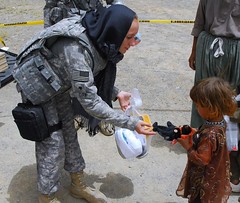
    100612-F-7713A-171

    Image via U.S. Army via Flickr.

    Frontline diplomats may be able to resort to thematic expertise, funds or international networks that they can employ to tweak political dynamics in a country. As some diplomats are repeatedly posted to conflict regions, they may draw comparative conclusions and show domestic parties the risky trajectories of their actions. And diplomats are, theoretically at least, trained in the very skills of facilitation, brokering and negotiation that might be needed to cool down heated tensions.

    As the International Crisis Group lays out in an excellent recent report, preventive diplomacy is fraught with dilemmas and considerable challenges. Usually, the elites in a given country carry the main responsibility for the escalation of political conflicts, and even high-level officials of major powers have limited entry points when positions have become deeply polarized and parties are entrenched in a zero-sum logic. As the Crisis Group succinctly observes: “Outsiders must tread carefully when pursuing these goals. All early action involves engaging in fluid political environments. There is a high chance of political friction, with misunderstandings and miscalculations derailing plans. No form of crisis response is neutral.”

    Frontline diplomats may grant insurgent groups unwarranted legitimacy simply by meeting them. Officially mediating between parties may raise expectations about peaceful conflict resolution, that, when disappointed, may embolden domestic actors to pursue their goals by violent means. Short-term goals of stabilization may conflict with long-term goals of democratisation and transitional justice. Thus, preventive engagements must be based on continuing political analysis and do-no-harm principles.

    A different diplomacy

    More fundamentally, an active pursuit of conflict prevention requires a different kind of diplomacy. Conventionally, diplomats pursue a narrowly conceived “national interest”, acting on explicit instructions from the capital. They concentrate on the governing authorities as official partners in their bilateral relations. As a result, their engagement is reactive and ad hoc, while preventive diplomacy requires a forward-looking and principled approach, as David Hamburg already wrote in 2003.

    “I am not the person who sits all day at the office. I want to see how people live out there,” is how German Ambassador to South Africa Walter Lindner introduces himself in a video message on the embassy’s website. It sums up the kind of spirit diplomats need to embrace are they to further the ambitious objective of conflict prevention. Christopher J. Stevens, the US Ambassador to Libya murdered in 2012, represented the skills of a “guerrilla diplomat” (Daryl Copeland): multilingual, frequently speaking to people on the street, and showing respect and compassion for local cultures, traits which President Obama highlighted in his speech at the UN General Debate in September 2012.

    Yet these diplomats are usually seen as “unconventional”. If governments want to take their stated objective of crisis prevention seriously, they need to embrace the following policies that support and empower their agents in the field. Political leaders and senior officials need to foster an organisational culture that grants ambassadors and other frontline diplomats more autonomy, based on frequent reporting on their activities. Leaders need to highlight bold behaviour, even when diplomats encounter hostility from host governments despite their most sensitive efforts; rewarding best practices can start horizontal socialization processes. Ministries need to provide frontline diplomats with the authority to quickly disperse small development funds and include them in internal discussions on government-wide country strategies.

    Lastly, they need to offer training to their diplomats in conflict analysis, mediation and critical thinking. The German Federal Foreign Office, for example, only started to provide dedicated mediation courses to its attachés and more senior diplomats a few weeks ago. Similarly, a recent reform report of the British Foreign and Commonwealth Office argued to increase training in stabilisation and mediation as core skills for diplomats posted to fragile areas. Many intra-state conflicts are based on disputes within a country’s political elite; foreign diplomats trained in peace mediation may be able to facilitate conversations between polarized parties. As external third parties, they may help local stakeholders to identify mutually acceptable ways that lead out of their conflicts.

    Conclusion

    Historically, Western biases and wilful ignorance of domestic politics and cultures have marred international engagement in conflict prevention and resolution. A healthy dose of scepticism towards a renewed push for preventive diplomacy is therefore warranted. Diplomats need to overcome a rigid binary of local stakeholders whose actions need to be prevented and international actors who conduct preventive diplomacy.

    If foreign services embrace a bolder, innovative style of (preventive) diplomacy that rewards local sensitivity, autonomy and innovation, however, they may improve the implementation of their foreign policy overall. Frontline diplomats need to travel in their host country extensively, collecting information about local grievances through first-hand observation. They need to reach out to the host population directly, through personal use of social media, as many British diplomats already do. And they need to maintain reliable relationships with key political actors that continue to function in crisis situations. If diplomats do that, they will find that an increased attention towards conflict prevention entails benefits – a deeper understanding of elite politics, influence beyond the capital and credibility with a broad spectrum of a country’s society – that continue to exist when a crisis ends.

    Gerrit Kurtz is a postgraduate research student at the War Studies Department of King’s College London, where he researches the role of frontline diplomats in conflict prevention. He is also a non-resident fellow with the Global Public Policy Institute in Berlin, where he worked between 2012 and 2015 on the policies of emerging powers on a responsibility to protect populations from mass atrocity crimes. He also conducted research in South Sudan on local conflict management by UN peace operations. Aside from preventive diplomacy, conflict management and peacekeeping, his research interests include protection of civilians, transitional justice in the conflict in Sri Lanka, the conflict in South Sudan, as well as German and Indian foreign policy.

  • Sustainable Security

    Toxic remnants of war and their legacy of civilian harm is seriously under-explored as an area of conflict. There is a growing consensus that the current legal framework governing conflict and the environment is not fit for purpose – so how could new international norms that merge environmental protection with civilian protection come into effect? 

    In his message on the occasion of the United Nations day on conflict and the environment last month, Ban Ki-moon repeated the disappointingly persistent observation that “the environment has long been a silent casualty of war and armed conflict”. While verging on cliché, the statement speaks to a wider problem about how the environmental impact of conflict is currently recorded, assessed and responded to. Inadequate data collection on the humanitarian and environmental impact of particular weapons or military practices makes determining their acceptability difficult, empowers polluters and acts a barrier to effective post-conflict assistance.

    The toxic legacy of conflict

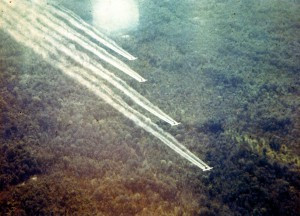
    ranch-hand-run-agent-orange-us-military-in-vietnam

    An Agent Orange spray run by U.S. Air Force during the Vietnam War. Source: Wikimedia

    The health and environmental impact of pollutants is widely recognised in peacetime but this aspect of the public health legacy of conflict is often sidelined in the face of urgent post-conflict response. Pollution sources in conflict can range from munitions constituents to substances released through the destruction, or loss of control, of industrial installations or oil or power infrastructure, from the ubiquitous building rubble to the waste disposal practices and footprint of military installations. As pollutants are released, wartime disruption invariably sees institutional capacity for environmental governance, such as the provision of environmental services and regulatory control, diminished.

    The net result is increased pollution and less capacity to assess and manage it. These toxic remnants of war may leave civilian populations facing acute risks from dangerous industrial compounds, or chronic exposure to pollutants in air, water or food. Some may be highly visible, such as the black plumes of oil fires or military burn pits; others may be invisible but incredibly persistent, such as the dioxins from Agent Orange.

    At a time where toxics in consumer products and emissions from industry, transport and agriculture are increasingly scrutinised and regulated, the lack of attention on the humanitarian impact of conflict pollution seems like a curious omission. Even more so given that the experiences of Agent Orange, Gulf War Syndrome, depleted uranium and more recently burn pits and metal-laden dusts, has placed protection from conflict pollutants firmly on the military’s agenda; as demonstrated by the US’s system of deployment health surveillance which merges environmental data on potential exposures with troop health records.

    Modifying the legal environment

    The norms and standards governing environmental, and by extension, public health protection in peacetime have left the laws of war far behind. Legal provisions for the protection of the environment during war and armed conflict date back to the 1970s, when international disgust at the conduct of the Vietnam War, in particular the use of the defoliant Agent Orange and Cold War fears over the use of environmental modification techniques, resulted in the codification of new international law.

    The 1977 Environmental Modification (ENMOD) Convention and Articles 35 and 55 of Additional Protocol I to the Geneva Conventions did serve to anchor the environment within International Humanitarian Law but it has become increasingly clear that the thresholds for unlawful damage are set too high and are poorly defined. In 2009, the UN Environment Programme (UNEP) joined a long list of legal scholars calling for more progress in the field. They were followed by the International Committee of the Red Cross (ICRC) in 2011. Making the link between environmental protection and the protection of civilians, and noting the need for post-conflict environmental cooperation and assistance, they suggested that: “A new system could be introduced that is based on similar rules recently created for dealing with the legacy of landmines and other explosive remnants of war.”

    While some member states at the ICRC’s 2011 conference did not respond enthusiastically to its proposals, the Nordic governments did take up the gauntlet, pledging to work on the issue of conflict and the environment and report back in late 2015. Following up on one of UNEP’s 2009 recommendations, the International Law Commission, which provides advice to the United Nations General Assembly, has also adopted the issue, initiating a three year legal review that will conclude in 2016. This renewed interest in the environmental and civilian impact of conflict and military activities is welcome, providing as it does a backdrop for engagement and debate, and with a consensus view emerging that the current legal framework is unfit for purpose, the search is now on for practical solutions.

    How do you solve a problem like toxic remnants of war?

    The scope of ‘conflict and the environment’ is vast, covering everything from climate change, to impacts on biodiversity, to natural resources and environmental sustainability as human security, and much else besides. Clearly, then, there is no one size fits all solution. The situation is complicated further by the low operational importance that militaries currently attach to environmental protection, in comparison to mission success and the survival of their personnel. Other nagging problems are the role of non-state actors and, surprisingly, how to define “the environment”, which as a complex system and one that has often been influenced by humanity is a more difficult question than first appears.

    The reality is that conflict will always be environmentally damaging. Much of this damage will be subtle and cumulative – only a minority of incidents, like oil well fires, are photogenic enough to grab the headlines. This seems to suggest that pragmatic measures to minimise, assess and remedy harm are desirable. Happily, when it comes to conflict pollution, a constellation of peacetime environmental norms and standards are available as guidance. As the majority were established to ensure the protection of public and environmental health, the principles they contain are of direct relevance to efforts to increase the protection of civilians. Domestic and International Environmental Law are now being further reinforced by Human Rights Law, which is increasingly establishing links to the environment. Most notably, these principles are being forged in the field of participatory rights – through the right to know about contamination that may impact your rights to health, life or livelihood and to take part in decisions on its management.

    The most cost effective way to reduce pollution is to manage it at source. In the context of toxic remnants of war, the diversity of sources involved requires that a number of parallel approaches be considered. This could entail stricter controls on the deliberate targeting of industrial infrastructure, perhaps by extending existing prohibitions on the targeting of sites that can release ‘dangerous forces’ and placing a greater onus on environmental considerations when determining the military necessity of strikes. Minimisation could also be achieved through greater environmental preparedness before conflict, something that Kuwait implemented prior to the 2003 Iraq War. Other measures could include more stringent controls on emissions and discharges from military bases, or improvements in the screening of weapons constituents.

    Post-conflict environmental assessments are currently undertaken by UNEP. While robust, they often take place many years after conflicts and are dependent on the political interest and generosity of member states. To properly examine the environmental and civilian impact from conflict pollution, it is imperative that more environmental data be recorded. This will require that the number of actors recording data be increased, which in turn will require that the costs of data collection and analysis be reduced. Improvements to how it is then integrated into public health registries will also be required in order to establish harm and target assistance. New technologies are beginning to make this a realistic prospect and, coupled with mapping systems, would help challenge the cliché of the “silent victim”.

    The final pillar of an approach that merges environmental protection with civilian protection is assistance and remediation. In this the ICRC’s 2011 study provides a useful starting point for discussion. Alongside monitoring and an obligation to assess damage and provide reparations, it also proposed new norms on international assistance and cooperation. ICRC’s proposal of a system akin to those applied to mines and explosive remnants of war is interesting and has parallels in the peacetime response to pollution incidents.

    The Toxic Remnants of War Project is currently examining the possible structure of such a mechanism, based on the views of practitioners, civil norms and on historical responses to wartime environmental damage. The establishment this year of a new governing body for UNEP with universal membership – the UN Environment Assembly – perhaps provides a forum where a mechanism could be discussed in detail. Civil society also has an important role to play in efforts to reduce harm from toxic remnants of war. In 2015, a new NGO network will be launched, which seeks to ensure that the toxic legacy of conflict and military activities are minimised, assessed and properly addressed.

    Doug Weir manages the Toxic Remnants of War Project (@detoxconflict) which explores state responsibility for the toxic legacy of military activities and the environmental and humanitarian impact of conflict. 

    Featured image: An Agent Orange spray run by U.S. Air Force during the Vietnam War. Source: Wikimedia 

  • Marginalisation of the majority world

    Marginalisation of the majority world

    A complex interplay of discrimination, global poverty, inequality and deepening socio-economic divisions, together make for key elements of global insecurity. While overall global wealth has increased, the benefits of this economic growth have not been equally shared. The rich-poor divide is actually growing, with a very heavy concentration of growth in relatively few parts of the world, and poverty getting much worse in many other regions. The ‘majority world’ of Asia, Africa and Latin America feel the strongest effects of marginalisation as a result of global elites, concentrated in North America and Europe, striving to maintain political, cultural, economic and military global dominance.

    Tomorrow’s Crises Today: Rio – fighting in the favelas

    UN Habitat and IRIN | http://www.irinnews.org/pdf/in-depth/TomorrowsCrisesToday-Chapter6.pdf | September 2010

    Issue:Marginalisation

    ‘The sheer scale and chaotic construction of the favelas, which became home to hundreds of thousands of migrants, made them the ideal milieu for drug gangs to hide from the police and set up initially paternalistic, de-facto governments, albeit without any concrete political aims.’
    This report explores the human insecurity issues that stem from rapid urbanisation, poverty, cultures of violence and ineffective governance.

    The Great Transition

    Issues:Climate change, Competition over resources, Marginalisation

    Humanity appears caught in a trap with no way out. ‘Business as usual’ is no longer an option. However, halting and reversing our consumption of more and more ‘stuff’ appears likely to trigger a massive depression with serious unemployment and poverty. This is certainly true if all we do is ‘apply the brakes’ without fundamentally redesigning the whole economic system.
    Attach PDF: 

    Youth Breaking Cycles of Marginalisation, Resource Competition and Violence in Yemen

    Issues:Competition over resources, Global militarisation, Marginalisation

    Last month in Yemen, 40 young men and women, all under the age of 30, came together to form the country’s first cross-tribal youth council to address violence and marginalisation. Disputes over land claims and competition for resources and government services often lead to violence and cycles of revenge killings that can extend over a decade, hindering the work of government and international development agencies, and isolating citizens from the state.

    Image source: NDI.

    Read more »

    India’s Maoists: South Asia’s “Other” Insurgency

    Article | The New Security Beat | July 2010

    Issues:Competition over resources, Marginalisation

    Although India’s Maoists are largely politically motivated (see similar movements in Nepal and the Philippines), the country’s Adivasi tribals, driven by grievances with the Indian government over decades-long resource mismanagement and systematic marginalization, are beginning to align with, and support, the Maoist insurgency, contributing to what has been described as India’s “single biggest internal security challenge” – as an article from The New Security Beat reports.

    Source: The New Security Beat

    Image Source: Wen-Yan King

    Read more »

    Less Is More: Sensible Defense Cuts to Boost Sustainable Security

    John Norris & Andrew Sweet | Center for American Progress | June 2010

    Issues:Climate change, Competition over resources, Global militarisation, Marginalisation

    From the Center for American Progress:

    “If we are to meet the myriad challenges around the world in the coming decades,” argues Secretary of Defense Robert Gates, then our “country must strengthen other important elements of national power both institutionally and financially, and create the capability to integrate and apply all of the elements of national power to problems and challenges abroad.” Gates’s experience leading our armed forces under two presidents underscores the importance of not relying solely on our unquestioned military might to protect our shores and national security interests around the globe. Instead, Gates maintains, we need to adopt the concept of sustainable security—a strategy that embraces the need to slim defense spending, bringing our own fiscal house in order while investing in nonmilitary economic and social development programs abroad to combat the conditions that breed poverty and political instability.

    Article and image source: Center for American Progress

    Read more »

    New Report: Britain Needs Full International Security Review

    Paul Rogers | Oxford Research Group | May 2010

    Issues:Global militarisation, Marginalisation

    A new report by the Oxford Research Group on the UK’s Strategic Defence Review calls for the cancellation of the aircraft carrier project, the scaling-down of the Trident programme, and the establishment of an independent Defence Procurement Authority.

    Image source: Sgt Rob Knight RLC (MOD/Crown 2010).

    Read more »

  • Sustainable Security


    South Sudan smallLast week saw the start of yet another armed anti-government revolt in South Sudan’s Jonglei state.  Reportedly led by Murle militia leader Major General David Yau Yau, there are now fears that the revolt will escalate as a result of longstanding local grievances with the army of South Sudan, the Sudan People’s Liberation Army (SPLA).
    The unrest comes as a result of a widely criticised government-led civilian disarmament campaign in Jonglei state – so-called ‘Operation Restore Peace’ – which was launched after violent clashes between Lou Nuer and Murle communities in January. Carried out by the SPLA, with an additional 15,000 soldiers and 5,000 members of the South Sudan Police Service, the campaign has been condemned by the United Nations Mission in South Sudan and groups such as Human Rights Watch for alleged human rights violations including killings; allegations of torture, simulated drowning and beatings; rape and attempted rape; and abductions. On October 3rd, Amnesty International issued a press statement calling on the government to take immediate action to end these reported human rights violations, launching a new report ‘Lethal Disarmament’ which highlights abuses in Pibor County of Jonglei State.

    Not for the first time, the Government of South Sudan’s  civilian disarmament initiative has failed to improve security in South Sudan. In 2006, as described by the Human Security Baseline Assessment at Small Arms Survey, the SPLA’s forcible civilian disarmament operation in northern Jonglei State succeeded in collecting 3,000 weapons from the local community. However, as a result of the campaign’s focus on the Lou Nuer community and martial and poorly planned approach, as well as a lack of subsequent security guarantees for the community, heavy fighting ensued and more than 1,600 people were killed.

    In 2008, Interim President  of Southern Sudan, Salva Kiir issued a decree to start a six month disarmament period across the country. Conducted by the SPLA, the aim of the operation was to get all civilians to surrender their weapons in a peaceful manner, although ‘appropriate force’ could be used. However, as operational logistics were not outlined after the decree, a lack of centralised strategy resulted in various outcomes and in many places, an increased sense of insecurity. For example, in Lakes State local police had their weapons confiscated and weapons searches became violent as reportedly drunken soldiers stole from people’s homes.

    Thus far, civilian disarmament operations in South Sudan have done little to increase long term security. After decades of war, small arms and light weapons are notoriously rife in the young country, but attempts to solve this problem by confiscating these weapons does little to deal with the root causes of insecurity and communities’ need for self-protection.  Small Arms Survey estimates that prior to the interim separation of Sudan and South Sudan after the Comprehensive Peace Agreement in 2005, there were between 1.9 and 3.2 million small arms in circulation, with about two-thirds of these in civilian hands.  While these weapons come from a number of sources – including the SPLA during the Second Civil War – it is also important to understand why civilians feel they must arm themselves.

    South Sudan’s severe underdevelopment, lack of infrastructure – with only 300km of paved road  – seasonal floods, and subsequent lack of service provision and security capacity, means that there is a considerable absence of established security services across the country.  Persistent, and often deadly, cattle raiding and escalating inter-communal armed conflict between groups such as the Lou Nuer and Murle in Jonglei State leave individuals and communities to seek ways to protect themselves and their property. Subsequently, informal community security structures are common; ranging from community initiatives to groups such as the Lou Nuer’s ‘White Army’, which was originally formed to protect cattle and now constitutes a major threat to Murle communities in Jonglei. In effect, the Government’s inability to ensure security at the community level means that groups are forced to take matters into their own hands, often challenging the state’s right to a monopoly of violence because of a lack of confidence in its ability to provide adequate protection.

    In current approaches to civilian disarmament, communities are often left in a ‘security vacuum’, without the means to protect themselves from immediate security threats but without any guarantees that even short term immediate security assistance will be provided.  This state of vulnerability in turn leads to community backlashes, rapid re-arming or attempts not to turn weapons in.

    As stated in a report by Saferworld in February 2012, ‘on its own, civilian disarmament does virtually nothing to address the factors fuelling demand and supply of these weapons, which requires a much more complex and long-term strategy.’  Reducing and managing the proliferation of civilian use of small arms and light weapons will require the Government of South Sudan to create a holistic strategy that addresses the demand for weapons as well as their supply. As has been proven in efforts until now, addressing the single issue of weapons supply without dealing with the underlying need for guns undermines attempts to decrease proliferation of small arms and light weapons. A government strategy would necessarily address structural issues, including the state’s capacity to provide professional security services that can be relied upon for protection, such that communities feel safe from immediate threats.

    In no small measure, this will involve degrees of security sector reform, particularly with focused training on civilian interaction and ethnic impartiality in operations if the army is to be used for future operations. As the latest Amnesty report demands, the Government must ‘provide security forces carrying out civilian disarmament with the necessary training and resources to enable them to have a clear understanding of how to carry out disarmament in accordance with international human rights standards’. This must also include measures to address the structural issues facilitating civilian arms possession, including sales of weapons to civilians by government security forces because of lack of pay and porous regional borders that allow illicit trade. Such augmentation of basic infrastructure and security capacity in South Sudan will take years, and so attempts to reduce proliferation must also include measures to address immediate security threats, in addition to tackling longer term structural, capacity and training issues.

    Civilian disarmament campaigns in South Sudan currently attempt to tackle one of the many symptoms of the country’s militarised post-war society. Instead, these campaigns must be seen as one aspect of an overarching and sustainable disarmament and security sector reform strategy that must be undertaken long term, while ensuring that the immediate security of communities is safeguarded and that their need for weapons to protect themselves is adequately addressed and reduced.

    Zoë Pelter is a Research Officer of Oxford Research Group’s (ORG) Sustainable Security Programme. 

    Image Source: ENOUGH Project

  • Global militarisation

    Global militarisation

    The current priority of the dominant security actors is maintaining international security through the vigorous use of military force combined with the development of both nuclear and conventional weapons systems. Post-Cold War nuclear developments involve the modernisation and proliferation of nuclear systems, with an increasing risk of limited nuclear-weapons use in warfare – breaking a threshold that has held for sixty years and seriously undermining multilateral attempts at disarmament. These dangerous trends will be exacerbated by developments in national missile defence, chemical and biological weapons and a race towards the weaponisation of space.

    Rushing Carefully in Libya

    John Norris | Center for American Progress | March 2011

    Issues:Global militarisation, Marginalisation

    Executive Director of the Sustainable Security and Peacebuilding Initiative at the Center for American Progress, John Norris discusses the need to consider options carefully to avoid militarising the West’s response to the crisis in Libya. He writes that blowing up a runway or imposing a no-fly zone are not silver bullets. And one would hope that after the experience of both Afghanistan and Iraq—and earlier interventions such as Kosovo and Bosnia—we understand that war is a dangerous, uncertain business.

    Image source: Quigibo. 

    Read more »

    Human Security in practice

    Mary Kaldor | openDemocracy | February 2011

    Issue:Global militarisation

    One aspect of the global economic crisis that is rarely discussed is the hole in government budgets caused by the ongoing wars in Iraq and Afghanistan and by the mind-boggling expense of weapons systems like Trident or advanced combat aircraft or aircraft carriers. In the United States, the War on Terror enabled President Bush to double the military budget; excluding the supplemental cost of the wars in Iraq and Afghanistan. US military spending accounts for some $700 billion a year, roughly the same as Obama’s stimulus plan, and the cost of the wars may be as much as three trillion dollars. What makes this myopia worse is that conventional military spending does not appear to contribute to a sense of security, if it ever did.

    Read the full article here

    Image source: VinothChandar

    Read more »

    Bridging the North-South divide: Sustainable Security for all

    Hannah Brock | Oxford Research Group | January 2011

    Issues:Climate change, Competition over resources, Global militarisation, Marginalisation

    For some years, the Oxford Research Group (ORG) has been analysing the likely underlying drivers of global insecurity over the coming years, and ways to develop sustainable responses to these threats. This analysis has focused on four trends that are expected to foster substantial global and regional instability, and large-scale loss of life, of a magnitude unmatched by other potential threats. These are climate change, competition over resources, marginalisation of the ‘majority world’ and global militarisation.

    Read the full article here.

    Author: Hannah Brock

    Image source: WorldIslandInfo.com

    Read more »

    A New Military Paradigm

    Paul Rogers | openDemocracy | January 2011

    Issue:Global militarisation

    A near-decade of global war since 9/11 highlights the urgent need for revision of Washington’s military-led global strategy. A fresh analysis offers the ingredients for change –  a joint study by the LSE professor Mary Kaldor and the United States army colonel Shannon  D Beebe: The Ultimate Weapon is No Weapon: Human Security and the New Rules of War and Peace


    Image source: The National Guard. 

    Read more »

    A Backwards Step for Sustainable Security in the US

    Brian Katulis | Center for American Progress | January 2011

    Issue:Global militarisation

    Senior Fellow at the Center for American Progress, Brian Katulis writes of the rise of an influential faction among America’s right that can best be described as national security regressives. These are “conservative” voices such as Gov. Mitt Romney (pictured) who oppose strengthening and utilizing the full range of traditional tools of American statecraft, including assertive diplomacy, smart and balanced national security spending, and precise and targeted measures to combat terrorist groups. 
     

    Photo source: nmfbihop.

    Read more »

    New UN Resolution on Uranium Weapons

    Issue:Global militarisation

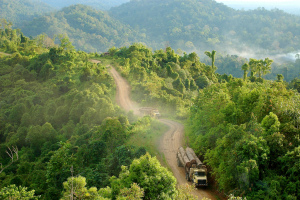
    148 states have supported a United Nations General Assembly resolution calling on state users of depleted uranium weapons to reveal where the weapons have been fired when asked to do so by affected countries

    Article source: International Coalition to Ban Uranium Weapons

    Image source: BlatantWorld.com

    Read more »

  • Sustainable Security

    by Janani Vivekananda and Shreya Mitra

    REDD forestry efforts don’t pay enough attention to their influence on local conflict dynamics. For REDD+ to be an effective mechanism to curb deforestation and strengthen peace opportunities, it has to pay more attention to pre-existing land and forest conflicts linked to tenure, take into account the interests of the local communities and be more sensitive to the local context .

    trucks carrying logs in Gunung Lumut, Kalimantan Timur, Indonesia, November 2005. Source: CIFOR (Flickr)

    Trucks carrying logs in Gunung Lumut, Kalimantan Timur, Indonesia, November 2005. Source: CIFOR (Flickr)

    Indonesia has for the first time surpassed Brazil’s historical record of being at the forefront of deforestation suggests a new study published in the journal Nature Climate Change. Despite a government-signed moratorium in 2011 to slow down the pace of deforestation, the study reveals that Indonesia has lost virgin forests of 60,000 sq. km, an area roughly the size of Ireland, over a period of 12 years.

    The accelerated rate of deforestation raises concerns about the governance of forests in Indonesia and the effectiveness of the moratorium. It also highlights the missed opportunities to preserve the forests and bring about greater peace dividends, especially in a context where peace remains fragile and unequal forest rights remain unresolved. In conflict-affected areas, availability and access to forest resources can either make conflict worse or contribute to peace. If you accept the case, as many do, that the impacts of climate change make it harder to build peace, there is also a compelling argument that mitigating climate change by reducing deforestation, if done right, could offer significant peace opportunities by addressing inequalities and grievances of marginalised forest-dependent communities.

    REDD Programmes and Peacebuilding

    Yet despite the importance of forests to both climate change mitigation and peace, deforestation continues at an alarming rate as seen in the case of Indonesia. To combat deforestation and preserve forests as carbon sinks, the United Nations Framework Convention on Climate Change (UNFCCC) in 2005 introduced a mechanism called Reducing Emissions from Deforestation and Forest Degradation (REDD). Under REDD, more developed countries pay for programmes in less developed countries to preserve forests. Later, a ‘plus’ was added to REDD introducing the elements of conservation, sustainable forest management and enhancement of forests as carbon sinks. The financial dimensions are significant. For example, Norway as the biggest contributor has pledged over $1.4 billion to REDD+ funds. Most of the money targets Latin America and the Caribbean, sub-Saharan Africa and Asia. For Indonesia alone, $156 million of REDD+ funding has been approved.

    From a peacebuilding perspective, REDD+ and other efforts to promote sustainable forest management offer both peace opportunities and conflict risks. The conflict risks of REDD+ often have to do with land ownership and forest access. The peace opportunities associated with REDD+ are wider recognition of the multiple economic, social and cultural values of forests and a strengthening of the rights of local communities that depend on the forest. Poverty may also be reduced if the financial benefits of REDD+ are shared, and income opportunities created for local residents, who may work as forest monitors and guards.

    In 2006, in Aceh, Indonesia, initiatives by the newly formed government on forest protection and supporting smallholder plantations, as well as the social opportunities offered by REDD investment, showed real promise for building a sustainable peace in the conflict-affected region. The REDD investment fell through after investors withdrew, but this experience hints at the potential for REDD to exert a positive influence on politics and power relations in a post-conflict context.

    Short-Term Gains

    Patchwork mountain landscape of agriculture, forestry, and deforested terrain, Tianlin County, Guangxi Zhuang Autonomous Region, China. Source: CIFOR (Flickr)

    Patchwork mountain landscape of agriculture, forestry, and deforested terrain, Tianlin County, Guangxi Zhuang Autonomous Region, China. Source: CIFOR (Flickr)

    Yet given the prospect of sums of money to be gained (in the short-run at least), there is a very real risk that communities can make decisions based on short-term profit or be bought off by entrepreneurs hoping to capitalise on REDD+. This means that while community involvement is critical, it alone is not sufficient and should certainly not be viewed as a silver bullet for equitable forestry that supports peace.

    As a member of the Dhankuta District Community Forest Management committee explained during International Alert’s research in Nepal: “Forest-user groups might plant trees but don’t always protect them. How can a forest grow if you just plant trees and don’t protect them? People have begun to misuse resources. There is too much freedom and too little responsibility. Poverty is also a factor. People want an immediate return, instead of a better long-term gain.” In Papua New Guinea, many landowners are not aware of their rights, leaving them vulnerable to exploitation by ‘carbon cowboys’ who gain control of land and forests to capitalise on REDD+ funding. While REDD+ caused this problem, the mechanism also drew international attention to the issue, which in turn helped push the government to improve its policy on revenue-sharing.

    During International Alert’s research in Odisha in India, respondents reported that forest degradation is a key challenge for them. Forest conservation projects could help here to develop a forest management that is beneficial to both communities and carbon reduction. On the other hand, there is a risk that governments use REDD+ as an instrument to restrict the access of local communities to forests and thereby undermine their livelihoods. In addition, incoming finance can fuel existing corrupt structures or cause grievances if it is not shared in a transparent and balanced manner.

    Striking a balance

    Our research in Bangladesh showed that restrictions on access to the Sundarbans mangrove forest may be useful for conservation purposes but local communities perceived them as a direct obstacle to sustain their livelihood, in the short term at least. This highlights the challenge between balancing conservation and community interests. As with the case of Bangladesh, poor Indonesians dependent on forests for their livelihoods have not been provided a viable alternative source of income, which is one reason why deforestation continues.

    Compared with Indonesia, Brazil has been much more proactive on the issue of land and forest tenure and therefore better placed to manage issues of illegal logging and deforestation. Brazil has through REDD+ initiatives been recognising and delineating customary lands and creating new protected areas though these have been beset with some problems.

    For REDD+ to be an effective mechanism to curb deforestation and strengthen peace opportunities in Indonesia, Brazil and elsewhere, it has to pay more attention to pre-existing land and forest conflicts linked to tenure, take into account the interests of the local communities and be more sensitive to the local context

    Janani Vivekananda is Environment, Climate Change and Security Manager at International Alert. Her specific interests include the implications of climate change policies on peace, the links between climate change and community resilience, and opportunities for positive responses to climate and environmental change and disasters.

    Shreya Mitra Programme Officer with the Environment, Climate Change and Security team at International Alert. She previously worked as a Research Consultant for ODI, Save the Children and Social Development Direct. 

    Featured image: Patchwork mountain landscape of agriculture, forestry, and deforested terrain, Tianlin County, Guangxi Zhuang Autonomous Region, China. Source: CIFOR (Flickr)

  • Sustainable Security

    Droughts can potentially help escalate conflicts, but empirical evidence from the Sahel suggests that the root causes of land disputes are more historical and political than climate driven.

    The climate-conflict narrative

    Oxfam International

    Image by Oxfam International via Flickr.

    The Sahel is often highlighted as a hotspot of violent conflicts, typically occurring between farmers and pastoralists or between the state and armed groups. More recently, jihadist violence, in particular by groups associated with ISIL and Al Qaeda in Mali, Boko Haram in Nigeria and Al-Shabab in Somalia, has also added to this image of the Sahel as a conflict-ridden part of the world.

    With climate change becoming a leading global political issue, a powerful policy narrative has emerged which uses global warming to explain conflicts. In contrast to this narrative, most empirical research points to the role of political and historical factors as the root causes of conflicts in the Sahel.

    Many politicians, international civil servants and climate activists seem attracted to the idea of climate-driven conflicts. For instance, in a newspaper article in 2007 UN Secretary-General Ban Ki-moon made a connection between global warming and the Darfur conflict. In the same year, the idea was also at the crux of the decision to award the Nobel Peace Prize to former US Vice President Al Gore and the Intergovernmental Panel on Climate Change (IPCC). According to the Norwegian Nobel Committee, human-induced climate change is one of the main causes of violent conflict and war in the world today, and violence between farmers and herders in the Sahel are the most typical examples of what the committee calls ‘climate wars’. Also many climate activists champion the idea of climate-driven conflicts – for instance the idea has been repeatedly promoted by former executive director of Greenpeace Kumi Naidoo.

    This narrative about the climate-conflict link in the Sahel consists of two elements. First, it assumes that global climate change leads to drought and desertification, which in turn result in resource scarcity. Secondly, this resource scarcity is believed to cause migration and the emergence of new conflicts, or to trigger existing ones.

    The re-greening of the Sahel

    The claim that rainfall in the Sahel is decreasing is problematic, because the rains have increased again after the drought of the 1980s. Since it is largely rainfall that drives the Sahelian ecosystem, global warming might obviously in the long run produce desertification and resource scarcity – if it reduces rainfall. However, there is currently considerable uncertainty about current rainfall trends and projections in the Sahel. This uncertainty is generally stressed by climate scientists who model how global warming will affect the climate in the Sahel. While some models support the theory that this region will become drier, a majority of models actually suggest not only more abundant, but also possibly more delayed and concentrated rainfall in the future in the Sahel. This might lead to more vegetation over all, and more runoff and floods.

    In fact, because of increased rainfall since the 1980s, instead of desertification, the Sahel became greener again over this period. The re-greening of the Sahel has actually been observed for more than a decade. More recent research by French scientists has also confirmed this trend.  Based on long-term research in northern Mali, this French team observed not only strong resilience and recuperation of the vegetation on sandy soils, but also detected a transformation and thinning of the vegetation on shallow soils. This latter process is linked to stronger and more concentrated run-off resulting in increasing water levels in temporary streams and lakes that in some places have become permanent (see here).

    Hence, while there is a general re-greening of the Sahel caused by stronger rainfall trends since the droughts of the 1980s, there has also been the opposite, a thinning of vegetation on shallow soils, which again leads to more run-off and increased water bodies. In a similar vein and in parallel to the myth of the marching desert, the drying of Lake Chad, the largest lake in the Sahel, is also a myth according to recent research.

    Both these observed and opposing trends are in fact contrary to received wisdom and the dominating policy narrative on the Sahel represented, for instance, by the Great Green Wall Initiative, which aims to make the Sahel green and thereby to fight desertification. This initiative is funded by the Global Environment Facility at the tune of over 100 million USD.

    Political causes of conflicts

    The narrative of climate-driven conflicts first assumes desertification to be a widespread process in the Sahel, and second it postulates such resource scarcity increases conflict levels. This second link cannot be dismissed theoretically, even if empirical results from international research question the validity of this correlation. Most quantitative research undermines the existence of such a general link between climate and conflict, while case studies in central parts of the Sahel indicate that the conflicts have other causes such as rent seeking among government officials as well as policies and legislation that are marginalizing pastoralists.

    In the dry parts of Africa where pastoralism and farming overlap as the main forms of land use, there are continuous conflicts of varying scale. These conflicts have historical and political causes.  For instance, farmer-herder conflicts in Mali are associated with the state’s pastoral and land tenure policies and legislation, which generally are to the disadvantage of pastoralists and tend to lead to their marginalization. Three structural factors can be seen as the main drivers behind these conflicts: agricultural encroachment that has obstructed the mobility of herders and livestock, opportunistic behavior of rural actors as a consequence of an increasing political vacuum following decentralization and the disintegration and withdrawal of state services, and corruption and rent seeking among government officials (see here and here).

    Pastoral marginalization is also at the root of the Tuareg rebellion in Mali. The droughts of the 1970s and 1980s did, however, play an indirect role in the rebellion, because they led to the migration of young men to Algeria and Libya, where they were exposed to revolutionary discourses. There was already a strong feeling among nomads and Tuareg in Mali of being marginalized by state policies of modernization and sedentarization. Embezzlement of drought relief funds by government officials in Bamako added further to the anger felt by young Tuareg in Algeria and Libya who took up arms against the Malian state in 1990. The droughts of the 1970s and 1980s were probably not a necessary condition for the rebellion to take place. The first Tuareg rebellion in Mali took place in 1963 following an unusually humid period.

    Pastoralists are probably the group best adapted to climate variability through their opportunistic and flexible resource use strategies. But at the same time, pastoralists are suffering from state policies favoring settled agriculture in many countries in the Sahel. Even though pastoralists are losing access to land, livestock-keeping remains one of the economically most important activities throughout the Sahel and the large export of live animals to neighboring countries, especially on the West African coast, continues.

    Conclusion

    Even though droughts or flooding may potentially help escalate conflicts, empirical evidence from the Sahel, as well as from other parts of Africa, demonstrates a lack of correlation between climate and conflicts, and suggests that the root causes of land disputes are historical and political in character. While climate change remains a dangerous global challenge, over-stretching its causal responsibility may not only undermine long-term public engagement, but also depoliticize and thereby gloss over the real causes of conflicts, which could hinder the process of finding effective solutions to disputes.

    Tor A. Benjaminsen is Professor at the Department of International Environment and Development Studies, Norwegian University of Life Sciences

  • Sustainable Security

    A recurring feature of Western counter-radicalisation discourse is the ‘Muslim paranoia narrative’, a belief that resentment towards Western societies is motivated by a paranoid and conspiracy-riven worldview. This association between radicalisation and paranoia appears repeatedly through official statements and policy documents.

    Radicalisation is at the forefront of policy debates as ISIS continues to draw recruits from Western democracies. Recent summits in Washington and Sydney on countering violent extremism have highlighted the importance of undermining extremist narratives, mobilising moderate Muslims who oppose ISIS, and working to address underlying drivers of radicalisation. Yet representatives of Muslim communities have met this approach with considerable scepticism, both in Western states and across the Muslim world. A common complaint is that Muslims are singled out and caricatured as a unique danger, which only increases the level of vilification experienced by Muslims.

    The Muslim paranoia narrative

    islamic_center_of_murfreesboro_with_flag

    Image by Saleh M. Sbenaty via Wikimedia.

    In recent research published in Critical Studies on Terrorism, I explore the underlying ideological conditions that work against engagement with Muslim communities thought vulnerable to radicalisation. I examine what I call the “Muslim paranoia narrative”, a recurring feature of Western counter-radicalisation discourse that helpfully captures these underlying ideological dynamics. In the Muslim paranoia narrative, resentment towards Western societies is said to be motivated to some degree by a paranoid and conspiracy-riven worldview, which is thought to thrive in alienated and disempowered communities. Terrorist recruiters exploit distorted outlooks to fuel a sense of injustice about the plight of Muslims abroad. This association between radicalisation and paranoia appears repeatedly through official statements and policy documents, including those associated with ongoing counter-radicalisation strategies like the US State Department’s Digital Outreach Team.

    The Muslim paranoia narrative is worth examining because it is a clear tension point in contemporary radicalisation strategies that are increasingly focused on engagement and collaboration. The negative connotations associated with paranoia connect palpably with the sense of vilification often highlighted by Muslim critics of these programs. And the paranoia narrative can be connected to a broader ideological imaginary. Tracing the Muslim paranoia narrative from its ideological roots provides a window into the assumptions and priorities informing radicalisation discourse and contextualises the reticence of Muslim communities towards it.

    The Muslim paranoia narrative is especially intense in the United States where my research is focused. Richard Hofstadter is widely understood to have established the now commonplace account of political paranoia in his famous essay “The Paranoid Style in American Politics”, which identified a recurring strain in American politics characterised by a “sense of heated exaggeration, suspiciousness, and conspiratorial fantasy”. Hofstadter positioned political paranoia on the periphery of pluralistic American democracy as the irrational pathology of angry extremists, and contrasted it with a rational political centre where sensible politics occurred. Although Hofstadter wrote this seminal piece in 1964, it is difficult to overestimate its traction and influence. This is in large part due to the fact that Hofstadter deployed many of the most common conceptual features of post-War liberalism, which abhorred populism and focused on the mediation of competing interests through bargain and compromise. America was situated as a moderate democracy, pragmatic, centrist and non-ideological, in contrast to the radical politics sweeping the post-War Europe. Although liberalism has evolved significantly over the intervening years, the basic conceptual features set out by Hofstadter have remained pervasive in contemporary perspectives on political paranoia.

    One reason for this is that political extremism is still largely understood through the same centre/periphery framework. This dynamic is at the heart of radicalisation discourse in the US, where the political and religious beliefs of Muslim communities have emerged as a subject of concern. In this context, the Muslim paranoia narrative locates paranoia not just on the fringe of liberal democracies, but also on the periphery of international power and legitimacy from the point of view of political leaders and security experts. Here the pervasive perspective on political paranoia folds together with a long-running orientalist narrative about the supposedly dysfunctional characteristics of Muslim cultures, particularly in the Middle East, which has often framed America’s regional encounters.

    A problematic narrative

    The Muslim paranoia narrative is involved in a powerful process of ideological reproduction that works against engagement and collaboration with Muslim communities. Underlying liberal and orientalist frameworks situate Muslim cultures as dysfunctional and anti-modern, while associating Muslim resentment about Western foreign policies with problematic and potentially pathological modes of thought. Like post-War liberal orthodoxy secured by contrast with paranoid populism, contemporary liberal modernity is secured by contrast with the paranoia of alienated Muslims.

    At the same time, contemporary radicalisation discourse disciplines the wider public against consideration of Muslim grievances and associated criticisms of US policy. For instance, the identification of political paranoia as a subject of concern has the double effect of producing a strong general deterrent against the interrogation of elite power and political controversy, when the personal and professional costs of such engagements are potentially catastrophic. The taint of irrationality can be devastating, even by association – undermining credibility and calling motivations into question.

    In this sense, the Muslim paranoia narrative can be understood in terms of powerful ideological scripts in American political culture, rather than as an objective description of an ideational precursor to radicalisation in Muslim communities. The broader point is that potent narratives around extremism and oriental otherness have undermined the approach of successive US administrations to counter-radicalisation. These scripts have worked against a persuasive encounter with Muslims critical of American foreign policy, when such criticisms are framed as the product of a problematic thoughts and dysfunctional culture.

    This problem is clear enough in the practical setting of counter-radicalisation programs like the US State Department’s Digital Outreach Team (DOT), a group of bloggers tasked with confronting views critical of American policy on foreign language websites, and, more recently, discrediting ISIS affiliated users on social media. For our purposes it is interesting to note that according to the State Department “the Digital Outreach Team contrasts objective facts with the often emotive, conspiracy-laden arguments of US critics in the hope that online users will take a fresh at their opinions of the US”.  And this frame manifested in the online activities of the DOT where time was spent “ridiculing myths and conspiracy theories and calling users with extreme views radicals, but claiming to enjoy engaging with users who post objective views.” Perhaps unsurprisingly, a close analysis of DOT work following President Obama’s 2009 Cairo Address found that a large majority of people who expressed a view about the DOT were negative in their comments, with half openly “ridiculing and condescending”. Although there were no doubt many reasons for the widespread hostility to the DOT, it should be obvious that labelling people paranoid and irrational is highly antagonistic, particularly when considered in the context of the wider set of intimations that have historically been associated with such language.

    Indeed, it is critical to acknowledge that although the identities and relations highlighted in my analysis of the Muslim paranoia narrative exist within a specific policy discourse, they bear no necessary relationship to the lived experience of differentiated Muslim people, who often refuse classification in these terms. Moreover, it is critical to acknowledge that there is still no conclusive evidence for a particular terrorist profile; for a common pathway or pattern to radicalisation; or for predicting which holders of radical views will become violent. Without critical awareness of the ideological conditions identified here and a sustained attempt to move beyond them, the crucial work of engagement, partnership and community building will be likely ineffectual.

    Tim Aistrope is Lecturer in the School of Political Science and International Studies at the University of Queensland.