Blog

  • Sustainable Security

    Deforestation: REDD-y for peace or fuelling conflict?

    REDD forestry efforts don’t pay enough attention to their influence on local conflict dynamics. For REDD+ to be an effective mechanism to curb deforestation and strengthen peace opportunities, it has to pay more attention to pre-existing land and forest conflicts linked to tenure, take into account the interests of the local communities and be more sensitive to the local context

    Read Article →

    The Global Land Rush: Catalyst for Resource-Driven Conflict?

    Michael Kugelman of the Woodrow Wilson International Center, argues that the factors that first sparked many of the land acquisitions during the global food crisis of 2007-08 — population growth, high food prices, unpredictable commodities markets, water shortages, and above all a plummeting supply of arable land — remain firmly in place today. He writes that land-lusting nations and investors are driven by immediate needs, and they have neither the incentive nor the obligation to slow down and adjust their investments in response to the wishes of distant international bureaucrats. This, he argues, has serious consequences for global security.

    Read Article →

  • Climate science: a peace studies lesson

    Climate science: a peace studies lesson

    Paul Rogers | openDemocracy | March 2010

    Issue:Climate change

    The doubters of global warming are emboldened by their new ability – as in the “climategate” affair – to put climate researchers on the defensive. But the experience of comparable assaults on the discipline of peace studies in the 1980s suggests that hostile scrutiny can have longer-term benefits for the target.

    The articles in this series try to throw light on recent or current developments in international security. Just occasionally an element of personal experience creeps in. This is one of those.

    The last weeks of 2009 were difficult for the public face of scientific research into global warming. The failure of the climate-change conference in Copenhagen, the identification of minor flaws in the International Panel on Climate Change (IPCC’s) published documentation, and the exposure of email exchanges centred on the Climatic Research Unit (CRU) at England’s University of East Anglia – all raised doubts about those charged with presenting scientific evidence about climate change and renewing efforts to address the phenomenon. In the case of the email affair – given an extra conspiratorial frisson by being called “climategate” – the careful selection of damaging details by an evidently well-resourced group made it possible to erect a narrative of deception that found an uncritical welcome among climate “sceptics” and “deniers”.

    Soon after the furore, Associated Press tasked a team to examine 1,073 emails from the CRU material in order to provide an independent view of what had happened. The result showed no evidence that climate change was faked (see “’ClimateGate’ Doesn’t Show Global Warming Was Faked, AP Reports”, Huffington Post, 12 December 2009); but amid a deluge of negative comment this attracted little attention, and the impression persists that the whole case for human-induced climate change has been severely hit.

    For many of the researchers involved, the period of late 2009-early 2010 has been traumatic; they may have had to contend with controversy over the years, but this is something outside their experience.

    The intensity of the coverage, and the zealotry of many sceptics in pressing their case, stem in part from changing global circumstances. There has long been deep opposition to any international move towards a low-carbon economy, from reasons both ideological (free-market true-believers) and commercial (the more retrograde transnational corporations, especially fossil-fuel companies). There was no great risk of such a move as long as George W Bush was in the White House; but the election of Barack Obama and the prospect of Copenhagen agreeing a successor to the Kyoto protocol made 2009 potentially a dangerous year. In this context, “climategate” has been a gift.

    The peace benefit

    The lesson of my own experience in the 1980s suggests that the longer-term impact might be rather different from what the architects of this affair intend. I got into working in the field of international security from teaching environmental science and resource-conflict at Huddersfield Polytechnic, west Yorkshire, in the early 1970s (and recently came across some of my thirty-five-year-old lecture notes dealing with rising atmospheric CO² levels!). I moved to Bradford’s department of peace studies at the end of the decade, just as the cold war was entering a particularly tense period; from around 1980 onwards, several of us there saw the need for independent research and writing on nuclear issues.

    An early outcome (with co-authors Malcolm Dando and Peter van den Dungen) was a book about the risks and consequences of nuclear war: As Lambs to the Slaughter: The Facts About Nuclear War (1981). It struck a chord; 25,000 copies were sold in a few weeks, and that year around 500,000 people purchased an accompanying leaflet published by the environment group Ecoropa.

    As Lambs... was part of a wider body of writings, much of it for an academic rather a general readership. This was the case with A Guide to Nuclear Weapons (1981) which ran to several editions and led eventually to a reference work: The Directory of Nuclear, Biological and Chemical Arms and Disarmament 1990. The core purpose of this writing was to be as accurate as possible; this meant (for example) always analysing Soviet as well as western systems and postures, and having a particular focus on the actual consequences of a nuclear war.

    What strikes me in retrospect – and when thinking about the problems that climate scientists now face – is how widely varied were the reactions to our work. Military officers, for example, were actually very interested in it and very ready to engage in intensive debates. I was first invited to lecture at the Royal Air Force staff college in 1982 and have continued frequently to lecture at defence colleges to the present day. Senior civil servants in Britain’s ministry of defence were also willing to discuss our work.

    The reaction on the political right – then very much in the ascendancy during Margaret Thatcher’s long premiership (1979-1990) – was very different; it was bitter and sustained opposition to what we were doing. In the Thatcherite view of the world, peace studies was “appeasement studies”, indulgent to official enemies and undermining of the nation’s moral fibre. Many articles and pamphlets were written about the Bradford department’s dangerous and subversive nature; one noble member of the House of Lords (the upper chamber of Britain’s parliament) even described us as a “rest home for urban guerrillas”. Some critics preferred a more personal touch: I was called “Dr Death”, and we regularly got abusive mail (which, on one or two occasions, went as far as death-threats).

    It was known that Margaret Thatcher wished “something to be done” about peace studies; but this was politically difficult, since universities still retained considerably more independence (a situation that subsequent governments have done much to redress) than now. But the University Grants Committee (UGC) came under pressure to investigate us and to its credit agreed to do so only if Bradford’s vice-chancellor allowed it; he too was prepared to say yes, but – also to his credit – only if the peace-studies staff gave their consent. We certainly would! What followed was the equivalent of today’s “subject review”. It was thorough and exacting, and the UGC made public its verdict – that the department was maintaining high standards.

    That outcome lifted the pressure off peace studies for the rest of the 1980s. With the end of the cold war by the end of the decade, much of the other work our staff and research students already did – on peacekeeping, environmental conflict, and mediation, among other issues – came to the fore; this created the foundation for an expansion of our work in the 1990s.

    The landscape after battle

    How does this relate to “climategate”? A key factor is that we were exposed to intensive criticism and persistent scrutiny of our work virtually from day one, and this in direct consequence made us hugely aware of the need for very high levels of accuracy and impeccable referencing of sources. Access to a wide range of military and defence journals, and a huge amount of information in the public domain, meant that this was actually not so difficult; but under so much external pressure we learned to be very cautious in our analysis at a time when exaggeration on the issues we addressed was common enough.Many of us now think that the experience made us better academics. If almost everything you write is going to be exposed to detailed examination by relentless and often politically-motivated critics, then you have to set unusually exacting standards for your work. The likely – and beneficial – implication is that climate researchers who have gone through their own test-by-fire will in future take even greater care over published assessments and analyses.

    In many ways we were luckier than today’s climate researchers: for there was an intense focus on our peace-studies work from the very beginning – whereas critics of climate science are able to retrieve work published a decade and more ago, when the issue was far less controversial, in order to pinpoint a minor laxity and use it to great effect to damn the whole enterprise.

    The overall effect of the setbacks to climate-science’s public face may amount to the loss of a year in the transition to a low-carbon future, but the good work being done in this area offers many grounds for optimism. The New Economic Foundation’s The Great Transition project, and Tim Jackson’s book Prosperity Without Growth: Economics for a Finite Planet (Earthscan 2009) are but two examples. Alongside the evidence that continues to emerge about the accelerating impact of climate change, the flow of impressive research and compelling argument based on even more rigorous standards will ensure that the refusenik stance will in future become harder to make.

    In the end, peace studies was made stronger by those who sought to expose it. In a similar way, the travails of climate researchers may well end up reinforcing the integrity of the science and the necessity of the low-carbon transition.

    Comments

    Post new comment


  • Louisiana is Sinking

    Louisiana is Sinking

    Anna Alissa Hitzemann | | January 2013

    Issues:Climate change, Competition over resources, Marginalisation

    The devastating nexus of climate change, competition over resources and marginalisation

    Hurricane Katrina and the sinking of coastal Louisiana stand as a reminder that we must address climate change, competition over resources and marginalisation as the root causes of conflict before it is too late.

    Most will remember the horrific pictures on the news in 2005 when Hurricane Katrina struck New Orleans. Nearly 2,000 people died, thousands more were left homeless and displaced, the material destruction was catastrophic with damages well over $100 billion.

    The aftermath of Hurricane Katrina once again proved that marginalised people have the least resources to cope with environmental constraints and natural disasters. Nowhere in New Orleans was the devastation greater than in the Lower Ninth Ward, a predominantly poor African American neighbourhood. Most residents of the Lower Ninth Ward had fewer options of where to go, did not want to leave their homes behind and lost everything due to the damage caused by Katrina and their lack of financial resources to rebuild the community.

    Katrina was not the last and probably not the most destructive disaster to hit Louisiana. Over the past years, a significant discovery has been made: Coastal Louisiana is sinking, at a rapid rate. Some estimate that an area the size of a football field is lost roughly every half hour.

    Once again, this will affect already marginalised communities the most. Science Illustrated argues “something drastic must be done” because “the current state of affairs means that they [the affected communities] may soon be the first climate refugees in United States history”.

    CLIMATE CHANGE

    Climate change sceptics appear to be fighting a losing battle in the face of greater levels of sound scientific data. Yet, governments are still reluctant to take necessary steps like drastically cutting carbon emissions and switching to green renewable energy sources. Hopefully this will change as addressing climate change will be essential in tackling the security challenges of an increasingly interconnected world.

    At the World Economic Forum in Davos, Lord Stern, author of a 2006 UK government review on climate change, admitted he had got it wrong: “Looking back, I underestimated the risks. The planet and the atmosphere seem to be absorbing less carbon than we expected, and emissions are rising pretty strongly. Some of the effects are coming through more quickly than we thought then. This is potentially so dangerous that we have to act strongly. These risks for many people are existential”.

    The risks are indeed existential for many people living in the coastal communities of Louisiana. Rising sea levels, mainly due to melting ice caps, are threatening those who live in the Louisiana Delta.

    When interviewed by PBS, Torbjörn Törnqvist, geoscientist at Tulane University who studies Louisiana’s wetlands, said: “there is no doubt that the sinking land is a direct implication of climate change, because it actually reflects what we see worldwide. And if we go forward, we know that sea-level (rise) will continue to accelerate. The only thing there is uncertainty about is how large that continued acceleration will be. But I think the important thing we know now is that, even in the past century, accelerated sea-level rise has already contributed to the loss of these wetlands […] ultimately it [climate change] could very well become the single most important factor.”

    Although climate change and the consequent rising sea levels are an important reason why coastal Louisiana is rapidly losing land, there is more to it. To prevent flooding, extensive levees have been built (some more than 100 years ago) around the edges of the Mississippi river and channels and water ways have been carved to redirect flows. However, the levees prevent the land in that area from receiving sufficient sediments to stay above water, and the manmade channels through the wetlands have weakened the buffer zone for hurricanes and storms. So sea levels are rising and the land is sinking.

    These factors combined account for “the largest land loss currently on the planet”, says Val Marmillon, the managing director of America’s Wetland Foundation. “The massive land loss is not only threatening to destroy an entire ecosystem, including dozens of endangered animal species, but it could also severely affect local residents. Up to 2 million people are at risk of having to leave their homes.”

    DRILLING FOR OIL

    In addition to rising oceans, manmade levees and diversions, oil drilling along the coast has also contributed to rapid subsidence of the marshlands. The oil and natural gas industry, with annual revenue of approximately US $325 billion, started drilling in Louisiana in 1901. This has caused the wetlands to collapse and erode as channels are being dug for oil pipes. The process of removing oil from beneath the land is causing it to further sink, letting in salt water which destroys much of the natural habitat.

    The Sustainable Security Programme at Oxford Research Group (ORG) sees “competition over resources” as one of the main drivers of global conflict: “there will be greater scarcity of three key resources: food, water and energy. Demand for all three resources is already beyond that which can be sustained at current levels.” A recent ORG publication states that “a narrow resource base for these energy reserves is at the root of the strategic importance of the Persian Gulf and does much to explain recent and current conflicts, but the even greater global concern stems from the potential impact of climate change”.

    Oil drilling in the Gulf of Mexico off the coast of Louisiana is detrimental to the environment, impedes addressing the causes of climate change and most importantly further marginalises already disenfranchised coastal communities.

    MARGINALISATION

    The political, social and economic marginalisation of the people of New Orleans and coastal Louisiana plays a central part of this story. Frances Fox Pivan in her article Marginalization and American Politics argues that in the case of Katrina “many of the victims had been marginalized before the hurricane and the floods overwhelmed them, which is surely part of the reason that the danger of hurricane and the ensuing floods was ignored. As is amply evident, this was not simply a natural disaster.”

    She goes on to link marginalisation, poverty, the effects of natural disaster and violent crime: “Behind those images [of Katrina] was an intricate story of marginalization in the United States. The population of the city [New Orleans] was overwhelming black, and poor. The median income was only 70 percent of the national average, and poverty rates were twice the national average. The main jobs were low wage jobs in the hotels, casinos, restaurants and bars that catered to the tourist industry. Government income support programs, including welfare and food stamps and subsidized housing, that sometimes supplemented the earnings of some poor people, had been whittled away for several decades, and especially under the presidency of George W. Bush. The schools were bad, with high dropout and suspension rates, and the illiteracy rate of the city hovered at about 40 percent. Homicide rates were extraordinarily high, roughly ten times those of New York City.”

    In the current situation of the sinking wetlands, most of the 2 million people who are directly affected are also living on the margins of society. According to 2011 US Census data the poverty rate in Louisiana is the second highest in the nation at 20.4% and 9.4% are living in extreme poverty. 14.1% of the population are affected by food insecurity and over 33% are in low-wage jobs as Louisiana is one of the five US states without a minimum wage law.

    Small island communities in the Mississippi Delta, such as the Isle de Jean Charles, are inhabited by members of various Native American tribes. Some tribes do not have recognised status from the US government and hence have no access to any help from the state. Many people in the area live off the land they live on and sustain themselves through fishing and other subsistence activities. What will they do when their land disappears? Where will they go?

    Marginalised people have much fewer resources to cope with a changing environment. They do not have options. Desperate people are also more willing to turn to desperate means. The case of Louisiana exemplifies the dangerous nexus of climate change, competition over resources and marginalisation. Working towards sustainable security will mean addressing those underlying factors in order to prevent violent conflict.

    In President Obama’s second inaugural address, he put climate change centre stage as one of his top three priorities: “Some may still deny the overwhelming judgment of science, but none can avoid the devastating impact of raging fires, and crippling drought, and more powerful storms. The path towards sustainable energy sources will be long and sometimes difficult. But America cannot resist this transition; we must lead it.”

    Words will no longer be enough. We must see action, now.

    Image source: Brother O’Mara

    Comments

    Post new comment


  • Climate change

    Climate change

    Climate change is high on both domestic and international political agendas as countries face up to the huge environmental challenges the world now faces. Whilst this attention is welcome, less energy is being focused on the inevitable impact climate change will have on security issues. The well-documented physical effects of climate change will have knock-on socio-economic impacts, such as loss of infrastructure, resource scarcity and the mass displacement of peoples. These in turn could produce serious security consequences that will present new challenges to governments trying to maintain stability.

    Policies for Renewable Energy in Developing Countries

    Issue:Climate change

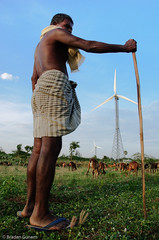
    In late 2010 the Heinrich Boell Foundation and the World Resources Institute convened a group of international experts to discuss policies and incentives for increasing the use of renewable energy in the developing world. WRI’s Davida Wood and Lutz Weischer discuss the key lessons learned at the workshop and their work on helping developing countries make the transition to renewable energy.


    Image source: Braden Gunem.

    Read more »

    Environment, Energy, Economy: a threefold challenge to sustainable security

    Phillip Bruner | Exclusively written for sustainablesecurity.org | December 2010

    Issues:Climate change, Competition over resources

    As we turn a watchful eye toward COP16 it’s tempting to get sidetracked by other major events going on around the world. There are, after all, a host of developments which stand to have an impact on security in the immediate future and arguably, many of us have become perhaps too accustomed to placing economic and energy woes ahead of the environment on our individual lists of urgent priorities. We are, after all, in the middle of the worst global financial meltdown since the Great Depression and as banks stop lending, governments cut spending, unemployment rises, public outcry gathers momentum and as we’ve already seen in Ireland and Britain recently, even in highly-developed economies social unrest can translate into violence toward governments. We’re also running out of cheap and easy access to oil, which is “the lifeblood of modern civilization,” according to the 2005 Hirsch Report – not to mention modern militaries – and as developing countries continue to rapidly industrialise, Western governments grow weary of asymmetries in energy demand per capita as well as huge demographic shifts in population size and age, which tend to favour the East. That said, it helps to be reminded that economic and energy woes go hand-in-hand when it comes to addressing climate change. Therefore, in order for activists and government representatives alike to find common ground on which to build lasting and constructive partnerships for addressing major security threats, an interdisciplinary approach is needed that can help to elucidate how environmental, energy and economic dilemmas are deeply intertwined.

    Read more »

    Israeli know-how helping to combat hunger in Africa

    Danielle Nierenberg & Janeen Madan | WorldWatch Institute | December 2010

    Issues:Climate change, Competition over resources

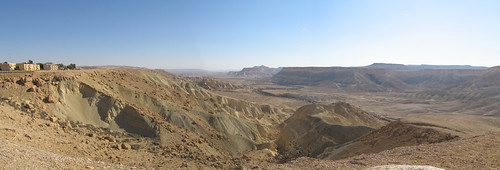
    Israel has been a leader in developing innovative drip-irrigation systems that reduce the amount of water needed for farming.

    Most of Israel is arid, with the Negev Desert spanning 60 percent of the country. Desertification, water scarcity and soil erosion makes it increasingly difficult to farm, endangering the livelihoods of those who depend on agriculture for both food and income.

    But Israel is not alone in facing these challenges – dry lands cover 47% of the Earth’s surface. With 60% of the world’s food insecure people living in dry areas, desertification and poverty go hand in hand, particularly in sub-Saharan Africa.

    But the simplest techniques can go a long way in strengthening food security, increasing incomes and improving the livelihoods of millions of people.

    Article Source: WorldWatch Institute

    Image Source: GregTheBusker

    Read more »

    Climate Change and Security

    Paul Rogers | Oxford Research Group | December 2010

    Issue:Climate change

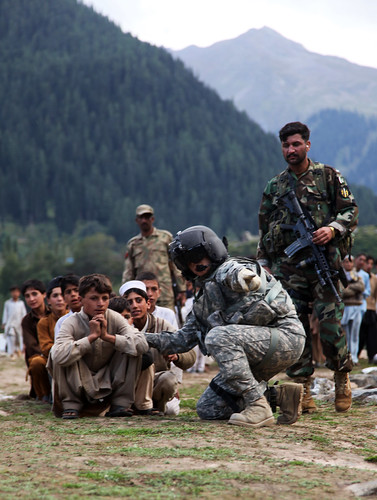
    The consequences of climate change for human security are profound, but much of the last decade has been lost in avoiding those consequences. The implications for human security are serious. Today, with the consequences of climate change being increasingly recognised by military analysts, there is a risk of the “securitising” of the climate change agenda leading simply to military responses rather than a more preventative course of a rapid shift to a low-carbon society.

    Author: Oxford Research Group’s Security Consultant Paul Rogers

    Image Source: DVIDSHUB

    Read more »

    Rapid Climate Change, Short-lived Forcers & Geoengineering: IES at the European Parliament to discuss about geoengineering with Jason Blackstock

    Issue:Climate change

    On 9th November the Institute for Environmental Security organised the fourth in a series of events at the European Parliament run in collaboration with Nirj Deva, MEP, Vice President of the European Parliament Development Committee.

    The speaker was Jason Blackstock, a Fellow at the Centre for International Governance Innovation (CIGI) at the University of Waterloo in Ontario and Visiting Research Scholar at the International Institute for Applied Systems Analysis in Vienna. His subject was Towards Climate Security & Equity in 2020: Rapid Climate Change, Short-lived Forcers & Geoengineering.

    Jason Blackstock stressed the urgency of understanding rapid climate change and in particular the impact of short lived climate forcers other than the greenhouse gasses dealt with by the UNFCCC.

    Source: Institute for Environmental Security

    Image Source: davedehetre

    Read more »

    Development in Lao PDR: The food security paradox

    Issues:Climate change, Competition over resources

    Tags:climate change, food security, human security, Lao PDR, SDC working paper

    Food security will remain out of reach for many people, especially women and children, in the Lao People’s Democratic Republic, or Laos, if the country continues to emphasize commodities and resources development at the expense of the environment and livelihoods while ignoring global trends for food and energy. Read more »

  • Sustainable Security

    This article was originally published on openSecurity’s monthly Sustainable Security column on 25th April 2014. Every month, a rotating network of experts from Oxford Research Group’s Sustainable Security programme explore pertinent issues of global and regional insecurity.

    If the past 12 months have taught us anything it is that, despite the predictions of many, the potential for conflict between the major powers is still one of the defining characteristics of world politics. From the tensions between Japan and China over the Senkaku/Diaoyu islands (with the United States waiting in the wings as ever) to the proxy confrontation between Russia and the US over the future of Ukraine (with its European allies desperately trying not to be forgotten in the diplomatic chest-beating), crisis diplomacy and inter-state rivalry are back on the global agenda.

    Dress rehearsal of Russian Victory Day parade, May 2013. Source: EnglishRussia.com

    Dress rehearsal of Russian Victory Day parade, May 2013. Source: EnglishRussia.com

    One of the legacies of the “war on terror” years is that the focus of most organisations and analysts working on the concept of sustainable security—an approach to policy-making which downplays the reaction to immediate symptoms of insecurity in favour of addressing the factors that underlie them—has been on terrorism, insurgency and “non-traditional” security issues. Of late the large-scale trends of climate change and the division of the world between a global elite and a non-elite, combined with resource scarcity and the challenge of paramilitarism, have absorbed most of the focus of those concerned with conflict prevention.

    Yet recent events suggest that the sustainable-security framework which NGOs, scholars and policy-makers increasingly deploy in their analyses and prescriptions needs equally to be applied to the traditional “high politics” of relations between the great powers–from geopolitical flashpoints and the politics of crisis diplomacy to the seemingly old-fashioned world of strategic-arms-control negotiations.

    The long shadow of Vienna

    Although security analysts have spent much of the past two decades concerned with “small” wars and counter-terrorism, inter-state rivalry and great-power politics never went away. Even in Syria, where the brutality of urban-guerrilla warfare and competition between paramilitary factions appear to be defining characteristics, the competing desires of regional and global powers have played a major part in the nature and longevity of the fighting. Moreover, the only serious attempts to end the war have been the multilateral negotiations in which Washington and Moscow have been key players.

    Major powers descending on a capital city to sort out—among themselves—the fate of vulnerable individuals caught in cycles of violence is a trope reminiscent of the Concert of Europe meetings in Vienna in 1853 and 1855 on the “eastern question” or even Paris in 1860 on the Syrian revolution. But it is not the only sign that great-power politics is back. So too is the concern over “flashpoints” and the traditional response of crisis diplomacy.

    In the East China Sea, Japan and China have been jostling over the remote rocks of what the Japanese call the Senkaku and the Chinese the Diaoyu islands. Those predicting unparalleled eastern economic prosperity in the “Asian century” have become increasingly concerned over the downward spiral in relations between these two north-east Asian (and at least to some extent global) heavyweights.

    The announcement of an air-defence identification zone over the islands late last year by China’s increasingly assertive regime, led by Xi Jinping, met an undiplomatic and extremely defensive response from the Abe government in Japan. Tokyo of course looked to its major military ally, the US, to join it in talking tough to Beijing, leading to a tense stalemate in which Japan is scrambling F-15 fighter jets from the Naha airbase in Okinawa almost daily.

    If this was not enough of a gold-plated gift to those keen to make historical analogies with the great-power rivalry and security-dilemma dynamics of 1914 and the outbreak of the first world war, the increasing tensions between Russia and the west over influence in Ukraine have created a European crisis to rival the brinkmanship in north-east Asia.

    The drama in Ukraine has prompted much talk of a renewed cold war. Moscow’s effective annexation of Crimea, its 40,000 troops along the border and mid-April’s four-way crisis talks among Ukraine, Russia, the US and the EU all reinforce the idea that old-fashioned “power politics” is alive and well.

    These two developments, involving two members of the BRICS coalition of rising (or in Russia’s case re-emerging) powers, come against the backdrop of a predicted global power transition and “rise of the rest”. One need not entirely accept Robert Kagan’s argument about the “return of history” to appreciate the importance of new centres of power challenging Washington’s dominance—in economic, diplomatic and, perhaps eventually, even military terms.

    Echoing their voting behaviour at the UN Security Council on the intervention in Libya in 2011, all Russia’s BRICS counterparts abstained from the recent UN General Assembly vote denouncing the Crimea referendum (Russia voted against). And when the Australian foreign minister announced that the Russian president, Vladimir Putin, might be banned from the G20 summit in Brisbane in November, the foreign ministers of the BRICS released a dissenting statement.

    All this makes predictions of a world without inter-state rivalry—even a “nonpolar” world—more than a little premature. The task then is to think through what a sustainable-security approach can highlight, as diagnosis and prescription, for the seemingly inescapable world of great-power politics.

    Militarisation, flashpoints, brinkmanship

    A number of drivers of global insecurity stand out. First, the specific nature of great-power politics can create the conditions for crisis and instability. (And of course one could argue that the distinction between great and lesser powers itself helps to marginalise the views of most of the world’s population and is therefore a driver of insecurity.)

    In his classic 1977 work on the social foundations of international order, the late international-relations scholar Hedley Bull argued that a degree of order could be provided by the great powers, but only if these states balanced their “special rights” with the concomitant “special responsibility” to manage their relations with each other peacefully and avoid crises. The art of great-power management appears lost on the current leaders in Beijing, Tokyo, Moscow and Washington—and this makes for dangerous times.

    The drama in Ukraine has prompted much talk of a renewed cold war.

    Secondly, existing work on sustainable security already provides some clear guidance on the drivers of inter-state insecurity through a focus on militarisation. Trends in arms transfers and spending are worrying when combined with a move away from a western-dominated world.

    Recent research from the Stockholm International Peace Research Institute concluded: “The increase in military spending in emerging and developing countries continues unabated.” Although global spending on arms fell by 1.9 per cent in real terms last year, China and Russia’s spending increased by 7.4 and 4.8 per cent respectively and the US, Russia and China were three of the five largest spenders. Not only are the leaderships of the major powers neglecting their great-power responsibilities—they are also upping their spending on the means to turn a crisis into deadly warfare.

    Such spending raises the stakes in any crisis situation and makes such crises more likely by diminishing trust and souring diplomatic relations. There is little doubt that the controversial US missile-defence and Prompt Global Strike programmes have helped give the Russians the impression of being backed into a corner and made the already difficult Sino-Japanese relationship even more fraught.

    Broadening the sustainable-security approach

    And what policy priorities follow if these underlying drivers of insecurity are to be addressed? The first is demilitarisation, beyond the human-security/small-arms agenda.

    In recent years significant gains have been made in the disarmament, demobilisation and reintegration of former combatants in war zones and on security-sector reform, as well as the eventual conclusion of the Arms Trade Treaty. The same cannot however be said of large-scale strategic weaponry. The Nuclear Non-proliferation Treaty risks being seriously undermined by the glacial progress of the P5 states in living up to their article VI obligations on disarmament. And the chances of serious headway on the Comprehensive Test Ban Treaty or the Fissile Material Cut-off Treaty are slim at best.

    The ultimately futile trend towards trying to achieve security via superiority in strategic conventional weapons (as well as armed drones), rather than the much harder task of trust-building, is only making matters worse. A renewed effort to negotiate long-term, sustainable, strategic arms control is needed to reverse this trend, no matter how difficult immediate progress will be.

    The second priority is to move beyond crisis diplomacy in the major interactions between the great powers. By definition reactive rather than preventive, this can only ever provide limited opportunities to address the root causes of mistrust and insecurity between states.

    While a far from perfect arrangement—questions of justice were frequently overlooked in a quest instead for “order”—the regular meetings of the Concert of Europe powers throughout most of the 19th century could provide some inspiration. This arrangement did have a clear sense of the purpose of being a great power: it was not just a privileged position in the hierarchy of states but carried a responsibility to manage relations with other major powers in ways that avoided, where possible, the downward spiral of military brinkmanship. This unavoidably involves a willingness to consider the world from the position of one’s adversary and to take seriously the perceptions and worldviews of one’s peers, even when disagreeing with them.

    Yet breaking the moulds of entrenched diplomatic practice will not be easy. As the diplomat-turned-scholar E.H. Carr remarked over 70 years ago, “The bureaucrat, perhaps more explicitly than any other class of the community, is bound up with the existing order, the maintenance of tradition, and the acceptance of precedence as the ‘safe’ criterion of action.” The task seems so enormous as to be overwhelming.

    But if policy-makers, analysts and civil-society actors are to come up with ways of reversing the trend towards an increasingly competitive, militarised and crisis-driven inter-state order, thinking through the implications of a sustainable-security approach to great-power politics is the most useful path to follow.

    Benjamin Zala is a Lecturer in International Politics at the University of Leicester, UK and an Advisor to the Sustainable Security Programme at the Oxford Research Group. He is on Twitter at @DrBeeZee

  • Sustainable Security

    In Deep Water: China tests its neighbours’ patience

    Control of water, including navigation rights, resource extraction and the exploitation of shared watercourses is at the heart of today’s geopolitical tensions in Asia. China’s recent actions in the South China Sea and Himalayas have given rise to further—and at times violent—conflict over the region’s natural resources. So will water insecurity lead to greater partnership in Asia? Or will it lead to a revival of China’s traditional sense of regional dominance and undercut efforts to build a rules-based approach to growing resource conflicts?

    Read Article →

  • Sustainable Security

    Contributing an Article

    We are always on the lookout for new authors with new perspectives to add to the debate on the blog – especially if you think we’ve missed something!

    We aim to address a wide range of evident and emerging security issues and take a broad and integrated approach to the term ‘security’. Generally, we look for insightful pieces which seek to explore, question and suggest solutions for ongoing security situations and the underlying issues which drive them. While we do place an emphasis on our ‘key’ drivers (climate change, marginalisation, competition over resources and militarisation), contributors should not feel limited to these subjects alone.

    Please note that, as a nonprofit blog that serves as a resource for interested readers, sustainablesecurity.org does not have the resources to pay contributors.

    If you are interested in contributing an article, please get in touch with us using the form to the right.

    Guidelines

    • 1,400 words max.
    • Please fact-check your article, especially if the subject is controversial or emerging . Although we check submissions carefully, authors are ultimately responsible for the factual accuracy of their contributions.
    • We do not use footnotes or endnotes. Embedded links for information that is sourced from other websites are a great opportunity to support your argument and opinions, especially for subjects that are not common knowledge. Please be sure to include a hyperlink for specific statistics and quotations.
    • Spelling: UK or US English – we don’t mind which, as long as it is used consistently throughout your article.
    • Please avoid unnecessary jargon and explain any that is used in a clear and concise manner.
    • You are welcome to cross-post your article in other places if we are accredited as the original site of publication.
    • We do not reprint pieces published elsewhere (with the exception of Sustainable Security programme staff articles that have been featured in the media).

    Would you like to contribute a video?

    Our readers would love it if you did! Sustainablesecurity.org deals with an often complex interplay of difficult subjects.  We are therefore very interested in presenting analysis of these issues in a range of media for those who wish to interact in different ways with our content.

    If you are interested and have the means to produce a video, get in touch with us using the form above with ‘VIDEO’ in the subject line. Thanks!

    Legal stuff…

    All content and downloads are licensed under a Creative Commons Attribution-NonCommercial-NoDerivs 3.0 Licence unless stated otherwise.

    We look forward to hearing from you!

    SusSec Team

  • Sustainable Security

    Since October 2014, thousands of people have gathered weekly in Dresden to protest against immigration and Islam which are both perceived by them as deadly threats to German society. What is the background of this unique mobilisation known as PEGIDA and what are the drivers behind its growth?

    Since 20 October 2014, the East-German city of Dresden, capital of the state Saxony, has hosted rallies organized by a group named PEGIDA (German: Patriotische Europäer gegen die Islamisierung des Abendlandes, English: Patriotic Europeans Against the Islamisation of the West). While PEGIDA attracted some hundred supporters to its earliest rallies, numbers quickly peaked in late January 2015 with 25,000 attending. Up until the end of 2016, at least some 2,000 followers showed up week-on-week.

    With the number of refugees seeking refuge in Germany rising since 2013, the extent of anti-immigrant protest, often organised by extreme right groups such as the National Democratic Party of Germany, has increased. For example, in the Saxon town Schneeberg, mobilization brought more than 1,500 people to the streets three weeks in a row in late 2013 at the accommodation used for hosting refugees. Speakers at such rallies depicted asylum seekers as a threatening Other in xeno-racial terms by arguing that Muslims cannot adopt to ‘Western civilized standards as they are not hygienic’, and that there is a ‘jihad of births’. Following a call for action by a group named Hooligans Against Salafists, 4,500 gathered in Cologne on 26 October 2014 with a significant minority clashing heavily with the local police. While these activities remained occasional events, Dresden became the location of the most successful extra-parliamentary right-wing mobilization in post-war Germany.

    Pegida’s formation and growth

    pegida

    Image credit: Metropolico.org/Flickr.

    In Dresden, a group of close friends, some of them soccer fans, others already known for their racist and derogatory remarks on refugees, Muslims, and people from Turkey and Kurdistan on the Internet, started weekly rallies mid-October 2014. The initiators of PEGIDA, Lutz Bachmann being primus inter pares and other founding members such as Siegfried Däbritz and Thomas Tallacker, had understood that there was potential for street protests against migration, intercultural coexistence and religious diversity. Speakers again and again invoked the destruction of Germany as a result of the refugees coming to Germany, and accused the media for false reporting on the situation. They accused the government in general, but chancellor Angela Merkel especially, of being traitors to the German people. Quite often, references to ›1989‹ were made. By referring to the mass demonstrations that contributed to the overthrow of the socialist regime in the former German Democratic Republic (GDR) in 1989, PEGIDA tries to strengthen the belief that it would once again be possible to overthrow a political regime by mass action.

    Like many social movements, conflicts related to leadership, competing concepts of strategy and framing, and narcissistic behaviour started to play a role within PEGIDA effecting its unity,  capacity for mobilization and outreach. The original plan of the Dresden group to directly control the many offshoot splinter groups that appeared in many German cities did not work. By the end of 2016 there have been racist and anti-Islamic rallies in hundreds of cities and smaller towns organized by groups such as Mönchengladbach – Get up, Commitment for Germany, Eichsfeld fights back, People’s Movement North Thuringia, or Together Strong Germany. While it is true that Dresden was the only place where this right-wing mobilization reached numbers above 20,000 with an astonishing regularity, the many other rallies also contributed to spreading racist and Islamophobic hate speech, and inflaming acts of aggression not only against those belonging to minority groups but also against social workers and volunteers who supported refugees.

    The importance of Saxony

    Scientific studies and surveys show that there is a relevant minority of the German population holding hostile attitudes against asylum seekers, homeless people, Roma, and long-term unemployed. The exceptional mobilization capability of PEGIDA Dresden is the result of the specific political culture of the city and the state of Saxony. It consists of several narratives such as the belief about a unique and phenomenal cultural heritage, the beauty of the landscape, and urban cleanliness; and other stories that emphasize a distinct Saxon identity comprising of a special self-confidence, astuteness, and avant-garde action. Finally, it is argued, a strong feeling of solidarity exists among Saxons, this togetherness was demonstrated by the floods in 2002 and 2013 both of which had caused major damage in the country. The Christian Democratic Union (CDU) that has ruled the country continuously since 1990 labels itself as the Saxon Union contributing to a kind of regional nationalism and solidarity.

    It is also noteworthy that the CDU in Saxony belongs to the decidedly conservative part of the party regularly speaking up for a German patriotic self-awareness. Leading representatives of the CDU in Saxony have publicly blamed the same political forces, developments and ideas as being responsible for the decline of morals in the same way that PEGIDA speakers have. Not surprisingly, then, appeasing the far-right has a long tradition in Saxony going back into the early 1990s when Kurt Biedenkopf the then-Prime Minister in Saxony claimed, in light of pogrom-like violence in the Saxon town Hoyerswerda, that the citizens of Saxony are immune to right-wing extremism. Despite ten years of parliamentary representation of the neo-Nazi National Democratic Party of Germany (NPD) in the state parliament of Saxony, leading politicians from the Saxon CDU like Frank Kupfer, chairman of the Christian Democratic faction in the Saxon parliament, argued that people from outside Saxony cannot understand the situation, overestimate the problem and intend to purposely discredit the political course of the regional branch of the Christian Democrats.

    Another dimension which helps explain the PEGIDA phenomena is the fact that the population in Saxony played a major role in the final phase of the GDR’s fall. Leipzig and, to a lesser extent, Dresden hosted Monday demonstrations in late 1989 bringing huge numbers to the streets and contributed to the downfall of the socialist regime. Public statements of the time, especially the ones given by then chancellor Helmut Kohl on the evening of 19 December 1989 contributed to a nationalist interpretation of events. In the 1990s and 2000s, Dresden also became the site of several heavily attended neo-Nazi rallies, where the Allied bombing of the city in mid February 1945 which killed some 24,000 people was framed as another kind of holocaust. This re-framing of the Allied bombing, which was actually created by the Nazi propaganda machine in the aftermath of the bombing, was used by the former GDR government in the Cold War.

    Discourses of victimization by protest organizations exist in several variations in the city. Some lament the political and economic consequences of German reunification which caused fundamental structural and demographic changes especially in the more rural East Saxon regions. Open borders with Poland and the Czech Republic has changed the perception of crime. Rising levels of theft and burglary is attributed by many to the opening of German borders, which, some argue, allows foreign criminals to easily return after committing crimes on German territory. In both cases, the idea of ‘Germans as victims’ is given discoursive empirical evidence and fosters exclusionist interpretations.

    PEGIDA’s future

    In early January 2017, the Leipzig branch of PEGIDA declared that it had decided to not hold any more demonstrations. While relieving police forces was given as the reason, media comments and political observers widely agreed that the decreasing number of participants has been the real reason behind this decision. With only a few places left in which weekly rallies are organised, albeit with not more than a hundred people taking part, PEGIDA in Dresden is still the most important site of action. Yet, the weekly meetings have become a mere ritual with the same content of the speeches, the same faces and no idea of new impetus. With Lutz Bachmann meanwhile living in Tenerife only to fly in for the Monday rallies and growing criticism of the transparency of the use of donations, it might well be the case that PEGIDA Dresden will die a slow death toll in 2017.

    Dr. Fabian Virchow is Professor of Social Theory and Theories of Political Action at the University of Applied Sciences Düsseldorf where he also directs the Research Unit on Right Wing Extremism. He has published numerous books and articles on worldview, strategy and political action of the far right.

  • What is Sustainable Security?

    What is Sustainable Security?

    Current approaches to national and international security are dominated by the ‘control paradigm’: an approach based on the premise that insecurity can be controlled through military force or balance of power politics and containment, thus maintaining the status quo. The most obvious recent example of this approach has been the so-called ‘war on terror’, which essentially aims to ‘keep the lid’ on terrorism and insecurity, without addressing the root causes. Oxford Research Group (ORG) argues that such approaches to security are deeply flawed and are distracting the world’s politicians from developing realistic and sustainable solutions to the new threats facing the world in the 21st century.

    An alternative approach is needed: that of ‘sustainable security’. The central premise of sustainable security is that we cannot successfully control all the consequences of insecurity, but must work to resolve the causes. In other words, ‘fighting the symptoms’ will not work, we must instead ‘cure the disease’. Such a framework must be based on an integrated analysis of security threats and a preventative approach to responses.

    Sustainable security focuses on the interconnected, long-term drivers of insecurity, including:

    • Climate change: Loss of infrastructure, resource scarcity and the mass displacement of peoples, leading to civil unrest, intercommunal violence and international instability.  
    • Competition over resources: Competition for increasingly scarce resources – including food, water and energy – especially from unstable parts of the world.
    • Marginalisation of the majority world: Increasing socio-economic divisions and the political, economic and cultural marginalisation of the vast majority of the world’s population.
    • Global militarisation: The increased use of military force as a security measure and the further spread of military technologies (including CBRN weapons).

    Sustainable security makes a distinction between these trends and other security threats, which might instead be considered symptoms of the underlying causes and tend to be more localised and immediate (for example terrorism or organised crime). It promotes a comprehensive, systemic approach, taking into account the interaction of different trends which are generally analysed in isolation by others. It also places particular attention on how the current behaviour of international actors and western governments is contributing to, rather than reducing, insecurity.

    Sustainable security goes beyond analysis of threats to the development of a framework for new security policies. It takes global justice and equity as the key requirements of any sustainable response, together with progress towards reform of the global systems of trade, aid and debt relief; a rapid move away from carbon-based economies; bold, visible and substantial steps towards nuclear disarmament (and the control of biological and chemical weapons); and a shift in defence spending to focus on the non-military elements of security. This takes into account the underlying structural problems in national and international systems, and the institutional changes that are needed to develop and implement effective solutions.
     
    By aiming to cooperatively resolve the root causes of threats using the most effective means available, sustainable security is inherently preventative in that it addresses the likely causes of conflict and instability well before the ill-effects are felt.

    The sustainable security framework is being developed and promoted by Oxford Research Group. Please read the About page for more information.

  • Sustainable Security

    Carefully Managing Water Resources to Build Sustainable Peace

    Carefully planned interventions in the water sector can be an integral part to all stages of a successful post-conflict process, from the end of conflict, through recovery and rebuilding, to […]

    Read Article →