Blog

  • ‘Blue Helmet Havens’ – Separation and Segregation in Peacekeeping

    In peacekeeping missions, peacekeepers live seperated and segregated from the local communities which they are mandated to protect. This wide gulf between the everyday lives of peacekeepers and locals has consequences for peace interventions’ effectiveness and outcomes.

    A truism of international peace interventions is that peacekeepers – and international peacebuilding personnel writ large – live in the same place as local residents, but do not live in the same world. The peacekeeping world is air-conditioned, clean, and well-guarded; it consists of decent housing, generous pay, access to vehicles, domestic help, and, usually, a robust (if limited) social life that revolves around expensive restaurants, hotels, bars, and clubs. In other words, peacekeepers live, work, and socialize in what I call ‘blue helmet havens’, distinct from the spaces most locals inhabit. They are spatially, economically, culturally, and in many cases linguistically separated or segregated from the majority of the local population of the ‘peace-kept’ city. As a Goma-based source put it, peacekeepers are ‘living in Congo’ but not ‘living Congo’.

    The security and safety of peacekeeping personnel and property is the dominant justification for the ‘bubble’ in which peacekeepers live. Notably, this separation is enacted not only by barriers, bunkers, and security guards, but also by various peacekeeping rules, regulations, and norms that mitigate – if not actively discourage – informal or social contact between peacekeepers and locals.

    Thus, peacekeepers’ off-duty movements are circumscribed by the security perimeter zone that is established by the mission’s internal security service, which delineates where peacekeepers can live, shop, and socialize and, in capitals and other urban areas, excludes vast swathes of the host cities. Even within the zone, peacekeepers are advised never to move on foot. They are required to live in gated and guarded compounds; are given black-lists of proscribed social venues; and, besides being prohibited from buying sex while in the mission area, are also strongly discouraged from having any intimate or sexual relationships with locals. These formal rules and regulations are reinforced by informal norms and mission cultures, which are heavily oriented towards keeping the peacekeeping bubble intact and exclusive. Cumulatively, the extremely risk-averse approach that missions take towards peacekeepers’ interactions in and with their surroundings means that the contact between peacekeepers and locals is both sparse and essentially transactional. There exists a wide gulf between the everyday lives of peacekeepers and locals, and very few means to bridge it.

    Peacekeeping-as-enterprise in the peacekeeping ‘bubble’
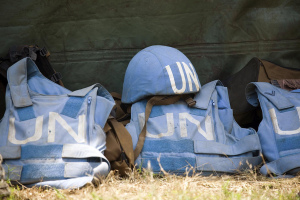
    UN helmets

    Image by UN Photo via Flickr.

    But why is this important? Research shows that the gap in proximity and understanding between the international and the local matters for peace interventions’ effectiveness and outcomes. For example, in her book Peaceland, Séverine Autesserre argues that the shared everyday habits, practices, and narratives of international interveners simultaneously enable international peacebuilders to work in challenging environments, and degrade the effectiveness of peacebuilding interventions. In other words, she asserts a direct link between the peacebuilding bubble and peacebuilding outcomes.

    My own research also deals with the distorting effects of the peacekeeping bubble. Using the analytical lens of the peacekeeping economy – which encompasses the services, establishments, and activities needed to allow peacekeeping and peacekeepers to function, and which to a large extent frames and contains the peacekeeping bubble – I have argued that in areas with robust peacekeeping economies, peacekeeping appears to locals more as an enterprise than protection or development. Where peacekeeping economies flourish, they are as visible and tangible to local citizens as anything else done by peacekeeping missions – maybe even more so. It is thus unsurprising that, when people look around them and see money flowing and where it flows, they conclude that, heroic narratives aside, peacekeeping is not that different after all: it is all about the money. This in turn fosters cynicism and resentment among local citizens towards the peacekeeping mission, from which it is plausible to draw a connection to subpar results. On the peacekeepers’ side, meanwhile, what is striking is the extent to which their arms-length relation to the local reveals a sense of vulnerability – a perception of themselves as potential victims of exploitation, crime, or violence, thus upending the normal framing of peacekeepers as powerful, dominant protectors. On both sides, the strict separation between the peacekeepers and the local encourages, if not fosters, a lack of understanding and trust.

    Taken together, then, this paints a picture of peacekeeping and peacekeepers as purposefully disconnected from the local everyday, apart from the microeconomic transactions contained by, and constitutive of, the peacekeeping economy. When it comes to how peacekeeping really works, the peacekeeping bubble is as relevant and significant as the peacekeeping mandate. Problems associated with this bubble’s existence include local suspicion of missions’ activities and motives; and a dearth of knowledge of, and empathy towards, locals from peacekeepers – each of which could be reasonably conjectured to inhibit the effectiveness and transformative potential of peacekeeping.

    Security, estrangement, and stasis in peacekeeping transformation

    An obvious implication of this contention is that international peace interventions will work better and more empathetically if the prevailing separation and segregation is lessened, such that the international and local ‘everydays’ are more enmeshed and aligned. But how would this work? Is it even possible?

    There are modest proposals that missions could immediately initiate in order to promote an environment of mutual trust and more substantive formal and informal contact between peacekeepers and locals, which could eventually make peacekeeping environments safer for both peacekeepers and locals alike. For example, to mitigate the negative effects of the peacekeeping economy on the local economy and labour market, missions could:

    • implement better scrutiny and oversight of subcontractors employed by missions (with respect to labour standards and protections) and of landlords the mission rents from (to ensure that ill-gotten gains are not rewarded);
    • give guidance to peacekeepers on how to relate to their employees, prioritizing the rights of the employee equal to those of the peacekeeper;
    • make greater efforts to procure goods and supplies locally, working with and monitoring local suppliers to forestall potential negative side-effects on local markets;
    • and use of training methods and materials that do not rely on scare stories and fear to coerce obedience, thus encouraging more receptive attitudes towards locals by peacekeepers.

    The most significant obstacle to peacekeeping transformation lies in the area of security. The tendency in peacekeeping missions to take greater and greater precautions to obviate danger and avoid risk is not without reason: persuading member states to contribute troops and money to peacekeeping is significantly more challenging if the UN is perceived to be reckless, and recruiting civilian peacekeepers also becomes more difficult. But ‘security’ in peacekeeping increasingly seems to mean the elimination of risk – whether stemming from armed groups, organized or ordinary criminals, fraudsters and scam artists, or everyday activities like driving, eating out, having sex, or walking down the street. According to such a standard, peacekeeping missions will never be fully secure. Nor, for that matter, will anything else. Peacekeeping institutions (headquarters and missions) and peacekeepers surely recognize this reality, yet there is little evident willingness at any level to push back against ever-escalating security demands and regulations.

    In this heavily securitised and risk-averse environment, where protection of peacekeepers is (and always has been) mandated equal to protection of civilians, separation is the path of least resistance. This implies that fundamental transformation in how peacekeeping missions situate themselves to local people and communities is unlikely. Missions’ estrangement and alienation from the local community and the local ‘everyday’ is a feature, not a bug; and thus that whatever losses may ensue – of legitimacy or effectiveness – is a price that the peacekeeping apparatus is willing to pay.

    Kathleen Jennings is a senior researcher at the Fafo Research Foundation in Oslo. Her work focuses on UN peacekeeping, gender, and political economy in sub-Saharan Africa. Jennings recently defended her PhD thesis on gendered peacekeeping economies in Liberia and the DR Congo. She has previously worked at the Norwegian Peacebuilding Resource Centre and the Council on Foreign Relations.
  • Belize: challenges and contradictions in gang policy

    Belize: challenges and contradictions in gang policy

    Like its neighbours in the northern triangle (El Salvador, Honduras and Guatemala), Belize has a high murder rate that is closely connected to the strong presence of gangs. But the character of gang activity in Belize is quite different from its Central American neighbours. Belize has pioneered some innovative solutions to the problem it is facing. But it will need to overcome the challenges of internal resistance and an acute lack of resources in order to address the political, economic and social issues that marginalise Belize’s large youth population.

    Read Article →

    Colombia and Mexico: The Wrong Lessons from the War on Drugs

    As activists around the world participate in a Global Day of Action against criminalisation of drug use, evidence from the multi-billion dollar War on Drugs in Colombia suggests that militarized suppression of production and supply has displaced millions of people as well as the problem, not least to Mexico. The wrong lessons are being exported to Central America and beyond, but a groundswell of expert and popular opinion internationally is calling for alternative approaches to regulating the use and trade in drugs.

    Read Article →

    The New Insecurity in a Globalized World

    Writing exclusively for SustainableSsecurity.org, Elizabeth Wilke argues that a new conceptualization of insecurity and instability is needed in a world with greater and freer movement of goods, services and people – both legal and illicit – greater demands on weakening governments and the internationalization of local conflicts. The new insecurity is fundamentally derived from the responses of people and groups to greater uncertainty in an increasingly volatile world. Governments, and increasingly other actors need to recognize this in order to promote sustained stability in the long-term, locally and internationally.

    Read Article →

    Conflict, Poverty and Marginalisation: The case of Curvaradó and Jiguamiandó (Urabá, Colombia)

    In Colombia there are many regions where poverty and the absence, or weak presence, of the state has facilitated the emergence of violence by armed groups. Among these are the Afro-Colombian communities of the Curvaradó and Jiguamiandó in the Urabá region. Whilst the Colombian government fails to fully develop social development programs (including education, health and infrastructure) and sustainable economic development policies to assist marginalised communities, the people of Curvaradó and Jiguamiandó will remain poor, uneducated, vulnerable, and at risk of lose their territories once again.

    Read Article →

    Mano Dura: Gang Suppression in El Salvador

    Widespread social exclusion makes El Salvador fertile ground for gang proliferation and, over time, gang members have resorted to greater levels of violence and drug activity. Yet, government approaches have proved spectacularly ineffective: the homicide rate escalated, and gangs have adapted to the climate of repression by toughening their entry requirements, adopting a more conventional look, and using heavier weaponry. Sonja Wolf argues for approaches which focus on prevention and rehabilitation and looks at why such approaches have been continually sidelined.

    Read Article →

  • Islamic Feminisms – A Challenge to Patriarchy and Traditional Religious Authority

  • Mali: Another Long War? (Part 2)

    Mali - Another Long War(This piece was originally published by Channel 4 News on Tuesday 22 January 2013, and is the second of two parts by Ben Zala and Anna Alissa Hitzemann)

    There is a stark warning today the western intervention strategy in Mali is “flawed”. Part two of a special paper also says France and others are likely to be involved in the conflict “for some time”

    Not unlike the United States in both Afghanistan and Iraq, the French government has begun the intervention with talk of short timelines and minimal troops on the ground before quickly changing its tune, write Anna Alissa Hitzemann and Ben Zala for the Oxford Research Group.

    The initial deployment of 800 French troops may end up numbering more than 2,500 and President François Hollande has stated France’s mission is to ensure that “when we end our intervention, Mali is safe, has legitimate  authorities, an electoral process and there are no more terrorists threatening its territory”. This does not seem to tally with the earlier statement by the French Foreign Minister that the current level of French involvement in the country would last for “a matter of weeks”.

    The latest reports are that the Islamist fighters have been preparing for this intervention by carving a network of caves and tunnels into cliff faces to house bases and supplies of fuel and ammunition. This, combined with the concerns about the roles of both the Malian security forces and a number of potential contributors to the ECOWA force in relation to the abuse of civilian populations (and the likely blowback effect of such actions), mean that stability in Mali will be almost impossible achieve with military force alone.

    It is also far from clear whether the African states that are set to join the intervention will be able commit forces for a drawn-out insurgency. After Chad, the second biggest promised contributor of troops is Nigeria, which has pledged a contingent of 900.

    Yet the Nigerian government itself is fighting its own Islamist-inspired insurgency with the Boko Haram group in the country’s north. Despite a relative decline in Boko Haram attacks in recent months and even the potential for Saudi-backed peace talks between the rebels and the government, fighting could easily intensify once more, in which case Nigeria is unlikely to remain involved in Mali in any significant way.

    Without taking serious action to address the sense of marginalisation and disenfranchisement of those who were willing to join one of the rebel groups… there are few reasons to think the current intervention will produce a durable peace in Mali.

    Not only have France and its allies underestimated the difficulty of fighting the northern rebels among civilian populations in which bombing from above is of little use, there appears to be no sign of a plan as to how the factors underlying the uprising (including the original Tuareg rebellion) can be addressed.

    Without taking serious action to address the sense of marginalisation and disenfranchisement of those who were willing to join one of the rebel groups — Tuareg, Islamist or otherwise — there are few reasons to think the current intervention will produce a durable peace in Mali.

    Ongoing conflict

    While military force is considered the only option, feelings of resentment amongst elements of the population of northern Mali are likely to increase. Not only this, it will provide ample encouragement to other anti-Western paramilitary groups across North and Sub-Saharan Africa, the Middle East, and Central, South and Southeast Asia.

    The central lesson of the western interventions and small-scale military operations (including Pakistan, Yemen, Somalia and elsewhere) of the post 9-11 era, has been that reacting to the symptoms of insecurity once they are deeply manifested, and few options other than military force remain, is a fundamentally flawed strategy for global security. This means that France and others are likely to now be involved in an ongoing conflict in Mali for some time.

    Not only do the (so far conspicuously absent) plans for a post-conflict stabilisation process need to be settled between France and its coalition partners now, a serious commitment to assisting the Malian government to going much further in addressing the marginalisation of the north will be crucial.

    Until the focus shifts from military control to working towards solving the root causes of the conflict, no viable sustainable security will be found for Mali.

    Anna Alissa Hitzemann is a  Peaceworker with Quaker Peace and Social Witness. She currently works with Oxford Research Group as a Project Officer for the Sustainable Security Programme, with a focus on our ‘Marginalisation of the Majority World’ project.

    Ben Zala is a Lecturer in International Politics at the University of Leicester.

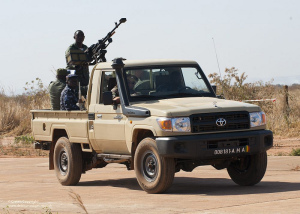
    Image source: Malian Airfield Protection Vehicle and Crew at Bamako, Mali. Source: UK Ministry of Defence.


  • Mali: Another Long War? (Part 2)

  • Chemical Weapons Use in Syria: a Test of the Norm

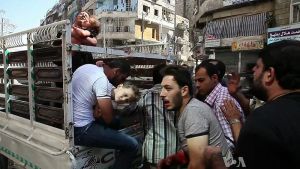
    Wounded civilians arrive at a hospital during the ongoing Syrian civil war. Source: Wikimedia

    Wounded civilians arrive at a hospital during the ongoing Syrian civil war. Source: Wikimedia

    Recent events in the Syrian civil war have proved the greatest test of the norm against the use of chemical weapons since the Chemical Weapons Convention (CWC), the clearest and most comprehensive expression of that norm, opened for signature in 1993. At its core, this was a test of the willingness of countries to uphold the norm, in this case in the face of a flagrant violation causing the deaths of nearly 1,500 people. While the international community may have stumbled upon a satisfactory conclusion – one that reaffirms  the special category of chemical arms – the global response said a great deal about current attitudes to the use of military force as a means of humanitarian intervention.

    The Ghouta incident

    Despite a number of alleged incidents of chemical weapons use in Syria in the early months of 2013 – the use of which was reportedly first confirmed by British scientists in April from soil samples smuggled out of the country – it was August before their apparent use touched mass consciousness around the world.

    The catalyst for global outrage, and near-intervention with military means by western powers, was an attack in the early hours of 21 August in the Ghouta district of eastern Damascus. Chemical weapons, it seemed, had been deployed in Ghouta on a scale far greater than witnessed in any of the handful of previous alleged attacks. Video footage showing evidently sick and distressed adults and children, as well as dozens of bodies, began to rapidly circulate around the world—with Médecins Sans Frontières, the medical aid charity, reporting shortly after the attack that three hospitals supported by it in Damascus had treated around 3,600 patients displaying so-called neurotoxic symptoms. Of these, it said, 355 had died.

    On 30 August, the United States issued a press release in which it claimed that 1,429 people—including at least 426 children, it said—had ultimately died in the attack on Ghouta. As for the who and the what of the incident, the US asserted that on the basis of both open-source information and covertly-acquired intelligence, it assessed ‘with high confidence’ that the attack had been carried out by the Syrian government, and that a nerve agent had been used.

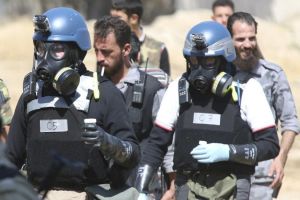
    UN chemical weapons experts wearing gas masks carry samples from one of the sites of an alleged chemical weapons attack in the Ain Tarma neighbourhood of Damascus. Source:

    UN chemical weapons experts wearing gas masks carry samples from one of the sites of an alleged chemical weapons attack in the Ain Tarma neighbourhood of Damascus. Source: Tetovasot

    Following access to three sites in the Ghouta neighbourhood, inspectors operating under the auspices of the United Nations Secretary-General subsequently confirmed that the fast-acting nerve agent sarin had been used there on a ‘relatively large scale’. Their report, released in mid-September, stated that biological samples taken from survivors showed ‘definitive evidence of exposure’ to sarin—evidence, they said, that was consistent with clinical assessments of survivors’ symptoms. Lab analysis of environmental samples taken in Ghouta was reported to have also confirmed the presence of sarin or its by-products.

    While UN verification of chemical weapons-use in Ghouta provided important independent confirmation of what had taken place there (if not who was responsible, which it was not part of the inspectors’ mandate to ascertain), for most onlookers it came as little surprise. Videos, photos and survivor accounts were enough to leave most with few doubts that a toxic weapon of some kind had been used on a mass scale in Ghouta—a dark new low for a conflict already characterised by widespread savagery and the almost total disregard for the lives and welfare of non-combatants.

    Less expected, however, was the decision by the Syrian government, in the days immediately preceding the release of the inspectors’ report, to give up its chemical weapons arsenal in an immediate, verifiable fashion and to join the CWC – a plan proposed by Russia, a key ally of the Assad regime, and an agreement to it by Syria that saw the prospect of US-led airstrikes averted.

    In truth, it is unclear how likely airstrikes would have been had Syria not agreed to give up its chemical weapons. A parliamentary vote in the UK, held in late August, saw a government motion for intervention defeated, ruling Britain out of any involvement In the US, early September saw President Obama step back from the seemingly-imminent launch of airstrikes that would have most clearly of all upheld the ‘red line ’ he himself had set in 2012 regarding any use of chemical weapons in Syria. Instead, President Obama announced that he would first seek approval for the use of force from Congress – a vote that was ultimately overtaken by events and never held, but one that was by no means sure to end in favour of military intervention. Indeed, the vote looked likely to go against.

    To intervene, or not?

    If Syria’s decision to join the CWC and rid itself of chemical weapons stands as one unlikely positive outcome of the Ghouta incident, it is a positive that distracts little from the more troubling features of the attack and the global response to it. For one, the use of chemical weapons on the scale witnessed in Ghouta laid bare the lack of limits that seems to have become a feature of this war.

    Moreover, the reluctance of most Western powers – and publics – to move beyond rhetorical outrage, in the face of the massacre of nearly 1,500 Syrian citizens with a weapon of mass destruction, threatened to erode the sense of chemical weapons’ unique evilness in a fashion not seen at any other time in the recent past.

    All of which says more about the current Western appetite for military intervention, in the Middle East particularly, than it does about their attitude to the use of chemical weapons in warfare. That President Obama had placed chemical weapons use on the other side of the red line of acceptable conduct in warfare—the crossing of which may, the implication was, trigger more forceful intervention—is evidence of that.

    A year on from his proclamation of the red line, however, the situation on the ground had evolved dramatically. Arguably the ripest time for intervention in the conflict has long passed, with al-Qaeda-affiliated and other radical Islamist groups increasingly entrenched within a rebellion that has no clear leadership nor common vision. For western powers, all choices may now be bad ones; though of course that does little to help the millions of refugees and internally displaced Syrians that the conflict continues to produce.

    Slow progress in verifying destruction

    Against a backdrop of ongoing violence, personnel from the Organisation for the Prohibition of Chemical Weapons, the implementing body for the CWC, have been working in Syria since last autumn verifying Assad’s chemical arsenal and overseeing its removal from the country. Progress, though, has so far not been encouraging. An end-of-year deadline for the removal of Syria’s most dangerous chemical stockpile was missed over difficulties in implementation, largely due to the ongoing fighting, and more recently concerns have been raised that Syria is not doing enough to ensure the smooth implementation of the ‘framework’ agreement under which the elimination operation is proceeding. Russia has sought to quieten concerns, announcing in the past few days that a large shipment of chemical weapons would leave Syria this month.

    Pressure on Syria, as war continues

    That world powers are continuing to lean on Syria to ensure implementation of the framework, however, is evidence that the use of chemical weapons is taken seriously at the highest level, and that the issue remains high on the priority list of foreign policymakers in world capitals. What it says to the rest of the world is that the use of chemical weapons will incur consequences, but that leads to a host of questions over what level of use would generate a response (the Ghouta incident was the largest, but almost certainly not the first use of chemical weapons in the war there), as well as how to prove the use of these weapons in circumstances where use has been alleged—and, by extension, what level of doubt is acceptable.

    Meanwhile, in Syria, as the war continues, so the country becomes ever more a kind of ‘new Somalia rotting in the heart of the Levant’, as The Economist so vividly put it last year. Long-awaited peace talks recently concluded in Switzerland achieved nothing of substance, beyond agreement to resume on 10 February. That we may have seen the last use of chemical weapons as Syria tears itself apart is a silver lining of sorts, but a silver lining around a cloud of particularly heavy darkness.

    This article was written in a personal capacity. The views expressed are the author’s own and do not necessarily reflect the views of VERTIC.

    David Cliff works as a researcher at the Verification Research, Training and Information Centre (VERTIC) in London. There, his work focuses on research into the verification, implementation and compliance aspects of nuclear and chemical arms control and disarmament treaties. He holds a BA in Geography and an MA in International Affairs, both from the University of Exeter in the UK.


  • Gaza: Context, Consequences and the Utility of Force

    10 years of US Drone Strikes in Pakistan – What Impact Has it Had?

    This week marks 10 years since the first reported US drone strike in Pakistan. It has also seen the resumption of US drone strikes in the country following a five-month pause. Considering the length of time the CIA-led programme has been running, a number of questions deserve consideration: namely, how effective has the decade long covert drone programme been in Pakistan and what impact have drones had on wider Pakistani society? As the military technology for remote-control warfare spreads, there is a need to question whether drones provide significant tactical advantage or whether their proliferation could lead to greater long-term global insecurity.

    Read Article →

  • 10 years of US Drone Strikes in Pakistan – What Impact Has it Had?

    by Caroline Donnellan and Esther Kersley

    This article was originally published on openSecurity’s monthly Sustainable Security column on 22 June 2014. Every month, a rotating network of experts from Oxford Research Group’s Sustainable Security programme explore pertinent issues of global and regional insecurity.

    Caroline Donnellan manages of the Remote Control project of the Network for Social Change, which examines and challenges the new ways of modern warfare, including the use of Unmanned Aerial Vehicles (UAVs), Private Security Companies, Special Forces, aspects of cyber warfare and surveillance methods. Caroline has a background in multilateral diplomacy and has worked on international security and human rights issues for a number of years. Before joining ORG, she was Senior Policy Advisor to the Ambassador, Irish Permanent Representation to the Organization for Security and Cooperation in Europe (OSCE) in Vienna. 

    Esther Kersley is the Communications Assistant for Remote Control. Prior to joining ORG, Esther worked in Berlin for the anti-corruption NGO Transparency International as an editorial and online communications officer. She has a particular interest in counter-terrorism and conflict resolution in the Middle East, having previously worked with the Quilliam Foundation and IPCRI (Israel/Palestine Center for Research and Information), a Jerusalem based think tank.

  • Nuclear Weapons: From Comprehensive Test Ban to Disarmament

    Nuclear Weapons: From Comprehensive Test Ban to Disarmament

    Despite not yet entering into force, the 1996 Comprehensive Test Ban Treaty has succeeded in almost eliminating nuclear weapons testing and in establishing a robust international monitoring and verification system. A breakthrough in its ratification by the few hold-out states could have important positive repercussions for the Nuclear Non-Proliferation Treaty or nuclear disarmament in the Middle East.

    Read Article →

    Can the Nuclear Non-Proliferation Treaty outrun its double standard forever?

    The recent walkout by Egyptian negotiators at UN talks have demonstrated that, like a building with rotten foundations, the nuclear non-proliferation regime is far less stable than many believe it to be. Egypt’s actions make clear that anything less than a regime specifically geared towards addressing the reasons why some states seek nuclear weapons is a regime existing on borrowed time.

    Read Article →

    Bay of Bengal: a hotspot for climate insecurity

    The Bay of Bengal is uniquely vulnerable to a changing climate because of a combination of rising sea levels, changing weather patterns, and uncertain transboundary river flows. These problems combine with already existing social problems like religious strife, poverty, political uncertainty, high population density, and rapid urbanization to create a very dangerous cocktail of already security threats. Andrew Holland argues that foresight about its impacts can help the region’s leaders work together to solve a problem that knows no boundaries.

    Read Article →

  • A long road ahead: integrating gender perspectives into peacekeeping operations

    Engendering Peace? The militarized implementation of the women, peace and security agenda

    Almost 15 years after the first resolution to address women, peace and security, the agenda’s implementation is increasingly subverted by the militarised security paradigm. Implementing UNSCR 1325 has been interpreted as being about fitting women into the current peace and security paradigm and system; rather than about assessing and redefining peace and security through a gender lens. As a result, the opportunity to create a new recipe for peace and security, based on taking women’s perspectives into account, is being lost.

    Read Article →

    Security Sector Roles in Sexual and Gender-based Violence

    Democratic Republic of Congo’s sexual violence epidemic is not only a weapon of ongoing violent conflict but an expression of entrenched systemic problems. Indeed, sexual and gender-based violence (SGBV) is most commonly perpetrated by the security services in place to protect civilians. In Quartier Panzi in South Kivu province, innovative processes of security sector reform and strengthened police-civilian channels of communication may be providing an opportunity for change, argues World Bank adviser Edward Rackley.

    Read Article →