Blog

  • Belize: challenges and contradictions in gang policy

    Belize: challenges and contradictions in gang policy

    Like its neighbours in the northern triangle (El Salvador, Honduras and Guatemala), Belize has a high murder rate that is closely connected to the strong presence of gangs. But the character of gang activity in Belize is quite different from its Central American neighbours. Belize has pioneered some innovative solutions to the problem it is facing. But it will need to overcome the challenges of internal resistance and an acute lack of resources in order to address the political, economic and social issues that marginalise Belize’s large youth population.

    Read Article →

    Countering Militarised Public Security in Latin America: Lessons from Nicaragua

    Facing a myriad of public security challenges that have provoked some of the highest indices of crime and violence in the world, authorities in Central America have followed a variety of different responses, ranging from repressive and reactive policies to grass roots prevention. Of these approaches, the Nicaraguan National Police’s Proactive Community Policing model stands out due to the results it has achieved. In the second of our two-part discussion, ‘Countering Militarisation of Public Security in Latin America’, Matt Budd explores the lessons that Latin American countries can extract from Nicaragua’s unique approach to public security.

    Read Article →

  • Belize: challenges and contradictions in gang policy

    Belize: challenges and contradictions in gang policy

    Like its neighbours in the northern triangle (El Salvador, Honduras and Guatemala), Belize has a high murder rate that is closely connected to the strong presence of gangs. But the character of gang activity in Belize is quite different from its Central American neighbours. Belize has pioneered some innovative solutions to the problem it is facing. But it will need to overcome the challenges of internal resistance and an acute lack of resources in order to address the political, economic and social issues that marginalise Belize’s large youth population.

    Read Article →

    Countering Militarised Public Security in Latin America: Lessons from Nicaragua

    Facing a myriad of public security challenges that have provoked some of the highest indices of crime and violence in the world, authorities in Central America have followed a variety of different responses, ranging from repressive and reactive policies to grass roots prevention. Of these approaches, the Nicaraguan National Police’s Proactive Community Policing model stands out due to the results it has achieved. In the second of our two-part discussion, ‘Countering Militarisation of Public Security in Latin America’, Matt Budd explores the lessons that Latin American countries can extract from Nicaragua’s unique approach to public security.

    Read Article →

  • What Does Neuroscience Have to Offer Peacebuilders?

  • UN Peacekeeping and Counter-Terrorism

    Too Quiet on the Western Front? The Sahel-Sahara between Arab Spring and Black Spring

    While the world’s attention has been focused on the US-led military interventions in Iraq and Syria a quieter build-up of military assets has been ongoing along the newer, western front of the War on Terror as the security crises in Libya and northeast Nigeria escalate and the conflict in northern Mali proves to be far from over. In the face of revolutionary change in Burkina Faso, the efforts of outsiders to enforce an authoritarian and exclusionary status quo across the Sahel-Sahara look increasingly fragile and misdirected.

    Read Article →

    VIDEO – Militarisation of the Sahel: An interview with Richard Reeve

    Sustainable Security programme Director Richard Reeve discusses our latest report ‘From New Frontier to New Normal: Counter-terrorism operations in the Sahel-Sahara’. The report, commissioned by the Remote Control project, finds that 2014 is a critical year for militarisation of the Sahel-Sahara and the entrenchment of foreign powers there.

    Read Article →

    Exporting (in)Security? Questioning Colombian Military Engagement in West Africa

    With skills and expertise in fighting insurgencies and drug trafficking networks, Colombia’s armed forces are increasingly being sought for engagement in similar security challenges in West Africa. But increasing Colombian engagement gives rise to a number of important questions – not least of which is the goal and expected outcomes of replicating militarised approaches to the war on drugs that have already failed in Latin America.

    Read Article →

    Beaux Gestes and Castles in the Sand: The Militarisation of the Sahara

    Whatever the benefits for Mali, the French-led eviction of jihadist groups from northern Mali may have made the wider Sahara a less safe place, and has done little to lower the capacity of such groups to threaten European interests.. In 2014, France is implementing a major redeployment of its forces in Africa into the Sahel and Sahara. Meanwhile, the US has been quietly extending its military reach from Djibouti to Mauritania. However, as elsewhere, the western military approach to countering Islamist insurgency in the Sahel rests on very unsteady foundations and the potential to provoke wider alienation and radicalisation is strong.

    Read Article →

  • Marine Resource Scarcity, Fisheries Conflict and Maritime Insecurity

    Increasingly, non-traditional threats to maritime security are linked to resource scarcity and conflict. An overriding challenge for policymakers is how to address these threats.

    The relatively new concept of ‘maritime security’ has received increasingly greater attention both within the marine resource management and national security communities, particularly since the early 2000s.  While definitions of maritime security vary, there is broad agreement that maritime security generally encompasses the policies, regulations, and operations designed to secure the governance and management of a nation’s maritime jurisdiction (e.g., exclusive economic zones or territorial waters). This definition is broad enough to attract the relevant interest of and contributions from several fields of study, including: global policy; defense and security; natural resource economics; criminal justice; international development; and environmental management.

    During the last two decades, a number of investigations have been conducted into the threats facing maritime security, particularly within the transnational waters of three regions: the Gulf of Aden and Horn of Africa in East Africa (see Sumaila and Bawumia 2014; Bueger 2013; Hansen 2011; Gilmer 2017); the Gulf of Guinea in West Africa (see Jacobsen 2017); and the South China Sea and Sulu-Sulawesi Seas of Southeast Asia (see Pomeroy et al. 2016; Chapsos and Malcolm 2017; Pomeroy et al. 2007).

    Such research has encouraged careful analysis by the international community to identify relationships between relevant political, socioeconomic, and environmental factors with regional stability and maritime security.  Such investigations are of increasing interest to those addressing national security, international policy, and sustainable development concerns.

    Linking Marine Resource Scarcity and Maritime Security

    Maritime security can be viewed as a non-traditional security threat, defined by Caballero-Anthony as “challenges to the survival and well-being of peoples and states that arise primarily out of nonmilitary sources, such as climate change, environmental degradation and resource depletion, infectious diseases, natural disasters, irregular migration, food shortages, people smuggling, drug trafficking, and other forms of transnational crime”. Increasingly, non-traditional security threats are linked to natural resource scarcity. Whether considering energy, food, or freshwater shortages, such resource scarcities exhibit common attributes.

    • First, they share common drivers, or factors that influence and cause or exacerbate scarcity, such as poverty, food insecurity, ecological degradation, human population growth, and ineffective governance and enforcement.
    • Second, they are linked to each other through feedback loops, which create a major risk of unintended consequences when one scarcity issue is tackled without reference to other scarcity issues.
    • Third, they have common impacts. That is, they disproportionately impact poor and fragile states, cause economic stress, and result in the potential for increased and strategically-targeted resource competition and conflict.

    Bueger identifies four, interrelated concepts as an analytical foundation of maritime security: national security; human security; economic development; and the marine environment.  Building from this economic-environment-security framework, other research has investigated the relationship between the relative abundance (or scarcity) of available marine resources, the type and degree of extractive effort for such marine resources, and the level of resource competition and conflict (see Pomeroy et al. 2016; Bueger 2015b; Pomeroy et al. 2007).  These studies highlight how various political, socioeconomic, institutional, and cultural factors are linked to and cumulatively influence maritime security.  This research also illustrates how maritime insecurity can influence broader trends related to civil unrest (nationally or locally) and regional peace and order.

    In this work, there is growing recognition of how increasing fisheries scarcity, competition, and conflict exacerbates rates of illegal, unreported, and unregulated (IUU) fishing in central Indonesia, Liberia, eastern Malaysia (Sabah), the southern Philippines, and Somalia.  In turn, IUU fishing further increases scarcity, competition, and conflict over remaining resources, eroding peace and order and decreasing maritime security.  Declining marine resource availability and decreasing maritime security also threaten the conservation and sustainable management of in situ marine biodiversity within these regions.

    The Role of Non-State Actors and Transnational Crime
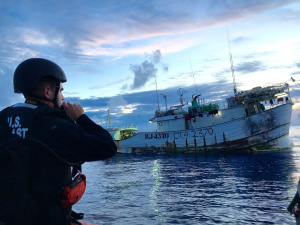
    Image credit: U.S. Coast Guard. Photo by Chief Petty Officer Sara Mooers.

    Investigations into marine resource scarcity, competition, and conflict have also highlighted how non-state actors and non-traditional threats are influencing maritime security.  Transnational crime has a notable influence on both marine resource scarcity and maritime security.  For example, illicit maritime commerce (such as human trafficking and the smuggling of narcotics or small arms via ocean vessels in Southeast Asia and West Africa) and piracy (including armed robbery at-sea, kidnapping for ransom, and oil bunkering off Indonesia, Malaysia, Nigeria, the Philippines, Somalia, and Yemen) committed by non-state (and in some cases, stateless) actors are linked both to marine resource scarcity (via both illegal fishing and piracy of post-harvest fishing vessels) and increased armed conflict and civil unrest (via increased rates of armed conflict/violence at sea and logistical and supply support for insurgencies and acts of terrorism).

    As highlighted recently by an INTERPOL study (2016), 80% of the world’s nations today recognize environmental crime as one of their nation’s highest national security priorities (INTERPOL and UN 2016).  INTERPOL investigations reveal how environmental crimes are linked to both transnational criminal networks and terrorism.  Such crimes include the illegal exploitation of high-value natural resources from conflict areas (and in some cases, to fuel or sustain conflict in such areas).

    Criminal supply chains trafficking in high-value natural resources (e.g., timber, oil, fisheries, diamonds, and gold) are documented as often converging under broader, networked operations of organized transnational crime.  Such transnational crime networks include actors operating within high-value fishery supply chains, including those for tuna, shark fins, and live reef fish.  Such criminal supply chains illustrate how closely linked marine resource scarcity and maritime security are.

    Moving from Investigation to Prediction and Intervention

    Building upon the recommendations outlined by INTERPOL and the UN, we propose that the international community move beyond investigating the relationships between political, socioeconomic, and cultural factors with maritime security (now documented), and move toward supporting three, focused interventions to bolster maritime security, particularly in sensitive or destabilized regions of transnational waters.

    First, we propose the development of a predictive model of observed versus forecasted changes to the relative level of maritime security within a specific nation or region.  To do this, an empirical approach must be taken to build a predictive, multivariate model of national and regional maritime security trends (as the dependent or outcome variable), based on observable, real-time data related to political, socioeconomic, and cultural factors that are known to be correlated (independent variables).

    By periodically monitoring such multivariate models at the national and regional levels, ‘tipping points’ in maritime security and regional stability can be identified prior to being reached, thus allowing opportunities for timely and focused interventions.  Such a model would require identification and measurement of an adequate, sensitive, reliable, and practical set of maritime security indicators across relevant dimensions; for example, Germond identifies geopolitical indicators of maritime security.

    Next, we argue that current and future maritime security operations be redesigned from being largely specialized, narrowly-defined efforts to becoming broader, multidisciplinary efforts that account for the correlation and interdependence of relevant political, socioeconomic, institutional, and cultural factors present.  This will require the deliberate and focused recruitment, consultation, and active participation of non-traditional actors (e.g., fisheries managers; resource economists; rural development experts) into national security operations and defense policy.

    By redesigning such maritime security activities, they can interfere with the ability of such factors to converge and cumulatively exacerbate civil and environmental insecurity.  Such maritime security activities include: coastal defense and security operations or missions; national marine resource management policies and actions; ‘good’ governance programs relating to nautical jurisdictions; economic development programs for coastal and marine industries; international foreign aid and development programs.

    To be effective, redesigned security activities must address a broad suite of relevant factors rather than narrowly focus in on a specific aspect of maritime security; e.g., redesigning counterterrorism activities within coastal areas of unrest to include targeted marine resource livelihood and community-supported enforcement projects.  Case studies of successful models of broader, multidisciplinary maritime security operations can be documented and shared across nations and regions.

    Finally, we propose that maritime security operations move away from being largely single country-specific efforts that are driven by national security agendas to that of collaborative, multinational efforts that are driven by a mutual, regional maritime security strategy.  Addressing transnational maritime threats and regional criminal networks in the seafood supply chain requires a collaborative approach that relies on coalition building and shared (negotiated) tactical objectives.

    In some cases, such regional processes and multinational policy fora already exist, and can serve as a platform for targeted, collaborative, multinational maritime security operations; e.g., transnational security forces patrolling regional seas under the Regional Plan of Action to Combat IUU Fishing by the Association of Southeast Asian Nations (ASEAN).  Such collaborative, multinational efforts to reduce marine resource conflicts and improve maritime security would be a logical, strategic, and high-value approach commensurate with addressing the multiple operating conditions.

    Conclusion

    Maritime security is an important but often overlooked dimension of the broader “sustainable security” framework.  A complex web of multivariate drivers influencing maritime security are increasingly documented and recognized as being interconnected with the emerging security challenges of the 21st century, including by non-state actors through non-traditional threats.  Addressing the contributions of marine resource scarcity, competition, and conflict in eroding maritime security is an important step that must be taken to uphold the rule of law, strengthen national security, and promote regional peace and order.

    Robert Pomeroy is currently a Professor in the Department of Agricultural and Resource Economics and Connecticut Sea Grant College Fisheries Extension Specialist at the University of Connecticut – Avery Point in Groton, Connecticut USA. Dr. Pomeroy has his PhD in Resource Economics from Cornell University. His areas of professional interest are marine resource economics and policy, specifically small-scale fisheries management and development, coastal zone management, aquaculture economics, international development, policy analysis, and seafood marketing. Dr. Pomeroy has worked on research and development projects in over 70 countries in Asia, Africa, the Caribbean and Latin America.

    John Parks has worked, for more than twenty years, with local communities, indigenous leaders, resource users, government agencies, non-governmental groups, and donors to design and implement marine resource management solutions that strengthen both environmental and civil security within coastal communities around the world. He has served in a number of non-government and government organizations, including as a federal officer with the United States National Oceanic and Atmospheric Administration and as senior staff with the Nature Conservancy, the World Resources Institute, and World Wildlife Fund. John assists government and non-government clients around the world design and implement marine management solutions, including for fisheries management, marine protected area design and management, citizen-supported maritime enforcement, and climate change adaptation in coastal communities. John earned his undergraduate and graduate degrees from the Rosenstiel School of Marine and Atmospheric Science at the University of Miami, with a dual focus on behavioral science and tropical coastal ecology. He is a member of the IUCN World Commission on Protected Areas, and has been a contributing or lead author on numerous peer-reviewed journal articles, books, and other publications.


  • “The Most Toxic War in History” – 25 Years Later

    This month marks the 25th anniversary of the start of Operation Desert Storm, the combat phase of the Gulf War. Precipitated by Iraq’s invasion and annexation of Kuwait in August 1990, the conflict was the first to see the widespread use of depleted uranium (DU) ammunition. US and UK forces subsequently acknowledged firing a combined 286,000kg of DU – the vast majority of which was fired by US Abrams and M60 tanks, and A10 and Harrier aircraft.

    The decision to deploy the radioactive and chemically toxic weapons, which had been under development since the 1950s as a response to Cold War concerns over defeating Soviet armoured divisions, would prove highly contentious in the following years. Once the media and military’s enthusiasm for what was promoted as a new paradigm in high-tech low-casualty warfare began to subside, veterans, journalists and civil society organisations in the US and UK increasingly began to challenge the general conduct of the war, and the use of DU in particular.

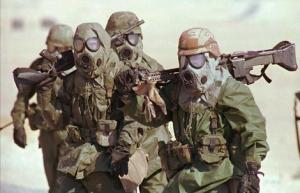
    Soldiers in Gulf War wearing gas masks. Image by Wikimedia

    Soldiers in Gulf War wearing gas masks. Image by Wikimedia.

    This was largely to be expected, and had been anticipated just six months before the conflict in a US military study on the environmental and health risks of DU: “Public relations efforts are indicated, and may not be effective due to the public’s perception of radioactivity. Fielding and combat activities present the potential for adverse international reaction.” Those wishing to continue to use DU weapons recognised that they would need to plan vigorous public relations efforts in order to justify their continued use, a pattern that continues today. Following 1991, this saw DU branded as the “Silver Bullet” – a weapon capable of such astonishing feats, and so militarily important, that any concerns over its potential health or environmental impacts should be disregarded.

    “The most toxic war in history”

    As increasing numbers of veterans began to report post-deployment health problems in the years that followed, attention began to focus on the overall toxicity of the conflict. From oil fires and pesticides, to the use and disposal of chemical weapons, the Gulf War was increasingly viewed as “the most toxic in history”. Whether it was – conflict pollution had been developing in concert with the mechanisation of warfare and industrialisation throughout the 20th Century, or whether this just represented a growing awareness of the linkages between chemicals and health is a matter of debate. Nevertheless, questions were asked about whether possible exposures to a suite of chemicals could be responsible for the ailments reported by veterans. These ranged from birth defects to chronic fatigue, and led to the emergence of the catch all term Gulf War Syndrome (GWS).

    United States troops wearing NBC [Nuclear Biological and Chemical] outfits with a 'wounded' soldier on a stretcher during an exercise before the start of operations in Kuwait, 1991.

    US troops wearing Nuclear Biological and Chemical outfits with a ‘wounded’ soldier on a stretcher during an exercise before the start of operations in Kuwait, 1991. Image by Wikimedia.

    In the decade that followed a number of internal reviews, which were triggered by public concern over veterans, flagged problems caused by the haste to deploy DU weapons. For example, a 2000 review by the US Government Accounting Office found that there had been significant failures in the training policies intended to minimise the exposure of military personnel to DU. It also found flaws in the systems of data collection necessary to determine exposure levels and subsequent health impacts, not only for DU but also for other toxic exposures.

    In the case of DU, it also became clear that scientifically unjustified assumptions had been made about the health risks it posed. These ranged from basic information about the quantity of DU released when targets are struck, to the complex biological responses within the human body when cells are exposed, with the in vitro and animal studies necessary to identify DU’s role in causing cancer only initiated in 2000. For those troops caught in friendly fire incidents, or who returned to, or repaired, DU damaged vehicles, it was clear that the scientific knowledge available on these and other issues was insufficient to answer their concerns about the health risks they faced.

    The clear lesson from DU’s use in 1991 is that far more data is required on the health risks and environmental behaviour of the substances used in munitions before they are deployed. Indeed, such data should be a pre-requisite for determining both the legality and acceptability of munitions prior to their use. In the rush to deploy the weapons, DU advocates found it all too easy to rely on assumptions that were not based on robust scientific evidence. Similarly, the lack of accurate monitoring of other toxic battlefield exposures hampered efforts to determine the cause or causes of GWS among military personnel. The situation was similar to that experienced by veterans from the conflict in south-east Asia, when efforts were made to quantify their exposure to dioxin contaminated herbicides.

    Increasing concerns over the health of Iraqi civilians

    Concerns over the health risks that DU weapons posed to Iraqi civilians took rather longer to emerge but by 1996, reports had begun to circulate from western journalists visiting Iraqi hospitals. Harshly affected by the sanctions regime, which blocked access to basic equipment and medication, medical professionals were identifying changes in the rates and age distribution of certain cancers, and in the prevalence of birth abnormalities.

    Politicisation of the findings by the Iraqi regime, and a disinterest in the humanitarian consequences of the legacy of the 1991 conflict, contributed to a failure to meaningfully address these reports. Yet the problems that the US military had faced in trying to determine the health effects being reported by their own troops during the 1990s also applied for those who sought, and continue to seek, to examine the impact of the weapons on Iraqi civilians.

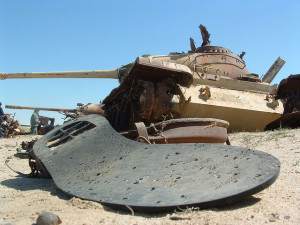
    Sole of shoe at 'Highway of Death' in Iraq, where DU munitions were used to destroy tanks and other vehicles of Saddam Hussein's retreating army in Gulf War

    Sole of shoe at ‘Highway of Death’ in Iraq, where DU munitions were used to destroy tanks and other vehicles. Image by Christiaan Briggs.

    As was the case with military personnel, systems to track and record potential environmental exposures for communities in conflict were, and remain, largely absent. Mechanisms for warning civilians about possible environmental exposures are largely non-existent, in spite of the numerous pollution risks found in contemporary conflicts. Systems to follow up possible exposures in order to determine health effects in the medium to long-term are almost unheard of. What civilian epidemiological or exposure research there is, is often undertaken independently with minimal resources, as a result studies may be temporally or geographically limited, which can leave methodologies open to criticism.

    The new norm?

    The pollution generated in 1991 affected military personnel and public and environmental health across the Persian Gulf area, with smoke plumes travelling 1,600km and oil slicks affecting 440km of coastline, but it was not unique by contemporary standards. The conflict in Ukraine is also thought to have produced significant pollution, due to the fighting taking place in one of the most heavily industrialised regions on Earth. Elsewhere, current Russian and Coalition bombing operations against Islamic State controlled oil facilities in Syria have also caused widespread air, water and soil pollution. This is also likely to be the case for the conflict as a whole, which has seen half of Syria’s housing stock pulverised to rubble and fighting in and around industrial areas. From Iraq, to Libya and South Sudan, isolated and strategically valuable oil and gas facilities are often the targets of choice for militaries and armed groups alike.

    Instability and armed conflicts also degrade the institutional frameworks that safeguard environmental and public health. These forms of degradation can create pollution problems in their own right, for example by limiting governmental systems of oversight or management for industrial or domestic wastes. Institutional damage also reduces the capacity of the State to properly address pollution threats to public health and the environment. Instability can also slow or halt progress towards the implementation of multilateral environmental agreements, be they on waste, water or biodiversity, ensuring that the environmental legacy of armed conflict lasts well beyond the cessation of hostilities. Together with the direct environmental damage caused by conflict, the diminution of environmental governance and institutional capacity has serious implications for the attainment of the environmental dimensions of the Sustainable Development Goals.

    Lessons learned?

    A quarter of a century on from the Gulf War, what have we learned? As anticipated in 1990, DU weapons have not become any more acceptable, with an overwhelming majority of States demonstrating their concerns at the UN General Assembly every two years. This has helped encourage a shift in US policy on their use. Gulf War veterans are still seeking recognition for their illnesses but the experiences from 1991, and Vietnam before it, have helped catalyse progress on the collection of “environmental intelligence” for troops on deployment.

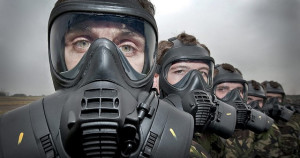
    Gunners of 26 Squadron (Sqn) Royal Air Force (RAF) Regiment based at RAF Honington wearing the GSR10 gas mask during an exercise. Image by Defence Images

    Gunners of 26 Squadron (Sqn) Royal Air Force (RAF) Regiment based at RAF Honington wearing the GSR10 gas mask during an exercise. Image by Defence Images.

    Rather less progress has been made for the civilians living in environments polluted by conflict, and much more could and should be done to gather data on environmental risks and integrate it into humanitarian assistance and public health systems. As for environmental protection in times of war, little has changed since 1991. For that reason Ukraine deserves praise for sponsoring a resolution on the necessity of greater environmental protection and more effective response ahead of this May’s UN Environment Assembly.

    Last year, the Toxic Remnants of War Project completed a study that examined whether a more formalised mechanism of post-conflict environmental assistance could not only help address wartime environmental damage when it does occur, but also help to strengthen norms against the most damaging military behaviours. For inspiration, we looked to the treaties on land mines and cluster bombs but also to the norms and principles established by international environmental and human rights law. Although primarily a think piece, it clearly demonstrated that elements of these systems are readily transferrable to the protection of the environment in relation to armed conflicts – if the political will could be mobilised to address the topic in a meaningful way.

    Building the political will for the systemic change that could overhaul the existing ad-hoc responses to wartime environmental damage, and challenge the weakness of current protection under international humanitarian law is a significant challenge, but if we fail to do so we will be ignoring the lessons from 1991 and from many conflicts since.

    Doug Weir is the Coordinator of the International Coalition to Ban Uranium Weapons and manages the Toxic Remnants of War Project, which studies the environmental and public health legacy of conflict pollution @detoxconflict. The Project is a founding member of the Toxic Remnants of War Network, which advocates for a greater standard of environmental protection in conflict @TRWNetwork.

  • Fighting Maritime Piracy with Private Armed Guards

    States recently embraced a new policy regarding the fight against maritime piracy, and many began authorizing their cargo ships to carry private armed guards to help protect them when travelling through pirate-infested waters. Whilst this approach has yielded some success in protecting ships, it has also produced some major problems.  

    Author’s Note: For a more detailed argument about why states should cooperate to regulate armed guards providing anti-piracy protection, see the article “Gunslingers on the High Seas: A Call for More Regulation,” 24 Duke J. Comp. & Int’l Law 105 (2013), written by Yvonne M. Dutton, which is available on SSRN.

    In 2011, the fight against maritime piracy changed. Until then, the world’s navies were primarily charged with providing the bulk of anti-piracy protection, and individual ships were encouraged to do their part in deterring piratical acts by employing the industry’s “best management practices” – a set of primarily passive defense measures.  But, in early 2011, the International Chamber of Shipping (ICS), the main trade association for the shipping industry, announced that it had changed its previous stance opposing the use of armed guards on ships. Instead, it stated that the decision of whether to hire armed guards should be left to ship owners and their flag states.

    States embraced the new policy position, and many began authorizing their cargo ships to carry armed guards to help protect them when travelling through pirate-infested waters. The reason for the change was simple: the world’s navies had managed to prevent many pirate attacks after they began patrolling the Gulf of Aden and Indian Ocean in 2008, but they simply could not control enough of the high seas to make travel safe for all.  By 2012, some 60% of cargo ships employed armed guards. Hiring the guards is not cheap—costing ship owners about $60,000 for a four-person team to accompany travel through the Gulf of Aden. On the other hand, the evidence suggests that no ship protected by private armed guards has been the victim of a successful pirate attack. In 2009, despite the presence of the world’s navies, Somali pirates attacked more than 200 ships, resulting in more than 40 successful hijackings. The contrast with 2015 is significant, with the International Maritime Bureau (IMB) Piracy Reporting Centre showing no attempted or successful Somali pirate attacks.

    Although apparently no ship protected by private armed guards has been successfully attacked, there are reasons to be concerned that the guards will not perform their anti-piracy duties in a way that does not escalate violence, involve unlawful use of force, or cause international incidents.  A March 2011 incident between private armed guards hired to protect the cargo vessel Avocet and alleged pirates in the Gulf of Aden illustrates this point. Video footage shows PMSC personnel firing dozens of shots at an approaching skiff after their team leader ordered them to fire “warning shots.” The guards continued to shoot even after the skiff crashed into the Avocet. The Private Maritime Security Company (PMSC) defended the actions of its personnel as justified, stating that the guards feared for their lives and were acting in self-defense. A maritime industry expert, though, expressed the view that the failure to fire actual warning shots and the rapid and sustained rate of gunfire show the guards used excessive force.

    A recent New York Times report suggests that the risk that private armed guards may mishandle potential pirate attacks has increased, rather than decreased, over the last several years. The report centers on a video showing four unarmed men being gunned down at sea by someone who industry experts believe is a private armed guard wielding a semi-automatic weapon. Other private armed guards interviewed for the article lamented a booming $13 billion-a year security business teeming with untrained guards. They stated that many armed guards employed by a shipping industry concerned with cost-cutting “lack combat experience, speak virtually no English (despite a fluency requirement), and do not know how to clean or fix their weapons.”  And untrained guards can panic and fire too soon or hesitate for so long that they miss the chance to employ preventative measures that could prevent resort to deadly force.

    Pakistan_Navy_Special_Service_Group_member_silhouetted_aboard_Pakistan_Navy_Ship_PNS_Babur

    Image via Wikimedia Commons.

    However, no coordinated set of international guidelines regulates PMSCs and the hiring and training of private armed guards to aid in the fight against piracy. States instead each make their own rules. Germany and France are examples of states that have taken a more hands-on approach, requiring PMSCs to meet certain criteria to help ensure that guards are thoroughly vetted and well-trained in the use of force before the company can obtain a special license or certificate to provide services on the state’s flagged ships.  The Marshall Islands is similarly hands-on, requiring ship owners to hire only from PMSCs that have been certified to the International Organization for Standardization’s (ISO) 2015 Guidelines for PMSCs by an accredited certification body. The United Kingdom takes a different approach and refrains from mandating particular licensing or certification standards. It does, however, encourage its ship owners to employ guards from PMSCs that have been voluntarily accredited under the ISO’s 2015 Guidelines for PMSCs. Finally, some states are more hands-off as regards vetting and training of guards. For example, Singapore states that the decision of whether to hire armed guards is a matter for ship owners to decide. It does warn that the decision should be made “after a thorough risk assessment and after ensuring all other practical means of self-protection have been employed.”

    A Call for More Regulation and Coordination

    States that have employed a more hands-on approach to vetting guards and ensuring that PMSCs meet certain standards of operation and training should be commended. However, unless all states are similarly vigilant, we cannot eliminate the risk that untrained “cowboy” guards will indiscriminately shoot to kill when the law and facts do not warrant that use of force.  All states should accept responsibility for making sure that the world’s oceans are safe from “cowboy” guards by negotiating an international convention establishing one set of regulations to govern PMSCs and the qualifications and training of maritime security personnel. A world where each state’s PMSC standards differ can create an incentive for ship owners concentrating on the bottom line to choose to sail under the flag of a country with looser regulations.  Similarly, absent an agreed-upon international standard, PMSCs may choose to register themselves in a jurisdiction with lax laws.

    Getting states to agree on a regulatory scheme for PMSCs will require effort. On the other hand, states need not start with a blank slate: the ISO has already created guidelines for PMSCs.  The ISO’s 2015 Guidelines for PMSC address security management system elements and operational planning for PMSCs providing armed guards in high-risk areas.  For example, Section 4.2.5 of the Guidelines states that the PMSC “should establish and document its processes for compliance with home state, coastal and flag state laws as regards the procurement, licensing and transshipment of firearms for each transit.”  That same section more precisely also states that the PMSC should “comply with any home or flag state or local requirements in respect of identifying and licensing individuals who will use such firearms, including ‘end user certificates’ where national laws apply.” Section 4.3.2 discusses procedures PMSCs should employ for background screening and vetting of guards, stating that “[s]election of qualified personnel should be based on specific competencies and criteria defined by the organization including knowledge, applicable and relevant military, law enforcement or equivalent experience, skills, abilities and attributes.” Section 4.4.3 states that the PMSC “should establish, implement, and maintain procedures to ensure all security operatives carrying out tasks on its behalf are aware of and receive training” on, among other things (1) the maritime environment; (2) ship security systems and defense arrangements; (3) rules on the use of force generally and as they apply for specific transits; (4) competence with specific firearms and how to properly store arms; (5) the prohibition of consuming alcohol or dugs while on the ship; and (6) procedures to document any incidents involving the use or arms. In terms of operational planning, for example, Section 5.1 states that the PMSC “should establish and document processes and protocols for legal authority and licensing, preparation, deployment, command and control and communication with its security personnel.” (ISO makes the Guidelines available for download from its website for a fee.)

    As noted above, the Marshall Islands now mandates that its shippers hire armed guards only from PMSCs certified to the standards of the 2015 ISO Guidelines by a United Kingdom Accreditation Service (UKAS) authorized certification body.  The United Kingdom encourages its shippers to “use independent third party certification” to the ISO Guidelines “as an important component of their criteria in selecting a PMSC.” States have little excuse not to follow their lead—the ISO standards and certification processes already exist.

    Certification, though, should not be the end of the process. To make certain that PMSCs continue to deliver quality, reputable services, states should create a regular monitoring mechanism that can be implemented by either an existing institution or one that is newly-created. And all states should ensure that the PMSCs their shippers hire are subjected to that regular monitoring mechanism. The process of monitoring PMSCs necessarily will not be without costs. But both ship owners and states should be willing to fund the effort. To continue with a system in which each state creates its own rules or not rules at all puts innocent lives at stake and risks escalating levels of violence at sea. All civilized states should instead work towards making the seas safer for all, not riskier.

    Yvonne M. Dutton is an Associate Professor of Law teaching international criminal law, comparative law, evidence, criminal law, and criminal procedure. Dutton has practiced law as a federal prosecutor in the U.S. Attorney’s Office for the Southern District of New York, where she tried narcotics trafficking and organized crime cases. She also practiced as a civil litigator in law firms in New York and California.  Dutton’s research interests include international criminal law, international human rights law, and maritime piracy. Broadly speaking, her scholarship examines questions about international cooperation and the role and effectiveness of international institutions in deterring and holding accountable those who commit crimes of international concern. Dutton has published a number of law review articles analyzing issues associated with maritime piracy. 

  • The Energy Dimension in China’s Arctic Interests

    China’s increasing demand for oil and gas means that it is searching abroad to secure new sources of imports. With its rich resources, the Arctic region could serve this purpose, and Chinese oil companies have shown interest in exploration and production opportunities there.

    Decades of high and sustained economic growth have substantially increased China’s need for energy. China is the world’s second largest economy and the world’s largest energy consumer. Importantly, as domestic production has not kept pace with raising consumption levels, China is forced to import most of its oil and natural gas. China today is the world’s second largest oil importer and third largest importer of natural gas. Crucially, China’s oil import dependency is high and increasing. For instance, in 2016 more than 60% of China’s oil demand came from overseas imports, up 3.5% from 2015.

    To meet its growing energy import demand, China has, in the last decade or so, embarked on an energetic effort to search for overseas supplies. A central objective has been to diversify the origin of its oil and natural gas sources, and means of delivery. Today, China imports oil from the Middle East and North Africa, Latin America, Central Asia and Russia, via the sea, railway and oil pipelines. China imports liquefied natural gas (LNG) from a variety of sources (for instance from Qatar, Australia, Indonesia, and Malaysia) but also pipeline natural gas from Central Asia, Myanmar and has contracted large future imports from Russia.

    However, more than 50% of Chinese oil imports originate in the Middle East and North Africa and up to 80% of China’s maritime oil import must travel through the narrow Malacca Strait, a stretch of water between the Malay Peninsula and Sumatra. In the eyes of China’s strategic planners, this makes their country vulnerable to potential disturbances of oil supplies, not only due to volatile political conditions in these regions but also, however unlikely, a potential U.S. naval blockade.

    Enter the Arctic region. According to the widely cited 2008 report by the United States Geological Survey (USGS), 30% of the world’s undiscovered natural gas and 13% of the world’s undiscovered oil is estimated to be in the Arctic region. Energy imports from the Arctic, Chinese strategist calculate, would help mitigate China’s supply and transport vulnerabilities by presenting an alternative to existing import sources and delivery routes.

    Expanded engagement 

    Image credit:  Timo Palo/Wikimedia.

    China is not an Arctic littoral state, but officially defines itself as a “near-Arctic state”. China has in recent years incrementally stepped up its engagement in the Arctic region. China sought, and in 2013 secured, permanent observer status in the Arctic Council (AC), granting Beijing a new platform, albeit with limitations, to participate on issues regarding Arctic governance. Importantly, China acknowledges and respects the sovereignty claims and rights of Arctic states, a pre-condition for observer membership status acceptance in the Arctic Council. China also recognizes the United Nations Convention on the Law of the Sea (UNCLOS) as the legal foundation governing the Arctic. This helped alleviate concerns over China’s growing Arctic presence, which some viewed as potentially challenging the regional Arctic order.

    China is active in scientific research in the Arctic pertaining to global climate change. While such research is sometimes brushed off as a mean to hide China’s other goals, the daunting environmental challenges currently facing China surely motivates genuine international scientific climate work and collaboration in the Arctic. China’s icebreaker, The Snow Dragon (Xuelong), has conducted seven scientific research expeditions as of 2016 and a second icebreaker under construction (ready to sail by 2019). In 2004 the Yellow River Station (Huanghe zhan) research facility in Norway’s Svalbard was established. China is also engaged in numerous scientific bilateral and multilectal cooperation projects with Arctic States, for instance the China-Nordic Arctic Research Center, while simultaneously boosting its domestic polar competence.

    The EU is China’s biggest trading partner and China is the EU’s second biggest. As the Arctic ice-cap continues to retreat, opportunities for new trade links between transiting the Northern Sea Route (NSR) from China to Europe are opening up, shortening the shipping time and fuel savings considerably compared to the conventional route through the Malacca Strait and Suez Canal. There have been some optimistic estimates made by the Chinese. For instance, according to one figure, 5 to 15 of China’s total trade could use the route by 2020, if constructively prepared. China’s largest shipping company, China Ocean Shipping Company (COSCO), has over the years conducted a few, but increasing, intra- and trans-Arctic voyages and announced that it plans to begin with regular trans-Arctic sailings. However, prospects such as the above estimate seem overly optimistic as utilization of the NSR is dependent on variety of factors (commercial, infrastructure, technical, environmental etc.), reflecting  overall low numbers of trans-arctic maritime trade. Importantly, most of the Chinese commercial actors remain hesitant to make large-scale investments and the optimistic scenarios must be taken with caution.

    Energy – a cautious tale

    Natural resources, particularly oil and gas, constitute another area of Chinese interests in the Arctic, according to some the principle motive. While the Chinese government has of late been more open about its economic interests in the Arctic, and also taken steps to promote energy bilateral cooperation with Arctic states, notably with Russia, Chinese commercial players on the ground have been cautious. It is often stated by the industry itself that China lacks the technical skill to operate in harsh Arctic conditions. The goal for Chinese oil companies is instead primarily to learn and obtain technical know-how from more advanced international companies. Western sanctions against Russia, due to the annexation of Crimea in 2014, further complicate the situation. While Russia has turned increasingly to China for capital and investments, the lack of technological skill limits China’s actual participation in exploration and production. Moreover, the current low oil price has made the global energy market a “buyer’s market”. Today’s big buyers such China have more options. In other words, Arctic oil and gas needs to be “cheap” enough to be commercially attractive compared to other available import sources.

    This has undoubtedly impacted on the scope and nature of concrete Chinese Arctic energy projects. Most of what has been done is limited. For instance, the attempt to explore oil and gas in the Dreki area off the coast of Iceland by China National Offshore Oil Corporation (CNOOC) together with Icelandic Eykon Energy and Norwegian Petoro remains uncertain. The often noted purchase by CNOOC of Canadian Nexen in 2013 for 15.1 USD billion and the company’s investments in Canadian oil sand have yielded limited returns so far. Russia’s Rosneft has invited China National Petroleum Corporation (CNPC) to explore three offshore fields in the Barents and Pechora Seas, but open information on progress is scant.

    There is one project, however, which seems to have materialized significantly, namely CNPC’s involvement in the Yamal LNG terminal project in Russia’s Arctic Siberia. The project is one of the Arctic’s most ambitious infrastructure projects with an estimated cost of 27 USD billion. The terminal will supply costumers with LNG gas and aims at being operational by 2017, offering a future annual capacity of around 16.5 million metric tons per year. CNPC entered the project in 2013 in buying a 20% equity stake while committing to import 3 million tons LNG annually for a 20-year period (price so far undisclosed). Then in 2015 China’s Silk Road Fund bought 9,9% making China the project’s second largest investor after Russia’s Novatek with owns 50,1% percent and French Total with remaining 20%. The Export-Import Bank of China and China Development Bank, China’s “political banks”, in 2016 offered loans of a total of 12 USD billion, lending important financial support to the project. Additionally, Chinese companies supply Arctic modules for the construction of the terminal. Finally, Chinese shipping and construction companies are involved in the manufacturing of specialized ice-breaking LNG carriers which will be used for shipping LNG to customers. As of 2015, Chinese shipping companies have been involved in the construction of fourteen of the fifteen commissioned.

    Conclusion

    China’s Arctic energy interests have been limited. The Yamal LNG project is the only significant Chinese project, in part reflecting changing external circumstances as Russia’s isolation due to western sanctions literally opened up for more Chinese capital, and thus involvement. Despite the current modest Chinese concrete involvement, Arctic energy will nevertheless play a part in China’s overall energy strategic outlook in the years to come as demand for oil and especially natural gas will continue to be substantial. Arctic energy imports will not replace any of China’s main energy import sources, but more likely serve as an (limited) additional supply source.

    Christopher Weidacher Hsiung is a researcher at the Asia Centre at the Norwegian Institute for Defence Studies (IFS) and PhD Candidate at the Department for Political Science at Oslo University. His main research areas include China’s foreign and security policy, Sino-Russian relations and China’s Arctic interests.

  • The UN’s Meetings on Autonomous Weapons: Biting the Bullet, or Lost in Abstraction?

    Losing control over the use of force: fully autonomous weapons systems and the international movement to ban them

    Later this month, governments will meet in Geneva to discuss lethal autonomous weapons systems. Previous talks – and growing pressure from civil society – have not yet galvanised governments into action. Meanwhile the development of these so-called “killer robots” is already being considered in military roadmaps. Their prohibition is therefore an increasingly urgent task.

    Read Article →

  • The Coming Peace: Africa’s Declining Conflicts