Tag Archives: Latin America

Inspirations for Post-liberal Peacebuilding from Latin America
The political changes in certain South American countries, including most notably the case of Bolivia, could act as inspirations in the ongoing search for locally grown, hybrid variants of a […]

Of Ruptures and Continuities: Sexual Violence in Conflict
In February 2016, two former military officers of the Guatemalan army were convicted of crimes against humanity based on cases of sexual and domestic slavery, perpetrated in the 1980s during […]

From Surveillance to Smuggling: Drones in the War on Drugs
In Latin America drones are being used as part of the War on Drugs as both regional governments and the US are using surveillance drones to monitor drug trafficking and find smuggling routes.. However, as drones are increasingly being used by drug cartels themselves to transport drugs between countries, could Latin America find itself at the forefront of emerging drone countermeasures?

Belize: challenges and contradictions in gang policy
Like its neighbours in the northern triangle (El Salvador, Honduras and Guatemala), Belize has a high murder rate that is closely connected to the strong presence of gangs. But the character of gang activity in Belize is quite different from its Central American neighbours. Belize has pioneered some innovative solutions to the problem it is facing. But it will need to overcome the challenges of internal resistance and an acute lack of resources in order to address the political, economic and social issues that marginalise Belize’s large youth population.
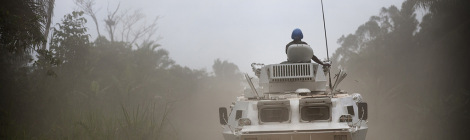
A long road ahead: integrating gender perspectives into peacekeeping operations
A spate of violence against women in the eastern DRC shows that there is still a long way to go on effective implementation of the UN Security Council Resolution 1325 on Women, Peace and Security, 14 years after its adoption.

Nuclear Weapons: From Comprehensive Test Ban to Disarmament
Despite not yet entering into force, the 1996 Comprehensive Test Ban Treaty has succeeded in almost eliminating nuclear weapons testing and in establishing a robust international monitoring and verification system. A breakthrough in its ratification by the few hold-out states could have important positive repercussions for the Nuclear Non-Proliferation Treaty or nuclear disarmament in the Middle East.

Colombia and Mexico: The Wrong Lessons from the War on Drugs
As activists around the world participate in a Global Day of Action against criminalisation of drug use, evidence from the multi-billion dollar War on Drugs in Colombia suggests that militarized suppression of production and supply has displaced millions of people as well as the problem, not least to Mexico. The wrong lessons are being exported to Central America and beyond, but a groundswell of expert and popular opinion internationally is calling for alternative approaches to regulating the use and trade in drugs.
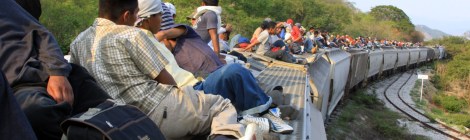
Mexico’s Conflicting Migration Policy Goals: National Security and Human Rights
Mexico has rapidly become a major site of transmigration from Central America to the United States, as people move in search of employment opportunities or escape from social violence. This rise in migrant flows from Mexico’s southern border overlaps with problems of control of contraband, organised crime, and the trafficking of drugs and arms. However, the government’s militarised approach to the phenomenon means that the use of force and human rights violations go unresolved and military approaches to preserving public order go unchecked. As long as migration remains a security issue, instead of a developmental and human rights matter, it will not be tackled appropriately. Instead, the government must start to view the matter through a citizen, not national, security lens.
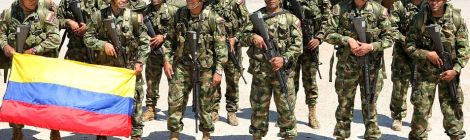
Exporting (in)Security? Questioning Colombian Military Engagement in West Africa
With skills and expertise in fighting insurgencies and drug trafficking networks, Colombia’s armed forces are increasingly being sought for engagement in similar security challenges in West Africa. But increasing Colombian engagement gives rise to a number of important questions – not least of which is the goal and expected outcomes of replicating militarised approaches to the war on drugs that have already failed in Latin America.

Self-Defense? Mexico Gambles on Vigilante Security
A new alliance between the Mexican security forces and citizen ‘self-defence’ groups in Michoacán state has brought some short term success in the fight against the Knights Templar cartel. But what will be the long-term consequences of legitimizing heavily armed vigilante groups in Mexico?
Leave a Reply