Blog

  • Sustainable Security

    Drone-tocracy? Mapping the proliferation of unmanned systems

    While the US and its allies have had a monopoly on drone technology until recently, the uptake of military and civilian drones by a much wider range of state and non-state actors shows that this playing field is quickly levelling. Current international agreements on arms control and use lack efficacy in responding to the legal, ethical, strategic and political problems with military drone proliferation. The huge expansion of this technology must push the international community to adopt strong norms on the use of drones on the battlefield.

    Read Article →

    Nuclear Weapons: From Comprehensive Test Ban to Disarmament

    Despite not yet entering into force, the 1996 Comprehensive Test Ban Treaty has succeeded in almost eliminating nuclear weapons testing and in establishing a robust international monitoring and verification system. A breakthrough in its ratification by the few hold-out states could have important positive repercussions for the Nuclear Non-Proliferation Treaty or nuclear disarmament in the Middle East.

    Read Article →

    International Dimensions of the Ukraine Crisis: Syria and Iran

    The Russian annexation of Crimea may be in direct contravention of international agreements but is popular in Russia and almost certain to hold. Given tensions within Ukrainian society and its weak transitional government, there remains some risk of further intervention in eastern Ukraine and possibly the Trans-Dniester break-away region of Moldova. Even if there is no further escalation in the crisis, the deterioration in EU/Russian and US/Russian relations is of great concern, not least in relation to two aspects of Middle East security – the Syrian civil war and the Iran nuclear negotiations.

    Read Article →

    The Iran Interim Deal: Responses, Potential Impacts, and Moving Forward

    Implementation of the interim deal with Iran, which freezes the country’s nuclear enrichment in exchange for limited sanctions relief, began in January. As a result, we are witnessing a substantial shift in diplomatic relations between Iran and its regional neighbours – some positive, some not. This deal marks a significant step for the international non-proliferation regime, but will it achieve the trust and confidence-building goals intended? As the US and Iran face increasing domestic pushback on the terms of the agreement, questions remain on the interim deal’s impact on relations in the region and abroad, and the effect these relations may have on the prospects of coming to a full comprehensive follow-up agreement between Iran and the P5+1 countries.

    Read Article →

    What next for Iran? Foreign Policy after a Nuclear Agreement

    If Iran and the P5+1 succeed in negotiating a robust agreement on the nuclear issue, then Iran will be less preoccupied with rebalancing its relationship with antagonistic western powers and its role in the Middle East and the wider region has scope for developing in many new directions. This briefing looks ahead to a post-agreement environment and assesses where Iran might chose to concentrate its resources. A key question is whether it will work to build better links with the US and selected European states or whether it will be more interested in the BRIC and other states, not least Turkey. Its choice will be influenced strongly by domestic politics and the urgent need for a more stable region.

    Read Article →

    Geneva II: Prospects for a Negotiated Peace in Syria

    The recent announcement that the so-called Geneva II conference would finally convene on 22 January 2014 is overdue but good news. What are the chances of it bringing peace? With an interim deal signed on Iran’s nuclear programme, Richard Reeve discusses what chance the great powers, Middle Eastern diplomats and the mediators of Geneva have as they turn their attention to ending the war in Syria.

    Read Article →

    Can the Nuclear Non-Proliferation Treaty outrun its double standard forever?

    The recent walkout by Egyptian negotiators at UN talks have demonstrated that, like a building with rotten foundations, the nuclear non-proliferation regime is far less stable than many believe it to be. Egypt’s actions make clear that anything less than a regime specifically geared towards addressing the reasons why some states seek nuclear weapons is a regime existing on borrowed time.

    Read Article →

  • Climate change

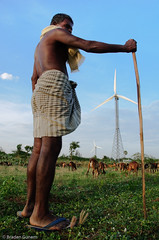
    In late 2010 the Heinrich Boell Foundation and the World Resources Institute convened a group of international experts to discuss policies and incentives for increasing the use of renewable energy in the developing world. WRI’s Davida Wood and Lutz Weischer discuss the key lessons learned at the workshop and their work on helping developing countries make the transition to renewable energy.


    Image source: Braden Gunem.

    Read more »

  • Sustainable Security

  • Sustainable Security

    Kristian Skrede Gleditsch is Professor in the Department of Government at the University of Essex, director of the Michael Nicholson Centre for Conflict and Cooperation, and a research associate at the International Peace Research Institute, Oslo (PRIO). His research interests include conflict and cooperation, democratization, and spatial dimensions of social and political processes. He is the author of All International Politics is Local: The Diffusion of Conflict, Integration, and Democratization (University of Michigan Press, 2002), Spatial Regression Models (Sage, 2008, with Michael D. Ward), Inequality, Grievances, and Civil War (Cambridge University Press, 2013, with Lars-Erik Cederman and Halvard Buhaug), and journal articles in the American Journal of Political Science, American Political Science Review, Annals of the Association of American Geographers, Biological Reviews, Comparative Political Studies, Conflict and Cooperation, Defence and Peace Economics, Economic History Review, European Journal of International Relations, International Interactions, International Organization, Internasjonal Politikk, International Studies Quarterly, Journal of Conflict Resolution, Journal of Peace Research, Journal of Politics, PLOS One, Political Analysis, Political Psychology, R Journal, and World Politics.

    In this interview, Professor Gleditsch discusses the global decline of violence since World War II and some of the challenges to this trend.

    Recently, several authors have declared that there has been a decline in armed conflict since the end of World War II. From your research on this topic, what does the data say about the global patterns of violence and is war really waning?

    On the question, yes, I think war is declining in most common data sources, although the causes remain contested. For civil wars there is at least some evidence that accommodation and conflict management has promoted a decline of war. Although Syria is a sever conflict, it is not by itself sufficient to say that we have a clear reversal. Perhaps the greatest current challenge is the alleged increase in terrorism. However, it is not obvious why we should see an increase in less severe and less organized conflict, and there is also some evidence that ethic terrorism has declined following accommodation in ways similar to civil war.

    You mention that the causes of this decline in war remain contested. What are some of the main explanations offered by scholars for this development and what do you feel are the main areas of disagreement on this issue?

    I think some of the key explanations include more democratization, less ethnic discrimination, globalization/increase in trade, and greater scope for conflict management by the UN and other regional organizations. All of these in my view are plausible and likely to be part of the explanation, but I think it is also fair to say that none of these alone provide a clear explanation for the decline in conflict.

    There has been a great deal of skepticism about some of these factors, especially democratization, as many point to examples where conflict has followed after elections. However, some of this research takes a very binary approach to violence, where any conflict is regarded as a failure even if the level of conflict declines or fewer actors engage in violence. To use another example, although some dissident republicans in Norther Ireland continue to use terrorist tactics, it would be absurd to say that there has been no decline in the volume terrorism after the Good Friday agreement.

    Do you feel that there has been a gradual shift in the attitudes of people towards war and, if so, that this might have also contributed to this decline of war?

    I think there has been a dramatic shift in attitudes to war. At least a 100 years ago it was common to glorify war as heroic and character forming. Countries had ministries of war. Now war tends to be seen as a regrettable last resort, and we have ministries of defense, and literature on the horrors of war. All of this contributes to make war a much harder sell. That is not to say that aversion to war is universal or that people have never approve of conflict, and attitudes can influenced, in both directions. Moreover, attitudes are probably influenced by views on the costs of war and feasibility of alternatives.

    I have been involved in some experiments on support for escalatory actions in territorial conflict with China among Japanese respondents, and there is some evidence that although people are generally quite hard line they become less belligerent when provided with information on the military or economic costs of conflict.

    With regards to democratization, why do you feel that democracy reduces the risk of war?

    For interstate war, then I think it is fairly well established that democracies rarely fight severe wars with each other. Of course, the risk of interstate conflict is low in general, at least for severe conflicts. Moreover, democracies may fight other states, and the democratic major superpowers are much more likely to be involved in conflict. However, I think there is also some evidence that the increased role of public opinion can constrain the use of force more generally, and that democratic states have supported a liberal order with emphasis on stronger international institutions and conflict management approaches that have helped reduce the risk of conflict more generally.

    I also believe that transitions to democracy reduce the risk of civil war, despite widespread pessimism and fears of democracies increasing conflict. Democracies provide alternative political avenues for conflict, and decrease the motivation to use violence compared to autocracies. Transitions to democracy may not eradicate all domestic violence. Many democracies have inherited ethnic separatist conflicts that started before democratization, and established organizations may remain active after transitions (ETA in Spain and the IRA can be interpreted in this perspective). Moreover, we may see violence around elections, under a climate of mistrust. However, the overall magnitude of civil violence tends to be lower under democracies.

    Whilst civil war is in decline, it became the principle form of armed conflict after the end of the Second World War. What were the main drivers for civil war becoming the main form of conflict?

    Civil wars became particularly common with decolonialization. Some anti-colonial movements turned violent, and, in some cases, competing factions continued to fight each other after independence (e.g., Angola). Moreover, after independence, many colonial states were prone to violence for a host of reasons. One the one hand, state weakness can by itself encourage violence as the barriers for taking on the state are lower. Moreover, the post-colonial states often had various features that could encourage violence such as ethnic nepotism, poor governance, or lack of legitimacy. Finally, although the Cold War did not escalate to a direct confrontation between the superpowers, many civil wars escalated as the opposing sides could obtain support from the superpowers.

    The end of the Cold War coincided with a spike in civil wars for somewhat similar reasons. Many weak states faced a loss of external support that weakened the central government (e.g., Somalia), and some larger federal units faced challenges form ethnic groups who sought independence and who might be willing to use violence (e.g., former USSR and Yugoslavia). However, other factors such as democratizations, decrease ethnic discrimination and powersharing, as well as more active UN conflict management efforts have likely all helped reduce the incidence of civil war from the immediate post cold war peak.

    Some studies have discussed an apparent revolution in warfare in the post-Cold War world, described using terms such as ‘new wars’, ‘hybrid wars’, and ‘post-modern wars’. Some of the characteristics of these wars include blurred distinctions between public and private combatants, warlords, and criminals; regular targeting of civilians and other war atrocities; war economies sustained by illegal trade in drugs, weapons, resources such as oil or diamonds; and violence being driven more by identity than ideology. Do you feel that these so called ‘new wars’ represent a revolution in warfare and have they also marked a shift in the nature of warfare?

    I am actually very skeptical of whether the concept of new wars is very helpful or whether the alleged trends exist at all. It is certainly not the case that targeting of civilians is a new feature – recall the shelling of cities during sieges in the 30 years war. The opium war was thus named for a reason. And the blurred lines between criminal gangs and warfare cannot be a new thing – the North African coast was known as the barbary coast due to the endemic piracy and the Mongol hordes probably picked up some things along the way too.

    I suppose this raises the question of why some find this concept so compelling. I can only speculate on this since I do not share this myself, but I believe that the decline of a master narrative of conflict after the Cold War increases people’s sense of new wars as different from old war. However, all systematic research that I have seen raises serious question over this.

    In addition to the alleged increase in terrorism, what do you see as the other greatest challenges to the decline in violence in the near and distant future?

     I actually think the long-term outlooks is relatively favorable, but I can imagine some cases that may contribute to long-term challenges

    1. increasing tension between the major power is unlikely to lead to direct conflict, but it may increase support to opposing sides in civil war and decrease the prospects for the UN to become involved.
    2. globalization has in all likelihood increased the costs of conflict and increased the value of peace, but there is a chance that globalization could be rolled back with increasing protectionism. This can make it more difficult to contain some territorial conflicts, such as the ones seen in Asia
    3. global challenges such as refugees change require cooperation, and if states fail to cooperate on these then poorer relations may weaken the ties that prevent conflict
    4. the consequences of climate change could increase the risk of conflict by undermining livelihoods and increasing competition between states. My own reading of the evidence says that there is little evidence of this happening so far, but skeptics would argue that dramatic consequences would move us into a new scenario.

    These are serious concerns, but at best indicate risk, and none of them imply that the decline of violence must be reversed.

  • Competition over resources

    Writing for the New Security Beat, Schuyler Null discusses a recent event on creating a new national security narrative for the US held at the Woodrow Wilson Center. The event was based on a white paper by two active military officers writing under the pseudonym “Mr. Y” (echoing George Kennan’s famous “X” article). In “A National Strategic Narrative,” Captain Wayne Porter (USN) and Colonel Mark Mykleby (USMC) argue that the United States needs to move away from an outmoded 20th century model of containment, deterrence, and control towards a “strategy of sustainability.”

    Image source: LizaP.

    Read more »

  • Sustainable Security

  • The Geopolitics of Climate Change


    In a speech to Future Maritime Operations Conference at the Royal United Service Institute, London, Secretary of State for Energy and Climate Change examines the security implications of climate change:

    “We cannot be 100% sure that our enemies will attack our country; but we do not hesitate to prepare for the eventuality. The same principle applies to climate change, which a report published by the Ministry of Defence has identified as one of the four critical issues that will affect everyone on the planet over the next 30 years.

    Around the world, a military consensus is emerging. Climate change is a ‘threat multiplier’. It will make unstable states more unstable, poor nations poorer, inequality more pronounced, and conflict more likely. And the areas of most geopolitical risk are also most at risk of climate change.”

    Read the full speech here: DECC

    Image source: DECCgovuk

  • Sustainable Security

    The political changes in certain South American countries, including most notably the case of Bolivia, could act as inspirations in the ongoing search for locally grown, hybrid variants of a post-liberal peace.

    Author’s Note: This article presents key arguments from my article Jonas Wolff (2015) Beyond the liberal peace: Latin American inspirations for post-liberal peacebuilding, Peacebuilding, 3:3, 279-296, DOI: 10.1080/21647259.2015.1040606.

    Responding to the sobering results of international peacebuilding missions around the world, a rich academic debate has emerged that, from different perspectives and with different aims, criticizes the practices and premises of peacebuilding. In particular, critics have suggested that the liberal template of social and political order (‘liberal peace’ and ‘liberal democracy’) which guides peacebuilding is a crucial part of the problem. As a consequence, scholars have started to think about – and empirically study – alternatives to the liberal peace. This idea of a hybrid, peaceful order that develops out of the encounter between external and local efforts at building peace is captured, most prominently, by Oliver Richmond’s notion of ‘post-liberal peace’. The crux of this deliberately ill-defined concept is that it denotes the emergence of hybrid social orders that somehow combine liberal and non-liberal (but not necessarily anti-liberal or non-democratic) norms and practices. Such orders, thereby, go beyond and may also partially contradict liberal principles – but do so without following an established, alternative template. According to Richmond (and other critical peacebuilding scholars), local resistance to, and local appropriation of, international peacebuilding activities will inevitably produce such hybridity. Yet, there is still limited empirical evidence and rather abstract theoretical ideas about what such post-liberal forms of peace could look like.

    With this piece, I bring in experiences that are usually not reflected in the debate about peacebuilding, namely: current political changes in a series of South American countries, including most notably the case of Bolivia. The context in which these processes occur is very different from the so-called post-conflict societies in which peacebuilding takes place. Yet, precisely because of these differences, conditions for locally driven experiments with post-liberalism are arguably better in Latin America.

    While the attempt to move beyond liberal peacebuilding does certainly not need yet another template to be implemented worldwide, these experiences might well serve as inspirations in the ongoing search for locally grown, hybrid variants of a post-liberal peace. Against those that defend liberal peacebuilding by suggesting that there is, simply, no alternative (as Roland Paris has argued), the Latin American experience at the very least shows that there are actual alternatives to liberal mainstream conceptions of political and economic order – even if post-liberal experiments in South America are limited and uncertain, diverse and contradictory.

    Post-liberalism in South America

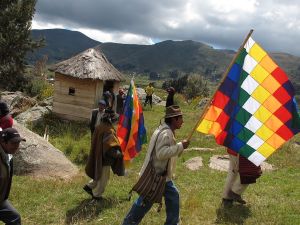
    1024px-Aymara_ceremony_copacabana_1

    Photos of a traditional Aymara ceremony in Copacabana, on the border of Lake Titicaca in Bolivia. Image via Wikimedia Commons.

    In recent years, scholars working on Latin American politics have noted ‘post-neoliberal’ and ‘post-liberal’ trends in the region. On the one hand, the so-called left turn, i.e. the election and reelection of several left-of-center governments across the region, has been accompanied by attempts to turn away from neoliberal economic policies. On the other, with diverse experiences of participatory democracy at the local level and, in the Andean region, the adoption of new constitutions that partially deviate from the mainstream model of liberal democracy, contours of a possible post-liberal democracy have begun to take shape. These developments are diverse and contradictory, but they share one basic commonality: They are the result of attempts to go beyond liberal, representative democracy and neoliberal, market-oriented economics without entirely replacing the preexisting political or economic order through a new, alternative model of development. The new constitutions in Bolivia and Ecuador, for instance, maintain all the well-known institutions of representative democracy and the usual series of political and civil rights but add or strengthen mechanisms of direct democracy and societal participation, expand the notion of human rights in areas of economic, social and cultural rights and include collective indigenous rights.

    In the area of economic policy, contemporary attempts to strengthen the economic role of the state and expand social policies, to deepen the domestic market and implement some kind of redistributive policies differ from country to country, but in general do not break with the entire neoliberal model. The prefix ‘post’ in both post-liberal democracy and post-neoliberalism is precisely meant to capture this partial, and hybrid, combination of continuity and change.

    Redefining the nation-state and the rule of law

    A core question for international peacebuilding concerns the related task of nation-building. For obvious reasons, most post-conflict societies lack a common national identity. An innovative response that has emerged from Latin America, and particularly from the indigenous movements in Bolivia and Ecuador, is the notion of a ‘plurinational state’. On the one hand, this concept openly breaks with the unitary conception of the nation-state: The state at hand is supposed to not only include different cultures (‘multicultural’) or ethnic communities (‘pluriethnic’), but several nations or peoples that have their own right to self-determination. On the other hand, however, the concept as used and constitutionally recognized in Bolivia and Ecuador is rather a hybrid: It combines an overarching national identity with an acknowledgment of particular indigenous identities. The plurinational state, contradictory as this may seem, is both a unitary nation-state and an umbrella organization that includes partially autonomous indigenous peoples. This formula has been severely contested – and continues to be so – in both countries and is, certainly, far from offering a panacea for the complex problems of nation-building in divided societies. But it may still be worthwhile to take into account.

    Directly related to this, another crucial issue in the peacebuilding debate concerns the rule of law – and, more specifically, the tension between liberal state law that is to be implemented ‘from above’ (but usually does not work very well) and local forms of community justice that exist at the grassroots level (and frequently work much better but exhibit non- or illiberal features). The same kind of tension exists in a series of Latin American countries and concerns the existence of indigenous or community justice at the local level – also not least a result of the factual absence of the state’s judicial institutions especially in rural areas. Responding to this reality and to increasing claims by indigenous movements, several Latin American countries since the 1990s have progressively recognized indigenous customs and practices. In the case of Bolivia, the new constitution goes so far as to place ordinary and indigenous legal jurisdiction on an equal footing.

    In general, research on indigenous community justice in the Andean region shows that it works relative well: When compared to the state’s justice system, which is often hardly pre-sent in rural areas and frequently perceived as alien, community justice provides an important mechanism for resolving a broad range of conflicts in ways that local populations generally regard as much more efficient and legitimate. While studies show that indigenous community justice is not at all arbitrary, but follows specific rationalities, its logic is clearly different from the rationality guiding ordinary state justice: The overall aim is to preserve the social harmony of a given community; its main strategy is some kind of reconciliation. From this perspective, long-term imprisonment is irrational, while what is regarded as physical punishment from a liberal perspective (e.g., whipping with nettles, ice water baths) is considered rather symbolic acts of purification and/or reconciliation.

    Just as in quite a few post-conflict societies legal pluralism in the Andean region is both an empirical reality and a normative challenge – and research on the experiences in Bolivia, Colombia, Ecuador and Peru offers a series of crucial insights about both the diverse practices of indigenous/community justice and about different ways of dealing with legal pluralism in more or less pluralist ways.

    Broadening democratic participation and human rights

    In the mainstream model of liberal democracy, the people do not in fact govern but through elected representatives. In debates about peacebuilding, a common criticism has precisely been directed against an overly focus on (early) elections. In South America, disenchantment with the ways in which real-existing representative democracy worked has led to experiments with more direct and ‘participatory’ forms of democracy. Important innovations in this regard include the introduction of recall referenda that enable the citizens to revoke the mandate of their elected representatives and different types of participatory budgeting and participatory development planning.

    A related criticism of liberal peacebuilding concerns its focus on a relatively narrow, and specifically liberal, set of political and civil rights. Especially when combined with neoliberal recipes of economic reform, this frequently implies a disregard for economic, social and cultural rights, which are equally established as human rights at the international level. Yet, given the existing socioeconomic conditions in the global South, liberal democracy’s emphasis on formal political equality rings quite hollow to many people. As a consequence, across Latin America, the failure of democratic regimes to significantly reduce the dramatic socioeconomic inequalities has led, since the turn of the century, to a reemergence of the ‘social question’ and the ‘left turn’ discussed above.

    Social and economic rights have consequently been strengthened in several countries, but most notably in the new constitutions adopted in Bolivia and Ecuador (but, previously, also in Brazil, Colombia and Venezuela). And, with the ‘leftist turn’ (and the commodity boom), governments have generally started to govern a bit more in line with this notion of socioeconomic rights by expanding social policies, improving basic public services, and reducing poverty. To be sure, nowhere in the region has the constitutional recognition of a broad catalog of human rights led to a consistent policy of guaranteeing universal socioeconomic rights. Still, the constitutional promise of progressive change at least establishes an important normative reference point for those that mobilize in the name of ‘social justice’.

    Caveats

    The experiences indicated above also caution against expecting too much from experiments with alternatives to liberal democracy and neoliberal economics. Most notably for the debate on peacebuilding, the search for (some kind of) post-liberal political order – and, thus, also for post-liberal peace – is itself a conflict-ridden process. While ‘localizing’ peacebuilding may plausibly reduce conflicts between external and local actors, it may well increase intra-local struggle – precisely because local-local interactions then become decisive. If the very fundamentals of the politico-economic order are up for discussion, this plausibly increases the risk of violent conflict. In fact, the process of constitutional change in Bolivia was characterized by an open clash between different conceptions of democracy – and by mutual allegations that what was presented as democratic by the opponent was precisely the opposite (colonial or imperialist, exclusive or secessionist, autocratic or totalitarian).

    The Bolivian attempt to construct some kind of post-liberal democracy also brought about more specific risks. On the one hand, the transition process meant dismantling an existing structure of democratic institutions and led to a certain, if temporary, institutional vacuum during which the democratic shape of the future political order was uncertain. On the other hand, features of Bolivia’s new political order such as the emphasis on direct democracy do not only increase the power of the people, but more specifically the power of the majority; at the same time, a popular president can use plebiscitary mechanisms to further increase and consolidate his/her power vis-à-vis the opposition, minorities or other powers and levels of the state.

    Finally, the current economic crisis, triggered by the decrease in international commodity prices, reveals the limitations of the post-neoliberal economic policies in the region – and immediately threatens the advances in the reduction of poverty and inequality.

    Conclusion

    The most important feature of the debates about post-liberal peace, post-neoliberal economics and post-liberal democracy is, arguably, that they are not aimed at identifying yet another universal peacebuilding template. If anything, the main academic and political purpose is to open up discussions that have been too narrow and closed for too long. Thinking about alternatives, however, still requires concrete ideas about elements and characteristics, dynamics and paths that may characterize (different) post-liberal configurations. And while theoretical reflections are certainly needed, the very idea of post-liberalism as something arising ‘bottom up’ from dynamics at least partially driven by local knowledge and local agency points to the need to empirically study developments that point in some post-liberal direction. In this sense, I have argued, recent experiences from Latin America do offer political inspirations as well as important caveats which might be of interest for both scholars of peacebuilding and for those engaged in building whatever kind of hybrid peace in whatever kind of place.

    Jonas Wolff is head of the research department ‘Governance and Societal Peace’ and executive board member of the Peace Research Institute Frankfurt (PRIF) as well as adjunct professor (Privatdozent) at Kassel University. He studied Political Science, Economics and Sociology at University of Frankfurt, where he also received his PhD. He completed his habilitation at the University of Kassel. His research focuses on Latin American politics, international democracy promotion, and the interrelation between social conflict, political transformation and economic development.

  • East Africa’s Albertine Rift: Competition for land and resources in one of Africa’s most fertile and densely populated regions.

    As the global population soars toward nine billion by 2045, this corner of Africa shows what’s at stake in the decades ahead. The Rift is rich in rainfall, deep lakes, volcanic soil, and biodiversity. It is also one of the most densely populated places on Earth. A desperate competition for land and resources—and between people and wildlife—has erupted here with unspeakable violence. How can the conflict be stopped? Will there be any room left for the wild?

    The mwami remembers when he was a king of sorts. His judgment was sovereign, his power unassailable. Since 1954 he, like his father and grandfather before him, has been the head of the Bashali chiefdom in the Masisi District, an undulating pastoral region in eastern Democratic Republic of the Congo (DRC). Though his name is Sylvestre Bashali Mokoto, the other chiefs address him as simply doyen—seniormost. For much of his adult life, the mwami received newcomers to his district. They brought him livestock or other gifts. He in turn parceled out land as he saw fit.

    Today the chief sits on a dirty couch in a squalid hovel in Goma, a Congolese city several hours south of Masisi. His domain is now the epicenter of a humanitarian crisis that has lasted for more than a decade yet has largely eluded the world’s attention. Eastern Congo has been overtaken by thousands of Tutsi and Hutu and Hunde fighting over what they claim is their lawful property, by militias aiming to acquire land by force, by cattlemen searching for less cluttered pastures, by hordes of refugees from all over this fertile and dangerously overpopulated region of East Africa seeking somewhere, anywhere, to eke out a living. Some years ago a member of a rebel army seized the mwami’s 200-acre estate, forcing him, humiliated and fearing for his safety, to retreat to this shack in Goma.

    The city is a hornet’s nest. As recently as two decades ago Goma’s population was perhaps 50,000. Now it is at least 20 times that number. Armed males in uniform stalk its raggedy, unlit streets with no one to answer to. Streaming out of the outlying forests and into the city market is a 24/7 procession of people ferrying immense sacks of charcoal on bicycles or wooden, scooter-like chukudus. North of the city limits seethes Nyiragongo volcano, which last erupted in 2002, when its lava roared through town and wiped out Goma’s commercial district. At the city’s southern edge lies the silver cauldron of Lake Kivu—so choked with carbon dioxide and methane that some scientists predict a gas eruption in the lake could one day kill everyone in and around Goma.

    The mwami, like so many far less privileged people, has run out of options. His stare is one of regal aloofness. Yet despite his cuff links and trimmed gray beard, he is not a chief here in Goma. He is only Sylvestre Mokoto, a man swept into the hornet’s nest, with no land left for him to parcel out. As his guest, a journalist from the West, I have brought no gifts, only demeaning questions. “Yes, of course my power has been affected greatly,” the mwami snaps at me. “When others back up their claims with guns, there is nothing I can do.”

    The reign of the mwamis is finished in this corner of East Africa. The region has become a staging ground for violence of mind-reeling proportions over the past few decades: the murder and abduction of tens of thousands in northern Uganda, the massacre of more than a million in the genocides of Rwanda and Burundi, followed by two wars in eastern Congo, the last of which, known as the Great African war because so many neighboring countries were involved, is estimated to have killed more than five million people, largely through disease and starvation—the deadliest war since World War II. Armed conflicts that started in one country have seeped across borders and turned into proxy wars, with the region’s governments each backing various rebel groups, a numbing jumble of acronymed militias—the LRA, FDLR, CNDP, RCD, AFDL, MLC, the list goes on—vying for power and resources in one of the richest landscapes in all of Africa.

    The horrific violence that has occurred in this place—and continues in lawless eastern Congo despite a 2009 peace accord—is impossible to understand in simple terms. But there is no doubt that geography has played a role. Erase the borders of Uganda, the DRC, Rwanda, Burundi, and Tanzania and you see what unites these disparate political entities: a landscape shaped by the violent forces of shifting plate tectonics. The East African Rift System bisects the horn of Africa—the Nubian plate to the west moving away from the Somalian plate to the east—before forking down either side of Uganda.

    The western rift includes the Virunga and Rwenzori mountain ranges and several of Africa’s Great Lakes, where the deep rift has filled with water. Called the Albertine Rift (after Lake Albert), this 920-mile-long geologic crease of highland forests, snowcapped mountains, savannas, chain of lakes, and wetlands is the most fecund and biodiverse region on the African continent, the home of gorillas, okapis, lions, hippos, and elephants, dozens of rare bird and fish species, not to mention a bounty of minerals ranging from gold and tin to the key microchip component known as coltan. In the 19th century European explorers like David Livingstone and John Hanning Speke came here searching for the source of the Nile. They gazed in awe at the profusion of lush vegetation and vast bodies of water, according to the scholar Jean-Pierre Chrétien: “In the heart of black Africa, the Great Lakes literally dazzled the whites.”

    The paradox of the Albertine Rift is that its very richness has led to scarcity. People crowded into this area because of its fertile volcanic soil, its plentiful rainfall, its biodiversity, and its high altitude, which made it inhospitable to mosquitoes and tsetse flies and the diseases they carry. As the population soared, more and more forest was cut down to increase farm and grazing land. Even in the 19th century the paradise that visitors beheld was already racked with a central preoccupation: Is there enough for everyone?

    Today that question hangs over every square inch of the Albertine Rift, where the fertility rate is among the highest in the world, and where violence has erupted between humans and against animals—in a horror show of landgrabs, spastic waves of refugees, mass rapes, and plundered national parks, the last places on Earth where wildlife struggles to survive undisturbed by humans. For the impoverished residents of the region, overcrowding has spawned an anxiety so primal and omnipresent that one hears the same plea over and over again:

    We want land!

    The suspected lion killer sits near the shore of Lake George and plays a vigorous board game known as omweso with one of his fellow cattlemen. He looks up, introduces himself as Eirfazi Wanama, and says he cannot tell me his age or the number of his children. “We Africans don’t count our offspring,” he declares, “because you muzungu don’t want us to produce so many children.” Muzungu is slang for whites in this part of the world. Wanama offers a wry smile and says, “You don’t have to beat about the bush. Some lions were killed here, and the rangers came in the middle of the night and arrested me.”

    In late May 2010 two rangers in Uganda’s Queen Elizabeth National Park saw vultures hovering over a field in the park about a mile from Wanama’s village of Hamukungu and discovered the dead bodies of five poisoned lions. Nearby were two cow carcasses that had been laced with a bluish pesticide called carbofuran. Early intelligence pointed to Wanama; another suspect fled the area. “They held me for a day,” Wanama says. “They have released me from their investigation. I am not running away.”

    Hamukungu is located within the boundaries of the park, whose predominant tourist attraction is its population of lions, which has dwindled by about 40 percent in less than a decade. “The number of villagers has increased,” says Wilson Kagoro, the park’s community conservation warden, “as has the number of cattle. And this has created a big conflict between them and us. They sneak into the park late at night to let their cattle graze. When this happens, the lions feast on the cows.” Given that parkland grazing is illegal, the aggrieved pastoralists are left with no legal recourse. But that does not mean that they are without countermeasures. “We are surviving on God’s mercy,” Wanama says when I ask how so many people manage to survive on so little land. “The creation of this national park has made us so poor! People have to live on the land!” It’s a common complaint in the overcrowded villages that ring the region’s networks of parks and reserves.

    Queen Elizabeth Park was established in 1952 with the growing recognition that this region had the highest biomass of large mammals of anyplace on Earth, according to Andrew Plumptre, director of the Albertine Rift Programme of the Wildlife Conservation Society. But social and political upheaval made it difficult to protect the wildlife. Over the decades poachers and desperate villagers raided the parks and decimated the populations of elephants, hippos, and lions. By 1980 the number of elephants had dropped from 3,000 to 150 in Queen Elizabeth.

    Virunga National Park in eastern Congo—Africa’s oldest, founded in 1925—is among the most imperiled, with many people already settled inside its boundaries. The countryside, once teeming with charismatic megafauna, is eerily vacant. The park’s tourist lodges are gutted. Since the Rwandan genocide of 1994, much of the park has been closed to tourists.

    The park is a war zone. Rodrigue Mugaruka is the warden of Virunga’s central sector, Rwindi. He is a former child soldier who participated in the 1997 overthrow of Mobutu Sese Seko, the longtime dictator of the DRC (then called Zaire). In eastern Congo the vacuum created by Mobutu’s exit led to fierce competition among proxy armies and various militias for its gold, charcoal, tin, and coltan. Now Mugaruka is doing battle with militias—called Mai-Mai fighters—who control illegal fishing and charcoal production in many of the villages that have cropped up inside the park on the western shore of Lake Edward. He recently regained control of his sector from thousands of Congolese soldiers stationed there to fight off the militias. Since the government rarely paid the soldiers, they resorted to killing the wildlife for food.

    Mugaruka’s efforts to enforce park regulations do not sit well with the tens of thousands of Congolese who have fled areas of conflict and taken up residence in the villages. In the fishing hamlet of Vitshumbi the warden orders park rangers to chop up, douse in kerosene, and set fire to several unlicensed fishing boats, illegal nets, and bags of charcoal, while the villagers look on bitterly. In a fishing boat dented from gunfire he ferries us to Lulimbi village, from which we drive to the Ishasha River bordering Uganda, where 96 percent of the park’s hippo population has been slaughtered since 1976 and sold for bush meat by militias. Later we head to the park’s Mount Tshiaberimu subsector, where an armed patrol provides round-the-clock protection to 15 eastern lowland gorillas from militias and from villagers who have been encouraged by politicians to claim parkland.

    Rodrigue Mugaruka knows that he’s a marked man. The Mai-Mai—and the Congolese businessmen who fund them—have made him a target. “Their objective is to chase us out of the park for good,” says the warden. “When we seize a boat and a net, the businessmen tell the Mai-Mai, ‘Before we put another net in the water, you must go kill a ranger.’ Three of mine have been killed in the lake. If you consider the whole area, more than 20 rangers have been killed.”

    Last January, Mugaruka’s men were ambushed with a rocket-propelled grenade by militia fighters along a road that goes through the center of the park. Three rangers and five Congolese soldiers were killed. Government officials soon received a petition signed by 100,000 villagers demanding that Virunga National Park be reduced in size by nearly 90 percent. The petitioners gave the government three months to release the land, which they claimed belonged to them. After that, warned the petition, the villagers would all grow crops in the park—and defend their activities with arms.

    “We want land!”

    The speaker gives his name as Charles, a 24-year-old sitting on a freshly cut log in a forest, a machete in his hand. He does not belong here, in Uganda’s Kagombe Forest Reserve. Then again, maybe he does. No less than a presidential order has stopped the evictions of those who’ve encroached on forest reserves and wetlands. Charles says a government minister recently visited the Kagombe inhabitants. “He told us we can stay,” he says, grinning. The minister’s cronies have an election coming up, and the best way to placate voters is to promise them land.

    Charles and a few other pioneering young villagers moved into the forest in 2006. “We’d been living on our grandparents’ property, but there were too many people on the land already,” he says. “We heard people talk about how there was free land this way.” A migrant group, the Bakiga, had already begun to settle in Kagombe, and when the National Forestry Authority tried to evict them, Uganda’s President Yoweri Muse­veni—himself facing reelection—issued the executive order forbidding evictions. Thereupon a few local politicians urged the native Banyoro people, who include Charles and his friends, to grab some forestland as well, lest all of Kagombe wind up inhabited by nonlocals.

    Charles and his friends each claimed about seven acres of timberland and began slashing away. They built grass-thatched huts, feed-storage sheds, a road, and a church. They planted corn, bananas, cassava, and Irish potatoes. Then they sent for their wives and began to have more children. Today Charles is one of about 3,000 inhabitants of the forest reserve and has no desire to leave. “We’re very well off here,” he says.

    The forest, meanwhile, sometimes looks like a smoky wasteland, as people use fire to clear the forest for crops. The damage goes beyond the aesthetic: Kagombe serves as one of a series of connective forests that make up a wildlife corridor for chimps and other animals. As Sarah Prinsloo of the Wildlife Conservation Society observes, “The health of the wildlife population in these parks is dependent on corridors like Kagombe.” The habitat destruction has contributed to a plunging animal population throughout the region. In Kagombe itself most wildlife has been hunted out.

    The forestry authority’s sector manager, Patrick Kakeeto, contemplates the devastation with a despairing smile. “They’re cutting all of this down,” he says. “And we can’t touch them. For us, it’s a kind of psychoprofessional torture.”

    How did this land of plenty descend into a perilous free-for-all? Dig deep into its history and it turns out the Albertine Rift has been shaped by mistaken ideas about its ethnic identities. The archaeological and linguistic evidence indicates that by as early as A.D. 500 various peoples had migrated into the region and forged a heterogeneous society that spoke similar Bantu languages and supported itself with both farming and herding. In the 15th century centralized kingdoms such as Bunyoro and Rwanda arose, along with exclusive classes of pastoralists, who distinguished themselves from farmers by their dress and a diet of milk, meat, and blood. Over time these pastoralists became distinct from the rest of the population, and their influence grew.

    By the time European explorer John Hanning Speke arrived in the late 19th century, he was astonished by the highly organized kingdoms he encountered, complete with courts and diplomats. He assumed the elite pastoralists, known as Hima or Tutsi, were a superior race of Nilotic people (from what is now Ethiopia) who had invaded the Great Lakes and subjugated what he regarded as the lowly indigenous Bantu farmers, such as Iru or Hutu. “The states of the Great Lakes challenged derogatory racial beliefs about African intellect and ability,” says archaeologist Andrew Reid. The idea of a Nilotic invasion was a way to explain away the existence of sophisticated kingdoms in the heart of Africa. The only problem: It wasn’t true.

    That didn’t stop the Tutsi and other elites from embracing the story of their exotic origins to better differentiate themselves from the majority Hutu. And after East Africa was divided between European powers in the late 19th century, the Germans and then the Belgians were only too happy to co-opt what appeared to be the natural social hierarchy and give preference to what they believed to be the superior minority of Tutsi.

    Despite the oft-cited physical differences between the two groups—the Tutsi are supposed to be taller, lighter skinned, and thinner lipped than the Hutu—it was so difficult to tell the two apart that by 1933 the Belgians had resorted to issuing identity cards: The 15 percent who owned cattle or had certain physical features were defined as Tutsi, and the rest were Hutu. (Members of one family sometimes ended up in different groups.) These identity cards, officially codifying a caste system that separated one people into two, would be used during the Rwanda genocide to single out who would live and who would be murdered. By the time the colonizers granted the countries independence in the early 1960s, ethnic hostilities between Tutsi and Hutu had already led to waves of killings and retaliatory murders. Today tensions between these two groups continue to play out in the Congo.

    But clearly the Rwanda genocide was the result of more than Hutu-Tutsi ethnic hatred. The latter years of the 20th century had brought a sobering recognition that there was in fact not enough for everyone in the Albertine Rift—and with that, catastrophe. An alarming rise in population coincided with a slump in coffee and tea prices in the 1980s, leading to great deprivation; poverty led to an even greater strain on the land. Although it’s true that a country like the Netherlands had a population density as high as Rwanda did at this time, it also benefited from mechanized, high-yield agriculture. Rwanda’s dependence on traditional subsistence farming meant that the only way to grow more food was to move onto ever more marginal land.

    By the mid-1980s every acre of arable land outside the parks was being farmed. Sons were inheriting increasingly smaller plots of land, if any at all. Soils were depleted. Tensions were high. Belgian economists Catherine André and Jean-Philippe Platteau conducted a study of land disputes in one region in Rwanda before the genocide and found that more and more households were struggling to feed themselves on little land. Interviewing residents after the genocide, the researchers found it was not uncommon to hear Rwandans argue that “war is necessary to wipe out an excess of population and to bring numbers into line with the available land resources.” Thomas Malthus, the famed English economist who posited that population growth would outstrip the planet’s ability to sustain it unless kept in check by starvation, disease, or war, couldn’t have put it more succinctly.

    André and Platteau do not suggest that the genocide was an inevitable outcome of population pressures, since the killings were clearly instigated by the decisions of power-hungry politicians. But several scholars, including French historian Gérard Prunier, are convinced that a scarcity of land set the stage for the mass killing. In short, the genocide gave landless Hutu the cover they needed to initiate class warfare. “At least part of the reason why it was carried out so thoroughly by the ordinary rank-and-file peasants … was the feeling that there were too many people on too little land,” Prunier observed in The Rwanda Crisis, “and that with a reduction in their numbers, there would be more for the survivors.”

    The eastern Congo village of Shasha has become a grim crossroads between major destinations in North Kivu for armed groups seeking land, minerals, and revenge. Mines holding eastern Congo’s abundant tin, coltan, and gold are almost exclusively under the control of these roving bands—Hutu and Tutsi paramilitaries, Mai-Mai militias, army soldiers—each descending on Shasha in a macabre rotation, one after another, month after month, in a wave of mayhem.

    A woman named Faida weeps quietly as she recalls what happened to her a year ago. She is petite, with fatigued eyes and a voice just above a whisper. In her hands is a letter from her husband, demanding that she leave their house because he feared she might have contracted HIV from the men who raped her.

    On that fateful day Faida was on the same road she always took after working in the peanut fields. She would walk an hour and a half to the market at Minova with the peanuts on her back, then return home with firewood. Faida was 32 and of the Hunde ethnic group, married with six children, and for 16 years this had been her routine. She believed no one would attack a woman in broad daylight.

    The three men were rebel Hutu. She tried to run, but the load on her back was heavy. The men told her to choose between life and death. Then they dragged her into a cattle field. She lost consciousness.

    Today she and her children live with neighbors, and she cannot work. Her husband took another wife. The physical damage done is extensive. “I’m really suffering,” she says. “Please help me with medicine, I beg you.”

    Shasha’s population is about 10,000, twice what it was in 1994, and its story is, writ small, that of eastern Congo. A Hunde stronghold since antiquity, Shasha saw an influx of Hutu in the 1930s, when the Belgian occupiers brought them in to work their plantations. Later, in the wake of the 1994 genocide, thousands more Hutu came as refugees. Land disputes became overheated and were frequently resolved at the point of a gun. The area’s vast mineral wealth only made things worse. Scarcity and abundance exist here side by side, fueling grievances as well as greed, both spiraling into inexplicable violence against innocents.

    Goma women’s advocate Marie Gorette estimates that more than 800 females in the village have been raped. They ranged in age, she says, from nine months to 80. One afternoon we sit in a hut while women enter one by one to tell their stories. Odette is strong shouldered and wears a blue print dress. It happened to her just ten days ago. Her 12-year-old son found her unconscious in the cassava fields where she had been working. Justine looks much younger than 28 and has lively eyes. The Congolese Tutsi warlord Laurent Nkunda (under house arrest in Rwanda since 2009) sent CNDP troops into Shasha in 2008. Justine was far from the only one—many of her relatives and neighbors were raped as well. Another woman, 42, tells how Congolese Tutsi rebels barged into her house four years ago, took all the family’s money, and raped her. “It’s a secret,” she says, and I sadly realize she’s told me her story only because she thinks I can help her.

    Some 200,000 females in the Congo were raped between 1996 and 2008, and more than 8,000 in the eastern provinces of North Kivu and South Kivu in 2009 alone. And despite international attention following a 2009 visit to the region by U.S. Secretary of State Hillary Rodham Clinton, the rapes continue. Just as the “Hutu power” Rwandans sought to eradicate the Tutsi in 1994 by massacring women and children, Shasha’s invaders are human heat-seeking missiles aimed at the village’s women. “Because it’s the corridor, Shasha is the worst place in the region when it comes to mass rapes,” says Gorette. “They use rape as a weapon to destroy a generation.”

    I am somewhere in Rwanda when my car breaks down. A man pulls over to where I’m hovering over the smoking engine and offers to drive me the remaining 70 or so miles to Kigali. “If this were the Congo, you would be in big trouble,” he says laughing.

    The 41-year-old man’s name is Samuel, and though he is from the farming community of Rwamagana, his vocation is carpentry. By the region’s standards, Samuel’s family is small. “Only four children,” he says. “I think that’s the ideal size.” Schools cost Samuel about $650 per child each term. “But I think education is the solution. Otherwise people have no work. They just resort to having lots of children and stealing to survive.” The broad-faced man smiles and says, “I’m very optimistic about our country. The future is indeed bright.”

    It is no small miracle that the country where the Albertine Rift’s anxieties and resentments metastasized into genocide would, less than two decades later, emerge as the region’s beacon of hope. Rwanda’s President Paul Kagame drove out the Hutu leaders of the massacre and helped set up a Tutsi regime that has been in power ever since. While many credit Kagame with bringing stability and economic growth to this troubled region, several historians have come to view his regime as a repressive autocracy that favors the Tutsi minority. He’s come under harsh criticism for human rights abuses against dissidents and for using paramilitary groups to divert mineral riches from eastern Congo to Rwanda. Though Rwanda has largely stopped the direct plunder of resources that occurred during and after Congo’s last war, Kagame’s plans to build up his country undoubtedly depend on covertly exploiting Congo’s mineral wealth.

    Still, there’s no denying the long list of successes Kagame has piled up in an incredibly impoverished place. Rwanda is now one of the safest and most stable countries in this part of Africa. The roads are paved, the landscape is tidy, and the government has launched an ambitious campaign to preserve what little forest is left in Rwanda. Government programs train poachers for alternative livelihoods. An event known as Kwita Izina has raised awareness of wildlife conservation with an annual ceremony to name every newborn mountain gorilla in Rwanda. A law passed this past June provides compensation for any livestock—or humans—hurt or killed by wildlife. And hundreds of thousands of acres owned by wealthy landowners in the country’s Eastern Province were shrewdly redistributed to citizens in 2008, before Kagame’s reelection—though the president and other influential cronies continue to own sprawling estates.

    Unlike Uganda, where President Museveni has declared its high fertility rate a tool in building a productive workforce, Rwanda is tackling its high fertility rate with aggressive family planning. “When I look at the problem of Rwanda’s population, it starts with the high fertility rate among our poor women. And this impacts everything—the environment, the relationship between our people, and the country’s development in general,” says Jean-Damascène Ntawukuliryayo, the deputy speaker of parliament. “For all the visible progress Rwanda is making, if we don’t address this matter, then it will create a bottleneck, and our development will be unsustainable.”

    Yet even if Rwanda’s fertility rate falls below replacement level, as it’s projected to do by 2050, its population will still triple beyond what it was before the 1994 genocide. Forty-three percent of Rwandans are under the age of 15; 30 percent are illiterate; 81 percent live in rural areas. To feed its burgeoning population and protect the wildlife still left in its parks, Rwanda will need to figure out how to produce much more food on much less land—a tall order in this part of the world. Even Kagame’s strongman government can do only so much so fast.

    “The average family of six has little more than half an acre here,” says Pierre Rwanyindo Ruzirabwoba, director of Rwanda’s Institute of Research and Dialogue for Peace. “And of course those children will have children. Where will they grow crops? That small piece of land has been overworked and is no longer fertile. I’m afraid another war could be around the corner.”

    Another full-scale war in the heart of the Albertine Rift? It’s an awful thing to contemplate. Ruzirabwoba fretfully ponders the way out. High-yield farming techniques, of course. Better job opportunities in the city. And “a good relationship with our neighboring countries.”

    Then he shrugs and says, “Perhaps some of our people can migrate to the Congo.”

    This article originally appeared on National Geographic

  • Sustainable Security