Category Archives: Competition Over Resources
In the environmentally constrained but more populous world that can be expected over the course of this century, there will be greater scarcity of three key resources: food, water and energy. Demand for all three resources is already beyond that which can be sustained at current levels. Once population growth and the effects of climate change are factored in, it is clear that greater competition for such resources should be expected, both within and between countries, potentially leading in extreme cases to conflict.
Recent global food security crises have highlighted the vulnerability of populations in the Global South to resource scarcity and fluctuating prices. Rapidly increasing energy prices as well as periodic geopolitical crises have also highlighted the potential for major conflicts over resources in the 21st century. What has been termed the ‘new population bomb’ is set to exacerbate existing trends. Our articles aim to place particular focus on the perspectives of the Global South – those most vulnerable to resource scarcity – in the largely, Western-dominated debate around energy security, and examine avenues for mitigating conflict arising from resources.
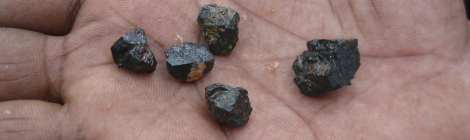
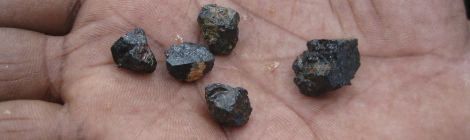
The Politics of Coltan: An Interview With Michael Nest
Dr Michael Nest has expertise in political and social issues around mining. He is also an anti-corruption expert and formerly worked for the Independent Commission Against Corruption in Sydney, Australia. […]

Carefully Managing Water Resources to Build Sustainable Peace
Carefully planned interventions in the water sector can be an integral part to all stages of a successful post-conflict process, from the end of conflict, through recovery and rebuilding, to […]

Markets, Minerals and Mayhem in Darfur
The crisis in Darfur has been called the first genocide of the 21st century. There have been many explanations offered for this human tragedy. But what is often overlooked is the […]

Climate Change – Migration – Conflict. What’s the Connection?
Climate change and human migration are often presented as threats to national and international security. But what is the actual link between these phenomena and conflict? Author’s Note: This commentary […]
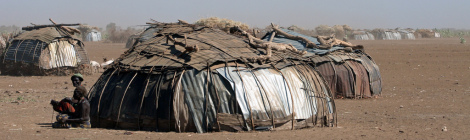
Nomadism, Land Disputes and Security
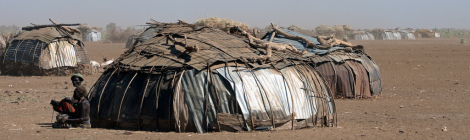
Violence between nomads and sedentary populations has become widespread across the globe and there is an urgent need to address the root causes of this escalation of violence. Conflicts between […]

Conservation as a Tool for Post-War Recovery
The environment has often taken a backseat in discussions about conflict, but an increasing amount of evidence suggests that environmental and wildlife conservation could and should be very useful to […]

Sustainable Security in the Arctic
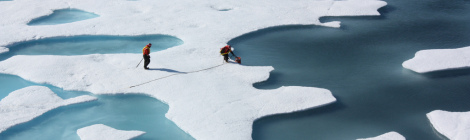
In 2008, media outlets declared that a new Cold War was unfolding in the Arctic. This story was centred on a small, titanium Russian flag, fixed to the seabed below […]
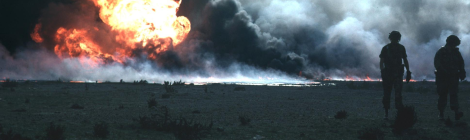
What the Environmental Legacy of the Gulf War Should Teach us
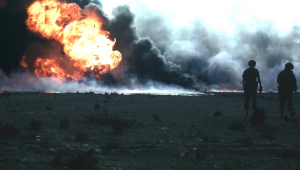
In spite of the UNCC, and the precedent that it set, the fact that 25 years on the environmental legacy of the Gulf War has still not been fully addressed is a stark reminder of the long-term impact that wartime environmental damage can have.
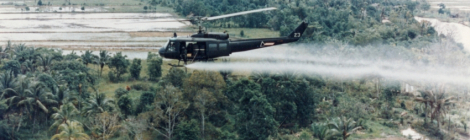
VIDEO – Transforming Food Systems in a Global Context
In this talk for the Food Systems Academy, Paul Rogers puts the challenges of transforming food systems in a global, human security context. He argues that food is at the centre of the third great transition humankind has to go through.

In Deep Water: China tests its neighbours’ patience
Control of water, including navigation rights, resource extraction and the exploitation of shared watercourses is at the heart of today’s geopolitical tensions in Asia. China’s recent actions in the South China Sea and Himalayas have given rise to further—and at times violent—conflict over the region’s natural resources. So will water insecurity lead to greater partnership in Asia? Or will it lead to a revival of China’s traditional sense of regional dominance and undercut efforts to build a rules-based approach to growing resource conflicts?





 The Middle East and North Africa is a region of great diversity. It encompasses Arab and many other ethnic populations, theocratic and secular states, democracies and authoritarian regimes. A region of immense wealth and crippling poverty; it is blessed (some might say cursed) with vast resources, not least oil, but has not always proved able to manage them for the benefit of ordinary people. While it is often viewed from the outside as a source of terrorism and conflict, the regional perception is one of foreign occupation and other external interference.
 Delicious
 Digg
Digg StumbleUpon
 Reddit
 This major report was the result of an 18-month long research project examining the various threats to global security, and sustainable responses to those threats.
  Understandably, the world has become increasingly preoccupied with risk and insecurity. The uncertainties produced by global challenges such as financial crises, economic slowdowns, health pandemics, the international narcotics trade, terrorism and conflict and indeed the impact of climate change are just a few pressing examples causing concern. However, the earth’s environmental resources are increasingly under enormous strain and nowhere is this stress more apparent than in the case of the earth’s finite supplies of freshwater.