Blog

  • Sustainable Security

  • Sustainable Security

    Human Security and Marginalisation: A case of Pastoralists in the Mandera triangle

    This paper seeks to bring out the relevance of human security in pastoral areas of Mandera triangle and the relationships and contradictions that exist between it and national security. The “Mandera Triangle” encompasses a tri-border region of Ethiopia, Somalia, and Kenya that exemplifies, in a microcosm, both a complex and a chronic humanitarian crisis that transcends national boundaries.

    Read Article →

  • Competition over resources

    Food security will remain out of reach for many people, especially women and children, in the Lao People’s Democratic Republic, or Laos, if the country continues to emphasize commodities and resources development at the expense of the environment and livelihoods while ignoring global trends for food and energy. Read more »

  • Peacebuilding IN Europe? An analysis of how European peacebuilding efforts overseas could apply closer to home

    EU attitudes to peacebuilding have always assumed that it essentially applies to other people, who live outside of the Union’s developed borders. However, since the financial crisis of 2008 and the austerity that followed, the certainties underpinning western models of aid and conflict-resolution have taken a knock from the riots and protest movements shaking cities from Athens to London. While not equating the various reactions and levels of violence across the continent, Dan Smith suggests in both this piece and a follow-up post that EU peacebuilding efforts would be well-directed inwards. In particular, he highlights a growing alienation from professionalised political systems, and how a very small number of actors can cause havoc against a background of marginalisation, both real and perceived. He therefore recommends that we focus our attention on the context against which people act, rather than on the actors themselves, because it is only through ‘mobilising social energy for building peace’ that individuals can find a place in society and disaffection can be tackled at its root cause.


    In 2001 – a different time and a different world – the EU Gothenburg summit agreed to make the prevention of violent conflict a priority for the EU. Measured by money, it’s now the world’s biggest player in peacebuilding. But look around Europe now and we can ask, should peacebuilding also start to be a priority inside the EU?
    The EU’s peacebuilding

    Since 2001 the European Commission has spent €7.7 billion on conflict prevention and peacebuilding, more than any government or other international organisation and about 10 per cent of its total spending on external aid.

    A recent evaluation concluded the money has been well spent overall, albeit with room for improvement – the sort of balanced conclusion you expect from a review like that. The report finds that the EC has undertaken and supported some pretty good work in places as different as the western Balkans, the DRC, Nepal and Central Asia. Not everything works, but nothing has been done that is actually harmful, much that is distinctly beneficial to the common good, and important lessons have been learned.
    That was then

    The Gothenburg decision was taken at a different time. The Euro and the big enlargement had been decided. Confidence, expansiveness and optimism were in the air. If confidence was shaken by 9/11, the beginning of “the war on terror” and the start of the build-up to invasion of Iraq, nonetheless it was an era of growth and of projecting the EU’s core mission of enlarging the zone of peace to far flung corners of the world.

    But in 2007 came the sub-prime crisis in the US and the start of the international credit crunch. In September 2008 Lehman Brothers went down and the world started to be very, very different.
    Tragedy and reflection

    In fact, for my own organisation, International Alert, things had already started to change. In 2005, the day after London was awarded the Olympic Games of 2012, the city was visited by the worst terrorism it has experienced, far more lethal than anything inflicted in 25 years of war by the Provisional IRA – in four bomb attacks (one on a bus and three on underground trains), 52 people were killed (plus the four bombers) and over 700 severely injured. The city was quiet for the next few days and people worried about whether it was safe to use the bus and tube and go to work.  Two weeks later four more bombs were discovered before they detonated.

    In that over-heated atmosphere, on the next day, a policeman shot and killed a young Brazilian, Jean Charles de Menezes. It has since been proven that he had no connection with terror groups of any kind. It has been proven that the police had no basis in fact for following him. They panicked and a young man lost his life. I reflected on this and its implications in a post on the day a permanent memorial was dedicated to his memory.

    For me and for colleagues at Alert, this awful incident was very immediate: our office happens to be five minutes’ walk from the station where Menezes was shot. Like many others we reflected on these events and we wondered whether skills we have learned in trying to build peace in Africa, Eurasia and Asia since we started up in 1986 might be useful in Britain. We made contact with groups working on community conflict and cohesion and compared notes. Might what we do in Beirut, Monrovia or Kathmandu have some bearing, some relevance in Bradford, south London or Bristol?

    The answer was yes (and we now have a programme of activities in the UK), not because we have a magic technique but because we start with a dispassionate analysis of the context of conflict and use a vision-based approach. We don’t only start with ‘what’s the problem and how do we handle it?’ – but with ‘where do we want to be in x years’ time?
    This is now

    In the summer of 2011, England had its riots. We look around Europe and we see different sorts of disaffection and action: the anger in the anti-austerity, anti-government riots in Greece, the thin patina that people tell me stands between order and a similarly angry chaos in Ireland, the youth movements in Spain, the simmering anger in Italy. Even in a country self-proclaimed by an opinion survey to be among the 2two or three happiest in the world* – Denmark’s capital has been scarred by school-burning and gang warfare in the last couple of years. And at the psychotic and extreme end,  Breivik’s monstrous massacre on the island of Utoya in July 2011 and the discovery of a series of murders of immigrants by right-wing extremists in Germany;

    I am not equating these events. This atmosphere of dissatisfaction and violence does not arise everywhere from the same source, the same social groups or the same politics.

    But they are nonetheless connected, not by motive or participants, but by the political and social landscape in which they occur.

    It is a landscape where people’s sense of social belonging and engagement in the common good is challenged as never before. It is challenged by economics as job opportunities and the belief in a better future diminish before our eyes. Politics is professionalized and in most countries is ever more distant from growing segments of the population, especially among the poor and among the young. Ordinary people feel they are paying the price for mistakes they did not make while those who had the biggest part in the errors in politics and finance are paying a much smaller price.

    Some people direct their anger about the injustices at the political establishment, some at the finance world and some – in their confusion at this diminished sense of belonging – against immigrants. But even when the anger is mis-targeted and even when the accusations are false, the feelings that lie behind are real. And sometimes lethal.
    Bringing peacebuilding home

    How might a peacebuilding approach look? Standard procedure for working in fragile states – rule number one – is to start with context. Which means starting with questions and an open mind.

    This makes it very difficult for politicians to bring a peacebuilding approach to their own home patch. At home, they are supposed to know the answers. That’s what we have politicians for – and then we get to choose which answers we like best. Or who answers best, which is not always the same thing.

    A peacebuilding approach would not look necessarily at the numbers involved in each action, even the riots. It is a staple of peacebuilding to acknowledge that in countries with a population of tens of millions, it only takes a few hundred unemployed young men, some leaders ready to act, and access to weapons – and you have a war. The IRA’s active forces probably numbered well below 1,000 throughout three decades of war in and over Northern Ireland.

    No, rather than the numbers, it’s the background that counts, the social, political and economic context in which this occurs. And the question is whether that background fosters peaceful relations or not.

    Last year the UK government brought out its Building Stability Overseas Strategy to guide its approach to peacebuilding in developing countries. Here is some of its analysis, full of resonance for Europe’s current social and political challenges. I have already drawn on it for clues for its resonance for the English riots. But its clues about what questions to ask are so useful it’s worth repeating them (but hurdle over the bullet points if you remember them) (and also get a life – come on).

        * ‘The stability we are seeking to support … is built on the consent of the population, is resilient and flexible in the face of shocks, and can evolve over time as the context changes…
        * ‘Effective local politics and strong mechanisms which weave people into the fabric of decision-making – such as civil society, the media, the unions, and business associations – also have a crucial role to play.
        * ‘All sections of the population need to feel they are part of the warp and weft of society, including women, young people and different ethnic and religious groups.
        * ‘Jobs, economic opportunity and wealth creation are critical to stability. Lack of economic opportunity is cited by citizens as a cause of conflict, and is often the most significant reason why young people join gangs…
        * ‘Without growth and employment, it is impossible to meet the basic needs of the population, and people’s aspirations for a better life for themselves and their children…
        * ‘While an inclusive and legitimate political system is a requisite for stability, confidence in the future comes when people see that their needs and expectations are being met on the ground.’

    On the basis of this kind of analysis, you would look at social inclusion/exclusion and marginalisation; at the degree of hope and confidence in the future – or their opposites; at our political institutions – both national and local; at the condition of the economy and whether economic policies are creating opportunities; and at the space for civil society and for bodies such as business associations and trades unions to represent people, articulate concerns and influence politics.
    How peacebuilding at home would look

    Peacebuilding looks different from one country to the next. But the golden thread that connects it all, expressed in abstract terms, is mobilising social energy for building peace. We work out what form this will take based on need, opportunity and ability in the country where we’re working: police reform, starting new institutions to promote transparency, cultural peace festivals, women’s forums, joint  micro-investment projects involving genocide victims and perpetrators in Rwanda, getting multinationals and community organisations round the table together, communications across the conflict lines, getting conflict-divided communities to cooperate on adaptation to climate change – and much more. Consistently, the theme is people coming together, their energy becoming synergy.

    In our atomised societies, bringing people together, asking questions, listening carefully for answers, and shaping common actions: never in the past 60 years has there been such a shortage of this, never has it been more needed.

    Growing youth unemployment is causing hurt and anger that a return to economic growth will not be enough to calm. Something else is needed too. It really does seem time to expand the mandate of peacebuilding to include the EU countries themselves.

    ___________________________

    * Denmark was ranked top in 2010 in a Gallup poll reported by Forbes in 2010 but more recently may have been shaded out by Norway.


    Article Source: Dan Smith’s Blog

    Image Source: how will i ever

  • AfPak-Iraq: wrong war, right path

    The term “global war on terror” has long since been dropped from the United States’s official vocabulary. The phrase that came to be proposed as a replacement even when George W Bush was still in office, the “long war”, has similarly fallen by the wayside, to be succeeded in March 2009 by a less overtly combative Pentagon formulation: “overseas contingency operation”. But it is easier for the Barack Obama administration to redefine the conflict it is involved in than to change the bleak current reality in three main flashpoints – Afghanistan, Pakistan and Iraq:

    * the coordinated suicide-attack and rocket-attack in the early morning of 28 October 2009 on two high-profile civilian targets in Kabul – the Bekhtar guest-house and Serena Hotel – are a sign that the deepening insecurity in Afghanistan reaches even to the heart of the capital. The Bekhtar incident ended in the deaths of twelve people, including five United Nations staff who were helping to oversee the re-run of the presidential election on 7 November

    * the devastating market-bombing in Peshawar, also on 28 October, are part of a widening insurgency in Pakistan. The attack killed over ninety people, and coincided with the arrival of United States secretary of state Hillary Clinton in the country for high-level talks with Pakistani leaders

    * the suicide-bomb operations against Iraq’s justice ministry and the administrative headquarters of Baghdad’s region on 25 October – which killed at least 155 people and wounded over 500 – are a reminded that violence in Iraq remains endemic and that insurgents retain the capacity to strike close to the heart of power.

    The rising tide

    In Afghanistan, the great concern over the Kabul assaults is accentuated by awareness of four serious security developments elsewhere in the country:

    * the war is continuing to spread to previously peaceful areas. German troops in Kunduz province in the north of the country, for example, are involved in direct combat for the first time in over six decades (see Nicholas Kulish, “German Limits on War Face Afghan Reality”, International Herald Tribune, 27 October 2009)

    * the increasing effectiveness of the attacks on foreign troops. United States forces are suffering relentless casualties: sixty-seven troops have been killed so far in October 2009, including seven on 27 October in multiple, “complex” bomb-attacks on an armoured vehicle in Kandahar province

    * after the United States withdrew troops from four bases in Nuristan province in northeast Afghanistan (and adjacent to Pakistan), it has effectively fallen under the control of a Taliban network led by Qari Ziaur Rahman, a leader with close links to al-Qaida (see Syed Saleem Shahzad, “Taliban take over Afghan province”, Asia Times, 28 October 2009)

    * it is now becoming ever more clear that the United States forces and the wider Nato/International Security Assistance Force (Isaf) coalition is facing military opposition from groups that extend beyond Taliban militias and some loosely associated warlord networks; these include scores of local militias that have very little to do with the Taliban but work to protect their own power-bases and resist what they see as a foreign occupation.

    All war is local

    The implication of these trends is that a transition from insurgency to a broader insurrection may be occurring – and that deploying even more American and allied troops (as Barack Obama and his advisers are currently discussing) risks increasing rather than diminishing the military challenge (see “Afghanistan: from insurgency to insurrection” [8 October 2009] and “AfPak: the unwinnable war” [16 October 2009]).

    Some US military and political officers on the ground are beginning to register these dynamics. Matthew Hoh, a senior US state department official and former marine who was based until recently in Zabul province, explained his resignation on 10 September 2009 by referring to his experiences in the Korengal valley and elsewhere. These, he is reported as saying:

    “taught him ‘how localised the insurgency was. I didn’t realize that a group in this valley here has no connection with an insurgent group two kilometres away.’ Hundreds, maybe thousands, of groups across Afghanistan, he decided, had few ideological ties to the Taliban but took its money to fight the foreign intruders and maintain their own local power bases. ‘That’s really what shook me,’ he said. ‘I thought it was more nationalistic. But it’s localism. I would call it valley-ism’” (see Karen De Young, “U.S. official resigns over Afghan war”, Washington Post, 27 October 2009).

    The Barack Obama administration has yet to decide whether to deploy up to the 40,000 additional troops requested in General Stanley A McChrystal’s report; it still appears to want to delay the decision until political stability can be established in Kabul (through the 7 November re-run of the presidential election, and perhaps the formation of a national or emergency government). But the core dilemma remains: that deploying more troops is in current conditions likely to prove counterproductive, and only deepen the military quagmire.

    There is a close parallel here with what is happening across the border in Pakistan. An extensive operation by the Pakistani army in Waziristan, launched with a certain fanfare on 17 October 2009 as attempt to occupy this key region and decisively curb Taliban control there, is too facing the reality of an intractable and well-organised opposition resistant to straightforward military solutions.

    The Pakistani offensive lacks the equipment, the flexibility and the combat-troop levels (perhaps as many as 50,000) that would all be required to subdue the entire district; as a result, it now has the more limited aim of neutralising the influence of some important militia leaders. Even this will be hard enough. In addition, cities such as Islamabad, Rawalpindi and Lahore as well as Peshawar have endured high-profile insurgent assaults; and the Peshawar explosion on 28 October is further evidence that the army’s well-publicised operations cannot prevent (and may indeed provoke) violent incidents elsewhere in Pakistan.

    The Baghdad blues

    Amid this comfortless prospect, the situation in Iraq has appeared to present more hopeful evidence that here at least – both before and since United States forces started their partial withdrawal from Iraq’s cities on 30 June 2009 – Washington’s military strategy was showing the desired results.

    At the same time, the very concentration of focus on “AfPak” during much of 2009 has tended to mean that the continuing severe violence and tension in parts of the country have been underplayed. There has, for example, been a series of bombings against Shi’a-populated areas whose resulting carnage is barely conveyed by the death-tolls: over 120 killed in the strikes against markets in Sadr city in April and June, seventy-one dead at a Shi’a shrine in Baghdad in April, forty-four  killed at a Shi’a mosque in Mosul in August. This is but a partial list.

    The intention seems clear: to polarise Shi’a and Sunni communities and provoke further conflict. But those responsible have other targets, including the Iraqi government’s infrastructure and its security forces (which are supplemented, despite the ending of full-scale American patrols in urban areas, by US troops in what amount to joint operations).

    It is in these circumstances that the insurgents have expanded their tactics by launching large-scale assaults against major government centres. In August 2009, these destroyed or inflicted serious damage on the foreign, finance and health ministries (with 102 people killed and more than 500 wounded); the 25 October attacks hit two more centres. An especially serious aspect of this approach is the suggestion that the militants’ ability to penetrate government buildings is possible only with a degree of collaboration from inside Iraq’s security forces.

    The real debate

    The death of the United Nations staff in the Kabul attacks on 28 October is a further significant aspect of the current situation. It shows that some militant groups deliberately target the more neutral expatriates precisely because their work involves efforts to resolve conflicts in times of intense difference. The input of UN agencies – such as the World Food Programme, five of whose officials were killed in an attack at its Islamabad offices on 5 October 2009 – can help provide space for limited progress even amid conflict, and this is what the more extreme elements in a dispute can find intolerable.

    In this respect the Kabul incident belongs to a pattern includes the assassination of Count Bernadotte by militants of the Israeli rightwing Lehi group in Jerusalem in September 1948, and the bombing of the UN headquarters in Baghdad in August 2003 which killed the envoy Sergio Vieira de Mello and twenty-one others. In the latter case, the Baghdad canteen of the UN complex was in the early months of the Iraq war was one of the very few “neutral spaces” where Iraqis and expatriates of widely differing backgrounds and attitudes could meet informally. That was reason enough for it to be vulnerable; the human and psychological damage hugely diminished the UN’s role in attempting to heal wounds and avert the continuation of violence.

    This adds a problematic element to the argument that the United Nations should play a more prominent and strategic role in current and future “international interventions” (see Pierre Schori & Shahrbanou Tadjbakhsh, “Afghanistan: peacekeeping without peace”, 26 October 2009). This is difficult enough to achieve when a military conflict has become rooted or where powerful trends point in that direction; it is made even harder when insurgent factions precisely seek to destroy UN personnel and disrupt their activities.

    All this focuses a chilling beam onto the troubles of the United States and its allies (see Ahmed Rashid, “Trotsky in Baluchistan” [National Interest, November-December 2009]). There seems little hope of immediate respite. The conflict in what has become known as “AfPak” has since 2006-07 continued even through the winter months, while the hoped-for peace in Iraq is looking brittle.

    If there is a way ahead, it rests not on short-term calculations about troop numbers but on a larger reassessment by the Barack Obama administration of the entire US security posture in the middle east and southwest Asia (see “A world in need: the case for sustainable security”, 10 September 2009). This will have to do more than crisis-manage the dire problems inherited from George W Bush; what is needed is no less than a move beyond military-led thinking to an integrated understanding of what security in the 21st century actually is. 

  • An Uncertain Future: Law Enforcement, National Security and Climate Change

    Climate change will have serious environmental, socio-economic and security consequences for both developed and developing nations alike. This report explores these consequences and demonstrates that they will present new challenges to governments trying to maintain domestic stability. Those agencies tasked with protecting and sustaining national security will need to adapt to better cope with a changing global environment.
    However, if governments simply respond with traditional attempts to maintain the status quo and control insecurity they will ultimately fail. As this report shows, the risks of climate change demand a rethink of current approaches to security and the development of sustainable ways of achieving that security, with an emphasis on preventative rather than reactive strategies.

    Download in English or Spanish as PDF

  • Sustainable Security

    Author’s Note: This article is expanded from a piece originally published on Defence Report on August 3rd.

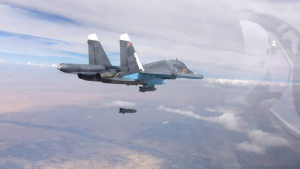
    Russia’s recent bombing of a Syrian base used by UK and US Special Forces exposes the flaws in the UK’s blanket “no comment” approach. The differences in the US and UK responses to the incident reveal that this policy is neither desirable nor standard practice amongst the UK’s allies.

    The Wall Street Journal (WSJ) has recently revealed that, in June, a Russian aircraft targeted a garrison in Southeastern Syria which was used by American and British Special Forces in their fight against ISIS. The attack missed 20 British Special Forces by just 24 hours and killed four US-backed rebels.

    US and UK reactions to the strike

    Much of the subsequent discussion has been on the specifics of the attack and its implications for future intelligence sharing with Russia; however, few have considered massive difference in the US and UK response. Given that the two allies shared use of the base, one may expect both countries to have shared a sense of outrage at the attack. However, their responses have been hugely different.

    The US has very publicly criticised the actions of Russia. After a similar attack in July, “US military and intelligence officials” gave a number of details about the two strikes and argued that it was part of a continued attempt by Russia to pressure the Obama administration into agreeing closer cooperation over the skies of Syria. Many officials, albeit anonymously, also shared their concerns over implications of the strike for the pending intelligence sharing agreements between the two countries. After the attack, Secretary of State John Kerry went to Moscow in a “hastily organized and very secretive” meeting to try to avoid similar incidents from happening again.

    In stark contrast, the UK has remained silent. In response, the Ministry of Defence (MOD) simply stated: “We do not comment on Special Forces”. In fact, even as this WSJ article marks the second article in two months documenting the presence of UK Special Forces in Syria the UK Government remains silent and refuses to acknowledge they are operating in the country.

    The UK’s “no comment” policy

    The MOD’s “long-held policy” of not commenting on Special Forces is well established. This most recent revelation adds to a long list of other incidents where, against mounting evidence, the UK has continued to avoid acknowledging their presence. For example, in March this year, when a story emerged that a British Special Forces Operative had fired on and destroyed an ISIS suicide truck, the response was: “The Ministry of Defence does not comment on Special Forces.” Similarly, in June 2016, when it was reported that British Special Forces are on the front line in Syria in the fight against ISIS, the MOD responded that: “It is our longstanding policy that we don’t comment on Special Forces operation”.

    Given the changing nature of these conflicts this approach may no longer be feasible. Special Forces are increasingly sent on long-term deployments to coordinate local forces and take part in combat in conflict zones, rather than the traditional “sharply in, sharply out” approach. For example, reports from Iraq, Libya and Syria indicate that Special Forces are now being used to train, advise and fight alongside local forces. Not only does this mean the presence of Special Forces is more likely to be exposed but it means that the justification of a blanket “no comment” approach – to avoid compromising the mission – are no longer as applicable.

    The approaches of the UK’s allies

    Soukhoï_frappant_une_position_ennemie_en_Syrie

    Image of Russian aircraft via Flickr.

    Moreover, as the US’s public criticisms of Russia reveal, this blanket “no comment” approach is also not standard practice. A recent report by Dr Jon Moran found that a number of the UK’s allies are far more accountable for their use of Special Forces. In the US, for instance, the deployment of Special Forces from the CIA now requires the notice of “the eight leaders of the relevant intelligence committees in Congress” and “JSOC is accountable via the JSOC commander to the Chiefs of Staff and the Secretary of State for Defense or the President”. There is also greater accountability in Australia which, rather than investing the authority to commit forces to military action in one man, shares responsibility among the Cabinet and the National Security committee through a need for “consensus decision-making”. Similarly, in Canada, the decision is taken at the highest political and military levels but Special Forces are accountable to the head of the Canadian Special Operations Forces Command, who in turn is accountable to the Minister of Defence and Prime Minister. Unfortunately, the UK’s no comment policy led Moran to argue that, amongst these allies, “[t]he British government is the most tightlipped of all”.

    Remote Control’s recent work also documents a number of instances that the US, Canada and Australia have discussed the deployment of Special Forces. For example in 2015 a US spokesperson announced the deployment of US Special Forces in Syria. He reported the number (50) and their purpose (to strengthen anti-ISIS forces) and defended the decision against accusations of mission creep. Similarly, in November 2015, the then-Australian Prime Minister Tony Abbott announced the deployment of 200 Australian Special Forces “to advise and assist local security forces” in Iraq. The same month, Canadian Prime Minister Justin Trudeau announced the deployment of 69 Canadian Special Forces to undertake a training mission, again, in Iraq. While none of the countries gave a lot of detail, they acknowledged the presence – and number – of Special Forces, defined their mission and allowed some room for discussion and debate around their deployment.

    The need for change

    The UK’s current policy is not only embarrassing when stories such as this surface but could have negative implications for the quality of UK intervention abroad. First, better accountability and transparency around Special Forces would mean they are used because they are the best solution rather than the easiest solution to a problem. In 2013, a leaked UK Ministry of Defence document argued that one way to continue conducting military operations despite the risk-averse nature of the British public was “investing in greater numbers of [special forces]” – indicating that the danger of the UK prioritising easy above best is real. Second, it is crucial for the success of any security strategy that its effectiveness can be assessed and adjustments made on the basis of that assessment.

    The reaction of US scholars, policy makers and journalists in the wake of the recent Russian strike is a case in point. The US’s decision to announce the deployment and the purpose of Special Forces in Syria from the outset, and decision to announce this most recent strike, give these groups a chance to debate its implications for relations with Russia, the US’s operations in Syria more generally and assess whether the US’s stated goals are being met. In contrast, the UK lacks such a debate because most scholars, journalists and policymakers do not know the extent of UK involvement in the country and have not been informed of the mission’s stated purpose. Without the level of discussion possible in countries such as the US, the UK lacks the same sounding board and its policies may suffer as a result.

    Russia’s recent strike points to the flaws in the UK’s continued “no comment” policy. When Special Forces rarely stay secret in a country, and fewer of the UK’s allies take the same blanket “no comment” approach, we should be asking why the UK continues to.

    Abigail Watson is Research Officer at Remote Control Project. Abigail holds an MA (with Distinction) in Contemporary European Studies, with a trans-Atlantic track, from the University of Bath and a BA in Politics from the University of York. Abigail writes on issues such as the new challenges to international humanitarian law and Britain’s foreign, security and defence policy.

  • food security

    Food security will remain out of reach for many people, especially women and children, in the Lao People’s Democratic Republic, or Laos, if the country continues to emphasize commodities and resources development at the expense of the environment and livelihoods while ignoring global trends for food and energy. Read more »

  • Middle East Nuclear-Weapon-Free-Zone: Problems and Prospects

    Living in an era plagued by a nuclear threat and arms race, wherein nations continue to nurse the ambition of producing nuclear weapons or acquiring the means to do, nuclear disarmament is possibly the most vital issue in the field of global security.
    There has been a global realization that nuclear disarmament is an important first step towards achieving general and complete disarmament at a later stage. A number of important steps have been taken towards achieving this end. However given the current international environment, the global non-proliferation regime faces challenges on the Korean peninsula and in the Middle East and when progress towards nuclear disarmament appears to have stalled, some believe that traditional instruments of non-proliferation policies have lost their relevance.
      
    In the light of the above, Nuclear-Weapon-Free-Zones (NWFZ) seem to be one of the most promising disarmament mechanisms. They have been recognized by the international community as a “step by step” approach in the process of arms control and disarmament . They are regarded as an effective non-proliferation tool as they fence off one entire region from nuclear weapons. In doing so, they rectify a ‘loophole’ in the NPT which allows the deployment in non-nuclear weapon states of nuclear weapons controlled by the nuclear weapon states . In this sense, NWFZ stop one form of horizontal proliferation.
      
    The rationale behind setting up NWFZ is the direct correlation between denuclearization and peace.  All states seek nuclear weapons for their deterrent potential, often pursuing them because they fear that that their neighbours are developing such weapons. In the light of such concerns, many a time, countries refuse to sign global disarmament treaties; if the neighbour that concerns you the most has not joined, what do you gain by joining?  The NWFZ play a significant role in acting as a possible solution for fixing such problems. This agreement, generally in the form of an international treaty prohibits the deployment, use, production, transfer and possession of nuclear weapons within a specified geographical region by all countries within that region. In addition to this, the treaty prohibits nuclear weapon states from deploying weapons in these areas and permits the IAEA to conduct regular inspections of the region’s nuclear activity.  Such treaties act as restraining forces on countries of that region preventing them from building or acquiring a nuclear arsenal by removing the danger of other countries doing the same.
      
    The idea of NWFZ was conceived with a view to prevent the emergence of new nuclear weapon states. As early as 1958, the Polish government, which feared the nuclearization of West Germany and wanted to prevent the deployment of Soviet nuclear weapons on its territory, put forward a proposal called the ‘Rapacki Plan’ for a NWFZ in Central Europe. In the political climate of the 1950s, the plan had no chance of becoming an international agreement. Nonetheless, several of its elements were later adopted as guidelines for the establishment of NWFZ and several such zones came up in different parts of the world in the subsequent years. 
      
    The first of such zones was established in Latin America in 1967 through the Treaty of Tlatelolco. All 33 Latin American and Caribbean countries are parties to this treaty (however, all countries became parties to this treaty over a period of 30 years), which bars nuclear material from the area except for peaceful purposes.  Since then the regions adopting NWFZs have been expanding. Following the Treaty of Tlatelolco, a similar treaty was adopted for the South Pacific region in 1985 known as the Treaty of Rarotonga. This zone includes Australia, the Cook Islands, Fiji, Kiribati, Nauru, New Zealand, Papua New Guinea, the Solomon Islands, Tonga, Tuvalu, Vanuatu and Western Samoa and prohibits the use of nuclear energy even for peaceful purposes. The treaty of Bangkok was signed next in 1995, whereby a NWFZ was established in Southeast Asia covering the seven members of the ASEAN, Cambodia, Myanmar and Laos . 
      
    The Pelindaba Treaty was concluded in 1996 creating a NWFZ in Africa but has not yet come into force as it has not been ratified by the required number of states. Austria and Mongolia announced their non-nuclear posture in 1999 and 2000 respectively making them single state zones, while the fifth NWFZ was created in Central Asia covering the five former Soviet Central Asian republics- Uzbekistan, Tajikistan, Turkmenistan, Kazakhstan and Kyrgyzstan- in September 2006. 
      
    Certain uninhabited areas of the globe have also been formally denuclearised. They include the Antarctica under the 1959 Antarctic Treaty; Outer Space, the moon and other celestial bodies under the 1967 Outer Space treaty and the 1979 Moon agreement; and the seabed, the ocean floor and subsoil thereof under the 1971 Seabed Treaty .
      
    Some experts have questioned the relevance and benefits of NWFZs. They believe that the role of NWFZs has been grossly exaggerated. However, NWFZs are only the means towards an ultimate aim; they are not the sole method to eliminate nuclear weapons.  Moreover, experts claim that only the “easy” areas have been included within NWFZs, while areas such as Europe, North America, Northeast Asia, South Asia and the Middle East, which either include an existing Nuclear Weapon State (NWS) or border with them have not been included into NWFZs.  Even in the so-called ‘easy’ areas, NWFZs have not been fully implemented, the case being Africa, where the treaty has still not come into force. Despite these limitations, the role of NWFZs towards disarmament and a general peace building process can not be minimised. 
      
    The objective of this paper is to trace the development of the idea of a NWFZ in the Middle East and to analyse the factors and elements which have stood in the path of the creation of such a zone despite the fact that enthusiasm and initiatives for a NWFZ have come from both sides- Israel and the Arab world. 

     
    Read the full paper at Indian Pugwash Society
     
    Image source: BlatantNews
  • Sustainable Security