Blog

  • The SWISH Report (16)

    A report from the South Waziristan Institute of Strategic Hermeneutics to the al-Qaida Strategic Planning Cell (SPC) on the progress of the campaign.

    The last report we presented to you was commissioned and prepared in the wake of President Obama’s speech in Cairo in June 2009 (see “The SWISH Report (15)”, 11 June 2009). At the start of his second year in office, we are pleased to offer you a further analysis. As per as your instructions, we will once again be frank in our assessment of your movement’s prospects.

    We will start by summarising the main points of our more recent work for you. For some time we have emphasised that the George W Bush administration was very good for you – much of the United States military activity could easily be represented by your associates as an assault on Islam, with the United States/Israeli links being particularly useful. Iraq, especially, could be represented as a “crusader/Zionist plot aimed at the heart of Islam”. We advised you that a John McCain administration would be greatly preferable to one led by Barack Obama (see “The SWISH Report (11)”, 11 September 2008); and we suggested that Obama’s election would present you with difficulties (see “The SWISH Report (12)” (6 November 2008). The impact of his Cairo speech confirmed this view.

    We indicated that from your perspective there were promising developments in a range of locations: among them Somalia (where Washington might become more deeply involved in assaults on local enemies), Iraq (where a continuing war might interfere with planned US troop withdrawals), and Afghanistan (where the new administration showed signs of pursuing what it regarded as a “good war”). There was therefore still the prospect that your “far enemy” would become even more mired in intractable difficulties, with conflict in Afghanistan carrying the added potential for instability in Pakistan.

    We also noted aspects of Israel’s behaviour that were of value to you. Among them was the Gaza assault of December 2008-January 2009. “Operation Cast Lead” was widely covered by the Arabic TV news channels and provided sustained and concentrated evidence of Arab suffering. This was highly useful to you, even if your movement receives little direct support from Palestinians.

    We highlighted too the the risk for you that Iran might elect a moderate president, thus downgrading the perception in Israel of an existential threat and exposing Israel in turn to the risk that the Obama administration would exert serious pressure on it to compromise with the Palestinians. A settlement would, in our view, be very damaging to your movement. It was then a favourable outcome for you that Iran’s incumbent president, Mahmoud Ahmadinejad, did enough in June 2009 to ensure that he would stay in office.

    We further reported – recalling your invitation to be unvarnished in our analysis – the problem that ensued when Islamist governance of the kind you espouse was implemented briefly in some parts of Pakistan: namely, that it had initially delivered stability but rapidly became unpopular. This had echoes of Afghanistan’s experience in the late 1990s, where the early welcome to and acceptance of the incoming Taliban did not last.

    We therefore concluded by strongly doubting that your plans for a radical caliphate can be realised as long as you pursue your current approach to governance; and thus recommending that you review your ultimate aims in this area. This, in our view, remains your fundamental long-term predicament. You cannot achieve your aims in governance without a degree of moderation that we think, given your present culture and experience, you are unlikely to develop. Yet that does not mean that your enemy is winning.

    A movement in decline?

    Many western analysts have for some months taken the view that yours is a movement in decline. Your losses of middle-ranking leaders to drone attacks have been serious; the instability in Pakistan has little to do with the actions of your paramilitary cohorts; the Saudi crackdown on dissidents and the accompanying re-education programme has had some effect; and your movement has not staged any direct attacks on your “far enemy” or those associated with it for many months.

    We acknowledge this view but think it is mistaken. You have indeed lost many key people, but they have been rapidly replaced by members of a younger generation. Moreover, whereas many of the older generation had experience against Soviet conscripts in 1980s Afghanistan the new generation has fought highly professional and exceptionally well-equipped American troops, as well as being more radical in outlook.

    We would also point to the near-success of the Detroit attack on 25 December 2009; the destruction of key members of a CIA team in Khost province on 30 December; and, above all, the consolidation of your movement in Yemen, where the 3,000 Yemenis who have fought US troops in Iraq in recent years have brought you great benefits.

    We would mention too the ongoing violence in Iraq, especially the manner in which your associates in that country have become adept at destroying government offices, despite the levels of security that such operations have to overcome.

    The “far enemy” and your prospects

    These elements of current experience largely counterbalance the claims that you are in retreat. At the same time, we judge that events may move against you in three respects. The first is that the Barack Obama administration has not yet expanded its military operations in Yemen, even though the Detroit attack was designed to do just that. John McCain would undoubtedly have “gone in big” but Obama has not done so, and is unlikely to greatly expand operations. For your movement this is a real setback.

    The second trend is that the modification of the American troop presence in Iraq is not in your favour. In a rather clever move, the US army is establishing a series of support-brigades that are designed to aid the development of Iraqi national forces but also have immediate combat-potential. The number of troops in the country will, we expect, fall from around 120,000 to 50,000 during 2010; this smaller number will have relatively low visibility while being readily available should your associates maintain their activity. The artful part of the US plan is that it will appear that such activity is being controlled by government forces, thus reassuring most Iraqis in a manner that is thoroughly unhelpful to you.

    The third circumstance relates to an environment that is more congenial to you, Afghanistan and Pakistan; but there are problems here as well. The Pakistani army’s activities will almost certainly not extend to taking full control of the border districts, so their effects will not incite the levels of violence that you would most wish to see across the country.

    Again, the major expansion of foreign troops in Afghanistan is excellent news for you. But there are indications that these forces will make determined efforts to win over elements of the insurgency with bribes, roles in government and other inducements. As we have made clear in the past, the George W Bush administration was your greatest ally, but the new administration is far more intelligent.

    Two elements, as yet existing in potential only, may influence the evolving situation. The first is whether Barack Obama has understood that the Afghanistan war is essentially unwinnable, and will require a degree of compromise that is much greater than currently contemplated. The second is that any appearance of serious compromise in the country might cause domestic opposition on a scale that would threaten Obama’s re-election in 2012.

    We conclude by drawing a lesson from the experience of recent years: that you cannot achieve your ultimate aim of a radical caliphate founded on your particular understanding of Islam’s distant past, but that you will continue with the conflict even so. Your enemy, for now at least, will pursue its strategy in a manner that delivers real value to you. We suspect, though, that this enemy may be more intelligent than you believe. For you, hubris may turn out to be the greater threat.

    We rather think that, given this conclusion, you may not require more work from us; but rest assured that we stand ready to provide further assessments should you so desire.

    Wana

    South Waziristan

    21 January 2010

  • Sustainable Security

    RC_long_logo_small_4webThis article is part of the Remote Control Warfare series, a collaboration with Remote Control, a project of the Network for Social Change hosted by Oxford Research Group.

    Following a recent Remote Control Project briefing paper, Mass surveillance: security by ‘remote control’ – consequences and effectiveness, this piece explores the hidden costs of government mass surveillance programmes.

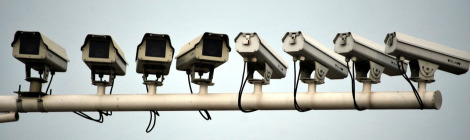
    Last week the new UN privacy chief said UK surveillance was “worse than [George Orwell’s novel] 1984”. In the two years since the Snowden leaks revealed the existence of bulk internet and phone surveillance by US intelligence services and their partners, including the UK, the British government continues to engage in the mass collection of citizens’ communications data.

    camera-19223_1280

    Image Credit: https://pixabay.com/en/camera-cameras-traffic-watching-19223/

    Whilst the US Congress barred the National Security Agency (NSA) from collecting US phone data in bulk in June this year after the US court of appeals ruled it to be unlawful, in the UK the mass collection of communications data was found by both the parliamentary Intelligence and Security Committee and David Anderson QC, who is responsible for reviewing UK terrorism legislation, to be legal and should be maintained. Furthermore, the Investigatory Powers Bill, dubbed the “Snooper’s Charter”, which was blocked by the Liberal Democrats party three years ago, has re-emerged under the Conservative majority government. Now firmly back on the agenda, it would move to strengthen the security services’ powers for the bulk interception of communications data.

    To date, the debate around mass communications surveillance has focused primarily on the infringement of privacy it entails. But, beyond privacy implications, government mass surveillance programmes come at further costs.

    Proliferation, public trust and internet security

    A major concern with the development of mass surveillance tools is that they can be used by authoritarian regimes to suppress freedom of information and expression and track down political opponents.  There is evidence that this is already happening: Privacy International’s publicly available database on the private surveillance sector has found that surveillance companies are selling powerful and invasive surveillance technologies, with the potential for the mass interception of communications, to a number of authoritarian regimes globally, including Bahrain, Ethiopia, Libya and Pakistan. Much of this technology is at pace with the capabilities of the NSA and its UK equivalent, GCHQ, which is having clearly visible consequences. In Ethiopia, for example, mass surveillance technology was found to be used to regularly arrest and detain citizens, in particular as a tool to silence dissenting voices, targeting the ethnic Oromo population. The widespread use of torture and other ill-treatment against political detainees in Ethiopian detention centre makes the use of these technologies even more troubling.

    Another cost of mass surveillance is the weakening of public trust in national governments. An erosion of public trust in government in general (see this report from President Obama’s own Review Group on Intelligence and Communications), coupled with a weakening of trust in governments for citizens online security in particular, was found to have occurred since the Snowden leaks. The steep increase in the use of Tor (an open source network that allows users to obscure their online activity) which went from 500,000 daily users worldwide to more than 4 million following the Snowden leaks, as well as an increase in other internet privacy platforms since the leaks seem to confirm this.

    Furthermore, the weakening of internet security is another cost of mass surveillance programmes. These programmes rely on creating and maintaining vulnerabilities in communications networks that undermine the communications infrastructures that we all rely on (see this report from The Council of Europe). The creation of “back doors”, for example, along with other weaknesses in security standards and implementation could easily be exploited by non-state groups.

    In May this year, a group of tech companies, including Facebook, Google and Yahoo (as well as civil society groups and academics) signed a letter to President Obama urging him to oppose efforts that would force companies to build in ways for law enforcement to access products and services protected by encryption. The letter warned that introducing intentional vulnerabilities into secure products for the government’s use will make those products “less secure against other attackers”, including street and computer criminals, repressive or dangerous regimes and foreign intelligence agencies.

    Is mass surveillance stopping terror attacks?

    Beyond the risk of proliferation, the weakening of government trust and the threat to internet security, the UK government’s reliance on mass surveillance could also come at a cost to its citizens’ physical security. The use of data-mining and automated data-analysis techniques used to filter down the vast amounts of data acquired in mass surveillance programmes comes with a high risk of false positives. It has been suggested that data-mining for counter-terrorism in particular comes with a higher risk of false positives than when used in other settings (such as credit card fraud detection) due to the quality of data available and the rarity of terror attacks. This high number of false positives associated with counter-terrorism will, in turn, cause an overload of data, swamping analysts and thus taking resources and attention away from more appropriate counter-terrorism methods.[1]

    Recent evidence suggests that mass surveillance may not be an effective tool for foiling terror plots. A number of reports from the US, including a declassified 2009 report from the US government and a report from a review group appointed by President Obama, have shed doubt on the supposed effectiveness of mass surveillance programmes. One in particular, from Washington based think-tank New America Foundation, found traditional investigative methods played a far greater role than mass surveillance in initiating investigations into the majority of terror cases reviewed. In one case (a 2009 plot to attack the Danish newspaper Jyllands-Posten), the US government was found to have exaggerated the role mass surveillance played in thwarting the plot.

    Recent terror attacks have further exposed the limits of surveillance. In the Boston Marathon bombing in 2013, for example, it was revealed that the failure to foil the bomb plot was due to a failure in sharing and coordination of information between departments, rather than the bombers being unknown to intelligence agencies prior to the attack. Similarly, the 2014 Charlie Hebdo and French grocery store attackers in Paris were not only known to French and US authorities but one had a prior terrorism conviction and another was monitored for years by French authorities. In both cases the attackers were known to authorities and had been under surveillance.

    Security by ‘remote control’

    The use of mass surveillance programmes by government must not be seen in isolation but should be viewed as part of the trend towards maintaining security by ‘remote control’, the global shift towards countering threats at a distance without the need to deploy large military force. As technological advances have increased governments’ digital intelligence gathering capabilities, mass surveillance techniques demonstrate the interdependence between intelligence and surveillance and the growing relationship between intelligence, technology and modern combat.

    Like the use of drones, special forces and private military companies, the secretive nature of mass surveillance programmes means they operate in an accountability vacuum, with little transparency or oversight, rendering the public unable not only to hold government to account, but to assess these techniques’ perceived effectiveness. In the UK, recent Anderson, ISC and RUSI reports all stressed the need for greater transparency and oversight with regards to government mass surveillance programmes.

    Like other remote control methods, mass surveillance of citizens’ communications data is appealing as it is perceived as cost-free and plays to Western states’ technological strengths. The perceived ease of remote control has, however, blinded policy makers from considering its broader and long term implications. There is a need for greater transparency and accountability with regards to government mass surveillance in the UK, along with a robust regulatory framework for private security companies which are trading surveillance technologies globally. As well as this, far more consideration must be given to the unforeseen and long-term costs of mass surveillance in order to evaluate its utility for long-term sustainable peace and security.


    The Remote Control project recently published a briefing paper “Mass surveillance: security by ‘remote control’ – consequences and effectiveness”, read it here.

    [1] For more information please see report by the Committee on Technical and Privacy Dimensions of Information for Terrorism Prevention and Other National Goals, National Research Council, “Protecting Individual Privacy in the Struggle Against Terrorists: A framework for program assessment”, William Binney in “NSA Struggles to Make Sense of Flood of Surveillance Data”, Wall Street Journal, December 2015 http://www.wsj.com/articles/SB10001424052702304202204579252022823658850, and Bruce Schneier, “Why Mass Surveillance Can’t, Won’t, And Never Has Stopped A Terrorist”, digg, March 2015 http://digg.com/2015/why-mass-surveillance-cant-wont-and-never-has-stopped-a-terrorist


    Esther Kersley is the Research and Communications Officer for the Remote Control project. Prior to joining ORG, Esther worked in Berlin for the anti-corruption NGO Transparency International as an editorial and online communications officer. She has a particular interest in counter-terrorism and conflict resolution in the Middle East, having previously worked with the Quilliam Foundation and IPCRI (Israel/Palestine Center for Research and Information), a Jerusalem based think tank.

  • Maoists

    In an age of climate change and deepening inequality, the spreading Naxalite insurgency in India – not al-Qaida – may show the world its future.

    This article was originally posted on openDemocracy.

    Read more »

  • Global militarisation

    In a piece for the International Movement for a Just World, William Rees maps out a vision for what he calls ‘Survival 2100.’ The goal of such a strategy would be “to engineer the creation of a dynamic, more equitable steady-state economy that can satisfy at least the basic needs of the entire human family within the means of nature.” The alternative, Rees argues is to “succumb to more primitive emotions and survival instincts abetted by cognitive dissonance, collective denial, and global political inertia.”

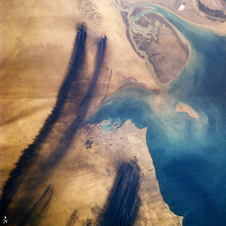
    Image source: hundrednorth.

    Read more »

  • Sustainable Security

  • Sustainable Security

    NASA main1_kuwait-compare670

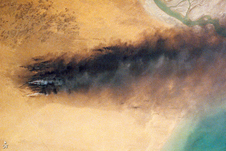
    Whilst withdrawing from Kuwait at the end of the first Gulf War, Iraqi troops set fire to over 700 oil wells  south of the Iraq border (yellow line). These images show before, during and after the release of 1.5 billion barrels of oil into the environment, the largest oil spill in human history. Image by NASA’s Goddard Space Flight Center.

    February marked the 25th anniversary of the Gulf War’s end. The intensity and magnitude of the allied coalition’s offensive, followed by the systematic destruction of Kuwaiti oil wells by retreating Iraqi troops, led to an unprecedented environmental disaster. Yet within two months, and in a first for international armed conflict, a post-war claims and remediation mechanism ─ the United Nations Compensation Commission (UNCC) ─ was in place. Its aim was to not only help neighbouring states recover from the personal and financial losses inflicted during the war, but also to help repair the environmental damage caused. With protection for the environment in armed conflict under increasing scrutiny, it seems useful to re-examine how this mechanism worked.

    Following the conflict, there was an expectation that reparations were due to neighbouring countries and Iraq’s oil revenues offered a ready source of finance. The UNCC was established and mandated to: “…process claims and pay compensation for losses and damage suffered as a direct result of Iraq’s unlawful invasion and occupation of Kuwait”. The 2.69 million claims it processed were categorised according to claimant and type of compensation sought. These ranged from individuals’ personal injury, deaths and financial losses, to costs incurred to neighbouring countries in housing refugees, to damage to businesses and governmental property. Last but not least, was the “F4” sub-category for “Environmental damage and depletion of natural resources”.

    Using expert panels, the UNCC assessed 170 F4 claims from 12 States (Australia, Canada, Germany, Iran, Jordan, Kuwait, the Netherlands, Saudi Arabia, Syria, Turkey, UK and USA) and awarded US$5,261m ─ just 6.2% of that claimed ─ to 10 States in five instalments over as many years: the Dutch and Turkish claims were unsuccessful. Oversight of payments was strict, with regular reporting to establish that funds were used as specified. All payments have now been completed, although some projects will run until at least 2020.

    Environmental Damage on a Massive Scale

    Black smoke plumes stream into the skies around Kuwait City in April 1991 five weeks after the fires were set. Credit: NASA's Earth Observator

    Smoke plumes in the skies around Kuwait City in April 1991. Image by NASA’s Earth Observator.

    The recognition of the F4 claims for remediation and restoration was unquestionably due to the highly visible environmental damage the conflict caused. Aside from the unexploded ordnance covering 3,500km2, the footprint of the 700,000 allied troops, and the effect of millions of Iraqi, Kuwaiti and other refugees relocating to Jordan, Iran, Turkey and Syria; Kuwait and its neighbours suffered from the unique impact of the calculated use of oil as a weapon of war.

    More than 700 oil wells were blown up, with most igniting, burning 6m barrels per day for nearly ten months. Damaged oil wells spewed crude oil, forming lakes covering at least 50km2. Fallout from dispersing smoke plumes created a thick deposit known as tarcrete over 1,000km2 of Kuwait’s deserts. Meanwhile, 11m barrels of crude oil from storage units, sabotaged pipelines and oil tankers spilled into the Persian Gulf, damaging 800km of coastline. The impact of the oil on air and land quality, terrestrial and marine habitats and biodiversity was immediate, severe and long-lasting, damaging natural resources and threatening human health.

    Putting a Price on the Environment

    Placing a financial value on the environment is no easier than defining what the environment is. As they counted the cost, affected countries submitting UNCC claims were clear that economic, social, public health and biodiversity concerns were all linked to environmental quality. States not only wanted to reinstate pre-war environmental conditions in heavily polluted areas, they also wanted to address the damage to land and natural resources, and the footprints of the military and refugees. Concerned about the health implications for their populations from pollution, they also sought acknowledgment of the risks, and funds for health monitoring.

    The difficulty in assessing the monetary value of the damage was evident throughout the process. Both Iraq and the UNCC demanded that claims be supported by precise estimates, detailed costs and clear scientific evidence. The difficulties this presented, in the absence of an agreed framework to quantify damage, and debates over the quantity and quality of evidence, led to 94% of claims being dismissed.

    The bulk of the claims from Jordan, Iran, Kuwait and Saudi Arabia related to either oil spills or damage from oil well fires. Because of the visibility and immediacy of the damage, and the necessity for data gathering, monitoring and assessment claims were often upheld and remediation claims, which were reviewed later in the process, were considered favourably. Nevertheless the remediation costs, area calculations and baseline comparisons of pre-war environmental conditions were still debated and individually re-negotiated by the UNCC’s experts.

    Claims for the degradation of natural resources such as groundwater, and the loss or damage of habitats due to population displacement proved less successful. This was partly due to the difficulties in quantifying the harm caused, and the uncertainty in assessing refugee numbers and their collective behaviour. The few non-regional States’ claims related to technical and expert services provided to Kuwait and its neighbours; these were just as hotly debated as other claims.

    Claims linking the oil fires to human health risks considered the financial impact of long-term health problems and the additional deaths expected due to inhalation of the fires’ toxic fumes. However, due to the difficulty in meeting the evidentiary standard requiring harms to be the “the direct result of the invasion and occupation” these proved unsuccessful. Health monitoring and assessment projects were awarded funds, although the expert panels contested the methodologies and models they used to assess exposure, morbidity and mortality in Kuwait and Iran. Similarly, other claims relating to the impact of airborne particulates on land and heritage sites, including virtually all Syrian claims under “Transport and Dispersion of Air Pollution”, were also unsuccessful.

    Post-war Remediation and Restoration are Still Incomplete

    NASA 3

    The oily plumes climbed three to five kilometers into the atmosphere and hundreds of kilometers across the horizon. Image by NASA’s Earth Observatory. 

    Although capping the oil wells took only nine months, damage has proved long-lasting. The varied composition of soils caused different contamination problems. Wet oil, dry oil and solid tarcrete remained depending on absorption levels, length and severity of exposure. Oil spills covered coastlines and invaded mudflats, killing wildlife and transforming habitats. Remediation was highly specialised, often complicated by weather and the saline conditions, and necessitated preliminary monitoring and assessment work. The technologies and remediation techniques used varied, including chemical oxidation, soil washing, tilling in mudflats, soil excavation, transportation, landfills and thermal treatment.

    The necessary assessments slowed the claims process; Kuwait was still processing and awarding tender applications in 2013. Often, delays led to natural environmental changes in habitats, for example the colonisation of coastlines by algal mats, preventing their return to pre-war conditions. Such changes led to questions over what constituted successful remediation for these degraded and altered habitats, especially when remediation had not been initiated by the affected States prior to claims being filed – for instance Saudi Arabia’s duty to prevent and mitigate environmental damage was examined.

    Recognising the long-term and technical nature of environmental remediation work, the UNCC mandated further monitoring until 2013 through the Follow-up Programme for Environmental Awards – now completed and wound up. Some national projects are still underway, relating to ordnance removal, the damage and stresses caused by refugee settlements and military camps and health monitoring. Other long-term works, including irrigation improvements, livestock management, soil improvements, re-vegetation, marine reserves, saltmarsh clear-up, wildlife re-introduction and protection continue in Iran, Jordan, Kuwait and Saudi Arabia.

    Learning from the UNCC

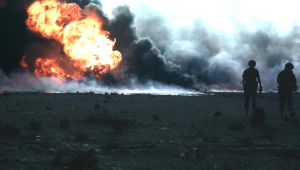
    More than 600 Kuwaiti oil wells were set on fire by retreating Iraqi forces, causing massive environmental and economic damage to Kuwait.

    Image of oil well on fire from the ground by US Army Corps of Enginners.

    That the UNCC process included the F4 environmental damage category at all was a step in the right direction, setting a precedent and demonstrating the importance of post-conflict environmental restoration. Although influenced by well-established peacetime environmental norms, the UNCC claims and awards process had limitations. But could its lessons be developed for environmental restoration after future conflicts?

    One starting point would be to develop a common legal definition of the environment, derived from environmental and humanitarian principles. This could be used to help frame the necessity of preventing harm, and ensuring environmental restoration. Complementing this with a common framework for damage assessment could accelerate recovery and reduce harm by avoiding further damage resulting from delays in remediation. The framework would need to be developed as part of a post-conflict environmental mechanism, with claims and operations processed through an independent institution with a clear mandate.

    To be successful, monitoring and clean-up operations should neither be dependent on the affected State’s finances, nor limited to post-conflict reparations. Ideally an international fund would be established and made available, not only to support public and environmental health monitoring throughout the conflict cycle, but also to ensure that urgent remediation and clean-up operations begin quickly.

    Another lesson from the UNCC is that it is essential to go beyond the purely financial implications of damage and loss. A more comprehensive approach would also consider the direct and indirect consequences of environmental damage, linking environmental health with humanitarian protection, promoting ongoing health monitoring and re-instating post-war environmental governance.

    Most of the UNCC decision-making process was not public, when instead it should have been accessible and transparent. “Non-claimant states, civil society and the media had no access at all. The panel’s proceedings were not open to public scrutiny”[1]. Today such opacity would run counter to the principles of the Aarhus Convention on access to information and participation in environmental decision-making, and act as a barrier to external scrutiny.

    In spite of the UNCC, and the precedent that it set, the fact that 25 years on the environmental legacy of the Gulf War has still not been fully addressed is a stark reminder of the long-term impact that wartime environmental damage can have. Armed conflict not only degrades the natural environment and damages human health, it also harms environmental governance. While the UNCC model may not be applicable to all conflicts, its lessons highlight serious limitations in how the international community currently responds to the environmental consequences of conflict: limitations that must be addressed in the growing debate on strengthening the protection of the environment from the impact and legacy of armed conflict.

    Laurence Menhinick is a research assistant with the Toxic Remnants of War Project, which studies the humanitarian and environmental impact of conflict pollution. The Project is a founding member of the Toxic Remnants of War Network, which advocates for a greater standard of environmental protection in armed conflict: @TRWNetwork. The author thanks Prof. Cymie Payne for her clarifications for this article.

    [1] De Silva, A. L. M. (2014), Conflict Related Environmental Claims – A Critical Analysis of the UN Compensation Commission, Faculty of Law, University of Sydney, Australia p70 http://ses.library.usyd.edu.au/handle/2123/10426

  • Sustainable Security

    Drones continue to play important roles in conflicts around the world. In Africa, drones have been tested for civilian projects, but they have been largely absent from miltary operations. But will this always be the case?

    With the enormous role drones have started playing in conflict areas around the world, it would not be unreasonable to think that, by now, African skies would be buzzing with them. There are many drones being tested for civilian projects in Africa, but for military purposes they are largely absent. Rather than being drones developed in Africa, these eyes in the skies can be traced back to French or American origin, with the occasional imported Chinese drone buzzing by. Why is this? Time for a short assessment on the state of drones in Africa and the challenges that lie ahead for local development and use of military drones.

    Doing Good

    Large parts of Africa are signified by vast distances and large swaths of difficult terrain combined with a lack of infrastructure. No wonder, then, that drones, with their ability to glide in a straight line over the jungles, hills, rivers and deserts for hours on end, have been considered part of a solution to many of Africa’s problems.

    And they have solved some problems. Drones keep an eye out above herds of elephants and rhino’s in order to stop poaching, they help farmers tend their crops, and they deliver blood and medicine to remote hospitals. Even Facebook is using drones to bring internet to dark spots in Sub-Saharan Africa. So what about military purposes?

    Security in Numbers

    Africa’s security problems are heavily influenced by the aforementioned geographic factors. Securing remote villages is an incredibly difficult task. International crime organizations, guerilla movements, and terrorist groups can all cross the long porous borders that many African countries have, only to disappear in enormous areas of seemingly impassable terrain. For security too, the surveillance capabilities of drones can be very beneficial to African states. This idea is supported by UN peacekeeping chief Hervé Ladsous, who expanded the use of drones to peacekeeping missions throughout Africa after testing them above the rainforests of the Democratic Republic of Congo.

    But aside from the UN, a few African states have taken control of their own drone deployment. Using the US Department of Defense categories, which separates drones according to their performance and capabilities, we can summarize the state of drones in Africa as follows:

    • Not one country on the African continent uses drones that have medium altitude, long distance capability, such as the Reaper or Predator drone.
    • Currently, 14 of 54 African states have used so called ‘Tactical’ drones, meaning drones that have low altitude and low endurance. These are mostly used for intelligence, surveillance and reconnaissance, such as the Scan Eagle.
    • Algeria, Tunisia, Egypt, Ethiopia and South Africa have claimed that they are now developing their own drones. South Africa is the only African country with a significant history of developing and deploying them.
    • Egypt, Nigeria and South Africa now have drones with lethal capability, while more states seek to acquire them. Egypt and Nigeria bought these from China, South Africa developed an armed version of its Seeker 400 line.

    For security, then, the use of drones is expanding too, but overall, drone acquisitions remain relatively limited. It might be tempting to explain this lack of wide-spread drone use by pointing to the idea of a cash strapped African government, but the real reason lies with the way in which the money is being spent.

    African Ways

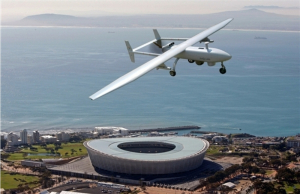
    a_seeker_400_drone-_manufactur

    Image by Times Asi/Wikimedia.

    Military budgets throughout Africa have been expanded significantly in the past eleven years, only to be interrupted by low oil prices. According to SIPRI, Chad and Uganda recently invested in Russian MiG fighter jets, Ethiopia purchased 200 Ukrainian T-72 tanks, and Somalia and Nigeria invested in tanks, planes, armored vehicles and fighter jets. Interestingly enough, investments in military drone systems are largely absent, even though these systems are providing a growing tactical advantage for modern armed forces. Armed drones have seen a particular use in intrastate conflict as their loitering and intelligence capabilities enable forces to effectively monitor areas for insurgents. This choice for conventional weapons can be explained in part by the different solutions African governments have for conflicts, compared to the West.

    According to Prof. Ralph Rotte of the Aachen University, conventional weapons are favored over drones because they are better suited to the ways African governments fight civil wars. Western warfare is usually done by destroying the enemy while winning the ‘hearts and minds’ of the local population. This occurs less often in African civil wars, where military forces focus on outmaneuvering and disrupting each other in order to sap morale and willpower, only to incorporate the exhausted enemy in a system of patronage. This kind of low-intensity fighting does not require the destruction of troops or long-loitering surveillance capability through highly advanced technology. Hence, drones have taken a backseat in military spending in favor of small arms and conventional weaponry.

    Even in the few cases where African countries have tried to employ drones, a lack of maintenance, and limited institutional capability for intelligence sharing have grounded the few drones they had. This restricts the capability African states have in terms of tracking and identifying the locations of terrorist organizations such as Boko Haram, AQIM, ISIS and Al-Shabaab, which subsequently impacts the fight against these terror groups.

    No wonder, then, that Western states have stepped in the counter-insurgency vacuum with their own drones. France now operates drones from Chad, Nigeria and Mali, and the United States (US) flies them from 14 locations throughout Africa, while in the process of constructing a drone base with a 100$ million dollar price-tag in Niger. But the Western drone-monopoly will likely not be a permanent fixture of Africa.

    Drone Troubles

    Despite the shamble state of African drones, it is only a matter of time before they do become widespread and used effectively by African governments. As mentioned previously, five African nations are already developing their own. Several others, such as Algeria, are looking to acquire armed drones from China.

    Interest in using drones in Africa is growing, and the US has recently adopted a joint-statement together with 40 other countries on drone-exports, which will smooth the export of drone-technology. Even if Washington demands high regard for human rights from the countries that seek to acquire armed drones, Beijing won’t. Proliferation, then, either via import or local development, is bound to continue.

    That drones still have a future in Africa is exemplified by Nigeria as well, which, after having its Israeli drones grounded by corruption, and its Chinese drone crashing while carrying missiles, finally committed a successful drone-strike on Boko Haram.

    With the advent of African drones, the flaws of drones will also become a risk to security in Africa. The US has set dangerous precedents with its seemingly unlimited, obscure extra-judicial executions. In fact, UN Special Rapporteur Christof Heyns has warned that US drone strikes are undoing 50 years of international law. African states might be tempted to follow Washington’s lead, sending drones to neighboring states to stop those groups that abuse porous borders, without risking the lives of their own military forces. In turn, this cross-border activity might exacerbate conflict between states. Sounds farfetched? Just a few weeks ago India attacked terrorists in Pakistan-occupied Kashmir, with the help of a drone. This surgical strike worsened the already poor relationship between the two countries.

    Though current advanced strike-capable drones are reliant on a complex technological infrastructure, including satellites, and thus limit the number of States able to use them, other developments in the defense industry are focused on making smaller tactical drones capable for either armed use, or use them as loitering munitions that turn into kamikaze drones. These types of drones are more accessible for States that do not rely on high-tech networks to deploy them.

    It’s also not difficult to imagine what armed drones can do in the hands of oppressive governments. If Barack Obama can take out people without due process, there is no reason why the likes of Omar al-Bashir or Robert Mugabe cannot do the same to their political opponents under the guise of “security”.

    Then there is the question of whether drone-strikes can bring long-term security. New evidence suggests that more innocent civilians are being killed by drone strikes, and that communities are getting traumatized en masse. This might actually lead to an increase in militancy and terrorist activity, and thus only exacerbate the problem. African governments will have to be able to avoid the trap of drones as an ‘easy solution’, in order for drones to become a positive addition to stability and security.

    Drone Danger Ahead

    Drone development and imports are set to rise across Africa. With time, and through cooperation with the West and China, African military forces might develop the necessary technical know-how, organization and doctrine to deploy drones effectively. Because of the drone’s unique features, they might contribute greatly to security and stability across Africa.

    But there is also an incredible risk of escalating conflict if drones are used wrongly. The low threshold for use of force that armed drones bring, combined with the cross-border nature of criminal and terrorist organizations in Africa, can pit countries against each other if drones are used recklessly in each other’s territory. Drones might also appeal to African states that seek to eliminate rebels or dissidents, without full realization that drone strikes can actually worsen a conflict both internally and with neighboring states.

    The current use of drone strikes by the West sets the precedent for future abuse by African governments. The recent Joint Declaration on use and export of armed drones contains too many caveats, and the only African countries to sign it were Nigeria, Malawi, South Africa and the Seychelles. China was not a signatory to this declaration, even though it is the largest exporter of armed drones to Africa. Therefore, it’s imperative that the West becomes transparent about its use of drones, and that it (re-)establishes judicial norms and boundaries through which states can hold each other accountable. Stronger export control regimes, that include China, will be essential too. This will be necessary to prevent drone-chaos that we might otherwise see unfold in Africa in the near-future.

    Foeke Postma works for PAX, a Dutch peace organization, focusing on the subject of drones and the proliferation thereof. He holds a MSc degree in Conflict Analysis & Conflict Resolution from George Mason University, and a MA degree in Conflict Analysis & Mediterranean Security from the University of Malta.

  • Sustainable Security

    This month marks the 25th anniversary of the start of Operation Desert Storm, the combat phase of the Gulf War. Precipitated by Iraq’s invasion and annexation of Kuwait in August 1990, the conflict was the first to see the widespread use of depleted uranium (DU) ammunition. US and UK forces subsequently acknowledged firing a combined 286,000kg of DU – the vast majority of which was fired by US Abrams and M60 tanks, and A10 and Harrier aircraft.

    The decision to deploy the radioactive and chemically toxic weapons, which had been under development since the 1950s as a response to Cold War concerns over defeating Soviet armoured divisions, would prove highly contentious in the following years. Once the media and military’s enthusiasm for what was promoted as a new paradigm in high-tech low-casualty warfare began to subside, veterans, journalists and civil society organisations in the US and UK increasingly began to challenge the general conduct of the war, and the use of DU in particular.

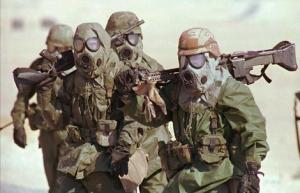
    Soldiers in Gulf War wearing gas masks. Image by Wikimedia

    Soldiers in Gulf War wearing gas masks. Image by Wikimedia.

    This was largely to be expected, and had been anticipated just six months before the conflict in a US military study on the environmental and health risks of DU: “Public relations efforts are indicated, and may not be effective due to the public’s perception of radioactivity. Fielding and combat activities present the potential for adverse international reaction.” Those wishing to continue to use DU weapons recognised that they would need to plan vigorous public relations efforts in order to justify their continued use, a pattern that continues today. Following 1991, this saw DU branded as the “Silver Bullet” – a weapon capable of such astonishing feats, and so militarily important, that any concerns over its potential health or environmental impacts should be disregarded.

    “The most toxic war in history”

    As increasing numbers of veterans began to report post-deployment health problems in the years that followed, attention began to focus on the overall toxicity of the conflict. From oil fires and pesticides, to the use and disposal of chemical weapons, the Gulf War was increasingly viewed as “the most toxic in history”. Whether it was – conflict pollution had been developing in concert with the mechanisation of warfare and industrialisation throughout the 20th Century, or whether this just represented a growing awareness of the linkages between chemicals and health is a matter of debate. Nevertheless, questions were asked about whether possible exposures to a suite of chemicals could be responsible for the ailments reported by veterans. These ranged from birth defects to chronic fatigue, and led to the emergence of the catch all term Gulf War Syndrome (GWS).

    United States troops wearing NBC [Nuclear Biological and Chemical] outfits with a 'wounded' soldier on a stretcher during an exercise before the start of operations in Kuwait, 1991.

    US troops wearing Nuclear Biological and Chemical outfits with a ‘wounded’ soldier on a stretcher during an exercise before the start of operations in Kuwait, 1991. Image by Wikimedia.

    In the decade that followed a number of internal reviews, which were triggered by public concern over veterans, flagged problems caused by the haste to deploy DU weapons. For example, a 2000 review by the US Government Accounting Office found that there had been significant failures in the training policies intended to minimise the exposure of military personnel to DU. It also found flaws in the systems of data collection necessary to determine exposure levels and subsequent health impacts, not only for DU but also for other toxic exposures.

    In the case of DU, it also became clear that scientifically unjustified assumptions had been made about the health risks it posed. These ranged from basic information about the quantity of DU released when targets are struck, to the complex biological responses within the human body when cells are exposed, with the in vitro and animal studies necessary to identify DU’s role in causing cancer only initiated in 2000. For those troops caught in friendly fire incidents, or who returned to, or repaired, DU damaged vehicles, it was clear that the scientific knowledge available on these and other issues was insufficient to answer their concerns about the health risks they faced.

    The clear lesson from DU’s use in 1991 is that far more data is required on the health risks and environmental behaviour of the substances used in munitions before they are deployed. Indeed, such data should be a pre-requisite for determining both the legality and acceptability of munitions prior to their use. In the rush to deploy the weapons, DU advocates found it all too easy to rely on assumptions that were not based on robust scientific evidence. Similarly, the lack of accurate monitoring of other toxic battlefield exposures hampered efforts to determine the cause or causes of GWS among military personnel. The situation was similar to that experienced by veterans from the conflict in south-east Asia, when efforts were made to quantify their exposure to dioxin contaminated herbicides.

    Increasing concerns over the health of Iraqi civilians

    Concerns over the health risks that DU weapons posed to Iraqi civilians took rather longer to emerge but by 1996, reports had begun to circulate from western journalists visiting Iraqi hospitals. Harshly affected by the sanctions regime, which blocked access to basic equipment and medication, medical professionals were identifying changes in the rates and age distribution of certain cancers, and in the prevalence of birth abnormalities.

    Politicisation of the findings by the Iraqi regime, and a disinterest in the humanitarian consequences of the legacy of the 1991 conflict, contributed to a failure to meaningfully address these reports. Yet the problems that the US military had faced in trying to determine the health effects being reported by their own troops during the 1990s also applied for those who sought, and continue to seek, to examine the impact of the weapons on Iraqi civilians.

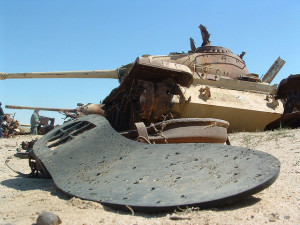
    Sole of shoe at 'Highway of Death' in Iraq, where DU munitions were used to destroy tanks and other vehicles of Saddam Hussein's retreating army in Gulf War

    Sole of shoe at ‘Highway of Death’ in Iraq, where DU munitions were used to destroy tanks and other vehicles. Image by Christiaan Briggs.

    As was the case with military personnel, systems to track and record potential environmental exposures for communities in conflict were, and remain, largely absent. Mechanisms for warning civilians about possible environmental exposures are largely non-existent, in spite of the numerous pollution risks found in contemporary conflicts. Systems to follow up possible exposures in order to determine health effects in the medium to long-term are almost unheard of. What civilian epidemiological or exposure research there is, is often undertaken independently with minimal resources, as a result studies may be temporally or geographically limited, which can leave methodologies open to criticism.

    The new norm?

    The pollution generated in 1991 affected military personnel and public and environmental health across the Persian Gulf area, with smoke plumes travelling 1,600km and oil slicks affecting 440km of coastline, but it was not unique by contemporary standards. The conflict in Ukraine is also thought to have produced significant pollution, due to the fighting taking place in one of the most heavily industrialised regions on Earth. Elsewhere, current Russian and Coalition bombing operations against Islamic State controlled oil facilities in Syria have also caused widespread air, water and soil pollution. This is also likely to be the case for the conflict as a whole, which has seen half of Syria’s housing stock pulverised to rubble and fighting in and around industrial areas. From Iraq, to Libya and South Sudan, isolated and strategically valuable oil and gas facilities are often the targets of choice for militaries and armed groups alike.

    Instability and armed conflicts also degrade the institutional frameworks that safeguard environmental and public health. These forms of degradation can create pollution problems in their own right, for example by limiting governmental systems of oversight or management for industrial or domestic wastes. Institutional damage also reduces the capacity of the State to properly address pollution threats to public health and the environment. Instability can also slow or halt progress towards the implementation of multilateral environmental agreements, be they on waste, water or biodiversity, ensuring that the environmental legacy of armed conflict lasts well beyond the cessation of hostilities. Together with the direct environmental damage caused by conflict, the diminution of environmental governance and institutional capacity has serious implications for the attainment of the environmental dimensions of the Sustainable Development Goals.

    Lessons learned?

    A quarter of a century on from the Gulf War, what have we learned? As anticipated in 1990, DU weapons have not become any more acceptable, with an overwhelming majority of States demonstrating their concerns at the UN General Assembly every two years. This has helped encourage a shift in US policy on their use. Gulf War veterans are still seeking recognition for their illnesses but the experiences from 1991, and Vietnam before it, have helped catalyse progress on the collection of “environmental intelligence” for troops on deployment.

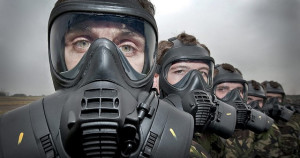
    Gunners of 26 Squadron (Sqn) Royal Air Force (RAF) Regiment based at RAF Honington wearing the GSR10 gas mask during an exercise. Image by Defence Images

    Gunners of 26 Squadron (Sqn) Royal Air Force (RAF) Regiment based at RAF Honington wearing the GSR10 gas mask during an exercise. Image by Defence Images.

    Rather less progress has been made for the civilians living in environments polluted by conflict, and much more could and should be done to gather data on environmental risks and integrate it into humanitarian assistance and public health systems. As for environmental protection in times of war, little has changed since 1991. For that reason Ukraine deserves praise for sponsoring a resolution on the necessity of greater environmental protection and more effective response ahead of this May’s UN Environment Assembly.

    Last year, the Toxic Remnants of War Project completed a study that examined whether a more formalised mechanism of post-conflict environmental assistance could not only help address wartime environmental damage when it does occur, but also help to strengthen norms against the most damaging military behaviours. For inspiration, we looked to the treaties on land mines and cluster bombs but also to the norms and principles established by international environmental and human rights law. Although primarily a think piece, it clearly demonstrated that elements of these systems are readily transferrable to the protection of the environment in relation to armed conflicts – if the political will could be mobilised to address the topic in a meaningful way.

    Building the political will for the systemic change that could overhaul the existing ad-hoc responses to wartime environmental damage, and challenge the weakness of current protection under international humanitarian law is a significant challenge, but if we fail to do so we will be ignoring the lessons from 1991 and from many conflicts since.

    Doug Weir is the Coordinator of the International Coalition to Ban Uranium Weapons and manages the Toxic Remnants of War Project, which studies the environmental and public health legacy of conflict pollution @detoxconflict. The Project is a founding member of the Toxic Remnants of War Network, which advocates for a greater standard of environmental protection in conflict @TRWNetwork.

  • Sustainable Security

  • Sustainable Security