Blog

  • Israel

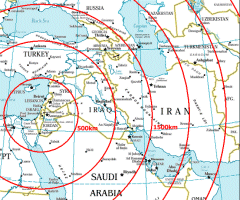
    Excerpt: Most of the international attention on Iran in the second half of 2009 focused on the political turmoil following the presidential election of 12 June. The discussion of Iran’s nuclear capabilities and plans receded from the foreground, though it continued behind the scenes among all the states and international agencies involved. The signs are that, whatever the outcome of the domestic confrontation between the Mahmoud Ahmadinejad regime and the opposition, the coming months will see a sharpening of tension over the nuclear issue. This raises the question of whether there will be a military assault on Iran’s nuclear facilities – most likely by Israel, since there is little likelihood that the Barack Obama administration would countenance direct United States military action against Iran – in an attempt to stop the country from acquiring a nuclear weapon.

    Image: Globalsecurity.org

    Read more »

  • Sustainable Security

    Climate change and human migration are often presented as threats to national and international security. But what is the actual link between these phenomena and conflict?

    Author’s Note: This commentary presents key arguments from the articles Christiane J. Fröhlich (2016) Climate migrants as protestors? Dispelling misconceptions about global environmental change in pre-revolutionary Syria, Contemporary Levant, 1:1, 38-50, DOI: 10.1080/20581831.2016.1149355 (available online here), and Michael Brzoska & Christiane Fröhlich (2015): Climate change, migration and violent conflict: vulnerabilities, pathways and adaptation strategies , Migration and Development, DOI: 10.1080/21632324.2015.1022973 (available online here).

    Climate Change and Conflict

    Dry land near Manatuto. Timor-Leste.By 2025 it is expected that 1.8 billion people will be living in countries with absolute water scarcity, with 3.4 billion people living in countries defined as water-scare. Water scarcity can lead to both drought and desertification as well as instigating conflict in communities and between countries. Sunday 22 March is World Water Day, a day to focus attention on the importance of freshwater and advocate for the sustainable management of freshwater resources. Photo by Martine Perret/UNMIT. 20 march 2009.

    Photo by Martine Perret/UNMIT via Flickr.

    Today, climate change is often perceived predominantly as a security risk. The most common argument behind this train of thought is that many societies’ adaptive capacities will be overstretched by the effects of global warming within the short- to midterm, potentially leading to destabilization and violence, and jeopardizing national and international security in a way that is unprecedented (see WBGU, 2007; UNSC, 2007; UNGA, 2009). One additional concern is that, should the international community fail to adopt an effective and globally coordinated climate policy, climate change may deepen pre-existing lines of conflict on the local, national, inter- and transnational levels. Another worry are conflicts over natural resources, since reduced availability and changes in the distribution of water, food and arable land are considered by some to potentially trigger violent conflicts (Hsiang et al., 2013; Burke et al., 2009). Other hypothesized pathways from climate change to the onset of violent conflict are a deterioration of the governance capacities of formal and informal institutions as well as the increase in horizontal inequality among groups (see Gleditsch, 2012; Scheffran et al., 2012).

    Bringing Migration in

    Very much the same is true for human mobility: Large migration movements have frequently been presented as a threat to national and international security, particularly when crossing into the United States and Europe (see Huysmans 2000; Ceccirulli & Labanca, 2014; Adamson, 2006; Alexseev, 2006; Waever, Buzan, Kelstrup, & Lemaitre, 1993). The underlying assumption is that in a globalised world, states enjoy growing benefits and opportunities stemming from increasing human mobility, but are also threatened by an unknown and equally growing potential for crime, trafficking, drugs and terrorism within these new migratory flows. Therefore, human mobility is framed as a matter of security, leading to what has become known as the ‘migration-security nexus’.

    “Climate Migration”

    With global warming well under way, climate change-induced migration has come to the forefront of such risk assessments (see Myers 1998; Myers 2005; Myers and Kent 1995; Brown 2008; Barnett 2003, Smith and Vivekananda 2007; Boano 2008; Hummel et al. 2012; Warner et al. 2013). The underlying assumed causality is that climate change will engender or exacerbate resource scarcities, which in turn might drive migration as well as conflict. In its first assessment report, for instance, the Intergovernmental Panel on Climate Change (IPCC) warned as early as 1990: ‘the gravest effects of climate change may be those on human migration as millions are displaced by shoreline erosion, coastal flooding and severe drought’. This was the basis for predictions of major conflict in receiving regions both within countries suffering from climate change and internationally. In 2008, the European Commission and the EU’s High Representative for the Common Foreign and Security Policy released a report on climate change and international security in which they stressed that as a result of climate change, ‘Europe must expect substantially increased migratory pressure’.

    But reality is much less linear and simple, and empirical data is scant. The underlying imaginaire, which assumes linear causality between global environmental change and conflict via environmentally-induced migration, contains several misconceptions. Firstly, migration decisions are complex and not determined by environmental factors alone. Scholarship has identified five main drivers for (internal and international) human mobility, namely economic, political, demographic, social and environmental factors, which are deeply interconnected and mediated through socially, politically and economically determined institutions and structures. Secondly, chain migration and migration networks need to be taken into account as factors that guide migration streams in certain directions and not others. Thirdly, there are few systematic studies researching the assumed causality between climate change and migration (Reuveny 2007, 2008; Raleigh, 2010; Raleigh et al., 2010) or between (climate) migration movements and (violent) conflict. In fact, there is very limited evidence for both propositions. Fourthly, it remains disputed how many people will leave their habitat due to climate change: So-called maximalists assume a simple, direct relationship between migration and climate change and thus project comparatively large numbers of environmental migrants. Estimates reach from some 200 million up to 1 billion refugees globally by 2050 (Jacobson 1988; Myers 1997, 2002; Stern 2006). Minimalists, on the other hand, underscore the complex nature of migration decisions and stress the respective society’s vulnerability and adaptive capacity as a major factor for reducing the expected number of climate migrants (Suhrke 1994; Castles 2002; Morrissey 2009; Gemenne 2011, Morrissey 2012 gives a good overview). Fifthly, migration has been identified as a potentially powerful adaptation mechanism with regard to global warming, a view which is not reflected by the simple causality cited above. In a nutshell, the theoretical foundation and empirical support for propositions of a causal linearity between climate change, human mobility and conflict are thin. This does not mean that climate change will be irrelevant for future patterns of migration, including migration that may be linked to conflict. But the links are complex and defy simple and sensationalist conclusions.

    Case Study Syria: A Climate War?

    One case in point is Syria. The Syrian Arab Republic, as most of the Middle East and North Africa, has been suffering from long-term environmental changes linked to anthropogenic climate change. In recent years, a particularly long drought period immediately preceding the beginning of the Syrian uprising has negatively impacted what used to be the breadbasket of the Fertile Crescent, with consecutive crop failures in parts of the country, loss of livestock, the demise of whole villages and a distinct increase in internal migration. This has lead an increasing number of commentators to believe that this “century drought” was at least partly responsible for the timing and intensity of social upheaval in Syria (Werrell, Femia, and Sternberg 2015; Kelley et al. 2015, as well as numerous media contributions, for instance in The Independent and The New York Times. From the United States government to the European Union, from American to European think tanks, this powerful supposed ‘pre-story’ of the Syrian revolution is continuously gaining traction and has even been introduced into the overall discussion of the migration flows to Europe by assuming that the timing and magnitude of the current migration flows from the Middle East to Europe was at least partly environmentally motivated.

    However, the existing studies of this link, while having received a lot of public attention, do not present authoritative evidence on the issue. On the contrary, they overstress environmental drivers of migration while tuning out other factors that influence migration decisions. For instance, the Syrian state only created around 36,000 new jobs per year between 2001 and 2007, with the agricultural sector losing 69,000 per annum, making (un)employment a very serious issue in the Syrian economy and powerful driver of migration long before the drought began. Modernisation, rapid de-peasantisation and slow replacement of agricultural employment with waged work in industry or services in the formal sector had taken their toll on both rural and urban environments before the drought even began.

    Also, macro-economic policies of the Syrian government, which had for decades regulated agricultural crops, worked as economic push factor, too. The state-led system which had been imposed on the agricultural sector in the mid-20th century was characterised by subsidies for farm inputs and fuels, especially for strategic crops such as wheat, cotton and barley. These state-led structures introduced strong dependencies into the agricultural sector that became liabilities when Bashar al-Assad started to deregulate the Syrian economy into what the 10th five-year-plan calls “an open competitive economy”. Parallel to his reforms, an economy that had been based on rents from the oil sector started to give way to demographic pressures, a decrease in oil-production, depleting oil reserves and economic stagnation.

    Socio-political drivers for migration also played a role in pre-revolutionary Syria. The rule of law was ambivalent, state institutions were characterized by manipulation and poor performance, the business environment was extremely fragile, corruption abounded, and Syrian citizens had little to no avenue to participate in political decision-making processes. Power and wealth were being distributed along highly informal but extremely resilient patronage networks. But the decade-old strategy of repressing those who advocated taghyir (change), while at the same time attempting to bind those advocating islah (reform) in patronage networks, began to crumble.

    Finally, the assumed causality between climate change induced migration and social unrest is based on the idea that the migrants were the driving force behind the Syrian uprising. However, orchestrating popular protest requires social networks built on trust and at least some kind of organizational structure (McAdam, McCarthy, and Zald 1996; Tarrow 1998; Diani and McAdam 2003; Chesters and Welsh 2011). There is no evidence that new migrants, who were often living below the poverty line, could initiate large-scale, long-lasting popular uprisings, especially in repressive autocratic regimes like Syria.

    Christiane Fröhlich is Mercator-IPC-Fellow at the Istanbul Policy Center of Sabanci University and Research Fellow at the Institute for Peace Research and Security Policy at Hamburg University. Her research focuses on reasons for migration, with a particular focus on environmental drivers. She has done extensive ethnographic field research on the impact of a prolonged and climate change-related drought period in Syria which immediately preceded the Syrian war. Moreover, she inquires into the role of the Global North for current migration movements from the Global South from a Postcolonial Perspective. In the past, she has worked extensively on water conflicts on the international, national and local levels, as well as on the Israeli-Palestinian core conflict and its role for Middle Eastern geopolitics. She holds a PhD from the Center for Conflict Studies at Marburg University, and a Master in Peace Research and Security Policy from Hamburg University. More information is available at www.christianefroehlich.de
  • Sustainable Security

    Authors note: This short contribution is an updated assessment built on a previous article with free access until end of June 2017, among those chosen by Taylor & Francis to commemorate 25 years since the fall of the Soviet Union: http://explore.tandfonline.com/page/pgas/soviet-union-collapse-25-years-on-post-soviet. Tom Røseth, ‘Russia’s China Policy in the Arctic’, Strategic Analysis, 38.6 (2014), 841–59.

    Russia’s policy towards China in the Arctic is pragmatic and opportunistic, and increased collaboration between the two states is expected.

    Russia is destined to be the most significant player in the Arctic. It has the longest Arctic coastline, vast resources and the prospects of a new trade route. China has recently become a key actor in the Arctic. It has displayed an interest in the resources of several Arctic states, an ambition to utilise the Northern Sea Route (NSR), a strong research agenda on climate change in the region and has a permanent observer status in the Arctic Council. How does Russia welcome Chinese interest, and what kind of Russo-Chinese Arctic relationship should other states prepare for?

    Russia has a dual policy towards China in the Arctic. On one hand, Russia’ Arctic focus contains strong security concerns and a sensitivity to issues of sovereignty, which hamper opportunities with China. On the other hand, Moscow seeks to attract Chinese investments integrated in a strategy to promote the region commercially. In short, international euphoria seen 2007-2012 connected to the Arctic as an energy resource base and effective transit route between Asia and Europe has toned down, seeing little Chinese investments and activity. From a long term perspective, Chinese involvement in Russia’s Arctic is expected to raise, depending on continued retracting ice conditions, oil prices, increase infrastructure development and improve Beijing’s developing relationship with Moscow.

    Russia views its own position in the Arctic as privileged. In the Arctic, it has both a “treasure chamber” in the region’s vast resources, and its strong national security interests are protected by the Northern Fleet. Moscow demonstrated, through its Arctic strategies of 2008 and 2013, that developing its Arctic policy is a national priority, with a focus being placed on resource development, ensuring security and stability, developing the NSR and sustainable development. Through Russia’s geopolitical positioning and active Arctic policies, Asian countries such as China depend on the benevolence of Russia if they seek a role in Arctic affairs. China’s growing interest and Russia’s main role in the Arctic makes it paramount to study their relationship in the region, which, by and large, reflects improved general bilateral relations. Scholars tend to inflate Chinese activities and interests in the Arctic by aggregating positive cases over time. However, Chinese interests and expectations in the Arctic actually peaked under the accession process to the Arctic Council around 2010-2013, and then fell as Chinese actors obtained in depth knowledge of climate challenges, sovereignty issues and the lack of infrastructure, combined with hard-hitting external factors in place since 2014, such as low oil prices and Western sanctions over Ukraine. There are three cases which can be raised to illuminate why Russia’s policies towards China show greater potential for cooperation than conflict between the two powers in the Arctic.

    The grounds for Sino-Russian cooperation

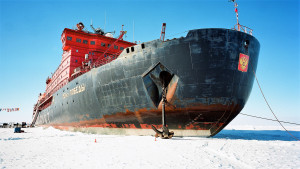
    Image credit: Christopher Michel/Flickr.

    First, Chinese scholars and governmental actors had high expectations on shipping along the NSR, which became more realistic around 2013. Chinese commercial actors on shipping have never really embraced the NSR, and performed only test cases of utilizing the route. Currently, the route is important for Russian national shipments, and has the potential to bring resources out of the area both to the East and West. But as a proper transit route its prospects are still limited. Russian Arctic scholars have voiced disappointment on the low level of Chinese infrastructure investments along the route. China might wish for more unrestricted usage without Russian tariffs and special conditions with strict legislation including the exclusive economic zone, but both Beijing and Moscow have common aims in developing and commercialising the route. Russia sees China as a potential partner for making the route more feasible, as long as Beijing does not challenge Russia’s national interests in controlling and regulating the NSR. At the same time, Russia’s renewed focus on military presence in ensuring its sovereignty and security along the NSR indicates a defensive approach moving beyond commercial preparations, and conveys a strong message that it will balance other states’ security interests in the region.

    Second, in its quest to join the Arctic Council as a permanent observer, Beijing overstated the council’s role. While the council is the main forum for arctic affairs – it is not a decision-making body. After being accepted, Beijing seemed bewildered over what to do next and how to make use of this new-won position, treading carefully to see where it could play a constructive role that coincided with its interests. Under the US-chairmanship, China is well integrated into the council’s workgroups. Russia was reluctant to accept China and other applicants that do not border the Arctic as it may challenge Moscow’s position and make the council ineffective. Moscow changed its stance at the Kiruna meeting in 2013, as Canada suddenly changed to a positive position and Russia could not take the cost of standing alone in opposition to Beijing’s accession. Beijing had reassured Moscow over time that its intentions were not to go against Russia’s interest in the Arctic, made formal as the applicants were bound to adhere to the Arctic regime. Russia and China have since cooperated well in the council, and Russia seeks a constructive relationship in the forum, as long as China confines itself to its limited role as an observer and does not challenge Russian interests. The Russia-West conflict over Ukraine brings implications for intergovernmental cooperation although most states have tried to keep business as usual. China joined in a period where some participating states engaged in strong rhetoric over Ukraine, followed by limited cooperation avoiding sensitive issues in the council.

    Third, on Arctic energy, Chinese participation in the Russian Arctic was initially promising, but is now basically limited to the LNG-project at Yamal. The Chinese National Petroleum Company bought 20 percent from Novatek in 2013, with China’s Silk Road Fund acquiring another 9.9 percent in 2015. Other agreed projects between Russian and Chinese energy companies, especially offshore, have been put on hold awaiting a third western partner or higher oil prices. China has capital, but Western companies are main contenders for participating in offshore projects in the Russian Arctic due to their competencies. With the West’s sanctions, deep-water technology is unattainable. Also, Chinese financing is more complicated, as these often were channelled through western institutions. Arctic energy contrasts at the state-to-state level, where Russo-Chinese energy cooperation has turned strategic with large agreements on the delivery of oil and gas to China. Russia’s limited energy cooperation with China in the Arctic is due to more external factors than reluctance towards working with Chinese companies, as Moscow ideally would seek increased Asian investments, to balance Western influence and secure wider marked access and diversity.

    Conclusion

    By allowing China into the Arctic, Moscow signals a willingness to re-evaluate previous positions as it wants to benefit from greater bilateral issues. This change opens up the potential for increased Chinese activity, investments and co-operation in the Arctic. In moving towards a strategic Sino-Russian relationship, more co-operation and Chinese activity is to be expected in the Russian Arctic, as long as China is a proponent of commercial opportunities and does not challenge perceived Russian national interests in the Arctic. Sino-Russian co-operation in the Arctic through shipping, energy projects and investments in infrastructure will incrementally lead Beijing to seek more influence in Arctic matters as it is more affected by it. China’s economic rise might eventually give Beijing leverage over Russia on Arctic matters, as Moscow would become more dependent on Chinese capital and activity to make the region develop. Generally, Russia is initiating a constructive stance on Chinese economic interests in the Arctic, but takes great care in promoting its security interests. Russia’s approach towards China is first and foremost pragmatic, as no special treatment is given to Chinese actors in the Russian Arctic. Russia needs assistance to develop its Arctic and an eastward diversification is opportune both for political support on international issues and economic opportunities. There is therefore a duality in Russia’s China policy in the Arctic, between restrictions connected to security concerns and openness due to commercial interests, which Moscow needs to sort out before embarking a proper strategic relationship with China in the Arctic.

    Tom Røseth is an Assistant Professor at the Defence Command and Staff College, Norwegian Defence University College. His main research areas are Russo-Chinese relations, Arctic security policies, intelligence studies and Russian foreign policy.

  • A new security paradigm: the military climate link

    SustainableSecurity.org Associate Editor Professor Paul Rogers’s latest article for openDemocracy highlights the fact that many leading military analysts in the United States are increasingly alert to the link between security and climate change. If, at the same time, these analysts could expand their view of whose security is at risk, the policy consequences could be immense. 

    Read the full article here.

  • US Military

    SustainableSecurity.org Associate Editor Professor Paul Rogers’s latest article for openDemocracy highlights the fact that many leading military analysts in the United States are increasingly alert to the link between security and climate change. If, at the same time, these analysts could expand their view of whose security is at risk, the policy consequences could be immense.  Read more »

  • Sustainable Security

  • Sustainable Security

    One year after violent conflict began, information is now emerging on the specific environmental impact of war in Ukraine’s highly industrialised Donbas region. Although obtaining accurate data is difficult, indications are that the conflict has resulted in a number of civilian health risks, and potentially long-term damage to its environment. In order to mitigate these long-term risks, international and domestic agencies will have to find ways to coordinate their efforts on documenting, assessing and addressing the damage.

    The environmental legacy of conflict and military activities is rarely prioritised in post-conflict response, in spite of the short and long-term impact of damage on civilian health and livelihoods. At times relationships between incidents and harm may be complex, often requiring detailed and lengthy analysis. Warfare in highly industrialised areas has the potential to generate new pollution incidents and exacerbate existing problems; the conflict in Ukraine has done both, as well as damaging the area’s natural environment.

    The chronology of the Donbas conflict is widely accessible and there is no need to repeat it here. More important is the current uncertainty. With the signing of the second round of Minsk agreements in February 2015, hope re-emerged that a peaceful solution might be possible. For the moment the truce is holding but remains fragile. Should it collapse, it is likely that new and grave risks to the region’s people and environment will emerge.

    Scope of environmentally damaging incidents

    Prior to the outbreak of the war, more than 5,300 industrial enterprises were operating in the pre-war Donetsk and Luhansk oblasts (provinces). Damage to the region’s industry is widespread, and ranges from direct damage to industrial installations, to enterprises simply stopping production because of the lack of raw materials, energy, workforce or distribution channels.

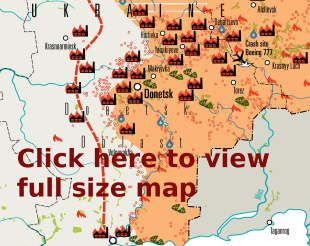
    A map produced by Geneva’s Zoi environment network and the East Ukraine Environment Institute based on official information, media reports, assessments and interviews shows environmental damage in the region. Click here to view full size map

    It is this disruption of the region’s industry that is likely to be primarily responsible for the environmental side-effects of the conflict. In some cases, the disruption has led to accidental releases of pollutants from shelled or bombed facilities. In others, facilities have been forced to shift to more polluting technologies that have impacted regional air quality. Among dozens of facilities damaged by fighting are the Zasyadko coal mine, a chemicals depot at Yasynivskyi, coke and chemical works in Makiyvka, the Lysychyansk oil refinery, an explosives factory at Petrovske and a fuel-oil storage facility at Slavyansk thermal power plant.

    Coal mining has been the backbone of the economy of the Donbas region since the nineteenth century. With the intermittent collapse of the electricity supply across the entire conflict area, ventilation systems and water pumps in coal mines failed, resulting in the release of accumulated gases after ventilation restarted. The often irreparable flooding of mines not only damages installations but also waterlogs adjacent areas and pollutes groundwater. At the time of writing, permanent or temporary flooding has been reported at more than ten mines, yet due to the lack of uninterrupted monitoring and fieldwork to assess the damage, the exact extent of the risks to environmental and public health is unclear.

    The Zasyadko mine in Donetsk used to produce 4 million tonnes of coal annually and was one of the region’s economic flagships. A release and explosion of methane in March 2015 killed 33 of the 200 miners underground at the time. Even though this was not the first such accident at the mine (it is considered among the most lethal in the area’s risky mining industry), the chair of the mine’s board attributed the incident to heavy shelling at nearby Donetsk airport, where fighting continued until late January 2015.

    There have been numerous media reports about war damage caused to Donbas’ water supply, including in and around Luhansk and Donetsk – cities that had a combined pre-war population of 1.5 million. Repair work to the water infrastructure is still carried out, often under direct fire, but periods of irregular supply are common. Less well documented is the impact of the conflict on drinking water quality but one can reasonably assume widespread deterioration as a result of the disruption.

    At the moment, relatively little is known about the direct chemical impact of the war on the environment and people. Limited sampling by the Ukraine-based NGO Environment-People-Law confirmed the expected range of some ‘war chemicals’ from the use of conventional weapons in impact zones. Similarly, large quantities of damaged military equipment and potentially hazardous building rubble will require disposal. The Ukrainian Ministry of Defence also raised concerns that depleted uranium weapons may have been used in the fighting around Donetsk airport, and proposed to determine whether this was the case when conditions allowed.

    The region’s nature has also suffered. Already prone to fires because of the dry summer climate, steppes and forests have burnt more often than would have been expected. According to an as yet unpublished analysis of NASA satellite data, the Eastern European branch of the Global Fire Monitoring Centre showed that in 2014, the incidence per unit area of forest and grass fires in the Donetsk oblast was up to two to three times higher than in the surrounding regions of Ukraine and Russia.

    The conflict has also damaged the region’s numerous nature protection areas, from armed groups occupying their administrative buildings to the impact of fighting and the movement of heavy vehicles within nature reserves. The restoration of large tracts of agricultural and other land for normal cultivation and use will require considerable effort too, and will be complicated by the presence of new minefields and unexploded ordnance.

    Challenges in determining the extent of damage

    The prevailing media narrative over environmental damage from the conflict has sought to link it directly to the fighting, but the information currently available is too fragmented to fully confirm the extent of the relationship. Such simplifications can also mask the indirect effects of warfare on environmental quality.

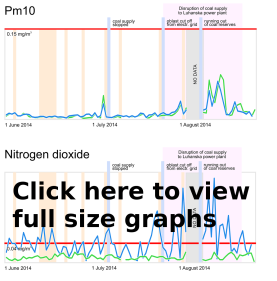
    Graphs produced by the East-Ukraine Environment Institute shows a decrease in air quality in eastern Ukraine in summer 2014. Click here to view full size graphs

    As is common for armed conflicts in heavily developed areas, a large proportion of the pollution impact may not come directly from the fighting but from damage to industrial infrastructure and to the disruption of everyday economic activities. A good example from the Donbas region can be seen in data from its only functioning (until November 2014) automated air quality monitoring station. Located in the town of Schastya in the Luhansk oblast, the data demonstrate that peak concentrations are not obviously associated with periods of combat; instead, they correlate with a reduction in the supply of high-grade coal for the Luhanska power plant in August 2014.

    Coal supplies were first restricted when a bridge in Kondrashevskaya-Novaya was destroyed. Then an electrical substation was shelled, which disconnected the area from the rest of Ukraine’s electricity grid. As a result, the Luhanska power plant, which was responsible for supplying more than 90% of the oblasts’ electricity, was forced to simultaneously increase production while turning to lower-grade coal from its reserve stock. This caused a clear deterioration in air quality.

    Coverage of the conflict has also claimed that the fighting has caused 20 times more wildfires than in 2013. While 2014 had seen more fires in comparison to the previous year, 2013 was relatively wet so this comparison is hardly informative. Assessing the exact area affected by fires in the territories remains difficult and imprecise, requiring the use of more refined data and techniques. The task is further complicated by the fact that forest fire statistics, which would normally be used to verify the findings from satellite data, are not being collected at the moment as the conflict has rendered large areas unsafe for ground surveys.

    What next?

    In spite of the fragile Minsk agreement, the half-frozen conflict continues. At present it is impossible to predict whether further damage will be wrought on the people and the environment of Donbas. Insecurity continues to impact basic environmental governance on both sides of the line of contact, while cooperation across the frontline, even on urgent humanitarian issues, remains a remote prospect. Therefore expectations for cooperation over environmental issues at the current stage in the conflict are low.

    Based on the available evidence, it is clear that there is great potential for long-term civilian health risks from the pollution generated by the conflict. Efforts to collect systematic data on both pollution and health outcomes should start immediately, as must preparations for remediation. The financial and technical requirements for the comprehensive assessment and remediation of contaminated sites are considerable.

    These are problems common to many conflicts affected by toxic remnants of war and, as the ICRC noted in 2011, consideration should be given to whether a new system that ensures environmental assistance is required in order to protect both civilians and the environment from conflict pollution:

    “given the complexity, for example, of repairing damaged plants and installations or cleaning up polluted soil and rubble, it would also be desirable to develop norms on international assistance and cooperation… Such norms would open new and promising avenues for handling the environmental consequences of war.

    The broader context for the eventual remediation of the environmental damage should include the radical modernisation of the region’s notoriously unsustainable industry, much of which has for years presented direct and grave risks for its environment and people (see Zoi’s 2011 report Coalland). In this way, quite unexpectedly, the highly unwelcome conflict may in the end offer a rare and welcome opportunity to eventually ‘green’ the black and brown coalfields of Donbas.

    This blog was prepared by Nickolai Denisov and Otto Simonett of Zoi environment network together with Doug Weir of the Toxic Remnants of War Project and Dmytro Averin of the East-Ukrainian Environment Institute. The authors thank Serhiy Zibtsev, Victor Mironyuk and Vadym Bohomolov, National University of Life and Environmental Sciences of Ukraine / Regional Eastern European Fire Monitoring Center, for help with the analysis of forest and grassland fires data.

    Zoi environment network is a non-profit organisation in Geneva, Switzerland, with the mission to reveal, explain and communicate connections between the environment and society and a long record of working on environmental issues in and with the countries of Eastern Europe.

    Featured image: A barricade burns in Kiev, Ukraine in January 2014. Source: Flickr | Sasha Maksymenko

  • Sustainable Security

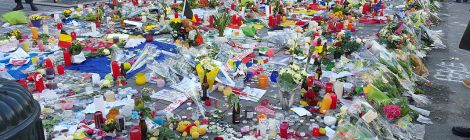
    Another year has confronted us with yet another tragedy in another European Capital – Madrid in 2004, London in 2007, Paris last year – and, most recently, Brussels. The litany of such incidents, augmented by countless other atrocities further afield and perpetrated originally by those claiming connections to Al Qaeda but now eclipsed by similarly asserted affiliations to ISIS, seems set to continue. Accordingly, it makes sense for a publication called Sustainable Security to ask what, if anything, has been sustainable about responses to terrorism worldwide since 9/11?

    After Brussels, many of the usual suspects with connections to the world of security have been wheeled out as usual to offer advice on the need for ever greater scrutiny at airports. But, having made air-side a challenge to reach through a panoply of checks and scanners, it seemed inevitable to those who understood displacement that attacks would simply migrate to the less scrutinised entrance spaces. We could turn these into fortified complexes too – only for the locus of atrocities to move on again – or we could begin to ask more challenging questions of our authorities.

    Of course, none of us wishes to sit next to a deluded individual about to detonate their device on a plane or Metro train. In that regard, security and intelligence gathering are absolutely necessary. But they are clearly not sufficient as, despite the billions spent in hardening private facilities and civic spaces, including transport hubs since 2001, the evidence still serves to remind us that determined individuals – and even a few chancers – will get through. It is simply not possible to secure all of society, all of the time. Prevention – in this sense at least – is far too limited a goal.

    What’s more it has often been the authorities who have ended up ‘doing the terrorists’ job for them’. To call for three days of national mourning after the latest disasters may seem sensitive to those who lost a loved one – but it flies in the face of the rhetoric of resilience and those who claim the need for a rapid return to normalcy. In that respect, the public often display considerably greater courage by determinedly meeting together for vigils in open spaces, whilst the authorities advise against collective gatherings and look to cancel concerts and sporting events.

    Brussels_after_the_attacks_(4)

    Image of Bourse, Brussels after terrorist attacks in March 2016. Image by Romaine via Wikimedia Commons.

    There can never be security solutions to social problems. At best, these conceal the underlying challenges that lie ahead. Worse, operational fixations allow those in charge to evade articulating a broader vision for their societies. This latter aspect shapes both the perpetrators – who appear sometimes to almost drift into becoming radicalised through their being disengaged from a world that offers them (and others) little by way of vision or ambition – and the respondents – who are lulled into a phoney sense of knowing what they are doing and why, when in fact they have little appreciation for, or understanding of, the dynamic they seek to redress.

    In such a situation, it may indeed only be the public who can maintain a modicum of humanity through their determination – albeit unavoidable in most instances – to get on with life. They are also apparently not so readily fooled by the rhetoric of the self-styled ‘jihadists’ who represent no-one and whose actions in the name of Islam most Muslims deplore, nor by the actions of the authorities who, by securitising the world, hope to make their task easier whilst providing themselves with a flimsy – if largely unconscious – sense of purpose in an age when they seem to lack any other.

    But there are others, critical of the authorities, whose narrative and interpretative framework we should be just as critical of and interrogate too. If, as we are often told, alienated individuals in corroded communities in run-down districts have a supposedly understandable sense of grievance – at the racist hostility they encounter, as well as with regards to Western foreign policy – then why is it that not all brought up under such conditions respond the same way, or that the terrorists target civilians, including children as in Lahore, rather than government ministries?

    In the aftermath of the Cold War, security increasingly became represented through the prism of human security whereby the referent for security shifted from the state to the individual and, in particular, the latter’s assumed existential sense of vulnerability. This, in turn, opened the door to securitisation – the possibility that the state and other actors might transform specific problems into security-related concerns in the pursuit of their agendas. Foremost among these have been the securitisation of health and the securitisation of development. So might there now be a securitisation of education too?

    Securitisation allows challenges to be ‘constructed as a matter of national security’, encouraging a demands for perpetual preparedness, constant surveillance and eternal vigilance. It offers unfocused authorities clear actions to engage in, thereby making ‘an uncertain future available to intervention in the present’. This coincides with the rise of risk management that also readily become an organising framework in periods lacking clear direction. Worse, by promoting an emphasis on procedural management through expert knowledge these both disenfranchise people from the possibility of solving their own problems and allows the authorities ‘to become fixated on external threats rather than examining their own internal confusions’.

    Another critical factor here appears to be the race to the bottom that best describes identity politics today. The end of the Cold War, and with it the gradual erosion of the politics of Left and Right that had defined it, left a big gap where collective social discourse, debate and deliberation ought to be. It is this hole in values and vision that the use of identity as a claim on resources – particularly through attempts to define particular groups as being the most oppressed or victimised – has sought to fill. Many campaigners have now learnt to play this game. There is evidence to suggest that today’s terrorists do so too.

    But, rather than challenge such approaches, governments the world over have often indulged the claims and patronised the claimants accordingly. Far better to deal with individuals and groups prostrating themselves to you and making claims for remedy or therapy than having to confront those who are being Bolshie and demanding more. In an age when the authorities are not so sure of whom they are themselves – having sought to disown aspects of their imperialist past to the point of self-loathing and confusion – as well as sensing themselves isolated, it makes for a perfect match.

    While campaigners understandably concern themselves with government moves to introduce a Communications Data Bill – the so-called ‘Snoopers’ Charter’, now renamed the Investigatory Powers Bill – what many fail to recognise is the extent to which such a push from above has been facilitated by erosions to absolute freedom of expression down below. The notion, for instance, that students are vulnerable and need to be protected by the authorities, whilst appearing in the new Prevent Duty, first emerged as the gradual extension of various campaigns for ‘no platform’, ‘safe space’ and ‘trigger warnings’ promoted by Students’ Unions across the UK and US.

    Prevent is an affront to liberty, not least in its infringements on academic freedom, but the notion that everyday social relations are ‘toxic’ and ought to be scrutinised by the powers-that-be is entirely mainstream. This latter has served as a mechanism whereby febrile individuals and institutions, as well as directionless authorities have been able to catch up with the popular mood that fears active engagement and robust exchanges of opinion by playing the ‘victim card’ and looking for protection. Notably, the language is one that presumes a passive, innocent and sponge-like public – young people and others are (it would seem) simply ‘drawn into terrorism’ by those who groom them, thereby diminishing their agency and, inadvertently, absolving them of accountability for their actions.

    At a recent dissemination session I attended relating to the Prevent Duty at which an eager regional coordinator presented upon its trajectory and implications, I was particularly struck by this use of the language of protection. Authorities are merely implementing a ‘duty of care’ we were advised, for people who might be ‘influenced by’ ideology. The notion that it might be the specific role of Higher Education to influence young people, or of the state to inspire us all with ideas, was not countenanced. And, ironically for institutions now driven by the need for so-called evidence-based policies, the positivist ‘what is’ question was replaced by a speculative ‘what if’?

    As I have also noted elsewhere, we were advised that Prevent had now shifted ‘from a moral duty to a legal duty’. In that regards, the presenter, who described themselves (and us) as a practitioner (as opposed to a planner maybe) was at least refreshingly honest. But that we now invoke the law to attempt to prevent terror should alert us more significantly to the failure of the authorities to win the moral argument or to engage their own public. Free speech and privacy are messy matters of course, as is real life. But attempts to shy away from this are worse for us all.

    That is the real challenge ahead – one that no amount of legislation or intelligence and security can by-pass. Academics will continue to debate what the real causes of terrorism today are, as well as how best to address these. In the meantime, the authorities, following the cue of a nervous culture and lacking any coherent vision for society of their own have assumed that they know what to do and are acting accordingly through their enthusiastic practitioners.

    It is what we want for society beyond the terror and our responses to it that really needs debating.

    Professor Bill Durodie is Chair of International Relations and Head of the Department of Politics, Languages and International Studies at the University of Bath. His most recent journal article was ‘Securitising Education to Prevent Terrorism or Losing Direction?’ published in the British Journal of Educational Studies in March 2016. His work focuses on risk, resilience, radicalisation and the politics of fear.

  • Sustainable Security

    Plan Colombia was an initiative aimed at combating drug cartels and left-wing insurgent groups and fostering economic development in Colombia. How effective was Plan Colombia in terms of decreasing drug production, generating economic development and reducing violence?

    In November 2016, the Colombian government signed and ratified a peace agreement with the Fuerzas Armadas Revolucionarias de Colombia (Revolutionary Armed Forces of Colombia, FARC), which officially brought an end to Colombia’s 53-year-long civil war. With this historic step towards peace, it is advisable to analyse and learn from some of the security policies Colombia implemented in the past. In a context where truth, justice and reconciliation are central aspects to achieving a sustainable and durable peace, it is particularly pertinent to look at the country’s largest, most extensive and controversial security, military and development policy programme: Plan Colombia.

    The plan

    The US $7.5 billion policy programme of Plan Colombia, which was implemented between 2000 and 2006, was an initiative to eliminate the production of illegal drugs, end violence, foster economic development and achieve social justice. Backed and financed by the United States and implemented largely during the presidency of the far-right populist Álvaro Uribe, Plan Colombia went well beyond being just a mere national security strategy. It was also an extensive programme borne out of the strong political conviction held by certain policymakers and leaders that Colombia’s security problems could only be solved through increased militarisation and attacks against FARC leaders and commandos (even if it meant risking the violation of international law).

    But what were the exact impacts of this militarised security and development imitative? What effects did the Plan have on reducing violence and illicit drug production in order to achieve development? And what lessons can be learned from the programme for building a society in which peace can be durably sustained?

    Plan Colombia had three main objectives: a) to diminish the cultivation, production and trafficking of illicit drugs by 50%; b) to bring an end to the violent conflict; and c) to spur economic growth and development in rural parts of Colombia that have been historically marginalised.

    The effects

    Image credit: Public domain.

    The policy programme largely failed in all of its three objectives. Despite the allocated US $3.8 billion to eradication efforts, Plan Colombia was only effective in reducing the cultivation coca crops from 160,000 hectares in 2000 to 74,000 in 2006. The intensified aerial spraying, however, did not have any significant effects on cocaine production, which only decreased by 5.3% in the period of implementation. Innovative production processes increased the productivity of coca per hectare and the increased coca supply from Bolivia and Peru provided input-substitutes for Colombian producers of illicit drugs.

    Plan Colombia’s effects on violence reduction were also rather ambiguous: the increased militarisation meant that violence from illegal armed groups decreased substantially over the time of implementation. FARC violence decreased from 489 cases of human rights violations in 2000 to 168 in 2006, similar to paramilitary violence, which went down from 1,191 cases to 510 in the same time span. These decreases in human rights violations by the illegal armed groups, as well as dramatic decreases in some of the main violence indicators, such as the homicide rate (43% decrease), the number of kidnappings (95% decrease) and the number of massacres (71.4% decrease) are arguments for the Colombian and the US governments to call Plan Colombia a success in reducing violence. However, human rights violations of the public forces (military and police) increased substantially from 270 cases in 2000 to 758 cases in 2006. For example, between 2004 and 2008, army troops extrajudicially executed more than 3,000 peasants, farmers, activists and community leaders to dress them in FARC uniforms and claimed they were killed in battle.

    Furthermore and linked to the aerial spraying and the increased human rights violations of the public forces, Plan Colombia caused various unintended costs as it directly led to an intensification of social and economic problems. While the GINI index stagnated at a high 0.59 between 2000 and 2006, the concentration of land ownership increased. In 2000 3.7% of the Colombian population possessed 40.7% of land, whereas in 2009 3.8% owned 41.1%. This is inter alia a result of as well as a factor for continued forced displacement in Colombia, which has increased by an estimated 300,000 internally displaced people per year since the beginning of the implementation of Plan Colombia in 2000. Rural poverty remains a major barrier for development and security with 65% of rural households living in poverty and 33% in extreme poverty without access to viable public services. These continued high levels of inequality, displacement, and poverty in agricultural regions are a major barrier for Colombia’s rural population to break out of the vicious cycle of poverty, dependence on drug income, and violence

    Despite these facts, during his tenure as Minister of National Defence (or “señor de la guerra”) Juan Manuel Santos was one of the main architects of this militarised initiative for peace, security and development, and his policy approach changed dramatically once he was elected president in 2010. His decision to embark on peace negotiations with the FARC also reflects a political realisation that effective security in Colombia cannot be achieved and sustained with a militarised approach à la Plan Colombia. However, while the strategy of the Santos government reflects a major shift in the country’s security strategy, there are many lessons yet to be learnt from the failures of Plan Colombia for the building of a peaceful future Colombia.

    Lessons learned

    Through its aerial spraying and the militarisation strategy, Plan Colombia had its most disastrous effects in geopolitically strategic areas of the country, many of which have been at the epicentre of the decades-long conflict such as the structurally marginalized regions of Cauca, Chocó and Urabá in the west and Putumayo and Nariño in the south. FARC commandos who controlled some of these areas for many years are now demobilising.

    Rather than witnessing a decrease in violence, these areas have experienced a recent spike in assassinations and forced disappearances, as paramilitary groups move in to fill the vacuum left behind by the demobilised FARC. This recent increase in violence is also linked to the historically weak state presence in rural Colombia. And the killings of community leaders, peasants and civil rights activists (35 since the beginning of the implementation process) are significantly diminishing chances of a secure and durable peace for Colombia.

    However, a call for a stronger presence of the state is oversimplified and misleading, as it disregards the lessons that need to be learnt from the failures of Plan Colombia – which after all was a state-driven strengthening of the military and its presence in these areas. Human rights violations of the military and the continued close ties between sections of the public armed forces and paramilitary groups make those who have been at the receiving end of violence suspicious of the state-backed security measures.

    Instead, security policy efforts should focus on supporting community organisations that for years have been building demilitarised spaces, such as Peace Communities or Comunidades de Paz, in which peasants, social leaders, indigenous communities, female and LGBT+ activists protect themselves from state, guerrilla, and paramilitary violence. As such, the current government faces the great challenge to go from fighting an enemy to protecting its most marginalised citizens who have turned away from the state in the search for security and peace.

    However, the challenge to achieve a sustained peace goes beyond the state’s capacity to provide protection. Much of the past failures to achieve increased security and peace (including Plan Colombia) are linked with structural failures to achieve wider socio-economic changes in Colombia. For too long, illegal armed groups, marginalised communities and peasants have relied and continue to rely on incomes of the illicit drug industry. Particularly in rural parts of the country where Plan Colombia’s aerial spraying of coca and poppy plants also heavily affected farmland for licit crops, the illicit economy remains the only viable option. This is particularly true given that the monthly minimum wage in Colombia is only 737,717 pesos (US $250), which is less than half of the average income of farmers working for the drug cartels and paramilitary groups (which is estimated at 1.8 million pesos/US $620 per month).

    And while the current peace treaty to some extent focuses on creating new markets and supporting farmers in marginalised areas, these plans for investments in many cases have been nothing but empty promises. The failure to commit to investment in farmland, fisheries, and infrastructure and to provide basic services of water, healthcare and education has recently resulted in new tensions between state forces and striking citizens.

    Conclusion

    Amid various struggles for a swift and thorough implementation, the current peace treaty truly represents a positive shift away from past militarised strategies for peace and security. However, the current situation following the ratification of the peace deal shows that the disastrous militarisation strategy Plan Colombia has left the country a painful aftermath. In order to break out of the vicious cycle of underdevelopment, dependence on drug income, and violence, Colombia needs a structural economic and social development plan that commits to long-term investments in infrastructure and basic services, that creates decent and well-paid jobs in the licit economy, and that provides security for communities and farmers who are being persecuted and killed by paramilitary groups.

    Tobias Franz is a postdoctoral researcher at the Centro Interdisciplinario de Estudios sobre Desarrollo (Interdisciplinary Centre for Development Studies, Cider), Universidad de los Andes, in Bogotá, Colombia. He holds a PhD in Economics from SOAS, University of London. His research focuses on the political economy of growth and development in Latin America, with a particular emphasis on institutions and organisations underpinning national and sub-nation economies in Colombia. His recent publications include Plan Colombia: illegal drugs, economic development and counterinsurgency – a political economy analysis of Colombia’s failed war (Development Policy Review) and Urban Governance and Economic Development in Medellín: An “Urban Miracle”? (Latin American Perspectives).

  • Why Here, Not There? Investigating emerging nonviolent movements

    The International Peace & Security Institute (IPSI), in collaboration with The Johns Hopkins University School of Advanced International Studies (SAIS) Conflict Management Program, hosted a high-level panel discussion and networking reception on Wednesday, August 17.  The event, “Why Here, Not There? Investigating emerging nonviolent movements,” examined the dynamics that enable nonviolent movements to occur in some regions and not others at specific moments in time.  The event was broadcast live nationwide and on the internet by C-SPAN.

    Watch the video here: IPSI

    Image source: Al Jazeera English