Blog

  • Sustainable Security

    From Surveillance to Smuggling: Drones in the War on Drugs

    In Latin America drones are being used as part of the War on Drugs as both regional governments and the US are using surveillance drones to monitor drug trafficking and find smuggling routes.. However, as drones are increasingly being used by drug cartels themselves to transport drugs between countries, could Latin America find itself at the forefront of emerging drone countermeasures?

    Read Article →

  • World Not Prepared for Climate Conflicts

    Accelerating climate change and competition for limited supplies of water, food and energy are poised to ignite long-simmering conflicts in fragile states, monopolising the world’s military resources and hampering development efforts, security experts say.

    Defusing these new 21st century conflicts – or at least preparing governments and citizens to cope with them – will require a broad range of innovative interventions, a gathering at Britain’s Department for International Development (DFID) heard earlier this month.

    Mitigation measures include borrowing business risk-management strategies, getting military officials to talk publicly about the constraints they face, building capable institutions in unstable countries, and ensuring billions in climate aid go to the right places and aren’t lost to corruption, experts said.

    Putting the right strategies in place will require bringing together disparate groups – economists, military strategists, aid workers – and working out fresh approaches to the emerging problems, they said.

    Climate change and resource scarcity are “setting a new challenge that we are not very good yet at handling”, said Dan Smith, secretary general of International Alert and one of the organisers of the “Dialogue on Climate Change, Conflict and Effective Response”.

    In Yemen, for example, severe water shortages – the result of water mismanagement and changing climatic conditions – are hurting crop production and feeding into growing political strife that could unseat longtime ruler, President Ali Abdullah Saleh, and even break the country apart.

    The pressures have important military implications, not least because Saleh has cooperated with Washington to dismantle an arm of Al Qaeda in Yemen, and because food and water shortages appear to be contributing to recent violence.

    TIPPING POINTS

    Worsening climate impacts and resource shortages could similarly aggravate simmering conflicts from Pakistan to fragile regions like the Niger River basin, which includes parts of Mali, Niger and Nigeria, said Smith, whose independent organisation works on peace and conflict issues.

    “Twenty-first century conflict will be different from 20th century conflict, and our institutions are set up for 20th century conflict,” he warned.

    One problem with dwindling resources, experts at the discussion noted, is that they push countries to put their own needs first, making them less likely to cooperate with neighbours and more likely to conflict with them. Resulting political tensions make international institutions less effective, just when they are most needed to tackle international problems like climate change.

    Another problem countries face is growing uncertainty stemming from climate change. There could be potential “tipping points” that threaten to abruptly increase sea level or global temperatures, or wipe out food crops, forcing up prices.

    Countries – particularly fragile ones – need to develop greater resilience and capacities to deal with unexpected problems, the security experts said. That usually involves things like creating state institutions that work and giving people new skills.

    “Understanding how to strengthen national institutions is crucial,” said Neil Bird, a researcher on environmental policy and international funding mechanisms at the London-based Overseas Development Institute.

    ‘CLIMATE FINANCE ORPHANS’

    But money to help countries prepare – including a planned $100 billion a year for climate-vulnerable nations by 2020 – could miss those that need it most precisely because they don’t have capable institutions in place to handle the funds in a transparent and accountable way.

    Fragile states could end up as “climate finance orphans”, Bird warned.

    Addressing all these looming problems will require a high degree of innovation, as well as input from diverse fields, the experts said. Business people and market traders, for instance, are usually good at assessing risk and hedging things like commodity prices – skills politicians and others may need to adopt too.

    Persuading military officials to “tell the world what they cannot do, even if they have a gazillion-pound defence budget” may also be useful, Smith said. They may be best placed to explain how spending on climate mitigation and adaptation could be cheaper and more effective than trying to control resource-driven conflicts or large-scale environmental migration further down the line, he added.

    Both rich and poor countries have a stake in limiting conflict driven by climate change and resource scarcity, not least because it will likely be costly to lives, budgets and development efforts, the security experts said.

    Climate change, together with associated shortages of food, water and energy, “are one of the gravest threats to our security and prosperity”, warned Sarah Cullum, head of the climate change and energy group at Britain’s Foreign Office.


    This article originally appeared on AlertNet. 

  • Sustainable Security

    RC_long_logo_small_4webThis article is part of the Remote Control Warfare series, a collaboration with Remote Control, a project of the Network for Social Change hosted by Oxford Research Group.

    This article by Esther Kersley, Katherine Tajer and Alberto Muti originally appeared on openDemocracy on 7 November 2014.

    Cyber space is a confusing place. As current discussions highlight the possibility of “major” cyber attacks causing a significant loss of life or large scale destruction, it is becoming harder to determine whether these claims are hype or are in fact justified fears. A new report by VERTIC, commissioned by the Remote Control project, offers some clarity on the subject by assessing the major issues in cyber security today to help better inform the debate and assess what threats and challenges cyber issues really do pose to international peace and security.

    How much of a threat are cyber attacks?

    Cyber attacks have been identified as one of the greatest threats facing developed nations. Indeed, the US is spending $26 billion over the next five years on cyber operations and building a 6,000 strong cyber force by 2016 and the UK has earmarked £650 million over four year to combat cyber threats. This level of investment suggests that states view issues of cyber security as a question of national security. But how much of a threat do cyber attacks pose to national security and how much damage have they caused?

    There is a need for caution when assessing the risk posed to national security by cyber threats. Indeed, although states are heavily investing in cyber security, to date, the majority of cyber incidents that have made the news have not directly impacted a state’s sovereignty, or threatened a state’s survival. For that to happen, an attack would have to significantly affect a government’s ability to control its territory, inflict damage to critical infrastructure or, potentially, cause mass casualties.

    Nevertheless, some notable instances of cyber attacks have had a significant impact on international relations over the past decades. These are ‘Stuxnet’, the cyber attack targeting Iranian uranium centrifuges (allegedly launched by a combined US-Israeli operation), the ‘Nashi’ attacks on Estonian government and private sector websites and web-based services, and the many instances of cyber-espionage that form the so-called ‘Cool War’ currently taking place between China and the US. Furthermore, cyber attacks have also been used as instruments of war in conjunction with conventional military operations, for example during the Russo-Georgian conflict in 2008 and most significantly during in the Israeli air raid against a nuclear reactor facility in Syria in 2007.

    However, to date no attack has led to large scale destruction or fatality, suggesting that the potential for this is unlikely. This is due to the great amounts of technological expertise, material resources and target intelligence required to carry out such an attack. These resources are currently only in the hands of states, that might hesitate in using cyber attacks in such a way, when other means are available. This could of course change, especially if different political actors acquired the necessary means.

    What should we be concerned about?

    This is not to say we have nothing to be concerned about. Although a large scale cyber attack that inflicts mass casualties is unlikely to occur in the near future, cyber activities can still affect civilian lives in other ways. The hyperbolic language used to describe the potential consequences of cyber attacks, combined with a lack of reliable, concrete information on the real risks posed by cyber threats has contributed to the ‘securitisation’ of the debate around cyber security issues. It is feared that this process will lead to possible dangers being overestimated, and vulnerabilities cast as national security threats of immediate concern. States’ reactions to these perceived risks may cause negative implications on both citizens and international peace and security.

    Already we are seeing a potential consequence of securitisation as governments turn to surveillance as a preventative measure against cyber attacks. In addition, the difficulty of attributing cyber attacks, as well as the widespread fear that other countries will constantly engage in cyber espionage, has led some to claim that the ‘cyber realm’ favours the attacker. This, in turn, may lead states to engage in a ‘cyber arms race’, as well as foster a ‘Cool War’ dynamic of continuous attrition and escalation between states. This erosion of trust between states, as well as the diminishing of civil liberties, are two serious concerns with regards to the militarization of cyber space.

    Cyber attacks also pose serious transparency and accountability issues due to the above-mentioned technical complexities of cyber attack attributions, as well as the ambiguous relationship between state and non-state actors (in the ‘Nashi’ attack in Estonia for example, the relation between the youth group responsible for the attack and the Russian government remains an ambiguous one).  The lack of legal clarity in this area is also worrying, meaning attackers will often not face consequences for their actions.

    The only existing international legislation in the field – the Budapest Convention – solely addresses cybercrime and no further issues (such as military use of cyberspace). The Convention also does not have enough support to provide enforcement of its objectives, has no monitoring regime and has not been signed by Russia or China. Furthermore, an attempt to set out ‘rules’ on the legal implications of cyber war – in The Tallinn Manual – found that the complexities of cyber conflict means there are many instances that do not easily adhere to current legislative standards. The speed of technology evolution further hampers drafting of law and international legislation.

    Growth of remote control warfare

    The rise in cyber activities cannot be examined in isolation. Its growth is part of a broader trend of warfare increasingly being conducted indirectly, or at a distance. This global trend towards ‘remote control’ warfare has seen an increasing use of drones, special forces, private military and security companies as well as cyber activities and intelligence and surveillance methods by governments in the last decade.

    Indeed the global export market for drones is predicted to grow nearly three-fold over the next decade, and a broader range of states are now using drones, including France, Britain, Germany, Italy, Russia, Algeria and Iran. The US has more than doubled the size of its Special Operations Command since 2001, and private military and security companies are playing an increasingly important role in both Afghanistan and Iraq, with over 5, 000 contractors employed in Iraq this year.

    The idea of countering threats at a distance, without the use of large military forces, is a relatively attractive proposition as the general public is increasingly hostile to ‘boots on the ground’. However, the concerns highlighted in this latest report with regards to cyber activities are echoed in all ‘remote’ warfare methods as their covert nature means there are serious transparency and accountability vacuums. As well as this, wider negative implications have been identified where these methods are in use, from the detrimental impact of drone strikes in Pakistan to instability caused by special forces and private military companies in Sub-Saharan Africa. The militarisation of cyber space is part of this growing trend and, like these other new methods of warfare, increased transparency and accurate information is essential in order to assess the real impact they are likely to have.


    Esther Kersley is the Research and Communications Officer for the Remote Control project of the Network for Social Change. The project, hosted by Oxford Research Group and affiliated with its Sustainable Security programme, examines changes in military engagement, in particular the use of drones, special forces, private military and security companies, cyber warfare and surveillance.

    Katherine Tajer is a Research Assistant for the Verification Research, Training and Information Centre (VERTIC).

    Alberto Muti is a Research Assistant for the Verification Research, Training and Information Centre (VERTIC).


    Featured image: The command line environment in MS-DOS. Source: Flickr. Available under Creative Commons v2.0.

  • Sustainable Security

  • Sustainable Security

    In January 2016, the government of Honduras and the Organization of American States (OAS) formalized the creation of a new international organ to help fight corruption in this country. The Mission of Support Against Corruption and Impunity in Honduras (MACCIH, in the Spanish acronym) is a welcome step. However, it is very early to estimate whether it will be able to make a positive contribution to solving the daunting challenges facing justice and security in this country.

    Honduras experiences what can be called a “perfect storm” of interrelated problems: violence perpetrated by diverse actors (gangs, drug traffickers); human rights abuses, in the context of a steady militarization of public security; impunity; corruption at the highest institutional levels, and widespread poverty and inequality. For years, it has been the most violent country in the world, with an average rate of 90 homicides per 100,000 people according to estimates by the UN Office on Drugs and Crime and the World Bank, which is significantly higher than the international average intentional homicide rate of 6.2 per 100,000 people.

    Gangs, Drugs, and Corruption

    Honduras, like El Salvador and Guatemala, has a serious problem with gangs. These are territorial groups involved in extortion and other crimes, exerting social control and who are connected to other criminal actors. The prevailing narrative from politicians and the media puts the blame of violence on the gangs, whose members are highly stigmatized as a result. Different governments have adopted iron-first and militarized approaches to deal with them. Casa Alianza, a charity that works and campaigns for the rehabilitation and the defence of street children, has documented that even children become victims of extrajudicial executions, carried out by death squads sometimes linked to the security forces. In January 2016, Casa Alianza denounced a monthly average rate of 81 children victims of extrajudicial executions.

    makarinfotos

    Image of Mara Salvatrucha gang member by markarinafotos.

    However, the figures of homicides attributable to gangs are highly disputed, and national and international actors diverge in their interpretations about the share of responsibilities for violence. This is a strategic corridor for drug trafficking, and the local markets are growing. According to the OAS, around 70% of homicides are perpetrated by drug cartels involved in wars for the control of routes, sometimes using gang members and youth as sicarios (a Spanish term for hit men). By January 2014, estimates were that 87% of the drug planes heading from South America to North America passed through this country. Transnational groups, especially from Mexico, have established bases here. Then, there are local groups and transportistas (carriers), contracted by the cartels and connected to Honduran political and economic elites, including land owners and mayors.

    In 2012, when the news about the gang truce in El Salvador spread throughout Central America, the Honduran gangs explored the possibility of starting a similar process. In May 2013, they delivered their first public statements from jail, announcing that they would stop violence in exchange for a series of demands. This was the first public event of a process accompanied by the Bishop of San Pedro Sula, Rómulo Emiliani, and the Secretary of Multidimensional Security of the OAS, Adam Blackwell.

    Dialogue never advanced for many different reasons, including the decentralized nature of the Honduran gangs (that makes it difficult to enforce discipline among the ranks), the lack of political maturity of their leadership, and the weak legitimacy of a government that had emerged from the 2009 coup d’état,. But Bishop Emiliani had warned, from the beginning, that even a successful truce could never emulate the sudden drop of homicides of El Salvador, where the daily rate plummeted from 14 to 5. n Honduras, he warned, the range of actors involved in violence for different purposes is extensive, and the balances of power among them very distinct from those of the neighbour country.

    It is worth remembering that in the 80s, amidst the wars that ravaged Central America, the Honduran territory was used for drug and arms trafficking with the aim of supporting the US allies in these wars, among them the Contras, who fought against the Sandinista government in Nicaragua. The illicit networks and connections created have survived well after these conflicts ended, including in sectors of the elite and security forces. Interpeace states that this is the country with more denounces of complicity between police members and illegal actors for the commission of crimes.

    Militarization as a Response

    President Juan Orlando Hernández, who took office in 2014, has followed others by trying to respond to these threats with an iron first strategy of crime suppression. But he has elevated the militarization of law enforcement to new levels. The military is now in charge of most aspects of public security.

    The most prominent example is the creation of the Military Police of Public Order (PMOP), which currently has around 3,000 soldiers deployed throughout the country. A special law has been approved to prevent the Attorney General’s Office from investigating and prosecuting their potential abuses. It is the National Council on Defence and Security, under the control of the Armed Forces, who appoints judges and prosecutors for that role. The resources for the PMOP are collected through a security tax and allocated through a classified and ultra-secret budget.

    Another emerging actor is FUSINA (Fuerza de Seguridad Interinstitucional), a task force composed of representatives of different security units. Led by the military, and with no formal status as an agency, FUSINA manages various bodies and organs, such as an anti-extortion unit that controls phone intercepts. Added to this is the US-backed Special Comprehensive Government Security Response Unit (TIGRES), a SWAT-style militarized police force.

    Militarization takes place in the streets and also in the top-down institutional structures, with more military in charge of security positions, including the Security Ministry that has power over the armed forces and the police. The military also controls the penitentiary system, with soldiers guarding prisons. The trend is worrying in itself and for the lack of transparency and accountability implied. Civil society groups have denounced a trend that might be bringing the country back to the ‘80s, when the military had extended powers and human rights abuses were rampant, and reversing the efforts to advance civilian power during the 90s.

    On the other hand, the national police experienced only limited reform in the past and are often accused of corruption and complicity in crime. Recently there have been limited purges of corrupt officers, but the situation could get even worse as they receive less equipment, salaries, and benefits than the PMOP. The priority given to the military threatens the feasibility and viability of a much-needed profound transformation of the police forces.

    There have been some successes in the fight against drug trafficking, such as the dismantlement of the leadership of the crime organization Los Valle while Los Cachiros surrendered to US authorities. The head of operations of the Sinaloa Federation, who operated from San Pedro Sula, has also been captured. But efforts to cut the links of powerful elite sectors with narco-trafficking and crime have been far less evident despite the US efforts in this matter. The US Treasury Department has included some of them in their “kingpin list”, including the Rosenthal family, one of the most influential in the country. Jaime Rosenthal, former vice-president and head of an economic conglomerate, has been asked for extradition on charges of money laundering.

    Corruption Shocking the Country

    In 2015, a corruption scandal shook the country. Members of the President-related Liberal Party diverted more than 335 million dollars from the Institute of Social Security, at least in part to fund the party’s electoral campaign. Citizens protested for months in the streets of Tegucigalpa, the nation’s capital, and other cities against corruption, impunity, and human rights abuses. They claimed for the President resignation and asked for international support to fight corruption, through an initiative similar to the International Commission to Combat Impunity in Guatemala (CICIG), which has achieved significant results including the case against President Otto Pérez Molina on corruption charges.

    The Mission Against Corruption and Impunity in Honduras (MACCIH), tasked with “the prevention and fight against corruption and impunity in the country”, is now a reality and could be accompanied by a permanent UN human rights monitoring mission in Honduras. The MACCIH shares some similarities with the CICIG. Both are hybrid agencies, international and domestic, but composed by international civil officers accountable to international organs (the UN, and the OAS). Both are tasked with the fight against corruption and impunity with the hope of bringing justice where the national counterparts cannot for different reasons (pressures, corruption, lack of resources).

    The MACCIH is expected to include independent judges and prosecutors to supervise and support their national counterparts, promote a review of the effectiveness of the public security system, create a civil society observatory to evaluate progress and a role for the Justice Studies Centre of the Americas in proposing legislation reform. But their powers will be more limited than those of the CICIG, which can initiate and conduct criminal proceedings against anyone without approval of the national authorities.

    The MACCIH can promote transparency and reforms, but much will depend on the political will to follow and implement (instead of resisting) its recommendations and proposals. National and international voices have questioned whether it will have enough power to fight effectively institutional corruption. Honduran elites will probably resist any effort directed at reform and accountability. In April 2015, the investigator that uncovered the ISS corruption scandal received death threats and had to flee the country. And the former head of the National Commission for the Fight Against Drug Trafficking, Alfredo Landaverde, was shot dead days after condemning the links between police and organized crime.

    With all those factors in mind, it becomes clear that repressive iron first policies and militarization cannot substitute the fight against illicit networks, corruption and impunity, nor the effort towards institution building, particularly in the rule of law and justice. They have been popular in electoral terms and have received substantial international backing, but are incapable of supressing crime connected to gangs or drug trafficking, and fail to guarantee human security. Furthermore, they do nothing to address corruption at all levels of the state and cut the links between elites and different forms of organized crime. Ivan Briscoe, of the Clingendael Institute, summarized the dynamic as follows: “Informal relationships, money and fear have initiated a vicious cycle of emergency responses, militarization and corruption that only virtuous policies with public backing can replace”. Of course, that will be a long-term endeavor.

    Mabel González Bustelo is a Fellow of the Global South Unit for Mediation (BRICS Policy Centre, Brazil) and author of Mediation with non-conventional armed groups? Experiences from Latin America.

  • Sustainable Security

    International Relations scholars, politicians, religious institutions and religious leaders can no longer debate whether religion is relevant to global or national governance issues and they can no longer afford to ignore the roles and functions of religious identity in many violent and nonviolent conflict areas in the world today. From European to South Asian societies, the headlines are related to the potentially destructive role that religion can play in everyday policy making. Those cases include, but are not limited to, the self-declared Islamic State of Iraq and Syria (ISIS); the civil war in the Central African Republic in which religious identity was thrown into the midst of the political conflict; and the ongoing conflict in Myanmar where religious identity is utilized to justify certain governmental policies.

    The issue that practitioners (policy makers, religious institutions and religious leaders) are really struggling to effectively address is how to understand the interreligious dynamics of conflicts and constructively link this to future policies. The response of policy makers in Europe to the ongoing global refugee crisis represents an important case of the need for further linkages between religious leaders and policy makers. Given that the majority of the refugees are Muslims, how are secular European policy makers going to develop an approach to manage or mediate the inherent difference of cultural and religious Islamic ways of living and do so without stereotyping or inciting violence and exclusion towards refuges?  An even more challenging task is facing policy makers in the Muslim world, especially those in the Middle East where religious and sectarian identities have been systematically manipulated to justify political and even inter- and intra-communal violence with brutal effects. Unlike the European reality, in the Middle East, delinking religious identity and institutions from governmental policies and from justifying wars and certain governance frameworks is the primary needed change. In this context, politicians continuously enlist religious leaders in pursuing their own interests.

    President Barack Obama meets with the Dalai Lama in the Map Room of the White House, Feb. 21, 2014. (Official White House Photo by Pete Souza) This official White House photograph is being made available only for publication by news organizations and/or for personal use printing by the subject(s) of the photograph. The photograph may not be manipulated in any way and may not be used in commercial or political materials, advertisements, emails, products, promotions that in any way suggests approval or endorsement of the President, the First Family, or the White House.

    President Barack Obama meets with the Dalai Lama in the Map Room of the White House, Feb. 21, 2014. (Official White House Photo by Pete Souza)

    Despite their problems grasping the issues, there is a growing agreement amongst policy makers and researchers that engaging religious leaders and institutions in peacebuilding on all levels is crucial to bringing the message of tolerance, pluralism and peaceful resolution of conflicts to communities. However, the research on such tools and techniques is still limited. Most studies continue to focus on the theological bases of peace and harmony in different faith groups (See Abu-Nimer’s 2007 book, Unity in Diversity). There are few studies on the mechanism and tools (design, processes, and evaluation of success) of interreligious peacebuilding which will allow policy makers to engage religious leaders and their institutions in a systematic process of mediation, negotiation, or problem solving to respond to a concrete social or political problem. As result of this shortage in experiences, many interreligious peacebuilding activities resort to the traditional and old models of symbolic and ceremonial representation of religious leaders in policy making circles. For example, a prime minster invites Abrahamic faith leaders to bless his/her new policy towards refugees in a certain area. In most cases such blessings take place outside of areas of worship and in the public secular space. The lack of systematic engagement of religious agencies in such peace processes and the instrumentalization of such agencies in a symbolic way only at the end of the process reduces the capacity of religious peacemakers in their own communities.

    This approach of limited (time and resources) and symbolic engagement with religious identity (via leaders, symbols, rituals, etc.) has been around for centuries: a ceremonial role but not genuine engagement as a serious stakeholder in the conflict (using the cross or holy books as part of the ceremony to celebrate a peace agreement in a conflict situation like Northern Ireland, Palestine-Israel, Mindanao Philippines, etc.). In fact, a similar approach is taken by those who use religion to justify their war plans and violence in general (such as the use of religion for justification of violence in the wars in Bosnia in the 1990s, conflict in Northern Ireland, etc). The selective and partisan hijacking of certain religious values to explain the need to exclude, discriminate, dehumanize the “different other.” In both cases, there is an instrumentalization of the religious identity but not deep and nuanced engagement.

    In current interreligious peacebuilding practices there are genuine efforts to move beyond this instrumentalization and bring a more holistic and integrative approach to engage religious leaders and institutions (See the recent 2015 report on CVE). Such trends can be vied in the most recent revisions of the American White House Summit responding to countering violent extremism (CVE) in which a strong call for a community based approach is an integral part of the CVE efforts; the KAICIID campaign, “United Against Violence in the Name of Religion”; Network of Religious and Traditional Peacemakers (launched by Finn Church Aid, Religions for Peace, KAICIID, USIP, OIC, etc.).

    The Main Challenges Ahead

    In spite of such efforts, there are still number of core challenges and potential pitfalls that face the field of interreligious peacebuilding in its development as a recognized field of researchers and practice, these include the following:

    • First, there is the western post Industrial Revolution framework that endorses the cultural assumption (some argue myth) that religion and faith can and should be left outside of public spheres. Thus, bringing faith into academic institutions becomes a major struggle and threatens the foundation of its knowledge generating paradigm. This assumption that dealing with religion and faith is a private matter that ought to be compartmentalized to the Sociology of Religion or Theological Studies has obstructed many international relations and political scientists from systematically exploring the complex relations between religion and peace and war.
    • Second is the assumption that conflicts and their causes reside primarily with material resources and not religion (identity or ideology). Such assumptions can lead many researchers and practitioners to dismiss or underestimate the role that religious identity and ideology can play in both triggering and sustaining conflict, as well as peace. There is no doubt that religion plays a complex and to some extent unique role in many conflict dynamics and outcomes. However, many aspects of this role are similar to other identity-based conflicts in which the stakeholder’s identity is deployed in the process of conflict escalation and de-escalation. Ethnicity, culture, race, gender, and sexual orientation are identities that have also been linked to conflict and violence, often through aggressive parties employing dehumanizing framing of an ‘other’, and there are many studies in both social science and the humanities that have explored the links between these identities and conflict and peace (see From Identity-Based Conflict to Identity-Based Cooperation, edited by Jay Rothman; and Ashmore, Jussim and Wilder of Rutgers University’s Department of Psychology’s publication: Social Identity, Intergroup Conflict, and Conflict Reduction).  The study of interreligious peacebuilding can draw on this wealth of research on conflict and identity and develop its own analytical frameworks and practices (R. Scott Appleby addresses religious identity and documents many of these the conflicts in his book, The Ambivalence of the Sacred: Religion Violence and Reconciliation).
    • Third, resources and support by professional organizations, donors, religious leaders and institutions are limited due to the above perceptions and biases. Thus many interreligious analysts and practitioners are rarely invited to the table as recognized and credible actor or agency who can contribute to the processes of peace or policy managements.
    • The fourth challenge is understanding that religious peacebuilding is not the ultimate solution for all social and political problems in any given society, since religious identity and its manipulation is rarely the main cause of the violence in any conflict situation. In such cases, we should relate to interreligious peacebuilding agencies as serving a complementary role in a wider range of peacebuilding efforts carried out by many other peace agencies (such as media, educators, business sector, civil society, etc.) (See Abu-Nimer)

    Conclusion

    Despite the above challenges, the field of religious peacebuilding has been growing and gradually recognized by policy makers and donors as an important agency to engage with. Also, it is important to recognize that interreligious peacebuilders have been able to create significant progress in relief, development and aid. Faith based Organizations (FBOs) have illustrated that through interreligious cooperation they can significantly contribute to eradication of malaria in West Africa, provide relief to Tsunami victims in Sri Lanka and Indonesia, and fight hunger and poverty around the world in many local communities; and NIFA, a Nigerian interfaith organization that launched a campaign to eradicate malaria; also see the recent International Partnership on Religion and Sustainable Development (PaRD), a network for linking development and religion, which was launched by the German Federal Ministry for Economic Cooperation and Development.

    Nevertheless, the field of interreligious peacebuilding still has a long road ahead in terms of its research and study agenda, especially in producing empirical research that articulates the detailed processes, conditions and dynamics in every conflict and that lead certain communities to be easily mobilized through their religious identities (symbols, rituals, and institutions) to endorse violence or peace.

    Mohammed Abu-Nimer is Senior Advisor Interreligious and Intercultural Dialogue Center (KAICIID); and Prof. of Peace and Conflicts Resolution, American University, Washington DC.

  • Sustainable Security

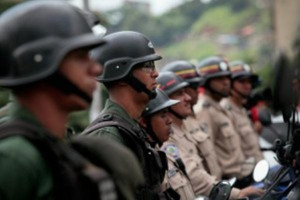
    Militarised Public Security in Latin America in Venezuela

    Across Latin America, governments are sending their militaries into the streets to act as de facto police forces in the face of disproportionally high crime and violence rates. This trend has been going on for several years, but has accelerated in 2013. With the move to deploy over 40,000 troops for citizen security in Venezuela, President Nicolás Maduro joined a growing list of leaders throughout the region that have relied on their militaries to carry out police duties. In the first of our two-part discussion ‘Countering Militarisation of Public Security in Latin America’, Sarah Kinosian discusses the conditions that are causing the trend to thrive.

    Read Article →

  • Sustainable Security

    by Elizabeth Minor, Researcher at Article 36

    RC_long_logo_small_4webThis article is part of the Remote Control Warfare series, a collaboration with Remote Control, a project of the Network for Social Change hosted by Oxford Research Group.

    Later this month, governments will meet in Geneva to discuss lethal autonomous weapons systems. Previous talks – and growing pressure from civil society –  have not yet galvanised governments into action. Meanwhile the development of these so-called “killer robots” is already being considered in military roadmaps. Their prohibition is therefore an increasingly urgent task.

    From 13-17 April, governments will meet at the United Nations in Geneva to discuss autonomous weapons – also referred to as killer robots. The week-long meeting will be the second round of multilateral expert discussions on “lethal autonomous weapons systems” to take place within the framework of the United Nations’ Convention on Certain Conventional Weapons (CCW).

    Urgent and coordinated international action is needed to prevent the development and use of fully autonomous weapons systems. Such systems would fundamentally challenge the relationship between human beings and the application of violent force, whether in armed conflict or in domestic law enforcement. Once activated and their mission defined, these systems would be able to select targets and carry out attacks on people or objects, without meaningful human control. As states with high-tech militaries such as China, Israel, Russia, South Korea, the UK, and the US continue to invest in aspects of increased autonomy in weapons systems technologies, consideration of this issue is increasingly urgent. Campaigners are calling on states to tackle this issue by developing a treaty that pre-emptively bans these weapons systems before they are put into operation, by which time it may be too late.

    The issue

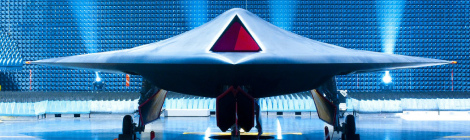
    Taranis stealth UAV

    The UK’s Taranis stealth UAV. The Taranis exemplifies the move toward increased autonomy as it aims to strike distant targets “even on other continents”, although humans are currently expected to remain in the loop. Source: Flickr | QinetiQ

    Weapons systems that do not permit the exercise of meaningful human control over individual attacks should be prohibited, due to the insurmountable ethical, humanitarian and legal concerns they raise. The governance of the use of force and the protection of individuals in conflict require control over the use of weapons and accountability and responsibility for their consequences. This principle, rather than any particular piece of technology or format of weapons delivery, is at the heart of the issue of autonomous weapons systems. Some have argued that fully autonomous weapons systems might reduce the risk of conflict or be able to better protect civilians. However, the focus must remain on these systems’ overall implications for the conduct of violence, rather than on a small range of hypothetical possibilities.

    Tasks can be given to hardware and software systems. Responsibility for violence cannot. The process of rendering the world ‘machine-sensible’ reduces people to objects. This is an affront to human dignity. Computerised target-object matching such as shape detection, thermal imaging and radiation detection may enable the identification of objects such as military vehicles, though in complex and civilian-populated environments, not necessarily with accuracy. However, assessment of information about these objects and the surrounding environment, including the presence of protected persons such as civilians or wounded combatants, is also essential to uphold the principles that govern the launching of individual attacks under International Humanitarian Law. These are not quantitative rules, but considerations that require deliberative moral reasoning and contextual decision-making. As such, they could not be translated into software code. Based on the principle of humanity, they implicitly require human judgement and control over the process of decision-making in individual attacks.

    Other concerns about the development of fully autonomous weapons systems include the dangers of proliferation among state and non-state actors, hacking, and the use of these systems in law enforcement or other situations outside of warfare.

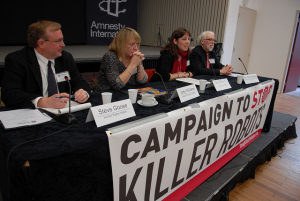
    Campaign to Stop Killer Robots campaign launch in April 2013

    Campaign to Stop Killer Robots first NGO conference in April 2013

    A preemptive ban as a solution

    Whilst the Campaign to Stop Killer Robots is calling on states to move with urgency towards negotiations on a treaty to outlaw fully autonomous weapons systems, previous talks in Geneva have not yet galvanised governments into action.

    Some states have suggested that existing law is sufficient to tackle this issue. Existing international law, which was developed prior to any consideration of autonomous weapons systems, implicitly assumes that the application of force is governed by humans. This body of international law is now inadequate as a reliable barrier to the development and use of fully autonomous weapons systems. A pre-emptive ban through an international instrument would not only halt any progress on these systems amongst states parties, but would help to stigmatise development by others.

    Some states have argued that this issue can be dealt with by conducting individual reviews of their weapons technologies to ensure they continue to uphold current international law. States are already obligated to do this however, and whilst it is important, it will not be sufficient in preventing the development of these systems internationally. A clear legal standard and norm needs to be set, and this is best done through new international treaty law.

    A ban based around prohibiting systems that operate without meaningful human control over individual attacks should be the starting point in international discussions among states, and so the elaboration and agreement of the elements of this principle are required as a next step.

    International response so far

    To date, autonomous weapons have been raised at the Human Rights Council in 2013 and considered by governments in dedicated discussions held at expert meetings of the CCW in 2014. The UN Special Rapporteur on extrajudicial, summary or arbitrary executions, Christof Heyns, called in 2013 for national moratoria to be imposed by all states on the “testing, production, assembly, transfer, acquisition, deployment and use” of these systems, until an internationally agreed framework on their future has been established. The CCW could be a possible venue for developing this, having previously produced a pre-emptive ban on blinding laser weapons. One should note, though, that previous attempts within the CCW to deliver the responses needed to certain weapons systems have occasionally failed, often hampered by operating under the consensus rule and a tendency to defer to military considerations rather than focus on humanitarian or ethical imperatives.

    Promisingly, the need to ensure meaningful human control has already been a prominent feature of the debate at the CCW, with several states recognising the importance of this approach. In upcoming discussions, governments should elaborate their policies for maintaining meaningful human control over existing weapons systems in individual attacks. Such an exchange would advance consideration of how human control can be ensured over future systems. This would in turn help clarify what practices and potential systems must be prohibited and the standards that states must demonstrate that they are meeting in their conduct. Elements to consider could include the need for adequate information to be available to commanders using any weapons system, positive action from a human being in launching individual attacks, and ensuring accountability.

    Few states have elaborated any policy on human control over weapons systems. Current US policy on autonomous weapons systems stresses that there should be “appropriate levels of human judgement over the use of force”, but does not define what these should be. The policy leaves the door open for the development of fully autonomous weapons systems, whilst recognising the harm they could cause to civilians. The UK government has stated that it has no intention to develop fully autonomous weapons and that “human control” over any weapons system must be ensured. However, it has not given sufficient elaboration of what exactly this means and how it will be ensured.

    States may see different types of operating, supervising or overseeing systems to constitute acceptable control. Agreement between states on the concept of meaningful human control is therefore an important element of international progress on the issue of fully autonomous weapons systems.

    Work by states on an international framework should be supported by input from civil society and draw on the views of a range of experts. Ultimately, negotiation processes will determine the definitions of key concepts. If discussions do not advance towards a binding framework within the CCW, a freestanding treaty process may be required, as was the case previously in the processes to outlaw both anti-personnel landmines and cluster munitions.

    The upcoming meeting of experts at the CCW in April is unlikely to result in particular concrete actions due to the nature and format of the meeting. It could pave the way for a decision in November that states continue to discuss this issue in 2016 and put it on the agenda for the CCW’s 2016 Review Conference. At that point it could be flagged as a subject on which States Parties should develop a new binding protocol. No clear group to lead this process has yet emerged. So far Cuba, Ecuador, Egypt, the Holy See, and Pakistan have endorsed a pre-emptive ban on autonomous weapons systems. France secured consensus for the CCW mandate in 2013 that established its work on lethal autonomous weapons systems, and Germany will be chairing the upcoming meeting, with the aim of seeking consensus on further consideration of the subject. However, the development of fully autonomous weapons systems is already being considered in military roadmaps. This makes their prohibition an urgent task.

    Elizabeth Minor (@elizabethminor3) is a Researcher at Article 36, and was previously Senior Research Officer at Every Casualty, and a Researcher for Iraq Body Count (IBC). 

    Featured image: The UK’s Taranis stealth UAV. The Taranis exemplifies the move toward increased autonomy as it aims to strike distant targets “even on other continents”, although humans are currently expected to remain in the loop. Source: Flickr | QinetiQ

  • Sustainable Security

    Momentum towards a nuclear weapons ban treaty: what does it mean for the UK?

    International momentum towards a treaty to ban nuclear weapons reached a milestone in the December 2014 Vienna conference. Even assuming that the UK does not initially sign up to such a treaty, it is subject to the pressures of a changing legal and political environment and could find its present position increasingly untenable – not least on the issue of Trident renewal.

    Read Article →

    Nuclear Weapons: From Comprehensive Test Ban to Disarmament

    Despite not yet entering into force, the 1996 Comprehensive Test Ban Treaty has succeeded in almost eliminating nuclear weapons testing and in establishing a robust international monitoring and verification system. A breakthrough in its ratification by the few hold-out states could have important positive repercussions for the Nuclear Non-Proliferation Treaty or nuclear disarmament in the Middle East.

    Read Article →

    Humanitarian Consequences of Nuclear Weapons: Five Reasons for the P5 to participate in Vienna

    The ‘humanitarian dimension’ initiative highlighting the consequences of nuclear weapons has evolved and consolidated itself in the non-proliferation regime since 2010. The five nuclear weapons states (NWS or P5) under the NPT – China, France, Russia, UK and US – boycotted the first two international conferences on the humanitarian consequences of nuclear weapons. A third conference will be held in Vienna on 8-9 December 2014. This article gives five reasons why the P5 should consider participating.

    Read Article →

    Building the Case for Nuclear Disarmament: The 2014 NPT PrepCom

    The humanitarian impact of nuclear weapons, highlighted by a wide-ranging, cross-grouping, multi-aim initiative which continues to consolidate itself in the non-proliferation regime, has come to the fore in the 3rd Prepatory Committe for the 2015 NPT Review Conference. Frustrated with the lack of progress towards NPT Article VI commitments to complete nuclear disarmament, the initiative has invigorated attention to the urgency of nuclear disarmament and a need for a change in the status quo. NPT member states and civil society continue to engage actively in publicizing the humanitarian consequences of nuclear weapons as an impetus to progress towards nuclear disarmament.

    Read Article →

    The ‘High Politics’ of Sustainable Security

    If events like those in Ukraine have taught us anything it is that, despite the predictions of many, the potential for conflict between the major powers is still one of the defining characteristics of world politics. Crisis diplomacy and inter-state rivalry is back on the global agenda. But if policymakers, analysts and civil society actors are to try and come up with ways of reversing the trend towards an increasingly competitive, militarised and crisis-driven inter-state order, then thinking carefully through the implications of a sustainable security approach to great power politics would appear to be a most useful starting point.

    Read Article →

    International Dimensions of the Ukraine Crisis: Syria and Iran

    The Russian annexation of Crimea may be in direct contravention of international agreements but is popular in Russia and almost certain to hold. Given tensions within Ukrainian society and its weak transitional government, there remains some risk of further intervention in eastern Ukraine and possibly the Trans-Dniester break-away region of Moldova. Even if there is no further escalation in the crisis, the deterioration in EU/Russian and US/Russian relations is of great concern, not least in relation to two aspects of Middle East security – the Syrian civil war and the Iran nuclear negotiations.

    Read Article →

    The Threat of Nuclear Disconnect: Engaging the Next Generation

    The dramatic decrease in public awareness and engagement in the nuclear weapons debate since the 1980s poses a risk to our future, as younger generations and future policy shapers will be less familiar with the challenges posed by nuclear weapons when they take the helm. But nuclear weapons are too dangerous a threat for an entire generation to disconnect from. BASIC’s Rachel Staley explores the ramifications of not updating the nuclear debate.

    Read Article →

  • India’s 21st-century war

    A year on from the election of Barack Obama as United States president, the conflicts that dominated Washington’s concern under his predecessor are still raging – and even increasing in intensity. This is particularly true of the arc of insecurity that stretches from the middle east through to southwest Asia, where – from Afghanistan and Pakistan to Israel-Palestine and Iran – the reality and potential of violence have hardly been diminished as a result of the change of administration.

    Moreover, alongside the high-intensity conflicts where Washington is directly or by proxy involved in this region, there are other slow-burn insurgencies that often receive less attention than they deserve. The persistent rebellion in India of the Maoist guerrilla movement known as the Naxalites is one such. A reason for paying more heed to this issue is that the evolving nature of the Naxalite conflict – including the Indian government’s approach in attempting to combat the movement – may represent a more accurate indicator of future trends in global insecurity even than the al-Qaida network.

    A potent legacy

    The internal United States debate about its future strategy in Afghanistan and Pakistan in particular has as much of its specific focus the current status of al-Qaida, and whether it still represents a major threat to US security interests.

    The argument over whether (and by how much) to increase US deployments in Afghanistan – prompted by General Stanley A McChrystal’s request for at least 40,000 more troops – is now complicated further by the political fallout of the now aborted rerun of Afghanistan’s presidential election. The effect of the confirmation of Hamid Karzai as the election winner and thus president for a third term in office (after the withdrawal on 1 November 2009 of his rival, Abdullah Abdullah) makes it even harder for the pro-”surge” advocates to make their case (see Charles A Kupchan & Steven Simon, “Pull the Plug on the Afghan Surge”, Financial Times, 3 November 2009).

    Many of those who oppose such a move argue that the US is making a strategic mistake by seeing the Afghan and Pakistani Taliban groups as the main focus of its efforts. These are so embedded in local societies on either side of the border that they cannot, so the argument goes, be defeated in the conventional sense. It is far more important in this view to concentrate specifically on the al-Qaida leadership and that movement’s most determined adherents. By doing so, the US military will lead the task of defeating terrorism and making the world a safer place.

    This argument, though yet to be won, can be seen as a significant departure from the dominant thinking of George W Bush’s “war on terror” – especially its tendency to describe any radical paramilitary group anywhere in the world as “terrorist”. The logic of this view, embraced with glee by the neo-conservatives that provided the Bush administration’s ideological fuel, was the radical division of the world into two absolutely polarised sides: with us or against us, there is no room for doubt or compromise.

    The search for a more nuanced and targeted approach reflects a degree of new thinking from Barack Obama. The problem he faces is that the mentality of the “war on terror” has proved so influential, including by other states facing their own domestic insurgencies, that it is very difficult to change course.

    A hidden rage

    A case in point is the New Delhi government’s developing assault on the Naxalite rebels in India.

    The Naxalite movement has its origins in a land dispute near the village of Naxalbari in the northern part of West Bengal in 1967. This lasted several years and appeared to have been brought under control. But later, a number of leftist groups fired by a Maoist ideology made links with disadvantaged peoples in parts of rural eastern India; in the early 2000s, this coalesced into a renewed movement (see Ajai Sahni, “India and its Maoists: failure and success”, 20 March 2007)

    Since then, the Naxalites have grown in power and influence. They are often brutal in their methods but have managed to win support from huge numbers of marginalised people, in part because of the great brutality inflicted by security forces in the areas the guerrillas control. The Indian authorities are increasingly concerned at the threat the movement poses to the country’s internal security – and even its much-vaunted economic miracle. For the state, and much of the economic elite, the Naxalite/Maoist rebels are simply terrorists who must be put down with whatever force is necessary (see “A world in revolt”, 12 February 2009).

    Since then, the Naxalites or Maoists have grown in power and influence, as part of a conflict with the authorities in which there has been great brutality on both sides. They are reported to be active in 220 of India’s 602 districts across fifteen of India’s twenty-eight states.

    Much of the activity is spread across India’s so-called “red corridor”, which stretches from the Nepalese border down to the southern state of Karnataka. A current report says: “With a force of 15,000 armed cadres, they control an estimated one-fifth of India’s forests. They are also believed to have 50,000 underground activists. Around 100,000 people, including the intelligentsia, are associated with various front organisations in different parts of the country” (see Prakash Nanda, “India’s deadly war within”, UPI Asia Online, 4 November 2009).

    The problem with this view is that the guerrillas draw on the genuine injustices inflicted on poor Indians in rural areas, including (for example) the many thousands dispossessed of their lands and livelihoods by mining corporations and new industries (see Arundhati Roy, “The heart of India is under attack”, Guardian, 30 October 2009). These injustices are part of the entrenched and increasing disparities in wealth and poverty that India’s breakneck race for growth has created.

    The war between the Indian state’s security forces (including the armed militias it has organised) and the Naxalites is taking place amid this landscape of desperate poverty and inequality. The rebels’ tactics include the use of roadside-bombs and ambushes, which have helped them kill over 900 Indian security personnel in 2006-09. In the period from April-June 2009 alone, they killed 112 security personnel in four key regions of combat: Chhattisgarh, Bihar, Jharkhand and Orissa; over three days in early June, twenty police lost their lives in two attacks (see Divy Khare, “Naxalites strike again, kill 10 cops in Jharkhand”, Times of India, 13 June 2009). In Maharashtra, two Naxalites lured a police patrol into a trap and in an hours-long fight, seventeen policemen died (see Jim Yardley, “A growing Maoist rebellion vexes India”, International Herald Tribune, 31 October 2009).

    The authorities are now being shocked by years of accelerating conflict into raising the level of their response. New Delhi is mounting a large-scale operation – Operation Green Hunt – that is expected to involve some 70,000 paramilitary forces. The aim is partly to counter the spread of Naxalite influence beyond the most densely forested areas that have been their core domain into open countryside; Operation Green Hunt seeks to force the rebels back into the forests where they can (it is supposed) be more easily contained (see Anuj Chopra, “Jungle lair of the Maoist rebels”, 5 November 2009).

    The carefully planned operation could take several years to complete. At its root is the firm belief that the target groups, however strong their support, constitute a threat to the emergence of the new India as a global economic power. In such circumstances, strategic ores must be mined and factories built on suitable land. Those in the way – leftist rebels or local villagers – simply cannot be allowed to interfere with India’s onward march to western-style modernity (see “China and India: heartlands of global protest”, 7 August 2008).

    It is especially pertinent to note that this rebellion has caught India somewhat by surprise. At the very time that India has finally embraced the consumer society, when burgeoning cities are replete with shopping-malls, entertainment venues and gated communities – violent extremists appear, as if from nowhere, to wreck the party and threaten the future (see Manmohan Singh, “’A Systemic Failure’”, OutlookIndia, 4 November 2009). The fact that much of what is happening can be understood as a desperate response from intensely marginalised people is discounted.

    A warming conflict

    The import of the Naxalites and other Maoist groups in India may go far beyond the major internal-security problem they pose. From another perspective, they represent an early example of the kinds of radical response that could – if present dominant policies continue – become far more widespread in the coming decades (see “A world on the edge”, 29 January 2009).

    In the 2010-40 period, climate change will affect the tropical and sub-tropical regions of the world in ever more pervasive ways. As the continents warm up much faster than the oceans and the croplands dry out, the consequence will be a sharp decline in the land’s ecological “carrying-capacity” (see Shanta Barley, “A World 4 degrees C warmer”, New Scientist, 3 October 2009)

    This is also a world where there are enormous gaps in living-standards, life-chances and access to resources; where 10% of the world’s people have over 85% of the household wealth; and where hundreds of millions of people in the global south (and north) are marginalised and resentful. The results, if such trends are allowed to continue, will be a combination of more fragile and failing states with intense migratory pressures; in turn this will reinforces the tendency of the world’s elites to seek to “close the castle gates” (see “A tale of two towns”, 21 June 2007).

    In this perspective, the rational approach would be led by an awareness of how the dangers of socio-economic divisions and environmental limits make a new definition of security essential (see “A world in need: the case for sustainable security”, 10 September 2009). A continuation of the current path may mean that al-Qaida will be seen as a short-term problem that withered away – and the Naxalite rebellion as the prototype conflict for the 21st century.