Blog

  • Boiling point

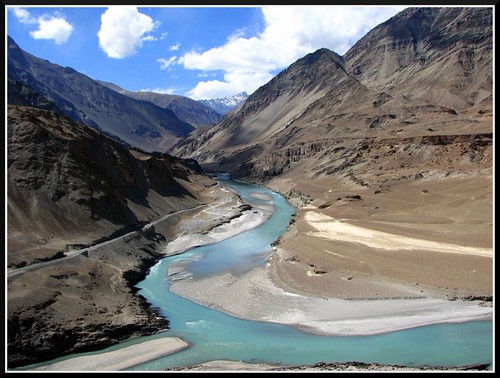
    If Pakistani householders look carefully at their electricity bills, they will find they have been charged an extra amount for NJP – the Neelum Jhelum Project. It has been going on for years and is an attempt by the Pakistani government to raise money for a hydroelectric project on the Neelum River, a tributary of the Jhelum in Kashmir.

    But while Pakistan – unable to get loans for the project from international agencies due to the ongoing terrorism problem – is still raising money, India is diverting the water upstream, meaning there will not be enough of it in the Neelum for Pakistan to build the project it wanted.

    India is within its legal rights to do this. Under the 1960 Indus Water Treaty (IWT), it is allowed to build run-of-the-river projects as long as it delivers all the water to Pakistan at the end of it. And that is exactly what India is doing; channeling the water for its own hydroelectricity project, before releasing it directly into the Jhelum further downstream. Pakistan is so incensed that, in late April, it announced it would approach the World Bank, which is the arbitrator under the IWT, in an effort to stop the Indian project.

    Water is rapidly overtaking the territorial dispute over Kashmir to become the biggest bone of contention between India and Pakistan. And the rhetoric in Pakistan is getting uglier by the day. One of the first questions this Indian reporter faced in Islamabad in late March was: “Why is India stealing our water?” The question came from a Pakistani journalist at the start of a workshop on precisely this topic, which brought together journalists from India and Pakistan as well as water experts. After two days of discussion, the Pakistani journalist said: “Now I know India is not stealing our water and that it is sticking to the treaty. But does it not realise we need more water? How can we survive without it?”

    Much of the reportage in the Pakistani media is not so nuanced, and charges of water theft by India – the upper riparian country – are bandied about regularly. There is no doubt that India has built and is continuing to build hydroelectric projects in the upper reaches of the rivers that flow into Pakistan. But it has been scrupulous in sticking to the IWT, which says India can build run-of-the-river projects on the Indus, Jhelum and Chenab rivers, as long as the quantity of water that flows into Pakistan through these waterways is not reduced. The treaty also allows India to store 3.6 million acre feet (MAF) of this water, before the rivers flow into Pakistan.

    Whenever Pakistani government officials are asked about the water dispute, they agree that India is sticking to the IWT. But that is not the way it is reported in much of the Pakistani media, and even one of Pakistan’s Islamic fundamentalist groups recently said its ire against India was partly a result of it “stealing our water”.

    This perception has grown due to “lack of transparency and lack of timely data from India”, said Danial Hashmi, senior engineer at Pakistan’s Water and Power Development Authority (WAPDA). “That leads to lack of trust. We have to keep asking them for water flow data that should be coming to us automatically, and without delay.”

    The origins of the water dispute lie back in the nineteenth century, when Britain ruled the subcontinent and British engineers started to build what became the world’s largest canal irrigation system in the Indus river basin. That became a huge issue when Pakistan was carved out of India in 1947, splitting the river basin and its canals. As it was located upstream, India had control of the rivers and there were repeated disputes over water flow until the World Bank mediated the IWT, giving the three eastern rivers – Ravi, Beas and Sutlej – to India and the other three to Pakistan.

    India’s High Commissioner to Pakistan, Sharat Sabharwal, has repeatedly said: “The IWT has served both countries well and has been operational even in times of war. It assigned to Pakistan 80% of the water in the Indus system of rivers.”

    John Briscoe, a water expert who has worked in the subcontinent for 35 years, was the World Bank adviser involved in choosing the neutral expert to adjudicate between India and Pakistan on the Baglihar dam in the Indian part of Kashmir. (Read John Briscoe’s article for chinadialogue here: “Bankrolling change”). Briscoe says that the IWT could be a “stable basis for cooperation if India and Pakistan had normal trustful relations. [Then] there would be a mutually-verified monitoring process which would assure that there is no change in the [water] flows going into Pakistan.”

    Since both countries agree that India is sticking to its part of the IWT, why is less and less water available to farmers in Pakistan? Daanish Mustafa, an academic in the geography department at King’s College, London, said it was partly because the planners had not foreseen how there would be less water flowing down these rivers due to changes in the Himalayan environment.

    Deforestation in the catchment area of the Indus basin means more and more silt is flowing down these rivers, choking the channels and reducing water flow. Another key issue is the dependence of these rivers on the Himalayan glaciers. While it has now been established that these glaciers are in no danger of disappearing in the next few decades, there is no doubt that they are receding due to global warming. A detailed satellite-based study by the Indian Space Research Organisation came to the conclusion this March that Himalayan glaciers have shrunk by 16% in the last 50 years.

    In the entire Himalayan ranges, glacier melt is responsible for less than 10% of the annual flows in these rivers. But that is not the case in the Indus basin. As the westernmost of the river basins formed by the Himalayas, it gets much less of the monsoon rain than the eastern Himalayas and is consequently far more dependent on the glaciers.

    So Pakistan is asking India for water in an environment where the total water flow is shrinking all the time. This had not been foreseen when the IWT was signed 50 years ago, but today it threatens to become the major flashpoint between the two nuclear-armed neighbours in south Asia, despite conciliatory messages from parts of the Pakistani establishment. “This is a problem that can be solved only through cooperation and not confrontation,” Pakistan’s environment minister Hameed Ullah Jan Afridi pointed out at the March workshop, which was organised by the voluntary organisation LEAD Pakistan and sponsored by the British government.

    India is the upper riparian country in the Indus basin, but the rivers do not start in India. They start in the Tibet Autonomous Region of China. Unless China is brought to the discussion on how to control deforestation in the basin’s catchment area and how best the dwindling water supplies can be shared in a situation where glaciers are retreating due to global warming, the water-related tension between India and Pakistan can only get worse. Eminent Pakistani lawyer Tariq Hassan recently said: “Water is the most strategic issue facing the subcontinent. If there is a war here in the future, it will be over water.”

    Independent experts like Briscoe say that, while India is sticking to the IWT, it needs to be more generous because of the “great vulnerability and legitimate concern of Pakistan” over water scarcity, which has already ensured that the Indus, the mother river of the subcontinent since pre-history, no longer even flows to the Arabian Sea but instead trickles to its death in the sands of Sindh.


    About the author: Joydeep Gupta is a director of the Earth Journalism Network at Internews and secretary of the Forum of Environmental Journalists of India.
    Source: China Dialogue

    Image Source: Sanju

  • Gorbachev – Twenty years after the fall of Berlin wall the world is no fairer

    Twenty years have passed since the fall of the Berlin wall, one of the shameful symbols of the cold war and the dangerous division of the world into opposing blocks and spheres of influence. Today we can revisit the events of those times and take stock of them in a less emotional and more rational way.

    The first optimistic observation to be made is that the announced “end of history” has not come about, though many claimed it had. But neither has the world that many politicians of my generation trusted and sincerely believed in: one in which, with the end of the cold war, humankind could finally forget the absurdity of the arms race, dangerous regional conflicts, and sterile ideological disputes, and enter a golden century of collective security, the rational use of material resources, the end of poverty and inequality, and restored harmony with nature.

    Another important consequence of the end of the cold war is the realisation of one of the central postulates of New Thinking: the interdependence of extremely important elements that go to the very heart of the existence and development of humankind. This involves not only processes and events occurring on different continents but also the organic linkage between changes in the economic, technological, social, demographic and cultural conditions that determine the daily existence of billions of people on our planet. In effect, humankind has started to transform itself into a single civilisation.

    At the same time, the disappearance of the iron curtain and barriers and borders, unexpected by many, made possible connections between countries that until recently had different political systems, as well as different civilisations, cultures and traditions.

    Naturally, we politicians from the last century can be proud of the fact that we avoided the danger of a thermonuclear war. However, for many millions of people around the globe, the world has not become a safer place. Quite to the contrary, innumerable local conflicts and ethnic and religious wars have appeared like a curse on the new map of world politics, creating large numbers of victims.

    Clear proof of the irrational behaviour and irresponsibility of the new generation of politicians is the fact that defence spending by numerous countries, large and small alike, is now greater than during the cold war, and strong-arm tactics are once again the standard way of dealing with conflicts and are a common feature of international relations.

    Alas, over the last few decades, the world has not become a fairer place: disparities between the rich and the poor either remained or increased, not only between the north and the developing south but also within developed countries themselves. The social problems in Russia, as in other post-communist countries, are proof that simply abandoning the flawed model of a centralised economy and bureaucratic planning is not enough, and guarantees neither a country’s global competitiveness nor respect for the principles of social justice or a dignified standard of living for the population.

    New challenges can be added to those of the past. One of these is terrorism. In a context in which world war is no longer an instrument of deterrence between the most powerful nations, terrorism has become the “poor man’s atomic bomb”, not only figuratively but perhaps literally as well. The uncontrolled proliferation of weapons of mass destruction, the competition between the erstwhile adversaries of the cold war to reach new technological levels in arms production, and the presence of the new pretenders to an influential role in a multipolar world all increase the sensation of chaos in global politics.

    The crisis of ideologies that is threatening to turn into a crisis of ideals, values and morals marks yet another loss of social reference points, and strengthens the atmosphere of political pessimism and nihilism. The real achievement we can celebrate is the fact that the 20th century marked the end of totalitarian ideologies, in particular those that were based on utopian beliefs.

    Yet new ideologies are quickly replacing the old ones, both in the east and the west. Many now forget that the fall of the Berlin wall was not the cause of global changes but to a great extent the consequence of deep, popular reform movements that started in the east, and the Soviet Union in particular. After decades of the Bolshevik experiment and the realisation that this had led Soviet society down a historical blind alley, a strong impulse for democratic reform evolved in the form of Soviet perestroika, which was also available to the countries of eastern Europe.

    But it was soon very clear that western capitalism, too, deprived of its old adversary and imagining itself the undisputed victor and incarnation of global progress, is at risk of leading western society and the rest of the world down another historical blind alley.

    Today’s global economic crisis was needed to reveal the organic defects of the present model of western development that was imposed on the rest of the world as the only one possible; it also revealed that not only bureaucratic socialism but also ultra-liberal capitalism are in need of profound democratic reform – their own kind of perestroika.

    Today, as we sit among the ruins of the old order, we can think of ourselves as active participants in the process of creating a new world. Many truths and postulates once considered indisputable, in both the east and the west, have ceased to be so, including the blind faith in the all-powerful market and, above all, its democratic nature. There was an ingrained belief that the western model of democracy could be spread mechanically to other societies with different historical experience and cultural traditions. In the present situation, even a concept like social progress, which seems to be shared by everyone, needs to be defined, and examined, more precisely.

  • Global Climate Change Vulnerability and the Risk of Conflict

    In a study from the Center for Sustainable Development at Uppsala University in Sweden titled “Climate Change and the Risk of Violent Conflicts in Southern Africa,” authors Ashok Swain, Ranjula Bali Swain, Anders Themnér, and Florian Krampe examine the potential for climate change and variability to act as a “threat multiplier” in the Zambezi River Basin. The report argues that “socio-economic and political problems are disproportionately multiplied by climate change/variability.” A reliance on agriculture, poor governance, weak institutions, polarized social identities, and economic challenges in the region are issues that may combine with climate change to increase the potential for conflict. Specifically, the report concludes that the Matableleland-North Province in Zimbabwe and Zambezia Province in Mozambique are the areas in the region most likely to experience climate-induced conflicts in the near future.

    Article source: The New Security Beat

    Image source: The City Project

  • Sustainable Security

    Has Paris Opened the Door for a UNSC Climate Court?

    Historically, permanent members of the UN Security Council have variously rejected the idea that it was the proper venue to address international cooperation on climate change. The notable cooperation between China and the United States to secure the Paris Agreement, however, may signal a greater openness to UNSC climate securitization, including the creation of a UNSC-enforced Climate Court.

    Read Article →

  • Sustainable Security

    The Syrian war is one of the worst political and humanitarian crises since the Second World War and mediation attempts have proven largely fruitless. What are the reasons behind their failure, and what are the prospects for peace in the future?

    January 2017 will see new leadership both at the UN and in the US. António Guterres will become the 9th Secretary-General of the United Nations and Donald Trump will take office as the 45th President. These leaders will inherit from their predecessors a problem that ranks among the toughest and most complex in the world today: the Syrian civil war a, conflict that began in 2011 and since then has seen between 312,000 and 470,000 deaths.

    Both men have declared Syria a policy priority. Trump has given few specifics beyond a desire to depart from current U.S. policy, whereas Guterres has said that, under his leadership, ending the Syrian civil war will be the UN’s most important task.

    Guterres faces tough odds: the catalogue of failed mediation efforts in Syria has by now grown quite long. After the Arab League’s failed attempt in the early phase of the conflict, the UN dispatched to Syria first Kofi Annan and then Lakhdar Brahimi, both of whom fervently tried to broker various ceasefire arrangements, and both of whom returned empty-handed. More recently, the diplomatic initiative has rested with U.S. Secretary of State John Kerry and Russian Foreign Minister Sergei Lavrov, who have sought to find a way to collaborate on Syria despite diverging priorities.

    In September 2016, this duo managed to negotiate a ceasefire, but, in a rather typical display of how tenuous progress is in Syria, the deal fell apart within days, following an ill-timed accidental American bombardment of Syrian troops in Deir el-Zour and unrelenting combat in Aleppo. In parallel, Staffan de Mistura, the UN’s third envoy since the war began, has continued to probe for breakthroughs, however small and local, to keep a semblance of a process alive, but without substantive progress.

    Why Syria is a mediator’s “mission impossible”

    There are several reasons why previous mediation has fallen short in Syria. International disunity and distrust in the various mediators are important factors – rebels rejected the most recent UN initiative, a limited humanitarian ceasefire in Aleppo, on the grounds that the UN was “biased” against them. The main explanation, however, lies in the nature of the conflict. Kofi Annan labeled it a mediator’s “mission impossible”: a war fought between many and fractured coalitions, infused with sectarian enmity, and subject to constant meddling from foreign powers.

    Academic research sheds light on all of these factors, and why and how they effect peace mediation. First, the higher the number of belligerents, the harder a conflict is to settle. In Syria, where the number of actors is extraordinarily high, it has proven impossible to design a deal that is attractive to a critical mass of parties. This problem has been particularly acute with respect to the opposition, which frequently have fallen to infighting and agree on little beyond the necessity of ousting President Bashar al-Assad.

    Second, historical evidence shows that conflicts where belligerents anchor their demands in religious traditions are more intractable than other conflicts. In Syria, religious fault lines have gradually hardened, especially between Sunni and Shia, raising the threshold for peace deals that depend on sectarian co-existence. The widespread presence of jihadists who view the conflict in cosmic, Manichean terms add one further barrier to initiating a process premised on the exchange of concessions.

    Third, with the possible exception of the Islamic State, nearly all actors in Syria enjoy the material and diplomatic support of foreign sponsors. Conflicts that attract external interventions tend to be more resistant to mediation, most likely because foreign powers can offset shifts on the battlefield by escalating the influx of weapons and other resources to their preferred client. Further, support from foreign sponsors makes belligerents less dependent on support from the local population, which otherwise can generate social pressure that incents negotiations.

    Combined, these factors have created a situation where it has been difficult for mediators to identify a viable power-sharing deal, and even less, generate firm expectations that such a deal could be implemented.

    The conflict will end, but how?

    Like all wars, the war in Syria will end. The question is how long it will take and the means through which this will be achieved. Logically, the war in Syria can end in three ways: through a military victory, by petering out into a “cold war”, or via a negotiated agreement.

    Even though the majority of civil wars end in military victory, most analysts have held the view that this is an unlikely outcome in Syria. Neither side has had the resources to impose, much less maintain, a monopoly on violence in the entirety of the country. However, there are signs that a regime victory has become, if not likely, at least a possibility. The fall of Aleppo to regime troops in December 2016 will free up considerable forces that can be reallocated for tactical offensives in other areas. Continued Russian efforts and a realignment of U.S. priorities in Syria under a Trump Presidency may allow the regime to make further gains.

    Another scenario is that the war gradually de-escalates into a “cold war”, with little or no active fighting. In parts of the country, especially the South, this is already the de facto situation, as localized truces and standoffs have produced a state of suspended warfare. A generalization of this scenario, though, is premised on the exhaustion not only of the primary belligerents (e.g., via manpower shortages), but also of their foreign sponsors, which would require significant shifts in both regional and international politics.

    The third way the war can end is via a negotiated agreement, either induced via external mediation of the kind discussed above, or emerging from direct negotiations between the parties within Syria. We know from statistical research that a growing number of civil wars end in negotiated agreements, but, in light of the challenges listed above, there is clearly some way to go before that will happen in Syria.

    A changing landscape?

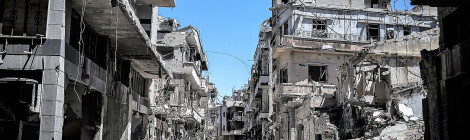
    syria-homs

    Image credit: Chaoyue 超越 PAN/Flickr

    As neither of three paths to peace appears imminent, continued war is therefore the only realistic scenario in the short- to mid-term. But there are signs of a changing landscape, both militarily and politically, which may open up avenues to a negotiated agreement, at least in limited forms between the regime and the non-jihadist opposition.

    The most important shift, potentially, is the election of Donald Trump as the next U.S. President. While the details of the President-elect’s Syria policy remains opaque, it is likely to include two ingredients: more direct coordination with Russia and stronger military efforts against the Islamic State. With Trump as President, the U.S. may be willing to shift publicly on issues that are currently recognized only implicitly, such as the acceptance of Assad’s staying in power, the failure of train-and-supply efforts, and the Islamist domination within the opposition. The current battery of economic sanctions may also be revisited.

    The coming of Trump is therefore likely to favor Damascus, but it could also increase the prospects for substantive negotiations. Historically, when great powers favoring opposing belligerents in a civil war come together, it have tended to favor negotiated outcomes. If Russia, Turkey and the U.S. can maximize their leverage with their respective clients, they could help push them to the negotiation table. But chances are still slim: they have tried before without succeeding and Trump’s Syria policy may alienate the opposition, reducing U.S. leverage.

    The fall of Aleppo signifies another important change in the strategic landscape. By capturing the city, regime forces dealt a demoralizing blow to the opposition, while further alienating Western audiences. It remains unlikely that the regime can claw back all lost territory, let alone rule it in a legitimate manner, but the victory in Aleppo may add further leverage to its strategy of seeking local “reconciliation agreements”. Several hundred such local truces have already been struck across the country and, if generalized, may portend a demographic “sorting out” that would leave Syria organized into more or less autonomous zones, akin to the  “cold war” scenario above.

    For its part, the UN is likely to continue its valiant search for solutions, small and large. If the new UN Secretary General is to deliver on his promise to prioritize a peaceful solution in Syria, he needs to find a way to capitalize on the expected rapprochement between Russia and the U.S. His man in the field, envoy de Mistura has signaled that he concurs with the military fight against the Islamic State but that a military strategy needs to be accompanied by “political devolution” in Syria. This indicates that the UN is considering an arrangement styled on Bosnia or Iraq – essentially power-sharing along sectarian lines – for Syria. Even if the UN manages to leverage the U.S. and Russia behind such a plan, however, it currently appears unlikely that the opposition would give up on its demands for regime change, and that Damascus, smelling military victory, would seriously consider it.

    Magnus Lundgren is a postdoctoral research fellow at Stockholm University, Sweden. His research focuses on conflict resolution in civil wars and on decision-making in international organizations such as the UN. His most recent publications include ”Which international organizations can settle civil wars” and ”Mediation in Syria: Initiatives, strategies, and obstacles, 2011-2016”. He is the co-founder of the Multilateral Negotiation Project, a non-profit that seeks to enable better global negotiation processes. He can be followed on Twitter @magnusllundgre

  • Sustainable Security

  • Sustainable Security

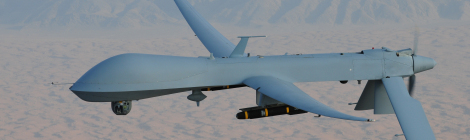
    by Shazad Ali and Chris AbbottMQ1 Predator Drone

    Strikes by unmanned combat air vehicles, or armed drones, have become the tactic of choice in US counterterrorism efforts in Yemen, Somalia and Pakistan. But lack of transparency, dubious effectiveness, civilian casualties and negative consequences for US national security means that Washington needs to re-evaluate its approach.

    It is the controversy over drone strikes in northwest Pakistan that has bought the issue to public attention. Leaving aside the wider issue of the extrajudicial nature of these killings and the questions over the legality of repeatedly breaching Pakistani airspace, it is the level of civilian casualties that is prompting the most concern.

    In a 23 May 2013 national security speech, President Barack Obama asserted that only terrorists are targeted by drones and that ‘there must be near-certainty that no civilians will be killed or injured’ before any strike is taken. However, independent reports contradict his claims.

    From 2004 to date, there have been 376 known US drone strikes in Pakistan. According to the UK-based Bureau of Investigative Journalism (BIJ), 407 to 926 civilians, including 168 to 200 children, have been killed in these strikes. According to a leaked Pakistani government report cited by the BIJ, at least 147 of 746 people killed in the 75 drone strikes in Pakistan between 2006 and 2009 were civilians. Of those killed, about 94 were children.

    Controversial tactics

    The high level of civilian casualties is attributable to two key elements of the US drone strike programme: double-tap strikes and signature strikes.

    Double-tap strikes use follow up strikes to deliberately target rescuers and first responders who are coming to the aid of those injured in an initial strike. The UN special rapporteur on extrajudicial executions, Christof Heyns, and the UN special rapporteur on counterterrorism and human rights, Ben Emmerson, have described the use of double-tap strikes as a possible war crime. Ironically, terrorists in Pakistan are now using their own version of the double-tap strike to target law enforcement personnel in cities such as Karachi: an initial low-intensity blast is used to draw in the emergency services, who are then targeted in a second much larger explosion.

    Signature strikes target individuals based on predetermined ‘signatures’ of behaviour that US intelligence links to militant activity. In other words, people are targeted merely on the basis of their behaviour patterns. This is different to personality strikes, which use intelligence to target specific terror suspects. In a June 2013 report that cited classified documents, NBC News revealed that one in four people killed in drone strikes in Pakistan between 3 September 2010 and 30 October 2011 were classified as ‘other militants’ by CIA. This means the CIA were unable to determine the affiliation, if any, of those killed.

    Intelligence failures

    However, even those strikes directed by intelligence are fallible. Such strikes rely on a mixture of signals intelligence and human intelligence from assets on the ground in Pakistan. The local CIA operatives are notoriously unreliable sources of intelligence.

    The doubts over the accuracy of US intelligence have some credence, as there are several cases in which a militant was reported killed in a drone strike only to be declared dead again following a later strike.

    For example, the alleged al-Qaeda leader in Pakistan, Ilyas Kashmiri, was reportedly killed in a drone strike in January 2009 and then again in September 2009, though he gave an interview to a Pakistani journalist the next month. Civilians are known to have been harmed in these unsuccessful attacks. In the January attack, 14-year-old Fahim Quershi lost an eye and suffered multiple injuries. In the September 2009 attack, 15-year-old Sadaullah Wazir lost his both legs and an eye. Three of his relatives died in the same attack. Kashmiri was again declared dead in July 2011, which is also contested.

    The United States has indeed managed to kill many militants in drone strikes in Pakistan, but these have been mostly low-level targets. According to a September 2012 study by Stanford Law School and New York University’s School of Law, only 2% of militant casualties in drone strikes between 2004 and 2012 were high-value targets.

    Justification

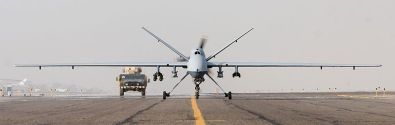
    MQ9 Reaper (used in Pakistan)There is an important question over congressional oversight of US drone strikes. The Obama administration has refused to provide legal justification of drone strikes to the Senate Select Committee on Intelligence despite several requests, according to committee chair Senator Dianne Feinstein. This has created an accountability vacuum and is a significant hurdle in congressional debate on the use of drones.

    Following the 9/11 attacks, the US Congress gave the president sweeping powers through the Authorisation to Use Military Force (AUMF). It allows the president to:

    ‘use all necessary and appropriate force against those nations, organisations, or persons he determines planned, authorised, committed, or aided the terrorist attacks that occurred on September 11, 2001, or harboured such organisations or persons.’

    In that context, drone strikes against al-Qaeda and the Afghan Taliban are authorised under US law. But it is hard to justify under the AUMF attacks in Pakistan against organisations not involved in 9/11, such as the Tehrik-i-Taliban Pakistan and the Haqqani network – notwithstanding the transnational nature of and blurred boundaries between some of these groups.

    It is also difficult to justify such attacks under the right to self-defence, which cannot be applied prospectively without limit. Nor does it warrant the repeated violations of Pakistan’s airspace, as Pakistan has not been shown to be responsible for any attacks against US interests. According to a leaked US diplomatic cable, Pakistan had, at one point, consented to drone strikes but it is not known whether Washington continues the strikes with Islamabad’s tacit agreement. Publicly, the Pakistani government has denounced the drone strikes, saying they are illegal and a violation of their country’s sovereignty. In September 2013, Pakistani Prime Minister Nawaz Sharif told the UN General Assembly that US drone strikes violated his country’s borders and were detrimental to Pakistani counterterrorism efforts. But, in reality, Pakistan has at times been deliberately ambiguous on the issue and the complex nature of civil-military relations in Pakistan and the known links between the ISI and various militant networks make things more complicated.

    Unintended consequences

    Whatever the legal status of the US drone strike programme in Pakistan, it is clear that it risks several unintended consequences. The United States might have made a prudent military choice in using armed drones rather the special forces for counterterrorism strikes in Pakistan. But the use of drones has backfired in a strategic sense and resulted in serious ‘blowback’.

    Chief among these is the radicalising impact US drone strikes are having in Pakistan. Repeated strikes are stoking anti-American sentiments and are a propaganda and recruitment gift to the extremist groups. Pakistan is being destabilised, as the strikes are undermining chances of peace talks between the state and Taliban groups. There are now increasing numbers of terrorist attacks against the Pakistani government by Taliban militants who believe Islamabad has failed to maintain the country’s sovereignty. Furthermore, the United States may be risking further attacks in its own backyard along the lines of the failed 2010 Times Square attack by Pakistani-born US citizen Faisal Shahzad.

    Drone strikes in Pakistan may also be complicating the US withdrawal from Afghanistan, as they have resulted in attacks on US forces. The 2009 Camp Chapman attack is a case in point. The al-Qaeda and Tehrik-i-Taliban Pakistan suicide attack used a double agent to target CIA personnel and contractors inside Forward Operating Base Chapman who were responsible for providing intelligence for drone strikes against targets in Pakistan. The attack on the base in Khost province was in revenge for the deaths of three al-Qaeda and Pakistani Taliban leaders who were killed in US drone strikes.

    The use of drones by the US has increased the danger of proliferation. Seventy six countries are known to have unmanned aerial vehicles, with approximately 20 countries possessing armed drones (though estimates vary widely). The United States has lowered the threshold for the use of lethal force and pushed back the limits of counterterrorism efforts to include the targeted killing of its enemies abroad. In doing so, they have set a dangerous precedent – one that could easily be followed by other countries. In a September 2013 study, Open Briefing identified 29 different models of armed drone in use with China, India, Iran, Israel, Russia and Turkey – each of which have external security concerns that could justify drones strikes under doctrine modelled on the US approach.

    Time for change

    The use of double-tap and signature strikes must be ended, as they result in unjustifiably high numbers of civilian casualties. They are the most controversial elements within the already controversial US drone strike. Beyond that, it is time to begin winding in Washington’s unchecked ability to target individuals around the world without due process. Central to this is the revocation of the post-9/11 Authorisation to Use Military Force. For 12 years this has allowed the spread of US military and intelligence operations around the world without accountability and transparency. These operations are increasingly straying from targeting those who ‘planned, authorised, committed, or aided the terrorist attacks that occurred on September 11, 2001’ to simply targeting suspected militants, regardless of their links to al-Qaeda or the Taliban.

    Washington can address the democratic deficit inherent in its drone programme by moving responsibility for it from the CIA to the usual chain of command within the US Department of Defense. There must also be proper congressional and judicial oversight of the drone programme, with monitoring by Congress’s intelligence and armed services select committees, in order to remove absolute executive power for the targeted killings.

    For its part, Pakistan can retract any tacit approval of US drone strikes and be unequivocal in its opposition to further strikes. This will allow the United Nations and key US allies to use whatever influence they have to press the United States to enact the much needed changes to its drone programme.

    Shazad Ali is a contributing analyst at Open Briefing. He is a journalist in Pakistan and pursuing a PhD in European Studies at the University of Karachi. He has been the assistant editor of the Vienna-based journal Perspectives on Terrorism and now serves as a member of its editorial board.

    Chris Abbott is the founder and executive director of Open Briefing. He is an Honorary Visiting Research Fellow in the School of Social and International Studies at the University of Bradford and the former deputy director of Oxford Research Group. http://www.openbriefing.org

    Featured image: MQ-1 Predator on patrol  Source: Air Force Reserve Command

    Image: An MQ-9 Reaper takes off on a mission from Afghanistan. Source: Wikimedia

  • US Security Establishment not Prepared for Climate Change

    In a three-month investigation, a team of Northwestern University student reporters has found that the US security establishment is not adequately prepared for many of the environmental changes that are coming faster than predicted and that threaten to reshape demands made on the military and intelligence community. This is despite the fact that the Defense Department has called climate change a potential “accelerant of instability.”

    The 10 Medill School of Journalism graduate students interviewed more than 200 current and former national security officials and experts and reviewed scores of official documents and reports. While reporting, they used social media to create a community of people interested in the intersection of national security and climate change, informing them of their work through Tweets, blog posts and an e-newsletter.

    Among the project’s findings:

    • The government lacks critical information about where and when climate changes will happen and what effect they will have on the U.S. military, intelligence and national security communities.

    • In a major strategy review last year, the Pentagon acknowledged the challenge that climate change poses to its operations, including a dramatically increased need for intervention in future humanitarian crises. While military branches have begun global assessments of their vulnerabilities, many security experts say the work lacks senior level support in Congress and the administration and that military service preparations are not keeping up with environmental changes.

    •  Work by the CIA and environmental scientists during the Clinton administration was largely ignored in the years of George Bush’s presidency. Although the CIA is now spearheading intelligence assessments to determine where climate change could affect global stability, that work may be in jeopardy as Republicans skeptical of climate control take control of key congressional committees.

    • The nation’s satellite system, which provides the lifeblood of climate information, is in disrepair after years of inadequate funding and, in the past two decades, the intelligence community has struggled both internally and politically to respond to the challenges posed by climate change.

    •  At home, critical infrastructure along the Gulf of Mexico is vulnerable to the stronger storms and more frequent flooding that are predicted due to climate change.

    Stories in the series also explore how the U.S. defense and intelligence community is preparing for a melting Arctic, shifting disease vectors, altered glacial melt in the Andes and rising seas in South Asia.

    In addition to traditional print and online pieces, the project allows audiences to explore the impact of climate change through creative interactive graphics that:

    • demonstrate the impact of rising seas on domestic military installations;

    •  visualize the cascade of consequences that could turn climate changes into national security threats and crises;

    •  cast users as decision makers in a war game that plays out the consequences of climate change in four regional scenarios;

    •  convey the interrelated history of scientific findings, extreme weather events and  political and defense policy as they relate to a changing climate through an interactive timeline;

    • let users hear from the experts themselves and engage in the conversation; and

    •  provide an online library of dozens of government, academic and think tank documents related to climate change and national security.


    For more information on this timely initiative please visit the project’s Global Warning website. Further information about the Medill National Security Journalism Initiative can be found here.  

  • The New Insecurity in a Globalized World

    A new conceptualization of insecurity and instability is needed in a world with greater and freer movement of goods, services and people – both legal and illicit – greater demands on weakening governments and the internationalization of local conflicts. The new insecurity is fundamentally derived from the responses of people and groups to greater uncertainty in an increasingly volatile world. Governments, and increasingly other actors need to recognize this in order to promote sustained stability in the long-term, locally and internationally.

    Security of persons and property is absolutely necessary for economic, social, or political development on any large scale; people must have a reasonable belief in their own physical safety and that tomorrow they will be able to capture the fruits of their labor today. This extends not just to people in underdeveloped countries. Insecurity is a global and natural phenomenon – although admittedly undesirable – experienced by all people to varying degrees. The financial crisis has brought a large amount of uncertainty to people in the United States and the European Union about their futures and has seen a surge in political mobilization and social upheaval across the Atlantic. In an age of globalization where borders are more open, people and goods more mobile, which simultaneously facilitates the spread of prosperity as well as risk; i.e., there is greater opportunity for everyone, not just those engaged in legitimate activities. Furthermore, global openness also requires that events in one part of the world are necessarily felt in other parts. We learned this lesson all too well during the financial crises of 1998, and are still learning it after the 2008 crisis.

    Fundamentally, the question is still: how can we make lives and livelihoods better? The question is not restricted to the poor anymore, although the poor generally face much higher levels of risk and insecurity than the wealthy. The question is now focused on the creation and sustainment of secure, stable environments where people can exercise personal authority to improve their own outcomes. The answer is that lives are made qualitatively better when people’s environments are relatively stable, and they have the power to exercise autonomy over them.

    The absolute rise in risk and insecurity resulting from an open, global economic system has reshaped the nature of insecurity in two ways. First, people internalize more risk. The 9/11 attacks and the 2005 London bombings, in addition to news stories of “home-grown” terrorists or uncovered attack plots that came close to being enacted, remind people in the developed world that they are not entirely protected against international threats to their security. Second, the rise in risk creates demand for greater state interventions to curb the proliferation of insecurity. It does this first by placing demands on states by its constituents, and second by other states’ demands that they take action against persons or groups that promote violence or insecurity elsewhere. As demands on the state to provide greater security and stability increase, the ability of the state to establish and maintain sole authority over the use of force is constrained. In many places the state is incapable or unwilling to establish, maintain and consistently deliver a fair and impartial rule of law – i.e., provide a stable environment in which people can go about their daily lives with the reasonable expectation that the integrity of their persons, family, and property will be secure.

    As a side note, the inclusion of the term “unwilling” is deliberate here. Some states are unwilling to undertake necessary measures to establish secure environments, perhaps because they lack the resources, the opportunity cost of those resources is too high, or there is insufficient political will to allocate the necessary resources. In general, establishing authority over a space is a difficult task requiring huge amounts of money, manpower, experience, and a credible commitment to maintain those efforts into the long-term. To illustrate, in 2011 the United States Department of Defense spent an estimate $159 billion USD on operations in Afghanistan, most of these to train police and maintain security. If this number were the GDP for a nation, it would be the 58th largest economy in the world, far ahead of countries like Iraq, Angola, Ethiopia, Sudan, South Sudan, Uruguay, Bolivia, Cote d’Ivoire, Democratic Republic of Congo, Chad, Mali, and many other nations that are being increasingly asked to take on greater roles of governance and responsibility within their own borders. Aside from a lack of resources, states have other agendas and demands on political energy. This has been the case in Rio de Janeiro since the 1960s. The favelas around Rio are mazes of ad hoc buildings and streets built up on hilly terrain – very easy to defend and very difficult to infiltrate for outsiders. That is essentially what the state has become for many in the favelas of Rio – outsiders. In Rio and other cities, poor areas are run by local “informal” authorities” who provide a form of governance in the absence of the state. Donos provide public security, dispute resolution mechanisms, and a clientelistic form of service delivery that acts in part as a substitute for government functions. While there have been actions taken to combat the control of the favelas by narcotrafficking donos, the government of Rio has been, in general, tolerant of their control of these areas even if vocal about their disapproval of the donos.

    That “informal” groups provide some semblance of order is not to say that the lives of everyday people is secure in these areas. They are not. Yet, there are very few places in the world where there is absolutely no form of social control or order – someone is calling the shots practically everywhere. What is ultimately at the heart of growing local and regional insecurity are the dynamics at play between individuals who are seeking to reduce their personal insecurity, groups that promote or engage in illicit and/or violent activity, and states or other sovereign authorities. The social contract is being renegotiated as states compete with other groups for public authority, either because other groups are expanding into spaces formerly occupied or controlled by the state, or because the state is trying to expand into spaces formerly occupied or controlled by other groups.

    This dynamic inevitably creates insecurity for individuals at the micro-level. People come under competing jurisdictions, and have to learn to negotiate blurry lines of authority and safety.  As security increases, the incentive to take sides rises. This happens globally. The aggregation of personal responses to insecurity generates the instability that policy-makers seek to mitigate. When the state cannot provide protection or opportunity, unemployed, disenfranchised young people join street gangs across the globe – Chicago, Mumbai, Johannesburg, Kinshasa. They join organized criminal networks that will offer employment and protection throughout Latin America, Asia, and Africa. They join rebel movements, taking up arms against a state that cannot make credible promises of opportunity, equality, or personal security. They join terrorist groups that can offer them immediate protection, access to resources, and a sense of belonging and identity – a buffer against an uncertain world and a framework for organizing and making sense of one’s environment.

    Moreover, these decisions also have implications for conceptions of personal identity. Personal identity is a fundamental human need. People seek a sense of self, a way of organizing their world and the environments in which they find themselves. Instability necessitates changes in how people view themselves and their place in the world. As group, ethnic, regional, and national identities are redefined in the face of conflict or altered sovereignty, people are forced to renegotiate personal identities to incorporate these changes. In the face of dissonance between how they see themselves and the opportunities they have, people often adapt different identities to reduce this disconnect. This renegotiation comes through practice; as people practice new behaviors, they adopt their new identities. Hence, as people in areas of contested authority or beyond the reach of the state practice informality or criminality, this becomes a part of their identity over time.

    Even for those that are not willing to commit to sides, the insecurity caused by ill-defined or blurry lines of authority within a political, economic or special space leads civilians to hedge their bets against a clear victor and pay tribute to both sides, to the extent that they can. Civilians must learn to talk out of both sides of their mouths, so to speak, to appease one authority without offending the other. This must necessarily weaken the ability of the state to exert authority in contested spaces and confound efforts to establish authority in these spheres.

    The presence of criminal groups absolutely promotes this dynamic. Illicit, violent or other criminal groups have benefitted from the freer movement of goods and services at least as much as those in legitimate business. They have large stores of cash that they can use to buy favors and loyalty, as well as power and weapons to enforce order within their spheres of influence. In some parts of the world, illicit groups are the only groups with public authority – Jamaica, some of Rio’s favelas, most of Sinaloa, Mexico, the shantytowns of Mumbai, Nairobi, and even today, after a huge effort on the part of the Colombian government, parts of Calí and Medellín. These groups benefit from this kind of uncertainty on the part of civilians. They offer employment and an identity to young men, and favors, medication, and even some public services to the community. In return, they receive support – sometimes tacit, sometimes explicit – which builds legitimacy, which translates into authority. The more a non-state group can make state forces appear inept, corrupt, or unwilling to provide basic security to the people, the more people will turn to the group to provide it.

    The result is that, in the course of trying to promote their own personal stability – access to resources, a sense of identity, employment, safety –people either actively engage in activities that promote instability for others, or they acquiesce to a system that sustains insecurity.

    Furthermore, as boundaries become more fluid, formerly local or regional conflict takes on an increasingly international flavor with some unintended consequences.  Global supply chains for illicit goods and services imply an opportunity for many new types of illicit groups to participate. Hence,  the lines between types of violent destabilizing actors, activities, and events are blurry and becoming more so. Local street gangs in Latin American countries are being used by transnational drug-trafficking supply chains to enforce order in their zones of control and move drugs, people and weapons throughout the region. Similar gangs in megacities in India, Africa and Asia are being used like Tammany Hall-style political coercion delivering votes for local bosses. Formerly local gangs in the United States and elsewhere are adopting increasingly organized, hierarchical structures as their focus grows and their range of activities extends from local protection to drugs, prostitution, extortion and weapons trading. Some of them now resemble the top-down tiered structure of organized crime syndicates. Rebel groups use youth gangs in countries from Colombia to Nigeria as mercenary fighters, who then take their skills learned back to their neighborhoods with them. Rebel groups also are becoming less distinguishable from terrorist groups, and vice versa. As well, all of them are becoming indistinct from organized criminal networks and organizations as they turn to the movement and sale of illegitimate goods and services to finance their operations. Paramilitary groups and other violent non-state groups from across the globe convene in the Tri-Border Area of South America to laundery money and trade expertise and illicit goods. The Irish Republican Army (IRA) had well-known ties to the Cartagena and Medellin Cartels in Colombia, as well as the FARC, during the 1990’s. Previous demarcations between types of violence and insecurity as well as their perpetrators no longer apply as neatly as they used to.

    The second consequence is that local, regional, or national crises have spillover effects across borders. There is little true “global” insecurity. Rather, local, national, or regional instabilities have spillover effects that affect people beyond the area where the instability originates. Porous borders, low state capacity, and poorly guarded information can cause leakages of weapons, people, and goods that can decrease security everywhere. Regional conflicts create power vacuums where local, violent terrorist groups can set up operations and perpetrate instability not only in their own areas of operation, but also far-off targeted countries. Intrastate conflicts in Africa directly affect the probability of war in neighboring countries. Drug trafficking and violence in Central America filter through even the heavily guarded US-Mexico border. However, these sources of instability are not, in themselves, global in origin. Rather they are the organizational, and in some cases societal-level, responses to insecurity and instability locally that contribute to global insecurity.
    Third, insecurity breeds insecurity. Insecurity motivates people to take steps to reduce the insecurity to themselves – to exercise, or regain, control over their environment. Sadly, this often manifests itself in competition rather than cooperation, resulting in zero-sum approaches to reducing instability. If groups cannot cooperate effectively to reduce risk, which is often the case where insecurity exists, then one’s actions to reduce one’s own insecurity generates insecurity for others. As a simplified example, a man who burgles a home has generated insecurity for the homeowner even as the sale of the stolen items generates income for him.

    Fourth, unless credible commitments can be made on the part of all groups involved, the third issue cannot be overcome.  In the absence of credible commitments, the actors fall into a classic Prisoner’s Dilemma. None of them can credibly commit to provide security for one another. This can be the case between any combinations of states and non-state groups or actors.  In some parts of the world, there is no actor who can enforce societal contracts in which all sides agree to cooperate. States may not have either the capacity or the willingness to police their borders, ensure fair and enforceable dispute resolution, provide a fair and uncorrupt police force, or ensure tight control of the movement of goods and services – legal and illegal – within and beyond its borders. Partly, in an age of globalization, the sheer magnitude of movement and the increase in demands on the state makes this near impossible. Partly, despite rhetoric to the contrary, some states have not taken effective steps to try and a globalized world has made these places even more dangerous. However, the fact remains that without either a mechanism between competing parties, be they individuals, groups or states, or a third party who can credibly commit to enforcing contracts of cooperation over competition, it seems difficult, if not impossible, to overcome the problem of the third observation noted above.

    Fifth, many things promote insecurity, and they cannot all be thought of as separable. Environmental degradation and pollution, climate change and constrained natural resources, porous borders and weak state capacity, social or economic exclusion, and structural or institutional exclusion all exacerbate problems of insecurity and incentivize individuals to seek alternative situations that increase their short-term security and stability. Groups in resource-depleted areas can often also face ethnic or sectarian violence over access to resources. People in areas where unemployment is high turn to illegal or informal modes of income generation. Additionally, these problems all exacerbate one another. Lack of state control over resources or their distribution permits poor custodianship of those resources. Porous borders make illegal economies more lucrative. Conflict weakens state capacity. Globalization itself worsens insecurity by amplifying its effects across borders.

    Sixth, responses to insecurity can be seen as rational attempts to reduce insecurity. If a neighborhood has a high rate of crime and no police protection, it makes sense in the short-term to join a gang for protection. Unemployed, young men who face challenges in securing legitimate livelihoods join gangs to traffic drugs, or join rebel armies for a steady supply of food and pay. Socially excluded groups with no political means of securing access to resources will organize rebellions and wars to gain access. Related to this, steps to crack down on groups that cause insecurity may generate new problems, as the insecurity for the groups itself is increased. A notable example is that, as a result of the Mexican government’s crackdown on narco-trafficking groups, some groups have splintered off and begun extorting schools and other local officials. These are rational, if awful, responses to increased instability in the lives of the former traffickers. Attempts to crack down on insecurity should be ready for its expression in alternate forms.

    While it is undoubtedly the case that policy-makers and academics have begun to prioritize efforts to mitigate the spread of the kind of insecurity discussed here, too much emphasis is still placed on actions and reactions at the group and national level. Daily insecurity happens at the micro-level, beginning with individuals’ perceptions of and reactions to the environment in which they find themselves. While insecurity and conflict are all connected at the micro-, meso-, and macro- levels, there needs to me more analysis of risk and insecurity that recognizes the effect of these societal dynamics in individuals as well as groups, and understand how the effects at one level aggregate or disaggregate to levels above and below.


    Image source: bass_nroll


  • Sustainable Security

    Privatising the War on Drugs: PMSCs in Colombia and Mexico

    US drug policy has become increasingly privatised in recent years as the US government contracts private military and security companies (PMSCs) to provide intelligence, logistical support and training to state security forces in drug-producing and –transit states. As the cases of Colombia and Mexico illustrate, this privatisation strategy is having a damaging impact on these already fragile environments.

    Read Article →

    Belize: challenges and contradictions in gang policy

    Like its neighbours in the northern triangle (El Salvador, Honduras and Guatemala), Belize has a high murder rate that is closely connected to the strong presence of gangs. But the character of gang activity in Belize is quite different from its Central American neighbours. Belize has pioneered some innovative solutions to the problem it is facing. But it will need to overcome the challenges of internal resistance and an acute lack of resources in order to address the political, economic and social issues that marginalise Belize’s large youth population.

    Read Article →

    Colombia and Mexico: The Wrong Lessons from the War on Drugs

    As activists around the world participate in a Global Day of Action against criminalisation of drug use, evidence from the multi-billion dollar War on Drugs in Colombia suggests that militarized suppression of production and supply has displaced millions of people as well as the problem, not least to Mexico. The wrong lessons are being exported to Central America and beyond, but a groundswell of expert and popular opinion internationally is calling for alternative approaches to regulating the use and trade in drugs.

    Read Article →

    Mexico’s Conflicting Migration Policy Goals: National Security and Human Rights

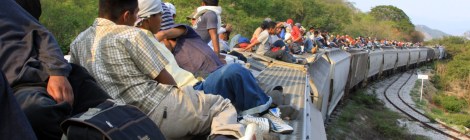
    Mexico has rapidly become a major site of transmigration from Central America to the United States, as people move in search of employment opportunities or escape from social violence. This rise in migrant flows from Mexico’s southern border overlaps with problems of control of contraband, organised crime, and the trafficking of drugs and arms. However, the government’s militarised approach to the phenomenon means that the use of force and human rights violations go unresolved and military approaches to preserving public order go unchecked. As long as migration remains a security issue, instead of a developmental and human rights matter, it will not be tackled appropriately. Instead, the government must start to view the matter through a citizen, not national, security lens.

    Read Article →

    Exporting (in)Security? Questioning Colombian Military Engagement in West Africa

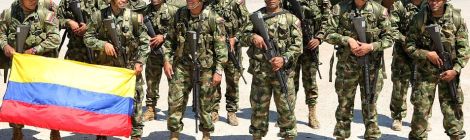
    With skills and expertise in fighting insurgencies and drug trafficking networks, Colombia’s armed forces are increasingly being sought for engagement in similar security challenges in West Africa. But increasing Colombian engagement gives rise to a number of important questions – not least of which is the goal and expected outcomes of replicating militarised approaches to the war on drugs that have already failed in Latin America.

    Read Article →

    Militarised Public Security in Latin America in Venezuela

    Across Latin America, governments are sending their militaries into the streets to act as de facto police forces in the face of disproportionally high crime and violence rates. This trend has been going on for several years, but has accelerated in 2013. With the move to deploy over 40,000 troops for citizen security in Venezuela, President Nicolás Maduro joined a growing list of leaders throughout the region that have relied on their militaries to carry out police duties. In the first of our two-part discussion ‘Countering Militarisation of Public Security in Latin America’, Sarah Kinosian discusses the conditions that are causing the trend to thrive.

    Read Article →

    Countering Militarised Public Security in Latin America: Lessons from Nicaragua

    Facing a myriad of public security challenges that have provoked some of the highest indices of crime and violence in the world, authorities in Central America have followed a variety of different responses, ranging from repressive and reactive policies to grass roots prevention. Of these approaches, the Nicaraguan National Police’s Proactive Community Policing model stands out due to the results it has achieved. In the second of our two-part discussion, ‘Countering Militarisation of Public Security in Latin America’, Matt Budd explores the lessons that Latin American countries can extract from Nicaragua’s unique approach to public security.

    Read Article →