Blog

  • Responding to Climate Disruption – Developing the Agenda

    This article is taken from Paul Rogers’ Monthly Global Security Briefings and was originally posted by Oxford Research Group on 12 March, 2014.

    Recent examples of short-term climate disruption have done much to bring the overall issue of climate change up the political agenda. In responding to what will be one of the key challenges of the next decades – well beyond the 15-year lifetime of the post-2015 global development goals currently under discussion – much of the attention has been focused on the need to adapt to those elements of climate change that are already irreversible and also to the need to decarbonise existing high carbon-emitting economies. What needs much greater attention is the fundamental need to ensure that low-carbon emitters in the Global South are enabled to combine effective human development with responding to the challenges of climate change.

    Asymmetric Impacts
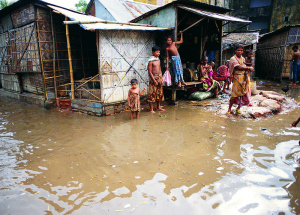
    Floodwaters surround houses in Dhaka, Bangladesh, one of the world's most climate vulnerable countries.

    Floodwaters surround houses in Dhaka, Bangladesh, one of the world’s most climate vulnerable countries. Source: CAPRA Initiative (Flickr)

    The scientific evidence that climate change is happening is now overwhelming and only a tiny handful of scientists question its anthropogenic causes. The most recent decadal report from the World Meteorological Office (WMO), for 2001-2010, confirms that climate change already involves disruption, with the decade seeing a clear increase in impact across the world. Events since 2010, including excessive heat waves, floods, droughts and the strongest land-fall cyclone (Typhoon Haiyan) ever recorded all point to accelerated disruption.

    In recent years there has been a relative pause in the rate of atmospheric warming but research points to aspects of the Southern Oscillation being responsible, temporarily slowing the overall rate of warming of the atmosphere, but not of the oceans. This is expected to change in the second half of the current decade and the effect of this will be that anthropogenic-induced warming and natural cycles will be in synchrony, leading to rapid change and greater climatic disruption.

    Climate change is thus expected to accelerate but there is, in addition, abundant evidence that it is already a markedly asymmetric process. There are many indications that substantial areas of the tropics and sub-tropics will heat up and dry out faster than temperate latitudes. This is significant for four reasons:

    • These regions support the majority of the world’s people and produce the majority of the world’s food, much of it being locally produced in subsistence farming systems.
    • Most of the poorer and more marginalised people live there, with least resilience to climate disruption.
    • These regions also include most of the rapidly growing megacities where infrastructure is not keeping pace with growth, resulting in low urban resilience.
    • They include the vast “carbon sinks” of the Amazonian, African and Southeast Asian rain forests, the diminution of which will accelerate atmospheric carbonisation.

    The other element of asymmetry – relatively faster warming of the near-Arctic – is directly advantageous to some countries, most notably Russia and Canada, both of whom stand to benefit in the short term in three ways:

    • Sea ice will diminish, opening up new commercial sea routes.
    • Arctic fossil and other mineral resources will be easier to exploit.
    • Agriculture will “move North”, opening up new regions for development.

    These two countries are also major fossil fuel producers so they benefit through these revenues, including easier exploitation of Arctic reserves, as well as from the impact of their use since this is likely to enhance Arctic warming. It is hardly surprising that neither government has much interest in controlling carbon emissions. As a Permanent Observer at the Arctic Council, the UK could do much to work with the five Nordic countries, all Main Council Members, on this issue, also involving new observer states, such as China, India, Japan and South Korea that have an interest in new sea routes, but are increasingly aware of the potential direct negative impacts on their own economies of climate change.

    The Changing Political Environment

    The direct denial of climate change as a phenomenon affecting human society still persists and is most clearly seen in two powerful interest groups. One is the fossil fuel industry, especially oil companies and producer countries that have a clear interest in protecting their revenues. There are also major interest groups clustered around those who genuinely believe that the unrestricted free market form of capitalism is the only appropriate system for the global economy. As such they are deeply suspicious of governmental interference in the economy and therefore highly suspicious of a world-wide challenge that demands strong intergovernmental coordination and government action.

    Both groups have been powerful and effective supporters of the denial community and though they are helped by the governmental attitudes of countries such as Russia and Canada, their greatest support came from the Bush administration in the United States in 2001-2009. Their influence is now declining for three broad reasons.

    • One is that the frequency of severe and even extreme weather events is changing public opinion in many countries. The UK is a good example where serious winter flooding was enough to ensure that the Prime Minister, David Cameron, agreed that climate change was of huge concern, even though many in his own party remain doubters. At a global level, the WMO report adds credibility to the view that extreme weather events, like the canary in the coal mine, are harbingers of what is to come.
    • A second element is that the most powerful state, under Barack Obama, acknowledges that climate change is happening, even though powerful denier elements remain resolute in their resistance.
    • Finally, a number of major industrial groups, especially those in the engineering industry, are embracing the prospects for new market opportunities as renewable energy technologies and techniques of storage and conservation come into their own

    Current Responses to Climate Change

    The two main responses to climate change currently envisaged are the progressive decarbonisation of carbon-intensive societies and the adaptation of high- and low- carbon societies to the impacts of climate change that are inevitable given the existing increases in atmospheric carbon. Both of these remain likely to gain in importance given the recognition of the huge challenges ahead. While the action so far is inadequate, it at least now shows signs of some prioritising. Whether the 80% carbon emission requirements of industrial societies can be achieved within twenty years is, at most, questionable, but it is now at least recognised as a worthy aim.

    There is also recognition that adaptation is addressing symptoms rather than responding to causes – improved flood defences in a country such as Britain may well be necessary but unless climate change is halted they are just short-term responses that will progressively be overwhelmed. Similarly, there is already good work going on in aiding the adaptation of less developed economies through, for example, the breeding of robust food grain varieties more able to withstand low rainfall. Such work needs considerable expansion but this, and the progressive decarbonisation of high emitters still misses out a crucial element in responding to climate change.

    The Missing Element

    In relative terms, the missing element is the low level of investment in the evolution of low-carbon economies of societies that have not substantially industrialised, mainly those in the tropical and sub-tropical regions of the Global South. Such countries include most of the most marginalised and poorest people on Earth where there is a deep-rooted desire for far greater life chances, yet these cannot be met through the modes of economic organisation of the industrialised North. If the marginalised majority is to see its development prospects enhanced then this has to be achieved through new forms of low-carbon economic development. Countries have to succeed without following the path taken by industrialised states over the past two hundred years.

    It follows that there is a very strong case for a state such as the UK prioritising any form of development assistance which aids this process. Much of this will centre on any form of low carbon energy use, including a wide range of renewable technologies, with major improvements in energy conservation and storage. Much work is already going on in this area, not least in relation to renewable energy technologies readily available to non-networked societies. It is also notable that when technologies emerge which demonstrate obvious utility, the speed of take-up can be remarkable. The cell-phone revolution in sub-Saharan Africa is just one example.

    Regrettably, UK Department for International Development (DFID) operational plans for 2013-14 indicate that low carbon development (LCD) targets from the Department’s 2011-15 strategy have been reduced or abandoned. The 2015 target for installed clean energy capacity has been reduced by almost 97%, from 3GW to 100MW. The original target to raise $610 million in private finance for LCD has disappeared, having raised $15 million by 2013.

    If the UK development programme was to commit just 20% of its budget to this area of work, the results could be extremely valuable, especially if part of that was to encourage North-South research and development partnerships. Furthermore, while the British development programme has many faults, it has grown to be the world’s second largest and there is sufficient cross-party support for this to be sustained against opposition. Because of the size of this programme, the UK has a more powerful voice than most in intergovernmental fora relating to development. It can use this voice to help ensure that the commitment promoted here is shared by other national and intergovernmental development programmes.

    Conclusion

    Climate disruption is one of the greatest challenges facing humankind, a challenge that is at last becoming recognised as such because of the extreme nature of many recent weather events. Decarbonising major industrial economies and funding adaptation to the already inevitable impact of climate change are essential responses but they must be accompanied by major programmes to ensure that human development in the poorer economies can be fully accomplished through processes of low carbon economic development. This is a critically important task over the coming decades, is insufficiently recognised as such, and should be a priority for any serious political party committed to the world-wide development of human well-being.

    Paul Rogers is Global Security Consultant to Oxford Research Group, for which he writes monthly security briefings.  He is Professor of Peace Studies at the University of Bradford and author of numerous books including ‘Beyond Terror’. Paul writes a weekly column for openDemocracy  and tweets regularly at @ProfPRogers.
  • Mission Impossible: The Elusive Search for Peace in Syria

    The Syrian war is one of the worst political and humanitarian crises since the Second World War and mediation attempts have proven largely fruitless. What are the reasons behind their failure, and what are the prospects for peace in the future?

    January 2017 will see new leadership both at the UN and in the US. António Guterres will become the 9th Secretary-General of the United Nations and Donald Trump will take office as the 45th President. These leaders will inherit from their predecessors a problem that ranks among the toughest and most complex in the world today: the Syrian civil war a, conflict that began in 2011 and since then has seen between 312,000 and 470,000 deaths.

    Both men have declared Syria a policy priority. Trump has given few specifics beyond a desire to depart from current U.S. policy, whereas Guterres has said that, under his leadership, ending the Syrian civil war will be the UN’s most important task.

    Guterres faces tough odds: the catalogue of failed mediation efforts in Syria has by now grown quite long. After the Arab League’s failed attempt in the early phase of the conflict, the UN dispatched to Syria first Kofi Annan and then Lakhdar Brahimi, both of whom fervently tried to broker various ceasefire arrangements, and both of whom returned empty-handed. More recently, the diplomatic initiative has rested with U.S. Secretary of State John Kerry and Russian Foreign Minister Sergei Lavrov, who have sought to find a way to collaborate on Syria despite diverging priorities.

    In September 2016, this duo managed to negotiate a ceasefire, but, in a rather typical display of how tenuous progress is in Syria, the deal fell apart within days, following an ill-timed accidental American bombardment of Syrian troops in Deir el-Zour and unrelenting combat in Aleppo. In parallel, Staffan de Mistura, the UN’s third envoy since the war began, has continued to probe for breakthroughs, however small and local, to keep a semblance of a process alive, but without substantive progress.

    Why Syria is a mediator’s “mission impossible”

    There are several reasons why previous mediation has fallen short in Syria. International disunity and distrust in the various mediators are important factors – rebels rejected the most recent UN initiative, a limited humanitarian ceasefire in Aleppo, on the grounds that the UN was “biased” against them. The main explanation, however, lies in the nature of the conflict. Kofi Annan labeled it a mediator’s “mission impossible”: a war fought between many and fractured coalitions, infused with sectarian enmity, and subject to constant meddling from foreign powers.

    Academic research sheds light on all of these factors, and why and how they effect peace mediation. First, the higher the number of belligerents, the harder a conflict is to settle. In Syria, where the number of actors is extraordinarily high, it has proven impossible to design a deal that is attractive to a critical mass of parties. This problem has been particularly acute with respect to the opposition, which frequently have fallen to infighting and agree on little beyond the necessity of ousting President Bashar al-Assad.

    Second, historical evidence shows that conflicts where belligerents anchor their demands in religious traditions are more intractable than other conflicts. In Syria, religious fault lines have gradually hardened, especially between Sunni and Shia, raising the threshold for peace deals that depend on sectarian co-existence. The widespread presence of jihadists who view the conflict in cosmic, Manichean terms add one further barrier to initiating a process premised on the exchange of concessions.

    Third, with the possible exception of the Islamic State, nearly all actors in Syria enjoy the material and diplomatic support of foreign sponsors. Conflicts that attract external interventions tend to be more resistant to mediation, most likely because foreign powers can offset shifts on the battlefield by escalating the influx of weapons and other resources to their preferred client. Further, support from foreign sponsors makes belligerents less dependent on support from the local population, which otherwise can generate social pressure that incents negotiations.

    Combined, these factors have created a situation where it has been difficult for mediators to identify a viable power-sharing deal, and even less, generate firm expectations that such a deal could be implemented.

    The conflict will end, but how?

    Like all wars, the war in Syria will end. The question is how long it will take and the means through which this will be achieved. Logically, the war in Syria can end in three ways: through a military victory, by petering out into a “cold war”, or via a negotiated agreement.

    Even though the majority of civil wars end in military victory, most analysts have held the view that this is an unlikely outcome in Syria. Neither side has had the resources to impose, much less maintain, a monopoly on violence in the entirety of the country. However, there are signs that a regime victory has become, if not likely, at least a possibility. The fall of Aleppo to regime troops in December 2016 will free up considerable forces that can be reallocated for tactical offensives in other areas. Continued Russian efforts and a realignment of U.S. priorities in Syria under a Trump Presidency may allow the regime to make further gains.

    Another scenario is that the war gradually de-escalates into a “cold war”, with little or no active fighting. In parts of the country, especially the South, this is already the de facto situation, as localized truces and standoffs have produced a state of suspended warfare. A generalization of this scenario, though, is premised on the exhaustion not only of the primary belligerents (e.g., via manpower shortages), but also of their foreign sponsors, which would require significant shifts in both regional and international politics.

    The third way the war can end is via a negotiated agreement, either induced via external mediation of the kind discussed above, or emerging from direct negotiations between the parties within Syria. We know from statistical research that a growing number of civil wars end in negotiated agreements, but, in light of the challenges listed above, there is clearly some way to go before that will happen in Syria.

    A changing landscape?

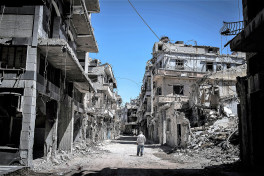
    syria-homs

    Image credit: Chaoyue 超越 PAN/Flickr

    As neither of three paths to peace appears imminent, continued war is therefore the only realistic scenario in the short- to mid-term. But there are signs of a changing landscape, both militarily and politically, which may open up avenues to a negotiated agreement, at least in limited forms between the regime and the non-jihadist opposition.

    The most important shift, potentially, is the election of Donald Trump as the next U.S. President. While the details of the President-elect’s Syria policy remains opaque, it is likely to include two ingredients: more direct coordination with Russia and stronger military efforts against the Islamic State. With Trump as President, the U.S. may be willing to shift publicly on issues that are currently recognized only implicitly, such as the acceptance of Assad’s staying in power, the failure of train-and-supply efforts, and the Islamist domination within the opposition. The current battery of economic sanctions may also be revisited.

    The coming of Trump is therefore likely to favor Damascus, but it could also increase the prospects for substantive negotiations. Historically, when great powers favoring opposing belligerents in a civil war come together, it have tended to favor negotiated outcomes. If Russia, Turkey and the U.S. can maximize their leverage with their respective clients, they could help push them to the negotiation table. But chances are still slim: they have tried before without succeeding and Trump’s Syria policy may alienate the opposition, reducing U.S. leverage.

    The fall of Aleppo signifies another important change in the strategic landscape. By capturing the city, regime forces dealt a demoralizing blow to the opposition, while further alienating Western audiences. It remains unlikely that the regime can claw back all lost territory, let alone rule it in a legitimate manner, but the victory in Aleppo may add further leverage to its strategy of seeking local “reconciliation agreements”. Several hundred such local truces have already been struck across the country and, if generalized, may portend a demographic “sorting out” that would leave Syria organized into more or less autonomous zones, akin to the  “cold war” scenario above.

    For its part, the UN is likely to continue its valiant search for solutions, small and large. If the new UN Secretary General is to deliver on his promise to prioritize a peaceful solution in Syria, he needs to find a way to capitalize on the expected rapprochement between Russia and the U.S. His man in the field, envoy de Mistura has signaled that he concurs with the military fight against the Islamic State but that a military strategy needs to be accompanied by “political devolution” in Syria. This indicates that the UN is considering an arrangement styled on Bosnia or Iraq – essentially power-sharing along sectarian lines – for Syria. Even if the UN manages to leverage the U.S. and Russia behind such a plan, however, it currently appears unlikely that the opposition would give up on its demands for regime change, and that Damascus, smelling military victory, would seriously consider it.

    Magnus Lundgren is a postdoctoral research fellow at Stockholm University, Sweden. His research focuses on conflict resolution in civil wars and on decision-making in international organizations such as the UN. His most recent publications include ”Which international organizations can settle civil wars” and ”Mediation in Syria: Initiatives, strategies, and obstacles, 2011-2016”. He is the co-founder of the Multilateral Negotiation Project, a non-profit that seeks to enable better global negotiation processes. He can be followed on Twitter @magnusllundgre

  • What the Environmental Legacy of the Gulf War Should Teach us

  • Nitrogen: a driver of global food insecurity?

  • Quiet Legacies and Long Shadows: The Obama era of counterterrorism in the Sahel-Sahara

    Getting Older But Not Wiser: the Arms Trade Treaty’s First Birthday

    April 2nd marked the first anniversary of the adoption of the much celebrated Arms Trade Treaty (ATT), the world’s first treaty to establish common standards of international trading in conventional weapons and which in turn aims to ‘ease the suffering caused by irresponsible transfers of conventional weapons and munitions’. But with the continued irresponsible arms trading and an overall rise in the global arms trade, it seems that some states have yet to put the ideals of the ATT into practice.

    Read Article →

    Beyond crime and punishment: UK non-military options in Syria

    The defeat of the UK government’s parliamentary motion on support in principle for military action against the Syrian regime means that Britain will play no part in any direct attack on Syria. What then are its options for resolving the Syrian conflict, protecting civilians and punishing those responsible for war crimes there? This article assesses what the UK can do in terms of pushing for a negotiated peace settlement and to hold accountable those responsible for using chemical weapons and any other war crimes committed during this century’s worst humanitarian crisis.

    Read Article →

    A top-down approach to sustainable security: the Arms Trade Treaty

    2012 has been hailed as a potential landmark year in the push for greater regulation of the global trade in conventional arms. After more than a decade of advocacy to this end, negotiations took place throughout July towards the world’s first Arms Trade Treaty (ATT), which is intended to establish the highest possible common international standards for the transfer of conventional weapons. However, although significant progress was made during the month of intense negotiations, the ATT is not yet open for signature. In this article, Zoë Pelter explores what role a potential treaty – if reopened for further negotiation – could play in a move towards sustainable security.

    Read Article →

  • Europe’s Borders, Refugees, and the Islamic State

  • Alternative for Germany and the Rise of Right-Wing Populism

  • Limited Nuclear Wars – Myth and Reality

    Summary

    The dramatic recent escalation of rhetoric and military posturing on the Korean peninsula has reawakened suggestions that the United States could use relatively low-yield nuclear weapons in a limited or tactical operation to neutralise North Korea. Indeed, both the idea of nuclear ‘first strike’ and their ‘flexible’ usage on and off the ‘battlefield’ are deeply rooted in historic and current NATO and UK doctrine on nuclear weapons. Given the extraordinarily militarised nature of the inter-Korean border and, increasingly, that between NATO and Russia, the potentially cataclysmic nature of any nuclear exchange must be urgently recalled and avoided at all costs.

    Introduction

    One of the most common misunderstandings about nuclear weapons in general and Britain’s nuclear weapons in particular is that nuclear strategy is solely about deterring an opponent from attacking you by threatening that opponent with all-out destruction in response. Given the growing risk of a nuclear confrontation over North Korea it is appropriate to point out that this has never been the case. Ever since the start of the nuclear age nuclear weapons have been seen as useable weapons and appropriate in certain circumstances for fighting limited nuclear wars.

    As a member of NATO Britain retains the option of using nuclear weapons first and has the means to do so. This briefing is intended to serve as a reminder of this. It will do so by concentrating specifically on British policy, both within NATO and out-of-area, but this applies just as much to the other seven full nuclear powers and, no doubt, to North Korea as well. It applies very much to the United States in particular and its current president, Donal J Trump, who has made it clear that the United States will not allow North Korea to develop the ability to target the continental United States with nuclear weapons.

    Early history

    When Hiroshima and Nagasaki were destroyed in August 1945 these weapons were seen in air force circles as direct descendants of the mass bombing of cities with conventional weapons using a thousand bombers or more. The raids on Hamburg and Dresden and especially the firestorm raid on Tokyo each killed tens of thousands of people so the perception after Hiroshima and Nagasaki was that the primary difference between conventional and nuclear weapons was one of cities being destroyed by one atom bomb from a single plane rather than five thousand tons of high explosive bombs from many planes. Indeed the US Army Air Corps and the nuclear weapon industry had already set in motion the industrial structures to destroy two Japanese cities every month until surrender.

    By 1948 the United States had an arsenal of fifty atom bombs and was already starting to develop the far more powerful thermonuclear weapon or H-bomb. Britain came on the scene rather later. While it first tested a nuclear weapon in 1952, it was not until the late 1950s and early 1960s that it could start deploying its Valiant, Vulcan and Victor strategic bombers in large numbers. These, too, were seen in the context of the British involvement in the area bombing of German cities, but Britain was also an early adherent of the idea of fighting limited nuclear wars, an issue that was seen as particularly relevant in the Middle East and Eastern and South Eastern Asia.

    Thus there were nuclear-capable Canberra bombers and nuclear weapons deployed to RAF Akrotiri in Cyprus from 1961 to 1969 to support the Central Treaty Organisation (CENTO), the South West Asian equivalent of NATO. These were replaced by Vulcans until 1975. From the mid-1960s there were regular detachments of V-bombers to RAF Tengah in Singapore and the Royal Navy had nuclear-capable Scimitar and Buccaneer strike aircraft on aircraft carriers such as Eagle, Ark Royal, Centaur and Victorious over a 16-year period from 1962 to 1978.

    From the early days of the deployment of nuclear weapons  by states such as the Soviet Union, the United States and Britain there is ample evidence that both military and political leaders accepted the possibility of limited nuclear war. It was expressed in Britain, for example, by the then Minister of Defence, Harold Macmillan, speaking in the House of Commons in 1955:

    “…the power of interdiction upon invading columns by nuclear weapons gives a new aspect altogether to strategy, both in the Middle East and the Far East. It affords a breathing space, an interval, a short but perhaps vital opportunity for the assembly, during the battle for air supremacy, of larger conventional forces than can normally be stationed in those areas.” (Hansard, volume 568, column 2182, 2 March 1955).

    NATO and nuclear first use

    As one of the founder members of NATO, and the second to develop nuclear weapons, Britain was involved in NATO nuclear planning from the very early years of the mid-1950s. In those early years and until the late 1960s, NATO nuclear policy was codified in document MC14/2 known as the “tripwire” policy which planned a massive nuclear response to the initiation of war by the Soviet bloc.

    While the United States maintained massively greater nuclear forces, and a wide variety of weapon types, Britain also had a significant arsenal which eventually developed to include an array of strategic and tactical systems. These included the Polaris submarine-launched ballistic missiles, free-fall bombs of variable power and anti-submarine nuclear depth bombs as well as nuclear-capable 155mm and 203mm artillery and Lance short-range nuclear missiles, the last three utilising US nuclear warheads under a dual control system. Thus, for several decades, all three branches of the British Armed Forces focused their operational planning around use of forward-deployed tactical nuclear weapons.

    By the latter part of the 1960s the Soviet Union had developed its own array of tactical systems and NATO responded by modifying “tripwire” and developing “flexible response”. This was encoded in MC14/3 of 16 January 1968 and envisaged the limited use of mostly low-yield warheads early in a conflict against Warsaw Pact troops and their immediate logistic support in the belief that they might be “stopped in their tracks”. If that failed, a more general nuclear response might ensue.

    Britain was very much part of this move, its nuclear forces were normally committed to NATO and UK personnel played significant roles within the NATO Nuclear Planning Group. This move away from deterrence through massive assured destruction was rarely publicised by the British government, one exception being an exposition of the policy offered to the House of Commons Select Committee on Foreign Affairs two decades after the transition to flexible response:

    “The fundamental objective of maintaining the capability for selective sub-strategic use of theatre nuclear weapons is political – to demonstrate in advance that NATO has the capability and will to use nuclear weapons in a deliberate, politically-controlled way with the objective of inducing the aggressor to terminate the aggression and withdraw. The role of TNF [Theatre Nuclear Forces] is not to compensate for any imbalance in conventional forces. The achievement of conventional parity could have very positive consequences for the Alliance’s strategy of deterrence. But it would not, of itself, obviate the need for theatre nuclear forces.”    (Third Report of the House of Commons Select Committee on Foreign Affairs 1987-88, p.35, para. 6.)

    What was very little understood at the time in the public domain was that NATO’s flexible response approach was not just the preparedness to use nuclear weapons first in response to a conventional military attack from the Soviet bloc but to do so at an early stage in such a conflict. This was made clear by SACEUR (the Supreme Allied Commander, Europe), General Bernard Rogers, in an interview published in early 1986:

    “Before you lose the cohesiveness of the alliance – that is, before you are subject to (conventional Soviet military) penetration on a fairly broad scale – you will request, not you may, but you will request the use of nuclear weapons”. (International Defence Review, February 1986)

    NATO’s flexible response policy remains broadly in place to the present day and nuclear planning allows for many different targeting options. This also applies to the United States where such options are constantly updated to allow for changing political situations. In an interesting reflection on relative economic and political strength, Russia also sees nuclear weapons as intrinsically of greater relevance given the low capabilities of its conventional military forces compared with those of the Warsaw Pact at the height of the Cold War.

    Britain’s out-of-area operations and nuclear weapons

    Since the end of the Second World War the United Kingdom has been one of the most active countries to be involved in overseas wars. The majority of these were wars of the late colonial period, but many others have been more broadly based, from Korea through to former Yugoslavia as well as the more recent and intensive post-9/11 conflicts across the Middle East and North Africa. Throughout all this period the UK has maintained its wide-ranging tactical and strategic nuclear options, even though the size of the arsenals is smaller than thirty years ago.

    Two of the most controversial conflicts, the Falklands/Malvinas War of 1982 and the first Gulf War of 1991 have both had a nuclear connection. After Argentina occupied the Falkland Islands in early 1982 the UK government under Margaret Thatcher despatched a substantial naval task force and six days after it left Britain The Observer reported that

    “It is almost certainly carrying tactical nuclear naval weapons – atomic depth charges carried by Sea King helicopters and free-fall bombs carried by Harrier jump jets – as part of NATO equipment.” (11 April 1982)

    Later reports indicated that many of the weapons from the smaller warships were transferred en route to an auxiliary supply ship, the RFA Resource which proceeded to the South Atlantic with the rest of the fleet but was deployed away from the most intense areas of action during the subsequent war. It is not clear whether this also applied to the nuclear weapons that may have been deployed on the two aircraft carriers, HMS Invincible and Hermes and there were also multiple if unconfirmed reports that the Thatcher government was prepared to deploy a Polaris missile submarine to the mid-Atlantic to bring it within range of Argentina. (Paul Rogers, “Sub-Strategic Trident: A Slow Burning Fuse”, London Defence Papers 34, Brasseys, 1996)

    Nine years after that war the UK government committed substantial forces to a US-led multinational military coalition to evict the Iraqi forces that had invaded and occupied Kuwait in August 1990. At the time there was considerable concern that Iraq had a useable arsenal of chemical weapons and a clear indication of UK willingness to use nuclear weapons in response came in an interview with a senior army office attached to the 7th Armoured Brigade which was leaving for the Gulf. He confirmed that an Iraqi chemical attack on UK forces would be met with a tactical nuclear response. (Observer, 30 September 1990).

    Deliberate ambiguity

    During the 1990s, after the end of the Cold War, the UK government, under the leadership of the Conservative Prime Minister John Major, scaled down Britain’s nuclear arsenals in a series of unilateral moves, ceasing to deploy dual-control US nuclear artillery and missiles and withdrawing the WE.177 tactical nuclear bombs and depth bombs between 1992 and 1998. US-owned B61 tactical nuclear bombs continued to be deployed at RAF Lakenheath for another decade and still are based in Belgium, Germany, Italy, Netherlands and Turkey under enduring nuclear sharing arrangements with those host countries.

    In order to preserve a British “sub-strategic” capability, a low-yield variant of the standard high-yield Trident thermonuclear warhead has since been deployed, although terms such as “tactical Trident” or “Sub-Strategic Trident” are no longer used in government publications. Neither is there any specific reference in official publications to the UK maintaining a policy of potential first-use of nuclear weapons.

    Instead a generic description of the UK nuclear posture appears in successive defence white papers, the 2015 statement being an example:

    Only the Prime Minister can authorise the launch of nuclear weapons, which ensures

    that political control is maintained at all times. We would use our nuclear weapons only in extreme circumstances of self-defence, including the defence of our NATO Allies. While our resolve and capability to do so if necessary is beyond doubt, we will remain deliberately ambiguous about precisely when, how and at what scale we would contemplate their use, in order not to simplify the calculations of any potential aggressor. (National Security Strategy and Strategic Defence and Security Review 2015, para 4.68, page 34, November 2015)

    It should be borne in mind that, while British ambiguity on nuclear first use is echoed by its NATO allies in Washington and Paris, as well as its assumed adversary in Moscow, there is nothing intrinsic about such a posture. China has consistently maintained a policy of no first use and normally stores its warheads separately from its delivery systems to prevent any accidental or malicious usage. India and Pakistan are also formally committed to no first use.

    Conclusion

    This brief summary of elements of the UK nuclear posture is intended as a reminder that such a posture is far more complex than simply providing a last-ditch deterrence against nuclear attack. Moreover, this applies very much for the United States which has a far wider array of nuclear weapon types and has been at the forefront of NATO nuclear planning, including the first use posture.

    Should a conflict arise between the United States and North Korea it is by no means certain that Britain would be involved, given public attitudes within the UK, although a joint RAF/US Air Force/Korean Air Force exercise was held in South Korea late last year for the first time in several decades. Even so, at a time of heightened tensions over North Korea’s nuclear ambitions the concern should be that a crisis could escalate to the use of nuclear weapons, especially with an unpredictable incumbent in the White House.

    Given Britain’s propensity for considering the idea of out-of-area nuclear first use and limited nuclear war, one would hope that there is also a full understanding of the considerable dangers of such a posture. If so, what should follow is a determination to do everything possible to advise President Trump against even considering this option in the case of North Korea.


    Image credit: Neil Hinchley. 


    About the Author

    Paul Rogers is Global Security Consultant to Oxford Research Group and Professor of Peace Studies at the University of Bradford. His ‘Monthly Global Security Briefings’ are available from our website. His new book Irregular War: ISIS and the New Threats from the Margins will be published by I B Tauris in June 2016. These briefings are circulated free of charge for non-profit use, but please consider making a donation to ORG, if you are able to do so.


  • Limited Nuclear Wars – Myth and Reality

    Summary

    The dramatic recent escalation of rhetoric and military posturing on the Korean peninsula has reawakened suggestions that the United States could use relatively low-yield nuclear weapons in a limited or tactical operation to neutralise North Korea. Indeed, both the idea of nuclear ‘first strike’ and their ‘flexible’ usage on and off the ‘battlefield’ are deeply rooted in historic and current NATO and UK doctrine on nuclear weapons. Given the extraordinarily militarised nature of the inter-Korean border and, increasingly, that between NATO and Russia, the potentially cataclysmic nature of any nuclear exchange must be urgently recalled and avoided at all costs.

    Introduction

    One of the most common misunderstandings about nuclear weapons in general and Britain’s nuclear weapons in particular is that nuclear strategy is solely about deterring an opponent from attacking you by threatening that opponent with all-out destruction in response. Given the growing risk of a nuclear confrontation over North Korea it is appropriate to point out that this has never been the case. Ever since the start of the nuclear age nuclear weapons have been seen as useable weapons and appropriate in certain circumstances for fighting limited nuclear wars.

    As a member of NATO Britain retains the option of using nuclear weapons first and has the means to do so. This briefing is intended to serve as a reminder of this. It will do so by concentrating specifically on British policy, both within NATO and out-of-area, but this applies just as much to the other seven full nuclear powers and, no doubt, to North Korea as well. It applies very much to the United States in particular and its current president, Donal J Trump, who has made it clear that the United States will not allow North Korea to develop the ability to target the continental United States with nuclear weapons.

    Early history

    When Hiroshima and Nagasaki were destroyed in August 1945 these weapons were seen in air force circles as direct descendants of the mass bombing of cities with conventional weapons using a thousand bombers or more. The raids on Hamburg and Dresden and especially the firestorm raid on Tokyo each killed tens of thousands of people so the perception after Hiroshima and Nagasaki was that the primary difference between conventional and nuclear weapons was one of cities being destroyed by one atom bomb from a single plane rather than five thousand tons of high explosive bombs from many planes. Indeed the US Army Air Corps and the nuclear weapon industry had already set in motion the industrial structures to destroy two Japanese cities every month until surrender.

    By 1948 the United States had an arsenal of fifty atom bombs and was already starting to develop the far more powerful thermonuclear weapon or H-bomb. Britain came on the scene rather later. While it first tested a nuclear weapon in 1952, it was not until the late 1950s and early 1960s that it could start deploying its Valiant, Vulcan and Victor strategic bombers in large numbers. These, too, were seen in the context of the British involvement in the area bombing of German cities, but Britain was also an early adherent of the idea of fighting limited nuclear wars, an issue that was seen as particularly relevant in the Middle East and Eastern and South Eastern Asia.

    Thus there were nuclear-capable Canberra bombers and nuclear weapons deployed to RAF Akrotiri in Cyprus from 1961 to 1969 to support the Central Treaty Organisation (CENTO), the South West Asian equivalent of NATO. These were replaced by Vulcans until 1975. From the mid-1960s there were regular detachments of V-bombers to RAF Tengah in Singapore and the Royal Navy had nuclear-capable Scimitar and Buccaneer strike aircraft on aircraft carriers such as Eagle, Ark Royal, Centaur and Victorious over a 16-year period from 1962 to 1978.

    From the early days of the deployment of nuclear weapons  by states such as the Soviet Union, the United States and Britain there is ample evidence that both military and political leaders accepted the possibility of limited nuclear war. It was expressed in Britain, for example, by the then Minister of Defence, Harold Macmillan, speaking in the House of Commons in 1955:

    “…the power of interdiction upon invading columns by nuclear weapons gives a new aspect altogether to strategy, both in the Middle East and the Far East. It affords a breathing space, an interval, a short but perhaps vital opportunity for the assembly, during the battle for air supremacy, of larger conventional forces than can normally be stationed in those areas.” (Hansard, volume 568, column 2182, 2 March 1955).

    NATO and nuclear first use

    As one of the founder members of NATO, and the second to develop nuclear weapons, Britain was involved in NATO nuclear planning from the very early years of the mid-1950s. In those early years and until the late 1960s, NATO nuclear policy was codified in document MC14/2 known as the “tripwire” policy which planned a massive nuclear response to the initiation of war by the Soviet bloc.

    While the United States maintained massively greater nuclear forces, and a wide variety of weapon types, Britain also had a significant arsenal which eventually developed to include an array of strategic and tactical systems. These included the Polaris submarine-launched ballistic missiles, free-fall bombs of variable power and anti-submarine nuclear depth bombs as well as nuclear-capable 155mm and 203mm artillery and Lance short-range nuclear missiles, the last three utilising US nuclear warheads under a dual control system. Thus, for several decades, all three branches of the British Armed Forces focused their operational planning around use of forward-deployed tactical nuclear weapons.

    By the latter part of the 1960s the Soviet Union had developed its own array of tactical systems and NATO responded by modifying “tripwire” and developing “flexible response”. This was encoded in MC14/3 of 16 January 1968 and envisaged the limited use of mostly low-yield warheads early in a conflict against Warsaw Pact troops and their immediate logistic support in the belief that they might be “stopped in their tracks”. If that failed, a more general nuclear response might ensue.

    Britain was very much part of this move, its nuclear forces were normally committed to NATO and UK personnel played significant roles within the NATO Nuclear Planning Group. This move away from deterrence through massive assured destruction was rarely publicised by the British government, one exception being an exposition of the policy offered to the House of Commons Select Committee on Foreign Affairs two decades after the transition to flexible response:

    “The fundamental objective of maintaining the capability for selective sub-strategic use of theatre nuclear weapons is political – to demonstrate in advance that NATO has the capability and will to use nuclear weapons in a deliberate, politically-controlled way with the objective of inducing the aggressor to terminate the aggression and withdraw. The role of TNF [Theatre Nuclear Forces] is not to compensate for any imbalance in conventional forces. The achievement of conventional parity could have very positive consequences for the Alliance’s strategy of deterrence. But it would not, of itself, obviate the need for theatre nuclear forces.”    (Third Report of the House of Commons Select Committee on Foreign Affairs 1987-88, p.35, para. 6.)

    What was very little understood at the time in the public domain was that NATO’s flexible response approach was not just the preparedness to use nuclear weapons first in response to a conventional military attack from the Soviet bloc but to do so at an early stage in such a conflict. This was made clear by SACEUR (the Supreme Allied Commander, Europe), General Bernard Rogers, in an interview published in early 1986:

    “Before you lose the cohesiveness of the alliance – that is, before you are subject to (conventional Soviet military) penetration on a fairly broad scale – you will request, not you may, but you will request the use of nuclear weapons”. (International Defence Review, February 1986)

    NATO’s flexible response policy remains broadly in place to the present day and nuclear planning allows for many different targeting options. This also applies to the United States where such options are constantly updated to allow for changing political situations. In an interesting reflection on relative economic and political strength, Russia also sees nuclear weapons as intrinsically of greater relevance given the low capabilities of its conventional military forces compared with those of the Warsaw Pact at the height of the Cold War.

    Britain’s out-of-area operations and nuclear weapons

    Since the end of the Second World War the United Kingdom has been one of the most active countries to be involved in overseas wars. The majority of these were wars of the late colonial period, but many others have been more broadly based, from Korea through to former Yugoslavia as well as the more recent and intensive post-9/11 conflicts across the Middle East and North Africa. Throughout all this period the UK has maintained its wide-ranging tactical and strategic nuclear options, even though the size of the arsenals is smaller than thirty years ago.

    Two of the most controversial conflicts, the Falklands/Malvinas War of 1982 and the first Gulf War of 1991 have both had a nuclear connection. After Argentina occupied the Falkland Islands in early 1982 the UK government under Margaret Thatcher despatched a substantial naval task force and six days after it left Britain The Observer reported that

    “It is almost certainly carrying tactical nuclear naval weapons – atomic depth charges carried by Sea King helicopters and free-fall bombs carried by Harrier jump jets – as part of NATO equipment.” (11 April 1982)

    Later reports indicated that many of the weapons from the smaller warships were transferred en route to an auxiliary supply ship, the RFA Resource which proceeded to the South Atlantic with the rest of the fleet but was deployed away from the most intense areas of action during the subsequent war. It is not clear whether this also applied to the nuclear weapons that may have been deployed on the two aircraft carriers, HMS Invincible and Hermes and there were also multiple if unconfirmed reports that the Thatcher government was prepared to deploy a Polaris missile submarine to the mid-Atlantic to bring it within range of Argentina. (Paul Rogers, “Sub-Strategic Trident: A Slow Burning Fuse”, London Defence Papers 34, Brasseys, 1996)

    Nine years after that war the UK government committed substantial forces to a US-led multinational military coalition to evict the Iraqi forces that had invaded and occupied Kuwait in August 1990. At the time there was considerable concern that Iraq had a useable arsenal of chemical weapons and a clear indication of UK willingness to use nuclear weapons in response came in an interview with a senior army office attached to the 7th Armoured Brigade which was leaving for the Gulf. He confirmed that an Iraqi chemical attack on UK forces would be met with a tactical nuclear response. (Observer, 30 September 1990).

    Deliberate ambiguity

    During the 1990s, after the end of the Cold War, the UK government, under the leadership of the Conservative Prime Minister John Major, scaled down Britain’s nuclear arsenals in a series of unilateral moves, ceasing to deploy dual-control US nuclear artillery and missiles and withdrawing the WE.177 tactical nuclear bombs and depth bombs between 1992 and 1998. US-owned B61 tactical nuclear bombs continued to be deployed at RAF Lakenheath for another decade and still are based in Belgium, Germany, Italy, Netherlands and Turkey under enduring nuclear sharing arrangements with those host countries.

    In order to preserve a British “sub-strategic” capability, a low-yield variant of the standard high-yield Trident thermonuclear warhead has since been deployed, although terms such as “tactical Trident” or “Sub-Strategic Trident” are no longer used in government publications. Neither is there any specific reference in official publications to the UK maintaining a policy of potential first-use of nuclear weapons.

    Instead a generic description of the UK nuclear posture appears in successive defence white papers, the 2015 statement being an example:

    Only the Prime Minister can authorise the launch of nuclear weapons, which ensures

    that political control is maintained at all times. We would use our nuclear weapons only in extreme circumstances of self-defence, including the defence of our NATO Allies. While our resolve and capability to do so if necessary is beyond doubt, we will remain deliberately ambiguous about precisely when, how and at what scale we would contemplate their use, in order not to simplify the calculations of any potential aggressor. (National Security Strategy and Strategic Defence and Security Review 2015, para 4.68, page 34, November 2015)

    It should be borne in mind that, while British ambiguity on nuclear first use is echoed by its NATO allies in Washington and Paris, as well as its assumed adversary in Moscow, there is nothing intrinsic about such a posture. China has consistently maintained a policy of no first use and normally stores its warheads separately from its delivery systems to prevent any accidental or malicious usage. India and Pakistan are also formally committed to no first use.

    Conclusion

    This brief summary of elements of the UK nuclear posture is intended as a reminder that such a posture is far more complex than simply providing a last-ditch deterrence against nuclear attack. Moreover, this applies very much for the United States which has a far wider array of nuclear weapon types and has been at the forefront of NATO nuclear planning, including the first use posture.

    Should a conflict arise between the United States and North Korea it is by no means certain that Britain would be involved, given public attitudes within the UK, although a joint RAF/US Air Force/Korean Air Force exercise was held in South Korea late last year for the first time in several decades. Even so, at a time of heightened tensions over North Korea’s nuclear ambitions the concern should be that a crisis could escalate to the use of nuclear weapons, especially with an unpredictable incumbent in the White House.

    Given Britain’s propensity for considering the idea of out-of-area nuclear first use and limited nuclear war, one would hope that there is also a full understanding of the considerable dangers of such a posture. If so, what should follow is a determination to do everything possible to advise President Trump against even considering this option in the case of North Korea.


    Image credit: Neil Hinchley. 


    About the Author

    Paul Rogers is Global Security Consultant to Oxford Research Group and Professor of Peace Studies at the University of Bradford. His ‘Monthly Global Security Briefings’ are available from our website. His new book Irregular War: ISIS and the New Threats from the Margins will be published by I B Tauris in June 2016. These briefings are circulated free of charge for non-profit use, but please consider making a donation to ORG, if you are able to do so.


  • Carefully Managing Water Resources to Build Sustainable Peace

    Carefully planned interventions in the water sector can be an integral part to all stages of a successful post-conflict process, from the end of conflict, through recovery and rebuilding, to long-term sustainable development.

    Does the better post-war water resource management contribute to peacebuilding by generating legitimacy within a society and for the state? Research has become increasingly interested in the potential role of natural resources, especially freshwater resources in war affected societies, because the misuse of natural resources is increasingly being seen as one of the key challenges for sustaining and promoting peace. This link has of late received serious traction in research and policy circles as the international community stresses the significance of environment for the peaceful societies by including both in the 2015 UN Sustainable Development Goals.

    Water Management after War

    Post-war countries are among the most difficult policy arenas for international agencies and domestic stakeholders. The challenge is not only to bring an end to the war and prevent violence from reoccurring, but also to help countries reset the dynamic among their internal actors on a peaceful path. The long-term adverse effects of wars further amplify this policy challenge.

    Many of these challenges for post-war countries relate to political and social aspects. Lasting impressions of human rights abuses committed during wars continue to shape the relations among members of societies for decades to come. Both socio-economic crunch and political churning can challenge the stability of post-war countries for many years if not decades. The public health crisis has been found to be especially severe and affect disproportionately the civilian population in post-war countries. Environmental and climate change exposes war affected people further to new risks, exaggerating the human costs of war long after active combat has ceased.

    In order to address public health crisis and to reduce further human costs of war, it is critical for a post-war country to be able to provide access to clean water and sanitation for its population. Often in war times, water storage facilities and installations for water delivery are damaged and sometimes even targeted. Thus, after the end of the war it often needed for the focus to be placed on the rapid restoration of water infrastructure.

    When a war affected country fails to swiftly and smartly manage its water resources it amplifies the vulnerability of post-war communities on water and inevitably exacerbates and prolongs the human costs of war. Increasing demand for freshwater and climate change induced variability of its availability are further adversely affecting the agricultural production and the provision of sustainable livelihood for post-war communities. Thus, addressing the war related damages to the water infrastructure are often key to rebuilding a state after war. Then, it is necessary to develop the increasingly scarce water resources in a sustainable manner, which will bring inclusive development and promote peace in the society.

    Yet, even though the international community is aware of these tasks, — recent research indicates that while addressing water management in post-war period — the emphasis is usually placed on expert-oriented solutions, which bypass the complex and critical political aspects of it. Ignoring political factors might expedite the implementation process in short run, however, it can possibly create worrying challenges not only for the smooth operation of the water projects, but also for the peace itself.

    Lessons from Kosovo and Nepal

    Asian development Bank

    The Kali Gandaki “A” Hydroelectric Project in Nepal. Image by Asian devlopment bank via Flickr.

    A recent analysis of the post-war water resource management in Kosovo shows how the international community, choosing a highly expert driven technocratic approach to rebuild Kosovo’s water sector after the violent conflict came to an end, frequently clashed with political realities in this landlocked and conflict affected territory. The United Nations Interim Administration in Kosovo (UNMIK), which assumed trusteeship of the territory in 1999 until a European Union mission replaced it in 2008, favored technical solutions and bypassed the political realities. Especially the case of the divided city of Mitrovica exemplifies that UNMIK sought to avoid confrontation. As the central political authority in Kosovo, UNMIK rather paid outstanding water bills for Kosovo Serbs, than facilitating the collection of fees for supplied water. Overall, the empirical analysis shows that UNMIK’s technocrat driven management of the water sector in fact impeded the peace process rather than aided it.

    Other recent findings on the water resource development in conflict affected Nepal, show the positive potential of ecologically sensitive service provision as these can yield tremendous socio-economic benefits for rural communities. The provision of energy in Nepal remains a pivotal challenge. In 2010, almost a quarter of the country did not have access to electricity, and even those households that were connected did not receive continuous power. The capital, Kathmandu, experiences scheduled power cuts up to 14 hours a day during the drier winter season, when hydropower ebbs, and two to three hours a day in the water-rich monsoon months. The study of two localities in rural Nepal, shows that micro-hydropower development has had many positive effects for rural communities, especially in regard to socio-economic development. This improved socioeconomic status of households reflects a clear reduction in vulnerability to poverty and even food security as the improved cannels diverting water to the micro-hydropower station have improved irrigation of nearby fields. Though it does not immediately translate into improving the legitimacy of the Nepali state, by helping to bring over all sustainable development of its citizens, the state is most likely going to reap the benefit in the future. The experiences from the study of micro-hydropower development in Nepal show that the state needs to actively pursue and project the ownership of the water sector development process in a post-war period in order to legitimize itself.

    Conclusion

    There is certainly a need to acknowledge the long-term interplay of social, political, and ecological processes in post-war countries and to understand the potential and dynamics of natural resources and environmental issues in this context. The interactions of these processes decisively shape the post-war landscape. It is therefore prudent to help building a peace that is ecologically sensitive and socially and politically relevant and desirable.

    Thus, the carefully planned interventions in the water sector become an integral part to all stages of the post-conflict process, from the end of conflict, through recovery and rebuilding, to long-term sustainable development. A recently published article in the Hydrological Sciences Journal argues that for the best possible use of water resources in the peacebuilding process, there is a need for a comprehensive approach. Both the Nepal and Kosovo cases show the unintended consequences that result from narrow focused interventions in the post-conflict landscape. It is pivotal that the international community engaged in peacebuilding must plan, think and execute with a long-term perspective that sets the conditions for sustainable peace. Drawing on an extensive reading of the current literature, such a comprehensive approach includes a series of measures to be taken in a post-conflict setting: legal reforms and building of sound water institutions; careful planning of water use to achieve sustainable food security; and cooperative involvement of international, national and local stakeholders in the planning and managing of water resources.

    Further reading:

    Swain, A., & Jägerskog, A. 2016. “Emerging Security Threats in the Middle East.” Lanham: Rowman and Littlefield Publishers.

    Krampe, Florian. 2016. “Empowering Peace: Service Provision and State legitimacy in Peacebuilding in Nepal.” Conflict, Security, and Development 16 (1), pp. 53-73.

     Krampe, Florian. 2016. “Water for Peace? Post-Conflict Water Resource Management in Kosovo,” Cooperation and Conflict. DOI: 10.1177/0010836716652428.

     Ashok Swain. 2016. “Water and post-conflict peacebuilding.” Hydrological Sciences Journal  61 (7), pp. 1313-1322.

    Florian Krampe is a political scientist specializing in peace and conflict research, international relations, and political ecology at the Department of Peace and Conflict Research at Uppsala University.

     Ashok Swain is Professor of Peace and Conflict Research and Director of the Research School for International Water Cooperation at the Department of Peace and Conflict Research, Uppsala University. He is also Professor at the Department of Earth Sciences of Uppsala University.