Category: Article

  • Peak Oil likley to occur within the next decade

    In an interview with the Independent newspaper, Dr Fatih Birol, the Chief Economist at the International Energy Agency (IEA) in Paris, has warned that most governments and members of the public underestimate the rate at which the world’s oil supplies are running out. Dr Birol suggested that global production is likely to peak in around ten years – a decade earlier than most governments predict. In addition, Dr Birol highlighted the very real danger of an ‘oil-crunch’ within the next five years which could have an adverse impact on potential recovery from the current global recession.

    Dr Birol’s comments are in keeping with sustainable security analysis, which highlights competition over resources as one of the key threats to global security. “One day we will run out of oil, it is not today or tomorrow, but one day we will run out of oil and we have to leave oil before oil leaves us, and we have to prepare ourselves for that day,” Dr Birol said. “The earlier we start, the better, because all of our economic and social system is based on oil, so to change from that will take a lot of time and a lot of money and we should take this issue very seriously.”

  • The Arab World’s Next Battle: Water Supply and Population Growth on Collision Course

    Long after the political uprisings in the Middle East have subsided, many underlying challenges that are not now in the news will remain. Prominent among these are rapid population growth, spreading water shortages, and growing food insecurity.

    In some countries grain production is now falling as aquifers – underground water-bearing rocks – are depleted. After the Arab oil-export embargo of the 1970s, the Saudis realised that since they were heavily dependent on imported grain, they were vulnerable to a grain counter-embargo. Using oil-drilling technology, they tapped into an aquifer far below the desert to produce irrigated wheat. In a matter of years, Saudi Arabia was self-sufficient in its principal food staple.

    But after more than 20 years of wheat self-sufficiency, the Saudis announced in January 2008 that this aquifer was largely depleted and they would be phasing out wheat production. Between 2007 and 2010, the harvest of nearly 3m tonnes dropped by more than two-thirds. At this rate the Saudis could harvest their last wheat crop in 2012 and then be totally dependent on imported grain to feed their population of nearly 30 million.

    The unusually rapid phaseout of wheat farming in Saudi Arabia is due to two factors. First, in this arid country there is little farming without irrigation. Second, irrigation depends almost entirely on a fossil aquifer – which, unlike most aquifers, does not recharge naturally from rainfall. And the desalted sea water the country uses to supply its cities is far too costly for irrigation use – even for the Saudis.

    Saudi Arabia’s growing food insecurity has led it to buy or lease land in several other countries, including two of the world’s hungriest, Ethiopia and Sudan. In effect, the Saudis are planning to produce food for themselves with the land and water resources of other countries to augment their fast-growing imports.

    In neighbouring Yemen, replenishable aquifers are being pumped well beyond the rate of recharge, and the deeper fossil aquifers are also being rapidly depleted. Water tables are falling throughout Yemen by about two metres per year. In the capital, Sana’a – home to 2 million people – tap water is available only once every four days. In Taiz, a smaller city to the south, it is once every 20 days.

    Yemen, with one of the world’s fastest-growing populations, is becoming a hydrological basket case. With water tables falling, the grain harvest has shrunk by one-third over the last 40 years, while demand has continued its steady rise. As a result the Yemenis import more than 80% of their grain. With its meagre oil exports falling, with no industry to speak of, and with nearly 60% of its children physically stunted and chronically undernourished, this poorest of the Arab countries is facing a bleak and potentially turbulent future.

    The likely result of the depletion of Yemen’s aquifers – which will lead to further shrinkage of its harvest and spreading hunger and thirst – is social collapse. Already a failing state, it may well devolve into a group of tribal fiefdoms, warring over whatever meagre water resources remain. Yemen’s internal conflicts could spill over its long, unguarded border with Saudi Arabia.

    Syria and Iraq – the other two populous countries in the region – have water troubles, too. Some of these arise from the reduced flows of the Euphrates and Tigris rivers, which they depend on for irrigation water. Turkey, which controls the headwaters of these rivers, is in the midst of a massive dam building programme that is reducing downstream flows. Although all three countries are party to water-sharing arrangements, Turkey’s plans to expand hydropower generation and its area of irrigation are being fulfilled partly at the expense of its two downstream neighbours.

    Given the future uncertainty of river water supplies, farmers in Syria and Iraq are drilling more wells for irrigation. This is leading to overpumping in both countries. Syria’s grain harvest has fallen by one-fifth since peaking at roughly 7m tonnes in 2001. In Iraq, the grain harvest has fallen by a quarter since peaking at 4.5m tonnes in 2002.

    Jordan, with 6 million people, is also on the ropes agriculturally. Forty or so years ago, it was producing more than 300,000 tonnes of grain per year. Today it produces only 60,000 tonnes and thus must import over 90% of its grain. In this region, only Lebanon has avoided a decline in grain production.

    Thus in the Arab Middle East, where populations are growing fast, the world is seeing the first collision between population growth and water supply at the regional level. For the first time in history, grain production is dropping in a region with nothing in sight to arrest the decline. Because of the failure of governments to mesh population and water policies, each day now brings 10,000 more people to feed, and less irrigation water with which to feed them.


    This article originally appeared on The Guardian website.  

  • Greener Cities: What We Can Do

    A recent article on this website entitled The United States, Niger & Jamaica: Food (In)security & Violence in a Globalised World explored some of the possible links between climate change, food insecurity and violence. Many current articles in the media warn of growing food insecurity as global warming and climate change have devastating effects on crops, livestock and even fisheries. A piece in yesterday’s Guardian states that if extreme weather becomes the norm (which it has) then “starvation awaits”.

    Although it is important to recognise that climate change is real and that it is a threat to global security, we should seriously start to focus on what we can do to affect change. Integral to a sustainable securit approach is to tackle and address the long-term, root causes of insecurity and conflict. This can easily seem like a daunting task, especially when it concerns “big issues” such as climate change. There are however many things that can be done: some on a policy level, and others on a community level.

    A recent report by the UN Food and Agricultural Organisation (FAO) draws the attention of policymakers to “urban and peri-urban horticulture, and how it can help to grow greener cities in Africa” because “production of fruit and vegetables in and around urban areas has a clear comparative advantage over rural and other sources in supplying urban residents with fresh, nutritious – but highly perishable – produce all year round. It generates local employment, reduces food transport costs and pollution, creates urban green belts, and recycles urban waste as a productive resource.”

    The FAO report says that by the end of this decade, 80% of the world’s fastest growing cities will be African and as more and more people are moving from rural to urban areas in search of a better life, African cities are finding it hard to cope: “more than half of all [African city] residents live in overcrowded slums; up to 200 million survive on less than US$2 a day; poor urban children are as likely to be chronically malnourished as poor rural children”. The report, which draws its conclusions and recommendations from 31 country case studies, suggests that across the Africa continent 40% of residents in cities already have home gardens and “most of these urban farmers are able to meet their nutrition needs and still produce enough to sell in markets”. The commercial production of fruit and vegetables provides livelihoods for thousands of urban Africans and food for millions more. But unfortunately market gardening has grown with little official recognition, regulation or support.

    One way to address food insecurity is definitely to help those most affected by price volatility of food become less dependent on the free market. Formally and institutionally encouraging people to grow some of their own food seems like a great idea, not only for African cities, but for people around the world. As a matter of fact, the city of London has many community gardens to “support and advocate for food producing gardens and their role in individual and urban food security”.

    Image source: Gates Foundation

  • Freedom in the World 2010: Erosion of Freedom Intensifies

    In a year of intensified repression against human rights defenders and democratic activists by many of the world’s most powerful authoritarian regimes, Freedom House found a continued erosion of freedom worldwide, with setbacks in Latin America, Africa, the former Soviet Union, and the Middle East. For the fourth consecutive year, declines have trumped gains. This represents the longest continuous period of deterioration in the nearly 40-year history of Freedom in the World, Freedom House’s annual assessment of the state of political rights and civil liberties in every country in the world.

    In 2009, declines for freedom were registered in 40 countries, representing 20 percent of the world’s polities. In 22 of those countries, the problems were significant enough to merit downgrades in the numerical ratings for political rights or civil liberties. Six countries moved downward in their overall status designation, either from Free to Partly Free or from Partly Free to Not Free. The year also featured a drop in the number of electoral democracies from 119 to 116, the lowest figure since 1995.

    A series of disturbing events at year’s end reinforced the magnitude of the challenge to fundamental freedoms, including the violent repression of protesters on the streets of Iran, lengthy prison sentences meted out to peaceful dissidents in China, attacks on leading human rights activists in Russia, and continued terrorist and insurgent violence in Pakistan, Afghanistan, Iraq, Somalia, and Yemen.

    Read the full report at Freedom House

  • “Chronic Violence”: toward a new approach to 21st-century violence

    The Norwegian Peacebuilding Resource Centre (NOREF) recently published a Policy brief by Tani Marilena Adams, proposing and outlining the concept of “chronic violence” to “characterise the crisis of escalating social violence that currently affects about one-quarter of the world’s population”.

    Basing her analysis largely on Latin America, Adams approaches “chronic violence” from a sustainable security standpoint, arguing that violence itself should not be seen as the disease to be controlled, and the problem to be solved, but rather as a symptom of many complex underlying issues that need to be addressed. The policy brief proposes “a conceptual framework that contemplates both the multiple forces that reproduce chronic violence and their complex and perverse consequences in order to contribute to a new approach to this problem that addresses critical challenges that continue to elude or confound many stakeholders.”

    Six propositions about “chronic violence” are put forth encouraging an inclusive, sustainable and long-term approach to security by combining social, economic and political concerns. Rapidly increasing social inequality is highlighted as one underlying driver of “chronic violence”. Exacerbated through globalisation and access to mass media, the majority of the world population perceives itself as “second class citizens”, marginalised and excluded from political processes and economic opportunities. 

    Weak and corrupt states and state institutions are also seen as a major driver of “chronic violence”. When the state is (or is perceived to be) incapable or unwilling to protect its citizens, non-state and illegal actors will step in, which in turn “undermines the possibility of unified state governance”. This argument was recently echoed in a piece written exclusively for this website by Elizabeth Wilke. Although the argument for strong and effective states is convincing, the idea that a state’s legitimacy is so closely linked to its monopoly of violence can be dangerous and needs very careful consideration in order to avoid militarising state responses to social unrest. 

    Perhaps one of the most important ideas to take away from this policy brief is that “chronic violence” as a social condition is not likely to be reversed in the near future and that policymakers and stakeholders need to address the underlying drivers of violence in the long term in order to build sustainable security.

    The full article on the NOREF website is available here.

    Image source: Shehan Peruma

  • Kenyan Somali Islamist Radicalisation

    The following briefing from Crisis Group illustrates the Islamist radicalisation of ethnic Somalis in Kenya, and the causes behind the trend. Decades of economic marginalisation of the Somali-dominated North Eastern Province border region has combined with government and public suspicion of ethnic Somalis to produce an unpleasant climate where either Somali loyalty is questioned, or Somalis are accused of ‘taking over’ when they move into the cities or succeed in business and politics. On the other hand, this has been compounded by the shift of East African Muslims in general away from Sufism and towards the conservative strand of Wahhabi Islam that posits the Muslim umma against the secular state, thereby enabling Somalia-based Al-Shabaab to capitalise on grievances in Kenya and encourage oppositional and even irredentist tendencies. The response of the government has overwhelmingly been one of force.

    Particular forms of marginalisation have exacerbated the grievances resulting from economic underdevelopment and government violence. Until recently, poor Muslim children were often excluded from mainstream education, restricting their options to Wahhabi-dominated madrasas which promoted the radicalisation of disaffected young Muslims. The Muslim establishment itself is also frequently dismissed as elitist and tied to the government (regardless of who happens to be in power at the time). This includes the Supreme Council of Kenya Muslims (SUPKEM) which, despite its closeness to the regime, has failed to modify the heavy-handed state responses to Muslim radicalisation.

    Crisis Group recommends that the Kenyan government cease to view the issue of radicalisation purely through an anti-terrorist lens and recognise the difference between ‘radicalisation’ and ‘extremism’. It is not necessarily a given that the former lead to the latter; and by addressing the issues of marginalisation of Somalis in particular and Muslims in general, Kenya can impede the growth of Al-Shabaab style militancy within its own borders.


    Overview, 25 January 2012

    Somalia’s growing Islamist radicalism is spilling over into Kenya. The militant Al-Shabaab movement has built a cross-border presence and a clandestine support network among Muslim populations in the north east and Nairobi and on the coast, and is trying to radicalise and recruit youth from these communities, often capitalising on long-standing grievances against the central state. This problem could grow more severe with the October 2011 decision by the Kenyan government to intervene directly in Somalia. Radicalisation is a grave threat to Kenya’s security and stability. Formulating and executing sound counter-radicalisation and de-radicalisation policies before it is too late must be a priority. It would be a profound mistake, however, to view the challenge solely through a counter-terrorism lens.

    Kenya’s North Eastern Province emerged as a distinct administrative entity dominated by ethnic Somalis after independence. It is, by most accounts, the worst victim of unequal development. A history of insurgency, misrule and repression, chronic poverty, massive youth unemployment, high population growth, insecurity, poor infrastructure and lack of basic services, have combined to produce some of the country’s bleakest socio-economic and political conditions.

    Two decades of conflict in neighbouring Somalia have also had a largely negative effect on the province and Kenyan Somalis. The long and porous border is impossible to police effectively. Small arms flow across unchecked, creating a cycle of demand that fuels armed criminality and encourages clans to rearm. Somali clan-identity politics, animosities and jingoism frequently spill over into the province, poisoning its politics, undermining cohesion and triggering bloody clashes. The massive stream of refugees into overflowing camps creates an additional strain on locals and the country. Many are now also moving to major urban centres, competing with other Kenyans for jobs and business opportunities triggering a strong official and public backlash against Somalis, both from Somalia and Kenya.

    At the same time, ethnic Somalis have become a politically significant minority. Reflecting their growing clout, Somali professionals are increasingly appointed to impor­tant government positions. The coalition government has created a ministry to spearhead development in the region. A modest affirmative action policy is opening opportunities in higher education and state employment. To most Somalis this is improvement, if halting, over past neglect. But the deployment of troops to Somalia may jeopardise much of this modest progress. Al-Shabaab or sympathisers have launched small but deadly attacks against government and civilian targets in the province; there is credible fear a larger terror attack may be tried elsewhere to undermine Kenyan resolve and trigger a security crackdown that could drive more Somalis, and perhaps other Muslims, into the movement’s arms. Accordingly, the government should:

        * recognise that a blanket or draconian crackdown on Kenyan Somalis, or Kenyan Muslims in general, would radicalise more individuals and add to the threat of domestic terrorism. The security forces have increased ethnic profiling but otherwise appear relatively restrained – especially given past behaviour; still, counter-terrorism operations need to be carefully implemented and monitored, also by neutral observers;

        * develop effective, long-term counter-radicalisation and de-radicalisation strategies. A link exists between radicalisation and terrorism, but counter-terrorism tactics aimed only at stopping Al-Shabaab and other militant groups should not become the only official response. Counter-radicalisation – reducing the appeal of radicalism – and de-radicalisation – persuading people who are already in radical organisations to leave them – are long-term processes that require tact and patience.

        * allocate, along with donors, additional state and development resources to North Eastern Province and elsewhere to rectify decades of neglect and end some of the social problems that drive radicalisation;

        * study madrasas, perhaps through a local university, to learn which are most radical and influential, both to better understand the problem of their radicalisation and to moderate extremist teachings; create a Muslim Advisory Council of respected leaders, open to hardliners, but representing all Kenyan Muslims, that is responsive to the community’s concerns and aspirations, able to articulate its message to those in power and competent in formulating the reform measures needed to improve its well-being; and

        *develop a process, with community input, for selection of a Grand Mufti: Kenya, unlike many African countries, has no supreme Muslim spiritual leader whose primary function is to provide spiritual guidance, and when necessary, make binding pronouncements on vexed issues by issuing edicts (fatwa). It would be difficult, of course, to find a unifying figure, given the sectarian and regional tensions, but it should be feasible.

    Because of the policy immediacy relating to Kenya’s intervention in Somalia, this briefing focuses on Kenyan Somali radicalisation. The growth of Islamic extremism among Kenyan and Tanzanian Muslims on the coast will be the subject of a future study. The recommendations, nonetheless, apply to all of Kenya.

    Nairobi/Brussels, 25 January 2012


    To view the original Overview and download the full report, click here

    Image Source: tik_tok

  • “Mali: Why Western Intervention is destined to fail” – Sustainable security on Channel 4 News

    (This piece was originally published by Channel 4 News on Tuesday 22 January 2013 and is the first of two parts)

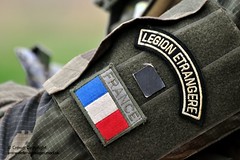
    Britain is on standby and the US is already transporting French troops into Mali. But a new paper says the west is “betting on the wrong horse” by intervening in the region.

    Now well over a decade after the beginning of the so-called war on terror, yet again, another western nation is leading a military intervention against Islamist paramilitaries based in a largely ungoverned region of a state in the Global South, write Anna Alissa Hitzemann and Ben Zala for the Oxford Research Group.

    The hostage situation in Algeria that developed late last week is just the latest in a series of western hostage takings in recent years, demonstrating the increasing radicalisation of elements in the region.

    The French-led intervention in Mali is only one of many in a growing list of attempts to control outbreaks of political violence and terrorism with military means.

    As the intervention gathers pace, it is worth reflecting on the lessons from similar operations over the past decade or so. From the US-led interventions in Afghanistan and Iraq to the attempts to control Islamist-inspired political violence in Yemen, Nigeria and Somalia and separatist rebellions in Burma, Indonesia and elsewhere, the resort to military force has singularly failed to achieve the aims set for it.

    Common to all of these examples is the reluctance to match military operations against rebel groups and insurgents with serious, long-term efforts to address the factors that underlie the feelings of resentment and marginalisation that drive such conflicts.

    As the commentary and analysis of events in Mali follow the fortunes of the military battles of France and its other western and African allies, it is worthwhile examining the political, socio-economic and cultural divisions which have sparked the uprising in the north of Mali.

    Background to the northern uprising

    The factors that led to the current Malian crisis are complex but can largely be attributed to unintended consequences of the war against Gaddafi. It is clear that the 2011 crisis in Libya, followed by foreign intervention and Nato’s military involvement, and the consequent fall of Gaddafi’s regime, had a crucial role to play.

    After losing the war in Libya, hundreds of Malian mercenaries (many of whom had been recruited among former Tuareg rebels) who had been an integral part of Gaddafi’s army, returned home. They brought with them an arsenal of weapons and ammunition as well as experience.

    These soldiers who returned to Mali from Libya played a key role in the formation of the largely Tuareg-led secular MNLA (Azawad National Liberation Movement), which in a matter of months, took over several key towns in the north of Mali, declaring an independent Azawad state.

    The situation in the north of Mali led to widespread frustration within the military over the government’s incompetence or unwillingness to deal with the issue and reclaim their territory. Ultimately, it led to the April 2012 military coup by Amadou Sanogo against Mali’s elected government and president Amadou Toumanie Touré.

    Interestingly enough, Sanogo himself had received extensive training by the United States as part of the $600m (£380m) spent by the US government in efforts to train military of the region to combat Islamic militancy.

    The actions of the separatist MNLA group and the consequent military coup and inability of the Malian government and military forces to control the situation led to a violent conflict in Mali’s north which includes four main groups: the secular MNLA and the religiously motivated AQMI (Al-Qaeda of the Islamic Maghreb), Ansar Dine and MUJAO (Movement for Unity and Jihad in West Africa).

    AQIM, the group most closely linked to the international terrorist network Al-Qaeda, has been present in Mali for several years now, has taken several European hostages over the last few years and is said to be made up of mostly Algerians and Mauritanians with much financial support from abroad.

    Tuareg rebellion and the paths not taken

    The formation of the Tuareg-led MNLA movement and its desire for an independent Azawad state has in fact deep roots and a history going back to the first Tuareg rebellion of 1963. Tuaregs led significant armed struggle and resistant movements against colonisation by the French and later the central Malian government.

    Long-term sustainable security and stability for Mali will not be possible without seriously addressing the long-standing and deep-seated grievances that stem from the marginalisation of the northern territories and their peoples.

    The political, socio-economic, educational and cultural marginalisation of the north cannot be ignored. With the effects of climate change, increasing desertification and the government’s reluctance to implement meaningful development programmes, Tuareg and other nomadic communities see no viable future and feel abandoned by the Malian state.

    Grievances also stem from past brutal repressions of Tuareg movements, as well as the state’s failure to adhere to the Algerian brokered peace agreements between Tuareg rebels and the government. Even after the Tuareg rebellions of the early to mid 1990s, the Malian government still remained unwilling or unable to implement the education programmes and development projects which were promised and are necessary to alleviate poverty and a deep sense of disenfranchisement.

    It would have been wise to negotiate and come to an agreement with the MNLA at the early stages of the current crisis. Both Burkina Faso and Algeria pushed for a diplomatic solution to this crisis instead of military intervention.

    Burkina Faso’s president, Blaise Compaore, West Africa’s mediator on the Malian crisis, had organised talks between MNLA, Ansar Dine and the Malian government in Ouagadougou in December. A ceasefire was agreed and all parties approved to adhere to further peaceful negotiations. T

    he talks which had been planned to continue this January have now been interrupted due to the French military intervention in Mali. The chance of finding a solution to combating Islamic extremism in northern Mali would be significantly better if the Malian and French military sought a way of collaborating with the Tuaregs.

    This is a challenging task but a task that is unavoidable over the long-term. It is the resentment towards the central government over the marginalisation of the northern territories and its population that in part has helped Islamists gain strength.

    By Anna Alissa Hitzemann and Ben Zala, Oxford Research Group. Channel 4 News publishes part two of the report tomorrow

    Image source: Defence Images

  • The Global Land Rush: Catalyst for Resource-Driven Conflict?

    On May 11, the UN approved new international rules to govern how land is acquired abroad. These Voluntary Guidelines (VGs), the outcome of several years of protracted negotiations, are a response to growing global concern that nations and private investors are seizing large swaths of overseas agricultural land owned or used by small farmers and local communities for food, medicinal, or livelihood purposes. FAO head Jose Graziano da Silva describes the VGs as “a starting point that will help improve the often dire situation of the hungry and poor.”

    It’s hard to quibble with the intent of the guidelines. They call for, among other things, protecting the land rights of local communities; promoting gender equality in land title acquisition; and offering legal assistance during land disputes.

    Unfortunately, however, any utility deriving from the VGs will be strictly normative. As their name states explicitly, they are purely optional. A toothless set of non-obligatory rules will prove no match for a strategy that is striking both for its scale and for the tremendous power of its executioners.

    Oxfam estimates that nearly 230 million hectares of land (an area equivalent to the size of Western Europe) have been sold or leased since 2001 (with most of these transactions occurring since 2008). According to GRAIN, a global land rights NGO, more than 2 million hectares were subjected to transactions during the first four months of 2012 alone. One of the largest proposed deals—an attempt by South Korea’s Daewoo corporation to acquire 1.3 million hectares of farmland in Madagascar—failed back in 2009. Still, even larger investments are being planned today, including a Brazilian effort to acquire a whopping 6 million hectares of land in Mozambique to produce corn and soy (Mozambique offered a concession last year).

    The Brazil-Mozambique deal illustrates another striking element of scale: transactions are not limited to wealthy, developed nations preying on the developing world. Developing nations in Africa, Latin America, and Africa are acquiring farmland as well, and developed countries like New Zealand are some of the targets. Nevertheless, capital-rich countries in East Asia and the Gulf (along with large western corporations and agribusiness firms) are indeed spearheading the majority of the investments, with most of the land located in impoverished African states.

    Who are these investors? They include the likes of China and Saudi Arabia, along with companies such as Goldman Sachs. According to the Oakland Institute, prestigious universities such as Harvard and Vanderbilt are joining the farmland craze as well. These wealthy nations and institutions are acquiring land in corruption-prone African countries—such as Sudan, Ethiopia, Kenya—and in areas populated by the rural destitute.

    Given the power imbalances at play—wealthy nations and institutions feasting on land in desperately poor and often undemocratic countries—it is folly to assume that land-seekers will suddenly embrace, en masse, a set of voluntary rules promoting sustainable and equitable investor practices. Land-lusting nations and investors are driven by immediate needs—promoting food security back home and making profits, respectively—and they have neither the incentive nor the obligation to slow down and adjust their investments in response to the wishes of distant international bureaucrats.

    What, then, can we expect from this race for the world’s farmland? Proponents of large-scale land acquisitions predict positive consequences in countries hosting investments: Better technologies for local farmers, job opportunities for rural laborers, and enhanced crop yields. Critics paint a drastically different picture. They warn that rural communities will be robbed of land that they have long owned or accessed, with devastating ramifications for food security and livelihoods.

    While some preliminary research supports the positive narrative (a German government study, for example, projects that a sugar production project in Mali will create 5,000 jobs), the bulk of available data (which includes analyses from the World Bank, International Land Coalition, and Oxfam) buttresses the negative narrative. In Sierra Leone and Mozambique, investors’ promises of jobs to smallholders have gone unfulfilled. And in Ethiopia, an Indian conglomerate is producing food for export on land previously used to cultivate an indigenous staple crop.

    Perhaps the most troubling implication of all, however, is the potential for conflict. While it is risky to attribute direct causation between natural resource inequity and conflict, there are clear links between resource security and national security. The case of India is illustrative, because, as I have written previously, many of its national security concerns are tied to natural resource issues. The nation’s Maoist insurgency—which Delhi often refers to as its “gravest internal security threat”—is based in Indian coal country, and is fueled in great part by the belief that Indian firms and the government exploit coal resources with little regard for the needs of locals. Tensions with Pakistan are tied to water, thanks to long-standing disagreements over riverwater allocations in Kashmir. And Delhi’s concerns about China’s activities in the Indian Ocean Region (IOR) are linked to energy, because China, like India, is scouring the IOR for the resource. Furthermore, India-China border tensions occur over the Himalayan Indian state of Arunachal Pradesh, an unusually water-rich area and hence strategic territory for both water-starved nations.

    So far, the only example of large-scale land acquisitions contributing to widespread instability is Madagascar, where the aforementioned 2009 Daewoo bid caused a local outcry, helping spark public protests that ultimately brought down the government that had agreed to the deal (the new government immediately annulled it). Still, several land accords have sparked localized conflict. Last year, a Ugandan mob, furious about an Indian firm’s decision to clear space in a rainforest for sugarcane production, killed an Indian man. The threat of future land-induced conflict is very real. Last year Kenyans told of being forcibly evicted from Tana Delta to allow investors to build a sugar plantation, and promised to fight back “with guns and sticks….It will be war.”

    Ominously, these land acquisitions often occur in nations already riven by conflict, and so the volatile mix of factors at play—land, food insecurity, and poverty—could well trigger more strife. Take Pakistan, for example, where the ability of the Taliban to take control of the Swat region several years ago was facilitated by its exploitation of land-based class divisions. With Islamabad having offered a 100,000-person-strong private security force to protect foreign land investor holdings, the possibility of violent land-based conflict in the deeply food-insecure nation is particularly acute (however, there is no evidence as of yet of major foreign land acquisitions in Pakistan). Consider Indonesia as well. Here, a Saudi firm has acquired more than a million hectares of land for food production on a Jakarta-controlled estate in Papua, a province embroiled in separatist insurgency. With non-Papuans expected to be imported in to provide labor for this project, the chance of ethnic-driven unrest is high.

    Don’t expect these risks and threats to disappear anytime soon, because there is little reason to expect the investments themselves to cease in the near-term. The factors that first sparked these land acquisitions during the global food crisis of 2007-08—population growth, high food prices, unpredictable commodities markets, water shortages, and above all a plummeting supply of arable land—remain firmly in place today.

    Still, while the troubling outcomes of these deals cannot be wished away, their harmful effects can be blunted. And this can best be done not by announcing nice-sounding yet non-binding international guidelines, but rather by establishing firm and clear national laws and policies in the countries hosting investments. National governments should establish robust land-use regulations that emphasize food security and resource equity; offer legal assistance to local farmers to ensure that their rights are safeguarded in the contracts governing land deals; and strengthen land registries so that land is better protected from foreign exploitation.

    Granted, given that many of the governments hosting these investments are not known for promoting the well-being of their masses, this all represents a tall order. Yet given the high stakes, it is also a necessary order. The world is already overburdened by food insecurity, unemployment, and conflict; let’s hope that appropriate measures are taken to ensure that large-scale land acquisitions don’t exacerbate these global scourges.


    Michael Kugelman is the South and Southeast Asia associate at the Woodrow Wilson International Center for Scholars in Washington DC, and lead editor of The Global Farms Race: Land Grabs, Agricultural Investment, and the Scramble for Food Security, to be published by Island Press this coming fall. He can be contacted at or on Twitter @michaelkugelman

    Image source: Planète à vendre

  • Boko Haram: Nigeria’s growing new headache

    The following article from the International Institute for Strategic Studies’ Strategic Comments focuses on the threat posed to Nigerian security by the Boko Haram Islamist group.  By placing Boko Haram in a religious context, both historical and geographical, the author examines its recent emergence as an ideological player in Nigerian society.  However, while articulating its vision through an Islamist framework, the group is largely focused on local issues of economic and religious marginalisation in the north, where 75% of the population live in poverty, compared with 27% in the south. The article also touches on conflict in the Niger Delta over control of resources, in a wider reference to the troubles facing the government in Abuja.


    Boko Haram: Nigeria’s growing new headache

    With a suicide car-bombing of the United Nations building in the Nigerian capital, Abuja, in August, and recent deadly attacks in the northeastern states of Yobe and Borno, Islamist group Boko Haram has announced its return to the stage, two years after it was supposed to have been defeated. The radical group, which used to confine itself to drive-by shootings, is more violent than ever, adding to the pressures on Nigeria’s security forces. Faced with the sect’s calls for an Islamic caliphate and increasingly sophisticated guerrilla tactics, Defence Minister Bello Halliru Mohammed recently compared Nigeria’s current position to ‘the United States … after 9/11’.

    In a series of high-profile attacks this year, Boko Haram has also burnt down a hotel in its headquarters city of Maiduguri, assassinated a candidate in the race to become governor of Borno, and bombed the national police headquarters in Abuja. More than 100 people died in the Yobe and Borno attacks earlier this month. Although the group draws its inspiration from a broader Islamist agenda, it is also motivated by local economic and religious grievances,

    Boko Haram’s activities are one of several factors behind Nigeria’s largest military deployment since the 1967–70 Civil War. Following repeated outbreaks of violence in the country’s north and centre troops have been stationed in about ten states, including Borno, Kaduna, Plateau and Bauchi. Meanwhile, the country’s immigration authorities, in conjunction with a military task force, have tightened control along the borders with Chad, Cameroon and Niger, because of suspicion that some Boko Haram members come from neighbouring countries, taking advantage of porous borders.

    Islamic extremism in Nigeria
    The small religious sect that formed in 2002 is officially called Jama’atu Ahlus-Sunnah Lidda’Awati Wal Jihad, or ‘People Committed to the Prophet’s Teachings for Propagation and Jihad’. However, it has become known by the name given to it by locals: Boko Haram, which in the Hausa language means ‘Western education is unlawful’. It is not northern Nigeria’s first extremist Islamic movement; these first appeared in the early nineteenth century when Islam in the area was dominated by the Sokoto caliphate (whose sultan currently remains the key spiritual leader for Nigerian Muslims). They spread across all northern states through the so-called Sokoto jihad. Under British rule the state’s authority was challenged by the Islamist, anti-colonial trans-Saharan Mahadist movement, which opposed foreign presence and the unification of the northern and southern protectorates.

    Since independence in 1960, power has shifted from the Muslim north to the Christian south. The Iranian revolution of 1979 resulted in growing demand for sharia law to be adopted across Nigeria. In addition, Saudi-sponsored missionaries from Saudi Arabia, Sudan, Syria, Libya, Pakistan and other countries began in the 1990s to promote Wahhabi doctrine and orthodoxy. This helped lead to the adoption of sharia law in 12 northern states between 1999 and 2001.

    In the 1980s Islamist militants belonging to the Maitastine movement became prominent in Kano and other northern states and were at the centre of violent disputes with government forces. Maitastine extremists, rejecting Muslims who had, in their eyes, gone astray, lived in secluded areas to avoid mixing with mainstream Muslims, and rejected material wealth on the grounds that it was associated with Western values. The government believed it had repressed the movement in the 1980s but it re-emerged in Kano and Jigawa in 2005, and is now present in almost all northern states.

    Common factors among militant groups have included vocal criticism of the country’s leadership as corrupt, unjust and unable to deal with social and economic problems; and rejection of Western values that, in their view, caused society and some clerics to abandon the tenets of Islam and to embrace secularism.One such group, the Muslim Brothers, attracted educated young people in the 1970s amidst economic and social crisis and high unemployment. An internal fracture between Sunnis and Shiites led the latter to establish the militant Islamic Movement of Nigeria (IMN), which did not recognise the Nigerian state and engaged in violent clashes with government forces until 1999. Later it renounced violence and became part of the national government.

    Over the past decade, new groups of militant Islamists have grounded their ideology more firmly in deteriorating socio-economic conditions, especially in the northern areas. Among this new wave was Muhajirun, whose upper and middle-class leaders from northeast Nigeria and recruited young unemployed to its cell-based network. In 2003 the group launched its first attack in Maiduguri, capital of Borno state, and soon began attacking government officials and police, often seizing weapons and ammunitions. It carried the Afghan flag and was later known as the ‘Nigerian Taliban’ even though it appeared to have no actual link with the Afghan Taliban.

    Boko Haram emerges
    Boko Haram developed out of Muhajirun. The introduction of sharia law in the north was not enough for its members, who wanted the adoption of Islamic rule across the country. Statements issued by the group also indicated an attempt to align the Nigerian struggle to jihad in Palestine, Afghanistan and Iraq.

    Nigeria lies on the so-called ‘tenth parallel’ and its persistent divide between Christian south and Muslim north has also been blamed for Boko Haram’s rise. The pastoral nomadic north has traditionally lagged behind the farming south in terms of economic development. In the Middle Belt of the country, where these two different ways of life meet, competition over land usage, exacerbated by religious, ethnic and political divisions, has resulted in intense violence with central states suffering over 10,000 deaths in the last ten years. Plateau state and its capital Jos witnessed some of the deadliest outbreaks in 2010. This stark polarisation – 75% of northerners live in poverty compared with 27% of those in the south – is a factor behind local insurrections such as that of Boko Haram. According to former federal minister Nasir Ahmad El-Rufai, ‘most of the apparent ethnic and religious crises in the north, and the youth violence and criminality in the south, can be linked to increasing economic inequality.’

    From the outset the group was led by Mohammmed Yusuf, who had previously been associated with the IMN and had been part of the committee implementing sharia law in Borno state. Yusuf’s third arrest for incitement to violence and support of terrorism in 2009 led to days of violence between his followers and the police, and resulted in his death under unclear circumstances while in police custody. His deputy, Abubakar bin Muhammad Shekau (also known as Abu Muhammad) is now believed to be the group’s leader.

    The group has mainly engaged in small-scale attacks against government and security targets, but first made international headlines in July 2009 when five days of intense attacks against ‘Westernised’ clerics and elites left more than 700 people dead in Maiduguri and forced 5,000 to flee. The extent of the violence showed that Boko Haram was capable of mobilising thousands of people and was better trained and armed than government forces had thought. Boko Haram also appeared to be strengthened – and sought to adopt the new name – following a prison break in 2010 in which 700 convicts escaped.

    Boko Haram draws its membership from unemployed and marginalised youth. There have been rumours of splits within the movement since 2009, but in 2011 internal differences became more evident as some elements including the Yusufiyya Islamic Movement (YIM) condemned the targeting of civilians and distanced themselves from attacks against places of worship.

    Escalation of the group’s attacks was seen on 24 December 2010, Christmas Eve, when two churches were attacked in Maiduguri, and in the series of incidents in 2011. These indicate that the group has become more sophisticated, that its confidence is growing and that it is no longer simply a local problem but a threat to national security.

    Official reaction
    The government has reacted by deploying troops to the region from 2004 onwards. In recent weeks, house-to-house armed searches by the Joint Task Force (JTF) in Maiduguri have prompted Boko Haram to relocate its base to Damaturu, capital of Yobo state, to which, in turn, additional forces have been deployed to strengthen an already substantial military presence. The federal government has approved the establishment of permanent operational bases for JTFs in the states of Bauchi, Yobe, Borno, Gombe, Taraba and Adamawa. While the overall size of the military contingent is unclear, local reports indicate that troops returning from peacekeeping operations in Kaduna (north-central Nigeria) and elements of the Army’s 1st Division, also deployed in Kaduna, have been put on stand-by to join the JTFs. In addition, some of the 2,400 troops engaged in Darfur, Sudan, under the United Nations, due to return to Nigeria in mid-late November, will be assigned to operations in the northeast.

    The Nigerian Army has a long-standing relation with its American counterparts which includes the provision of training. There has been speculation that some 300 Nigerian soldiers were sent to the United States to receive counter-insurgency, counter-terrorism and bomb-disposal training specifically aimed at fighting Boko Haram. However, Nigerian Army sources were reported as denying this. US officials would not comment on whether such activities were linked to Boko Haram.

    Use of the military can be problematic. Former American Ambassador to Nigeria John Campbell recently noted that the military and the police in Nigeria are national forces, not local. This means that troops operating in the north are unlikely to share ethnic and cultural background with the local population. Human-rights abuses have been reported following army deployments in the north and some Boko Haram attacks have been carried out in response to the actions of government forces.

    A further problem is that rampant corruption weakens the judicial system. Early arrests showed that some Boko Haram militants were the children of the affluent upper class. In subsequent investigations, tardiness, absence of transparency and lack of convictions suggested a willingness to protect some of those detained.

    A 2008 diplomatic cable from the American embassyin Abuja, published by the Wikileaks website, highlighted another problem: it was common practice for Islamist terrorist suspects to be released from jail and handed over to imams for re-education.  According to the cable, the imams ‘contended that the so-called de-radicalization efforts of the State Security Service were not only ill-conceived, but also ineffective, counter-productive, and unimpressive.’

    The increased sophistication of Boko Haram’s attacks may be partly explained by growing foreign support. There has been speculation – though without hard evidence – about interaction with al-Shabaab, the al-Qaeda affiliate in Somalia, including possible training of Nigerians. In August 2011 General Carter Ham, Commander of the US Africa Command (AFRICOM), said it was likely that Boko Haram had established contacts with al-Qaeda in the Islamic Maghreb (AQIM) and with al-Shabaab. He described this as, if confirmed, ‘the most dangerous thing to happen not only to the Africans, but to us as well’.In November, Algerian Deputy Foreign Minister Abdelkader Messahel said he had ‘no doubts that coordination exists between Boko Haram and al-Qaeda’, citing intelligence reports and common operating methods.

    Intersection with other groups
    Boko Haram is just one of the many security challenges confronting President Goodluck Jonathan’s administration. For the past 15 years Nigerian forces have been combating ethno-nationalist rebels, as well as militia groups which oppose foreign exploitation of resources in the oil-rich Niger Delta. The most prominent of these are the Movement for the Emancipation of the Niger Delta (MEND), the Niger Delta People’s Volunteer Force (NDPVF) and the Niger Delta Vigilantes (NDV).

    Such groups do not view Boko Haram favourably, since it has stolen the limelight and attracted government attention and resources. MEND and other Delta groups, which had gone relatively quiet since a 2009 amnesty, are determined to shift back the official focus and have threatened to resume attacks against oil installations. The Niger Delta groups tend to dismiss Boko Haram as irrelevant to Nigeria’s future, and to condemn its tactics. They have declared themselves ready to employ their most violent armed wings, such as NDV’s ‘Icelanders’, if Boko Haram were to shift its operations further south. They would see such a move as an attempt to negotiate a lucrative deal with the government similar to that which the Delta regions rebels have enjoyed as a result of the amnesty.

    Serious threat
    Boko Haram is now believed to consist of 300 fighters with a wide network of supporters numbering in the thousands. It receives some foreign financial support and, following the attacks it launched over the past 12 months, has made itself known outside Nigeria. However, it would be premature to label Boko Haram as another branch of the al-Qaeda franchise alongside organisations such as AQIM and al-Qaeda in the Arabian Peninsula. The group certainly draws part of its inspiration from the wider Islamist agenda but even the attack against the UN building in Abuja appears to have been motivated by domestic grievances – the UN is seen as aligned with the Nigerian government. There is nothing to indicate that Boko Haram will not remain a domestic, inward-looking movement.

    However, the group does represent a serious threat. In an already highly polarised country of 150 million people and nearly 350 ethnic groups speaking 250 languages, where about 50% of the population is Muslim and 40% Christian, and where nearly three-quarters of the people live on less than $1.25 a day, the potential for inter-ethnic and religious violence remains high. Poverty and unemployment in the north, coupled with population increase and government’s inability to deal effectively with non-state groups, can turn northern states into an ideal recruitment ground for extremists and a springboard from which they could expand into the rest of the country. The Abuja attacks suggest that this is already occurring.

    Article Source: International Institute for Strategic Studies

    Image Source: pjotter05

  • Extremist violence often rooted in helplessness, humiliation and hatred – John Brennan

    John Brennan, President Obama’s senior adviser on counter-terrorism, highlighted the linkages between extremist violence and political, social and economic factors in a speech on 6th August at the Center for Strategic and International Studies, a US think-tank.
     
    Although Brennan identified Al-Qaeda as the biggest threat to US security, much of the speech was devoted to the importance of non-military solutions to the problem of violent extremism: “any comprehensive approach has to also address the upstream factors, the conditions that help fuel violent extremism.” Brennan described how part of the current US national security strategy is “a political, economic and social campaign to meet the basic needs and legitimate grievances of ordinary people – security for their communities, education for their children, a job and income for parents and a sense of dignity and worth.”
     
    Time will tell how this sentiment will translate into policy. However, increased focus on the route causes of insecurity is certainly welcome. 
     
    The full speech can be downloaded here. 
    Photo: Getty Images