Category: Article

  • Climate Adaptation, Development, and Peacebuilding in Fragile States – Finding the Triple-Bottom Line

    “The climate agenda goes well beyond climate,” said Dan Smith, secretary general of International Alert at a recent Wilson Center event. “In the last 60 years, at least 40 percent of all interstate conflicts have had a link to natural resources” and those that do are also twice as likely to relapse in the five years following a peace agreement, said Neil Levine, director of the Office of Conflict Management and Mitigation at USAID.

    Development, peace, and climate stability are “the triple-bottom line,” said Smith. “How would you ever think that it would be possible to make progress on one, while ignoring the other two?” Levine and Smith were joined by Alexander Carius, managing director of Adelphi Research, who pointed out that climate change is both a matter of human security and traditional security. For example, as sea-level rise threatens the people of small-island states, “it also affects, in a very traditional sense, the question of security and a state’s sovereignty,” he said.

    The Triple-Bottom Line

    Conflicts are never attributable to a single cause, but instead are caused by “a whole pile-up, a proliferation, a conglomeration of reasons” that often include poverty, weak governance, traumatic memory of war, and climate change, said Smith. “Climate adds to the strains and the stresses that countries are under,” and works as a “risk-multiplier, or conflict multiplier,” he said.

    Focusing development and peace-building efforts on those regions experiencing multiple threats is both a “moral imperative” and a “self-interested imperative,” said Smith. “We benefit from a more prosperous and a more stable world.”

    There are currently one and a half billion people in the world living in countries that face these interlinked problems, said Smith, “and interlinked problems, almost by definition, require interlinked solutions.” Responding to the needs of these people requires developing resiliency so that they can respond to the consequences of climate change, which he called “unknown unknowns.”

    “What we need are institutions and policies and actions which guard us not only against the threats we can see coming… but against the ones we can’t see coming,” said Smith. The strength and resilience of governments, economies, and communities are key to determining whether climate events become disasters.

    Interagency Cooperation

    “Part of making the triple-bottom line a real thing is to understand that we will have to be working on our own institutions, even the best and most effective of them, to make sure that they see the interlinkages,” said Smith.

    But even though individuals increasingly understand the need to address security, development, and climate change in an integrated fashion, “institutions have only limited capacities for coordination,” said Carius. Institutions are constrained by bureaucratic processes, political mandates, or limited human resources, he said. “Years ago, I always argued for a more integrated policy process; today I would argue for an integrated assessment of the issues, but to…translate it back into sectoral approaches.”

    Levine expressed optimism that with “a whole new avalanche of interagency connections” being established in the last few years, U.S. interagency cooperation has become “the culture.” However, if coordination efforts are not carefully aligned to advance concrete programs and policies, they run the risk of “getting bogged down in massive bureaucratic exercises,” he said. “‘Whole of government’ needn’t be ‘all of government,’ and it needn’t be whole of government, all of government, all the time.”

    Building Political Will

    Europe has a “conducive political environment to making [climate and security] arguments,” said Smith, but the dialogue has yet to translate into action. In 2007, the debate on climate and security was first brought to the UN and EU with a series of reports by government agencies and the first-ever debate on the impacts of climate change on security at the UN Security Council, said Carius. However, none of the recommendations from the reports were followed and “much of the political momentum that existed…ended up in a very technical, low-level dialogue,” he said.

    More recently, the United Kingdom included energy, resources, and climate change as a priority security risk in their National Security Strategy. And Germany, which joined the UN Security Council as a rotating member this year, is expected to reintroduce the topic of climate and security when they assume the Security Council Presidency in July. These steps may help to regain some of the political momentum and “create legitimacy for at least making the argument – the very strong argument – that climate change has an impact on security,” said Carius.

    Image source: DfID

    Article source: The New Security Beat

  • Iraq: the path of war

    Most analysts agree that the security situation across Iraq as a whole has improved in 2008-09. The lower incidence of violence owes something to the consolidated sectarian geography of Baghdad and its environs as a result of the ferocious conflict of the mid-2000s. In any event the decline is relative rather than absolute, for Iraq continues to be a perilous place for many of its citizens.

    In conjunction with the opening of the official inquiry in Britain into the circumstances of the then prime minister Tony Blair’s decision to join the United States-led military campaign against Saddam Hussein’s regime in 2003, the persistent violence in Iraq reopens the question of the impulse of the war and whether other decisions with better outcomes could have been taken.

    A political target

    The everyday dangers in Iraq are illustrated by car-bombings in Mosul (against Christian churches) and Baghdad (near Iraq’s foreign and immigration ministries, and the Iranian embassy) on 15 December 2009; eight people were killed and over fifty injured in the blasts. These are not isolated incidents but part of a pattern of attacks that has evolved throughout 2009. 

    In the early part of the year, most of the attacks were directed at the Shi’a community’s mosques or crowded markets. In its second half, there has been a shift towards systematic bombings of government ministries that have often reached their targets despite high levels of security:

    ▪ on 19 August 2009, ninety-five people were killed and two ministries wrecked in central Baghdad 

    ▪ on 25 October 2009, 155 people were killed in further attacks outside government buildings in Iraq’s capital

    ▪ on 8 December 2009, at least 127 people were killed in car-bombings; many of those who lost their lives were civil servants.

    It is clear that this is a specific campaign to undermine the Nouri al-Maliki government in the run-up to the elections in spring 2010.

    The ease with which insurgents can penetrate highly secure areas is of particular concern to the authorities. Indeed, there is a widespread belief that the insurgents have access to inside information to prepare their operations.

    A grave intention

    These assaults are part of an ongoing if now less intense war that is approaching the start of its eighth year. The issue that dominated its launch, Saddam Hussein’s possession or otherwise of weapons of mass destruction (WMD), has been in effect forgotten. Tony Blair himself stated in a television interview broadcast on 13 December that he would have supported the regime’s overthrow whether WMD existed or not, a point that has raised once more the broader arguments for military action – not least that Saddam had used chemical weapons against Iraqi Kurds in the town of Halabja during the Iraq-Iran war of 1980-88.

    This specific case against Saddam Hussein is dubious, even though the chemical attack on Halabja on 16-17 March 1988 did indeed take place; it killed over 3,000 people and injured twice that number. But it is often forgotten that leading western powers chose to overlook the event, since Iraq was widely seen at the time as a de facto ally against revolutionary Iran.  Within a month, the United States navy was targeting and sinking the warships of its Iranian counterpart, in actions that did much to persuade the Iranians to agree a negotiated end to the war in August 1988.

    But the search for a pretext to effect regime-change in Iraq is in many ways less important than the fact that a firm intention to do so had existed long before the 9/11 attacks.  Nick Ritchie documents with great precision the determination of neo-conservatives and other Republicans to pursue this strategy from as early as 1997 (see The Political Road to War with Iraq: Bush, 9/11 and the Drive to Overthrow Saddam [Routledge 2006]).

    The extensive lobbying from the Republican right for regime termination in the late 1990s was related less to Iraq’s own oil power than to its location in the world’s key oil-bearing region. In particular, a little-noticed event in December 1998 intensified the neocon belief that the United States had to act against Saddam Hussein.

    A bleak arousal

    The background was that the pro-war faction in Washington was becoming concerned that 20% of the world’s oil was owned by two unfriendly states: Iran and Iraq. At the same time, there was at least some reassurance that Saudi Arabia, which controlled another 25% of global oil reserves, was sufficiently close to Washington and would prove trustworthy in a crisis.

    But the House of Saud itself was increasingly worried by domestic anti-American radicalisation, a feeling that was heightened by the United States air-force’s four-day assault on Iraq in December 1998.  A key stated aim of Operation Desert Fox was to damage Iraqi air defences, command-and-control systems and armaments-factories; though there were indications that the real purpose was to support of an attempted internal coup against the regime.

    The US air-force crew involved had undertaken training for this kind of operation; some of its key units operated the advanced F-15E Strike Eagle bombers from bases within Saudi Arabia. But as the momentum built, the Saudi authorities caused consternation in the Pentagon by refusing to allow these bases to be used for direct combat-operations – and even to allow the planes to be transferred to other bases in the region. The kingdom’s leaders in all probability feared that permission to “crusader” forces to attack another Arab country would incite further internal radicalisation.

    The Saudi decision, which meant that Desert Fox had to be undertaken with less competent forces, was a considerable shock to the Pentagon, to the Bill Clinton administration, and even more to the neo-conservatives. Those who had already been calling for regime-termination in Iraq now saw that the Saudi royal house too could not be relied on to support American actions.  The calculations turned bleak: almost half of the world’s oil was in three countries of which two were bitter opponents and the other at best unreliable. Something had to be done.

    A war ordained

    The calls for regime-termination in Iraq became more strident from the end of 1998. They rose to a crescendo after 9/11. Six weeks after the assaults on New York and Washington, an early column in this series argued that:

    “A powerful group in Iraq sees as essential an Iraq offensive, combining extensive air strikes with, in due course, military occupation of Iraq’s southern oilfields, support for Kurdish rebels in the north and Shi’a forces in the south” (see “From Afghanistan to Iraq?”, 21 October 2001).

    Before the end of 2001, well over a year before the war was launched, signs that its planning was underway were discussed in another column:

    “One indicator of possible action is the establishment of a US army headquarter in Kuwait, the HQ concerned being a key component of the army’s commitment to US Central Command, the unified military command that covers the middle east and southwest Asia, including both Afghanistan and Iraq. There are further reports that elements of five different army divisions are preparing for possible deployment to the Gulf early in 2002, including units that have recently undergone extensive desert-warfare training” (see “America’s theatre is the world”, 24 December 2001).

    These developments, all within the first year of the George W Bush administration’s term, were to be reinforced by a British prime minister armed with an implicit belief in the need to support the United States and in the utterly evil nature of the Iraqi regime. The hardening position towards Iraq had intensified after Bush’s inauguration in January 2001; it is now clear that Tony Blair had bought into it with a greater degree of commitment than most people (even those in his party and government) then appreciated.

    Before Operation Desert Fox, the likelihood of war with Iraq was already there.  After the Saudi action and George W Bush’s subsequent election it became almost certain. It may even be that 9/11 and the “diversion” into Afghanistan delayed its onset. The result of the decision was a war of terrible consequences that approaches the end of its seventh year with no end in sight.

  • A Thai Perspective on Proposed Mainstream Mekong Dams

    The Mekong River is very important for millions of local communities along the mainstream and its tributaries who depend heavily on the river’s natural ecosystem functions. The health of the river is the health of the communities. Changes in the river basin mean a lot to those marginalized people who too often have no voice and have limited alternatives for sustaining their livelihoods.

    The villages along the Mekong mainly depend on fishing and agriculture that require irrigation water from the river. Dam construction in China has already caused impacts to the river ecosystems and subsequently downstream communities. Water-level fluctuation has been the most destructive impact from unannounced releases at upstream dams in China. Most of the Mekong’s fish species are migratory and their migration instincts depend on the natural flow of the river and the health of ecosystems. Some of the fish that are vulnerable to these changes are endangered species such as Mekong Giant Catfish.

    Local fishermen depend heavily on migratory fish species. They have learned for generations how to successfully fish each migration for a given season, and how to manage the resulting food and income literally harvested from the river each season. Although the fish population decline already witnessed in parts of the Mekong is the result of many factors, dam construction is the most serious. Already, many restaurants in a province along the Mekong in Thailand are forced to import fish from the Tonle Sap Great Lake of Cambodia.

    Riverbank gardens are another important source of food and income generation for locals. In the dry season, when the water level is low and villagers are not growing rice, gardens along the riverbank serve as their main resource. Upstream hydropower operations result in unpredictable water levels, which locals have never experienced before, and result in damage or loss to their crops and investment. Consequently, these conditions cause more negative impacts beyond just food and economic insecurity, including social and cultural problems.

    Local Responses and Empowerment

    In response to these developments, communities along the Mekong River have established the “Network of Thai People in Eight Mekong Provinces” because of their concern for the impacts they’ve already experienced from dams in China and those anticipated to result from the construction of additional dams in the lower basin. The problems they are already experiencing make locals realize that the dams planned for the river in Lao and Cambodia will be even more devastating.

    One of their main strategies has focused on conducting local-level Thai Baan (villager) research to develop scientific evidence for use in their fight with those in support of more dam development. For example, this data could be used to sue the government and related authorities if the proposed Xayaburi dam is allowed to proceed. The research and data will also serve as an important tool for mobilizing, uniting, and empowering local communities in many other ways. Recently the “Network” organized a protest in Bangkok and engaged in other activities to campaign against the planned dams, including the creation and installation of big posters stating their opposition to the planned projects along the Thai-Lao border in all eight provinces.

    Of course, another important avenue has been the Thai media who have increasingly covered Mekong hydropower development issues. This coverage reflects the concern of Thai people for protecting their natural resources. Although these concerns are not uniformly widespread throughout the whole country, the people in the eight provinces and those involved in environmental and social movements are intensely aware. In some cases, domestic dam construction is still a controversial issue and can cause conflict among Thais between supporters and those who oppose additional domestic hydropower development. As for the Mekong mainstream dams, it seems no one supports them.

    The issue of the dams played a small role in the national elections this past July. People in the eight provinces of Northern and Northeastern Thailand form the core supporters of the Pheu Thai Party. During the election, the “Network” organized a forum aimed at sending a message to the politicians. The new Yingluck Administration has not yet made any statements on the proposed Mekong dams. However, the “Network” plans to send a message to the new government and their representatives stating their concerns and interests. Local people in the eight provinces believe that the new government should want to listen to their concerns because they won the election largely with the help and support of people in these areas.

    The first strategy of Living River Siam is to strengthen civil society enough to participate meaningfully in water management. The second strategy is focused on the politics of knowledge. This means using information and knowledge as a tool for the local communities to engage on policy decisions. Living River Siam organizes trips to meet with local communities in the eight provinces to give them information, collect data, and listen to their concerns. We work with them to set up the network and support local activities. We also spread their voices by organizing conferences, producing publications, organizing field trips for media and decision makers to visit the local communities, working with the media, cooperating with international organizations, and working with governmental sub-committees on the issue. One of our main activities is working with the communities along the river to collect data and conduct Thai Baan (villager) Research, research done by villagers based on local knowledge. We also use the research model as a tool for building a Mekong civil society network. The first goal is to elevate the voices of locals and ensure that their rights are recognized in water resource management. The second goal is to protect and maintain river ecosystems that are healthy enough to sustain local livelihoods.

    Multilateralism and Institutional Improvements

    The Mekong River Commission (MRC) should do more to work with civil society partners. This should include producing and providing information and knowledge for civil society organizations which could be used to support their outreach and engagement activities. Conversely, local communities, NGOs, and other civil society organizations can help the MRC conduct necessary research. This sort of relationship would also help to level the current power imbalance that exists among many of the main actors. An important new mechanism that should be established is a Mekong Community Fund. Such a fund will provide a path for communication while also supporting local participation in the various activities of the MRC. Ideally, the MRC office in each member country should establish an appropriate mechanism that allows for people’s participation in research, education, and engagement.

    Furthermore, the creation of a People’s Commission of the Mekong River or Mekong Community Network set up by local communities, NGOs, and academics that have been working or directly experiencing these issues would be an important linkage between the MRC and citizens of member countries. It can either be an independent organization or established as a department of the MRC. The first step would be to organize a meeting for representatives of local communities. Past activities of the MRC have not served as a genuine forum for Mekong communities. In 2012, Living River Siam plans to organize an international meeting of Thai Baan Research network in the Mekong Basin. As we know that each Mekong country has different political and social systems and are in different stages of development, this research model can provide a strategy for the Commission or Network as it is not necessarily a political tool aimed at dam supporters or government.

    Such an organization would also be a great target for support from the donor countries that traditionally fund the MRC. Their contributions to this new People’s Commission of the Mekong River would support the further development of an active, engaged, and responsible civil society in the Mekong Basin, while also developing new educational tools and providing a clear mechanism for the two-way transfer of knowledge.

    For More Information on Living River Siam, visit their website in English or Thai

    Article source: Stimson Center

    Image source: Roberto Moretti

  • The Challenge of Managing State-owned Small Arms and Light Weapons in South Sudan

    In this feature for the Bonn International Center for Conversion, Marius Kahl explores the security threats posed by widespread possession of small arms and light weapons in South Sudan, and some of the practical measures that can be taken to contain these threats.

    Article: The Challenge of Managing State-owned Small Arms and Light Weapons in South Sudan

    Picture Source: ENOUGH Project

  • A Realist Argument in Favour of Non-Violent Opposition in Syria

    How can the state violence in Syria be stopped? Daniel Serwer argues in the Atlantic that, given the Syrian regime’s complete failure to protect its own citizens it may be morally justifiable to arm the Syrian opposition; however from a realist perspective it is neither ‘possible nor wise’ as a means to topple Assad and bring about accountable politics. A violent reaction to the state’s overwhelmingly superior violence would not only destroy the opposition’s legitimacy, but would eventually draw them into a militarised conflict that they could not win.

    Serwer strongly advocates mass-participatory non-violent approaches which use tactics that are difficult to attribute to single individuals. In the end, removing the regime’s ability to instil fear will be the surest way to ensure its downfall, as seen in the cases of Zine El Abidine Ben Ali and Hosni Mubarak, and Serwer argues that this is still possible, even now after so much bloodshed.

    Why the Syrian Rebels Should put Down Their Guns

    It is remarkable how quickly we’ve forgotten about nonviolence in Syria. Only a few months ago, the White House was testifying unequivocally in favor of nonviolent protest, rather than armed opposition, against Syrian President Bashar al-Assad and his regime’s awful crackdown. Even today, President Obama eschews military intervention. Yesterday, Yahoo News’ Laura Rozen offered the views of four experts on moving forward in Syria. While one doubted the efficacy of arming the opposition, none advocated nonviolence. When blogger Jasmin Ramsey wrote up a rundown of the debate over intervention in Syria, nonviolence wasn’t even mentioned.

    There are reasons for this. No one is going to march around Homs singing kumbaya while the Syrian army shells the city. It is correct to believe that Syrians have the right to defend themselves from a state that is attacking them. Certainly international military intervention in Bosnia, Kosovo, and arguably Libya saved a lot of lives. Why should Syrians not be entitled to protection? Isn’t it our responsibility to meet that expectation?

    First on protection: the responsibility belongs in the first instance to the Syrian government. The international community is not obligated to intervene. It may do so under particular circumstances, when the government has clearly failed to protect the population. I don’t see a stomach for overt intervention in the U.S. Nor do I think the Arab League or Turkey will do it without the U.S., as Anne-Marie Slaughter suggests.

    The Syrian government has not only failed to protect, it has in fact attacked its own citizens, indiscriminately and ferociously. Self-defense and intervention are justified. The question is whether they are possible or wise, which they do not appear to be.

    The Free Syria Army, an informal collection of anti-regime insurgents, is nowhere near able to protect the population. Their activities provoke the government and its unfree Army to even worse violence. It would be far better if defected soldiers worked for strictly defensive purposes, accompanying street demonstrators and rooting out agents provocateurs rather than suicidally contesting forces that are clearly stronger and better armed. A few automatic weapon rounds fired in the general direction of the artillery regiments bombarding Homs are going to help the artillery with targeting and do little else.

    Violence also reduces the likelihood of future defections from the security forces. For current Syrian soldiers weighing defection, it is one thing to refuse to fire on unarmed demonstrators. It is another to desert to join the people who are shooting at you. Defections are important — eventually, they may thin the regime’s support. But they aren’t going to happen as quickly or easily if rebels are shooting at the soldiers they want to see defect.

    But if you can’t march around singing kumbaya, what are you going to do? There are a number of options, few of which have been tried. Banging pans at a fixed hour of the night is a tried and true protest technique that demonstrates and encourages opposition, but makes it hard for the authorities to figure out just who is opposing them. The Arab variation is Allahu akbar called out for 15 minutes every evening. A Libyan who helped organize the revolutionary takeover of Tripoli explained to me that their effort began with hundreds of empty mosques playing the call to prayer, recorded on CDs, at an odd hour over their loudspeakers. A general strike gives clear political signals and makes it hard for the authorities to punish all those involved. Coordinated graffiti, marking sidewalks with identical symbols, wearing of the national flag — consult Gene Sharp’s 198 methods for more.

    The point is to demonstrate wide participation, mock the authorities, and deprive them of their capacity to generate fear. When I studied Arabic in Damascus a few years ago, I asked an experienced agitator friend about the efficacy of the security forces. She said they were lousy. “What keeps everyone in line?” I asked. “Fear,” she replied. If the oppositions resorts to violence, it helps the authorities: by responding with sometimes random violence, they hope to re-instill fear.

    Could the Syrians return to nonviolence after everything that’s happened? As long as they are hoping for foreign intervention or foreign arms, it’s not likely. Steve Heydemann, my former colleague at the United States Institute of Peace, recently suggested on PBS Newshour that we need a “framework” for arming the opposition that would establish civilian control over Free Syria Army. This is a bad idea if you have any hope of getting back to nonviolence, as it taints the civilians, making even the nonviolent complicit in the violence. It’s also unlikely to work: forming an army during a battle is not much easier than building your airplane as you head down the runway.

    What is needed now is an effort to calm the situation in Homs, Hama, Deraa, and other conflict spots. Russian Foreign Minister Sergei Lavrov, who is visiting Damascus, could help. The continuing assault on Homs and other population centers is a major diplomatic embarrassment to Moscow. The opposition should ask for a ceasefire and the return of the Arab League observers, who clearly had a moderating influence on the activities of the regime. And, this time around, they should be beefed up with UN human rights observers.

    If the violence continues to spiral, the regime is going to win. They are better armed and better organized. The Syrian revolt could come to look like the Iranian street demonstrations of 2009, or more likely the bloody Shia revolt in Iraq in 1991, or the Muslim Brotherhood uprising in Hama in 1982, which ended with the regime killing thousands. There is nothing inevitable about the fall of this or any other regime — that is little more than a White House talking point. What will make it inevitable is strategic thinking, careful planning, and nonviolent discipline. Yes, even now.


    Article Source: the Atlantic

    Image Source: Yunchung Lee

  • Conflict Resolution and Environmental Scarcity

    The third, fully revised and updated, edition of Contemporary Conflict Resolution written by Oliver Ramsbotham, Tom Woodhouse and Hugh Miall has just been released and includes a chapter on ‘Environmental Conflict Resolution.’

    The authors – three of the most eminent conflict resolution experts writing today – track the debates around environmental scarcity and degradation and the relationship to conflict. Key themes such as ‘Tragedies of the Commons’ and conflicts of interest over climate change are addressed as well as multilateral and other responses.

    The authors argue that “The social cost of mitigation and adaptation is far lower than the cost of unrestricted climate change. The problem is that different individuals, interest groups and states perceive very different costs and benefits, and institutions capable of balancing global costs and benefits do not yet exist” (p. 297).

    Different strategies and analytical approaches are examined by the authors who conclude that “The supreme test for the human species is to learn collectively how to understand and anticipate … ‘unintended’ systemic effects of human action and, even at this late hour, to succeed in adapting conflict resolution approaches for overcoming local ‘tragedies of the commons’… to a global setting” (p. 304).

    More information (including ordering) can be found on the Polity website.
     

  • UK Opposition Parties outline potential Defence Spending Cuts

    Liberal Democrat Treasury spokesman Vince Cable and Shadow Chancellor George Osborne have both highlighted potential defence spending cuts should their parties come to power. In a pamphlet for the think tank Reform, Cable identified nine ideas for budget savings, which included scrapping the Trident nuclear missile system as well as other defence procurement programmes including tranche three of the Eurofighter aircraft. Osborne, following a speech at a conference organised by the Spectator magazine, echoed Cable in citing the Eurofighter project and also identified the project to build 2 new aircraft carriers and a £2.7 billion order for 25 A400 transport aircraft as specific potential savings.

    Whether these statements amount to anything more than political posturing in the run up to the general election remains to be seen. However, such statements will likely increase the pressure for a rigorous 2010 defence spending review following the general election. Whilst the scrapping of ‘white elephant’ defence projects is welcome, any savings should not just be absorbed by the spending deficit, but go hand in hand with a realignment of spending that contributes towards tackling the route causes of global insecurity that are highlighted on this site.

  • Kenya and Somalia: Landscape of Tension

    Kenya’s troubled relationship with Somalia and its own population of ethnic Somali citizens is coming to a head. Kenyan troops crossed the border on 16 October 2011 as Operation Linda Nchi (“Protect the Nation”) got underway. In response, hundreds of fighters from the Somali militia called al-Shabaab converged on the town of Afmadow in southern Somalia to meet them.

    In an ominous sign of the most likely trajectory of this expedition, a suicide-attack on 19 October close to the building in Mogadishu hosting talks between Kenyan and Somali ministers killed five people. Al-Shabaab has threatened further attacks on Nairobi. “Kenya doesn’t know war. We know war”, the group’s spokesman told the BBC. “The tall buildings in Nairobi will be destroyed.”
    The attacks in Kampala in July 2010 suggest that Kenyans would do well to heed the warning. The grenade-attack on a bar in Nairobi on the night of 23-24 October hich injured thirteen people adds to its immediacy. But Kenyans would also be advised to look even closer to home to understand why it is they find their country at war.

    The insecurity complex

    To some observers, the Kenyan government is behaving creditably. “African countries that step up to tackle an African problem, rather than sitting back and then complaining when the West tries to do it for them, are to be applauded”, writes the Guardian’s Simon Tisdall. There is some merit to the argument that Kenya is simply reacting to provocation from across the border. Many outside Kenya are familiar with the murder of David Tebbutt and the abductions of his wife Judith, the now-deceased Marie Dedieu, and the medical workers Blanca Thiebaut and Montserrat Serra.

    But readers or viewers outside Kenya may be less familiar with the long-running disruption to humanitarian efforts, raids on border-posts, and fears of terrorist attacks in Nairobi caused by al-Shabaab. It is worth noting that no evidence has yet been provided by the Kenyan government that al-Shabaab carried out the abductions; while this seems plausible, little effort has been made in Nairobi to prove the case for war.

    The actions of the Kenyan military in the second half of October 2011 are, in many respects, an extension of existing policy. The Kenyan police have long been providing training to their Somali counterparts on behalf of the Transitional National Government in Mogadishu. The Kenyan government has also made considerable efforts to bolster anti-al-Shabaab militias in southern Somalia, including the recruitment of Kenyan-Somalis on the Kenyan side of the border.

    In the meantime, the government has grumbled about the burden placed upon it by anti-piracy efforts. It has also been content, in the words of a report from the Center for American Progress, to profit “from humanitarian traffic through its port and its status as an international development hub”. Indeed, the same report argues, Nairobi has experienced an “economic boom as a result of Somali diaspora investment.”

    Such measures have done little to check the insecurity in border areas, however. Some local commentators were therefore relieved by the invasion and bullish in their forecasts. “Al Shabaab is used to pinching the bottom of a goat and now that they pinched that of the lion, that is more fiercer and more prepared, it should be in for trouble”, Mathew Buyu of the United States International University in Nairobi told The Standard newspaper. For its part Kenya’s navy set its army counterparts a poor example when its efforts to rescue Marie Dedieu resulted in the deaths of two officers after their boat capsized.

    The security response

    The Kenyan security forces seem to be eager for the fight, but there are many reasons to think that they are ill-suited to their mission. The armed forces stayed out of the post-election violence of January 2008 for the most part; at the time, responsibility for suppressing protests and subsequent clashes was left to the police and the paramilitary General Service Unit. The armed forces were, however (according to Human Rights Watch) “responsible for horrific abuses, including killings, torture and rape of civilians” in a security crackdown along the western border later in the same year (see “All the Men Have Gone: War Crimes in Keny’a Mt. Elgon Conflict”, Human Rights Watch, 27 July 2008).

    The Kenyan military is not attuned to winning hearts and minds. Nor is it used to fighting wars; its only major campaign since independence was the campaign against Somali irredentists seeking secession from Kenya and absorption by Somalia during the 1960s.

    The task of establishing a buffer-zone in southern Somalia will be difficult enough, even more so the apparent goal of taking and holding the city of Kismayo that has been part of military planning over the past couple of years. Whatever the objective, there is, as other analysts note, little reason to think Kenya will succeed where the battle-hardened Ethiopians failed in recent years.

    President Yoweri Museveni of Uganda, whose armed forces are part of the African Union peacekeeping effort in Somalia, is another sceptic. In conversations with the United States assistant secretary of state, Johnnie Carson, and other senior American diplomats in January 2010, Museveni described the Kenyan military as a “career army” and wondered “Is Kenya used to fighting like this?”

    The US seems to agree, or at least it did in December 2009 when one diplomat portrayed any plan by Kenya to occupy parts of southern Somalia “as a bad idea that would more likely add to Somalia’s instability than to help stabilise the country”. The state department has been noticeably silent since the Kenyan operation began.

    The Kenyan problem

    But Kenya’s military adventure cannot usefully be considered solely in terms of an external threat from Somalia. There is, as with all conflicts, no single reason why the country finds itself at war. A complex mix of local politics and economics is at play, as well the activities of al-Shabaab.
    The strong presence of al-Shabaab inside Kenya reflects the region’s troubled history. Ever since the British colonial government and Kenyan nationalist leaders rode roughshod over the demands of Kenya’s Somali population to be allowed to join with Somalia at independence in 1963, the relationship between Kenyan-Somalis and the state has been fraught.

    The opposition to Somali secession resulted in a low-intensity war in northeastern Kenya between 1963 and 1967. The official number of insurgents killed is 2,000, but it is likely that many more died during the war. Thousands more were forced from their homes during a campaign of compulsory resettlement. Once the war was over, promised development funds never materialised. Without any stabilising effect from Nairobi in the form of a legitimate state presence, northeastern Kenya remained prone to tremors emanating from across the border.

    As Somalia spun into crisis in the 1980s, so cross-border incursions by armed gangs became more common. But efforts by the Kenyan government to restore a semblance of order made little effort to discriminate between those from Somalia itself and those from the local Somali population of the North Eastern Province. Restrictions were placed on movement on Kenyan-Somalis and the community was subject to numerous incidents of gross human-rights abuses. None was as significant nor remembered with as much bitterness by Kenyan-Somalis as the Wagalla massacre in February 1984 when at least 1,000 civilians were killed by the Kenyan security forces.

    The continued failure of successive governments to extend the full benefits of citizenship to Kenyan-Somalis has, unsurprisingly, meant that al-Shabaab has built up networks of support within Kenya itself (see the UN Security Council report of 18 July 2011). “We are not part of Somalia, and the Kenyan government treats us as second-class citizens”, mayor Mohammed Gabow from Garissa town told al-Jazeera in 2009. “It’s a dilemma”.
    Such a sense of grievance has been reinforced on a regular basis. A security crackdown targeted at Somalis living inside the Kenyan border in October 2008, for instance, was described by Human Rights Watch as “a deliberate and brutal attack on the local civilian population”.

    The recent military action has been followed quickly by promises of tough action against Kenyan-Somalis. On 19 October 2011, a junior minister responsible for internal security, Orwa Ojodeh, promised parliament “a massive operation to get rid of Al Shabaab and Al Qaeda here in Nairobi.” Al Shabaab is, Ojodeh claimed, “a big animal with its main network in Kenya and only a fraction of it extending into Somalia.” Kenyan-Somalis now face tighter movement restrictions, which MPs representing them claim are both unconstitutional and unrelated to the conflict in Somalia.

    It is true that some Kenyan-Somalis and migrants from Somalia are working actively in support of al-Shabaab in Nairobi. They play a vital role in the organisation through raising and transferring funds for the insurgency, handling contraband, recruiting new fighters and providing medical treatment to the injured. Moreover, support for al-Shabaab has recently grown amongst the wider Muslim community in Kenya. Strong efforts were made by the opposition in the 2007 election campaign to court the support of Muslim voters dismayed by the Kenyan participation in renditions and security purges linked to the global “war on terror”.

    But Islamophobia plays well with certain sections of an increasingly evangelised Christian Kenyan middle class. Several incidents – the terror attacks of 2002 in Mombasa, the bombing of the US embassy in Nairobi in 1998, and (more distantly) the Norfolk Hotel bomb on new-year’s eve 1980 – are cited as evidence of a Muslim propensity for violence. A government that holds an annual national prayer breakfast can expect a war against self-proclaimed jihadists to play well with some voters, at least until the casualties begin to mount.

    Al-Shabaab can operate inside Kenya only because of much wider problems that have (according to the International Peace Institute) also allowed organised crime to gain a foothold in Kenya. These include porous borders, impunity, corruption and the complicity of leading political figures have created a conducive environment for the groups’s activities. It is relatively easy to move illicit funds in and out of the country and use it as the base for the movement of illegal goods, be it cocaine or smuggled charcoal from Somalia.

    If the Kenyan government is serious about checking al-Shabaab’s operations, there are other ways of achieving this goal than invading southern Somalia. But if accusations by the US government are true, implementing measures that would also restrict international organised crime will be politically indelicate.

    In this light, al-Shabaab can be understood as a Kenyan problem as well as a Somali one, and insecurity within Kenya’s borders can be said to be a product of the shortcomings of the Kenyan state as well as the instability in its stateless neighbour. With the state’s footprint of effective rule far smaller than the boundaries drawn on a map, insecurity has been endemic in Kenya’s periphery for decades. This no-man’s-land makes up vast swathes of territory thousands of kilometres long and hundreds deep. The state’s presence is often invisible, policing inadequate, firearms readily available and the resident populations engaged in fierce competition for grazing and water.

    At times of crisis, such as political upheaval or drought, that equation often produces bloodshed. Even as troops massed on the Somali border over the weekend of 14-16 October, for instance, clashes between Borana and Somali communities some 500 kilometres inside the border took the lives of ten people.

    It is hard, furthermore, to argue that al-Shabaab presents any greater risk to the residents of northern Kenya than Ethiopian cattle-raiders. In just one incident in early May 2011, up to sixty-nine Kenyan citizens were killed along that border after they crossed just inside Ethiopia to buy food at a market.

    The development lens

    So why do tourists and aid workers abducted or killed by al-Shabaab seem to matter more to the government in Nairobi than the many more of its citizens killed along the border with Ethiopia? In addition to the ideas discussed above, the answer might lie in developments in and around the Lamu archipelago over the past few years.

    Lamu is a designated “world heritage site” and was long a sleepy backwater – a stopping-off point on the hippy trail, and a destination for other adventurous travellers attracted by its beguiling mix of tropical paradise and rich Muslim culture. Now host to numerous high-end hotels, Lamu and nearby resorts account for nearly a quarter of all tourists who head to Kenya’s Indian Ocean beaches. Tourism is a vital part of the economy, bringing in $800 million a year at a time when the shilling is plummeting in value. Tourists are, as expected, cancelling their holidays in line with travel advice from the British and French governments.

    Tourism matters to this story only insofar as the development of Lamu has meant Kenya’s major economic interests have encroached on the internal, unofficial buffer-zone that once protected the key centres of economic activity in southern, highland parts of the country from the more unstable periphery. Lamu has become an important part of ambitious development plans funded by China that involve the wider northeast African region.
    The area has been earmarked as a hub for transport links, a new port, an oil pipeline stretching from South Sudan, and a refinery. Whereas once the Kenyan government could afford to turn a blind eye to events on the archipelago and its hinterland, the area now matters. And not just to Kenya; landlocked Ethiopia and South Sudan see such ties to Kenya as a way of escaping from their own difficult relationships with Eritrea, Djibouti and Sudan.

    Both investors and likely customers have viewed recent events with trepidation. The threat of piracy unnerves shipping companies and political instability concerns other investors. The Kenyan government has sought to reassure those who will ultimately pay for the projects. The archipelago is, President Mwai Kibaki said in July 2011, “the next frontier of development in our country and region”. In part because of that, Lamu now finds itself on the frontline of a war.


    This article originally appeared on openDemocracy.  

  • Women debate a new way forward for the World’s financial system

    Many in the west are blind to the fact that poverty and social injustice create a breeding ground for conflict. “An Iraqi youth recently said to me that if he and his family were hungry and he couldn’t get a job, he would go to fight with whoever will pay him. Wars are not only about armies and bombs, but about economic instability.”  This is the view of Zaib Salbi, founder of Women for Women International.  She is one of more than 1000 female activists, business leaders and politicains attending the Fifth International Women’s Forum for the Economy and Society in Deaville October 17/18 2009.

    Read the full article here.

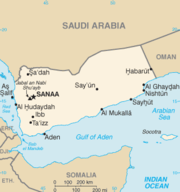
  • Al-Qaida: the Yemen factor

    The closing weeks of 2009 have seen an intensive focus among western policy-makers and media on the war in Afghanistan. The long-awaited surge in American troop deployments ordered by President Barack Obama, whose effects will be seen as 2010 unfolds, sets the scene for increased combat. The new United States strategy is mainly a response to the increased activity of Taliban and other militias; there are even claims by Mulla Sangeen that 80% of Afghanistan is under Taliban influence (see “Taliban claim control of over 80pc of Afghanistan”, PakTribune, 22 December 2009). This may be an exaggeration, but the many elements opposed both to the Hamid Karzai regime and the foreign military presence in Afghanistan have undoubtedly increased the movement’s influence (see “Afghanistan: from insurgency to insurrection”, 8 October 2009).

    There is something of a conundrum here, for the surge is being launched in a period where many argue that al-Qaida itself – the original target of the invasion of Afghan in October 2001, rather than its Taliban hosts – is actually in decline. This narrative cites the retreat of key al-Qaida leaders to western Pakistani districts where they are under constant risk of drone-attacks (which have killed many middle-ranking operatives) and are pressed by the Pakistani army to contend that al-Qaida is a diminishing threat. The implication is that if the Taliban in Afghanistan can be sufficiently squeezed into a degree of political acquiescence, then the war there can actually be won.

    True, civil planners in the United States take a far more cautious view on this issue than their military equivalents (see Rajiv Chandrasekaran, “Civilian, military planners have different views on new approach to Afghanistan”, Washington Post, 26 December 2009). But the military strategists who played a central role in the discussions preceding the new strategy are at the forefront of policy, and they are active in disseminating the case that the al-Qaida movement is in decline.

    The call of home

    This makes Umar Farouk Abdulmuttalab’s attempt on 25 December 2009 to destroy a Northwest Airlines flight as it approached Detroit after its journey from Amsterdam even more worrying. There is still more speculation than hard fact about the operation, but what little detailed information there is suggests that the young Nigerian had some connections with Yemen.

    Most of the focus of the United States war on al-Qaida since 9/11 has been on Afghanistan, Pakistan and Iraq; relatively little attention has been given to the two states on either side of the Gulf of Aden – Yemen and Somalia. Any surplus resources away from the middle east and southwest Asia have tended to be devoted to Algeria and Mali as potential sites for al-Qaida activity.

    True, Washington has looked with concern at Somalia as the internal troubles of this “failed state” have intensified; the expanding power of the al-Shabab Islamist militias – which may have loose connections with al-Qaida – in Somalia have deepened the US’s involvement here (see Harun Hassan & David Hayes, “Somalia: between violence and hope”, 15 July 2009). There is much clearer evidence, however, that Al-Qaida is active in Yemen; indeed, the group calling itself “Al-Qaida in the Arabian Peninsula” (AQAP) has claimed responsibility for the Northwest Airlines attack.

    Four elements of the Yemeni context are relevant in clarifying a complex situation:

    * Many Yemenis fought against the Soviets in Afghanistan in the 1980s and were welcomed back afterwards. Osama bin Laden himself is half-Yemeni.  More recently, a Saudi clampdown and conflict in western Pakistan have encouraged many more Yemeni paramilitaries to return home (see Ginny Hill, “Yemen: the weakest link”, 31 March 2009)

    * The Yemeni state does not control much of its territory, and its capabilities are further limited by a rebellion in the north; the latter is being waged with Saudi aid, including cross-border bombing raids by Royal Saudi air force F-15 strike-aircraft (see Michael Horton, “Borderline Crisis”, Jane’s Intelligence Review, January 2010).  A separatist movement in the south presents yet further problems to a beleaguered government

    * The government lacks the resources to maintain security. Yemen faces severe economic difficulties, in part because its oil reserves are now severely depleted and because it has been badly affected by the international financial downturn (see Fred Halliday, “Yemen: travails of unity”, 3 July 2009)

    * There has long been an Islamist paramilitary movement within the country; past attacks include the bombing of the USS Cole in Aden harbour in 2000 and the attack on the Limburg tanker in 2002 (see Fred Halliday, “Yemen: murder in Arabia Felix”, 13 July 2007).

    AQAP received a particular boost in February 2006 when twenty-three prisoners escaped from a prison in Sana’a. The group, which appears to have had support from sympathetic security officials, included the current AQAP leader Nasir al-Wuhayshi (see Sudarsan Raghavan, “Al-Qaeda group in Yemen gaining prominence”, Washington Post, 28 December 2009). In the subsequent period AQAP has become steadily more active; for example, it launched an attack on the US embassy in Sana’a and tried to assassinate Saudi Arabia’s head of counter-terrorism.

    The developments in Yemen in these four years have already prompted a strong response from the United States. The Pentagon has more than doubled military aid to Yemen, and committed over $70 million to training Yemeni security forces. There is a US special-forces presence in the country, and strong support from Washington for air-strikes against presumed AQAP targets; these include two bombing-raids on 17 and 24 December 2009 that are reported to have killed more than sixty militants (see Barbara Starr, “U.S. fears Yemen a safe haven for al Qaeda”, CNN, 28 December 2009).

    The government of Yemen’s president, Ali Abdullah al-Saleh, is working increasingly closely with the United States. The connection was expanded following a visit from the head of US Central Command, General David H Petraeus, in July 2009. The full extent of the cooperation is hidden, but it is likely that US forces are directly involved in Yemen’s internal operations – quite probably with armed drones and possibly US carrier-based strike-aircraft (see Eric Schmitt & Robert F Worth, “U.S. Widens Terror War to Yemen, a Qaeda Bastion”, New York Times, 27 December 2009).

    The inner story

    The rhetorical force of President Obama’s response to the Northwest Airlines attack makes it more than likely that Yemen will evolve into another military front against al-Qaida. This in turn will increase the perception that, after apparent reversals in Iraq and western Pakistan, the movement has staged a major comeback.

    The problem with this narrative is that it perceives al-Qaida as a clearly-structured and hierarchical movement with a coherent world plan. The reality, supported by developments in Yemen, is more complex (see Fawaz Gerges, “Al-Qaida today: a movement at the crossroads”, 14 May 2009). It is more accurate to say that al-Qaida has elements of a movement, a belief-system, a franchise and a very informal cluster of networks, yet at the same time it is widely dispersed and has relatively few internal interconnections.

    Many of the informal networks revolve around Islamist paramilitaries who fought in Afghanistan in the 1980s or in Iraq, Afghanistan and Pakistan in the 2000s. Some of the links have been consolidated by groups coalescing in detention-centres across the world, including Guantánamo. There are also indications that paramilitaries of several nationalities have moved to Yemen in recent years.

    The term “al-Qaida” is therefore best used to connote a loose rather than a ight or integrated movement. It is thus possible for the “old” leadership in western Pakistan to be under pressure while the broader movement continues to evolve. Similarly, it is also possible for the movement to have lost support in Iraq, Pakistan and the wider Islamic world (in large part because of the civilian deaths its attacks have inflicted) while it is still capable of attracting dedicated young men – including the scion of a wealthy Nigerian family – prepared to give their lives to the cause (see “Al-Qaida’s afterlife”, 29 May 2008).

    The US-led war in Yemen is likely to expand in the early months of 2010. It is not easy to see what else the Obama administration feels it can do, given that the Christmas Day attack came close to killing hundreds of people above Detroit. 

    But if the issue is seen through the other end of the telescope – a task that becomes ever more vital – and an increased American involvement in Yemen may well prove to be a hugely welcome gift to al-Qaida and its affiliates. Already its propagandists are at work, pointing to the civilian casualties of the December air-raids (as of those in the coalition’s latest Afghanistan attacks).  They will go on to develop a very clear narrative of the “far enemy” now extending its war against Islam to yet another country.

    Barack Obama may make an impressive speech on relations with the Islamic world in his Cairo speech of June 2009 – but this is seen as merely a sham. Instead, what will be portrayed is a “crusader” enemy that occupies Iraq and Afghanistan, exerts control over the Pakistani government, equips and aids the “Zionist” armed forces that suppress the Palestinians, and now kills Muslims in yet another country. It is a powerful and dangerous narrative, and one that retains great potency.