Blog

  • Sustainable Security

    Resources

    Climate Change and Security in Bangladesh

    Issue:Climate change

    This case study explores the potential impact of climate change on security and conflict in Bangladesh. As international researchers have started to make the link between climate change, insecurity and conflict, they have raised concerns that Bangladesh’s extreme vulnerability to the environmental effects of climate change may create conditions that put it at risk of greater insecurity and possible conflict.

    From Within and Without: Sustainable Security in the Middle East and North Africa

    Chris Abbott and Sophie Marsden | Oxford Research Group | March 2009

    Issues:Climate change, Competition over resources, Global militarisation, Marginalisation

    Tag:report

    The Middle East and North Africa is a region of great diversity. It encompasses Arab and many other ethnic populations, theocratic and secular states, democracies and authoritarian regimes. A region of immense wealth and crippling poverty; it is blessed (some might say cursed) with vast resources, not least oil, but has not always proved able to manage them for the benefit of ordinary people. Read more »

    Climate change, conflict and fragility: understanding the linkages, shaping effective responses

    Issue:Climate change

    This excellent report by International Alert examines the growing risk of armed conflict as a result of climate change now being experienced by some of the most fragile regions of the world, and reveals the alarming consequences of continued inaction to enable affected countries to adapt to the consequences of climate driven changes on their populations.

    Taken from the introduction:

    Climate Wars

    Gwynne Dyer | CBC Radio One | January 2009

    Issue:Climate change

    Tag:podcast

    Global warming is moving much more quickly than scientists thought it would. Even if the biggest current and prospective emitters – the United States, China and India – were to slam on the brakes today, the earth would continue to heat up for decades. Read more »

    Tigers and Dragons: Sustainable Security in Asia and Australasia

    Chris Abbott and Sophie Marsden | Oxford Research Group | November 2008

    Issues:Climate change, Global militarisation

    Tag:report

    Asia is a region in transition, and transition creates uncertainty. The political, economic and societal landscape is shifting, with major new powers emerging and smaller states attempting to protect their interests in this changing dynamic. At the same time, climate change and the other long-term emerging threats to security will require regional responses and thus a degree of regional unity. Read more »

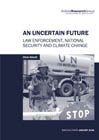
    An Uncertain Future: Law Enforcement, National Security and Climate Change

    Chris Abbott | Oxford Research Group | January 2008

    Issue:Climate change

    Tag:report

    Climate change will have serious environmental, socio-economic and security consequences for both developed and developing nations alike. This report explores these consequences and demonstrates that they will present new challenges to governments trying to maintain domestic stability. Read more »

    National Security And The Threat of Climate Change

    Issue:Climate change

    CNA Corporation, a US Department for Defense funded think-tank, published this report in April 2007. The report was produced by CNA’s writers and researchers under the guidence of a Military Advisory Board (MAB) consisting of retired admirals and generals.  Read more »

    Beyond Terror: The Truth About the Real Threats to Our World

    Chris Abbott, Paul Rogers and John Sloboda | Rider | April 2007

    Issues:Climate change, Competition over resources, Global militarisation, Marginalisation

    Tag:book

    Many leading military analysts in the United States are increasingly alert to the link between security and climate change. Is international terrorism really the single greatest threat to world security? Read more »

    Al-Qaeda: The True Story of Radical Islam

    Issues:Global militarisation, Marginalisation

    Tag:book

    Image of Al-Qaeda: The True Story of Radical Islam

    • Purchase from Amazon:
    • Al-Qaeda: The True Story of Radical Islam
    • Author: Jason Burke
    • Publisher: Penguin ()
    • Binding: Paperback, pages
    • Price: £8.99

  • Sustainable Security

    A top-down approach to sustainable security: the Arms Trade Treaty

    2012 has been hailed as a potential landmark year in the push for greater regulation of the global trade in conventional arms. After more than a decade of advocacy to this end, negotiations took place throughout July towards the world’s first Arms Trade Treaty (ATT), which is intended to establish the highest possible common international standards for the transfer of conventional weapons. However, although significant progress was made during the month of intense negotiations, the ATT is not yet open for signature. In this article, Zoë Pelter explores what role a potential treaty – if reopened for further negotiation – could play in a move towards sustainable security.

    Read Article →

  • Sustainable Security

  • Sustainable Security

  • Sustainable Security

    As established by UN General Assembly resolution 64/35 of 2009, the 29th of August marked the International Day Against Nuclear Tests. This date serves to enhance public awareness about the harmful effects of nuclear weapon test explosions (of which at least 2,046 were conducted between 1945 and 1996: an average of one every nine days) on people and the environment, and reminds the international community about the importance of banning nuclear tests through the Comprehensive Test Ban Treaty (CTBT).

    CTBT: Verification outpaces Ratification

    Opened for signature in September 1996, the CTBT has yet to enter into force, pending the final eight ratifications by all of the Annex II states. These are the 44 states which participated in the negotiations on the CTBT and possessed nuclear power or research reactors at the time. Although five – China, Egypt, Iran, Israel, the US – of these final eight states have signed the Treaty, three have not: North Korea (DPRK), India and Pakistan.

    While some argue that CTBT ratification by the US would be a “game changer” and trigger a cascade of ratifications, it may rest on President Obama’s successor to invest domestic political capital and concerted engagement to shepherd through a successful ratification. With recent studies such as the 2012 National Research Council’s updated assessment of technical issues related to the CTBT serving to inform and allay previously voiced national security and verification concerns, strategic efforts to educate Congress, media and the US public could assist in highlighting the benefits of ratifying the CTBT.

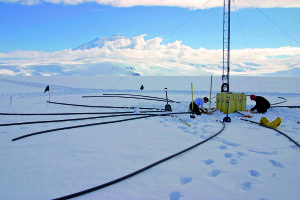
    Performing maintenance at CTBTO infrasound station IS55, Windless Bight, Antarctica

    Performing maintenance at CTBTO infrasound station IS55, Windless Bight, Antarctica. (Source: CBTBO via Wikipedia)

    Pending those eight ratifications for the CTBT entry into force, the Preparatory Commission for the CTBT Organization (CTBTO) is building up an extensive and sophisticated global International Monitoring System (IMS) which will serve to monitor and verify compliance with the Treaty. With over 85% of the IMS’ facilities in operation, the CTBT is already providing ‘a firm barrier against a qualitative and quantitative development of nuclear weapons for both nuclear weapon-capable states and then would-be possessors‘.

    Proof of the partially complete verification regime’s detection capability has been showcased by the three nuclear tests conducted since 2006 by the DPRK, the only remaining state defying the established international anti-testing norm. Since the international community unanimously condemned the 1998 round of tests by India and Pakistan, defying the non-testing norm and global de facto moratorium established by the CTBT, the two states in South Asia have implemented and observed unilateral moratoria on nuclear testing.

    Concerns about a DPRK fourth test

    The urgency of reaffirming the importance of the CTBT and re-energizing efforts to bring the Treaty into force, should be ever present with concerns about a possible fourth nuclear test as threatened by the DPRK earlier this year. The DPRK is the only state that has disregarded the testing moratorium and non-testing norm since 1998 with its three successively larger nuclear tests (in 2006, 2009 and 2013). South Korean Foreign Minister Yun Byung-se warned earlier this year that a fourth test by North Korean would be a “game changer” for the region.

    Even with the DPRK remaining a wildcard on prospects for ratification, not least given the shaky political conditions for regional resumption of dialogue on the nuclear issue while Kim Jong Un consolidates his regime, the other seven Annex II states can lead in responsibly committing to shore up their legal commitment to the non-testing norm.

    Improving regime atmospherics for the 2015 NPT Review Conference

    The CTBT and the NPT are interlinked and thus progress on the CTBT would serve to garner positive atmospherics for the NPT review process, in 2015 and beyond. The 1995 NPT Review Conference (RevCon) indefinite extension of the NPT and the 2000 NPT RevCon’s ‘13 steps’ (steps 1 and 2) called on states for action and commitment to a CTBT. More recently, five of the 64 action points in the 2010 NPT RevCon’s Action Plan stress bringing the Treaty into force. Given the growing discontent within the NPT review process due to the perceived lack of progress on disarmament commitments, a renewed and reinvigorated commitment to the CTBT by NPT states parties could ameliorate the atmosphere and help to build confidence and momentum.

    Two initiatives within the nuclear non-proliferation and disarmament regime—the Helsinki Conference for discussing the establishment of a Weapons of Mass Destruction-Free Zone (WMDFZ) in the Middle East, and the humanitarian consequences initiative concerning the impact of nuclear weapons—could provide an impetus for renewed focus to the importance of legally committing to the CTBT. Both of these initiatives, which continue to enjoy a broad divergence of views, could serve to channel attention on ratification of the CTBT as a key trust- and confidence-building measure and a foundational first-step for progress on the aims of the two initiatives.

    Given the active civil society engagement of the humanitarian initiative, some of these agents could focus efforts on promoting the entry into force of the CTBT, channelling campaigns to lobby and engage their elected parliamentarians on the importance of the CTBT.

    If any of the three remaining Annex II states from the Middle East region – Egypt, Iran and Israel – were to legally commit to refrain from nuclear testing, it would be a hugely significant political and confidence-building gesture for the high-profile efforts to convene a conference which was mandated by the 2010 NPT Review Conference to take place in 2012. Given the ongoing P5+1 talks with Iran, such a step by Iran would further serve to reassure the international community about the intent and peaceful nature of its nuclear programme.

    Multilateral initiatives

    UN High Representative for Disarmament Affairs Angela Kane encouraged states to seize the high-profile opportunity to sign or deposit their instruments of ratification at an event held on the margins of the UN General Assembly this month. As an interim step, short of signing or ratifying the CTBT, other proposals to further consolidate the anti-testing norm and moratorium include a suggested UN Security Council resolution condemning nuclear tests as a threat to international peace and security, and regional pledges committing member states to refrain from nuclear tests or even sub-critical experiments not prohibited by the CTBT.

    Notably, the Community of Latin American and Caribbean States (CELAC) endorsed such a regional commitment in its declaration on nuclear disarmament at a meeting in Buenos Aires in August 2013. Such effort could be replicated by other regions or via multilateral negotiating groupings operating in the nuclear non-proliferation regime. Regional and other groupings could pledge to highlight this issue at every nuclear-relevant forum and opportunity in efforts to cross-germinate this message.

    Annex II states particularly, as well as other states and groupings, should welcome, engage and promote the efforts of the CTBTO’s Group of Eminent Persons (GEM), comprised of high-profile experts and former officials aiming to promote the CTBT’s entry into force. Through the support of such initiatives, awareness can be raised. Further to raising awareness and educating civil society, efforts such as the CTBTO’s public training courses and NGOs’ public information and awareness efforts should be supported, promoted and even replicated regionally as force multipliers.

    J. Robert Oppenheimer recounted of those witnessing the Manhattan Project’s first atom bomb test (the 1945 Trinity test), “we knew the world would not be the same; a few people laughed; a few people cried; most people were silent.” Indeed, the world has not been the same and the proverbial nuclear genie cannot be put back in the bottle. But states can make the legal commitment to ban all nuclear tests, anywhere. 18 years after the CTBT opened for signatures, responsible states should commit efforts to facilitate the ratification of this Treaty.


    Jenny Nielsen is a Postdoctoral Research Fellow in the School of Political Science and International Studies at the University of Queensland. Previously, she was a Research Analyst with the Non-proliferation and Disarmament Programme at the International Institute for Strategic Studies (IISS), a Programme Manager for the Defence & Security Programme at Wilton Park, and a Research Assistant for the Mountbatten Centre for International Studies (MCIS) at the University of Southampton, where she co-edited the 2004-2012 editions of the NPT Briefing Book.

  • Sustainable Security

    Biodiversity conservation is becoming increasingly militarised. Conservationists are learning from the strategies of contemporary warfare, and this is highly problematic for both wildlife and global security.

    Biodiversity conservation and security are becoming increasingly integrated. The recent rises in poaching, especially of high profile charismatic species such as elephants, rhinos and tigers has led to the development of more militarised approaches towards conservation. Rather than producing the claimed win-win-win outcome for wildlife, security and people, it is producing a triple fail. While we are more accustomed to debates around climate change and water wars as the main security risks related to the environment, biodiversity conservation is also increasingly being identified as a critical contributor to national and global security, and biodiversity losses constitute a critical security threat. This is especially the case in current debates about poaching and wildlife trafficking. Conservationists, it seems, are learning from the strategies of contemporary warfare.  This is highly problematic for wildlife and global security.

    Does wildlife trafficking produce threat finance or not?

    Achim Steiner, UN Under-Secretary General and Executive Director of UNEP, recently stated ‘the scale and role of wildlife and forest crime in threat finance calls for much wider policy attention’. The argument that wildlife trafficking constitutes a significant source of ‘threat finance’ takes two forms: first, as a lucrative business for organised crime networks in Europe and Asia, and second as a source of finance for militias and terrorist networks, particularly Al Shabaab, Lord’s Resistance Army and Janjaweed. Yet, a recent report from UNEP and INTERPOL on environmental crime questions the accuracy of the links between ivory and Al Shabaab. The report points out that ivory may be a source of income for some militia groups including Janjaweed and Lord’s Resistance Army; however it also notes that claims Al Shabaab was trafficking 30.6 tonnes of ivory per annum (representing 3600 elephants per year) through southern Somalia are ‘highly unreliable’ and that the main sources of income for Al Shabaab remain charcoal trading and ex-pat finance. In spite of this, the argument persists that there is a link between the illegal wildlife trade and global security.

    Although the value of the global illegal trade in wildlife is difficult to determine due to its clandestine nature, it has been estimated at around US$7.8–$10 billion.  It ranks as the third biggest global illicit activity (after trafficking drugs and weapons). Transnational environmental crimes are often not taken seriously within the broader policy and enforcement community, and so they are perceived as a low-risk and high-reward activity for organised crime networks. However, this is changing, and environmental crimes are rapidly gaining greater attention, and the increasing sophistication of wildlife trafficking networks is a reflection of their link with other serious offences, including theft, fraud, corruption, drugs and human trafficking, counterfeiting, firearms smuggling, and money laundering.

    Major donors are also taking this issue seriously, and funding has been made available for anti-poaching and anti-trafficking initiatives. In 2013 the Clinton Global Initiative announced a commitment to raise US$80 million to combat trafficking and poaching as a security threat in Africa. Private philanthropic foundations have also become involved, as indicated by the US$25 million donation to South Africa from the Howard G. Buffett Foundation to support rhino protection efforts in Kruger National Park. The rise in poaching has also intersected with US security concerns, prompting President Obama to issue Executive Order 13648 on Combating Wildlife Trafficking in July 2013, and in 2014 USAID allocated more than US$55 million for activities to combat wildlife trafficking, up from US$13 million in 2012. These concerns have emerged as a major policy initiative of the UK government, beginning in May 2013 when Prince Charles convened a high level meeting to ‘kick start’ a government response to the rise in elephant and rhino poaching – followed in 2014 by the London Declaration on the Illegal Wildlife Trade, and the development of a DfID/DEFRA £13 million ‘Illegal Wildlife Trade Challenge Fund’.

    Why is conservation being militarised?

    Enough Project Ivory

    Elephant ivory seized from poachers in Garamba. Image by Enough Project via Flickr.

    Conservation practice is being increasingly militarised as a result of this new interest in the security implications of poaching and trafficking. Militarisation can be briefly defined as the extension of military approaches, equipment and techniques to wildlife protection, as well as the deployment of armed forces in conservation activity. Countries with elephant, rhino and tiger populations also regularly invoke the argument that wildlife constitutes an emblematic natural resource, which is central to national heritage. For example, on World Ranger Day in 2015 South African Minister of Environmental Affairs Edna Molewa paid tribute to park rangers by stating that they were protecting rhinos as a key part of the country’s natural heritage. Such appeals to natural or national heritage are also frequently overlain with the argument that states have a moral obligation to protect wildlife. The interesting question is: why is there an increased interest in countering wildlife poaching and trafficking with more militarised responses?

    War on Terror

    First, the integration of security and biodiversity conservation has been extended by the development of a global context centred on security concerns, and this is most obvious in the US-led War on Terror. For states (especially parks and wildlife departments), conservation NGOs, and private conservation organisations, the ability to claim that their activities will contribute to national and global security has provided an important opportunity to justify their continued existence, and to leverage additional funding from donors, governments and private sector. The development of a global context in which security is a leading concern has opened new opportunities to leverage significant resources for conservation. During the 1990s, NGOs in the humanitarian relief sector were increasingly engaged in a competitive market to secure funding and contracts with donors. This dynamic was mirrored in the conservation sector, as detailed by Mac Chapin’s high profile piece for WorldWatch on how the ‘big three’ conservation NGOs of WWF, Conservation International and The Nature Conservancy, had managed to secure the majority of available funding. Competition between NGOs and the dominance of the big three partly explains why conservation NGOs have been so keen to promote the idea that conservation is critical to security. The assumption is that by rendering conservation a security issue, it will allow them to tap in to the greater resources available for security and anti-terrorism initiatives.

    Technological Innovations

    Second, recent innovations in military technology, especially for surveillance purposes, have also driven a demand to find new markets to expand its use (and profitability). This includes the use of drone technology to monitor wildlife populations in areas hit by poaching. The drones can also collect important information on human activity in the area – which is especially welcome in regions where there are concerns about the activity of rebel groups and militias that threaten state (or even international) security. The growing intersections between the two are evident in the development of a new range of surveillance networks which draw together government agencies, international intelligence agencies, wildlife conservation NGOs and private sector risk analysis companies. Such surveillance techniques are used to gather data on individuals and networks suspected of engaging in illegal hunting and trafficking of wildlife products; these use the same techniques associated with counter-insurgency operations, including the extraction of mobile communications data, development of informant networks and use of covert surveillance.

    The rise of private security

    Third, the rise in privatised forms of security in the post-Cold War era is also reflected in biodiversity conservation: private security companies provide training for anti-poaching operations as well as direct enforcement. This can be placed in the context of the growing use of private military companies in international interventions, including Afghanistan and Iraq. This is especially significant because it heralds a new era in conservation, in which national governments permit direct contracts between conservation NGOs and private security companies, with an authorisation to use deadly force under certain circumstances. A good example is the ways WWF has turned to the private sector to deliver security operations in protected areas that they manage on behalf of states. In Dzangha-Sanga National park in Central African Republic, funding from WWF-Netherlands, WWF-US and WWF-International is used to pay for anti-poaching operations and training under the auspices of Maisha Consulting. The company describes itself as a provider of environmental security via special investigations, training and operations in complex security situations. Numerous conservation NGOs have to grapple with complex security situations, especially if they seek to continue their projects and support when conflicts break out, or when militias move into the same area, and PMCs are regarded useful allies.

    The triple fail

    The rise of these approaches is deeply problematic for two reasons: they produce responses that are not effective for countering terrorism and insecurity, and equally they do not help us tackle poaching effectively. Instead they act as counterproductive distractions. The militarisation of anti-poaching including the growth of surveillance techniques and ‘intelligence-led’ approaches, fails to address the dynamics that drive poaching. These include a powerful mix of demand from wealthy communities around the world, poverty, inequality and the lack of opportunities in poorer source countries, the collusion of officials, organised crime networks and private transport companies. Simply focusing on military-style protection of wildlife from poaching is not effective: it can produce short term protection, but ultimately undermines wildlife conservation because it pits local communities against wildlife, reducing support for wildlife amongst people who live with it: the very people conservation ultimately relies on.

    Rosaleen Duffy is professor of the political ecology of development at SOAS, University of London. In September 2016 she joins the Politics Department in the University of Sheffield and will begin a major research project ‘BIOSEC: Biodiversity and Security: understanding environmental crime, illegal wildlife trade and threat finance’, (EURO 1.8 million funded by an ERC Advanced Investigator Award).

  • Sustainable Security

  • Governments Must Plan for Migration in Response to Climate Change, Researchers Say

    Governments Must Plan for Migration in Response to Climate Change, Researchers Say

    This story is reprinted from materials provided by University of Florida. The original article was written by Donna Hesterman | ScienceDaily | October 2011

    Issue:Climate change

    Governments around the world must be prepared for mass migrations caused by rising global temperatures or face the possibility of calamitous results, say University of Florida scientists on a research team reporting in the Oct. 28 edition of Science.

    If global temperatures increase by only a few of degrees by 2100, as predicted by the U.N. Intergovernmental Panel on Climate Change, people around the world will be forced to migrate. But transplanting populations from one location to another is a complicated proposition that has left millions of people impoverished in recent years. The researchers say that a word of caution is in order and that governments should take care to understand the ramifications of forced migration.

    A consortium of 12 scientists from around the world, including two UF researchers, gathered last year at the Rockefeller Foundation’s Bellagio Center to review 50 years of research related to population resettlement following natural disasters or the installation of infrastructure development projects such as dams and pipelines. The group determined that resettlement efforts in the past have left communities in ruin, and that policy makers need to use lessons from the past to protect people who are forced to relocate because of climate change.

    “The effects of climate change are likely to be experienced by as many people as disasters,” UF anthropologist Anthony Oliver-Smith said. “More people than ever may be moving in response to intense storms, increased flooding and drought that makes living untenable in their current location.”

    Article Source: University of Florida. “Governments must plan for migration in response to climate change, researchers say.” ScienceDaily, 27 Oct. 2011. Web. 1 Nov. 2011.

    “Sometimes the problem is simply a lack of regard for the people ostensibly in the way of progress,” said Oliver-Smith, an emeritus professor who has researched issues surrounding forced migration for more than 30 years. But resettlements frequently fail because the complexity of the task is underestimated. “Transplanting a population and its culture from one location to another is a complex process — as complicated as brain surgery,” he said.

    “It’s going to be a matter of planning ahead now,” said Burt Singer, a courtesy faculty member at the UF Emerging Pathogens Institute who worked with the research group. He too has studied issues related to population resettlement for decades.

    Singer said that regulatory efforts promoted by the International Finance Corporation, the corporate lending arm of the World Bank, are helping to ensure the well-being of resettled communities in some cases. But as more people are relocated — especially very poor people with no resources — financing resettlement operations in the wake of a changing climate could become a real challenge.

    Planning and paying for resettlement is only part of the challenge, Oliver-Smith said. “You need informed, capable decision makers to carry out these plans,” he said. A lack of training and information can derail the best-laid plans. He said the World Bank increasingly turns to anthropologists to help them evaluate projects and outcomes of resettlement.

    “It is a moral imperative,” Oliver-Smith said. Also, a simple cost-benefit analysis shows that doing resettlement poorly adds to costs in the future. Wasted resources and the costs of malnutrition, declining health, infant and elder mortality, and the destruction of families and social networks should be included in the total cost of a failed resettlement, he said.

    Oliver-Smith said the cautionary tales of past failures yield valuable lessons for future policy makers, namely because they point out many of the potential pitfalls than can beset resettlement projects. But they also underscore the fact that there is a heavy price paid by resettled people, even in the best-case scenarios.

    In the coming years, he said, many projects such as hydroelectric dams and biofuel plantations will be proposed in the name of climate change, but moving people to accommodate these projects may not be the simple solution that policy makers sometimes assume.

    A clear-eyed review of the true costs of forced migration could alert governments to the complexities and risks of resettlement.

    “If brain surgeons had the sort of success rate that we have had with resettling populations, very few people would opt for brain surgery,” he said.

    Article Source: University of Florida. “Governments must plan for migration in response to climate change, researchers say.” ScienceDaily, 27 Oct. 2011. Web. 1 Nov. 2011.

    Comments

    Post new comment


  • Sustainable Security

    In 2008, media outlets declared that a new Cold War was unfolding in the Arctic. This story was centred on a small, titanium Russian flag, fixed to the seabed below the North Pole.

    Planted in 2007 by a modest team of explorers and scientists, the flag triggered angry responses from Western politicians and media commentators, with the most vociferous coming from the then Canadian Foreign Minister, Peter MacKay, who declared: ‘This isn’t the 15th Century…You can’t go around the world and just plant flags and say “We’re claiming this territory”’.

    Nearly a decade later, this story remains emblematic of the geopolitical intrigue that refuses to go away in the Arctic, which continues to be stoked by uncertainties over sovereignty, ownership and access in the region.

    Carving up the Arctic, Carefully

    The Arctic Ocean, like every ocean, is governed by the UN Convention on the Law of the Sea’s (UNCLOS) provisions. The US has not ratified this treaty, but considers its provisions relevant as customary international law of the sea.

    Under UNCLOS, the Arctic Ocean littoral states are entitled to Exclusive Economic Zones (EEZ) stretching up to 200 nautical miles (nm) from their Arctic coastlines. Article 234 allows littoral states to develop and administer special regulations dealing with human activities in ice-covered waters. Russia and Canada use this to regulate shipping activity in their Arctic waters through environmental protection measures.

    UNCLOS also entitles a coastal state to extend the outer limit of its sovereign rights over the continental shelf (the seabed and subsoil of submarine areas–including, any oil and gas resources contained) beyond 200nm, if it can prove the shelf is a natural prolongation of the coastal states’ land mass. This has led Denmark and Russia to submit evidence (with Canada expected to follow this year) to the UN to support claims reaching all the way to the North Pole. Norway settled its continental shelf limits in 2009.

    As their claims overlap, the UN Commission on the Limits of the Continental Shelf (CLCS) is responsible for reviewing the evidence and issuing a final recommendation on where the borders should be drawn according to Articles 76 and 77. However, the CLSC has no legal authority or personality meaning it will be up to Canada, Denmark and Russia to reach an international agreement which will settle their claims. Any remaining space will be considered part of ‘the Area’ (see below), and falls under the purview of the International Seabed Authority.

    Although the decision on ‘who owns the North Pole’ will ultimately be determined by an agreement between Canada, Denmark and Russia,wherein lies a latent potential for conflict, the five Arctic littoral states’ public commitment to use UNCLOS as the basis for settling any sovereignty disputes is an important step towards ‘sustainable security’. It will take three to five years just for the CLCS to review the latest evidence submitted by Russia on 9 February 2016.The CLCS is already overwhelmed by the number of applications received globally. Since the prospects for oil and gas development further from shore are still highly uncertain, and claims to the North Pole are primarily symbolic, the CLCS arguably has time on its side.

    As long as the Arctic states maintain their trust in the process, UNCLOS should be able to prevent any ‘race’ to carve up the Arctic seabed, which could lead to tension between the littoral states.

    High Seas and the Area: Accommodating New Interests

    Where UNCLOS reaches its limits is in the parts of the Central Arctic Ocean (CAO), we will be dealing with High Seas,parts of the water column beyond the EEZs of coastal states,and ‘the Area’– seabed areas which cannot be claimed by any state (see map). Theoretically, anyone can fish and mine in these parts of the Arctic, but such activity is likely to be limited for the time being by the continued prevalence of thick sea-ice covering the surface of the ocean (and other environmental factors).

    In another step towards ‘sustainable security’, the five Arctic coastal states have initiated a process to create a governance framework to manage future fishing activity in the CAO.

    In July 2015, the littoral states signed a ‘Declaration’ preventing unregulated high seas fishing in the CAO, and promising to only authorise their own fleets to conduct commercial fishing in the CAO if it was in accordance with recognised international standards.

    The littoral states’ problem is that they do not have the authority to dictate the terms under which the rest of the international community can access CAO high seas fisheries. China’s, Japan’s, Korea’s, Iceland’s, and the EU’s finishing fleets are entitled under international law to fish in the CAO.

    Consequently, the littoral states took another preventative step by calling a second meeting in December 2015, where negotiations for fisheries agreement for the CAO’s high seas was opened up to these other parties. Other nations such as Taiwan are expected to join future deliberations, eventually ensuring buy-in for a governance framework from all nations with an interest in future Arctic fisheries.

    Again, this is a long-term process, providing another example of how governance structures developed now can prevent certain unwanted futures from becoming present, including, for exampletension and conflict over fisheries and continental shelves.

    Navigating Arctic Waters

    Can similar preventative steps be taken to ensure that disputes do not flare up over the problem of maritime activity in the Arctic? There are two issues to address. Firstly, the status of two ‘international straits’ in the Arctic: the North West Passage and the Northern Sea Route. Secondly, the regulating of ice-covered waters in littoral state EEZs as addressed by Article 234 of UNCLOS.
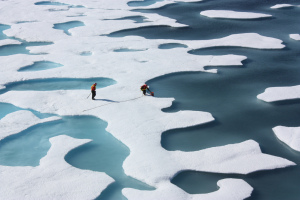
    Science team in the Arctic Sea. Image by NASA Goddard Space Flight Center.

    Science team in the Arctic. Image by NASA Goddard Space Flight Center.

    Canada and Russia do not consider the North West Passage (passing through the Canadian archipelago) and the Northern Sea Route (across northern Russia) to be ‘international straits’. Consequently, foreign vessels have no right of ‘transit passage’ through these waters–a right that entitles foreign ships to pass through without coastal state permission, and foreign submarines may remain submerged. Both countries claim that their sovereignty over nearby islands effectively means these waters should be considered ‘internal waters’, requiring foreign vessels to seek permission before entering.

    The US and the EU contest Canada and Russia’s claims, not least because of concerns about setting a legal precedent that could be applied to more important southerly shipping routes.

    There seems to be little ambition to settle the disagreement, because Arctic transit shipping is still a niche activity. Several uncertainties remain about whether large-scale transit shipping will ever become commercially viable, not least because of the competition posed by more southerly trade routes and the general unpredictability of seasonal sea-ice retreat that makes seasonal passages possible without expensive icebreaker escorts.

    The problem with the current stance is that Russia is actively investing in icebreakers, port infrastructure, marine services, search and rescue facilities and constabulary forces with the ambition of turning NSR into a viable shipping route. The more Russia builds up infrastructure around the route and offers to accommodate shipping on Russian terms, the greater the historical precedent it will set that the NSR is part of Russian-controlled waters. This feeds Western fears about Russian militarization of the Arctic building a security dilemma.

    While US and EU lawyers might question the validity of such a precedent, the de facto claim will remain and Russia will likely continue resisting attempts to change the status quo. It might therefore be worthwhile considering preventative steps sooner rather than later to resolve the NSR and the NWP’s legal status, before marine activity in the Arctic increases further and positions become more deeply entrenched.

    The issue is complicated by the second issue referred to above–the regulating of ice-covered waters by Arctic littoral states, notably Canada and Russia. As already noted, under Article 234 of UNCLOS, Arctic littoral states are entitled to regulate marine activities in ice-covered waters within their EEZs. Both the NSR and the NWP fall within these provisions, allowing Canada and Russia to regulate marine activity beyond their territorial waters regardless of whether they have the status of ‘international straits’ (see, for example, Canada’s Arctic Waters Pollution Prevent Act).

    So what happens when these waters are no longer ice-covered for a large part of the year? Article 234 indicates that ice-cover must be present for most of the year (i.e. 6 months and one day), while other points of contest exist in determining exactly what is meant by ‘severe climatic conditions’ and ‘exceptional hazards to navigation’ and who would decide whether such conditions prevailed (littoral states, non-littoral states, international organisations?).

    This remains a longer-term issue, but if as most scientists predict the amount of sea-ice cover each year continues to spiral downwards, the issue of whether littoral states can regulate in Arctic waters beyond 12 nm could become a significant point of tension with those seeking to benefit from new opportunities for regional marine activity. Currently, unlike in the cases of fisheries and continental shelves, few preventative steps are being taken to resolve this outstanding issue, despite its potential to cause future confrontation in Arctic waters. The situation is exacerbated by the deterioration of relations between Russia and the West over the Ukraine and Syria crises, likely making dialogue difficult.

    Prospects for Sustainable Security

    On the issues of resource competition and militarisation sustainable security’s prospects, in the Arctic for the most part look good. Since the end of the Cold War, international cooperation on various scientific and environmental protection initiatives have provided the basis for constructive engagement between the Arctic states and other interested actors (such as the UK) on many issues.

    Bilateral and multilateral arrangements have provided a governance structure that all Arctic states, and other interested actors, have indicated provides a firm basis for resolving inter-state disputes peacefully in accordance with international law, especially concerning fisheries and the delineation of the continental shelf. However,access to the NWP and NSR could lead to future contention. Potential flashpoints remain over how regional marine activity should be governed in EEZs where the sea-ice is in fast retreat, especially if Russia and Canada refuse to accept that Article 234 might lose purchase in the future.

    Whether preventative action is politically possible on this issue remains to be seen, but the sooner a constructive dialogue begins between Russia, Canada and potential users of the NWP and NSR, the more likely it will be to find a sustainable solution. Speculatively, an Arctic agreement on shipping activity negotiated under the Arctic Council’s auspices (but accommodating interested non-Arctic states as seen in the fisheries discussions) to complement the International Maritime Organisation’s Polar Code (due 2017) could be one way of consolidating international understanding that these waterways are to some extent shared spaces requiring the international community’s shared stewardship.

    An important dimension of sustainable security not discussed in this state-centric article is that of human security–especially of indigenous peoples and other local communities that live and work in the Arctic. The decline of traditional cultures, environmental pollution and other threats to human health and well-being are prevalent in nearly all of the Arctic states, and there has been a long history of marginalisation of Arctic residents. However, all of the Arctic states have readily admitted the need to address the challenges facing Arctic indigenous peoples and other local communities, and the Arctic Council is somewhat unique to the extent that it invites representatives of indigenous people’s organisations to sit at the table with government ministers.

    The sustainable security outlook is also weaker with regards to climate change. Huge uncertainty remains over how soon we are likely to see an ice-free Arctic in the summertime. The temperature spikes witnessed in January and February this year suggest this event horizon might be closer than we think. The impacts of climate change pose a particular risk to human security in the Arctic, threatening food, housing, infrastructure and livelihoods. It remains to be seen whether these communities will be able to adapt to the drastic changes that are being observed.

    Duncan Depledge is a Teaching Fellow in the Department of Politics and International Relations at Royal Holloway, University of London, and director of the secretariat to the UK All-Party Parliamentary Group for Polar Regions. He received his PhD from Royal Holloway for his research investigating contemporary developments in U.K. policy toward the Arctic.
  • Turning swords into ploughshares: Environmental degradation and water poverty are reaching a tipping point after which serious instability and suffering will be unavoidable

    Turning swords into ploughshares: Environmental degradation and water poverty are reaching a tipping point after which serious instability and suffering will be unavoidable

    Prince El Hassan Bin Talal, Chairman of the West Asia-North Africa Forum | www.gulfnews.com | April 2010

    Issues:Climate change, Competition over resources, Marginalisation

    Good news does not sell newspapers. Nor, it seems, does the idea of respect for human dignity. In West Asia, where the majority of people have known little other than outright war or simmering conflict, it should come as little surprise that people have lost their faith in the possibility of real peace. Real peace can be a frightening prospect; it means burying the hatchet and beating swords into the proverbial ploughshares. No easy task when we are all burdened by historical and psychological baggage.

    Ours is a hungry region: hungry for development, for work, for freedom, for democracy, for dignity, for the essentials of energy and, above all, water. It is broadly accepted that states have a responsibility to protect their constituents; protection of and access to basic natural resources for all should be seen as a similar responsibility.

    According to figures released by the Strategic Foresight Group, the Middle East North Africa (Mena) region is set to experience a decline of per capita annual renewable water availability from approximately 750 cubic metres at present to approximately 500 cubic metres by 2025. Such general indicators hide bleak truths that are specific to individual societies. There are regions within Jordan, Syria, Israel and, apparently, water-rich Turkey, which already suffer from a serious deficit. Some of these countries (i.e. Jordan and Israel) have already crossed a water utilisation rate of 100 per cent, threatening not only future generations, but current wellbeing.

    With a projected decrease as dramatic as that, the governments of the Mena region should be urgently implementing a long-term regional strategy for water management and planning, and I welcome the numerous conferences now being held across the region in this respect. A new and more ethical paradigm is needed in which individual rights, states’ rights and international rights are seen as an indivisible and dynamic unity, not a source of polarisation and conflict. For too long people have come a poor second to investment considerations. This is particularly true when it comes to the privatisation of the commons. The nod is given to their needs by Corporate Social Responsibility, though these are substantially ignored. The people of the region must become the subject, not the object of development; the economy should serve them and not vice versa.

    One positive strategy, which has been implemented implicitly in India, and more explicitly and effectively in South Africa, focuses on access to water as a human right. States in the Mena region should come together and recognise water as justifiable, as a human right, enabling the people of the region to seek legal recourse when deprived of access to basic water resources.

    There is an urgent need for a supra-national water commission that looks thematically, on a non-partisan and inclusive basis, at water and energy for the human environment and develops a carrying capacity concept based on a factual analysis of the region’s human, natural and economic resources. We do not have to reinvent the wheel. A concept was evolved facilitated by the United States and in the context of peace and the Middle East North Africa Summit of 1994, of a plan for the Jordan Rift Valley which could be expanded to the Greater African Rift Valley. This would not be a corridor, rather a fully-integrated regional development plan. Naturally, it would include the Dead Sea — the possible imminent demise of which is the subject of much discussion.

    The point is that creative solutions, based on inter-regional collaboration across the West Asia-North Africa (Wana) region are required. The Euphrates, the Nile and other great rivers run through this region, the latter affecting 10 African states. Shared waters could mean shared opportunities, yet no agreements, partial or otherwise (such as the precedents in the Rhine or Indus Commissions) exist for these or for other important waterways.

    Culturally attuned empowerment

    The region needs to move away from heated rhetoric to forward thinking, consultation and conceptual mode. Of course, political issues must continue to be negotiated, yet in the interim, post-war reconciliation and reconstruction should continue for the sake of our people. Culturally attuned empowerment through the combination of modern technologies and authentic regional policies that have a traditionally proven record of success, such as the concept of al hima (Arabic for conservation) is within our reach when addressing the future water and energy needs of the region.

    The Desertec concept of Concentrated Solar Power, for example, which involves the creation of a ‘solar technology belt’ across the Mena region to harness the intense energy of the desert sun, could supply us with unlimited clean and affordable energy within the next 10 years. Another example is a plant, preferably on the Egyptian side of the Gaza border, which could provide clean drinking water and electricity for the people of Gaza. Likewise Yemen’s capital Sana’a is on the verge of a major crisis. It seems short-sighted in the extreme that while the country’s political volatility is the centre of international conferences, scant attention is being paid to recent projections suggesting Sana’a will run out of economically viable water supplies by 2017. The point is that while national grids may be able to reach large cities, small communities on the margins are all too often ignored by the official economy, and as a result, turn to the informal economy.

    Continuous instability has conditioned the very way in which we approach every-day tasks; the way we plan our interventions and the way we monitor and re-evaluate them. Ad hoc existence and short-termism are the norm. The most terrifying thing is that environmental degradation and water poverty are reaching a tipping point after which all the best intentioned dialogue in the world will be unable to prevent serious instability and suffering. We must realign our thinking now, galvanise decision makers now, change our direction now. Above all, we must rekindle hope, through positive, inclusive and participatory action to meet the challenges we face.


    Source: www.gulfnews.com

    Image source: Nino Jose Heredia/Gulf News