Author: admin

  • Sustainable Security

    From The Great War to Drone Wars: The imperative to record casualties

    The centenary of the First World War also marks the anniversary of the practice of recording and naming casualties of war. But a century on, new forms of ‘shadow warfare’ limit the ability to record casualties of conflict and thus threaten to allow states a free hand to employ dangerous new tactics without threat of individual or international accountability. Without verifiable casualty figures, – including information on who is being killed and how – we cannot evaluate the acceptability, effectiveness or impact of ‘remote control’ tactics as they are rolled out among civilian populations.

    Read Article →

  • Three Killings: an analysis of the ideologies driving Mohamed Merah, George Zimmerman, and the murderer of Shaima Alawadi

    This article by Foreign Policy in Focus co-director John Feffer powerfully explores three recent and geographically diverse killings in the context of marginalisation. Feffer links the fatal beating of an Iraqi-born American woman in California, the shooting of Trayvon Martin in Florida, and Mohamed Merah’s killing spree in Toulouse to the notion of trespass: “The message behind all three is this: you should not be here, you are not one of us, and your death shall serve as a warning.”

    Merah himself was a member of a minority in France that is still yet to fully realise its place in French society, but that is only part of the context in which he operated: his own sense of trespass came from an intolerant ideology shared with a borderless fringe, dictating that Muslims who join the western ‘enemy’ armed forces (or who simply become too western) put themselves beyond the pale in doing so. As such, the concept of trespass is not merely a question of geography but also incorporates trespass of the mind, which is equally deserving of punishment. Feffer notes that the vast majority of Al-Qaeda’s victims are Muslims, a clear example of self-appointed leaders punishing disloyal or failed members of their own group. Other examples of this conception of trespass include honour killings and the 2011 terrorist attack by Anders Behring Breivik, who believed that Norway had betrayed its Christian European roots and so was motivated to punish the young liberal inheritors of that transgressive philosophy.


    Three Killings

    The note left next to the bloodied body of Shaima Alawadi read “go back to your country, you terrorist.” Alawadi, who died on March 24 after being taken off life support, was an Iraqi-born mother of five living outside of San Diego. Someone had delivered a similar note to the family earlier in the month. It was likely the same person who returned with a tire iron and struck her repeatedly on the head. Alawadi had lived in the United States for 17 years. Several family members reportedly provided cultural training to U.S. soldiers deployed to the Middle East. In a very sad coda, Alawadi is indeed going back to her country – to be buried.

    There were no notes that accompanied Trayvon Martin’s death at the end of February. But he was also killed for a perceived trespassing. An African-American teenager, Martin was guilty of “walking while black” as he carried iced tea and Skittles through the Florida community of Sanford. The self-appointed head of the community’s neighborhood watch, George Zimmerman, identified Martin as a threat. Zimmerman didn’t wait for the police to arrive. He chased after the young man and, in circumstances still very murky, shot him dead. Because of the “stand your ground” law that permits shooting in self-defense, the police did not arrest Zimmerman.

    In the middle of March, Mohamed Merah went on a killing spree in Toulouse, France that left seven people dead. The victims were a rabbi, three Jewish children, and three French soldiers. Two of the soldiers were Muslim. Merah, who identified with Islamic extremism, specifically targeted Muslim soldiers for being “traitors.” The French-born Merah better fit the profile of a serial killer than a political extremist. But his Muslim victims are an important reminder that ordinary, everyday Muslims, even more so than Jews or Americans, figure as the most potent threats to the worldview promoted by al-Qaeda and its ilk. The overwhelming majority of al-Qaeda and Taliban victims are Muslims.

    These murders are, on the face of it, quite different: a hate crime, a serial killing, and an act of vigilantism. But underlying these three tragedies is a notion of violated borders, of trespass. The message behind all three is this: you should not be here, you are not one of us, and your death shall serve as a warning.

    Trespass is originally an economic term intimately connected to evolving concepts of public and private space. In the late medieval period in England, wealthy landholders began to fence off common lands to increase the pasturage for their flocks of sheep. This enclosure movement, privatization avant la lettre, created a new class of dispossessed, of those who did not belong. The word “trespass” – to enter private property without permission – comes from this period of late Middle Ages. Fences marked off the newly enclosed property. You could not enter without the permission of the owner or his agents. And scaffolds appeared throughout England to punish those thrown off the land who were forced to steal because they had no other means of subsistence.

    In his captivating book The Swerve, Stephen Greenblatt describes how the violence and oppression of this system drove theologian Thomas More to create his famous “utopia” of commonly held property.

    “Utopia begins with a searing indictment of England as a land where noblemen, living idly off the labor of others, bleed their tenants white by constantly raising their rents,” Greenblatt writes, “where land enclosures for sheep-raising throw untold thousands of poor people into an existence of starvation or crime, and where the cities are ringed by gibbets on which thieves are hanged by the score without the slightest indication that the draconian punishment deters anyone from committing the same crimes.” Greenblatt cites the statistic of 72,000 thieves hanged during the reign of Henry the VIII, when More was composing his tract.

    We too are living at a time of gibbets and enclosures, of death penalties and gated communities, of state violence and privatization. The United States has become a country of wealthy enclaves, neighborhood watches, and charter schools. Widening inequality has directly contributed to the deterioration of any sense of the public good. The drive for minimal government has reduced the capacity of public servants to ensure basic services and security. The erosion of the middle class has not only reduced the tax base, it has weakened political support for programs that aspire to universality. “Ill fares the land,” wrote Oliver Goldsmith in his 1770 poem “The Deserted Village,” “to hast’ning ill a prey/Where wealth accumulates, and men decay.”

    Colorado Springs, a sort of anti-Utopia, is a case in point. There, the city council responded to state and federal budget cuts by radically reducing public services. In its place, the city set up an extortion racket. If you want the electricity restored to all the streetlamps in your neighborhood or the Parks Department to take care of your local park, you have to pony up the dollars yourself. Most disturbingly, as a recent This American Life episode on Colorado Springs detailed, residents are willing to pay more money to maintain services in their own little patch of earth than they would have paid in additional taxes to keep the services running for everybody in the city.

    Trayvon Martin was killed in a modest gated community in Sanford, Florida, a suburb of Orlando hard hit by the recession. The name of the community, tellingly, is The Retreat. As in Colorado Springs, the residents of Sanford must band together to compensate for what a diminished public sector fails to provide. The Retreaters, who live in townhouses priced around $100,000, have recently been concerned about a rash of burglaries. According to one resident, there had been eight cases in 15 months, and the culprits were mostly African-American males (or so he said). There are no signs at The Retreat that read: No Poor People or No African-Americans or No People Wearing Hoodies. The rules regarding trespass are unstated, shaped by fear and subject to the worst kind of stereotyping. Trayvon Martin was a victim of profiling but also of the insecurity that accompanies the decline of the middle class, an insecurity that especially plagues those of modest means, for they cannot afford all the perquisites of the wealthy. Vigilantism is the byproduct of a failed state. And the austerity measures promoted during our current mean season result in such a failed state.

    Shaima Alawadi and her family recently moved from Detroit to the San Diego suburb of El Cajon, home to the second-largest Iraqi community in the country. Alawadi, like so many Iraqis living in El Cajon, took refuge in America from the human rights violations and the subsequent sectarian violence of Iraq. But they also found themselves in a city close to the Mexican border and therefore on the frontlines of the immigration debate in the United States. The economic crisis has produced a spike in anti-immigrant sentiment: “they” are taking “our” jobs; “they” are a burden on “our” city services; “they” are not assimilating into “our” culture. Hate crimes against immigrants have been on the rise. Alawadi was not only an immigrant. She wore a headscarf and so was identifiably Muslim. As such, she was a target for all those who conflate Islam with terrorism. Religious freedom and respect for ethnic diversity are still core American values. But a certain tribalism has crept into American discourse. A tribe of xenophobic Christians is fearful that demographic shifts and economic malaise will undermine their precarious cultural status. A small but growing minority within this tribe will resort to violence to maintain this status.

    The politics of immigration, multiculturalism, and Islamophobia take on a very different character in France. In this election year, President Nicolas Sarkozy has tried to steal the fire from an unabashedly xenophobic right wing. He has stated that there are “too many foreigners” in the country. He has strenuously backed the French ban on the hijab. He has gone after halal meat (which has also raised concerns in France’s Jewish community that Kosher food will likewise be stigmatized). What had once been on the margins of French debate is now in the very mainstream. Muslims are somehow under suspicion for challenging a mythical unitary French identity through what they eat, what they wear, and how they pray. Mohamed Merah, meanwhile, believed that some Muslims had become too French and should be punished for their transgression. French Muslims find themselves in an increasingly difficult position. They trespass on French culture if they attempt to retain their identity. Or they trespass in the imaginations of religious extremists if they identify too closely as French — by, for instance, joining the army. If France and the European Union were enjoying an economic uptick, these culture wars would retreat into the background. As it is, Muslims have become a convenient scapegoat.

    The European Union was supposed to be a borderless space. But the old dream of an ever more prosperous and economically equitable regional arrangement has come up hard against economic downturn and polarization. The United States was supposed to be a country without the class barriers of feudal Europe. But the old dream of a growing middle class and the relatively stable politics that accompany it cannot survive in the austerity liberalism and anti-government conservatism of the 21st century. When our notion of the common good, of commonwealth, begins to disintegrate, all that is left are tribes defending their turf, standing their ground, enclosing their land.

    We are living now in a new world of enclosures. We are building our fences ever higher. We are patrolling our borders with ever more sophisticated weaponry. And we are punishing any and all who trespass. The victims of these recent killings are the collateral damage of these border wars.


    To read the original article, click here

    Image Source: Lightgraph

  • Sustainable Security

  • Sustainable Security

    The failure of Pegida to play a direct role in Austrian politics is due to the dominant role that the Freedom Party, with their anti-immigration and Islamophobic discourse, already plays in the Austrian parliament.

    After several rounds to elect the President of Austria, the Austrian electorate recently voted for a president from the Greens with a slight majority of approximately 53% of the votes. The polarized election campaign between a candidate of the right-wing populist Freedom Party of Austria  (FPÖ), Norbert Hofer, and a candidate of the conservative-leftist Greens, Alexander Van der Bellen, was followed by the international press with intense scrutiny. When Van der Bellen, who was backed by the leftist camp and parts of the centrist-right Christian democrats, became president it was largely viewed as a halt to the ongoing success of Europe’s far-right.

    However, the FPÖ was leading in the polls for more than a year as the strongest party-elect, leaving both parties of the coalition, who had ruled the country for 10 years in different coalitions, behind. So in spite of the election defeat, Hofer’s FPÖ remains a formidable force in Austrian politics and gaining 46.7% of the vote represents the party‘s best national election result to date. The strong role of the FPÖ in Austrian parliament since 1999 — which initially had led to a coalition from 2000-2005/7 — was also one of the many reasons, why Pegida, an anti-Islam, far-right political movement originating in Germany, seemed to have not been able to mobilize on Austria’s streets. This is nothing new for Austria’s far right and extreme right.

    Why does Pegida remain marginalised?

    Image credit: Bwag/Wikimedia.

    Firstly, there is the dominant role the FPÖ already plays in the Austrian parliament. With the help of this central position in national parliament, the FPÖ’s dominance on anti-immigration and Islamophobia issues in the public discourse is uncontested. This is also reflected in policy-making by the ruling parties that attempt to beat the right-wing populist FPÖ by coopting its policy claims. Another reason for the failure of Pegida to mobilize on Austria’s streets was the relative scarcity of individuals capable of mass mobilization outside the spectrum of political parties.

    Similar to Germany, the leadership of Pegida in Austria initially came from the hooligan scene. Although there were some contacts between FPÖ chapters and Pegida and even high-ranking FPÖ politicians participated in the few Pegida marches that only mobilized a few hundred protesters at most, Pegida was not fully supported by the party. The chairman of the FPÖ, Heinz-Christian Strache, even argued publicly: “We are the real Pegida”. Hence, there was no need for a new right-wing movement, goes the logic of the FPÖ. At the same time, Strache embraced the policy claims of Pegida, while clearly stating that these policies had been part of the FPÖ’s program for a long time.

    The FPÖ has been leading in these issues since the 1990s and this has had a lasting effect on the rest of the political parties, especially those in power. The Social Democratic Party as well as the People’s Party, which have both been in power since 2007, have introduced more restrictive policies in the field of immigration, integration, and Islam. And this has shown its effects. For years, the People’s Party has managed to become the first in the polls again, after previously being left behind. A former member of the right-wing populist and leading thinker of the far-right camp, MEP Andres Mölzer, commented on the recent politics of the coalition: “It is very interesting that the Social Democrats and the People’s Party do politics they would have condemned as being racist in the past”. In fact, the current integration law under consideration would introduce a ban of the full-face veil in the public sphere. In addition, the government clarified that it would forbid the wearing of the hijab for Muslim women in the police force, and those working as attorneys in courtrooms.

    Part of a broader trend?

    One could legitimately now ask questions about what the 2016 election, where a far-right presidential candidate was prevented from gaining power, really means for Austrian politics. Considering Trump’s election in the US, an especially pertinent question to ask is if there is some potential for a situation to emerge where those in positions of political power introduce policies in Austria similar to those advocated by Trump in the US. Trump’s racism openly challenges the very foundations of democracy, and yet, as is the case with Pegida in Germany, it managed to mobilize hundreds of thousands of people to protest against this far-right movement. Similarly, Hillary Clinton may have rescued some good politics like Obama’s healthcare, but her presidency would rarely have woken up the people to face the existing problems of racism in the USA. Trump is not a new phenomenon, but rather an outcome of a movement that started long before his rise to power. This is the same in Europe and maybe the risk of having the far right in power will wake people up and force them to reflect upon the normative foundations of their democratic societies.

    Meanwhile, political scientists can observe how formerly fringe positions of right-wing populist parties have become more and more mainstream. In fact, many of the restrictions on immigration, the securitization of Islam, and the cut in social welfare programs have become mainstream politics enacted by so called centrist left- and right parties in power. With this discursive success of right-wing populist politics, one could even argue that their politics can already be seen in many social policies in Western democracies.

    Farid Hafez  Fulbright–Botstiber Visiting Professor for Austrian-American Studies at the University of California, Berkeley. He is a researcher and lecturer at the University of Salzburg, Department of Political Science. Hafez is the founding editor of the Islamophobia Studies Yearbook (www.jahrbuch-islamophobie.de) and since 2015 co-editor of the European Islamophobia Report (www.islamophobiaeurope.com).

  • Sustainable Security

    Aidan Hehir is a Reader in International Relations, and Director of the Security and International Relations Programme, at the University of Westminster. He has published a number of books on humanitarian intervention/R2P including Humanitarian Intervention An Introduction 2nd Edition (Palgrave 2013); Libya, the Responsibility to Protect and the Future of Humanitarian Intervention (with Robert W. Murray, Palgrave 2013); The Responsibility to Protect: Rhetoric, Reality and the Future of Humanitarian Intervention (Palgrave, 2012); and Humanitarian Intervention After Kosovo (Palgrave, 2008).

    In this interview Dr. Hehir discusses the Responsibility to Protect and Libya, post-conflict peacebuilding, the need for UN Security Council reform and the prospect of a UN standing army.

    Q. In 2011, the intervention in Libya was seen as a successful first true test of the Responsibility to Protect (R2P). The Security Council authorized a military intervention citing the R2P and Western leaders justified intervention on the grounds of stopping Gaddafi’s threats of imminent mass murder in Benghazi. However, the recently released House of Commons Foreign Affairs Committee’s report on the Libya intervention has called into question the humanitarian case for intervening. Do you feel that the intervention in Libya ultimately represented more of an abuse of R2P rather than an actual implementation of the doctrine?

    While the 2011 intervention in Libya may well have looked like “R2P in action”, in my view, R2P had negligible influence on the decision to take military action. Naturally, those who believe that R2P influences state behaviour heralded the intervention as evidence for their claims, but I believe they conflated correlation with causation. There is simply no evidence to suggest that the decision of the Security Council was in any way influenced by R2P.

    The reference to R2P in Resolution 1973 mentions only the internal aspect of R2P; in other words, it simply states that the Libyan government has a responsibility to protect its own people. It did not identify R2P as the basis for the action the international community was taking. This determination to avoid using R2P as the justification for intervention, and exclusively referring to it in the context of Pillar I, has been a common theme running through all Security Council Resolutions. Using R2P in this way places the onus on the host state to deal with the issue and thereby enables the Security Council to deflect responsibility away from itself.

    The key influence on the decision to act in 2011 was the statement made by the League of Arab States calling for intervention; this was, as Hilary Clinton declared at the time a “game-changer”. It pushed the previously unwilling President Obama into supporting intervention – albeit in a half-hearted fashion – and also convinced the Russians and Chinese not to block the intervention through the use of their veto. The idea that the League of Arab States was motivated by their commitment to R2P to call for action in Libya is of course implausible; they took this decision on the basis of realpolitik.

    With respect to the French and British position, again a coincidence of factors aligned to convince them to take action; a genuine desire to prevent a slaughter may indeed have been one of these factors, but that in itself was not a sufficiently powerful incentive.

    This is not to suggest that the decision to intervene was inherently wrong or singularly mendacious, but rather that the chorus of delight emitted from R2P supporters was premature. Prior to 2011 there had been instances when collective action was taken in response to a looming or actual intra-state crisis; the problem has always been, however, that these instances are a function of a correlation between national interests and humanitarian suffering. As a result, the record has always been inconsistent. Libya was a case where all the stars aligned so to speak and not evidence of a “new” disposition motivated by a determination to abide by R2P. The manifestly inconsistent record since 2011 highlights this.

    So, the question as to whether it was an “abuse” of R2P is, to my mind, built on a false premise. It had nothing to do with R2P. Of course, the fact that so many of R2P’s proponents declared it to be “R2P in action” has meant that it is widely associated with R2P. Given that the intervening coalition so obviously exceeded the mandate granted by Resolution 1973 – by engaging in “regime change” – and the nature of the chaos in Libya since the intervention, R2P has certainly been tainted by association with the intervention in Libya. But I wouldn’t describe it as an “abuse of R2P” because this gives the concept more credit than it’s due. R2P is a hollow slogan that states insert into speeches every now and again; it’s not in any sense clear what it means, and thus it’s difficult to see how such an inherently malleable, vacuous concept can ever be “abused”.

    Q. Since the intervention, Libya has descended into anarchy and civil war, which the Islamic State is looking to exploit and use as a ‘gateway to Europe’. Do you feel that this situation would have occurred had Gaddafi not been removed?

    The current situation in Libya – the political chaos, the civil war and the presence of ISIS – was certainly avoidable. The manner in which the intervention occurred did not, to my mind, inevitably lead to the post-intervention situation; the fact that the intervening coalition so quickly abandoned Libya, and put their faith in the National Transitional Council, was the key factor in the collapse which followed the intervention. In this sense, I don’t think that Gaddafi’s removal caused the situation we now face; rather the absence of planning for post-Gaddafi Libya was the issue. Obviously his removal left a vacuum that needed to be filled but this was not impossible to do (though it would have required significant political will and expenditure of resources from the intervening states).

    Had Gaddafi not been removed would ISIS have been able to exploit the situation? I think it very much depends. There are two scenarios that could have resulted in him staying in office but really only one is plausible.

    The first scenario that may have seen Gaddafi retain power would have been some form of negotiated settlement; South Africa in particular tried to pursue this during the intervention. The talks were essentially scuppered by the intransigence of both parties; the TNC understandably felt they would achieve more if Gaddafi was forced out of power by NATO, while Gaddafi appeared to be unwilling to cede control. So it’s difficult to imagine that it was in any way possible that a political settlement could have been reached which kept Gaddafi in power.

    The second scenario would have come to pass if there had been no intervention and Gaddafi’s forces had been able to defeat the rebels in Benghazi. While he may have “won” and retained power, the slaughter that would have likely accompanied a Gaddafi victory would surely have generated even more anti-government sentiments and the east of Libya would potentially have become a zone of prolonged civil war. ISIS may well have exploited this and moved into this part of the country. It’s worth remembering that ISIS entered Syria while Assad was in power and therefore the idea that having a “strong man” in power would have prevented ISIS from gaining a foothold in Libya is not necessarily true. Once the uprising in Libya had reached a certain point – certainly by mid-February 2011 – the chances of there being a peaceful return to the previous status quo were negligible. Given Gaddafi’s reluctance to accept that change was necessary, conflict within Libya thus became inevitable and with civil conflict in Libya comes the potential for ISIS to enter the fray.

    That said, it is possible that Gaddafi may have “crushed” dissent in such an emphatic way that rebels fled and “order” was restored. If this had happened then it may well have influenced the Syrian rebels. Given that they were to a large extent encouraged by the experience of the Libyan rebellion – and especially the NATO intervention – a brutal crackdown in Libya may well have tempered their tactics. Obviously, if the Syrian rebels hadn’t engaged in a civil war against Assad, then ISIS would have found it more difficult to enter Syria and naturally that would have meant it would have been more difficult for ISIS to move towards Libya. This “don’t intervene and make the situation worse” is the kind of thinking that Alan Kuperman has advanced. It’s somewhat plausible though it would mean tolerating dictatorship and repression but, given what’s happened in Libya and Syria since 2011 one could certainly make the case that as bad as these are they are preferable to the mass slaughter and prolonged suffering we are now witnessing.

    Q. Ineffective post-intervention planning seems to a recurrent trend and problem. Are there any examples of exit strategies and post-intervention peacebuilding initiates that could be deemed effective?

    It all depends on how one defines “effective” I think. Between 1994 and 2004 expectations regarding the efficacy of post-conflict/intervention statebuilding were ridiculously high. During this period operations were launched in Bosnia, Kosovo, Afghanistan, and Iraq with totally unrealistic aims. Obviously the “reconstruction” in Afghanistan and Iraq failed quite spectacularly but even in Bosnia and Kosovo it would be difficult to class the statebuilding as a success, if judged according to the original aims.

    These experiences were in large part responsible for the far less intrusive statebuilding operation implemented after the intervention in Libya. Yet, while toning down the aims and intrusive nature of post-conflict reconstruction makes sense, in Libya the scaling down clearly went too far. As a result the country spiralled into crisis.

    I think the primary aim for any such operation must be to ensure order; to prevent civil war and provide safety for all groups, ethnicities, religions etc. That naturally requires the presence of foreign troops, which of course raises a number of ethical and logistical dilemmas. But I think the old model of “traditional” UN Peacekeeping where the aim was to simply stop violence – as opposed to new ideas around “peacebuilding” – could work here and it would transfer the operation to the UN rather than ad hoc coalitions of states that – as so apparent in the case of Libya – can become distracted.

    So ultimately, I think we need to be more realistic about what can be achieved after civil war and external military intervention; the key measure of effectiveness should be the suppression of violence and of course maintaining basic welfare provisions such as water, electricity etc.

    Q. Recently, several emerging powers have contributed to the R2P debate with their own versions of global human rights initiatives. What do you feel are the implications of these developments for the future of R2P and, more broadly, global human security?

    None of the BRICS are keen on R2P; each have advanced quite lukewarm positions on it. That said, they have tended to avoid declaring the concept to be “dead” or irrelevant; rather their statements have endorsed those aspects of R2P that cohere with their interests, while ignoring or warning about the others. This has generally manifest as supporting Pillars I and II while rejecting Pillar III (certainly the notion of military intervention).

    I don’t think any state will ever come out and say they think sovereign states don’t have to protect their people from the four crimes, so the BRICS, and others, are happy to declare their support for Pillar I and II as both are predicated on the consent of the host state. In this sense, “declaring support for R2P” actually means reiterating the principle of sovereign inviolability while accepting that the international community should help states that ask for assistance. This is increasingly what R2P has become; an essentially irrelevant reaffirmation of the status quo dressed up to sound ethical.

    Of course, significant differences exist amongst the BRICS; even though Russia and China tend to be lumped together – in large part because of the repeated “double-vetoes” cast over the past five years in the context of Syria – they actually have a quite different approach to these issues. China is a major contributor to UN Peacekeeping missions and has consistently declared its aversion to the use of force; Russia has not had the same level of engagement with Peacekeeping and clearly has a different perspective on the use of force.

    Certainly, as these states become more powerful the likelihood is that R2P will continue its evolution away from anything approximating genuine international regulation of state compliance with human rights; in this sense R2P is likely to continue to exist, but only as an empty phrase used instrumentally.

    Q. You mention Russia and China’s vetoes on Syria, a situation that could be described as one of the worst humanitarian crises of recent times. Does the structure of the Security Council inhibit the consistent application of R2P and, more generally, the enforcement of international human rights law?

    Proponents of R2P often make expansive claims about its transformative impact and revolutionary potential. It is important to remember, however, that R2P has not in any way changed the existing means by which compliance with international human rights law is regulated or enforced. The process by which the international community responds to an intra-state crisis or mass atrocity is exactly the same today as it was prior to R2P. In this sense, the institutional architecture highlighted as problematic by the end of the 1990s – particularly after the intervention in Kosovo – has not been altered.

    In particular, the powers of the Security Council remain unchanged. The Security Council is very obviously a political body; it was designed not as a means by which to ensure justice but rather as a way to maintain order. As a result, the way the Security Council responds to an intra-state crisis – which in effect determines the “international” response – is a product of the P5’s national interests. As a result inconsistency is inevitable; if the P5 are divided there can be no effective coordinated response (as we see in Syria); if the P5 are simply not interested, or indeed support the aggressor state, then there will be no meaningful response (as was the case with Sri Lanka in 2009). Thus, a meaningful, robust response will only ever occur if there is a coincidence between the P5’s national interests and mass human suffering. These are, of course, exceedingly rare occurrences.

    Prior to the emergence of R2P the Security Council’s record was widely criticized as inconsistent; by definition this implies that sometimes the P5 reacted in a meaningful way, but only in exceptional cases. This inconsistency is clearly still in evidence. It is not, therefore, that the Security Council will never – or has never – reacted to a crisis in a timely and effective manner, but rather that they will only ever do so in a highly inconsistent fashion.

    As a result, the scale of the atrocities being committed matters less than who is perpetrating them; some governments will always get away with committing one or more of the four crimes proscribed by R2P as they are allies with one or more of the P5. A good example is Bahrain; it has consistently been shielded from external censure by the US and UK despite its clear record of systematic human rights violations and crimes against humanity since at least 2011.

    When R2P’s more vocal proponents – like Simon Adams – express wounded outrage at the Security Council’s inaction over Syria, their arguments lack credibility; the Security Council was not designed to respond in a timely and consistent manner to intra-state crises. Supporting the systemic status quo while expecting revolutionary change in the behaviour of those who consciously designed the system to enable the realization of their narrow geopolitical interests, is wilfully naive at best. So long as the powers of the Security Council remain unchanged, and the existing international legal order more generally is preserved, there is no way R2P can achieve the highly ambitious goals it has set.

    Q. Reform of the Security Council has arguably been an issue since its inception, but is certainly not an easy matter. Taking into consideration the major obstacles to this process, are there any genuinely plausible pathways to reform?

    As soon as anyone suggests reforming the Security Council there is a collective sigh and a shaking of heads. Clearly it’s been suggested many times and literally hundreds of proposals have been advanced to no avail. It’s not hard, therefore, to be fatalistic about this. Personally, I don’t see the Security Council reforming anytime soon.

    However, I don’t agree that because something is difficult to do or hard to imagine happening it should not be considered; that’s a depressing blueprint for inertia. Historically, there are numerous examples of institutions or governing structures that appeared immutable but later collapsed. Often, existing power structures appeared at their most supremely powerful just before they fell.

    The only hope with respect to the Security Council stems, I think, from the fact that at present there is a huge disjuncture between its behaviour and what is expected of it. During the Cold War few people held out much hope that the Security Council could do anything but that’s changed now; expectations on a number of issues – not least human rights – have been raised considerably in the post-Cold War era. Even with the demise of the West people across the globe still increasingly feel that the “international community” should help free them from oppression. So even the new systemic alignment can’t put that genie back in the box. We are left therefore with a dramatic disconnect between the existing institutions – their remit and behaviour – and the expectations/needs of the people they are established to represent. That is not sustainable in the long-term. In 1945 Hans Kelsen described the UN system as “primitive”; it’s the same system today, but there are some signs that momentum behind change is building, albeit not among the “Great Powers”. It’s important, therefore, to at least consider what the parameters of a new system should be. That’s not utopianism; it’s pragmatic. To scoff at the idea of reform is ultimately to claim that the status quo is in some sense irrevocable; this is both miserably fatalistic and ahistorical.

    Q. You’ve previously discussed the concept of a standing UN army for peacekeeping. What would this force consist of and in what sort of situations would it be deployed?

    People have been writing about a standing UN force since the organisation was established; few in fact realise that this was (and still is) part of the Charter (Article 47). Generally people have written about this in the context of Peacekeeping; as a means to ensure there is a force ready to be deployed when authorisation is given. In certain cases – such as Darfur – the authorisation has been given but the troops have not been volunteered promptly. My suggestion in The Responsibility to Protect: Rhetoric, Reality and the Future of Humanitarian Intervention was to build on the basic idea and mandate the force to also engage in military operations sanctioned without the consent of the host state (in contrast to Peacekeeping deployments). However, simply having an army doesn’t necessarily overcome the problem that its deployment would be a function of the P5’s national interests. There is little point in having a standing army if it can only ever be used if the P5 agree. So my suggestion included the establishment of a judicial body that would be called into action in the event of Security Council paralysis; namely in situations where there is incontrovertible evidence that one or more of the four crimes are being committed by a state, diplomacy has failed and yet the P5 are divided about how to respond. In such situations the matter would be devolved to the alternative body to determine whether a military intervention is warranted. In this sense the body would not take over from the Security Council but rather serve as a substitute for it in particular situations (and only with respects to intra-state mass atrocity crimes).

    Of course, the logistics of this would need to be worked out in detail and I didn’t engage with this in any great depth. My intention, rather, was to defend the principle and outline the contours of the institutional change required. From talking to members of various national militaries, it would seems that there is nothing inherently impossible about forming or deploying a standing international army, in terms of the logistics. The problem of course is the absence of political will. That said, at various General Assembly debates on R2P states have advocated the idea of a standing force and lamented the politicized nature of the current means by which remedial action is authorised. Also, in terms of the P5’s likely response to this, it need not be wholly negative; one could argue that this proposal would not remove their power and status, and in fact in certain cases would take the burden of responding away from them. Obviously, the new body charged with authorising the deployment of this force would never engage in a military action likely to incur the wrath of one or more of the P5; prudence would clearly have to be exercised.

    Ultimately, all legal systems are fundamentally flawed if there is no objective means by which their laws are enforced; there must be a separation between the executive, the judicary and the police/army. Currently, the three are conflated and so it can’t come as a suprise that international law – particularly with respects to human rights – is routinely flouted without censure. This is an unsustainable situation; unless one believes in the immutability of the present system – which, though understandable is as I said earlier ahistorical and fatalistic – it is surely incumbent on those of us unhappy with the present systemic architecture to think about progressive reforms.

  • Marginalisation of the majority world

    To browse a list of all of the articles EXCLUSIVELY written for sustainablesecurity.org – follow this link

    Read more »

  • Marginalisation of the majority world

    The Middle East and North Africa is a region of great diversity. It encompasses Arab and many other ethnic populations, theocratic and secular states, democracies and authoritarian regimes. A region of immense wealth and crippling poverty; it is blessed (some might say cursed) with vast resources, not least oil, but has not always proved able to manage them for the benefit of ordinary people. Read more »

  • Climate change

    Avoiding the coming catastrophic nexus of climate change, food, water and energy shortages, along with worsening poverty, requires a global technological overhaul involving investments of 1.9 trillion dollars each year for the next 40 years, said experts from the U.N. Department of Economic and Social Affairs (UN-DESA) in Geneva Tuesday.

    “The need for a technological revolution is both a development and existential imperative for civilisation,” said Rob Vos, lead author of a new report, “The Great Green Technological Transformation”. 

    Article source: Terraviva

    Image source: Paul Keller

    Read more »

  • Land, livelihoods and identities: Inter-community conflicts in East Africa

    In a report published in December 2011, Minority Rights Group International highlights the problems facing minority groups, specifically in an area covering Kenya, Uganda and Jonglei State in South Sudan. Competition over resources has increased the potential for confrontation not only with local dominant ethnic groups, but also with the state and international corporations, thereby increasing the liklihood of different forms of conflict on different levels. Progressive legal protections are often not enforced because of a disconnect at state-level between legislation and law-enforcement, which only exacerbates existing problems caused by long-standing discrimination. Moreover, conflict involving already marginalised people adversely affects the women and children in these groups in particular, which in turn re-impacts on the community because of the traditional roles that women play in family cohesion and as food producers.

    Many problems arise not simply because people belonging to minority groups are themselves marginalised, but also their community and governance structures which previously had been successful in mediating conflict such as (in an East African context) cattle raiding. Marginalisation not only discriminates against individuals because of their backgrounds or beliefs but also rides roughshod over communal organisation and mediation, leaving groups unable to adapt to change or protect their interests when threatened by more powerful entities.


    Executive Summary, by Laura A. Young and Korir Sing’Oei

    In resource-scarce East Africa, minority groups face major challenges over the control of and access to land and other natural resources. Despite national policy regimes that are developing in a positive direction, the reality for minority groups and their neighbouring ethnic groups is that land and natural resources continue to be a major trigger of violence. Minorities find themselves competing with other communities, with the state, and with corporate interests for control of resources upon which they depend for their livelihood, cultural integrity and future development.

    As globalization, population explosion, and climate change converge to increase the demand for land, water, forest products and mineral resources within territories inhabited by minorities in East Africa, these groups are forced to find new ways to cope with different types of conflict at once.

    This report describes the situation of selected minorities and their neighbouring groups in Kenya, Uganda and South Sudan’s Jonglei State. Each group has unique characteristics, including extreme livelihood challenges, vulnerability to conflict, and ongoing discrimination, which are common across communities and countries. Decades of discrimination against minority groups, often as a result of state policy starting in the colonial era, has rendered minorities in East Africa poorer and with more precarious access to land and natural resources than other communities.

    Minorities face such serious challenges for numerous reasons: legal regimes remain unimplemented or result in further discrimination against minority groups; there are existing conflicts between formal and customary laws; population pressures and climate change; lack of coordination in conflict resolution programming and donor support, and non-recognition of indigenous livelihoods by states.

    Resource conflicts and discrimination lead to negative consequences for women from these communities in particular, as they face double discrimination because of deeply entrenched patriarchy. Conflicts between formal and customary laws often leave women with limited options to protect their access to land and natural resources. Given the place of women in the social system of most minority groups, in which they are responsible for production of food, denial of access has negative effects on the community overall and specifically on women and children. Women also often bear the brunt of conflicts over natural resources. Security operations to quell violence or evict communities expose women to multiple violations of their rights. Moreover, violence between communities leads to attacks on women and children and directly impacts women’s particular property rights within traditional community structures.

    The research for this report reveals that communities often struggle with multiple types of conflict at once: interethnic competition; conflict with the state; and conflict with corporate actors. Each of these types of conflict requires a different method of resolution. The report highlights that communities themselves are initiating the most effective conflict resolution methods when it comes to inter-ethnic violence, most often associated with cattle raiding in pastoralist communities. Effective conflictresolution strategies often draw on customary practices, integrated with modern technological advances. The report highlights that national law and policies often contradict and undermine customary practices. Moreover, current conditions of land scarcity, state intervention and resource extraction are straining or obliterating customary management in many communities.

    State-led policy initiatives to resolve conflict between communities and state or corporate actors have not proven successful because of lack of implementation and failure to effectively consult minority communities’ traditional governance structures. Accordingly, many communities, such as the Endorois, have been forced to become legal adversaries of the state, addressing conflict through litigation at the national and regional level.

    This report recommends that governments in the regions discussed take urgent action to adopt and implement their national policy directives on land and natural resources. These policies are generally progressive with respect to minority rights and provide a strong basis for supporting the other recommended actions in the report.

    Among other key recommendations, this report urges national governments to develop guidelines on what constitutes participatory and effective community consultation around land and natural resource extraction, based on free, prior and informed consent; and recognize the value of indigenous peoples’ knowledge of resource management and of customary practise, especially related to women’s rights to hold and use land.

    To read the full report and press release, click here

    Image Source: Leonie_x

  • Resource Scarcity, Climate Change and the Risk of Violent Conflict

    This paper from Alex Evans of the Center on International Cooperation at New York University provides a brief assessment of how natural resource scarcity and global climate change may change the risk of violent conflict in the future.

    Image source: United Nations Photo

  • Stories of harassment, violence and discrimination: migrant experiences between India, Nepal and Bangladesh

    This Project Briefing from the Overseas Development Institute reports on the findings of a study examining the experience of Nepalese and Bangladeshi migrants in India. This vulnerable group of people face marginalisation on many different levels, having been compelled to emigrate in the first place because of economic hardship; and facing job-, wage-, and housing-insecurity on arrival because of their ambiguous legal status. Fear of disclosure or of being identified by their accents prevents migrants not only from taking a stand against exploitation, but also from forming networks within the host communities, thereby compounding the other forms of insecurity. In addition, migrants are often marginalised on their return home: “There is a common belief that women who Migrate to india engage voluntarily in commercial sex work once there,” while husbands left behind suffer from the stigma surrounding their wives’ supposed profession. The briefing concludes with recommendations for mitigating insecurity experienced by this group, who would otherwise be at permanent risk of violence and exploitation.

    Introduction, Fiona Samuels et. al.

    There has been a steady flow of people from Nepal and Bangladesh to India in recent decades in search of better work and livelihood opportunities. As they move to and fro, many face harassment, discrimination and violence. Many face these challenges during their journeys – particularly when they cross borders – at their destinations, and when they go home. Their experiences are affected by gender, country of origin and the process of recruitment to migration.

    This Project Briefing explores the experiences of these people as they migrate, drawing on findings from a baseline study on their vulnerabilities, particularly to HIV and AIDS, as they move between their communities of origin in Nepal and Bangladesh to India. Although the baseline used quantitative and qualitative approaches, stories of harassment and violence emerge mostly from the qualitative elements. Respondents rarely speak about their own experiences of violence or discrimination, but talk about the experiences and behaviour of others. The term ‘violence’ is used in its broadest sense, ranging from harassment, bribery, threats and name-calling, to discrimination, stigma, exclusion and exploitation, to physical violence including beating, torture and murder, to sexual and gender based violence including sexual exploitation, coercion and rape. After exploring experiences of violence, this briefing concludes with recommendations, many of them already being operationalised in the three countries as a result of findings from this study.


    To read the full briefing, click here

    Image Source: FriskoDude

  • Yemen

    Excerpt: The United States may be on the verge of involvement in yet another counterinsurgency war which, as in Iraq and Afghanistan, may make a bad situation even worse. The attempted Christmas Day bombing of a Northwest Airlines flight by a Nigerian apparently planned in Yemen, the alleged ties between the perpetrator of the Ft. Hood massacre to a radical Yemeni cleric, and an ongoing U.S.-backed Yemeni military offensive against al-Qaeda have all focused U.S. attention on that country.

    Read more »

  • Sustainable Security

    Green cities smallA recent article on this website entitled The United States, Niger & Jamaica: Food (In)security & Violence in a Globalised World explored some of the possible links between climate change, food insecurity and violence. Many current articles in the media warn of growing food insecurity as global warming and climate change have devastating effects on crops, livestock and even fisheries. A piece in yesterday’s Guardian states that if extreme weather becomes the norm (which it has) then “starvation awaits”.

    Although it is important to recognise that climate change is real and that it is a threat to global security, we should seriously start to focus on what we can do to affect change. Integral to a sustainable security approach is to tackle and address the long-term, root causes of insecurity and conflict. This can easily seem like a daunting task, especially when it concerns “big issues” such as climate change. There are however many things that can be done: some on a policy level, and others on a community level.

    A recent report by the UN Food and Agricultural Organisation (FAO) draws the attention of policymakers to “urban and peri-urban horticulture, and how it can help to grow greener cities in Africa” because “production of fruit and vegetables in and around urban areas has a clear comparative advantage over rural and other sources in supplying urban residents with fresh, nutritious – but highly perishable – produce all year round. It generates local employment, reduces food transport costs and pollution, creates urban green belts, and recycles urban waste as a productive resource.”

    The FAO report says that by the end of this decade, 80% of the world’s fastest growing cities will be African and as more and more people are moving from rural to urban areas in search of a better life, African cities are finding it hard to cope: “more than half of all [African city] residents live in overcrowded slums; up to 200 million survive on less than US$2 a day; poor urban children are as likely to be chronically malnourished as poor rural children”. The report, which draws its conclusions and recommendations from 31 country case studies, suggests that across the Africa continent 40% of residents in cities already have home gardens and “most of these urban farmers are able to meet their nutrition needs and still produce enough to sell in markets”. The commercial production of fruit and vegetables provides livelihoods for thousands of urban Africans and food for millions more. But unfortunately market gardening has grown with little official recognition, regulation or support.

    One way to address food insecurity is definitely to help those most affected by price volatility of food become less dependent on the free market. Formally and institutionally encouraging people to grow some of their own food seems like a great idea, not only for African cities, but for people around the world. London has many community gardens to “support and advocate for food producing gardens and their role in individual and urban food security”.

    Anna Alissa Hitzemann is a Peacework with Quaker Peace and Social Worker, currently placed with the Sustainable Security Programme at Oxford Research Group.

    Image source: Gates Foundation

  • Global militarisation

    To browse a list of all of the articles EXCLUSIVELY written for sustainablesecurity.org – follow this link

    Read more »

  • Marginalisation of the majority world

    International Alert, together with the Bangladesh Institute for Peace and Security Studies (BIPSS) and  the Regional Centre for Security Studies and the Peacebuilding and Development Institute in Sri Lanka, co-hosted an expert roundtable on the Security Implications of Climate Change in South Asia in Dhaka, Bangladesh on 29th-30th March 2010.

    The two-day event brought together experts from Bangladesh, India, the Maldives, Nepal, Pakistan and Sri Lanka for an important regional exchange on issues related to climate change and security. International Alert’s recent work on climate change, fragility and conflict has shown that the security implications of climate change are a very real but relatively unexplored issue worldwide and in this region. This event marked the start of a significant process, creating a space for a critical discussion on the interlinkages between climate change and conflict in South Asia.


    Source: International Alert

    Image source: Orangeadnan

    Read more »

  • Sustainable Security

  • Global militarisation

    Image of Losing Control: Global Security in the Twenty-first Century

    • Purchase from Amazon:
    • Losing Control: Global Security in the Twenty-first Century
    • Author: Paul Rogers
    • Publisher: Pluto Press ()
    • Binding: Paperback, pages
    • Price: £15.99

  • Sustainable Security

    The Costs of Security Sector Reform: Questions of Affordability and Purpose

    In considering security sector reform, questions of affordability have often been subordinated to questions of effectiveness and expediency. A recent series of reviews of security expenditures by the World Bank and other actors in Liberia, Mali, Niger and Somalia has highlighted several emerging issues around the (re)construction of security institutions in fragile and conflict-affected states.

    Read Article →

    The United States, Niger & Jamaica: Food (In)Security & Violence in a Globalised World

    due to a complex range of interconnected issues from climate change to misguided economic policies, political failure and social marginalisation, over 2 billion people across the world live in constant food insecurity. Anna Alissa hitzemann takes a sustainable security approach to look at the importance of “physical and economic access to basic food” by exploring the links between food insecurity and violence.

    Read Article →

  • Sustainable Security

    Beaux Gestes and Castles in the Sand: The Militarisation of the Sahara

    Whatever the benefits for Mali, the French-led eviction of jihadist groups from northern Mali may have made the wider Sahara a less safe place, and has done little to lower the capacity of such groups to threaten European interests.. In 2014, France is implementing a major redeployment of its forces in Africa into the Sahel and Sahara. Meanwhile, the US has been quietly extending its military reach from Djibouti to Mauritania. However, as elsewhere, the western military approach to countering Islamist insurgency in the Sahel rests on very unsteady foundations and the potential to provoke wider alienation and radicalisation is strong.

    Read Article →

  • Sustainable Security

    With conflict causing much political instability and human suffering in parts of the world, there is a need for preventive diplomacy which stops the outbreak, relapse or escalation of organized violence. Frontline diplomats have potentially crucial roles to play in early preventive efforts.

    Conflict prevention is popular in international political circles these days. In April 2016, the UN Security Council and General Assembly passed concurring resolutions on the review of the UN peacebuilding architecture in which they confirmed the essential role of the UN in “preventing the outbreak, escalation, continuation and recurrence of conflict”. On 5 July, the German Federal Foreign Office launched a public outreach process for the development of new guidelines on civilian crisis prevention, an area for which it increased its funds by 260% from 2015 to 2016 to 248.5 million €. Last year, the British government announced plans to increase its Conflict, Stability and Security Fund from 1 to 1.3 billion pounds by 2019/20.

    The political reasoning behind the call for prevention is simple: if the escalation of political disputes into organized violence or even outright civil war can be stopped in its tracks, it not only saves lives, but also keeps refugee flows created by war at bay and helps leaders avoid making difficult and potentially unpopular decisions about whether to launch military interventions to quell conflicts. Despite what seemed like a long-term decline of organized violence, the number of armed conflicts has ticked up again in the past few years: 2014 saw 40 armed conflicts, the highest number since 1999, and 126,059 conflict-related fatalities, the highest number since 1994, according to the Uppsala Conflict Data Program. At the end of 2015, 65.3 million people were either internally displaced or international refugees, the highest number since the Second World War. Yet many UN member states tend to view conflict prevention with suspicion, as they fear international meddling in what they perceive to be their domestic political affairs.

    Putting high-flying international commitments to conflict prevention into practice and “sustaining peace” throughout the conflict cycle, as the SC and GA affirmed in their parallel resolutions, requires an astute handling of sensitive matters with intelligence and tact, prudence and patience. In short: diplomacy. While government ministries can, of course, reach out to their foreign counterparts directly and permanent representatives negotiate mandates for international organisations in New York or Geneva, frontline diplomats, i.e. members of the foreign service posted abroad, have potentially crucial roles to play in early preventive efforts. Preventive diplomacy aims at the short- to medium-term prevention of the outbreak, relapse or escalation of organized violence, through both coercive and non-coercive means serving a political purpose. Taking preventive diplomacy seriously requires a different, more active and principled kind of diplomacy. In order to do adjust to this profile, frontline diplomats need to be better equipped, trained, and organisationally empowered.

    Frontline preventive diplomacy: benefits and risks

    100612-F-7713A-171

    Image via U.S. Army via Flickr.

    Frontline diplomats may be able to resort to thematic expertise, funds or international networks that they can employ to tweak political dynamics in a country. As some diplomats are repeatedly posted to conflict regions, they may draw comparative conclusions and show domestic parties the risky trajectories of their actions. And diplomats are, theoretically at least, trained in the very skills of facilitation, brokering and negotiation that might be needed to cool down heated tensions.

    As the International Crisis Group lays out in an excellent recent report, preventive diplomacy is fraught with dilemmas and considerable challenges. Usually, the elites in a given country carry the main responsibility for the escalation of political conflicts, and even high-level officials of major powers have limited entry points when positions have become deeply polarized and parties are entrenched in a zero-sum logic. As the Crisis Group succinctly observes: “Outsiders must tread carefully when pursuing these goals. All early action involves engaging in fluid political environments. There is a high chance of political friction, with misunderstandings and miscalculations derailing plans. No form of crisis response is neutral.”

    Frontline diplomats may grant insurgent groups unwarranted legitimacy simply by meeting them. Officially mediating between parties may raise expectations about peaceful conflict resolution, that, when disappointed, may embolden domestic actors to pursue their goals by violent means. Short-term goals of stabilization may conflict with long-term goals of democratisation and transitional justice. Thus, preventive engagements must be based on continuing political analysis and do-no-harm principles.

    A different diplomacy

    More fundamentally, an active pursuit of conflict prevention requires a different kind of diplomacy. Conventionally, diplomats pursue a narrowly conceived “national interest”, acting on explicit instructions from the capital. They concentrate on the governing authorities as official partners in their bilateral relations. As a result, their engagement is reactive and ad hoc, while preventive diplomacy requires a forward-looking and principled approach, as David Hamburg already wrote in 2003.

    “I am not the person who sits all day at the office. I want to see how people live out there,” is how German Ambassador to South Africa Walter Lindner introduces himself in a video message on the embassy’s website. It sums up the kind of spirit diplomats need to embrace are they to further the ambitious objective of conflict prevention. Christopher J. Stevens, the US Ambassador to Libya murdered in 2012, represented the skills of a “guerrilla diplomat” (Daryl Copeland): multilingual, frequently speaking to people on the street, and showing respect and compassion for local cultures, traits which President Obama highlighted in his speech at the UN General Debate in September 2012.

    Yet these diplomats are usually seen as “unconventional”. If governments want to take their stated objective of crisis prevention seriously, they need to embrace the following policies that support and empower their agents in the field. Political leaders and senior officials need to foster an organisational culture that grants ambassadors and other frontline diplomats more autonomy, based on frequent reporting on their activities. Leaders need to highlight bold behaviour, even when diplomats encounter hostility from host governments despite their most sensitive efforts; rewarding best practices can start horizontal socialization processes. Ministries need to provide frontline diplomats with the authority to quickly disperse small development funds and include them in internal discussions on government-wide country strategies.

    Lastly, they need to offer training to their diplomats in conflict analysis, mediation and critical thinking. The German Federal Foreign Office, for example, only started to provide dedicated mediation courses to its attachés and more senior diplomats a few weeks ago. Similarly, a recent reform report of the British Foreign and Commonwealth Office argued to increase training in stabilisation and mediation as core skills for diplomats posted to fragile areas. Many intra-state conflicts are based on disputes within a country’s political elite; foreign diplomats trained in peace mediation may be able to facilitate conversations between polarized parties. As external third parties, they may help local stakeholders to identify mutually acceptable ways that lead out of their conflicts.

    Conclusion

    Historically, Western biases and wilful ignorance of domestic politics and cultures have marred international engagement in conflict prevention and resolution. A healthy dose of scepticism towards a renewed push for preventive diplomacy is therefore warranted. Diplomats need to overcome a rigid binary of local stakeholders whose actions need to be prevented and international actors who conduct preventive diplomacy.

    If foreign services embrace a bolder, innovative style of (preventive) diplomacy that rewards local sensitivity, autonomy and innovation, however, they may improve the implementation of their foreign policy overall. Frontline diplomats need to travel in their host country extensively, collecting information about local grievances through first-hand observation. They need to reach out to the host population directly, through personal use of social media, as many British diplomats already do. And they need to maintain reliable relationships with key political actors that continue to function in crisis situations. If diplomats do that, they will find that an increased attention towards conflict prevention entails benefits – a deeper understanding of elite politics, influence beyond the capital and credibility with a broad spectrum of a country’s society – that continue to exist when a crisis ends.

    Gerrit Kurtz is a postgraduate research student at the War Studies Department of King’s College London, where he researches the role of frontline diplomats in conflict prevention. He is also a non-resident fellow with the Global Public Policy Institute in Berlin, where he worked between 2012 and 2015 on the policies of emerging powers on a responsibility to protect populations from mass atrocity crimes. He also conducted research in South Sudan on local conflict management by UN peace operations. Aside from preventive diplomacy, conflict management and peacekeeping, his research interests include protection of civilians, transitional justice in the conflict in Sri Lanka, the conflict in South Sudan, as well as German and Indian foreign policy.

  • Sustainable Security

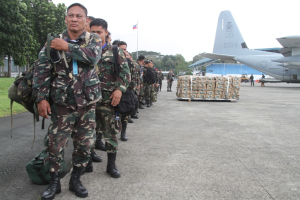
    Philippine Army servicemembers stand alongside a pallet of bottled water as they prepare to board a U.S. Marine Corps KC-130J to support victims of Super Typhoon Haiyan at Villamor Air Base, Manila, Republic of the Philippines Nov. 11. Source: U.S. Marine Corps. (Photo by Lance Cpl. Stephen D. Himes/Released)

    Philippine Army servicemembers stand alongside a pallet of bottled water as they prepare to board a U.S. Marine Corps KC-130J to support victims of Super Typhoon Haiyan at Villamor Air Base, Manila, Republic of the Philippines Nov. 11.
    Source: U.S. Marine Corps. (Photo by Lance Cpl. Stephen D. Himes/Released)

    US Defense Secretary Chuck Hagel has ordered the USS George Washington and her battle group from Hong Kong to the Philippines to provide humanitarian assistance in the aftermath of the Typhoon. Already, about 90 U.S. Marines and sailors have deployed from Okinawa to the Philippines and are on the ground providing support. UK Prime Minister David Cameron has ordered the Royal Navy’s HMS Daring to the region as well. This disaster response mission is part of the Department of Defense’s growing humanitarian response mission to help affected regions. Simply put, if the U.S. military and allies did not provide fast-acting logistical support to relief missions like this, there are no other entities that can provide the heavy lift or logistical expertise necessary to get large quantities of aid to a region in time.

    Last week, prior to the storm, in reference to Pacific Command’s disaster response mission and capability, the PACOM Commander Admiral Locklear said:

    It’s the right thing to do… Also, if something is going to happen in the Pacific that is going to create a churn in the security environment, the most likely thing will be a humanitarian disaster problem of some kind – whether it is horrific typhoons or tsunamis or floods or something else.

    He’s right. Beyond the clear threats to the human security of the residents of the affected area – loss of life, home, food, electricity, and clean water – natural disasters can act as a clear threat to national security, especially when the government is unable to respond effectively. That’s because a government failure can create the opportunity for other security threats to develop, ranging from crime and corruption to insurgency or terrorism. Unfortunately, we may already be seeing this in the Philippines; there are reports of massive looting after the storm passed over, and unverified reports that the Filipino military has engaged and killed a group from the New People’s Army, a communist rebel group in Leyte, as they tried to attack a government relief convoy.

    I’m not going to spend much time debating whether or not man-made climate change was responsible for this storm in particular.  There is an ongoing debate about whether climate change will both increase the number of tropical cyclones as well as their intensity. The latest IPCC report only expressed a ‘low confidence’ in the impact of climate change on tropical cyclones – that doesn’t mean there’s no impact, but it means we don’t know. What we do know is that the water in the Pacific has been warmer than average –and that warmer water is an important part of cyclone intensity. Phil Plait’s blog, Bad Astronomy, has a good explanation of the climate-cyclone link. Suffice it to say that climate change is another risk that must be considered when planning for security threats in the region.

    These are precisely the reasons that the U.S. Department of Defense has labeled climate change as an “accelerant of instability” in the 2010 QDR. PACOM, which has responsibility for all American forces in the Pacific region, has operationalized that guidance from the QDR to include real and significant planning for the many natural disasters that happen around the Pacific Rim. Admiral Locklear has stated that climate change “is probably the most likely thing that is going to happen . . . that will cripple the security environment, probably more likely than the other scenarios we all often talk about.”

    As ASP has determined in our Global Security Defense Index on Climate Change, the U.S. is not the only country that is planning for the security threats of climate change; over 70% of the world also deems climate change to be a security threat. The Philippines’s National Security Policy specifically gives the security forces the mission to “Help Protect the Country’s Natural Resources and Reduce the Risks of Disasters” and goes on to say that “the government must focus on establishing disaster and calamity preparedness and effective response mechanisms.” Clearly, Typhoon Haiyan has overwhelmed the ability of the Filipino security services to effectively respond to this calamity; it is appropriate for the U.S. and international community to help as much as possible.

    Climate change acts as a threat multiplier and an accelerant of instability. Whether this storm was ‘caused’ by climate change is a moot point now. Even with concerted international action to reduce greenhouse gas emissions, like those proposed at the UNFCCC negotiations in Warsaw, the Pacific will likely see these disasters for decades to come. Efforts to reduce risk should include military preparations for response, readiness that increases the capacity to prevent such harm, as well as greenhouse gas mitigation to reduce the chance of future storms. The net effect, unfortunately will be that the military is likely to have many opportunities to practice disaster response: it should be treated as a key mission.

    Andrew Holland is Senior Fellow for Energy and Climate at American Security Project, a Washington D.C based think tank. He is an expert on energy, climate change, and infrastructure policy. He has over seven years of experience working at the center of debates about how to achieve sustainable energy security and how to effectively address climate change. He tweets regularly via @TheAndyHolland.

  • Sustainable Security

    National security and the paradox of sustainable energy systems

    The transition away from a centralised global economy built around conventional energy sources to a decentralised global economy mostly fuelled by renewable resources is one we must make for the sake of our children’s futures and that of our planet. Writing for sustainablesecurity.org, Phillip Bruner asks if national security is at present, deeply concerned with preserving access to conventional energy, then how would national security for a decentralised renewable energy Internet be managed? Who would manage it? And what role, if any, could the public play in helping to alleviate some of the burdens of 21st century threat mitigation?

    Read Article →

    Causes of Conflict: A Strategic Perspective on US–Sino Relations in the Caribbean

    Author and former High Commissioner of Trinidad and Tobago to the Court of St. James, Serena Joseph-Harris writes that China’s increasing regional profile in the Caribbean highlights the challenges now posed to American exceptionalism as Beijing defines its own course in the region. This article focuses on the potential within the Caribbean Basin for the burgeoning proceeds presently derived from increases in the legitimate investment, trade, and commerce emanating from Beijing and Washington to become entwined with illicitly derived funds generated from transnational crime activities, specifically the trafficking of drugs.

    Read Article →

  • Sustainable Security

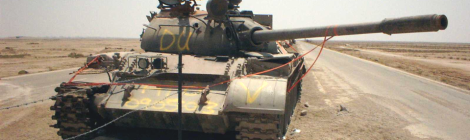
    DU-turn? The changing political environment around toxic munitions

    Is the US backpedalling on its use of depleted uranium (DU) rounds? There are indications that the use of these highly toxic munitions could increasingly be a political liability for the US, with countries affected by DU, like Iraq, other UN Member States, and populations in contaminated areas all expressing concerns over its use and impact. But stigmatisation, although important, is not enough on its own – in order to make sustained progress on accountability and in reducing civilian harm, a broader framework that addresses all toxic remnants of war is needed.

    Read Article →

    Drone-tocracy? Mapping the proliferation of unmanned systems

    While the US and its allies have had a monopoly on drone technology until recently, the uptake of military and civilian drones by a much wider range of state and non-state actors shows that this playing field is quickly levelling. Current international agreements on arms control and use lack efficacy in responding to the legal, ethical, strategic and political problems with military drone proliferation. The huge expansion of this technology must push the international community to adopt strong norms on the use of drones on the battlefield.

    Read Article →

  • What’s the Real Mission In Libya?

    What is the real mission in Libya? Not the no-fly zone– that’s a method. So what is the mission? How do we end this thing?

    The president said in Santiago yesterday that the military mission isn’t aimed at getting rid of Gaddafi. He said we have other means to do that-sanctions and money freezes and that stuff.

    Well, excuse me for being skeptical, Mr. President, but we’ve done all that before and regimes have survived it for years-many years. I remember how many years we had white-ruled Rhodesia under sanctions. When I was over there in the Peace Corps, I went to that country, it meant watching old movies instead of ones currently available in other countries. No, it really didn’t really work all that fast.

    Americans don’t like long wars. Are we going to be backing this military campaign in Libya for months or even years-with the French and the Brits and a token Arab force flying overhead while Gaddafi kills his people in alleys and basements below? Are we going to wait for –excuse me — sanctions to work their will?

    It doesn’t ring true. We went in there to stop a killer from massacring his people. If he’s set on doing it, he’s got plenty of time now to find ways of doing it — if all we’re doing is running sanctions against him.

    So, we need to know more. Perhaps there’s a secret plan out there to overthrow Gaddafi. Are we offering him safe-conduct to Venezuela? Are we giving him a means to end this standoff?

    Because if we’re not doing any of this, it promises to be a long war, a standoff, where Gaddafi sacrifices more and more of his people to prolong his own rule, which he needs to prolong if he’s going to prolong his own life.

    I hope we have a plan here we’re not talking about, because what we’re seeing makes no sense. We say we want to overthrow Gaddafi again but give him no place to escape. If that’s the nature of this contest, he will fight to the death — as most people would — and that will mean the deaths of countless people who would survive if we had a quicker, smarter plan that promised a quicker, smarter ending to this thing.

    I don’t like the looks of this campaign for the simple reason it looks like so many others. In an effort to reduce our footprint, we’re making it a far longer, more bloody journey to where we’re headed in the end.


    Chris Mathews is a TV News anchor in the United States.

    This article originally appeared on the Huffington Post. 


  • Share the World’s Resources (www.stwr.org)

    This website presents an extensive database of the latest news, analysis and information on a variety of international issues. There are currently over 2,000 articles available covering issues ranging from globalization to poverty, climate change, people power and much more.

    The objectives of Share the World’s Resources are

    1. To raise awareness of how and why the dominant international economic and political systems are incapable of ending poverty, creating a sustainable economy, or mitigating climate change.

    2. To propose an alternative sustainable economic framework based on international cooperation and the sharing of essential resources.

    3. To campaign for governments around the world to initiate global economic reform and to share essential resources in order to immediately secure basic human needs for all.

  • Beyond Terror: The Truth About the Real Threats to Our World

    Many leading military analysts in the United States are increasingly alert to the link between security and climate change. Is international terrorism really the single greatest threat to world security?

    Since the 9/11 attacks, many Western governments assume terrorism to be the greatest threat we face. In response, their dangerous policies attempt to maintain control and keep the status quo by using overwhelming military force. This important book shows why this approach has been such a failure, and how it distracts us from other, much greater, threats:

    • Climate change
    • Competition over resources
    • Marginalisation of the majority world
    • Global militarisation

    Unless urgent, coordinated action is taken in the next 5-10 years on all these issues it will be almost impossible to avoid the earth becoming a highly unstable place by the middle years of this century. Beyond Terror offers an alternative path for politicians, journalists and concerned citizens alike.

    For more information or to buy the book please click here. 

  • Sustainable Security

    The Threat of Nuclear Disconnect: Engaging the Next Generation

    The dramatic decrease in public awareness and engagement in the nuclear weapons debate since the 1980s poses a risk to our future, as younger generations and future policy shapers will be less familiar with the challenges posed by nuclear weapons when they take the helm. But nuclear weapons are too dangerous a threat for an entire generation to disconnect from. BASIC’s Rachel Staley explores the ramifications of not updating the nuclear debate.

    Read Article →

    The Iran Interim Deal: Responses, Potential Impacts, and Moving Forward

    Implementation of the interim deal with Iran, which freezes the country’s nuclear enrichment in exchange for limited sanctions relief, began in January. As a result, we are witnessing a substantial shift in diplomatic relations between Iran and its regional neighbours – some positive, some not. This deal marks a significant step for the international non-proliferation regime, but will it achieve the trust and confidence-building goals intended? As the US and Iran face increasing domestic pushback on the terms of the agreement, questions remain on the interim deal’s impact on relations in the region and abroad, and the effect these relations may have on the prospects of coming to a full comprehensive follow-up agreement between Iran and the P5+1 countries.

    Read Article →

  • Competition over resources

    For some years, the Oxford Research Group (ORG) has been analysing the likely underlying drivers of global insecurity over the coming years, and ways to develop sustainable responses to these threats. This analysis has focused on four trends that are expected to foster substantial global and regional instability, and large-scale loss of life, of a magnitude unmatched by other potential threats. These are climate change, competition over resources, marginalisation of the ‘majority world’ and global militarisation.

    Read the full article here.

    Author: Hannah Brock

    Image source: WorldIslandInfo.com

    Read more »

  • Climate change

    Accelerating climate change and competition for limited supplies of water, food and energy are poised to ignite long-simmering conflicts in fragile states, monopolising the world’s military resources and hampering development efforts, security experts say. Defusing these new 21st century conflicts – or at least preparing governments and citizens to cope with them – will require a broad range of innovative interventions, a gathering at Britain’s Department for International Development (DFID) heard earlier this month.

    Image source: Images.Defence.Gov.au

    Read more »

  • Sustainable Security

    The UK is the state of registration for a large number of land-based and maritime PMSCs. How compatible is the UK regulation model for PMSCs with international norms, especially those concerning human rights?

    Author’s note: this commentary draws upon work found in a previous article written by the author – ‘Regulation of the Private Military and Security Sector: Is the UK Fulfilling its Human Rights Duties?’ in (2016) 16(3) Human Rights Law Review 585-599.

    There are a large number of Private Military and Security Companies (PMSCs) registered in the UK. In 2011 the Security in Complex Environments Group (SCEG) was appointed by the UK government as its partner for the development and accreditation of standards for the UK private security industry when operating overseas. SCEG is a special interest group within Aerospace Defence and Security (ADS), a trade organisation advancing the UK aerospace, defence, and security industries. SCEG lists nearly 60 UK-registered PMSCs as members. Separately, 21 UK-registered PMSCs are currently listed as members of the International Code of Conduct Association (ICoCA), set up in 2013 to oversee the implementation of a non-binding international code for private security companies, although a much larger number of UK PMSCs, over 150, had signed up to the International Code of Conduct for Private Security Providers of 2010. This emerging system of national and international self-regulation was a political choice by the UK government based on free-market thinking and limited resistance to a powerful and profitable industry.

    Options for Regulation

    Image credit: chuck holton/Flickr.

    The post-Cold War peace dividend, which led to a surplus of well-trained former armed forces personnel, combined with the damage done to the UK’s reputation in the late 1990s by Sandline International, led to some soul searching about the regulation of the overseas operations of an emergent private military and security industry. Sandline was a private military company with a previous history of involvement in conflicts in Africa, headed by former British Army Officer Tim Spicer, that had breached a UN and UK arms embargo against Sierra Leone by supplying arms to President Kabbah. The recommendations of the Legg Report of 1998, that the government consider introducing a system of licensing for PMSCs operating out of the UK, were a direct outcome of the ‘Sandline Affair’.  The UK Foreign and Commonwealth Office’s (FCO) Green Paper, ‘Private Military Companies: Options for Regulation’ of 2002, provided a thoughtful examination of the reasons for growth of the industry, including a convincing rationale for regulating what was at the time still a fledgling industry:

    Bringing non-state violence under control was one of the achievements of the last two centuries. To allow it again to become a major feature of the international scene would have profound consequences. Although there is little risk of a return to the circumstances of the 17th and 18th centuries when privateers were hard to distinguish from pirates, and Corporations commanded armies that could threaten states, it would be foolish to ignore the lessons of the past. Were private force to become widespread there would be risks of misunderstanding, exploitation and conflict. It would be safer to bring PMCs and PSCs within a framework of regulation while they are a comparatively minor phenomenon.

    In outlining the options for regulation, the Green Paper clearly favoured a system of government licencing over a system of self-regulation based on a voluntary code of conduct. The Montreux Document (on Pertinent International Legal Obligations and Good Practices for States Related to Operations of Private Military and Security Companies During Armed Conflict) of 2008, a non-binding document agreed to by a number of countries (mainly those with a PMSC industry such as the UK or those that were hoisting significant number of contractors such as Iraq), also expressed a preference for a licensing system. The Montreux Document identifies exiting legal obligations incumbent upon states in their relationships with PMSCs when either acting as the host state, home state (state of registration) or contracting state, but it did not take the form of a binding treaty. It also recommends good practices for governments to adopt when engaging with PMSCs, but there is no supervision or enforcement of any aspect of the Document.

    Given this support, the creation of a system of licensing seemed likely, particularly as such a regime had been introduced for UK domestic private security operators in the 2001 Private Security Industry Act, after a period of ineffective self-regulation. Indeed, when considering the Green Paper later in 2002 the Foreign Affairs Committee stated that, while self-regulation would establish better standards of PMSC conduct, it would not by itself prevent rogue or disreputable UK companies from acting against or, indeed, damaging UK interests or policies. Therefore, the Committee recommended a mixed system of general and specific licences.

    However, the UK’s experience with contractors during its involvement in conflicts in Afghanistan from 2001 and Iraq from 2003 had significant effects. By the time the government came to reconsider the matter in 2009, a much more powerful PMSC industry in terms of reach, capability and lobbying influence, combined with a new climate of austerity following the financial crisis beginning in 2008, to push  the Conservative-led government rapidly towards the least burdensome, least interventionist and, moreover, least expensive option of self-regulation.

    Despite further consultations revealing concern with a system of self-regulation, when the government re-engaged with the issue of regulation, it proceeded to create a system in which government backing for a national system of self-regulation was keyed into voluntary international codes. Concerning the latter, the UK government has been a keen supporter of the Montreux Document 2008, which provides a non-binding framework for states, as well as the International Code of Conduct for Private Security Providers of 2010. The latter contains a set of standards for security companies to respect human rights and humanitarian law, and which provides for a non-binding international form of self-regulation for the companies themselves. On the other hand, the UK has opposed any form of binding treaty requiring states to legislate for the regulation of PMSCs as proposed by the UN Working Group on Mercenaries, an item that has been on the agenda of the UN’s Human Rights Council since 2010.

    Flaws in Self-Regulation

    Ignoring the Rogue Traders

    In 2009 the FCO optimistically estimated that in time 90% of PMSCs would opt-in to a system of voluntary self-regulation. Even if this happened, it would still leave 10% of unregulated rogue companies, potentially trading on their willingness to engage in shady operations rather than on their corporate social responsibility. A voluntary system may raise standards in the industry as a whole but it ignores the central point of regulating the industry: to deter and punish those most likely to commit abuses.

    Nemo Judex in Causa Sua (no-one should be a judge in his own cause)

    Self-regulation in its pure form means that the industry is essentially being given the task of acting as a judge in its own cause. This basic injustice has been partly addressed in the regime within the UK by creating a national system of monitoring, inspection and enforcement through SCEG, separated from the industry association (ADS). This has also been duplicated at the international level, with PMSC membership of the International Code of Conduct being separate from the system of monitoring and enforcement in the hands of the ICoCA. At national level, the SCEG consists of a mixture of PMSCs, with some legal and insurance industry membership, as well as representatives from the FCO and the Department of Transport. At the international level, the ICoCA comprises states (Australia, Norway, Sweden, Switzerland, UK, US), civil society and industry representatives, with equal representation of the three pillars in the Board of Directors. Clearly it is not solely a case of the industry judging the actions of its members, but a truly independent body would not include the industry at all.

    Under the voluntary system put in place in the UK, the auditors comprise individuals from bodies accredited by the UK Accreditation Service (UKAS) as being able to measure the management, performance and activities of PMSCs against national (PSC1 US National Standard, 2012), and international standards (ISO 18788/28007, 2015), and these individuals and bodies are presumably approved because they are independent of PMSCs.

    Limited Sanctions for Non-Compliance

    Sanctions are limited, the main one comprising exclusion of a non-compliant PMSC, a sanction that ultimately does not stop the company in question from trading, as shown by the US experience of transition from ostracised ‘Blackwater’ (responsible for the 2007 Nisour Square lethal shooting of 17 civilians in Iraq), to the renamed ‘Xe Services’ in 2009, and then to ’Acedemi’ in 2011.

    Applicable Standards?

    The question of what standards are to be applied is not as straightforward as the documents (International Code of Conduct, PSC and ISO standards) suggest; that this system will be upholding human rights, humanitarian law and other applicable principles of international law. Given that these laws are not directly applicable to PMSCs, indeed most are designed to cover states not business actors, there is a certain amount of picking and choosing, adapting and interpreting, of standards. This is found at the international level, where the International Code of Conduct (ICoCA) covers some human rights but not others; and in the adoption of PSC1 (2012) as the national standard and ISO 18788/28007 (2015) as the international standards. These standards are not formulated in inter-governmental fora where the development and application of international norms normally take place. PSC1 was formulated by ASIS (an organisation for security professionals), and approved by the American National Standards Institute (ANSI); while ISO 18788/28007 was produced within the International Organization for Standardization (ISO), a non-governmental international organisation consisting of national standard-setting bodies.

    Failure to Close the Accountability Gap

    The UK government shows limited willingness to engage with its positive responsibilities under international law to ensure that private actors within its jurisdiction respect relevant national and international laws in foreign countries in which they operate. Arguably, the government’s presence on both the SCEG at national level and the ICoCA at the international level may address this deficiency, but its critical scrutiny of the practices of PMSCs in these fora is difficult to ascertain or gauge. In any case, it is certainly not as robust as a system of licencing that would require all UK-registered PMSCs to demonstrate to the licensing authorities due diligence in vetting, training, deploying and controlling personnel in conflict zones and other fragile situations. This must be backed up by a system of penalties and fines on companies and their directors for breach of the licence conditions and, ultimately, punishment for individual contractors committing serious crimes over which the UK authorities can, despite government protestations to the contrary, exercise criminal jurisdiction.

    The rapid implementation of soft voluntary standards that might have been expected does not appear to have materialised as the number of certified UK registered companies is low (at just over 40 land and maritime PMSCs according to the SCEG website). This means that a majority of UK-registered companies remain unregulated. Given that such companies often operate in unregulated spaces in other countries, there remains a major accountability gap. In these circumstances it is very difficult to see how the government’s backing for a system of voluntary self-regulation for UK-registered PMSCs, no matter how sophisticated the system appears to be, has worked to close this gap.

    Nigel D. White is Professor of Public International Law at University of Nottingham.

  • Safeguarding South Asia’s Water Security

    In today’s era of globalization, the line between critic and hypocrite is increasingly becoming blurred. Single out a problem in a region or country other than one’s own, and risk triggering an immediate, yet understandable, response: Why criticize the problem here, when you face the same one back home?

    Such a response is particularly justified in the context of water insecurity, a dilemma that afflicts scores of countries, including the author’s United States. In the parched American West, New Mexico has only ten years worth of drinking water remaining, while Arizona already imports every drop. Less arid areas of the country are increasingly water-stressed as well. Rivers in South Carolina and Massachusetts, lakes in Florida and Georgia, and even the mighty Lake Superior (the world’s largest fresh-water lake) are all running dry. According to the U.S. Environmental Protection Agency, if American water consumption habits continue unchecked, as many as 36 states will face water shortages within the next few years. Also notable is the fact that America’s waterways are choked with pollution, and that nearly twenty million Americans may fall ill each year from contaminated water. Not to mention that more than thirty U.S. states are fighting with their neighbours over water.

    Such a narrative is a familiar one, because it also applies to South Asia. However, in South Asia, the narrative is considerably more urgent. The region houses a quarter of the world’s population, yet contains less than 5% of its annual renewable water resources. With the exception of Bhutan and Nepal, South Asia’s per capita water availability falls below the world average. Annual water availability has plummeted by nearly 70% since 1950, and from around 21,000 cubic metres in the 1960s to approximately 8,000 in 2005. If such patterns continue, the region could face ‘widespread water scarcity’ (that is, per capita water availability under 1,000 cubic metres) by 2025. Furthermore, the United Nations, based on a variety of measures – including ecological insecurity, water management problems and resource stress – characterizes two key water basins of South Asia (the Helmand and Indus) as ‘highly vulnerable’.

    These findings are not surprising, given that the region suffers from many drivers of water insecurity: high population growth, vulnerability to climate change, arid weather, agriculture dependent economies and political tensions. This is not to say that South Asia is devoid of water security stabilizers; indeed, its various trans-national arrangements, to differing degrees, help the region manage its water constraints and tensions. This paper argues that such arrangements are vital, yet also incapable of safeguarding regional water security on their own. It asserts that more attention to demand-side water management within individual countries is as crucial for South Asian water security as are trans-national water mechanisms.

    To understand the importance of trans-boundary water arrangements in South Asia, one must first bear in mind a paradox: the region is poorly integrated, yet linked together by water co-dependencies.

    Consider, first, that the World Bank has declared South Asia the world’s least integrated region. According to the Bank, South Asia has the world’s worst railways and road density, while only sub-Saharan Africa has worse electricity and sanitation systems. Predictably, intra-regional trade accounts for just 5% of the region’s total international trade, and less than 2% of gross domestic product. Not surprisingly, South Asia’s regional organization, SAARC, is not nearly as dynamic as regional groupings like the European Union or the Association of South East Asian Nations.

    Second, that many of the region’s countries depend on the same rivers – and, by extension, neighbouring upper riparians – for their water supply. India, Bangladesh and Nepal look to the Brahmaputra, while both Pakistan and India are beholden to the rivers of the Indus basin. Bangladesh and Pakistan, both lower riparians, must obtain great majorities of their water resources (91% and 75%, respectively) from beyond their borders.

    Conversely, China, while not a geographic entity of South Asia, is an upper riparian for many of the key rivers flowing into South Asia. India is both a lower (in the case of the Brahmaputra) and upper (in the case of the Indus) riparian. This means, hypothetically, that any flow-diverting Chinese activities on the Brahmaputra could alarm India, Nepal and Bangladesh, and in turn trigger Indian flow manipulations on the Indus, with implications downstream for Pakistan. Such a dynamic creates a hydro domino effect: one nation’s water policies can spark a chain reaction throughout the region.

    Another notable factor about South Asia’s interconnected water geography is that many major rivers originate in or pass through politically contested or tense areas. The Tibetan plateau – where the mighty flows of the Salween, Brahmaputra, Indus, Sutlej, and other rivers all spring to life, providing water to 1.5 billion people downstream – is controlled by China, and abuts India’s water-rich Arunachal Pradesh state, which China covets and has sparked Sino-Indian tensions. The rivers of the Indus basin, of course, flow through the Kashmir region – an unending source of Pakistan-India tensions. No wonder that many of South Asia’s riparian pairings (India-Pakistan for the Indus, and India-Bangladesh for the Brahmaputra and the Ganges) reflect the region’s most troubled bilateral relationships.

    In effect, South Asia’s water relations play out amid a volatile backdrop of shortage, dependency and geopolitical tension.

    A nation’s upper riparian status by no means guarantees water security. China, an uber-upper riparian, suffers from a full-blown water crisis. The North China plain – one of the country’s ‘economic and social cores’ generating more than 20% of its grain supply, according to China scholar David Pietz – is frighteningly water-scarce, with a per capita availability of 225 cubic metres per year. India, meanwhile, contains about 20% of the world’s population, but only about 4% of its water. A 2010 Asian Development Bank report projects that the country could suffer from water shortages of as much as 50% by 2030.

    Faced with current shortages, policymakers in upper riparian states frequently opt for supply-side solutions. Water generation measures may ease water stress internally, yet they often exacerbate regional tensions. India and China, to generate desperately needed water resources for both agriculture and energy, often resort to dam construction and other large engineering projects. Many of these are run-of-the-river and hence do not prevent flows from continuing downstream. Still, dams are a delicate matter. China’s insistence that its South to North Water Diversion Project will not divert flows from the Brahmaputra is met with skepticism in India. Additionally, even run-of-the-river dams and other hydro projects threaten lower riparians’ water and food security. For example, if India builds all its envisioned hydro projects on the western rivers of the Indus basin, Pakistan’s agriculture could be deprived of up to a month’s worth of river flows – enough to ruin an entire planting season.

    Lower riparians also opt for large, supply generating projects. Pakistan’s water resources policy has been dominated by dam building for decades, and the country’s Water and Power Development Authority (WAPDA) plans to construct five dams, three large canals, and five hydropower facilities by 2025. As a lower riparian, these national engineering projects will not impede river flows into downstream countries. However, they upset riparian communities, who risk being displaced. Supply-side efforts also aggravate regional and provincial tensions, which are high in many South Asian countries. The furious debate surrounding Pakistan’s Kalabagh dam, for example, has pitted supporters in Punjab against opponents everywhere else in the country. This internal discontent feeds into the domestic instability that so concerns Pakistan’s neighbours.

    In Pakistan, water insecurity also spawns different manifestations of militancy. In recent years, the Pakistani Taliban, aware of Pakistan’s precarious water situation, has attacked the country’s largest earth-filled dam, the fabled Tarbela. More recently, extremists in Punjab have issued violent threats, angrily blaming India for ‘stealing’ Pakistan’s water and vowing aggression against India unless it ceases such ‘theft’. It is perhaps not coincidental that while Pakistan based extremists have been largely absent from the latest uprising in Jammu and Kashmir, they have been increasingly vocal in their accusations of India’s alleged water theft. These extremists regard their India blame game as an expression of nationalism – an attempt to draw attention away from divisive debates within Pakistan about dam construction and toward a unified front on confronting India. Water may well be supplanting Kashmir as the militants’ chief rallying cry.

    Another response – more potential than actual, at least at this point – is for desperate citizens to flee to more water-secure nations. According to a Strategic Foresight Group estimate, water scarcity will contribute to the displacement and migration of 50 to 70 million people in India, Bangladesh, Nepal and China by 2050. To be sure, water strain takes a devastating toll on human security inside upper and lower riparian nations alike – as evidenced by the livelihood-shattered Pakistani fishermen along the disappearing Indus plain and the water starved, suicidal Indian farmers in parts of India.

    However, migration is a particularly worrisome threat for lower riparians, with the potential not just to uproot millions of people, but also to imperil regional stability. Bangladesh offers a vivid example. As an impoverished, highly populous, lower riparian that depends on other countries for nearly all its water needs, it is deeply vulnerable to Indian or Chinese activity on rivers upstream and to glacial melting in the Himalayas. And as a low-lying nation, it is susceptible to rising sea levels and monsoon flooding. This array of water problems, according to some observers, could hasten mass Bangladeshi migrations into India’s volatile East, with politically explosive implications.

    The combustible mix of water vulnerability, geopolitical tensions, and supply-side responses with ripple effects across borders constitutes a recipe for disaster – and figures to become even more explosive in the coming decades as the region’s population growth soars and Himalayan glacial melt accelerates. Several nightmare water-driven scenarios come to mind:

    * Indus Basin War. Militants in eastern Pakistan, vowing to avenge India’s ‘theft’ of Pakistan’s water from the Indus basin’s western rivers, launch terror attacks in India. New Delhi dispatches troops to its western flank, and threatens to shut-off western river flows into Pakistan.

    * Sino-Indian Water Showdown. China, in response to Indian defen-sive upgrades in and near Arunachal Pradesh, the water-rich northeastern Indian state that Beijing has long claimed, seeks to reclaim a strategic advantage by slowing the flow of the Brahmaputra into India’s Assam state – an impoverished bastion of separatist militancy that is also an important area of agricultural production.

    * Environmental Refugee Crisis. As glacial melt in the Himalayas runs its course, river flows slow to a trickle, and lower riparian Bangladesh experiences rampant water scarcity, Bangladeshis migrate en masse to more water secure but politically volatile eastern India – deepening instability in the latter as violent factions target these new arrivals, and long entrenched separatist militants exploit the unrest by launching their own attacks.

    These hypothetical scenarios, and the bubbling cauldron of water insecurity and political tensions that makes them impossible to dismiss, crystallize the importance of trans-boundary water arrangements with the ability to manage, if not reduce, the region’s water based tensions.

    Numerous trans-boundary rivers in South Asia are governed by treaties. These include the Mahakali (to which India and Nepal are party), the Ganges (involving India and Bangladesh), and the Indus (comprising India and Pakistan). The Mahakali accord is meant to promote the river’s integrated development, though various disagreements have prevented the treaty from being properly implemented. The Ganges agreement is also constrained by several disagreements, particularly over the Farakka Barrage, which Bangladesh believes has reduced downstream flows of the Ganges.

    Nonetheless, none of these countries has ever gone to war over water, and the treaties are surely a major reason why.

    The Indus Waters Treaty (IWT) allocates the Indus basin’s western rivers to Pakistan, and the eastern rivers to India (India is authorized to draw on the western rivers for agricultural purposes, so long as this use does not involve storage). It deserves particular attention, given that it is repeatedly lauded as a magnificent example of international cooperation and conflict management. Such rhetoric is warranted. The two parties, despite their rocky relations, truly make a commitment to uphold the treaty’s provisions. The IWT emphasizes transparency, particularly in terms of data exchange and notification of plans to undertake hydro projects. Sure enough, in 2010, India allowed Pakistan to inspect several under- construction Indian hydropower projects on the western rivers. The two nations have also agreed to set up a telemetry system to measure river flows.

    Additionally, only once in the treaty’s 50 year history have the accord’s mechanisms for dispute resolution been put to the test. This was a period between 2005 and 2007, when a neutral expert (appointed by the World Bank, as per the IWT’s stipulations) weighed in on the concerns of Pakistan about the Baglihar dam, a project being constructed by India on one of the Indus basin’s western rivers. The expert ruled against Pakistan on several technical points – particularly when he stated that a gated spillway was necessary – yet agreed with it on others (such as on the issue of power intake levels). While many on both sides undoubtedly found ways to oppose the outcome, it is undeniable that the dispute was settled peacefully. In June 2010, both governments concurred that the Baglihar dispute had been definitively resolved.

    In 2010, Pakistan decided to bring some technical concerns about the Kishanganga dam (a hydro project being constructed by India in Jammu and Kashmir) to an international court of arbitration. While the outcome of this latest case is far from clear, the Baglihar precedent suggests the arbitration process for Kishanganga should be similarly smooth.

    Despite its successes, many observers fear the IWT’s increasing vulnerability. This derives in part from the long-standing grievances harboured by both countries about the treaty. Indians believe it curtails the storage rights of Jammu and Kashmir, and hampers the development of hydro projects on the western rivers. Indeed, India’s participation in the treaty is both economically and politically risky – given that the energy-starved nation must forego opportunities to harvest hydroelectric resources, and given the resentment these cautious hydro development policies breed among Kashmiris.

    Pakistan, meanwhile, resents its inherent vulnerability as the lower riparian (even though the IWT allots it 80% of the total Indus basin river flow). For many in Pakistan, the country with the lowest per capita water availability in Asia, entrusting its water security to its deeply mistrusted neighbour is profoundly unsettling.

    Furthermore, worries about population growth and climate change effects (particularly the melting of Himalayan glaciers) are fuelling calls for a revised treaty that takes such trends into account. There are also recommendations that the treaty be expanded, so that it includes the other two Indus basin riparians, China and Afghanistan. Those advocating this latter view argue that a four-party treaty would reduce the possibilities of region-wide conflict, and promote basin-wide ecological sustainability.

    Some experts contend that the ‘dividing the resources’ mentality of the IWT is no longer tenable, and that Pakistan and India should move toward a more cooperative ‘share the resources’ paradigm. Ahmad Rafay Alam, one of the most eloquent articulator of this view from the Pakistan side, argues that the two nations should determine ‘whether it is in the economic, social or political interest of both riparians to cooperate on water, rather than be antagonistic over it.’ For example, instead of railing against Indian run-of-the-river dam projects on the western rivers, power-starved Pakistan should consider buying the electricity they generate – a more affordable investment than buying power from pricier indigenous gas-powered rental power projects.

    This paradigm can be applied to a broader geographic area as well. Bhutan and Nepal are blessed with ample hydroelectric potential; India could therefore invest in energy resources in these countries just as Pakistan could in India.

    Some experts make more modest suggestions about improving trans-national water arrangements. They believe that regional water security is best attained not by changing the architecture or philosophy of regional water agreements, but instead by strengthening mechanisms for cooperation and transparency within existing arrangements. In other words, instead of crafting a new IWT, the parties should make even greater commitments to respect the treaty’s current provisions on transparency.

    A core component of this viewpoint is the need for more data sharing on river flows, hydro project plans, and glacial melting. This emphasis on transparency is a chief feature of U.S. government policy on trans-national water arrangements. Policymakers in Washington, when describing South Asian water arrangements, repeatedly underscore the same terms: good communication, data sharing and joint management.

    Some modest steps have already been taken along these lines. As mentioned above, India and Pakistan recently agreed to several information sharing measures. Additionally, China and India have agreed to share data on glacial melt. Still, much more can be done, and it is here that the international community can play a key role. International academic conferences and other forums facilitating the exchange of information about water constitute one way to boost water transparency. Technology sharing is another avenue.

    The United States, for example, can share its new METRIC system – a new water measurement tool developed by academic researchers that has already helped resolve a fight over water in the Arkansas river, and could similarly be deployed in the Indus basin. Similarly, America could provide satellite data that document water availability. It is sometimes observed that there are no international water treaties or other global mechanisms to promote water cooperation. The international community’s participation in water data sharing exercises, in South Asia and elsewhere, can serve as a modest corrective.

    Champions of trans-boundary water transparency argue that by fostering greater data sharing, riparians’ mutual suspicions can be reduced, paving the way for greater water cooperation. It is important to note, however, that greater water transparency can easily backfire, and even undermine riparian relations. As one study concludes, revelations of ‘inequitable Indian water stewardship on Indus tributaries’ could exacerbate the volatility of India-Pakistan relations. One might then argue that nations with delicate relations may in certain cases be better served by not revealing inflammatory water data, and should instead maintain opacity.

    This raises a critical point: Advocating for more trans-boundary water openness, pushing for ‘resource sharing’ paradigms, and proposing more inclusive treaties all presuppose a level of political cooperation that may not exist in South Asia. After all, it is easy to propose the formation of a new Himalayan Rivers Commission to govern water management in this sub-region, as was done in 2010. However, it would be much more difficult to implement such an arrangement, which would necessitate the close cooperation of nations harbouring major trust deficits toward each other.

    So the question invariably arises: How can South Asia’s trans-national water arrangements be enhanced in such a troubled political environment? One answer is to look within, and to muster better efforts to improve internal water governance. This is because sounder water management inside countries can create a more favourable political climate for the pursuit and achievement of lasting external water cooperation. Better internal water management can serve as a catalyst for effective regional water governance.

    It is common to attribute water problems exclusively to politics. It is often said that India-Pakistan water tensions are just one facet of a long troubled bilateral relationship. Similarly, one frequently hears that India-China disagreements over water are rooted in the larger competition between the two rising powers for influence over South Asian territory and resources. And India’s water disagreements with Bangladesh and Nepal too are said to be part of a long history of poor political relations.

    Such views are accurate, yet incomplete. After all, across the United States and Australia, regions and states bicker over river water allocations – yet these tensions have little to do with politics. Neither Colorado and Kansas in the United States, nor Victoria and Queensland in Australia, are at risk of going to war; they simply disagree about how to properly divide up river flows. As such, their squabbles demonstrate an inability to efficiently manage existing water resources. In South Asia, where the availability of water resources is more precarious, this poor water governance is a chief cause of water insecurity.

    In South Asia, water insecurity is not solely a function of resource shortages. To be sure, much of it is running low on water. However, excluding some arid portions of the region, very little of South Asia is actually water-scarce. The resource is precious, yet present. South Asia’s water problems are very much rooted in the wasteful and inefficient management of the region’s available water supplies.

    Pakistan is arguably the worst culprit. Water infrastructure and transmission systems – the canals and pipes that have helped make the Indus river system the world’s largest contiguous irrigated area – are literally falling apart because they have not been properly maintained. As a result, millions of gallons of water are lost to leakage every day. In urban areas, wastewater treatment facilities are nearly non-existent – hence the country’s great cities are notorious for fetid surface water resources that sicken and kill hundreds of thousands every year.

    Meanwhile, Islamabad offers few incentives to the population to use water saving technology. The lack of subsidies for drip irrigation, for example, compels farmers to use traditional, water wasting flood irrigation. Furthermore, the government has made little effort to diversify crop production. This is unfortunate, given that Pakistan’s most intensively produced crops – and those that fetch the greatest profits for small farmers – are also the most water guzzling.

    Then there are the structural factors that exacerbate Pakistan’s water mismanagement. Thanks to the nation’s feudal land setup, a small landed elite owns most rural land, while the majority of the rural population is landless. In a country with few water laws or rights, land ownership determines water access. As a result, most of Pakistan’s rural population struggles to obtain water. In theory, mechanisms such as warabandi – the colonial-era water distribution system meant to ensure farmers equal access to irrigation water – and provincial level water arbiters such as the Indus River System Authority (IRSA) are meant to compensate for such inequalities. In reality, they fail miserably. Warabandi is exploited by politically connected large farmers, while IRSA is rarely taken seriously, and its edicts about provincial river flow allocations are routinely ignored.

    Given this gloomy domestic water situation in Pakistan, it is clear why not only militants, but also the country’s government, have chosen to externalize blame over the border. After all, bringing attention to its dysfunctional domestic water management would essentially be an acknowledgment that Islamabad is to blame for its water crisis. While Islamabad is much less prone to blame India than it was several years ago (in fact, in 2010, Pakistan’s minister for water and power acknowledged that India rarely prevents river water from flowing into Pakistan), it rarely admits that the country’s water problems are largely internally rooted.

    Pakistan is not the only poor water manager in South Asia; India’s water governance is similarly troubled. India is home to ‘dilapidated’ pipes and pumping stations that cause more than one-third of New Delhi’s fresh water (and at least 40% of most Indian cities’ total water resources) to be lost to leakage. The Yamuna river is choked with ‘faecal bacteria’, and this sewage has increased ‘thousands of times’ over the last decade. Water intensive rice and wheat crops are championed by the government through price guarantees to farmers. And per capita storage availability – the sine qua non for dam efficiency – has plummeted in recent years to levels found in Africa’s poorest nations.

    Poor internal water management has grave implications for public health, food security and the environment. Sometimes the effects can be catastrophic. Consider this summer’s flooding in Pakistan. If the country’s water infrastructure had been sturdier and better maintained, raging rivers would have been better contained and the damage wrought by the deluge may not have been as extensive.

    Perhaps the most disturbing implication is the strain on groundwater resources. With poor internal water management regimes causing surface water to be wasted, lost or contaminated across the region, South Asians are increasingly digging deeper – literally – to alleviate their water insecurity.

    In the context of agriculture – by far, the sector that consumes the most water across South Asia – the increasing inefficiency of highly subsidized, state-run irrigation systems have driven farmers to mine groundwater, which they have more control over and is more readily available. Even back in 2000, nearly 70% of Bangladesh’s irrigation, and more than 50% of India’s, was served by groundwater resources.

    Yet groundwater depletion goes beyond the agricultural sector. According to the World Bank, India is the world’s most voracious consumer of groundwater. This heavy consumption is reflected in a 2009 study by several U.S. scientists, which found that groundwater levels fell by about four centimetres per year between 2002 and 2008 across three states in northwestern India – including the breadbasket of Punjab. These areas could conceivably exhaust their entire groundwater supply within the next few decades.

    Pakistan, too, is increasingly groundwater-reliant. Lahore – the country’s second-largest city – is completely dependent on it for drinking water needs, and groundwater tables have fallen by as much as sixty-five feet in some areas of the metropolis. Worse, wastewater is now infiltrating the city’s groundwater, choking it with arsenic.

    Groundwater – once a pristine, untapped resource – is now being extracted intensively throughout South Asia. In effect, with this onslaught on South Asia’s groundwater, the last bastion of regional water security has been breached. And as groundwater becomes increasingly short and scarce, South Asia may be compelled to return to rapidly dwindling surface water resources and to compete ferociously for the ultra-precious supply that remains – a terrifying prospect, and particularly for lower riparians.

    Faced with domestic water problems, and mistaking mismanagement for shortages (or intentionally cloaking mismanagement in the guise of shortages), governments succumb to their supply-side fancies, and construct more dams and reservoirs. Such actions, as noted earlier, fan provincial tensions, and, in the case of upper riparians, anger downstream neighbours. Herein lies the troubling link between poor water management at home and trans-national water cooperation: the former prompts governments to take actions that threaten the latter.

    Whether such actions outweigh the risks of imperilling trans-national water cooperation is debatable. This is because many supply-side coping strategies are neither efficient nor sustainable. One of Pakistan’s top water experts, Simi Kamal, has calculated that the quantity of water projected to be generated by the nation’s under-construction Diamer-Basha dam pales in comparison to the amount that would be freed up simply by repairing and maintaining Pakistan’s leaky canal system. Additionally, Pakistan’s dams, like India’s, are rapidly losing storage capacity.

    Such considerations give way to another unsettling reality: So long as internal water management remains poor, the benefits accruing from deeper regional water cooperation will be strictly political; from a water resources standpoint, little will improve. Take the case of Pakistan. Assume, for a moment, that increased cooperation enables Pakistan to succeed in getting India to release more water downstream. What would be the result? Many Pakistanis would argue that their water problems would be solved: parched farmland saved, children’s thirst quenched, and lost water livelihoods restored.

    In reality, however, none of this would happen. Instead, more water would mean more inefficiency: More water lost to leaky canals and pipes, wasted in irrigation, showered on water-guzzling crops, and contaminated by urban waste. Indeed, if nothing is done to improve internal water governance, allowing more water to gush into Pakistan would simply intensify the country’s water crisis.

    South Asian nations need to focus more on demand-side solutions to domestic water problems. These include water conserving technologies, crop diversification, better investments in infrastructure maintenance and wastewater treatment, and a stronger embrace of rainwater harvesting (a conservation method that has already caught on quite strongly in parts of the region). Such policies are less expensive, and potentially more efficient, than traditional supply-side water engineering projects like large dams. Some encouraging signs are emerging from India, where there has been some debate about the merits of emphasizing sugar-bean cultivation over that of sugarcane, which is notoriously water wasting. There has also been discussion about embracing water saving mechanisms such as the direct seeding of rice.

    If such demand-side management policies are implemented successfully, South Asian nations would become more judicious in their use of existing water resources, and therefore less threatened in the short-term by the spectre of scarcity. Upper riparians would, presumably, be less likely to initiate new hydro-generation projects that upset their downstream neighbours. Lower riparians, meanwhile, would have less incentive (and fewer grounds) to stoke tensions with their upstream neighbours by accusing them of water theft. As a result, trans-national water arrangements would be threatened less, and the calmer political climate would enable riparians to make more substantive progress on the data sharing and transparency essential for better South Asian water security. None of this, it should be noted, would necessitate drawing up new treaties or other water agreements.

    To be sure, new demographic and environmental realities may well call into question the continued relevance of decades-old trans-national water arrangements. Still, these mechanisms need not stop functioning simply because of the presence of factors not at play fifty years ago. One study of the Baglihar dam case observes that the issue was ‘addressed bearing in mind the technical standards for hydropower plants as they have developed in the first decade of the 21st century, and not as perceived and thought of in the 1950s when the [IWT] was negotiated.’ A precedent has effectively been set for new conditions to be taken into account when interpreting the existing treaty, without needing to incorporate such conditions into an altogether new or revised treaty.

    This is just one more reason for South Asian nations to redouble their efforts to ameliorate internal water management. Trans-national water arrangements can also stand to improve, yet they are not in desperate need of reform and revision. Rather, it is the water governance of the region’s individual countries that so urgently needs to be fixed. In effect, South Asian water policies must adopt a new approach – one that, in the words of noted water expert Ramaswamy R. Iyer, embraces the ‘responsible, harmonious, just, and wise use of water.’ With population growth and climate change continuing apace, the stakes have never been higher, and the costs of inaction never starker.

    Article Source: Seminar

    Image Source: hceebee

  • Nuclear weapons: beyond non-proliferation?

    The eighth Review Conference of the 1968 Non-Proliferation Treaty (NPT) will get under way at the United Nations in New York next week.  Scheduled to run for a month, the Conference brings together top diplomats from 189 countries and over 2000 representatives of civil society to debate a range of issues relating to nuclear disarmament, security and preventing the further spread of nuclear weapons and the fissile materials that make them.
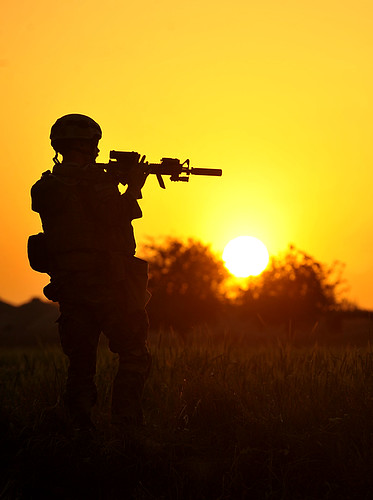
    When the Conference ends on 28th May, the outcome could be an agreed document containing substantive commitments to reduce reliance on nuclear weapons and move decisively towards their elimination, as was adopted in 2000.  Alternatively, the Conference might fail, as happened in 2005, or achieve something in between. The stakes are high, and despite some shared objectives the gulf between the objectives, intentions and expectations of the nuclear-weapon states and the majority of non-nuclear countries – especially the developing states – is still quite wide.  On past experience, how the Conference addresses the nuclear programmes in the Middle East – Israel’s as well as Iran’s – may play a critical role in whether or not the outcome is successful.  Israel, like India and Pakistan, stayed outside the NPT and developed its own nuclear arsenal, to the enduring anger of its neighbours.  In 1995, it was necessary for the NPT Conference to adopt a resolution calling for negotiations on a zone free of nuclear and other weapons of mass destruction in the Middle East. Without such a resolution, the Arab States had made clear that they would not vote for the treaty – which at that time had a 25 year time limit – to be extended indefinitely.  In 2010, the League of Arab States, backed by over 110 Non-Aligned governments under Egypt’s leadership, have made clear that they want the Review Conference to take more action to implement the 1995 Resolution on the Middle East. Others, particularly the United States, are wary of putting too much pressure on Israel, which maintains the utmost secrecy about its nuclear weapons and policies.

    President Obama’s initiatives have given renewed impetus to calls for deeper cuts in the existing nuclear arsenals and more comprehensive progress on nuclear disarmament. This year, for the first time, a majority of NPT parties will be calling for the objective of a nuclear weapons convention to be put on the negotiating agenda.  While recognising that such a comprehensive treaty to ban nuclear weapons will take time to achieve, there is renewed determination to make this possible, bringing nuclear weapons into line with biological  and chemical  weapons, both of which have been banned under comprehensive multilateral conventions.

    Just before the Conference starts there is intense speculation about the role the United States intends to play, following President Obama’s initiatives of hosting a special session of the UN Security Council to discuss nuclear weapons issues last September, inviting the leaders of 46 countries to a Nuclear Summit in Washington this April, and his signing a new strategic arms reduction treaty with President Medvedev of Russia in April –  New-START. The US Nuclear Posture Review, which was finally published in April – six months after it was first expected – gave mixed messages about US intentions. On the one hand, the Obama administration made clear their desire to reduce the role of nuclear weapons, promising not to use US nuclear weapons against non-nuclear weapon states that are NPT members and deemed to be fully complying with their obligations. However, the policy continued to assert the relevance of nuclear deterrence and left open a “narrow range of contingencies” – including attacks with conventional, biological or chemical weapons – in which the United States would be prepared to use nuclear weapons “in extreme circumstances”. Though the signing of the New-START agreement with Russia is very widely welcomed and there is considerable goodwill towards President Obama among NPT states, there are concerns that the US has still not ratified the Comprehensive Nuclear Test Ban Treaty (CTBT), despite the indispensable link between this treaty and the support of many states for indefinite extension of the NPT in 1995.

    The NPT was negotiated in the 1960s soon after the 1962 Cuban Missile Crisis nearly turned the cold war into a nuclear war.  The shock of this propelled the key governments to the negotiating table. Though many countries wanted nuclear weapons to be abolished at that time, the political conditions made that impossible.  Instead, they agreed on a non-proliferation approach to halt the further spread of nuclear weapons.  This history is critical to understanding many of the treaty-related conflicts that are likely to unfold during the Review Conference.

    Unlike previous kinds of treaties, which imposed restraints or prohibitions on all states equally, the NPT had to acknowledge that five countries had already become “nuclear-weapon states”. The core obligations therefore were that these five – Britain, China, France, the Soviet Union (now Russia) and the United States – were prohibited from transferring nuclear materials, control over nuclear weapons or know-how for nuclear weapons purposes and that they should “pursue negotiations in good faith” on nuclear disarmament. All other countries could only join the NPT as “non-nuclear weapon states”. They accepted obligations not to receive nuclear materials or know-how for nuclear weapons purposes and not to seek to develop any nuclear armaments. Along with this, the non-nuclear weapons countries agreed that the International Atomic Energy Agency would be able to inspect “safeguard” any of their civilian nuclear facilities to ensure that no materials were being diverted for weapons programmes. As an incentive to non-nuclear-weapon states to join the treaty, it was explicitly promised that they would not be prevented from developing civilian nuclear programmes; more than that, they were offered assistance to develop non-military nuclear reactors and programmes.  After the entry into force of the NPT there were further developments to strengthen the regime, including export controls imposed by suppliers of uranium and other nuclear products, nuclear-weapon-free zones – now covering the whole of Africa, Latin America and the Caribbean, the South Pacific, South-East Asia and five countries in Central Asia.

    I have covered every NPT meeting since 1994, and this one appears too close to call.  It would be a major problem for the credibility of the non-proliferation regime – and especially for the nuclear-weapon states – if the 2010 Conference were to collapse without agreement.  The fact that the 2005 Review Conference ended acrimoniously, having failed to agree on any substantive issue had less direct impact on the non-proliferation regime than some had anticipated, because it was predictable in view of the intransigent position of the Bush administration and refusal by a number of countries to adopt something much weaker than had already been agreed in 2000.  Iran and Egypt were also seen to have contributed to the 2005 deadlock, but they were clearly not the cause.

    Expectations for the 2010 Review Conference are very different, not least because of the positive measures undertaken by President Obama. Yet these could still be swamped by the regional rivalries of the Middle East or if some of the other nuclear-weapon states refuse to reaffirm commitments made in 2000 that are still a long way from being fulfilled.  At the preparatory meeting held in 2009, France and Russia were digging their heels in over some of the disarmament proposals being put forward, while China was quietly anxious about what more transparency and accountability on disarmament matters might entail. If solid agreements on nuclear disarmament and the Middle East are on the table by the fourth week then that would be sufficient incentive for significant governments to exert pressure on potential spoilers. But that might not be the case if not enough is being offered in negotiations.

    In this regard, a particularly wild card is whether the Security Council, currently chaired by Japan, will push ahead with a new sanctions resolution against Iran, as some politicians in the United States and elsewhere are demanding.  If so, then all bets for a positive NPT outcome will be off. Not only would such a sanctions resolution make Iran more likely to disrupt and block agreements in the NPT Conference, but it would also make it more difficult for other members of the Non-Aligned group of states to exert friendly persuasion on Iran to engage more constructively and not hold up agreements supported by the rest of the Non-Aligned countries.  The next four weeks will be critical for nuclear non-proliferation and security.


    Source: OpenDemocracy

    About the Author: Rebecca Johnson is Director of the Acronym Institute for Disarmament Diplomacy and a former senior advisor to the International WMD Blix Commission (2004-06)

    Image source: ricardo.martins

  • Competition over resources

    A new report that highlights Afghanistan’s extensive mineral deposits provides fuel for the United States’s military project. But it also signals the existence of a wider resource-competition that reflects the 21st-century’s emerging geopolitics.
    Source: openDemocracy

    Image source: isafmedia


    Read more »

  • Sustainable Security

  • Diplomatic shifts in the warming Arctic


    The summer of 2010 saw the third-lowest amount and extent of Arctic sea ice ever recorded. For the third year in a row both the Northwest Passage between Greenland and Alaska and the Northern Sea Route between Norway and Kamchatka were ice-free – something that had not happened before 2008 in recorded history. As the physical state of the High North is changing, so too is the diplomatic environment.


    The changing North

    On 19 September 2010, sea ice covered 4.6 million km2 of the 14.1m km2 Arctic Ocean. This was 2.1m km2, or 31%, below the average summer minimum during the last two decades of the twentieth century. It was the third-lowest extent, after 2007 and 2008, since consistent records began. Eight of the ten lowest minimums have been experienced in the last ten years. Change is also visible in winter ice cover: the maximum extent in March 2010 was 4% below the 1979–2000 average of 15.8m km2, an area greater than the Arctic Ocean itself, since many areas outside the Arctic also freeze. The extent of ice cover is not the only story. The total volume of ice is also showing a downward trend, in both summer and winter. This is because the proportion of multi-year to newly formed ice is also declining. Since older ice tends to be thicker, this changing proportion means the total amount of summer ice in the Arctic is declining faster than the area it covers.


    Some observers have taken comfort in the fact that ice extent increased year-on-year in both 2008 and 2009, with 2010 levels still above those of 2007 and 2008. But this was in part because the record low of 4.1m km2 in 2007 was an anomaly, falling well below the long-term trend. Other observers worried that the 2007 melt was a harbinger of disaster – that a tipping point had been passed and that accelerating warming might lead to a seasonally ice-free Arctic in as little as ten years. But the figures for 2010 closely reflect the long-term trend. Both the optimists and the pessimists appear to have been wrong.


    However, this long-term trend is worse – in the context of global climate change – than projected even five years ago. Only the most extreme of the projections included in the Intergovernmental Panel on Climate Change’s (IPCC) 2007 Assessment Report showed an ice-free Arctic by the end of the twenty-first century. Yet the trend with regard to actual observations falls outside the range projected by the IPCC models (see chart). A simple linear extrapolation of the current trend would imply some seasonally ice-free years in the Arctic by the 2040s, while an accelerating trend that better fits the data suggests a date of 2030. Recent model-based projections that take into account the latest data give dates ranging from around 2040 to 2080, with most expert opinion inclining towards the earlier end of the range.


    The full article can be found at IISS


    Image source: IISS


  • Connections Between Climate and Stability: Lessons From Asia and Africa

    “We, alongside this growing consensus of research institutes, analysts, and security agencies on both sides of the Atlantic, think of climate change as a risk multiplier; as something that will amplify existing social, political, and resource stressors,” said Janani Vivekananda of International Alert, speaking at the Wilson Center on May 10.

    Vivekananda, a senior climate policy officer with International Alert’s Peacebuilding Program, was joined by co-presenter Jeffrey Stark, the director of research and studies at the Foundation for Environmental Security and Sustainability (FESS), and discussant Cynthia Brady, senior conflict advisor with USAID’s Office of Conflict Management and Mitigation, to discuss the complex connections between climate change, conflict, stability, and governance. 

    A Multi-Layered Problem

    Climate change and stability represent a “double-headed problem,” said Vivekananda. Climate change, while never the only cause of conflict, can increase its risk in certain contexts. At the same time, “states which are affected by conflict will already have weakened social, economic, and political resilience, which will mean that these states and their governments will find it difficult to address the impacts of climate change on the lives of these communities,” she said.

    “In fragile states, the particular challenge is adapting the way we respond to climate change, bearing in mind the specific challenges of operating in a fragile context,” said Vivekananda. Ill-informed intervention programs run the risk of doing more harm than good, she said. 

    For example, Vivekananda said an agrarian village she visited in Nepal was suffering from an acute water shortage and tried adapting by switching from rice to corn, which is a less water-intensive crop. However, this initiative failed because the villagers lacked the necessary technical knowledge and coordination to make their efforts successful in the long term, and in the short term this effort actually further reduced water supplies and exacerbated deforestation.

    “Local responses will only be able to go so far without national-level coordination,” Vivekananda said. What is needed is a “harmony” between so-called “top-down” and “bottom-up” initiatives. “Adapting to these challenges means adapting development assistance,” she said. 

    “What we’re finding is that the qualities that help a community, or a society, or in fact a government be resilient to climate change are in fact very similar qualities to that which makes a community able to deal with conflict issues without resorting to violence,” said Vivekananda.

    No Simple, Surgical Solutions

    “The impacts of environmental change and management of natural resources are always embedded in a powerful web of social, economic, political, cultural, and historical factors,” said Stark. “We shouldn’t expect simple, surgical solutions to climate change challenges,” he said.

    Uganda and Ethiopia, for example, both have rich pastoralist traditions that are threatened by climate change. Increasing temperatures, drought, infrequent but intense rains, hail, and changes in seasonal patterns are threatening pasture lands and livelihoods.

    At the same time, pastoralists are confronting the effects of a rapidly growing population, expanding cultivation, forced migration, shrinking traditional grazing lands, anti-pastoralist attitudes, and ethnic tensions. As a result, “any intervention in relation to climate adaptation – whether for water, or food, or alternative livelihoods – has to be fully understood and explicitly acknowledged as mutually beneficial by all sides,” Stark said. “If it is seen in any way to be favoring one group or another it will just cause conflict, so it is a very difficult and delicate situation.”

    Yet, the challenges of climate change, said Stark, can be used “as a way to involve people who feel marginalized, empower their participation…and at the same time address some of the drivers of conflict that exist in the country.”

    Case Studies: Addressing the “Missing Middle”

    When doing climate change work in fragile states, “you have to think about your do-no-harm parameters,” said Brady. “Where are the opportunities to get additional sustainable development benefit and additional stabilization benefit out of reducing climate change vulnerability?”

    More in-depth case studies, such as the work funded by USAID and conducted by FESS in Uganda and Ethiopia, are needed to help fill the “missing middle” between broad, international climate change efforts – like those at the United Nations – and the community level, Brady said. 

    The information generated from these case studies is being eagerly awaited by USAID’s partners in the Departments of State, Defense, and Treasury, said Brady. “We are all hopeful that there will be some really significant common lessons learned, and that at a minimum, we may draw some common understanding about what climate-sensitive parameters in fragile states might mean.”

    Image source: aheavens

    Article source: The New Security Beat

  • Sustainable Security

    ‘Petropolitics’ and the price of freedom

    “As the price of oil goes down, the pace of freedom goes up… As the price of oil goes up, the pace of freedom goes down…” So says New York Times columnist Thomas Friedman, who argues that the first law of ‘petropolitics’ is that the price of oil and the pace of freedom are inversely correlated in countries “totally dependent on oil” for economic growth. However, the correlation between recent oil price spikes and anti-authoritarian action – particularly in the Arab Spring – challenges this assessment. But if this pattern of change is to continue, Western states must curb their hypocritical dependence on authoritarian oil-exporting governments by developing more sustainable sources of energy.

    Read Article →

    Sustainable Finance and Energy Security

    General volatility in financial markets – fuelled by irresponsible lending and trading practices, as well as evidence of market manipulation – have had an effect on oil prices. Although the specific effects of the finance sector on oil prices requires further investigation, we can already understand that a sustainable and secure future will require the development of a wider energy mix to meet rising demand. To this end, more sustainable financial systems must be developed to service the real needs of citizens

    Read Article →

  • Beyond Supply Risks: The Conflict Potential of Natural Resources

    While the public debate about resource conflicts focuses on the risk of supply disruptions for developed countries, the potentially more risky types of resource conflict are usually ignored. As part of a two-year research project on behalf of the German Federal Environment Agency, adelphi and the Wuppertal Institute for Climate, Energy, and Environment have analyzed the risks of international conflict linked to natural resources in a series of reports titled Beyond Supply Risks – The Conflict Potential of Natural Resources.

    Resource extraction, transportation, and processing can create considerable crises and increase the risk of conflicts in producing and transit countries. This phenomenon – widely referred to as the “resource curse” – impacts consuming countries only if it leads to shortages and higher prices. However, in the producing and transit countries it can have much wider destabilizing effects – from increasing corruption to large-scale violent conflict. In addition, the extraction, processing, and transportation of resources often create serious environmental risks. Overexploitation, pollution, and the degradation of ecosystems often directly affect the livelihoods of local communities, which can increase the potential for conflict.

    The eight reports that comprise Beyond Supply Risks explore plausible scenarios over the next two decades, focusing on four case studies: copper and cobalt in the Democratic Republic of Congo; theNabucco natural gas pipeline project across Southern Europe and Turkey; lithium in Bolivia; and rare earth minerals in China.

    Lithium in Bolivia

    Bolivia possesses the world’s largest known lithium deposits, a potentially important resource for the development of electric vehicles. While the development of Bolivia’s lithium reserves could provide major economic benefits for one of the poorest countries in Latin America, our analysis identifies two main potential risks of conflict.

    First, the environmental consequences of developing industrial-scale lithium production might have negative effects on the livelihoods of the local population. The local population in the lithium-rich department of Potosí has shown that it is capable of organizing itself effectively in defense of its interests, and past resource conflicts have turned violent, making a conflict-sensitive approach all the more important. 

    Second, the Bolivian economy is largely dependent on natural resources, and consequently is susceptible to price shocks. At present, this risk is primarily associated with natural gas. But lithium production, if developed, might be subject to the same dynamics, which could potentially destabilize the political system. 

    For consuming countries, these conflicts threaten supplies of lithium only if local protests or broader destabilization were produce bottlenecks in the supply chain.

    Rare Earths and China

    Like lithium, rare earths are likewise essential for some new technologies. China’s well publicized monopoly on 97 percent of the global production spurred a heated debate on the security of supply of strategic minerals. While our case study identifies supply risks for consuming countries, it also outlines some of the conflict risks China might face internally.

    First, local populations could protest against the severe ecological impact of rare earth mining and production. In addition, conflicts might arise if those who profit from economic development (entrepreneurs or regional power-holders) undermine the traditional centralized party structures and expand their own influence.

    International conflicts over access to Chinese rare earth resources, while they dominate the headlines, do not appear to be the dominant risk. Instead, internal political tensions could result in a weakened China that is not able to exploit its monopoly position for foreign policy gains. Or the government could enter into multilateral agreements and thus avoid a confrontational approach towards consumer nations.

    Ultimately, the actual rate of diffusion of environmental technologies and the development of new technologies remain the key factors in determining whether relative shortages in global supply of rare earths will in fact occur. If industrialized nations and emerging economies commit to the same technologies to attain climate policy goals, international resource governance and coordinated promotion of (environmental) technology will also play a role in preventing conflict and crisis over rare earths.

    The Way Forward

    The series concludes with five recommendations to mitigate the risks of future resource conflicts:

    • Introduce systematic policy impact assessments to understand how policy goals and strategies, especially in regard to climate and environmental policy, interact with resource conflict risks.
    • Increase the transparency of raw material markets and value creation chains to prevent extreme fluctuations in prices and improve information on markets, origins, and individual players.
    • Improve the coherence of raw material policy by linking raw material policies with security, environmental, and development policies.
    • Demand and promote corporate social responsibility along the whole value chain.
    • Increase environmental and social sustainability as a means of strengthening crisis and conflict prevention by systematically taking into account social and conflict-related aspects in the resource sector.

    However, none of these strategies alone would be capable of mitigating all the risks of future resource conflicts. But together they represent a methodology that, with intense coordination among the key players, could make a far-reaching contribution to reducing risk and preventing international conflict over the long term.

    The individual reports from the project can be downloaded here:

    • Conflict Risks (GERMAN only)
    • Supply and demand (GERMAN only)
    • Case Study: Nabucco Pipeline (GERMAN only)
    • Case Study: Congo
    • Case Study: Bolivia
    • Case Study: China
    • Conflict Resolution Strategies (GERMAN only)
    • Summary and Recommendations

    Lukas Ruettinger is a project manager for adelphi, mainly focusing on the fields of conflict analysis and peacebuilding as well as resources and governance. Moira Feil is a senior project manager for adelphi and has participated in more than 30 projects with various partners and clients on natural resource links to crises, conflicts and peacebuilding, and corporate responsibility.

    Sources: Government Accounting Office.

    Article source: The New Security Beat

    Image source: Olmovich

  • Global militarisation

    Mineral resources have played a crucial role in fuelling protracted armed conflict in the east of the Democratic Republic of the Congo (DRC). This Policy Paper examines the the prospects for and interactions between various trade- and security-related initiatives that are aimed at demilitarizing the supply chains of key minerals. It also describes the changing context in which such initiatives operate. Finally, it offers policy recommendations for how the Congolese Government and international actors can coordinate and strengthen their responses in order to break resource–conflict links in eastern DRC.

    Article source: SIPRI

    Image source: Tim Pearce, Los Gatos

    Read more »

  • Sustainable Security

    Author’s Note: This post is based on a journal article which first appeared in International Peacekeeping in 2016.

    During the Cold War, Denmark was a staunch supporter of UN peacekeeping. Following the fall of the Berlin Wall, however, Denmark gradually turned its back on peacekeeping. More recently, Denmark has given priority to NATO- and US-led operations. This shift was driven by a number of interweaving factors. 

    In its 2015 input to the High-Level Independent Panel on Peace Operations (HIPPO) chaired by Ramos-Horta, Denmark characterized itself as ‘a dedicated and engaged contributor to United Nations (UN) Peace Operations’. It also stated that ‘UN peace operation activities remain a central pillar of Denmark’s foreign and security policy’, and that Denmark since 1948 has provided more than 84,000 soldiers and staff members to more than 30 UN peacekeeping operations. The input to HIPPO did not mention that since 2001 Denmark has primarily made symbolic contributions of some 40-60 military observers, staff officers and advisors to UN operations, or that Denmark since 1995 has prioritized military operations led by other actors, notably the North Atlantic Treaty Organization (NATO) and the United States (US).

    Two drivers have shaped Denmark’s evolving support for UN-led blue helmet peace operations since the beginning: a national interest in preserving Denmark’s security and welfare and an altruistic desire to do good. The mutually reinforcing interaction between interests and altruism meant that peacekeeping became internalized into Denmark’s foreign policy identity. As a result, a third driver materialized by the late 1950s: an identity-driven urge to contribute to peacekeeping because it was the ‘natural’ thing, which constituted a source of national pride and made Danish policy makers feel good.

    When these three drivers “clicked” and reinforced one another, support for UN peace operations was strong and internalized as a major component of Danish foreign policy. When they stopped doing that, support for UN peacekeeping fell dramatically. This is the situation now, and it seems unlikely to change in the near future.

    Denmark’s history of peacekeeping during and after the Cold War

    Image credit: Danish Government.

    Denmark began supporting UN peacekeeping during the Cold War because it allowed Danish decision makers to promote their interests and values at the same time. UN peacekeeping was regarded as good for national security because it lowered international tension and provided a way of supporting Denmark’s key NATO allies without angering the Soviet Union. UN peacekeeping was also good for Danish values as it supported Denmark’s vison of a rule-based international society characterized by peaceful conflict resolution. The successful peacekeeping operation launched in 1956 in order to defuse the Suez crisis strengthened Denmark’s support for peacekeeping.

    The praise earned for the participation in this mission made Danish decision-makers realize that UN peacekeeping also provided an effective way of enhancing Denmark’s international prestige and influence. By the late 1950s peacekeeping had been internalized as part of Denmark’s foreign policy identity. Danish governments now portrayed UN peacekeeping as something ‘natural’ that Denmark should be proud to support. In 1964, Danish Foreign Minister Per Haekkerup even stated that it was a ‘duty’ for small nations like Denmark to support UN peacekeeping. This was not mere rhetoric. A feeling that one could not turn down a UN request thus influenced the 1964-decision to provide 1,000 personnel for a new UN peacekeeping operation on Cyprus.

    This mutually reinforcing interaction between interests, values and identity meant that Danish support for UN peacekeeping operations became routine. The absence of operational setbacks and casualties allowed this routine to produce a steady supply of Danish peacekeepers for the remainder of the Cold War. 34,100 Danish soldiers served on UN operations in the 1948-1989 period. Denmark had an average of 811 soldiers continuously deployed abroad and contributed eight percent of the total number of UN peacekeepers (419,100) during this period, making it one of the largest UN troop contributors per capita.

    The operational difficulties that the UN encountered in the Balkans in the early 1990s broke this routine. They served as an external shock undermining Denmark’s positive perception of UN peace operations. NATO’s successful bombing campaign and subsequent takeover of the UN operation in Bosnia in 1995 made the UN less attractive from an interest perspective. Denmark had always used UN peacekeeping as a way supporting its great power allies in NATO, and when they chose to abandon the UN in favour of NATO, Denmark followed suit.

    The strategic failure of the UN operation in Bosnia, culminating in the Srebrenica massacre, also gave rise to the perception in Denmark that UN peacekeeping was ill-suited for ‘doing good’ in the post-Cold War era. The tactical success enjoyed by the Danish tank squadron in Bosnia in 1994 reinforced this perception. One engagement (Operation Hooligan Buster) made international headlines. On 29 April 1994, the Danish tanks successfully fought their way out of a Serb ambush firing their 105 mm canons 72 times. They also blew up an ammunitions depot killing an estimated 150 Serb soldiers. This skirmish became a watershed. Denmark’s great power allies showered Denmark with praise, and the Danish use of tanks influenced NATO’s and UN approaches to ‘robust peacekeeping’. The charismatic Danish tank commander, Lars R. Møller, became a national hero, and Danish decision makers became convinced that peacekeeping was best conducted with combat capable units; a perception subsequently reinforced by NATO’s successful enforcement missions in the Balkans.

    Operation Hooligan Buster set in motion a process that in the course of the next two decades transformed Denmark’s foreign policy identity. The Danish peacekeeper, hailed for his ability to keep the peace without firing his weapon, was replaced by a new hero: the Danish warrior who made a difference on the battlefield. After Operation Hooligan Buster Danish politicians displayed far greater willingness to use force beyond self-defence. Denmark made large army contributions to NATO’s enforcement operations in the Balkans, advocated military invention in Albania as OSCE chairman in 1997, and allowed Danish fighter aircraft to conduct strike missions during NATO’s Kosovo War in 1999. Public support for the Kosovo war was higher in Denmark than anywhere else, and a large majority favoured contributing to a land war in case the air campaign failed. The strong public support for the war took Danish decision makers by surprise. Danish Minister of Defence Hans Haekkerup interpreted it as ‘a breakthrough in the history of Denmark’ and as proof that the Danish foreign policy identity had changed.

    Denmark and the War on Terror

    The US-led war on terror launched in response to the September 11 attacks in 2001 reinforced the Danish preference for NATO- and US-led operations and the emerging warrior identity. Denmark provided forces for the US-led wars against the Taleban and Iraq as well as the subsequent stabilization missions. The lion’s share of the approximately 20,000 Danish military personnel serving on international missions in the decade following 9/11 served in these two missions.

    The Danish participation in the NATO and US missions in Afghanistan proved very costly. Denmark lost more soldiers in Afghanistan (43) than on all other international missions conducted by the Danish armed forces since World War Two, and a 20 billion DDK price tag (2001-2017) made it the most expensive international operation ever conducted by Denmark.

    Surprisingly, the high costs and the less than satisfactory outcome of the Afghanistan war did not undermine domestic support for the mission. By 2011 when all 43 fatalities had occurred and it was clear that the mission would not succeed, 46% of the Danish population and a large majority in parliament continued to support it.

    The predominant understandings of Danish interests, altruism and foreign policy identity explain why. The government narrative portrayed the war as being in Denmark’s interest because it supported the United States and NATO and reduced the risk of terror attacks on Danish soil. The narrative also emphasized that the operation enhanced Denmark’s standing and influence in NATO and in Washington. The mission was portrayed as the right thing to do in altruistic terms, because it helped the Afghan people and in particular the Afghan women. Finally, the war reinforced the warrior ethos in the armed forces and their martial prowess, highlighted in a series of bestselling books, was a source of considerable national pride.

    Conclusion

    The current high level of Danish support for NATO- and US-led operations is driven by a mutually reinforcing combination of interest, altruism and identity that resembles the one that underpinned Denmark’s strong support for UN peace operations during the Cold War. An interest in supporting Denmark’s great power allies was an important driver then and now. A major Danish return to UN peace operations NATO has enhanced its military presence in Eastern Europe significantly since then, and it is currently asking Denmark to make a greater army commitment to deter Russia in Eastern Europe than it ever made in Afghanistan. This makes it impossible for Denmark to contribute to UN-led operations with anything but small personnel contributions officers and critical enables. In sum, all indications are that Denmark’s military support for UN peacekeeping will remain at the low level that has characterized it since 2001.

    Dr. Peter Viggo Jakobsen is an Associate Professor at the Royal Danish Defence College and a Professor (part-time) at the Center for War Studies at University of Southern Denmark. His is the author of Nordic Approaches to Peace Operations: A New Model in the Making? (London and New York: Routledge, 2009) and several other publications on (UN) peace and stabilization operations.

  • Global Responses to Global Threats: Sustainable Security for the 21st Century

    This major report was the result of an 18-month long research project examining the various threats to global security, and sustainable responses to those threats.

    Current security policies assume international terrorism to be the greatest threat to global security, and attempt to maintain the status quo and control insecurity through the projection of military force. The authors argue that the failure of this approach has been clearly demonstrated during the ‘war on terror’ and it is distracting governments from the real threats that humanity faces.

    Unless urgent action is taken within the next five to ten years, it will be extremely difficult, if not impossible, to avoid a highly unstable global system by the middle years of the century.

    Download in English or Spanish as a PDF

  • SDC working paper

    Food security will remain out of reach for many people, especially women and children, in the Lao People’s Democratic Republic, or Laos, if the country continues to emphasize commodities and resources development at the expense of the environment and livelihoods while ignoring global trends for food and energy. Read more »

  • Sustainable Security

  • Climate change, conflict and fragility: understanding the linkages, shaping balanced responses

    Thousands of negotiators, activists and lobbyists have descended on Copenhagen for two weeks to attempt to seal a global deal on climate change. Issues on the negotiating table include how much wealthy polluters like the US put towards financing measures to help people in poorer countries cope with the impacts they are already experiencing, and how the rich states will share their low carbon technology with poor states so that the unindustrialised world can still develop without relying on fossil fuels.

    But as the negotiations unfold, one very real issue unlikely to be given much discussion space is the heightened risk of violent conflict. Factors linking climate change and the potential for conflict include a number of powerful threats to human security, such as water scarcity, land degradation, decreased food production. The risk will be greatest in poor, badly governed countries, many of which have a history of armed conflict. International Alert’s report ‘A Climate of Conflict’ estimates that just under three billion people live in 46 conflict-affected countries, where climate change could create a high risk of violent conflict, and a further in two billion people living in an additional 56 countries face a high risk of instability as a result of climate change.

    Attention to the security implications of climate change is slowly increasing among politicians and strategists in the developed world, yet climate change negotiators are largely silent on the matter. Specialists in climate change are not generally well informed about it and, although development specialists universally agree that the poorest will be worst hit by climate change, they have not resolved how to deal with the issue of fragile states in climate negotiations.

    It is essential to address this issue, but necessary to do so carefully. The potential conflict implications are among the most compelling arguments for rich states to take action against climate change. But there are three notes of warning.

    First, there is the risk of over-stating the conflict dimension in an attempt to persuade a sceptical, even disaffected or merely ill-informed public to support cuts in carbon emissions. Fuelling fears that climate change will generate threats like terrorism and mass immigration* will lead to oversimplified and inaccurate perceptions of the security angle. In the political debate, exaggerated positions will inevitably be vulnerable.

    Secondly, securitising the issue runs the risk of a damaging response that overlooks cost-effective and sustainable options in favour of high cost and probably ineffective military ones. The point here is that policy responses must be based on a thorough understanding of not only the reality of the conflict risk but also of how it is shaped. Effects of climate change such as more frequent natural disasters, long-term water shortages and food insecurity could combine with other factors and lead to violent conflict. The reason why this can happen lies in the context of poverty, weak governance, political marginalisation and corruption. These factors limit the capacity to adapt to climate change and simultaneously drive conflict. Policy responses need to look not only at the immediate risk of violence, for example by reforming the security sector, and not only at the specific environmental impacts, for example by taking steps to reduce the risk of disaster, but also at the broader context of failures of governance.

    Thirdly, climate negotiators have not paid attention to fragile states and conflict risks. Most negotiators are climate and legal experts whose remits do not extend beyond the talks. They have neither incentive nor expertise for taking account of the complex web of that links climate, conflict, governance and development.

    Nonetheless, to be effective, the global agreement must make it possible to address these linkages. This means taking the discussion beyond the question of how to raise climate funds for adaptation and mitigation, into thinking about how to spend and what governance and institutional changes are needed so spending can be effective.

    Policies for adaptation have to respond to the political and social realities in which they are intended, or they will not work. Climate change impacts are linked to conflict, development, government, human rights, trade and the world economy. The problems are interlinked and so the responses must be interlinked.

    International Alert’s latest report ‘Climate Change, Conflict and Fragility’ recommends that adaptation strategies should be more conflict-sensitive. Water management in water stressed countries for example should be decided by understanding the systems of power and equity. This must involve the poorest and most marginalised, and avoid pitting groups against each other.

    Likewise, peace-building needed to be climate-proofed by paying attention to the availability of resources for livelihoods such as agriculture – which could be under pressure because of climate change – for returning ex-combatants or people displaced by conflict.  For example, in Liberia, which is in the process of recovery from war, many ex-combatants are returning to villages hoping to make a living from agriculture. But climate scientists predict that crop yields in parts of West Africa could halve by 2020. The prospect arises of returned fighters becoming resentful unemployed farmers, and thus potential recruits, with their combat experience, in a new conflict.

    The efforts of rich countries to shift to a low-carbon economy must be peace-friendly and supportive of development. We don’t want a repeat of the hasty actions in 2007/8 that saw the diversion of food crops and land use to biofuel production playing a role in pushing food prices up, causing conflict in over 30 countries.

    Getting the negotiators in Copenhagen to understand these interlinkages will mean there’s a good chance that responses to climate change could yield a double dividend: increasing resilience to climate change and to violent conflict. Failure to take account of the linkages though could result in the millions or billions of dollars of new funding actually becoming part of the problem.


    *For example, see the US public education campaign on climate change, September 2009 http://www.secureamericanfuture.org/

    Janani Vivekananda is Senior Climate Policy Adviser on climate change and security at International Alert, the London-based peacebuilding organisation. She co-authored Alert’s latest report Climate Change, Conflict and Fragility, and A Climate of Conflict: The links between climate change, peace and war, published by International Alert in 2007.

  • Sustainable Security

  • Sustainable Security

  • Sustainable Security

    To understand why some groups fighting in civil conflicts target civilians more than others, it is vital to examine the role of ideology.

    Recent civil wars in Iraq and Syria underscore the fact that different armed groups fighting in the same conflict can adopt strikingly different approaches to the treatment of civilians. While historically about 40 percent of states and rebels have exercised restraint, others’ victimization of civilians has been routine and manifold. Much of the current understanding attributes these differences to armed groups’ material resources, organization, territorial control, and similar factors. While providing important insights, these accounts are incomplete at best because they either neglect or downplay the critical role that ideology plays in targeting civilians.

    Mainstream Explanations of Civilian Victimization

    Many analysts share a key assumption with the classical literature on insurgency and counter-insurgency – such as the works of T.E. Lawrence and Mao Tse-Tung – that securing the support of local populations is critical for fighting groups. Several implications are drawn. For example, groups that enjoy local population’s support may be less prone to victimize civilians, particularly in the communities that serve as their home or recruitment base. Conversely, such support can backfire because the enemy forces can attempt to raise its costs for the local population by targeting civilians in this community.

    Based primarily on the study of the Greek Civil War (1942–1949), another influential account argues that groups with higher degree of control over a territory are likely to selectively target enemy forces rather than indiscriminately attack civilians. In this view, information flows are pivotal: higher degree of territorial control means better information and this makes it possible and expedient to identify and selectively target specific individuals.

    Another assumption is that the fighting groups’ capabilities – their size, training, and experience – relative to their rivals can also affect their targeting patterns. Weak groups can be more prone to victimize civilians than stronger groups as they can fail to limit the collateral damage of their operations to civilians. Alternatively, when they lack resources to secure civilian support through offering benefits, such groups can also deliberately choose to target civilians as an alternative way to coerce such support. An analysis of violence in Afghanistan between 2004 and 2009, disaggregated by province and month, supports this view.

    The amount of material resources at the armed group’s disposal and where it obtains them may also affect its targeting patterns. If groups acquire their resources through exploiting natural resources or through foreign sponsorship, they may be more likely to attack civilians than if they depended on the local population for resources. External donor characteristics can matter as well, with a small number of democratic donors believed to have a more restraining effect than either autocratic donors or many donors.

    A survey of former fighters in Sierra Leone’s civil war (1991–2002) suggests that organizational characteristics are the pivotal factor. According to this view, civilian abuse is likely to be higher if groups rely on material incentives in their recruitment (thus attracting more opportunists), have an ethnically diverse group of fighters (thus lacking ways to control the fighters’ behavior through social pressure), and lack disciplinary mechanisms. This view resonates with Niccolo Machiavelli’s aversion toward mercenaries and Mao Tse-Tung’s insistence that “it is only undisciplined troops who make the people their enemies.”

    More recently, some analysts have drawn attention to the role of political and ethnic cleavages, which had previously been downplayed in large cross-national studies of civil wars. Based on a study of Spanish Civil War (1936–1939), one view maintains that civilians who have mobilized for one belligerent group are likely to be attacked by rivals as they would be considered assets for this group. A study of violence against civilians in African conflicts between 1989 and 2009 holds that ethnic background can serve as a cue for targeting because in an environment of uncertainty about people’s allegiances it serves as a shortcut for identifying potential enemy supporters.

    Much of this thinking on civil wars has tended to relegate ideology to a secondary role, if any at all. Yet, a notable resurgence of attention shows just how consequential ideology can be in understanding civil wars.

     Why Ideology Matters

    Mural in Belfast, Northern Ireland based on the painting “Guernica” by Pablo Picasso. Image credit: Rossographer.

    Research shows that in newly democratizing countries, a combination of nationalist ideology and unconsolidated democracy can help ignite internal and international conflict in the first place. Revolutionary ideologies have historically been critical ingredients for a robust insurgency by fostering strong commitment and mobilization. They can enhance fighting capacity by boosting morale. Although often based on case studies of specific groups or lacking in-depth systematic evidence, qualitative literature on civil wars and traditional research on terrorism historically have pointed at the role of ideology in armed groups’ target selection (one solid case study can be found here).

    In a recent study our working hypothesis is that far from being a mere rhetorical device, ideology can be the key factor that explains civilian victimization patterns across fighting groups in civil wars. We draw on the established concept of ideology which sees it as “shared framework of mental models that groups of individuals possess that provides both an interpretation of the environment and a prescription as to how that environment should be structured”. We argue that its effect on civilian victimization can work through two channels.

    The first is through framing some groups as hostile to the armed groups’ cause. The ideology that an armed group espouses identifies the group’s vision and the sources of threats to achieving this vision. These threat perceptions foster identifying friends and enemies of the cause. The ideology can then frame “enemies” as legitimate targets. Belonging to a certain ethnicity or territory may be a marker, but it need not be just any civilian from within these groups that becomes a legitimate target – only those can be identified as such who are seen through the ideological prism as hostile to the group’s cause.

    However, there is nothing automatic between seeing members of a specific group as hostile and victimizing them. The second channel through which ideology can affect civilian victimization is through determining strategies that the group accepts as legitimate in achieving its vision. Of course, in some cases different types of violence may be included or excluded for strategic reasons. But a group’s ideology can also prescribe adopting a strategy that is costly for the group from the material or organizational point of view. That is, some strategies may be filtered out despite presenting strategic or material advantages. This is probably because they go against the group’s vision or its identity as a certain ideological force. Therefore, some ideologies will see civilian victimization as part of their legitimate repertoire of violence to attain its vision, while others will impose constraints on or even exclude it from the group’s approach.

    It might be tempting to follow this reasoning by drawing a typology of ideologies by their approach to civilian victimization. However, often broad ideological frameworks are adapted to local conditions – they are crystallized into specific ideologies that different groups adopt. In other words, groups in different contexts that seem to share an ideology may develop different approaches, such as European leftist groups in 1970-1990s like Baader-Meinhof Group in West Germany and the Red Brigades in Italy. Instead, we should understand an armed group’s ideology in its particular context.

    Case Study: Northern Ireland

    In our study, we examined these ideas using quantitative and qualitative empirical evidence on armed group violence in Northern Ireland’s conflict between 1969 and 2005.  This conflict provides a fertile ground for this study because it involved a number of groups that differed from one another in several ways and because there were considerable differences in civilian killings across groups, locations and time. Unlike many other conflicts, it has also been well documented on the level of individual fatalities, which makes it possible to test our ideas with more nuance than previous studies. Our dataset provides details on almost all fatalities directly attributed to the conflict (3,702) and allows disaggregating them by perpetrator group, location, victim’s identity, etc. Then we try to see whether different perpetrator group characteristics, such as their size, structure, or ideology, consistently predict whether the victim is civilian or combatant as well as the victim’s ethnic identity. We do this in a framework that simultaneously accounts for all suggested factors.

    While the two main ideologies embraced by the fighting groups – Irish Republicanism and Unionism – shared similarities, such as the focus on nationalism, historically they developed distinct approaches. Drawing on the civic nationalist ideology of the French Revolution, Irish Republicanism stressed the oppression of all Irish people and adopted an anti-colonialist identity that aimed to end imperial control. This entailed a reluctance to target would-be members of the “imagined community” of free Ireland and instead emphasized focusing on combatants who were viewed as struggling to preserve imperial domination.

    Drawing on the historical “Protestant Ascendancy” movement, the ideology of Unionism came to emphasize a defensive settler identity that viewed Catholics as “fifth-columnist” Irish nationalists who intend to dismantle Northern Ireland and its union with Britain. We conjectured that these ideological differences were likely to shape the fighting groups’ targeting patterns. While the group ideologies were further crystallized during the course of the conflict, their key tenets remained.

    Our preliminary findings from statistical analysis suggest that the fighting group ideologies were the strongest and most consistent predictors of civilian victimization patterns. Fighting groups that embraced Unionist ideology, such as Ulster Defence Association (UDA) or Ulster Volunteer Force (UVF), were on average more likely to target civilians and launch cross-ethnic attacks on civilians, while Republican fighting groups, such as the Provisional Irish Republican Army (Provisional IRA) or Irish National Liberation Army (INLA), were on average more likely to focus on combatants. These results hold when we account for all other suggested factors, such as group size or resources. Our qualitative historical study suggests that these differences emerged because of differences in previously adopted norms, patterns of recruitment, and relations with the British state forces.

    While civilian targeting was prevalent in the initial stages of the conflict in early 1970s, over time it decreased in terms of total numbers. Republican groups were responsible for the largest number of total fatalities and Loyalist paramilitaries were responsible for the largest number of civilian killings. After mid-1970s, all three armed blocs – state forces, Unionist groups, and Irish Republican groups – killed fewer civilians than before, but relative proportions (combatant-civilian) remained the same.

    Implications

    Naturally, our study may be limited by its focus on civilian killings rather than civilian abuse more generally or our focus on one civil war. Nonetheless, our tentative findings strongly indicate that ideological factors need to be taken much more seriously than before in trying to understand and hopefully prevent civilian victimization by armed groups in civil wars. Neglecting these factors or downplaying their significance is simply dangerous. This is all the more important at the time when transmission of ideas is considerably enhanced by technology, which does not discriminate between benevolent or harmful ideologies. This, for example, is most drastically illustrated by Isil’s media-savvy, effective propaganda.

    Anar K. Ahmadov is Assistant Professor of Political Economy at Leiden University.

    James Hughes is Professor of Comparative Politics and Director of the Conflict Research Group at the London School of Economics and Political Science (LSE).

  • Climate change

    Avoiding the coming catastrophic nexus of climate change, food, water and energy shortages, along with worsening poverty, requires a global technological overhaul involving investments of 1.9 trillion dollars each year for the next 40 years, said experts from the U.N. Department of Economic and Social Affairs (UN-DESA) in Geneva Tuesday.

    “The need for a technological revolution is both a development and existential imperative for civilisation,” said Rob Vos, lead author of a new report, “The Great Green Technological Transformation”. 

    Article source: Terraviva

    Image source: Paul Keller

    Read more »

  • Sustainable Security

    One of the main problems for supporters of nuclear disarmament, in terms of their advocacy efforts, is that the experience and process of disarming will be unique for each nuclear possessor state and constitute a journey into the unknown. Thus while South Africa and former Soviet states Ukraine, Kazakhstan and Belarus dismantled or gave up their nuclear arsenals, there is a limited amount we can learn from their experiences in terms of how existing nuclear possessors may disarm.

    What’s more, nuclear disarmament can seem negative and intangible, perhaps because there is no common idea of what it would look or feel like. In order to address this it is useful to explore different approaches to abolition, for example, the debate between unilateralists and multilateralists, so we can be clearer about the causes and consequences of disarmament. This article therefore focuses on what the UK can do to help create a nuclear weapons free world (NWFW) as a vital public good.

    The fall and rise of unilateralism 

    Disarmament Sculpture (Twisted Revolver) covered in ice and snow, outside the visitors entrance to the United Nations Building in New York City.

    Disarmament Sculpture (Twisted Revolver) covered in ice and snow, outside the visitors entrance to the United Nations Building in New York City. CC: Luke Redmond via Flickr.

    Labour’s new leader Jeremy Corbyn has long been committed to unilateral nuclear disarmament and has recently revived the debate over whether the UK should be a nuclear weapon state (NWS). Unilateralism would entail the UK eliminating its nuclear arsenal without seeking concessions from other states. From the late 1980s up to the Scottish National Party’s breakthrough in 2015, all of Britain’s main political parties rejected this stance. The parliamentary consensus has instead favoured multilateral disarmament, commonly understood to mean a step-by-step negotiating process involving the other nuclear powers with Trident as a bargaining chip. Other steps the UK has taken in order to support this approach include ratification – unlike the US – of the Comprehensive Test Ban Treaty and support for a verified Fissile Materials Cut-off Treaty, albeit one which only limits future production of such materials.

    This approach might appear, at first glance, to be practical, with the US and Russia taking the lead, based on the fact that they have 93% of the world’s nuclear weapons, and to align with public opinion. For example, whilst some surveys show that a majority of voters (54%) would prefer Britain to abandon its nuclear weapons and not replace them, other surveys show that a larger majority (81%) favour an international plan ‘for totally eliminating nuclear weapons according to a timeline’. Thus, as a 2007 study by the Simons Foundation found, the UK ‘boasts a high level of support for elimination of nuclear arms and nuclear testing all over the world’.

    Given the significant public support for abolition and the fact that the UK, like all other NWS, has dual obligations under the nuclear non-proliferation treaty (NPT) – firstly to eliminate its own nuclear arsenal and secondly to help create the conditions for a NWFW – it is apparent that the UK could be doing much more and without waiting for reconciliation between China, Russia and the US.

    As the NPT makes clear, the elimination of nuclear weapons and the achievement of general and complete disarmament will be facilitated by ‘the easing of international tension and the strengthening of trust between States’. This should lead the UK – both as an NWS and a permanent member of the UN Security Council – to consider how it may act responsibly, both enabling nuclear possessors to move towards disarmament and reducing the incentives for others to seek non-conventional deterrents.

    British interpretations of multilateralism

    During Gordon Brown’s tenure as Prime Minister the Foreign and Commonwealth Office produced an information paper entitled ‘Lifting the Nuclear Shadow: Creating the Conditions for Abolishing Nuclear Weapons’, wherein the government outlined how it would fulfil its commitments under the NPT. The document stated that the UK would ‘continue to work towards the total elimination of our own nuclear arsenal and all others through multilateral, mutual and verifiable agreements’. Furthermore, when ‘useful’, the government would willingly include in any negotiations ‘the small proportion of the world’s nuclear weapons that belong to the UK.’

    Using such vague and misleading language to wriggle out of national responsibilities is an unedifying but unfortunately common trait of official documents, with the government having previously stated that the NPT ‘does not establish any timetable for nuclear disarmament’. Firstly, as former US Ambassador for the NPT Lewis Dunn notes, the 120-member Non-Aligned Movement ‘has long argued for negotiation of a time-bound framework for eliminating nuclear weapons’, yet this has been strenuously resisted by the UK and other nuclear powers.

    Secondly, does the UK’s stance mean it concurs with NATO’s 2012 Deterrence Defence Posture Review, which declared that ‘as long as nuclear weapons exist, NATO will remain a nuclear alliance’? The question here is how soon Trident would be put on the table in a multilateral negotiating process for disarmament given that it is assigned to NATO. For example, does the UK government think that including Trident would only be ‘useful’ after Russia and the US agree bilaterally to reduce their nuclear arsenals from over 7,000 weapons each to low numbers approaching the 200-300 weapons that China, France and the UK each maintain? The need here is for more clarity from the government so the public can get a better sense of the timescale that is being proposed.

    Lifting the Nuclear Shadow goes on to acknowledge that NWS have a ‘special responsibility’ to lead on eliminating nuclear weapons, but that this first requires certain ‘political and security conditions’ to be met, via ‘a co-operative project with the active engagement of the entire international community.’ If it is accepted that a more cooperative and peaceful world will benefit multilateral disarmament efforts how can we judge whether the UK has lived up to its ‘special responsibility’ in this area?

    Creating the conditions for a NWFW 

    A verification exercise took place at the mock-up nuclear weapon dismantlement facility in Norway in June 2009

    A verification exercise took place at the mock-up nuclear weapon dismantlement facility in Norway in June 2009. CC: http://www.norway-un.org

    A brief review of the UK’s actions in recent years shows that in several ways the UK has directly undermined efforts for disarmament to make headway. This point is most obviously illustrated by the fact that the UK is planning to spend tens of billions of pounds on replacing Trident – an immensely powerful type of nuclear weapon integrated within an aggressive military alliance that does not rule out the first use of nuclear weapons. Significantly, the UK does this whilst seeking to portray itself as the most progressive NWS and an active supporter of a NWFW in its public diplomacy.

    In reality the UK has, so far, not taken any unilateral or multilateral disarmament steps. What the UK has done, since the end of the Cold War, is to make quantitative reductions to its nuclear forces whilst acquiring, as Nick Ritchie points out, a nuclear weapons system – Trident – that provides an increased capability over its predecessor – Polaris. The reductions trend continued with the 2010 Strategic Defence and Security Review, which announced that ‘the number of warheads on board each submarine would be reduced from a maximum of 48 to a maximum of 40, the number of operational missiles on the Vanguard Class submarines would be reduced to no more than eight, and the number of operational warheads reduced from fewer than 160 to no more than 120.’

    These reductions, while unilateral, cannot be described as disarmament, because they have not taken place in a verifiable, irreversible and transparent manner as envisaged by the 2000 NPT Review Conference’s 13 steps. While the UK has so far not undertaken disarmament, it has begun to investigate how this might occur in future through initiatives with Norway and the US. These projects have brought together experts aiming to address the technical and procedural challenges of verifying nuclear warhead dismantlement.

    Understanding how nuclear possessors think

    Adopting truly progressive policies capable of fostering international cooperation would require the UK to develop an understanding of other state’s threat perceptions. For example, disarmament advocates and scholars often assert that the UK’s nuclear status legitimates nuclear possession for all, encouraging proliferation, and that this undermines the NPT.

    While it is true that Russia sees the UK’s nuclear arsenal as part of NATO’s overall military capabilities, the UK’s nuclear arsenal alone cannot be considered, from a strategic point of view, a key factor in the decision-making of any state currently possessing or with the potential to acquire nuclear weapons. Rather, it is clear from the strategic studies literature that US conventional superiority – at the head of the NATO alliance – and domestic political dynamics are far more important considerations for states, including China and Russia, because nuclear weapons are ‘force equalisers’. China and Russia thus primarily see their nuclear weapons as deterrents against the West’s overwhelming conventional military superiority and policies of containment and expansion. This should lead British decision-makers to consider carefully the legal and political consequences of overseas power projection.

    Take, for example, the UK’s involvement in NATO’s 1999 bombing of Yugoslavia (code named Operation Allied Force), which was, according to the Foreign Affairs Select Committee ‘contrary to…the basic law of the international community – the UN Charter’. According to Russian defence analyst Nikolai Sokov, the significance for Moscow of NATO’s bombing campaign was that it showed how the US could use force without the authorisation of the UN Security Council. Such considerations, for Sokov, led Russia to ‘enhance reliance on nuclear weapons in a departure from all documents adopted in the 1990s’ in order to deter the West from conducting ‘limited conventional wars’, principally in Russia’s near abroad.

    More widely, as Raju Thomas notes, NATO’s ‘unrestrained use of force’ gave ‘an additional post-hoc justification for an Indian nuclear deterrent’, in the ‘context of the new Western-dominant world order’, bringing nuclear powers China, India and Russia together in protest against the bombing. These three states shared concerns about aggressive intervention being justified on humanitarian grounds, as each had to deal with a potentially secessionist region with parallels to Kosovo. For China this was Tibet and Xinjiang, for India, Kashmir, and for Russia, Chechnya. Subsequent US- or NATO-led regime-change operations in Afghanistan, Iraq and Libya have also stoked concerns, not least in Iran, about where the West would seek to intervene next.

    Profiting from proliferation 

    The top leadership consult seconds before opening the last session of the 2010 review conference of the Non-Proliferation Treaty on Nuclear Weapons (NPT). From left; NPT President Ambassador Libran N. Cabactulan and NPT Secretary-General Tom Markram.

    The top leadership consult seconds before opening the last session of the 2010 review conference of the Non-Proliferation Treaty on Nuclear Weapons (NPT). From left; NPT President Ambassador Libran N. Cabactulan and NPT Secretary-General Tom Markram. CC: UN Norway (New York). Image via: Flickr

    Perhaps as a means of placating Indian anger and drawing it into the Western orbit, in 2008 Washington made a highly controversial deal with New Delhi, providing assistance to India’s civilian nuclear energy program, and greater help with other energy and satellite technology, despite India refusing to join the NPT. The UK followed the US in July 2010, sealing an agreement with India for the export of civil nuclear technology that continues to this day. As Nicolas Watt reported, this move raised ‘fears of leakage’ to India’s ‘military nuclear programme’, meaning the UK would be engaged in blatant proliferation which would likely lead to responses from New Delhi’s rivals in Beijing and Islamabad.

    The British government has also in recent years lobbied for India to join the Nuclear Suppliers Group, which was interpreted as a way of boosting India’s standing as ‘an atomic power’ and thus provide a larger export market for Western technology. Yet, as Fredrik Dahl explains, China and other states have questioned whether India should be given exceptional access ‘into a key forum deciding rules for civilian nuclear trade’ despite being outside the NPT, under which it would have to commit to disarmament.

    The UK could also support non-proliferation by carefully considering how arms transfers affect political dynamics in regions suffering from conflict. For example, arming human rights abusing regimes in the Middle East contributes to tensions and reduces the chances of establishing a Weapons of Mass Destruction Free Zone, which the government claims to support.

    Overall, if progress on non-proliferation and disarmament is to be made, short-term economic and political goals must not be allowed to trump critical national and international security concerns. Advocates of multilateral disarmament therefore need to produce and enact policies that make sense across government. Moreover, without a clear understanding of the various economic, psychological and strategic factors driving proliferation and what might enable disarmament, it will be a meaningless exercise for politicians to argue that Britain favours the international elimination of nuclear weapons.

    Tim Street is the Senior Programme Officer on the Sustainable Security programme at Oxford Research Group (ORG) and a PhD student at Warwick University.