Blog

  • In piaffe: multilateral nuclear disarmament dialogue in the year of the horse

    In piaffe: multilateral nuclear disarmament dialogue in the year of the horse

    Shortly after the lunar New Year, UN Secretary-General Ban Ki-moon challenged the Conference on Disarmament to run with the ‘spirit of the blue horse’ towards substantive engagement on multilateral nuclear disarmament in 2014. While the regime may not achieve this speed, there are initiatives underway this year that may well help nuclear disarmament dialogues pick up speed ahead of the 2015 NPT review conference.

    Read Article →

    Beaux Gestes and Castles in the Sand: The Militarisation of the Sahara

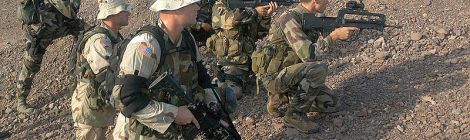
    Whatever the benefits for Mali, the French-led eviction of jihadist groups from northern Mali may have made the wider Sahara a less safe place, and has done little to lower the capacity of such groups to threaten European interests.. In 2014, France is implementing a major redeployment of its forces in Africa into the Sahel and Sahara. Meanwhile, the US has been quietly extending its military reach from Djibouti to Mauritania. However, as elsewhere, the western military approach to countering Islamist insurgency in the Sahel rests on very unsteady foundations and the potential to provoke wider alienation and radicalisation is strong.

    Read Article →

    Chemical Weapons Use in Syria: a Test of the Norm

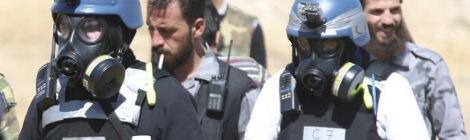
    Recent events in the Syrian civil war have proved an unparalleled test of the norm against the use of chemical weapons. At its core this was a test of the willingness of countries to uphold the norm, in this case in the face of a flagrant violation, and a response that in the end stumbled upon a satisfactory conclusion—reaffirming the special category of chemical arms—but which in the process said a great deal about current attitudes to the use of military force as a means of humanitarian intervention.

    Read Article →

  • The European Union and Conflict Resolution

  • China and the Responsibility to Protect

    The Responsibility to Protect (R2P) is a significant, if controversial, development in international affairs. China has proposed its own semi-official version of R2P called “Responsible Protection”.

    Author’s Note: This article highlights issues discussed in more depth in various publications, including Andrew Garwood-Gowers, ‘China’s “Responsible Protection” Concept: Reinterpreting the Responsibility to Protect (R2P) and Military Intervention for Humanitarian Purposes’ (2016) 6 Asian Journal of International Law 89 and Andrew Garwood-Gowers, ‘R2P Ten Years after the World Summit: Explaining Ongoing Contestation over Pillar III’ (2015) 7 Global Responsibility to Protect 300.

    Introduction

    Over the last decade and a half the Responsibility to Protect (R2P) principle has emerged as a significant normative development in international efforts to prevent and respond to genocide and other mass atrocity crimes. Yet it has also been controversial, both in theory and in practice. R2P’s legal status and normative impact continue to be debated in academic and policy circles, while its implementation in Libya in 2011 reignited longstanding concerns among many non-Western states over its potential to be misused as a smokescreen for regime change. These misgivings prompted Brazil to launch its “Responsibility while Protecting” (RwP) concept as a means of complementing and tightening the existing R2P principle. China, too, has proposed its own semi-official version of R2P called “Responsible Protection” (RP). This contribution explores the key features and implications of the lesser known Chinese initiative.

    The R2P Principle

    Peacekeeping - UNAMID

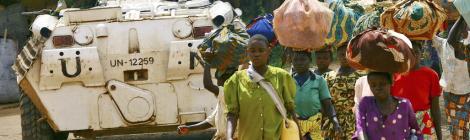
    Image by UN Photo via Flickr.

    R2P first appeared in a 2001 report by the International Commission on Intervention and State Sovereignty (ICISS), a body set up by the Canadian government to consider how the international community should address intra-state humanitarian crises. However, after the initial concept proved contentious a modified version of R2P – labelled “R2P-lite” by one commentator – was unanimously endorsed by states at the 2005 World Summit. In its current form R2P consists of three mutually reinforcing pillars. The first is that each state has a responsibility to protect its populations from the four mass atrocity crimes (genocide, war crimes, crimes against humanity and ethnic cleansing). Pillar two stipulates that the international community should encourage and assist states in fulfilling their pillar one duties. Finally, pillar three provides that if a state is manifestly failing to protect its populations the international community is prepared to take collective action in a timely and decisive manner on a case-by-case basis, in accordance with Chapter VII of the UN Charter.

    Action under pillar three can encompass non-coercive tools such as diplomacy and humanitarian assistance, as well as coercive means including sanctions and the use of force. The international community’s pillar three responsibility is framed in conservative terms, creating only a duty to consider taking appropriate action, rather than a positive obligation to actually respond to a state’s manifest failure to protect. Crucially, the UN Security Council remains the only body that can authorise coercive, non-consensual measures under pillar three. R2P does not grant states a right to undertake unilateral humanitarian intervention outside the Charter’s collective security framework. Overall, R2P is best characterised as a multi-faceted political principle based on existing international law principles and mechanisms.

    The most well-known instance of pillar III action to date is the international community’s rapid and decisive response to the Libyan crisis in early 2011. The Security Council initially imposed sanctions and travel bans on members of the Gaddafi regime before passing resolution 1973 authorising the use of force to “protect civilians and civilian populated areas under threat of attack’’. China, Russia, Brazil and India each abstained on the vote to mandate military force against Libya. As the extent of NATO’s military targets and support for the Libyan rebels became apparent, many non-Western powers criticised the campaign for exceeding the terms of the Security Council resolution. For these states, the eventual removal of the Gaddafi regime confirmed their perception that R2P’s third pillar could be manipulated for the pursuit of ulterior motives such as the replacement of unfriendly governments.

    The post-Libya backlash against R2P was at least partly responsible for Security Council deadlock over Syria. Russia and China have exercised their vetoes on four separate occasions to block resolutions that sought to impose a range of non-forcible measures on the Syrian regime. At the same time, there has been renewed debate about the strengths and weaknesses of R2P’s third pillar. In late 2011 Brazil’s RwP initiative proposed a series of decision-making criteria and monitoring mechanisms to guide the implementation of coercive pillar three measures. While RwP initially attracted significant attention and discussion, Brazil’s foray into norm entrepreneurship was short-lived and R2P has remained unaltered.

    Reframing R2P as “Responsible Protection”

    China’s traditional insistence on a strict interpretation of sovereignty and non-intervention has made it uncomfortable with the coercive, non-consensual aspects of R2P’s third pillar. As a result, Beijing has consistently emphasised the primacy of pillars one and two, while downplaying the scope for pillar three action. In this respect, its decision not to veto resolution 1973 on Libya came as something of a surprise.

    China’s contribution to the post-Libya debate over R2P’s third pillar is less widely documented than Brazil’s efforts. In mid-2012 the notion of “Responsible Protection” was floated by Ruan Zongze, the Vice President of the China Institute for International Studies (CIIS),  which is the official think tank of China’s Ministry of Foreign Affairs. Although China has not explicitly adopted the concept as a formal policy statement on R2P, its implicit endorsement means it can be described as a “semi-official” initiative.

    RP is primarily concerned with R2P’s third pillar and, in particular, providing a set of guidelines to constrain the implementation of non-consensual, coercive measures. It consists of six elements or principles, which are drawn from just war theory and earlier R2P proposals such as the 2001 ICISS report and Brazil’s RwP. In this respect, RP represents a repackaging of previous ideas, rather than an entirely original initiative. However, by reframing these concepts in stricter terms it reflects a distinctive Chinese interpretation of R2P that seeks to narrow the circumstances in which non-consensual use of force can be applied for humanitarian purposes.

    The first element draws on the just war notion of “right intention”. It provides that the purpose of any intervention must be to protect civilian populations, rather than to support “specific political parties or armed forces”. This conveys Beijing’s concerns over the motives and objectives of those intervening under the banner of R2P, as expressed during the Libyan experience. Element two relates to the “right authority” criterion. It reiterates the longstanding Chinese position that only the Security Council can authorise the use of coercive measures, and that there is no right of unilateral humanitarian intervention granted to states.

    RP’s third element is based on the traditional principle that military intervention should be a “last resort”. Its call for “exhaustion of diplomatic and political means of solution” is consistent with Beijing’s broader policy preference for diplomacy and dialogue over forcible measures. However, insisting on a strict, chronological sequencing of responses may deprive the international community of the flexibility needed to ensure timely and decisive action on humanitarian crisis. For this reason, some clarification or refinement of element three may be needed. The fourth element of RP draws on aspects of the just war principles of “right intention” (like element one) and “reasonable prospects”. In relation to the latter, it provides that “it is absolutely forbidden to create greater humanitarian disasters” when carrying out international action. This stipulation reflects Beijing’s position that external intervention often exacerbates humanitarian crises and can ultimately cause more harm than good.

    Element five of RP provides that those who intervene “should be responsible for the post-intervention and post-protection reconstruction of the state concerned”. Although the notion of a responsibility to rebuild appeared in the original 2001 ICISS report it was not included in the text of the World Summit Outcome document in 2005 and therefore does not form a component of the current concept of R2P. It is unclear whether China’s RP concept is explicitly seeking to resurrect this dimension or whether this element is simply intended to emphasise Beijing’s broader perspective on peacebuilding and development in post-conflict societies. Finally, element six calls for greater supervision and accountability of those carrying out UN authorised civilian protection action. This is a similar demand to that made in Brazil’s RwP proposal, though little detail is given as to what form any such monitoring mechanism would take.

    Conclusion

    Overall, the Chinese notion of RP is an attempt to reinterpret and tighten the content of R2P’s third pillar so that it aligns more closely with Beijing’s own normative preferences and foreign policy objectives. Compared to RwP and the ICISS report, RP outlines a narrower set of circumstances in which military intervention for humanitarian purposes would be appropriate. Some aspects of the proposal would certainly benefit from clarification and refinement.

    However, it is notable that despite strongly criticising the way R2P was implemented in Libya, China has chosen to engage with, and actively shape, the future development of the norm. This illustrates the extent to which China, as a permanent member of the Security Council, is enmeshed in the ongoing debate over R2P. In fact, RP is explicitly framed as an example of China “contributing its public goods to the international community”. In the future we can expect China and other non-Western powers to play increasingly influential roles in the development of international security and global governance norms.

    Andrew Garwood-Gowers is a lecturer at the Faculty of Law at Queensland University of Technology (QUT) in Brisbane, Australia. He has written extensively on R2P and the law governing the use of military force, with publications in leading journals including Global Responsibility to Protect, the Asian Journal of International Law, Journal of Conflict and Security Law and the Melbourne Journal of International Law.

  • Chemical Weapons Use in Syria: a Test of the Norm

    Chemical Weapons Use in Syria: a Test of the Norm

    Recent events in the Syrian civil war have proved an unparalleled test of the norm against the use of chemical weapons. At its core this was a test of the willingness of countries to uphold the norm, in this case in the face of a flagrant violation, and a response that in the end stumbled upon a satisfactory conclusion—reaffirming the special category of chemical arms—but which in the process said a great deal about current attitudes to the use of military force as a means of humanitarian intervention.

    Read Article →

    Beyond crime and punishment: UK non-military options in Syria

    The defeat of the UK government’s parliamentary motion on support in principle for military action against the Syrian regime means that Britain will play no part in any direct attack on Syria. What then are its options for resolving the Syrian conflict, protecting civilians and punishing those responsible for war crimes there? This article assesses what the UK can do in terms of pushing for a negotiated peace settlement and to hold accountable those responsible for using chemical weapons and any other war crimes committed during this century’s worst humanitarian crisis.

    Read Article →

  • ‘Blue Helmet Havens’ – Separation and Segregation in Peacekeeping

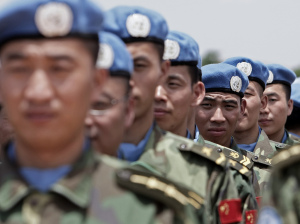
    In peacekeeping missions, peacekeepers live seperated and segregated from the local communities which they are mandated to protect. This wide gulf between the everyday lives of peacekeepers and locals has consequences for peace interventions’ effectiveness and outcomes.

    A truism of international peace interventions is that peacekeepers – and international peacebuilding personnel writ large – live in the same place as local residents, but do not live in the same world. The peacekeeping world is air-conditioned, clean, and well-guarded; it consists of decent housing, generous pay, access to vehicles, domestic help, and, usually, a robust (if limited) social life that revolves around expensive restaurants, hotels, bars, and clubs. In other words, peacekeepers live, work, and socialize in what I call ‘blue helmet havens’, distinct from the spaces most locals inhabit. They are spatially, economically, culturally, and in many cases linguistically separated or segregated from the majority of the local population of the ‘peace-kept’ city. As a Goma-based source put it, peacekeepers are ‘living in Congo’ but not ‘living Congo’.

    The security and safety of peacekeeping personnel and property is the dominant justification for the ‘bubble’ in which peacekeepers live. Notably, this separation is enacted not only by barriers, bunkers, and security guards, but also by various peacekeeping rules, regulations, and norms that mitigate – if not actively discourage – informal or social contact between peacekeepers and locals.

    Thus, peacekeepers’ off-duty movements are circumscribed by the security perimeter zone that is established by the mission’s internal security service, which delineates where peacekeepers can live, shop, and socialize and, in capitals and other urban areas, excludes vast swathes of the host cities. Even within the zone, peacekeepers are advised never to move on foot. They are required to live in gated and guarded compounds; are given black-lists of proscribed social venues; and, besides being prohibited from buying sex while in the mission area, are also strongly discouraged from having any intimate or sexual relationships with locals. These formal rules and regulations are reinforced by informal norms and mission cultures, which are heavily oriented towards keeping the peacekeeping bubble intact and exclusive. Cumulatively, the extremely risk-averse approach that missions take towards peacekeepers’ interactions in and with their surroundings means that the contact between peacekeepers and locals is both sparse and essentially transactional. There exists a wide gulf between the everyday lives of peacekeepers and locals, and very few means to bridge it.

    Peacekeeping-as-enterprise in the peacekeeping ‘bubble’
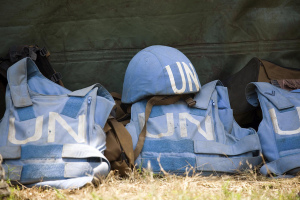
    UN helmets

    Image by UN Photo via Flickr.

    But why is this important? Research shows that the gap in proximity and understanding between the international and the local matters for peace interventions’ effectiveness and outcomes. For example, in her book Peaceland, Séverine Autesserre argues that the shared everyday habits, practices, and narratives of international interveners simultaneously enable international peacebuilders to work in challenging environments, and degrade the effectiveness of peacebuilding interventions. In other words, she asserts a direct link between the peacebuilding bubble and peacebuilding outcomes.

    My own research also deals with the distorting effects of the peacekeeping bubble. Using the analytical lens of the peacekeeping economy – which encompasses the services, establishments, and activities needed to allow peacekeeping and peacekeepers to function, and which to a large extent frames and contains the peacekeeping bubble – I have argued that in areas with robust peacekeeping economies, peacekeeping appears to locals more as an enterprise than protection or development. Where peacekeeping economies flourish, they are as visible and tangible to local citizens as anything else done by peacekeeping missions – maybe even more so. It is thus unsurprising that, when people look around them and see money flowing and where it flows, they conclude that, heroic narratives aside, peacekeeping is not that different after all: it is all about the money. This in turn fosters cynicism and resentment among local citizens towards the peacekeeping mission, from which it is plausible to draw a connection to subpar results. On the peacekeepers’ side, meanwhile, what is striking is the extent to which their arms-length relation to the local reveals a sense of vulnerability – a perception of themselves as potential victims of exploitation, crime, or violence, thus upending the normal framing of peacekeepers as powerful, dominant protectors. On both sides, the strict separation between the peacekeepers and the local encourages, if not fosters, a lack of understanding and trust.

    Taken together, then, this paints a picture of peacekeeping and peacekeepers as purposefully disconnected from the local everyday, apart from the microeconomic transactions contained by, and constitutive of, the peacekeeping economy. When it comes to how peacekeeping really works, the peacekeeping bubble is as relevant and significant as the peacekeeping mandate. Problems associated with this bubble’s existence include local suspicion of missions’ activities and motives; and a dearth of knowledge of, and empathy towards, locals from peacekeepers – each of which could be reasonably conjectured to inhibit the effectiveness and transformative potential of peacekeeping.

    Security, estrangement, and stasis in peacekeeping transformation

    An obvious implication of this contention is that international peace interventions will work better and more empathetically if the prevailing separation and segregation is lessened, such that the international and local ‘everydays’ are more enmeshed and aligned. But how would this work? Is it even possible?

    There are modest proposals that missions could immediately initiate in order to promote an environment of mutual trust and more substantive formal and informal contact between peacekeepers and locals, which could eventually make peacekeeping environments safer for both peacekeepers and locals alike. For example, to mitigate the negative effects of the peacekeeping economy on the local economy and labour market, missions could:

    • implement better scrutiny and oversight of subcontractors employed by missions (with respect to labour standards and protections) and of landlords the mission rents from (to ensure that ill-gotten gains are not rewarded);
    • give guidance to peacekeepers on how to relate to their employees, prioritizing the rights of the employee equal to those of the peacekeeper;
    • make greater efforts to procure goods and supplies locally, working with and monitoring local suppliers to forestall potential negative side-effects on local markets;
    • and use of training methods and materials that do not rely on scare stories and fear to coerce obedience, thus encouraging more receptive attitudes towards locals by peacekeepers.

    The most significant obstacle to peacekeeping transformation lies in the area of security. The tendency in peacekeeping missions to take greater and greater precautions to obviate danger and avoid risk is not without reason: persuading member states to contribute troops and money to peacekeeping is significantly more challenging if the UN is perceived to be reckless, and recruiting civilian peacekeepers also becomes more difficult. But ‘security’ in peacekeeping increasingly seems to mean the elimination of risk – whether stemming from armed groups, organized or ordinary criminals, fraudsters and scam artists, or everyday activities like driving, eating out, having sex, or walking down the street. According to such a standard, peacekeeping missions will never be fully secure. Nor, for that matter, will anything else. Peacekeeping institutions (headquarters and missions) and peacekeepers surely recognize this reality, yet there is little evident willingness at any level to push back against ever-escalating security demands and regulations.

    In this heavily securitised and risk-averse environment, where protection of peacekeepers is (and always has been) mandated equal to protection of civilians, separation is the path of least resistance. This implies that fundamental transformation in how peacekeeping missions situate themselves to local people and communities is unlikely. Missions’ estrangement and alienation from the local community and the local ‘everyday’ is a feature, not a bug; and thus that whatever losses may ensue – of legitimacy or effectiveness – is a price that the peacekeeping apparatus is willing to pay.

    Kathleen Jennings is a senior researcher at the Fafo Research Foundation in Oslo. Her work focuses on UN peacekeeping, gender, and political economy in sub-Saharan Africa. Jennings recently defended her PhD thesis on gendered peacekeeping economies in Liberia and the DR Congo. She has previously worked at the Norwegian Peacebuilding Resource Centre and the Council on Foreign Relations.

  • The Syrian War and the Foreign Fighters from the Muslim World

  • The Missing Link(s) Between Military Integration and Civil War Resumption

    Does military integration make renewed civil wars less likely? Evidence from several cases of postwar military integration over four decades reveal little evidence that it contributes to the durability of postwar peace.

    Author’s Note: This article derives from a larger project which was intellectually indebted to the Security Sector Reform Workgroup of the Folke Bernadotte Academy and funded by grant BCS 0904905 from the Social and Behavioral Dimensions of National Security, Conflict, and Cooperation, a joint program of the National Science Foundation and the Department of Defense/Department of the Army/Army Research Office (the Minerva program). That grant funded a conference on military integration after civil wars, which the Peacekeeping and Stability Operations Institute of the U.S. Army War College graciously provided hospitality for and supported; special thanks are due to Raymond Millen and Col. Stephen T. Smith. I am especially grateful to all the participants in that conference, whose research and thinking so deeply informed the project.

    Military integration following a civil war is a common practice, evidenced by the fact that nearly 40 percent of peace settlements for the 128 civil wars from 1945 to 2006 called for some form of integration of combatant military forces. It has become accepted wisdom that integration is crucial to preventing a society’s relapse into war and there is much about this that feels like common sense. After all, a professional, communally representative force could conceivably diminish vulnerable groups’ security fears in a post-civil war environment by:

    • serving as a credible signal of the government’s commitment to power sharing which would make an army less likely to employ violence against the society’s constituent communal groups;
    • protecting populations against potentially dangerous militias;
    • providing employment to former fighters from all sides;
    • and facilitating, through symbolic power, popular identification and unity with an inclusive vision of a nation.

    But is this faith regarding military integration and civil wars actually true based on the research or is it fundamentally misplaced?

    The empirical evidence

    burundi-peace

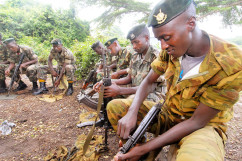
    Image credit: US Army Africa/Wikimedia.

    Quantitative studies generally find a correlation between military integration and the likelihood of renewed civil wars (Walter 2002; Hoddie and Hartzell 2003; DeRouen, Lea, and Wallensteen 2009; Toft 2010).  However, aside from one notable dissent (Glassmyer and Sambanis 2008) the studies assumed that all military integration efforts were equivalent. They focused on agreements to integrate rather than their actual implementation, and it was possible that the causal arrow was reversed, that easier cases would allow military integration than those more likely to fail.  Two comparative case study analyses reached opposing conclusions (Knight 2011; Call 2012).

    My study of eleven cases began with the expectation that military integration would be difficult to carry out (bringing people who have been killing one another with considerable skill and enthusiasm and giving them weapons did not seem like a bright idea) but that doing so successfully would reduce the likelihood of renewed civil war.  I ended with precisely the opposite conclusions.

    The study – does military integration make renewed civil wars less likely?

    The study specified five plausible causal mechanisms linking the phenomena:

    1. The willingness of leaders on both sides to commit to this risky strategy persuades others that they are sincere in desiring peace and can be trusted on other difficult issues.
    2. The new force provides security for the elites (and perhaps the masses), allowing them to resolve other issues.
    3. The new force employs substantial numbers of veterans who might otherwise be available for recruitment by spoilers planning to restart the war.
    4. It is a powerful symbol of legitimacy and integration for the new regime—if people who have been killing one another can work together, surely civilians should be able to as well.
    5. The successful negotiation of military integration would build trust among members of the different groups, making it easier to resolve other issues.

    Cases and Authors

    Sudan 1972-1983—Matthew LeRiche

    Rhodesia to Zimbabwe—Paul Jackson

    Lebanon—Florence Gaub

    Rwanda—Stephen Burgess

    Philippines—Rosalie Arcala Hall

    South Africa—Roy Licklider

    Democratic Republic of the Congo—Judith Verweijen

    Mozambique—Andrea Bartoli and Martha Mutisi

    Bosnia-Herzegovina—Rohan Maxwell

    Sierra Leone—Mimmi Söderberg Kovacs

    Burundi 2000-2006—Cyrus Samii

    In lieu of more sophisticated methodologies, case authors were asked whether they had observed these mechanisms in their cases.  The only one which received even a few assents was increased legitimacy of integration in other functional areas, perhaps the most difficult to observe.

    None of our cases collapsed from violence among the new recruits but even successful integrations could not withstand the actions of civilian politicians which created new violence in places like Zimbabwe and Sudan.  Moreover, creating a strong security sector in a weak government is a recipe for military domination and less democracy in places like Rwanda.  So why do combatants adopt this policy after civil wars so often?  The single best predictor that a civil war would end with military integration was international mediation of the conflict (Hartzell 2014).

    Conclusion

    Ronald Krebs and I concluded that this suggests an ethical problem for peacemakers.  Military integration is relatively easy for outsiders to implement; we have substantial numbers of unemployed military to do the work, and it requires much less adaption in the target society than other actions like creating a working justice or taxation system.

    Moreover, in some wars the nature of the postwar military is a critical issue (Burundi is a good example) and in such cases, when the locals have decided they want military integration, internationals can give useful assistance.  But military integration is expensive to implement and support over time and may have regrettable political consequences so outsiders should not actively advocate it.  At this point, the evidence does not support the assumption that military integration will make renewed civil war less likely.

    Roy Licklider is Professor of Political Science at Rutgers University and Adjunct Senior Research Scholar in the Arnold A. Saltzman Institute of War and Peace Studies at Columbia University.

  • Mission Impossible: The Elusive Search for Peace in Syria

  • Momentum towards a nuclear weapons ban treaty: what does it mean for the UK?

    Momentum towards a nuclear weapons ban treaty: what does it mean for the UK?

    International momentum towards a treaty to ban nuclear weapons reached a milestone in the December 2014 Vienna conference. Even assuming that the UK does not initially sign up to such a treaty, it is subject to the pressures of a changing legal and political environment and could find its present position increasingly untenable – not least on the issue of Trident renewal.

    Read Article →

  • Pre-Colonial Institutions, Conflict and Peace in Africa