Blog

  • ‘Blue Helmet Havens’ – Separation and Segregation in Peacekeeping

    In peacekeeping missions, peacekeepers live seperated and segregated from the local communities which they are mandated to protect. This wide gulf between the everyday lives of peacekeepers and locals has consequences for peace interventions’ effectiveness and outcomes.

    A truism of international peace interventions is that peacekeepers – and international peacebuilding personnel writ large – live in the same place as local residents, but do not live in the same world. The peacekeeping world is air-conditioned, clean, and well-guarded; it consists of decent housing, generous pay, access to vehicles, domestic help, and, usually, a robust (if limited) social life that revolves around expensive restaurants, hotels, bars, and clubs. In other words, peacekeepers live, work, and socialize in what I call ‘blue helmet havens’, distinct from the spaces most locals inhabit. They are spatially, economically, culturally, and in many cases linguistically separated or segregated from the majority of the local population of the ‘peace-kept’ city. As a Goma-based source put it, peacekeepers are ‘living in Congo’ but not ‘living Congo’.

    The security and safety of peacekeeping personnel and property is the dominant justification for the ‘bubble’ in which peacekeepers live. Notably, this separation is enacted not only by barriers, bunkers, and security guards, but also by various peacekeeping rules, regulations, and norms that mitigate – if not actively discourage – informal or social contact between peacekeepers and locals.

    Thus, peacekeepers’ off-duty movements are circumscribed by the security perimeter zone that is established by the mission’s internal security service, which delineates where peacekeepers can live, shop, and socialize and, in capitals and other urban areas, excludes vast swathes of the host cities. Even within the zone, peacekeepers are advised never to move on foot. They are required to live in gated and guarded compounds; are given black-lists of proscribed social venues; and, besides being prohibited from buying sex while in the mission area, are also strongly discouraged from having any intimate or sexual relationships with locals. These formal rules and regulations are reinforced by informal norms and mission cultures, which are heavily oriented towards keeping the peacekeeping bubble intact and exclusive. Cumulatively, the extremely risk-averse approach that missions take towards peacekeepers’ interactions in and with their surroundings means that the contact between peacekeepers and locals is both sparse and essentially transactional. There exists a wide gulf between the everyday lives of peacekeepers and locals, and very few means to bridge it.

    Peacekeeping-as-enterprise in the peacekeeping ‘bubble’
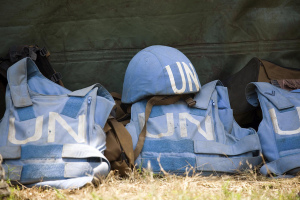
    UN helmets

    Image by UN Photo via Flickr.

    But why is this important? Research shows that the gap in proximity and understanding between the international and the local matters for peace interventions’ effectiveness and outcomes. For example, in her book Peaceland, Séverine Autesserre argues that the shared everyday habits, practices, and narratives of international interveners simultaneously enable international peacebuilders to work in challenging environments, and degrade the effectiveness of peacebuilding interventions. In other words, she asserts a direct link between the peacebuilding bubble and peacebuilding outcomes.

    My own research also deals with the distorting effects of the peacekeeping bubble. Using the analytical lens of the peacekeeping economy – which encompasses the services, establishments, and activities needed to allow peacekeeping and peacekeepers to function, and which to a large extent frames and contains the peacekeeping bubble – I have argued that in areas with robust peacekeeping economies, peacekeeping appears to locals more as an enterprise than protection or development. Where peacekeeping economies flourish, they are as visible and tangible to local citizens as anything else done by peacekeeping missions – maybe even more so. It is thus unsurprising that, when people look around them and see money flowing and where it flows, they conclude that, heroic narratives aside, peacekeeping is not that different after all: it is all about the money. This in turn fosters cynicism and resentment among local citizens towards the peacekeeping mission, from which it is plausible to draw a connection to subpar results. On the peacekeepers’ side, meanwhile, what is striking is the extent to which their arms-length relation to the local reveals a sense of vulnerability – a perception of themselves as potential victims of exploitation, crime, or violence, thus upending the normal framing of peacekeepers as powerful, dominant protectors. On both sides, the strict separation between the peacekeepers and the local encourages, if not fosters, a lack of understanding and trust.

    Taken together, then, this paints a picture of peacekeeping and peacekeepers as purposefully disconnected from the local everyday, apart from the microeconomic transactions contained by, and constitutive of, the peacekeeping economy. When it comes to how peacekeeping really works, the peacekeeping bubble is as relevant and significant as the peacekeeping mandate. Problems associated with this bubble’s existence include local suspicion of missions’ activities and motives; and a dearth of knowledge of, and empathy towards, locals from peacekeepers – each of which could be reasonably conjectured to inhibit the effectiveness and transformative potential of peacekeeping.

    Security, estrangement, and stasis in peacekeeping transformation

    An obvious implication of this contention is that international peace interventions will work better and more empathetically if the prevailing separation and segregation is lessened, such that the international and local ‘everydays’ are more enmeshed and aligned. But how would this work? Is it even possible?

    There are modest proposals that missions could immediately initiate in order to promote an environment of mutual trust and more substantive formal and informal contact between peacekeepers and locals, which could eventually make peacekeeping environments safer for both peacekeepers and locals alike. For example, to mitigate the negative effects of the peacekeeping economy on the local economy and labour market, missions could:

    • implement better scrutiny and oversight of subcontractors employed by missions (with respect to labour standards and protections) and of landlords the mission rents from (to ensure that ill-gotten gains are not rewarded);
    • give guidance to peacekeepers on how to relate to their employees, prioritizing the rights of the employee equal to those of the peacekeeper;
    • make greater efforts to procure goods and supplies locally, working with and monitoring local suppliers to forestall potential negative side-effects on local markets;
    • and use of training methods and materials that do not rely on scare stories and fear to coerce obedience, thus encouraging more receptive attitudes towards locals by peacekeepers.

    The most significant obstacle to peacekeeping transformation lies in the area of security. The tendency in peacekeeping missions to take greater and greater precautions to obviate danger and avoid risk is not without reason: persuading member states to contribute troops and money to peacekeeping is significantly more challenging if the UN is perceived to be reckless, and recruiting civilian peacekeepers also becomes more difficult. But ‘security’ in peacekeeping increasingly seems to mean the elimination of risk – whether stemming from armed groups, organized or ordinary criminals, fraudsters and scam artists, or everyday activities like driving, eating out, having sex, or walking down the street. According to such a standard, peacekeeping missions will never be fully secure. Nor, for that matter, will anything else. Peacekeeping institutions (headquarters and missions) and peacekeepers surely recognize this reality, yet there is little evident willingness at any level to push back against ever-escalating security demands and regulations.

    In this heavily securitised and risk-averse environment, where protection of peacekeepers is (and always has been) mandated equal to protection of civilians, separation is the path of least resistance. This implies that fundamental transformation in how peacekeeping missions situate themselves to local people and communities is unlikely. Missions’ estrangement and alienation from the local community and the local ‘everyday’ is a feature, not a bug; and thus that whatever losses may ensue – of legitimacy or effectiveness – is a price that the peacekeeping apparatus is willing to pay.

    Kathleen Jennings is a senior researcher at the Fafo Research Foundation in Oslo. Her work focuses on UN peacekeeping, gender, and political economy in sub-Saharan Africa. Jennings recently defended her PhD thesis on gendered peacekeeping economies in Liberia and the DR Congo. She has previously worked at the Norwegian Peacebuilding Resource Centre and the Council on Foreign Relations.
  • The Syrian War and the Foreign Fighters from the Muslim World

  • The Missing Link(s) Between Military Integration and Civil War Resumption

    Does military integration make renewed civil wars less likely? Evidence from several cases of postwar military integration over four decades reveal little evidence that it contributes to the durability of postwar peace.

    Author’s Note: This article derives from a larger project which was intellectually indebted to the Security Sector Reform Workgroup of the Folke Bernadotte Academy and funded by grant BCS 0904905 from the Social and Behavioral Dimensions of National Security, Conflict, and Cooperation, a joint program of the National Science Foundation and the Department of Defense/Department of the Army/Army Research Office (the Minerva program). That grant funded a conference on military integration after civil wars, which the Peacekeeping and Stability Operations Institute of the U.S. Army War College graciously provided hospitality for and supported; special thanks are due to Raymond Millen and Col. Stephen T. Smith. I am especially grateful to all the participants in that conference, whose research and thinking so deeply informed the project.

    Military integration following a civil war is a common practice, evidenced by the fact that nearly 40 percent of peace settlements for the 128 civil wars from 1945 to 2006 called for some form of integration of combatant military forces. It has become accepted wisdom that integration is crucial to preventing a society’s relapse into war and there is much about this that feels like common sense. After all, a professional, communally representative force could conceivably diminish vulnerable groups’ security fears in a post-civil war environment by:

    • serving as a credible signal of the government’s commitment to power sharing which would make an army less likely to employ violence against the society’s constituent communal groups;
    • protecting populations against potentially dangerous militias;
    • providing employment to former fighters from all sides;
    • and facilitating, through symbolic power, popular identification and unity with an inclusive vision of a nation.

    But is this faith regarding military integration and civil wars actually true based on the research or is it fundamentally misplaced?

    The empirical evidence

    burundi-peace

    Image credit: US Army Africa/Wikimedia.

    Quantitative studies generally find a correlation between military integration and the likelihood of renewed civil wars (Walter 2002; Hoddie and Hartzell 2003; DeRouen, Lea, and Wallensteen 2009; Toft 2010).  However, aside from one notable dissent (Glassmyer and Sambanis 2008) the studies assumed that all military integration efforts were equivalent. They focused on agreements to integrate rather than their actual implementation, and it was possible that the causal arrow was reversed, that easier cases would allow military integration than those more likely to fail.  Two comparative case study analyses reached opposing conclusions (Knight 2011; Call 2012).

    My study of eleven cases began with the expectation that military integration would be difficult to carry out (bringing people who have been killing one another with considerable skill and enthusiasm and giving them weapons did not seem like a bright idea) but that doing so successfully would reduce the likelihood of renewed civil war.  I ended with precisely the opposite conclusions.

    The study – does military integration make renewed civil wars less likely?

    The study specified five plausible causal mechanisms linking the phenomena:

    1. The willingness of leaders on both sides to commit to this risky strategy persuades others that they are sincere in desiring peace and can be trusted on other difficult issues.
    2. The new force provides security for the elites (and perhaps the masses), allowing them to resolve other issues.
    3. The new force employs substantial numbers of veterans who might otherwise be available for recruitment by spoilers planning to restart the war.
    4. It is a powerful symbol of legitimacy and integration for the new regime—if people who have been killing one another can work together, surely civilians should be able to as well.
    5. The successful negotiation of military integration would build trust among members of the different groups, making it easier to resolve other issues.

    Cases and Authors

    Sudan 1972-1983—Matthew LeRiche

    Rhodesia to Zimbabwe—Paul Jackson

    Lebanon—Florence Gaub

    Rwanda—Stephen Burgess

    Philippines—Rosalie Arcala Hall

    South Africa—Roy Licklider

    Democratic Republic of the Congo—Judith Verweijen

    Mozambique—Andrea Bartoli and Martha Mutisi

    Bosnia-Herzegovina—Rohan Maxwell

    Sierra Leone—Mimmi Söderberg Kovacs

    Burundi 2000-2006—Cyrus Samii

    In lieu of more sophisticated methodologies, case authors were asked whether they had observed these mechanisms in their cases.  The only one which received even a few assents was increased legitimacy of integration in other functional areas, perhaps the most difficult to observe.

    None of our cases collapsed from violence among the new recruits but even successful integrations could not withstand the actions of civilian politicians which created new violence in places like Zimbabwe and Sudan.  Moreover, creating a strong security sector in a weak government is a recipe for military domination and less democracy in places like Rwanda.  So why do combatants adopt this policy after civil wars so often?  The single best predictor that a civil war would end with military integration was international mediation of the conflict (Hartzell 2014).

    Conclusion

    Ronald Krebs and I concluded that this suggests an ethical problem for peacemakers.  Military integration is relatively easy for outsiders to implement; we have substantial numbers of unemployed military to do the work, and it requires much less adaption in the target society than other actions like creating a working justice or taxation system.

    Moreover, in some wars the nature of the postwar military is a critical issue (Burundi is a good example) and in such cases, when the locals have decided they want military integration, internationals can give useful assistance.  But military integration is expensive to implement and support over time and may have regrettable political consequences so outsiders should not actively advocate it.  At this point, the evidence does not support the assumption that military integration will make renewed civil war less likely.

    Roy Licklider is Professor of Political Science at Rutgers University and Adjunct Senior Research Scholar in the Arnold A. Saltzman Institute of War and Peace Studies at Columbia University.

  • Mission Impossible: The Elusive Search for Peace in Syria

  • Momentum towards a nuclear weapons ban treaty: what does it mean for the UK?

    Momentum towards a nuclear weapons ban treaty: what does it mean for the UK?

    International momentum towards a treaty to ban nuclear weapons reached a milestone in the December 2014 Vienna conference. Even assuming that the UK does not initially sign up to such a treaty, it is subject to the pressures of a changing legal and political environment and could find its present position increasingly untenable – not least on the issue of Trident renewal.

    Read Article →

  • Pre-Colonial Institutions, Conflict and Peace in Africa

  • The Trump Presidency and Iran’s Nuclear Deal

    Donald Trump’s victory in the US presidential elections has raised serious questions about whether the Joint Comprehensive Plan of Action, a landmark nuclear accord signed in July 2015, has a future.

    The election of Donald Trump as US President potentially means very uncertain times for the future of US-Iranian relations. For example, during his presidential campaign trail, Trump declared—“My number one priority is to dismantle the disastrous deal with Iran”. If the Trump administration acts on his campaign rhetoric, there is a distinct possibility that it will be overwhelmed by multiple contradictions and problems.

    The Iran Nuclear Deal

    The deal, formally known as the Joint Comprehensive Plan of Action (JCPOA), stripped Iran of the ability to develop a nuclear weapon system into the next decade in exchange for the gradual lifting of crippling sanctions.  The deal holds Iran to agree to cap enrichment levels of uranium at 3.67 percent for the next fifteen years, which will cut the Iranian enrichment capacity by two-thirds. Under the agreement, Iran ended up shipping the lion’s share of its 20 percent enriched uranium abroad. The deal also provided for more intrusive monitoring by the International Atomic Energy Agency (IAEA), the UN’s nuclear watchdog, and for the heavy water reactor at Arak to not produce weapons grade plutonium. On November 20th 2016, as a gesture of good will, Iran shipped its remaining heavy water abroad as well. Thus, the breakout capability of Iran to potentially make a nuclear bomb was noticeably extended from two-months to a year, giving further assurance to the international community that the Islamic Republic will not be closer to making a bomb any time soon.

    In exchange, Iran would be relieved from the nuclear-related sanctions, and if it violates the agreement, the sanctions will be re-imposed through a snap-back mechanism built in to the agreement.  Since the signing of the agreement, all the reports by the monitoring agencies, including the IAEA, indicate that Iran has abided by its end of the bargain. Seen in this context, it is easy to understand the expression of concern and apprehension surrounding Trump’s ascent to power among many members of Iran’s ruling elite.

    What President Trump could mean for US-Iran relations

    Two very different futures in US-Iran relations may lie ahead.

    • Withdrawal
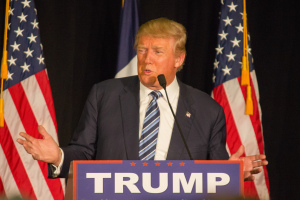
    trump

    Image by Matt Johnson/Flickr.

    First, the Trump administration may decide to withdraw from the nuclear deal, impose further sanctions on, and try to isolate Iran.  Trump may seek better ties with Russia and tolerate the Assad regime in Syria in an attempt to defeat and dismantle the Islamic State in Iraq and Syria (ISIS). Trump has declared the defeat of ISIS to be his number one priority in the Middle East and seeks to partner with the anti-ISIS coalition. Yet Iran has been actively involved in the war against ISIS in Syria in alliance with Russia.. It thus remains to be seen how the Trump administration could resolve this contradiction if it tries to defeat ISIS whilst simultaneously escalating tensions with Iran.

    Since the Republicans currently control both houses of Congress and many of their members were opposed to the deal when it was signed, bolstered by their electoral victory, they may introduce new bills demanding the renegotiation of the agreement, or prevent sanctions relief, and propose the imposition of new US unilateral sanctions on Iran. In November 2017, the US Senate passed a bill with a vote of 99 to 0 to extend the Iran sanctions for another decade, and the Obama administration—which previously had threatened to veto such a bill— has stated that the president is not likely to veto it. In addition, the Trump foreign policy team has stated that they plan to impose new sets of sanctions on Iran for its missile defense system. These new political developments are certain to evoke a reaction from Tehran in kind. If such an escalation of the anti-Iran campaign in Washington continues, despite the Islamic Republic fulfilling its obligations under the nuclear deal, absent new diplomatic breakthroughs between Tehran and Washington, in all likelihood, the deal as we know it now would be dead and Washington’s tensions with Tehran would grow. If this outcome materializes, it would undermine the Rouhani administration and the moderates and would strengthen the position of hardliners in Iran’s factional politics.

    President-elect Trump, who identified the nuclear pact as “disastrous” and “the worst deal ever” and labeled the Islamic Republic as “the foremost terrorist state” is less likely to oppose further congressional sanctions on Iran. Hence, while the newly appointed Secretary of Defense, General James Matthis, has stated that he would not be inclined to scrap the nuclear deal, he has also stated publically that it is not ISIS but Iran that is the single most critical security threat to the United States. dditionally, the powerful pro-Israeli lobby group, the American Israel Public Affairs Committee, the neo-conservatives and influential foreign policy voices on the right—like the National Security Adviser, General Michael Flynn, John Bolton, James Woolsey, and Newt Gingrich— have been pushing hard for further containment of and confrontation with Iran.

    From the Netanyahu administration’s standpoint, discarding the nuclear deal would have a dual impact. On the one hand, such an initiative would prevent the Islamic Republic from reaping the benefit of sanctions relief, thus allowing it to expand its economic and political influence in the region- an undesirable outcome for the Israeli leadership.–On the other hand, unilaterally tearing up the deal would remove all the inhibitions on the part of Iranian leaders to develop a nuclear arsenal, another undesirable outcome for Israel. To prevent this from happening, US/Israeli cyberattacks on Iran’s nuclear program, using sophisticated worms such as Stuxnet, or even military strikes, could be ordered in future.

    The Israeli leadership would therefore most likely favor an option in which the current nuclear agreement would stand, but with a new interpretation which would prevent Iran from receiving the full economic and political benefit of sanctions relief. In other words, the nuclear agreement should not lead to normalization of relations with Tehran and the policy of containment of the Islamic Republic with the ultimate goal of regime change should persist. It is also important to note that, since Trump’s cabinet is so far is dominated by hard-liners, they are likely to be in favor of accelerating pressure on Tehran and ensuring that it does not reap the benefit of sanctions relief and expand its regional power.

    • Limited Rapprochement

    The second option offers a different outlook, one that serves both countries’ national interests, whereby the Trump administration could consider seeking a limited rapprochement with Iran, holding out the prospect of future diplomatic—if not commercial—ties between the two countries.  This option uses the nuclear deal as a way to ease tensions between Tehran and Washington on other longstanding problems. This approach will also render Iran more responsive to cooperation on specific issues of regional conflict such as the fight against ISIS and the Taliban while at the same time making progress toward possible venues for cooperation, such as shaping the future of Syria, Iraq, Yemen, and Afghanistan.

    The advantages of this approach will outweigh its costs, as Tehran and Washington are likely to find several overlaps in pursuit of their foreign policy interests. Moreover, this approach would allow Washington to build up a new momentum to accommodate Tehran’s emerging economic interests while also using its leverage over the country’s regional role to mitigate the negative impact of instability in the Middle East. The challenge is to recognize that building trust and sustainable cooperation between Tehran and Washington is the key first step to reversing the troubled and tumultuous status quo of tensions and enmity between the two nations.

    While Trump may not seek a new sanctions regime against Iran so long as the latter abides by its obligations, the influence of neo-conservatives in his administration probably means that the removal of first-order sanctions, imposed by the US, is unlikely to happen any time soon.

    Tehran’s Reaction

    Iran’s President Hassan Rouhani has noted that the election of Donald Trump as the US president will have no effect on Iran’s foreign policy conduct. Rouhani has also stated that the nuclear deal is independent of the new US administrations’ decision and cannot be rescinded by the government’s change in Washington. “Iran’s sagacity,” Rouhani has asserted, “was in having the nuclear deal endorsed as a resolution by the UN Security Council and not just an agreement with a single country or administration, so it cannot be changed by decisions of one government,”.  A recent US Senate vote to extend the sanctions on Iran for ten more years is likely to undermine Rouhani’s position, who sees that his chances of getting re-elected in May 2017 are quickly vanishing under the threat of further sanctions by the United States.  Sensing that, given these sanctions, he cannot ultimately make good on his promise of an economic renaissance after the nuclear deal, Rouhani was emphatic: “If the Iran Sanction Act is carried out, it will be a clear and obvious violation of the [nuclear] agreement and will be met with a very harsh response from us.”  The Obama administration has said that the new round of sanctions did not violate the nuclear agreement.

    The United States, one observer notes, cannot unilaterally unravel or amend the agreement without violating international law. Any attempt to directly undermine the deal or even renegotiate it will isolate the United States- not Iran.  Beyond Iran, pulling out of the deal would also risk intensifying tensions in the region, most notably in Syria, Yemen, Iraq, and Afghanistan, countries in which Iran has played a significant role. This choice is equally fraught with difficulties in part because several key nations have signed off on this agreement. Thus, unilaterally negating or sabotaging the nuclear agreement is likely to have serious international implications beyond the region. The United States is likely to emerge out of step with the UN resolution and all the signatories to this agreement.

    Furthermore, such a policy is imbued with so many deep uncertainties that it may backfire.  The real question is, then, what exactly can the United States do if Iran continues to abide by its obligations under the nuclear deal and continue its rapprochement with the European Union by simply deepening their commercial and trade ties with those countries?  Cognizant of the unpredictability surrounding the future of US policy toward Iran, the Islamic Republic has kept the option of walking away from the deal open, while not abandoning its “Eastern Strategy” that is predicated on maintaining its extensive bilateral ties with Beijing and Moscow. The Islamic Republic is likely to continue to maintain these ties as an insurance policy against the possible continuation or escalation of Washington’s policy of containment and confrontation. Along the same lines, should Trump adopt hostile policies toward Iran, this will likely empower the Islamic Republic’s hardliners, creating more political pressure on the moderates there, thus complicating their chances of winning the 2017 presidential elections. Should this scenario materialize, Tehran is likely to assume a more aggressive regional policy posture in response to Washington’s belligerence.

     The Future: which option will Trump take?

    In an interview with CNN in September of 2015, Trump the businessman revealed his concern about America being shot out of the Iranian market, while the Chinese, the Russians and the Europeans have expanded their trade and commercial ties with Iran since the signing of the agreement in July of 2015. Trump should know that the US cannot hope to emerge as a major economic partner for Iran by imposing a new set of sanctions or ratcheting up political pressure on Tehran. It may turn out that Trump, like his Republican predecessors, would conclude that US bilateral trade, military and political ties with its Arab Gulf Cooperation Council (GCC) allies are much more significant than Iran.

    It is also likely that Trump, the candidate of the Republican Party, who had to appeal to that conservative constituency, would turn out to be different from the Trump the president. He may find it necessary to move ideologically to the center and heed the centrist logic of power politics. His past record as a businessman, who regularly funded the political campaigns of both Democrat and Republican politicians, and repeatedly changed his position on political issues during the presidential campaign, may predispose him toward adopting an erratic as well as a pragmatic course with no clear political vision. This may lead to a foreign policy style that would be more transactional rather than ideological.

    However, having won the presidency as a Republican candidate, he could be captured by the very party establishment that he derided during his campaign.  So far his campaign promise of “draining the swamp” has turned out, in practice, to involve filling his administration with hawks from the Republican Party, Washington insiders and the Wall Street establishment. Therefore, it is possible that he will decide to outsource his Iran policy to a cabinet dominated by conservative hardliners. In that case, the anti-Iran agenda discussed above would become ascendant. In the past, many Republican politicians have stated that the complete political capitulation of Tehran is the only acceptable outcome that they would support. However, if he chooses to play an active role in formulating his administration’s Iran policy, then Trump the pragmatist may have the sway.

    While the early signs are not promising, it is simply too early to know which option the Trump administration will choose and what the details of his future policies might be, but there is no reason to believe that things will improve beyond present conditions, and more than likely, there is reason to believe that Trump may be a far better ally to Israeli Prime Minister Netanyahu and the Saudi Royal family than was the Obama administration, a realistic possibility for which Tehran has surely a contingency. How these emerging realities will play out in coming months and years remains to be seen. The choice for the Trump administration—engaging or isolating Iran—couldn’t be more stark and profound.

    Mahmood Monshipouri, PhD, teaches Middle Eastern Politics at San Francisco State University and the University of California at Berkeley.  He is the editor, most recently, of Inside the Islamic Republic: Social Change in the Post-Khomeini Iran.

    Manochehr Dorraj, PhD, is professor of International Affairs and Middle Eastern Studies at Texas Christian University (TCU).  He is the author of From Zarathustra to Khomeini: Populism and Dissent in Iran and coeditor of Iran Today: An Encyclopedia of Life in the Islamic Republic.

  • A long road ahead: integrating gender perspectives into peacekeeping operations

  • “Guerrilla Diplomats”: Conflict Prevention Through Frontline Diplomacy

    With conflict causing much political instability and human suffering in parts of the world, there is a need for preventive diplomacy which stops the outbreak, relapse or escalation of organized violence. Frontline diplomats have potentially crucial roles to play in early preventive efforts.

    Conflict prevention is popular in international political circles these days. In April 2016, the UN Security Council and General Assembly passed concurring resolutions on the review of the UN peacebuilding architecture in which they confirmed the essential role of the UN in “preventing the outbreak, escalation, continuation and recurrence of conflict”. On 5 July, the German Federal Foreign Office launched a public outreach process for the development of new guidelines on civilian crisis prevention, an area for which it increased its funds by 260% from 2015 to 2016 to 248.5 million €. Last year, the British government announced plans to increase its Conflict, Stability and Security Fund from 1 to 1.3 billion pounds by 2019/20.

    The political reasoning behind the call for prevention is simple: if the escalation of political disputes into organized violence or even outright civil war can be stopped in its tracks, it not only saves lives, but also keeps refugee flows created by war at bay and helps leaders avoid making difficult and potentially unpopular decisions about whether to launch military interventions to quell conflicts. Despite what seemed like a long-term decline of organized violence, the number of armed conflicts has ticked up again in the past few years: 2014 saw 40 armed conflicts, the highest number since 1999, and 126,059 conflict-related fatalities, the highest number since 1994, according to the Uppsala Conflict Data Program. At the end of 2015, 65.3 million people were either internally displaced or international refugees, the highest number since the Second World War. Yet many UN member states tend to view conflict prevention with suspicion, as they fear international meddling in what they perceive to be their domestic political affairs.

    Putting high-flying international commitments to conflict prevention into practice and “sustaining peace” throughout the conflict cycle, as the SC and GA affirmed in their parallel resolutions, requires an astute handling of sensitive matters with intelligence and tact, prudence and patience. In short: diplomacy. While government ministries can, of course, reach out to their foreign counterparts directly and permanent representatives negotiate mandates for international organisations in New York or Geneva, frontline diplomats, i.e. members of the foreign service posted abroad, have potentially crucial roles to play in early preventive efforts. Preventive diplomacy aims at the short- to medium-term prevention of the outbreak, relapse or escalation of organized violence, through both coercive and non-coercive means serving a political purpose. Taking preventive diplomacy seriously requires a different, more active and principled kind of diplomacy. In order to do adjust to this profile, frontline diplomats need to be better equipped, trained, and organisationally empowered.

    Frontline preventive diplomacy: benefits and risks

    100612-F-7713A-171

    Image via U.S. Army via Flickr.

    Frontline diplomats may be able to resort to thematic expertise, funds or international networks that they can employ to tweak political dynamics in a country. As some diplomats are repeatedly posted to conflict regions, they may draw comparative conclusions and show domestic parties the risky trajectories of their actions. And diplomats are, theoretically at least, trained in the very skills of facilitation, brokering and negotiation that might be needed to cool down heated tensions.

    As the International Crisis Group lays out in an excellent recent report, preventive diplomacy is fraught with dilemmas and considerable challenges. Usually, the elites in a given country carry the main responsibility for the escalation of political conflicts, and even high-level officials of major powers have limited entry points when positions have become deeply polarized and parties are entrenched in a zero-sum logic. As the Crisis Group succinctly observes: “Outsiders must tread carefully when pursuing these goals. All early action involves engaging in fluid political environments. There is a high chance of political friction, with misunderstandings and miscalculations derailing plans. No form of crisis response is neutral.”

    Frontline diplomats may grant insurgent groups unwarranted legitimacy simply by meeting them. Officially mediating between parties may raise expectations about peaceful conflict resolution, that, when disappointed, may embolden domestic actors to pursue their goals by violent means. Short-term goals of stabilization may conflict with long-term goals of democratisation and transitional justice. Thus, preventive engagements must be based on continuing political analysis and do-no-harm principles.

    A different diplomacy

    More fundamentally, an active pursuit of conflict prevention requires a different kind of diplomacy. Conventionally, diplomats pursue a narrowly conceived “national interest”, acting on explicit instructions from the capital. They concentrate on the governing authorities as official partners in their bilateral relations. As a result, their engagement is reactive and ad hoc, while preventive diplomacy requires a forward-looking and principled approach, as David Hamburg already wrote in 2003.

    “I am not the person who sits all day at the office. I want to see how people live out there,” is how German Ambassador to South Africa Walter Lindner introduces himself in a video message on the embassy’s website. It sums up the kind of spirit diplomats need to embrace are they to further the ambitious objective of conflict prevention. Christopher J. Stevens, the US Ambassador to Libya murdered in 2012, represented the skills of a “guerrilla diplomat” (Daryl Copeland): multilingual, frequently speaking to people on the street, and showing respect and compassion for local cultures, traits which President Obama highlighted in his speech at the UN General Debate in September 2012.

    Yet these diplomats are usually seen as “unconventional”. If governments want to take their stated objective of crisis prevention seriously, they need to embrace the following policies that support and empower their agents in the field. Political leaders and senior officials need to foster an organisational culture that grants ambassadors and other frontline diplomats more autonomy, based on frequent reporting on their activities. Leaders need to highlight bold behaviour, even when diplomats encounter hostility from host governments despite their most sensitive efforts; rewarding best practices can start horizontal socialization processes. Ministries need to provide frontline diplomats with the authority to quickly disperse small development funds and include them in internal discussions on government-wide country strategies.

    Lastly, they need to offer training to their diplomats in conflict analysis, mediation and critical thinking. The German Federal Foreign Office, for example, only started to provide dedicated mediation courses to its attachés and more senior diplomats a few weeks ago. Similarly, a recent reform report of the British Foreign and Commonwealth Office argued to increase training in stabilisation and mediation as core skills for diplomats posted to fragile areas. Many intra-state conflicts are based on disputes within a country’s political elite; foreign diplomats trained in peace mediation may be able to facilitate conversations between polarized parties. As external third parties, they may help local stakeholders to identify mutually acceptable ways that lead out of their conflicts.

    Conclusion

    Historically, Western biases and wilful ignorance of domestic politics and cultures have marred international engagement in conflict prevention and resolution. A healthy dose of scepticism towards a renewed push for preventive diplomacy is therefore warranted. Diplomats need to overcome a rigid binary of local stakeholders whose actions need to be prevented and international actors who conduct preventive diplomacy.

    If foreign services embrace a bolder, innovative style of (preventive) diplomacy that rewards local sensitivity, autonomy and innovation, however, they may improve the implementation of their foreign policy overall. Frontline diplomats need to travel in their host country extensively, collecting information about local grievances through first-hand observation. They need to reach out to the host population directly, through personal use of social media, as many British diplomats already do. And they need to maintain reliable relationships with key political actors that continue to function in crisis situations. If diplomats do that, they will find that an increased attention towards conflict prevention entails benefits – a deeper understanding of elite politics, influence beyond the capital and credibility with a broad spectrum of a country’s society – that continue to exist when a crisis ends.

    Gerrit Kurtz is a postgraduate research student at the War Studies Department of King’s College London, where he researches the role of frontline diplomats in conflict prevention. He is also a non-resident fellow with the Global Public Policy Institute in Berlin, where he worked between 2012 and 2015 on the policies of emerging powers on a responsibility to protect populations from mass atrocity crimes. He also conducted research in South Sudan on local conflict management by UN peace operations. Aside from preventive diplomacy, conflict management and peacekeeping, his research interests include protection of civilians, transitional justice in the conflict in Sri Lanka, the conflict in South Sudan, as well as German and Indian foreign policy.

  • Muslim Paranoia? Ideology and the Limits of Engagement