Category Archives: Rethinking the Nuclear Security Regime
Rethinking the Nuclear Security Regime analyses the prospects for multilateral nuclear disarmament within the NPT regime and its challenge from the Humanitarian Initiative and efforts to ban all nuclear weapons.

The Trump Presidency and Iran’s Nuclear Deal
Donald Trump’s victory in the US presidential elections has raised serious questions about whether the Joint Comprehensive Plan of Action, a landmark nuclear accord signed in July 2015, has a […]
Options for Nuclear Disarmament in a Climate of Deterrence
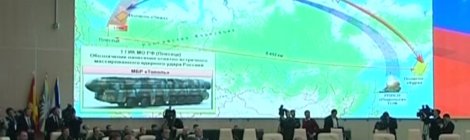
With geopolitics and deterrence doctrines back in the ascendant, the prospects for multilateral nuclear disarmament look worse than for a generation; many options are on the table but whether states will engage constructively and pursue any of these proposals remains an open question.

Thinking beyond the bomb: how can the UK help create a nuclear weapons-free world?
One of the main problems for supporters of nuclear disarmament, in terms of their advocacy efforts, is that the experience and process of disarming will be unique for each nuclear […]

2015: Towards a brave new nuclear world?
Deep tensions and frustrations are rising to the fore as this month’s Nuclear Non-Proliferation Treaty Review Conference in New York gets underway. All parties must act bravely to bridge these deep divides if they are to make progress towards a nuclear-free world.

Momentum towards a nuclear weapons ban treaty: what does it mean for the UK?
International momentum towards a treaty to ban nuclear weapons reached a milestone in the December 2014 Vienna conference. Even assuming that the UK does not initially sign up to such a treaty, it is subject to the pressures of a changing legal and political environment and could find its present position increasingly untenable – not least on the issue of Trident renewal.

Nuclear Weapons: From Comprehensive Test Ban to Disarmament
Despite not yet entering into force, the 1996 Comprehensive Test Ban Treaty has succeeded in almost eliminating nuclear weapons testing and in establishing a robust international monitoring and verification system. A breakthrough in its ratification by the few hold-out states could have important positive repercussions for the Nuclear Non-Proliferation Treaty or nuclear disarmament in the Middle East.
Humanitarian Consequences of Nuclear Weapons: Five Reasons for the P5 to participate in Vienna
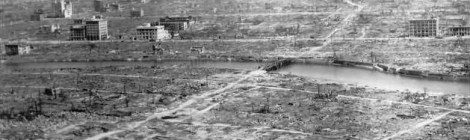
The ‘humanitarian dimension’ initiative highlighting the consequences of nuclear weapons has evolved and consolidated itself in the non-proliferation regime since 2010. The five nuclear weapons states (NWS or P5) under the NPT – China, France, Russia, UK and US – boycotted the first two international conferences on the humanitarian consequences of nuclear weapons. A third conference will be held in Vienna on 8-9 December 2014. This article gives five reasons why the P5 should consider participating.

Building the Case for Nuclear Disarmament: The 2014 NPT PrepCom
The humanitarian impact of nuclear weapons, highlighted by a wide-ranging, cross-grouping, multi-aim initiative which continues to consolidate itself in the non-proliferation regime, has come to the fore in the 3rd Prepatory Committe for the 2015 NPT Review Conference. Frustrated with the lack of progress towards NPT Article VI commitments to complete nuclear disarmament, the initiative has invigorated attention to the urgency of nuclear disarmament and a need for a change in the status quo. NPT member states and civil society continue to engage actively in publicizing the humanitarian consequences of nuclear weapons as an impetus to progress towards nuclear disarmament.

The Threat of Nuclear Disconnect: Engaging the Next Generation
The dramatic decrease in public awareness and engagement in the nuclear weapons debate since the 1980s poses a risk to our future, as younger generations and future policy shapers will be less familiar with the challenges posed by nuclear weapons when they take the helm. But nuclear weapons are too dangerous a threat for an entire generation to disconnect from. BASIC’s Rachel Staley explores the ramifications of not updating the nuclear debate.
In piaffe: multilateral nuclear disarmament dialogue in the year of the horse
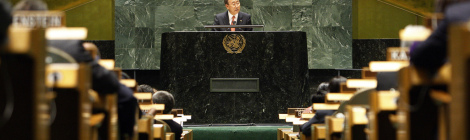
Shortly after the lunar New Year, UN Secretary-General Ban Ki-moon challenged the Conference on Disarmament to run with the ‘spirit of the blue horse’ towards substantive engagement on multilateral nuclear disarmament in 2014. While the regime may not achieve this speed, there are initiatives underway this year that may well help nuclear disarmament dialogues pick up speed ahead of the 2015 NPT review conference.
Leave a Reply