Blog

  • Nitrogen: a driver of global food insecurity?

  • Quiet Legacies and Long Shadows: The Obama era of counterterrorism in the Sahel-Sahara

    Getting Older But Not Wiser: the Arms Trade Treaty’s First Birthday

    April 2nd marked the first anniversary of the adoption of the much celebrated Arms Trade Treaty (ATT), the world’s first treaty to establish common standards of international trading in conventional weapons and which in turn aims to ‘ease the suffering caused by irresponsible transfers of conventional weapons and munitions’. But with the continued irresponsible arms trading and an overall rise in the global arms trade, it seems that some states have yet to put the ideals of the ATT into practice.

    Read Article →

    Beyond crime and punishment: UK non-military options in Syria

    The defeat of the UK government’s parliamentary motion on support in principle for military action against the Syrian regime means that Britain will play no part in any direct attack on Syria. What then are its options for resolving the Syrian conflict, protecting civilians and punishing those responsible for war crimes there? This article assesses what the UK can do in terms of pushing for a negotiated peace settlement and to hold accountable those responsible for using chemical weapons and any other war crimes committed during this century’s worst humanitarian crisis.

    Read Article →

    A top-down approach to sustainable security: the Arms Trade Treaty

    2012 has been hailed as a potential landmark year in the push for greater regulation of the global trade in conventional arms. After more than a decade of advocacy to this end, negotiations took place throughout July towards the world’s first Arms Trade Treaty (ATT), which is intended to establish the highest possible common international standards for the transfer of conventional weapons. However, although significant progress was made during the month of intense negotiations, the ATT is not yet open for signature. In this article, Zoë Pelter explores what role a potential treaty – if reopened for further negotiation – could play in a move towards sustainable security.

    Read Article →

  • Europe’s Borders, Refugees, and the Islamic State

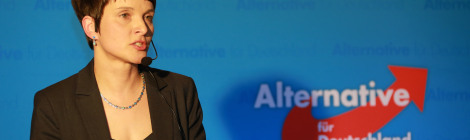
  • Alternative for Germany and the Rise of Right-Wing Populism

  • Limited Nuclear Wars – Myth and Reality

    Summary

    The dramatic recent escalation of rhetoric and military posturing on the Korean peninsula has reawakened suggestions that the United States could use relatively low-yield nuclear weapons in a limited or tactical operation to neutralise North Korea. Indeed, both the idea of nuclear ‘first strike’ and their ‘flexible’ usage on and off the ‘battlefield’ are deeply rooted in historic and current NATO and UK doctrine on nuclear weapons. Given the extraordinarily militarised nature of the inter-Korean border and, increasingly, that between NATO and Russia, the potentially cataclysmic nature of any nuclear exchange must be urgently recalled and avoided at all costs.

    Introduction

    One of the most common misunderstandings about nuclear weapons in general and Britain’s nuclear weapons in particular is that nuclear strategy is solely about deterring an opponent from attacking you by threatening that opponent with all-out destruction in response. Given the growing risk of a nuclear confrontation over North Korea it is appropriate to point out that this has never been the case. Ever since the start of the nuclear age nuclear weapons have been seen as useable weapons and appropriate in certain circumstances for fighting limited nuclear wars.

    As a member of NATO Britain retains the option of using nuclear weapons first and has the means to do so. This briefing is intended to serve as a reminder of this. It will do so by concentrating specifically on British policy, both within NATO and out-of-area, but this applies just as much to the other seven full nuclear powers and, no doubt, to North Korea as well. It applies very much to the United States in particular and its current president, Donal J Trump, who has made it clear that the United States will not allow North Korea to develop the ability to target the continental United States with nuclear weapons.

    Early history

    When Hiroshima and Nagasaki were destroyed in August 1945 these weapons were seen in air force circles as direct descendants of the mass bombing of cities with conventional weapons using a thousand bombers or more. The raids on Hamburg and Dresden and especially the firestorm raid on Tokyo each killed tens of thousands of people so the perception after Hiroshima and Nagasaki was that the primary difference between conventional and nuclear weapons was one of cities being destroyed by one atom bomb from a single plane rather than five thousand tons of high explosive bombs from many planes. Indeed the US Army Air Corps and the nuclear weapon industry had already set in motion the industrial structures to destroy two Japanese cities every month until surrender.

    By 1948 the United States had an arsenal of fifty atom bombs and was already starting to develop the far more powerful thermonuclear weapon or H-bomb. Britain came on the scene rather later. While it first tested a nuclear weapon in 1952, it was not until the late 1950s and early 1960s that it could start deploying its Valiant, Vulcan and Victor strategic bombers in large numbers. These, too, were seen in the context of the British involvement in the area bombing of German cities, but Britain was also an early adherent of the idea of fighting limited nuclear wars, an issue that was seen as particularly relevant in the Middle East and Eastern and South Eastern Asia.

    Thus there were nuclear-capable Canberra bombers and nuclear weapons deployed to RAF Akrotiri in Cyprus from 1961 to 1969 to support the Central Treaty Organisation (CENTO), the South West Asian equivalent of NATO. These were replaced by Vulcans until 1975. From the mid-1960s there were regular detachments of V-bombers to RAF Tengah in Singapore and the Royal Navy had nuclear-capable Scimitar and Buccaneer strike aircraft on aircraft carriers such as Eagle, Ark Royal, Centaur and Victorious over a 16-year period from 1962 to 1978.

    From the early days of the deployment of nuclear weapons  by states such as the Soviet Union, the United States and Britain there is ample evidence that both military and political leaders accepted the possibility of limited nuclear war. It was expressed in Britain, for example, by the then Minister of Defence, Harold Macmillan, speaking in the House of Commons in 1955:

    “…the power of interdiction upon invading columns by nuclear weapons gives a new aspect altogether to strategy, both in the Middle East and the Far East. It affords a breathing space, an interval, a short but perhaps vital opportunity for the assembly, during the battle for air supremacy, of larger conventional forces than can normally be stationed in those areas.” (Hansard, volume 568, column 2182, 2 March 1955).

    NATO and nuclear first use

    As one of the founder members of NATO, and the second to develop nuclear weapons, Britain was involved in NATO nuclear planning from the very early years of the mid-1950s. In those early years and until the late 1960s, NATO nuclear policy was codified in document MC14/2 known as the “tripwire” policy which planned a massive nuclear response to the initiation of war by the Soviet bloc.

    While the United States maintained massively greater nuclear forces, and a wide variety of weapon types, Britain also had a significant arsenal which eventually developed to include an array of strategic and tactical systems. These included the Polaris submarine-launched ballistic missiles, free-fall bombs of variable power and anti-submarine nuclear depth bombs as well as nuclear-capable 155mm and 203mm artillery and Lance short-range nuclear missiles, the last three utilising US nuclear warheads under a dual control system. Thus, for several decades, all three branches of the British Armed Forces focused their operational planning around use of forward-deployed tactical nuclear weapons.

    By the latter part of the 1960s the Soviet Union had developed its own array of tactical systems and NATO responded by modifying “tripwire” and developing “flexible response”. This was encoded in MC14/3 of 16 January 1968 and envisaged the limited use of mostly low-yield warheads early in a conflict against Warsaw Pact troops and their immediate logistic support in the belief that they might be “stopped in their tracks”. If that failed, a more general nuclear response might ensue.

    Britain was very much part of this move, its nuclear forces were normally committed to NATO and UK personnel played significant roles within the NATO Nuclear Planning Group. This move away from deterrence through massive assured destruction was rarely publicised by the British government, one exception being an exposition of the policy offered to the House of Commons Select Committee on Foreign Affairs two decades after the transition to flexible response:

    “The fundamental objective of maintaining the capability for selective sub-strategic use of theatre nuclear weapons is political – to demonstrate in advance that NATO has the capability and will to use nuclear weapons in a deliberate, politically-controlled way with the objective of inducing the aggressor to terminate the aggression and withdraw. The role of TNF [Theatre Nuclear Forces] is not to compensate for any imbalance in conventional forces. The achievement of conventional parity could have very positive consequences for the Alliance’s strategy of deterrence. But it would not, of itself, obviate the need for theatre nuclear forces.”    (Third Report of the House of Commons Select Committee on Foreign Affairs 1987-88, p.35, para. 6.)

    What was very little understood at the time in the public domain was that NATO’s flexible response approach was not just the preparedness to use nuclear weapons first in response to a conventional military attack from the Soviet bloc but to do so at an early stage in such a conflict. This was made clear by SACEUR (the Supreme Allied Commander, Europe), General Bernard Rogers, in an interview published in early 1986:

    “Before you lose the cohesiveness of the alliance – that is, before you are subject to (conventional Soviet military) penetration on a fairly broad scale – you will request, not you may, but you will request the use of nuclear weapons”. (International Defence Review, February 1986)

    NATO’s flexible response policy remains broadly in place to the present day and nuclear planning allows for many different targeting options. This also applies to the United States where such options are constantly updated to allow for changing political situations. In an interesting reflection on relative economic and political strength, Russia also sees nuclear weapons as intrinsically of greater relevance given the low capabilities of its conventional military forces compared with those of the Warsaw Pact at the height of the Cold War.

    Britain’s out-of-area operations and nuclear weapons

    Since the end of the Second World War the United Kingdom has been one of the most active countries to be involved in overseas wars. The majority of these were wars of the late colonial period, but many others have been more broadly based, from Korea through to former Yugoslavia as well as the more recent and intensive post-9/11 conflicts across the Middle East and North Africa. Throughout all this period the UK has maintained its wide-ranging tactical and strategic nuclear options, even though the size of the arsenals is smaller than thirty years ago.

    Two of the most controversial conflicts, the Falklands/Malvinas War of 1982 and the first Gulf War of 1991 have both had a nuclear connection. After Argentina occupied the Falkland Islands in early 1982 the UK government under Margaret Thatcher despatched a substantial naval task force and six days after it left Britain The Observer reported that

    “It is almost certainly carrying tactical nuclear naval weapons – atomic depth charges carried by Sea King helicopters and free-fall bombs carried by Harrier jump jets – as part of NATO equipment.” (11 April 1982)

    Later reports indicated that many of the weapons from the smaller warships were transferred en route to an auxiliary supply ship, the RFA Resource which proceeded to the South Atlantic with the rest of the fleet but was deployed away from the most intense areas of action during the subsequent war. It is not clear whether this also applied to the nuclear weapons that may have been deployed on the two aircraft carriers, HMS Invincible and Hermes and there were also multiple if unconfirmed reports that the Thatcher government was prepared to deploy a Polaris missile submarine to the mid-Atlantic to bring it within range of Argentina. (Paul Rogers, “Sub-Strategic Trident: A Slow Burning Fuse”, London Defence Papers 34, Brasseys, 1996)

    Nine years after that war the UK government committed substantial forces to a US-led multinational military coalition to evict the Iraqi forces that had invaded and occupied Kuwait in August 1990. At the time there was considerable concern that Iraq had a useable arsenal of chemical weapons and a clear indication of UK willingness to use nuclear weapons in response came in an interview with a senior army office attached to the 7th Armoured Brigade which was leaving for the Gulf. He confirmed that an Iraqi chemical attack on UK forces would be met with a tactical nuclear response. (Observer, 30 September 1990).

    Deliberate ambiguity

    During the 1990s, after the end of the Cold War, the UK government, under the leadership of the Conservative Prime Minister John Major, scaled down Britain’s nuclear arsenals in a series of unilateral moves, ceasing to deploy dual-control US nuclear artillery and missiles and withdrawing the WE.177 tactical nuclear bombs and depth bombs between 1992 and 1998. US-owned B61 tactical nuclear bombs continued to be deployed at RAF Lakenheath for another decade and still are based in Belgium, Germany, Italy, Netherlands and Turkey under enduring nuclear sharing arrangements with those host countries.

    In order to preserve a British “sub-strategic” capability, a low-yield variant of the standard high-yield Trident thermonuclear warhead has since been deployed, although terms such as “tactical Trident” or “Sub-Strategic Trident” are no longer used in government publications. Neither is there any specific reference in official publications to the UK maintaining a policy of potential first-use of nuclear weapons.

    Instead a generic description of the UK nuclear posture appears in successive defence white papers, the 2015 statement being an example:

    Only the Prime Minister can authorise the launch of nuclear weapons, which ensures

    that political control is maintained at all times. We would use our nuclear weapons only in extreme circumstances of self-defence, including the defence of our NATO Allies. While our resolve and capability to do so if necessary is beyond doubt, we will remain deliberately ambiguous about precisely when, how and at what scale we would contemplate their use, in order not to simplify the calculations of any potential aggressor. (National Security Strategy and Strategic Defence and Security Review 2015, para 4.68, page 34, November 2015)

    It should be borne in mind that, while British ambiguity on nuclear first use is echoed by its NATO allies in Washington and Paris, as well as its assumed adversary in Moscow, there is nothing intrinsic about such a posture. China has consistently maintained a policy of no first use and normally stores its warheads separately from its delivery systems to prevent any accidental or malicious usage. India and Pakistan are also formally committed to no first use.

    Conclusion

    This brief summary of elements of the UK nuclear posture is intended as a reminder that such a posture is far more complex than simply providing a last-ditch deterrence against nuclear attack. Moreover, this applies very much for the United States which has a far wider array of nuclear weapon types and has been at the forefront of NATO nuclear planning, including the first use posture.

    Should a conflict arise between the United States and North Korea it is by no means certain that Britain would be involved, given public attitudes within the UK, although a joint RAF/US Air Force/Korean Air Force exercise was held in South Korea late last year for the first time in several decades. Even so, at a time of heightened tensions over North Korea’s nuclear ambitions the concern should be that a crisis could escalate to the use of nuclear weapons, especially with an unpredictable incumbent in the White House.

    Given Britain’s propensity for considering the idea of out-of-area nuclear first use and limited nuclear war, one would hope that there is also a full understanding of the considerable dangers of such a posture. If so, what should follow is a determination to do everything possible to advise President Trump against even considering this option in the case of North Korea.


    Image credit: Neil Hinchley. 


    About the Author

    Paul Rogers is Global Security Consultant to Oxford Research Group and Professor of Peace Studies at the University of Bradford. His ‘Monthly Global Security Briefings’ are available from our website. His new book Irregular War: ISIS and the New Threats from the Margins will be published by I B Tauris in June 2016. These briefings are circulated free of charge for non-profit use, but please consider making a donation to ORG, if you are able to do so.


  • Limited Nuclear Wars – Myth and Reality

    Summary

    The dramatic recent escalation of rhetoric and military posturing on the Korean peninsula has reawakened suggestions that the United States could use relatively low-yield nuclear weapons in a limited or tactical operation to neutralise North Korea. Indeed, both the idea of nuclear ‘first strike’ and their ‘flexible’ usage on and off the ‘battlefield’ are deeply rooted in historic and current NATO and UK doctrine on nuclear weapons. Given the extraordinarily militarised nature of the inter-Korean border and, increasingly, that between NATO and Russia, the potentially cataclysmic nature of any nuclear exchange must be urgently recalled and avoided at all costs.

    Introduction

    One of the most common misunderstandings about nuclear weapons in general and Britain’s nuclear weapons in particular is that nuclear strategy is solely about deterring an opponent from attacking you by threatening that opponent with all-out destruction in response. Given the growing risk of a nuclear confrontation over North Korea it is appropriate to point out that this has never been the case. Ever since the start of the nuclear age nuclear weapons have been seen as useable weapons and appropriate in certain circumstances for fighting limited nuclear wars.

    As a member of NATO Britain retains the option of using nuclear weapons first and has the means to do so. This briefing is intended to serve as a reminder of this. It will do so by concentrating specifically on British policy, both within NATO and out-of-area, but this applies just as much to the other seven full nuclear powers and, no doubt, to North Korea as well. It applies very much to the United States in particular and its current president, Donal J Trump, who has made it clear that the United States will not allow North Korea to develop the ability to target the continental United States with nuclear weapons.

    Early history

    When Hiroshima and Nagasaki were destroyed in August 1945 these weapons were seen in air force circles as direct descendants of the mass bombing of cities with conventional weapons using a thousand bombers or more. The raids on Hamburg and Dresden and especially the firestorm raid on Tokyo each killed tens of thousands of people so the perception after Hiroshima and Nagasaki was that the primary difference between conventional and nuclear weapons was one of cities being destroyed by one atom bomb from a single plane rather than five thousand tons of high explosive bombs from many planes. Indeed the US Army Air Corps and the nuclear weapon industry had already set in motion the industrial structures to destroy two Japanese cities every month until surrender.

    By 1948 the United States had an arsenal of fifty atom bombs and was already starting to develop the far more powerful thermonuclear weapon or H-bomb. Britain came on the scene rather later. While it first tested a nuclear weapon in 1952, it was not until the late 1950s and early 1960s that it could start deploying its Valiant, Vulcan and Victor strategic bombers in large numbers. These, too, were seen in the context of the British involvement in the area bombing of German cities, but Britain was also an early adherent of the idea of fighting limited nuclear wars, an issue that was seen as particularly relevant in the Middle East and Eastern and South Eastern Asia.

    Thus there were nuclear-capable Canberra bombers and nuclear weapons deployed to RAF Akrotiri in Cyprus from 1961 to 1969 to support the Central Treaty Organisation (CENTO), the South West Asian equivalent of NATO. These were replaced by Vulcans until 1975. From the mid-1960s there were regular detachments of V-bombers to RAF Tengah in Singapore and the Royal Navy had nuclear-capable Scimitar and Buccaneer strike aircraft on aircraft carriers such as Eagle, Ark Royal, Centaur and Victorious over a 16-year period from 1962 to 1978.

    From the early days of the deployment of nuclear weapons  by states such as the Soviet Union, the United States and Britain there is ample evidence that both military and political leaders accepted the possibility of limited nuclear war. It was expressed in Britain, for example, by the then Minister of Defence, Harold Macmillan, speaking in the House of Commons in 1955:

    “…the power of interdiction upon invading columns by nuclear weapons gives a new aspect altogether to strategy, both in the Middle East and the Far East. It affords a breathing space, an interval, a short but perhaps vital opportunity for the assembly, during the battle for air supremacy, of larger conventional forces than can normally be stationed in those areas.” (Hansard, volume 568, column 2182, 2 March 1955).

    NATO and nuclear first use

    As one of the founder members of NATO, and the second to develop nuclear weapons, Britain was involved in NATO nuclear planning from the very early years of the mid-1950s. In those early years and until the late 1960s, NATO nuclear policy was codified in document MC14/2 known as the “tripwire” policy which planned a massive nuclear response to the initiation of war by the Soviet bloc.

    While the United States maintained massively greater nuclear forces, and a wide variety of weapon types, Britain also had a significant arsenal which eventually developed to include an array of strategic and tactical systems. These included the Polaris submarine-launched ballistic missiles, free-fall bombs of variable power and anti-submarine nuclear depth bombs as well as nuclear-capable 155mm and 203mm artillery and Lance short-range nuclear missiles, the last three utilising US nuclear warheads under a dual control system. Thus, for several decades, all three branches of the British Armed Forces focused their operational planning around use of forward-deployed tactical nuclear weapons.

    By the latter part of the 1960s the Soviet Union had developed its own array of tactical systems and NATO responded by modifying “tripwire” and developing “flexible response”. This was encoded in MC14/3 of 16 January 1968 and envisaged the limited use of mostly low-yield warheads early in a conflict against Warsaw Pact troops and their immediate logistic support in the belief that they might be “stopped in their tracks”. If that failed, a more general nuclear response might ensue.

    Britain was very much part of this move, its nuclear forces were normally committed to NATO and UK personnel played significant roles within the NATO Nuclear Planning Group. This move away from deterrence through massive assured destruction was rarely publicised by the British government, one exception being an exposition of the policy offered to the House of Commons Select Committee on Foreign Affairs two decades after the transition to flexible response:

    “The fundamental objective of maintaining the capability for selective sub-strategic use of theatre nuclear weapons is political – to demonstrate in advance that NATO has the capability and will to use nuclear weapons in a deliberate, politically-controlled way with the objective of inducing the aggressor to terminate the aggression and withdraw. The role of TNF [Theatre Nuclear Forces] is not to compensate for any imbalance in conventional forces. The achievement of conventional parity could have very positive consequences for the Alliance’s strategy of deterrence. But it would not, of itself, obviate the need for theatre nuclear forces.”    (Third Report of the House of Commons Select Committee on Foreign Affairs 1987-88, p.35, para. 6.)

    What was very little understood at the time in the public domain was that NATO’s flexible response approach was not just the preparedness to use nuclear weapons first in response to a conventional military attack from the Soviet bloc but to do so at an early stage in such a conflict. This was made clear by SACEUR (the Supreme Allied Commander, Europe), General Bernard Rogers, in an interview published in early 1986:

    “Before you lose the cohesiveness of the alliance – that is, before you are subject to (conventional Soviet military) penetration on a fairly broad scale – you will request, not you may, but you will request the use of nuclear weapons”. (International Defence Review, February 1986)

    NATO’s flexible response policy remains broadly in place to the present day and nuclear planning allows for many different targeting options. This also applies to the United States where such options are constantly updated to allow for changing political situations. In an interesting reflection on relative economic and political strength, Russia also sees nuclear weapons as intrinsically of greater relevance given the low capabilities of its conventional military forces compared with those of the Warsaw Pact at the height of the Cold War.

    Britain’s out-of-area operations and nuclear weapons

    Since the end of the Second World War the United Kingdom has been one of the most active countries to be involved in overseas wars. The majority of these were wars of the late colonial period, but many others have been more broadly based, from Korea through to former Yugoslavia as well as the more recent and intensive post-9/11 conflicts across the Middle East and North Africa. Throughout all this period the UK has maintained its wide-ranging tactical and strategic nuclear options, even though the size of the arsenals is smaller than thirty years ago.

    Two of the most controversial conflicts, the Falklands/Malvinas War of 1982 and the first Gulf War of 1991 have both had a nuclear connection. After Argentina occupied the Falkland Islands in early 1982 the UK government under Margaret Thatcher despatched a substantial naval task force and six days after it left Britain The Observer reported that

    “It is almost certainly carrying tactical nuclear naval weapons – atomic depth charges carried by Sea King helicopters and free-fall bombs carried by Harrier jump jets – as part of NATO equipment.” (11 April 1982)

    Later reports indicated that many of the weapons from the smaller warships were transferred en route to an auxiliary supply ship, the RFA Resource which proceeded to the South Atlantic with the rest of the fleet but was deployed away from the most intense areas of action during the subsequent war. It is not clear whether this also applied to the nuclear weapons that may have been deployed on the two aircraft carriers, HMS Invincible and Hermes and there were also multiple if unconfirmed reports that the Thatcher government was prepared to deploy a Polaris missile submarine to the mid-Atlantic to bring it within range of Argentina. (Paul Rogers, “Sub-Strategic Trident: A Slow Burning Fuse”, London Defence Papers 34, Brasseys, 1996)

    Nine years after that war the UK government committed substantial forces to a US-led multinational military coalition to evict the Iraqi forces that had invaded and occupied Kuwait in August 1990. At the time there was considerable concern that Iraq had a useable arsenal of chemical weapons and a clear indication of UK willingness to use nuclear weapons in response came in an interview with a senior army office attached to the 7th Armoured Brigade which was leaving for the Gulf. He confirmed that an Iraqi chemical attack on UK forces would be met with a tactical nuclear response. (Observer, 30 September 1990).

    Deliberate ambiguity

    During the 1990s, after the end of the Cold War, the UK government, under the leadership of the Conservative Prime Minister John Major, scaled down Britain’s nuclear arsenals in a series of unilateral moves, ceasing to deploy dual-control US nuclear artillery and missiles and withdrawing the WE.177 tactical nuclear bombs and depth bombs between 1992 and 1998. US-owned B61 tactical nuclear bombs continued to be deployed at RAF Lakenheath for another decade and still are based in Belgium, Germany, Italy, Netherlands and Turkey under enduring nuclear sharing arrangements with those host countries.

    In order to preserve a British “sub-strategic” capability, a low-yield variant of the standard high-yield Trident thermonuclear warhead has since been deployed, although terms such as “tactical Trident” or “Sub-Strategic Trident” are no longer used in government publications. Neither is there any specific reference in official publications to the UK maintaining a policy of potential first-use of nuclear weapons.

    Instead a generic description of the UK nuclear posture appears in successive defence white papers, the 2015 statement being an example:

    Only the Prime Minister can authorise the launch of nuclear weapons, which ensures

    that political control is maintained at all times. We would use our nuclear weapons only in extreme circumstances of self-defence, including the defence of our NATO Allies. While our resolve and capability to do so if necessary is beyond doubt, we will remain deliberately ambiguous about precisely when, how and at what scale we would contemplate their use, in order not to simplify the calculations of any potential aggressor. (National Security Strategy and Strategic Defence and Security Review 2015, para 4.68, page 34, November 2015)

    It should be borne in mind that, while British ambiguity on nuclear first use is echoed by its NATO allies in Washington and Paris, as well as its assumed adversary in Moscow, there is nothing intrinsic about such a posture. China has consistently maintained a policy of no first use and normally stores its warheads separately from its delivery systems to prevent any accidental or malicious usage. India and Pakistan are also formally committed to no first use.

    Conclusion

    This brief summary of elements of the UK nuclear posture is intended as a reminder that such a posture is far more complex than simply providing a last-ditch deterrence against nuclear attack. Moreover, this applies very much for the United States which has a far wider array of nuclear weapon types and has been at the forefront of NATO nuclear planning, including the first use posture.

    Should a conflict arise between the United States and North Korea it is by no means certain that Britain would be involved, given public attitudes within the UK, although a joint RAF/US Air Force/Korean Air Force exercise was held in South Korea late last year for the first time in several decades. Even so, at a time of heightened tensions over North Korea’s nuclear ambitions the concern should be that a crisis could escalate to the use of nuclear weapons, especially with an unpredictable incumbent in the White House.

    Given Britain’s propensity for considering the idea of out-of-area nuclear first use and limited nuclear war, one would hope that there is also a full understanding of the considerable dangers of such a posture. If so, what should follow is a determination to do everything possible to advise President Trump against even considering this option in the case of North Korea.


    Image credit: Neil Hinchley. 


    About the Author

    Paul Rogers is Global Security Consultant to Oxford Research Group and Professor of Peace Studies at the University of Bradford. His ‘Monthly Global Security Briefings’ are available from our website. His new book Irregular War: ISIS and the New Threats from the Margins will be published by I B Tauris in June 2016. These briefings are circulated free of charge for non-profit use, but please consider making a donation to ORG, if you are able to do so.

  • Carefully Managing Water Resources to Build Sustainable Peace

    Carefully planned interventions in the water sector can be an integral part to all stages of a successful post-conflict process, from the end of conflict, through recovery and rebuilding, to long-term sustainable development.

    Does the better post-war water resource management contribute to peacebuilding by generating legitimacy within a society and for the state? Research has become increasingly interested in the potential role of natural resources, especially freshwater resources in war affected societies, because the misuse of natural resources is increasingly being seen as one of the key challenges for sustaining and promoting peace. This link has of late received serious traction in research and policy circles as the international community stresses the significance of environment for the peaceful societies by including both in the 2015 UN Sustainable Development Goals.

    Water Management after War

    Post-war countries are among the most difficult policy arenas for international agencies and domestic stakeholders. The challenge is not only to bring an end to the war and prevent violence from reoccurring, but also to help countries reset the dynamic among their internal actors on a peaceful path. The long-term adverse effects of wars further amplify this policy challenge.

    Many of these challenges for post-war countries relate to political and social aspects. Lasting impressions of human rights abuses committed during wars continue to shape the relations among members of societies for decades to come. Both socio-economic crunch and political churning can challenge the stability of post-war countries for many years if not decades. The public health crisis has been found to be especially severe and affect disproportionately the civilian population in post-war countries. Environmental and climate change exposes war affected people further to new risks, exaggerating the human costs of war long after active combat has ceased.

    In order to address public health crisis and to reduce further human costs of war, it is critical for a post-war country to be able to provide access to clean water and sanitation for its population. Often in war times, water storage facilities and installations for water delivery are damaged and sometimes even targeted. Thus, after the end of the war it often needed for the focus to be placed on the rapid restoration of water infrastructure.

    When a war affected country fails to swiftly and smartly manage its water resources it amplifies the vulnerability of post-war communities on water and inevitably exacerbates and prolongs the human costs of war. Increasing demand for freshwater and climate change induced variability of its availability are further adversely affecting the agricultural production and the provision of sustainable livelihood for post-war communities. Thus, addressing the war related damages to the water infrastructure are often key to rebuilding a state after war. Then, it is necessary to develop the increasingly scarce water resources in a sustainable manner, which will bring inclusive development and promote peace in the society.

    Yet, even though the international community is aware of these tasks, — recent research indicates that while addressing water management in post-war period — the emphasis is usually placed on expert-oriented solutions, which bypass the complex and critical political aspects of it. Ignoring political factors might expedite the implementation process in short run, however, it can possibly create worrying challenges not only for the smooth operation of the water projects, but also for the peace itself.

    Lessons from Kosovo and Nepal

    Asian development Bank

    The Kali Gandaki “A” Hydroelectric Project in Nepal. Image by Asian devlopment bank via Flickr.

    A recent analysis of the post-war water resource management in Kosovo shows how the international community, choosing a highly expert driven technocratic approach to rebuild Kosovo’s water sector after the violent conflict came to an end, frequently clashed with political realities in this landlocked and conflict affected territory. The United Nations Interim Administration in Kosovo (UNMIK), which assumed trusteeship of the territory in 1999 until a European Union mission replaced it in 2008, favored technical solutions and bypassed the political realities. Especially the case of the divided city of Mitrovica exemplifies that UNMIK sought to avoid confrontation. As the central political authority in Kosovo, UNMIK rather paid outstanding water bills for Kosovo Serbs, than facilitating the collection of fees for supplied water. Overall, the empirical analysis shows that UNMIK’s technocrat driven management of the water sector in fact impeded the peace process rather than aided it.

    Other recent findings on the water resource development in conflict affected Nepal, show the positive potential of ecologically sensitive service provision as these can yield tremendous socio-economic benefits for rural communities. The provision of energy in Nepal remains a pivotal challenge. In 2010, almost a quarter of the country did not have access to electricity, and even those households that were connected did not receive continuous power. The capital, Kathmandu, experiences scheduled power cuts up to 14 hours a day during the drier winter season, when hydropower ebbs, and two to three hours a day in the water-rich monsoon months. The study of two localities in rural Nepal, shows that micro-hydropower development has had many positive effects for rural communities, especially in regard to socio-economic development. This improved socioeconomic status of households reflects a clear reduction in vulnerability to poverty and even food security as the improved cannels diverting water to the micro-hydropower station have improved irrigation of nearby fields. Though it does not immediately translate into improving the legitimacy of the Nepali state, by helping to bring over all sustainable development of its citizens, the state is most likely going to reap the benefit in the future. The experiences from the study of micro-hydropower development in Nepal show that the state needs to actively pursue and project the ownership of the water sector development process in a post-war period in order to legitimize itself.

    Conclusion

    There is certainly a need to acknowledge the long-term interplay of social, political, and ecological processes in post-war countries and to understand the potential and dynamics of natural resources and environmental issues in this context. The interactions of these processes decisively shape the post-war landscape. It is therefore prudent to help building a peace that is ecologically sensitive and socially and politically relevant and desirable.

    Thus, the carefully planned interventions in the water sector become an integral part to all stages of the post-conflict process, from the end of conflict, through recovery and rebuilding, to long-term sustainable development. A recently published article in the Hydrological Sciences Journal argues that for the best possible use of water resources in the peacebuilding process, there is a need for a comprehensive approach. Both the Nepal and Kosovo cases show the unintended consequences that result from narrow focused interventions in the post-conflict landscape. It is pivotal that the international community engaged in peacebuilding must plan, think and execute with a long-term perspective that sets the conditions for sustainable peace. Drawing on an extensive reading of the current literature, such a comprehensive approach includes a series of measures to be taken in a post-conflict setting: legal reforms and building of sound water institutions; careful planning of water use to achieve sustainable food security; and cooperative involvement of international, national and local stakeholders in the planning and managing of water resources.

    Further reading:

    Swain, A., & Jägerskog, A. 2016. “Emerging Security Threats in the Middle East.” Lanham: Rowman and Littlefield Publishers.

    Krampe, Florian. 2016. “Empowering Peace: Service Provision and State legitimacy in Peacebuilding in Nepal.” Conflict, Security, and Development 16 (1), pp. 53-73.

     Krampe, Florian. 2016. “Water for Peace? Post-Conflict Water Resource Management in Kosovo,” Cooperation and Conflict. DOI: 10.1177/0010836716652428.

     Ashok Swain. 2016. “Water and post-conflict peacebuilding.” Hydrological Sciences Journal  61 (7), pp. 1313-1322.

    Florian Krampe is a political scientist specializing in peace and conflict research, international relations, and political ecology at the Department of Peace and Conflict Research at Uppsala University.

     Ashok Swain is Professor of Peace and Conflict Research and Director of the Research School for International Water Cooperation at the Department of Peace and Conflict Research, Uppsala University. He is also Professor at the Department of Earth Sciences of Uppsala University.

  • The Legacy of Plan Colombia

    Plan Colombia was an initiative aimed at combating drug cartels and left-wing insurgent groups and fostering economic development in Colombia. How effective was Plan Colombia in terms of decreasing drug production, generating economic development and reducing violence?

    In November 2016, the Colombian government signed and ratified a peace agreement with the Fuerzas Armadas Revolucionarias de Colombia (Revolutionary Armed Forces of Colombia, FARC), which officially brought an end to Colombia’s 53-year-long civil war. With this historic step towards peace, it is advisable to analyse and learn from some of the security policies Colombia implemented in the past. In a context where truth, justice and reconciliation are central aspects to achieving a sustainable and durable peace, it is particularly pertinent to look at the country’s largest, most extensive and controversial security, military and development policy programme: Plan Colombia.

    The plan

    The US $7.5 billion policy programme of Plan Colombia, which was implemented between 2000 and 2006, was an initiative to eliminate the production of illegal drugs, end violence, foster economic development and achieve social justice. Backed and financed by the United States and implemented largely during the presidency of the far-right populist Álvaro Uribe, Plan Colombia went well beyond being just a mere national security strategy. It was also an extensive programme borne out of the strong political conviction held by certain policymakers and leaders that Colombia’s security problems could only be solved through increased militarisation and attacks against FARC leaders and commandos (even if it meant risking the violation of international law).

    But what were the exact impacts of this militarised security and development imitative? What effects did the Plan have on reducing violence and illicit drug production in order to achieve development? And what lessons can be learned from the programme for building a society in which peace can be durably sustained?

    Plan Colombia had three main objectives: a) to diminish the cultivation, production and trafficking of illicit drugs by 50%; b) to bring an end to the violent conflict; and c) to spur economic growth and development in rural parts of Colombia that have been historically marginalised.

    The effects

    Image credit: Public domain.

    The policy programme largely failed in all of its three objectives. Despite the allocated US $3.8 billion to eradication efforts, Plan Colombia was only effective in reducing the cultivation coca crops from 160,000 hectares in 2000 to 74,000 in 2006. The intensified aerial spraying, however, did not have any significant effects on cocaine production, which only decreased by 5.3% in the period of implementation. Innovative production processes increased the productivity of coca per hectare and the increased coca supply from Bolivia and Peru provided input-substitutes for Colombian producers of illicit drugs.

    Plan Colombia’s effects on violence reduction were also rather ambiguous: the increased militarisation meant that violence from illegal armed groups decreased substantially over the time of implementation. FARC violence decreased from 489 cases of human rights violations in 2000 to 168 in 2006, similar to paramilitary violence, which went down from 1,191 cases to 510 in the same time span. These decreases in human rights violations by the illegal armed groups, as well as dramatic decreases in some of the main violence indicators, such as the homicide rate (43% decrease), the number of kidnappings (95% decrease) and the number of massacres (71.4% decrease) are arguments for the Colombian and the US governments to call Plan Colombia a success in reducing violence. However, human rights violations of the public forces (military and police) increased substantially from 270 cases in 2000 to 758 cases in 2006. For example, between 2004 and 2008, army troops extrajudicially executed more than 3,000 peasants, farmers, activists and community leaders to dress them in FARC uniforms and claimed they were killed in battle.

    Furthermore and linked to the aerial spraying and the increased human rights violations of the public forces, Plan Colombia caused various unintended costs as it directly led to an intensification of social and economic problems. While the GINI index stagnated at a high 0.59 between 2000 and 2006, the concentration of land ownership increased. In 2000 3.7% of the Colombian population possessed 40.7% of land, whereas in 2009 3.8% owned 41.1%. This is inter alia a result of as well as a factor for continued forced displacement in Colombia, which has increased by an estimated 300,000 internally displaced people per year since the beginning of the implementation of Plan Colombia in 2000. Rural poverty remains a major barrier for development and security with 65% of rural households living in poverty and 33% in extreme poverty without access to viable public services. These continued high levels of inequality, displacement, and poverty in agricultural regions are a major barrier for Colombia’s rural population to break out of the vicious cycle of poverty, dependence on drug income, and violence

    Despite these facts, during his tenure as Minister of National Defence (or “señor de la guerra”) Juan Manuel Santos was one of the main architects of this militarised initiative for peace, security and development, and his policy approach changed dramatically once he was elected president in 2010. His decision to embark on peace negotiations with the FARC also reflects a political realisation that effective security in Colombia cannot be achieved and sustained with a militarised approach à la Plan Colombia. However, while the strategy of the Santos government reflects a major shift in the country’s security strategy, there are many lessons yet to be learnt from the failures of Plan Colombia for the building of a peaceful future Colombia.

    Lessons learned

    Through its aerial spraying and the militarisation strategy, Plan Colombia had its most disastrous effects in geopolitically strategic areas of the country, many of which have been at the epicentre of the decades-long conflict such as the structurally marginalized regions of Cauca, Chocó and Urabá in the west and Putumayo and Nariño in the south. FARC commandos who controlled some of these areas for many years are now demobilising.

    Rather than witnessing a decrease in violence, these areas have experienced a recent spike in assassinations and forced disappearances, as paramilitary groups move in to fill the vacuum left behind by the demobilised FARC. This recent increase in violence is also linked to the historically weak state presence in rural Colombia. And the killings of community leaders, peasants and civil rights activists (35 since the beginning of the implementation process) are significantly diminishing chances of a secure and durable peace for Colombia.

    However, a call for a stronger presence of the state is oversimplified and misleading, as it disregards the lessons that need to be learnt from the failures of Plan Colombia – which after all was a state-driven strengthening of the military and its presence in these areas. Human rights violations of the military and the continued close ties between sections of the public armed forces and paramilitary groups make those who have been at the receiving end of violence suspicious of the state-backed security measures.

    Instead, security policy efforts should focus on supporting community organisations that for years have been building demilitarised spaces, such as Peace Communities or Comunidades de Paz, in which peasants, social leaders, indigenous communities, female and LGBT+ activists protect themselves from state, guerrilla, and paramilitary violence. As such, the current government faces the great challenge to go from fighting an enemy to protecting its most marginalised citizens who have turned away from the state in the search for security and peace.

    However, the challenge to achieve a sustained peace goes beyond the state’s capacity to provide protection. Much of the past failures to achieve increased security and peace (including Plan Colombia) are linked with structural failures to achieve wider socio-economic changes in Colombia. For too long, illegal armed groups, marginalised communities and peasants have relied and continue to rely on incomes of the illicit drug industry. Particularly in rural parts of the country where Plan Colombia’s aerial spraying of coca and poppy plants also heavily affected farmland for licit crops, the illicit economy remains the only viable option. This is particularly true given that the monthly minimum wage in Colombia is only 737,717 pesos (US $250), which is less than half of the average income of farmers working for the drug cartels and paramilitary groups (which is estimated at 1.8 million pesos/US $620 per month).

    And while the current peace treaty to some extent focuses on creating new markets and supporting farmers in marginalised areas, these plans for investments in many cases have been nothing but empty promises. The failure to commit to investment in farmland, fisheries, and infrastructure and to provide basic services of water, healthcare and education has recently resulted in new tensions between state forces and striking citizens.

    Conclusion

    Amid various struggles for a swift and thorough implementation, the current peace treaty truly represents a positive shift away from past militarised strategies for peace and security. However, the current situation following the ratification of the peace deal shows that the disastrous militarisation strategy Plan Colombia has left the country a painful aftermath. In order to break out of the vicious cycle of underdevelopment, dependence on drug income, and violence, Colombia needs a structural economic and social development plan that commits to long-term investments in infrastructure and basic services, that creates decent and well-paid jobs in the licit economy, and that provides security for communities and farmers who are being persecuted and killed by paramilitary groups.

    Tobias Franz is a postdoctoral researcher at the Centro Interdisciplinario de Estudios sobre Desarrollo (Interdisciplinary Centre for Development Studies, Cider), Universidad de los Andes, in Bogotá, Colombia. He holds a PhD in Economics from SOAS, University of London. His research focuses on the political economy of growth and development in Latin America, with a particular emphasis on institutions and organisations underpinning national and sub-nation economies in Colombia. His recent publications include Plan Colombia: illegal drugs, economic development and counterinsurgency – a political economy analysis of Colombia’s failed war (Development Policy Review) and Urban Governance and Economic Development in Medellín: An “Urban Miracle”? (Latin American Perspectives).

  • Quiet Legacies and Long Shadows: The Obama era of counterterrorism in the Sahel-Sahara

    This article was originally published on openSecurity’s monthly Sustainable Security column on 7 August 2014. Every month, a rotating network of experts from Oxford Research Group’s Sustainable Security programme explore pertinent issues of global and regional insecurity.

    RC_long_logo_small_4webThis article is part of the Remote Control Warfare series, a collaboration with Remote Control, a project of the Network for Social Change hosted by Oxford Research Group.

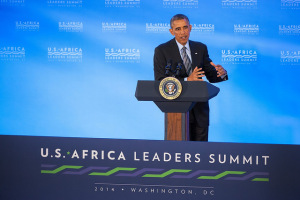
    Obama USAfrica Summit

    President Obama Holds a News Conference at Conclusion of U.S.-Africa Leaders Summit. Source: US State Department (Flickr)

    This week, Africa’s leaders have congregated in Washington, D.C. for the first US-Africa Leaders Summit, with talks on trade, investment and security aimed at establishing stronger ties between the US and countries across the continent. President Obama has been widely criticised for the late timing of this summit, 14 years after China started holding its regular Africa summits, and his failure to prioritise the continent earlier in his presidency. In the eyes of many commentators, this is Obama’s attempt to etch out a legacy in Africa.

    But, as African leaders sit down to discuss peace and stability, the Obama administration need not fear a lack of a legacy. Indeed, as a recent report from Oxford Research Group and the Remote Control project shows, for all the talk of the US lacking engagement with Africa, military forces under the new US Africa Command (AFRICOM, a legacy of the late Bush administration) have been pursuing a quiet but sustained “pivot to Africa” under the Obama administration. In the wake of recurrent security crises in the region this decade, the remote Sahel-Sahara region of northwest Africa has become the laboratory for experiments that will define counter-terrorism operations in the 21st century.

    The global ‘war on terror’ has come to the Sahel, but not with the lengthy, embedded military campaigns we have seen in Iraq and Afghanistan. Instead, AFRICOM and its allies are testing an open-ended, “light-touch” approach, with few boots-on-the-ground and a reliance on special forces, drones and private military companies.  This emphasis on covert and deniable operations makes it inherently difficult to gauge the full extent of the war in the Sahel-Sahara. It also raises many questions about its effectiveness in countering violent extremism and what the long-term impact will be on regional stability.

    The Quiet Pivot to Africa

    SusSec_cover-image_2_darker

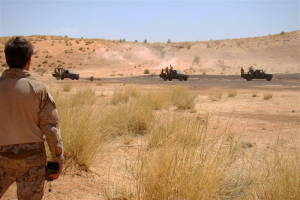
    A U.S. Navy SEAL advisor watches a Malian special operations vehicle unit run through immediate action drills for counter-terrorism missions during training, February 26, 2010 near Gao, Mali. Source: Max R. Blumenfeld, Joint Special Operations Task Force Trans-Sahara, via AFRICOM.

    The evolving importance of the Sahel-Sahara in the counter-terrorism strategies of the US, France and other western states cannot be understated. Following the 2011 Arab uprisings, NATO-assisted overthrow of Libya’s Gaddafi regime and 2012-13 Mali crisis, the Sahel-Sahara has become the “new frontier” in global counter-terrorism operations. With three main active jihadist groups – Al-Qaida in the Islamic Maghreb (AQIM), Boko Haram and Ansar al-Shari’a – it has risen high in US priorities.

    September 11 is the key date for US engagement in the Sahel-Sahara, but 2012 not 2001. This was the date that jihadist militants stormed US diplomatic compounds in Benghazi, Libya, killing the US Ambassador and three other citizens. The result of Benghazi has been a battle over blame in the US Congress and a profound rethinking of crisis response capabilities in remoter, high threat parts of the world. Called the “New Normal”, the new US concept calls for heavily armed air-mobile Marines to be able to deploy anywhere within hours to respond to threats to US citizens and interests.

    US Marines already operate out of bases in Spain, Italy and Djibouti but, since Africa is a vast continent with scores of “high risk” US facilities, more bases will be needed to support the “New Normal”. Recent visits by Marines in their MV-22 Osprey vertical landing aircraft to Senegal and Ghana were part of this base-scouting process.

    The US is also likely to seek more facilities to operate its intelligence, surveillance and reconnaissance (ISR) drones in the Sahel-Sahara, both to track terrorists and to support the “New Normal”. Its one drone base in Niamey, Niger can cover most of West Africa – and North Africa is covered by drones operating from Sicily – but there are gaps, notably around Senegal and Chad. Responding to the humanitarian outcry over Boko Haram’s kidnapping of schoolgirls from Chibok, Nigeria, has already seen US drones deployed from Chad. A web of drone bases in and off the Horn of Africa already surrounds Somalia.

    Covert Operations

    These are the kind of current and future operations that we can broadly expect to know about because their bases and impacts are highly visible. The “New Normal” has already been tested in embassy evacuations in South Sudan (December 2013) and Libya (late July). But there is much more happening beneath the radar. Covert operations using Special Operations Forces appear to be an increasing feature of the US approach in the Sahel-Sahara. Several hundred are believed to be present in the region on undisclosed “contingency operations”.

    Increased ISR capabilities have also depended on use of private military and security contractors (PMSCs), who have run key elements of AFRICOM’s covert counter-terrorism operations in the region. Using unmarked, civilian-registered aircraft, they provide ISR operations, transport special operations forces, and provide medical evacuation and search and rescue capacities.

    Partnerships and Alliances

    Finally, US influence on counter-terrorism in the region extends to training regional security forces under AFRICOM’s Trans-Sahara Counterterrorism Partnership (TSCTP) and is likely to be expanded significantly under the Counterterrorism Partnerships Fund, announced by Obama in May, and as more Special Operations Forces are released from duty in Afghanistan. The EU, Canada and a number of more controversial US allies like Israel, Colombia and Morocco are also increasingly involved in counter-terrorism training programmes in the Sahel.

    But it is France – the old colonial power, Saharan gendarme or legionnaire – that has most at stake in the Sahel-Sahara and on which the US so-far depends. Last week, France formally redeployed its military forces under Opération Barkhane, which sees French land, air and special forces establish an indefinite regional presence at eight bases and several other forward operating locations across five or more Sahel states. US forces and aircraft have a presence at least three of these bases (Niamey, N’Djamena and Ouagadougou) and probably use several others for “contingencies”.

    Barkhane and the recently renewed mandate of the UN Multidimensional Stabilization Mission in Mali (MINUSMA) entrench the presence of over 9,000 external security forces in the Sahel-Sahara with mission and mandate to combat terrorist groups. Remarkably, Dutch special forces and intelligence agents are embedded in MINUSMA with responsibility to track jihadist groups. UN-mandated French forces have carte blanche to seek and destroy whomever they decide is a threat to security in Mali. Not surprisingly, AQIM and its allies rarely distinguish in their targets between France and the UN.

    Repercussions

    Just as there is little mention of this rapidly expanding presence, so too is there little discussion of the effectiveness this new approach to counterterrorism and the impact it will have on stability, governance, and accountability in a fragile region.

    The 2013 French and African intervention in Mali stopped the southwards advance of jihadist groups and returned control of much of the north to the Malian government. However, this displaced AQIM and its allies into Libya, Niger and possibly Nigeria, threatening wider regional stability. Moreover, the intervention has done little to address the political and social nature of Mali’s northern rebellion and French and African forces have limited ability to protect civilians against a terrorist rather than insurgent threat. The heightened visibility of US and French forces in the Sahel-Sahara and the strengthening of Islamist militia during the Libyan civil war have significantly increased the profile and activity of jihadist groups. As the foreign militarisation of the region continues, the motivation for retaliatory attacks is likely to increase.

    While AFRICOM and Washington have established a regular military presence in all regional countries through its TSCTP, there is little recognition of the often toxic nature of these partnerships. The US has made sure this week not to be seen to engage with selected authoritarian African regimes, withholding invitations to Sudan’s ICC indicted Omar el Bashir, Zimbabwe’s Robert Mugabe and Eritrea’s Somalia-meddling Isaias Afewerki. Yet, in a nod to similarly uncritical alliances of the Cold War era, its expanding military engagement across Africa has depended on relationships with similarly dubious governments. Djibouti, Uganda and Ethiopia, the increasingly undemocratic pillars of US campaigns against Somalia’s al-Qaida franchise, are the most blatant examples.

    In the Sahel-Sahara, the US and, to a larger extent, France, rely hugely on Chad’s authoritarian government for basing and combat support. Military-based governments in Algeria and Mauritania have also been able to normalise their international relations, including arms imports, as crucial partners in Saharan counter-terrorism operations. To be fair, the US is choosier than France where it locates its overt bases – Niger and, potentially, Senegal and Ghana are among the best ruled West African states – but its covert operations and military-to-military partnerships span every country in the region.

    Perceived international protection may discourage some regional governments from seeking internal political settlements. The elected Malian government seems to have interpreted its post-2013 French and UN guarantees of security enforcement as reason not to pursue a peace process with northern separatists. Similarly, Côte d’Ivoire’s President Alassane Ouattara has shown no urgency in seeking reconciliation with supporters of the former regime since French and UN troops helped him to power in 2011. Governance, human rights and non-military solutions to existing conflict are thus considerably undermined by the securitisation of policy in the Sahel-Sahara.

    A lasting legacy

    With all of this in mind, US outreach efforts at this week’s Summit seem readily undermined by the lack of ability to monitor – and thus hold accountable – its military expansion across Africa. While President Obama has stated that partnership with Africa must be ‘grounded in mutual responsibility and mutual respect’, his willingness to leave a legacy of low accountability and low-key military support for undemocratic regimes suggests that this responsibility and respect is not intended for the people of Africa.

    Outside of the limits of this week’s Summit, the trend towards covert or “plausibly deniable” counter-terrorism – PMSCs, drones, rapid reaction special forces – and barely restrained mandates to wage war is indicative of the real and increasing power over Africa policy exercised by Defense departments in both Washington and Paris. In turn, securitisation of approaches to the region will undermine non-military approaches to insecurity and conflict resolution, moving regional autocrats further from domestic accountability and buoying the extremist ideology it seeks to discredit. For all the west may seek to tread lightly, there is a large footprint in the sands of the Sahara – one which will not be erased any time soon.

    Richard Reeve and Zoë Pelter are authors of From New Frontier to New Normal: Counter-terrorism in the Sahel-Sahara, released on 5 August.

    Zoë Pelter is the Research Officer of the Sustainable Security Programme at Oxford Research Group. Previously, she worked with the International Security Research Department at Chatham House and the Associate Parliamentary Group for Sudan and South Sudan in the UK Parliament.

    Richard Reeve is Director of the Sustainable Security Programme at Oxford Research Group. He has worked as an analyst of conflict and security issues in Africa since 2000, including for Jane’s Information Group, Chatham House, King’s College London and as Head of Research at International Alert. He has worked on conflict prevention, warning and management systems with ECOWAS, the African Union, the Arab League and many local organisations.

  • Getting Older But Not Wiser: the Arms Trade Treaty’s First Birthday

    A year after the adoption of the United Nations Arms Trade Treaty, the pace is starting to pick up on state action to ratify the treaty. But acceleration of the global arms trade and recent irresponsible deals by treaty ratifiers suggests that state behaviour has yet to catch up to the ideals that sit at the heart of the ATT. A focus on the consistent and long-term blowback of irresponsible trading might go some way to convincing states to start to practice what they preach.

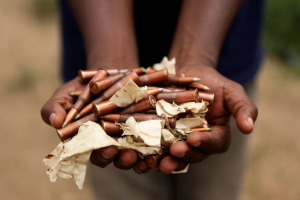
    An ex-combatant holds up munitions in Attécoubé, Abidjan, Côte d'Ivoire. Source: UN Photo (Flickr)

    An ex-combatant holds up munitions in Attécoubé, Abidjan, Côte d’Ivoire. Source: UN Photo (Flickr)

    April 2nd marked the first anniversary of the adoption of the much celebrated Arms Trade Treaty (ATT), the world’s first treaty to establish common standards of international trading in conventional weapons and which, in turn, aims to  ‘ease the suffering caused by irresponsible transfers of conventional weapons and munitions’. 118 states have signed so far, with 31 ratifications including, as of last week, the UK, France and Germany, each a major exporting state. Of the rest of the P5+1, the US has yet to ratify and Russia and China, both of which abstained from voting for adoption of the treaty, have yet to sign. But despite a recent acceleration in the rate of ATT ratification, hard data shows that the global arms trade is accelerating, with many of the biggest deals continuing to transfer cutting edge technologies from democracies like the UK to autocracies like Saudi Arabia.

    Meanwhile, the ghosts of arms deals past continue to haunt arms producing states as their wares come around to be used against them or their allies. Establishing the norms that the ATT seeks to establish will require exporting states to take a longer-term perspective on trading decisions that acknowledge the destabilising impact of weapons proliferation in fragile regions and the consistent blowback against national security. In short, they must start to practice what they have preached.

    New powers, old habits

    Data released by the Stockholm International Peace Research Institute (SIPRI) on 17 March chart the steady rise of international arms transfers – including battle tanks, combat aircraft, missile launchers and small arms and light weapons –  with the volume of transfers up 14% in 2009-13 from transfer in 2004-08.  In 2011 alone, the value of all international arms deliveries is estimated at $44.3 billion. This trend is particularly reflected through rising imports to regions such as Africa, where imports by states rose 53% between 2004-08 and 2009-13. Among the BRICs, Brazil’s arms imports increased by 65% in the same time period, while an increase of 111% in the value of its arms imports has made India the world’s largest arms importer.

    Beyond the deadly threat inherent these tens of millions of weapons pose to human life – the top five arms exporting countries alone delivered nearly 92 million major conventional weapons in 2006-10 – , these statistics suggest an entrenched belief by existing and emerging powers alike that weapons acquisition is a solution to today’s security challenges. Rather, such militarisation is the source of a number of spiralling security crises that are in turn being dealt with using military approaches, with all the Sisyphean repetition that entails. The current NATO-Russia stand-off over the future of Ukraine is but the most obvious example. Prioritising military solutions also tends to stymie peaceful, sustainable alternatives to reducing insecurity.

    What goes around…

    At the heart of the decade-long drive towards a consistent standard of arms trade regulation was an acknowledgement of the human cost of misuse and abuse of legally transferred conventional weapons, leading to human rights abuses and prolonging armed violence in countries such as Sudan, Egypt and Libya. Use of weapons in these countries against citizens has been particularly objectionable and Libya inparticular stands as an example of the warped logic of trading weapons to such countries. Following the lifting of its arms embargo in 2004, EU states granted export licenses worth a reported €834.5m from 2004-2009 to the notoriously repressive Libyan Government – weaponry that was subsequently used against Libyan civilians in 2011, leading to international condemnation and, eventually, western military intervention.

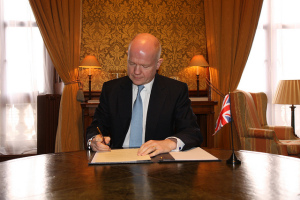
    Foreign Secretary William Hague signs the instrument of ratification for the Arms Trade treaty, 27 March 201. Source: FCO (Flickr)

    Foreign Secretary William Hague signs the instrument of ratification for the Arms Trade treaty, 27 March 2014. Source: FCO (Flickr)

    Yet it seems that such lessons must be continually hard learnt.  Sales such as February’s deal to sell 72 British Typhoon fighter jets to Saudi Arabia – listed by the most recent UK Foreign and Commonwealth Office report on Human Rights and Democracy as a ‘country of concern’ – suggest that London is still not choosy who gets its bang as long as it gets the bucks.  In addition to its domestic record of torture, repression and executions, Saudi Arabia sent its forces to Bahrain to assist in violent crackdowns of popular protests in 2011 and is the leading sponsor of Islamist insurgents in Syria. The UK had to revoke 158 arms export licences to the Middle East in 2011 because of concerns about human rights abuses and risk that the exported weapons might be used for internal repression. Yet the UK was found to have another 600 extant licenses to countries such as Syria, Bahrain and Yemen. With these actions in mind, it is  difficult to reconcile such disregard for the spirit of the ATT with the UK’s recent ratification of the treaty.

    …Comes Around

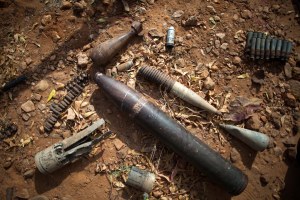
    Ordinance disposal in El Fasher, North Darfur. Source: UNAMID (Flickr)

    Ordinance disposal in El Fasher, North Darfur. Source: UNAMID (Flickr)

    In addition to direct abuse within states such as Libya, international security is challenged by further proliferation through diverted weapons from irresponsible states. For example, the 2008 Final Report of the UN Panel of Expertson Sudan found that arms originating from the stockpiles of Sudan, Chad and Libya had been used in attacks by the Justice and Equality Movement in Sudan, a militia group included in the UN Security Council arms embargo on Darfur since 2005. Chain-of ownership tracing by the Panel then identified numerous weapons that originated in Libya to have originally been transferred from Spain, Belgium and Bulgaria.

    Inside Libya, the dispersal of weapons stockpiles across the country before the downfall of Colonel Gaddafi’s regime – mortars stashed in disused factories, missiles in abandoned buildings – means that today there is an estimated million tons of weaponry in Libya, and much of it is unsecured. Given that this is more than the entire arsenal of the British Army, it is little wonder that MI6 warned the British government in 2013 that the country has become a ‘Tesco for terrorists’. Indeed, Tripoli’s open air Fish Market has now reincarnated as its biggest arms market and deliveries of new weapons systems are regularly hijacked on delivery. Given the hugely destabilising impact of Libyan arms flows south across the Sahara in 2011-12, not least to Mali, one can only speculate on how much of its arsenal has found its way to Syria.

    In Afghanistan, where US-supplied rifles and ammunition have been making their way into Taliban hands for a number of years, the US is currently contemplating  what to do with the $7bn worth of military equipment that will be too expensive to transport from Afghanistan and which will reportedly be of little strategic value to the US once the draw down is complete. As it considers driving some of the equipment over to Pakistan, it seems like the parting gift of the militarised approach in Afghanistan will be the further militarisation of an already deeply unstable region.

    Time to practice what they preach

    The ATT represents the beginning of an important new international norm on arms transfers that aims to lead to more responsible and transparent trade and, ultimately, consideration of the human cost of the trade itself. But despite a majority vote of 156 votes to adopt the ATT last April at the UN General Assembly, and accelerating pace of ratification, there are still important changes to be made to the behaviour of major arms trading states. Countries such as the UK, which proudly claimed to lead the push towards the ATT and made a grand show of ratifying in the recent ‘Race to 50’ campaign, have yet to exhibit the changes to practice that are at the heart of achieving the core ideals of the treaty. Under the terms of the ATT, states reserve the right to continue trade with whichever states they choose, but if a new norm is to be established, they must start to take seriously the spirit of the ATT, whether they have ratified it yet or not. More attention to the consistent and long-term blowback of irresponsible trading – both in terms of the civilian cost of misuse and costs to national security goals caused by destabilisation of areas like the Sahel – might prove worthwhile in making leading exporters like the UK start to practice what they preach.

    Zoë Pelter is the Research Officer of Oxford Research Group’s (ORG) Sustainable Security programme. She works on a number of projects across the programme, including ‘Rethinking UK Defence and Security Policies’ and ‘Sustainable Security and the Global South’. Zoë has worked on conventional arms control issues since 2011.