Blog

  • Sustainable Security

    China’s increasing demand for oil and gas means that it is searching abroad to secure new sources of imports. With its rich resources, the Arctic region could serve this purpose, and Chinese oil companies have shown interest in exploration and production opportunities there.

    Decades of high and sustained economic growth have substantially increased China’s need for energy. China is the world’s second largest economy and the world’s largest energy consumer. Importantly, as domestic production has not kept pace with raising consumption levels, China is forced to import most of its oil and natural gas. China today is the world’s second largest oil importer and third largest importer of natural gas. Crucially, China’s oil import dependency is high and increasing. For instance, in 2016 more than 60% of China’s oil demand came from overseas imports, up 3.5% from 2015.

    To meet its growing energy import demand, China has, in the last decade or so, embarked on an energetic effort to search for overseas supplies. A central objective has been to diversify the origin of its oil and natural gas sources, and means of delivery. Today, China imports oil from the Middle East and North Africa, Latin America, Central Asia and Russia, via the sea, railway and oil pipelines. China imports liquefied natural gas (LNG) from a variety of sources (for instance from Qatar, Australia, Indonesia, and Malaysia) but also pipeline natural gas from Central Asia, Myanmar and has contracted large future imports from Russia.

    However, more than 50% of Chinese oil imports originate in the Middle East and North Africa and up to 80% of China’s maritime oil import must travel through the narrow Malacca Strait, a stretch of water between the Malay Peninsula and Sumatra. In the eyes of China’s strategic planners, this makes their country vulnerable to potential disturbances of oil supplies, not only due to volatile political conditions in these regions but also, however unlikely, a potential U.S. naval blockade.

    Enter the Arctic region. According to the widely cited 2008 report by the United States Geological Survey (USGS), 30% of the world’s undiscovered natural gas and 13% of the world’s undiscovered oil is estimated to be in the Arctic region. Energy imports from the Arctic, Chinese strategist calculate, would help mitigate China’s supply and transport vulnerabilities by presenting an alternative to existing import sources and delivery routes.

    Expanded engagement 

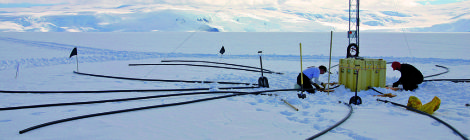
    Image credit:  Timo Palo/Wikimedia.

    China is not an Arctic littoral state, but officially defines itself as a “near-Arctic state”. China has in recent years incrementally stepped up its engagement in the Arctic region. China sought, and in 2013 secured, permanent observer status in the Arctic Council (AC), granting Beijing a new platform, albeit with limitations, to participate on issues regarding Arctic governance. Importantly, China acknowledges and respects the sovereignty claims and rights of Arctic states, a pre-condition for observer membership status acceptance in the Arctic Council. China also recognizes the United Nations Convention on the Law of the Sea (UNCLOS) as the legal foundation governing the Arctic. This helped alleviate concerns over China’s growing Arctic presence, which some viewed as potentially challenging the regional Arctic order.

    China is active in scientific research in the Arctic pertaining to global climate change. While such research is sometimes brushed off as a mean to hide China’s other goals, the daunting environmental challenges currently facing China surely motivates genuine international scientific climate work and collaboration in the Arctic. China’s icebreaker, The Snow Dragon (Xuelong), has conducted seven scientific research expeditions as of 2016 and a second icebreaker under construction (ready to sail by 2019). In 2004 the Yellow River Station (Huanghe zhan) research facility in Norway’s Svalbard was established. China is also engaged in numerous scientific bilateral and multilectal cooperation projects with Arctic States, for instance the China-Nordic Arctic Research Center, while simultaneously boosting its domestic polar competence.

    The EU is China’s biggest trading partner and China is the EU’s second biggest. As the Arctic ice-cap continues to retreat, opportunities for new trade links between transiting the Northern Sea Route (NSR) from China to Europe are opening up, shortening the shipping time and fuel savings considerably compared to the conventional route through the Malacca Strait and Suez Canal. There have been some optimistic estimates made by the Chinese. For instance, according to one figure, 5 to 15 of China’s total trade could use the route by 2020, if constructively prepared. China’s largest shipping company, China Ocean Shipping Company (COSCO), has over the years conducted a few, but increasing, intra- and trans-Arctic voyages and announced that it plans to begin with regular trans-Arctic sailings. However, prospects such as the above estimate seem overly optimistic as utilization of the NSR is dependent on variety of factors (commercial, infrastructure, technical, environmental etc.), reflecting  overall low numbers of trans-arctic maritime trade. Importantly, most of the Chinese commercial actors remain hesitant to make large-scale investments and the optimistic scenarios must be taken with caution.

    Energy – a cautious tale

    Natural resources, particularly oil and gas, constitute another area of Chinese interests in the Arctic, according to some the principle motive. While the Chinese government has of late been more open about its economic interests in the Arctic, and also taken steps to promote energy bilateral cooperation with Arctic states, notably with Russia, Chinese commercial players on the ground have been cautious. It is often stated by the industry itself that China lacks the technical skill to operate in harsh Arctic conditions. The goal for Chinese oil companies is instead primarily to learn and obtain technical know-how from more advanced international companies. Western sanctions against Russia, due to the annexation of Crimea in 2014, further complicate the situation. While Russia has turned increasingly to China for capital and investments, the lack of technological skill limits China’s actual participation in exploration and production. Moreover, the current low oil price has made the global energy market a “buyer’s market”. Today’s big buyers such China have more options. In other words, Arctic oil and gas needs to be “cheap” enough to be commercially attractive compared to other available import sources.

    This has undoubtedly impacted on the scope and nature of concrete Chinese Arctic energy projects. Most of what has been done is limited. For instance, the attempt to explore oil and gas in the Dreki area off the coast of Iceland by China National Offshore Oil Corporation (CNOOC) together with Icelandic Eykon Energy and Norwegian Petoro remains uncertain. The often noted purchase by CNOOC of Canadian Nexen in 2013 for 15.1 USD billion and the company’s investments in Canadian oil sand have yielded limited returns so far. Russia’s Rosneft has invited China National Petroleum Corporation (CNPC) to explore three offshore fields in the Barents and Pechora Seas, but open information on progress is scant.

    There is one project, however, which seems to have materialized significantly, namely CNPC’s involvement in the Yamal LNG terminal project in Russia’s Arctic Siberia. The project is one of the Arctic’s most ambitious infrastructure projects with an estimated cost of 27 USD billion. The terminal will supply costumers with LNG gas and aims at being operational by 2017, offering a future annual capacity of around 16.5 million metric tons per year. CNPC entered the project in 2013 in buying a 20% equity stake while committing to import 3 million tons LNG annually for a 20-year period (price so far undisclosed). Then in 2015 China’s Silk Road Fund bought 9,9% making China the project’s second largest investor after Russia’s Novatek with owns 50,1% percent and French Total with remaining 20%. The Export-Import Bank of China and China Development Bank, China’s “political banks”, in 2016 offered loans of a total of 12 USD billion, lending important financial support to the project. Additionally, Chinese companies supply Arctic modules for the construction of the terminal. Finally, Chinese shipping and construction companies are involved in the manufacturing of specialized ice-breaking LNG carriers which will be used for shipping LNG to customers. As of 2015, Chinese shipping companies have been involved in the construction of fourteen of the fifteen commissioned.

    Conclusion

    China’s Arctic energy interests have been limited. The Yamal LNG project is the only significant Chinese project, in part reflecting changing external circumstances as Russia’s isolation due to western sanctions literally opened up for more Chinese capital, and thus involvement. Despite the current modest Chinese concrete involvement, Arctic energy will nevertheless play a part in China’s overall energy strategic outlook in the years to come as demand for oil and especially natural gas will continue to be substantial. Arctic energy imports will not replace any of China’s main energy import sources, but more likely serve as an (limited) additional supply source.

    Christopher Weidacher Hsiung is a researcher at the Asia Centre at the Norwegian Institute for Defence Studies (IFS) and PhD Candidate at the Department for Political Science at Oslo University. His main research areas include China’s foreign and security policy, Sino-Russian relations and China’s Arctic interests.

  • Sustainable Security

    The Responsibility to Protect (R2P) is a significant, if controversial, development in international affairs. China has proposed its own semi-official version of R2P called “Responsible Protection”.

    Author’s Note: This article highlights issues discussed in more depth in various publications, including Andrew Garwood-Gowers, ‘China’s “Responsible Protection” Concept: Reinterpreting the Responsibility to Protect (R2P) and Military Intervention for Humanitarian Purposes’ (2016) 6 Asian Journal of International Law 89 and Andrew Garwood-Gowers, ‘R2P Ten Years after the World Summit: Explaining Ongoing Contestation over Pillar III’ (2015) 7 Global Responsibility to Protect 300.

    Introduction

    Over the last decade and a half the Responsibility to Protect (R2P) principle has emerged as a significant normative development in international efforts to prevent and respond to genocide and other mass atrocity crimes. Yet it has also been controversial, both in theory and in practice. R2P’s legal status and normative impact continue to be debated in academic and policy circles, while its implementation in Libya in 2011 reignited longstanding concerns among many non-Western states over its potential to be misused as a smokescreen for regime change. These misgivings prompted Brazil to launch its “Responsibility while Protecting” (RwP) concept as a means of complementing and tightening the existing R2P principle. China, too, has proposed its own semi-official version of R2P called “Responsible Protection” (RP). This contribution explores the key features and implications of the lesser known Chinese initiative.

    The R2P Principle

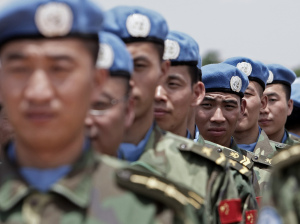
    Peacekeeping - UNAMID

    Image by UN Photo via Flickr.

    R2P first appeared in a 2001 report by the International Commission on Intervention and State Sovereignty (ICISS), a body set up by the Canadian government to consider how the international community should address intra-state humanitarian crises. However, after the initial concept proved contentious a modified version of R2P – labelled “R2P-lite” by one commentator – was unanimously endorsed by states at the 2005 World Summit. In its current form R2P consists of three mutually reinforcing pillars. The first is that each state has a responsibility to protect its populations from the four mass atrocity crimes (genocide, war crimes, crimes against humanity and ethnic cleansing). Pillar two stipulates that the international community should encourage and assist states in fulfilling their pillar one duties. Finally, pillar three provides that if a state is manifestly failing to protect its populations the international community is prepared to take collective action in a timely and decisive manner on a case-by-case basis, in accordance with Chapter VII of the UN Charter.

    Action under pillar three can encompass non-coercive tools such as diplomacy and humanitarian assistance, as well as coercive means including sanctions and the use of force. The international community’s pillar three responsibility is framed in conservative terms, creating only a duty to consider taking appropriate action, rather than a positive obligation to actually respond to a state’s manifest failure to protect. Crucially, the UN Security Council remains the only body that can authorise coercive, non-consensual measures under pillar three. R2P does not grant states a right to undertake unilateral humanitarian intervention outside the Charter’s collective security framework. Overall, R2P is best characterised as a multi-faceted political principle based on existing international law principles and mechanisms.

    The most well-known instance of pillar III action to date is the international community’s rapid and decisive response to the Libyan crisis in early 2011. The Security Council initially imposed sanctions and travel bans on members of the Gaddafi regime before passing resolution 1973 authorising the use of force to “protect civilians and civilian populated areas under threat of attack’’. China, Russia, Brazil and India each abstained on the vote to mandate military force against Libya. As the extent of NATO’s military targets and support for the Libyan rebels became apparent, many non-Western powers criticised the campaign for exceeding the terms of the Security Council resolution. For these states, the eventual removal of the Gaddafi regime confirmed their perception that R2P’s third pillar could be manipulated for the pursuit of ulterior motives such as the replacement of unfriendly governments.

    The post-Libya backlash against R2P was at least partly responsible for Security Council deadlock over Syria. Russia and China have exercised their vetoes on four separate occasions to block resolutions that sought to impose a range of non-forcible measures on the Syrian regime. At the same time, there has been renewed debate about the strengths and weaknesses of R2P’s third pillar. In late 2011 Brazil’s RwP initiative proposed a series of decision-making criteria and monitoring mechanisms to guide the implementation of coercive pillar three measures. While RwP initially attracted significant attention and discussion, Brazil’s foray into norm entrepreneurship was short-lived and R2P has remained unaltered.

    Reframing R2P as “Responsible Protection”

    China’s traditional insistence on a strict interpretation of sovereignty and non-intervention has made it uncomfortable with the coercive, non-consensual aspects of R2P’s third pillar. As a result, Beijing has consistently emphasised the primacy of pillars one and two, while downplaying the scope for pillar three action. In this respect, its decision not to veto resolution 1973 on Libya came as something of a surprise.

    China’s contribution to the post-Libya debate over R2P’s third pillar is less widely documented than Brazil’s efforts. In mid-2012 the notion of “Responsible Protection” was floated by Ruan Zongze, the Vice President of the China Institute for International Studies (CIIS),  which is the official think tank of China’s Ministry of Foreign Affairs. Although China has not explicitly adopted the concept as a formal policy statement on R2P, its implicit endorsement means it can be described as a “semi-official” initiative.

    RP is primarily concerned with R2P’s third pillar and, in particular, providing a set of guidelines to constrain the implementation of non-consensual, coercive measures. It consists of six elements or principles, which are drawn from just war theory and earlier R2P proposals such as the 2001 ICISS report and Brazil’s RwP. In this respect, RP represents a repackaging of previous ideas, rather than an entirely original initiative. However, by reframing these concepts in stricter terms it reflects a distinctive Chinese interpretation of R2P that seeks to narrow the circumstances in which non-consensual use of force can be applied for humanitarian purposes.

    The first element draws on the just war notion of “right intention”. It provides that the purpose of any intervention must be to protect civilian populations, rather than to support “specific political parties or armed forces”. This conveys Beijing’s concerns over the motives and objectives of those intervening under the banner of R2P, as expressed during the Libyan experience. Element two relates to the “right authority” criterion. It reiterates the longstanding Chinese position that only the Security Council can authorise the use of coercive measures, and that there is no right of unilateral humanitarian intervention granted to states.

    RP’s third element is based on the traditional principle that military intervention should be a “last resort”. Its call for “exhaustion of diplomatic and political means of solution” is consistent with Beijing’s broader policy preference for diplomacy and dialogue over forcible measures. However, insisting on a strict, chronological sequencing of responses may deprive the international community of the flexibility needed to ensure timely and decisive action on humanitarian crisis. For this reason, some clarification or refinement of element three may be needed. The fourth element of RP draws on aspects of the just war principles of “right intention” (like element one) and “reasonable prospects”. In relation to the latter, it provides that “it is absolutely forbidden to create greater humanitarian disasters” when carrying out international action. This stipulation reflects Beijing’s position that external intervention often exacerbates humanitarian crises and can ultimately cause more harm than good.

    Element five of RP provides that those who intervene “should be responsible for the post-intervention and post-protection reconstruction of the state concerned”. Although the notion of a responsibility to rebuild appeared in the original 2001 ICISS report it was not included in the text of the World Summit Outcome document in 2005 and therefore does not form a component of the current concept of R2P. It is unclear whether China’s RP concept is explicitly seeking to resurrect this dimension or whether this element is simply intended to emphasise Beijing’s broader perspective on peacebuilding and development in post-conflict societies. Finally, element six calls for greater supervision and accountability of those carrying out UN authorised civilian protection action. This is a similar demand to that made in Brazil’s RwP proposal, though little detail is given as to what form any such monitoring mechanism would take.

    Conclusion

    Overall, the Chinese notion of RP is an attempt to reinterpret and tighten the content of R2P’s third pillar so that it aligns more closely with Beijing’s own normative preferences and foreign policy objectives. Compared to RwP and the ICISS report, RP outlines a narrower set of circumstances in which military intervention for humanitarian purposes would be appropriate. Some aspects of the proposal would certainly benefit from clarification and refinement.

    However, it is notable that despite strongly criticising the way R2P was implemented in Libya, China has chosen to engage with, and actively shape, the future development of the norm. This illustrates the extent to which China, as a permanent member of the Security Council, is enmeshed in the ongoing debate over R2P. In fact, RP is explicitly framed as an example of China “contributing its public goods to the international community”. In the future we can expect China and other non-Western powers to play increasingly influential roles in the development of international security and global governance norms.

    Andrew Garwood-Gowers is a lecturer at the Faculty of Law at Queensland University of Technology (QUT) in Brisbane, Australia. He has written extensively on R2P and the law governing the use of military force, with publications in leading journals including Global Responsibility to Protect, the Asian Journal of International Law, Journal of Conflict and Security Law and the Melbourne Journal of International Law.

  • Sustainable Security

    The War in Syria: Responding to Stalemate

    The Syrian War is now in its fourth year and the indications are that the regime will survive and consolidate its position in 2014. This is radically different from early last year when many analysts thought it was under serious pressure, and it should be recalled that in mid-2011, a few months into the war, the prevailing view was that the regime would not last to the end of that year. The costs have been huge, with around 140,000 killed, twice that number injured and more than a third of the population displace, millions of them refugees in other countries. Here, Paul Rogers seeks to put this appalling conflict in a longer term regional context as an aid to looking at possible policy options in attempting to bring the war to an end.

    Read Article →

    International Dimensions of the Ukraine Crisis: Syria and Iran

    The Russian annexation of Crimea may be in direct contravention of international agreements but is popular in Russia and almost certain to hold. Given tensions within Ukrainian society and its weak transitional government, there remains some risk of further intervention in eastern Ukraine and possibly the Trans-Dniester break-away region of Moldova. Even if there is no further escalation in the crisis, the deterioration in EU/Russian and US/Russian relations is of great concern, not least in relation to two aspects of Middle East security – the Syrian civil war and the Iran nuclear negotiations.

    Read Article →

    Responding to Climate Disruption – Developing the Agenda

    Recent examples of short-term climate disruption have done much to bring the overall issue of climate change up the political agenda. In responding to what will be one of the key challenges of the next decades – well beyond the 15-year lifetime of the post-2015 global development goals currently under discussion – much of the attention has been focused on the need to adapt to those elements of climate change that are already irreversible and also to the need to decarbonise existing high carbon-emitting economies. What needs much greater attention is the fundamental need to ensure that low-carbon emitters in the Global South are enabled to combine effective human development with responding to the challenges of climate change.

    Read Article →

    What next for Iran? Foreign Policy after a Nuclear Agreement

    If Iran and the P5+1 succeed in negotiating a robust agreement on the nuclear issue, then Iran will be less preoccupied with rebalancing its relationship with antagonistic western powers and its role in the Middle East and the wider region has scope for developing in many new directions. This briefing looks ahead to a post-agreement environment and assesses where Iran might chose to concentrate its resources. A key question is whether it will work to build better links with the US and selected European states or whether it will be more interested in the BRIC and other states, not least Turkey. Its choice will be influenced strongly by domestic politics and the urgent need for a more stable region.

    Read Article →

  • Sustainable Security

    A top-down approach to sustainable security: the Arms Trade Treaty

    2012 has been hailed as a potential landmark year in the push for greater regulation of the global trade in conventional arms. After more than a decade of advocacy to this end, negotiations took place throughout July towards the world’s first Arms Trade Treaty (ATT), which is intended to establish the highest possible common international standards for the transfer of conventional weapons. However, although significant progress was made during the month of intense negotiations, the ATT is not yet open for signature. In this article, Zoë Pelter explores what role a potential treaty – if reopened for further negotiation – could play in a move towards sustainable security.

    Read Article →

  • Sustainable Security

    The Internet has become a major arena for modern jihadis. Understanding how militant Islamist groups operate online can help security services devise appropriate methods to forestall jihadist activities. 

    Modern terrorism relies heavily on modern technology. Indeed, modern technology is a defining characteristic of today’s terrorism. Both modern terror and modern technology are diffusive, decentralised, universal, interactive, low cost and chaotic in their respective structures (or lack of structures).

    The Internet has enabled a global jihad based on a loose network of Mujahedeen (people who fight for jihad) transcending the limitations of face-to-face interaction. Jihadis are making the most of the vast information available on the Internet to coordinate, to communicate, and to find essential data in order to wage anti-social, violent operations.

    How jihadis use the internet

    Propaganda, Indoctrination and Recruitment – Most radical and terrorist organizations use the Internet as a vehicle for ideological indoctrination. There are numerous cases of normal, often non-religious citizens becoming radicalized by jihadist websites, leaving them vulnerable to terrorist recruitment. The content of such propaganda usually consists of enemy demonization, justification of violence, and a general background of the jihadi group, its platform and objectives. The sites try to be effective as they compete with each other on the attention of potential followers. Interactive technology is used to connect with those who seem receptive to the jihadi messages and ideology. Recruiters use messaging apps like Kik to communicate with those who seek advice on how to cross into Syria. Terrorists proactively troll social media sites for individuals they believe may be susceptible and sympathetic to their violent messages. Indeed, Internet recruitment by ISIS is a major concern for European countries. Social media it utilised for the most anti-social activities.

    Hizb ut-Tahir, an Islamist extremist group, offers music and computer games to introduce their ideology and to attract young supporters. They depict Islam as under attack, and claim Muslims have a personal duty to fight attackers. Officially, the group distances itself from violence. At the same time, Hizb ut-Tahir, in Danish propaganda leflets, urged Muslims to kill Jews wherever they are. It also supports offensive jihad against Israel.  People affiliated with Hizb ut-Tahir have been linked to violent acts in multiple countries, including coup attempts in the Middle East, the murder of a pro-secularist blogger in Bangladesh, and spreading anti-Western and Muslim-separatist propaganda in the West.

    Al-Qaeda in the Arabian Peninsula (AQAP) publishes its English language jihadist magazine Inspire. The magazine, known for its high production standards, is designed to radicalize English-speaking Muslims, and encourages them to engage in militant activity. Inspire calls upon jihadists to mount attacks in the countries where they live. In December 2015, the Islamic State launched a cyber war magazine for jihadists called Kybernetiq that instructs militants about technology. The Islamic State is exploiting the Internet to the fullest, using social networks such as Facebook and Twitter to communicate with its audiences, and diversifying its reach by also using peer-to-peer apps like Telegram (fast, simple and free messaging service with enhanced security measures), Surespot (a secure mobile messaging app that uses end-to-end encryption for every text, image and voice message) and content sharing such as JustPaste.

    Anwar al-Awlaki was one of the iconic figures of modern terrorism. The American-Yemeni cleric was the leading English-speaking propagandist for al-Qaeda who was embraced also by the Islamic State. He was described by the FBI as the “senior recruiter for al Qaeda”. For his operational and leadership roles with al-Qaeda and for plotting attacks intended to kill Americans, al-Awlaki was killed by an American drone in 2011. But his influence endures beyond the grave.

    al-Awlaki’s propaganda helped radicalize several jihadists, including the terrorist Nidal Hasan from Fort Hood, Texas who murdered 13 people and wounding 32 others in a 2009 shooting rampage; Roshonara Choudhry, a 21-year-old student who stabbed in May 2010 MP Stephen Timms because of his 2003 vote in British parliament in support of the Iraq war; Dzhokhar Tsarnaev and his brother Tamerlan Tsarnaev, the Boston Marathon bombers (April 2013) who murdered three spectators and wounded more than 260 other people; Syed Rizwan Farook and Tashfeen Malik, the San Bernardino terrorists who murdered 14 people and injured 22 others in December 2015; Elton Simpson and Nadir Soofi who aimed to kill people who attended the “Draw Muhammad” cartoon contest in Garland, Texas in May 2015; Mohammad Youssef Abdulazeez who in July 2015 murdered four US marines in attacks on two facilities in Tennessee, and Omar Mateen, who murdered 49 people and wounded 53 others in a June 2016 mass shooting at Pulse nightclub in Orlando.

    Elsewhere, Hamas uses a network of websites targeting many populations. Its Website, the Palestinian Information Center, appears in eight languages. It provides propaganda and updates the Palestinian take on the news.

    The military wing of Hamas, the Ezzedin al Qassam Brigades, has its own website. It provides reports on current affairs, glorifies martyrs, offers interviews with Palestinians and intellectuals who support the armed struggle against Israel, provides information about their prisoners, and offers a comprehensive photo gallery. One of Hamas’s Websites was designed to target children: the site presented, in comic-book style, stories that encouraged children to engage in jihad and to become “martyrs”.

    Online jihadi propaganda can also be a potent form of psychological warfare. ISIS and Al-Qaida regularly publish videos that are designed to evoke fear. Violence plays a key role in the psyche of jihadists. The majority of videos distributed on jihadi forums feature explicit violence. On 19 April 2017 I wrote the words “ISIS violence” on YouTube search engine. The search yielded 706,000 results. The top results warned the viewers of graphic violence and of horrific ISIS executions.

    Networking – The Internet can help bridge the gap from the isolated potential mujahid to the global jihad. Connection between people may start on social networking sites such as Facebook, Twitter, Telegram and Vibe and then may continue on more obscure forums. The anonymity which individuals and groups may enjoy on the Internet, the encrypted capabilities and the international character of the Internet provide terrorists with an easy and effective arena for their destructive interests.

    The dark Internet is a home to illicit jihadi information and communication. Jihadi websites allow isolated young Muslims to engage with a worldwide network of like-minded people striving against what they perceive as a common enemy and with a singular unity of purpose. The forums, where people seem to care for each other, provide them with friends and support. The forums prove the existence of the ummah, or transnational Muslim community.

     Fundraising – Follow the money is a good advice for those who wish to understand the world of terrorism. Terrorist groups raise funds via the Internet by five primary methods:

    1.  Making appeals via e-mail or directly through their websites. Hamas has circulated appeal letters to various newsgroups. Hezbollah supplied bank account information to those who solicit the group by e-mail and it posted its bank account information directly on several of its websites. The Ibn Taymiyya Media Center (ITMC), an online jihadist propaganda unit located in the Gaza Strip, has been using social media to run a fundraising campaign. It is one of the first terrorist groups to publicly use the digital currency bitcoin.
    2. Selling goods. Many sites offer online “gift shops”: visitors can purchase or download free posters, books, videos, pictures, audiocassettes and discs, stickers, badges, symbols, and calendars.
    3. Through side businesses that are not identified as group-owned but are nevertheless associated. There are links between terrorism and organized crime, especially in spheres concerning illegal migration, corruption, economic crime, illicit drugs, arms trafficking and money laundering. The Hezbollah had coordinated the transportation, distribution, and sale of multi-ton bulk shipments of cocaine from South America. Large cash money was smuggled to Lebanon, and several Lebanese exchange houses utilized accounts at the Beirut-based Lebanese Canadian Bank (LCB). The proceeds were laundered through various methods which included the sale of used cars in the United States to African nations, mixing legitimate business with drug money which eventually found its way to the Hezbollah.
    4. Via online organizations that resemble humanitarian charity groups. Some charity organizations in the USA were in the service of Hamas and the Hezbollah until they were closed down. Charities are legitimate front organizations which enable to raise money from across the globe. In 2013, the UK Charity Commission warned of a risk that funds raised in the name of ‘charity’ generally or under the name of a specific charity are misused to support terrorist activities, with or without the charity’s knowledge. In 2017, the Charity Commission reported that alleged links between charities and terrorism or extremism have surged to a record high.
    5. Through fraud, gambling, or online brokering. According to the United Kingdom’s Financial Services Authority (FSA), terrorist groups launder their money through online firms. Online brokerage and spread-betting firms are particularly vulnerable to exploitation by terrorist groups because they are under-regulated and do not perform thorough checks on their investors. Younes Tsouli, Waseem Mughal and Tariq Al-Daour, based in London, worked for al-Qaida in Iraq. They stole money through online gambling sites. With different Trojan viruses, the three terrorists managed to raise more than 3.5 million dollars to buy web hosting services in order to show more influential videos of al-Qaida.

    Spreading tactics, planning of attacks and coordination of activities – Information technology has enabled terrorist organizations to receive and share knowledge globally. Terrorists can easily obtain information on sensitive targets and their potential weaknesses; public transport timetables; building sites, their opening times and their layout. Terrorist organisations maintain extensive databases that contain information about potential American targets.

    Multiple password-protected forums refer to extensive literature on explosives. Terrorists disseminate detailed manuals how to terrorise, kill and create mayhem. There is an immense amount of how-to material: cell phone detonators, how to make flamethrowers and napalm bombs together with violent and terrorist propaganda. There are detailed tutorials in viruses, hacking stratagems, the use of secret codes, encryption methods, Tor and other anonymity tools. Bomb-making knowledge is available on jihadi websites in the form of very detailed step-by-step video instructions showing how to build improvised explosive devices.

    There is strong evidence that such online instructions played a critical role in the March 2004 Madrid bombings, the April 2005 Khan al-Khalili bombings in Cairo, the July 2006 failed attempt to bomb trains in Germany, and the June 2007 plot to bomb London’s West End and Glasgow. The information help radical so-called “lone-wolfs” (who, thanks to the Internet, are never alone) to plan their actions.

    The Internet has proven to be an excellent vehicle by which information about travel, training, targets, tactics and a host of other useful organization details is displayed. Data, instructions, maps, diagrams, photographs, tactical and technical details are often sent in this exchange, often in encrypted format, using onion routers such as Tor that hide the Internet Protocol (IP) address. Gilles de Kerchove, EU Counter-terrorism Coordinator, said: “We have to be vigilant, since the threat posed by the so-called Islamic State (IS) and returning foreign fighters is likely to persist in the coming years”. 

    Al-Qaida members used the Internet in planning and coordinating the attacks of September 11, 2001. Mary E. Galligan, FBI Chief Inspector who supervised PENTTBOM, the FBI’s investigation of the attacks, studied closely the incident that brought about the global war on terror. She said that clearly the Internet was a vital channel for coordination of those attacks. Galligan asserted that al-Qaida terrorists learned the methods used by the US to combat terrorism; they studied the American soft spots and targets.

    Al-Qaida activists refrained from using cell phones, as they knew cell phones could be traced. Instead, they used the Internet, prepaid phone cards, and face-to-face meetings in Spain. Email was used to transmit messages between the terrorists. Al-Qaida activists were looking for American flight schools on the Internet, while they were in Germany.

    The terrorists used public libraries terminals for communications and data. At many public libraries, people can simply walk up to a terminal and access the Internet without presenting any form of identification. Within two weeks of the 9/11 attacks, the US had located hundreds of e-mails linked to the hijackers, in English and Arabic, sent before September 11, some of which included operational details of the planned terrorist assault.

    In 2015, Sid Ahmed Ghlam tried to open fire on a church in Paris. When the police searched his car, they found in his laptop a series of messages showing how he had been guided by a pair of handlers who provided both the weapons and the getaway car. Ghalem was remote-controlled by his handlers with the help of technology.

    The Telegram platform which enables end-to-end encryption was used by terrorists before the attacks on Nice in July 2016 and Berlin in December 2016. It is believed that videos of high profile attacks were posted on Telegram by jihadists to inspire and motivate each other, including the murder of soldier Lee Rigby in Woolwich and the 7/7 London bombings.

    In March 2017, Khalid Masood launched a terror attack near the British Houses of Parliament in which four people died and more than 35 others were injured. Minutes before the attack, Masood communicated with other people via the WhatsApp platform. WhatsApp, owned by Facebook, uses end-to-end encryption which prevents even its own technicians from reading people’s messages. This makes the work of law enforcement agencies particularly difficult.

    Responding to the cyber-jihad

    Law-enforcement agencies throughout the world can learn from each other and cooperate in the fight against illicit and anti-social activities online. Indeed, there are many similarities between counter-online terrorism activities, counter-online child-pornography activities and counter-online racism activities. To have effective results in fighting down terrorism, cooperation is vital. Failure to do so is inexcusable.

    Without responsible cooperation, Internet abusers will prevail, and our children will suffer. Nations, Internet intermediaries and responsible Netcitizens are obliged to ensure that future generations will be able to develop their autonomy, their individuality and their capabilities in a secure environment, both offline and online.

    Raphael Cohen-Almagor received his DPhil in political theory from Oxford University. He is Professor/Chair in Politics, and Founder and Director of the Middle East Study Group, University of Hull, UK. He is the author of hundreds of publications in politics, law, media and ethics, including most recently Confronting the Internet’s Dark Side (NY and Washington DC.: Woodrow Wilson Center Press and Cambridge University Press, 2015), the first comprehensive book on social responsibility on the Internet. https://www.wilsoncenter.org/book/confronting-the-internets-dark-side-moral-and-social-responsibility-the-free-highway.  Website: http://www.hull.ac.uk/rca. Blog: http://almagor.blogspot.com Twitter: @almagor35

  • Elaborating on the Nexus Between Energy and Water

    Elaborating on the Nexus Between Energy and Water

    Jakob Granit | Journal of Energy Security | March 2010

    Issue:Competition over resources

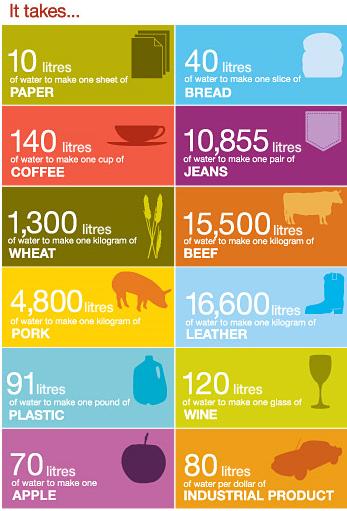
    Like energy, water is used in different forms and cuts across most development functions in society. With growing populations and economies, the demand for water for food production and energy production (bio-energy and hydropower), and water for industry and domestic use is steeply increasing at the local, national and regional levels. During the past hundred years the world’s population has tripled and the use of water has increased six fold during the same time. Recent data indicates that a global 40% water supply gap of accessible and reliable water supply for economic development is expected by 2030. This at a time when there are still tremendous challenges in providing access to safe drinking water for nearly 1.1 billion people, proper sanitation for over 2 billion people and providing food to market for over 1 billion people that are suffering from under-nourishment. Broad-based water service interventions in water supply and energy utilities, water and sanitation and irrigation services benefit everyone and play a major role in improving sustainable and dignified livelihoods. Long term climate change, on top of existing rainfall variability, will provide additional water management challenges. Droughts and floods will increase and cause shocks to both developing and developed economies. 

    Against this background, it comes as no surprise that the political economy behind the allocation of scarce water resources for different purposes, including for vital ecosystem functions, is beginning to shape public policy. For example, successful countries in regions with limited water resources are diversifying their economies away from over reliance on agriculture and are putting in place water demand management systems to save water for higher value use. Such higher value use would include water for industry, services and modernizing agriculture by moving production from grains to other crops such as vegetables fetching higher market prices.

    Image courtesy of IBM Smarter Planet

    Energy is required in all the steps along the water value chain, from providing water services such as pumping water for water supply and sanitation systems, to the delivery of irrigation water for food and bioenergy production, to the construction of large scale water storage for flood protection. As water resources become scarce, water will be pumped long distances, or be produced through alternative means, such as energy intensive desalination processes. Modern water management, including establishing monitoring networks and data centers, is dependent on reliable access to electricity. To achieve water security, which means the provision of an acceptable quantity and quality of water for health, livelihoods, ecosystems and production, energy must be available. The links between these two key assets for building societies, water and energy, need to be further explored and strengthened.

    Water does not conform to borders. There are an estimated 261 river basins globally that cross international borders, not to mention boundaries within countries. These trans-boundary river basins cover about 45% of the earth’s surface. Some of the most contested river basin systems in the world are found in dry regions such as the Middle East and Africa where international cooperation is weak and civil strife and tensions prevent cooperation on these shared assets. Competition for water resources between states, within states and between different sectors is increasing. This is partly because of the upstream and downstream dimension where water flows from high to low lying areas which provides opportunities for upstream countries or users to have some control over both the quantity and quality of downstream water flow.

    The cooperative management of trans-boundary river basins and the sharing of benefits from development therefore pose serious challenges, since all states in a trans-boundary river basin depend on each other. But if the aggregate benefits from common use of water are larger than those of systems in which water allocations and management take place at the unilateral level, then there will be incentives for cooperation, driving regional integration. Research has shown that regions which have removed barriers to trade and increased interactions between states have experienced a relative increase in prosperity and stability when compared to regions with more limited cooperation. The development of hydropower, including irrigation and flood control, in multipurpose schemes provides tangible benefits that can be distributed at the regional level. Other benefits include industry, food and health outputs, as well as environmental services for biodiversity conservation and tourism that all can be generated at the local or regional level. Benefit sharing schemes based on water and energy bring opportunities for small and isolated economies and stimulate growth in larger economies.

    While industrialized countries have invested significantly in building water management capacity and water infrastructure, many developing countries have not. In hydropower development, for example, industrialized countries use most available hydroelectric potential as a source of renewable energy. At a global level hydropower contributes about 20% of the world’s electricity generating capacity. The most significant hydropower capacity is in developing countries, which in many cases harness only a small fraction of their available hydropower potential. In Africa, only 7% of the technical and economic hydropower potential is exploited compared to 22% in Asia, 69% in North America and 75% in Europe. In existing hydropower facilities, opportunities to increase electricity outputs may exist by using up-to-date technology. Hydropower provides future price security, and for countries with indigenous supply, it reduces foreign exchange requirements for fuel purchases. The environmental appeal of hydropower generation gained from the reduction of pollution and greenhouse gas emissions is well established. Most growth scenarios still depend on fossil fuels as the dominant source of energy worldwide, regardless of the emissions impact. With demand for for electricity expected to grow over 70% between now and 2030 and with a projected 1.3 billion people still lacking access to electricity by that date, the role of hydropower as a renewable source of energy will be important in providing energy security.

    Between growing energy demand and the fact that a large proportion of available water resources are shared between nation states, there is a need to find smarter ways of cooperating around the water and energy nexus. Scenarios indicate that if it is possible to increase water use efficiency, then available water resources would be able to meet the development needs of 9 billion people. These scenarios do not take into consideration the uncertainty of shifting water use away from food production to bio-energy production. In this context we can learn from how electricity markets operate at the regional level through power pooling between several countries, such as in the Nordic Power Exchange (Nord Pool), which is the single power market exchange for Scandinavian countries. The power market allows different sources of fuel, including hydropower, to be balanced in the system and for price efficiency and physical market trading for the following day hour by hour. Today Nord Pool market membership includes energy producers, industries, large consumers, distributors, utility companies and financial institutions. It started off as a bilateral cooperation in the early 1990s and has now developed into a multi-country market mechanism with further integration into the larger European energy market.

    Water in the Middle East has always been a scarce resource. The Middle East region hosts 5% of the world’s population, but only 1% of the world’s renewable water resources. About 60% of the available freshwater is in trans-boundary basins. Per capita availability of water is the lowest, rates of withdrawal already the highest, and more water storage has been installed than in any other region of the world. But there are still millions in the region for whom pathways out of poverty will rely on access to, and use of, more water and energy. The agricultural sector is by far the most demanding in terms of water withdrawal. It consumes on average about 80% of the freshwater resources. The Gulf States, dominated by oil industries, still use a considerable amount of water for agricultural purposes despite receiving relatively small contributions to GDP from this sector.

    Some countries in the region enjoy extreme wealth while some are among the poorest in the world. The region is expected to double its population in the next 40 years. Poverty reduction and distribution of wealth are of critical importance for regional development. Water is prominent in the national politics of virtually every Middle East nation, while at the same time regional collaboration is weak. The availability of reasonably priced electricity is a major factor in resolving the interconnected issues of population, poverty, and environmental sustainability. The generation of electricity through hydropower provides a direct feedback loop to water management in the region.

    The trans-boundary nature of the water resources in the Middle East makes cooperative management of these resources critical. The same is relevant for energy, where co-management of electricity networks will increase the possibilities for individual countries to get access to a larger set of cost effective energy sources. Hydropower contributes more than 12% to the total electricity supply in the region. The countries with the best opportunity to develop and use hydropower in trans-boundary river basins, and reduce fossil fuel dependency in the future, are Iran, Iraq, Syria, and Turkey. 

    The current availability and future potential of electricity supply in the Middle East region depends on several factors, including in-country fossils fuels, hydroelectricity, renewable energy sources, and wealth—which allows for imports of fuels or electricity. The overall energy balance will be affected by the extent to which demand-side management can be applied to reduce total energy consumption and the region’s ability to increase supply through renewable energy sources, such as solar and wind power. The region primarily depends on indigenous or imported fossil fuels for power generation. However, the generation of hydroelectricity makes an important contribution in certain countries. This is usually associated with multipurpose applications, such as flood control and irrigation, which are also important to the economies of these countries. In many cases these non-energy benefits provide the primary justification for the construction of hydro projects.

    The availability and use of significant hydroelectric resources is directly dependent on the water resources of the region in which the country is located. All countries in the Euphrates and Tigris River Basin (Iran, Iraq, Syria and Turkey) have significant hydroelectric generation supply and potential. However, the countries that are located in the Jordan River Basin (Israel, Jordan, Lebanon, the West Bank), and the Arabian Peninsula (Bahrain, Kuwait, Oman, Qatar, Saudi Arabia, UAE, and Yemen) have minimal water supplies, and no hydroelectricity generation potential. Egypt benefits from substantial energy generation on the Nile, which is shared by ten riparian countries and will have access to upstream hydropower from Sudan and Ethiopia, if cooperation on this major river basin system can move forward.

    The most cost effective option to meet future electricity demand in the Middle East is therefore to develop and share the energy resources through power pools and to import electricity from regions with surplus. The trans-boundary water resources in the Euphrates and Tigris basin, and beyond the region in Central Asia and the Nile Basin, feature large hydropower development opportunities that can provide cost-effective hydroelectricity for a Middle East regional market. Many countries already share electricity grids and plans to connect them to regional networks, such as the Gulf Cooperation Council (GCC) interconnection project. Larger regional plans still have far to go before reaching the implementation phase, but dialogue is ongoing throughout the region, including on a Mediterranean power pool. The role of hydropower as a source of fuel in these projects will be important.

    Innovating new methods to tackle the water and energy nexus in a cooperative manner can provide prosperity and incentives for regional integration and help meet growing demand for both water and energy in many regions in the world, and particularly the Middle East region. To achieve these benefits, better cooperative management and development of trans-boundary water resources in the major basins in the Middle East, including the Euphrates-Tigris basin, the Jordan basin, and the Nile Basin, will be key to achieve water and greater energy security. Water flows across borders and crosses many boundaries, and yet cooperation is limited on this shared natural resource. Cooperation over energy exists and can be found in bilateral trade agreements and transmission interconnection projects, even in areas with civil strife. Tackling trans-boundary water management and development from a practical and outcome-oriented approach, such as in the case of energy cooperation, demonstrate how tangible benefits can be achieved at the regional level to improve livelihoods and strengthen regional integration.

    Jakob Granit is a Project Director at the Stockholm International Water Institute

    Comments

    Post new comment


  • Sustainable Security

    Momentum towards a nuclear weapons ban treaty: what does it mean for the UK?

    International momentum towards a treaty to ban nuclear weapons reached a milestone in the December 2014 Vienna conference. Even assuming that the UK does not initially sign up to such a treaty, it is subject to the pressures of a changing legal and political environment and could find its present position increasingly untenable – not least on the issue of Trident renewal.

    Read Article →

    Nuclear Weapons: From Comprehensive Test Ban to Disarmament

    Despite not yet entering into force, the 1996 Comprehensive Test Ban Treaty has succeeded in almost eliminating nuclear weapons testing and in establishing a robust international monitoring and verification system. A breakthrough in its ratification by the few hold-out states could have important positive repercussions for the Nuclear Non-Proliferation Treaty or nuclear disarmament in the Middle East.

    Read Article →

    Humanitarian Consequences of Nuclear Weapons: Five Reasons for the P5 to participate in Vienna

    The ‘humanitarian dimension’ initiative highlighting the consequences of nuclear weapons has evolved and consolidated itself in the non-proliferation regime since 2010. The five nuclear weapons states (NWS or P5) under the NPT – China, France, Russia, UK and US – boycotted the first two international conferences on the humanitarian consequences of nuclear weapons. A third conference will be held in Vienna on 8-9 December 2014. This article gives five reasons why the P5 should consider participating.

    Read Article →

    Building the Case for Nuclear Disarmament: The 2014 NPT PrepCom

    The humanitarian impact of nuclear weapons, highlighted by a wide-ranging, cross-grouping, multi-aim initiative which continues to consolidate itself in the non-proliferation regime, has come to the fore in the 3rd Prepatory Committe for the 2015 NPT Review Conference. Frustrated with the lack of progress towards NPT Article VI commitments to complete nuclear disarmament, the initiative has invigorated attention to the urgency of nuclear disarmament and a need for a change in the status quo. NPT member states and civil society continue to engage actively in publicizing the humanitarian consequences of nuclear weapons as an impetus to progress towards nuclear disarmament.

    Read Article →

    The ‘High Politics’ of Sustainable Security

    If events like those in Ukraine have taught us anything it is that, despite the predictions of many, the potential for conflict between the major powers is still one of the defining characteristics of world politics. Crisis diplomacy and inter-state rivalry is back on the global agenda. But if policymakers, analysts and civil society actors are to try and come up with ways of reversing the trend towards an increasingly competitive, militarised and crisis-driven inter-state order, then thinking carefully through the implications of a sustainable security approach to great power politics would appear to be a most useful starting point.

    Read Article →

    International Dimensions of the Ukraine Crisis: Syria and Iran

    The Russian annexation of Crimea may be in direct contravention of international agreements but is popular in Russia and almost certain to hold. Given tensions within Ukrainian society and its weak transitional government, there remains some risk of further intervention in eastern Ukraine and possibly the Trans-Dniester break-away region of Moldova. Even if there is no further escalation in the crisis, the deterioration in EU/Russian and US/Russian relations is of great concern, not least in relation to two aspects of Middle East security – the Syrian civil war and the Iran nuclear negotiations.

    Read Article →

    The Threat of Nuclear Disconnect: Engaging the Next Generation

    The dramatic decrease in public awareness and engagement in the nuclear weapons debate since the 1980s poses a risk to our future, as younger generations and future policy shapers will be less familiar with the challenges posed by nuclear weapons when they take the helm. But nuclear weapons are too dangerous a threat for an entire generation to disconnect from. BASIC’s Rachel Staley explores the ramifications of not updating the nuclear debate.

    Read Article →

  • Sustainable Security

    Sustainable Finance and Energy Security

    General volatility in financial markets – fuelled by irresponsible lending and trading practices, as well as evidence of market manipulation – have had an effect on oil prices. Although the specific effects of the finance sector on oil prices requires further investigation, we can already understand that a sustainable and secure future will require the development of a wider energy mix to meet rising demand. To this end, more sustainable financial systems must be developed to service the real needs of citizens

    Read Article →

  • In Colombia, Rural Communities Face Uphill Battle for Land Rights

    In Colombia, Rural Communities Face Uphill Battle for Land Rights

    Kayly Ober | New Security Beat | November 2011

    Issue:Competition over resources

    “The only risk is wanting to stay,” beams a Colombian tourism ad, eager to forget decades of brutal internal conflict; however, the risk of violence remains for many rural communities, particularly as the traditional fight over drugs turns to other high-value goods: natural resource rights.

    La Toma: Small Town, Big Threats

    In the vacuum left by Colombia’s war on drugs, re-armed paramilitary groups remain a threat to many rural civilians. Organized groups hold footholds, particularly in the northeast and west, where they’ve traditionally hidden and exploited weak governance. Over the past five years, their presence has increased while their aims have changed.

    A recent PBS documentary, The War We Are Living, profiles the struggles of two Afro-Colombian women, Francia Marquez and Clemencia Carabali, in the tiny town of La Toma confronting the paramilitary group Las Aguilas Negras, La Nueva Generacion. The Afro-Colombian communities the women represent – long persecuted for their mixed heritage – are traditional artisanal miners, but the Aguilas Negras claim that these communities impede economic growth by refusing to deal with multinationals interested in mining gold on a more industrial scale in their town.

    For over seven years, the Aguilas Negras have sent frequent death threats and have indiscriminately killed residents, throwing their bodies over the main bridge in town. At the height of tensions in 2010, they murdered eight gold miners to incite fear. Community leaders know that violence and intimidation by the paramilitary group is part of their plan to scare and displace residents, but they refuse to give in: “The community of La Toma will have to be dragged out dead. Otherwise we’re not going to leave,” admits community leader Francia Marquez to PBS.
    La Toma’s predicament is further complicated by corruption and general disinterest from Bogota. Laws that explicitly require the consent of Afro-Colombian communities to mine their land have not always been followed. In 2010, the Department of the Interior and the Institute of Geology and Minerals awarded a contract, without consultation, to Hector Sarria to extract gold around La Toma and ordered 1,300 families to leave their ancestral lands. Tension exploded between the local government and residents.

    The community – spurred in part by Marquez and Carabali – geared into action; residents called community meetings, marched on the town, and set up road blocks. As a result, the eviction order was suspended multiple times, and in December 2010, La Toma officially won their case with Colombia’s Constitutional Court. Hector Sarria’s mining license as well as up to 30 other illegal mining permits were suspended permanently. But, as disillusioned residents are quick to point out, the decision could change at any time.

    “Wayuu Gold”

    Much like the people of La Toma, the indigenous Wayuu people who make their home in northeast Colombia have also found themselves the target of paramilitary wrath. Wayuu ancestral land is rich in coal and salt, and their main port, Bahia Portete, is ideally situated for drug trafficking, making them an enticing target. In 2004, armed men ravaged the village for nearly 12 hours, killing 12, accounting for 30 disappearances, and displacing thousands. Even now, seven years later, those brave enough to lobby for peace face threats.

    Now, other natural resource pressures have emerged. In 2011, growing towns nearby started siphoning water from Wayuu lands, and climate change is expected to exacerbate the situation. A 2007 IPCC report wrote that “under severe dry conditions, inappropriate agricultural practices (deforestation, soil erosion, and excessive use of agrochemicals) will deteriorate surface and groundwater quantity and quality,” particularly in the Magdalena river basin where the Wayuu live. Glacial melt will also stress water supplies in other parts of Colombia. The threat is very real for indigenous peoples like the Wayuu, who call water “Wayuu gold.”

    “Without water, we have no future,” says Griselda Polanco, a Wayuu woman, in a video produced by UN Women.

    The basic right to water has always been a contentious issue for indigenous peoples in Latin America – perhaps most famously in Cochabomba, Bolivia – and Colombia is no different: most recently 10,000 protestors took to the streets in Bogota to lobby for the right to water.

    Post-Conflict Land Tenure Tensions

    Perhaps the Wayuu and people of La Toma’s best hope is in a new Victims’ Law, ratified in June 2011, but in the short term, tensions look set to increase as Colombia works to implement it. The law will offer financial compensation to victims or surviving close relatives. It also aims to restore the rights of millions of people forced off their land, including many Afro-Colombian and indigenous peoples.

    But “some armed groups – which still occupy much of the stolen land – have already tried to undermine the process,” reports the BBC. “There are fears that they will respond violently to attempts by the rightful owners or the state to repossess the land.”

    Rhodri Williams of TerraNullius, a blog that focuses on housing, land, and property rights in conflict, disaster, and displacement contexts, wrote in an email to New Security Beat that there are many hurdles in the way of the law being successful, including ecological changes that have already occurred:

        “Perhaps the biggest obstacle is the fact that many usurped indigenous and Afro-Colombian territories have been fundamentally transformed through mono-culture cultivation. Previously mixed ecosystems are now palm oil deserts and no one seems to have a sense of how restitution could meaningfully proceed under these circumstances. Compensation or alternative land are the most readily feasible options, but this flies in the face of the particular bond that indigenous peoples typically have with their own homeland. Such bonds are not only economic, in the sense that indigenous livelihoods may be adapted to the particular ecosystem they inhabit, but also spiritual, with land forming a significant element of collective identity. Colombia has recognized these links in their constitution, which sets out special protections for indigenous and Afro-Colombian groups, but has failed to apply these rules in practice. For many groups, it may now be too late.”

    As National Geographic explorer Wade Davis said at the Wilson Center in April, climate change can represent as much a psychological and spiritual problem for indigenous people as a technical problem. Unfortunately, as land-use issues such as those faced by Afro-Columbian communities, the Wayuu, and many other indigenous groups around the world demonstrate, there is a legal dimension to be overcome as well.

    Article Source: New Security Beat

    Image Source: Philip Bouchard

    Comments

    Post new comment