Blog

  • Climate change

    Climate change

    Climate change is high on both domestic and international political agendas as countries face up to the huge environmental challenges the world now faces. Whilst this attention is welcome, less energy is being focused on the inevitable impact climate change will have on security issues. The well-documented physical effects of climate change will have knock-on socio-economic impacts, such as loss of infrastructure, resource scarcity and the mass displacement of peoples. These in turn could produce serious security consequences that will present new challenges to governments trying to maintain stability.

    World Not Prepared for Climate Conflicts

    Laurie Goering | AlertNet | May 2011

    Issues:Climate change, Competition over resources

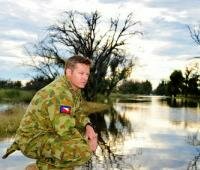
    Accelerating climate change and competition for limited supplies of water, food and energy are poised to ignite long-simmering conflicts in fragile states, monopolising the world’s military resources and hampering development efforts, security experts say. Defusing these new 21st century conflicts – or at least preparing governments and citizens to cope with them – will require a broad range of innovative interventions, a gathering at Britain’s Department for International Development (DFID) heard earlier this month.

    Image source: Images.Defence.Gov.au

    Read more »

    Canada’s Arctic Policy: Prospects for Cooperation in a Warming World

    Brian Karmazi | Central European Journal of International & Security Studies | April 2011

    Issues:Climate change, Competition over resources

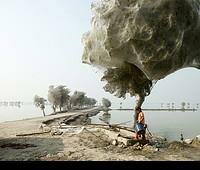
    In 1985, Oran Young anticipated that the international community was ‘entering the age of the Arctic … in which those concerned with international peace and security will urgently need to know much more about the region and in which policy makers in the Arctic rim states will become increasingly concerned.’ Young’s insights were extremely acute and much international attention is being directed to the geographic ‘North,’ where much resource wealth lies under a rapidly thinning layer of ice.

    Image source: Vishnu V

    Article source: CEJISS

    Read more »

    Climate Adaptation, Development, and Peacebuilding in Fragile States – Finding the Triple-Bottom Line

    The New Security Beat | The New Security Beat | April 2011

    Issues:Climate change, Marginalisation

    “The climate agenda goes well beyond climate,” said Dan Smith, secretary general of International Alert at a recent Wilson Center event. “In the last 60 years, at least 40 percent of all interstate conflicts have had a link to natural resources” and those that do are also twice as likely to relapse in the five years following a peace agreement, said Neil Levine, director of the Office of Conflict Management and Mitigation at USAID.

    Article source: The New Security Beat

    Image source: DfID

    Read more »

    Climate-related Displacement and Human Security in South Asia

    Susan Chaplin | Institute for Human Security Working Paper | April 2011

    Issues:Climate change, Marginalisation

    Climate-related displacement is one of the key challenges facing South Asia in the coming decades. Although there is considerable debate about the salience of the term ‘climate refugees’ and extent to which climate change is a primary cause of forced displacement, there is no doubt that large numbers of people are already having to cope with the impact of environmental changes on their livelihoods and everyday life.

    Conflict Resolution and Environmental Scarcity

    Oliver Ramsbotham, Tom Woodhouse & Hugh Miall | Polity | March 2011

    Issue:Climate change

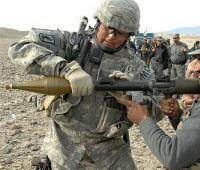
    The third, fully revised and updated, edition of Contemporary Conflict Resolution written by Oliver Ramsbotham, Tom Woodhouse and Hugh Miall has just been released and includes a chapter on ‘Environmental Conflict Resolution.’ The authors – three of the most eminent conflict resolution experts writing today – track the debates around environmental scarcity and degradation and the relationship to conflict.

    Image source: Wiley. 

    Read more »

    The US Navy in a Warming Arctic

    U.S. Naval Forces Naval Studies Board | National Academies Press | March 2011

    Issues:Climate change, Competition over resources

     A new report by the U.S. Naval Forces Naval Studies Board about the implications of climate change for the US Navy argues that the US should ratify the 1982 United Nations Convention on the Law of the Sea (UNCLOS). According to the report this will assist in addressing new issues around conflict and cooperation in the Arctic region arising from a changing climate. 

    Image source: U.S. Coast Guard

    Read more »

  • Sustainable Security

    Foreign fighting in Syria is not driven primarily by devotion to Islam, nor is it motivated mainly by socioeconomic grievances. Rather, foreign fighters join the Syrian civil war to defend their Muslim brethren. Framing the war as a threat to the Muslim (Sunni) community, transnational Islamist movements offer alternative identities and a sense of belonging for alienated people from across the Muslim world.

    In recent years the conflict in Syria has become a lodestone for young Muslims who travel to join the fight. According to estimates from the U.S. National Counterterrorism Center, and reports by The Soufan Group (TSG), foreign fighters from more than 90 countries have joined the Syrian civil war since its inception in 2011, and their numbers already exceed the rate of volunteers who went to Afghanistan, Pakistan, Iraq, Yemen or Somalia at any point in the last 20 years. While the actual figures of foreign fighters in these and other sources vary, and though we do not know how many of them actually engage in the fighting, there are consistent estimates of the numbers of volunteering fighters and the distribution of their countries of origin.

    To be sure, volunteering fighters join various parties in the complex war, like Hezbollah combatants who fight for the Syrian army and foreigners who fight for the Kurdish YPG forces, yet, the concept of foreign fighters relates here to those volunteers joining jihadi movements, mainly the Islamic State and Jabhat Fath al-Sham (formerly known as Jabhat al-Nusra) organizations. Special attention is afforded to the growing stream of European Muslims to these jihadi groups in Syria, and their potential extremist actions upon return to their home countries. However, most foreign volunteers have come from Muslim countries in the Middle East and North Africa. The recruitment process is generally conducted on an individual basis. Taking place across the world, the recruitment relies largely on social media, with videos and appeals produced in a range of languages, describing the caliphate as a utopian political venture, and providing young men and women with an adventurous trip. Salafi mosques and associations also seem to take an active role in recruiting and trafficking volunteers to fight the Syrian war in the name of Islam.

    Although by no means a new phenomenon, the causes of the widening spread of foreign fighting remain unclear. As most of these foreigners are utterly detached from the events in the countries to which they journey, and have little political and material benefit to gain from these wars, the opportunity to attain martyrdom in the next life appears to be a major appeal. Yet, Islam in and of itself is not the primary factor behind foreign fighters joining the jihad. Examination at the individual level indicates that many of those who choose to join extremist groups in Syria have only basic knowledge of Sharia. Islamic State entry forms leaked in early 2016, also demonstrate that while some characteristics of the volunteers (like age and marital status) can be traced, there are no discernible demographic and socioeconomic profiles of foreign fighters in Syria.

    An inspection of the foreign fighters’ countries of origin adds to this confusion, as the spate of volunteering warriors does not originate primarily in countries dominated by radical Islamist movements, nor is it confined to countries where economic and political conditions are the worst. Rather, foreign fighters join the Syrian civil war from countries with different profiles in terms of both the role of Islamism in socio-political life, and the political authority of the regime. Four countries are notable among the home countries of the foreign fighters in Syria: Tunisia, Saudi Arabia, Morocco and Jordan. Tunisia, where the “Arab Spring” revolt was initially ignited, has become the largest source of foreign fighters joining the jihadi groups in Syria, with roughly 3,000 Tunisian warriors recorded between 2011 and 2014; Saudi Arabia is next with estimates of 2,500 fighters during that period. On the other hand, countries like Egypt, Yemen and Sudan produced far fewer volunteering fighters.

    The role of identity

    Image (cropped) credit: Freedom House/Flickr.

    Why then do foreign fighters travel from the Muslim world to fight in Syria? Foreign fighters are motivated by the quest for identity and belonging. Their recruitment is based on religious sentiments, sparked by Islamist movements striving to defend cultural and religious values of the Muslim community. Alienated individuals who seek alternative identities and a sense of belonging find them in their transnational communities. The combination of these factors has stimulated the shift from nationalist identities to pan-Islamist orientations, promoted through a fear-provoking discourse.

    This process was coupled with the emergence of transnational jihadi networks, which carried out political activism aimed at defending the Muslim nation. Recruitment of Muslim fighters thus relies on established messaging practices, by which the recruiting groups frame distant civil conflicts as posing a direct threat to the larger transnational community. Interestingly, these messages are most effective in countries like Tunisia and Saudi Arabia where major Islamist movements are co-opted, taking part in negotiated relations with the ruling elite vis-à-vis implementing Islamic norms in socio-political life. In these countries, legal or semi-legal Islamist movements embrace relatively moderate discourses of sectarian identity, remaining pragmatic and non-violent toward the state. Under such restrained relationships, Islamist sentiments of alienated groups evolve into transnationalist inclinations.

    Alienated individuals then aim their rage and frustration at external enemies. That is, restrained relations between the state and Islamist movements at the national level may well explain the relatively large number of foreign fighters recruited from subnational regions that are alienated from the state, as these fighters see transnational jihad as a way to vent socio-political rage and Islamic sentiments that find limited local opportunities for expression.

    Possible solutions

    To counter the appeal of transnationalist messages, home countries need to establish civic identities and offer competing national narratives. Governments should encourage the inclusion of alienated groups in national discourses and strengthen their sense of belonging to the state. To be sure, the establishment of civic identities is conditioned by state effectiveness and legitimacy — it can be achieved only if the state reconstitutes its position as an institution that provides the needs of its citizens.

    Indeed, state ideology and policies also affect people’s choice to join foreign fighting. Preferring to allow troublesome elements to leave the country, some governments turn a blind eye to efforts to recruit their citizens to join transnational wars. Some countries even encourage the phenomenon. Consider for example the dual policy vis-à-vis Islamism which is well-embodied in the Saudi stance toward foreign fighting in the Syrian civil war. While actively involved in the regime’s domestic de-radicalization efforts, Saudi clerics offer contradicting messages about fighting jihad in foreign countries, with some of them openly calling upon the Muslim world to fight Bashar al-Assad’s supporters, including Syrian Alawites, Iran and Hezbollah. Egypt’s clerics, on the other hand, promote clear anti-jihadist ideology, with multiple campaigns launched by Al-Azhar to renounce the radical ideas spread among young people by groups like Islamic State. Directed by Egyptian President al-Sisi, Al-Azhar leaders hold talks with religious leaders in other countries in the region to thwart Islamic State ideology and to diminish the phenomenon of foreign fighters’ volunteering in the Syrian civil war.

    The policy implication from the multifaceted causes of foreign fighting in Syria is that governments in the Muslim world should not only raise the constrains on going to Syria but also take preventive measures including information campaigns aimed at radicalized and alienated young people, offering opportunities for local expression of their socio-political needs and encouraging their sense of belonging to the state.

    Meirav Mishali-Ram is a lecturer at Bar Ilan University. Her research interests focus on international conflict and civil war, particularly in the Middle East and South Asia. She is the author of many articles and a forthcoming book on the Arab-Israel and India-Pakistan protracted conflicts. Her most recent article on foreign fighting in Syria is available at Taylor and Francis Online: “Foreign Fighters and Transnational Jihad in Syria,” Studies in Conflict & Terrorism.

  • Global Security after the War on Terror

    Global Security after the War on Terror

    Paul Rogers | Oxford Research Group | November 2009

    Issues:Climate change, Global militarisation, Marginalisation

    In the months and years after the 9/11 attacks, a series of analyses published by Oxford Research Group offered a critical perspective on the war on terror, arguing that the forceful military response was both wrong and dangerous. It could even prove highly counterproductive to US security interests and would certainly do little to promote international peace and stability. While the response to 9/11 was readily understandable, given the appalling nature of the attacks but also the neoconservative overtones of the Bush administration, it was argued that it was deeply mistaken and would lead to a long period of war.

    This perspective has stood the test of time. Moreover, the experience of the eight years since 9/11 supports a wider ORG analysis of global security that argues that there is a need for a fundamental rethinking of those current approaches to security that focus primarily on military instruments. Instead, the major global trends of a wider socio-economic divide, mass marginalisation and environmental constraints all require an approach rooted in what is now being termed sustainable security.

    This paper examines the context of the decision to go to war after 9/11 and the anticipated results. It goes on to analyse the actual  consequences and seeks to explain why they have been so radically different to original expectations by the United States and its closest coalition partners such as the UK. The paper then updates the analysis of the major global challenges that Oxford Research Group has previously discussed and the need for a new paradigm focused on sustainable security. It concludes by assessing how the experience of the eight years that have followed the 9/11 atrocities might make a change of paradigm more likely.

    Excerpt from Global Security after the War on Terror.

     The full briefing is available here.

    Comments

    Post new comment


  • Military Aviation and the Environment: Why the Military should care

    Military Aviation and the Environment: Why the Military should care

    Ian Shields | Exclusively written for sustainablesecurity.org | September 2010

    Issues:Climate change, Competition over resources, Global militarisation

    Ian Shields writes exclusively for sustainablesecurity.org:

    Aviation has come a long way in the century or so since the Wright brothers first flew, and there can be no doubt that it has brought some great benefits: bringing people closer together, allowing (through travel) individuals to experience other places and other cultures, and permitting a greater degree of freedom. The militaries have, after a rather slow start, grasped the opportunities that airpower now represents, and no major military power would seriously consider going to war without airpower and, ideally, mastery of the airspace over their own ground forces. Furthermore, there have been many scientific advances that have benefited mankind in general whose origins were in advances in military aviation, invariably forged in the crucible of war.  Moreover, military airpower can contribute to humanitarian missions as witnessed following the floods in Pakistan, while with more precise weapons fewer civilian casualties are sustained due to aerial bombing: compare present-day Afghanistan with WWII Dresden.

    But this article is not an ethical debate about the efficacy of military airpower, it is a look at the impact that military airpower has on the environment now, and what steps need to be taken to minimise that impact. I say “minimise” because there has to be a degree of realism here: Plato said that only the dead have seen the end of war: I will assume that military aviation is here to say and it is impact reduction that we should seek rather than an unrealistic desire to end the military use of the air completely.

    The impact of the civil airline industry on the environment is well documented, but what is less well considered is the impact of the military sector. This article will identify three key areas where military aviation has a major impact on the environment, and suggest mitigation policies for each: hydro-carbon use, ground contamination and noise.

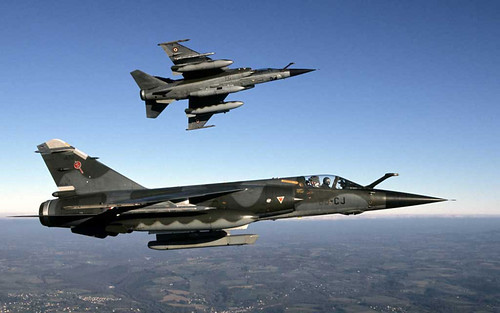
    Unsurprisingly, by far and away the greatest environmental impact that military aviation has is the use of hydro-carbons.  Military aircraft, for reasons of speed, power and response, utilise rapid-response, high power output engines for their attack and air defence aircraft.  While this gives the necessary performance, environmental considerations are low on the priority list when designing new jet engines, the polar opposite from the civilian airline market where the cost-factor has driven up fuel efficiency.  In America, the United States Air Force accounts for some 1% of the total hydro-carbon use across the country: it is, simply, a gas-guzzler.  It is unlikely that environmental, or even cost, pressures will significantly reduce the carbon footprint while military requirements will continue to demand the immediate thrust response that in turn will require the type of engines presently in use and in development.  However, the military requirement is not unchanging and a spin-off from two particular changes will be a reduction in hydro-carbon use.  The first is increasing use of simulation for flying training on the grounds of cost, efficiency and safety; note that environmental concerns are placed firmly in the second-order effects bracket.  The second, and more subtle change, is the increased use of unmanned or remotely-piloted air vehicles.  This move, on the grounds of greater endurance and lower risk to the operator, has resulted in smaller and lighter vehicles since there is no requirement for the bulky and heavy life-support equipment needed to sustain on-board aircrew.  Furthermore, with no risk to the operating crew, the platforms themselves do not have been as responsive, and engines are generally configured more for endurance than immediate response, resulting in lower hydro-carbon use (1).  For both of these changes, then, while reducing fuel use will be a benefit it will not be an intentional goal: military requirements will continue to predominate and those seeking to reduce the environmental impact of military aviation will need to be mindful of the military imperative.

    The other two concerns, though real, have far less environmental impact than hydro-carbon use.  Ground contamination falls into two categories: first, and far from unique to military aviation, is the damage done to the soil at airbases: pollution from leaked aviation fuel, oils and hydraulic fluid used to service the aircraft, de-icing fluid used on aircraft and on runways, all leech into the local water courses and contaminate the environment.  Of course, this happens on civilian airfields too, but at military bases there is the added issue of ammunition and high explosives.  Although Britain’s Royal Air Force has disposed of its stock of nuclear weapons, one wonders what the radiation levels are like at the former storage sites, especially for the early and very crude weapons.  However, there is good news here: as with other airports, environmental standards at today’s military air bases are high and increasing: the loss of Crown Immunity and raising awareness of standards are reducing such pollution markedly.  Furthermore, and praise where praise is due, the UK’s Ministry of Defence has a generally good record for cleaning up sites when they vacate them. Nevertheless, aviation requires the use of some potentially very harmful chemicals and with the rise in use of carbon-fibre (excellent in aircraft as it is strong, light and flexible; really dangerous due to the carcinogenic properties of the material if broken by, say, an accident or hostile fire) new problems are likely to be encountered.  Present legislation goes a long way to minimise this form of environmental damage, but we cannot afford to be complacent.  Second, spent ammunition, as well as the destruction it causes with its initial effect (think the effects of the Dambusters Raid of WW II) there has been marked ground contamination from used ammunition in the past.  Again, this article is not about the ethics of military airpower, but in terms of environmental impact it is good to note that Depleted Uranium is no longer used as ammunition by the RAF.  However, destruction from the air is achieved almost exclusively through kinetic effect, and it is only recently that consideration has been given both to the environmental after-effects of destruction, and to the environmental impact of the chosen weapon system.  These moves are in the right direction, and are to be welcomed, but there remains a long way to go.

    My final area of concern is with noise pollution.  While the civilian sector has invested a great deal of money in making jet engines quieter (and, of course, more fuel efficient to reduce operating costs) the same cannot be said for the engines in jet fighters and attack aircraft.  The military requirements from their engines are, as intimated earlier, different from a civilian airliner, with the need for immense thrust at any moment (achieved by the use of “after-burners”: the pumping of aviation fuel into the rear of the engine where it is ignited by the hot gases) which achieves the goal, but not only burns considerably more fuel but creates a great deal of noise.  Anyone who has ever attended an airshow where military jets are performing will understand!  The noise issue is further evident with the large, and defensible, amount of training the military pilots undertake.  Back in the 1980s low-flying jets, practicing evading enemy radar systems were a common feature of the more open space across the UK, and the source of many, many complaints for noise.  While that has reduced due to a reduced requirement to low fly and a decrease in overall military jet numbers, the increasing use of night-vision devices with the need to practice night low-flying has brought a different noise disturbance.  Furthermore, it is primarily in the helicopter and transport fleets that this increase has risen, with the inhabitants of those areas frequented by such aircraft subject to considerable night-time disturbance.  While all is done within reason to decrease the disturbance, and the military has a fair point in claiming that it must practice, much more could and should be done to reduce further the level of noise contamination.  Again, more investment in simulation would enable much more of this training to be undertaken synthetically; while live flying training will always be required, particularly in military aviation where the unexpected is more common than in the civilian sector, and while military simulators do not represent sufficient fidelity (due to under-investment), this problem is one that has a reasonable solution that should be pursued with greater vigour.

    As an adjunct to this consideration of air power, man’s attempts to reach higher, above the atmosphere and into space, continue apace with ever more countries keen to have at least their own satellites, if not launch capability.  There is no near-term likelihood of an alternative to the massive hydro-carbon use for launch: as the military – and civilian – use of space continues, the environmental bill for overcoming earth’s gravity will continue to be significant: an interesting point for the future.

    To conclude. Military aviation has a marked impact on the environment.  It is unlikely that ecological pressures alone will change the military mindset, although they can help to shape it.  There are some benefits accruing from changes in behaviour (albeit that the changes are driven by military necessity), and increased simulation in particular is having a beneficial effect.  Nevertheless, military aviation will continue to be environmentally unfriendly and efforts to reinforce good behaviour will have to continue.  But why should the military start to take its impact, particularly its use of hydro-carbons and the subsequent carbon output, seriously?  Ask any serious military man or woman about the experience of fighting, conflict, war (or whichever synonym you care to name) and they will emphatically state that they wish it could cease.  No sensible person who has experienced conflict would wish to repeat it, and all militaries wish to see a more secure world.  It is therefore ironic that carbon-generation, in which military aviation in particular excels, is clearly linked to climate change, and climate change itself threatens security and the global peace.  In seeking to deter or resolve conflict, it is possible that military aviators and aviatrix are inadvertently creating an even greater problem for the future than the ones they are presently seeking to resolve(2).

    (1) As an aside and outwith the main thrust of this article, there are marked human security concerns about the increased use of unmanned vehicles that have yet to be fully explored (see, for example,

    http://www.huffingtonpost.com/laura-colarusso/military-drones-and-the-e_b_278195.html

    (2) The UK MoD’s own Development, Concepts and Doctrine Centre has identified the security threat that climate change represents.  See the DCDC’s Global Strategic Trends Out To 2040 (and in particular pages 21 and 106):

    http://www.mod.uk/NR/rdonlyres/38651ACB-D9A9-4494-98AA-1C86433BB673/0/gst4_update9_Feb10.pdf

    About the author: Ian Shields is a retired, senior Air Force Officer and now a respected commentator on Defence and security matters, particularly with relation to Air and Space Power. He holds an MA from KCL, and MPhil from Cambridge and is presently undertaking a PhD in International Studies, also at Cambridge. He can be contacted via his web-site, www.ian-shields.co.uk

    Image source: chanelcoco872

    <!–[if gte mso 9]>

    Normal
    0

    false
    false
    false

    MicrosoftInternetExplorer4

    <![endif]–><!–[if gte mso 9]>

    <![endif]–><!–[if gte mso 10]>

    <![endif]–>

    Comments

    I had no idea how to appracoh this before-now I’m locked and loaded.

    Post new comment


  • Sustainable Security

    DU-turn? The changing political environment around toxic munitions

    Is the US backpedalling on its use of depleted uranium (DU) rounds? There are indications that the use of these highly toxic munitions could increasingly be a political liability for the US, with countries affected by DU, like Iraq, other UN Member States, and populations in contaminated areas all expressing concerns over its use and impact. But stigmatisation, although important, is not enough on its own – in order to make sustained progress on accountability and in reducing civilian harm, a broader framework that addresses all toxic remnants of war is needed.

    Read Article →

    Too Quiet on the Western Front? The Sahel-Sahara between Arab Spring and Black Spring

    While the world’s attention has been focused on the US-led military interventions in Iraq and Syria a quieter build-up of military assets has been ongoing along the newer, western front of the War on Terror as the security crises in Libya and northeast Nigeria escalate and the conflict in northern Mali proves to be far from over. In the face of revolutionary change in Burkina Faso, the efforts of outsiders to enforce an authoritarian and exclusionary status quo across the Sahel-Sahara look increasingly fragile and misdirected.

    Read Article →

    Colombia and Mexico: The Wrong Lessons from the War on Drugs

    As activists around the world participate in a Global Day of Action against criminalisation of drug use, evidence from the multi-billion dollar War on Drugs in Colombia suggests that militarized suppression of production and supply has displaced millions of people as well as the problem, not least to Mexico. The wrong lessons are being exported to Central America and beyond, but a groundswell of expert and popular opinion internationally is calling for alternative approaches to regulating the use and trade in drugs.

    Read Article →

    Beyond crime and punishment: UK non-military options in Syria

    The defeat of the UK government’s parliamentary motion on support in principle for military action against the Syrian regime means that Britain will play no part in any direct attack on Syria. What then are its options for resolving the Syrian conflict, protecting civilians and punishing those responsible for war crimes there? This article assesses what the UK can do in terms of pushing for a negotiated peace settlement and to hold accountable those responsible for using chemical weapons and any other war crimes committed during this century’s worst humanitarian crisis.

    Read Article →

  • Sustainable Security

    Resources

    Climate-related Displacement and Human Security in South Asia

    Susan Chaplin | Institute for Human Security Working Paper | April 2011

    Issues:Climate change, Marginalisation

    Climate-related displacement is one of the key challenges facing South Asia in the coming decades. Although there is considerable debate about the salience of the term ‘climate refugees’ and extent to which climate change is a primary cause of forced displacement, there is no doubt that large numbers of people are already having to cope with the impact of environmental changes on their livelihoods and everyday life.


    Transatlantic Dialogue on Climate Change and Security

    Issue:Climate change

    On February 25, 2009, the International Institute for Strategic Studies (IISS) launched the “Transatlantic Dialogue on Climate Change and Security”, funded by a grant from the European Commission, with the purpose of analyzing the impact of climate change on global security and stability.

    Crude Calculation – The Continued Lack of Transparency Over Oil in Sudan

    Issue:Competition over resources

    Persistent calls for clear and transparent information on Sudan’s oil revenues have yet to yield satisfactory information, says a new report published by Global Witness today. With a referendum on independence for southern Sudan just days away, oil sector transparency is now more important than ever to preserving the fragile peace between north and south.

    New Report on Alternatives to Militarisation in the Indian Ocean

    Issue:Global militarisation

    In the Lowy Institute’s latest Strategic Snapshot, International Security Program Associate Ashley Townshend explores the strategic dynamics between China and India in the Indian Ocean.

    Teaching Religion, Taming Rebellion? Religious Education Reform in Afghanistan

    Issues:Global militarisation, Marginalisation

    In this Peace Research Institute Oslo (PRIO) Policy Brief, Kaja Borchgrevink & Kristian Berg Harpviken explore claimed links between Taliban militancy and religious education in Afghan and Pakistani madrasas.

    Access the report online at the PRIO website

    The New Faces of Violence and War: Peace and Security Challenges

    Issue:Marginalisation

    In this recent article, Mariano Aguirre, Director of the Norwegian Peacebuilding Centre in Oslo, examines the complex and unpredictable challenges to peace and security.
    Attach PDF: 

    Development in Lao PDR: The food security paradox

    Issues:Climate change, Competition over resources

    Tags:climate change, food security, human security, Lao PDR, SDC working paper

    Food security will remain out of reach for many people, especially women and children, in the Lao People’s Democratic Republic, or Laos, if the country continues to emphasize commodities and resources development at the expense of the environment and livelihoods while ignoring global trends for food and energy. Read more »

    Arms Flows and the Conflict in Somalia

    Issue:Global militarisation

    A new SIPRI report highlights the limitations of United Nations attempts to control the flows of arms into Somalia, and the role of potential arms-supplying states.

    A Study on the Inter-Relation between Armed Conflict and Natural Resources

    Andrea Edoardo Varisco | Journal of Peace, Conflict and Development | October 2010

    Issue:Competition over resources

    The article investigates the inter-relation between armed conflict and natural resources and its implications for conflict resolution and peacebuilding.


  • Sustainable Security

    Drugs and Drones: The Crime Empire Strikes Back

    Ever advancing remote warfare technology is being increasingly used by law enforcement agencies to counter drug trafficking. In response, drug cartels are also adopting new technology to smuggle and distribute drugs. However, the technological superiority of law enforcement-military actors is also causing criminal and militant groups to adapt by employing the very opposite tactic, by resorting to highly primitive technology and methods. In turn, society is doing the same thing, adopting its own back-to-the-past response to drug trafficking and crime.

    Read Article →

    From Surveillance to Smuggling: Drones in the War on Drugs

    In Latin America drones are being used as part of the War on Drugs as both regional governments and the US are using surveillance drones to monitor drug trafficking and find smuggling routes.. However, as drones are increasingly being used by drug cartels themselves to transport drugs between countries, could Latin America find itself at the forefront of emerging drone countermeasures?

    Read Article →

    Losing control over the use of force: fully autonomous weapons systems and the international movement to ban them

    Later this month, governments will meet in Geneva to discuss lethal autonomous weapons systems. Previous talks – and growing pressure from civil society – have not yet galvanised governments into action. Meanwhile the development of these so-called “killer robots” is already being considered in military roadmaps. Their prohibition is therefore an increasingly urgent task.

    Read Article →

    Too Quiet on the Western Front? The Sahel-Sahara between Arab Spring and Black Spring

    While the world’s attention has been focused on the US-led military interventions in Iraq and Syria a quieter build-up of military assets has been ongoing along the newer, western front of the War on Terror as the security crises in Libya and northeast Nigeria escalate and the conflict in northern Mali proves to be far from over. In the face of revolutionary change in Burkina Faso, the efforts of outsiders to enforce an authoritarian and exclusionary status quo across the Sahel-Sahara look increasingly fragile and misdirected.

    Read Article →

    Drone-tocracy? Mapping the proliferation of unmanned systems

    While the US and its allies have had a monopoly on drone technology until recently, the uptake of military and civilian drones by a much wider range of state and non-state actors shows that this playing field is quickly levelling. Current international agreements on arms control and use lack efficacy in responding to the legal, ethical, strategic and political problems with military drone proliferation. The huge expansion of this technology must push the international community to adopt strong norms on the use of drones on the battlefield.

    Read Article →

  • Nuclear weapons: beyond non-proliferation?

    Nuclear weapons: beyond non-proliferation?

    Rebecca Johnson | OpenDemocracy | April 2010

    Issue:Global militarisation

    The eighth Review Conference of the 1968 Non-Proliferation Treaty (NPT) will get under way at the United Nations in New York next week.  Scheduled to run for a month, the Conference brings together top diplomats from 189 countries and over 2000 representatives of civil society to debate a range of issues relating to nuclear disarmament, security and preventing the further spread of nuclear weapons and the fissile materials that make them.

    When the Conference ends on 28th May, the outcome could be an agreed document containing substantive commitments to reduce reliance on nuclear weapons and move decisively towards their elimination, as was adopted in 2000.  Alternatively, the Conference might fail, as happened in 2005, or achieve something in between. The stakes are high, and despite some shared objectives the gulf between the objectives, intentions and expectations of the nuclear-weapon states and the majority of non-nuclear countries – especially the developing states – is still quite wide.  On past experience, how the Conference addresses the nuclear programmes in the Middle East – Israel’s as well as Iran’s – may play a critical role in whether or not the outcome is successful.  Israel, like India and Pakistan, stayed outside the NPT and developed its own nuclear arsenal, to the enduring anger of its neighbours.  In 1995, it was necessary for the NPT Conference to adopt a resolution calling for negotiations on a zone free of nuclear and other weapons of mass destruction in the Middle East. Without such a resolution, the Arab States had made clear that they would not vote for the treaty – which at that time had a 25 year time limit – to be extended indefinitely.  In 2010, the League of Arab States, backed by over 110 Non-Aligned governments under Egypt’s leadership, have made clear that they want the Review Conference to take more action to implement the 1995 Resolution on the Middle East. Others, particularly the United States, are wary of putting too much pressure on Israel, which maintains the utmost secrecy about its nuclear weapons and policies.

    President Obama’s initiatives have given renewed impetus to calls for deeper cuts in the existing nuclear arsenals and more comprehensive progress on nuclear disarmament. This year, for the first time, a majority of NPT parties will be calling for the objective of a nuclear weapons convention to be put on the negotiating agenda.  While recognising that such a comprehensive treaty to ban nuclear weapons will take time to achieve, there is renewed determination to make this possible, bringing nuclear weapons into line with biological  and chemical  weapons, both of which have been banned under comprehensive multilateral conventions.

    Just before the Conference starts there is intense speculation about the role the United States intends to play, following President Obama’s initiatives of hosting a special session of the UN Security Council to discuss nuclear weapons issues last September, inviting the leaders of 46 countries to a Nuclear Summit in Washington this April, and his signing a new strategic arms reduction treaty with President Medvedev of Russia in April –  New-START. The US Nuclear Posture Review, which was finally published in April – six months after it was first expected – gave mixed messages about US intentions. On the one hand, the Obama administration made clear their desire to reduce the role of nuclear weapons, promising not to use US nuclear weapons against non-nuclear weapon states that are NPT members and deemed to be fully complying with their obligations. However, the policy continued to assert the relevance of nuclear deterrence and left open a “narrow range of contingencies” – including attacks with conventional, biological or chemical weapons – in which the United States would be prepared to use nuclear weapons “in extreme circumstances”. Though the signing of the New-START agreement with Russia is very widely welcomed and there is considerable goodwill towards President Obama among NPT states, there are concerns that the US has still not ratified the Comprehensive Nuclear Test Ban Treaty (CTBT), despite the indispensable link between this treaty and the support of many states for indefinite extension of the NPT in 1995.

    The NPT was negotiated in the 1960s soon after the 1962 Cuban Missile Crisis nearly turned the cold war into a nuclear war.  The shock of this propelled the key governments to the negotiating table. Though many countries wanted nuclear weapons to be abolished at that time, the political conditions made that impossible.  Instead, they agreed on a non-proliferation approach to halt the further spread of nuclear weapons.  This history is critical to understanding many of the treaty-related conflicts that are likely to unfold during the Review Conference.

    Unlike previous kinds of treaties, which imposed restraints or prohibitions on all states equally, the NPT had to acknowledge that five countries had already become “nuclear-weapon states”. The core obligations therefore were that these five – Britain, China, France, the Soviet Union (now Russia) and the United States – were prohibited from transferring nuclear materials, control over nuclear weapons or know-how for nuclear weapons purposes and that they should “pursue negotiations in good faith” on nuclear disarmament. All other countries could only join the NPT as “non-nuclear weapon states”. They accepted obligations not to receive nuclear materials or know-how for nuclear weapons purposes and not to seek to develop any nuclear armaments. Along with this, the non-nuclear weapons countries agreed that the International Atomic Energy Agency would be able to inspect “safeguard” any of their civilian nuclear facilities to ensure that no materials were being diverted for weapons programmes. As an incentive to non-nuclear-weapon states to join the treaty, it was explicitly promised that they would not be prevented from developing civilian nuclear programmes; more than that, they were offered assistance to develop non-military nuclear reactors and programmes.  After the entry into force of the NPT there were further developments to strengthen the regime, including export controls imposed by suppliers of uranium and other nuclear products, nuclear-weapon-free zones – now covering the whole of Africa, Latin America and the Caribbean, the South Pacific, South-East Asia and five countries in Central Asia.

    I have covered every NPT meeting since 1994, and this one appears too close to call.  It would be a major problem for the credibility of the non-proliferation regime – and especially for the nuclear-weapon states – if the 2010 Conference were to collapse without agreement.  The fact that the 2005 Review Conference ended acrimoniously, having failed to agree on any substantive issue had less direct impact on the non-proliferation regime than some had anticipated, because it was predictable in view of the intransigent position of the Bush administration and refusal by a number of countries to adopt something much weaker than had already been agreed in 2000.  Iran and Egypt were also seen to have contributed to the 2005 deadlock, but they were clearly not the cause.

    Expectations for the 2010 Review Conference are very different, not least because of the positive measures undertaken by President Obama. Yet these could still be swamped by the regional rivalries of the Middle East or if some of the other nuclear-weapon states refuse to reaffirm commitments made in 2000 that are still a long way from being fulfilled.  At the preparatory meeting held in 2009, France and Russia were digging their heels in over some of the disarmament proposals being put forward, while China was quietly anxious about what more transparency and accountability on disarmament matters might entail. If solid agreements on nuclear disarmament and the Middle East are on the table by the fourth week then that would be sufficient incentive for significant governments to exert pressure on potential spoilers. But that might not be the case if not enough is being offered in negotiations.

    In this regard, a particularly wild card is whether the Security Council, currently chaired by Japan, will push ahead with a new sanctions resolution against Iran, as some politicians in the United States and elsewhere are demanding.  If so, then all bets for a positive NPT outcome will be off. Not only would such a sanctions resolution make Iran more likely to disrupt and block agreements in the NPT Conference, but it would also make it more difficult for other members of the Non-Aligned group of states to exert friendly persuasion on Iran to engage more constructively and not hold up agreements supported by the rest of the Non-Aligned countries.  The next four weeks will be critical for nuclear non-proliferation and security.


    Source: OpenDemocracy

    About the Author: Rebecca Johnson is Director of the Acronym Institute for Disarmament Diplomacy and a former senior advisor to the International WMD Blix Commission (2004-06)

    Image source: ricardo.martins

    Comments

    Post new comment


  • Climate Cycles Are Driving Wars, Says Study

    Climate Cycles Are Driving Wars, Says Study

    Columbia University | The Earth Institute | August 2011

    Issue:Climate change

    In the first study of its kind, researchers have linked a natural global climate cycle to periodic increases in warfare. The arrival of El Niño, which every three to seven years boosts temperatures and cuts rainfall, doubles the risk of civil wars across 90 affected tropical countries, and may help account for a fifth of worldwide conflicts during the past half-century, say the authors.

    The paper, written by an interdisciplinary team at Columbia University’s Earth Institute, appears in the current issue of the leading scientific journal Nature.

    In recent years, historians and climatologists have built evidence that past societies suffered and fell due in connection with heat or droughts that damaged agriculture and shook governments. This is the first study to make the case for such destabilization in the present day, using statistics to link global weather observations and well-documented outbreaks of violence. The study does not blame specific wars on El Niño, nor does it directly address the issue of long-term climate change. However, it raises potent questions, as many scientists think natural weather cycles will become more extreme with warming climate, and some suggest ongoing chaos in places like Somalia are already being stoked by warming climate.

    “The most important thing is that this looks at modern times, and it’s done on a global scale,” said Solomon M. Hsiang, the study’s lead author, a graduate of the Earth Institute’s Ph.D. in sustainable development. “We can speculate that a long-ago Egyptian dynasty was overthrown during a drought. That’s a specific time and place, that may be very different from today, so people might say, ‘OK, we’re immune to that now.’  This study shows a systematic pattern of global climate affecting conflict, and shows it right now.”

    The cycle known as the El Niño-Southern Oscillation, or ENSO, is a periodic warming and cooling of the tropical Pacific Ocean. This affects weather patterns across much of Africa, the Mideast, India, southeast Asia, Australia, and the Americas, where half the world’s people live. During the cool, or La Niña, phase, rain may be relatively plentiful in tropical areas; during the warmer El Niño, land temperatures rise, and rainfall declines in most affected places. Interacting with other factors including wind and temperature cycles over the other oceans, El Niño can vary dramatically in power and length. At its most intense, it brings scorching heat and multi-year droughts. (In higher latitudes, effects weaken, disappear or reverse; La Niña conditions earlier this year helped dry the U.S. Southwest and parts of east Africa.)

    The scientists tracked ENSO from 1950 to 2004 and correlated it with onsets of civil conflicts that killed more than 25 people in a given year. The data included 175 countries and 234 conflicts, over half of which each caused more than 1,000 battle-related deaths. For nations whose weather is controlled by ENSO, they found that during La Niña, the chance of civil war breaking out was about 3 percent; during El Niño, the chance doubled, to 6 percent. Countries not affected by the cycle remained at 2 percent no matter what. Overall, the team calculated that El Niño may have played a role in 21 percent of civil wars worldwide—and nearly 30 percent in those countries affected by El Niño.

    Coauthor Mark Cane, a climate scientist at Columbia’s Lamont-Doherty Earth Observatory, said that the study does not show that weather alone starts wars. “No one should take this to say that climate is our fate. Rather, this is compelling evidence that it has a measurable influence on how much people fight overall,” he said. “It is not the only factor–you have to consider politics, economics, all kinds of other things.” Cane, a climate modeler, was among the first to elucidate the mechanisms of El Niño, showing in the 1980s that its larger swings can be predicted—knowledge now used by organizations around the world to plan agriculture and relief services.

    The authors say they do not know exactly why climate feeds conflict. “But if you have social inequality, people are poor, and there are underlying tensions, it seems possible that climate can deliver the knockout punch,” said Hsiang. When crops fail, people may take up a gun simply to make a living, he said. Kyle C. Meng, a sustainable-development Ph.D. candidate and the study’s other author, pointed out that social scientists have shown that individuals often become more aggressive when temperatures rise, but he said that whether that applies to whole societies is only speculative.

    Bad weather does appear to tip poorer countries into chaos more easily; rich Australia, for instance, is controlled by ENSO, but has never seen a civil war. On the other side, Hsiang said at least two countries “jump out of the data.” In 1982, a powerful El Niño struck impoverished highland Peru, destroying crops; that year, simmering guerrilla attacks by the revolutionary Shining Path movement turned into a full-scale 20-year civil war that still sputters today. Separately, forces in southern Sudan were already facing off with the domineering north, when intense warfare broke out in the El Niño year of 1963. The insurrection abated, but flared again in 1976, another El Niño year. Then, 1983 saw a major El Niño–and the apocalyptic outbreak of more than 20 years of fighting that killed 2 million people, arguably the world’s bloodiest conflict since World War II. It culminated only this summer, when South Sudan became a separate nation; fighting continues in border areas. Hsiang said some other countries where festering conflicts have tended to blow up during El Niños include El Salvador, the Philippines and Uganda (1972); Angola, Haiti and Myanmar (1991); and Congo, Eritrea, Indonesia and Rwanda (1997).

    The idea that environment fuels violence has gained currency in the past decade, with popular books by authors like Jared Diamond, Brian Fagan and Mike Davis. Academic studies have drawn links between droughts and social collapses, including the end of the Persian Gulf’s Akkadian empire (the world’s first superpower), 6,000 years ago; the AD 800-900 fall of Mexico’s Maya civilization; centuries-long cycles of warfare within Chinese dynasties; and recent insurgencies in sub-Saharan Africa. Last year, tree-ring specialists at Lamont-Doherty Earth Observatory published a 1,000-year atlas of El Niño-related droughts; data from this pinpoints droughts coinciding with the downfall of the Angkor civilization of Cambodia around AD 1400, and the later dissolution of kingdoms in China, Vietnam, Myanmar and Thailand.

    Some scientists and historians remain unconvinced of connections between climate and violence. “The study fails to improve on our understanding of the causes of armed conflicts, as it makes no attempt to explain the reported association between ENSO cycles and conflict risk,” said Halvard Buhaug, a political scientist with the Peace Research Institute Oslo in Norway who studies the issue. “Correlation without explanation can only lead to speculation.”  Another expert, economist Marshall Burke of the University of California, Berkeley, said the authors gave “very convincing evidence” of a connection. But, he said, the question of how overall climate change might play out remains. “People may respond differently to short-run shocks than they do to longer-run changes in average temperature and precipitation,” he said. He called the study “a useful and illuminating basis for future work.”

    The Earth Institute’s Ph.D. in sustainable development program is run jointly with Columbia’s School of International and Public Affairs, and the university’s Graduate School of Arts and Sciences.

    Image source: The U.S. National Archives

    Article source: The Earth Institute

    Comments

    Post new comment


  • Sustainable Security

    ‘Cultural peacekeeping’ has emerged as a new task for international peace operations. The inclusion of a cultural component in the mandates of peacekeeping interventions is a desirable move. But it is an extremely complex political-military exercise. 

    We are currently witnessing the most dramatic attack on cultural properties since the large-scale destruction and misappropriation of cultural heritage seen in World War II. Since summer 2014, Daesh has deliberately and systematically damaged, destroyed and looted significant portions of the exceptional cultural heritage of Mesopotamia, the ‘cradle of civilization’, from Mosul to Niniveh, from Nimrud to Khorsabad, from Hatra to Palmyra.

    Reacting to Daesh’s iconoclastic fury, the UNESCO 38th General Conference of Paris, 3–18 November 2015, passed a resolution to establish – adopting an effective slogan often used by both media and diplomats – the ‘Blue Helmets for Culture’. Building on the positive experience of the ‘United Nations Multidimensional Integrated Stabilization Mission in Mali’ (MINUSMA), which was mandated to ensure the safeguarding of cultural heritage sites in collaboration with UNESCO, the resolution adopts a new strategy founded on two key elements: the inclusion of a cultural component in the mandates of peacekeeping interventions where cultural heritage is at risk; the creation of a task force of experts in the protection of cultural heritage.

    As a direct contribution to the actualization of the resolution, UNESCO and the Italian Government signed an agreement on 16 February 2016 in Rome for the establishment of the first task force. Named ‘Unite4Heritage’, the task force is largely based on the Italian Carabinieri ‘Command for the Protection of Cultural Heritage’ (Comando Carabinieri Tutela Patrimonio Culturale ), which is internationally renowned as of the most competent and effective military policing force for protecting works of art and archaeological property. The Director-General of UNESCO, Irina Bokova, urged other countries to establish and make available similarly specialized units to strengthen and enforce the existing cultural heritage protection regime, expressing her confidence that ‘this Task Force, and the agreement signed in Rome with the Italian Government, will become a model for other countries’. The urgency of the issue was also recently taken up by the UN Security Council, which approved Resolution 2437 on 24 March 2017, providing for the engagement of a cultural component in UN peace-keeping missions.

    While the process of implementing and defining the operational aspects of the Blue Helmets for Culture’s initiative is underway, this article provides an initial assessment of the politico-military significance of ‘cultural peacekeeping’ (CPK) as a new task for international peace operations, considering both its strengths and weaknesses, opportunities and challenges. Still lacking actual case studies, this exercise is highly theoretical, but it is solidly grounded in the literature on heritage studies, peacekeeping, terrorism and armed violence.

    Opportunities and prospects

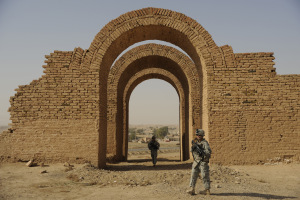
    Image credit: US Army.

    CPK can serve multiple and interrelated cultural, political and military objectives.

    First of all, it is hoped that CPK will contribute to protecting cultural heritage from damage and destruction by helping the enforcement of the international protection regime and, in particular, giving teeth to the implementation of the 1954 ‘Convention for the Protection of Cultural Property in the Event of Armed Conflict’, which has shown many inadequacies and proven to be minimally effective and difficult to enforce as political and legal instrument.

    Secondly, the integration of cultural heritage protection in the mandate of a peacekeeping mission can have a significant impact on the mission’s broader immediate and long-term objectives. On the ground, the mission’s efforts to save cultural heritage can help to ‘win the hearts and minds’ of local populations and increase their acceptance and support for the peacekeepers. CPK can also contribute to cutting off the funding generated by looting and selling artefacts, which fuels and prolongs conflicts by providing revenues for armed groups and terrorists. At the end of hostilities, it can help to ensure quicker recovery and stabilization by promoting societal and economic regeneration for a long-lasting peace.

    From a broader political perspective, CPK can gather and sustain international support and mobilization for the mission. Cultural heritage is widely appreciated, respected and prized for its universal value, and its protection and preservation are deemed the collective responsibility of the entire international community. It follows that engagement in CPK has the potential to win support more easily and with less political controversy than other types of international interventions. It can be presented (and ‘marketed’) to an internal and/or external audience as an intervention for a very noble, principled and apolitical goal that unites the international community in a ‘war for civilization’ against extremism.

    Finally, CPK has the merit of simplifying very complex realities and issues, which is again key in building political and public support for an international intervention and for clearly defining its objectives. While sorting out and taking sides in the complex geopolitical, religious, and ethnic Middle Eastern dynamics is a very difficult undertaking, understanding what an ancient cultural item or site is, and siding against those who want to destroy it, is rather straightforward and politically less controversial.

    Challenges and risks

    In theory, the proposed integration of the protection of cultural heritage and cultural diversity in peacekeeping mandates can be considered an important and welcomed novelty with multiple strengths. In practice CPK is, however, bound to incur serious challenges and risks that should not be underestimated.

    At the military and operational level, it should be emphasized that cultural heritage sites often have important military and strategic value, which is one of the reasons they become deliberate targets during armed conflicts. Many cultural heritage sites are not ‘soft targets’ but represent highly valued and militarily sensitive objectives for the warring parties. If CPK is deployed as a preventative mission in precarious pre-conflict situations or in post-conflict situations even before complete stability has been achieved, those sites will require heavily armed and mandated international forces for their protection. When intervening in such a context, an international operation might find it difficult to strike a balance between military necessity and its mandate of cultural protection.

    Moreover, if a mandate for cultural heritage protection can help mobilize support for international intervention, it is equally true that the moment things go wrong and the mission starts suffering casualties, public support could evaporate very rapidly, which could promptly rescind its initial backing with the argument that the protection of cultural heritage is not worth the lives of the intervening country’s ‘ boys’ and that those ‘ boys’ should immediately brought back home.

    Most importantly, CPK can entail the grave risk of transforming from a ‘civilisation war’  to save the world’ s cultural heritage into a ‘clash of civilisations’. If CPK is not well planned or wrong decisions are made, a group such as Daesh could exploit the situation to its own advantage by presenting the well-intentioned protection of cultural heritage in terms of a war against Islam. Through a well-orchestrated propaganda campaign, ‘cultural peacekeepers’ could be depicted as ‘invaders’ if not ‘crusaders’ who occupy and violate the sacred soil of the Prophet. At the very least, CPK can risk the accusation of ‘mission civilisatrice’ or ‘civilizing mission’, especially if it involves Western contingents whose past history of colonial rule, imperial domination, and ‘colonial archaeology’ which will be promptly highlighted by adversaries.

    Again, deployment of ‘boots on the ground’, and especially ‘Western boots’, may serve Daehs’s military strategy. It is not a coincidence that Western countries and especially the United States have to date strongly resisted sending ground troops to Syria, fearing being bogged down in another costly and extended Middle Eastern military fiasco, which is what Daesh hopes to achieve. The dilemma is that ground forces are indispensable to protecting cultural heritage ‘in situ’, be it in Syria, Iraq or Libya.

    Another non-trivial problem is the inherent difficulty of maintaining civil/military relations. CPK will necessarily involve extended cooperation between military and civilian personnel, such as archaeologists, historians, and anthropologists. However, cooperation can be particularly challenging between diverse working communities with very different educational backgrounds, mindsets, training, sensibilities, work habits and customs. On the ground, cooperation between warriors, peacekeepers, archaeologists and humanitarians may turn into a very complex exercise, and their respective primary concerns may become hard to reconcile.

    A risky but necessary business

    In conclusion, CPK should be not be mistaken as a minor, light and inexpensive international intervention (in all senses, in economic terms and in terms of possible human losses). Although badly needed, CPK is an extremely complex and hazardous major politico-military exercise that can face serious challenges and risks of unintended consequences. Before becoming involved in any CPK mission, a sound, realistic and legally accurate assessment is needed along with planning of the mission’s objectives and the capabilities required to meet those objectives. This would avoid gaps between the mandates and the reality on the ground, which could very negatively impact the mission’s execution.

    Paolo Foradori is Associate Professor of Political Science at the School of International Studies, University of Trento, Italy. He previously worked with the United Nations in Russia, Kosovo, and Afghanistan. This paper extensively draws from his recent articles: ‘Protecting cultural heritage during armed conflict: the Italian contribution to ‘cultural peacekeeping’’, Modern Italy (2017) and (with Paolo Rosa) ‘Expanding the peacekeeping agenda. The protection of cultural heritage in war-torn societies’, Global Change, Peace and Security (2017).