Blog

  • Peacebuilding IN Europe? An analysis of how European peacebuilding efforts overseas could apply closer to home
    Peacebuilding IN Europe? An analysis of how European peacebuilding efforts overseas could apply closer to home

    Dan Smith | Dan Smith’s Blog | February 2012

    Issue:Marginalisation

    EU attitudes to peacebuilding have always assumed that it essentially applies to other people, who live outside of the Union’s developed borders. However, since the financial crisis of 2008 and the austerity that followed, the certainties underpinning western models of aid and conflict-resolution have taken a knock from the riots and protest movements shaking cities from Athens to London. While not equating the various reactions and levels of violence across the continent, Dan Smith suggests in both this piece and a follow-up post that EU peacebuilding efforts would be well-directed inwards. In particular, he highlights a growing alienation from professionalised political systems, and how a very small number of actors can cause havoc against a background of marginalisation, both real and perceived. He therefore recommends that we focus our attention on the context against which people act, rather than on the actors themselves, because it is only through ‘mobilising social energy for building peace’ that individuals can find a place in society and disaffection can be tackled at its root cause.


    In 2001 – a different time and a different world – the EU Gothenburg summit agreed to make the prevention of violent conflict a priority for the EU. Measured by money, it’s now the world’s biggest player in peacebuilding. But look around Europe now and we can ask, should peacebuilding also start to be a priority inside the EU?
    The EU’s peacebuilding

    Since 2001 the European Commission has spent €7.7 billion on conflict prevention and peacebuilding, more than any government or other international organisation and about 10 per cent of its total spending on external aid.

    A recent evaluation concluded the money has been well spent overall, albeit with room for improvement – the sort of balanced conclusion you expect from a review like that. The report finds that the EC has undertaken and supported some pretty good work in places as different as the western Balkans, the DRC, Nepal and Central Asia. Not everything works, but nothing has been done that is actually harmful, much that is distinctly beneficial to the common good, and important lessons have been learned.
    That was then

    The Gothenburg decision was taken at a different time. The Euro and the big enlargement had been decided. Confidence, expansiveness and optimism were in the air. If confidence was shaken by 9/11, the beginning of “the war on terror” and the start of the build-up to invasion of Iraq, nonetheless it was an era of growth and of projecting the EU’s core mission of enlarging the zone of peace to far flung corners of the world.

    But in 2007 came the sub-prime crisis in the US and the start of the international credit crunch. In September 2008 Lehman Brothers went down and the world started to be very, very different.
    Tragedy and reflection

    In fact, for my own organisation, International Alert, things had already started to change. In 2005, the day after London was awarded the Olympic Games of 2012, the city was visited by the worst terrorism it has experienced, far more lethal than anything inflicted in 25 years of war by the Provisional IRA – in four bomb attacks (one on a bus and three on underground trains), 52 people were killed (plus the four bombers) and over 700 severely injured. The city was quiet for the next few days and people worried about whether it was safe to use the bus and tube and go to work.  Two weeks later four more bombs were discovered before they detonated.

    In that over-heated atmosphere, on the next day, a policeman shot and killed a young Brazilian, Jean Charles de Menezes. It has since been proven that he had no connection with terror groups of any kind. It has been proven that the police had no basis in fact for following him. They panicked and a young man lost his life. I reflected on this and its implications in a post on the day a permanent memorial was dedicated to his memory.

    For me and for colleagues at Alert, this awful incident was very immediate: our office happens to be five minutes’ walk from the station where Menezes was shot. Like many others we reflected on these events and we wondered whether skills we have learned in trying to build peace in Africa, Eurasia and Asia since we started up in 1986 might be useful in Britain. We made contact with groups working on community conflict and cohesion and compared notes. Might what we do in Beirut, Monrovia or Kathmandu have some bearing, some relevance in Bradford, south London or Bristol?

    The answer was yes (and we now have a programme of activities in the UK), not because we have a magic technique but because we start with a dispassionate analysis of the context of conflict and use a vision-based approach. We don’t only start with ‘what’s the problem and how do we handle it?’ – but with ‘where do we want to be in x years’ time?
    This is now

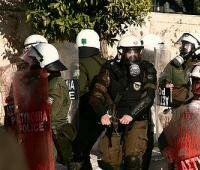
    In the summer of 2011, England had its riots. We look around Europe and we see different sorts of disaffection and action: the anger in the anti-austerity, anti-government riots in Greece, the thin patina that people tell me stands between order and a similarly angry chaos in Ireland, the youth movements in Spain, the simmering anger in Italy. Even in a country self-proclaimed by an opinion survey to be among the 2two or three happiest in the world* – Denmark’s capital has been scarred by school-burning and gang warfare in the last couple of years. And at the psychotic and extreme end,  Breivik’s monstrous massacre on the island of Utoya in July 2011 and the discovery of a series of murders of immigrants by right-wing extremists in Germany;

    I am not equating these events. This atmosphere of dissatisfaction and violence does not arise everywhere from the same source, the same social groups or the same politics.

    But they are nonetheless connected, not by motive or participants, but by the political and social landscape in which they occur.

    It is a landscape where people’s sense of social belonging and engagement in the common good is challenged as never before. It is challenged by economics as job opportunities and the belief in a better future diminish before our eyes. Politics is professionalized and in most countries is ever more distant from growing segments of the population, especially among the poor and among the young. Ordinary people feel they are paying the price for mistakes they did not make while those who had the biggest part in the errors in politics and finance are paying a much smaller price.

    Some people direct their anger about the injustices at the political establishment, some at the finance world and some – in their confusion at this diminished sense of belonging – against immigrants. But even when the anger is mis-targeted and even when the accusations are false, the feelings that lie behind are real. And sometimes lethal.
    Bringing peacebuilding home

    How might a peacebuilding approach look? Standard procedure for working in fragile states – rule number one – is to start with context. Which means starting with questions and an open mind.

    This makes it very difficult for politicians to bring a peacebuilding approach to their own home patch. At home, they are supposed to know the answers. That’s what we have politicians for – and then we get to choose which answers we like best. Or who answers best, which is not always the same thing.

    A peacebuilding approach would not look necessarily at the numbers involved in each action, even the riots. It is a staple of peacebuilding to acknowledge that in countries with a population of tens of millions, it only takes a few hundred unemployed young men, some leaders ready to act, and access to weapons – and you have a war. The IRA’s active forces probably numbered well below 1,000 throughout three decades of war in and over Northern Ireland.

    No, rather than the numbers, it’s the background that counts, the social, political and economic context in which this occurs. And the question is whether that background fosters peaceful relations or not.

    Last year the UK government brought out its Building Stability Overseas Strategy to guide its approach to peacebuilding in developing countries. Here is some of its analysis, full of resonance for Europe’s current social and political challenges. I have already drawn on it for clues for its resonance for the English riots. But its clues about what questions to ask are so useful it’s worth repeating them (but hurdle over the bullet points if you remember them) (and also get a life – come on).

        * ‘The stability we are seeking to support … is built on the consent of the population, is resilient and flexible in the face of shocks, and can evolve over time as the context changes…
        * ‘Effective local politics and strong mechanisms which weave people into the fabric of decision-making – such as civil society, the media, the unions, and business associations – also have a crucial role to play.
        * ‘All sections of the population need to feel they are part of the warp and weft of society, including women, young people and different ethnic and religious groups.
        * ‘Jobs, economic opportunity and wealth creation are critical to stability. Lack of economic opportunity is cited by citizens as a cause of conflict, and is often the most significant reason why young people join gangs…
        * ‘Without growth and employment, it is impossible to meet the basic needs of the population, and people’s aspirations for a better life for themselves and their children…
        * ‘While an inclusive and legitimate political system is a requisite for stability, confidence in the future comes when people see that their needs and expectations are being met on the ground.’

    On the basis of this kind of analysis, you would look at social inclusion/exclusion and marginalisation; at the degree of hope and confidence in the future – or their opposites; at our political institutions – both national and local; at the condition of the economy and whether economic policies are creating opportunities; and at the space for civil society and for bodies such as business associations and trades unions to represent people, articulate concerns and influence politics.
    How peacebuilding at home would look

    Peacebuilding looks different from one country to the next. But the golden thread that connects it all, expressed in abstract terms, is mobilising social energy for building peace. We work out what form this will take based on need, opportunity and ability in the country where we’re working: police reform, starting new institutions to promote transparency, cultural peace festivals, women’s forums, joint  micro-investment projects involving genocide victims and perpetrators in Rwanda, getting multinationals and community organisations round the table together, communications across the conflict lines, getting conflict-divided communities to cooperate on adaptation to climate change – and much more. Consistently, the theme is people coming together, their energy becoming synergy.

    In our atomised societies, bringing people together, asking questions, listening carefully for answers, and shaping common actions: never in the past 60 years has there been such a shortage of this, never has it been more needed.

    Growing youth unemployment is causing hurt and anger that a return to economic growth will not be enough to calm. Something else is needed too. It really does seem time to expand the mandate of peacebuilding to include the EU countries themselves.

    ___________________________

    * Denmark was ranked top in 2010 in a Gallup poll reported by Forbes in 2010 but more recently may have been shaded out by Norway.


    Article Source: Dan Smith’s Blog

    Image Source: how will i ever

    Comments

    Post new comment


  • Space: the final frontier of Sino-US rivalry?

    Space: the final frontier of Sino-US rivalry?

    Sahiba Trivedi | openDemocracy | June 2011

    Issue:Global militarisation

    China’s development of a space programme threatens to increase Sino-US tension as the latter’s dominance of space, with all its military and commercial potential, is undermined.

    China’s sky-high space ambitions have the potential to upset the current world order. Within the coming decade, China may become capable of challenging America’s dominance over space and its monopoly over global navigational systems.

    Over the past few years, China has engaged in completing high-profile, grand projects like high-speed rail, the world’s biggest airport terminal (since overtaken by Dubai) and the 2008 Beijing Olympics. Its space programme, like all else, is a matter of Chinese prestige. On successful completion, it will be yet another grand feather in China’s cap signalling its ambition of becoming a world power.

    China’s ambitious space programme has three tracks. Track one is the setting up of China’s own space station. The Chinese were successful in launching their first astronaut or taikonaut into space in 2003. Since then, China’s space programme has witnessed major breakthroughs. By summer 2011, it plans to launch its first unmanned space module called ‘Tiangong – 1’. The ‘Shenzhou – 8’, scheduled for later this year (2011), will attempt to dock with the ‘Tiangong – 1’. Both these launches are the initial stages of Chinese plans for setting up a space station by 2015. Once its space station is completed, China will become the third country in the world, after Russia and the US to do so with indigenous technology.

    The second track is China’s lunar ambitions, scheduled to be carried out over three phases. The first phase of this was successfully completed in October 2010 with the launch of the “Chang’e – 2” lunar orbiter. By 2020, China could actually land its first astronaut on the moon. The third track of its space programme involves the development of a Chinese global navigational system called ‘Beidou’. Until now, the US has had a monopoly over navigation systems with its global positioning system (GPS). China aims to make ‘Beidou’ available to Asia-Pacific by 2012, which will go global by 2020.

    China’s programme could have repercussions for the Sino-US relationship. Chinese President Hu Jintao’s recent US visit resulted in a number of trade and investment deals being inked between the two countries. However, space was not one of them even though according to Washington, the 4 main areas of potential cooperation with China include space alongside cyber-security, missile defense and nuclear weapons. But since mutual trust is important for any kind of cooperation between the two nations, space is a ‘no-go’.

    The US and Chinese space programmes cannot be compared directly. The American programme precedes China’s by at least 40 years and China has yet to land its first man on moon. The US satellite and spacecraft technology is still years ahead of China. But China is on the fast track right now. In 2011 alone, China aims to put more than twenty vehicles into space. Compared to this, the US space programme is in a state of inertia. It has had to scrap its ‘Constellation Program’ since the struggling American economy cannot afford the huge price tag attached to the programme at present.

    Details of the Chinese space programme remain undisclosed and even its civilian component is run primarily by its military. For the US, this limits strategic cooperation to a large extent. The US is also wary of China’s growing military ambitions. China has recently tested its first stealth fighter aircraft. Since space technology almost always has military uses like missile development and remote monitoring and control, it is likely that a successful space programme in China would bolster its military and naval prowess. Hence, the US is clearly uneasy about the programme even though the administration has downplayed reports of China’s goal of a manned moon mission.  

    For China, the US skepticism over its space programme as well as its ban on high-tech exports to China is a hurdle to cooperation in space. The navigational system ‘Beidou’ is crucial for the Chinese military as presently it has to depend on the US GPS. The Chinese fear is that this GPS could be blocked or manipulated in case of a conflict.

    The US is also jittery because of fears of technology proliferation since China’s allies include countries like Pakistan, Iran and North Korea. Supremacy in space would also aid China in elevating it to the status of a global superpower. Commercially too, an advanced space programme could eventually result in China being first in the race to extract lunar resources like uranium and titanium.

    Over the next few years, it is unlikely that the speed of China’s progress in its space programme will go down. Also, as it achieves its goals, China’s programme will definitely make many countries around the world nervous. Hence, with each of China’s successes, the world will see other countries taking frantic action to catch up with it. It is also possible that with a robust and thriving space programme in its kitty, China may be the next nation to be included in International Space Station (ISS). Such a situation may lessen the atmosphere of mutual suspicion to a certain degree.

    Image source: Matthew Simantov

    Article source: openDemocracy

    Comments

    Post new comment


  • Sustainable Security

  • A Study on the Inter-Relation between Armed Conflict and Natural Resources

    A Study on the Inter-Relation between Armed Conflict and Natural Resources

    Andrea Edoardo Varisco | Journal of Peace, Conflict and Development | October 2010

    Issue:Competition over resources

    The article investigates the inter-relation between armed conflict and natural resources and its implications for conflict resolution and peacebuilding.
    Since changing the natural and geographical characteristics of natural resources is almost impossible, the article argues that conflict resolution and peacebuilding policies should be aimed to reduce those political, societal and economic situations that, if inter-related with the presence of natural resources in a country, can affect armed conflicts. The analysis discusses how the presence of natural resources should be addressed during the resolution of a conflict and should be considered during the post-conflict peacebuilding phase. Finally, it tries to identify how international actors can have an effective role in conflict resolution and peacebuilding when natural resources are at stake.

    Article source: Journal of Peace, Conflict and Development

    Image source: Tim Pearce

  • Sustainable Security

    Unarmed civilian peacekeeping represents both a practical and compassionate response to suffering and violence and challenges the conventional view that peacekeeping can only be effective through military measures.


    What is unarmed civilian peacekeeping?

    Unarmed civilian peacekeeping, also referred to as unarmed civilian protection (UCP), fields trained civilians using unarmed and other nonviolent methods to; protect other civilians from violence, deter armed actors, support local efforts to build peace, and maintain human rights. It challenges the assumption that peacekeeping and civilian protection requires the military and the use of weapons. Over the past 35 years, across the world, unarmed civilian peacekeepers have saved lives and enabled communities to stay at home rather than be displaced, made peace and human rights work more possible, involved more people and taken place in a wider area. UCP includes living with, and in, communities affected by violence, which supports the re-establishment of relationships and communication across divided communities. UCP is a visible, well known and often international presence which deters threats of violence and engages with armed actors about the protection of civilians.

    The term UCP describes a set of activities that civilians undertake including (but not limited to) accompaniment, presence, rumor control, community security meetings, securing safe passage and monitoring (see Schweitzer 2010).

    Why is it important?

    UCP is important because millions of people need protection from violence and human rights abuses across the world, and UCP provides an effective, less costly, way of protecting them. One core element of effectiveness is building good relationships, and Furnari has shown that relationships are considered a critical tool by all peacekeepers.

    UCP challenges the assumption that peacekeeping must be carried out by military actors and is reliant on the use of force by demonstrating, in many contexts and over 35 years, that violence can be prevented and deterred by using nonviolence. We know that this work challenges a widespread assumption that violence will only yield to violence because it demonstrates that violence and threats of violence can be tackled by unarmed trained civilians. This doesn’t mean that UCP will work everywhere. As with all peacekeeping, it works because the armed actors acknowledge the presence of the peacekeepers and, to a certain extent, care about the impact of their actions. Military peacekeeping faces the same challenge.

    UCP is separate to other actors because it does not bring humanitarian aid nor conflict resolution solutions. By maintaining the focus on violence, asking for help from unarmed civilian peacekeepers isn’t related to getting housing or aid, but it is about focusing on security, safety and the creation of mechanisms which will prevent children being abducted, will prevent retaliation attacks by controlling rumors, will ensure community leaders talk to each other to send out a message of peace, or because they request accompaniment to report human rights abuses.” (Schweitzer and Julian 2015)

    How does UCP work?

    nonviolent

    Image by Nonviolent Peaceforce/Flickr.

    UCP is possible when the team members are very visible (a constant presence and observing is known to affect the way armed actors behave) and are known by, and know, everyone involved in the violence and conflict including civil society, businesses, armed actors, peace groups, mothers, youth groups, government, etc. The tools of an unarmed peacekeeper are being well known and their role being understood clearly, a phone so they are able to contact people should anything happen and be easily contacted, a camera to record events, a safe space people can visit, and resourcefulness to keep finding ways to prevent violence. Unarmed peacekeepers live and work with the people they are protecting (not in military barracks) which means they learn about existing community mechanisms and makes them accessible and able to provide a safe space in which new committees, training or meetings can take place.

    There are three main theories explaining how UCP works.

    • Firstly, the unarmed accompaniment by, and presence of, international peace teams deters armed actors from carrying out threats of violence. It is well known that observing armed actors deters them from carrying out violence and it has been used to protect human rights defenders in Colombia by Peace Brigades International (PBI) for 30 years, and none of the human rights defenders receiving protection have been killed, and they have been able to expand their work and support many more in understanding their human rights.
    • The second approach is proactive presence where the unarmed civilians actively seek out the armed actors, and engage with them about their activities and the way they can reduce harm to civilians. This might involve dialogue, training on human rights, being able to contact commanders when early warning signs indicate violence is imminent. It has been used by Nonviolent Peaceforce in Mindanao and South Sudan.
    • The final approach is relationship building. This is identified by Ellen Furnari as an approach that all peacekeepers (armed and unarmed) believe underpins the success of peacekeeping. By building stronger relationships between stakeholders it creates the web that can rebuild trust and peace communities.

    All of these are used together and in every place where UCP is used around the world it is always context specific. It is adapted and developed by the people who work on the ground.

    How do we know it works?

    Over 35 years there have been team reports, evaluations, research and stories which show that the work and protective presence of unarmed, trained civilians have saved people’s lives and prevented violence. For example in Mindanao the Nonviolent Peaceforce international protection team were a part of the official ceasefire monitoring process and have, in part, been credited with the success of the ceasefire lasting because the local community were very involved, good relationships were established and because the unarmed peacekeepers live in the affected communities, they are able to respond very quickly to violations and investigate incidents. In Guatemala, PBI created space for human rights defenders to work more widely with people because they could travel to remote areas. Accompaniment deters the violence but the work is led by the local people.

    In South Sudan IDP’s have been protected in their camps through the patrolling and interpositioning of unarmed civilian peacekeepers, including unarmed peacekeepers refusing to stand aside when threatened with a gun and saving women and children inside a tent. Women who we’re being raped by soldiers were protected by accompanying the women as they collected water and the commanders of the soldiers were engaged.

    In Sri Lanka in 2008 in Valaichennai violence was prevented from spreading when networks and re-established relationships meant that opposing groups refused to allow the other to be bombed in an emerging dispute. The Nonviolent Peaceforce UCP team had been Valaichennai for 5 years and built up relationships with a group of traders representing different conflict groups. In previous years, when violence flared up in a nearby town it had spread to Valaichennai. In previous events one group of traders shut their shops when they were warned about attacks on the others, meaning attacks on the other side didn’t harm them. This time the traders agreed that if they were warned to shut their shops, all of them would remain open instead, and this action, combined with the presence of unarmed civilian peacekeepers on the street, the UCP team were able to ensure that rumours were controlled and leaders of the armed groups were kept informed about the action which stopped the violence spreading and threats issues to people and livelihoods.

    The growth of UCP in policy and practice

    As well as the local impact on individuals and communities UCP has been discussed in high level political and policy arenas. The High level panel report on Peace Operations includes the recognition that unarmed strategies must be considered. The UN Women Global report specifically includes the benefits of UCP, and the sub-committee on civil crisis management of the German Parliament held an expert hearing on UCP in 2016. UCP is now taught at UNITAR and at universities in the UK, Canada and the USA.

    As the International Community (in its broadest sense) seek innovative solutions to address the ways in which conflict and violence are entwined with global challenges of poverty and climate change, UCP is creating an alternative paradigm for the ways in which we engage with armed actors and understand the cycle of violence, outside of the military. UCP has steadily grown over the past decades and there is now a research agenda and growing interest in policy, so it’s use is expected to increase. For example the newly established international UCP Research Network links established and new researchers in this field and have their next face to face meeting in June 2017.

    UCP is a form of peacekeeping which causes us to question our assumption that peacekeeping is a military activity. If we are serious about preventing violence and protection of civilians we need to have a range of tools available to us. UCP shows that armed actors are susceptible to the presence of trained unarmed civilians and will change their behaviour, that communities understand what protection is required and that we do not need the military and weapons in order to ‘keep the peace’. UCP offers an approach which challenges the increasing focus on the need for ‘robust’ peacekeeping and shows that we do have alternatives.

    Further reading and information

    Wielding Nonviolence (2016) by Ellen Furnari (Editor). This book is collected research on case studies of South Sudan, Israel-Palestine, Colombia and Mindanao.

    Organisations practicising UCP

    There is a continuum of organisations, from an unarmed military, governmental organisation (OSCE) and civil society. The core innovation and development of UCP has taken place in civil society and here are nine main organisations whose work fits the two principles of nonviolence.This list is not exhaustive and does not include national and local projects. The full extent of UCP practice is not yet known, but anecdotal information indicates many communities create self-protection mechanisms.

    Peace Brigades International

    Nonviolent Peaceforce

    Meta Peace Team

    Witness for Peace

    EAPPI

    Operation Dove

    Fellowship of Reconciliation

    Swedish FoR

    Christian Peacemakers team

    Guatemala Accompaniment Project

    Dr Rachel Julian has been working on UCP for 15 years with Nonviolent Peaceforce, as researcher, facilitator on the course by UNITAR and has presented on UCP internationally. She is Senior Lecturer in Peace Studies at Leeds Beckett University.

  • Sustainable Security

    The announcement of fresh counter-terrorism powers in the UK follows assertions that returning foreign fighters present a substantial new threat to national security. But these powers may be counter-productive in the long term, risking a legacy of injustice that will only exacerbate the political tensions of the War on Terror.

    The Counter-terrorism and Security Bill announced in the UK in November includes new powers aiming to limit the flow of people travelling to train and fight with certain rebel groups in Syria and Iraq. The proposals, due to be rushed onto the statute book in January, include the extension of controversial powers to disrupt travel and strip citizenship from terrorism suspects. Life sentences for a greater range of terror offences, including training, are also proposed. The British bill follows a US-drafted UN Security Council resolution to criminalise al-Qaida or Islamic State (IS)-linked foreign fighters which was adopted in November. Similar measures are being debated in other European countries and Australia.

    The reason for this wave of legislation? On the back of reports of unprecedented numbers of foreigners travelling to fight in the Syrian conflict, there has been a near-universal consensus amongst the security and intelligence community that returnees present a heightened national security threat. Returning foreign fighters, it is feared, will be networked, skilled up, and angry. The threat of political violence is ‘inevitable’, according to senior EU counter terrorism officials.

    Despite these fears, there is little in the way of a historical precedent in the UK to indicate that returning foreign fighters do represent an increased national security threat. The lack of evidence to support these claims is one of several legal and practical difficulties. Existing laws are already being used to criminalise foreign fighters in Syria’s conflict. The overwhelming application of such laws to Muslim communities has raised concerns that the legal principle of parity before the law is at risk. There is also a lack of accountability and oversight of these cases due to the use of secret evidence.

    The long term efficacy of such measures is therefore questionable. They may be a distraction from the underlying dynamics driving political violence, which are known to relate primarily to grievances over foreign policy. The abandonment of the principles of justice and equity before the law are likely to exacerbate resentment and the perception that the West is ‘at war with Islam’. The UK’s counter-terrorism policies may be creating a legacy of injustice that risks exacerbating the underlying political antagonisms of the War on Terror.

    Threat level: Severe?

    In response to the risk posed by returning foreign fighters, the UK’s terrorism threat level was again raised to ‘severe’ in late August. Although exact figures are not known, the number of those who have travelled from the UK to fight in the Syrian conflict is estimated to be at least 500 since 2011. The extent to which the Syrian conflict has mobilised fighters from Europe is clearly significant: key to this is the ability of groups such as IS to attract recruits via its propaganda films and social media activities conducted in European languages.

    But not all those who have gone to fight are with IS. The reality of the Syrian conflict is that there are over 2,000 fighting groups in Syria, including some with affiliation to al-Qaida. Little is known about group affiliations of the UK’s foreign fighters. Even individuals that are fighting with proscribed organisations, such as Islamic State or Jabhat al-Nusra, will have varying personal affiliations. Primary source reports collected by journalists and advocacy groups indicate that the primary motivation for those going to fight is a moral duty to fight the Assad regime (See for example, ‘Blowback: Foreign Fighters and the Threat they Pose’, CAGE, July 2014; ‘Joining ISIS: My Meeting with Aseel Muthana’, Huffington Post, 25 June 2014; ‘From Portsmouth to Kobane: the British jihadis fighting for Isis’, New Statesman, 6 November 2014). The reports suggest that, partly due to practical reasons, certain larger groups with more resources such as IS have absorbed the most foreigners. One of these reasons is that some other groups’ vetting procedures present a barrier to foreigners wanting to join.

    There are also legitimate questions over the wisdom of excluding foreign fighters from their countries of residence. Following reports that disillusioned fighters have been caught ‘in limbo’ in Turkey, wanting to leave but afraid to come home, some have called for alternatives, such as pastoral re-integration programmes existing separately from criminal investigation proceedings. A programme in Denmark provides an example of how such a scheme could function.

    Context: Terrorism laws in the UK

    The latest developments have occurred in the context of an increasingly securitised response of the UK to Islamist movements globally. Since 2001, the UK has progressively increased its set of counter-terrorism powers with a succession of laws, most of which have been fast-tracked and introduced as emergency legislation only to be made permanent. The UK’s multi-pronged CONTEST strategy conceives of the battle against terrorism on four fronts: Pursue, Prevent, Protect, and Prepare. The Prime Minister has promised to increase resources to these programmes. Yet intelligence resources dedicated to countering al-Qaida-linked terrorism already dwarf those that were dedicated to countering the threat posed by the Soviet Union and its allies even at the height of the Cold War, as observed by Sir Richard Dearlove, former head of the British Secret Intelligence Services at a Royal United Services Institute talk earlier this year.

    There is nothing in the UK’s legal definitions of ‘terrorism’ that specifies Islamist activity. ‘Terrorism’ was defined in a Supreme Court judgment last year to include “any or all military attacks by a non-state armed group against any or all state or inter-governmental organisation armed forces in the context of a non-international armed conflict”. But the shadow of the 9/11 attack continues to shape the security services’ understanding of national security threats, and to shape the application of these laws, primarily to Muslims. The focus on ideology that can be linked to al-Qaida, and the search for evidence of ‘jihadist worldviews’ conflates the criminal and the non-criminal, the threatening and the non-threatening. It leads to a skewed application of laws to those whose ideas or religious beliefs can be superficially associated with those of the UK’s enemies. By comparison, the resources dedicated to tackling political violence by the far-right are minimal, and similar types of crimes attract lesser sentences. One recent example is a former British soldier who was a supporter of the English Defence League (EDL), handed a two-year sentence after nail bombs were discovered in his house. Despite the UK’s legal definition of “terrorism” that is consistently criticised for being overly broad, the soldier controversially avoided charges under terror legislation, instead he was found guilty of offences under the Explosive Substances Act.

    The Syrian conflict has prompted security services to make increasing use of counter-terrorism powers against UK residents suspected of travelling there, or planning to travel there. A series of high-profile arrests have occurred in the last years, most of which have not made their way through the judicial process. But several recent cases raise further questions over whether these powers are being applied fairly.

    There has been an inconsistent response to those understood to have fought against IS. The estimated dozens of British residents fighting with the Kurdish forces, it has been indicated, will not meet charges upon their return. The Prime Minister stated there was a “clear difference” between fighters with the Kurdish authorities and IS fighters; and stated that “highly trained border staff, police and intelligence services” would be able to distinguish between them. But one man from Derry, who explained he was also fighting against IS, but with the largest Islamic coalition was still arrested by Northern Ireland police upon his return.

    Long prison sentences for crimes under terror legislation are being handed out to returning foreign fighters. Last week, two Birmingham men, Mohammed Ahmed and Yusuf Sarwar, were convicted of engaging in preparation of terrorism acts and sentenced to 12 years in prison; they had spent several weeks in Syria in 2013. The pair were arrested upon their return to the UK in January 2014 after Sarwar’s mother reported him missing to the police. The judge concluded that the pair had not planned any attack in the UK; they received the sentence because they had joined proscribed organisation Kataib al-Muhajireen. According to former Guantanamo Bay detainee Moazzam Begg, who was a fellow inmate in Belmarsh prison, the pair were “young” and “bewildered”, and had not thought what they were doing was a crime. Two brothers were also jailed after attending a Syrian training camp for less than a month. Despite returning without having done any fighting, they were sentenced to four-and-a-half years and three years, respectively.

    Citizenship revocation powers on the grounds of national security have been increasingly deployed in recent years. In November, reports emerged that an entire family (a British-born father and three sons) had been exiled from the UK due to alleged links with al-Qaida-linked groups in Pakistan. The family deny the allegations, and are appealing the ban. A detailed investigation by the Bureau of Investigative Journalism revealed that the number of UK citizenship revocation orders on national security grounds tripled in 2013, taking the number since 2006 to twenty-seven. At least fifteen of these individuals were abroad at the time of the deprivation order.  The Foreign Office has cited the fighters joining the Syrian war as the reason for this increase.

    Where national security reasons are invoked (as they are in virtually all the cases brought under terrorism legislation), the substance of allegations is kept secret. However, police statements saying there is no immediate threat to the British public have accompanied virtually every recent Syria-related arrest (For example: Statement by Hampshire Police 14 October 2014; ‘Anti-terror police arrest five men in Dover and east London’, BBC 1 December 2014; ‘Police arrest man in Slough on suspicion of financing terrorism’ Guardian 13 November 2014; and a statement by the Head Teacher of the school where Jamshed Javeed worked ‘Teacher Jamshed Javeed admits Syria terror offences’ BBC 27 October 2014.)

    Syrian Exceptionalism

    UK citizens fighting in foreign wars are not universally criminalised. The Israeli Defence Force’s ‘Mahal’ programme enables foreign citizens to fight with the army in Israel, and these foreign fighters are not considered to be in breach of British law. The war in former Yugoslavia attracted fighters from Britain, many of whom were Muslims. After the beginning of the uprising against Muammar Gaddafi in Libya, UK nationals were known to be fighting against the regime with Islamist groups. Men who had been previously detained and investigated under counter-terrorism powers in the UK went on to fight against the Gaddafi regime – and were supported by the UK’s security services. Advocacy group CAGE reports a number of UK nationals – more than 100, by their estimates – who met no resistance from UK authorities when leaving the UK, or legal problems when they returned from Libya.

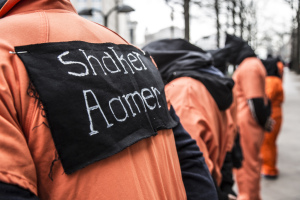
    Guantanamo Bay protest Shaker Aamer

    Protest to free Guantanamo Bay prisoners including Shaker Aaamer, the last British resident in Guantanamo Bay. Aamer has been detained without charge for over twelve years and cleared for release since 2007. Source: Flickr | shriekingtree

    The recent selective criminalisation of foreign fighters in the Syrian conflict points to a deeper flaw within broader US/UK ‘War on Terror’ era military strategy: the enemy is poorly defined. It is often noted that the US’ arming of the Afghan mujahideen rebels during their struggle against the Soviets in the 1980s was a key historical factor in the resulting al-Qaida network. In 2013 the UK was on the brink of going to war with the Assad regime, and came close to fighting on the same side as the rebel groups that it now seeks to vanquish. Fighters who left the UK at the beginning of the Syrian war have been criminalised in their absence and now face a major disincentive to returning to civilian life. The absence of a long-term strategy focused on peace and informed by an ethic of equity and justice has resulted in a confusing picture of shifting alliances.

    This militarised and reactive foreign policy results in shifting definitions of what constitutes terrorist activity at home. It is not only foreign fighters who are meeting overwrought security responses. Lawful activities such as charity work, political organising, membership of radical religious groups, and particular religious beliefs are increasingly caught up in the dragnet of counter-terror measures. The ongoing repression of Muslim charity organisations provides multiple examples of these blurred lines. The recent seven-month detention of Moazzam Begg is another.

    One lesson from the last twelve years is that injustices carried out in the name of counter-terrorism themselves have a deep, global resonance. The enduring resonance within Muslim communities of the well-documented abuse of Guantanamo Bay inmates is indicated precisely by the apparent effectiveness as a recruiting tool by Islamic State. The distinctive orange jumpsuits, as well as imagery from the abuse of Iraqi prisoners in Abu Ghraib jail, have appeared in IS’ videos, recycled as evidence of IS’ own ability to dominate. The UK, along with the US and France, is widely perceived negatively as having a ‘Crusaderist’ or imperialist project to divide and weaken the Muslim world. The selective criminalisation of foreign fighters has great potential to fuel such resentment further.


    Betsy Barkas is Oxford Research Group’s (ORG) Quaker Peace and Social Witness Peaceworker. She works as a Project Officer for ORG’s Sustainable Security programme, and co-edits sustainablesecurity.org.

    Image: Protest to free Guantanamo Bay prisoners including Shaker Aaamer, the last British resident in Guantanamo Bay. Aamer has been detained without charge for over twelve years and cleared for release since 2007. Source: Flickr | shriekingtree

  • A new security paradigm: the military climate link

    A new security paradigm: the military climate link

    Paul Rogers | openDemocracy | August 2009

    Issue:Climate change

    Tags:US Military

    SustainableSecurity.org Associate Editor Professor Paul Rogers’s latest article for openDemocracy highlights the fact that many leading military analysts in the United States are increasingly alert to the link between security and climate change. If, at the same time, these analysts could expand their view of whose security is at risk, the policy consequences could be immense. 

    Read the full article here.

    Comments

    Post new comment


  • Sustainable Security

    This article was originally published on openSecurity’s monthly Sustainable Security column on 15 August 2014. Every month, a rotating network of experts from Oxford Research Group’s Sustainable Security programme explore pertinent issues of global and regional insecurity.

    Control of water, including navigation rights, resource extraction and the exploitation of shared watercourses is at the heart of today’s geopolitical tensions in Asia. China’s recent actions in the South China Sea and Himalayas have given rise to further—and at times violent—conflict over the region’s natural resources. So will water insecurity lead to greater partnership in Asia? Or will it lead to a revival of China’s traditional sense of regional dominance and undercut efforts to build a rules-based approach to growing resource conflicts?

    Little by little

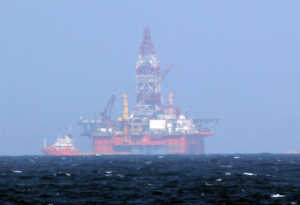
    China National Petroleum Corporation's Haiyang Shiyou-981 oil rig is situated close to the Paracel Islands, which Vietnam claims fall inside its exclusive economic zone. Source: East Asia Forum

    China National Petroleum Corporation’s Haiyang Shiyou-981 oil rig is situated close to the Paracel Islands, which Vietnam claims fall inside its exclusive economic zone. Source: East Asia Forum

    On 15 July, a month earlier than scheduled, the China National Petroleum Corporation (CNPC) announced that it was removing its Haiyang Shiyou-981 oil rig—40 storeys high and worth an estimated $1 billion—from waters close to the Paracel Islands which Vietnam claims fall inside its exclusive economic zone.

    There were four possible explanations. The first was the one the CNPC offered: the rig had completed its work early. The second was the approach of Typhoon Rammasun, signalling an early start to the region’s storm season. A third was that the US-China Strategic Dialogue the previous week had put pressure on China to lower the temperature in the South China Sea and China had taken the opportunity to demonstrate that it was a responsible international player.

    The fourth interpretation was that the rig had accomplished its purpose—not prospecting for hydrocarbons but promoting a steady advance of Chinese claims on the South China Sea through a series of assertive steps, none so provocative as to bring in outside players. With each little step, this story goes, China is building its case for singular rights to navigation and resource extraction there.

    The other players on the regional chessboard—the Philippines, Vietnam, Brunei, Taiwan, Indonesia and Malaysia—have grown increasingly agitated. With the memory of violent clashes between Vietnam and China over the Paracel Islands in 1974 and 1988, the installation of the oil rig in May provoked outbreaks of violence in Vietnam against Chinese citizens and businesses. Vietnamese fishing boats and Chinese ships harassed each other throughout the drilling.

    It is a dangerous ploy, but China calculates that the dangers are containable. If ethnic Chinese or Chinese citizens suffer harm in the backlash, the host country is to blame. If two ships collide in the course of the hazardous games of “chicken” that have become routine in this contest, Chinese citizens can be mobilised to shout their indignation against the “aggressor”.

    Overlapping claims

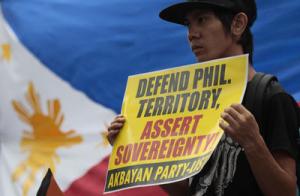
    A Fililipino protester holds a slogan beside a Philippine flag during a rally outside the Chinese Consulate in suburban Makati, south of Manila, Philippines on Tuesday June 11, 2013. Source: East Asia Forum

    A Fililipino protester holds a slogan beside a Philippine flag during a rally outside the Chinese Consulate in suburban Makati, south of Manila, Philippines on Tuesday June 11, 2013. Source: East Asia Forum

    The waters to which China lays claim are divided under the United Nations Convention on the Law of the Sea (UNCLOS) into exclusive economic zones for Brunei, Indonesia, Malaysia and Taiwan, each of which argues it has been adversely affected by China’s oil rig and claims of sovereignty. The zones, running 200 nautical miles into the South China Sea, allow these states special rights of exploration and exploitation of marine resources in specific areas.

    The sea is a major shipping route and fishing area, accounting for around one-tenth of the global fish catch and believed to have substantial untapped natural resources. Notably, China’s claims (outlined in a map in 1947) overlap a large portion of these zones. Malaysia also lays claim to a small number of islands in the Spratlys archipelago. With such a concentration of multifaceted and overlapping claims, China’s oil-rig foray heightened tensions and raised fears.

    In an attempt to settle its resource conflict with China peacefully , the Philippines has filed a case before the UN Permanent Court of Arbitration in The Hague on its own exclusive economic zone. However, even if, , as Manila expects, the court rules in its favour, China will ignore this—preferring to use its superior weight in bilateral negotiations rather than submit to third-party or multilateral processes where it is the rules that count. Diplomatic efforts by the Philippines to co-ordinate other claimants to take a common position vis-à-vis China have so far met little success.

    China’s behaviour has made its smaller neighbours, including Vietnam, reach out to the US for reassurance. But what can it really offer?

    For the US, the fading Pacific power, the disputes in the South and East China Sea pose a particular dilemma. In the East China Sea, China and Japan have overlapping territorial claims, including to the Diaoyu/Senkaku Islands which Japan controls and does not recognise as contested. The US has maintained neutrality on the islands but has a treaty commitment to defend Japan as the quid pro quo for its post-war pacifism.

    China might be uncertain about the depth of US enthusiasm for that commitment today but limits its provocation, nevertheless, to such moves as the declaration in November 2013, without consultation, of an “air defence identification zone” which covers territory claimed by its neighbours. International flights are now required to report their identity and flight plans to China when crossing the zone, at risk of “defensive emergency measures”.

    The strengths and limitations of the US position were clear in May, at the Shangri-La Dialogue in Singapore, the region’s annual multilateral “track two” security summit, where the US retains the power to mobilise a chorus of allies to uphold rules and laws and to criticise China’s behaviour. A series of speakers, including the Japanese prime minister, Shinzo Abe, and the US defence secretary, Chuck Hagel, condemned the use of muscle to enforce claims to the China seas, calling instead for freedom of navigation and overflight and a system based on international rules.

    General Wang Guanzhong, leader of the Chinese delegation, accused the US and Japan of ganging up on China. He was not sufficiently moved to answer pertinent questions on the rules of engagement for Chinese patrol vessels in the East China Sea, but he did make it clear that China saw no place for the US in 21st-century Asia.

    China is by far the largest trading partner of all the ASEAN members, which are caught in the small-neighbour dilemma, somewhere between the fear that China will come to rule their lives and consume their resources and the fear of giving offence to the region’s most important economic power. For them, the game is to try to stay on good terms with both sides.

    Himalayan watershed

    The dilemma is also evident among a different set of China’s neighbours—those that depend on the rivers that rise in the mountains and on the high plateau of Tibet. China’s largest downstream neighbour is, of course, India. India-China relations are bedevilled by unsettled borders-status rivalries, the subject of relatively recent skirmishes, but their most intractable potential conflict is over the shared resource of the Himalayan watershed.

    In its eagerness to promote new Asian alliances, Beijing dispatched the foreign minister, Wang Yi, to Delhi in June, to reach out early to the administration of the newly-elected Narendra Modi. Wang presented himself as the personal envoy of China’s president, Xi Jinping, and startled the Indian press by claiming that the two countries were ready to settle their long-running border dispute. The announcement was however short on detail—and, since the Indian state of Arunachal Pradesh is claimed by China while China’s Aksai Chin is claimed by India, details matter.

    There has been no further hint of an imminent deal but India, like all of China’s downstream neighbours, is more concerned by the impact Chinese activities are having on the quality and quantity of water that crosses its borders than the exact position of the borders themselves. The Himalayan cryosphere contains the largest store of fresh water outside the two polar regions and is a significant influence on the region’s climate, including its monsoons. As in the polar regions, rising temperatures are affecting the glaciers and snow fields that give birth to Asia’s rivers and future impacts on monsoons, though hard to predict, are highly likely.

    In the shorter term, China’s expansion of development westward is affecting the Qinghai Tibet plateau and everything that flows from it. Increased mineral extraction in Tibet and a renewed frenzy of big-hydro construction on trans-boundary rivers are changing Asia’s water flows for ever. There is increasing awareness of the risk of the downstream disasters that could result from building mega-dams in one of the world’s most active earthquake zones.

    There are no trans-boundary agreements between China and any lower riparian country on the shared use of Asia’s great rivers, even though 1.6 billion people depend on them and China is building dams on all their head waters. For India, dams and threatened water diversions on the Brahmaputra are a particular concern. For the countries of the Mekong, China’s dam-building upstream poses a series of potential dangers. Meanwhile, India and others are running to catch up in the dam race, fearful of allowing de facto rights to be created unchallenged.

    There has been no source-to-sink assessment of the impact on river ecosystems of any single dam—let alone of the massive cascades planned or under construction—and there are no mechanisms for resolving disputes. China has refused to enter into discussions with lower riparian countries, beyond agreeing to share limited water-flow data with India.

    Clear rules

    But, as in the South China Sea, limited bilateral discussions are not enough to ensure that the ecosystems of the watershed are protected and the legitimate interests of all those whose livelihoods depend on the rivers are recognised. From the high Himalaya to the teeming deltas, life will be affected.

    If ever there was a case for clear rules and co-operation, it can be found in the South China Sea and the Himalayan watershed. Both raise the essential question of whether the region’s resource conflicts will be settled by arbitration and law or by force. China’s challenge to US influence is also a challenge to an international order that values arbitration as a way of defending the weak against abuse by the strong.

    Isabel Hilton is the editor of chinadialogue.net, and Advisor to Oxford Research Group’s Sustainable Security Programme. She is a journalist, broadcaster, writer and commentator

  • Sustainable Security

    The Ukraine conflict’s legacy of environmental damage and pollutants

    One year after violent conflict began, information is now emerging on the specific environmental impact of war in Ukraine’s highly industrialised Donbas region. Although obtaining accurate data is difficult, indications are that the conflict has resulted in a number of civilian health risks, and potentially long-term damage to its environment. In order to mitigate these long-term risks, international and domestic agencies will have to find ways to coordinate their efforts on documenting, assessing and addressing the damage.

    Read Article →

  • Sustainable Security

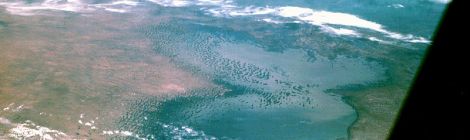
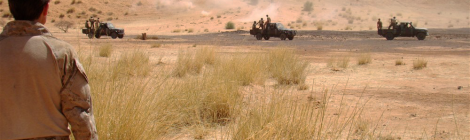
    Too Quiet on the Western Front? The Sahel-Sahara between Arab Spring and Black Spring

    While the world’s attention has been focused on the US-led military interventions in Iraq and Syria a quieter build-up of military assets has been ongoing along the newer, western front of the War on Terror as the security crises in Libya and northeast Nigeria escalate and the conflict in northern Mali proves to be far from over. In the face of revolutionary change in Burkina Faso, the efforts of outsiders to enforce an authoritarian and exclusionary status quo across the Sahel-Sahara look increasingly fragile and misdirected.

    Read Article →

    VIDEO – Militarisation of the Sahel: An interview with Richard Reeve

    Sustainable Security programme Director Richard Reeve discusses our latest report ‘From New Frontier to New Normal: Counter-terrorism operations in the Sahel-Sahara’. The report, commissioned by the Remote Control project, finds that 2014 is a critical year for militarisation of the Sahel-Sahara and the entrenchment of foreign powers there.

    Read Article →

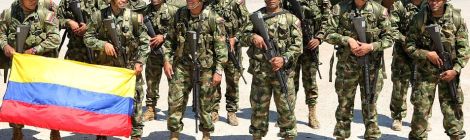
    Exporting (in)Security? Questioning Colombian Military Engagement in West Africa

    With skills and expertise in fighting insurgencies and drug trafficking networks, Colombia’s armed forces are increasingly being sought for engagement in similar security challenges in West Africa. But increasing Colombian engagement gives rise to a number of important questions – not least of which is the goal and expected outcomes of replicating militarised approaches to the war on drugs that have already failed in Latin America.

    Read Article →

    Beaux Gestes and Castles in the Sand: The Militarisation of the Sahara

    Whatever the benefits for Mali, the French-led eviction of jihadist groups from northern Mali may have made the wider Sahara a less safe place, and has done little to lower the capacity of such groups to threaten European interests.. In 2014, France is implementing a major redeployment of its forces in Africa into the Sahel and Sahara. Meanwhile, the US has been quietly extending its military reach from Djibouti to Mauritania. However, as elsewhere, the western military approach to countering Islamist insurgency in the Sahel rests on very unsteady foundations and the potential to provoke wider alienation and radicalisation is strong.

    Read Article →